Results by title
175 books match the query 'Rites and ceremonies' and 36 start with t
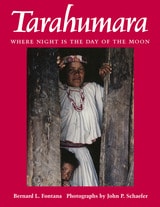
Tarahumara
Where Night is the Day of the MoonBernard L. Fontana; Photographs by John P. Schaefer
University of Arizona Press, 1997
The subtitle of the book derives from the Tarahumara's belief that the soul works at night while the body sleeps and that during this "day of the moon" both the spirits of the dead and the souls of the living move about in their mysterious ways.
As the authors observe, the fact that "so many men, women, and children persist in distinctive, centuries-old cultural traditions in spite of their nearness to all the complexities and attractions of modern industrial society is an importatn part of the story." Their book tells that story and brings readers closer to understanding the Tarahumara world and way of life.
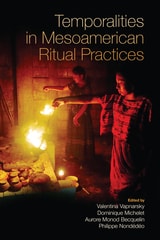
Temporalities in Mesoamerican Ritual Practices
Valentina Vapnarsky
University Press of Colorado, 2024
Based on specific case studies, new analysis of fieldwork data, and long-term collaboration between authors, chapters engage empirically and theoretically with the multiple temporalities of ritual in relation to both the unfolding of ritual performance and its external and symbolic anchors. Taking rituals as a series of specific, formalized actions that produce transitory changes within an initial context, the authors examine activities that generate change linked to artifact production, life cycles, healing, conflict resolution, crisis management, the enthronement of rulers and transfers of responsibilities, and practices relating to the occupation, abandonment, reuse, or conversion of socialized spaces.
Adopting a multidisciplinary approach in archaeology, ethnohistory, anthropology, and linguistic anthropology, Temporalities in Mesoamerican Ritual Practices offers new insights into ritual time approached through multi-semiotic, material, sensorial, and pragmatic perspectives that encourage further interdisciplinary dialogue.
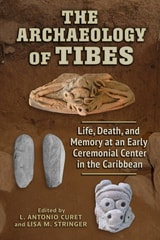
The Archaeology of Tibes
Life, Death, and Memory at an Early Ceremonial Center in the CaribbeanEdited by L. Antonio Curet and Lisa M. Stringer
University of Alabama Press, 2025
A collection of new essays that brings archaeological insights and discoveries at the Tibes Ceremonial Center up to date
The Archaeology of Tibes is a collection of essays offering a fresh analysis of this important ceremonial center. It brings new insights about social structure, illuminating the smaller-scale daily lives of ancient peoples rather than focusing on large-scale chiefdoms.
Tibes is the earliest known (ca. 400 to 1300 CE) ceremonial center in Puerto Rico. It has been the focus of one of the largest and longest-running archaeological programs in the Caribbean. Early researchers interpreted evidence in the area of a shift from dispersed villages to a ceremonial center as suggesting the development of social stratification and accumulation of power. Seen as the seat of an early chiefdom, Tibes served as a model applied broadly across the Greater Antilles.
New discoveries prompted archaeologists to question their original assumptions about ancient Puerto Rico, and later research failed to produce evidence of social stratification at Tibes. The Archaeology of Tibes therefore incorporates updated and wider perspectives on social formation. It considers agency, decisions, and events and the possibility of more than one form of social organization. It also presents a more accurate “humanized” past: the sociological meanings of that space and its significance for the people who created, used, and occupied it and who influenced rituals, social memory, and community.
Summarizing findings from excavations at Tibes after 2010, the collection also reviews the geoarchaeology of the site. Additional essays cover ceramic pastes, lithic production, faunal remains, coral, burials, and rock art. This work will engender discussion and future research by archaeologists across the Caribbean and beyond.
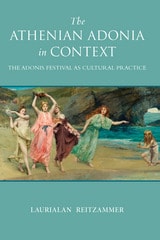
The Athenian Adonia in Context
The Adonis Festival as Cultural PracticeLaurialan Reitzammer
University of Wisconsin Press, 2018
Reitzammer uncovers correlations of the Adonia to Athenian wedding rituals and civic funeral oration and provides illuminating evidence that the festival was a significant cultural template for such diverse works as Aristophanes’ drama Lysistrata and Plato’s dialogue Phaedrus. Her fresh approach is a timely contribution to studies of the ways gender and sexuality intersect with religion and ritual in ancient Greece.

The Black Cow's Footprint
Time, Space and Music in the Lives of the Kotas of South IndiaRichard K. Wolf
University of Illinois Press, 2006
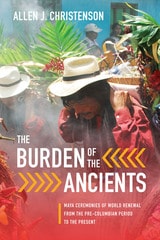
The Burden of the Ancients
Maya Ceremonies of World Renewal from the Pre-columbian Period to the PresentBy Allen J. Christenson
University of Texas Press, 2016
In Maya theology, everything from humans and crops to gods and the world itself passes through endless cycles of birth, maturation, dissolution, death, and rebirth. Traditional Maya believe that human beings perpetuate this cycle through ritual offerings and ceremonies that have the power to rebirth the world at critical points during the calendar year. The most elaborate ceremonies take place during Semana Santa (Holy Week), the days preceding Easter on the Christian calendar, during which traditionalist Maya replicate many of the most important world-renewing rituals that their ancient ancestors practiced at the end of the calendar year in anticipation of the New Year’s rites.
Marshaling a wealth of evidence from Pre-Columbian texts, early colonial Spanish writings, and decades of fieldwork with present-day Maya, The Burden of the Ancients presents a masterfully detailed account of world-renewing ceremonies that spans the Pre-Columbian era through the crisis of the Conquest period and the subsequent colonial occupation all the way to the present. Allen J. Christenson focuses on Santiago Atitlán, a Tz’utujil Maya community in highland Guatemala, and offers the first systematic analysis of how the Maya preserved important elements of their ancient world renewal ceremonies by adopting similar elements of Roman Catholic observances and infusing them with traditional Maya meanings. His extensive description of Holy Week in Santiago Atitlán demonstrates that the community’s contemporary ritual practices and mythic stories bear a remarkable resemblance to similar cultural entities from its Pre-Columbian past.
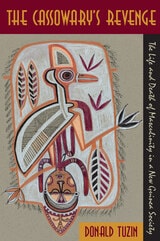
The Cassowary's Revenge
The Life and Death of Masculinity in a New Guinea SocietyDonald Tuzin
University of Chicago Press, 1997
The Cassowary's Revenge is an intimate account of how Ilahita’s men and women think, emote, dream, and explain themselves. Tuzin also explores how the death of masculinity in a remote society raises disturbing implications for gender relations in our own society. In this light Tuzin's book is about men and women in search of how to value one another, and in today's world there is no theme more universal or timely.

The Cree Language is Our Identity
The La Ronge lectures of Sarah WhitecalfSarah Whitecalf
University of Manitoba Press, 1983

The Cultures of Celebrations
Edited by Ray B. Browne and Michael T. Marsden
University of Wisconsin Press, 1994
Topics include: feminine processions and masculine parades; political activism and quietism in Shi’a rituals; civic socializing in Puritan New England; the circus and American culture; the Wild West shows; beauty pageants; theme parks; Bourbon Street, New Orleans; and Stonehenge.
The Edge of Surrealism
A Roger Caillois ReaderRoger Caillois, Edited by Claudine Frank
Duke University Press, 2003
These thirty-two essays with commentaries strike a balance between Caillois’s political and theoretical writings and between his better known works, such as the popular essays on the praying mantis, myth, and mimicry, and his lesser-known pieces. Presenting several new pieces and drawing on interviews and unpublished correspondence, this book reveals Caillois’s consistent effort to reconcile intellectual rigor and imaginative adventure. Perhaps most importantly, The Edge of Surrealism provides an overdue look at how Caillois’s intellectual project intersected with the work of Georges Bataille and others including Breton, Bachelard, Benjamin, Lacan, and Lévi-Strauss.
The Entablo Manuscript
Water Rituals and Khipu Boards of San Pedro de Casta, PeruSarah Bennison
University of Texas Press, 2022
A unique study of an Andean community’s water rituals and the extraordinary document describing how they should be performed
In the dry season in the Andes, water from springs, lakes, reservoirs, and melting glaciers feeds irrigation canals that have sustained communities for thousands of years. Managing and maintaining these water infrastructures is essential, and in 1921, in the village of San Pedro de Casta, Peru, local authorities recorded their ritual canal-cleaning duties in a Spanish-language document called the Entablo. It is only the second book (along with the Huarochirí Manuscript) ever seen by scholars in which an Andean community explains its customs and ritual laws in its own words.
Sarah Bennison offers a critical introduction to the Entablo, a Spanish transcription of the document, and an English translation. Among its other revelations, the Entablo delves into the use of khipu boards, devices that meld the traditional knotted strings known as khipus with a written alphabet. Only in the Entablo do we learn that there were multiple khipu boards associated with a single canal-cleaning ritual, or that there were separate khipu records for men and women. The Entablo manuscript furnishes unparalleled insights into Andean rituals, religion, and community history at a historical moment when rural highland communities were changing rapidly.
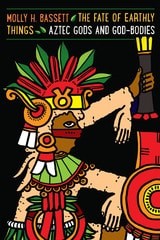
The Fate of Earthly Things
Aztec Gods and God-BodiesBy Molly H. Bassett
University of Texas Press, 2015
Following their first contact in 1519, accounts of Aztecs identifying Spaniards as gods proliferated. But what exactly did the Aztecs mean by a “god” (teotl), and how could human beings become gods or take on godlike properties? This sophisticated, interdisciplinary study analyzes three concepts that are foundational to Aztec religion—teotl (god), teixiptla (localized embodiment of a god), and tlaquimilolli (sacred bundles containing precious objects)—to shed new light on the Aztec understanding of how spiritual beings take on form and agency in the material world.
In The Fate of Earthly Things, Molly Bassett draws on ethnographic fieldwork, linguistic analyses, visual culture, and ritual studies to explore what ritual practices such as human sacrifice and the manufacture of deity embodiments (including humans who became gods), material effigies, and sacred bundles meant to the Aztecs. She analyzes the Aztec belief that wearing the flayed skin of a sacrificial victim during a sacred rite could transform a priest into an embodiment of a god or goddess, as well as how figurines and sacred bundles could become localized embodiments of gods. Without arguing for unbroken continuity between the Aztecs and modern speakers of Nahuatl, Bassett also describes contemporary rituals in which indigenous Mexicans who preserve costumbres (traditions) incorporate totiotzin (gods) made from paper into their daily lives. This research allows us to understand a religious imagination that found life in death and believed that deity embodiments became animate through the ritual binding of blood, skin, and bone.
The Flower and the Scorpion
Sexuality and Ritual in Early Nahua CulturePete Sigal
Duke University Press, 2011
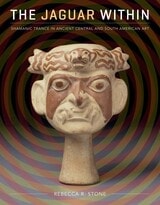
The Jaguar Within
Shamanic Trance in Ancient Central and South American ArtBy Rebecca R. Stone
University of Texas Press, 2011
An important new way of viewing the prehistoric art of the Americas, The Jaguar Within demonstrates that understanding a work of art’s connection with shamanic trance can lead to an appreciation of it as an extremely creative solution to the inherent challenge of giving material form to nonmaterial realities and states of being.
Shamanism—the practice of entering a trance state to experience visions of a reality beyond the ordinary and to gain esoteric knowledge—has been an important part of life for indigenous societies throughout the Americas from prehistoric times until the present. Much has been written about shamanism in both scholarly and popular literature, but few authors have linked it to another significant visual realm—art. In this pioneering study, Rebecca R. Stone considers how deep familiarity with, and profound respect for, the extra-ordinary visionary experiences of shamanism profoundly affected the artistic output of indigenous cultures in Central and South America before the European invasions of the sixteenth century.
Using ethnographic accounts of shamanic trance experiences, Stone defines a core set of trance vision characteristics, including enhanced senses; ego dissolution; bodily distortions; flying, spinning, and undulating sensations; synaesthesia; and physical transformation from the human self into animal and other states of being. Stone then traces these visionary characteristics in ancient artworks from Costa Rica and Peru. She makes a convincing case that these works, especially those of the Moche, depict shamans in a trance state or else convey the perceptual experience of visions by creating deliberately chaotic and distorted conglomerations of partial, inverted, and incoherent images.
The Jaguar and the Priest
An Ethnography of Tzeltal SoulsBy Pedro Pitarch
University of Texas Press, 2010
In contrast to western notions of the soul as the essence or most native part of a human being, the Tzeltal-speaking Indians of Chiapas, Mexico, regard the soul first and foremost as an Other. Made up of beings that personify the antithesis of their native selves—animals such as hummingbirds or jaguars, atmospheric phenomena like lightning bolts or rainbows, or spirits of European appearance such as Catholic priests or evangelical musicians—Tzeltal souls represent the maximum expression of that which is alien. And because their souls enfold that which is outside and Other, the Tzeltal contain within themselves the history of their relationship with Europeans from the beginning of the Spanish conquest to the present time. Thus, to understand the Indian self opens a window into the Tzeltal conception of culture and community, their notions of identity and alterity, and their interpretation of interethnic relations and types of historical memory.
In this pathfinding ethnography, which was originally published in Spanish in 1996 as Ch'ulel: una etnografía de las almas tzeltales and is now extensively rewritten and amplified in English, Pedro Pitarch offers a new understanding of indigenous concepts of the soul, personhood, and historical memory in highland Chiapas. Exploring numerous aspects of indigenous culture and history—medicine and shamanism, geography and cosmology, and politics and kinship among them—he engages in a radical rethinking of classic issues in Mesoamerican anthropology, such as ethnicity and alterity, community and tradition, and change and permanence.
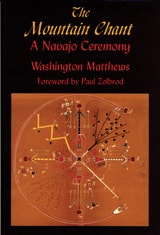
The Mountain Chant
A Navajo CeremonyMatthews, Washington
University of Utah Press, 1997
The Mountain Chant is a nine-day Navajo healing ceremony, one of several major rites undertaken only in winter. Aside from curing disease, it brings rain and invokes the unseen powers for general benefit. Though perhaps practiced less often now than better-known ceremonies such as the Night Chant, it is by no means forgotten.
Fully faithful to the original book published by Washington Matthews over a century ago, this edition contains the story of the wandering hero upon whose exploits the Mountain Chant is based, a description of each of the nine ceremonial days, and original song text and translations.
"Each Navajo ceremony builds on a specific story, which in turn contributes to a network of interlocking narratives as poetically rich as the Homeric epics or the Arthurian cycle. Non-Navajos are only now beginning to fathom the extent of that poetic richness as we learn more about the nature of ceremonial Navajo, with its formulaic virtuosity, its rhythmic cadences, its deep allusiveness to enduring human values, and the spellbinding thrust of its stories."
- Paul Zolbrod, from the foreword
The Mountainway of the Navajo
Leland C. Wyman; with a myth of the Female Branch recorded and translated by Father Berard Haile, OFM
University of Arizona Press, 1975
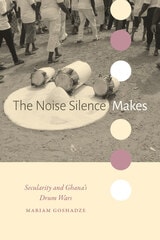
The Noise Silence Makes
Secularity and Ghana's Drum WarsMariam Goshadze
Duke University Press, 2025
The Occult Life of Things
Native Amazonian Theories of Materiality and PersonhoodEdited by Fernando Santos-Granero
University of Arizona Press, 2009
A view so antithetical to Western thought offers a refreshing perspective on the place and role of objects in human social life—one that has remained under-studied in Amazonian anthropology. In this book, ten scholars re-introduce objects to contemporary studies of animism in order to explore how various peoples envision the lives of material objects: the occult, or extraordinary, lives of “things,” whose personas are normally not visible to lay people.
Combining linguistic, ethnological, and historical perspectives, the contributors draw on a wealth of information gathered from ten Amerindian peoples belonging to seven different linguistic families to identify the basic tenets of what might be called a native Amazonian theory of materiality and personhood. They consider which objects have subjective dimensions and how they are manifested, focusing on three domains regarding Amazonian conceptions of things: the subjective life of objects, considering which things have a subjective dimension; the social life of things, seeing the diverse ways in which human beings and things relate as subjectivities; and the historical life of things, recognizing the fact that some things have value as ritual objects or heirlooms.
These chapters demonstrate how native Amazonian peoples view animals, plants, and things as “subjectivities” possessing agency, intentionality, and consciousness, as well as a composite anatomy. They also show how materiality is intimately linked to notions of personhood, with artifacts classified as natural or divine creations and living beings viewed as cultural or constructed. The Occult Life of Things offers original insights into these elaborate native ontologies as it breaks new ground in Amazonian studies.
The Origin and Development of the Pueblo Katsina Cult
E. Charles Adams
University of Arizona Press, 1991
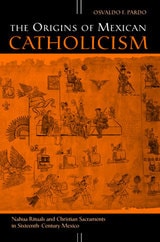
The Origins of Mexican Catholicism
Nahua Rituals and Christian Sacraments in Sixteenth-Century MexicoOsvaldo F. Pardo
University of Michigan Press, 2004
---Fernando Cervantes, Bristol University, UK
"Pardo does an excellent job of balancing and contrasting sixteenth-century Catholic theology with Nahua thought and belief."
---John F. Schwaller, University of Minnesota
At first glance, religious conversion may appear to be only a one-way street. When studying sixteenth-century Mexico, one might assume that colonial coercion was the driving force behind the religious conversion of the native population. But The Origins of Mexican Catholicism shows how Spanish missionaries instead drew on existing native ceremonies in order to make Christianity more accessible to the Nahua population whom they were trying to convert.
Osvaldo F. Pardo explains that religious figures not only shaped native thought, but that indigenous rituals had an impact on the religion itself. This work illustrates the complex negotiations that took place in the process of making the Christian sacraments available to the native peoples, and at the same time, forced the missionaries to reexamine the meaning of their sacraments through the eyes of an alien culture.
For Spanish missionaries, ritual not only became a focus of evangelical concern but also opened a window to the social world of the Nahuas. Missionaries were able to delve into the Nahua's notions of self, emotions, and social and cosmic order. By better understanding the sociological aspects of Nahua culture, Christians learned ways to adequately convey their religion through mutual understanding instead of merely colonial oppression.
Given its interdisciplinary approach, this book will be of interest to specialists in Latin American intellectual and literary history, the history of religion, and anthropology, and to anyone interested in cross-cultural processes.
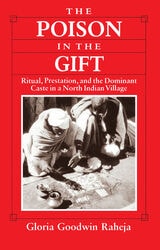
The Poison in the Gift
Ritual, Prestation, and the Dominant Caste in a North Indian VillageGloria Goodwin Raheja
University of Chicago Press, 1988
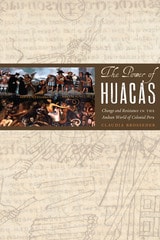
The Power of Huacas
Change and Resistance in the Andean World of Colonial PeruBy Claudia Brosseder
University of Texas Press, 2014
Based on extensive archival research, The Power of Huacas is the first book to take account of the reciprocal effects of religious colonization as they impacted Andean populations and, simultaneously, dramatically changed the culture and beliefs of Spanish Christians.
Winner, Award for Excellence in the Study of Religion in the category of Historical Studies, American Academy of Religion, 2015
The role of the religious specialist in Andean cultures of the sixteenth, seventeenth, and eighteenth centuries was a complicated one, balanced between local traditions and the culture of the Spanish. In The Power of Huacas, Claudia Brosseder reconstructs the dynamic interaction between religious specialists and the colonial world that unfolded around them, considering how the discourse about religion shifted on both sides of the Spanish and Andean relationship in complex and unexpected ways. In The Power of Huacas, Brosseder examines evidence of transcultural exchange through religious history, anthropology, and cultural studies. Taking Andean religious specialists—or hechizeros (sorcerers) in colonial Spanish terminology—as a starting point, she considers the different ways in which Andeans and Spaniards thought about key cultural and religious concepts. Unlike previous studies, this important book fully outlines both sides of the colonial relationship; Brosseder uses extensive archival research in Bolivia, Chile, Ecuador, Peru, Spain, Italy, and the United States, as well as careful analysis of archaeological and art historical objects, to present the Andean religious worldview of the period on equal footing with that of the Spanish. Throughout the colonial period, she argues, Andean religious specialists retained their own unique logic, which encompassed specific ideas about holiness, nature, sickness, and social harmony. The Power of Huacas deepens our understanding of the complexities of assimilation, showing that, within the maelstrom of transcultural exchange in the Spanish Americas, European paradigms ultimately changed more than Andean ones.
The Power of Kiowa Song
A Collaborative EthnographyLuke E. Lassiter
University of Arizona Press, 1998
Hear the Power of Kiowa Song
The Rites of Passage, Second Edition
Arnold van Gennep
University of Chicago Press, 2019
With a new introduction by Pulitzer Prize–winner David I. Kertzer
Arnold van Gennep’s masterwork, The Rites of Passage, has been a staple of anthropological education for more than a century. First published in French in 1909, and translated into English by the University of Chicago Press in 1960, this landmark book explores how the life of an individual in any society can be understood as a succession of transitions: birth, puberty, marriage, parenthood, old age, and, finally, death. Van Gennep’s great insight was discerning a common structure in each of these seemingly different transitions, involving rituals of separation, liminality, and incorporation. With compelling precision, he set out the terms that would both define twentieth-century ritual theory and become a part of our everyday lexicon.
This new edition of his work demonstrates how we can still make use of its enduring critical tools to understand our own social, religious, and political worlds, and even our personal and professional lives. In his new introduction, Pulitzer Prize–winning historian and anthropologist David I. Kertzer sheds new light on van Gennep, on the battles he fought, and on the huge impact the book has had since publication of the first English edition.
The Roots of Theatre
Rethinking Ritual and Other Theories of OriginEli Rozik
University of Iowa Press, 2002
The Spiro Ceremonial Center
The Archaeology of Arkansas Valley Caddoan Culture in Eastern Oklahoma, Vols. 1 and 2James A. Brown with a foreword by James B. Griffin
University of Michigan Press, 1996
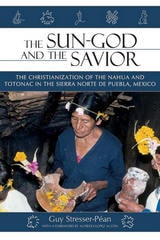
The Sun God and the Savior
The Christianization of the Nahua and Totonac in the Sierra Norte de Puebla, MexicoGuy Stresser-Péan
University Press of Colorado, 2009
The first English translation of Guy Stresser-Péan's tour-de-force presents two decades of fieldwork in the Sierra Norte de Puebla, Mexico, where native pre-Hispanic pagan beliefs blended with traditional Catholic evangelization from the sixteenth century and the more recent intrusion of modernism.
The Indians of the Sierra Norte de Puebla are deeply devoted to Christianity, but their devotion is seamlessly combined with pagan customs, resulting in a hybrid belief system that is not wholly indigenous, yet not wholly Christian. The syncretism practiced here has led the Totonac and Nahua people to identify Christ with the Sun God, a belief expressed symbolically in ritual practices such as the Dance of the Voladores.
Spanning the four centuries from the earliest systematic campaign against Nahua ritual practices - Zumárraga's idolatry trials of 1536-1540 - to the twentieth century, Stresser-Péan contextualizes Nahua and Totonac ritual practices as a series of responses to Christian evangelization and the social reproduction of traditional ritual practices. The Sun God and the Savior is a monumental work on the ethnographic and historical knowledge of the peoples of the Sierra Norte.
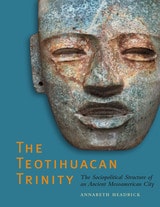
The Teotihuacan Trinity
The Sociopolitical Structure of an Ancient Mesoamerican CityBy Annabeth Headrick
University of Texas Press, 2007
Northeast of modern-day Mexico City stand the remnants of one of the world's largest preindustrial cities, Teotihuacan. Monumental in scale, Teotihuacan is organized along a three-mile-long thoroughfare, the Avenue of the Dead, that leads up to the massive Pyramid of the Moon. Lining the avenue are numerous plazas and temples, which indicate that the city once housed a large population that engaged in complex rituals and ceremonies. Although scholars have studied Teotihuacan for over a century, the precise nature of its religious and political life has remained unclear, in part because no one has yet deciphered the glyphs that may explain much about the city's organization and belief systems.
In this groundbreaking book, Annabeth Headrick analyzes Teotihuacan's art and architecture, in the light of archaeological data and Mesoamerican ethnography, to propose a new model for the city's social and political organization. Challenging the view that Teotihuacan was a peaceful city in which disparate groups united in an ideology of solidarity, Headrick instead identifies three social groups that competed for political power—rulers, kin-based groups led by influential lineage heads, and military orders that each had their own animal insignia. Her findings provide the most complete evidence to date that Teotihuacan had powerful rulers who allied with the military to maintain their authority in the face of challenges by the lineage heads. Headrick's analysis also underscores the importance of warfare in Teotihuacan society and clarifies significant aspects of its ritual life, including shamanism and an annual tree-raising ceremony that commemorated the Mesoamerican creation story.
The Victim and its Masks
An Essay on Sacrifice and Masquerade in the MaghrebAbdellah Hammoudi
University of Chicago Press, 1993
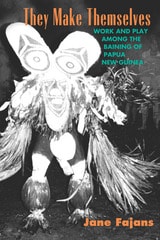
They Make Themselves
Work and Play among the Baining of Papua New GuineaJane Fajans
University of Chicago Press, 1997
In a new work sure to evoke considerable repercussions and debate in anthropological theory, Jane Fajans courageously takes on the "Baining Problem," arguing that the Baining define themselves not through intricate cosmologies or social networks, but through the meanings generated by their own productive and reproductive work.
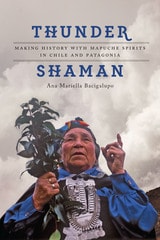
Thunder Shaman
Making History with Mapuche Spirits in Chile and PatagoniaBy Ana Mariella Bacigalupo
University of Texas Press, 2016
As a “wild,” drumming thunder shaman, a warrior mounted on her spirit horse, Francisca Kolipi’s spirit traveled to other historical times and places, gaining the power and knowledge to conduct spiritual warfare against her community’s enemies, including forestry companies and settlers. As a “civilized” shaman, Francisca narrated the Mapuche people’s attachment to their local sacred landscapes, which are themselves imbued with shamanic power, and constructed nonlinear histories of intra- and interethnic relations that created a moral order in which Mapuche become history’s spiritual victors.
Thunder Shaman represents an extraordinary collaboration between Francisca Kolipi and anthropologist Ana Mariella Bacigalupo, who became Kolipi’s “granddaughter,” trusted helper, and agent in a mission of historical (re)construction and myth-making. The book describes Francisca’s life, death, and expected rebirth, and shows how she remade history through multitemporal dreams, visions, and spirit possession, drawing on ancestral beings and forest spirits as historical agents to obliterate state ideologies and the colonialist usurpation of indigenous lands. Both an academic text and a powerful ritual object intended to be an agent in shamanic history, Thunder Shaman functions simultaneously as a shamanic “bible,” embodying Francisca’s power, will, and spirit long after her death in 1996, and an insightful study of shamanic historical consciousness, in which biography, spirituality, politics, ecology, and the past, present, and future are inextricably linked. It demonstrates how shamans are constituted by historical-political and ecological events, while they also actively create history itself through shamanic imaginaries and narrative forms.
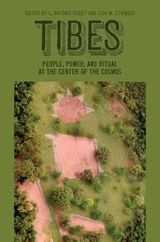
Tibes
People, Power, and Ritual at the Center of the CosmosEdited by L. Antonio Curet and Lisa M. Stringer
University of Alabama Press, 2009
The prehistoric civic-ceremonial center of Tibes is located on the southern coast of Puerto Rico, just north of the modern coastal city of Ponce. Protected on two sides by a river, and on the other two sides by hills, this approximately 10.5-acre site remains as fertile and productive today as when first occupied over 2,000 years ago. Such a rich region would have been a choice location for native peoples because of the diversity in all resources, from land, air, and sea--and also symbolically crucial as a liminal space within the landscape. It may have been regarded as a space charged with numen or cosmic energy where different parts of the cosmos (natural vs. supernatural, or world of the living vs. world of the dead) overlap. Archaeological evidence reveals a long occupation, about 1,000 years, possibly followed by an extensive period of sporadic ceremonial use after the site itself was practically abandoned.
In this volume, nineteen Caribbeanists, across a wide academic spectrum, examine the geophysical, paleoethnobotanical, faunal, lithics, base rock, osteology, bone chemistry and nutrition, social landscape, and ceremonial constructs employed at Tibes. These scholars provide a concise, well-presented, comprehensive analysis of the evidence for local level changes in household economy, internal organization, accessibility to economic, religious, and symbolic resources related to the development and internal operation of socially stratified societies in the Caribbean.
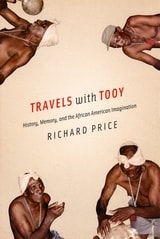
Travels with Tooy
History, Memory, and the African American ImaginationRichard Price
University of Chicago Press, 2007
Included on the itinerary for this hallucinatory expedition: forays into the eighteenth century to talk with slaves newly arrived from Africa; leaps into the midst of battles against colonial armies; close encounters with double agents and femme fatale forest spirits; and trips underwater to speak to the comely sea gods who control the world’s money supply. This enchanting book draws on Price’s long-term ethnographic and archival research, but above all on Tooy’s teachings, songs, stories, and secret languages to explore how Africans in the Americas have created marvelous new worlds of the imagination.
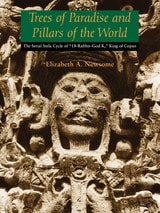
Trees of Paradise and Pillars of the World
The Serial Stelae Cycle of "18-Rabbit–God K," King of CopanBy Elizabeth A. Newsome
University of Texas Press, 2001
Assemblies of rectangular stone pillars, or stelae, fill the plazas and courts of ancient Maya cities throughout the lowlands of southern Mexico, Guatemala, Belize, and western Honduras. Mute testimony to state rituals that linked the king's power to rule with the rhythms and renewal of time, the stelae document the ritual acts of rulers who sacrificed, danced, and experienced visionary ecstasy in connection with celebrations marking the end of major calendrical cycles. The kings' portraits are carved in relief on the main surfaces of the stones, deifying them as incarnations of the mythical trees of life.
Based on a thorough analysis of the imagery and inscriptions of seven stelae erected in the Great Plaza at Copan, Honduras, by the Classic Period ruler "18-Rabbit-God K," this ambitious study argues that stelae were erected not only to support a ruler's temporal claims to power but more importantly to express the fundamental connection in Maya worldview between rulership and the cosmology inherent in their vision of cyclical time. After an overview of the archaeology and history of Copan and the reign and monuments of "18-Rabbit-God K," Elizabeth Newsome interprets the iconography and inscriptions on the stelae, illustrating the way they fulfilled a coordinated vision of the king's ceremonial role in Copan's period-ending rites. She also links their imagery to key Maya concepts about the origin of the universe, expressed in the cosmologies and mythic lore of ancient and living Maya peoples.
Trincheras Sites in Time, Space, and Society
Edited by Suzanne K. Fish, Paul R. Fish, and M. Elisa Villalpando
University of Arizona Press, 2008
This multi-author volume integrates a remarkable body of new data representing a textbook-like array of current research issues and methodologies in the archaeology of the region. Scholars from the United States and Mexico offer original research on trincheras sites in Chihuahua, Sonora, Arizona, and New Mexico. Scales of focus range from intensive intrasite sampling to the largest contiguous survey in the region. Authors incorporate spatial analyses, artifact studies, environmental and subsistence data, ethnographic analogs, ethnohistorical records, cross-cultural comparisons, archaeology, and archival resources.
The volume’s discussions contribute innovative approaches to worldwide interpretations of landscapes marked by hilltop sites. Contributors present meticulous research arguing that many trincheras sites were primarily used for habitation and ceremonial rites, in addition to previously predominant views of them as defensive refuges. Because trincheras occupations date from the late preceramic era to shortly before Spanish contact, authors relate them to early forms of agriculture, the emergence of village life, the appearance of differentiated settlement systems, and tendencies toward political and ritual centralization.
Detailed maps and figures illustrate the text, and close-up aerial photographs capture the visual essence of the sites, highlighted by a section that includes color photographs and an essay by renowned photographer Adriel Heisey.
Contributors:
Christian E. Downum
Paul R. Fish
Suzanne K. Fish
Robert J. Hard
Adriel Heisey
Stephen A. Kowalewski
Randall H. McGuire
Ben A. Nelson
John R. Roney
Judith Taylor
M. Elisa Villalpando
Joseph Vogel
Henry Wallace
David R. Wilcox
J. Scott Wood