Results by title
216 books match the query 'Social' and 50 start with t
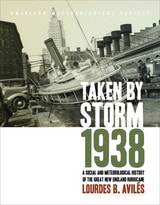
Taken by Storm, 1938
A Social and Meteorological History of the Great New England HurricaneLourdes B. Avilés
American Meteorological Society, 2013
On September 21, 1938 one of the most powerful storms of the twentieth century came unannounced into the lives of New Yorkers and New Englanders, leaving utter devastation in its wake. The Great Hurricane, as it came to be known, changed everything, from the landscape and its inhabitants’ lives, to Weather Bureau practices, to the measure and kind of relief New Englanders would receive during the Great Depression and the resulting pace of regional economic recovery.
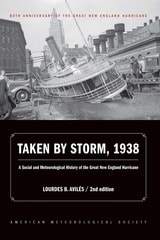
Taken by Storm, 1938
A Social and Meteorological History of the Great New England HurricaneLourdes B. Avilés
American Meteorological Society, 2018
The storm formed near the Cape Verde Islands on September 10, but was not spotted until several days later, and was predicted by the understaffed Weather Bureau to head toward Florida. Junior forecaster Charlie Pierce correctly projected the northerly storm track, but senior meteorologists ignored his forecast, a mistake that cost many lives—including those of immigrants who had arrived to the Northeast in waves in the preceding decades. Updated for the 80th anniversary of the hurricane, this compelling history successfully weaves science, historical accounts, and social analyses to create a comprehensive picture of the most powerful and devastating hurricane to hit New England to date.
Telemorphosis
Theory in the Era of Climate ChangeTom Cohen
Michigan Publishing Services, 2012
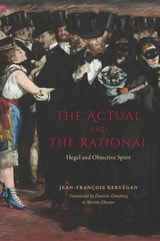
The Actual and the Rational
Hegel and Objective SpiritJean-Francois Kervegan
University of Chicago Press, 2018
Kervégan begins with Hegel’s term “objective spirit,” the public manifestation of our deepest commitments, the binding norms that shape our existence as subjects and agents. He examines objective spirit in three realms: the notion of right, the theory of society, and the state. In conversation with Tocqueville and other theorists of democracy, whether in the Anglophone world or in Europe, Kervégan shows how Hegel—often associated with grand metaphysical ideas—actually had a specific conception of civil society and the state. In Hegel’s view, public institutions represent the fulfillment of deep subjective needs—and in that sense, demonstrate that the real is the rational, because what surrounds us is the product of our collective mindedness. This groundbreaking analysis will guide the study of Hegel and nineteenth-century political thought for years to come.
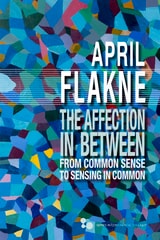
The Affection in Between
From Common Sense to Sensing in CommonApril Flakne
Ohio University Press, 2022
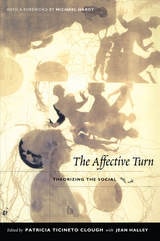
The Affective Turn
Theorizing the SocialPatricia Ticineto Clough, ed.
Duke University Press, 2007
In the mid-1990s, scholars turned their attention toward the ways that ongoing political, economic, and cultural transformations were changing the realm of the social, specifically that aspect of it described by the notion of affect: pre-individual bodily forces, linked to autonomic responses, which augment or diminish a body’s capacity to act or engage with others. This “affective turn” and the new configurations of bodies, technology, and matter that it reveals, is the subject of this collection of essays. Scholars based in sociology, cultural studies, science studies, and women’s studies illuminate the movement in thought from a psychoanalytically informed criticism of subject identity, representation, and trauma to an engagement with information and affect; from a privileging of the organic body to an exploration of nonorganic life; and from the presumption of equilibrium-seeking closed systems to an engagement with the complexity of open systems under far-from-equilibrium conditions. Taken together, these essays suggest that attending to the affective turn is necessary to theorizing the social.
Contributors. Jamie “Skye” Bianco, Grace M. Cho, Patricia Ticineto Clough, Melissa Ditmore, Ariel Ducey, Deborah Gambs, Karen Wendy Gilbert, Greg Goldberg, Jean Halley, Hosu Kim, David Staples, Craig Willse , Elizabeth Wissinger , Jonathan R. Wynn
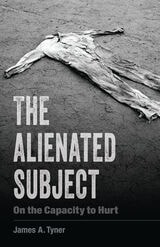
The Alienated Subject
On the Capacity to HurtJames A. Tyner
University of Minnesota Press, 2022
A timely and provocative discussion of alienation as an intersectional category of life under racial capitalism and white supremacy
From the divisiveness of the Trump era to the Covid-19 pandemic, alienation has become an all-too-familiar contemporary concept. In this groundbreaking book, James A. Tyner offers a novel framework for understanding the alienated subject, situating it within racial capitalism and white supremacy. Directly addressing current economic trends and their rhetoric of xenophobia, discrimination, and violence, The Alienated Subject exposes the universal whitewashing of alienation.
Drawing insight from a variety of sources, including Marxism, feminism, existentialism, and critical race theory, Tyner develops a critique of both the liberal subject and the alienated subject. Through an engagement with the recent pandemic and the Black Lives Matter movement, he demonstrates how the alienated subject is capable of both compassion and cruelty; it is a sadomasochist. Tyner goes on to emphasize the importance of the particular places we find the alienated subject and how the revolutionary transformation of alienation is inherently a spatial struggle. Returning to key interlocutors from Sartre to Fromm, he examines political notions of distance and the spatial practices of everyday life as well as the capitalist conditions that give rise to the alienated subject.
For Tyner, the alienated subject is not the iconic, romanticized image of Marx’s proletariat. Here he calls for an affirmation of love as a revolutionary concept, necessary for the transformation of a society marred by capitalism into an emancipated, caring society conditioned by socially just relations.

The Arc of Love
How Our Romantic Lives Change over TimeAaron Ben-Ze'ev
University of Chicago Press, 2019
Aaron Ben-Ze’ev takes these experiences seriously, but he’s also here to remind us of the benefits of profound love—an emotion that can only develop with time. In The Arc of Love, he provides an in-depth, philosophical account of the experiences that arise in early, intense love—sexual passion, novelty, change—as well as the benefits of cultivating long-term, profound love—stability, development, calmness. Ben-Ze’ev analyzes the core of emotions many experience in early love and the challenges they encounter, and he offers pointers for weathering these challenges. Deploying the rigorous analysis of a philosopher, but writing clearly and in an often humorous style with an eye to lived experience, he takes on topics like compromise, commitment, polyamory, choosing a partner, online dating, and when to say “I love you.” Ultimately, Ben-Ze’ev assures us, while love is indeed best when fresh, if we tend to it carefully, it can become more delicious and nourishing even as time marches on.
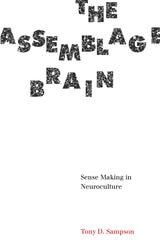
The Assemblage Brain
Sense Making in NeurocultureTony D. Sampson
University of Minnesota Press, 2016
Once upon a time, neuroscience was born. A dazzling array of neurotechnologies emerged that, according to popular belief, have finally begun to unlock the secrets of the brain. But as the brain sciences now extend into all corners of cultural, social, political, and economic life, a yet newer world has taken shape: “neuroculture,” which goes further than ever before to tackle the profound ethical implications we face in consequence.
The Assemblage Brain unveils a major new concept of sense making, one that challenges conventional scientific and philosophical understandings of the brain. Drawing on Deleuze and Guattari, Tony D. Sampson calls for a radical critical theory that operates in the interferences between philosophy, science, art, and politics. From this novel perspective the book is structured around two questions: “What can be done to a brain?” and “What can a brain do?” Sampson examines the rise of neuroeconomics in informing significant developments in computer work, marketing, and the neuropharmaceutical control of inattentiveness in the classroom. Moving beyond the neurocapitalist framework, he then reestablishes a place for proto-subjectivity in which biological and cultural distinctions are reintegrated in an understanding of the brain as an assemblage.
The Assemblage Brain unravels the conventional image of thought that underpins many scientific and philosophical accounts of how sense is produced, providing a new view of our current time in which capitalism and the neurosciences endeavor to colonize the brain.
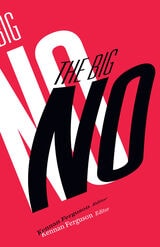
The Big No
Kennan Ferguson
University of Minnesota Press, 2021
What it means to celebrate the potential and the power of no
What does it mean to refuse? To not participate, to not build a better world, to not come up with a plan? To just say “no”? Against the ubiquitous demands for positive solutions, action-oriented policies, and optimistic compromises, The Big No refuses to play. Here leading scholars traverse the wide range of political action when “no” is in the picture, analyzing topics such as collective action, antisocialism, empirical science, the negative and the affirmative in Deleuze and Derrida, the “real” and the “clone,” Native sovereignty, and Afropessimism.
In his introduction, Kennan Ferguson sums up the concept of the “Big No,” arguing for its political importance. Whatever its form—he identifies various strains—the Big No offers power against systems of oppression. Joshua Clover argues for the importance of Marx and Fanon in understanding how people are alienated and subjugated. Theodore Martin explores the attractions of antisociality in literature and life, citing such novelists as Patricia Highsmith and Richard Wright. François Laruelle differentiates nonphilosophy from other forms of French critical theory. Katerina Kolozova applies this insight to the nature of reality itself, arguing that the confusion of thought and reality leads to manipulation, automation, and alienation. Using poetry and autobiography, Frank Wilderson shows how Black people—their bodies and being—are displaced in politics, replaced and erased by the subjectivities of violence, suffering, and absence. Andrew Culp connects these themes of negativity, comparing and contrasting the refusals of antiphilosophy and Afropessimism.
Thinking critically usually demands alternatives: how would you fix things? But, as The Big No shows, being absolutely critical—declining the demands of world-building—is one necessary response to wrong, to evil. It serves as a powerful reminder that the presumption of political action is always positive.
Contributors: Joshua Clover, U of California Davis and U of Copenhagen; Andrew Culp, California Institute of the Arts; Katerina Kolozova, Institute of Social Sciences and Humanities Skopje; Theodore Martin, U of California, Irvine; Anthony Paul Smith, La Salle U; Frank B. Wilderson III, U of California, Irvine.

The Changing Structure of Europe
Economic, Social, and Political TrendsRobert Beck
University of Minnesota Press, 1970
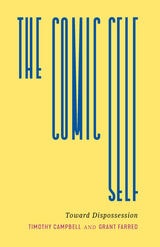
The Comic Self
Toward DispossessionTimothy C. Campbell
University of Minnesota Press, 2023
A provocative and unconventional call to dispossess the self of itself
Challenging the contemporary notion of “self-care” and the Western mania for “self-possession,” The Comic Self deploys philosophical discourse and literary expression to propose an alternate and less toxic model for human aspiration: a comic self. Timothy Campbell and Grant Farred argue that the problem with the “care of the self,” from Foucault onward, is that it reinforces identity, strengthening the relation between I and mine. This assertion of self-possession raises a question vital for understanding how we are to live with each other and ourselves: How can you care for something that is truly not yours?
The answer lies in the unrepresentable comic self. Campbell and Farred range across philosophy, literature, and contemporary comedy—engaging with Socrates, Burke, Hume, Hegel, Marx, Nietzsche, Heidegger, Derrida, Deleuze, and Levinas; Shakespeare, Cervantes, Woolf, Kafka, and Pasolini; and Stephen Colbert, David Chappelle, and the cast of Saturday Night Live. They uncover spaces where the dispossession of self and, with it, the dismantling of the regime of self-care are possible. Arguing that the comic self always keeps a precarious closeness to the tragic self, while opposing the machinations of capital endemic to the logic of self-possession, they provide a powerful and provocative antidote to the tragic self that so dominates the tenor of our times.
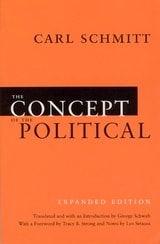
The Concept of the Political
Expanded EditionCarl Schmitt
University of Chicago Press, 2007
In this, his most influential work, legal theorist and political philosopher Carl Schmitt argues that liberalism’s basis in individual rights cannot provide a reasonable justification for sacrificing oneself for the state—a critique as cogent today as when it first appeared. George Schwab’s introduction to his translation of the 1932 German edition highlights Schmitt’s intellectual journey through the turbulent period of German history leading to the Hitlerian one-party state. In addition to analysis by Leo Strauss and a foreword by Tracy B. Strong placing Schmitt’s work into contemporary context, this expanded edition also includes a translation of Schmitt’s 1929 lecture “The Age of Neutralizations and Depoliticizations,” which the author himself added to the 1932 edition of the book. An essential update on a modern classic, The Concept of the Political, Expanded Edition belongs on the bookshelf of anyone interested in political theory or philosophy.
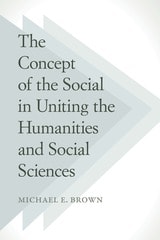
The Concept of the Social in Uniting the Humanities and Social Sciences
Michael E. Brown
Temple University Press, 2015
In this book, Michael Brown provides original and critical analysis of the state of the social sciences and the humanities. He examines the different disciplines that address human affairs--from sociology, philosophy, political science, and anthropology to the humanities in general--to understand their common ground. He probes the ways in which we investigate the meaning of individuality in a society for which individuals are not the agents of the activities in which they participate, and he develops a critical method for studying the relations among activities, objects, and situations.
The Concept of the Social in Uniting the Humanities and Social Sciences restores the centrality of sociality to all disciplines that provide for and depend on the social dimension of human life. Ultimately, he establishes a theory of the unity of the human sciences that will surely make readers rethink the current state and future of theory in those fields for years to come.
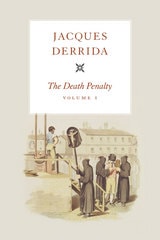
The Death Penalty, Volume I
Jacques Derrida
University of Chicago Press, 2013
With his signature genius and patient yet dazzling readings of an impressive breadth of texts, Derrida examines everything from the Bible to Plato to Camus to Jean Genet, with special attention to Kant and post–World War II juridical texts, to draw the landscape of death penalty discourses. Keeping clearly in view the death rows and execution chambers of the United States, he shows how arguments surrounding cruel and unusual punishment depend on what he calls an “anesthesial logic,” which has also driven the development of death penalty technology from the French guillotine to lethal injection. Confronting a demand for philosophical rigor, he pursues provocative analyses of the shortcomings of abolitionist discourse. Above all, he argues that the death penalty and its attendant technologies are products of a desire to put an end to one of the most fundamental qualities of our finite existence: the radical uncertainty of when we will die.
Arriving at a critical juncture in history—especially in the United States, one of the last Christian-inspired democracies to resist abolition—The Death Penalty is both a timely response to an important ethical debate and a timeless addition to Derrida’s esteemed body of work.
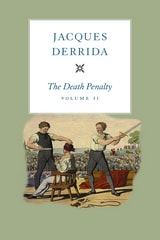
The Death Penalty, Volume II
Jacques Derrida
University of Chicago Press, 2017
Of central importance in this second volume is Kant’s explicit justification of the death penalty in the Metaphysics of Morals. Thoroughly deconstructing Kant’s position—which holds the death penalty as exemplary of the eye-for-an-eye Talionic law—Derrida exposes numerous damning contradictions and exceptions. Keeping the current death penalty in the United States in view, he further explores the “anesthesial logic” he analyzed in volume one, addressing the themes of cruelty and pain through texts by Robespierre and Freud, reading Heidegger, and—in a fascinating, improvised final session—the nineteenth-century Spanish Catholic thinker Donoso Cortés. Ultimately, Derrida shows that the rationality of the death penalty as represented by Kant involves an imposition of knowledge and calculability on a fundamental condition of non-knowledge—that we don’t otherwise know what or when our deaths will be. In this way, the death penalty acts out a phantasm of mastery over one’s own death.
Derrida’s thoughts arrive at a particular moment in history: when the death penalty in the United States is the closest it has ever been to abolition, and yet when the arguments on all sides are as confused as ever. His powerful analysis will prove to be a paramount contribution to this debate as well as a lasting entry in his celebrated oeuvre.
The Environment for Aging
Interpersonal, Social, and Spatial ContextsRussell A. Ward
University of Alabama Press, 1988
- Despite objective neighborhood problems, older persons express high neighborhood satisfaction. This partly reflects limited residential options, as well as a passive and vicarious spatial experience. The environment is experienced in diverse ways; however, urbanism and personal competence shape the nature and outcomes of person-environment interaction.
- Older persons have relatively robust interpersonal support networks. Perceived sufficiency of contact and support are more salient to morale than are more objective measures of interpersonal support.
- Although attitudes toward other older people are generally favorable, patterns of age identity reflect a detrimental view of aging. There is little evidence that socialization for aging or age-group solidarity make aging “easier” in this regard.
- Older persons exhibit moderate age homogeneity within their interpersonal networks, partly reflecting neighborhood age concentration. Contrary to the apparent benefits of planned age-segregated housing, age homogeneity in neighborhoods and networks does not contribute to well-being.
The Ethical Condition
Essays on Action, Person, and ValueMichael Lambek
University of Chicago Press, 2015
Organized chronologically, the essays begin among Malagasy speakers on the island of Mayotte and in northwest Madagascar. Building from ethnographic accounts there, they synthesize Aristotelian notions of practical judgment and virtuous action with Wittgensteinian notions of the ordinariness of ethical life and the importance of language, everyday speech, and ritual in order to understand how ethics are lived. They illustrate the multiple ways in which ethics informs personhood, character, and practice; explore the centrality of judgment, action, and irony to ethical life; and consider the relation of virtue to value. The result is a fully fleshed-out picture of ethics as a deeply rooted aspect of the human experience.
The Flight from Ambiguity
Essays in Social and Cultural TheoryDonald N. Levine
University of Chicago Press, 1985
The Future of Class in History
What's Left of the Social?Geoff Eley and Keith Nield
University of Michigan Press, 2007
Unifying concepts are essential when studying history. They provide students and scholars with ways to organize their thoughts, research, and writings. However, these concepts are also the focus of myriad conflicts within the field. Social history has experienced more than its share of such conflicts since its inception some forty years ago. In recent times the fields of “the social” and of “culture” have sometimes been presented as mutually exclusive and even hostile. Once again, conceptual innovation in history has been cast as a closure by which the new drives out the old: in this case, cultural history radically displacing social history. The Future of Class in History analyzes the effect of the conflict that followed the “turn to culture” in historical work by examining the use of class and demonstrates how practitioners in multiple fields can collaborate to produce the highest quality scholarship.
“Offers new ways of thinking about ‘class’ and ‘society’ in a world in which such categories have been radically called into question.”
—Sherry Ortner, University of California, Los Angeles
“Brilliantly charts social history’s past achievement, present dilemma, and future promise in a work distinguished by intellectual openness and generosity.”
—James A. Epstein, Vanderbilt University
“Eley and Nield seek to rescue the deluded follower of social history from the enormous condescension of the cultural turn. They succeed admirably, making the case for a new hybrid socio-cultural history.”
—Donald Reid, University of North Carolina at Chapel Hill
“This terrific double act has once again produced a text that demands to be read by all those tired of the juxtaposition of social and cultural histories and still interested in the problematic of class and the politics of its past and present.”
—James Vernon, University of California, Berkeley
“Eley and Nield tackle a contentious debate with a gracious plea for collaboration. Their strong desire to get past the ‘culture wars’ and to engage social and cultural historians in fruitful dialogue is a welcome move, stylishly executed.”
—Philippa Levine, University of Southern California
Geoff Eley is Professor of History at the University of Michigan.
Keith Nield is Professor Emeritus of History at the University of Hull.

The I in Team
Sports Fandom and the Reproduction of IdentityErin C. Tarver
University of Chicago Press, 2017
Why in the world, Tarver asks, would anyone care about how well a total stranger can throw a ball, or hit one with a bat, or toss one through a hoop? Because such activities and the massive public events that surround them form some of the most meaningful ritual identity practices we have today. They are a primary way we—as individuals and a collective—decide both who we are who we are not. And as such, they are also one of the key ways that various social structures—such as race and gender hierarchies—are sustained, lending a dark side to the joys of being a sports fan. Drawing on everything from philosophy to sociology to sports history, she offers a profound exploration of the significance of sports in contemporary life, showing us just how high the stakes of the game are.
The Imperative of Responsibility
In Search of an Ethics for the Technological AgeHans Jonas
University of Chicago Press, 1984
Hans Jonas here rethinks the foundations of ethics in light of the awesome transformations wrought by modern technology: the threat of nuclear war, ecological ravage, genetic engineering, and the like. Though informed by a deep reverence for human life, Jonas's ethics is grounded not in religion but in metaphysics, in a secular doctrine that makes explicit man's duties toward himself, his posterity, and the environment. Jonas offers an assessment of practical goals under present circumstances, ending with a critique of modern utopianism.
The Life Worth Living
Disability, Pain, and MoralityJoel Michael Reynolds
University of Minnesota Press, 2022
A philosophical challenge to the ableist conflation of disability and pain
More than 2,000 years ago, Aristotle said: “let there be a law that no deformed child shall live.” This idea is alive and well today. During the past century, Supreme Court Justice Oliver Wendell Holmes Jr. argued that the United States can forcibly sterilize intellectually disabled women and philosopher Peter Singer argued for the right of parents to euthanize certain cognitively disabled infants. The Life Worth Living explores how and why such arguments persist by investigating the exclusion of and discrimination against disabled people across the history of Western moral philosophy.
Joel Michael Reynolds argues that this history demonstrates a fundamental mischaracterization of the meaning of disability, thanks to the conflation of lived experiences of disability with those of pain and suffering. Building on decades of activism and scholarship in the field, Reynolds shows how longstanding views of disability are misguided and unjust, and he lays out a vision of what an anti-ableist moral future requires.
The Life Worth Living is the first sustained examination of disability through the lens of the history of moral philosophy and phenomenology, and it demonstrates how lived experiences of disability demand a far richer account of human flourishing, embodiment, community, and politics in philosophical inquiry and beyond.
Accessibility features: Retail e-book files for this title are screen-reader friendly with images accompanied by short alt text and/or extended descriptions.
The Limits of History
Constantin Fasolt
University of Chicago Press, 2003
So argues Constantin Fasolt in The Limits of History, an ambitious and pathbreaking study that conquers history's power by carrying the fight into the center of its domain. Fasolt considers the work of Hermann Conring (1606-81) and Bartolus of Sassoferrato (1313/14-57), two antipodes in early modern battles over the principles of European thought and action that ended with the triumph of historical consciousness. Proceeding according to the rules of normal historical analysis—gathering evidence, putting it in context, and analyzing its meaning—Fasolt uncovers limits that no kind of history can cross. He concludes that history is a ritual designed to maintain the modern faith in the autonomy of states and individuals. God wants it, the old crusaders would have said. The truth, Fasolt insists, only begins where that illusion ends.
With its probing look at the ideological underpinnings of historical practice, The Limits of History demonstrates that history presupposes highly political assumptions about free will, responsibility, and the relationship between the past and the present. A work of both intellectual history and historiography, it will prove invaluable to students of historical method, philosophy, political theory, and early modern European culture.
The Mana of Mass Society
William Mazzarella
University of Chicago Press, 2017
We often invoke the “magic” of mass media to describe seductive advertising or charismatic politicians. In The Mana of Mass Society, William Mazzarella asks what happens to social theory if we take that idea seriously. How would it change our understanding of publicity, propaganda, love, and power?
Mazzarella reconsiders the concept of “mana,” which served in early anthropology as a troubled bridge between “primitive” ritual and the fascination of mass media. Thinking about mana, Mazzarella shows, means rethinking some of our most fundamental questions: What powers authority? What in us responds to it? Is the mana that animates an Aboriginal ritual the same as the mana that energizes a revolutionary crowd, a consumer public, or an art encounter? At the intersection of anthropology and critical theory, The Mana of Mass Society brings recent conversations around affect, sovereignty, and emergence into creative contact with classic debates on religion, charisma, ideology, and aesthetics.

The Men of Cajamarca
A Social and Biographical Study of the First Conquerors of PeruBy James Lockhart
University of Texas Press, 1972
In November 1532, a group of 168 Spaniards seized the Inca emperor Atahuallpa in the town of Cajamarca, in the northern Peruvian highlands. Their act, quickly taken as a symbol of the conquest of a vast empire, brought them unprecedented rewards in gold and silver; it made them celebrities, gave them first choice of positions of honor and power in the new Peru of the Spaniards, and opened up the possibility of a splendid life at home in Spain, if they so desired. Thus they became men of consequence, at the epicenter of a swift and irrevocable transformation of the Andean region. Yet before that memorable day in Cajamarca they had been quite unexceptional, a reasonable sampling of Spaniards on expeditions all over the Indies at the time of the great conquests.
The Men of Cajamarca is perhaps the fullest treatment yet published of any group of early Spaniards in America. Part I examines general types, characteristics, and processes visible in the group as representative Spanish immigrants, central to the establishment of a Spanish presence in the New World’s richest land. The intention is to contribute to a changing image of the Spanish conqueror, a man motivated more by pragmatic self-interest than by any love of adventure, capable and versatile as often as illiterate and rough. Aiming at permanence more than new landfalls, these men created the governmental units and settlement distribution of much of Spanish America and set lasting patterns for a new society.
Part II contains the men’s individual biographies, ranging from a few lines for the most obscure to many pages of analysis for the best-documented figures. The author traces the lives of the men to their beginnings in Spain and follows their careers after the episode in Cajamarca.
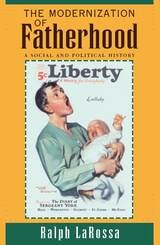
The Modernization of Fatherhood
A Social and Political HistoryRalph LaRossa
University of Chicago Press, 1997
LaRossa explains that during the interwar period the image of the father as economic provider, pal, and male role model, all in one, became institutionalized. Using personal letters and popular magazine and newspaper sources, he explores how the social and economic conditions of the Roaring Twenties and the Great Depression—a period of technical innovation as well as economic hardship—fused these expectations into a cultural ideal. With chapters on the U.S. Children's Bureau, the fathercraft movement, the magazine industry and the development of Parent's Magazine, and the creation of Father's Day, this book is a major addition to the growing literature on masculinity and fatherhood.
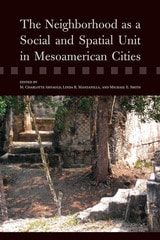
The Neighborhood as a Social and Spatial Unit in Mesoamerican Cities
Edited by M. Charlotte Arnauld, Linda R. Manzanilla, and Michael E. Smith
University of Arizona Press, 2012
The contributions gathered here provide fieldwork data to document the existence of sociopolitically distinct neighborhoods within ancient Mesoamerican settlements, building upon recent advances in multi-scale archaeological studies of these communities. Chapters illustrate the cultural variation across Mesoamerica, including data and interpretations on several different cities with a thematic focus on regional contrasts. This topic is relatively new and complex, and this book is a strong contribution for three interwoven reasons. First, the long history of research on the “Teotihuacan barrios” is scrutinized and withstands the test of new evidence and comparison with other Mesoamerican cities. Second, Maya studies of dense settlement patterns are now mature enough to provide substantial case studies. Third, theoretical investigation of ancient urbanization all over the world is now more complex and open than it was before, giving relevance to Mesoamerican perspectives on ancient and modern societies in time and space.
This volume will be of interest not only to scholars and student specialists of the Mesoamerican past but also to social scientists and urbanists looking to contrast ancient cultures worldwide.
The New Chicago
A Social and Cultural Analysisedited by John P. Koval, Larry Bennett, Michael I. J. Bennett, Fassil Demissie, Roberta Garner and Kiljoong Kim
Temple University Press, 2006
The Philosophy of Movement
An IntroductionThomas Nail
University of Minnesota Press, 2024
An influential thinker distills years of work on the philosophy of movement into one accessible account
Why are city dwellers worldwide walking on average ten percent faster than they were a decade ago? Why are newcomer immigrant groups so often maligned when migration has always constituted civilization? To analyze and understand the depth of the reasons, Thomas Nail suggests that it serves us well to turn to a philosophy of movement. Synthesizing and extending many years of his influential work, The Philosophy of Movement is a comprehensive argument for how motion is the primary force in human and natural history.
Nail critiques the bias toward stasis at the core of Western thought, asking: what would a philosophy that began with the primacy of movement look like? Interrogating the consequences of movement throughout history and in daily life in the twenty-first century, he draws connections and traces patterns between scales of reality, periods of history, and fields of knowledge. In our age of rapid movements shaped by accelerating climate change and ensuing mass global migration, as well as ubiquitous digital media, Nail provides a contemporary philosophy that helps us understand how we got here and how to grapple with these interlocking challenges.
With a foreword by philosopher Daniel W. Smith, The Philosophy of Movement: An Introduction is a must-read for scholars and students not only of philosophy but also history, anthropology, science and technology studies, mobility studies, and other fields across the humanities and social sciences.
The Philosophy of Vegetarianism
Daniel A. Dombrowski
University of Massachusetts Press, 1984
Daniel A. Dombrowski uses the tools and insights of these contemporary debates in order to better understand the strengths and weaknesses of ancient philosophical vegetarianism. He also uses the wisdom of the Greek vegetarians as an Archimedean point from which to critique both the opponents and the defenders of contemporary philosophical vegetarianism. The book includes an annotated bibliography of the current debates in this burgeoning field of scholarship.
The Politics of Responsibility
Chad Lavin
University of Illinois Press, 2007
Politics cannot function without responsibility, but there have been serious disagreements about how responsibility is to be understood and huge controversies about how it is to be distributed, rewarded, legislated, and enforced. The liberal notions of personal responsibility that have dominated political thinking in the West for more than a century are rooted in the familiar territory of individual will and causal blame, but these theories have been assailed as no longer adequate to explain or address the political demands of a global social structure. Informed by Marx, Foucault, and Butler, Chad Lavin argues for a "postliberal" theory of responsibility, formulating responsibility as a process that is anchored in a persistent ability to respond, not reproach. Lavin works this formulation through discussions of contemporary political issues such as globalization, police brutality, and abortion.
Rather than assigning individual blame, postliberal responsibility challenges the supposed autonomy of individual subjects by taking structural arguments into account. Lavin concludes that a liberal concept of responsibility gives rise to a moralistic and oppressive approach to social problems, while a postliberal approach highlights a shared responsibility for developing collective solutions to systemic problems. Postliberal responsibility not only suggests more generous and democratic responses to social ills, it also allows us to theorize a greater range of issues that demand political response.
The Positive Mind
Its Development and Impact on Modernity and PostmodernityEvaldas Nekrašas
Central European University Press, 2016
The Savage Mind
Claude Lévi-Strauss
University of Chicago Press, 1968
"No outline is possible; I can only say that reading this book is a most exciting intellectual exercise in which dialectic, wit, and imagination combine to stimulate and provoke at every page."—Edmund Leach, Man
"Lévi-Strauss's books are tough: very scholarly, very dense, very rapid in argument. But once you have mastered him, human history can never be the same, nor indeed can one's view of contemporary society. And his latest book, The Savage Mind, is his most comprehensive and certainly his most profound. Everyone interested in the history of ideas must read it; everyone interested in human institutions should read it."—J. H. Plumb, Saturday Review
"A constantly stimulating, informative and suggestive intellectual challenge."—Geoffrey Gorer, The Observer, London
The Sixties and the World Event, Volume 36
Christopher Connery and Hortense Spillers, eds.
Duke University Press, 0
Contributors to this issue represent a wide range of disciplines, from Latin American studies and sociology to political theory and literary criticism. They bring a global perspective to the social and political legacy of the 1960s, touching on the Caribbean, Latin America, the former USSR, China, and France, as well as the United States. One contributor presents a reexamination of Latin American armed struggles in the 1960s that foregrounds the relatively positive influence of these struggles on present-day Latin American society and politics. Another contributor translates a seminal essay on José Martí written by one of Cuba’s foremost intellectuals in the mid-1960s, when the course of the Cuban revolution was still uncertain. Yet another contributor considers the forces that have sought to neutralize the struggles and negate the gains of the African American liberation movement in the 1960s American South.
Contributors. John Beverley, Anthony Bogues, Christopher Connery, Roberto Fernández Retamar, Wlad Godzich, Boris Kagarlitsky, Nina Power, Hortense Spillers, Silvia D. Spitta, Alberto Toscano
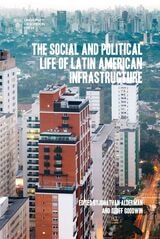
The Social and Political Life of Latin American Infrastructures
Edited by Jonathan Alderman and Geoff Goodwin
University of London Press, 2022
From roads, railways, statues, and bridges, infrastructure provides a unique lens through which to view our own national histories and societies. Serving as an important conduit between individuals and the state, infrastructure can help mediate citizenship, reshape social relations between people both within and across communities, and has the capacity to underpin—or indeed, undermine—nation-building.
Over the last century, infrastructure has transformed Latin America. Roads, railways, and airports have increased connectivity between spaces, peoples, and markets. Cables, switches, and tunnels have connected households to electricity grids, water systems, and digital technology. Public buildings, parks, and monuments have reshaped towns and cities and emerged as sites to construct and contest citizenship. Infrastructure has been welcomed and celebrated in Latin America, but it has also been resisted and destroyed.
Based on recent, original research, the essays in this collection cover a range of pressing infrastructural considerations, including sustainability, water conflict, extractive mining, and public housing in Brazil, Chile, Cuba, Colombia, Ecuador, and Mexico to better understand how infrastructure has reshaped Latin America over the past century.
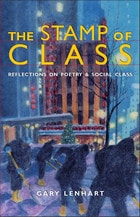
The Stamp of Class
Reflections on Poetry and Social ClassGary Lenhart
University of Michigan Press, 2005
-Lorenzo Thomas
The Stamp of Class explores the nature of reading poetry in the context of class and its themes and sheds new light on how this important yet little-heralded subject affects the poet's life and work.
While numerous works have taken up the question of race and gender as they relate to literary creation, this is the first book of its kind to probe the interplay between class and American poetry. Author Gary Lenhart considers poetry and class across a wide variety of time periods and poetic trends and reflects on a range of influential poets from the eighteenth to the twenty-first centuries.
The essays in The Stamp of Class deal with the question of class as reflected in the works of Tracie Morris, Tillie Olsen, Melvin Tolson, William Carlos Williams, Walt Whitman, and others. The work is rooted in the author's own experiences as a working-class poet and teacher and is the result of more than a decade of exploration.
Poet and scholar Gary Lenhart is Lecturer in English at Dartmouth College in Hanover, New Hampshire. His most recent books of poetry are Father and Son Night, Light Heart, and One at a Time. His essays and reviews have appeared in numerous magazines and journals, including the American Poetry Review, American Book Review, and Exquisite Corpse.
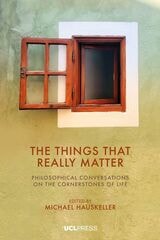
The Things That Really Matter
Philosophical Conversations on the Cornerstones of LifeMichael Hauskeller
University College London, 2022
While rooted in academic discourse, The Things That Really Matter comprehensively explores the most fundamental aspects of human life in approachable, non-technical language, adding fresh perspectives and new arguments and considerations that are designed to stimulate further debate. It features a series of conversations about the things in our life that we all, in one way or another, wrestle with if we are at all concerned about what kind of world we live in and what our role in it is: things like birth, age, and death, good and evil, the meaning of life, the nature of the self and the role the body plays for our identity, our gendered existence, love and faith, free will, beauty, and our experience of the sacred.
Situating abstract ideas in concrete experience, The Things That Really Matter encourages the reader to participate in an open-ended dialogue involving a variety of thinkers with different backgrounds and orientations. Lively and accessible, it shows thinking as a process and a collaborative endeavor that benefits from our talking to each other rather than against each other, featuring real conversations, where ideas are explored, tested, changed, and occasionally dropped. It is thinking in motion, personal yet universal.
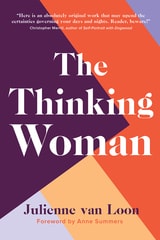
The Thinking Woman
Julienne van Loon
Rutgers University Press, 2021
While women have struggled to gain recognition in the discipline of philosophy, there is no shortage of brilliant female thinkers. What can these women teach us about ethics, politics, and the nature of existence, and how might we relate these big ideas back to the smaller everyday concerns of domestic life, work, play, love, and relationships?
Australian novelist Julienne van Loon goes on a worldwide quest to answer these questions, by engaging with eight world-renowned thinkers who have deep insights on humanity and society: media scholar Laura Kipnis, novelist Siri Hustvedt, political philosopher Nancy Holmstrom, psychoanalytic theorist Julia Kristeva, domestic violence reformer Rosie Batty, peace activist Helen Caldicott, historian Marina Warner, and feminist philosopher Rosi Braidotti. As she speaks to these women, she reflects on her own experiences. Combining the intimacy of a memoir with the intellectual stimulation of a theoretical text, The Thinking Woman draws novel connections between the philosophical, personal, and political. Giving readers a new appreciation for both the ethical complexities and wonder of everyday life, this book is inspiration to all thinking people.
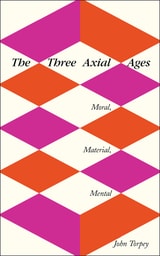
The Three Axial Ages
Moral, Material, MentalTorpey, John
Rutgers University Press, 2017
Torpey’s argument advances the idea that there are in fact three “Axial Ages,” instead of one original Axial Age and several subsequent, smaller developments. Each of the three ages contributed decisively to how humanity lives, and the difficulties it faces. The earliest, or original, Axial Age was a moral one; the second was material, and revolved around the creation and use of physical objects; and the third is chiefly mental, and focused on the technological. While there are profound risks and challenges, Torpey shows how a worldview that combines the strengths of all three ages has the potential to usher in a period of exceptional human freedom and possibility.

The Ties That Bind
Julius M. Moravcsik
Central European University Press, 2004
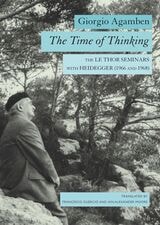
The Time of Thinking
The Le Thor Seminars with Heidegger (1966 and 1968)Giorgio Agamben
Seagull Books, 2026
A glimpse into philosopher Giorgio Agamben's formative encounter with Martin Heidegger, told through his notes from the Le Thor seminars.
What does it mean for thought to have a time of its own? In The Time of Thinking, Italian philosopher Giorgio Agamben presents the notes he took during two seminars with Martin Heidegger at Le Thor, Provence, preserving the compressed, working rhythm of a notebook while clarifying only what might otherwise be opaque. Throughout these pages, vignettes from Agamben's time in Le Thor—walking among pines to a precipitous viewpoint once painted by Paul Cézanne, sitting in quiet recollection—open onto reflections on memory, youth, and the shape of a life not yet “filled in.” Illustrated with archival materials, the book offers a small, carefully composed record of philosophical attention: not a retrospective monument, but a living trace of thought as it happens in time and place.
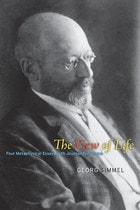
The View of Life
Four Metaphysical Essays with Journal AphorismsGeorg Simmel
University of Chicago Press, 2010
Published in 1918, The View of Life is Georg Simmel’s final work. Famously deemed “the brightest man in Europe” by George Santayana, Simmel addressed diverse topics across his essayistic writings, which influenced scholars in aesthetics, epistemology, and sociology. Nevertheless, certain core issues emerged over the course of his career—the genesis, structure, and transcendence of social and cultural forms, and the nature and conditions of authentic individuality, including the role of mindfulness regarding mortality. Composed not long before his death, The View of Life was, Simmel wrote, his “testament,” a capstone work of profound metaphysical inquiry intended to formulate his conception of life in its entirety.
Now Anglophone readers can at last read in full the work that shaped the argument of Heidegger’s Being and Time and whose extraordinary impact on European intellectual life between the wars was extolled by Jürgen Habermas. Presented alongside these seminal essays are aphoristic fragments from Simmel’s last journal, providing a beguiling look into the mind of one of the twentieth century’s greatest thinkers.

The World Is Gone
Philosophy in Light of the PandemicGregg Lambert
University of Minnesota Press, 2021
Part personal memoir, part philosophical reflection and written in the midst of the pandemic in 2021, The World Is Gone employs the Robinson Crusoe fable to launch an existential investigation of the effects of extreme isolation, profound boredom, nightly insomnia, and the fear of madness associated with the loss of a world populated by others.
Forerunners: Ideas First is a thought-in-process series of breakthrough digital publications. Written between fresh ideas and finished books, Forerunners draws on scholarly work initiated in notable blogs, social media, conference plenaries, journal articles, and the synergy of academic exchange. This is gray literature publishing: where intense thinking, change, and speculation take place in scholarship.
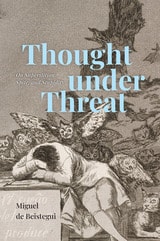
Thought under Threat
On Superstition, Spite, and StupidityMiguel de Beistegui
University of Chicago Press, 2022
Thought under Threat is an attempt to understand the tendencies that threaten thinking from within. These tendencies have always existed. But today they are on the rise and frequently encouraged, even in our democracies. People “disagree” with science and distrust experts. Political leaders appeal to the hearts and guts of “the people,” rather than their critical faculties. Stupidity has become a right, if not a badge of honor; superstition is on the rise; and spite is a major political force. Thinking is considered “elitist.”
To see those obstacles as vices of thought, Miguel de Beistegui argues, we need to understand stupidity not as a lack of intelligence or judgment, but as the tendency to raise false problems and trivial questions. Similarly, we need to see spite not as a moral vice, but as a poison that blurs and distorts our critical faculties. Finally, superstition is best described not as a set of false beliefs, but as a system that neutralizes one’s ability to think for oneself.
For de Beistegui, thinking is intrinsically democratic and a necessary condition for the exercise of freedom. Thought under Threat shows how a training of thought itself can be used to ward off those vices, lead to productive deliberation, and, ultimately, create a thinking community.
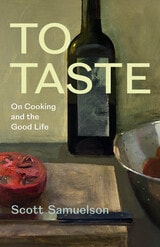
To Taste
On Cooking and the Good LifeScott Samuelson
University of Chicago Press, 2026
A philosopher-chef’s moving meditation on the pleasures of our shared humanity and how it can be most fully experienced in making and sharing food.
Our daily rhythms and most meaningful relationships center on the dining table, and so nothing is more essential to a good life than satisfying meals with friends and family. In To Taste, philosopher and sous-chef Scott Samuelson invites us into his kitchen, where he blends moving personal stories with insights from some of the world’s greatest thinkers into a rich but simple argument: our daily labor, in making food or otherwise, should connect us with other people.
For Samuelson, the pleasures of excellent cooking illuminate this value in particularly compelling ways. When we embrace the work required to prepare and share a good meal, we learn to honor tradition, practice hospitality, respect nature, cherish festivity, and nurture skill—all ethics that resist our increasingly dehumanized world. Ultimately, Samuelson argues that cooking, especially the elusive decision to season a dish “to taste,” contains the full mystery of human life.
Whether you’re a professional chef or your best culinary feat involves a can opener, To Taste can help you cook up a life that elicits a glorious mmm.
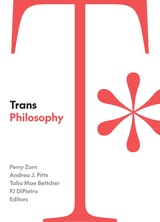
Trans Philosophy
Perry Zurn
University of Minnesota Press, 2024
Establishing trans philosophy as a unique field of inquiry, offering tools for our quest toward a more just and equitable world
Trans Philosophy defines this burgeoning and polymorphous discipline as philosophical work that is accountable to and illuminative of cross-cultural and global trans experiences, histories, and cultural productions. Across language and politics, feminism and phenomenology, and decolonial theory, it addresses trans worldmaking in all its beauty and mundanity.
Critically, the editors center the contributions of trans and gender-nonconforming philosophers from around the globe. Showcasing work from a range of emerging and established voices, Trans Philosophy addresses discrimination, embodiment, identity, language, and law, utilizing diverse philosophical methods to attend to significant intersections between trans experience and class, disability, race, nationality, and sexuality.
At a time when trans-exclusionary views are gaining traction in politics as well as philosophy, this volume urgently redraws the contours of trans discourse, centering the wisdom already generated in trans and other gender-disruptive communities.
Contributors: Megan Burke, Sonoma State U; Robin Dembroff, Yale U; Marie Draz, San Diego State U; Che Gossett, U of Pennsylvania; Ryan Gustafsson, U of Melbourne; Stephanie Kapusta, Dalhousie U; Tamsin Kimoto, Washington U, St. Louis; Hil Malatino, Pennsylvania State U and Rock Ethics Institute; Amy Marvin, Lafayette U; Marlene Wayar.
Retail e-book files for this title are screen-reader friendly.

Transition & Development in Algeria
Economic, Social and Cultural ChallengesMohammed Saad
Intellect Books, 2013
The contributors represent a range of expertise in economics, business management, sociology, linguistics, political science and cultural studies. Their diverse backgrounds and perspectives permit this publication to explore new avenues of debate, which represent a significant contribution to the understanding of the present problems and solutions.

Travel Technologies for All
Social and business opportunities in the creation of inclusive mobilitySimon Edwards
The Institution of Engineering and Technology, 2026

Twentieth-Century Texas
A Social and Cultural HistoryJohn W. Storey
University of North Texas Press, 2008