Results by title
4038 books match the query 'Social aspects' and 711 start with t
TV Family Values
Gender, Domestic Labor, and 1980s SitcomsAlice Leppert
Rutgers University Press, 2019

TV Snapshots
An Archive of Everyday LifeLynn Spigel
Duke University Press, 2022
TV Socialism
Anikó Imre
Duke University Press, 2016

Tactical Inclusion
Difference and Vulnerability in U.S. Military AdvertisingJeremiah Favara
University of Illinois Press, 2024
Compelling and eye-opening, Tactical Inclusion combines original analysis with personal experience to chart advertising’s role in building the all-volunteer military.
Taking Form, Making Worlds
Cartonera Publishers in Latin AmericaLucy Bell, Alex Ungprateeb Flynn, Patrick O’Hare
University of Texas Press, 2022
2023 LASA Visual Culture Studies Section Book Prize, Latin American Studies Association (LASA)
The first comprehensive study of cartonera, a vibrant publishing phenomenon born in Latin America.
A publishing phenomenon and artistic project, cartonera was born in the wake of Argentina’s 2001 economic crisis. Infused with a rebellious spirit, it has exploded in popularity, with hundreds of publishers across Latin America and Europe making colorful, low-cost books out of cardboard salvaged from the street. Taking Form, Making Worlds is the first comprehensive study of cartonera. Drawing on interdisciplinary research conducted across Mexico, Brazil, and Argentina, the authors show how this hands-on practice has fostered a politically engaged network of writers, artists, and readers. More than a social movement, cartonera uses texts, workshops, encounters, and exhibitions to foster community and engagement through open-ended forms that are at once artistic and social. For various groups including waste-pickers, Indigenous communities, rural children, and imprisoned women, cartonera provides a platform for unique stories and sparks collaborations that bring the walls of the “lettered city” tumbling down. In contexts of stigma and exclusion, cartonera collectives give form to a decolonial aesthetics of resistance, making possible a space of creative experimentation through which plural worlds can be brought to life.

Taking Leave, Taking Liberties
American Troops on the World War II Home FrontAaron Hiltner
University of Chicago Press, 2020
With unsettling clarity, Aaron Hiltner reveals what American troops really did on the home front. While GIs are imagined to have spent much of the war in Europe or the Pacific, before the run-up to D-Day in the spring of 1944 as many as 75% of soldiers were stationed in US port cities, including more than three million who moved through New York City. In these cities, largely uncontrolled soldiers sought and found alcohol and sex, and the civilians living there—women in particular—were not safe from the violence fomented by these de facto occupying armies. Troops brought their pocketbooks and demand for “dangerous fun” to both red-light districts and city centers, creating a new geography of vice that challenged local police, politicians, and civilians. Military authorities, focused above all else on the war effort, invoked written and unwritten legal codes to grant troops near immunity to civil policing and prosecution.
The dangerous reality of life on the home front was well known at the time—even if it has subsequently been buried beneath nostalgia for the “greatest generation.” Drawing on previously unseen military archival records, Hiltner recovers a mostly forgotten chapter of World War II history, demonstrating that the war’s ill effects were felt all over—including by those supposedly safe back home.
Taking the Naturalistic Turn, Or How Real Philosophy of Science Is Done
Edited Organized and Moderated by Werner Callebaut
University of Chicago Press, 1993
This innovative book presents candid, informal debates among scholars who examine the benefits and problems of studying science in the same way that scientists study the natural world. Callebaut achieves the effect of face-to-face engagement through separate interviews with participants.
Contributors include William Bechtel, Robert Brandon, Richard M. Burian, Donald T. Campbell, Patricia Churchland, Jon Elster, Ronald N. Giere, David L. Hull, Philip Kitcher, Karin Knorr Cetina, Bruno Latour, Richard Levins, Richard C. Lewontin, Elisabeth Lloyd, Helen Longino, Thomas Nickles, Henry C. Plotkin, Robert J. Richards, Alexander Rosenberg, Michael Ruse, Dudley Shapere, Elliott Sober, Ryan Tweney, and William Wimsatt.
"Why can't we have both theoretical ecology and natural histories, lovingly done?"—Philip Kitcher
"Don't underestimate the arrogance of philosophers!"—Elisabeth Lloyd
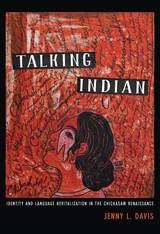
Talking Indian
Identity and Language Revitalization in the Chickasaw RenaissanceJenny L. Davis
University of Arizona Press, 2018
In south-central Oklahoma and much of “Indian Country,” using an Indigenous language is colloquially referred to as “talking Indian.” Among older Chickasaw community members, the phrase is used more often than the name of the specific language, Chikashshanompa’ or Chickasaw. As author Jenny L. Davis explains, this colloquialism reflects the strong connections between languages and both individual and communal identities when talking as an Indian is intimately tied up with the heritage language(s) of the community, even as the number of speakers declines.
Today a tribe of more than sixty thousand members, the Chickasaw Nation was one of the Native nations removed from their homelands to Oklahoma between 1837 and 1838. According to Davis, the Chickasaw’s dispersion from their lands contributed to their disconnection from their language over time: by 2010 the number of Chickasaw speakers had radically declined to fewer than seventy-five speakers.
In Talking Indian, Davis—a member of the Chickasaw Nation—offers the first book-length ethnography of language revitalization in a U.S. tribe removed from its homelands. She shows how in the case of the Chickasaw Nation, language programs are intertwined with economic growth that dramatically reshape the social realities within the tribe. She explains how this economic expansion allows the tribe to fund various language-learning forums, with the additional benefit of creating well-paid and socially significant roles for Chickasaw speakers. Davis also illustrates how language revitalization efforts are impacted by the growing trend of tribal citizens relocating back to the Nation.
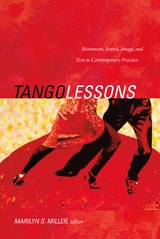
Tango Lessons
Movement, Sound, Image, and Text in Contemporary PracticeMarilyn G. Miller, ed.
Duke University Press, 2014
Contributors. Esteban Buch, Oscar Conde, Antonio Gómez, Morgan James Luker, Carolyn Merritt, Marilyn G. Miller, Fernando Rosenberg, Alejandro Susti
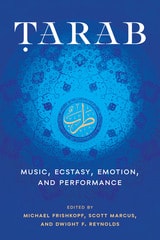
Tarab
Music, Ecstasy, Emotion, and PerformanceEdited by Michael Frishkopf, Scott Marcus, and Dwight F. Reynolds
University of Texas Press, 2025
In Arab culture, at the ineffable point where music meets emotion, lies ṭarab. Often glossed as the ecstasy experienced and expressed when performing or listening to singing, instrumental works, and recitations of poetry, ṭarab is both a practice and an orienting concept central to musical aesthetics and spirituality characteristic of Middle Eastern cultures.
Gathering fifteen essays by scholars of music, affect, literature, religion, and education, Ṭarab extends the study of ṭarab historically, geographically, and sociologically. Historical essays explore ṭarab’s role in the medieval Middle East and the Ottoman Empire. Turning to the modern era, authors examine ṭarab and related concepts in Egypt, Albania, and Iraq, and among Turkish Roma and Lebanese Maronite Christians. The contributors also address contemporary practitioners and the intersections of ṭarab and maqām, belly dancing, music streaming, and university music ensembles. Situating this unique cultural concept in a global context, these studies enrich the story of ṭarab and provide new insight into music’s powerful emotional appeal.

Taste of Control
Food and the Filipino Colonial Mentality under American RuleR. Alexander D. Orquiza, Jr.
Rutgers University Press, 2020
Winner of the 2021 Gourmand Awards, Asian Section & Culinary History Section
Filipino cuisine is a delicious fusion of foreign influences, adopted and transformed into its own unique flavor. But to the Americans who came to colonize the islands in the 1890s, it was considered inferior and lacking in nutrition. Changing the food of the Philippines was part of a war on culture led by Americans as they attempted to shape the islands into a reflection of their home country.
Taste of Control tells what happened when American colonizers began to influence what Filipinos ate, how they cooked, and how they perceived their national cuisine. Food historian René Alexander D. Orquiza, Jr. turns to a variety of rare archival sources to track these changing attitudes, including the letters written by American soldiers, the cosmopolitan menus prepared by Manila restaurants, and the textbooks used in local home economics classes. He also uncovers pockets of resistance to the colonial project, as Filipino cookbooks provided a defense of the nation’s traditional cuisine and culture.
Through the topic of food, Taste of Control explores how, despite lasting less than fifty years, the American colonial occupation of the Philippines left psychological scars that have not yet completely healed, leading many Filipinos to believe that their traditional cooking practices, crops, and tastes were inferior. We are what we eat, and this book reveals how food culture served as a battleground over Filipino identity.

Tattoo
Bodies, Art, and Exchange in the Pacific and the WestNicholas Thomas, Anna Cole, and Bronwen Douglas, eds.
Duke University Press, 2005
The contributors examine the contexts in which Pacific tattoos were “discovered” by Europeans, track the history of the tattooing of Europeans visiting the region, and look at how Pacific tattooing was absorbed, revalued, and often suppressed by agents of European colonization. They consider how European art has incorporated tattooing, and they explore contemporary manifestations of Pacific tattoo art, paying particular attention to the different trajectories of Samoan, Tahitian, and Maori tattooing and to the meaning of present-day appropriations of tribal tattoos. New research has uncovered a fascinating visual archive of centuries-old tattoo images, and this richly illustrated volume includes a number of those—many published here for the first time—alongside images of contemporary tattooing in Polynesia and Europe. Tattoo offers a tantalizing glimpse into the plethora of stories and cross-cultural encounters that lie between the blood on a sailor’s backside in the eighteenth century and the hammering of a Samoan tattoo tool in the twenty-first.
Contributors. Peter Brunt, Anna Cole, Anne D’Alleva, Bronwen Douglas, Elena Govor, Makiko Kuwahara, Sean Mallon, Linda Waimarie Nikora, Mohi Rua, Cyril Siorat, Ngahuia Te Awekotuku, Nicholas Thomas, Joanna White

Taylored Lives
Narrative Productions in the Age of Taylor, Veblen, and FordMartha Banta
University of Chicago Press, 1993
Teaching Composition As A Social Process
Bruce McComiskey
Utah State University Press, 2000
Bruce McComiskey is a strong advocate of social approaches to teaching writing. However, he opposes composition teaching that relies on cultural theory for content, because it too often prejudges the ethical character of institutions and reverts unnecessarily to product-centered practices in the classroom. He opposes what he calls the "read-this-essay-and-do-what-the-author-did method of writing instruction: read Roland Barthes's essay 'Toys' and write a similar essay; read John Fiske's essay on TV and critique a show."
McComiskey argues for teaching writing as situated in discourse itself, in the constant flow of texts produced within social relationships and institutions. He urges writing teachers not to neglect the linguistic and rhetorical levels of composing, but rather to strengthen them with attention to the social contexts and ideological investments that pervade both the processes and products of writing.
A work with a sophisticated theory base, and full of examples from McComiskey's own classrooms, Teaching Composition as a Social Process will be valued by experienced and beginning composition teachers alike.
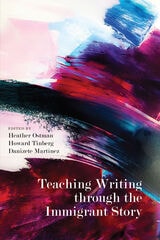
Teaching Writing through the Immigrant Story
Heather Ostman
Utah State University Press, 2021
Each of the chapters recognizes the prevalence of immigrant students in writing classrooms across the United States—including foreign-born, first- and second-generation Americans, and more—and the myriad opportunities and challenges those students present to their instructors. These contributors have seen the validity in the stories and experiences these students bring to the classroom—evidence of their lifetimes of complex learning in both academic and nonacademic settings. Like thousands of college-level instructors in the United States, they have immigrant stories of their own. The immigrant “narrative” offers a unique framework for knowledge production in which students and teachers may learn from each other, in which the ordinary power dynamic of teacher and students begins to shift, to enable empathy to emerge and to provide space for an authentic kind of pedagogy.
By engaging writing and literature teachers within and outside the classroom, Teaching Writing through the Immigrant Story speaks to the immigrant narrative as a viable frame for teaching writing—an opportunity for building and articulating knowledge through academic discourse. The book creates a platform for immigration as a writing and literary theme, a framework for critical thinking, and a foundation for significant social change and advocacy.
Contributors: Tuli Chatterji, Katie Daily-Bruckner, Libby Garland, Silvia Giagnoni, Sibylle Gruber, John Havard, Timothy Henderson, Brennan Herring, Lilian Mina, Rachel Pate, Emily Schnee, Elizabeth Stone
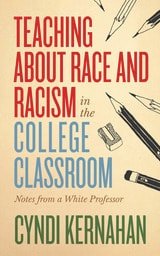
Teaching about Race and Racism in the College Classroom
Notes from a White ProfessorCyndi Kernahan
West Virginia University Press, 2019
Teaching about race and racism can be a difficult business. Students and instructors alike often struggle with strong emotions, and many people have robust preexisting beliefs about race. At the same time, this is a moment that demands a clear understanding of racism. It is important for students to learn how we got here and how racism is more than just individual acts of meanness. Students also need to understand that colorblindness is not an effective anti-racism strategy.
In this book, Cyndi Kernahan argues that you can be honest and unflinching in your teaching about racism while also providing a compassionate learning environment that allows for mistakes and avoids shaming students. She provides evidence for how learning works with respect to race and racism along with practical teaching strategies rooted in that evidence to help instructors feel more confident. She also differentiates between how white students and students of color are likely to experience the classroom, helping instructors provide a more effective learning experience for all students.
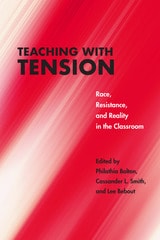
Teaching with Tension
Race, Resistance, and Reality in the ClassroomEdited by Philathia Bolton, Cassander L. Smith, and Lee Bebout
Northwestern University Press, 2019
Drawing together personal reflection, pedagogical strategies, and critical theory, Teaching with Tension offers concrete examinations that will foster student learning. The essays are organized into three thematic sections: "Teaching in Times and Places of Struggle" examines the dynamics of teaching race during the current moment, marked by neoconservative politics and twenty-first century freedom struggles. "Teaching in the Neoliberal University" focuses on how pressures and exigencies of neoliberalism (such as individualism, customer-service models of education, and online courses) impact the way in which race is taught and conceptualized in college classes. The final section, "Teaching How to Read Race and (Counter)Narratives," homes in on direct strategies used to historicize race in classrooms comprised of millennials who grapple with race neutral ideologies. Taken together, these sections and their constitutive essays offer rich and fruitful insight into the complex dynamics of contemporary race and ethnic studies education.

Tear Down the Walls
White Radicalism and Black Power in 1960s RockPatrick Burke
University of Chicago Press, 2021
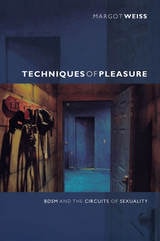
Techniques of Pleasure
BDSM and the Circuits of SexualityMargot Weiss
Duke University Press, 2012
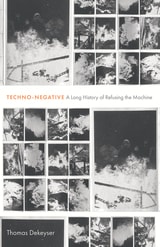
Techno-Negative
A Long History of Refusing the MachineThomas Dekeyser
University of Minnesota Press, 2026
A radical history of technology told through acts of resistance, not progress
The history of technology is often told as a history of progress, moving optimistically and inevitably from one emancipatory invention to the next. Techno-Negative turns this story on its head, taking us on a journey to the critical junctures where people have pointedly rejected and tried to undo, rather than adopt, new technologies. Beginning with Archimedes’s decision to destroy his own war machines, this book explores the will to negate technology as a deep—but persistently condemned—current in history.
As he presents a new theory of technological power, Thomas Dekeyser argues that technologies, never neutral, operate as “ontological policing,” drawing the boundaries of humanness as they are unequally leveraged by select groups. Looking beyond the Luddites to medieval monks banning tools, seventeenth-century loom burners, revolutionary lantern smashers, and computer arsonists, Dekeyser shows how people have long recognized and resisted the machine as a violent, sometimes deadly force implicated in defining who counts as human and whose lives (and ways of life) are worth saving.
Against the ubiquitous demands to reform or accelerate technological “advancement” that have failed to disrupt our present, Dekeyser proposes a spirited alternative: abolition. He challenges us to rethink the terms of our technological present and future. In a time when Big Tech grows increasingly enmeshed with authoritarian control, Techno-Negative is a conceptual declaration, and source of inspiration, for those searching for a new paradigm of technological politics.
Retail e-book files for this title are screen-reader friendly.
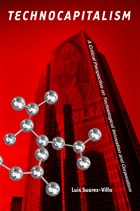
Technocapitalism
A Critical Perspective on Technological Innovation and CorporatismLuis Suarez-Villa
Temple University Press, 2012
In his provocative book Technocapitalism, Luis Suarez-Villa addresses this phenomenon from the perspective of radical political economy and social criticism. Grounded in the premise that relations of power influence how human creativity and technology are exploited by the new corporatism, the author argues that new forms of democratic participation and resistance are needed, if the social pathologies created by this new version of capitalism are to be checked.
Considering the new sectors affected by technocapitalism, such as biotechnology, nanotechnology, bioinformatics, and genomics, Suarez-Villa deciphers the common threads of power and organization that drive their corporatization. These new sectors, and the corporate apparatus set up to extract profit and power through them, are imposing standards, creating business models, molding social governance, and influencing social relations at all levels. The new reality they create is likely to affect most every aspect of human existence, including work, health, life, and nature itself.
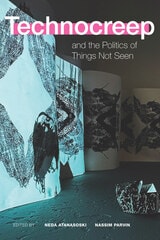
Technocreep and the Politics of Things Not Seen
Neda Atanasoski and Nassim Parvin, editors
Duke University Press, 2025
Contributors. Neda Atanasoski, Katherine Bennett, Iván Chaar López, Sushmita Chatterjee, Hayri Dortdivanlioglu, Sanaz Haghani, Jacob Hagelberg, Jennifer Hamilton, Antonia Hernández, Marjan Khatibi, Tamara Kneese, Erin McElroy, Vernelle A. A. Noel, Jessica Olivares, Nassim Parvin, Beth Semel, Renee Shelby, Tanja Wiehn
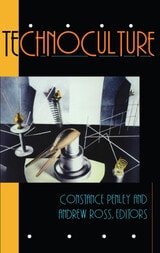
Technoculture
Constance Penley
University of Minnesota Press, 1991

Technological Turf Wars
A Case Study of the Computer Antivirus IndustryJessica Johnston
Temple University Press, 2008
In Technological Turf Wars, Jessica Johnston analyzes the tensions and political dilemmas that coexist in the interrelationship among science, technology and society. Illustrating how computer security is as concerned with social relationships as it is with technology, Johnston provides an illuminating ethnography that considers corporate culture and the workplace environment of the antivirus industry.
Using a qualitative, interdisciplinary approach, which combines organizational and security studies with critical and social analysis of science and technology, Johnston questions the motivations, contradictions and negotiations of antivirus professionals. She examines the tensions between the service ethics and profit motives—does the industry release viruses to generate demand for antivirus software?—and considers the dynamics within companies by looking at facets such as gender bias and power politics. Technological Turf Wars is an informed, enlightened and entertaining view of how the production of computer security technology is fraught with social issues.
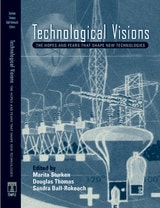
Technological Visions
Hopes And Fears That Shape New TechnologiesMarita Sturken
Temple University Press, 2004
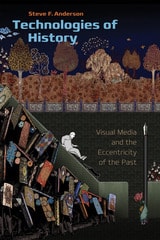
Technologies of History
Visual Media and the Eccentricity of the PastSteve F. Anderson
Dartmouth College Press, 2011
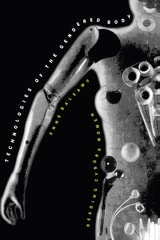
Technologies of the Gendered Body
Reading Cyborg WomenAnne Balsamo
Duke University Press, 1996
Technologies of the Gendered Body combines close readings of popular texts—such as Margaret Atwood’s novel The Handmaid’s Tale, the movie Pumping Iron II: The Women, cyberpunk magazines, and mass media—with analyses of medical literature, public policy documents, and specific technological practices. Balsamo describes the ways in which certain biotechnologies are ideologically shaped by gender considerations and other beliefs about race, physical abilities, and economic and legal status. She presents a view of the conceptual system that structures individuals’ access to and participation in these technologies, as well as an overview of individuals’ rights and responsibilities in this sometimes baffling area. Examining the ways in which the body is gendered in its interactions with new technologies of corporeality, Technologies of the Gendered Body counters the claim that in our scientific culture the material body has become obsolete. With ample evidence that the techno-body is always gendered and marked by race, this book sets the stage for a renewed feminist engagement with contemporary technological narratives.
Technology Assessment
A Feminist PerspectiveJanine Marie Morgall
Temple University Press, 1993
How well does technology assessment (TA) relate to women's lives? If women are underrepresented in the long-term research and development process that leads to scientific advancements, how can TA understand technology aimed at women? It can't, claims the author of Technology Assessment: A Feminist Perspective.
A relative new field, TA examines the social aspect of technology and provides information critical to decision making, policy development, safety standards, and avoiding litigation. Until gender analysis is introduced into all assessments of new technologies, Janine Marie Morgall argues, TA can't evaluate technology's impact upon women.
Morgall investigates two areas of technology that affect women's lives: productive (clerical work) and reproductive (health care). Case studies of clerical workers and health care recipients illustrate gender-specify effects of technology ranging from word processors to treatments for infertility. These studies convincingly demonstrate that TA encourages innovations without questioning their effects on women. Issues of dominance, control, and conflicting values emerge from Morgall's feminist perspective and support her call for gender analysis of new technologies.
In the series Labor and Social Change, edited by Paula Rayman and Carmen Sirianni.
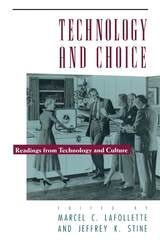
Technology and Choice
Readings from Technology and CultureEdited by Marcel C. LaFollette and Jeffrey K. Stine
University of Chicago Press, 1991
Through historical accounts that span centuries and national boundaries, exploring the complexity of a nuclear power plant and the apparent simplicity of an electrical plug, the contributors to this volume dramatically illustrate the push and pull between technology and society. General topics addressed include:
- Regulation of private industry
- Social acceptance of commercial innovation
- Negative perceptions of the "Technological Age"
- Cultural and artistic features of technology
These essays were originally published in the journal Technology and Culture
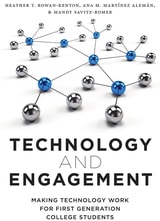
Technology and Engagement
Making Technology Work for First Generation College StudentsRowan-Kenyon, Heather T.
Rutgers University Press, 2018
Technology and Engagement is based on a four-year study of how first generation college students use social media, aimed at improving their transition to and engagement with their university. Through web technology, including social media sites, students were better able to maintain close ties with family and friends from home, as well as engage more with social and academic programs at their university. This ‘ecology of transition’ was important in keeping the students focused on why they were in college, and helped them become more integrated into the university setting. By showing the gains in campus capital these first-generation college students obtained through social media, the authors offer concrete suggestions for how other universities and college-retention programs can utilize the findings to increase their own retention of first-generation college students.
Technology and Literacy in the 21st Century
The Importance of Paying AttentionCynthia L. Selfe. Foreword by Hugh Burns
Southern Illinois University Press, 1999
Part critique of existing policy and practice, part call-to-action, Technology and Literacy in the Twenty-First Century explores the complex linkage between technology and literacy that has come to characterize American culture and its public educational system at the end of the twentieth century.
To provide a specific case study of this complex cultural formation, award-winning educator Cynthia L. Selfe discusses the Technology Literacy Challenge, an official, federally sponsored literacy project begun in 1996 that has changed—at fundamentally important levels—the definition of literacy and the practices recognized as constituting literate behavior in America. Selfe tries to identify the effects of this new literacy agenda, focusing specifically on what she calls "serious and shameful" inequities it fosters in our culture and in the public education system: among them, the continuing presence of racism, poverty, and illiteracy.
She describes how the national project to expand technological literacy came about, what effects it has yielded, why the American public has supported this project, and how teachers of English, language arts, and composition have contributed to this project, despite their best intentions.
A primary goal of this study is to make teachers of English and composition increasingly aware of the new literacy agenda and to suggest how they might positively influence its shape and future direction, both in the classroom and in the community. This awareness is an integral part of educators' larger professional responsibility to understand the way in which our culture thinks about and values literacy. Perhaps even more important, argues Selfe, this awareness is part of teachers' ethical responsibility to understand how literacy and literacy instruction directly and continually affect the lived experiences of the individuals and families with whom teachers interact.
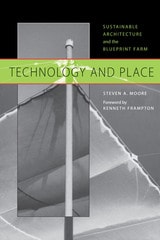
Technology and Place
Sustainable Architecture and the Blueprint FarmBy Steven A. Moore
University of Texas Press, 2001
Developing "sustainable" architectural and agricultural technologies was the intent behind Blueprint Farm, an experimental agricultural project designed to benefit farm workers displaced by the industrialization of agriculture in the Rio Grande Valley of Texas. Yet, despite its promise, the very institutions that created Blueprint Farm terminated the project after just four years (1987-1991).
In this book, Steven Moore demonstrates how the various stakeholders' competing definitions of "sustainability," "technology," and "place" ultimately doomed Blueprint Farm. He reconstructs the conflicting interests and goals of the founders, including Jim Hightower and the Texas Department of Agriculture, Laredo Junior College, and the Center for Maximum Potential Building Systems, and shows how, ironically, they unwittingly suppressed the self-determination of the very farm workers the project sought to benefit. From the instructive failure of Blueprint Farm, Moore extracts eight principles for a regenerative architecture, which he calls his "nonmodern manifesto."
Technology and Religion
Remaining Human Co-created WorldNoreen Herzfeld
Templeton Press, 2009
Technology is changing all the time, but does it also have the ability to change us and the way we approach religion and spirituality? In Technology and Religion: Remaining Human in a Co-created World, Noreen Herzfeld examines this and other provocative questions as she provides an accessible and fascinating overview of the relationship between religion and the ever-broadening world of technology.
The result is a multifaceted look at the ongoing dialogue between these two subjects that are not commonly associated with one another. This volume is the third title published in the new Templeton Science and Religion Series.
Technology and the Good Life?
Edited by Eric Higgs, Andrew Light, and David Strong
University of Chicago Press, 2000
Technology and the Good Life? uses a careful collective analysis of Albert Borgmann's controversial and influential ideas as a jumping-off point from which to address questions such as these about the role and significance of technology in our lives. Contributors both sympathetic and critical examine Borgmann's work, especially his "device paradigm"; apply his theories to new areas such as film, agriculture, design, and ecological restoration; and consider the place of his thought within philosophy and technology studies more generally.
Because this collection carefully investigates the issues at the heart of how we can take charge of life with technology, it will be a landmark work not just for philosophers of technology but for students and scholars in the many disciplines concerned with science and technology studies.
Technology and the Resilience of Metropolitan Regions
Edited by Michael E. Pagano
University of Illinois Press, 2015
In this new collection, Michael A. Pagano curates engagement with such questions by public intellectuals, stakeholders, academics, policy analysts, and citizens. Each essay explores issues related to the impact and opportunities technology provides in government and citizenship, health care, workforce development, service delivery to citizens, and metropolitan growth. As the authors show, rapidly emerging technologies and access to such technologies shape the ways people and institutions interact in the public sphere and private marketplace. The direction of metropolitan growth and development, in turn, depends on access to appropriate technology scaled and informed by the individual, household, and community needs of the region.
Contributors include Randy Blankenhorn, Bénédicte Callan, Jane Fountain, Sandee Kastrul, Karen Mossberger, Dan O'Neil, Michelle Russell, Alfred Tatum, Stephanie Truchan, Darrel West, and Howard Wial.
Technology, Pessimism, and Postmodernism
Yaron Ezrahi
University of Massachusetts Press, 1995
This collection of essays from international scholars across various disciplines addresses the compelling theme of technological pessimism—the conviction that technology has simultaneously given humanity the means to achieve unlimited progress while simultaneously providing the tools for self-destruction and the degradation of our most cherished values.
Edited by Yaron Ezrahi, Everett Mendelsohn, and Howard P. Segal, this intellectually rigorous anthology examines the paradoxes and contradictions inherent in contemporary technological society through a postmodern lens. The contributors explore how technology shapes human experience, culture, and social structures in the late twentieth century, questioning the foundational narratives of technological progress and enlightenment that have dominated Western thought.
Technoscientific Imaginaries
Conversations, Profiles, and MemoirsEdited by George E. Marcus
University of Chicago Press, 1995
In these penetrating essays, twenty-four distinguished contributors from a broad range of fields present the voices of the scientists themselves—through interviews, conversations, and memoirs. We hear from Lithuanian physicists who discuss science after Communism and their own fantasies about what Western science is; a Japanese-American woman struggling with her ambivalence over designing nuclear weapons; political activists in India who examine relations among science, environmental politics, and government ideology in the aftermath of the Bhopal disaster; and many others, including biologists, physicians, corporate researchers, and scientists working with virtual reality and other cutting-edge technologies.
The contributors to this volume are Mario Biagioli, Maria E. Carson, Gary Lee Downey, Joseph Dumit, Michael M. J. Fischer, Mary-Jo DelVecchio Good, Hugh Gusterson, Diana L. L. Hill, James Holston, Herbert C. Hoover, Jr., Gudrun Klein, Leszek Koczanowicz, Irene Kuter, Kim Laughlin, Rita Linggood, George E. Marcus, Kathryn Milun, Livia Polanyi, Christopher Pound, Simon Powell, Paul Rabinow, Kathleen Stewart, Allucquere Rosanne Stone, and Sharon Traweek.
Tejano South Texas
A Mexican American Cultural ProvinceBy Daniel D. Arreola
University of Texas Press, 2002
Winner, John Brinckerhoff Jackson Prize, Association of American Geographers
On the plains between the San Antonio River and the Rio Grande lies the heartland of what is perhaps the largest ethnic region in the United States, Tejano South Texas. In this cultural geography, Daniel Arreola charts the many ways in which Texans of Mexican ancestry have established a cultural province in this Texas-Mexico borderland that is unlike any other Mexican American region.
Arreola begins by delineating South Texas as an environmental and cultural region. He then explores who the Tejanos are, where in Mexico they originated, and how and where they settled historically in South Texas. Moving into the present, he examines many factors that make Tejano South Texas distinctive from other Mexican American regions—the physical spaces of ranchos, plazas, barrios, and colonias; the cultural life of the small towns and the cities of San Antonio and Laredo; and the foods, public celebrations, and political attitudes that characterize the region. Arreola's findings thus offer a new appreciation for the great cultural diversity that exists within the Mexican American borderlands.
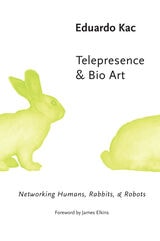
Telepresence and Bio Art
Networking Humans, Rabbits and RobotsEduardo Kac
University of Michigan Press, 2005
-Edward Lucie-Smith, author of Visual Arts in the 20th Century
"His works introduce a vital new meaning into what had been known as the creative process while at the same time investing the notion of the artist-inventor with an original social and ethical responsibility."
-Frank Popper, author of Origins and Development of Kinetic Art
"Kac's radical approach to the creation and presentation of the body as a wet host for artificial memory and 'site-specific' work raises a variety of important questions that range from the status of memory in digital culture to the ethical dilemmas we are facing in the age of bioengineering and tracking technology."
-Christiane Paul, Whitney Museum of Art
For nearly two decades Eduardo Kac has been at the cutting edge of media art, first inventing early online artworks for the web and continuously developing new art forms that involve telecommunications and robotics as a new platform for art. Interest in telepresence, also known as telerobotics, exploded in the 1990s, and remains an important development in media art. Since that time, Kac has increasingly moved into the fields of biology and biotechnology.
Telepresence and Bio Art is the first book to document the evolution of bio art and the aesthetic development of Kac, the creator of the "artist's gene" as well as the controversial glow-in-the-dark, genetically engineered rabbit Alba. Kac covers a broad range of topics within media art, including telecommunications media, interactive systems and the Internet, telematics and robotics, and the contact between electronic art and biotechnology. Addressing emerging and complex topics, this book will be essential reading for anyone interested in contemporary art.
Television and the Afghan Culture Wars
Brought to You by Foreigners, Warlords, and ActivistsWazhmah Osman
University of Illinois Press, 2020
Fieldwork from across Afghanistan allowed Osman to record the voices of many Afghan media producers and people. Afghans offer their own seldom-heard views on the country's cultural progress and belief systems, their understandings of themselves, and the role of international interventions. Osman analyzes the impact of transnational media and foreign funding while keeping the focus on local cultural contestations, productions, and social movements. As a result, she redirects the global dialogue about Afghanistan to Afghans and challenges top-down narratives of humanitarian development.
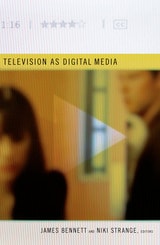
Television as Digital Media
James Bennett and Niki Strange, eds.
Duke University Press, 2011
Introducing the collection, James Bennett explains how television as digital media is a non-site-specific, hybrid cultural and technological form that spreads across platforms such as mobile phones, games consoles, iPods, and online video services, including YouTube, Hulu and the BBC’s iPlayer. Television as digital media threatens to upset assumptions about television as a mass medium that has helped define the social collective experience, the organization of everyday life, and forms of sociality. As often as we are promised the convenience of the television experience “anytime, anywhere,” we are invited to participate in communities, share television moments, and watch events live. The essays in this collection demonstrate the historical, production, aesthetic, and audience changes and continuities that underpin the emerging meaning of television as digital media.
Contributors. James Bennett, William Boddy, Jean Burgess, John Caldwell, Daniel Chamberlain, Max Dawson, Jason Jacobs, Karen Lury, Roberta Pearson, Jeanette Steemers, Niki Strange, Julian Thomas, Graeme Turner
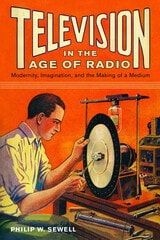
Television in the Age of Radio
Modernity, Imagination, and the Making of a MediumSewell, Philip W
Rutgers University Press, 2014
Television existed for a long time before it became commonplace in American homes. Even as cars, jazz, film, and radio heralded the modern age, television haunted the modern imagination. During the 1920s and 1930s, U.S. television was a topic of conversation and speculation. Was it technically feasible? Could it be commercially viable? What would it look like? How might it serve the public interest? And what was its place in the modern future? These questions were not just asked by the American public, but also posed by the people intimately involved in television’s creation. Their answers may have been self-serving, but they were also statements of aspiration. Idealistic imaginations of the medium and its impact on social relations became a de facto plan for moving beyond film and radio into a new era.
In Television in the Age of Radio, Philip W. Sewell offers a unique account of how television came to be—not just from technical innovations or institutional struggles, but from cultural concerns that were central to the rise of industrial modernity. This book provides sustained investigations of the values of early television amateurs and enthusiasts, the fervors and worries about competing technologies, and the ambitions for programming that together helped mold the medium.
Sewell presents a major revision of the history of television, telling us about the nature of new media and how hopes for the future pull together diverse perspectives that shape technologies, industries, and audiences.
Television, History, and American Culture
Feminist Critical EssaysMary Beth Haralovich and Lauren Rabinovitz, eds.
Duke University Press, 1999
The essays collected here focus on women in front of, behind, and on the TV screen, as producers, viewers, and characters. Using feminist and historical criticism, the contributors investigate how television has shaped our understanding of gender, power, race, ethnicity, and sexuality from the 1950s to the present. The topics range from the role that women broadcasters played in radio and early television to the attempts of Desilu Productions to present acceptable images of Hispanic identity, from the impact of TV talk shows on public discourse and the politics of offering viewers positive images of fat women to the negotiation of civil rights, feminism, and abortion rights on news programs and shows such as I Spy and Peyton Place.
Innovative and accessible, this book will appeal to those interested in women’s studies, American studies, and popular culture and the critical study of television.
Contributors. Julie D’Acci, Mary Desjardins, Jane Feuer, Mary Beth Haralovich, Michele Hilmes, Moya Luckett, Lauren Rabinovitz, Jane M. Shattuc, Mark Williams
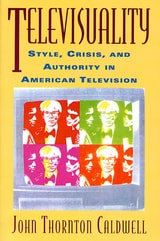
Televisuality
Caldwell, John T
Rutgers University Press, 1995
“Holling is tormented by Koyaanisqatsi dreams until he goes out and does the wild thing with a young stag . . . . ”––Synopsis from production company “Bible,” Northern Exposure, March 30, 1992
The collision of auteurism and rap––couched by primetime producers in the Northern Exposure script––was actually rather commonplace by the early 1990s. Series, and even news broadcasts, regularly engineered their narratives around highly coded aesthetic and cultural fragments, with a kind of ensemble iconography. Televisuality interrogates the nature of such performances as an historical phenomenon, an aesthetic and industrial practice, and as a socially symbolic act. This book suggests that postmodernism does not fully explain television's stylistic exhibitionism and that a reexamination of “high theory” is in order. Caldwell’s unique approach successfully integrates production practice with theory in a way that will enlighten both critical theory and cultural studies.
Televisuality
Style, Crisis, and Authority in American TelevisionJohn T Caldwell
Rutgers University Press, 2020
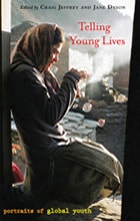
Telling Young Lives
Portraits of Global Youthedited by Craig Jeffrey and Jane Dyson
Temple University Press, 2008
Telling Young Lives presents more than a dozen fascinating, ethnograph-ically informed portraits of young people facing rapid changes in society and politics from different parts of the world. From a young woman engaged in agricultural labor in the High Himalayas to a youth activist based in Tanzania, the distinctive voices from the U.K., India, Germany, Sierra Leone, South Africa and Bosnia Herzegovina, provide insights into the active and creative ways these youths are addressing social and political challenges such as war, hunger and homelessness.
Telling Young Lives has great appeal for classroom use in geography courses and makes a welcome contribution to the growing field of “young geographies,” as well as to politics and political geography. Its focus on individual portraits gives readers a fuller, more vivid picture of the ways in which global changes are reshaping the actual experiences and strategies of young people around the world.
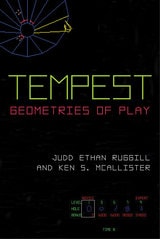
Tempest
Geometries of PlayJudd Ethan Ruggill and Ken S. McAllister
University of Michigan Press, 2015
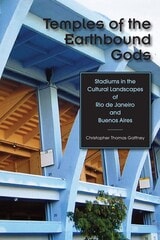
Temples of the Earthbound Gods
Stadiums in the Cultural Landscapes of Rio de Janeiro and Buenos AiresBy Christopher Thomas Gaffney
University of Texas Press, 2008
In Rio de Janeiro, the spiritual home of world football, and Buenos Aires, where a popular soccer club president was recently elected mayor, the game is an integral part of national identity. Using the football stadium as an illuminating cultural lens, Temples of the Earthbound Gods examines many aspects of urban culture that play out within these monumental architectural forms, including spirituality, violence, rigid social norms, anarchy, and also expressions of sexuality and gender.
Tracing the history of the game in Brazil and Argentina through colonial influences as well as indigenous ball courts in Mayan, Aztec, Zapotec, Mixtec, and Olmec societies, Christopher Gaffney's study spans both ancient and contemporary worlds, linking the development of stadiums to urbanization and the consolidation of nation building in two of Latin America's most intriguing megacities.
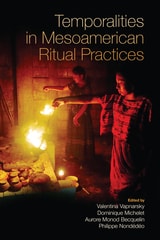
Temporalities in Mesoamerican Ritual Practices
Valentina Vapnarsky
University Press of Colorado, 2024
Based on specific case studies, new analysis of fieldwork data, and long-term collaboration between authors, chapters engage empirically and theoretically with the multiple temporalities of ritual in relation to both the unfolding of ritual performance and its external and symbolic anchors. Taking rituals as a series of specific, formalized actions that produce transitory changes within an initial context, the authors examine activities that generate change linked to artifact production, life cycles, healing, conflict resolution, crisis management, the enthronement of rulers and transfers of responsibilities, and practices relating to the occupation, abandonment, reuse, or conversion of socialized spaces.
Adopting a multidisciplinary approach in archaeology, ethnohistory, anthropology, and linguistic anthropology, Temporalities in Mesoamerican Ritual Practices offers new insights into ritual time approached through multi-semiotic, material, sensorial, and pragmatic perspectives that encourage further interdisciplinary dialogue.
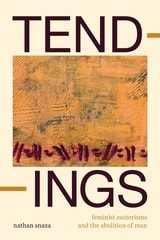
Tendings
Feminist Esoterisms and the Abolition of ManNathan Snaza
Duke University Press, 2024