Results by title
121 books match the query 'Social classes' and 31 start with t
Tales of Two Cities
Race and Economic Culture in Early Republican North and South AmericaBy Camilla Townsend
University of Texas Press, 2000
With a common heritage as former colonies of Europe, why did the United States so outstrip Latin America in terms of economic development in the nineteenth century? In this innovative study, Camilla Townsend challenges the traditional view that North Americans succeeded because of better attitudes toward work—the Protestant work ethic—and argues instead that they prospered because of differences in attitudes towards workers that evolved in the colonial era.
Townsend builds her study around workers' lives in two very similar port cities in the 1820s and 1830s. Through the eyes of the young Frederick Douglass in Baltimore, Maryland, and an Indian woman named Ana Yagual in Guayaquil, Ecuador, she shows how differing attitudes towards race and class in North and South America affected local ways of doing business. This empirical research significantly clarifies the relationship between economic culture and racial identity and its long-term effects.
The Anthropological Study of Class and Consciousness
E. Paul Durrenberger
University Press of Colorado, 2012
Five central ideas unify the collection: the objective basis for class in different social orders; people's understanding of class in relation to race and gender; the relation of ideologies of class to realities of class; the U.S. managerial middle-class denial of class and emphasis on meritocracy in relation to increasing economic insecurity; and personal responses to economic insecurity and their political implications.
Anthropologists who want to understand the nature and dynamics of culture must also understand the nature and dynamics of class. The Anthropological Study of Class and Consciousness addresses the role of the concept of class as an analytical construct in anthropology and how it relates to culture. Although issues of social hierarchy have been studied in anthropology, class has not often been considered as a central element. Yet a better understanding of its role in shaping culture, consciousness, and people's awareness of their social and natural world would in turn lead to better understanding of major trends in social evolution as well as contemporary society. This book will be of great interest to students and scholars of anthropology, labor studies, ethnohistory, and sociology.
The Archaeology of Tibes
Life, Death, and Memory at an Early Ceremonial Center in the CaribbeanEdited by L. Antonio Curet and Lisa M. Stringer
University of Alabama Press, 2025
A collection of new essays that brings archaeological insights and discoveries at the Tibes Ceremonial Center up to date
The Archaeology of Tibes is a collection of essays offering a fresh analysis of this important ceremonial center. It brings new insights about social structure, illuminating the smaller-scale daily lives of ancient peoples rather than focusing on large-scale chiefdoms.
Tibes is the earliest known (ca. 400 to 1300 CE) ceremonial center in Puerto Rico. It has been the focus of one of the largest and longest-running archaeological programs in the Caribbean. Early researchers interpreted evidence in the area of a shift from dispersed villages to a ceremonial center as suggesting the development of social stratification and accumulation of power. Seen as the seat of an early chiefdom, Tibes served as a model applied broadly across the Greater Antilles.
New discoveries prompted archaeologists to question their original assumptions about ancient Puerto Rico, and later research failed to produce evidence of social stratification at Tibes. The Archaeology of Tibes therefore incorporates updated and wider perspectives on social formation. It considers agency, decisions, and events and the possibility of more than one form of social organization. It also presents a more accurate “humanized” past: the sociological meanings of that space and its significance for the people who created, used, and occupied it and who influenced rituals, social memory, and community.
Summarizing findings from excavations at Tibes after 2010, the collection also reviews the geoarchaeology of the site. Additional essays cover ceramic pastes, lithic production, faunal remains, coral, burials, and rock art. This work will engender discussion and future research by archaeologists across the Caribbean and beyond.
The Changing Face of Inequality
Urbanization, Industrial Development, and Immigrants in Detroit, 1880-1920Olivier Zunz
University of Chicago Press, 1983

The Changing Past
Trends in South African Historical WritingKen Smith
Ohio University Press, 1989
E.H. Carr said: “Before you study the history, study the historian.” Written history often tells us more about the historian’s own times than it does of the times about which he is writing. The historians and the way in which each generation has rewritten history in the light of its own preoccupations is the subject of The Changing Past. This is the first book-length survey in English that covers all the main trends in South African historiography. Starting with the first documents and histories, it goes on to trace the 19th century. British and settler “schools,” Afrikaans historiography from its pre-academic 19th century phase to the present, and the liberal historians who struck out in a new direction from the 1920s. The book highlights the break with the past that historians of the “new radical school” have made in the last 15 years, and surveys the position of historical writing to the present.
The canvas is delineated in bold strokes that sketch in the main outlines rather than seek an exhaustive treatment of all existing literature. This, together with a conscious effort to minimize theoretical discussion, makes it a highly readable text.

The Conundrum of Class
Public Discourse on the Social Order in AmericaMartin J. Burke
University of Chicago Press, 1995
Surveying American political, social, and intellectual life from the late 17th to the end of the 19th century, Burke examines in detail the contested discourse about equality—the way Americans thought and wrote about class, class relations, and their meaning in society.
Burke explores a remarkable range of thought to establish the boundaries of class and the language used to describe it in the works of leading political figures, social reformers, and moral philosophers. He traces a shift from class as a legal category of ranks and orders to socio-economic divisions based on occupations and income. Throughout the century, he finds no permanent consensus about the meaning of class in America and instead describes a culture of conflicting ideas and opinions.

The Cut of His Coat
Men, Dress, and Consumer Culture in Britain, 1860–1914Brent Shannon
Ohio University Press, 2006
The English middle class in the late nineteenth century enjoyed an increase in the availability and variety of material goods. With that, the visual markers of class membership and manly behavior underwent a radical change. In The Cut of His Coat: Men, Dress, and Consumer Culture in Britain, 1860–1914, Brent Shannon examines familiar novels by authors such as George Eliot, Anthony Trollope, Thomas Hughes, and H. G. Wells, as well as previously unexamined etiquette manuals, period advertisements, and fashion monthlies, to trace how new ideologies emerged as mass-produced clothes, sartorial markers, and consumer culture began to change.
While Victorian literature traditionally portrayed women as having sole control of class representations through dress and manners, Shannon argues that middle-class men participated vigorously in fashion. Public displays of their newly acquired mannerisms, hairstyles, clothing, and consumer goods redefined masculinity and class status for the Victorian era and beyond.
The Cut of His Coat probes the Victorian disavowal of men’s interest in fashion and shopping to recover men’s significant role in the representation of class through self-presentation and consumer practices.
The Dangerous Class
The Concept of the LumpenproletariatClyde W. Barrow
University of Michigan Press, 2020
The Development of the Inca State
By Brian S. Bauer
University of Texas Press, 1992
The Inca empire was the largest state in the Americas at the time of the Spanish invasion in 1532. From its political center in the Cuzco Valley, it controlled much of the area included in the modern nations of Ecuador, Peru, Chile, and Bolivia. But how the Inca state became a major pan-Andean power is less certain. In this innovative work, Brian S. Bauer challenges traditional views of Inca state development and offers a new interpretation supported by archaeological, historical, and ethnographic evidence.
Spanish chroniclers of the sixteenth and seventeenth centuries attributed the rapid rise of Inca power to a decisive military victory over the Chanca, their traditional rivals, by Pachacuti Inca Yupanqui. By contrast, Bauer questions the usefulness of literal interpretations of the Spanish chronicles and provides instead a regional perspective on the question of state development. He suggests that incipient state growth in the Cuzco region was marked by the gradual consolidation and centralization of political authority in Cuzco, rather than resulting from a single military victory. Synthesizing regional surveys with excavation, historic, and ethnographic data, and investigating broad categories of social and economic organization, he shifts the focus away from legendary accounts and analyzes more general processes of political, economic, and social change.
The Enigmatic Academy
Class, Bureaucracy, and Religion in American EducationChristian J. Churchill
Temple University Press, 2012
The Enigmatic Academy is a provocative look at the purpose and practice of education in America. Authors Christian Churchill and Gerald Levy use three case studies—a liberal arts college, a boarding school, and a Job Corps center—to illustrate how class, bureaucratic, and secular-religious dimensions of education prepare youth for participation in American foreign and domestic policy at all levels.
The authors describe how schools contribute to the formation of a bureaucratic character; how middle and upper class students are trained for leadership positions in corporations, government, and the military; and how the education of lower class students often serves more powerful classes and institutions.
Exploring how youth and their educators encounter the complexities of ideology and bureaucracy in school, The Enigmatic Academy deepens our understanding of the flawed redemptive relationship between education and society in the United States. Paradoxically, these three studied schools all prepare students to participate in a society whose values they oppose.
The Future of Class in History
What's Left of the Social?Geoff Eley and Keith Nield
University of Michigan Press, 2007
Unifying concepts are essential when studying history. They provide students and scholars with ways to organize their thoughts, research, and writings. However, these concepts are also the focus of myriad conflicts within the field. Social history has experienced more than its share of such conflicts since its inception some forty years ago. In recent times the fields of “the social” and of “culture” have sometimes been presented as mutually exclusive and even hostile. Once again, conceptual innovation in history has been cast as a closure by which the new drives out the old: in this case, cultural history radically displacing social history. The Future of Class in History analyzes the effect of the conflict that followed the “turn to culture” in historical work by examining the use of class and demonstrates how practitioners in multiple fields can collaborate to produce the highest quality scholarship.
“Offers new ways of thinking about ‘class’ and ‘society’ in a world in which such categories have been radically called into question.”
—Sherry Ortner, University of California, Los Angeles
“Brilliantly charts social history’s past achievement, present dilemma, and future promise in a work distinguished by intellectual openness and generosity.”
—James A. Epstein, Vanderbilt University
“Eley and Nield seek to rescue the deluded follower of social history from the enormous condescension of the cultural turn. They succeed admirably, making the case for a new hybrid socio-cultural history.”
—Donald Reid, University of North Carolina at Chapel Hill
“This terrific double act has once again produced a text that demands to be read by all those tired of the juxtaposition of social and cultural histories and still interested in the problematic of class and the politics of its past and present.”
—James Vernon, University of California, Berkeley
“Eley and Nield tackle a contentious debate with a gracious plea for collaboration. Their strong desire to get past the ‘culture wars’ and to engage social and cultural historians in fruitful dialogue is a welcome move, stylishly executed.”
—Philippa Levine, University of Southern California
Geoff Eley is Professor of History at the University of Michigan.
Keith Nield is Professor Emeritus of History at the University of Hull.

The Inheritor
A PlayKate Bredeson and Thalia Wolff
Northwestern University Press, 2025
The first English-language translation of the 1968 activist play about inequality and access to education
In The Inheritor, surrealist imagery and experimental forms convey the radically different experience of two students, the Inheritor and the Non-Inheritor, as they prepare for a high-stakes exam. Revealing a world of privilege where “there is no such thing as luck,” the play features a beheaded knight, a talking record player, and a boisterous chorus of professors depicted as a flock of squawking birds.
Based on sociologists Pierre Bourdieu and Jean-Claude Passeron’s The Inheritors: French Students and Their Relations to Culture, the play was collectively created by Théâtre de l’Aquarium, a company then composed entirely of students. It proved a powerful success when it premiered in May 1968 amid student and worker protests in Paris, and it continues to speak forcefully to education inequity on campuses across anglophone countries today.

The Institutions of France under the Absolute Monarchy, 1598-1789, Volume 1
Society and the StateRoland Mousnier
University of Chicago Press, 1979
In a society divided by hierarchical social groups, conflicts among lineages, communities, and districts became inevitable. Aristocratic disdain, ancestral attachment to privileges, and autonomous powers looked upon as rights, made civil unrest, dislocation, and anarchy endemic. Mousnier examines this contention between classes as they faced each other across the institutional barriers of education, religion, economic resources, technology, means of defense and communication, and territorial and family ties. He shows why a monarchical state was necessary to preserve order within this fragmented society.
Though it was intent on ensuring the survival of French society and the public good, the Absolute Monarchy was unable to maintain security, equilibrium, and cooperation among rival social groups. Discussing the feeble technology at its disposal and its weak means of governing, Mousnier points to the causes that brought the state to the limits of its resources. His comprehensive analysis will greatly interest students of the ancien régime and comparativists in political science and sociology as well.
The Institutions of France under the Absolute Monarchy, 1598-1789, Volume 2
The Origins of State and SocietyRoland Mousnier
University of Chicago Press, 1984

The Making and Unmaking of Whiteness
Birgit Brander Rasmussen, Eric Klinenberg, Irene J. Nexica, and Matt Wray, eds.
Duke University Press, 2001
With essays devoted to theories of racial domination, comparative global racisms, and transnational white identity, the geographical reach of the volume is significant and broad. Dalton Conley writes on “How I Learned to Be White.” Allan Bérubé discusses the intersection of gay identity and whiteness, and Mab Segrest describes the spiritual price white people pay for living in a system of white supremacy. Other pieces examine the utility of whiteness as a critical term for social analysis and contextualize different attempts at antiracist activism. In a razor-sharp introduction, the editors not only raise provocative questions about the intellectual, social, and political goals of those interested in the study of whiteness but assess several of the topic’s major recurrent themes: the visibility of whiteness (or the lack thereof); the “emptiness” of whiteness as a category of identification; and conceptions of whiteness as a structural privilege, a harbinger of violence, or an institutionalization of European imperialism.
Contributors. William Aal, Allan Bérubé, Birgit Brander Rasmussen, Dalton Conley, Troy Duster, Ruth Frankenberg, John Hartigan Jr., Eric Klinenberg, Eric Lott, Irene J. Nexica, Michael Omi, Jasbir Kaur Puar, Mab Segrest, Vron Ware, Howard Winant, Matt Wray
The Making of the Mexican Border
The State, Capitalism, and Society in Nuevo León, 1848-1910By Juan Mora-Torres
University of Texas Press, 2001
The issues that dominate U.S.-Mexico border relations today—integration of economies, policing of boundaries, and the flow of workers from south to north and of capital from north to south—are not recent developments. In this insightful history of the state of Nuevo León, Juan Mora-Torres explores how these processes transformed northern Mexico into a region with distinct economic, political, social, and cultural features that set it apart from the interior of Mexico.
Mora-Torres argues that the years between the establishment of the U.S.-Mexico boundary in 1848 and the outbreak of the Mexican Revolution in 1910 constitute a critical period in Mexican history. The processes of state-building, emergent capitalism, and growing linkages to the United States transformed localities and identities and shaped class formations and struggles in Nuevo León. Monterrey emerged as the leading industrial center and home of the most powerful business elite, while the countryside deteriorated economically, politically, and demographically. By 1910, Mora-Torres concludes, the border states had already assumed much of their modern character: an advanced capitalist economy, some of Mexico's most powerful business groups, and a labor market dependent on massive migrations from central Mexico.
The Needle's Eye
Women and Work in the Age of RevolutionMarla R. Miller
University of Massachusetts Press, 2006
In this book, Marla R. Miller illuminates the significance of women's work in the clothing trades of the early Republic. Drawing on diaries, letters, reminiscences, ledgers, and material culture, she explores the contours of working women's lives in rural New England, offering a nuanced view of their varied ranks and roles—skilled and unskilled, black and white, artisanal and laboring—as producers and consumers, clients and craftswomen, employers and employees. By plumbing hierarchies of power and skill, Miller explains how needlework shaped and reflected the circumstances of real women's lives, at once drawing them together and setting them apart.
The heart of the book brings into focus the entwined experiences of six women who lived in and around Hadley, Massachusetts, a thriving agricultural village nestled in a bend in the Connecticut River about halfway between the Connecticut and Vermont borders. Miller's examination of their distinct yet overlapping worlds reveals the myriad ways that the circumstances of everyday lives positioned women in relationship to one another, enlarging and limiting opportunities and shaping the trajectories of days, years, and lifetimes in ways both large and small. The Needle's Eye reveals not only how these women thought about their work, but how they thought about their world.
The New Chinese America
Class, Economy, and Social HierarchyZhao, Xiaojian
Rutgers University Press, 2010
In this detailed and comprehensive study of contemporary Chinese America, Xiaojian Zhao uses class analysis to illuminate the difficulties of everyday survival for poor and undocumented immigrants and analyzes the process through which social mobility occurs. Through ethnic ties, Chinese Americans have built an economy of their own in which entrepreneurs can maintain a competitive edge given their access to low-cost labor; workers who are shut out of the mainstream job market can find work and make a living; and consumers can enjoy high quality services at a great bargain. While the growth of the ethnic economy enhances ethnic bonds by increasing mutual dependencies among different groups of Chinese Americans, it also determines the limits of possibility for various individuals depending on their socioeconomic and immigration status.
The Old South Frontier
Cotton Plantations and the Formation of Arkansas Society, 1819–1861Donald P. Mcneilly
University of Arkansas Press, 2000
The Patchwork City
Class, Space, and Politics in Metro ManilaMarco Z. Garrido
University of Chicago Press, 2019
The Patchwork City illuminates how segregation, class relations, and democracy are all intensely connected. It makes clear, ultimately, that class as a social structure is as indispensable to the study of Manila—and of many other cities of the Global South—as race is to the study of American cities.
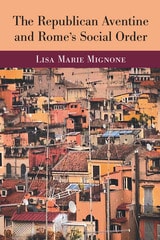
The Republican Aventine and Rome’s Social Order
Lisa Marie Mignone
University of Michigan Press, 2016
The myth of the “plebeian Aventine” became embedded not only in classical scholarship, but also in modern political and cultural consciousness; it has even been used by modern figures to support their political agenda. Yet The Republican Aventine and Rome’s Social Order makes bold new claims regarding the urban design and social history of ancient Rome and raises a significant question about ancient urbanism and social stability more generally: Did social integration reduce violence in premodern cities and promote urban concord?
The Road to Rebellion
Class Formation and Kansas Populism, 1865-1900Scott G. McNall
University of Chicago Press, 1988
McNall rejects the traditional view that blames the failure of the Alliance on a turn to mass-based electoral politics, but rather sees the move into national politics by the Farmer's Alliance as part of a rational strategy to better wage their fight for economic justice. The Kansas populists failed, he argues, because of their inability to embrace a broad, working-class base, to provide an effective alternative vision, and ultimately to create a distinct class organization. Debates about how classes come into being, or how democracy is to be realized, cannot be settled in the abstract. McNall's recreation of this heroic struggle is a model in the analysis of class formation. At the same time, The Road to Rebellion is dynamic social history, which holds vital lessons for structuring and realizing alternative political agendas today.
The Romans
Edited by Andrea Giardina
University of Chicago Press, 1993
Synthesizing a wealth of current research, The Romans surveys the most complex society ever to exist prior to the Industrial Age. Searching out the identity of the ancient Roman, the contributors describe an urbane figure at odds with his rustic peers, known for his warlike nature and his love of virtue, his magnanimity to foreigners and his predilection for cutting off his enemies' heads. Most important, perhaps, of the themes explored throughout this volume are those of freedom and slavery, of citizenship and humanitas.
What results from the depictions Roman society through time and across its many constituent cultures is the variety of Roman identity in all its richness and depth. These masterful essays will engage the general reader as well as the specialist in history and culture.
The Struggle over Class
Socioeconomic Analysis of Ancient Christian TextsG. Anthony Keddie
SBL Press, 2021
An interdisciplinary discussion engaging classics, archaeology, religious studies, and the social sciences
The Struggle over Class brings together scholars from the fields of New Testament and early Christianity to examine Christian texts in light of the category of class. Historically rigorous and theoretically sophisticated, this collection presents a range of approaches to, and applications of, class in the study of the epistles, the gospels, Acts, apocalyptic texts, and patristic literature. Contributors Alicia J. Batten, Alan H. Cadwallader, Cavan W. Concannon, Zeba Crook, James Crossley, Lorenzo DiTommaso, Philip F. Esler, Michael Flexsenhar III, Steven J. Friesen, Caroline Johnson Hodge, G. Anthony Keddie, Jaclyn Maxwell, Christina Petterson, Jennifer Quigley, Elisabeth Schüssler Fiorenza, Daniëlle Slootjes, and Emma Wasserman challenge both scholars and students to articulate their own positions in the ongoing scholarly struggle over class as an analytical category.
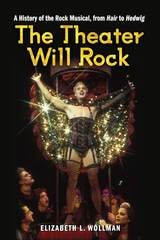
The Theater Will Rock
A History of the Rock Musical, from Hair to HedwigElizabeth L. Wollman
University of Michigan Press, 2010
"A much-needed study of the impact of rock music on the musical theater and its resulting challenges, complexities, failures, and successes. Anyone interested in Broadway will learn a great deal from this book."
---William Everett, author of The Musical: A Research Guide to Musical Theatre
"As Wollman weaves her historical narrative, she compellingly returns to . . . the conflict between the aesthetics and ideologies of rock music and the disciplined and commercial practices of the musical stage."
---Theatre Research International
"This well-written account puts the highs and lows of producing staged rock musicals in New York City into perspective and is well worth reading for the depth of insight it provides."
---Studies in Musical Theatre
Despite the genre’s influence and fame, there are still some critics who claim that the term “rock musical” is an oxymoron. The relationship between rock and the musical theater has been stormy from the start, and even the comparatively recent success of Rent has done little to convince theater producers that rock musicals are anything but highly risky ventures. Elizabeth L. Wollman explores the reasons behind these problematic connections and looks at the socioeconomic forces that underlie aesthetic decisions. She weighs the influence on the rock musical by mass media, sound, and recording technology, and the economic pressures that have affected New York theater in general over the past three decades. Finally, Wollman offers a meditation on the state of the musical, its relation to rock, and, ultimately, its future.
Packed with candid commentary by members of New York's vibrant theater community, The Theater Will Rock traces the rock musical’s evolution over nearly fifty years, in popular productions such as Hair, The Who's Tommy, Jesus Christ Superstar, The Rocky Horror Picture Show, Little Shop of Horrors, Rent, and Mamma Mia!—and in notable flops such as The Capeman.
Elizabeth L. Wollman is Assistant Professor of Music at Baruch College of the City University of New York.
Those of Little Note
Gender, Race, and Class in Historical ArchaeologyElizabeth M. Scott
University of Arizona Press, 1994
I--Introduction
1. Through the Lens of Gender: Archaeology, Inequality, and Those "Of Little Note" / Elizabeth M. Scott
II--Native American and African American Communities
2. Cloth, Clothing, and Related Paraphernalia: A Key to Gender Visibility in the Archaeological Record of Russian America / Louise M. Jackson
3. "We Took Care of Each Other Like Families Were Meant To": Gender, Social Organization, and Wage Labor Among the Apache at Roosevelt / Everett Bassett
4. The House of the Black Burghardts: An Investigation of Race, Gender, and Class at the W. E. B. DuBois Boyhood Homesite / Nancy Ladd Muller
III--All Male and Predominantly Male Communities
5. "With Manly Courage": Reading the Construction of Gender in a 19th-Century Religious Community / Elizabeth Kryder-Reid
6. The Identification of Gender at Northern Military Sites of the Late 18th Century / David R. Starbuck
7. Class, Gender Strategies, and Material Culture in the Mining West / Donald L. Hardesty
IV--Working Women in Urban Communities
8. Mrs. Starr's Profession / Donna J. Seifert
9. Diversity and 19th-Century Domestic Reform: Relationships Among Classes and Ethnic Groups / Suzanne M. Spencer-Wood
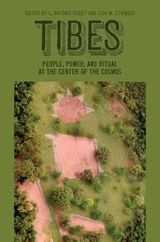
Tibes
People, Power, and Ritual at the Center of the CosmosEdited by L. Antonio Curet and Lisa M. Stringer
University of Alabama Press, 2009
The prehistoric civic-ceremonial center of Tibes is located on the southern coast of Puerto Rico, just north of the modern coastal city of Ponce. Protected on two sides by a river, and on the other two sides by hills, this approximately 10.5-acre site remains as fertile and productive today as when first occupied over 2,000 years ago. Such a rich region would have been a choice location for native peoples because of the diversity in all resources, from land, air, and sea--and also symbolically crucial as a liminal space within the landscape. It may have been regarded as a space charged with numen or cosmic energy where different parts of the cosmos (natural vs. supernatural, or world of the living vs. world of the dead) overlap. Archaeological evidence reveals a long occupation, about 1,000 years, possibly followed by an extensive period of sporadic ceremonial use after the site itself was practically abandoned.
In this volume, nineteen Caribbeanists, across a wide academic spectrum, examine the geophysical, paleoethnobotanical, faunal, lithics, base rock, osteology, bone chemistry and nutrition, social landscape, and ceremonial constructs employed at Tibes. These scholars provide a concise, well-presented, comprehensive analysis of the evidence for local level changes in household economy, internal organization, accessibility to economic, religious, and symbolic resources related to the development and internal operation of socially stratified societies in the Caribbean.

To Live and Die in America
Class, Power, Health and HealthcareRobert Chernomas and Ian Hudson
Pluto Press, 2013
To Live and Die in America details how the United States has among the worst indicators of health in the industrialised world and at the same time spends significantly more on its health care system than any other industrial nation.
Robert Chernomas and Ian Hudson explain this contradictory phenomenon as the product of the unique brand of capitalism that has developed in the US. It is this particular form of capitalism that created both the social and economic conditions that largely influence health outcomes and the inefficient, unpopular and inaccessible health care system that is incapable of dealing with them.
The authors argue that improving health in America requires a change in the conditions in which people live and work as well as a restructured health care system.
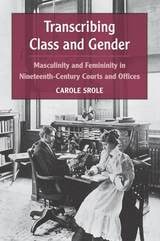
Transcribing Class and Gender
Masculinity and Femininity in Nineteenth-Century Courts and OfficesCarole Srole
University of Michigan Press, 2012
"Drawing upon census data, trade periodicals devoted to stenography and court reporting, the writings of educational reformers, and fiction, Srole allows us to better understand the roles that gender and work played in the formation of middle-class identity. Clearly written and thoroughly researched, her book reminds us of the contradictions that both men and women faced as they navigated changes in the labor market and sought to realize a modern professional identity."
---Thomas Augst, New York University
Transcribing Class and Gender explores the changing meanings of clerical work in nineteenth-century America, focusing on the discourse surrounding that work. At a time when shorthand transcription was the primary method of documenting business and legal communications and transactions, most stenographers were men, but changing technology saw the emergence of women in the once male-dominated field. Carole Srole argues that this shift placed stenographers in a unique position to construct a new image of the professional man and woman and, in doing so, to redefine middle- and working-class identities.
Many male court reporters emphasized their professionalism, portraying themselves as educated language experts as a way to elevate themselves above the growing numbers of female and working-class stenographers and typewriter operators. Meanwhile, women in the courts and offices were confronting the derogatory image of the so-called Typewriter Girl who cared more about her looks, clothing, and marriage prospects than her job. Like males in the field, women responded by fashioning a gendered professional image---one that served to combat this new version of degraded female labor while also maintaining traditional ideals of femininity.The study is unique in the way it reads and analyzes popular fiction, stenography trade magazines, the archives of professional associations, and writings by educational reformers to provide new perspectives on this history. The author challenges the common assumption that men and women clerks had separate work cultures and demonstrates how each had to balance elements of manhood and womanhood in the drive toward professionalism and the construction of a new middle-class image. Transcribing Class and Gender joins the recent scholarship that employs cultural studies approaches to class and gender without abandoning the social history valuation of workers' experiences.
Carole Srole is Professor of History at California State University, Los Angeles.
Photo: A female stenographer working for an actuary in 1897. Courtesy Metlife Archives.

Truth/Untruth
Mahasweta Devi
Seagull Books, 2023
Set in Calcutta in the mid-1980s, Truth/Untruth is a fast-paced thriller built around the death of the pregnant Jamuna—a maid in a newly affluent residential apartment complex—and Arjun, the upwardly mobile businessman who seduced her. Packed with a cast of colorful characters, this novel is a trenchant, darkly humorous, and unsentimental look at the different segments of Calcutta society: from the middle-class culture vultures to the unscrupulous “promoter” class and the domestic helpers and slum goons who form an intrinsic part of the city’s life. All are implicated in a complex web of guilt and bizarre twists and turns. Sex, lies, death—the great modernist themes—run like a thread through this book, exposing societal greed, lust, corruption, and moral hypocrisy with a sardonic tone that spares none. An unusual novel by an author who is otherwise known for her hard-hitting activist-feminist stories, Truth/Untruth underlines the exploitative vicious cycle that defines urban relations between the haves and have-nots.