Results by title
200 books match the query 'Sociology of Religion' and 32 start with t
Talking with the Children of God
Prophecy and Transformation in a Radical Religious GroupGordon Shepherd and Gary Shepherd
University of Illinois Press, 2010
Grounded in direct, systematic observation by neutral observers, Talking with the Children of God is a unique study of the radical religious movement now known as The Family International. The book draws on extraordinarily candid interviews with the group's leaders and administrative staff. In revealing new information about the organization's history, beliefs, and use of prophecy, Gordon Shepherd and Gary Shepherd offer a highly detailed case study that is both an antidote to sensationalized coverage of the group and a means for understanding the transformational practices of new religious movements in general.
One of the most controversial groups emerging from the Jesus People movement of the 1960s, the Family originally was known as The Children of God. Under leader David Berg, members proclaimed an apocalyptic "Endtime," shunned secular occupations, lived communally, and adopted unusual sexual practices that led to abuse scandals in the 1970s and 1980s. Following Berg's death in 1994, the organization began to dramatically alter its evangelization efforts and decision-making processes.
Talking with the Children of God builds a picture of a complex organization with ten thousand core members worldwide, including details on the lives, careers, and responsibilities of the second generation and their efforts to defend their faith. The authors summarize the Family's history and beliefs as well as its controversial past. In particular, they analyze the organization's use of prophecy--or channeled revelations from Jesus and other spiritual beings--for making decisions and setting policy, revealing how this essentially democratic process works and how it shapes Family life and culture.
These remarkable insights are the result of sixteen years of surveys and field observations conducted in Family member homes in sixteen countries, plus four days of face-to-face interviews with Family leaders and organizational staff. The volume also includes condensed transcripts of the interviews with analysis by Shepherd and Shepherd.

Teenage Witches
Magical Youth and the Search for the SelfBerger, Helen
Rutgers University Press, 2007
Yet, as Helen A. Berger and Douglas Ezzy show in this in-depth look into the lives of teenage Witches, the reality of their practices, beliefs, values, and motivations is very different from the sensational depictions we see in popular culture. Drawing on extensive research across three countries--the United States, England, and Australia--and interviews with young people from diverse backgrounds, what they find are highly spiritual and self-reflective young men and women attempting to make sense of a postmodern world via a religion that celebrates the earth and emphasizes self-development.
The authors trace the development of Neo-Paganism (an umbrella term used to distinguish earth-based religions from the pagan religions of ancient cultures) from its start in England during the 1940s, through its growing popularity in the decades that followed, up through its contemporary presence on the Internet. Though dispersed and disorganized, Neo-Pagan communities, virtual and real, are shown to be an important part of religious identity particularly for those seeking affirmation during the difficult years between childhood and adulthood.

The Analysis of Ideology
Raymond Boudon
University of Chicago Press, 1989
Boudon begins by providing an exhaustive and subtle critique of sociological explanations of ideology from early conceptions to its current usage in the works of Barthes, Foucault, Habermas, Sartre, and others. He then offers his own interpretation of the origins and emergence of ideological beliefs. In opposition to those views which associate ideology with irrationalism, Boudon shows that ideologies are a natural ingredient of social life; he develops a rationalist theory that helps to explain why certain ideas are believed by individuals and thereby effective in the social world. Finally, he examines case studies of two modern-day ideologies—developmentalism and Third Worldism.
Moving easily across disciplinary boundaries, Boudon's provocative contribution to a subject of growing significance will be of great interest to scholars in sociology and social theory, as well as philosophy, political science, and development studies.
The Anthropology of Christianity
Fenella Cannell, ed.
Duke University Press, 2006
The contributors examine the contours of Christianity among diverse groups: Catholics in India, the Philippines, and Bolivia, and Seventh-Day Adventists in Madagascar; the Swedish branch of Word of Life, a charismatic church based in the United States; and Protestants in Amazonia, Melanesia, and Indonesia. Highlighting the wide variation in what it means to be Christian, the contributors reveal vastly different understandings and valuations of conversion, orthodoxy, Scripture, the inspired word, ritual, gifts, and the concept of heaven. In the process they bring to light how local Christian practices and beliefs are affected by encounters with colonialism and modernity, by the opposition between Catholicism and Protestantism, and by the proximity of other religions and belief systems. Together the contributors show that it not sufficient for anthropologists to assume that they know in advance what the Christian experience is; each local variation must be encountered on its own terms.
Contributors. Cecilia Busby, Fenella Cannell, Simon Coleman, Peter Gow, Olivia Harris, Webb Keane, Eva Keller, David Mosse, Danilyn Rutherford, Christina Toren, Harvey Whitehouse
The Broken Covenant
American Civil Religion in Time of TrialRobert N. Bellah
University of Chicago Press, 1992
This edition includes his 1978 article "Religion and the Legitimation of the American Republic," and a new Preface.
The Catholic Social Imagination
Activism and the Just Society in Mexico and the United StatesJoseph M. Palacios
University of Chicago Press, 2007
The reach of the Catholic Church is arguably greater than that of any other religion, extending across diverse political, ethnic, class, and cultural boundaries. But what is it about Catholicism that resonates so profoundly with followers who live under disparate conditions? What is it, for instance, that binds parishioners in America with those in Mexico? For Joseph M. Palacios, what unites Catholics is a sense of being Catholic—a social imagination that motivates them to promote justice and build a better world.
In The Catholic Social Imagination, Palacios gives readers a feeling for what it means to be Catholic and put one’s faith into action. Tracing the practices of a group of parishioners in Oakland, California, and another in Guadalajara, Mexico, Palacios reveals parallels—and contrasts—in the ways these ordinary Catholics receive and act on a church doctrine that emphasizes social justice. Whether they are building a supermarket for the low-income elderly or waging protests to promote school reform, these parishioners provide important insights into the construction of the Catholic social imagination. Throughout, Palacios also offers important new cultural and sociological interpretations of Catholic doctrine on issues such as poverty, civil and human rights, political participation, and the natural law.
The Churching of America, 1776-2005
Winners and Losers in Our Religious EconomyFinke, Roger
Rutgers University Press, 2005
But, as Finke and Stark show, not all denominations benefited. They explain how and why the early nineteenth-century churches began their descent, while two newcomer sects, the Baptists and the Methodists, gained ground. They also analyze why the Methodists then began a long, downward slide, why the Baptists continued to succeed, how the Catholic Church met the competition of ardent Protestant missionaries, and why the Catholic commitment has declined since Vatican II. The authors also explain why ecumenical movements always fail
In short, Americans are not abandoning religion; they have been moving away from established denominations. A "church-sect process" is always under way, Finke and Stark argue, as successful churches lose their organizational vigor and are replaced by less worldly groups.
Some observers assert that the rise in churching rates indicates increased participation, not increased belief. Finke and Stark challenge this as well. They find that those groups that have gained the greatest numbers have demanded that their followers accept traditional doctrines and otherworldliness. They argue that religious organizations can thrive only when they comfort souls and demand sacrifice. When theology becomes too logical, or too secular, it loses people.
The Copy Generic
How the Nonspecific Makes Our Social WorldsScott MacLochlainn
University of Chicago Press, 2022
From off-brand products to elevator music, the “generic” is discarded as the copy, the knockoff, and the old. In The Copy Generic, anthropologist Scott MacLochlainn insists that more than the waste from the culture machine, the generic is a universal social tool, allowing us to move through the world with necessary blueprints, templates, and frames of reference. It is the baseline and background, a category that orders and values different types of specificity yet remains inherently nonspecific in itself. Across arenas as diverse as city planning, social media, ethnonationalism, and religion, the generic points to spaces in which knowledge is both overproduced and desperately lacking. Moving through ethnographic and historical settings in the Philippines, Europe, and the United States, MacLochlainn reveals how the concept of the generic is crucial to understanding how things repeat, circulate, and are classified in the world.
The Crosses of Auschwitz
Nationalism and Religion in Post-Communist PolandGeneviève Zubrzycki
University of Chicago Press, 2006
In the summer and fall of 1998, ultranationalist Polish Catholics erected hundreds of crosses outside Auschwitz, setting off a fierce debate that pitted Catholics and Jews against one another. While this controversy had ramifications that extended well beyond Poland’s borders, Geneviève Zubrzycki sees it as a particularly crucial moment in the development of post-Communist Poland’s statehood and its changing relationship to Catholicism.
In The Crosses of Auschwitz, Zubrzycki skillfully demonstrates how this episode crystallized latent social conflicts regarding the significance of Catholicism in defining “Polishness” and the role of anti-Semitism in the construction of a new Polish identity. Since the fall of Communism, the binding that has held Polish identity and Catholicism together has begun to erode, creating unease among ultranationalists. Within their construction of Polish identity also exists pride in the Polish people’s long history of suffering. For the ultranationalists, then, the crosses at Auschwitz were not only symbols of their ethno-Catholic vision, but also an attempt to lay claim to what they perceived was a Jewish monopoly over martyrdom.
This gripping account of the emotional and aesthetic aspects of the scene of the crosses at Auschwitz offers profound insights into what Polishness is today and what it may become.
The Emergence of Liberation Theology
Radical Religion and Social Movement TheoryChristian Smith
University of Chicago Press, 1991
The Glass Church
Robert H. Schuller, the Crystal Cathedral, and the Strain of Megachurch MinistryMark T. Mulder
Rutgers University Press, 2020
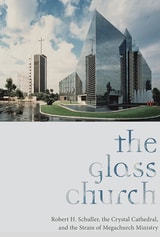
Robert H. Schuller’s ministry—including the architectural wonder of the Crystal Cathedral and the polished television broadcast of Hour of Power—cast a broad shadow over American Christianity. Pastors flocked to Southern California to learn Schuller’s techniques. The President of United States invited him sit prominently next to the First Lady at the State of the Union Address. Muhammad Ali asked for the pastor’s autograph. It seemed as if Schuller may have started a second Reformation. And then it all went away. As Schuller’s ministry wrestled with internal turmoil and bankruptcy, his emulators—including Rick Warren, Bill Hybels, and Joel Osteen— nurtured megachurches that seemed to sweep away the Crystal Cathedral as a relic of the twentieth century. How did it come to this?
Certainly, all churches depend on a mix of constituents, charisma, and capital, yet the size and ambition of large churches like Schuller’s Crystal Cathedral exert enormous organizational pressures to continue the flow of people committed to the congregation, to reinforce the spark of charismatic excitement generated by high-profile pastors, and to develop fresh flows of capital funding for maintenance of old projects and launching new initiatives. The constant attention to expand constituencies, boost charisma, and stimulate capital among megachurches produces an especially burdensome strain on their leaders. By orienting an approach to the collapse of the Crystal Cathedral on these three core elements—constituency, charisma, and capital—The Glass Church demonstrates how congregational fragility is greatly accentuated in larger churches, a notion we label megachurch strain, such that the threat of implosion is significantly accentuated by any failures to properly calibrate the inter-relationship among these elements.
The Gospel of the Working Class
Labor's Southern Prophets in New Deal AmericaErik S. Gellman and Jarod Roll
University of Illinois Press, 2011
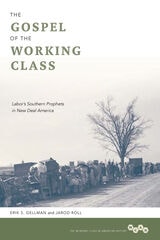
In this exceptional dual biography and cultural history, Erik S. Gellman and Jarod Roll trace the influence of two southern activist preachers, one black and one white, who used their ministry to organize the working class in the 1930s and 1940s across lines of gender, race, and geography. Owen Whitfield and Claude Williams, along with their wives Zella Whitfield and Joyce Williams, drew on their bedrock religious beliefs to stir ordinary men and women to demand social and economic justice in the eras of the Great Depression, New Deal, and Second World War.
The Head Beneath the Altar
Hindu Mythology and the Critique of SacrificeBrian Collins
Michigan State University Press, 2014
The Megachurch and the Mainline
Remaking Religious Tradition in the Twenty-first CenturyStephen Ellingson
University of Chicago Press, 2007
Religious traditions provide the stories and rituals that define the core values of church members. Yet modern life in America can make those customs seem undesirable, even impractical. As a result, many congregations refashion church traditions so they may remain powerful and salient. How do these transformations occur? How do clergy and worshipers negotiate which aspects should be preserved or discarded?
Focusing on the innovations of several mainline Protestant churches in the San Francisco Bay Area, Stephen Ellingson’s The Megachurch and the Mainline provides new understandings of the transformation of spiritual traditions. For Ellingson, these particular congregations typify a new type of Lutheranism—one which combines the evangelical approaches that are embodied in the growing legion of megachurches with American society’s emphasis on pragmatism and consumerism. Here Ellingson provides vivid descriptions of congregations as they sacrifice hymns in favor of rock music and scrap traditional white robes and stoles for Hawaiian shirts, while also making readers aware of the long history of similar attempts to Americanize the Lutheran tradition.
This is an important examination of a religion in flux—one that speaks to the growing popularity of evangelicalism in America.
The Mystic of Friendship
Divining the Present in Settler AmazoniaAshley Lebner
University of Chicago Press, 2025
On Brazil’s Amazonian frontier, settlers pursue land and opportunity, but they also gather for prayer and pilgrimage, yearning for a deep relationship with God and one another. In this book, anthropologist Ashley Lebner examines how everyday religious practices and feelings, what she calls a mystic of friendship, shape and sustain colonization in the Amazon.
Lebner invites us to a stretch of highway in Pará, Brazil, where violent colonization coexists with prophetic dreams, Afro-Brazilian prayers, and emerging evangelicalism. She shows how, amid political tensions and physical hardship, settlers believe that the violence they experience and enact derives from the bestial nature of earthly life that must be overcome. In exposing a longing for divinely-infused friendship that animates colonization, Lebner offers a powerful new perspective on the forces driving colonialism as much as religious and political expression.
The New Metaphysicals
Spirituality and the American Religious ImaginationCourtney Bender
University of Chicago Press, 2010
The People, in Parts
The Majoritarian Work of the Minority FormNatasha S. Raheja
University of Chicago Press, 2027
Offers a new theory of the minority as a political form and shows how majoritarian projects are built through its appropriation.
Around the world, national majorities are telling themselves a potent story: that they are the ones in danger. In the United States and Serbia, Christian and white nationalists warn of “replacement.” In Turkey and Pakistan, Muslim nationalists cast religious “others” as existential threats. In India, Hindu nationalists claim that Hindus are becoming minorities in “their own” land. These movements, and the migration and citizenship policies that accompany them, are not aberrations, but rather expressions of a logic embedded in the modern nation-state—a logic that turns people into numbers, numbers into votes, and difference into enmity.
In The People, in Parts, anthropologist Natasha S. Raheja homes in on a paradox visible along the India-Pakistan border. When Hindus cross into India from Pakistan seeking refuge, they are admitted as minorities in need of protection. Yet in India, their welcome into the putative majority is selective and conditional. How does majority-minority status shift by crossing a border? Drawing on long-term research in the Thar Desert region, across Sindh and Rajasthan, Raheja traces how caste and religion shape people's encounters with the state and argues that this bureaucratic confusion is political machinery. Where liberal democracy treats the minority as a shifting, procedural category, nation-state governance fixes it as a substantive identity. The suffering of minoritized populations becomes raw material for majoritarian projects, converted into demographic justification, electoral arithmetic, and nationalist grievance. The minority form, in other words, does majoritarian work.
The People, in Parts offers not only a searing diagnosis of minority-majority politics and the governance of migration but a reframing: the problem is not simply about who belongs and who does not, but how nationalist belonging crosses state borders, pointing to strains within liberal democracy and the nation-state order.
The Pew and the Picket Line
Christianity and the American Working ClassEdited by Christopher D. Cantwell, Heath W. Carter, and Janine Giordano Drake
University of Illinois Press, 2016
The Promise of Salvation
A Theory of ReligionMartin Riesebrodt
University of Chicago Press, 2010
Why has religion persisted across the course of human history? Secularists have predicted the end of faith for a long time, but religions continue to attract followers. Meanwhile, scholars of religion have expanded their field to such an extent that we lack a basic framework for making sense of the chaos of religious phenomena. To remedy this state of affairs, Martin Riesebrodt here undertakes a task that is at once simple and monumental: to define, understand, and explain religion as a universal concept.
Instead of propounding abstract theories, Riesebrodt concentrates on the concrete realities of worship, examining religious holidays, conversion stories, prophetic visions, and life-cycle events. In analyzing these practices, his scope is appropriately broad, taking into consideration traditions in Judaism, Christianity, Islam, Buddhism, Daoism, and Shinto. Ultimately, Riesebrodt argues, all religions promise to avert misfortune, help their followers manage crises, and bring both temporary blessings and eternal salvation. And, as The Promise of Salvation makes clear through abundant empirical evidence, religion will not disappear as long as these promises continue to help people cope with life.
The Prophetic Law
Essays in Judaism, Girardianism, Literary Studies, and the EthicalSandor Goodhart
Michigan State University Press, 2014
The Protestant Ethic Revisited
Philip S. Gorski
Temple University Press, 2013
In The Protestant Ethic Revisited, pioneering sociologist Philip Gorski revisits the question raised by Max Weber in The Protestant Ethic and the Spirit of Capitalism about how the Christian West was reshaped by world-changing energies of the Calvinist movement. Gorski not only considers the perennial debate about religion and capitalism, but he also devotes particular attention to the influence of Calvinism on the political development of the West.
The Protestant Ethic Revisited is a masterful new collection of Gorski's essays on religion and comparative historical sociology. Reflecting the aim of much of Gorski's work, this anthology shows how nationalism, secularism, politics, and religion in public life are either older—or less stable—than previously thought.
The Raw and the Cooked
Mythologiques, Volume 1Claude Lévi-Strauss
University of Chicago Press, 1983
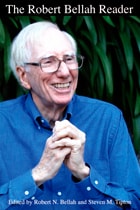
The Robert Bellah Reader
Robert N. Bellah
Duke University Press, 2006
The Reader is organized around four central concerns. It seeks to place modernity in theoretical and historical perspective, drawing from major figures in social science, historical and contemporary, from Aristotle and Rousseau through Durkheim and Weber to Habermas and Mary Douglas. It takes the United States to be in some respects the type-case of modernity and in others the most atypical of modern societies, analyzing its common faith in individual freedom and democratic self-government, and its persistent paradoxes of inequality, exclusion, and empire. The Reader is also concerned to test the axiomatic modern assumption that rational cognition and moral evaluation, fact and value, are absolutely divided, arguing instead that they overlap and interact much more than conventional wisdom in the university today usually admits. Finally, it criticizes modernity’s affirmation that faith and knowledge stand even more utterly at odds, arguing instead that their overlap and interaction, obvious in every premodern society, animate the modern world as well.
Through such critical and constructive inquiry this Reader probes many of our deepest social and cultural quandaries, quandaries that put modernity itself, with all its immense achievements, at mortal risk. Through the practical self-understanding such inquiry spurs, Bellah shows how we may share responsibility for the world we have made and seek to heal it.
The Social Life of Spirits
Edited by Ruy Blanes and Diana Espírito Santo
University of Chicago Press, 2013
The contributors tour the spiritual globe—the globe of nonthings—in essays on topics ranging from the Holy Ghost in southern Africa to spirits of the “people of the streets” in Rio de Janeiro to dragons and magic in Britain. Avoiding a reliance on religion and belief systems to explain the significance of spirits, they reimagine spirits in a rich network of social trajectories, ultimately arguing for a new ontological ground upon which to examine the intangible world and its interactions with the tangible one.
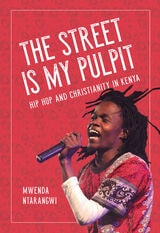
The Street Is My Pulpit
Hip Hop and Christianity in KenyaMwenda Ntarangwi
University of Illinois Press, 2016
Mwenda Ntarangwi explores the Kenyan hip hop scene through the lens of Juliani's life and career. A born-again Christian, Juliani produces work highlighting the tensions between hip hop's forceful self-expression and a pious approach to public life, even while contesting the basic presumptions of both. In The Street Is My Pulpit, Ntarangwi forges an uncommon collaboration with his subject that offers insights into Juliani's art and goals even as Ntarangwi explores his own religious experience and subjective identity as an ethnographer. What emerges is an original contribution to the scholarship on hip hop's global impact and a passionate study of the music's role in shaping new ways of being Christian in Africa.
The Transformation of American Religion
How We Actually Live Our FaithAlan Wolfe
University of Chicago Press, 2005
The Transformation of American Religion represents the first systematic effort in more than fifty years to bring together a wide body of literature about worship, fellowship, doctrine, tradition, identity, and sin to examine how Americans actually live their faith. Emphasizing personal stories, Wolfe takes readers to religious services across the nation-an Episcopal congregation in Massachusetts, a Catholic Mass in a suburb of Detroit, an Orthodox Jewish temple in Boston-to show that the stereotype of religion as a fire-and-brimstone affair is obsolete. Gone is the language of sin and damnation, and forgotten are the clear delineations between denominations; they have been replaced with a friendly God and a trend towards sampling new creeds and doctrines. Overall, Wolfe reveals American religion as less radical, less contentious, and less dangerous than it is generally perceived to be.
The Truth about Conservative Christians
What They Think and What They BelieveAndrew M. Greeley and Michael Hout
University of Chicago Press, 2006
Ever since the reelection of President Bush, conservative Christians have been stereotyped in the popular media: Bible-thumping militants and anti-intellectual zealots determined to impose their convictions on such matters as evolution, school prayer, pornography, abortion, and homosexuality on the rest of us. But conservative Christians are not as fanatical or intractable as many people think, nor are they necessarily the monolithic voting block or political base that kept Bush in power.
Andrew M. Greeley and Michael Hout's eye-opening book expertly conveys the complexity, variety, and sensibilities of conservative Christians, dispelling the myths that have long shrouded them in prejudice and political bias. For starters, Greeley and Hout reveal that class and income have trumped moral issues for these Americans more often than we realize: a dramatic majority of working-class and lower-class conservative Christians backed liberals such as Jimmy Carter and Bill Clinton during their runs for president. And when it comes to abortion, most conservative Christians are not consistently pro-life in the absolute fashion usually assumed: they are still more likely to oppose the practice than other Americans, but 86 percent of them are willing to tolerate it to protect the health of the mother or when the woman has been raped, and 22 percent of them are even pro-choice.
What do conservative Christians really think about evolution, homosexuality, or even the meaning of the word of God? Answering these questions and more, The Truth about Conservative Christians will interest—and surprise—a broad range of readers, especially in this heated election year.
The War against Catholicism
Liberalism and the Anti-Catholic Imagination in Nineteenth-Century GermanyMichael B. Gross
University of Michigan Press, 2005
---Helmut Walser Smith, Vanderbilt University
"A marvelously original account of how the Kulturkampf emerged from the cultural, social, and gendered worlds of German liberalism. While not neglecting the 1870s, Gross's analysis directs historians' attention to the under-researched 1850s and 1860s-decades in which liberals' anti-Catholic arguments were formulated against a backdrop of religious revival, democratic innovation, national ambition, and the articulation of new roles for women in society, politics, and the church. The drama of these decades resonates in every chapter of Gross's fine study."
---James Retallack, University of Toronto
"Michael Gross has put the culture back into the Kulturkampf! Integrating social and political analysis with illuminating interpretations of visual and linguistic evidence, Gross explores the work of religious cleavage in defining German national identity. An emerging women's movement, liberal virtues, and Catholic difference come together to explain why, in a century of secularization, Germany's Catholics experienced a religious revival, and why its liberals responded with enmity and frustration. Vividly written and a pleasure to read, this groundbreaking study offers real surprises."
---Margaret Lavinia Anderson, University of California, Berkeley
An innovative study of the relationship between the two most significant, equally powerful, and irreconcilable movements in Germany, Catholicism and liberalism, in the decades following the 1848 Revolution.
After the defeat of liberalism in the Revolution of 1848, and in the face of the dramatic revival of popular Catholicism, German middle-class liberals used anti-Catholicism to orient themselves culturally in a new age. Michael B. Gross's study shows how anti-Catholicism and specifically the Kulturkampf, the campaign to break the power of the Catholic Church, were not simply attacks against the church nor were they merely an attempt to secure state autonomy. Gross shows that the liberal attack on Catholicism was actually a complex attempt to preserve moral, social, political, and sexual order during a period of dramatic pressures for change.
Gross argues that a culture of anti-Catholicism shaped the modern development of Germany including capitalist economics, industrial expansion, national unification, and gender roles. He demonstrates that images of priests, monks, nuns, and Catholics as medieval, backward, and sexually deviant asserted the liberal middle-class claim to social authority after the Revolution of 1848. He pays particular attention to the ways anti-Catholicism, Jesuitphobia, and antimonastic hysteria were laced with misogyny and expressed deeper fears of mass culture and democracy in the liberal imagination. In doing so, he identifies the moral, social, and cultural imperatives behind the Kulturkampf in the 1870s.
By offering a provocative reinterpretation of liberalism and its relationship to the German anti-Catholic movement, this work ultimately demonstrates that in Germany, liberalism itself contributed to a culture of intolerance that would prove to be a serious liability in the twentieth century. It will be of particular interest to students and scholars of culture, ideology, religion, and politics.
The Work of Kings
H. L. Seneviratne
University of Chicago Press, 2000
Beginning with Anagarika Dharmapala's "rationalization" of Buddhism in the early twentieth century, which called for monks to take on a more activist role in the community, Seneviratne shows how the monks have gradually revised their role to include involvement in political and economic spheres. The altruistic, morally pure monks of Dharamapala's dreams have become, Seneviratne trenchantly argues, self-centered and arrogant, concealing self-aggrandizement behind a façade of "social service."
A compelling call for reform and a forceful analysis, The Work of Kings is essential to anthropologists, historians of religion, and those interested in colonialism, nationalism, and postcolonial politics.
Theorizing Scriptures
New Critical Orientations to a Cultural PhenomenonWimbush, Vincent
Rutgers University Press, 2008
Historically, religious scriptures are defined as holy texts that are considered to be beyond the abilities of the layperson to interpret. Their content is most frequently analyzed by clerics who do not question the underlying political or social implications of the text, but use the writing to convey messages to their congregations about how to live a holy existence. In Western society, moreover, what counts as scripture is generally confined to the Judeo-Christian Bible, leaving the voices of minorities, as well as the holy texts of faiths from Africa and Asia, for example, unheard.
In this innovative collection of essays that aims to turn the traditional bible-study definition of scriptures on its head, Vincent L. Wimbush leads an in-depth look at the social, cultural, and racial meanings invested in these texts. Contributors hail from a wide array of academic fields and geographic locations and include such noted academics as Susan Harding, Elisabeth Shüssler Fiorenza, and William L. Andrews.
Purposefully transgressing disciplinary boundaries, this ambitious book opens the door to different interpretations and critical orientations, and in doing so, allows an ultimately humanist definition of scriptures to emerge.
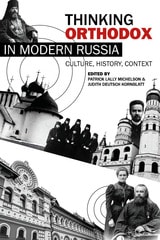
Thinking Orthodox in Modern Russia
Culture, History, ContextEdited by Patrick Lally Michelson and Judith Deutsch Kornblatt
University of Wisconsin Press, 2014
Volume editors Patrick Lally Michelson and Judith Deutsch Kornblatt provide a historical overview of Russian Orthodox thought and a critical essay on the current state of scholarship about religious thought in modern Russia. The contributors explore a wide range of topics, including Orthodox claims to a unique religious Enlightenment, contests over authority within the Russian Church, tensions between faith and reason in academic Orthodoxy, the relationship between sacraments and the self, the religious foundations of philosophical and legal categories, and the effect of Orthodox categories in the formation of Russian literature.
Throughout Your Generations Forever
Sacrifice, Religion, and PaternityNancy Jay
University of Chicago Press, 1992