Results by title
88 books match the query 'Spirit' and 23 start with t
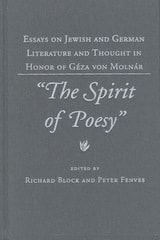
The "Spirit of Poesy"
Essays on Jewish and German Literature and Thought in Honor of Geza von MolnarRichard Block and Peter Fenves
Northwestern University Press, 2000
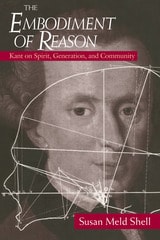
The Embodiment of Reason
Kant on Spirit, Generation, and CommunitySusan Meld Shell
University of Chicago Press, 1996
Shell argues that the central animating issues of Kant's lifework concerned the perplexing relation of spirit to body. Through an exacting analysis of individual writings, Shell maps the philosophical contours of Kant's early intellectual struggles and their relation to his more mature thought. The paradox of mind in matter and the tensions it generates—between freedom and determinacy, independence and community, ideal and real—are shown to inform the whole of his work. Shell's fresh, penetrating analysis of the precritical works will surely catapult them to new prominence in Kant studies.
Shell's critique goes further to consider the context of contemporary intellectual life. She explores the fascinating realm of Kant's sexual and medical idiosyncracies, linking them to the primary concerns of his critical philosophy. She develops a sure-to-be controversial treatment of the connection between Kant's philosophy and his chronic hypochondria, and illuminates previously unforeseen connections in a remarkable convergence of life and thought, with important theoretical and practical implications for modern times.
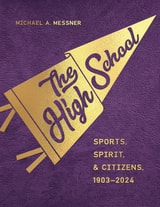
The High School
Sports, Spirit, and Citizens, 1903-2024Michael A. Messner
Rutgers University Press, 2025
In The High School, acclaimed sociologist Michael A. Messner reads through 120 years of El Gabilan, the yearbook from his own alma mater, Salinas High School in California, where his father taught and coached. Treating the yearbooks as a historical archive, Messner makes surprising discoveries about the school he thought he knew so well. For example, over fifty years before Title IX, the earliest yearbooks gave equal spotlights to boys’ and girls’ athletics, while the cheerleaders were all boys.
Tracing American life and culture from 1903 to 2024, Messner illuminates shifts in social practices at his high school that reflect broader changes in American culture across the twentieth century. The High School spotlights how the meanings and iconography of certain activities have changed radically over the decades, even as the “sports spirit complex”—involving athletes, cheerleaders, band members, and community boosters—has remained a central part of the high school experience. By exploring evolving sports cultures, socioeconomic conditions, racial demographics, and gender norms, Messner offers a fresh perspective on a defining feature of American teenage life.
The Labour of Spirit
Massimo Cacciari
Seagull Books, 2025
Between 1917 and 1919, Max Weber delivered two lectures titled Die geistige Arbeit als Beruf, which we might translate as The Labour of Spirit as Vocation. This weighty formula represented the hope that animated the world of bourgeois culture from the likes of Kant, Goethe, Schiller, Fichte, and Hegel and would later form the earliest threads of revolutionary thought from Feuerbach and Marx. The “labor of spirit” is creative, autonomous labor—human labor understood in its fully effectual power. To press for its realization is to liberate all activity from the condition of commanded or alienated work. But the dissolution of the labor of spirit into the capitalist form of production, into the universal machinism that swallows up that science which remains the true engine of development, also ends up delegitimating political authority, whose own foundation lies in the “promise of liberation.”
Massimo Cacciari takes up old questions and confronts them anew: Is the “iron cage” fated to imprison that “labor of spirit” that is political praxis? Will the spirit of capitalism end up completely undermining the space of the political? Or are relations between science and politics still thinkable that might free us from our “debt” as we proceed without means or ends within the techno-economic system?

The Monastic In Each of Us
Heart, Mind, Body, Soul and SpiritTim Vivian
Catholic University of America Press, 2026
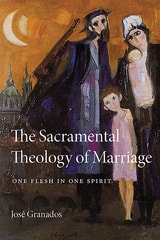
The Sacramental Theology of Marriage
One Flesh in One SpiritJose Granados
Catholic University of America Press, 2026
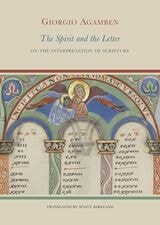
The Spirit and the Letter
On the Interpretation of ScriptureGiorgio Agamben
Seagull Books, 2026
The problem of interpreting Scripture—above all, sacred scripture, but ultimately any form of writing—coincides with the very history of Western culture. It is no surprise, then, that an archaeological inquiry such as the one proposed here—on the problem of interpretation from Origen to Auerbach, from the Talmud to Benjamin—might hold unexpected revelations.
Essential reading for scholars of theology, religious studies, and hermeneutics interested in the history of scriptural interpretation, The Spirit and the Letter highlights how the interpretation of Scripture reveals itself as inseparable from ethics and politics.
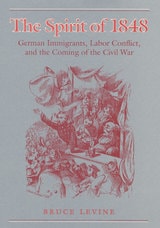
The Spirit of 1848
German Immigrants, Labor Conflict, and the Coming of the Civil WarBruce Levine
University of Illinois Press, 1992
The Spirit of 1848 offers much new information and insight concerning craftwork, the nature of the antebellum labor movement (including the great New York City tailors' strike of 1850), the meaning of nativism, the significance of the push for land reform, the diverse character of the free-soil movement, and the popular appeals of both the Democratic and Republican parties.
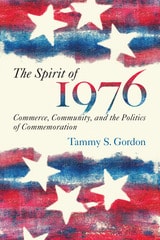
The Spirit of 1976
Commerce, Community, and the Politics of CommemorationTammy S. Gordon
University of Massachusetts Press, 2013
The most important national commemoration of the twentieth century, the 1976 bicentennial celebration gave rise to a broad-ranging debate over how the American Revolution should be remembered and represented. Federal planners seeking an uncritical glorification of the nation's founding came up against an array of constituencies with other interests and objectives. Inspired by the “new social history” that looked at the past “from the bottom up,” Americans who had previously been disenfranchised by traditional national narratives—African Americans, women, American Indians, workers, young people—demanded a voice and representation in the planning. Local communities, similarly suspicious of federal direction, sought control over their own bicentennial events. Corporate representatives promoted an approach that championed the convergence of patriotism and private enterprise, while commercial interests applied the marketing techniques of an expanding consumerism to hawk every imaginable kind of patriotic souvenir to all of these groups.
The end result of these competing efforts, Tammy S. Gordon shows, was a national celebration that reflected some common themes, including a mistrust of federal power, an embrace of decentralized authority, and a new cultural emphasis on the importance of the self. The American Revolution Bicentennial can thus be seen as both a product of the social and political changes of the 1960s and a harbinger of things to come. After 1976, the postwar myth of a consensus view of American history came to an end, ensuring that future national commemorations would continue to be contested.
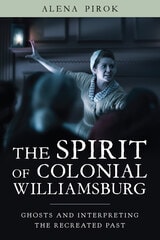
The Spirit of Colonial Williamsburg
Ghosts and Interpreting the Recreated PastAlena Pirok
University of Massachusetts Press, 2022
On any given night, hundreds of guests walk the darkened streets of Colonial Williamsburg looking for ghosts. Since the early 2000s, both the museum and private companies have facilitated these hunts, offering year-round ghost tours. Critics have called these excursions a cash grab, but in truth, ghosts and hauntings have long been at the center of the Colonial Williamsburg project.
The Spirit of Colonial Williamsburg examines how the long-dead past comes alive at this living-history museum. In the early twentieth century, local stories about the ghosts of former residents—among them Revolutionary War soldiers and nurses, tavern owners and prominent attorneys, and enslaved African Americans—helped to turn Williamsburg into a desirable site for historical restoration. But, for much of the twentieth century, the museum tried diligently to avoid any discussion of ghosts, considering them frivolous and lowbrow. Alena Pirok explores why historic sites have begun to embrace their spectral residents in recent decades, arguing that through them, patrons experience an emotional connection to place and a palpable understanding of the past through its people.
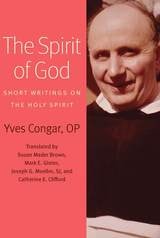
The Spirit of God
Short Writings on the Holy SpiritYves Congar
Catholic University of America Press, 2017
The Spirit of God brings together for the first time eight of Yves Congar’s previously untranslated writings on the Holy Spirit composed after Vatican II (from 1969 to 1985). Two of these selections offer general overviews of Congar’s pneumatology, a pneumatology based upon Scripture and the Tradition of the Church, but articulated in conversation with philosophers, ecumenical partners and non-believers. Other articles make clear the historical context of Vatican II’s pneumatology and the Holy Spirit’s crucial influence upon the unfolding of history and upon the moral life, the efficacy of the sacraments and, especially, upon ecclesial life.
The writings in The Spirit of God have been translated and edited by a team of scholars familiar with the work of the French Dominican theologian. An introduction situates each of the writings historically and highlights its theological significance. A bibliography lists Congar’s publications on the Holy Spirit, the major articles and books written about his pneumatology, and the major scholarly resources to which Congar made reference in the notes that accompanied these writings. An index of biblical references and of personal names is also included.
The Spirit of Mediterranean Places
Michael Butor
Northwestern University Press, 1997
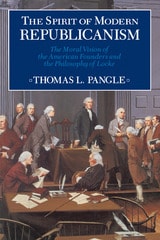
The Spirit of Modern Republicanism
The Moral Vision of the American Founders and the Philosophy of LockeThomas L. Pangle
University of Chicago Press, 1988
"A work of extraordinary ambition, written with great intensity. . . . [Pangle offers] a trenchant analysis of Locke's writings, designed to demonstrate their remarkable originality and to clarify by doing so as much as the objective predicament as the conscious intentions of the Founding Fathers themselves."—John Dunn, Times Higher Education Supplement
"A forcefully argued study of the Founding Fathers' debt to Locke. . . . What distinguishes Pangle's study from the dozens of books which have challenged or elaborated upon the republican revision is the sharpness with which he exposes the errors of the revisionists while at the same time leaving something of substantive value for the reader to consider."—Joyce Appleby, Canadian Journal of History
"Breathtaking in its daring and novelty. . . . Pangle's book is tense and tenacious, a stunning meditation on America's political culture."—John Patrick Diggins, Transactions of the C. S. Peirce Society
The Spirit of Religion and the Spirit of Liberty
The Tocqueville Thesis RevisitedEdited by Michael P. Zuckert
University of Chicago Press Journals, 2017
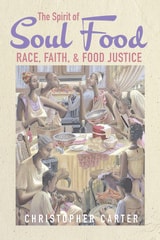
The Spirit of Soul Food
Race, Faith, and Food JusticeChristopher Carter
University of Illinois Press, 2021
Soul food has played a critical role in preserving Black history, community, and culinary genius. It is also a response to--and marker of--centuries of food injustice. Given the harm that our food production system inflicts upon Black people, what should soul food look like today?
Christopher Carter's answer to that question merges a history of Black American foodways with a Christian ethical response to food injustice. Carter reveals how racism and colonialism have long steered the development of US food policy. The very food we grow, distribute, and eat disproportionately harms Black people specifically and people of color among the global poor in general. Carter reflects on how people of color can eat in a way that reflects their cultural identities while remaining true to the principles of compassion, love, justice, and solidarity with the marginalized.
Both a timely mediation and a call to action, The Spirit of Soul Food places today's Black foodways at the crossroads of food justice and Christian practice.
The Spirit of This Place
How Music Illuminates the Human SpiritPatrick Summers
University of Chicago Press, 2018
In this soul-searching collection of vignettes, Patrick Summers gives us an adamant, impassioned affirmative. Art, he argues, nurtures freedom of thought, and is more necessary now than ever before.
As artistic director of the Houston Grand Opera, Summers is well positioned to take stock of the limitations of the professional arts world—a world where the conversation revolves almost entirely around financial questions and whose reputation tends toward elitism—and to remind us of art’s fundamental relationship to joy and meaning. Offering a vehement defense of long-form arts in a world with a short attention span, Summers argues that art is spiritual, and that music in particular has the ability to ask spiritual questions, to inspire cathartic pathos, and to express spiritual truths. Summers guides us through his personal encounters with art and music in disparate places, from Houston’s Rothko Chapel to a music classroom in rural China, and reflects on musical works he has conducted all over the world. Assessing the growing canon of new operas performed in American opera houses today, he calls for musical artists to be innovative and brave as opera continues to reinvent itself.
This book is a moving credo elucidating Summers’s belief that the arts, especially music, help us to understand our own humanity as intellectual, aesthetic, and ultimately spiritual.

The Spirit of Youth and City Streets
Jane Addams
University of Illinois Press, 1972
When this book was first published in 1909, Addams was the most famous woman in America. A celebrity and a spiritual leader, she was widely regarded as practical, realistic, and endowed with a special insight into the problems of urban America. The Spirit of Youth and the City Streets--her favorite of her own books--establishes Addams as an accomplished writer as well as a reformer. In this compact volume she examines the causes for the discontent of youth in the city, chiding educators for their "persistent blindness to youth's most obvious needs."
Addams argues for the importance of providing direction and focus--for example, through public recreation, practical education, and experiences in the arts--for the pent-up energies of young men and women. She takes a realistic view of their basic social and sexual drives and their disaffection and alienation in an industrial world. At the same time, she rejects the hereditary explanations for delinquency that prevailed in her day. Allen F. Davis's introduction provides a biographical profile of Addams and a commentary on her importance as a writer and a social activist.
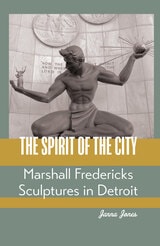
The Spirit of the City
Marshall Fredericks Sculptures in DetroitJanna Jones
Michigan State University Press, 2023
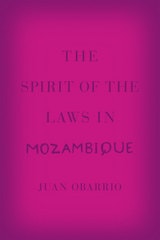
The Spirit of the Laws in Mozambique
Juan Obarrio
University of Chicago Press, 2014
Having made the transition from a people’s republic to democratic rule in the 1990s, Mozambique offers a fascinating case of postwar reconstruction, economic opening, and transitional justice, one in which the customary has played a central role. Obarrio shows how its sovereignty has met countless ambiguities within the entanglements of local community, nation-state, and international structures. The postcolonial nation-state emerges as a maze of entangled jurisdictions. Ultimately, he looks toward local rituals and relations as producing an emergent kind of citizenship in Africa, which he dubs “customary citizenship,” forming not a vestige of the past but a yet ill-defined political future.
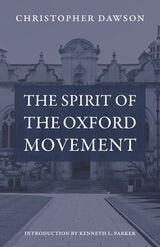
The Spirit of the Oxford Movement
Christopher Dawson
Catholic University of America Press, 2022
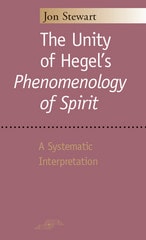
The Unity of Hegel's "Phenomenology of Spirit"
A Systematic InterpretationJon Stewart
Northwestern University Press, 2011
In The Unity of Hegel's "Phenomenology of Spirit", Jon Stewart interprets Hegel's work as a dialectical transformation of Kantian transcendental philosophy, providing from this unified standpoint a case for Hegel's own conception of philosophy as a system. In restoring them to their larger systematic contexts, Stewart clarifies Hegel's individual analyses, as well as indicating the meaning and significance of the transitions and illustrating the parallelisms between the respective analyses. Many of Hegel's main themes-
universal-particular, mediacy-immediacy-are traced through the text, demonstrating Hegel's formal continuity.
By examining at the microlevel the particulars of the dialectical movement, and by analyzing at the macrolevel the role of the argument in question in the context of the work as a whole, Stewart provides a detailed analysis of the Phenomenology and a significant scholarly demonstration of Hegel's own conception of the Phenomenology as a part of a systematic philosophy.
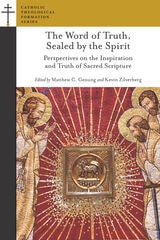
The Word of Truth, Sealed by the Spirit
Perspectives on the Inspiration and Truth of Sacred ScriptureMatthew C. Genung
Saint Paul Seminary Press, 2022
To Foster the Spirit of Professionalism
Southern Scientists and State Academies of ScienceNancy Smith Midgette
University of Alabama Press, 1991
"A welcome contribution to the history of science in the South during the period since the Civil War. . . . By considering the academies in the larger context of scientific professionalism, South and North, Midgette has produced a surprisingly wide-ranging and informative study. This is overall a judicious and carefully researched work. The writing is straightforward and admirably clear, while the topic is effectively organized and presented. The book is a commendably original addition to local and regional history as well as history of American Science."
—Journal of American History
"Midgette’s study is thorough and well organized and should be consulted by anyone interested in American science and American higher education."
—Florida Historical Quarterly
"A very useful survey."
—Choice