Results by title
117 books match the query 'Storytelling' and 23 start with t
Teaching as Story Telling
An Alternative Approach to Teaching and Curriculum in the Elementary SchoolKieran Egan
University of Chicago Press, 1989
Tell Me a Story
Narrative and IntelligenceRoger C. Schank
Northwestern University Press, 1995
Tell Your Life Story
Creating Dialogue among Jews and Germans, Israelis and PalestiniansDan Bar-On
Central European University Press, 2006
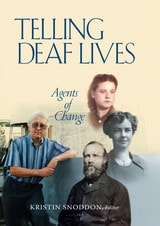
Telling Deaf Lives
Agents of ChangeKristin Snoddon
Gallaudet University Press, 2014
Due to the dearth of formal research on deaf people, Deaf community historians drove the preservation of the stories in this collection. Their diversity is remarkable: Melissa Anderson and Breda Carty describe the Cosmopolitan Correspondence Club, a group of Deaf individuals who corresponded in the early 20th century from Australia to Western Europe to the United States; Ulla-Bell Thorin recounts first-hand growing up deaf in Sweden and her process in authoring six memoirs; Harry Lang reflects on writing biographies of numerous Deaf Americans in the arts and science; Akio Suemori profiles the first Deaf president of a Japanese school for the Deaf; Tatiana Davidenko writes about her Deaf family’s experience during the World War II siege of Leningrad; Theara Yim and Julie Chateauvert look at the evolution of ASL poetry by analyzing works of prominent ASL poets Clayton Valli, Peter Cook, and Kenny Lerner. These and the other contributions here enshrine Deaf people in collective memory by virtue of disseminating and preserving their stories.
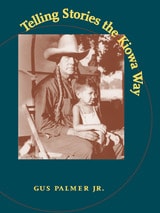
Telling Stories the Kiowa Way
Gus Palmer
University of Arizona Press, 2003
This book explores the traditional art of storytelling still practiced by Kiowas today as Gus Palmer shares conversations held with storytellers. Combining narrative, personal experience, and ethnography in an original and artful way, Palmer—an anthropologist raised in a traditional Kiowa family—shows not only that storytelling remains an integral part of Kiowa culture but also that narratives embedded in everyday conversation are the means by which Kiowa cultural beliefs and values are maintained.
Palmer's study features contemporary oral storytelling and other discourses, assembled over two and a half years of fieldwork, that demonstrate how Kiowa storytellers practice their art. Focusing on stories and their meaning within a narrative and ethnographic context, he draws on a range of material, including dream stories, stories about the coming of Táimê (the spirit of the Sun Dance) to the Kiowas, and stories of tricksters and tribal heroes. He shows how storytellers employ the narrative devices of actively participating in oral narratives, leaving stories wide open, or telling stories within stories. And he demonstrates how stories can reflect a wide range of sensibilities, from magical realism to gossip.
Firmly rooted in current linguistic anthropological thought, Telling Stories the Kiowa Way is a work of analysis and interpretation that helps us understand story within its larger cultural contexts. It combines the author's unique literary talent with his people's equally unique perspective on anthropological questions in a text that can be enjoyed on multiple levels by scholars and general readers alike.
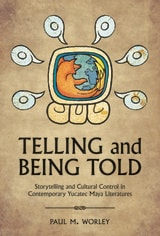
Telling and Being Told
Storytelling and Cultural Control in Contemporary Yucatec Maya LiteraturesPaul M. Worley
University of Arizona Press, 2013
Through performance, storytellers place the past in dynamic relationship with the present, each continually evolving as it is reevaluated and reinterpreted. Yet non-indigenous actors often manipulate the storyteller in their firsthand accounts of the indigenous world. Moreover, by limiting the field of literary study to written texts, Worley argues, critics frequently ignore an important component of Latin America’s history of conquest and colonization: The fact that Europeans consciously set out to destroy indigenous writing systems, making orality a key means of indigenous resistance and cultural continuity.
Given these historical factors, outsiders must approach Yucatec Maya and other indigenous literatures on their own terms rather than applying Western models. Although oral literature has been excluded from many literary studies, Worley persuasively demonstrates that it must be included in contemporary analyses of indigenous literatures as oral texts form a key component of contemporary indigenous literatures, and storytellers and storytelling remain vibrant cultural forces in both Yucatec communities and contemporary Yucatec writing.

The Big Boxcar
Alfred Maund
University of Illinois Press, 1957
The Big Boxcar, written from a totally black perspective by a white author, bears witness to the structural racism of a social order that sets ordinary people of different colors against each other to the disadvantage of all. Alan Wald's introduction documents Maund's life of activism and his uncompromising commitment to social emancipation.
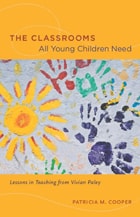
The Classrooms All Young Children Need
Lessons in Teaching from Vivian PaleyPatricia M. Cooper
University of Chicago Press, 2009
Teacher and author Vivian Paley is highly regarded by parents, educators, and other professionals for her original insights into such seemingly everyday issues as play, story, gender, and how young children think. In The Classrooms All Young Children Need, Patricia M. Cooper takes a synoptic view of Paley’s many books and articles, charting the evolution of Paley’s thinking while revealing the seminal characteristics of her teaching philosophy. This careful analysis leads Cooper to identify a pedagogical model organized around two complementary principles: a curriculum that promotes play and imagination, and the idea of classrooms as fair places where young children of every color, ability, and disposition are welcome.
With timely attention paid to debates about the reduction in time for play in the early childhood classroom, the role of race in education, and No Child Left Behind, The Classrooms All Young Children Need will be embraced by anyone tasked with teaching our youngest pupils.
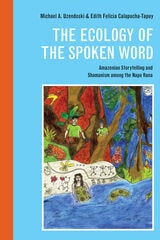
The Ecology of the Spoken Word
Amazonian Storytelling and the Shamanism among the Napo RunaMichael A. Uzendoski and Edith Felicia Calapucha-Tapuy
University of Illinois Press, 2012
This volume offers the first theoretical and experiential translation of Napo Runa mythology in English. Michael A. Uzendoski and Edith Felicia Calapucha-Tapuy present and analyze lowland Quichua speakers in the Napo province of Ecuador through narratives, songs, curing chants, and other oral performances, so readers may come to understand and appreciate Quichua aesthetic expression. Guiding readers into Quichua ways of thinking and being--in which language itself is only a part of a communicative world that includes plants, animals, and the landscape--Uzendoski and Calapucha-Tapuy weave exacting translations into an interpretive argument with theoretical implications for understanding oral traditions, literacy, new technologies, and language. A companion websiteoffers photos, audio files, and videos of original performances illustrates the beauty and complexity of Amazonian Quichua poetic expressions.

The Handbook for Storytellers
Judy Freeman
American Library Association, 2015
The Handbook for Storytime Programs
Judy Freeman
American Library Association, 2015
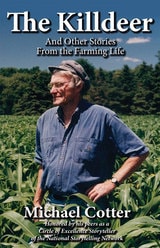
The Killdeer
And Other Stories From the Farming LifeMichael Cotter
Parkhurst Brothers, Inc., 2014
--Rex Ellis, Director of Museum programs, Smithsonian Institution, Washington, D.C.
The Librarian's Nitty-Gritty Guide to Social Media
Laura Solomon
American Library Association, 2012
The Radical Act of Community Storytelling
Empowering Voices in Uncensored EventsPenelope Starr
Parkhurst Brothers, Inc., 2017
The Radical Act of Community Storytelling is everything it claims in the title. It is the story of a radical step of faith taken by Penelope Starr to open her life by bringing community storytelling to her community. It is the story of voices that often go unheard having the opportunity to speak and be heard. And it is about community building from start to finish ... including everything any radical would need to start a community storytelling organization in any community.
—Adam Hostetter, Adult literacy educator, writer, and community storytelling producer
The Story Is True
The Art and Meaning of Telling StoriesBruce Jackson
Temple University Press, 2008
Making and experiencing stories, remembering and retelling them is something we all do. We tell stories over meals, at the water cooler, and to both friends and strangers. But how do stories work? What is it about telling and listening to stories that unites us? And, more importantly, how do we change them-and how do they change us?
In The Story Is True, author, filmmaker, and photographer Bruce Jackson explores the ways we use the stories that become a central part of our public and private lives. He examines, as no one before has, how stories narrate and bring meaning to our lives, by describing and explaining how stories are made and used. The perspectives shared in this engaging book come from the tellers, writers, filmmakers, listeners, and watchers who create and consume stories.
Jackson writes about his family and friends, acquaintances and experiences, focusing on more than a dozen personal stories. From oral histories, such as conversations the author had with poet Steven Spender, to public stories, such as what happened when Bob Dylan "went electric" at the 1965 Newport Folk Festival. Jackson also investigates how "words can kill" showing how diction can be an administrator of death, as in Nazi extermination camps. And finally, he considers the way lies come to resemble truth, showing how the stories we tell, whether true or not, resemble truth to the teller.
Ultimately, The Story Is True is about the place of stories-fiction or real-and the impact they have on the lives of each one of us.
The Storytellers' Journey
AN AMERICAN REVIVALJoseph Daniel Sobol
University of Illinois Press, 1999
Drawing on interviews with dozens of storytellers around the country, Sobol paints the revival as part of a larger process of cultural revitalization. He traces the growth of the preeminent revival organization, the National Association for the Preservation and Perpetuation of Storytelling (NAPPS), and details the individual passions, the organizational politics, and the economic, social, and mythic forces that have combined to transform a ragtag assemblage of enthusiasts into a national and international network of arts professionals.
A seemingly chance encounter between a restlessly ambitious high school teacher and a coonhunting tale on the car radio sets off a chain of inspirations that changes the face of a small southern town, touches lives across America, and revitalizes a homely but treasured art form.
The Tongue Is Fire
South African Storytellers and ApartheidHarold E. Scheub
University of Wisconsin Press, 1996
With tape-recorder and camera in hand, Scheub registered the testaments of Swati, Xhosa, Ndebele, and Zulu storytellers, farming people who lived in the remote reaches of rural South Africa. While young people fought in the streets of Soweto and South African writers made the world aware of apartheid’s evils, the rural storytellers resisted apartheid in their own way, using myth and metaphor to preserve their traditions and confront their oppressors. For more than 20 years, Scheub kept the promise he made to the storytellers to publish his translations of their stories only when freedom came to South Africa. The Tongue Is Fire presents these voices of South African oral tradition—the historians, the poets, the epic-performers, the myth-makers—documenting their enduring faith in the power of the word to sustain tradition in the face of determined efforts to distort or eliminate it. These texts are a tribute to the storytellers who have always, in periods of crisis, exercised their art to inspire their own people.
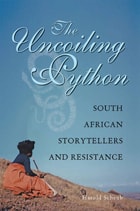
The Uncoiling Python
South African Storytellers and ResistanceHarold Scheub
Ohio University Press, 2010
There are many collections of African oral traditions, but few as carefully organized as The Uncoiling Python. Harold Scheub, one of the world’s leading scholars of African oral traditions and folklore, explores the ways in which oral traditions have served to combat and subvert colonial domination in South Africa. From the time colonial forces first came to southern Africa in 1487, oral and written traditions have been a bulwark against what became 350 years of colonial rule, characterized by the racist policies of apartheid. The Uncoiling Python: South African Storytellers and Resistance is the first in-depth study of oral tradition as a means of survival.
In open insurrections and other subversive activities Africans resisted the daily humiliations of colonial rule, but perhaps the most effective and least apparent expression of subversion was through indigenous storytelling and poetic traditions. Harold Scheub has collected the stories and poetry of the Xhosa, Zulu, Swati, and Ndebele peoples to present a fascinating analysis of how the apparently harmless tellers of tales and creators of poetry acted as front-line soldiers.
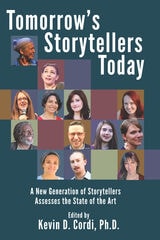
Tomorrow's Storytellers Today
A New Generation of Storytellers Assesses the State of the ArtEdited by Kevin D. Cordi, Ph.D.
Parkhurst Brothers, Inc., 2021
• Charles Parrott on truth claims in storytelling today
• Danielle Bellone on the blending of old forms and new audience concerns
• Alison Bergblom Johnson on the storyteller’s relationship to the story
• Cooper Braun on what works and what doesn’t when telling hard or “dark” stories
• Marie Lupine-Durocher and Petronella van Dijk on what wonder tales teach the next generation of storytellers
• Carolina Quiroga-Stultz on storytelling that starts conversations about frontiers and borders
• And eleven more chapters of stories and examination of the art of storytelling in the current era.
The contributors come from many different storytelling traditions as well as many modern subcultures. Their concerns will be of interest to educators, storytellers, art watchers, and cultural thinkers. There is no other book like Tomorrow’s Storytellers Today.
Transforming Preschool Storytime
A Modern Vision and a Year of ProgramsBetsy Diamant-Cohen
American Library Association, 2013
Turning the Page
Storytelling as Activism in Queer Film and MediaCoon, David R
Rutgers University Press, 2018
Surprisingly, Hollywood is still clumsily grappling with its representation of sexual minorities, and LGBTQ filmmakers struggle to find a place in the mainstream movie industry. However, organizations outside the mainstream are making a difference, helping to produce and distribute authentic stories that are both by and for LGBTQ people.
Turning the Page introduces readers to three nonprofit organizations that, in very different ways, have each positively transformed the queer media landscape. David R. Coon takes readers inside In the Life Media, whose groundbreaking documentaries on the LGBTQ experience aired for over twenty years on public television stations nationwide. Coon reveals the successes of POWER UP, a nonprofit production company dedicated to mentoring filmmakers who can turn queer stories into fully realized features and short films. Finally, he turns to Three Dollar Bill Cinema, an organization whose film festivals help queer media find an audience and whose filmmaking camps for LGBTQ youth are nurturing the next generation of queer cinema.
Combining a close analysis of specific films and video programs with extensive interviews of industry professionals, Turning the Page demonstrates how queer storytelling in visual media has the potential to empower individuals, strengthen communities, and motivate social justice activism.
Twenty Tellable Tales
Audience Participation Folktales for the Beginning StorytellerMargaret Read MacDonald
American Library Association, 2005
Twining
Critical and Creative Approaches to Hypertext NarrativesAnastasia Salter
Amherst College Press, 2021
"While there have certainly been attempts to study Twine historically and theoretically... no single publication has provided such a detailed account of it. And no publication has even attempted to situate Twine amongst its many different conversations and traditions, something this book does masterfully." —James Brown, Rutgers University, Camden