Results by title
454 books match the query 'Study and teaching (Higher)' and 88 start with t
Talk, Tools, and Texts
A Logic-in-Use for Studying Lifespan Literate Action DevelopmentRyan J. Dippre
University Press of Colorado, 2020
Talk, Tools, and Texts tackles a perplexing issue: how can we envision writing as developing throughout a lifetime, from the first purposeful marks made on paper to the last? How can we make accounts of writing development that keep the complexity of our lives in mind while also providing useful insight to researchers, teachers, and writers?
Drawing on eleven accounts of writers at different points in the lifespan (ages 12 to 80) and in different social circumstances (from a middle-school classroom to a bird-sanctuary newsletter), Talk, Tools, and Texts constructs a “logic-in-use” for following writers and their writing development at a variety of points in the lifespan. It also offers several strategies scholars can use in pursuit of their own research into lifespan writing.
Talking Art
The Culture of Practice and the Practice of Culture in MFA EducationGary Alan Fine
University of Chicago Press, 2018

Talking Back
Senior Scholars and Their Colleagues Deliberate the Past, Present, and Future of Writing StudiesNorbert Elliot
Utah State University Press, 2020
In Talking Back, a veritable Who’s Who of writing studies scholars deliberate on intellectual traditions, current practices, and important directions for the future. In response, junior and mid-career scholars reflect on each chapter with thoughtful and measured moves forward into the contemporary environment of research, teaching, and service. Each of the prestigious chapter authors in the volume has three common traits: a sense of responsibility for advancing the profession, a passion for programs of research dedicated to advancing opportunities for others, and a reflective sense of their work accompanied by humility for their contributions. As a documentary, Talking Back is the first history of writing studies in autobiography.
Contributors: Jo Allen, Ann N. Amicucci, Akua Duku Anokye, Paige Davis Arrington, Doug Baldwin, John C. Brereton, Judy Buchanan, Hugh Burns, Leasa Burton, Ellen C. Carillo, William Condon, Dylan B. Dryer, Michelle F. Eble, Jennifer Enoch, Joan Feinberg, Patricia Friedrich, Cinthia Gannett, Eli Goldblatt, Shenika Hankerson, Janis Haswell, Richard Haswell, Eric Heltzel, Douglas Hesse, Bruce Horner, Alice S. Horning, Asao B. Inoue, Ruth Ray Karpen, Suzanne Lane, Min-Zhan Lu, Donald McQuade, Elisabeth L. Miller, Rebecca Williams Mlynarczyk, Sean Molloy, Les Perelman, Louise Wetherbee Phelps, Stacey Pigg, Sherry Rankins-Robertson, Jessica Restaino, J. Michael Rifenburg, Eliana Schonberg, Geneva Smitherman, Richard Sterling, Katherine E. Tirabassi, Devon Tomasulo, Martha A. Townsend, Mike Truong, Victor Villanueva, Edward M. White, Anne Elrod Whitney, Kathleen Blake Yancey
Teaching About Place
Learning From The LandLaird Christensen
University of Nevada Press, 2008
Teaching Accelerated and Corequisite Composition
David Starkey
Utah State University Press, 2023
The book primarily explores accelerated composition through the lens of two-year colleges to answer a central question in the field: to what extent do educators need to alter two-year college curricular design? The contributors also delve into assessment, a crucial process for instructors and their students transitioning to accelerated learning; the key role that reading plays in the writing process; and noncognitive learning, an area of study that has been associated with accelerated learning since its inception. Together these thirteen chapters provide instructors with a strategic approach to teaching accelerated and corequisite composition.
Teaching Accelerated and Corequisite Composition points toward a new way of approaching first-year composition: a method of instruction that fosters the growth and success of writers who were once considered underprepared for college writing and are now achieving unprecedented success.
Teaching Black History to White People
By Leonard N. Moore
University of Texas Press, 2021
Leonard Moore has been teaching Black history for twenty-five years, mostly to white people. Drawing on decades of experience in the classroom and on college campuses throughout the South, as well as on his own personal history, Moore illustrates how an understanding of Black history is necessary for everyone.
With Teaching Black History to White People, which is “part memoir, part Black history, part pedagogy, and part how-to guide,” Moore delivers an accessible and engaging primer on the Black experience in America. He poses provocative questions, such as “Why is the teaching of Black history so controversial?” and “What came first: slavery or racism?” These questions don’t have easy answers, and Moore insists that embracing discomfort is necessary for engaging in open and honest conversations about race. Moore includes a syllabus and other tools for actionable steps that white people can take to move beyond performative justice and toward racial reparations, healing, and reconciliation.
Teaching History in the Digital Age
T. Mills Kelly
University of Michigan Press, 2013
Teaching History in the Digital Age serves as a guide for practitioners on how to fruitfully employ the transformative changes of digital media in the research, writing, and teaching of history. T. Mills Kelly synthesizes more than two decades of research in digital history, offering practical advice on how to make best use of the results of this synthesis in the classroom and new ways of thinking about pedagogy in the digital humanities.
Teaching In The Field
Hal Crimmel
University of Utah Press, 2003
Taking students out of the classroom and into a variety of settings, ranging from remote wilderness sites to urban or built environments is now recognized as a valuable means of teaching ecological concepts and environmental values. But field studies are also a way of encouraging explorations across the curriculum, enhancing the teaching of life sciences, literature, and creative writing.
Teaching in the Field is the first volume to specifically survey field studies conducted through colleges and universities. The essays, arranged into three sections, offer rationales, pedagogical strategies, and foundational advice and information that broaden and strengthen the collective knowledge of this increasingly popular means of instruction. The essays present theoretical information within engaging, candid narratives that report on various aspects of field experiences, whether hour-long excursions or month-long trips.
Teachers of environmental studies, of English, composition, and creative writing, and of allied humanities and science disciplines, will find here a wealth of success stories and cautionary tales to guide them in envisioning their own outdoor classrooms.

Teaching Information Literacy Online
Trudi E. Jacobson
American Library Association, 2011
Teaching Information Literacy Reframed
50+ Framework-Based Exercises for Creating Information-Literate LearnersJoanna M. Burkhardt
American Library Association, 2016
The six threshold concepts outlined in the Framework for Information Literacy for Higher Education are not simply a revision of ACRL's previous Information Literacy Competency Standards for Higher Education. They are instead an altogether new way of looking at information literacy. In this important new book, bestselling author and expert instructional librarian Burkhardt decodes the Framework, putting its conceptual approach into straightforward language while offering more than 50 classroom-ready Framework-based exercises. Guiding instructors towards helping students cross each threshold, this book
- discusses the history of the development of the Framework document and briefly deconstructs the six threshold concepts;
- thoroughly addresses each threshold concept, scaffolding from the beginner level to the intermediate level;
- includes exercises that can be used in the one-shot timeframe as well as others designed for longer class sessions and semester-long courses;
- offers best practices in creating learning outcomes, assessments, rubrics, and teaching tricks and tips; and
- looks at how learning, memory, and transfer of learning applies to the teaching of information literacy.
Offering a solid starting point for understanding and teaching the six threshold concepts in the Framework, Burkhardt's guidance will help instructors create their own local information literacy programs.

Teaching Information Literacy Threshold Concepts
LessonPatricia Bravender
Assoc of College & Research Libraries, 2015
Teaching Information Literacy Threshold Concepts
Lesson Plans for LibrariansPatricia Bravender
Assoc of College & Research Libraries, 2015
Teaching Information Literacy
50 Standards-Based Exercises for College StudentsJoanna M. Burkhardt
American Library Association, 2010
Teaching Life
Letters from a Life in LiteratureDale Salwak
University of Iowa Press, 2008
Written in response to the sudden death of one of his students, who died tragically in an automobile accident on her way to Salwak’s office to talk over her career plans, Teaching Life is an effort to impart lessons to the next generation of teachers: “It was the suddenness of her death, I think, along with the utter loss of so much potential, which struck me forcibly, and I found myself wondering if anything I had said in class had made a difference in her too-short life or, for that matter, in the lives of any of my students.”
By turns analytical, reflective, and exhortatory, Teaching Life unselfconsciously captures the fascination, enlightenment, and sheer joy that literary studies can offer professors and students. It also implicitly speaks to society's prevailing—and disturbing—prejudice against the profession.
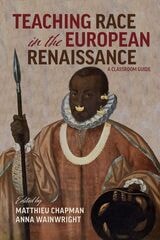
Teaching Race in the European Renaissance
A Classroom GuideEdited by Anna Wainwright and Matthieu Chapman
Arizona Center for Medieval and Renaissance Studies, 2023
Teaching Race in the European Renaissance: A Classroom Guide provides both educators and students the tools they need to discuss race in the European Renaissance both in its unique historical contexts and as part of a broader continuum with racial thinking today. The volume gathers scholars of the English, French, Italian, and Iberian Renaissances to provide exercises, lesson plans, methodologies, readings, and other resources designed to bring discussions of race into a broad spectrum of classes on the early modern period, from literature to art history to the history of science. This book is designed to help educators create more diverse and inclusive syllabi and curricula that engage and address a diverse, twenty-first-century student body composed of students from a growing variety of cultural, national, ethnic, and racial backgrounds. By providing clear, concise, and diverse methodologies and analytical focuses, Teaching Race in the European Renaissance: A Classroom Guide will help educators in all areas of Renaissance Studies overcome the anxiety and fear that can come with stepping outside of their expertise to engage with the topic of race, while also providing expert scholars of race in the Renaissance with new techniques and pedagogies to enhance the classroom experience of their students.
Teaching With Student Texts
Essays Toward an Informed PracticeJoseph Harris
Utah State University Press, 2010
Harris, Miles and Paine ask: What happens when the texts that students write become the focus of a writing course? In response, a distinguished group of scholar/teachers suggests that teaching with students texts is not simply a classroom technique, but a way of working with writing that defines composition as a field.
In Teaching with Student Texts, authors discuss ways of revaluing student writing as intellectual work, of circulating student texts in the classroom and beyond, and of changing our classroom practices by bringing student writings to the table. Together, these essays articulate a variety of ways that student texts can take a central place in classroom work and can, in the process, redefine the ways our field talks about writing.
Teaching Writing That Works
A Group Approach to Practical EnglishEric S. Rabkin and Macklin Smith
University of Michigan Press, 1990
Teaching Writing through the Immigrant Story
Heather Ostman
Utah State University Press, 2021
Each of the chapters recognizes the prevalence of immigrant students in writing classrooms across the United States—including foreign-born, first- and second-generation Americans, and more—and the myriad opportunities and challenges those students present to their instructors. These contributors have seen the validity in the stories and experiences these students bring to the classroom—evidence of their lifetimes of complex learning in both academic and nonacademic settings. Like thousands of college-level instructors in the United States, they have immigrant stories of their own. The immigrant “narrative” offers a unique framework for knowledge production in which students and teachers may learn from each other, in which the ordinary power dynamic of teacher and students begins to shift, to enable empathy to emerge and to provide space for an authentic kind of pedagogy.
By engaging writing and literature teachers within and outside the classroom, Teaching Writing through the Immigrant Story speaks to the immigrant narrative as a viable frame for teaching writing—an opportunity for building and articulating knowledge through academic discourse. The book creates a platform for immigration as a writing and literary theme, a framework for critical thinking, and a foundation for significant social change and advocacy.
Contributors: Tuli Chatterji, Katie Daily-Bruckner, Libby Garland, Silvia Giagnoni, Sibylle Gruber, John Havard, Timothy Henderson, Brennan Herring, Lilian Mina, Rachel Pate, Emily Schnee, Elizabeth Stone
Teaching Writing
Landmarks and HorizonsEdited by Christina Russell McDonald and Robert L. McDonald. Foreword by Gary Tate. Postscript by Steve North
Southern Illinois University Press, 2002
Teaching Writing: Landmarks and Horizons, edited by Christina Russell McDonald and Robert L. McDonald, is designed to present an overview of some of the major developments in the establishment of composition studies as a field during the past thirty-five years. The essays are theoretically grounded but are focused on pedagogy as well. Divided into two parts, the first presents nine landmark essays, selected and introduced by distinguished composition scholars, and the second brings together eight new essays by emerging scholars.
Teaching the Bible with Undergraduates
Jocelyn McWhirter
SBL Press, 2022
Teaching the Bible with Undergraduates offers concrete strategies for Bible instruction in college classrooms. Each essay pays special attention to the needs of tech-savvy students whose sensibilities, aspirations, expectations, and preferred ways of learning may differ significantly from those of their instructors. The volume’s contributors, all biblical scholars and undergraduate instructors, focus on best pedagogical practices using concrete examples while sharing effective strategies. Essays and quick tips treat topics, including general education, reading skills, student identities, experiential learning, and instructional technology. Contributors include Kimberly Bauser McBrien, George Branch-Trevathan, Callie Callon, Lesley DiFransico, Nicholas A. Elder, Timothy A. Gabrielson, Kathleen Gallagher Elkins, Susan E. Haddox, Seth Heringer, John Hilton III, Melanie A. Howard, Christopher M. Jones, Steve Jung, Katherine Low, Timothy Luckritz Marquis, Kara J. Lyons-Pardue, Jocelyn McWhirter, Sylvie T. Raquel, Eric A. Seibert, Hanna Tervanotko, Carl N. Toney, John Van Maaren, and Robby Waddell. This book provides an essential resource not only for instructors at the undergraduate level but also for anyone who teaches biblical studies in the classroom.
Teaching the Eighteenth Century Now
Pedagogy as Ethical EngagementKate Parker
Bucknell University Press, 2024
Published by Bucknell University Press. Distributed worldwide by Rutgers University Press.
Teaching the History of the Book
Edited by Matteo Pangallo and Emily B. Todd
University of Massachusetts Press, 2023
With original contributions from a diverse range of teachers, scholars, and practitioners in literary studies, history, book arts, library science, language studies, and archives, Teaching the History of the Book is the first collection of its kind dedicated to book history pedagogy. Presenting a variety of methods for teaching book history both as its own subject and as an approach to other material, each chapter describes lessons, courses, and programs centered on the latest and best ways of teaching undergraduate and graduate students.
Expansive and instructive, this volume introduces ways of helping students consider how texts were produced, circulated, and received, with chapters that cover effective ways to organize courses devoted to book history, classroom activities that draw on this subject in other courses, and an overview of selected print and digital tools. Contributors, many of whom are leading figures in the field, utilize their own classroom experiences to bring to life some of the rich possibilities for teaching book history in the twenty-first century.
In addition to the volume editors, contributors include Ryan Cordell, Brigitte Fielder, Barbara Hochman, Leslie Howsam, Matthew Kirschenbaum, Clare Mullaney, Kate Ozment, Leah Price, Jonathan Rose, Jonathan Senchyne, Sarah Wadsworth, and others.
Teaching the Literature Survey Course
New Strategies for College FacultyJames M. Lang
West Virginia University Press, 2018
From mapping early English literature to a team-based approach to the American survey, and from multimedia galleries to a “blank syllabus,” contributors propose alternatives to the traditional emphasis on lectures and breadth of coverage. The volume is at once a set of practical suggestions for working teachers (including sample documents like worksheets and syllabi) and a provocative engagement with the question of what introductory courses can and should be.
Teaching with Primary Sources
Christopher Prom
Society of American Archivists, 2016
Teaching/Writing in Thirdspaces
The Studio ApproachRhonda C. Grego and Nancy S. Thompson
Southern Illinois University Press, 2007
Teaching/Writing in Thirdspaces: The Studio Approach examines a dynamic approach to teaching composition that reimagines not only the physical space in which writing and learning occurs but also the place occupied by composition in the power structure of universities and colleges.
In response to financial and programmatic cutbacks at the University of South Carolina in the 1990s, authors Rhonda C. Grego and Nancy S. Thompson used their academic backgrounds in composition and English education, along with their personal histories in working-class families, to look at compositional spaces and places with an eye to challenging the embedded issues of race, class, and gender within the university hierarchies. The result was a supplemental writing program that they called the writing studio.
The studio model emphasizes individual participation in a small group that allows students to present work they are preparing for outside classes, discuss their challenges, and refine their ideas with other students and staff facilitators. This “interactional inquiry” is replicated and reinforced by the facilitators, who meet in their own small groups to analyze larger patterns, possibilities, and needs as they arise in their studios.
Grego and Thompson argue that because the studio is physically and institutionally “outside but alongside” both students’ other coursework and the hierarchy of the institution, it represents a “thirdspace,” a unique position in which to effect institutional change. The focus on interactional inquiry challenges traditional power hierarchies within classrooms and shifts the nature of discourse. As a bottom-up approach to the development of educational programs within institutions that have different needs, demographies, and histories, the studio model can address a multitude of different institutional needs with little disruption to the curriculum.
The studio model allows university administrators, teachers, student aides, and students to continually adapt to changing institutional environments with new teaching and learning strategies. Teaching/Writing in Thirdspaces provides an alternative approach to traditional basic writing courses that can be adopted in educational institutions of all types and at all levels.
Technology and Engagement
Making Technology Work for First Generation College StudentsRowan-Kenyon, Heather T.
Rutgers University Press, 2018
Technology and Engagement is based on a four-year study of how first generation college students use social media, aimed at improving their transition to and engagement with their university. Through web technology, including social media sites, students were better able to maintain close ties with family and friends from home, as well as engage more with social and academic programs at their university. This ‘ecology of transition’ was important in keeping the students focused on why they were in college, and helped them become more integrated into the university setting. By showing the gains in campus capital these first-generation college students obtained through social media, the authors offer concrete suggestions for how other universities and college-retention programs can utilize the findings to increase their own retention of first-generation college students.
Tell Me How It Reads
Tutoring Deaf and Hearing Students in the Writing CenterRebecca Day Babcock
Gallaudet University Press, 2012
Deaf students are attending mainstream postsecondary institutions in increasing numbers, raising the stakes for the complicated and multifaceted task of tutoring deaf students at these schools. Common tutoring practices used with hearing students do not necessarily work for deaf people. Rebecca Day Babcock researched and wrote Tell Me How It Reads: Tutoring Deaf and Hearing Students in the Writing Center to supply writing instructors an effective set of methods for teaching Deaf and other students how to be better writers.
Babcock’s book is based on the resulting study of tutoring writing in the college context with both deaf and hearing students and their tutors. She describes in detail sessions between deaf students, hearing tutors, and the interpreters that help them communicate, using a variety of English or contact signing rather than ASL in the tutorials. These experiences illustrate the key differences between deaf-hearing and hearing-hearing tutorials and suggest ways to modify tutoring and tutor-training practices accordingly. Although this study describes methods for tutoring deaf students, its focus on students who learn differently can apply to teaching writing to Learning Disabled students, ESL students, and other students with different learning styles. Ultimately, the well-grounded theory analysis within Tell Me How It Reads provides a complete paradigm for tutoring in all writing centers.
Telling Stories
Perspectives on Longitudinal Writing ResearchJenn Fishman
Utah State University Press, 2023
In Telling Stories, more than a dozen longitudinal writing researchers look beyond conventional project findings to story their work and, in doing so, offer otherwise unavailable glimpses into the logics and logistics of long-range studies of writing. The result is a volume that centers interrelations among people, places, and politics across two decades of praxis and an array of educational sites: two-year colleges, a senior military college, an adult literacy center, a small liberal arts college, and both public and private four-year universities.
Contributors share direct knowledge of longitudinal writing research, citing project data (e.g., interview transcripts, research notes, and journals), descriptions drawn from memory, and extended personal reflections. The resulting stories, tempered by the research and scholarship of others, convey a sense of longitudinal research as a lived activity as well as a prominent and consequential approach to inquiry. Yet Telling Stories is not a how-to guide, nor is it written for longitudinal researchers alone. Instead, this volume addresses issues about writing research that are germane to all who conduct or count on it. Such topics include building and sustaining good interpersonal research relations, ethically negotiating the institutional power dynamics that undergird writing research, effectively using knowledge from longitudinal studies to advocate for writers and writing educators, and improving both conceptual and concrete resources for long-range research in writing studies.
Tenured Bosses and Disposable Teachers
Writing Instruction in the Managed UniversityEdited by Marc Bousquet, Tony Scott, and Leo Parascondola. Foreword by Randy Martin
Southern Illinois University Press, 2003
Tenured Bosses and Disposable Teachers: Writing Instruction in the Managed University exposes the poor working conditions of contingent composition faculty and explores practical alternatives to the unfair labor practices that are all too common on campuses today.
Editors Marc Bousquet, Tony Scott, and Leo Parascondola bring together diverse perspectives from pragmatism to historical materialism to provide a perceptive and engaging examination of the nature, extent, and economics of the managed labor problem in composition instruction—a field in which as much as ninety-three percent of all classes are taught by graduate students, adjuncts, and other “disposable” teachers. These instructors enjoy few benefits, meager wages, little or no participation in departmental governance, and none of the rewards and protections that encourage innovation and research. And it is from this disenfranchised position that literacy workers are expected to provide some of the core instruction in nearly everyone's higher education experience.
Twenty-six contributors explore a range of real-world solutions to managerial domination of the composition workplace, from traditional academic unionism to ensemble movement activism and the pragmatic rhetoric, accommodations, and resistances practiced by teachers in their daily lives.
Contributors are Leann Bertoncini, Marc Bousquet, Christopher Carter, Christopher Ferry, David Downing, Amanda Godley, Robin Truth Goodman, Bill Hendricks, Walter Jacobsohn, Ruth Kiefson, Paul Lauter, Donald Lazere, Eric Marshall, Randy Martin, Richard Ohmann, Leo Parascondola, Steve Parks, Gary Rhoades, Eileen Schell, Tony Scott, William Thelin, Jennifer Seibel Trainor, Donna Strickland, William Vaughn, Ray Watkins, and Katherine Wills.
The Activist WPA
Changing Stories About Writing and WritersLinda Adler-Kassner
Utah State University Press, 2008
Drawing on recent developments in framing theory and the resurgent traditions of progressive organizers, Linda Adler-Kassner calls upon composition teachers and administrators to develop strategic programs of collective action that do justice to composition’s best principles. Adler-Kassner argues that the “story” of college composition can be changed only when writing scholars bring the wonders down, to articulate a theory framework that is pragmatic and intelligible to those outside the field--and then create messages that reference that framework. In The Activist WPA, she makes a case for developing a more integrated vision of outreach, English education, and writing program administration.
The Benevolent Gaslight
A Technology of Race-MakingLouis M. Maraj
Utah State University Press, 2026
At the intersection of rhetorical studies and critical race/ethnic studies, The Benevolent Gaslight analyzes cultural and political discourses that recharacterize acts of racial violence as teaching moments and learning opportunities. Naming this phenomenon “benevolent gaslighting,” Louis M. Maraj and Pritha Prasad explore its application across academic disciplines/epistemologies, educational history, and university race management, while also diving into how popular culture and political figures use benevolent gaslighting to reinscribe normative operations of race, gender, and sexuality.
Although this rhetoric usually presents as progressive, when used for the purposes of advancing “antiracism,” the benevolent gaslight re-centers the very whiteness it supposedly critiques. It prompts peoples of color to question their histories, memories, and realities by suggesting their pain has been necessary for positive social change and by situating racial trauma as opportunities for public learning. Specific examples include antiracist teaching initiatives and the sudden proliferation of apologies for past acts of racism by public figures. Both trends saw an uptick from 2020 onward as a result of publicity crises and public “reckonings” necessitated by Black Lives Matter protests in response to widely reported, hypervisible anti-Black violences like the murders of George Floyd, Breonna Taylor, and Ahmaud Arbery.
These discourses deflect blame for past or present racial violence by narrating it as an opportunity for “antiracist” growth and intervention. Utilizing conventional academic and creative/narrative methods to examine examples of the benevolent gaslight across US histories of education during the First Reconstruction, the post–Civil Rights management of student activists in the university, and the progressivist discourses of humanities disciplines and popular culture, this book reveals the insidious ways in which peoples of color are routinely (re)traumatized through mechanisms of “pedagogy.”
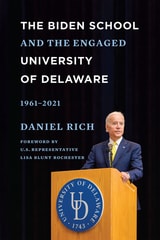
The Biden School and the Engaged University of Delaware, 1961-2021
Daniel Rich
University of Delaware Press, 2023
The Busy Librarians Guide To Information Literacy In
Jeanne Davidson
Assoc of College & Research Libraries, 2012
The Chicago Guide to College Science Teaching
Terry McGlynn
University of Chicago Press, 2020
For years, McGlynn has been addressing the need for practical and accessible advice for college science teachers through his popular blog Small Pond Science. Now he has gathered this advice as an easy read—one that can be ingested and put to use on short deadline. Readers will learn about topics ranging from creating a syllabus and developing grading rubrics to mastering online teaching and ensuring safety during lab and fieldwork. The book also offers advice on cultivating productive relationships with students, teaching assistants, and colleagues.
The Chicago Guide to Grammar, Usage, and Punctuation
Bryan A. Garner
University of Chicago Press, 2016
Throughout the book Garner describes standard literary English—the forms that mark writers and speakers as educated users of the language. He also offers historical context for understanding the development of these forms. The section on grammar explains how the canonical parts of speech came to be identified, while the section on syntax covers the nuances of sentence patterns as well as both traditional sentence diagramming and transformational grammar. The usage section provides an unprecedented trove of empirical evidence in the form of Google Ngrams, diagrams that illustrate the changing prevalence of specific terms over decades and even centuries of English literature. Garner also treats punctuation and word formation, and concludes the book with an exhaustive glossary of grammatical terms and a bibliography of suggested further reading and references.
The Chicago Guide to Grammar, Usage, and Punctuation is a magisterial work, the culmination of Garner’s lifelong study of the English language. The result is a landmark resource that will offer clear guidelines to students, writers, and editors alike.
The Construction of Negotiated Meaning
A Social Cognitive Theory of WritingLinda Flower
Southern Illinois University Press, 1994
Based on five years of close observation of students, writing and collaborative planning—the practice in which student writers take the roles of planner and supporter to help each other develop a more rhetorically sophisticated writing plan—foremost cognitive composition researcher Linda Flower redefines writing in terms of an interactive social and cognitive process and proposes a convincing and compelling theory of the construction of negotiated meaning.
Flower seeks to describe how writers construct meaning. Supported by the emerging body of social and cognitive research in rhetoric, education, and psychology, she portrays meaning making as a literate act and a constructive process. She challenges traditional definitions of literacy, adding to that concept the elements of social literate practices and personal literate acts. In Flower’s view, this social cognitive process is a source of tension and conflict among the multiple forces that shape meaning: the social and cultural context, the demands of discourse, and the writer’s own goals and knowledge.
Flower outlines a generative theory of conflict. With this conflict central to her theory of the construction of negotiated meaning, she examines negotiation as an alternative to the metaphors of reproduction and conversation. It is through negotiation, Flower argues, that social expectations, discourse conventions, and the writer’s personal goals and knowledge become inner voices. The tension among these forces often creates the hidden logic behind student writing. In response to these conflicting voices, writers sometimes rise to the active negotiation of meaning, creating meaning in the interplay of alternatives, opportunities, and constraints.The Craft Of Librarian Instruct Tion
Using Acting TechniquesJulie Artman
Assoc of College & Research Libraries, 2016
The Critical Thinking About Sources Cookbook
Sarah E. Morris
Assoc of College & Research Libraries, 2020
The Difference Aesthetics Makes
On the Humanities “After Man”Kandice Chuh
Duke University Press, 2019
The Division of Literature
Or the University in DeconstructionPeggy Kamuf
University of Chicago Press, 1996
Kamuf begins by analyzing the complex history of literary study within the modern university, critically reading developments from the French Revolution through the nineteenth century and beyond in Europe. She then turns to one of the most troubling works in the American literary canon—Melville's The Confidence-Man—to show how academic literary history has avoided confronting the implications of works in which meaning is never solely confined within a past. By engaging a future readership to which it applies for credit, Kamuf argues, literature cannot serve as a stable object of study. It locates, rather, a site of "the university in deconstruction."
Ranging from disciplinary histories of literature to our current culture wars, Kamuf offers a fascinating critique of academic literary study.
The Education of Historians for Twenty-first Century
Thomas Bender, Philip M. Katz, Colin Palmer, and the Committee on Graduate Education (AHA)
University of Illinois Press, 2004
An examination and analysis of history education in American colleges and universities
In 1958, the American Historical Association began a study to determine the status and condition of history education in U.S. colleges and universities. Published in 1962 and addressing such issues as the supply and demand for teachers, student recruitment, and training for advanced degrees, that report set a lasting benchmark against which to judge the study of history thereafter. Now, more than forty years later, the AHA has commissioned a new report. The Education of Historians for the Twenty-first Century documents this important new study's remarkable conclusions.
Both the American academy and the study of history have been dramatically transformed since the original study, but doctoral programs in history have barely changed. This report from the AHA explains why and offers concrete, practical recommendations for improving the state of graduate education. The Education of Historians for the
Twenty-first Century stands as the first investigation of graduate training for historians in more than four decades and the best available study of doctoral education in any major academic discipline.
Prepared for the AHA by the Committee on Graduate Education, the report represents the combined efforts of a cross-section of the entire historical profession. It draws upon a detailed review of the existing studies and data on graduate education and builds upon this foundation with an exhaustive survey of history doctoral programs. This included actual visits to history departments across the country and consultations with scores of individual historians, graduate students, deans, academic and non-academic employers of historians, as well as other stakeholders in graduate education.
As the ethnic and gender composition of both graduate students and faculty has changed, methodologies have been refined and the domains of historical inquiry expanded. By addressing these revolutionary intellectual and demographic changes in the historical profession, The Education of Historians for the Twenty-first Century breaks important new ground. Combining a detailed historical snapshot of the profession with a rigorous analysis of these intellectual changes, this volume is ideally positioned as the definitive guide to strategic planning for history departments. It includes practical recommendations for handling institutional challenges as well as advice for everyone involved in the advanced training of historians, from department chairs to their students, and from university administrators to the AHA itself.
Although focused on history, there are lessons here for any department. The Education of Historians for the Twenty-first Century is a model for in-depth analysis of doctoral education, with recommendations and analyses that have implications for the entire academy. This volume is required reading for historians, graduate students, university administrators, or anyone interested in the future of higher education.
The End of Composition Studies
David W. Smit
Southern Illinois University Press, 2007
The End of Concern
Maoist China, Activism, and Asian StudiesFabio Lanza
Duke University Press, 2017
The English Department
A Personal and Institutional HistoryW. Ross Winterowd
Southern Illinois University Press, 1998
Tounderstand the history of "English," Ross Winterowd insists, one must understand how literary studies, composition-rhetoric studies, and influential textbooks interrelate. Stressing the interrelationship among these three forces, Winterowd presents a history of English studies in the university since the Enlightenment.
Winterowd’s history is unique in three ways. First, it tells the whole story of English studies: it does not separate the history of literary studies from that of composition-rhetoric studies, nor can it if it is going to be an authentic history. Second, it traces the massive influence on English studies exerted by textbooks such as Adventures in Literature, Understanding Poetry, English in Action, and the Harbrace College Handbook. Finally, Winterowd himself is very much a part of the story, a partisan with more than forty years of service to the discipline, not simply a disinterested scholar searching for the truth.
After demonstrating that literary studies and literary scholars are products of Romantic epistemology and values, Winterowd further invites controversy by reinterpreting the Romantic legacy inherited by English departments. His reinterpretation of major literary figures and theory, too, invites discussion, possibly argument. And by directly contradicting current histories of composition-rhetoric that allow for no points of contact with literature, Winterowd intensifies the argument by explaining the development of composition-rhetoric from the standpoint of literature and literary theory.
The Exhaustion of Difference
The Politics of Latin American Cultural StudiesAlberto Moreiras
Duke University Press, 2001
What, asks Moreiras, is the function of critical reason in the present moment? What is regionalistic knowledge in the face of globalization? Can regionalistic knowledge be an effective tool for a critique of contemporary reason? What is the specificity of Latin Americanist reflection and how is it situated to deal with these questions? Through examinations of critical regionalism, restitutional excess, the historical genealogy of Latin American subalternism, testimonio literature, and the cultural politics of magical realism, Moreiras argues that while cultural studies is increasingly institutionalized and in danger of reproducing the dominant ideologies of late capitalism, it is also ripe for giving way to projects of theoretical reformulation. Ultimately, he claims, critical reason must abandon its allegiance to aesthetic-historicist projects and the destructive binaries upon which all cultural theories of modernity have been constructed.
The Exhaustion of Difference makes a significant contribution to the rethinking of Latin American cultural studies.
The First-Year Experience Cookbook
Raymond Pun
Assoc of College & Research Libraries, 2017
The Fun Of Motivation
Crossing The Threshold Concepts-Pub#71Mary Francis
American Library Association, 2017

The Future of Germanistik in the USA
Changing Our ProspectsJohn A. McCarthy
Vanderbilt University Press, 1996
The Future without a Past
The Humanities in a Technological SocietyJohn Paul Russo
University of Missouri Press, 2005
The Grounded Instruction Librarian
Participating in The Scholarship of Teaching and LearningMelissa Mallon
Assoc of College & Research Libraries, 2019