Results by title
248 books match the query 'Theology' and 71 start with t
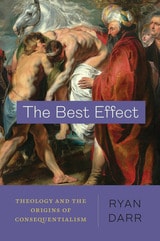
The Best Effect
Theology and the Origins of ConsequentialismRyan Darr
University of Chicago Press, 2023
Consequentialism—the notion that we can judge an action by its effects alone—has been among the most influential approaches to ethics and public policy in the Anglophone world for more than two centuries. In The Best Effect, Ryan Darr argues that consequentialist ethics is not as secular or as rational as it is often assumed to be. Instead, Darr describes the emergence of consequentialism in the seventeenth century as a theological and cosmological vision and traces its intellectual development and eventual secularization across several centuries. The Best Effect reveals how contemporary consequentialism continues to bear traces of its history and proposes in its place a more expansive vision for teleological ethics.
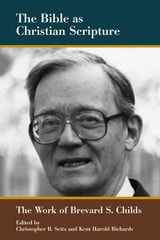
The Bible as Christian Scripture
The Work of Brevard S. ChildsChristopher R. Seitz
SBL Press, 2013
The Bible in Greek
Translation, Transmission, and Theology of the SeptuagintSiegfried Kreuzer
SBL Press, 2015
This volume presents English and German papers that give an overview on important stages, developments, and problems of the Septuagint and the research related to it. Four sections deal with the cultural and theological background and beginnings of the Septuagint, the Old Greek and recensions of the text, the Septuagint and New Testament quotations, and a discussion of Papyrus 967 and Codex Vaticanus.
Features:
- A complete list of Kreuzer’s publications on the text and textual history of the Hebrew Bible and the Septuagint
- Criteria for analysis of the Antiochene/Lucianic Text and the Kaige-Recension
- A close examination of the origins and development of the Septuagint in the context of Alexandrian and early Jewish culture and learning

The Challenge of Catholic-Jewish Theological Dialogue
Matthew Tapie
Catholic University of America Press, 2024
The Challenges of Sovereignty
Essays on Israel and ZionismDavid Ellenson
Brandeis University Press, 2026
Key essays by a notable scholar address some of the most pressing questions facing Israel today.
Over the course of his rich career, David Ellenson—one of the most outstanding Jewish scholars, intellectuals, and thinkers of our time—probed the tension between tradition and modernity, especially as reflected in the ceaseless reinterpretation of liturgical and halakhic texts. Alongside that scholarly interest, largely centered on European Jewry, Ellenson produced an impressive body of work on Zionism and Israel.
This volume follows the arc of this body of work from Ellenson’s early articles on the Zionism of American rabbis to his last essay on the struggle between Jewish and democratic impulses in Israeli society. He draws on familiar sources of inquiry—Jewish prayers and legal sources—to chart changes in Israeli religious life and to excavate its theological-political foundation. What emerges is a profound meditation on some of the most important questions that Israel faces today: what does it mean to be Jewish in the state? What role should Halakhah play in a self-defined Jewish state? How should the state treat its non-Jewish minority? How deeply rooted is democracy in the state and its foundational texts? And can the state ever escape seemingly irrepressible internal and external conflict?
The Christian Tradition
A History of the Development of Doctrine, Volume 1: The Emergence of the Catholic Tradition (100-600)Jaroslav Pelikan
University of Chicago Press, 1971
The first volume of a magisterial survey of the entire history of the Christian tradition, this volume focusing on the emergence of Catholicism
In this five-volume opus Jaroslav Pelikan traces the development of Christian doctrine from the first century to the twentieth.
The Christian Tradition
A History of the Development of Doctrine, Volume 2: The Spirit of Eastern Christendom (600-1700)Jaroslav Pelikan
University of Chicago Press, 1974
"It is a pleasure to salute this masterpiece of exposition. . . . The book flows like a great river, slipping easily past landscapes of the utmost diversity—the great Christological controversies of the seventh century, the debate on icons in the eighth and ninth, attitudes to Jews, to Muslims, to the dualistic heresies of the high Middle Ages, to the post-Reformation churches of Western Europe. . . . His book succeeds in being a study of the Eastern Christian religion as a whole."—Peter Brown and Sabine MacCormack, New York Review of Books
"The second volume of Professor Pelikan's monumental work on The Christian Tradition is the most comprehensive historical treatment of Eastern Christian thought from 600 to 1700, written in recent years. . . . Pelikan's reinterpretation is a major scholarly and ecumenical event."—John Meyendorff
"Displays the same mastery of ancient and modern theological literature, the same penetrating analytical clarity and balanced presentation of conflicting contentions, that made its predecessor such an intellectual treat."—Virgina Quarterly Review
The Christian Tradition
A History of the Development of Doctrine, Volume 3: The Growth of Medieval Theology (600-1300)Jaroslav Pelikan
University of Chicago Press, 1978
"In this volume Jaroslav Pelikan continues the splendid work he has done thus far in his projected five-volume history of the development of Christian doctrine, defined as 'what the Church believes, teaches, and confesses on the basis of the word of God.' The entire work will become an indispensable resource not only for the history of doctrine but also for its reformulation today. Copious documentation in the margins and careful indexing add to its immense usefulness."—E. Glenn Hinson, Christian Century
"This book is based on a most meticulous examination of medieval authorities and the growth of medieval theology is essentially told in their own words. What is more important, however, then the astounding number of primary sources the author has consulted or his sovereign familiarity with modern studies on his subject, is his ability to discern form and direction in the bewildering growth of medieval Christian doctrine, and, by thoughtful emphasis and selection, to show the pattern of that development in a lucid and persuasive narrative. No one interested in the history of Christianity or theology and no medievalist, whatever the field of specialization, will be able to ignore this magnificent synthesis."—Bernhard W. Scholz, History
"The series is obviously the indispensable text for graduate theological study in the development of doctrine, and an important reference for scholars of religious and intellectual history as well. . . . Professor Pelikan's series marks a significant departure, and in him we have at last a master teacher."—Marjorie O'Rourke Boyle, Commonweal
The Christian Tradition
A History of the Development of Doctrine, Volume 4: Reformation of Church and Dogma (1300-1700)Jaroslav Pelikan
University of Chicago Press, 1984
"Only in America, and in this case from a Lutheran scholar, could we expect an examination so lacking in parti pris, a survey so perceptive, so free—and, one must say, the result of so much immense labor, so rewardingly presented."—John M. Todd, New York Times Book Review
"Never wasting a word or losing a plot line, Pelikan builds on an array of sources that few in our era have the linguistic skill, genius or ambition to master."—Martin E. Marty, America
"The use of both primary materials and secondary sources is impressive, and yet it is not too formidable for the intelligent layman."—William S. Barker, Eternity
The Comity and Grace of Method
Essays in Honor of Edmund F. PerryThomas Ryba
Northwestern University Press, 2004
The essays in the first section—"Theory and Method in the History and Study of Religion"—clarify the role of scientific, phenomenological, and comparative approaches within the history of the study of religion; collectively, they represent a multifaceted statement about recurring and subtle problems in the field. In the second section—"Theories and Methods in Application"—the authors move from overarching theoretical concerns to the application of these methods in specific religious traditions, Western and Eastern. The third section demonstrates the effectiveness of these theories and methods as guidelines for promoting global inter-religious comity.
More than a fitting tribute to a revered and highly influential scholar, this book gives even those who knew nothing of Perry and his work much to learn from and ponder about the study of religion.
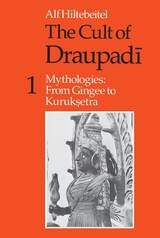
The Cult of Draupadi, Volume 1
Mythologies: From Gingee to KuruksetraAlf Hiltebeitel
University of Chicago Press, 1988
Volume 1 focuses on the Draupadī cult’s own double mythology, moving from its stories about Draupadī’s “primal temple” near the capital of the medieval South Indian Kingdom of Gingee to its version of the Mahābhārata war on the North Indian plain of Kurukṣetra. Throughout, Hiltebeitel intertwines “regional” data, gathered from both oral and written sources, with the “epic,” drawn from the cult’s own performative traditions as well as from classical versions of the Mahābhārata in both Tamil and Sanskrit. Pivotal to the overlap of these Gingee and Kurukṣetra mythologies are two folk figures unknown to classical epic traditions: Draupadī’s two guardians, Pōttu Rāja and Muttāl Rāvuttaṉ.
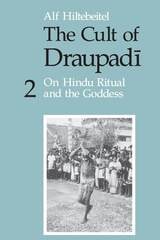
The Cult of Draupadi, Volume 2
On Hindu Ritual and the GoddessAlf Hiltebeitel
University of Chicago Press, 1991
Volume 2 looks at the cultic rituals and argues that these rituals cannot be interpreted independent of other Hindu traditions. Hiltebeitel draws upon his recent fieldwork to demonstrate the remarkable regional and local variations in the practice of the Draupadī cult rituals, from the core area around the ancient center of gingee to the thanjavur area just to the south. He brings to the forefront the differences between the complex rituals of cities, towns, and villages and discusses variations related to their proximity to the central temple in gingee and to the castes from which their customs are derived. using as its model the festival of the Tindivanam temple, Hiltebeitel’s study follows the order of the festival itself and investigates in turn the festival’s four interrelated arenas: the Draupadī temple, a drama stage, a ritual battlefield (paṭukaḷam), and a firewalking area. He explains how the Draupadī festival orchestrates movements back and forth between these arenas to produce a “ritual of battle” in which Draupadī emerges as the victorious goddess.
The Diversity of Religions
A Christian PerspectiveJ. A. DiNoia, O.P.
Catholic University of America Press, 1992
The Economics of the Mishnah
Jacob Neusner
University of Chicago Press, 1990
The Economics of the Mishnah is the first book to examine the place of economic theory generally in the Judaic system of the Mishnah. Jacob Neusner begins by surveying previous work on economics and Judaism, the best known being Werner Sombart's The Jews and Modern Capitalism. The mistaken notion that Jews have had a common economic history has outlived the demise of Sombart's argument, and it is a notion that Neusner overturns before discussing the Mishnaic economics.
Only in Aristotle, Neusner argues, do we find an equal to the Mishnah's accomplishment in engaging economics in the service of a larger systemic statement. Neusner shows that the framers of the Mishnah imagined a distributive economy functioning through the Temple and priesthood, while also legislating for the action of markets. The economics of the Mishnah, then, is to some extent a mixed economy. The dominant, distributive element in this mixed economy, Neusner contends, derives from the belief that the Temple and its designated castes on earth exercise God's claim to the ownership of the holy land. He concludes by considering the implications of the derivation of the Mishnah's economics from the interests of the undercapitalized and overextended farmer.
The Emergence of Liberation Theology
Radical Religion and Social Movement TheoryChristian Smith
University of Chicago Press, 1991
The Eucharistic Vision of Laudato Si
Praise, Conversion, and Integral EcologyLucas Briola
Catholic University of America Press, 2022
The First Apology, The Second Apology, Dialogue with Trypho, Exhortation to the Greeks, Discourse to the Greeks, The Monarchy or The Rule of God
Saint Justin Martyr
Catholic University of America Press, 1965
The Fittingness of the Incarnation
Essays in Analytic Thomistic Philosophy and TheologyDavid Braine, David
Catholic University of America Press, 2025
The God of Faith and Reason
Robert Sokolowski
Catholic University of America Press, 1995
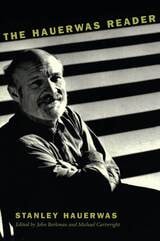
The Hauerwas Reader
Stanley Hauerwas
Duke University Press, 2001
The editors of The Hauerwas Reader, therefore, have compiled and edited a volume that represents all the different periods and phases of Hauerwas’s work. Highlighting both his constructive goals and penchant for polemic, the collection reflects the enormous variety of subjects he has engaged, the different genres in which he has written, and the diverse audiences he has addressed. It offers Hauerwas on ethics, virtue, medicine, and suffering; on euthanasia, abortion, and sexuality; and on war in relation to Catholic and Protestant thought. His essays on the role of religion in liberal democracies, the place of the family in capitalist societies, the inseparability of Christianity and Judaism, and on many other topics are included as well.
Perhaps more than any other author writing on religious topics today, Hauerwas speaks across lines of religious traditions, appealing to Methodists, Jews, Anabaptists or Mennonites, Catholics, Episcopalians, and others.
The Making of a Sage
A Study in Rabbinic EthicsJonathan Wyn Schofer
University of Wisconsin Press, 2005
Jonathan Schofer offers the first theoretically framed examination of rabbinic ethics in several decades. Centering on one large and influential anthology, The Fathers According to Rabbi Nathan, Jonathan Schofer situates that text within a broader spectrum of rabbinic thought, while at the same time bringing rabbinic thought into dialogue with current scholarship on the self, ethics, theology, and the history of religions.
Notable Selection, Jordan Schnitzer Book Award for Philosophy and Jewish Thought, Association for Jewish Studies
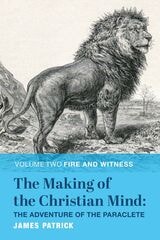
The Making of the Christian Mind
The Adventure of the Paraclete: Volume II: Fire and WitnessJames Patrick
St. Augustine's Press, 2021
The second installment presents the parallel struggle to build heart and mind, as heresy and temporal demands challenge the memory and vitality of what Christians have received. The writing mind in this sense sustains and gives purpose to the heart, pressed under the burden of doubt and worldly expectation. The reader knows that Christianity endures, but how did this happen? Patrick at every turn discloses the role of the Paraclete who remains the unseen protagonist. In this sense, Patrick surprises even those who think they know the story, and no one is safe from being exposed to a bit of the same inspiration that moves the characters in history passed. Indeed, the reader will feel like a part of this same narrative, in a new unwritten chapter but encountering the same Paraclete who has meddled in and marked events with holy breath that even Patrick cannot fully represent.
Highlights of Fire and Witness are Patrick’s presentation of pivotal yet forgotten works such as The Shepherd of Hermes, and his treatment of Origen and Athanasius in their respective social and spiritual contexts. This volume grants the reader a glimpse into a time when resolutions needed to be made and defended with argument, but also with silent witness and the flame of a resolve dimmed not even by death. Patrick’s description of imperial Christianity and the Christian imagination that ultimately fashions the proper image of Christian places is likewise stunning and not to be missed.
The Mass
The Presence of the Sacrifice of the CrossCharles Cardinal Journet
St. Augustine's Press, 2008
The Mishnah in Contemporary Perspective, Volume 1
Alan J. Avery-Peck
SBL Press, 2016
Now in Paperback!
In the past thirty years, the Mishnah has taken its place as a principal focus in the academic study of religion and of Judaism. Many university scholars have participated in the contemporary revolution in the description, analysis, and interpretation of the Mishnah. Nearly all the publishing scholars of the academy who are now at work are represented in this project. Both essential volumes present a broad selection of approaches to the study of the Mishnah. What they prove in diverse ways is that the Mishnah defines the critical focus of the study of Judaism. It is a document that rewards study in the academic humanities.
Features:
- The best of contemporary scholarship on the Mishnah
- The most representative selection of contemporary Mishnah-study contributions available in any collection in a Western language
- Paperback format of an essential Brill reference work
The Mishnah in Contemporary Perspective, Volume 2
Alan J. Avery-Peck
SBL Press, 2016
Now in Paperback!
This second volume of a two-part project on the Mishnah displays a broad selection of approaches to the study of the Mishnah in the contemporary academy. The work derives from Israel, North America, and Europe and shows the intellectual vitality of scholarship in all three centers of learning. What these articles show in diverse ways is that the Mishnah forms a critical focus of the study of Judaism.
Features:
- The best of contemporary scholarship on the Mishnah
- The most representative selection of contemporary Mishnah-study contributions available in any collection in a Western language
- Paperback format of an essential Brill reference work
The Modern Age
James V. Schall
St. Augustine's Press, 2011

The Moral Tradition of American Constitutionalism
A Theological InterpretationH. Jefferson Powell
Duke University Press, 1993
Powell locates the origins of constitutional law in the Enlightenment attempt to control the violence of the state by subjecting power to reason. He then traces constitutionalism's rapid evolution into a tradition of rational inquiry centered in the practice of adjudication and embodied in a community of lawyers and judges. Finally, Powell shows how the tradition's nineteenth-century presuppositions about the autonomy and rationality of constitutional argument have been undermined in the twentieth century, within the constitutional community itself, by the acceptance of a positivist and "democratic" understanding of law. Powell shows how the continued willingness of the courts to resolve moral questions by invoking "the Constitution" has thrown the constitutional tradition into an epistemological crisis. He critiques the work of many major theorists—John Hart Ely, Bruce Ackerman, Frank Michaelman, Rogers Smith, Michael Perry, Mark Tushnet, Robert Bork, Sanford Levinson—who, he claims, persist in attempting to resolve the crisis by redefining constitutionalism as American social morality.
With reference to Alasdair MacIntyre's concepts of moral tradition and social practice and John Howard Yoder's theological account of the state, Powell places his analysis of current constitutionalism within a contemporary Christian theological critique of Western liberalism. With certain exceptions, Powell concludes, there are theological grounds in the United States to prefer decision making by elected officials to decision by constitutional courts. Despite the controversial implications for judicial practice and legal argument, Powell ultimately argues that the liberal tradition of rational inquiry--American constitutionalism--be renounced by the Christian community in favor of the majoritarian political process.
The Mussar Torah Commentary
A Spiritual Path to Living a Meaningful and Ethical LifeRabbi Barry H. Block
Central Conference of American Rabbis, 2020
This Mussar-based commentary is a vital resource for Torah study, offering a thoughtful analysis of each of the 54 weekly parashot. Each essay in this anthology brings a parashah into juxtaposition with one of the Mussar middot (character traits as described within the Jewish school of ethics called Mussar), thereby providing an applied lens of Mussar teachings that helps us to delve deeper into our tradition with increased mindfulness and intention.
The Neighbor
Three Inquiries in Political TheologySlavoj Žižek, Eric L. Santner, and Kenneth Reinhard
University of Chicago Press, 2005
In The Neighbor, three of the most significant intellectuals working in psychoanalysis and critical theory collaborate to show how this problem of neighbor-love opens questions that are fundamental to ethical inquiry and that suggest a new theological configuration of political theory. Their three extended essays explore today's central historical problem: the persistence of the theological in the political. In "Towards a Political Theology of the Neighbor," Kenneth Reinhard supplements Carl Schmitt's political theology of the enemy and friend with a political theology of the neighbor based in psychoanalysis. In "Miracles Happen," Eric L. Santner extends the book's exploration of neighbor-love through a bracing reassessment of Benjamin and Rosenzweig. And in an impassioned plea for ethical violence, Slavoj Žižek's "Neighbors and Other Monsters" reconsiders the idea of excess to rehabilitate a positive sense of the inhuman and challenge the influence of Levinas on contemporary ethical thought.
A rich and suggestive account of the interplay between love and hate, self and other, personal and political, The Neighbor will prove to be a touchstone across the humanities and a crucial text for understanding the persistence of political theology in secular modernity.
The Neighbor
Three Inquiries in Political Theology, with a new PrefaceSlavoj Žižek, Eric L. Santner, and Kenneth Reinhard
University of Chicago Press, 2013
In The Neighbor, three of the most significant intellectuals working in psychoanalysis and critical theory collaborate to show how this problem of neighbor-love opens questions that are fundamental to ethical inquiry and that suggest a new theological configuration of political theory. Their three extended essays explore today's central historical problem: the persistence of the theological in the political. In “Toward a Political Theology of the Neighbor,” Kenneth Reinhard supplements Carl Schmitt’s political theology of the enemy and friend with a political theology of the neighbor based in psychoanalysis. In “Miracles Happen,” Eric L. Santner extends the book's exploration of neighbor-love through a bracing reassessment of Benjamin and Rosenzweig. And in an impassioned plea for ethical violence, Slavoj Žižek’s “Neighbors and Other Monsters” reconsiders the idea of excess to rehabilitate a positive sense of the inhuman and challenge the influence of Levinas on contemporary ethical thought.
A rich and suggestive account of the interplay between love and hate, self and other, personal and political, The Neighbor has proven to be a touchstone across the humanities and a crucial text for understanding the persistence of political theology in secular modernity. This new edition contains a new preface by the authors.
The Old Testament and Christian Spirituality
Theoretical and Practical Essays from a South African PChristo Lombaard
SBL Press, 2012
An engaging anthology that deals with both theory and practice
The emerging discipline of biblical spirituality considers how faith finds expression within the biblical texts and how modern expressions of faith interact with those texts. This volume represents Christo Lombaard’s reflective, analytical, and exegetical contributions to the field in order to explore how biblical texts mediate faith, both ancient and contemporary. It reflects on aspects of the interaction of faith and Scripture, critically approaching both dimensions.
Features:
- Seven previously published papers drawn predominately from South African journals
- Explorations of how biblical texts mediate faith
- Close examination of the discipline of biblical spirituality as part of spirituality studies
The Only True God
Early Christian Monotheism in Its Jewish ContextJames F. McGrath
University of Illinois Press, 2012
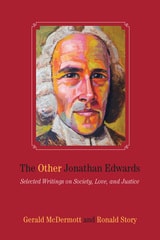
The Other Jonathan Edwards
Selected Writings on Society, Love, and JusticeGerald McDermott
University of Massachusetts Press, 2015
Widely regarded as perhaps America's greatest theologian, Jonathan Edwards still suffers the stereotype of hellfire preacher obsessed with God's wrath. In this anthology, Gerald McDermott and Ronald Story seek to correct that common view by showing that Edwards was also a compassionate, socially conscious minister of the first order.
Through a selection of sermons and primary writings, McDermott and Story reveal an Edwards who preached love toward all humanity regardless of belief or appearance; who demanded private and public charity to the poor; who criticized hard-hearted business dealings as impious and socially destructive; and who condemned envy and status-seeking as anti-Christian and anti-community. This “other” Jonathan Edwards preached about grace and the love of God but also about responsive constitutional government, the iniquities of hypocrisy and corruption, and the nature of wise leadership. He acknowledged the need for national defense but left room for popular revolt from tyranny. He anticipated a millennial age of peace and prosperity and believed that people should live in the world as they would live through grace in heaven.
Jonathan Edwards was, in sum, a worldly as well as spiritual reformer who resisted the materialistic, acquisitive, and individualistic currents of American culture. For these reasons, McDermott and Story think he may have lessons to teach us today.
The Phenomenological Study of Religion
Key Texts and SourcesChristina M. Gschwandtner
Northwestern University Press, 2026
Presenting a wide-ranging selection of works and commentary in religious phenomenology
Phenomenology is a central method employed to study religious phenomena within religious studies, philosophy of religion, and philosophical theology. This expertly edited collection brings together historical sources and newly commissioned essays from various ways of investigating religion phenomenologically both to diversify the field and to make available important works that have not been previously translated into English. The Phenomenological Study of Religion includes not only representative texts from well-known phenomenological philosophers and scholars of religion but also selections from significant thinkers that have not been studied as widely, along with contributions from leading contemporary voices. This volume offers scholars and students at all levels of expertise broad exposure to the various configurations of the phenomenological study of religion.
The Philosophy, Theology, and Rhetoric of Marius Victorinus
Stephen A. Cooper
SBL Press, 2022
Pagan rhetor, (Neo-)Platonist philosopher, Christian theologian
This collection of essays is devoted to the rhetoric, Neoplatonic philosophy, and Christian theology of Marius Victorinus, a mid-fourth-century professor of rhetoric and philosopher who converted to Christianity late in life. Scholars from eight different countries, some of whom have not previously published in English, reflect on debates about his writings and theological development. These topics include Victorinus's deployment of philosophical sources for trinitarian theology, possible connections in his work to Origen, Augustine, Plotinus, Porphyry, and Gnosticism, as well as his contributions to Latin rhetoric and dialectic. Contributors include Jan Dominik Bogataj, Michael Chase, Nello Cipriani, Stephen A. Cooper, Volker Henning Drecoll, Lenka Karfíková, Josef Lössl, Václav Němec, Thomas Riesenweber, Guadalupe Lopetegui Semperena, Miran Špelič, Chiara O. Tommasi, John D. Turner, and Florian Zacher. The chapters in this volume are of great interest to students of late antique philosophy, Christian theology, and Latin rhetoric.
The Polkinghorne Reader
Science, Faith, and the Search for MeaningJohn C. Polkinghorne
Templeton Press, 2010
The Revd. Dr. John Polkinghorne is a world-renowned authority in the field of science and religion. His numerous books in this area, written over the past three decades, have been hugely influential. The Polkinghorne Reader brings together key extracts from his writings on core issues such as the nature of science, the physical world, human nature, love, theology, creation, providence, prayer and miracle, time, evil, Jesus, the resurrection, the Trinity, eschatology, and world faiths.
Ideal for readers who are new to Polkinghorne or who are just beginning to explore the interplay between science and religion, this collection will also be welcomed by all who have read his earlier works but would like one handy resource that presents the major facets of his thought in an accessible and systematic fashion.
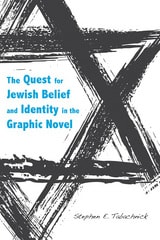
The Quest for Jewish Belief and Identity in the Graphic Novel
Stephen E. Tabachnick
University of Alabama Press, 2014
The creators of Superman (Jerry Siegel and Joe Shuster), Batman (Bob Kane and Bill Finger), and the Marvel superheroes (Stan Lee and Jack Kirby), were Jewish, as was the founding editor of Mad magazine (Harvey Kurtzman). They often adapted Jewish folktales (like the Golem) or religious stories (such as the origin of Moses) for their comics, depicting characters wrestling with supernatural people and events. Likewise, some of the most significant graphic novels by Jews or about Jewish subject matter deal with questions of religious belief and Jewish identity. Their characters wrestle with belief—or nonbelief—in God, as well as with their own relationship to the Jews, the historical role of the Jewish people, the politics of Israel, and other issues related to Jewish identity.
In The Quest for Jewish Belief and Identity in the Graphic Novel, Stephen E. Tabachnick delves into the vivid kaleidoscope of Jewish beliefs and identities, ranging from Orthodox belief to complete atheism, and a spectrum of feelings about identification with other Jews. He explores graphic novels at the highest echelon of the genre by more than thirty artists and writers, among them Harvey Pekar (American Splendor), Will Eisner (A Contract with God), Joann Sfar (The Rabbi’s Cat), Miriam Katin (We Are On Our Own), Art Spiegelman (Maus), J. T. Waldman (Megillat Esther), Aline Kominsky Crumb (Need More Love), James Sturm (The Golem’s Mighty Swing), Leela Corman (Unterzakhn), Ari Folman and David Polonsky (Waltz with Bashir), David Mairowitz and Robert Crumb’s biography of Kafka, and many more. He also examines the work of a select few non-Jewish artists, such as Robert Crumb and Basil Wolverton, both of whom have created graphic adaptations of parts of the Hebrew Bible.
Among the topics he discusses are graphic novel adaptations of the Bible; the Holocaust graphic novel; graphic novels about the Jews in Eastern and Western Europe and Africa, and the American Jewish immigrant experience; graphic novels about the lives of Jewish women; the Israel-centered graphic novel; and the Orthodox graphic novel. The book concludes with an extensive bibliography.
No study of Jewish literature and art today can be complete without a survey of the graphic novel, and scholars, students, and graphic novel fans alike will delight in Tabachnick’s guide to this world of thought, sensibility, and artfulness.
The Quest
History and Meaning in ReligionMircea Eliade
University of Chicago Press, 1969
"Each of these essays contains insights which will be fruitful and challenging for professional students of religion, but at the same time they all retain the kind of cultural relevance and clarity of style which makes them accessible to anyone seriously concerned with man and his religious possibilities."—Joseph M. Kitagawa, Religious Education
The Reason of Following
Christology and the Ecstatic IRobert P. Scharlemann
University of Chicago Press, 1991
Scharlemann presents a christological phenomenology of the self, tracing the connections between the "I am" of the God who spoke to Moses, the "I am" of Christ, and the "I am" of autonomous self-identification. How, he asks, can the self that spontaneously responds to Jesus' "Follow me!" be compared with the everyday, autonomous self? What is the nature of "following" on the part of those who answer the summons of one whose name is "I am"? Pursuing these questions, Scharlemann develops a christological phenomenology of the self—an account in which following means not the expression of the self in action or reflection but rather self-discovery in another person.
With a deep sense of both culture and philosophy, Scharlemann distinguishes the forms of reason involved in "following" from those in ethics, aesthetics, and other modes of religious philosophic thought. His penetrating readings of nineteenth- and twentieth-century German theological and philosophical traditions provide an introduction to lesser-known thinkers such as Hermann and Picht as well as a profound critique of major figures such as Descartes, Heidegger, Fichte, and Kant.
Finally Scharlemann outlines a program for a more systematic and rounded presentation of what Christian doctrine might mean in the contemporary world. His work will be of interest to students of theology and philosophy alike.

The Religion of SEC Football
Gameday Rituals of the Football FaithfulTerry Barr and Michael Nelson
University of Alabama Press, 2026
A testament to the rituals, rivalries, loyalties, and generational faith of SEC football
For most of the United States, September marks the arrival of autumn. In the South, it signals something else entirely: the return of college football season. In The Religion of SEC Football, Terry Barr and Michael Nelson explore how SEC football has become one of the South’s most distinctive cultural traditions and the parallels it shares with religious devotion. Using history, humor, archival research, personal testimony, and decades of fandom, they examine the rituals, rivalries, communities, and legacies that transform ordinary Saturdays into something more sacred.
For generations, fans across the South have organized life around kickoff times and these “sacred Saturdays.” Weddings, family gatherings, and travel plans are often arranged around the football calendar. They make pilgrimages to beloved stadiums, gather with family and friends to observe longstanding game-day traditions, and invest their hopes, memories, and identities in the teams they love. For many, college football is more than entertainment—it’s a shared culture, a lifelong inheritance, and an enduring act of faith.
From tailgate lore to stadium pilgrimages, Barr and Nelson reveal a world where coaches become saints, miracle plays become scripture, and fandom becomes a family inheritance. Along the way, they celebrate the stories, passions, and personalities that have made SEC football a defining part of Southern life and an enduring act of faith. Regardless of your team’s colors, mascot, or fight song, The Religion of SEC Football celebrates the traditions, stories, and experiences that unite generations of fans across the South and remind us why, year after year, it truly just “means more.”
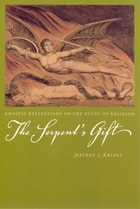
The Serpent's Gift
Gnostic Reflections on the Study of ReligionJeffrey J. Kripal
University of Chicago Press, 2006
“Because thou hast done this, thou art cursed above all cattle, and above every beast of the field.” With those words in Genesis, God condemns the serpent for tempting Adam and Eve, and the serpent has shouldered the blame ever since. But how would the study of religion change if we looked at the Fall from the snake’s point of view? Would he appear as a bringer of wisdom, more generous than the God who wishes to keep his creation ignorant?
Inspired by the early Gnostics who took that startling view, Jeffrey J. Kripal uses the serpent as a starting point for a groundbreaking reconsideration of religious studies and its methods. In a series of related essays, he moves beyond both rational and faith-based approaches to religion, exploring the erotics of the gospels and the sexualities of Jesus, John, and Mary Magdalene. He considers Feuerbach’s Gnosticism, the untapped mystical potential of comparative religion, and even the modern mythology of the X-Men.
Ultimately, The Serpent’s Gift is a provocative call for a complete reorientation of religious studies, aimed at a larger understanding of the world, the self, and the divine.
The Splendor of the Church in Mary
Henri de Lubac, Vatican II, and Marian RessourcementTheresa Marie Chau Nguyen
Catholic University of America Press, 2023
The Stations of Lent
Bruce Fingerhut
St. Augustine's Press, 2015
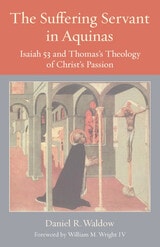
The Suffering Servant in Aquinas
Isaiah 53 and Thomas's Theology of Christ's PassionDaniel R. Waldow
Catholic University of America Press, 2024

The Talmud of the Land of Israel, Volume 33
Abodah ZarahJacob Neusner, General Editor
University of Chicago Press, 1982
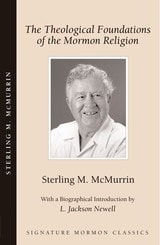
The Theological Foundations of the Mormon Religion
McMurrin
Signature Books, 2000
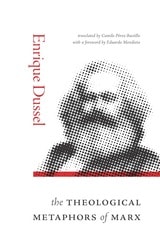
The Theological Metaphors of Marx
Enrique Dussel
Duke University Press, 2024
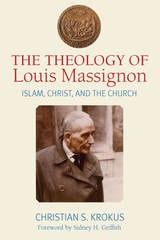
The Theology of Louis Massignon
Christian Krokus
Catholic University of America Press, 2017
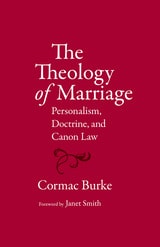
The Theology of Marriage
Cormac Burke
Catholic University of America Press, 2015
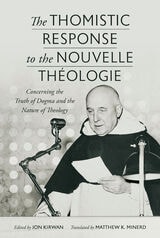
The Thomistic Response to the Nouvelle Theologie
Concerning the Truth of Dogma and the Nature of TheologyJon Kirwan
Catholic University of America Press, 2023