Results by title
86 books match the query 'Translating & Interpreting' and 22 start with t
The Academic Foundations of Interpreting Studies
An Introduction to Its TheoriesCynthia B. Roy
Gallaudet University Press, 2018
As sign language interpreting has emerged and evolved in the last 20 years as an academic field of study, the scope of learning has broadened to include fields beyond the language and culture of deaf people. This text surveys six disciplines that have informed the study of sign language interpreting: history, translation, linguistics, sociology, social psychology, and cognitive psychology, along with their major ideas, principal scholars, and ways of viewing human interaction. Each chapter includes clear learning goals, definitions, discussion questions, and images to aid understanding. The Academic Foundations of Interpreting Studies is required reading for upper-level undergraduate or first-year graduate students in interpreting, Deaf studies, and sign language programs.
The Americas' First Sermons
The Nahuatl Sermonary of Fray Bernardino de SahagúnTranslation and Introduction study by Ben Leeming
University of Utah Press, 2025
The Americas’ First Sermons presents the first English translation and critical study of the complete set of sermons composed by Franciscan friar Bernardino de Sahagún and his Nahua students at the Imperial College of Santa Cruz in Tlatelolco, Mexico in 1540. The volume represents a crucial moment in the cultural exchange between European and Indigenous civilizations in sixteenth-century colonial Mexico.
With the collaboration of Mario Alberto Sánchez Aguilera, this edition offers unprecedented access to the collaboration between European friars and Nahua scholars in translating Christian concepts into Native languages. It captures Sahagún’s evolving methods across three phases (1530s–1560s) through his extensive annotations, bridging the divide between his ethnographic and doctrinal works. Unique in its analysis of both text and manuscript features—such as rare maguey paper—it highlights Indigenous intellectual contributions at the Colegio de Santa Cruz. This translation provides essential insights into early colonial religious negotiations and makes previously inaccessible material available to scholars across multiple disciplines.
The Astonishment of Words
An Experiment in the Comparison of LanguagesBy Victor Proetz
University of Texas Press, 1971
One, two! one, two! And through and through
The vorpal blade went snicker-snack!
He left it dead, and with its head
He went galumphing back.
Un deux, un deux, par le milieu,
Le glaive vorpal fait pat-à-pan!
La bête défaite, avec sa tête,
Il rentre gallomphant.
Eins, Zwei! Eins, Zwei! Und durch und durch
Seins vorpals Schwert zerschniferschnück.
Da blieb es todt! Er, Kopf in Hand,
Geläumfig zog zurück!
The late Victor Proetz was by vocation a visual artist who created many distinguished architectural and decorative designs. His favorite avocation, however, was to explore the possibilities (and impossibilities) of words, especially words in translation, and to share his discoveries. As Alastair Reid says in his foreword, "He turned words over in his head, he listened to them, he unraveled them, he looked them up, he played with them, he passed them on like presents, all with an unjadeable astonishment."
What, Proetz wondered, do some of the familiar and not-so-familiar works of English and American literature sound like in French? In German? "How," he asked, "do you say 'Yankee Doodle' in French—if you can?" And "How do they say 'Hounyhnhnm' and 'Cheshire Cat' and things like that in German?" And, in either language, "How, in God's name, can you possibly say 'There she blows!'?"
This book, unfortunately left incomplete on his death in 1966, contains many of his answers. They are given not only in the assembled texts and translations but also in his wry, curious, sometimes hilarious commentaries. None of it is scholarly in any formal, academic sense—"and yet," Reid reminds us, "his is precisely the kind of enthusiastic curiosity that gives scholarship its pointers."

The Bankruptcy
A NovelJúlia Lopes de Almeida
University College London, 2023
Set in the early years of Brazil’s Old Republic after the abolition of slavery, Júlia Lopes de Almeida's The Bankruptcy depicts the rise and fall of a wealthy coffee exporter against a kaleidoscopic background of glamour, poverty, seduction, and financial speculation. The novel introduces readers to a turbulent period in Brazilian history seething with new ideas about democracy, women’s emancipation, and the role of religion in society. Originally published in 1901, its prescient critiques of financial capitalism and the patriarchal family remain relevant today.
In her lifetime, Júlia Lopes de Almeida was compared to Machado de Assis, the most important Brazilian writer of the nineteenth century. She was also considered for the inaugural list of members of the Brazilian Academy of Letters but was excluded because of her gender. In the decades after her death, her work was largely forgotten. This publication, a winner of the English PEN award, includes an introduction to the novel and a translators' preface and accompanies a general rediscovery of her extraordinary body of work in Brazil.
The Bilingual Courtroom
Court Interpreters in the Judicial ProcessSusan Berk-Seligson
University of Chicago Press, 2003
Drawing on more than one hundred hours of taped recordings of Spanish/English court proceedings in federal, state, and municipal courts—along with extensive psycholinguistic research using translated testimony and mock jurors—Susan Berk-Seligson's seminal book presents a systematic study of court interpreters, and raises some alarming, vitally important concerns: contrary to the assumption that interpreters do not affect the contents of court proceedings, they could potentially make the difference between a defendant being found guilty or innocent of a crime.
The Counterpunch (and Other Horizontal Poems)/El contragolpe (y otros poemas horizontales)
Juan Carlos Flores
University of Alabama Press, 2016
Mapping contemporary Cuba through the architecture of poetry and place.
Alamar, the home of award-winning Cuban poet Juan Carlos Flores, is the setting for his collection, The Counterpunch and Other Horizontal Poems) / El contragolpe (y otros poemas horizontales). Constructed as a self-help community in eastern Havana, Alamar is the largest housing complex in the world. Flores’s highly structured texts, organized into “art galleries,” present prose paintings of a big place in very small form.
Flores builds a poetic landscape with repeating structures that mirror Alamar’s five-floor walkups. Exploring life and dream on the flat surfaces of the poems, he gives fleeting glimpses of perception and survival at the urban margins. As the poet ages, so ages Alamar itself. Yet both find renewal through poetry.
The eighty poems in this bilingual edition offer the first English translation of a complete Flores collection. It will also be of interest to Spanish-language readers seeking access to Cuban literature abroad. Award-winning scholar and translator Kristin Dykstra has compiled an introduction in which she presents Flores, his literary contexts, and references in his poems. Because Flores made specific requests regarding translation, fascinating notes also clarify and expound on choices Dykstra makes in the English version.
The Language of Languages
Ngugi wa Thiong’o
Seagull Books, 2023
With clear, conversational prose, this is the first book dedicated entirely to Ngũgĩ wa Thiong’o’s writings on translation.
Through his many critically acclaimed novels, stories, essays, plays, and memoirs, Kenyan writer Ngũgĩ wa Thiong’o has been at the forefront of world literature for decades. He has also been, in his own words, “a language warrior,” fighting for indigenous African languages to find their rightful place in the literary world. Having begun his writing career in English, Ngũgĩ shifted to writing in his native language Gikũyũ in 1977, a stance both creatively and politically significant. For decades now, Ngũgĩ has been translating his Gikũyũ works into English himself, and he has used many platforms to champion the practice and cause of literary translations, which he calls “the language of languages.”
This volume brings together for the first time Ngũgĩ’s essays and lectures about translation, written and delivered over the past two decades. Here we find Ngũgĩ discussing translation as a conversation between cultures, proposing that dialogue among African languages is the way to unify African peoples, reflecting on the complexities of auto-translation or translating one’s own work, exploring the essential task translation performed in the history of the propagation of thought, and pleading for the hierarchy of languages to be torn down. He also shares his many experiences of writing across languages, including his story The Upright Revolution, which has been translated into more than a hundred languages around the globe and is the most widely translated text written by an African author.
At a time when dialogues between cultures and peoples are more essential than ever, The Language of Languages makes an outspoken case for the value of literature without borders.
The Next Generation of Research in Interpreter Education
Pursuing Evidence-Based PracticesCynthia B. Roy
Gallaudet University Press, 2018

The Power of Signed Songs
Deaf Artists, Intercultural Reach, and the Politics of Music MakingJoana Morêdo Pereira
Gallaudet University Press, 2026
The first of its kind, The Power of Signed Songs: Deaf Artists, Intercultural Reach, and the Politics of Music Making analyzes musical performances that were translated or created in signed languages. Written by an international team of Deaf community researchers, The Power of Signed Songs explores the politics of music making in the form of signed songs, an often controversial art form in Deaf communities.
While raising questions about culture, translation, and authorship, signed songs demonstrate forms of Deaf cultural resistance, defy traditional conceptions of music, and draw attention to language diversity and intersectionality within Deaf communities in varied European settings. Drawing on both signed music performances and field research, the authors highlight the unique contributions of signing musical artists from both the UK and Portugal. Signed songs and translations illustrate a wide range of creative performance strategies, linguistic word and sign play across languages, and sociolinguistic variation.
By analyzing how translated songs created by Deaf artists serve as cultural products, translations, and performance, The Power of Signed Songs provides a glimpse into how translations of music can be a form of both transnational and localized cultural resistance. Ultimately, Deaf-centered signed songs are not just artistic expressions but also political statements, challenging the idea that music belongs exclusively to the hearing world.
The Role of the Educational Interpreter
Perceptions of Administrators and TeachersStephen B. Fitzmaurice
Gallaudet University Press, 2021
Through a series of qualitative interviews and quantitative questionnaires with district administrators, school administrators, general education teachers, and teachers of the deaf, Fitzmaurice documents their perceptions of educational interpreters. Findings from the data reveal the perceptions of administrators and teachers set the stage for role ambiguity, role conflicts, and subsequent role overload for educational interpreters. Fitzmaurice elaborates on the implications of the research, and also provides concrete recommendations for researchers and practitioners, including an emphasis on the importance of involving the Deaf community in this work. This volume aims to offer clarity on the role of the educational interpreter, and dispel the confusion and conflicts created by divergent perspectives. A shared understanding of the role of the educational interpreter will allow administrators, teachers, and interpreters to work collaboratively to improve educational outcomes for deaf students.
The Second International Symposium on Signed Language Interpretation and Translation Research
Selected PapersDanielle I. J. Hunt
Gallaudet University Press, 2020
Signed chapter summaries will be available on the Gallaudet University Press YouTube channel upon publication.

The Syntax of Spoken Brazilian Portuguese
Earl W. Thomas
Vanderbilt University Press, 1969
Very real differences do exist between what is spoken and what is written in virtually every language. In Brazilian Portuguese, especially, the gulf between the two is wide: In many cases, the most cultured Brazilian is unable to comprehend with ease Brazilian literature written only fifty years ago.
THE SYNTAX OF SPOKEN BRAZILIAN PORTUGUESE is the first thorough analysis of the spoken language of contemporary Brazil, in English, for students and teachers of the language. Useful as a text in advanced language courses, the work is intended primarily for reference and as a research aid to future authors of Portuguese language textbooks.
Theories of Translation
An Anthology of Essays from Dryden to DerridaEdited by John Biguenet and Rainer Schulte
University of Chicago Press, 1992
Most of the twenty-one pieces appear in translation, some here in English for the first time and many difficult to find elsewhere. Selections include writings by Scheiermacher, Nietzsche, Ortega, Benjamin, Pound, Jakobson, Paz, Riffaterre, Derrida, and others.
A fine companion to The Craft of Translation, this volume will be a valuable resource for all those who translate, those who teach translation theory and practice, and those interested in questions of language philosophy and literary theory.
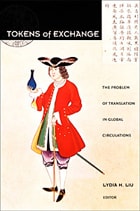
Tokens of Exchange
The Problem of Translation in Global CirculationsLydia H. Liu, ed.
Duke University Press, 1999
By studying the production and circulation of meaning as value in areas including history, religion, language, law, visual art, music, and pedagogy, essays consider exchanges between Jesuit and Protestant missionaries and the Chinese between the seventeenth and nineteenth centuries and focus on the interchanges occasioned by the spread of capitalism and imperialism. Concentrating on ideological reciprocity and nonreciprocity in science, medicine, and cultural pathologies, contributors also posit that such exchanges often lead to racialized and essentialized ideas about culture, sexuality, and nation. The collection turns to the role of language itself as a site of the universalization of knowledge in its contemplation of such processes as the invention of Basic English and the global teaching of the English language. By focusing on the moments wherein meaning-value is exchanged in the translation from one language to another, the essays highlight the circulation of the global in the local as they address the role played by historical translation in the universalizing processes of modernity and globalization.
The collection will engage students and scholars of global cultural processes, Chinese studies, world history, literary studies, history of science, and anthropology, as well as cultural and postcolonial studies.
Contributors. Jianhua Chen, Nancy Chen, Alexis Dudden Eastwood, Roger Hart, Larissa Heinrich, James Hevia, Andrew F. Jones, Wan Shun Eva Lam, Lydia H. Liu, Deborah T. L. Sang, Haun Saussy, Q. S. Tong, Qiong Zhang
Toward a Deaf Translation Norm
Christopher A. Stone
Gallaudet University Press, 2009
As access to deaf people grows around the world, a new profession has begun to emerge as well, that of Deaf translators and interpreters (T/Is). In his new study Toward a Deaf Translation Norm, Christopher Stone explores this innovation, including its antecedents and how it is manifested in public places. Most importantly, Stone investigates whether or not a translation norm has evolved for Deaf T/Is as increasing numbers of them work in the mainstream translating for websites, public services, government literature, and television media.
For his study, the sixth volume in the Studies in Interpretation series, Stone concentrated his research in the United Kingdom. Specifically, he examined the rendering of English broadcast television news into British Sign Language (BSL) by both Deaf and hearing T/Is. Segments of the data feature simultaneous Deaf and hearing in-vision T/I broadcasts. Recording these broadcasts produced a controlled product that enabled direct comparison of the Deaf and hearing T/Is. Close analysis of these examples revealed to Stone that Deaf T/s not only employ a Deaf translation norm, they take labors to shape their BSL text into a stand-alone product rather than a translation. Ultimately, Toward a Deaf Translation Norm opens up engrossing new vistas on current deliberation about neutrality in translation and interpretation.

Translating from the Portuguese
A Life TranslatedElizabeth Lowe
Tagus Press, 2025
Elizabeth Lowe charts her journey to becoming a translator through a series of vignettes relating her life as a “third-culture kid” and living and working abroad in a kaleidoscope of cultures and languages. She lived in Germany as a young child immediately after the Second World War while her father worked in the Nuremberg trials and as a newly married military spouse during the Vietnam War; she lived in Haiti just prior to Papa Doc's consolidation of power, in Brazil when the military dictatorship seized the country in its two-decade vise, at the University of Coimbra, Portugal during Salazar, and Colombia at the height of the guerrilla conflicts, and in Miami during the heyday of the cartels. The book is a reflection on translation as an art, on five decades teaching languages, literatures, and translation, and on her close relationship with writers from the Lusophone world. It explores theoretical aspects of translation as well as practical challenges faced by translators, especially those working in Portuguese literature. Lowe offers intimate insights into the creative process of the writers she translates and her own philosophy of literary translation.
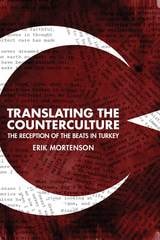
Translating the Counterculture
The Reception of the Beats in TurkeyErik Mortenson
Southern Illinois University Press, 2018
Mortenson examines how in Turkey the Beats have been framed by the label “underground literature”; explores the ways they are repurposed in the counterculture-inspired journal Underground Poetix; looks at the reception of Jack Kerouac’s On the Road and how that reaction provides a better understanding of the construction of “American-ness”; delves into the recent obscenity trial of William S. Burroughs’s novel The Soft Machine and the attention the book’s supporters brought to government repression and Turkish homophobia; and analyzes the various translations of Allen Ginsberg’s Howl to demonstrate the relevance Ginsberg still holds for social rebellion today.
Translating the Counterculture takes a revolutionary look at how contemporary readers in other parts of the world respond to the Beats. Challenging and unsettling an American-centric understanding of the Beats, Mortenson pushes the discipline toward a fuller consideration of their cultural legacy in a globalized twenty-first century.
Translation
Martin Kay
CSLI, 2015
Translation Effects
Language, Time, and Community in Medieval EnglandMary Kate Hurley
The Ohio State University Press, 2021
Translation Studies before ‘Translation Studies’
Nothing Happened?Edited by Kathryn Batchelor and Iryna Odrekhivska
University College London, 2026
A critical reassessment of the origins and development of translation studies.
This volume challenges the established historical narratives of “translation studies” by showcasing some of the rich traditions of debate, research, and theory that unfolded around the world in the centuries before the supposed beginnings of the discipline. Bringing together essays from leaders in the field of translation history, Translation Studies before ‘Translation Studies’ decenters the modern-day discipline by giving access to overlooked theoretical reflections, most of them translated into English for the first time, from languages such as Latin, Sanskrit, Chinese, Arabic, Swahili, Ukrainian, French, and Brazilian Portuguese.
Translation and Epistemicide
Racialization of Languages in the AmericasJoshua M. Price
University of Arizona Press, 2023
The book gives an account of translation-as-epistemicide in the Americas, drawing on a range of examples from the early colonial period to the War on Terror. The first chapters demonstrate four distinct operations of epistemicide: the commensuration of worlds, the epistemic marginalization of subaltern translators and the knowledge they produce, the criminalization of translators and interpreters, and translation as piracy or extractivism. The second part of the book outlines decolonial translation strategies, including an epistemic posture the author calls “bewilderment.”
Translation and Epistemicide tracks how through the centuries translation practices have enabled colonialism and resulted in epistemicide, or the destruction of Indigenous and subaltern knowledge.
Translation, Sociolinguistic, and Consumer Issues in Interpreting
Melanie Metzger
Gallaudet University Press, 2007
The Third Volume in the Studies in Interpretation Series
This new volume focuses on scholarship over a refined spectrum of issues that confront interpreters internationally. Editors Melanie Metzger and Earl Fleetwood call upon researchers from the United States, Ireland, Australia, and the Philippines to share their findings in six chapters.
In the first chapter, Roberto R. Santiago and Lisa A. Frey Barrick reveal how interpreters deal with translating source language idioms into American Sign Language (ASL). In Chapter 2, Lorraine Neeson and Susan Foley-Cave review the particular demands for decision-making that face interpreters on several levels in a class on semantics and pragmatics. Liza B. Martinez explains in Chapter 3 the complicated, multilingual process of code switching by Filipino interpreters when voice-interpreting Filipino Sign Language.
Chapter 4 offers a deconstruction by Daniel Roush of the stereotype that Deaf ASL-users are direct or blunt, based on his analysis of two speech/social activities of requests and refusals. Jemina Napier investigates interpreting from the perspective of deaf consumers in Australia in Chapter 5 to explore their agenda for quality interpreting services. In the final chapter, Amy Frasu evaluates methods for incorporating visual aids into interpretations from spoken English to American Sign Language and the potential cognitive dissonance for deaf persons that could result.