Results by title
96 books match the query 'Truth' and 44 start with t
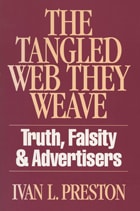
Tangled Web They Weave
Truth, Falsity, & AdvertisersIvan L. Preston
University of Wisconsin Press, 1996
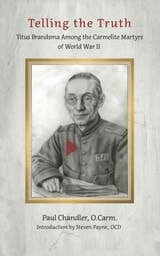
Telling the Truth
Titus Brandsma Among the Carmelite Martyrs of World War IIPaul Chandler
Catholic University of America Press, 2026
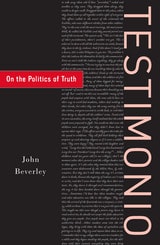
Testimonio
On The Politics Of TruthJohn Beverley
University of Minnesota Press, 2004
A revealing perspective on the controversial literature of witnessing
These four germinal essays by John Beverley sparked the widespread discussion and debate surrounding testimonio—the socially and politically charged Latin American narrative of witnessing—that culminated with David Stoll’s highly publicized attack on Rigoberta Menchú’s celebrated testimonial text. Challenging Hardt and Negri’s Empire, Beverley’s extensive new introduction examines the broader historical, political, and ethical issues that this literature raises, tracing the development of testimonio from its emergence in the Cold War era to the rise of a globalized economy and U.S. political hegemony.
Informed by postcolonial studies and the current debate over multiculturalism and identity politics, Testimonio reaches across disciplinary boundaries to show how this particular literature at once represents and enacts new forms of agency on the part of previously repressed social subjects, as well as its potential as a new form of “alliance politics” between those subjects and artists, scientists, teachers, and intellectuals in a variety of local, national, and international contexts.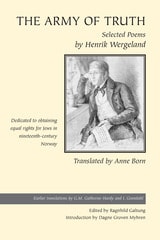
The Army of Truth
Selected PoemsHenrik Wergeland
University of Wisconsin Press, 2003
One of Norway’s most celebrated literary figures of the nineteenth century, Henrik Wergeland worked tirelessly for the civil rights of Jews in Norway. He used the words and structure of his poetry to enliven the ideals of truth, freedom, and equality. This translated volume, containing several of Wergeland’s most prominent poems, beautifully encapsulates the compelling force of his message, allowing its enduring influence to benefit a wider contemporary audience.
The Art of Reading as a Way of Life
On Nietzsche's TruthDaniel T. O'Hara
Northwestern University Press, 2009
The shape of this critical tracing begins, however, in the middle of his career with The Gay Science andmoves on to Thus Spoke Zarathustra, which Nietzsche believed was the central work of his life. It then revalues Ecce Homo, Nietzsche’s final autobiographical statement about his life and career, and concludes with a comparative analysis of two works from the beginning and end of that career: respectively, The Birth of Tragedy and The Anti-Christ. O’Hara’s highly original study, which uses Badiou’s theory of the truth-event as a guide, will surely provoke larger conversations across many disciplines.
The Autonomy of History
Truth and Method from Erasmus to GibbonJoseph M. Levine
University of Chicago Press, 1999
Levine's first three essays discuss Thomas More's preoccupation with the distinction between history and fiction; Erasmus's biblical criticism and the contribution of Renaissance philology to critical method; and the way in which Renaissance rhetoric, as in Thomas Elyot's Book of the Governor, continued to inhibit the autonomy of history. He then shows how these issues persisted into the eighteenth century, even as critical method developed. He concludes with a close description of the great controversy that culminated in Edward Gibbon's day over the authenticity of a biblical text that had been used for centuries to defend the Trinity but which turned out to be a forgery. Levine shows how by then all sides were ready to concede the autonomy of history.
The Call
Eloquence in the Service of TruthCraig R. Smith
Michigan State University Press, 2022
The Character of Truth
Historical Figures in Contemporary FictionNaomi Jacobs
Southern Illinois University Press, 1990
Can the novel survive in an age when tales of historical figures and contemporary personalities dominate the reading lists of the book-buying public?
Naomi Jacobs addresses this question in a study of writers such as William Styron, E. L. Doctorow, and Robert Coover, who challenge the dominance of nonfiction by populating their fictions with real people, living and dead. Jacobs explores the genesis, varieties, and implications of this trend in a prose as lively as that of the writers she critiques.
Using as a case study Robert Coover’s portrait of Richard Nixon in The Public Burning, Jacobs addresses the important legal and ethical questions raised by this trend and applies contemporary libel law to the fictionalization of living people, such as Richard Nixon. She closes her study by speculating on the future of this device and of the novel.
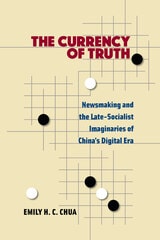
The Currency of Truth
Newsmaking and the Late-Socialist Imaginaries of China's Digital EraEmily H. C. Chua
University of Michigan Press, 2023
In The Currency of Truth, Emily H. C. Chua argues that news in China works less as a medium of mass communication than as a kind of currency as industry players make and use news articles to create agreements, build connections, and protect and advance their positions against one another. Looking at the ethical and professional principles that well-intentioned and civically minded journalists strive to uphold, and the challenges and doubts that they grapple with in the process, Chua brings her findings into conversation around “post-truth” news and the “crisis” of professional journalism in the West. The book encourages readers to rethink contemporary news, arguing that rather than setting out from the assumption that news works either to inform or deceive its publics, we should explore the “post-public” social and political imaginaries emerging among today’s newsmakers and remaking the terms of their practice.
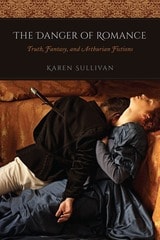
The Danger of Romance
Truth, Fantasy, and Arthurian FictionsKaren Sullivan
University of Chicago Press, 2018
Yet is it possible that romance is expressing a truth—and a truth unrecognized by realist genres? The Arthurian literature of the Middle Ages, Karen Sullivan argues, consistently ventriloquizes in its pages the criticisms that were being made of romance at the time, and implicitly defends itself against those criticisms. The Danger of Romance shows that the conviction that ordinary reality is the only reality is itself an assumption, and one that can blind those who hold it to the extraordinary phenomena that exist around them. It demonstrates that that which is rare, ephemeral, and inexplicable is no less real than that which is commonplace, long-lasting, and easily accounted for. If romance continues to appeal to audiences today, whether in its Arthurian prototype or in its more recent incarnations, it is because it confirms the perception—or even the hope—of a beauty and truth in the world that realist genres deny.
The Force of Truth
Critique, Genealogy, and Truth-Telling in Michel FoucaultDaniele Lorenzini
University of Chicago Press, 2023
Many blame Michel Foucault for our post-truth and conspiracy-laden society. In this provocative work, Daniele Lorenzini argues that such criticism fundamentally misunderstands the philosopher’s project. Foucault did not question truth itself but what Lorenzini calls “the force of truth,” or how some truth claims are given the power to govern our conduct while others are not. This interest, Lorenzini shows, drove Foucault to articulate a new ethics and politics of truth-telling precisely in order to evade the threat of relativism. The Force of Truth explores this neglected dimension of Foucault’s project by putting his writings on regimes of truth and parrhesia in conversation with early analytic philosophy and by drawing out the “possibilizing” elements of Foucault’s genealogies that remain vital for practicing critique today.
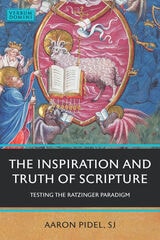
The Inspiration and Truth of Scripture
Testing the Ratzinger ParadigmAaron Pidel, SJ
Catholic University of America Press, 2023
The Keepers of Truth
Michael Collins
University of Iowa Press, 2021
The Logic of Being
Realism, Truth, and TimePaul M. Livingston
Northwestern University Press, 2017
Livingston's formal and phenomenological analysis articulates and defends a realist position about being, time, and their relationship that understands that all of these are structured and constituted in a way that does not depend on the human mind, consciousness, or subjectivity. This approach provides a basis for new logically and phenomenologically based accounts of the structure of linguistic truth in relation to the appearance of objects and of the formal structure of time as given.
Livingston draws on philosophers from Plato and Aristotle to Davidson and Heidegger in this exploration. In it, readers and scholars will discover innovative connections between continental and analytic philosophy.
The Loss and Recovery of Truth
Selected Writings of Gerhart NiemeyerGerhart Niemeyer
St. Augustine's Press, 2013

The Lure and the Truth of Painting
Selected Essays on ArtYves Bonnefoy
University of Chicago Press, 1995
The sixteen essays collected here show the breadth and depth of Bonnefoy's writings on art, aesthetics, and poetics. His lyrical ruminations range across centuries and cultures, from Byzantium to postwar France, from the paintings of Piero della Francesca to the sculptures of Alberto Giacometti and the photographs of Henri Cartier-Bresson, from the Italian Giorgio Morandi to the American Edward Hopper. Always fascinated in his poetry by the nature of color and light and the power of the image, Bonnefoy continues to pursue these themes in his discussion of the lure and truth of representation. He sees the painter as a poet whose language is a visual one, and seeks to find out what visual artists can teach those who work with words. More philosophical than historical and more poetic than critical, the essays express Bonnefoy's deep sympathy for the creative process and his great passion for individual works of art.
Bonnefoy's engagement with great art in The Lure and the Truth of Painting sheds light on the philosophy of presence and being that animates his poems. This book will be welcomed by lovers of Bonnefoy's poems and by everyone interested in the creation, history, and appreciation of art.
Yves Bonnefoy's numerous books include New and Selected Poems and In the Shadow's Light, both published by the University of Chicago Press. Richard Stamelman is director of the Center for Foreign Languages, Literatures, and Cultures and professor of romance languages at Williams College. He is the author of Lost beyond Telling: Representations of Death and Absence in Modern French Poetry.
"Few exponents of contemporary French letters deserve the attention of the reading public in America more than Yves Bonnefoy. . . . [His] writings . . . are an important lighthouse on the contemporary cultural coastline."—Emily Grosholz, The Hudson Review
The Nature of Truth
Sergio Troncoso
Northwestern University Press, 2003
Helmut Sanchez is a young researcher in the employ of the renowned scholar Werner Hopfgartner. By chance Sanchez discovers a letter written in the 1950s by Hopfgartner mocking feelings of guilt over the Holocaust. Appalled, he digs into the scholar's life, determined to find the truth and finally uncovering the evidence of Hopfgartner's sordid past. Sure of his conclusions, Helmut decides that only one shocking act is morally correct. When he does, the consequences are immense, and the toll taken on his mind and conscience is amplified when one of his friends is wrongly accused of the crime-and is wrongly left to pay for it.
Intelligent and literate, The Nature of Truth breaks new ground in Latino literature, focusing on how a contemporary man of unique heritage--a Mexican-German who has come to America by way of Germany--navigates a complex moral universe and how his journey reflects the tension between justice and righteousness in American life.
Further information about the author can be found at his web site: <A HREF="http://sergiotroncoso.com">http://sergiotroncoso.com.</A>
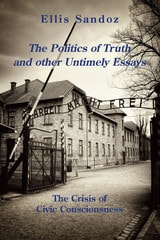
The Politics of Truth and Other Timely Essays
The Crisis of Civic ConsciousnessEllis Sandoz
St. Augustine's Press, 2016

The Politics of Truth and Other Untimely Essays
The Crisis of Civic ConsciousnessEllis Sandoz
University of Missouri Press, 1999
A fascinating collection of studies, The Politics of Truth and Other Untimely Essays explores the historical and theoretical underpinnings of personal liberty and free government and provides a trenchant analysis of the crisis of civic consciousness endangering both of them today. The book addresses a range of issues in contemporary political philosophy and constitutional theory. These are seen to be all the more urgent in importance because of the surging aspirations for liberty in the wake of the collapse of the Soviet empire and the post-Cold War anomaly of crisis, malaise, and disarray in free government itself in America and in other bastions of modern democracy.
While each essay can stand alone, there is an underlying thematic unity to the collection. The fundamental problem considered throughout is whether and to what extent the fall of communism may mark an epoch in world history. These questions are applied to the East Central European nations struggling to achieve free government and personal liberty. The elements required to identify the preconditions of liberty are addressed and specific attention is given to the terms of institutionalization in the American founding.
Several essays focus on American political thought, with emphasis on the Declaration of Independence and the Constitution. Two elements, in particular, are treated: the jurisprudential and common law background to the American political tradition and the centrality of religion within the unfolding of the American political experiment. Sandoz explores the uncommon alliance of philosophers, statesmen, and evangelists during the nation's founding. This alliance, nurturing communities of persons bound together by their faith and a mutual regard for one another, played a vital role in the establishment of the system of freedom under law.
Sandoz sees the tension between religion and natural law as a constant in the human struggle for freedom. That the preservation of liberty under law is no easy task is acknowledged and addressed as it can be seen in the American founding, in the post-communist struggle of East Central Europe, and in the deepening contemporary crisis of American society. Anyone interested in the "politics" of "truth" will appreciate this volume.
The Specter of Relativism
Truth, Dialogue, and Phronesis in Philosophical HermeneuticsLawrence Schmidt
Northwestern University Press, 1995
The Three Dynamisms of Faith
Searching for Meaning, Fulfillment, and TruthLouis Roy
Catholic University of America Press, 2017
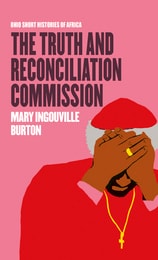
The Truth and Reconciliation Commission
Mary Ingouville Burton
Ohio University Press, 2017
In 1995, South Africa’s new government set up the Truth and Reconciliation Commission, a lynchpin of the country’s journey forward from apartheid. In contrast to the Nuremberg Trials and other retributive responses to atrocities, the TRC’s emphasis on reconciliation marked a restorative approach to addressing human rights violations and their legacies. The hearings, headed by Bishop Desmond Tutu, began in spring of 1996.
The commission was set up with three purposes: to investigate abuses, to assist victims with rehabilitation, and to consider perpetrators’ requests for amnesty. More than two decades after the first hearings, the TRC’s legacy remains mixed. Many families still do not know what became of their loved ones, and the commission came under legal challenges both from ex-president F. W. de Klerk and the African National Congress. Yet, the TRC fulfilled a vital role in the transition from apartheid to democracy, and has become a model for other countries.
This latest addition to the Ohio Short Histories of Africa series is a trenchant look at the TRC’s entire, stunningly ambitious project. And as a longtime activist for justice in South Africa and a former commissioner of the TRC, Mary Ingouville Burton is uniquely positioned to write this complex story.
The Truth in Painting
Jacques Derrida
University of Chicago Press, 1987
The Truth in Painting
Jacques Derrida
University of Chicago Press, 1987
The Truth of Uncertainty
Beyond Ideology in Science and LiteratureEdward L. Galligan
University of Missouri Press, 1998
In the last chapter of Walden, Henry David Thoreau proclaims a simple yet profound conviction: "Any truth is better than make- believe." Edward Galligan shares this conviction. In The Truth of Uncertainty: Beyond Ideology in Science and Literature, he argues that contemporary American critics should embrace literary truths with all of their ardent uncertainties rather than cling to the make-believe certainties of ideologies.
Postmodern critics fail to ask the truth-seeker's essential question, What does the evidence prove? and instead trust the generalizations and slogans of ideologies to guide their interpretations. Attempting to be up-to-date and profound, these critics lose sight of the literature they are supposed to explore.
The Truth of Uncertainty celebrates values commonly associated with modern, not postmodern criticism, applying them to contemporary works in a series of fresh and unusual inquiries. Galligan finds important implications for criticism in work from the physical sciences that are rarely touched on by American intellectuals, such as Gerald M. Edelman's Bright Air, Brilliant Fire: On the Matter of the Mind and Roger Penrose's The Emperor's New Mind: Concerning Computers, Minds, and the Laws of Physics. Likewise, he finds illumination in the works of novelists that American critics have largely ignored—Josef Skvorecky, George V. Higgins, Mary Lee Settle, Robertson Davies.
As a consequence of dealing with these "unusual" texts, Galligan presents a refreshing interpretation of a number of important concepts: language is grounded in talk; all literary criticism is subjective and tentative because reading is a highly subjective enterprise; and, most important, the world is real and any truth is indeed better than make-believe. He moves from a rejection of criticism in the service of ideology to an affirmation of criticism in the service of truthfulness.
The ideas celebrated in The Truth of Uncertainty are timeless and valuable. Galligan returns to the text and provides a penetrating critique of the state of contemporary criticism, which has abandoned truth for ideology. The result is an eloquent salute to literature itself.
The Unity of Hegel's "Phenomenology of Spirit"
A Systematic InterpretationJon Stewart
Northwestern University Press, 2011
In The Unity of Hegel's "Phenomenology of Spirit", Jon Stewart interprets Hegel's work as a dialectical transformation of Kantian transcendental philosophy, providing from this unified standpoint a case for Hegel's own conception of philosophy as a system. In restoring them to their larger systematic contexts, Stewart clarifies Hegel's individual analyses, as well as indicating the meaning and significance of the transitions and illustrating the parallelisms between the respective analyses. Many of Hegel's main themes-
universal-particular, mediacy-immediacy-are traced through the text, demonstrating Hegel's formal continuity.
By examining at the microlevel the particulars of the dialectical movement, and by analyzing at the macrolevel the role of the argument in question in the context of the work as a whole, Stewart provides a detailed analysis of the Phenomenology and a significant scholarly demonstration of Hegel's own conception of the Phenomenology as a part of a systematic philosophy.
The Word of Truth, Sealed by the Spirit
Perspectives on the Inspiration and Truth of Sacred ScriptureMatthew C. Genung
Saint Paul Seminary Press, 2022
Tortured Subjects
Pain, Truth, and the Body in Early Modern FranceLisa Silverman
University of Chicago Press, 2001
Looking closely at the theory and practice of judicial torture in France from 1600 to 1788, the year in which it was formally abolished, Silverman revisits dossiers compiled in criminal cases, including transcripts of interrogations conducted under torture, as well as the writings of physicians and surgeons concerned with the problem of pain, records of religious confraternities, diaries and letters of witnesses to public executions, and the writings of torture's abolitionists and apologists. She contends that torture was at the center of an epistemological crisis that forced French jurists and intellectuals to reconsider the relationship between coercion and sincerity, or between free will and evidence. As the philosophical consensus on which torture rested broke down, and definitions of truth and pain shifted, so too did the foundation of torture, until by the eighteenth century, it became an indefensible practice.
Toward a Phenomenological Rhetoric
Writing, Profession, and AltruismBarbara Couture
Southern Illinois University Press, 1998
Current rhetorical and critical theory for the most part separates writing from consciousness and presumes relative truth to be the only possible expressive goal for rhetoric. These presumptions are reflected in our tradition of persuasive rhetoric, which values writing that successfully argues one person’s belief at the expense of another’s. Barbara Couture presents a case for a phenomenological rhetoric, one that values and respects consciousness and selfhood and that restores to rhetoric the possibility of seeking an all-embracing truth through pacific and cooperative interaction.
Couture discusses the premises on which current interpretive theory has supported relative truth as the philosophical grounding for rhetoric, premises, she argues, that have led to constraints on our notion of truth that divorce it from human experience. She then shows how phenomenological philosophy might guide the theory and practice of rhetoric, reanimating its role in the human enterprise of seeking a shared truth. She proposes profession and altruism as two guiding metaphors for the phenomenological activity of "truth-seeking through interaction."
Among the contemporary rhetoricians and philosophers who influence Couture are Pierre Teilhard de Chardin, Martin Buber, Charles Altieri, Charles Taylor, Alasdair Maclntyre, and Jürgen Habermas.
Tradition and Authenticity in the Search for Ecumenic Wisdom
Thomas Langan
University of Missouri Press, 1992
Our emerging world system is bringing the great traditions and cultures it has spawned into ever more intimate and dangerous contact. Langan argues that we must struggle toward a unity of discourse respectful of genuine experiences of varying civilizations if we are to live peacefully on one planet.
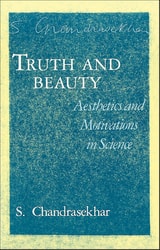
Truth and Beauty
Aesthetics and Motivations in ScienceS. Chandrasekhar
University of Chicago Press, 1987
The late S. Chandrasekhar was best known for his discovery of the upper
limit to the mass of a white dwarf star, for which he received the Nobel
Prize in Physics in 1983. He was the author of many books, including
The Mathematical Theory of Black Holes and, most recently,
Newton's Principia for the Common Reader.
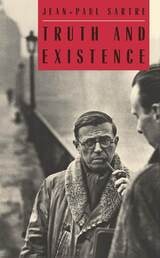
Truth and Existence
Jean-Paul Sartre
University of Chicago Press, 1992
Truth and Existence is introduced by an extended biographical, historical, and analytical essay by Ronald Aronson.
"Truth and Existence is another important element in the recently published links between Sartre's existentialist ontology and his later ethical, political, and literary concerns. . . . The excellent introduction by Aronson will help readers not experienced in reading Sartre."—Choice
"Accompanied by an excellent introduction, this dense, lucidly translated treatise reveals Sartre as a characteristically 20th-century figure."—Publishers Weekly
Jean-Paul Sartre (1906-1980) was offered, but declined, the Nobel Prize for literature in 1964. His many works of fiction, drama, and philosophy include the monumental study of Flaubert, The Family Idiot, and The Freud Scenario, both published in translation by the University of Chicago Press.
Truth and Irony
Terence J. Martin
Catholic University of America Press, 2016
Truth and Lies in Literature
Essays and ReviewsStephen Vizinczey
University of Chicago Press, 1988
"If a critic's job is to puncture pomposity, deflate over-hyped reputations and ferret out true value, then Vizinczey is master of the art."—Publishers Weekly
"Stephen Vizinczey comes on like a pistol-packing stranger here to root out corruption and remind us of our ideals. He carries the role off with inspired gusto. His boldness and pugnacity are bracing and can be very funny."—Ray Sawhill, Newsweek
"Every piece in the book is good, and many are so good that, after dipping into the middle, I stayed up half of the night, reading with growing amazement and admiration."—Bruce Bebb, Los Angeles Reader
Truth and Tales
Cultural Mobility and Medieval MediaEdited by Fiona Somerset and Nicholas Watson
The Ohio State University Press, 2015
Truth and Tales includes fourteen essays by medieval literary scholars and historians. Some essays focus on written artifacts that convey high or popular learning in unexpected ways. Others address a social problem of concern to all, demonstrating the genres and media through which it was negotiated. Still others are centered on one or more texts, detailing their investments in popular as well as learned knowledge, in performance as well as writing. This collective archaeology of medieval media provides fresh insight for medieval scholars and media theorists alike.
Truth and Veridicality in Grammar and Thought
Mood, Modality, and Propositional AttitudesAnastasia Giannakidou and Alda Mari
University of Chicago Press, 2021
Can language directly access what is true, or is the truth judgment affected by the subjective, perhaps even solipsistic, constructs of reality built by the speakers of that language? The construction of such subjective representations is known as veridicality, and in this book Anastasia Giannakidou and Alda Mari deftly address the interaction between truth and veridicality in the grammatical phenomena of mood choice: the indicative and subjunctive choice in the complements of modal expressions and propositional attitude verbs.
Combining several strands of analysis—formal linguistic semantics, syntactic theory, modal logic, and philosophy of language—Giannakidou and Mari’s theory not only enriches the analysis of linguistic modality, but also offers a unified perspective of modals and propositional attitudes. Their synthesis covers mood, modality, and attitude verbs in Greek and Romance languages, while also offering broader applications for languages lacking systematic mood distinction, such as English. Truth and Veridicality in Grammar and Thought promises to shape longstanding conversations in formal semantics, pragmatics, and philosophy of language, among other areas of linguistics.
Truth and the Heretic
Crises of Knowledge in Medieval French LiteratureKaren Sullivan
University of Chicago Press, 2005
Exploring the figure of the heretic in Catholic writings of the twelfth and thirteenth centuries as well as the heretic's characterological counterpart in troubadour lyrics, Arthurian romance, and comic tales, Truth and the Heretic seeks to understand why French literature of the period celebrated the very characters who were so persecuted in society at large. Karen Sullivan proposes that such literature allowed medieval culture a means by which to express truths about heretics and the epistemological anxieties they aroused.
The first book-length study of the figure of the heretic in medieval French literature, Truth and the Heretic explores the relation between orthodoxy and deviance, authority and innovation, and will fascinate historians of ideas and literature as well as scholars of religion, critical theory, and philosophy.
Truth in Motion
The Recursive Anthropology of Cuban DivinationMartin Holbraad
University of Chicago Press, 2012
Truth in Nonfiction
EssaysDavid Lazar
University of Iowa Press, 2008
The past and the truth are slippery things, and the art of nonfiction writing requires the writer to shape as well as explore. In personal essays, meditations on the nature of memory, considerations of the genres of memoir, prose poetry, essay, fiction, and film, the contributors to this provocative collection attempt to find answers to the question of what truth in nonfiction means.
Contributors: John D’Agata, Mark Doty, Su Friedrich, Joanna Frueh, Ray González, Vivian Gornick, Barbara Hammer, Kathryn Harrison, Marianne Hirsch, Wayne Koestenbaum, Leonard Kriegel, David Lazar, Alphonso Lingis, Paul Lisicky, Nancy Mairs, Nancy K. Miller, Judith Ortiz Cofer, Phyllis Rose, Oliver Sacks, David Shields, and Leo Spitzer
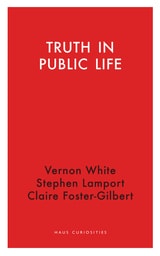
Truth in Public Life
Vernon White, Stephen Lamport, and Claire Foster-Gilbert
Haus Publishing, 2020
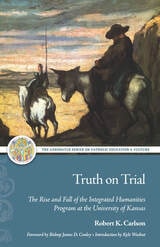
Truth on Trial
The Rise and Fall of the Integrated Humanities Program at the University of KansasRobert K. Carlson
Catholic University of America Press, 2026

Truth or Dare
Art and DocumentaryEdited by Gail Pearce and Cahal McLaughlin
Intellect Books, 2007
Truth, Reference and Realism
Zsolt Novak
Central European University Press, 2011
Truth
Studies of a Robust PresenceKurt Pritzl
Catholic University of America Press, 2010