Results by title
2817 books match the query 'Nature' and 595 start with t
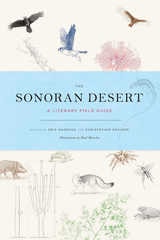
The Sonoran Desert
A Literary Field GuideEdited by Eric Magrane and Christopher Cokinos, Illustrations by Paul Mirocha
University of Arizona Press, 2016
Both literary anthology and hands-on field guide, The Sonoran Desert is a groundbreaking book that melds art and science. It captures the stunning biodiversity of the world’s most verdant desert through words and images. More than fifty poets and writers—including Christopher Cokinos, Alison Hawthorne Deming, Ken Lamberton, Eric Magrane, Jane Miller, Gary Paul Nabhan, Alberto Ríos, Ofelia Zepeda, and many others—have composed responses to key species of this striking desert. Each creative contribution is joined by an illustration by award-winning artist Paul Mirocha and scientific information about the creature or plant authored by the book’s editors.
From the saguaro to the mountain lion, from the black-tailed jackrabbit to the mesquite, the species represented here have evoked compelling and creative responses from each contributor. Just as writers such as Edward Abbey and Ellen Meloy have memorialized the desert, this collection is sure to become a new classic, offering up the next generation of voices of this special and beautiful place, the Sonoran Desert.
The Sound of Feathers
Attentive Living in a World Beyond OurselvesKathryn Gillespie
Duke University Press, 2026
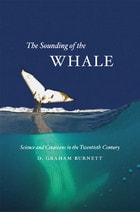
The Sounding of the Whale
Science and Cetaceans in the Twentieth CenturyD. Graham Burnett
University of Chicago Press, 2011
From the Bible’s “Canst thou raise leviathan with a hook?” to Captain Ahab’s “From Hell’s heart I stab at thee!,” from the trials of Job to the legends of Sinbad, whales have breached in the human imagination as looming figures of terror, power, confusion, and mystery.
In the twentieth century, however, our understanding of and relationship to these superlatives of creation underwent some astonishing changes, and with The Sounding of the Whale, D. Graham Burnett tells the fascinating story of the transformation of cetaceans from grotesque monsters, useful only as wallowing kegs of fat and fertilizer, to playful friends of humanity, bellwethers of environmental devastation, and, finally, totems of the counterculture in the Age of Aquarius. When Burnett opens his story, ignorance reigns: even Nature was misclassifying whales at the turn of the century, and the only biological study of the species was happening in gruesome Arctic slaughterhouses. But in the aftermath of World War I, an international effort to bring rational regulations to the whaling industry led to an explosion of global research—and regulations that, while well-meaning, were quashed, or widely flouted, by whaling nations, the first shot in a battle that continues to this day. The book closes with a look at the remarkable shift in public attitudes toward whales that began in the 1960s, as environmental concerns and new discoveries about whale behavior combined to make whales an object of sentimental concern and public adulation.
A sweeping history, grounded in nearly a decade of research, The Sounding of the Whale tells a remarkable story of how science, politics, and simple human wonder intertwined to transform the way we see these behemoths from below.
The Southern Forest
A ChronicleBy Laurence C. Walker
University of Texas Press, 1991
When the first European explorers reached the southern shores of North America in the early seventeenth century, they faced a solid forest that stretched all the way from the Atlantic coast to eastern Texas and Oklahoma. The ways in which they and their descendants used—and abused—the forest over the next nearly four hundred years form the subject of The Southern Forest.
In chapters on the explorers, pioneers, lumbermen, boatbuilders, and foresters, Laurence Walker chronicles the constant demands that people have made on forest resources in the South. He shows how the land's very abundance became its greatest liability, as people overhunted the animals, clearcut the forests, and wore out the soil with unwise farming practices—all in a mistaken belief that the forest's bounty (including new ground to be broken) was inexhaustible.
With the advent of professional forestry in the twentieth century, however, the southern forest has made a comeback. A professional forester himself, Walker speaks from experience of the difficulties that foresters face in balancing competing interests in the forest. How, for example, does one reconcile the country's growing demand for paper products with the insistence of environmental groups that no trees be cut? Should national forests be strictly recreational areas, or can they support some industrial logging? How do foresters avoid using chemical pesticides when the public protests such natural management practices as prescribed burning and tree cutting?
This personal view of the southern forest adds a new dimension to the study of southern history and culture. The primeval southern forest is gone, but, with careful husbandry on the part of all users, the regenerated southern forest may indeed prove to be the inexhaustible resource of which our ancestors dreamed.
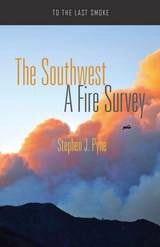
The Southwest
A Fire SurveyStephen J. Pyne
University of Arizona Press, 2016
Through a mixture of journalism, history, and literary imagination, fire expert Stephen J. Pyne provides a lively survey of what makes this region distinctive, moving us beyond the usual conversations of science and policy. Pyne explores the Southwest’s sacred mountains, including the Jemez, Mogollon, Huachucas, and Kaibab; its sky islands, among them the Chiricahuas, Mount Graham, and Tanque Verde; and its famous rims and borders. Together, the essays provide a cross-section of how landscape fire looks in the early years of the 21st century, what is being done to manage it, and how fire connects with other themes of southwestern life and culture.
The Southwest is part of the multivolume series describing the nation’s fire scene region by region. The volumes in To the Last Smoke also cover California, the Northern Rockies, the Great Plains, Florida, and several other critical fire regions. The series serves as an important punctuation point to Pyne’s 50-year career with wildland fire—both as a firefighter and a fire scholar. These unique surveys of regional pyrogeography are Pyne’s way of “keeping with it to the end,” encompassing the directive from his rookie season to stay with every fire “to the last smoke.”
The State Park Movement in America
A Critical ReviewNey C. Landrum
University of Missouri Press, 2013
The State of Nature
Ecology, Community, and American Social Thought, 1900-1950Gregg Mitman
University of Chicago Press, 1992
Reacting against the view of nature "red in tooth and claw," ecologists and behavioral biologists such as Warder Clyde Allee, Alfred Emerson, and their colleagues developed research programs they hoped would validate and promote an image of human society as essentially cooperative rather than competitive. Mitman argues that Allee's religious training and pacifist convictions shaped his pioneering studies of animal communities in a way that could be generalized to denounce the view that war is in our genes.

The Status and Distribution of New Jersey's Birds
Leck, Charles F
Rutgers University Press, 1984
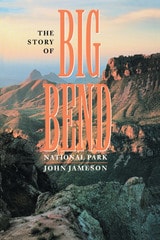
The Story of Big Bend National Park
By John Jameson
University of Texas Press, 1996
A breathtaking country of rugged mountain peaks, uninhabited desert, and spectacular river canyons, Big Bend is one of the United States' most remote national parks and among Texas' most popular tourist attractions. Located in the great bend of the Rio Grande that separates Texas and Mexico, the park comprises some 800,000 acres, an area larger than the state of Rhode Island, and draws over 300,000 visitors each year.
The Story of Big Bend National Park offers a comprehensive, highly readable history of the park from before its founding in 1944 up to the present. John Jameson opens with a fascinating look at the mighty efforts involved in persuading Washington officials and local landowners that such a park was needed. He details how money was raised and land acquired, as well as how the park was publicized and developed for visitors. Moving into the present, he discusses such issues as natural resource management, predator protection in the park, and challenges to land, water, and air. Along the way, he paints colorful portraits of many individuals, from area residents to park rangers to Lady Bird Johnson, whose 1966 float trip down the Rio Grande brought the park to national attention.
This history will be required reading for all visitors and prospective visitors to Big Bend National Park. For everyone concerned about our national parks, it makes a persuasive case for continued funding and wise stewardship of the parks as they face the twin pressures of skyrocketing attendance and declining budgets.
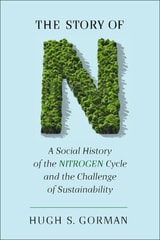
The Story of N
A Social History of the Nitrogen Cycle and the Challenge of SustainabilityGorman, Hugh S.
Rutgers University Press, 2013
In The Story of N, Hugh S. Gorman analyzes the notion of sustainability from a fresh perspective—the integration of human activities with the biogeochemical cycling of nitrogen—and provides a supportive alternative to studying sustainability through the lens of climate change and the cycling of carbon. It is the first book to examine the social processes by which industrial societies learned to bypass a fundamental ecological limit and, later, began addressing the resulting concerns by establishing limits of their own
The book is organized into three parts. Part I, “The Knowledge of Nature,” explores the emergence of the nitrogen cycle before humans arrived on the scene and the changes that occurred as stationary agricultural societies took root. Part II, “Learning to Bypass an Ecological Limit,” examines the role of science and market capitalism in accelerating the pace of innovation, eventually allowing humans to bypass the activity of nitrogen-fixing bacteria. Part III, “Learning to Establish Human-Defined Limits,” covers the twentieth-century response to the nitrogen-related concerns that emerged as more nitrogenous compounds flowed into the environment. A concluding chapter, “The Challenge of Sustainability,” places the entire story in the context of constructing an ecological economy in which innovations that contribute to sustainable practices are rewarded.
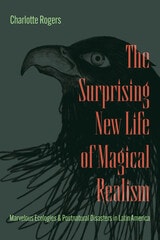
The Surprising New Life of Magical Realism
Marvelous Ecologies and Postnatural Disasters in Latin AmericaCharlotte Rogers
University of Chicago Press, 2027
An exploration of magical realism’s contemporary resurgence, as writers attempt to capture the realities of climate change.
What literary mode could possibly convey the extent of today’s climate catastrophes? In The Surprising New Life of Magical Realism, Charlotte Rogers argues that the answer is magical realism, a genre whose defining characteristic is to make the unbelievable an unremarkable part of everyday life. She pairs classic works by Alejo Carpentier, Gabriel García Márquez, and Rosario Ferré with contemporary novels by Carlos Fonseca, Fernanda Melchor, and Rita Indiana to show how the techniques of magical realism enable new approaches to scenes of environmental collapse and social injustice. Challenging widespread accounts of the genre’s decline, Rogers shows that the signature aesthetics of magical realism—the marvelous, the amazing, the strange—are integral to twenty-first-century fiction.
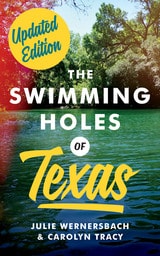
The Swimming Holes of Texas
By Julie Wernersbach and Carolyn Tracy; photography by Carolyn Tracy
University of Texas Press, 2020
Nothing beats a natural swimming hole for cooling off on a scorching summer day in Texas. Cold, clear spring water, big old shade trees, and a quiet stretch of beach or lawn offer the perfect excuse to pack a cooler and head out with family and friends to the nearest natural oasis. Whether you’re looking for a quick getaway or an unforgettable summer vacation, let The Swimming Holes of Texas be your guide.
Julie Wernersbach and Carolyn Tracy highlight one hundred natural swimming spots across the entire state. The book is organized by geographic regions, so you can quickly find local places to swim—or plan a trip to a more distant spot you’d like to explore. Each swimming hole is illustrated with an inviting color photo and a description of what it’s like to swim there, as well as the site’s history, ecology, and conservation. The authors include all the pertinent info about admission fees and hours, parking, and on-site amenities such as showers and restrooms. They also offer tips for planning your trips and lists of the swimming holes that are most welcoming to families and pets.
So when the temperature tops 100 and there’s nothing but traffic in sight, take a detour down the backroads and swim, sunbathe, revel, and relax in the swimming holes of Texas.
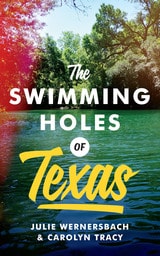
The Swimming Holes of Texas
By Julie Wernersbach and Carolyn Tracy; photography by Carolyn Tracy
University of Texas Press, 2017
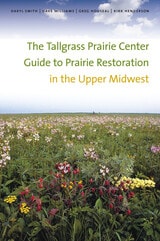
The Tallgrass Prairie Center Guide to Prairie Restoration in the Upper Midwest
Daryl Smith
University of Iowa Press, 2010
Although less than 3 percent of the original vast landscape survives, the tallgrass prairie remains a national treasure, glowing with a vast array of colorful wildflowers in spring and summer, enriched by the warm reds and browns of grasses in fall and winter. This comprehensive manual, crafted by the staff of the Tallgrass Prairie Center at the University of Northern Iowa, will be an essential companion for everyone dedicated to planning, developing, and maintaining all types of prairie restorations and reconstructions in the tallgrass prairie region of Iowa, northern Illinois, northwestern Indiana, southwestern Wisconsin, southwestern Minnesota, eastern South Dakota, eastern Nebraska, northwestern Missouri, and northeastern Kansas.
Focusing on conservation plantings, prairie recovery, native landscaping in yards and at schools, roadside plantings, and pasture renovations, the authors—who collectively have more than a hundred years of experience with prairie restoration—have created a manual that will be particularly useful to landowners, conservation agency personnel, ecosystem managers, native-seeding contractors, prairie enthusiasts, teachers, and roadside managers. A wealth of color and black-and-white photographs taken in the field as well as checklists and tables support the detailed text, which also includes useful online and print sources and references, a glossary, and lists of common and scientific names of all plant species discussed.
The text is divided into five parts. Part I, Reconstruction Planning, provides an overall summary of the entire process, information about securing good-quality seed, and the design of seed mixes. In Part II, Implementing Reconstruction, the authors consider ways to prepare and seed the site, manage the site in its first growing season, identify seedlings, and evaluate success. Part III, Prairie Restoration and Management, deals with identifying and assessing prairie remnants, working toward a predetermined restoration goal, and managing restored prairie remnants and completed reconstructions, including prescribed burning. Chapters in Part IV, Special Cases, discuss the uses of prairie in public spaces, roadside vegetation management, and landscaping on a smaller scale in yards and outdoor classrooms. Part V, Native Seed Production, describes the processes of harvesting, drying, cleaning, and storing native seed as well as propagating and transplanting native seedlings.
Although we cannot recreate the original blacksoil prairie, tallgrass prairie restoration offers the opportunity to reverse environmental damage and provide for the recovery of vital aspects of this lost ecosystem. Anyone in the Upper Midwest who wishes to improve water quality, reduce flood damage, support species diversity, preserve animal habitats, and enjoy the changing panorama of grasses and wildflowers will benefit from the clear, careful text and copious illustrations in this authoritative guide.
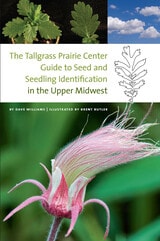
The Tallgrass Prairie Center Guide to Seed and Seedling Identification in the Upper Midwest
Dave Williams
University of Iowa Press, 2010
Settlers crossing the tallgrass prairie in the early 1800s were greeted by a seemingly endless landscape of wildflowers and grasses, one of the most diverse ecosystems on our planet. Today, although the tallgrass prairie has been reduced to a tiny percentage of its former expanse, people are working to restore and reconstruct prairie communities. This lavishly illustrated guide to seeds and seedlings, crafted by Tallgrass Prairie Center botanist Dave Williams and illustrator Brent Butler, will insure that everyone from urban gardeners to grassland managers can properly identify and germinate seventy-two species of tallgrass wildflowers and grasses in eastern North Dakota, eastern South Dakota, southwestern Minnesota, southwestern Wisconsin, northern Illinois, northwestern Indiana, Iowa, eastern Nebraska, eastern Kansas, northwestern Missouri, and eastern Oklahoma.
Williams has created a brilliant, nearly foolproof system of identification and verification. Two primary keys lead to eleven secondary keys that link to characteristic groups of tallgrass plants: seven groups for wildflowers and four groups for grasses. To identify a seedling, use the primary key to discover its place in the secondary key, then turn to that characteristic group to find your seedling. Circles on each full seedling photograph correspond to close-up photographs; triangles on these close-ups illustrate information in the text to further pinpoint identification. Drawings of leaves illuminate exact identification, and enlarged photographs of each seed provide yet another way to confirm identification.
Thousands of seeds were sprouted in the Tallgrass Prairie Center’s greenhouse to provide seedlings close in size and development to those grown in the field near the end of their first season; research and photography took place over four years. Williams’s text for each species includes a thorough description, a comparison of similar species, and guidance for germination and growth. A complete glossary supports the text, which is concise but detailed enough to be accessible to beginning prairie enthusiasts.
Anyone in the Upper Midwest who wishes to preserve the native vegetation of prairie remnants or reconstruct a tallgrass prairie of whatever size—from home gardens to schoolyards to roadsides to large acreages—will benefit from the hundreds of photographs and drawings and the precise text in this meticulously prepared guide.
The Tallgrass Prairie
An IntroductionCindy Crosby
Northwestern University Press, 2017
Like a walking tour with a literate friend and expert, Cindy Crosby's Tallgrass Prairie prepares travelers and armchair travelers for an adventure in the tallgrass. Crosby's engaging gateway assumes no prior knowledge of tallgrass landscapes, and she acquaints readers with the native plants they’ll discover there. She demystifies botanic plant names and offers engaging mnemonic tips for mastering Latin names with verve and confidence. Visitors to the prairie will learn to identify native plants using the five senses to discover what makes each plant unique or memorable. In the summer, for example, the unusual square stem of cup plant, Silphium perfoliatum, sets it apart from its neighbors. And its distinctive leaf cups water after the rain.
A gifted raconteur, Crosby tells stories about how humankind has adopted the prairie as a grocery, an apothecary, and even as a shop for love charms. Rounding out this exceptional introduction are suggestions for experiencing the American prairie, including journaling techniques and sensory experiences, tips for preparing for a hike in tallgrass landscapes, ways to integrate native prairie plants into home landscapes (without upsetting the neighbors), and a wealth of resources for further exploration.
An instant classic in the tradition of American naturalist writing, The Tallgrass Prairie will delight not only scholars and policy makers, but guests to tallgrass prairie preserves, outdoors enthusiasts and gardeners, and readers interested in American ecosystems and native plants.
The Tangled Bank
Writings from OrionRobert Michael Pyle
Oregon State University Press, 2012
Robert Michael Pyle’s popular “Tangled Bank” column appeared in fifty-two consecutive issues of Orion and Orion Afield magazines over eleven years. Each essay collected in The Tangled Bank explores Charles Darwin’s contention that the elements of such a bank, and by extension all the living world, are endlessly interesting and ever evolving.
Pyle’s thoughtful and concise narratives range in subject from hops and those who love them to independent bookstores to the monarchs of Mexico. In each piece, Pyle refutes “the idea that the world is a boring place,” sharing his meticulous observations of the endless and fascinating details of the living earth.
The Telling Distance
Conversations with the American DesertBruce Berger
University of Arizona Press, 1990
The Tensaw River
Alabama's Hidden Heritage CorridorMike Bunn
University of Alabama Press, 2025
Where nature meets history—explore Alabama’s hidden river legacy.
The Tensaw River introduces one of the American South’s richest and most fertile natural features. Author Mike Bunn is director of Historic Blakeley State Park, which is nestled in a prominent bend of the majestic Tensaw River. Reading Bunn is like sailing with a knowledgeable captain along the river’s natural and cultural byways as he offers a treasury of stories and facts that illuminate the river’s astonishing flora and fauna and the sweep of human history along the river’s ageless, meandering waterways.
Forming the eastern boundary of the expansive Mobile-Tensaw Delta, the Tensaw has had little industrial development. Left largely undisturbed, the river still flows free and bountiful into the grand estuary of Mobile Bay in ways and along vistas that would be recognizable to Native Americans centuries ago and to pioneers who arrived before Alabama became a state.
Bunn’s unforgettable stories in The Tensaw River trace the construction and occupation of the Bottle Creek site, an important mound complex built by Southeastern Native Americans a millennia ago. Nearby Blakeley is a spectral antebellum ghost town whose lost memories also tease the imagination. During the Civil War, the boom of artillery fire in the battle that sealed the fate of the city of Mobile echoed along the bends in the Tensaw.
Located near popular Gulf Coast travel destinations, the Tensaw’s forty-one-mile-long “Forgotten Cultural Heritage Corridor” is a gateway to the enchanting beauty of—and humankind’s enduring relationship to—the landscape of the American South.
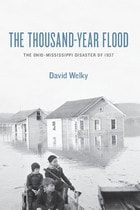
The Thousand-Year Flood
The Ohio-Mississippi Disaster of 1937David Welky
University of Chicago Press, 2011
In the early days of 1937, the Ohio River, swollen by heavy winter rains, began rising. And rising. And rising. By the time the waters crested, the Ohio and Mississippi had climbed to record heights. Nearly four hundred people had died, while a million more had run from their homes. The deluge caused more than half a billion dollars of damage at a time when the Great Depression still battered the nation.
Timed to coincide with the flood's seventy-fifth anniversary, The Thousand-Year Flood is the first comprehensive history of one of the most destructive disasters in American history. David Welky first shows how decades of settlement put Ohio valley farms and towns at risk and how politicians and planners repeatedly ignored the dangers. Then he tells the gripping story of the river's inexorable rise: residents fled to refugee camps and higher ground, towns imposed martial law, prisoners rioted, Red Cross nurses endured terrifying conditions, and FDR dispatched thousands of relief workers. In a landscape fraught with dangers—from unmoored gas tanks that became floating bombs to powerful currents of filthy floodwaters that swept away whole towns—people hastily raised sandbag barricades, piled into overloaded rowboats, and marveled at water that stretched as far as the eye could see. In the flood's aftermath, Welky explains, New Deal reformers, utopian dreamers, and hard-pressed locals restructured not only the flood-stricken valleys, but also the nation's relationship with its waterways, changes that continue to affect life along the rivers to this day.
A striking narrative of danger and adventure—and the mix of heroism and generosity, greed and pettiness that always accompany disaster—The Thousand-Year Flood breathes new life into a fascinating yet little-remembered American story.

The Three Axial Ages
Moral, Material, MentalTorpey, John
Rutgers University Press, 2017
Torpey’s argument advances the idea that there are in fact three “Axial Ages,” instead of one original Axial Age and several subsequent, smaller developments. Each of the three ages contributed decisively to how humanity lives, and the difficulties it faces. The earliest, or original, Axial Age was a moral one; the second was material, and revolved around the creation and use of physical objects; and the third is chiefly mental, and focused on the technological. While there are profound risks and challenges, Torpey shows how a worldview that combines the strengths of all three ages has the potential to usher in a period of exceptional human freedom and possibility.
The Three Ethologies
A Positive Vision for Rebuilding Human-Animal RelationshipsMatthew Calarco
University of Chicago Press, 2024
The Three Ethologies offers a fresh, affirmative vision for rebuilding human-animal relations. Venturing beyond the usual scholarly and activist emphasis on restricting harm, Matthew Calarco develops a new philosophy for understanding animal behavior—a practice known as ethology—through three distinct but interrelated lenses: mental ethology, which rebuilds individual subjectivity; social ethology, which rethinks our communal relations; and environmental ethology, which reconfigures our relationship to the land we co-inhabit with our animal kin. Drawing on developments in philosophy, (eco)feminist theory, critical geography, Indigenous studies, and the environmental humanities, Calarco casts an inspiring vision of how ethological living can help us to reimagine our ideas about goodness, truth, and beauty.
The Three Sustainabilities
Energy, Economy, TimeAllan Stoekl
University of Minnesota Press, 2021
Bringing the word sustainability back from the brink of cliché—to a substantive, truly sustainable future
Is sustainability a hopelessly vague word, with meager purpose aside from a feel-good appeal to the consumer? In The Three Sustainabilities, Allan Stoekl seeks to (re)valorize the word, for a simple reason: it is useful. Sustainability designates objects in time, their birth or genesis, their consistency, their survival, their demise. And it raises the question, as no other word does, of the role of humans in the survival of a world that is quickly disappearing—and perhaps in the genesis of another world.
Stoekl considers a range of possibilities for the word, touching upon questions of object ontology, psychoanalysis, urban critique, technocracy, and religion. He argues that there are three varieties of sustainability, seen from philosophical, cultural, and economic perspectives. One involves the self-sustaining world “without us”; another, the world under our control, which can run the political spectrum from corporatism to Marxism to the Green New Deal; and a third that carries a social and communitarian charge, an energy of the “universe” affirmed through, among other things, meditation and gifting. Each of these carves out a different space in the relations between objects, humans, and their survival and degradation. Each is necessary, unavoidable, and intimately bound with, and infinitely distant from, the others.
Along the way, Stoekl cites a wide range of authors, from philosophers to social thinkers, literary theorists to criminologists, anthropologists to novelists. This beautifully written, compelling, and nuanced book is a must for anyone interested in questions of ecology, energy, the environmental humanities, contemporary theories of the object, postmodern and posthuman aesthetics, or religion and the sacred in relation to community.

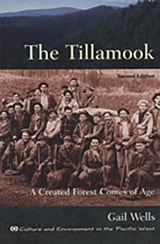
The Tillamook
A Created Forest Comes of AgeGail Wells
Oregon State University Press, 1999
The Tillamook
A Created Forest Comes of Age: Second EditionGail Wells
Oregon State University Press, 2004
The Tragedy of the Commodity
Oceans, Fisheries, and AquacultureLongo, Stefano B
Rutgers University Press, 2015
Although humans have long depended on oceans and aquatic ecosystems for sustenance and trade, only recently has human influence on these resources dramatically increased, transforming and undermining oceanic environments throughout the world. Marine ecosystems are in a crisis that is global in scope, rapid in pace, and colossal in scale. In The Tragedy of the Commodity, sociologists Stefano B. Longo, Rebecca Clausen, and Brett Clark explore the role human influence plays in this crisis, highlighting the social and economic forces that are at the heart of this looming ecological problem.
The Trilobite Book
A Visual JourneyRiccardo Levi-Setti
University of Chicago Press, 2014
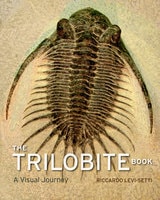
Featuring specimens from Bohemia to Newfoundland, California to the Tucson Gem and Mineral Show, and Wales to the Anti-Atlas Mountains of Morocco, Levi-Setti’s magnificent book reanimates these “butterflies of the seas” in 235 astonishing full-color photographs. All original, Levi-Setti’s images serve as the jumping-off point for tales of his global quests in search of these highly sought-after fossils; for discussions of their mineralogical origins, as revealed by their color; and for unraveling the role of the now-extinct trilobites in our planetary history.
Sure to enthrall paleontologists with its scientific insights and amateur enthusiasts with its beautiful and informative images, The Trilobite Book combines the best of science, technology, aesthetics, and personal adventure. It will inspire new collectors for eras to come.

The Trinity
On the Nature and Mystery of the One GodThomas Joseph White, OP
Catholic University of America Press, 2021
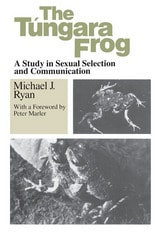
The Tungara Frog
A Study in Sexual Selection and CommunicationMichael J. Ryan
University of Chicago Press, 1985
In TheTúngara Frog, the most detailed and informative single study available of frogs and their reproductive behavior, Michael J. Ryan demonstrates the interplay of sexual and natural selection. Using techniques from ethology, behavioral ecology, sensory physiology, physiological ecology, and theoretical population genetics in his research, Ryan shows that large males with low-frequency calls mate most successfully. He examines in detail a number of explanations for the females' preferences, and he considers possible evolutionary forces leading to the males' success.
Though certain vocalizations allow males to obtain mates and thus should be favored by sexual selection, this study highlights two important costs of such sexual displays: the frogs expand considerable energy in their mating calls, and they advertise their whereabouts to predators. Ryan considers in detail how predators, especially the frige-lipped bat (Trachops cirrhosus), affect the evolution of the túngara frog's calls.
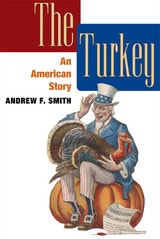
The Turkey
AN AMERICAN STORYAndrew F. Smith
University of Illinois Press, 2006
“Talking turkey” about the bird you thought you knew
Fondly remembered as the centerpiece of family Thanksgiving reunions, the turkey is a cultural symbol as well as a multi-billion dollar industry. As a bird, dinner, commodity, and as a national icon, the turkey has become as American as the bald eagle (with which it actually competed for supremacy on national insignias).
Food historian Andrew F. Smith’s sweeping and multifaceted history of Meleagris gallopavo separates fact from fiction, serving as both a solid historical reference and a fascinating general read. With his characteristic wit and insatiable curiosity, Smith presents the turkey in ten courses, beginning with the bird itself (actually several different species of turkey) flying through the wild. The Turkey subsequently includes discussions of practically every aspect of the iconic bird, including the wild turkey in early America, how it came to be called “turkey,” domestication, turkey mating habits, expansion into Europe, stuffing, conditions in modern industrial turkey factories, its surprising commercial history of boom and bust, and its eventual ascension to holiday mainstay.
As one of the easiest of foods to cook, the turkey’s culinary possibilities have been widely explored if little noted. The second half of the book collects an amazing array of over one hundred historical and modern turkey recipes from across America and Europe. From sandwiches to salmagundi, you’ll find detailed instructions on nearly every variation on the turkey. Historians will enjoy a look back at the varied appetites of their ancestors and seasoned cooks will have an opportunity to reintroduce a familiar food in forgotten ways.
The Underharbor
Submerged Histories of SydneyAnn Elias
University of Chicago Press, 2026
An underwater look at Sydney that surfaces new and unfamiliar histories of people, objects, spaces, and environmental and social change.
The Underharbor places the ocean at the center of a cultural history of Sydney, Australia, a place built on and around seawater, where the community is linked historically, emotionally, and psychologically to the water. Drawing on a series of vignettes that focus on Sydney’s underwater dimensions—including the harbor’s relationship to technological modernity, Indigenous ideas and practices, artistic experimentation, and scientific inquiry—Ann Elias creates a unique portrait of a city and its past. By shifting the terrestrial perspective to the subaquatic, Elias uncovers an area filled with political meaning, poetic significance, and ideological struggles.
Few harbors are as researched as Sydney’s, where fishing, exploration, colonialism, warfare, science, and industry all shaped cultural ideas about underwater space. Between 1850 to 1950, only a few groups of people had access to the remote underharbor: Indigenous divers and First Nations peoples, who were dispossessed by colonizers; divers working primarily to further the maritime industrialization of the growing city and to salvage objects from the harbor floor; researchers in the emerging field of marine science who dove for first-hand observation; and beachcombers, naturalists, and dredgers who got to know the underharbor by bringing it to the surface. Through press stories, models, illustrations, maps, and photographic and cinematic representations, The Underharbor reveals how these watery visions of Sydney shifted over the course of a century.
The Undersea Network
Nicole Starosielski
Duke University Press, 2015
The Unequal Ocean
Living with Environmental Change along the Peruvian CoastMaximilian Viatori
University of Arizona Press, 2023
Tackling important subjects of global concern, the author presents a complex image of Peru’s global seascapes as historical spaces comprising precarious worlds that expose people, nonhuman species, and places to unequal levels of harm. He traces how powerful actors in Peru represent the ocean in ways that erase the systemic inequalities, histories of uneven development, and extractive violence that have shaped ocean life. These erasures underscore the need for alternative representations of the ocean that highlight the engagements and commitments that make oceanic ecologies possible, as well as the material relationships and unequal positions of different people and species within them.
The author analyzes a multitude of timely topics, including waves and coastal development, the circulation of ocean waste, El Niño warming events, and the extraction of jumbo squid. This book also addresses expanding scholarly interest in the world’s oceans as sites for thinking about social inequities, environmental politics, and multispecies relationships.
The Unruly Wild
Embracing Ecological Change in the SouthwestJuliet C. Stromberg
University of Arizona Press, 2026
Challenging the traditional invasion biology paradigm, Juliet C. Stromberg invites readers to reconsider the “alien invader” narrative and explore the beneficial roles that newly arrived plants can play in our ecosystems. Drawing from her extensive experience as a plant and restoration ecologist, Stromberg introduces a cast of plant characters that includes longtimers as well as newcomers.
Through compelling stories and scientific insights, Stromberg explains why some plants are thriving while others are in decline. Stromberg’s engaging narrative, enriched with personal anecdotes and detailed vignettes, encourages readers to pause, reflect, and deepen their relationship with the plant world. By promoting a more nuanced and respectful dialogue about our natural surroundings, this book offers valuable insights into biodiversity, climate resilience, and ecosystem restoration. This book is a call to embrace a more inclusive and adaptive approach to wild plants.
The Vanishing Present
Wisconsin's Changing Lands, Waters, and WildlifeEdited by Donald M. Waller and Thomas P. Rooney
University of Chicago Press, 2008
The Vanishing Present brings together a distinguished set of contributors—including scientists, naturalists, and policy experts—to examine how human pressures on Wisconsin’s changing lands, waters, and wildlife have redefined the state’s ecology. Though they focus on just one state, the authors draw conclusions about changes in temperate habitats that can be applied elsewhere, and offer useful insights into future of the ecology, conservation, and sustainability of Wisconsin and beyond.
A fitting tribute to the home state of Aldo Leopold and John Muir, The Vanishing Present is an accessible and timely case study of a significant ecosystem and its response to environmental change.
The Vascular Plants of Iowa
An Annotated Checklist and Natural HistoryLawrence J. Eilers
University of Iowa Press, 1994
Anyone who works with the vascular plants of Iowa—researchers, conservationists, teachers, agricultural specialists, horticulturists, gardeners, and so on—and those who are simply interested in knowing more about the state's plants have long felt a need for a comprehensive flora of Iowa. This meticulously researched volume is a giant first step toward such a flora.
This book consists of an extended essay on the natural history of the vascular plants of Iowa, a discussion of their origins, a description of the state's natural regions, and a painstakingly annotated checklist of Iowa vascular plants. The data, which apply to over 150 years, took more than 15 years to collect.
All known vascular plants that grow and persist in Iowa without cultivation are included in the checklist. These are native plants, primarily, but a large number of introduced species have become established throughout the state. Also included are Iowa's major crop plants and some of its common garden plants. The lengthy checklist provides an accurate and up-to-date listing of species names and common names, synonyms, distribution, habitat, abundance, and origin; county names are given for very rare species, and the most complete information has been provided for all rare plants and troublesome species.
The wealth of information is this well-organized, practical volume—which describes more than two thousand species from Adiantum pedatum, the northern maidenhair fern of moist woods and rocky slopes, to Zannichellia palustris, the horned pondweed of shallow marshes and coldwater streams—makes it possible to identify Iowa plants correctly. All midwesterners will want to own a copy of The Vascular Plants of Iowa.
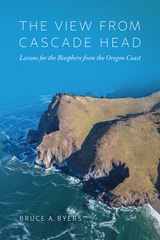
The View From Cascade Head
Lessons for the Biosphere from the Oregon CoastBruce A. Byers
Oregon State University Press, 2020
Cascade Head is Oregon’s only biosphere reserve, part of the international network of biosphere reserves coordinated by UNESCO. Biosphere reserves around the world are laboratories for understanding how humans affect ecosystems and models for how we can heal the human-nature relationship.
The View from Cascade Head illustrates three main lessons: the actions and efforts of committed individuals can make a difference; ecological mysteries still abound despite decades of scientific research; and our worldviews—how we think about our place in nature—shape our individual and collective effect on the ecosystems we inhabit. Byers helps us understand how these lessons apply everywhere and can lead us toward a more sustainable relationship with our home planet.
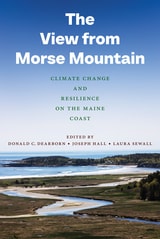
The View from Morse Mountain
Climate Change and Resilience on the Maine CoastEdited by Donald C. Dearborn, Joseph Hall, and Laura Sewall
University of Massachusetts Press, 2027
Arguing that resilient coasts emerge from collaborative, cross-disciplinary understanding rather than single-issue solutions
At the Bates-Morse Mountain Conservation Area, climate change impacts are visible to the attentive observer. High tides increasingly flood the causeway across the Sprague River Salt Marsh, large winter storms are reshaping the sand dunes at Seawall Beach, and the offshore waters of the Gulf of Maine are among the fastest-warming on the planet. Environmental change is not new there, nor is the impact of human activity, but different parts of this coastal system are changing at different rates, in different ways. Some components are potentially self-renewing, such as the barrier dune beach, while others, such as Piping Plover populations or the salt marshes, might be restored only with assistance. Unfortunately, other components may already be beyond help: the forest of pitch pines between the dunes and the marsh faces the dual threat of saltwater intrusion below ground and potential burial by migrating sands above.
In The View from Morse Mountain, contributors invite readers into this system through an array of complementary inquiries into bedrock geology, carbon capture by salt marshes, dune movement, the physiology of trees, bird migration, perceptual psychology, and the overlays of Indigenous history and colonial settlement. Fostering adaptability, particularly in coastal systems, requires just such an integrated set of examinations and perspectives. This collection of expert analyses works to encourage place-based curiosity in anyone, both those familiar with this area of Maine and people beyond, helping them recognize both loss and resilience, and to deepen their love for the places they treasure.
Contributors include the volume editors as well as Emily Chandler, Caitlin Cleaver, Isobel Curtis, J. Dykstra Eusden Jr., Brett Huggett, Bev Johnson, Dana Oster, Mike Retelle, and Robert Strong.
The View from the Hill
Four Seasons in a Walker’s BritainChristopher Somerville
Haus Publishing, 2023
In Christopher Somerville’s workroom is a case of shelves that holds four hundred and fifty notebooks. Their pages are creased and stained with mud, blood, flattened insects, beer glass rings, smears of plant juice, and gallons of sweat. Everything Somerville has written about walking the British countryside has had its origin in these little black and red books.
During the lockdowns and enforced isolation of the COVID-19 pandemic, Somerville began to revisit this treasury of notes, spanning forty years of exploring on foot. The View from the Hill pulls together the best of his written collections, following the cycle of the seasons from a freezing January on the Severn Estuary to the sight of sunrise on Christmas morning from inside a prehistoric burial mound. In between are hundreds of walks to discover toads in a Cumbrian spring, trout in a Hampshire chalk stream, a lordly red stag at the autumn rut on the Isle of Mull, and three thousand geese at full gabble in the wintry Norfolk sky. Somerville’s writing enables readers to enjoy these magnificent walks without stirring from the comfort of home.
The Void, The Grid & The Sign
Traversing The Great BasinWilliam L. Fox
University of Nevada Press, 2005
The War Against The Beavers
Learning to Be Wild in the North WoodsVerena Andermatt Conley
University of Minnesota Press, 2005
The Water Defenders
How Ordinary People Saved a Country from Corporate GreedRobin Broad and John Cavanagh with Graphic Adaptation by Jon Sack
The Ohio State University Press, 2026
Initially excited by the company’s promises of jobs and prosperity, farmer Vidalina Morales, brothers Marcelo and Miguel Rivera, and others soon realized that the trade-off was catastrophic contamination of El Salvador’s main source of fresh water. Facing corporate machinations and violence, the ordinary people of San Isidro and surrounding communities built a transnational coalition that prevailed over powerful adversaries to score an environmental victory with worldwide repercussions.
Broad and Cavanagh draw on over a decade of research, interviews, and experience as allies and experts in international development to recount the harrowing saga. A blueprint for civic bravery and local-to-global activism, as well as a rich history of Central America’s political conflicts and people’s fights against environmental and economic exploitation, this story will inspire anyone who feels helpless against corporate malfeasance.
The Way Home
Essays on the Outside WestJames McVey
University of Utah Press, 2010
"A sense of place can be a complicated matter," writes James McVey in the prologue to his new collection of essays, The Way Home. Based on twenty years of living and traveling in the West, the collection includes essays on river running, backcountry skiing, fly fishing, and backpacking—all describing various attempts to engage in meaningful contact with the elements of wild nature, and to have a deep firsthand knowledge of a place. With an essayists breadth McVey engages ecology, geology, anthropology, psychology, and history as well as his own personal outdoor experiences to peer into the particulars of living in as complicated a place as the West. While the essays function within the tradition of western nature writing, they transcend regional issues insofar as they maintain a broader philosophical context that accounts for such global concerns as mass extinction and climate change.
The essays use backcountry experiences as occasions for reflection on such topics as nature and culture, conservation, and the human relation to the wild. They combine the naturalist’s commitment to landscape with the adventurer’s attention to technique and skill. The outdoor experiences function as ritualized activity, the purpose of which is to explore a specific relation with a place. As such, the essays consider certain nonrational ways of knowing the world, including a perception of aesthetics based on sensory participation with the more-than-human world. This gets to the heart of the essential connection in this work between its adventure themes and nature concerns--a connection very much concerned with issues of lifestyle and worldview. McVey describes his own journey in the West, traveling through the varying philosophical revelations wilderness presents—"a lifetime of questions"—finally landing on a conservation ethic, a feeling of home.
The Way of Coyote
Shared Journeys in the Urban WildsGavin Van Horn
University of Chicago Press, 2018
A hiking trail through majestic mountains. A raw, unpeopled wilderness stretching as far as the eye can see. These are the settings we associate with our most famous books about nature. But Gavin Van Horn isn’t most nature writers. He lives and works not in some perfectly remote cabin in the woods but in a city—a big city. And that city has offered him something even more valuable than solitude: a window onto the surprising attractiveness of cities to animals. What was once in his mind essentially a nature-free blank slate turns out to actually be a bustling place where millions of wild things roam. He came to realize that our own paths are crisscrossed by the tracks and flyways of endangered black-crowned night herons, Cooper’s hawks, brown bats, coyotes, opossums, white-tailed deer, and many others who thread their lives ably through our own.
With The Way of Coyote, Gavin Van Horn reveals the stupendous diversity of species that can flourish in urban landscapes like Chicago. That isn’t to say city living is without its challenges. Chicago has been altered dramatically over a relatively short timespan—its soils covered by concrete, its wetlands drained and refilled, its river diverted and made to flow in the opposite direction. The stories in The Way of Coyote occasionally lament lost abundance, but they also point toward incredible adaptability and resilience, such as that displayed by beavers plying the waters of human-constructed canals or peregrine falcons raising their young atop towering skyscrapers. Van Horn populates his stories with a remarkable range of urban wildlife and probes the philosophical and religious dimensions of what it means to coexist, drawing frequently from the wisdom of three unconventional guides—wildlife ecologist Aldo Leopold, Taoist philosopher Lao Tzu, and the North American trickster figure Coyote. Ultimately, Van Horn sees vast potential for a more vibrant collective of ecological citizens as we take our cues from landscapes past and present.
Part urban nature travelogue, part philosophical reflection on the role wildlife can play in waking us to a shared sense of place and fate, The Way of Coyote is a deeply personal journey that questions how we might best reconcile our own needs with the needs of other creatures in our shared urban habitats.
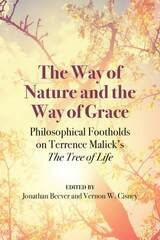
The Way of Nature and the Way of Grace
Philosophical Footholds on Terrence Malick's "The Tree of Life"Jonathan Beever and Vernon W. Cisney
Northwestern University Press, 2016
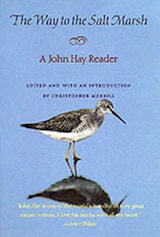
The Way to the Salt Marsh
A John Hay ReaderJohn Hay
Brandeis University Press, 1998
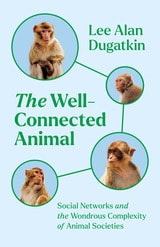
The Well-Connected Animal
Social Networks and the Wondrous Complexity of Animal SocietiesLee Alan Dugatkin
University of Chicago Press, 2024
An engaging exploration of the wondrous social webs that permeate life in animal societies around the world.
It’s all about who you know. Whether vampire bats sharing blood meals for survival, field crickets remembering champion fighters, macaque monkeys forming grooming pacts after a deadly hurricane, or great tit birds learning the best way to steal milk—it pays to be well connected.
In this tour of the animal kingdom, evolutionary biologist Lee Alan Dugatkin reveals a new field of study, uncovering social networks that existed long before the dawn of human social media. He accessibly describes the latest findings from animal behavior, evolution, computer science, psychology, anthropology, genetics, and neurobiology, and incorporates interviews and insights from researchers he finds swimming with manta rays, avoiding pigeon poop, and stopping monkeys from stealing iPads. With Dugatkin as our guide, we investigate social networks in giraffes, elephants, kangaroos, Tasmanian devils, whales, bats, and more. From animal networks in Australia and Asia to Africa, Europe, and the Americas, The Well-Connected Animal is an eye-opening exposé of wild friends, enemies, and everything in between.
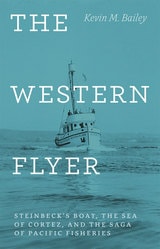
The Western Flyer
Steinbeck's Boat, the Sea of Cortez, and the Saga of Pacific FisheriesKevin M. Bailey
University of Chicago Press, 2015
In this book, Kevin M. Bailey resurrects this forgotten witness to the changing tides of Pacific fisheries. He draws on the Steinbeck archives, interviews with family members of crew, and more than three decades of working in Pacific Northwest fisheries to trace the depletion of marine life through the voyages of a single ship. After Steinbeck and his friend Ed Ricketts—a pioneer in the study of the West Coast’s diverse sea life and the inspiration behind “Doc” in Cannery Row—chartered the boat for their now-famous 1940 expedition, the Western Flyer returned to its life as a sardine seiner in California. But when the sardine fishery in Monterey collapsed, the boat moved on: fishing for Pacific ocean perch off Washington, king crab in the Bering Sea off Alaska, and finally wild Pacific salmon—all industries that would also face collapse.
As the Western Flyer herself faces an uncertain future—a businessman has bought her, intending to bring the boat to Salinas, California, and turn it into a restaurant feature just blocks from Steinbeck’s grave—debates about the status of the California sardine, and of West Coast fisheries generally, have resurfaced. A compelling and timely tale of a boat and the people it carried, of fisheries exploited, and of fortunes won and lost, The Western Flyer is environmental history at its best: a journey through time and across the sea, charting the ebb and flow of the cobalt waters of the Pacific coast.
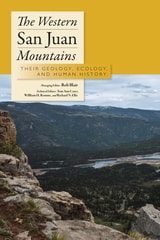
The Western San Juan Mountains
Their Geology, Ecology, and Human HistoryRob Blair
University Press of Colorado, 1996
The most complete work published on the natural history of southwest Colorado's majestic mountain system, The Western San Juan Mountains: Their Geology, Ecology, and Human History is designed to be used while exploring the scenic 235-mile paved San Juan Skyway, which passes through Durango, Silverton, Ouray, Telluride, Dolores, and Cortez.
The Western San Juan Mountains covers the physical environment, the biological communities, the human history, and points of interest represented on milepost signs along the highway. Some of the many topics covered include: how the San Juan Mountains were formed; why the landscape is so rugged and picturesque; why the vegetation changes from the lowlands to the alpine heights; energy and mineral resources of the area; why these mountains intrigued early explorers; factors that influence the unpredictable weather; and the first-known inhabitants.
The contributions to this guide include Fort Lewis College geologists, biologists, archaeologists, historians, and other specialists. Together they have amassed more than one hundred years of study based not only on previous work but on their own research.
This generously illustrated guidebook is aimed at all those who wish to understand this intricate mountain system in much greater detail than provided by most picture books.
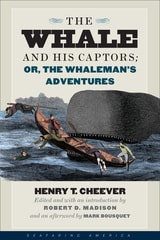
The Whale and His Captors; or, The Whaleman's Adventures
Henry T. Cheever
University Press of New England, 2018