Results by title
4038 books match the query 'Social aspects' and 711 start with t
The Quest for Sexual Health
How an Elusive Ideal Has Transformed Science, Politics, and Everyday LifeSteven Epstein
University of Chicago Press, 2022
Since the 1970s, health professionals, researchers, governments, advocacy groups, and commercial interests have invested in the pursuit of something called "sexual health." Under this expansive banner, a wide array of programs have been launched, organizations founded, initiatives funded, products sold—and yet, no book before this one asks: What does it mean to be sexually healthy? When did people conceive of a form of health called sexual health? And how did it become the gateway to addressing a host of social harms and the reimagining of private desires and public dreams?
Conjoining "sexual" with "health" changes both terms: it alters how we conceive of sexuality and transforms what it means to be healthy, prompting new expectations of what medicine can provide. Yet the ideal of achieving sexual health remains elusive and open-ended, and the benefits and costs of promoting it are unevenly distributed across genders, races, and sexual identities. Rather than a thing apart, sexual health is intertwined with nearly every conceivable topical debate—from sexual dysfunction to sexual violence, from reproductive freedom to the practicalities of sexual contact in a pandemic. In this book Steven Epstein analyzes the rise, proliferation, uptake, and sprawling consequences of sexual health activities, offering critical tools to assess those consequences, expand capacities for collective decision making, and identify pathways that promote social justice.
The Quiet Hero
A Life of Ryan WhiteNelson Price
Indiana Historical Society Press, 2015

The Quiet Zone
Caribbean Expressive Cultures and the Feminist Aesthetics of DisturbancePetal Kimberly Samuel
Rutgers University Press, 2026
The Race of Sound
Listening, Timbre, and Vocality in African American MusicNina Sun Eidsheim
Duke University Press, 2018
The Radical Bookstore
Counterspace for Social MovementsKimberley Kinder
University of Minnesota Press, 2021
Examines how radical bookstores and similar spaces serve as launching pads for social movements
How does social change happen? It requires an identified problem, an impassioned and committed group, a catalyst, and a plan. In this deeply researched consideration of seventy-seven stores and establishments, Kimberley Kinder argues that activists also need autonomous space for organizing, and that these spaces are made, not found. She explores the remarkably enduring presence of radical bookstores in America and how they provide infrastructure for organizing—gathering places, retail offerings that draw new people into what she calls “counterspaces.”
Kinder focuses on brick-and-mortar venues where owners approach their businesses primarily as social movement tools. These may be bookstores, infoshops, libraries, knowledge cafes, community centers, publishing collectives, thrift stores, or art installations. They are run by activist-entrepreneurs who create centers for organizing and selling books to pay the rent. These spaces allow radical and contentious ideas to be explored and percolate through to actual social movements, and serve as crucibles for activists to challenge capitalism, imperialism, white privilege, patriarchy, and homophobia. They also exist within a central paradox: participating in the marketplace creates tensions, contradictions, and shortfalls. Activist retail does not end capitalism; collective ownership does not enable a retreat from civic requirements like zoning; and donations, no matter how generous, do not offset the enormous power of corporations and governments.
In this timely and relevant book, Kinder presents a necessary, novel, and apt analysis of the role these retail spaces play in radical organizing, one that demonstrates how such durable hubs manage to persist, often for decades, between the spikes of public protest.
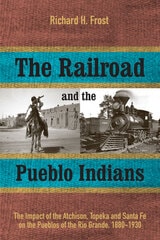
The Railroad and the Pueblo Indians
The Impact of the Atchison, Topeka and Santa Fe on the Pueblos of the Rio Grande, 1880-1930Richard H. Frost
University of Utah Press, 2015
The Pueblo communities responded variously, though mostly conservatively to sustain their traditional communities. This book spotlights two very different responses. Santo Domingo's reaction was hostile, but Laguna chose accommodation. These reactions reveal previously overlooked aspects of these pueblos’ histories that provide compelling reasons behind their varying responses. The book also analyzes the self-contradictory nature of Pueblo constitutional law from 1876 to 1913 and describes conflicted Bureau of Indian Affairs treatment of the Pueblos in the late nineteenth and early twentieth centuries. Each in turn had fateful consequences.
The Rainy Season
Three Lives in the New South AfricaMaggie Messitt
University of Iowa Press, 2015
The Rainy Season tells the stories of three generations in the Rainbow Nation one decade after its first democratic elections. This multi-threaded narrative follows Regina, a tapestry weaver in her sixties, standing at the crossroads where her Catholic faith and the AIDS pandemic crash; Thoko, a middle-aged sangoma (traditional healer) taking steps to turn her shebeen into a fully licensed tavern; and Dankie, a young man taking his matriculation exams, coming of age as one of Mandela’s Children, the first academic class educated entirely under democratic governance.
Home to Shangaan, Sotho, and Mozambican Tsonga families, Rooiboklaagte sits in a village where an outdoor butchery occupies an old petrol station and a funeral parlor sits in the attached garage. It’s a place where an AIDS education center sits across the street from a West African doctor selling cures for the pandemic. It’s where BMWs park outside of crumbling cement homes, and the availability of water changes with the day of the week. As the land shifts from dusty winter blond to lush summer green and back again, the duration of northeastern South Africa’s rainy season, Regina, Thoko, and Dankie all face the challenges and possibilities of the new South Africa.
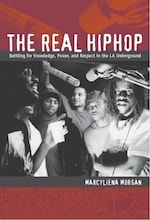
The Real Hiphop
Battling for Knowledge, Power, and Respect in the LA UndergroundMarcyliena Morgan
Duke University Press, 2009
Morgan intersperses her observations with excerpts from interviews and transcripts of freestyle lyrics. Providing a thorough linguistic interpretation of the music, she teases out the cultural antecedents and ideologies embedded in the language, emphases, and wordplay. She discusses the artistic skills and cultural knowledge MCs must acquire to rock the mic, the socialization of hiphop culture’s core and long-term members, and the persistent focus on skills, competition, and evaluation. She brings attention to adults who provided material and moral support to sustain underground hiphop, identifies the ways that women choose to participate in Project Blowed, and vividly renders the dynamics of the workshop’s famous lyrical battles.
The Repression of Psychoanalysis
Otto Fenichel and the Political FreudiansRussell Jacoby
University of Chicago Press, 1986
The Republic Shall Be Kept Clean
How Settler Colonial Violence Shaped Antileft RepressionTariq D. Khan
University of Illinois Press, 2023
The colonizing wars against Native Americans created the template for anticommunist repression in the United States. Tariq D. Khan’s analysis reveals bloodshed and class war as foundational aspects of capitalist domination and vital elements of the nation’s long history of internal repression and social control. Khan shows how the state wielded the tactics, weapons, myths, and ideology refined in America’s colonizing wars to repress anarchists, labor unions, and a host of others labeled as alien, multi-racial, multi-ethnic urban rabble. The ruling classes considered radicals of all stripes to be anticolonial insurgents. As Khan charts the decades of red scares that began in the 1840s, he reveals how capitalists and government used much-practiced counterinsurgency rhetoric and tactics against the movements they perceived and vilified as “anarchist.”
Original and boldly argued, The Republic Shall Be Kept Clean offers an enlightening new history with relevance for our own time.
The Republic of Color
Science, Perception, and the Making of Modern AmericaMichael Rossi
University of Chicago Press, 2019
For a nation in the grip of profound economic, cultural, and demographic crises, the standardization of color became a means of social reform—a way of sculpting the American population into one more amenable to the needs of the emerging industrial order. Delineating color was also a way to characterize the vagaries of human nature, and to create ideal structures through which those humans would act in a newly modern American republic. Michael Rossi’s compelling history goes far beyond the culture of the visual to show readers how the control and regulation of color shaped the social contours of modern America—and redefined the way we see the world.
The Republican Aventine and Rome’s Social Order
Lisa Marie Mignone
University of Michigan Press, 2016
The myth of the “plebeian Aventine” became embedded not only in classical scholarship, but also in modern political and cultural consciousness; it has even been used by modern figures to support their political agenda. Yet The Republican Aventine and Rome’s Social Order makes bold new claims regarding the urban design and social history of ancient Rome and raises a significant question about ancient urbanism and social stability more generally: Did social integration reduce violence in premodern cities and promote urban concord?
The Restless Dead
Necrowriting and DisappropriationCristina Rivera Garza
Vanderbilt University Press, 2020
Disappropriating is a political operation at the core of projects acknowledging, both at ethical and aesthetic levels, that writers always work with materials that are not their own. Writers borrow from the practitioners of a language, entering in a debt relationship that can only be covered by ushering the text back to the communities from which it grew. In a world rife with violence, where the experiences of many are erased by pillage and extraction, writing among and for the dead is a form of necrowriting that may well become a life-affirming act of decolonization and resistance.
The Returned
Former U.S. Migrants’ Lives in Mexico CityClaudia Masferrer
Russell Sage Foundation, 2025
Masferrer, Hamilton, and Denier draw on interviews with former U.S. migrants living in Mexico City to better understand the experience of return migration to urban areas. Each of the migrants they spoke with lived in the United States for long periods with noncitizen status during the last four decades. During this time, U.S. immigration policy became increasingly focused on restriction and enforcement, which made it difficult for migrants to safely move back and forth across the border for work or to visit family without documentation. The authors find that upon their return, migrants in Mexico City felt disoriented and lost and had difficulty adapting to a massive urban environment where there is little support for returnees. They struggled to translate their work experience from their time in the U.S. to find quality jobs. Additionally, many found their family lives upended as they reunited with or formed families in the U.S.. Some found themselves separated from family members still in the U.S. with no ability to legally visit them. Others brought their families back to Mexico, some of whom were U.S. citizens and had never been to Mexico before. They, too, struggled to adapt and integrate to life in Mexico City.
The authors use the experiences of return migrants to discuss policies and practices that would improve their lives and ease their reintegration. To help with the disorientation they experience, returnees proposed ongoing psychological support with mental health professionals who have knowledge and training in the social and legal issues that return migrants face. Return migrants also advocated for policies to enhance skill matching, job creation, and entrepreneurship, as many felt the occupational skills they developed in the U.S. were undervalued in Mexico. To address family separation, returnees argued for legal and policy reform to accommodate family reunification.
The Returned is an illuminating account of the difficulties faced by return migrants and their families in Mexico City.
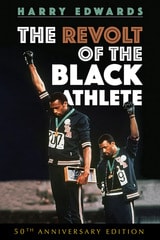
The Revolt of the Black Athlete
50th Anniversary EditionHarry Edwards
University of Illinois Press, 2017
The Revolution Will Be Improvised
The Intimacy of Cultural ActivismElizabeth Rodriguez Fielder
University of Michigan Press, 2024
Reading the output of these programs, Elizabeth Rodriguez Fielder argues that intimacy-making became an extension of participatory democracy. In doing so, Rodriguez Fielder supplants the success-failure binary for understanding social movements, focusing instead on how care work aligns with creative production. The Revolution Will Be Improvised returns to improvisation’s roots in economic and social necessity and locates it as a core tenet of the aesthetics of obligation, where a commitment to others drives the production and result of creative work. Thus, this book puts forward a methodology to explore the improvised, often ephemeral, works of art activism.
The Rhetoric of Rebel Women
Civil War Diaries and Confederate PersuasionKimberly Harrison
Southern Illinois University Press, 2013
Informed by more than one hundred diaries, this study provides insight into how women cultivated rhetorical agency, challenging traditional gender expectations while also upholding a cultural status quo. Author Kimberly Harrison analyzes the rhetorical choices these women made and valued in wartime and postwar interactions with Union officers and soldiers, slaves and former slaves, local community members, and even their God. In their intimate accounts of everyday war, these diarists discussed rhetorical strategies that could impact their safety, their livelihoods, and those of their families. As they faced Union soldiers in attempts to protect their homes and property, diarists saw their actions as not only having local, immediate impact on their well-being but also as reflecting upon their cause and the character of the southern people as a whole. They instructed themselves through their personal writing, allowing insight into how southern women prepared themselves to speak and act in new and contested contexts.
The Rhetoric of Rebel Women highlights the contributions of privileged white southern women in the development of the Confederate national identity, presenting them not as passive observers but as active participants in the war effort.

The Right Blood
America's Aristocrats in Thoroughbred RacingCase, Carole
Rutgers University Press, 2000
The spectacle of thoroughbred horses dashing powerfully and gracefully down the track is one of the most stimulating and beautiful of all athletic events. Yet despite its mass appeal, an elite group of men and a few women have traditionally controlled the sport. What are the origins and personalities behind the sport in America?
In The Right Blood, Carole Case examines the history of American thoroughbred racing, in particular the story behind the Jockey Club. Formed in 1894 by the nation’s richest, most powerful, and often most notorious men, the Jockey Club continues to this day to exert a formidable influence on this “sport of kings.”
Using Jockey Club documents and personal interviews, Case traces the history of how club members created and enforced the rules governing racing, from the first decades of the twentieth century to the present day. She tells of how club members once assigned racing dates, issued licenses, appointed judges, and dictated who could train, ride, and own thoroughbred horses. Case also describes how many of them exploited the poor to work their horses, defeated those who posed a threat to their interests, and excluded people of different backgrounds from horse racing ¾ all in the name of improving the breed and promoting the sport. The Jockey Club maintained this stranglehold on the sport until 1950, when an appellate court took away its licensing power. Perhaps most interestingly, the men of the Jockey Club became and continue as keepers of the registry of North American thoroughbred horses, The American Stud Book, determining which horses can ¾ and cannot ¾ be considered thoroughbreds.
Written for the general reader interested in the sport and its culture, The Right Blood is an engaging look behind the scenes of American horse racing.
The Right to Be Out
Sexual Orientation and Gender Identity in America's Public Schools, Second EditionStuart Biegel
University of Minnesota Press, 2018
An updated edition of this measured, practical, and timely guide to LGBT rights and issues for educators and school officials
With ongoing battles over transgender rights, bullying cases in the news almost daily, and marriage equality only recently the law of the land, the information in The Right to Be Out could not be more timely or welcome. In an updated second edition that explores the altered legal terrain of LGBT rights for students and educators, Stuart Biegel offers expert guidance on the most challenging concerns in this fraught context.
Taking up the pertinent questions likely to arise regarding curriculum and pedagogy in the classroom, school sports, and transgender issues, Biegel reviews the dramatic legal developments of the past decades, identifies the principles at work, and analyzes the policy considerations that result from these changes. Central to his work is an understanding of the social, political, and personal tensions regarding the nature and extent of the right to be out, which includes both the First Amendment right to express an identity and the Fourteenth Amendment right to be treated equally. Acknowledging that LGBT issues affect people of every sexual orientation and gender identity, Biegel provides a road map of viable strategies for school officials and educators.
The Right to Be Out, informed by the latest research-based findings, advances the proposition that a safe and supportive educational environment, built upon shared values and geared toward a greater appreciation of our pluralistic society, can lead to a better world for everyone.
The Right to Maim
Debility, Capacity, DisabilityJasbir K. Puar
Duke University Press, 2017
The Rise and Fall of Olympic Amateurism
Matthew P. Llewellyn and John Gleaves
University of Illinois Press, 2016
Matthew P. Llewellyn and John Gleaves analyze how this astonishing transformation took place. Drawing on Olympic archives and a wealth of research across media, the authors examine how an elite--white, wealthy, often Anglo-Saxon--controlled and shaped an enormously powerful myth of amateurism. The myth assumed an air of naturalness that made it seem unassailable and, not incidentally, served those in power. Llewellyn and Gleaves trace professionalism's inroads into the Olympics from tragic figures like Jim Thorpe through the shamateur era of under-the-table cash and state-supported athletes. As they show, the increasing acceptability of professionals went hand-in-hand with the Games becoming a for-profit international spectacle. Yet the myth of amateurism's purity remained a potent force, influencing how people around the globe imagined and understood sport.
Timely and vivid with details, The Rise and Fall of Olympic Amateurism is the first book-length examination of the movement's foundational ideal.
The Rise of the Individual in 1950s Israel
A Challenge to CollectivismOrit Rozin
Brandeis University Press, 2011
The Risk Society Revisited
Social Theory and Risk GovernanceEugene Rosa
Temple University Press, 2015
Risk is a part of life. How we handle uncertainty and deal with potential threats influence decision making throughout our lives. In The Risk Society Revisited, Eugene A. Rosa, Ortwin Renn, and Aaron M. McCright offer the first book to present an integrated theory of risk and governance.
The authors examine our sociological understanding of risk and how we reconcile modern human conditions with our handling of risk in our quest for improved quality of life. They build a new framework for understanding risk—one that provides an innovative connection between social theory and the governance of technological and environmental risks and the sociopolitical challenges they pose for a sustainable future.
Showing how our consciousness affects risk in the decisions we make—as individuals and as members of a democratic society—The Risk Society Revisited makes an important contribution to the literature of risk research.
The Robotic Imaginary
The Human and the Price of Dehumanized LaborJennifer Rhee
University of Minnesota Press, 2018
Tracing the connections between human-like robots and AI at the site of dehumanization and exploited labor
The word robot—introduced in Karel Čapek’s 1920 play R.U.R.—derives from rabota, the Czech word for servitude or forced labor. A century later, the play’s dystopian themes of dehumanization and exploited labor are being played out in factories, workplaces, and battlefields. In The Robotic Imaginary, Jennifer Rhee traces the provocative and productive connections of contemporary robots in technology, film, art, and literature. Centered around the twinned processes of anthropomorphization and dehumanization, she analyzes the coevolution of cultural and technological robots and artificial intelligence, arguing that it is through the conceptualization of the human and, more important, the dehumanized that these multiple spheres affect and transform each other.
Drawing on the writings of Alan Turing, Sara Ahmed, and Arlie Russell Hochschild; such films and novels as Her and The Stepford Wives; technologies like Kismet (the pioneering “emotional robot”); and contemporary drone art, this book explores anthropomorphic paradigms in robot design and imagery in ways that often challenge the very grounds on which those paradigms operate in robotics labs and industry. From disembodied, conversational AI and its entanglement with care labor; embodied mobile robots as they intersect with domestic labor; emotional robots impacting affective labor; and armed military drones and artistic responses to drone warfare, The Robotic Imaginary ultimately reveals how the human is made knowable through the design of and discourse on humanoid robots that are, paradoxically, dehumanized.
The Romantic Machine
Utopian Science and Technology after NapoleonJohn Tresch
University of Chicago Press, 2012
In the years immediately following Napoleon’s defeat, French thinkers in all fields set their minds to the problem of how to recover from the long upheavals that had been set into motion by the French Revolution. Many challenged the Enlightenment’s emphasis on mechanics and questioned the rising power of machines, seeking a return to the organic unity of an earlier age and triggering the artistic and philosophical movement of romanticism. Previous scholars have viewed romanticism and industrialization in opposition, but in this groundbreaking volume John Tresch reveals how thoroughly entwined science and the arts were in early nineteenth-century France and how they worked together to unite a fractured society.
Focusing on a set of celebrated technologies, including steam engines, electromagnetic and geophysical instruments, early photography, and mass-scale printing, Tresch looks at how new conceptions of energy, instrumentality, and association fueled such diverse developments as fantastic literature, popular astronomy, grand opera, positivism, utopian socialism, and the Revolution of 1848. He shows that those who attempted to fuse organicism and mechanism in various ways, including Alexander von Humboldt and Auguste Comte, charted a road not taken that resonates today.
Essential reading for historians of science, intellectual and cultural historians of Europe, and literary and art historians, The Romantic Machine is poised to profoundly alter our understanding of the scientific and cultural landscape of the early nineteenth century.
The Roots of Rough Justice
Origins of American LynchingMichael J. Pfeifer
University of Illinois Press, 2014
The Rule of Law After Artificial Intelligence
Automated NarrativesKatie Szilagyi
University of Chicago Press, 2026
A timely investigation of what is at stake when AI takes legal decision-making out of human hands.
Artificial intelligence is proliferating in many professions, and the legal field is no exception. In The Rule of Law After Artificial Intelligence, Katie Szilagyi investigates the philosophical and practical implications of using AI in legal spaces, beginning with several fundamental questions: What is the law supposed to do, and from where does it derive its authority? Would law still achieve these aims if automated? How might automation affect the rule of law’s integrity and democratic institutions’ operations?
Blending legal philosophy, applied case studies, and insights from both critical legal scholarship and science and technology studies, Szilagyi argues that law and storytelling are deeply connected. Through creating and contesting the law, we make sense of the information around us and generate narratives about our collective world. These narratives are not static: legal precedent evolves, and legal deliberation on hard cases can help to resolve unclear or unprecedented social issues.
Szilagyi demonstrates that technological innovations make the rule of law vulnerable because large language models and machine learning undermine the visioning function of legal narratives, collapsing exercises of legal interpretation into mere administration. Datafication of law—built on the biased data of our cultural past—threatens longstanding legal ideals, lessens the constraints against abuses of power by private actors, and hamstrings society’s ability to reach a more egalitarian future. Szilagyi argues instead for centering narratives within the law and, in turn, rediscovering the tales the law tells us about who we are.
The Rumble in the Jungle
Muhammad Ali and George Foreman on the Global StageLewis A. Erenberg
University of Chicago Press, 2019
TheRumble in the Jungle orbits around Ali and Foreman, placing them at the convergence of the American Civil Rights movement and the Great Society, the rise of Islamic and African liberation efforts, and the ongoing quest to cast off the shackles of colonialism. With his far-reaching take on sports, music, marketing, and mass communications, Erenberg shows how one boxing match became nothing less than a turning point in 1970s culture.
The Rural State
Making Comunidades, Campesinos, and Conflict in Peru's Central SierraJavier Puente
University of Texas Press, 2022
2023 Marysa Navarro Best Book Prize, New England Council of Latin American Studies (NECLAS)
A study of the intersection of rural populations, state formation, and the origins of political conflict in Peru.
On the eve of the twentieth century, Peru seemed like a profitable and yet fairly unexploited country. Both foreign capitalists and local state makers envisioned how remote highland areas were essential to a sustainable national economy. Mobilizing Andean populations lay at the core of this endeavor. In his groundbreaking book, The Rural State, Javier Puente uncovers the surprising and overlooked ways that Peru’s rural communities formed the political nation-state that still exists today.
Puente documents how people living in the Peruvian central sierra in the twentieth century confronted emerging and consolidating powers of state and capital and engaged in an ongoing struggle over increasingly elusive subsistence and autonomies. Over the years, policy, politics, and social turmoil shaped the rural, mountainous regions of Peru until violent unrest, perpetrated by the Shining Path and other revolutionary groups, unveiled the extent, limits, and fractures of a century-long process of rural state formation. Examining the conflicts between one rural community and the many iterations of statehood in the central sierra of Peru, The Rural State offers a fresh perspective on how the Andes became la sierra, how pueblos became comunidades, and how indígenas became campesinos.
The Saloon and the Mission
Addiction, Conversion, and the Politics of Redemption in American CultureEoin F. Cannon
University of Massachusetts Press, 2013
In this book Eoin Cannon illuminates the role that sobriety movements have played in placing notions of personal and societal redemption at the heart of modern American culture. He argues against the dominant scholarly perception that recovery narratives are private and apolitical, showing that in fact the genre's conventions turn private experience to public political purpose. His analysis ranges from neglected social reformer Helen Stuart Campbell's embrace of the "gospel rescue missions" of postbellum New York City to William James's use of recovery stories to consider the regenerative capabilities of the mind, to writers such as Upton Sinclair and Djuna Barnes, who used this narrative form in much different ways.
Cannon argues that rather than isolating recovery from these realms of wider application, the New Deal–era Alcoholics Anonymous refitted the "drunkard's conversion" as a model of selfhood for the liberal era, allowing for a spiritual redemption story that could accommodate a variety of identities and compulsions. He concludes by considering how contemporary recovery narratives represent both a crisis in liberal democracy and a potential for redemptive social progress.

The Saloon
Public Drinking in Chicago and Boston, 1880-1920Perry R. Duis
University of Illinois Press, 1983

The Sanctity of Social Life
Physician's Treatment of Critically Ill PatientsDiana Crane
Russell Sage Foundation, 1975

The Sanitary Arts
Aesthetic Culture and the Victorian Cleanliness CampaignsEileen Cleere
The Ohio State University Press, 2014
The Sanitary Arts covers the mid-forties controversy over cleaning the dirt from the pictures in the National Gallery, the debate over decorative “dust traps” in the overstuffed Victorian home, and the late-century proliferation of hygienic breeding principles as a program of aesthetic perfectibility, to demonstrate the unintentionally collaborative work of seemingly unrelated events and discourses. Bringing figures like Edwin Chadwick and John Ruskin into close conversation about the sanitary status of beauty in a variety of forms and environments, Cleere forcefully demonstrates that aesthetic development and scientific discovery can no longer be understood as separate or discrete forces of cultural change.
The Scarcity Loop
How School Choice Reshapes the Rationing of Public Educationjennings
Russell Sage Foundation, 2026
School choice promises to free families from the limits of where they live. The Scarcity Loop asks what happens when that promise is made in school systems where more children seek desirable schools than those schools can serve. Focused on New York City’s high school admissions system, sociologist Jennifer L. Jennings argues that choice becomes another way to ration scarce educational opportunity, shifting where rationing happens, who must manage it, and how families understand the outcomes that follow.
Jennings begins with the admissions process itself. New York City asks every eighth grader to choose from hundreds of options. On paper, the system offers extraordinary possibility. But that possibility still has to be converted into a seat. Someone has to learn the rules, compare schools, manage deadlines, make trips, and decide how much risk a thirteen-year-old can bear. Jennings calls this the work of getting in and shows that the capacity to do that work is not evenly distributed. Some families enter choice systems with the fluency and flexibility to turn options into opportunity. Others confront it with fewer supports and far less room for error. Some teenagers shoulder decisions with little adult help. Counselors translate complicated rules under impossible constraints. Principals are not passive actors. Jennings shows how they recruit and adapt as they try to build schools families will choose while managing demand and reputation.
Jennings contends that reforms meant to expand access can reorganize the very competition they aim to resolve. As one barrier recedes, another becomes more consequential. Residence matters less, but advantage does not disappear; it travels through information, timing, and familiarity with the rules. Inequality persists not because nothing changes, but because advantage finds new points of entry as reforms change rules. As the work of securing opportunity shifts, so do understandings of inequality. Unequal outcomes can come to look less like consequences of how educational opportunities are organized and more like reflections of how families navigate the system.
Drawing on more than 450 interviews, participant observation, administrative data, and archival research, The Scarcity Loop follows students, parents, counselors, and principals as they navigate school choice at scale. Jennings traces who must do the work of making choice real, clarifying what is at stake when public education becomes something families must know how to secure.
The Scarcity Loop skillfully shows the consequences of scarcity in public education on schools and families, and reveals how scarcity reproduces itself, even when reforms are sincere.
JENNIFER L. JENNINGS is the Class of 1988 Professor in Domestic Policy and Professor of Sociology and Public Affairs, Princeton University
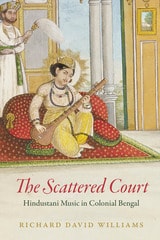
The Scattered Court
Hindustani Music in Colonial BengalRichard David Williams
University of Chicago Press, 2023
How far did colonialism transform north Indian music? In the period between the Mughal empire and the British Raj, how did the political landscape bleed into aesthetics, music, dance, and poetry? Examining musical culture through a diverse and multilingual archive, primarily using sources in Urdu, Bengali, and Hindi that have not been translated or critically examined before, The Scattered Court challenges our assumptions about the period. Richard David Williams presents a long history of interactions between northern India and Bengal, with a core focus on the two courts of Wajid Ali Shah (1822–1887), the last ruler of the kingdom of Awadh. He charts the movement of musicians and dancers between the two courts in Lucknow and Matiyaburj, as well as the transregional circulation of intellectual traditions and musical genres, and demonstrates the importance of the exile period for the rise of Calcutta as a celebrated center of Hindustani classical music. Since Lucknow is associated with late Mughal or Nawabi society and Calcutta with colonial modernity, examining the relationship between the two cities sheds light on forms of continuity and transition over the nineteenth century, as artists and their patrons navigated political ruptures and social transformations. The Scattered Court challenges the existing historiography of Hindustani music and Indian culture under colonialism by arguing that our focus on Anglophone sources and modernizing impulses has directed us away from the aesthetic subtleties, historical continuities, and emotional dimensions of nineteenth-century music.
The Scattered Family
Parenting, African Migrants, and Global InequalityCati Coe
University of Chicago Press, 2013
The Scene of Harlem Cabaret
Race, Sexuality, PerformanceShane Vogel
University of Chicago Press, 2009
Harlem’s nightclubs in the 1920s and ’30s were a crucible for testing society’s racial and sexual limits. Normally tacit divisions were there made spectacularly public in the vibrant, but often fraught, relationship between performer and audience. The cabaret scene, Shane Vogel contends, also played a key role in the Harlem Renaissance by offering an alternative to the politics of sexual respectability and racial uplift that sought to dictate the proper subject matter for black arts and letters. Individually and collectively, luminaries such as Duke Ellington, Lena Horne, Langston Hughes, Claude McKay, Wallace Thurman, and Ethel Waters expanded the possibilities of blackness and sexuality in America, resulting in a queer nightlife that flourished in music, in print, and on stage.
Deftly combining performance theory, literary criticism, historical research, and biographical study, The Scene of Harlem Cabaret brings this rich moment in history to life, while exploring the role of nightlife performance as a definitive touchstone for understanding the racial and sexual politics of the early twentieth century.
The Scent of Ancient Magic
Britta K. Ager
University of Michigan Press, 2022
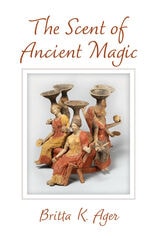
The Scent of Ancient Magic explores the complex interconnection of scent and magic in the Greco-Roman world between 800 BCE and CE 600, drawing on ancient literature and the modern study of the senses to examine the sensory depth and richness of ancient magic. Author Britta K. Ager looks at how ancient magicians used scents as part of their spells, to put themselves in the right mindset for an encounter with a god or to attack their enemies through scent. Ager also examines the magicians who appear in ancient fiction, like Medea and Circe, and the more metaphorical ways in which their spells are confused with perfumes and herbs. This book brings together recent scholarship on ancient magic from classical studies and on scent from the interdisciplinary field of sensory studies in order to examine how practicing ancient magicians used scents for ritual purposes, how scent and magic were conceptually related in ancient literature and culture, and how the assumption that strong scents convey powerful effects of various sorts was also found in related areas like ancient medical practices and normative religious ritual.

The Script of Life in Modern Society
Entry into Adulthood in a Changing WorldMarlis Buchmann
University of Chicago Press, 1989

The Sea
Thalassography and HistoriographyPeter N. Miller, Editor
University of Michigan Press, 2013

The Search for Medieval Music in Africa and Germany, 1891-1961
Scholars, Singers, MissionariesAnna Maria Busse Berger
University of Chicago Press, 2020
The book unfolds in three parts. Busse Berger starts with the origins of comparative musicology circa 1900, when early proponents used ideas from comparative linguistics to test whether parallels could be drawn between nonwestern and medieval European music. She then turns to youth movements of the era—the Wandervogel, Jugendmusikbewegung, and Singbewegung—whose focus on joint music making influenced many musicologists. Finally, she considers case studies of Protestant and Catholic mission societies in what is now Tanzania, where missionaries—many of them musicologists and former youth-group members—extended the discipline via ethnographic research and a focus on local music and communities. In highlighting these long-overlooked transnational connections and the role of global music in early musicology, Busse Berger shapes a fresh conception of music scholarship during a pivotal part of the twentieth century.

The Second Great Emancipation
The Mechanical Cotton Picker, Black Migration, and How They Shaped the Modern SouthDonald Holley
University of Arkansas Press, 2000
In The Second Great Emancipation, Donald Holley uses statistical and narrative analysis to demonstrate that farm mechanization occurred in the Delta region of Arkansas, Louisiana, and Mississippi after the region’s population of farm laborers moved away for new opportunities. Rather than pushing labor off the land, Holley argues, the mechanical cotton picker enabled the continuation of cotton cultivation in the post-plantation era, opening the door for the civil rights movement, while ushering a period of prosperity into the South.

The Secret History of Emotion
From Aristotle's Rhetoric to Modern Brain ScienceDaniel M. Gross
University of Chicago Press, 2006
Through a radical rereading of Aristotle, Seneca, Thomas Hobbes, Sarah Fielding, and Judith Butler, among others, Daniel M. Gross reveals a persistent intellectual current that considers emotions as psychosocial phenomena. In Gross’s historical analysis of emotion, Aristotle and Hobbes’s rhetoric show that our passions do not stem from some inherent, universal nature of men and women, but rather are conditioned by power relations and social hierarchies. He follows up with consideration of how political passions are distributed to some people but not to others using the Roman Stoics as a guide. Hume and contemporary theorists like Judith Butler, meanwhile, explain to us how psyches are shaped by power. To supplement his argument, Gross also provides a history and critique of the dominant modern view of emotions, expressed in Darwinism and neurobiology, in which they are considered organic, personal feelings independent of social circumstances.
The result is a convincing work that rescues the study of the passions from science and returns it to the humanities and the art of rhetoric.
The Selling Sound
The Rise of the Country Music IndustryDiane Pecknold
Duke University Press, 2007
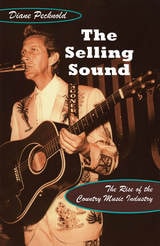
Pecknold draws on sources as diverse as radio advertising journals, fan magazines, Hollywood films, and interviews with industry insiders. Her sweeping social history encompasses the genre’s early days as an adjunct of radio advertising in the 1920s, the friction between Billboard and more genre-oriented trade papers over generating the rankings that shaped radio play lists, the establishment of the Country Music Association, and the influence of rock ‘n’ roll on the trend toward single-genre radio stations. Tracing the rise of a large and influential network of country fan clubs, Pecknold highlights the significant promotional responsibilities assumed by club organizers until the early 1970s, when many of their tasks were taken over by professional publicists.

The Senses of Democracy
Perception, Politics, and Culture in Latin AmericaBy Francine R. Masiello
University of Texas Press, 2018
In The Senses of Democracy, Francine R. Masiello traces a history of perceptions expressed in literature, the visual arts, politics, and history from the start of the nineteenth century to the present day. A wide transnational landscape frames the book along with an original and provocative thesis: when the discourse on democracy is altered—when nations fall into crisis or the increased weight of modernity tests minds and nerves—the representation of our sensing bodies plays a crucial role in explaining order and rebellion, cultural innovation, and social change.
Taking a wide arc of materials—periodicals, memoirs, political proclamations, and travel logs, along with art installations and fiction—and focusing on the technologies that supplement and enhance human perception, Masiello looks at the evolution of what she calls “sense work” in cultural texts, mainly from Latin America, that wend from the heights of romantic thought to the startling innovations of modernism in the early twentieth century and then to times of posthuman experience when cyber bodies hurtle through globalized space and human senses are reproduced by machines. Tracing the shifting debates on perceptions, The Senses of Democracy offers a new paradigm with which to speak of Latin American cultural history and launches a field for the comparative study of bodies, experience, pleasure, and pain over the continental divide. In the end, sense work helps us to understand how culture finds its location.

The Seven Day Circle
The History and Meaning of the WeekEviatar Zerubavel
University of Chicago Press, 1989

The Seventies Now
Culture as SurveillanceStephen Paul Miller
Duke University Press, 1999
The concept of surveillance and its attendant social ramifications have been powerful agents in U.S. culture for many decades, but in describing how during the 1970s Americans learned to “survey” themselves, Miller shines surprising new light on such subjects as the women’s movement, voting rights enforcement, the Ford presidency, and environmental legislation. He illuminates the significance of what he terms “microperiods” and analyzes relevant themes in many of the decade’s major films—such as The Deer Hunter, Network, Jaws, Star Wars, and Apocalypse Now—and in the literature of writers including John Ashbery, Toni Morrison, Adrienne Rich, and Sam Shepard. In discussing the reverberations of the 1969 Stonewall riots, technological innovations, the philosophy of Michel Foucault, and a host of documents and incidents, Miller shows how the 1970s marked an important period of transition, indeed a time of many transitions, to the world we confront at the end of the millennium.
The Seventies Now will interest students and scholars of cultural studies, American history, theories of technology, film and literature, visual arts, and gay and lesbian studies.

The Sexual Life of English
Languages of Caste and Desire in Colonial IndiaShefali Chandra
Duke University Press, 2012
The Sexual Self
The Construction of Sexual ScriptsMichael Kimmel
Vanderbilt University Press, 2007

The Sign of the Burger
Mcdonald'S And The Culture Of PowerJoe Kincheloe
Temple University Press, 2002
"I didn't want to remain a hick from the mountains... In my cultural naivete I saw McDonald's as a place somehow where modern culture capital could be dispensed. Keeping these memories in mind as years later I monitored scores of conversations about the Golden Arches in the late 1990's, it became apparent that McDonald's is still considered a marker of a modern identity."
So begins a complicated journey into the power of one of the most recognizable signs of American capitalism: The Golden Arches. The Sign of the Burger examines how McDonald's captures our imagination: as a shorthand for explaining the power of American culture; as a symbol of the strength of consumerism; as a bellwether for the condition of labor in a globalized economy; and often, for better or worse, a powerful educational tool that often defines the nature of culture for hundreds of millions the world over.
While many books have offered simple complaints of the power of McDonald's, Joe Kincheloe explores the real ways McDonald's affects us. We see him as a young boy in Appalachia, watching the Golden Arches going up as the—hopeful—arrival of the modern into his rural world. And we travel with him around the world to see how this approach of the modern affects other people, either through excitement or through attempts at resisting McDonald's power, often in unfortunate ways. Through it all, Kincheloe makes clear, with lucidity and depth, the fact that McDonald's growth will in many ways determine both the nature of accepting and protesting its ever-expanding presence in our global world.
postamble();