Results by title
28167 books match the query 'History' and 6372 start with t

The Sun Tunnels Encyclo
Exploring Nancy Holt's Earthwork through Perception and SiteHikmet Sidney Loe
University of Utah Press, 2027
The Sun Tunnels Encyclo: Exploring Nancy Holt’s Earthwork through Perception and Site affords new information on the artist’s iconic work of land art. American artist Nancy Holt (1938-2014) extended her practice into the land, employing light, vision, and perception through photography, film, installations, and poetics. By creating her expansive earthwork Sun Tunnels (1973-76), Holt became a leader within the land art movement. Through her eponymous essay (1977) and film (1978), Holt presents the work through interdisciplinary topics: scientific (astronomical, mathematical, geologic, architectural) and regional (historical, cultural). Land use (Indigenous peoples, migration, military, industrial) joins poetry and philosophy to extend the work’s site-specificity. Through these myriad subjects, The Sun Tunnels Encyclo explores Holt’s pronouncement: “the center of the work becomes the center of the world.”
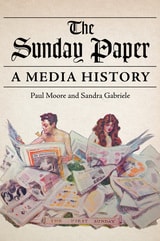
The Sunday Paper
A Media HistoryPaul Moore and Sandra Gabriele
University of Illinois Press, 2022
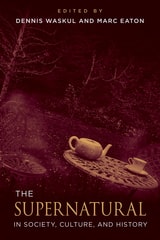
The Supernatural in Society, Culture, and History
Dennis Waskul and Marc Eaton
Temple University Press, 2018
In the twenty-first century, as in centuries past, stories of the supernatural thrill and terrify us. But despite their popularity, scholars often dismiss such beliefs in the uncanny as inconsequential, or even embarrassing. The editors and contributors to The Supernatural in Society, Culture, and History have made a concerted effort to understand encounters with ghosts and the supernatural that have remain present and flourished. Featuring folkloric researchers examining the cultural value of such beliefs and practices, sociologists who acknowledge the social and historical value of the supernatural, and enthusiasts of the mystical and uncanny, this volume includes a variety of experts and interested observers using first-hand ethnographic experiences and historical records.
The Supernatural in Society, Culture, and History seeks to understand the socio-cultural and socio-historical contexts of the supernatural. This volume takes the supernatural as real because belief in it has fundamentally shaped human history. It continues to inform people’s interpretations, actions, and identities on a daily basis. The supernatural is an indelible part of our social world that deserves sincere scholarly attention.
Contributors include: Janet Baldwin, I'Nasah Crockett, William Ryan Force, Rachael Ironside, Tea Krulos, Joseph Laycock, Stephen L. Muzzatti, Scott Scribner, Emma Smith, Jeannie Banks Thomas, and the editors
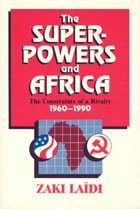
The Superpowers and Africa
The Constraints of a Rivalry, 1960-1990Zaki Laidi
University of Chicago Press, 1990
The lapse of European influence in the 1960s left a diplomatic void, which the superpowers rushed to fill. Just as Dien Bien Phû and the Suez crisis thrust Asia and the Near East, respectively, into the diplomatic spotlight, so the Angolan crisis lent a multifaceted cast to Africa's international relations. The ebb and flow of African crises is now linked to the rhythm of superpower relations, but Laidï is quick to warn that Africa's internal political circumstances shape the boundaries for external influence and constrain any efforts of the superpowers to exert total control.
Laidï's provocative study, here in its first English translation, addresses diplomatic strategy, often neglected economic considerations, the growing influence of the Bretton Woods institutions, and the decline of French influence in Africa.
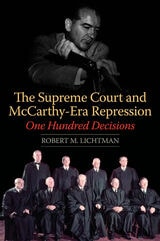
The Supreme Court and McCarthy-Era Repression
One Hundred DecisionsRobert M. Lichtman
University of Illinois Press, 2015
The Surrealism Reader
An Anthology of IdeasEdited by Dawn Ades, Michael Richardson, and Krzysztof Fijalkowski
University of Chicago Press, 2016
Including essays by leading surrealists and other major writers on the movement, the volume addresses the key themes of identity, otherness, freedom and morality, and poetry. The texts uncover, among other things, the significance of surrealism for the antifascist and anticolonialist movements and the various manifestations of surrealism in the years after World War II. Giving space to the many different voices that made up the movement, and placing them for the first time within a clear and coherent historical framework, The Surrealism Reader radically revises the popular understanding of what, and when, surrealism was—making this book an essential reference for students, scholars, and all those interested in the central place of surrealism within twentieth-century thought and culture.
The Surrendered
Reflections by a Son of Shining PathJosé Carlos Agüero. Edited and Translated by Michael J. Lazzara and Charles F. Walker
Duke University Press, 2021
The Surreptitious Speech
Presence Africaine and the Politics of Otherness 1947-1987Edited by V. Y. Mudimbe
University of Chicago Press, 1992

The Sutton-Taylor Feud
The Deadliest Blood Feud in TexasChuck Parsons
University of North Texas Press, 2009

The Swedish Porn Scene
Exhibition Contexts, 8mm Pornography and the Sex FilmMariah Larsson
Intellect Books, 2016
Combining contemporary case studies with comprehensive analyses of advertisements, critical responses, and censorship records, Larsson deconstructs the complexities and paradoxes of the Swedish porn scene. Looking as closely at the exhibition spaces where porn was seen as at the productions themselves and their audiences, Larsson reveals the conditions and social changes that allowed pornography in Sweden to flourish in the period.
The Sweetness of Freedom
Stories of ImmigrantsMartha Aladjem Bloomfield
Michigan State University Press, 2010
The Sweetness of Freedom presents an eclectic grouping of late nineteenth- and twentieth-century immigrants' narratives and the personal artifacts, historical documents, and photographs these travelers brought on their journeys to Michigan. Most of the oral histories in this volume are based on interviews conducted with the immigrants themselves.
Some of the immigrants presented here hoped to gain better education and jobs. Others—refugees—fled their homelands because of war, poverty, repression, religious persecution, or ethnic discrimination. All dreamt of freedom and opportunity. They tell why they left their homelands, why they chose to settle in Michigan, and what they brought or left behind. Some wanted to preserve their heritage, religious customs, traditions, and ethnic identity. Others wanted to forget past conflicts and lost family members. Their stories reveal how they established new lives far away from home, how they endured homesickness and separation, what they gave up and what they gained.
The Swift Creek Gift
Vessel Exchange on the Atlantic CoastNeill J. Wallis
University of Alabama Press, 2011
A unique dataset for studying past social interactions comes from Swift Creek Complicated Stamped pottery that linked sites throughout much of the Eastern Woodlands but that was primarily distributed over the lower Southeast. Although connections have been demonstrated, their significance has remained enigmatic. How and why were apparently utilitarian vessels, or the wooden tools used to make them, distributed widely across the landscape?
This book assesses Woodland Period interactions using technofunctional, mineralogical, and chemical data derived from Swift Creek Complicated Stamped sherds whose provenience is fully documented from both mortuary mounds and village middens along the Atlantic coast. Together, these data demonstrate formal and functional differences between mortuary and village assemblages along with the nearly exclusive occurrence of foreign-made cooking pots in mortuary contexts. The Swift Creek Gift provides insight into the unique workings of gift exchanges to transform seemingly mundane materials like cooking pots into powerful tools of commemoration, affiliation, and ownership.
The Switch
An Off and On History of Digital HumansJason Puskar
University of Minnesota Press, 2024
From the telegraph to the touchscreen, how the development of binary switching transformed everyday life and changed the shape of human agency
The Switch traces the sudden rise of a technology that has transformed everyday life for billions of people: the binary switch. By chronicling the rapid growth of binary switching since the mid-nineteenth century, Jason Puskar contends that there is no human activity as common today as pushing a button or flipping a switch—the deceptively simple act of turning something on or off. More than a technical history, The Switch offers a cultural and political analysis of how reducing so much human action to binary alternatives has profoundly reshaped modern society.
Analyzing this history, Puskar charts the rapid shift from analog to digital across a range of devices—keyboards, cameras, guns, light switches, computers, game controls, even the “nuclear button”—to understand how nineteenth-century techniques continue to influence today’s pervasive digital technologies. In contexts that include musical performance, finger counting, machine writing, voting methods, and immersive play, Puskar shows how the switch to switching led to radically new forms of action and thought.
The innovative analysis in The Switch makes clear that binary inputs have altered human agency by making choice instantaneous, effort minimal, and effects more far-reaching than ever. In the process, it concludes, switching also fosters forms of individualism that, though empowering for many, also preserve a legacy of inequality and even domination.
The Sympathetic State
Disaster Relief and the Origins of the American Welfare StateMichele Landis Dauber
University of Chicago Press, 2012
The Symphony Concert in Nazi Germany
Neil Gregor
University of Chicago Press, 2025
In the years after the Nazis came to power in January 1933 and throughout the Second World War, all aspects of life in Germany changed. Despite the social and political upheaval, gentile citizens continued to attend concerts. In this book, historian Neil Gregor surveys how the classical concert scene was impacted in Nazi Germany. Taking the perspective of the audience, rather than institutions or performers, Gregor delves into the cultural lives of ordinary Germans under conditions of dictatorship. Did the ways in which Germans heard music in the period change? Did a Nazi way of listening emerge?
For audiences, Gregor shows, changes to the concert experience were small and often took place around the edges. This, combined with the preserved idea of the concert hall as a space of imagined civility and cultivation, led many concertgoers and music lovers to claim after the war that their field and their practice had been innocent—a place to retreat from the vicious violence and racism of the Nazi regime. Drawing on untapped archival sources, The Symphony Concert in Nazi Germany reveals that the true history was one of disruption but also of near seamless adaptation. Through countless small acts, the symphony concert was reframed within the languages of strident nationalism, racism, and militarism to ensure its place inside the cultural cosmos of National Socialist Germany.
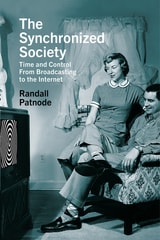
The Synchronized Society
Time and Control From Broadcasting to the InternetRandall Patnode
Rutgers University Press, 2023
The Synchronized Society traces the history of the synchronous broadcast experience of the twentieth century and the transition to the asynchronous media that dominate today. Broadcasting grew out of the latent desire by nineteenth-century industrialists, political thinkers, and social reformers to tame an unruly society by controlling how people used their time. The idea manifested itself in the form of the broadcast schedule, a managed flow of information and entertainment that required audiences to be in a particular place – usually the home – at a particular time and helped to create “water cooler” moments, as audiences reflected on their shared media texts. Audiences began disconnecting from the broadcast schedule at the end of the twentieth century, but promoters of social media and television services still kept audiences under control, replacing the schedule with surveillance of media use. Author Randall Patnode offers compelling new insights into the intermingled roles of broadcasting and industrial/post-industrial work and how Americans spend their time.
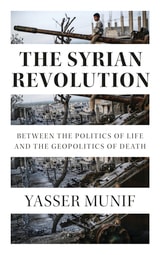
The Syrian Revolution
Between the Politics of Life and the Geopolitics of DeathYasser Munif
Pluto Press, 2020
Having lived in Syria for over fifteen years, Yasser Munif is expert in exploring the micropolitics of revolutionary forces. He uncovers how cities are managed, how precious food is distributed and how underground resistance thrives in regions controlled by regime forces. In contrast, the macropolitics of the elite Syrian regime are undemocratic, destructive and counter-revolutionary. Regional powers, Western elites, as well as international institutions choose this macropolitical lens to apprehend the Syrian conflict. By doing so, they also choose to ignore the revolutionaries' struggles.
By looking at the interplay between the two sides, case studies of Aleppo and Manbij and numerous firsthand interviews, Yasser Munif shows us that this macro and geopolitical authoritarianism only brings death, and that by looking at the smaller picture - the local, the grassroots, the revolutionaries - we can see the politics of life emerge.
The São Paulo Law School and the Anti-Vargas Resistance (1938-1945)
By John W. F. Dulles
University of Texas Press, 1986
The São Paulo Law School, the oldest institution of higher learning in Brazil, has long been the chief training center for that country’s leadership. For the members of the school’s secret Burschenschaft society, the training consisted principally in leading demonstrations for liberal causes, such as the abolition of slavery and the overthrow of the monarchy. During the Old Republic (1889–1930), the Brazilian presidency and other high posts in Rio de Janeiro were usually occupied by alumni of the powerful society, while its members in São Paulo continued to agitate for political reform. But in the 1920s, when they formed the Nationalist League and the Democratic Party, schisms resulted. Thus the Burschenschaft was weakened before the long rule of Brazil by Getúlio Vargas, starting in 1930, brought an end to the society’s influence.
The role of the school in these and other historical events is carefully reviewed by Dulles before he turns to the school’s well-known resistance to the dictatorship of Vargas. That resistance, the most persistent confronting the dictator, appeared to be unified—especially when it provoked the police into shooting the students. But, as Dulles discovered when interviewing participants and consulting documents and scrapbooks of the early 1940s, the movement was characterized by heated internal strife. In the end, however, the idealism and courage of the participants and the ultimate effectiveness of the movement contributed mightily to the fall of Vargas.
This book is another in Dulles’s series of narrative histories in which he gives flesh and blood to the names and breathes life into the events of twentieth-century Brazilian politics.
The São Paulo Neo-Avant-Garde
Radical Art and Mass Print Media in Cold War BrazilMari Rodríguez Binnie
University of Texas Press, 2024
How artists challenged a military dictatorship through mass print technologies in 1970s and 1980s São Paulo.
Throughout the 1970s and into the 1980s, during Brazil's military dictatorship, artists shifted their practices to critique the government and its sanitized images of Brazil, its use of torture, and its targeted persecutions. Mari Rodríguez Binnie's The São Paulo Neo-Avant-Garde examines these artworks and their engagement with politics and mainstream art institutions and practices.
As Binnie skillfully shows, artists appropriated processes like photocopy, offset lithography, and thermal and heliographic printing, making newly available technologies of mass production foundational to their work of resistance against both the dictatorship and the established art world. Often working collaboratively, these artists established alternative networks of exchange locally and internationally to circulate their work. As democracy was reestablished in Brazil, and in the decades that followed, their works largely fell out of sight. Here, in the first English-language book to focus entirely on conceptual practices in São Paulo in the 1970s and 1980s, Binnie unearths a scene critical to the development of contemporary Brazilian Art.
The TVs of Tomorrow
How RCA’s Flat-Screen Dreams Led to the First LCDsBenjamin Gross
University of Chicago Press, 2018
Half a century later, RCA’s dreams have become a reality, and liquid crystals are the basis of a multibillion-dollar global industry. Yet the company responsible for producing the first LCDs was unable to capitalize upon its invention. In The TVs of Tomorrow, Benjamin Gross explains this contradiction by examining the history of flat-panel display research at RCA from the perspective of the chemists, physicists, electrical engineers, and technicians at the company’s central laboratory in Princeton, New Jersey.
Drawing upon laboratory notebooks, internal reports, and interviews with key participants, Gross reconstructs the development of the LCD and situates it alongside other efforts to create a thin, lightweight replacement for the television picture tube. He shows how RCA researchers mobilized their technical expertise to secure support for their projects. He also highlights the challenges associated with the commercialization of liquid crystals at RCA and Optel—the RCA spin-off that ultimately manufactured the first LCD wristwatch. The TVs of Tomorrow is a detailed portrait of American innovation during the Cold War, which confirms that success in the electronics industry hinges upon input from both the laboratory and the boardroom.

The Tacos of Texas
By Mando Rayo and Jarod Neece
University of Texas Press, 2016
Rooted in tradición mexicana and infused with Texas food culture, tacos are some of Texans’ all-time favorite foods. In The Tacos of Texas, the taco journalists Mando Rayo and Jarod Neece take us on a muy sabroso taco tour around the state as they discover the traditions, recipes, stories, and personalities behind puffy tacos in San Antonio, trompo tacos in Dallas, breakfast tacos in Austin, carnitas tacos in El Paso, fish tacos in Corpus Christi, barbacoa in the Rio Grande Valley, and much more.
Starting with the basics—tortillas, fillings, and salsas—and how to make, order, and eat tacos, the authors highlight ten taco cities/regions of Texas. For each place, they describe what makes the tacos distinctive, name their top five places to eat, and listen to the locals tell their taco stories. They hear from restaurant owners, taqueros, abuelitas, chefs, and patrons—both well-known and everyday folks—who talk about their local taco history and culture while sharing authentic recipes and recommendations for the best taco purveyors.
Whether you can’t imagine a day without tacos or you’re just learning your way around the trailers, trucks, and taqueros that make tacos happen, The Tacos of Texas is the indispensable guidebook, cookbook, and testimonio.

The Tactics of Toleration
A Refugee Community in the Age of Religious WarsJesse Spohnholz
University of Delaware Press, 2011
The Tactics of Toleration examines the preconditions and limits of toleration during an age in which Europe was sharply divided along religious lines. During the Age of Religious Wars, refugee communities in borderland towns like the Rhineland city of Wesel were remarkably religiously diverse and culturally heterogeneous places. Examining religious life from the perspective of Calvinists, Lutherans, Mennonites, and Catholics, this book examines how residents dealt with pluralism during an age of deep religious conflict and intolerance. Based on sources that range from theological treatises to financial records and from marriage registries to testimonies before secular and ecclesiastical courts, this project offers new insights into the strategies that ordinary people developed for managing religious pluralism during the Age of Religious Wars.
Historians have tended to emphasize the ways in which people of different faiths created and reinforced religious differences in the generations after the Reformation’s break-up of Christianity, usually in terms of long-term historical narratives associated with modernization, including state building, confessionalization, and the subsequent rise of religious toleration after a century of religious wars. In contrast, Jesse Spohnholz demonstrates that although this was a time when Christians were engaged in a series of brutal religious wars against one another, many were also learning more immediate and short-term strategies to live alongside one another. This book considers these “tactics for toleration” from the vantage point of religious immigrants and their hosts, who learned to coexist despite differences in language, culture, and religion. It demands that scholars reconsider toleration, not only as an intellectual construct that emerged out of the Enlightenment, but also as a dynamic set of short-term and often informal negotiations between ordinary people, regulating the limits of acceptable and unacceptable behavior.
Published by University of Delaware Press. Distributed worldwide by Rutgers University Press.
The Taft Ranch
A Texas PrincipalityBy A. Ray Stephens
University of Texas Press, 1964
For fifty years the progressive Coleman-Fulton Pasture Company, popularly known as the Taft Ranch, led in the development of South Texas, and in the early twentieth century achieved national and international repute for its contributions to agriculture. The story of the ranch reaches its climax as the firm is absorbed into the community growing up around it—the same community the ranch had nurtured to an unprecedented prosperity.
In 1961 A. Ray Stephens visited Taft, Texas, and received permission to use the dust-covered records, which for thirty years had been closed to historians. These records, plus the valuable supplementary material in the Fulton Collection at the University of Texas, have enabled the author to tell the complete story of the ranch from its inception in 1880 to its dissolution in 1930.
In 1880, with a fifty-year charter, the Coleman-Fulton Pasture Company was legally born as a private corporation. For the duration of its history this company aided the advancement of South Texas through effective utilization of the fertile land, through development of agriculture and related industries, and through encouragement of settlers and curious visitors to the Coastal Bend region. Its history is a long, determined fight against severe drought, cattle disease, and financial insolvency. Guided by farsighted men who believed in experimentation in agriculture—and who also promoted the establishment of stores, schools, colleges, churches, and industrial plants—the company not only survived but prospered, and by 1920 its owners could survey their vast properties with well-earned satisfaction. The struggling cattle firm of 1880 had expanded into a multi-interest, profitable corporation that had established and supervised most of the industries in Taft, Texas.
Stephens' well-documented 1964 study had been long needed. During the three decades preceding it, the ranch had been well-nigh forgotten; only the handful of people, then still living, who had worked on the ranch had kept its memory fresh, while the voluminous company records remained inaccessible. The author supplemented his study of company records and newspapers with archival material, government records, and information obtained during hours of interviewing. His book will insure for the Taft Ranch its deservedly prominent position in Texas history.
The lively introduction was written by Joe B. Frantz (1917–1993) who, in his role of Professor of History at the University of Texas, encouraged the study and watched its development.

The Tail of the Dragon
New Dance, 1976–1982Marcia B. Siegel
Duke University Press, 1991
This collection of Siegel’s writing, compiled from reviews in Soho Weekly News and New York Magazine, as well as from longer essays and notebook pieces, forms an insightful commentary--occasionally wry, always perceptive—on the absorption of a radical art form by the mainstream. From minimalism, improvisation, street dancing, body awareness, and “poor theater” experimental strategies, these young rebels identified and adopted personal styles of movement and dancemaking; from that, they turned gradually to tamer, more accessible work, marked by virtuosic dancing, proscenium-ready repertoires, and touring companies.
Included in this story are the principal players in the “postmodernist” dance movement—Merce Cunningham, Twyla Tharp, Trisha Brown, David Gordon—now well known internationally as leaders of dance in the 1990s. Siegel also looks at artists who worked steadily but less visibly, influential ones who drifted out of dance, and unknowns who have gained prominence. The dances described here are formal and outlandish, scruffy and beautiful, endearingly fallible and icily perfect.
In rightfully celebrating the importance of dances long forgotten, The Tail of the Dragon produces a vibrant portrait of a generation of dance.
The Taiwan Voter
Christopher H. Achen and T. Y. Wang, Editors
University of Michigan Press, 2017
Taiwan’s electoral politics draws international scholarly interest because of the prominent role of ethnic and national identification. While in most countries the many tangled strands of competing identities are daunting for scholarly analysis, in Taiwan the cleavages are powerful and limited in number, so the logic of interrelationships among issues, partisanship, and identity are particularly clear. The Taiwan Voter unites experts to investigate the ways in which social identities, policy views, and partisan preferences intersect and influence each other. These novel findings have wide applicability to other countries, and will be of interest to a broad range of social scientists interested in identity politics.

The Tallgrass Prairie Reader
John T. Price
University of Iowa Press, 2014
The answer to that question is his Tallgrass Prairie Reader, a first-of-its-kind collection of literature from and about the tallgrass bioregion. Focusing on autobiographical nonfiction in a wide variety of forms, voices, and approaches—including adventure narrative, spiritual reflection, childhood memoir, Native American perspectives, literary natural history, humor, travel writing and reportage—he honors the ecological diversity of tallgrass itself and provides a range of models for nature writers and students.
The chronological arrangement allows readers to experience tallgrass through the eyes and imaginations of forty-two authors from the nineteenth to the twenty-first centuries. Writings by very early explorers are followed by works of nineteenth-century authors that reflect the fear, awe, reverence, and thrill of adventure rampant at the time. After 1900, following the destruction of the majority of tallgrass, much of the writing became nostalgic, elegiac, and mythic. A new environmental consciousness asserted itself midcentury, as personal responses to tallgrass were increasingly influenced by larger ecological perspectives. Preservation and restoration—informed by hard science—emerged as major themes. Early twenty-first-century writings demonstrate an awareness of tallgrass environmental history and the need for citizens, including writers, to remember and to help save our once magnificent prairies.
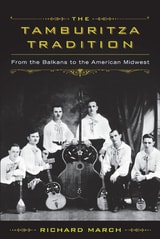
The Tamburitza Tradition
From the Balkans to the American MidwestRichard March
University of Wisconsin Press, 2013

The Tango Machine
Musical Culture in the Age of ExpediencyMorgan James Luker
University of Chicago Press, 2016
Luker traces the diverse and often contradictory ways tango is used in Argentina in activities ranging from state cultural policy-making to its export abroad as a cultural emblem, from the expanding nonprofit arts sector to tango-themed urban renewal projects. He shows how projects such as these are not peripheral to an otherwise “real” tango—they are the absolutely central means by which the values of this musical culture are cultivated. By richly detailing the interdependence of aesthetic value and the regimes of cultural management, this book sheds light on core conceptual challenges facing critical music scholarship today.
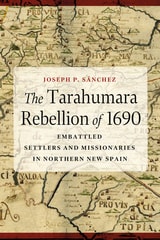
The Tarahumara Rebellion of 1690
Embattled Settlers and Missionaries in Northern New SpainJoseph P. Sánchez
University of Arizona Press, 2025
Previous histories have interpreted this revolt, and other borderlands uprisings, as localized and spontaneous events aimed at rectifying specific grievances. Historian Joseph P. Sánchez argues that the revolts of the Tepehuanes and the Tarahumaras in northern New Spain, or Nueva Vizcaya, were well-planned, inspired by outside events, and drew in multiple communities and ethnicities. Drawing on a wealth of primary sources, including Jesuit accounts and archival documents, Sánchez offers a comprehensive narrative that challenges conventional interpretations of colonial Mexican uprisings.
Far from localized, the Indigenous rebellions in the northern Mexican borderlands during the colonial period were part of the overall Indigenous struggle for defense of homeland throughout the Americas. The Tarahumara Rebellion of 1690 brings together a rich history of localized events and broader historical trends and offers a compelling narrative that enriches our understanding of the colonial experience in northern New Spain.

The Tartar Moment
Crisis and the Globalization of Chinese Knowledge in Early Modern EuropeGianamar Giovannetti-Singh
University of Chicago Press, 0
How seventeenth-century Europeans, following Jesuit missionary Martino Martini, saw their continent as historically, environmentally, and culturally intertwined with China.
The Tartar Moment focuses on understanding how the Manchu conquest of the Ming Empire in 1644 transformed European science, technology, and politics for over a century. Gianamar Giovannetti-Singh argues that seventeenth-century European natural philosophers found the nomadic takeover of a seemingly eternal empire deeply relevant for their own concerns. They began to reevaluate how they thought about the roles of astronomy, history-writing, agriculture, and military technologies in ensuring the long-term survival of a state.
The book’s narrative center is the Jesuit missionary Martino Martini, who first grasped the global significance of the Tartar War and its aftermath. Giovannetti-Singh situates Martini as a broker bridging multiple worlds, each grappling with new forms of turbulence. Martini’s writings reinterpreted Chinese knowledge and culture for diverse European audiences urgently seeking order in an age of uncertainty. China ceased to be imagined as a timeless Other and instead appeared as a civilization that, like Europe, confronted recurring disorder and crafted philosophical solutions to maintain stability. During this period, Europeans selectively appropriated Chinese methods of reading the heavens, cultivating the earth, and governing the state.
By tracing how Martini recognized, theorized, and recounted crises in Ming, Manchu, and European contexts, The Tartar Moment shows that the 1640s and 1650s were not simply years of collapse but of intense creativity in interpreting and responding to disorder.
The Task of Cultural Critique
Teresa L. Ebert
University of Illinois Press, 2008
Through groundbreaking analyses of cultural texts, Ebert questions the contemporary Derridian dogma that asserts "the future belongs to ghosts." Events-to-come are not spectral, she contends, but the material outcome of global class struggles. Not "hauntology" but history produces cultural practices and their conflictive representations--from sexuality, war, and consumption to democracy, torture, globalization, and absolute otherness. With close readings of texts from Proust and Balzac to "Chick Lit," from Lukács, de Man, Deleuze, and Marx to Derrida, Žižek, Butler, Kollontai, and Agamben, the book opens up new directions for cultural critique today.
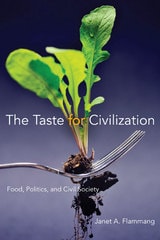
The Taste for Civilization
Food, Politics, and Civil SocietyJanet A. Flammang
University of Illinois Press, 2009
This book explores the idea that table activities--the mealtime rituals of food preparation, serving, and dining--lay the foundation for a proper education on the value of civility, the importance of the common good, and what it means to be a good citizen. The arts of conversation and diplomatic speech are learned and practiced at tables, and a political history of food practices recasts thoughtfulness and generosity as virtues that enhance civil society and democracy. In our industrialized and profit-centered culture, however, foodwork is devalued and civility is eroding.
Looking at the field of American civility, Janet A. Flammang addresses the gendered responsibilities for foodwork's civilizing functions and argues that any formulation of "civil society" must consider food practices and the household. To allow space for practicing civility, generosity, and thoughtfulness through everyday foodwork, Americans must challenge the norms of unbridled consumerism, work-life balance, and domesticity and caregiving. Connecting political theory with the quotidian activities of the dinner table, Flammang discusses practical ideas from the "delicious revolution" and Slow Food movement to illustrate how civic activities are linked to foodwork, and she points to farmers' markets and gardens in communities, schools, and jails as sites for strengthening civil society and degendering foodwork.
The Taste for Nothingness
A Study of Virtus and Related Themes in Lucan's Bellum CivileR. Sklenar
University of Michigan Press, 2003
The Taste for Nothingness traces Lucan's own analytical method by showing how virtus and related concepts operate--or rather, fail to operate--in Lucan's appropriations and distortions of the traditional epic-battle narrative; in the philosophical commitment of Cato the Younger; and in the personalities of the two antagonists, Pompey and Caesar. Much recent scholarship has reached a consensus that Lucan's literary method is mimetic, that his belief in a chaotic cosmos produces a poetics of chaos. While accepting many of the recent findings about Lucan's view of language and the universe, The Taste for Nothingness also allows an even bolder Lucan to emerge: a committed aesthete who regards art as the only realm in which order is possible.
Robert Sklenár is Visiting Assistant Professor of Classical Studies, Tulane University.
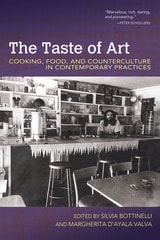
The Taste of Art
Cooking, Food, and Counterculture in Contemporary PracticesSilvia Bottinelli
University of Arkansas Press, 2017
The Taste of Art offers a sample of scholarly essays that examine the role of food in Western contemporary art practices. The contributors are scholars from a range of disciplines, including art history, philosophy, film studies, and history. As a whole, the volume illustrates how artists engage with food as matter and process in order to explore alternative aesthetic strategies and indicate countercultural shifts in society.
The collection opens by exploring the theoretical intersections of art and food, food art’s historical root in Futurism, and the ways in which food carries gendered meaning in popular film. Subsequent sections analyze the ways in which artists challenge mainstream ideas through food in a variety of scenarios. Beginning from a focus on the body and subjectivity, the authors zoom out to look at the domestic sphere, and finally the public sphere.
Here are essays that study a range of artists including, among others, Filippo Tommaso Marinetti, Daniel Spoerri, Dieter Roth, Joseph Beuys, Al Ruppersberg, Alison Knowles, Martha Rosler, Robin Weltsch, Vicki Hodgetts, Paul McCarthy, Luciano Fabro, Carries Mae Weems, Peter Fischli and David Weiss, Janine Antoni, Elżbieta Jabłońska, Liza Lou, Tom Marioni, Rirkrit Tiravanija, Michael Rakowitz, and Natalie Jeremijenko.
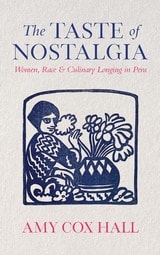
The Taste of Nostalgia
Women, Race, and Culinary Longing in PeruAmy Cox Hall
University of Texas Press, 2024
An exploration of gender, race, and food in Peru in the 1950s and 1960s and today.
From the late 1940s to the mid 1960s, Peru’s rapid industrialization and anti-communist authoritarianism coincided with the rise of mass-produced cookbooks, the first televised cooking shows, glossy lifestyle magazines, and imported domestic appliances and foodstuffs. Amy Cox Hall’s The Taste of Nostalgia uses taste as a thematic and analytic thread to examine the ways that women, race, and the kitchen were foundational to Peruvian longings for modernity, both during the Cold War and today.
Drawing on interviews, personal stories, media images, and archival and ethnographic research, Cox Hall considers how elite, European-descended women and the urban home were central to Peru’s modernizing project and finds that all women who labored within the deeply racialized and gendered world of food helped set the stage for a Peruvian food nationalism that is now global in the twenty-first century. Cox Hall skillfully connects how the sometimes-unsavory tastes of the past are served again in today’s profitable and pervasive gastronostalgia that helps sell Peru and its cuisine both at home and abroad.

The Tatars of Crimea
Return to the HomelandEdward A. Allworth, ed.
Duke University Press, 1998
Contributors to this volume—almost half of whom are Tatars—discuss the problematic results of the partial Tatar return to Crimea that began in the 1980s. This incomplete migration has left the group geographically split and has complicated their desire for stability as a people, whether in their own homeland or in the Central Asian diaspora. Those who have returned to the region on the Black Sea in Ukrayina (formerly Ukraine) have found themselves engulfed in a hostile political environment dominated by Russian residents attempting to stifle the resurgence of Crimean Tatar life. Specific essays address the current political situation in and around Crimea, recent elections, and promising developments in the culture, leadership, and movement toward unity among Crimean Tatars.
Beyond demonstrating the problems of one nationality caught in a fierce power struggle, The Tatars of Crimea offers an example of the challenges faced by all nationalities of the former Soviet Union who now contend with deteriorating economic and political conditions, flagrant discrimination against ethnic minorities, and the denial of civil and human rights common in many of the newly independent states.
Contributors. Ludmilla Alexeyeva, Edward A. Allworth, Mübeyyin Batu Altan, Nermin Eren, Alan W. Fisher, Riza Gülüm, Seyit Ahmet Kirimca, Edward Lazzerini, Peter Reddaway, Ayshe Seytmuratova, Andrew Wilson
The Taxi-Dance Hall
A Sociological Study in Commercialized Recreation and City LifePaul Goalby Cressey
University of Chicago Press, 1932
Taxi-dance halls, as the introduction notes, were social centers where men could come and pay to dance with “a bevy of pretty, vivacious, and often mercenary” women. Ten cents per dance was the usual fee, with half the proceeds going to the dancer and the other half to the owner of the taxi-hall. Cressey’s study includes detailed maps of the taxi-dance districts, illuminating interviews with dancers, patrons, and owners, and vivid analyses of local attempts to reform the taxi-dance hall and its attendees.
Cressey’s study reveals these halls to be the distinctive urban consequence of tensions between a young, diverse, and economically independent population at odds with the restrictive regulations of Prohibition America. Thick with sexual vice, ethnic clashes, and powerful undercurrents of class, The Taxi-Dance Hall is a landmark example of Chicago sociology, perfect for scholars and history buffs alike.
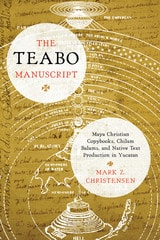
The Teabo Manuscript
Maya Christian Copybooks, Chilam Balams, and Native Text Production in YucatánBy Mark Z. Christensen
University of Texas Press, 2016
Winner, LASA Mexico Humanities Book Prize, 2017
Among the surviving documents from the colonial period in Mexico are rare Maya-authored manuscript compilations of Christian texts, translated and adapted into the Maya language and worldview, which were used to evangelize the local population. The Morely Manuscript is well known to scholars, and now The Teabo Manuscript introduces an additional example of what Mark Z. Christensen terms a Maya Christian copybook. Recently discovered in the archives of Brigham Young University, the Teabo Manuscript represents a Yucatecan Maya recounting of various aspects of Christian doctrine, including the creation of the world, the Fall of Adam and Eve, and the genealogy of Christ.
The Teabo Manuscript presents the first English translation and analysis of this late colonial Maya-language document, a facsimile and transcription of which are also included in the book. Working through the manuscript section by section, Christensen makes a strong case for its native authorship, as well as its connections with other European and Maya religious texts, including the Morely Manuscript and the Books of Chilam Balam. He uses the Teabo Manuscript as a platform to explore various topics, such as the evangelization of the Maya, their literary compositions, and the aspects of Christianity that they deemed important enough to write about and preserve. This pioneering research offers important new insights into how the Maya negotiated their precontact intellectual traditions within a Spanish and Catholic colonial world.

The Team That Changed Baseball
Roberto Clemente and the 1971 Pittsburgh PiratesBruce Markusen
Westholme Publishing, 2006
The Inspiring Story of Roberto Clemente's Greatest Season and One of the Most Important Teams in Sport History
In 1947, major league baseball experienced its first measure of integration when the Brooklyn Dodgers brought Jackie Robinson to the National League. While Robinson's breakthrough opened the gates of opportunity for African Americans and other minority players, the process of integration proved slow and uneven. It was not until the 1960s that a handful of major league teams began to boast more than a few Black and Latino players. But the 1971 World Championship team enjoyed a full and complete level of integration, with half of its twenty-five-man roster comprised of players of African American and Latino descent. That team was the Pittsburgh Pirates, managed by an old-time Irishman.
In The Team That Changed Baseball: Roberto Clemente and the 1971 Pittsburgh Pirates, veteran baseball writer Bruce Markusen tells the story of one of the most likable and significant teams in the history of professional sports. In addition to the fact that they fielded the first all-minority lineup in major league history, the 1971 Pirates are noteworthy for the team's inspiring individual performances, including those of future Hall of Famers Roberto Clemente, Willie Stargell, and Bill Mazeroski, and their remarkable World Series victory over the heavily favored Baltimore Orioles. But perhaps their greatest legacy is the team's influence on the future of baseball, inspiring later championship teams such as the New York Yankees and Oakland Athletics to open their doors fully to all talented players, regardless of race, particularly in the new era of free agency.
The Tears
Pascal Quignard
Seagull Books, 2023
The Tears is, at one level, a novel about the turbulent lives of twins, the sons of Charlemagne’s daughter Bertha. The studious and scholarly Nithard succeeds his father Angilbert as lay abbot of the Abbey of Saint Riquier in Normandy and accompanies his cousin the emperor Charles the Bald on his military campaigns. His twin brother Hartnid strikes out boldly for more exotic parts—including, eventually, Baghdad—in a seemingly deranged quest to track down the elusive female face that haunts his dreams. Yet this novel of intersecting historical threads and patches of poetic reimagining is crisscrossed by a host of other themes: the enigmatic joys afforded by nature, the intimate relation between living creatures which literature has since earliest times depicted, and the mysterious power of contingent events that have shaped entire cultures—including the birth of the French language itself. This heady brew of medieval chronicle, miraculous folktale, and speculative reconstruction of history further strengthens Pascal Quignard’s status as one of France’s most imaginative contemporary writers.
The Technical Delusion
Electronics, Power, InsanityJeffrey Sconce
Duke University Press, 2019

The Technical Image
A History of Styles in Scientific ImageryEdited by Horst Bredekamp, Vera Dünkel, and Birgit Schneider
University of Chicago Press, 2015
Opening with a set of key questions about artistic representation in science, technology, and medicine, The Technical Image then investigates historical case studies focusing on specific images, such as James Watson’s models of genes, drawings of Darwin’s finches, and images of early modern musical automata. These case studies in turn are used to illustrate broad themes ranging from “Digital Images” to “Objectivity and Evidence” and to define and elaborate upon fundamental terms in the field. Taken as a whole, this collection will provide analytical tools for the interpretation and application of scientific and technological imagery.
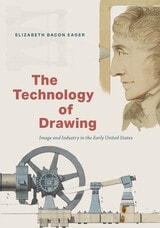
The Technology of Drawing
Image and Industry in the Early United StatesElizabeth Bacon Eager
University of Chicago Press, 2026
A richly illustrated study of how technical drawing shaped culture in the early United States.
With The Technology of Drawing, Elizabeth Bacon Eager explores the importance of manual skill and graphic literacy in the emergence of American industry, offering readers a new lens through which to view the visual culture of the early United States. Focused on questions of materiality and process, the book traces the development of drawing as a technology and argues for it as an embodied way of thinking and knowing, revealing the significance of such knowledge in the construction of both scientific and social authority. Through close analysis of materials, including construction drawings, mechanical treatises, cartographic surveys, and patent drawings, many of which have never been published before, Eager presents a history of American art focused on materiality and process through the view of the mechanic rather than the fine artist.
Reaching beyond the traditional boundaries of art historical study to engage objects rarely considered as art, The Technology of Drawing treats the technical image as a site of extraordinary creativity, in which eighteenth- and nineteenth-century Americans across the social spectrum negotiated critical concepts of identity, invention, and authorship with a remarkable degree of material intelligence and visual sophistication.
The Technology of Journalism
Cultural Agents, Cultural IconsPatricia L. Dooley
Northwestern University Press, 2007
From the printing press to the telegraph to the camera and beyond, technology has always been tied closely to journalism. In The Technology of Journalism, Patricia L. Dooley proposes a history of news that heeds the social and cultural environments in which both technology and the press emerge and exist.
By placing this history solidly in its cultural context, Dooley can explore the effects of shifts in social, economic, and political systems and the impact of war. One such development with far reaching implications was Matthew Brady’s use of photography during the Civil War. Growth or decline in readership can also influence technological changes in journalism; most recently, the shift toward digital and Web-based journalism has reshaped the press.
Finally, Dooley assesses the legacy and future of print, deciding what happens to print journalism—and all forms of reportage—will depend on the willingness of industry leaders to innovate in ways that will help them connect, through their reporting, to Americans of all ages and walks of life.
The Technology of Transition
Science and Technology Policies for Transition CountriesDavid A. Dyker
Central European University Press, 1997
The Temp Economy
From Kelly Girls to Permatemps in Postwar AmericaAuthored by Erin Hatton
Temple University Press, 2010
Everyone knows that work in America is not what it used to be. Layoffs, outsourcing, contingent work, disappearing career ladders—these are the new workplace realities for an increasing number of people. But why? In The Temp Economy, Erin Hatton takes one of the best-known icons of the new economy—the temp industry—and finds that it is more than just a symbol of this degradation of work. The temp industry itself played an active role in this decline—and not just for temps. Industry leaders started by inventing the "Kelly Girl," exploiting 1950s gender stereotypes to justify low wages, minimal benefits, and chronic job insecurity. But they did not stop with Kelly Girls. From selling human"business machines" in the 1970s to "permatemps" in the 1990s, the temp industry relentlessly portrayed workers as profit-busting liabilities that hurt companies' bottom lines even in boom times. These campaigns not only legitimized the widespread use of temps, they also laid the cultural groundwork for a new corporate ethos of ruthless cost cutting and mass layoffs.
Succinct, highly readable, and drawn from a vast historical record of industry documents, The Temp Economy is a one-stop resource for anyone interested in the temp industry or the degradation of work in postwar America.
The Templeton Touch
William Proctor
Templeton Press, 2012
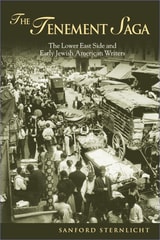
The Tenement Saga
The Lower East Side and Early Jewish American WritersSanford Sternlicht
University of Wisconsin Press, 2004
Sternlicht discusses the role of women, the Yiddish Theater, secular values, the struggle between generations, street crime, politics, labor unions, and the importance of newspapers and periodicals. He documents the decline of Yiddish culture as these immigrants blended into what they called "The Golden Land."
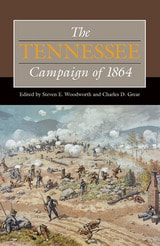
The Tennessee Campaign of 1864
Edited by Steven E. Woodworth and Charles D. Grear
Southern Illinois University Press, 2016
Contributors explore the campaign’s battlefield action, including how Major General Andrew J. Smith’s three aggressive divisions of the Army of Tennessee became the most successful Federal unit at Nashville, how vastly outnumbered Union troops held the Allatoona Pass, why Hood failed at Spring Hill and how the event has been perceived, and why so many of the Army of Tennessee’s officer corps died at the Battle of Franklin, where the Confederacy suffered a disastrous blow. An exciting inclusion is the diary of Confederate major general Patrick R. Cleburne, which covers the first phase of the campaign. Essays on the strained relationship between Ulysses S. Grant and George H. Thomas and on Thomas’s approach to warfare reveal much about the personalities involved, and chapters about civilians in the campaign’s path and those miles away show how the war affected people not involved in the fighting. An innovative case study of the fighting at Franklin investigates the emotional and psychological impact of killing on the battlefield, and other implications of the campaign include how the courageous actions of the U.S. Colored Troops at Nashville made a lasting impact on the African American community and how preservation efforts met with differing results at Franklin and Nashville.
Canvassing both military and social history, this well-researched volume offers new, illuminating perspectives while furthering long-running debates on more familiar topics. These in-depth essays provide an expert appraisal of one of the most brutal and notorious campaigns in Civil War history.

The Tensaw River
Alabama's Hidden Heritage CorridorMike Bunn
University of Alabama Press, 2025
Where nature meets history—explore Alabama’s hidden river legacy.
The Tensaw River introduces one of the American South’s richest and most fertile natural features. Author Mike Bunn is director of Historic Blakeley State Park, which is nestled in a prominent bend of the majestic Tensaw River. Reading Bunn is like sailing with a knowledgeable captain along the river’s natural and cultural byways as he offers a treasury of stories and facts that illuminate the river’s astonishing flora and fauna and the sweep of human history along the river’s ageless, meandering waterways.
Forming the eastern boundary of the expansive Mobile-Tensaw Delta, the Tensaw has had little industrial development. Left largely undisturbed, the river still flows free and bountiful into the grand estuary of Mobile Bay in ways and along vistas that would be recognizable to Native Americans centuries ago and to pioneers who arrived before Alabama became a state.
Bunn’s unforgettable stories in The Tensaw River trace the construction and occupation of the Bottle Creek site, an important mound complex built by Southeastern Native Americans a millennia ago. Nearby Blakeley is a spectral antebellum ghost town whose lost memories also tease the imagination. During the Civil War, the boom of artillery fire in the battle that sealed the fate of the city of Mobile echoed along the bends in the Tensaw.
Located near popular Gulf Coast travel destinations, the Tensaw’s forty-one-mile-long “Forgotten Cultural Heritage Corridor” is a gateway to the enchanting beauty of—and humankind’s enduring relationship to—the landscape of the American South.