Results by title
28167 books match the query 'History' and 6372 start with t

The Tented Field
A History of Cricket in AmericaTom Melville
University of Wisconsin Press, 1998

The Tenth Muse
Victorian Philology and the Genesis of the Poetic Language of Gerard Manley HopkinsBy Cary H. Plotkin
Southern Illinois University Press, 1989
With authority and sensitivity Plotkin traces the close relationship between Hopkins’s poetry and the theories of language suggested in his Journals and expounded by Victorian philologists such as Max Müller and George Marsh.
Plotkin seeks to determine what changed Hopkins’s perception of language between the writing of such early poems as "The Habit of Perfection" and "Nondum" (1866) and his creation of The Wreck of the Deutschland (1875–76). Did the language of the ode, and of Hopkins’s mature poetry generally, arise as spontaneously as it appears to have done, or does it have a traceable genesis in the ways in which language as a whole was conceived and studied in mid-century England? In answer, Plotkin fixes the development of Hopkins’s singular poetic language in the philological context of his time.
If one is to understand Hopkins’s writings and poetic language in the context in which they developed rather than in the terms of a present-day theory of history or textuality, then that movement in all of its complexity must be considered. Hopkins "translates" into the language of poetry patterns and categories common to Victorian language study.

The Terezín Album of Mariánka Zadikow
Annotated by Debórah Dwork
University of Chicago Press, 2008
An imprisoned bookbinder wrote these words in a small blank book that he had secretly crafted from pilfered materials at the Terezín (Theresienstadt) concentration camp in September 1944. He presented the album to a fellow prisoner, twenty-one-year-old Marianka Zadików. Over the next several months, as the Nazis pressed forward with mass deportations from Terezín to Auschwitz, Marianka began to collect inscriptions and sketches from her fellow inmates.
Marianka Zadików’salbum, presented here in a facsimile edition, is a poignant document from the last months of the Holocaust. The words and images inscribed here—by children and grandparents, factory workers and farmhands, professionals and intellectuals, musicians and artists—reflect both joy and trepidation. They include passages of remembered verse, lovingly executed drawings, and hurried farewells on the eve of transport to Auschwitz. The great German-Jewish scholar Rabbi Leo Baeck, one of the elders of the camp, offers Marianka an inscription about Jewish self-discovery, and participants in Terezín’s now-famous musical performances fill several pages with musical annotation.
Facing-page translations render the book’s multitude of languages into English, while historical and biographical notes give details, where known, of the fates of those whose words are recorded here. An introduction by acclaimed Holocaust scholar Debórah Dwork tells the story of the Terezín camp and how Marianka and her family fared while imprisoned there.
The array of voices and the glimpses into individual lives afforded us by The Terezín Album make it an arresting reminder of the sustaining power of care, community, and hope amid darkness.
The Terminal Classic in the Maya Lowlands
Collapse, Transition, and TransformationArthur A. Demarest
University Press of Colorado, 2004
Featuring an impressive roster of scholars, The Terminal Classic presents the most recent data and interpretations pertaining to this perplexing period of cultural transformation in the Maya lowlands. Although the research reveals clear interregional patterns, the contributors resist a single overarching explanation. Rather, this volume's diverse and nuanced interpretations provide a new, more properly grounded beginning for continued debate on the nature of lowland Terminal Classic Maya civilization.
The Terms of Our Surrender
Colonialism, Dispossession and the Resistance of the InnuElizabeth Cassell
University of London Press, 2021
Based on extensive fieldwork and oral history, The Terms of Our Surrender is a powerful critical appraisal of unceded indigenous land ownership in eastern Canada. Set against an ethnographic, historical, and legal framework, this book traces the myriad ways the Canadian state has evaded the 1763 Royal Proclamation that guaranteed First Nations people a right to their land and way of life.
Focusing on the Innu of Quebec and Labrador, whose land has been taken for resource extraction and development, this book strips back the law of fiduciary duty to its origins. The Terms of Our Surrender argues for the preservation of land ownership and positions First Nations people as natural land defenders amidst a devastating climate crisis. This volume offers a voice to the Innu people, detailing the spirituality practices, culture, and values that make it impossible for them to willingly cede their land.
This book is intended to bridge the gap in knowledge between legal practitioners and those working at the intersections of human rights, social work, and public policy. It offers a potent template for using the law to fight back against the indignities suffered by indigenous communities.
The Terrible Fitzball
The Melodramatist of the MacabreLarry Stephen Clifton
University of Wisconsin Press, 1993
The Territories of Science and Religion
Peter Harrison
University of Chicago Press, 2015
In The Territories of Science and Religion, Harrison dismantles what we think we know about the two categories, then puts it all back together again in a provocative, productive new way. By tracing the history of these concepts for the first time in parallel, he illuminates alternative boundaries and little-known relations between them—thereby making it possible for us to learn from their true history, and see other possible ways that scientific study and the religious life might relate to, influence, and mutually enrich each other.
A tour de force by a distinguished scholar working at the height of his powers, The Territories of Science and Religion promises to forever alter the way we think about these fundamental pillars of human life and experience.
The Territory of Michigan (1805-1837)
Alec Gilpin
Michigan State University Press, 1970
The Terror of Natural Right
Republicanism, the Cult of Nature, and the French RevolutionDan Edelstein
University of Chicago Press, 2009
Natural right—the idea that there is a collection of laws and rights based not on custom or belief but that are “natural” in origin—is typically associated with liberal politics and freedom. In The Terror of Natural Right, Dan Edelstein argues that the revolutionaries used the natural right concept of the “enemy of the human race”—an individual who has transgressed the laws of nature and must be executed without judicial formalities—to authorize three-quarters of the deaths during the Terror. Edelstein further contends that the Jacobins shared a political philosophy that he calls “natural republicanism,” which assumed that the natural state of society was a republic and that natural right provided its only acceptable laws. Ultimately, he proves that what we call the Terror was in fact only one facet of the republican theory that prevailed from Louis’s trial until the fall of Robespierre.
A highly original work of historical analysis, political theory, literary criticism, and intellectual history, The Terror of Natural Right challenges prevailing assumptions of the Terror to offer a new perspective on the Revolutionary period.
The Terrorism News Beat
Professionalism, Profit, and the PressAaron M. Hoffman
University of Michigan Press, 2025
The Terrorism News Beat engages thinking about terrorism and the news media from the fields of political science, communication, criminology, economics, and sociology using multimethod research involving more than 2,500 newspaper articles published between 1997 and 2018. Chapters analyze the terrorism news beat’s subject matter, language, and coverage of the Oklahoma City Bombing, Olympic Park bombing, 9/11 attacks, DC Sniper case, and Dallas Police shooting. When it comes to language use, Hoffman finds that, rather than giving into the temptation to convey the news in lurid detail, journalists are minimalists. The language used to depict events on the terrorism beat is typically moderate and extreme words like “torture” appear only as necessary. The Terrorism News Beat shows that contrary to claims of sensationalism, the tone of terrorism coverage becomes even more sober during terrorism crises than it is during non-crisis periods and meets journalistic standards for quality.

The Test
Walter Adams
Michigan State University Press, 2003
World renowned economist and president of Michigan State University, Walter Adams first published The Test in 1971, a year after his tenure as university president ended. Adams recounts the tumultuous nine months of his office: as the first university president to follow the legendary John Hannah, Adams inherited the unease and resentments that had been quietly swelling under seemingly calm administrative waters.
These resentments, coupled with the increased social awareness generated by sixties activism combined in an explosive protest during the fall of 1969. With gripping honesty and clarity, The Test not only chronicles the events, but offers an indictment of those institutional structures that ignored very real social concerns in favor of esoteric academic pursuits. By examining the perspectives of all the participants, Adams presents new directions for the growth and development of university communities. Both a thoughtful analysis and eyewitness account, The Test presents invaluable documentary evidence of one of the most dynamic periods in American history.
The Teutonic Knights
Rise and Fall of a Religious CorporationAleksander Pluskowski
Reaktion Books, 2024
This book provides a concise and incisive introduction to the knights of the Teutonic Order, the last of the great military orders established in the twelfth century. The book traces the Order’s evolution from a crusader field hospital into a major territorial ruler in northeastern Europe. Notably, the knights constructed distinctive fortified convents, including their headquarters in Western Christendom’s largest castle. The narrative concludes with the Order’s fifteenth-century decline due to the combined effects of a devastating war with Poland-Lithuania and the Protestant Reformation. The result is an accessible overview of this pivotal corporation in European history.
The Tewa World
Space, Time, Being and Becoming in a Pueblo SocietyAlfonso Ortiz
University of Chicago Press, 1972

The Texanist
Fine Advice on Living in TexasBy David Courtney and Jack Unruh
University of Texas Press, 2017
The Texanist, Texas Monthly’s perennially popular back-page column, has become the magazine’s most-read feature. With an inimitable style and an unassailable wholesomeness, columnist David Courtney has counseled many a well-intentioned Texan, native or wannabe, on how to properly conduct him- or herself. Until the July 2016 issue, an original illustration by the late award-winning artist Jack Unruh, depicting the Texanist in a situation described in the column, accompanied the Texanist’s sage wisdom. Unruh’s peerless illustrations displayed a sly wit that paired perfectly with Courtney’s humorous ripostes.
The Texanist gathers several dozen of Unruh’s most unforgettable illustrations, along with the fascinating, perplexing, and even downright weird questions that inspired them. Curing the curious, exorcizing bedevilment, and orienting the disoriented, the Texanist advises on such things as: Is it wrong to wear your football team’s jersey to church? When out at a dancehall, do you need to stick with the one that brung ya? Is it real Tex-Mex if it’s served with a side of black beans? Can one have too many Texas-themed tattoos? The Texanist addresses all of these important subjects and more. Whether you heed the good guidance, or just enjoy the whimsical illustrations, The Texanist will both entertain and educate you.
The Texas Book Two
More Profiles, History, and Reminiscences of the UniversityEdited by David Dettmer
University of Texas Press, 2012
In every corner of the sprawling enterprise that is the University of Texas at Austin, you will find teaching, research, artistic creation, and sports achievement that are among the best in the world. Mandated by the Texas constitution to be “a university of the first class,” UT Austin strives for excellence across the curriculum, from the most traditional of liberal arts disciplines to the cutting edge of science and technology. For Texans interested in progress, whether students of the university or members of the public, there are few pleasures greater than uncovering the intellectual treasures that can be found by exploring the university’s “Forty Acres” and all that they contain.
The Texas Book, edited by Richard A. Holland and published in 2006, offered the first in-depth exploration of UT’s history and traditions through a collection of profiles, histories, and reminiscences. Now The Texas Book Two continues the story, with a variety of contributors recalling particular events and personalities that have helped shape the university and the people whose lives it has touched. Twenty-one essays present personalities such as John A. Lomax, Anna Hiss, J. R. Parten, Harvey Penick, John W. Hargis, and Jorge Luis Borges; accounts of legislative battles and debates over campus architecture; histories of crown jewels such as the McDonald Observatory and Austin City Limits; and the reminiscences of Barbara Smith Conrad, Sam Hurt, and Cat Osterman, among others.
The Texas Book
Profiles, History, and Reminiscences of the UniversityEdited by Richard A. Holland
University of Texas Press, 2006
As the University of Texas at Austin celebrates its 125th anniversary, it can justly claim to be a "university of the first class," as mandated in the Texas Constitution. The university's faculty and student body include winners of the Nobel Prize, the Pulitzer Prize, the MacArthur "genius award," and Rhodes and Marshall Scholarships, as well as members of learned societies all over the world. UT's athletic programs are said to be the best overall in the United States, and its libraries, museums, and archives are lauded in every educated part of the world. Texas alumni have made their marks in law, engineering, geology, business, journalism, and all fields of the sciences, arts, and entertainment.
The Texas Book gathers together personality profiles, historical essays, and first-person reminiscences to create an informal, highly readable history of UT. Many fascinating characters appear in these pages, including visionary president and Ransom Center founder Harry Huntt Ransom, contrarian English professor and Texas folklorist J. Frank Dobie, legendary regent and lightning rod Frank C. Erwin, and founder of the field of Mexican American Studies, Américo Paredes. The historical pieces recall some of the most dramatic and challenging episodes in the university's history, including recurring attacks on the school by politicians and regents, the institution's history of segregation and struggles to become a truly diverse university, the sixties' protest movements, and the Tower sniper shooting. Rounding off the collection are reminiscences by former and current students and faculty, including Walter Prescott Webb, Willie Morris, Betty Sue Flowers, J. M. Coetzee, and Barbara Jordan, who capture the spirit of the campus at moments in time that defined their eras.
The Texas City Disaster, 1947
By Hugh W. Stephens
University of Texas Press, 1997
On April 16, 1947, a small fire broke out among bags of ammonium nitrate fertilizer in the hold of the ship Grandcamp as it lay docked at Texas City, Texas. Despite immediate attempts to extinguish the fire, it rapidly intensified until the Grandcamp exploded in a blast that caused massive loss of life and property. In the ensuing chaos, no one gave much thought to the ship in the next slip, the High Flyer. It exploded sixteen hours later.
The story of the Texas City explosions—America's worst industrial disaster in terms of casualties—has never been fully told until now. In this book, Hugh W. Stephens draws on official reports, newspaper and magazine articles, personal letters, and interviews with several dozen survivors to provide the first full account of the disaster at Texas City.
Stephens describes the two explosions and the heroic efforts of Southeast Texans to rescue survivors and cope with extensive property damage. At the same time, he explores why the disaster occurred, showing how a chain of indifference and negligence made a serious industrial accident almost inevitable, while a lack of emergency planning allowed it to escalate into a major catastrophe. This gripping, cautionary tale holds important lessons for a wide reading public.
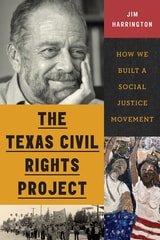
The Texas Civil Rights Project
How We Built a Social Justice MovementJim Harrington
University of Texas Press, 2025
Texas civil rights icon Jim Harrington recounts his lifelong fight for equality, winning major reforms for farmworkers and disabled Texans and helping build a movement for social justice.
Jim Harrington arrived in South Texas in 1973, ready to file class action lawsuits and “save the world.” Over the following fifty years, he built one of Texas’s key civil rights organizations and played an essential role in many of its greatest victories.
Harrington takes readers on his journey from a Midwest seminary to a United Farm Workers office in the Rio Grande Valley and on to founding the Texas Civil Rights Project. He fought for the rights of a wide range of Texans, bringing justice to victims of police brutality, injured farmworkers, silenced students, and people with disabilities excluded from full participation in society, building a movement for social justice, and a family, along the way. These major gains were tempered by heartbreaking losses, and Harrington recounts the difficult work of persevering in the face of injustice.
Framed by a foreword from Judge Lora Livingston and an afterword by Congressman Greg Casar, The Texas Civil Rights Project is at once a history of the struggle for equality over the last fifty years, a celebration of the individuals and grassroots organizations who fought hard to improve the lives of others, and a memoir of a singular force who pushed the Texas justice system to live up to its ideals.

The Texas Land and Development Company
A Panhandle Promotion, 1912-1956By B. R. Brunson
University of Texas Press, 1970
Agricultural and urban development came late to the Texas South Plains, and frontier life lingered well into the twentieth century. In the decade preceding World War I numerous land companies flourished in the area and acted as catalysts for settlement and economic expansion. Prominent among these companies was the Plainview-based Texas Land and Development Company, founded in 1912 as an operating agent for a syndicate of eastern financiers.
Like most land companies, the Texas Land and Development Company operated a large-scale enterprise that broke up ranch holdings into tracts for sale to farmers. Company agents advertised broadly in newspapers and magazines and organized special train trips to bring prospective customers to the area. And, like most entrepreneurs associated with frontier land companies, backers of the Texas Land and Development Company hoped to realize a quick profit from land sales.
The Plainview enterprise was, however, unique in many ways. It promoted relatively high-priced lands and tried to sell fully developed, irrigated farms. The company was an important social and economic force in Plainview and the surrounding counties because its backers put capital into the region instead of taking money out. Especially during the early years, the company realized little profit from sales because of war and depression. The complex and sophisticated fiscal structure of the company is of particular historical significance.
B. R. Brunson traces the history of the influential Texas Land and Development Company from its inception in 1912 to its final dissolution in January 1956. He combines an analysis of the company's role in Panhandle economic growth with lively biographies of the men who organized the operation and descriptions of their achievements in the fields of irrigation, farm planning, company organization, and finance.
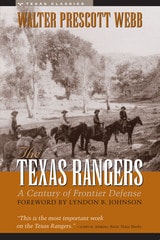
The Texas Rangers
A Century of Frontier DefenseBy Walter Prescott Webb
University of Texas Press, 1996
Webb's classic history of the Texas Rangers has been popular ever since its first publication in 1935. This edition is a reproduction of the original Houghton Mifflin edition.
The Texas Supreme Court
A Narrative History, 1836–1986By James L. Haley
University of Texas Press, 2013
“Few people realize that in the area of law, Texas began its American journey far ahead of most of the rest of the country, far more enlightened on such subjects as women’s rights and the protection of debtors.” Thus James Haley begins this highly readable account of the Texas Supreme Court. The first book-length history of the Court published since 1917, it tells the story of the Texas Supreme Court from its origins in the Republic of Texas to the political and philosophical upheavals of the mid-1980s.
Using a lively narrative style rather than a legalistic approach, Haley describes the twists and turns of an evolving judiciary both empowered and constrained by its dual ties to Spanish civil law and English common law. He focuses on the personalities and judicial philosophies of those who served on the Supreme Court, as well as on the interplay between the Court’s rulings and the state’s unique history in such areas as slavery, women’s rights, land and water rights, the rise of the railroad and oil and gas industries, Prohibition, civil rights, and consumer protection. The book is illustrated with more than fifty historical photos, many from the nineteenth and early twentieth centuries. It concludes with a detailed chronology of milestones in the Supreme Court’s history and a list, with appointment and election dates, of the more than 150 justices who have served on the Court since 1836.
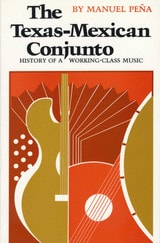
The Texas-Mexican Conjunto
History of a Working-class MusicBy Manuel H. Peña
University of Texas Press, 1985
Around 1930, a highly popular and distinctive type of accordion music, commonly known as conjunto, emerged among Texas-Mexicans. Manuel Peña's The Texas-Mexican Con;unto is the first comprehensive study of this unique folk style. The author's exhaustive fieldwork and personal interviews with performers, disc jockeys, dance promoters, recording company owners, and conjunto music lovers provide the crucial connection between an analysis of the music itself and the richness of the culture from which it sprang.
Using an approach that integrates musicological, historical, and sociological methods of analysis, Peña traces the development of the conjunto from its tentative beginnings to its preeminence as a full-blown style by the early 1960s. Biographical sketches of such major early performers as Narciso Martínez (El Huracán del Valle), Santiago Jiménez (El Flaco), Pedro Ayala, Valerio Longoria, Tony de la Rosa, and Paulino Bernal, along with detailed transcriptions of representative compositions, illustrate the various phases of conjunto evolution.
Peña also probes the vital connection between conjunto's emergence as a powerful symbolic expression and the transformation of Texas-Mexican society from a pre-industrial folk group to a community with increasingly divergent socioeconomic classes and ideologies. Of concern throughout the study is the interplay between ethnicity, class, and culture, and Peña's use of methods and theories from a variety of scholarly disciplines enables him to tell the story of conjunto in a manner both engaging and enlightening. This important study will be of interest to all students of Mexican American culture, ethnomusicology, and folklore.
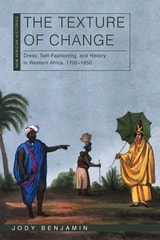
The Texture of Change
Dress, Self-Fashioning, and History in Western Africa, 1700–1850Jody Benjamin
Ohio University Press, 2024
Jody Benjamin analyzes a range of archival, visual, oral, and material sources drawn from three continents to illuminate entanglements between local textile industries and global commerce and between the politics of Islamic reform and encroaching European colonial power. The study highlights the roles of a diverse range of historical actors mentioned only glancingly in core-periphery or Atlantic-centered framings: women indigo dyers, maroon cotton farmers, petty traveling merchants, caravan guides, and African Diaspora settlers. It argues that their combined choices within a set of ecological, political, and economic constraints structured networks connecting the Atlantic and Indian Ocean perimeters.
The Theater Is in the Street
Politics and Public Performance in 1960s AmericaBradford D. Martin
University of Massachusetts Press, 2004
During the 1960s, the SNCC Freedom Singers, The Living Theatre, the Diggers, the Art Workers Coalition, and the Guerrilla Art Action Group fused art and politics by staging unexpected and uninvited performances in public spaces. Through their activism and the response it provoked, art, theater, and politics began to converge and assume a new visibility in everyday life. While their specific political visions varied, these groups shared the impulse to stage performances and actions publicly—"in the streets"—eschewing museums, theaters, and other conventional halls of culture. Bradford D. Martin offers detailed portraits of each of these groups and examines why they embraced public performance as a vehicle to express and advance their politics.
At a time when the New Left and the counterculture were on the rise, these artists reflected the decade's political and cultural radicalism and helped to define a new aesthetic. Civil rights activists mobilized singing in the struggle for desegregation, introducing a vibrant musical form into the public space. The Living Theatre culminated an arduous quest to mesh artistic and political goals, leading audiences from theaters into the streets to begin the “beautiful nonviolent anarchist revolution.” The Diggers playfully engaged San Francisco's counterculture in politics with their carnivalesque public actions. The Art Workers Coalition and the Guerrilla Action Art Group sought to disrupt the conventional art world, mounting protests in and around New York City museums.
By questioning the values and assumptions that separated art from politics, these groups not only established public performance as a legitimate aesthetic but also provided a new creative vocabulary for future generations of artists. Their continued involvement with the women's liberation movement, rural communes, and political street theater into the 1970s and beyond challenges the popular myth that activists disengaged from politics after the 1960s.
The Theater Will Rock
A History of the Rock Musical, from Hair to HedwigElizabeth L. Wollman
University of Michigan Press, 2010
"A much-needed study of the impact of rock music on the musical theater and its resulting challenges, complexities, failures, and successes. Anyone interested in Broadway will learn a great deal from this book."
---William Everett, author of The Musical: A Research Guide to Musical Theatre
"As Wollman weaves her historical narrative, she compellingly returns to . . . the conflict between the aesthetics and ideologies of rock music and the disciplined and commercial practices of the musical stage."
---Theatre Research International
"This well-written account puts the highs and lows of producing staged rock musicals in New York City into perspective and is well worth reading for the depth of insight it provides."
---Studies in Musical Theatre
Despite the genre’s influence and fame, there are still some critics who claim that the term “rock musical” is an oxymoron. The relationship between rock and the musical theater has been stormy from the start, and even the comparatively recent success of Rent has done little to convince theater producers that rock musicals are anything but highly risky ventures. Elizabeth L. Wollman explores the reasons behind these problematic connections and looks at the socioeconomic forces that underlie aesthetic decisions. She weighs the influence on the rock musical by mass media, sound, and recording technology, and the economic pressures that have affected New York theater in general over the past three decades. Finally, Wollman offers a meditation on the state of the musical, its relation to rock, and, ultimately, its future.
Packed with candid commentary by members of New York's vibrant theater community, The Theater Will Rock traces the rock musical’s evolution over nearly fifty years, in popular productions such as Hair, The Who's Tommy, Jesus Christ Superstar, The Rocky Horror Picture Show, Little Shop of Horrors, Rent, and Mamma Mia!—and in notable flops such as The Capeman.
Elizabeth L. Wollman is Assistant Professor of Music at Baruch College of the City University of New York.
The Theater of Devotion
East Anglian Drama and Society in the Late Middle AgesGail McMurray Gibson
University of Chicago Press, 1989
The Theater of Narration
From the Peripheries of History to the Main Stages of ItalyJuliet Guzzetta
Northwestern University Press, 2021
This book examines the theater of narration, an Italian performance genre and aesthetic that revisits historical events of national importance from local perspectives, drawing on the rich relationship between personal experiences and historical accounts. Incorporating original research from the private archives of leading narrators—artists who write and perform their work—Juliet Guzzetta argues that the practice teaches audiences how ordinary people aren’t simply witnesses to history but participants in its creation.
The theater of narration emerged in Italy during the labor and student protests, domestic terrorism, and social progress of the 1970s. Developing Dario Fo and Franca Rame’s style of political theater, influenced by Jerzy Grotowski and Bertolt Brecht, and following in the freewheeling actor‑author traditions of the commedia dell’arte, narrators created a new form of popular theater that grew in prominence in the 1990s and continues to gain recognition. Guzzetta traces the history of the theater of narration, contextualizing its origins—both political and intellectual—and centers the contributions of Teatro Settimo, a performance group overlooked in previous studies. She also examines the genre’s experiments in television and media.
The first full-length book in English on the subject, The Theater of Narration leverages close readings and a wealth of primary sources to examine the techniques used by narrators to remake history—a process that reveals the ways in which history itself is a theater of narration.
The Theater of Operations
National Security Affect from the Cold War to the War on TerrorJoseph Masco
Duke University Press, 2014
The Theatre Couple in Early Modern Italy
Self-Fashioning and Mutual MarketingSerena Laiena
University of Delaware Press, 2024
Who were the first celebrity couples? How was their success forged? Which forces influenced their self-fashioning and marketing strategies?
These questions are at the core of this study, which looks at the birth of a phenomenon, that of the couple in show business, with a focus on the promotional strategies devised by two professional performers: Giovan Battista Andreini (1576–1654) and Virginia Ramponi (1583–ca.1631). This book examines their artistic path – a deliberately crafted and mutually beneficial joint career – and links it to the historical, social, and cultural context of post-Tridentine Italy. Rooted in a broad research field, encompassing theatre history, Italian studies, celebrity studies, gender studies, and performance studies, The Theatre Couple in Early Modern Italy revises the conventional view of the Italian diva, investigates the deployment of Catholic devotion as a marketing tool, and argues for the importance of the couple system in the history of Commedia dell’Arte, a system that continues to shape celebrity today.
The Theatre of the Holocaust, Volume 1
Four PlaysEdited and with and introduction by Robert Skloot
University of Wisconsin Press, 1982
This volume contains these four plays:
Resort 76 by Shimon Wincelberg
Will the relentless oppression of the starving workers in a ghetto factory destroy their faith in God? Their love of life? Their ability to resist? If a cat is more valuable than a human being, have hope and goodness been eliminated from the world? A moving and terrifying melodrama.
Throne of Straw by Harold and Edith Lieberman
Through the career of Mordechai Chaim Rumkowski, head of the Lodz, Poland Judenrat, we come to understand the horror of “choiceless choice,” of how giving up some to save others was the worst nightmare for those who sought the responsibilities of ghetto leadership. An epic play with music and song.
The Cannibals by George Tabori
The children of murder victims assemble to enact ritually the destruction of their fathers in the presence of two survivors. As the sons become their fathers, the most profound ethical questions of the Holocaust are raised concerning the limits of humanity in a world of absolute evil. A daring tragicomedy.
Who Will Carry the Word? by Charlotte Delbo (translated by Cynthia Haft)
In the austere, degraded setting of a concentration camp, twenty-two French women attempt to keep their sanity and hope as, one by one, they fall victim to the Nazi terror. Will anyone believe the story of the survivors? A poetic drama of resistance and witness.
The Theatre of the Holocaust, Volume 2
Six PlaysEdited and with and introduction by Robert Skloot
University of Wisconsin Press, 1999
The Theatrical Event
Dynamics of Performance and PerceptionWillmar Sauter
University of Iowa Press, 2000
The Theatricality of Greek Tragedy
Playing Space and ChorusGraham Ley
University of Chicago Press, 2007
Drawing on evidence from the surviving texts of tragedies by Aeschylus, Sophocles, and Euripides, Ley explains how scenes with actors were played in the open ground of the orchestra, often considered as exclusively the dancing place of the chorus. In reviewing what is known of the music and dance of Greek antiquity, Ley goes on to show that in the original productions the experience of the chorus—expressed in song and dance and in interaction with the characters—remained a vital characteristic in the performance of tragedy.
Combining detailed analysis with broader reflections about the nature of ancient Greek tragedy as an art form, this volume—supplemented with a series of illustrative drawings and diagrams—will be a necessary addition to the bookshelf of anyone interested in literature, theater, or classical studies.
The Theological Basis of Liberal Modernity in Montesquieu's "Spirit of the Laws"
Thomas L. Pangle
University of Chicago Press, 2010
The Spirit of the Laws—Montesquieu’s huge, complex, and enormously influential work—is considered one of the central texts of the Enlightenment, laying the foundation for the liberally democratic political regimes that were to embody its values. In his penetrating analysis, Thomas L. Pangle brilliantly argues that the inherently theological project of Enlightenment liberalism is made more clearly—and more consequentially— in Spirit than in any other work.
In a probing and careful reading, Pangle shows how Montesquieu believed that rationalism, through the influence of liberal institutions and the spread of commercial culture, would secularize human affairs. At the same time, Pangle uncovers Montesquieu’s views about the origins of humanity’s religious impulse and his confidence that political and economic security would make people less likely to sacrifice worldly well-being for otherworldly hopes. With the interest in the theological aspects of political theory and practice showing no signs of diminishing, this book is a timely and insightful contribution to one of the key achievements of Enlightenment thought.

The Theological-Political Origins of the Modern State
The Controversy between James I of England and Cardinal BellarmineBernard Bourdin
Catholic University of America Press, 2010

The Theory of German Word Order from the Renaissance to the Present
Aldo Scaglione
University of Minnesota Press, 1981
The Theory of German Word Order from the Renaissance to the Present was first published in 1981. Minnesota Archive Editions uses digital technology to make long unavailable books once again accessible, and are published unaltered from the original University of Minnesota Press editions.
The uniquely systematic character of German word order and sentence structure has long been recognized as an important feature of the language and of its literary uses. This book is the first comprehensive survey of the way theorists and stylists have interpreted these features through the centuries. Aldo Scaglione contends that the story of this theoretical awareness is part of the emerging cultural and literary consciousness of the German nation, as well as a testing ground for contemporary linguistic typology.
German speculation on the nature of a national language is, to Scaglione, best understood as a dialogue with the prevailing models of Latin, Italian, French, and English. His account of the debates over German word order is thus grounded in the complex historical circumstances from which they emerge: Renaissance grammarians took stock of German divergencies from the Latin cultural model, and those in the seventeenth century faced the challenges of French rationalism, nineteenth-century Romanticism and the many linguistic movements of the twentieth century have all cast new light upon the peculiarities of German sentence structure. Readers interested in historical syntax, rhetorical traditions, and the history of the German language will value both Scaglione's wide-ranging knowledge and his lively style.
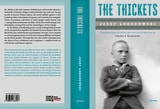
The Thickets
Józef Lobodowski
Central European University Press, 2026
In The Thickets, Lobodowski paints a stark, unforgettable portrait of the turmoil that engulfed the former Russian Empire after the fall of the Tsar and Kerensky’s government. For Stas, once a student at a classical gymnasium, survival now means peddling contraband on the black market. Through his eyes, the reader is plunged into the chaos of war, revolution, and occupation—rendered with visceral power and human urgency.
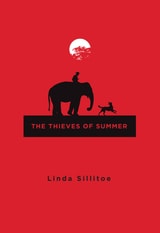
The Thieves of Summer
Linda Sillitoe
Signature Books, 2014
Prin-cess Al-ice in Liberty Park
Munch-es ba-nan-as ’til way after dark.
Princess Alice is an elephant the children of Utah purchased by donating nickels and dimes to a circus. The girls don’t know this, but her handler takes the mammoth princess out on late-night strolls around the park when the moon is out. What they do know is that the elephant sometimes escapes and goes on a rampage, crashing through front-yard fences and collecting collars of clothesline laundry around her neck, a persistent train of barking dogs following behind. The girls’ father is a police officer who is investigating a boy’s disappearance. As the case unfolds, the perception of the park, with its eighty acres of trees and grass, will change from the epitome of freedom to a place to be avoided, even as Princess Alice moves to a secure confinement at a new zoo at the mouth of Emigration Canyon. The story is loosely based on the exploits of a real live elephant that lived in Liberty Park a decade before Sillitoe’s childhood in the neighborhood.
The Third City
Chicago and American UrbanismLarry Bennett
University of Chicago Press, 2010
Our traditional image of Chicago—as a gritty metropolis carved into ethnically defined enclaves where the game of machine politics overshadows its ends—is such a powerful shaper of the city’s identity that many of its closest observers fail to notice that a new Chicago has emerged over the past two decades. Larry Bennett here tackles some of our more commonly held ideas about the Windy City—inherited from such icons as Theodore Dreiser, Carl Sandburg, Daniel Burnham, Robert Park, Sara Paretsky, and Mike Royko—with the goal of better understanding Chicago as it is now: the third city.
Bennett calls contemporary Chicago the third city to distinguish it from its two predecessors: the first city, a sprawling industrial center whose historical arc ran from the Civil War to the Great Depression; and the second city, the Rustbelt exemplar of the period from around 1950 to 1990. The third city features a dramatically revitalized urban core, a shifting population mix that includes new immigrant streams, and a growing number of middle-class professionals working in new economy sectors. It is also a city utterly transformed by the top-to-bottom reconstruction of public housing developments and the ambitious provision of public works like Millennium Park. It is, according to Bennett, a work in progress spearheaded by Richard M. Daley, a self-consciously innovative mayor whose strategy of neighborhood revitalization and urban renewal is a prototype of city governance for the twenty-first century. The Third City ultimately contends that to understand Chicago under Daley’s charge is to understand what metropolitan life across North America may well look like in the coming decades.
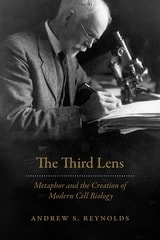
The Third Lens
Metaphor and the Creation of Modern Cell BiologyAndrew S. Reynolds
University of Chicago Press, 2018
Reynolds here investigates the role of metaphors in the creation of scientific concepts, theories, and explanations, using cell theory as his primary case study. He explores the history of key metaphors that have informed the field and the experimental, philosophical, and social circumstances under which they have emerged, risen in popularity, and in some cases faded from view. How we think of cells—as chambers, organisms, or even machines—makes a difference to scientific practice. Consequently, an accurate picture of how scientific knowledge is made requires us to understand how the metaphors scientists use—and the social values that often surreptitiously accompany them—influence our understanding of the world, and, ultimately, of ourselves.
The influence of metaphor isn’t limited to how we think about cells or proteins: in some cases they can even lead to real material change in the very nature of the thing in question, as scientists use technology to alter the reality to fit the metaphor. Drawing out the implications of science’s reliance upon metaphor, The Third Lens will be of interest to anyone working in the areas of history and philosophy of science, science studies, cell and molecular biology, science education and communication, and metaphor in general.
The Third Sector
Community Organizations, NGOs, and NonprofitsMeghan Elizabeth Kallman and Terry Nichols Clark
University of Illinois Press, 2019
The Third Sex
Willy. Translated and with an Introduction by Lawrence R. Schehr
University of Illinois Press, 2007
Thirty-two years before Simone de Beauvoir's classic The Second Sex, popular French novelist Willy published The Third Sex, a vivid description of the world of European homosexuals in France, Italy, and Germany during the late 1920s. Stepping directly into the heart of gay men's culture, Willy follows homosexual nightlife into music halls, nightclubs, casinos, bars, and saunas. While he finds plenty of drug and alcohol abuse, he also discovers homosexual publishers, scientific societies, group rivalries, and opinions--both medical and political--about the nature of homosexuality itself. Lawrence R. Schehr's introduction provides context and translator's notes for this first-ever English edition.
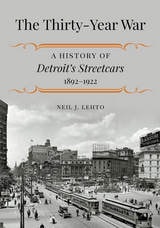
The Thirty-Year War
A History of Detroit's Streetcars, 1892–1922Neil J. Lehto
Michigan State University Press, 2017
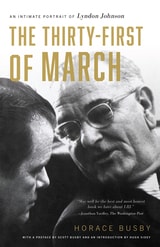
The Thirty-first of March
An Intimate Portrait of Lyndon JohnsonHorace Busby, with a Preface by Scott Busby and an Introduction by Hugh Sidey
University of Texas Press, 2023
An intimate retelling of Lyndon B. Johnson’s politics and presidency by one of his closest advisors.
Horace Busby was one of LBJ’s most trusted advisors; their close working and personal relationship spanned twenty years. In The Thirty-First of March he offers an indelible portrait of a president and a presidency at a time of crisis. From the aftereffects of the Kennedy assassination, when Busby was asked by the newly sworn-in president to sit by his bedside during his first troubled nights in office, to the concerns that defined the Great Society—civil rights, the economy, social legislation, housing, and the Vietnam War—Busby not only articulated and refined Johnson's political thinking, he also helped shape the most ambitious, far-reaching legislative agenda since FDR's New Deal.
Here is Johnson the politician, Johnson the schemer, Johnson who advised against JFK’s choice of an open limousine that fateful day in Dallas, and Johnson the father, sickened by the deaths of young men fighting and dying in Vietnam on his orders. The Thirty-first of March is a rare glimpse into the inner sanctum of Johnson's presidency, as seen through the eyes of one of the people who understood him best.
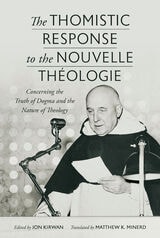
The Thomistic Response to the Nouvelle Theologie
Concerning the Truth of Dogma and the Nature of TheologyJon Kirwan
Catholic University of America Press, 2023
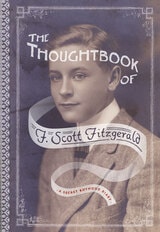
The Thoughtbook of F. Scott Fitzgerald
A Secret Boyhood DiaryF. Scott Fitzgerald
University of Minnesota Press, 2013
When F. Scott Fitzgerald was fourteen and living in the Crocus Hill neighborhood of St. Paul, he began keeping a short diary of his exploits among his friends, friendly rivals, and crushes. He gave the journal a title page—Thoughtbook of Francis Scott Key Fitzgerald of St. Paul Minn. U.S.A.—and kept it securely locked in a box under his bed. He would later use The Thoughtbook as the basis for “The Book of Scandal” in his Basil Lee Duke stories, and brief sections were copied over the years for use by scholars and even published in Life magazine.“Are you going to the Ordways’? the Herseys’? the Schultzes’?” Here, for the first time, is a complete transcription of this charming, twenty-seven-page diary highlighting Fitzgerald’s escapades among the children of some of St. Paul’s most influential families—models for the families described in The Great Gatsby. Presented in a simple format for both scholars and general readers alike, The Thoughtbook of F. Scott Fitzgerald includes a new introduction by Dave Page that covers the history and provenance of the diary, its place and meaning in Fitzgerald’s literary development, and its revelations about his life and writing process.
One of the earliest known works by F. Scott Fitzgerald, The Thoughtbook provides a unique glimpse of Fitzgerald as a young boy and his social circle as they played among the grand homes of Summit Avenue, making up games, starting secret societies, competing with rivals, and (at all times) staying up-to-date on who exactly is vying for whose attention.
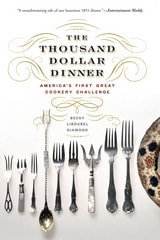
The Thousand Dollar Dinner
America's First Great Cookery ChallengeBecky Libourel Diamond
Westholme Publishing, 2015
In 1851, fifteen wealthy New Yorkers wanted to show a group of Philadelphia friends just how impressive a meal could be and took them to Delmonico’s, New York’s finest restaurant. They asked Lorenzo Delmonico to “astonish our Quaker City friends with the sumptuousness of our feast,” and assured him that money was no object, as the honor of New York was at stake. They were treated to a magnificent banquet, enjoyed by all. However, not to be outdone, the Philadelphia men invited the New Yorkers to a meal prepared by James W. Parkinson in their city. In what became known as the “Thousand Dollar Dinner,” Parkinson successfully rose to the challenge, creating a seventeen-course extravaganza featuring fresh salmon, baked rockfish, braised pigeon, turtle steaks, spring lamb, out-of-season fruits and vegetables, and desserts, all paired with rare wines and liquors. Midway through the twelve-hour meal, the New Yorkers declared Philadelphia the winner of their competition, and at several times stood in ovation to acknowledge the chef ’s mastery. In The Thousand Dollar Dinner: America’s First Great Cookery Challenge, research historian Becky Libourel Diamond presents the entire seventeen-course meal, course by course, explaining each dish and its history. A gastronomic turning point, Parkinson’s luxurious meal helped launch the era of grand banquets of the gilded age and established a new level of American culinary arts to rival those of Europe.

The Thousand-Year Flood
The Ohio-Mississippi Disaster of 1937David Welky
University of Chicago Press, 2011
In the early days of 1937, the Ohio River, swollen by heavy winter rains, began rising. And rising. And rising. By the time the waters crested, the Ohio and Mississippi had climbed to record heights. Nearly four hundred people had died, while a million more had run from their homes. The deluge caused more than half a billion dollars of damage at a time when the Great Depression still battered the nation.
Timed to coincide with the flood's seventy-fifth anniversary, The Thousand-Year Flood is the first comprehensive history of one of the most destructive disasters in American history. David Welky first shows how decades of settlement put Ohio valley farms and towns at risk and how politicians and planners repeatedly ignored the dangers. Then he tells the gripping story of the river's inexorable rise: residents fled to refugee camps and higher ground, towns imposed martial law, prisoners rioted, Red Cross nurses endured terrifying conditions, and FDR dispatched thousands of relief workers. In a landscape fraught with dangers—from unmoored gas tanks that became floating bombs to powerful currents of filthy floodwaters that swept away whole towns—people hastily raised sandbag barricades, piled into overloaded rowboats, and marveled at water that stretched as far as the eye could see. In the flood's aftermath, Welky explains, New Deal reformers, utopian dreamers, and hard-pressed locals restructured not only the flood-stricken valleys, but also the nation's relationship with its waterways, changes that continue to affect life along the rivers to this day.
A striking narrative of danger and adventure—and the mix of heroism and generosity, greed and pettiness that always accompany disaster—The Thousand-Year Flood breathes new life into a fascinating yet little-remembered American story.

The Threat of Liberation
Imperialism and Revolution in ZanzibarAmrit Wilson
Pluto Press, 2013
The Threat of Liberation returns to the tumultuous years of the Cold War, when, in a striking parallel with today, imperialist powers were seeking to institute ‘regime change’ and install pliant governments.
Using iconic photographs, declassified US and British documents, and in-depth interviews, Amrit Wilson examines the role of the Umma Party of Zanzibar and its leader, the visionary Marxist revolutionary, Abdulrahman Mohamed Babu. Drawing parallels between US paranoia about Chinese Communist influence in the 1960s with contemporary fears about Chinese influence, it looks at the new race for Africa’s resources, the creation of AFRICOM and how East African politicians have bolstered US control. The book also draws on US cables released by Wikileaks showing Zanzibar's role in the ‘War on Terror’ in Eastern Africa today.
The Threat of Liberation reflects on the history of a party which confronted imperialism and built unity across ethnic divisions, and considers the contemporary relevance of such strategies.
The Three Ages of Government
From the Person, to the Group, to the WorldJos C.N. Raadschelders
University of Michigan Press, 2020