Results by title
3576 books match the query 'American' and 770 start with t

The Short Fiction of Edgar Allan Poe
AN ANNOTATED EDITIONEdited by Stuart Levine and Susan Levine
University of Illinois Press, 1990
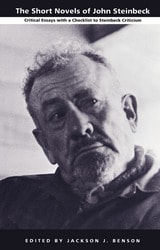
The Short Novels of John Steinbeck
Critical Essays with a Checklist to Steinbeck CriticismJackson J. Benson, ed.
Duke University Press, 1990
The essays examine the six most popular short novels—Tortilla Flat, The Red Pony, Of Mice and Men, The Moon Is Down, Cannery Row, and The Pearl—in addition to the three usually thought of as less successful—Burning Bright, Sweet Thursday, and The Short Reign of Pippin IV. Because most of Steinbeck’s short novels were adapted and presented as plays or screenplays, many of the essays deal with dramatic or film versions of the short novels as well as with the fiction. The collection concludes with a comprehensive checklist of criticism of the short novels.
Contributors. Richard Astro, Jackson J. Benson, Carroll Britch, John Ditsky, Joseph Fontenrose, Warren French, Robert Gentry, Mimi Reisel Gladstein, William Goldhurst, Tetsumaro Hayashi, Robert S. Hughes Jr., Howard Levant, Clifford Lewis, Peter Lisca, Anne Loftis, Charles R. Metzger, Michael J. Meyer, Robert E. Morsberger, Louis Owens, Roy S. Simmonds, Mark Spilka, John Timmerman
The Sign of the Cannibal
Melville and the Making of a Postcolonial ReaderGeoffrey Sanborn
Duke University Press, 1998
Sanborn focuses on the representations of cannibalism in three of Melville’s key texts—Typee, Moby-Dick, and “Benito Cereno.” Drawing on accounts of Pacific voyages from two centuries and virtually the entire corpus of the post-Enlightenment discourse on cannibalism, he shows how Melville used his narratives to work through the ways in which cannibalism had been understood. In so doing, argues Sanborn, Melville sought to move his readers through stages of possible responses to the phenomenon in order to lead them to consider alternatives to established assumptions and conventions—to understand that in the savage they see primarily their own fear and fascination. Melville thus becomes a narrator of the postcolonial encounter as he uncovers the dynamic of dread and menace that marks the Western construction of the “non-savage” human.
Extending the work of Slavoj Zizek and Homi Bhabha while providing significant new insights into the work of Melville, The Sign of the Cannibal represents a breakthrough for students and scholars of postcolonial theory, American literary history, critical anthropology, race, and masculinity.
The Sixties, Center Stage
Mainstream and Popular Performances in a Turbulent DecadeEdited by James M. Harding and Cindy Rosenthal
University of Michigan Press, 2017
The Sleep of Reason
David Gewanter
University of Chicago Press, 2003
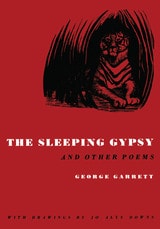
The Sleeping Gypsy, and Other Poems
By George Garrett
University of Texas Press, 1958
The Sleeping Gypsy is an important collection of poems by an American writer who was only twenty-nine when awarded the coveted Prix de Rome in 1958. When George Garrett’s first collected verse, The Reverend Ghost and Other Poems, appeared in Scribner’s Poets of Today: IV, critics hailed the emergence of an authentic new talent of great promise. Babette Deutsch, writing in the New York Herald Tribune, said, “His poems are short, highly charged, and also, as he intended, clear. They move rapidly, without waste, exhibiting a lively skill and vigor in action.… His sensitive perceptivity makes his thoughtful insights more memorable.” Louise Bogan, writing in the New Yorker, said, “It is good to come upon [in Garrett’s work] an ordered brilliance and effects, long neglected, that link us to the ancient tradition of English ‘song.’”
Readers will find in The Sleeping Gypsy all of the qualities that distinguished Garrett’s earlier collection of verse—the pointed, incisive writing, the abhorrence of “pretty” poetic words, the harsh impact of language that is, at the same time, strangely musical. Many will feel that, in this later work, these qualities have been enhanced and that Garrett’s advancing maturity indicates strongly that his early promise will be richly fulfilled.
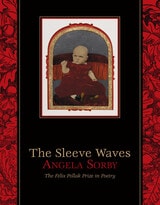
The Sleeve Waves
Angela Sorby
University of Wisconsin Press, 2014
Outstanding Achievement in Poetry Award, Wisconsin Library Association
Honorable Mention, Edna Meudt Poetry Book Award, Council of Wisconsin Writers
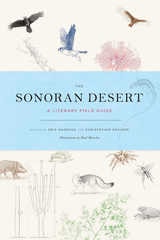
The Sonoran Desert
A Literary Field GuideEdited by Eric Magrane and Christopher Cokinos, Illustrations by Paul Mirocha
University of Arizona Press, 2016
Both literary anthology and hands-on field guide, The Sonoran Desert is a groundbreaking book that melds art and science. It captures the stunning biodiversity of the world’s most verdant desert through words and images. More than fifty poets and writers—including Christopher Cokinos, Alison Hawthorne Deming, Ken Lamberton, Eric Magrane, Jane Miller, Gary Paul Nabhan, Alberto Ríos, Ofelia Zepeda, and many others—have composed responses to key species of this striking desert. Each creative contribution is joined by an illustration by award-winning artist Paul Mirocha and scientific information about the creature or plant authored by the book’s editors.
From the saguaro to the mountain lion, from the black-tailed jackrabbit to the mesquite, the species represented here have evoked compelling and creative responses from each contributor. Just as writers such as Edward Abbey and Ellen Meloy have memorialized the desert, this collection is sure to become a new classic, offering up the next generation of voices of this special and beautiful place, the Sonoran Desert.
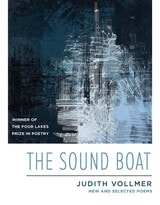
The Sound Boat
New and Selected PoemsJudith Vollmer
University of Wisconsin Press, 2022
Featuring twenty-one new and fifty-seven selected poems from her earlier volumes—The Apollonia Poems, The Water Books, Reactor, The Door Open to the Fire, and Level Green—The Sound Boat reveals Vollmer’s devotion to examining place and space to uncover poetry that touches emotions related to wandering physical and emotional realms: some familial and deeply personal, some unknowable.
down in the street, between the turtle fountain and the iron head
the party shouts and sings, sweats and snakes, swells into a throb
or momentum of sound.
—Excerpt from “The Sound Boat”
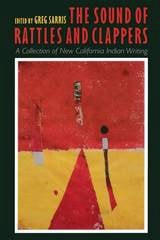
The Sound of Rattles and Clappers
A Collection of New California Indian WritingEdited by Greg Sarris
University of Arizona Press, 1994
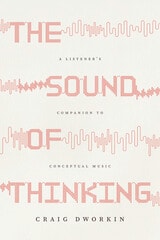
The Sound of Thinking
A Listener's Companion to Conceptual MusicCraig Dworkin
University of Chicago Press, 2026
An artist draws two octaves of pitches randomly from a hat, just enough to set each syllable of the dictionary definition of imprimer (to score, to print). Trawling the internet for cute videos of cats “playing” piano, an artist splices together a complete, note-perfect performance of Arnold Schoenberg’s Opus 11. Half a century after the release of Miles Davis’s album Kind of Blue, a jazz quintet spends months of focused practice to reproduce the original exactly. These performances share a common denominator: absolute fidelity to the outcome of a system. From Marcel Duchamp to Yoko Ono, Steve Reich to Sun Ra, The Sound of Thinking brings together a diverse array of musical or sonic works that are algorithmic, automatic, permutational, procedural, or otherwise structured in contrast to the creative expressivity typically associated with artistic production.
In twenty-six short essays, each keyed to a term that begins with a different letter of the alphabet, Dworkin discusses work composed or performed according to a predetermined rule, transforming artistic creation into a system running its course. The pieces detailed here, drawn from more than a century of musical experimentation, offer a fresh perspective on the history of innovative music by decoupling music from expression and by shunting creativity from the level of organizing sounds to the level of devising a system that can do the organizing. Not only does this book spotlight the critical role of music in twentieth-century conceptual art, but it also identifies previously overlooked links among diverse artists and movements.
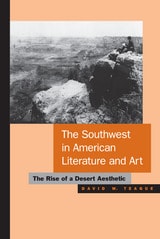
The Southwest in American Literature and Art
The Rise of a Desert AestheticDavid W. Teague
University of Arizona Press, 1997
By focusing on cultures that lived in the Southwest and by analyzing ways in which they described the land, David Teague persuasively argues against the destructive approach that Americans currently take to the region. Included are Native American legends and Spanish and Hispanic literature. However, the bulk of the study concentrates on Anglo American views of the Southwest, which have been generally at odds with the ecology of the deserts.
Ranging from oral traditions of the Navajo, Zuñi, and Hopi Indians to travel journals, fiction, and visual art, Teague examines the work of nearly thirty writers, artists, and explorers, including Alvar Núñez Cabeza de Vaca, Mary Austin, John Wesley Powell, and Frederic Remington. As he traces ideas about the desert over time, the author shows how American literature and art have come to represent the Southwest as a landscape to be sustained rather than transformed.
Bound to gain a prominent place in ecological criticism and in literature of the Southwest, this book offers important insights for scholars and students of literature, environmental studies, history, anthropology, and Native American studies. Its originality and vigor will also appeal to general readers with an interest in the landscape—and the future—of the American Southwest.
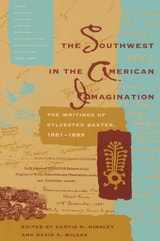
The Southwest in the American Imagination
The Writings of Sylvester Baxter, 1881-1889Curtis M. Hinsley
University of Arizona Press, 1996
Drawing on materials housed in half a dozen institutions and now brought together for the first time, this projected seven-volume work presents a cultural history of the Hemenway Expedition and early anthropology in the American Southwest, told in the voices of its participants and interpreted by contemporary scholars. Taken as a whole, the series comprises a thorough study and presentation of the cultural, historical, literary, and archaeological significance of the expedition, with each volume posing distinct themes and problems through a set of original writings such as letters, reports, and diaries. Accompanying essays guide readers to a coherent understanding of the history of the expedition and discuss the cultural and scientific significance of these data in modern debates.
This first volume, The Southwest in the American Imagination, presents the writings of Sylvester Baxter, a journalist who became Cushing's friend and publicist in the early 1880s and who traveled to the Southwest and wrote accounts of the expedition. Included are Baxter's early writings about Cushing and the Southwest, from 1881 to 1883, which reported enthusiastically on the anthropologist's work and lifestyle at Zuñi before the expedition. Also included are published accounts of the Hemenway Expedition and its scientific promise, from 1888 to 1889, drawing on Baxter's central role in expedition affairs as secretary-treasurer of the advisory board. Series co-editor Curtis Hinsley provides an introductory essay that reviews Baxter's relationship with Cushing and his career as a journalist and civic activist in Boston, and a closing essay that inquires further into the lasting implications of the "invention of the Southwest," arguing that this aesthetic was central to the emergence and development of southwestern archaeology.
Seen a century later, the Hemenway Expedition provides unusual insights into such themes as the formation of a Southwestern identity, the roots of museum anthropology, gender relations and social reform in the late nineteenth century, and the grounding of American nationhood in prehistoric cultures. It also conveys an intellectual struggle, ongoing today, to understand cultures that are different from the dominant culture and to come to grips with questions concerning America's meaning and destiny.
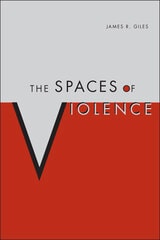
The Spaces of Violence
James R. Giles
University of Alabama Press, 2006
Exploring the landscapes, cultures, and psychological spaces where violence takes root in contemporary American fiction.
The Spaces of Violence is an insightful work of literary criticism in which James R. Giles investigates the complex relationship between violence and space in contemporary American fiction. Through close readings of novels by influential writers including Russell Banks, Cormac McCarthy, Lewis Nordan, Dorothy Allison, Don DeLillo, Denis Johnson, Sherman Alexie, Robert Stone, and Bret Easton Ellis, Giles demonstrates how violence is shaped by the physical, social, and psychological environments in which it occurs.
Drawing on spatial and cultural theory, Giles argues that these novels inhabit a distinctive "fourthspace," a realm existing at the margins of mainstream society where violence permeates everyday life and destabilizes traditional boundaries of identity, community, and morality. Whether set in rural landscapes, urban centers, suburban communities, football stadiums, or transient spaces such as highways and bus stations, the works examined reveal how environments become intertwined with systems of power, alienation, trauma, and destruction.
The book concludes by extending its analysis to representations of violence within family structures, highlighting the far-reaching effects of social and cultural fragmentation. Offering a sophisticated framework for understanding violence in literature, The Spaces of Violence is an important contribution to contemporary literary and cultural studies.
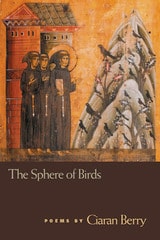
The Sphere of Birds
Ciaran Berry
Southern Illinois University Press, 2008
The Sphere of Birds, Ciaran Berry’s debut collection of poems, effortlessly moves back and forth between here and there, then and now, the personal and the historic, the modern and the mythic.
Berry imagines the transatlantic journeys of John James Audubonand reveals his own heartfelt experience moving from his first house. The poems take as their subject such varied experiences as an eye exam in Manhattan and chasing rabbits around a beach in Donegal. These poems have a strong sense of place, whether it’s the imagined space of Coney Island in 1903 or the playground of Berry’s childhood convent school.
The Sphere of Birds delights in forging unlikely links, earthed in the stuff of paintings and in the lives of poets, artists, and the occasional saint. Drawing on the poet’s life in Ireland and the United States, the poems explore the joy and grief found in those places.
Moving from rural Ireland to the heart of New York City, from local detail to historical specifics, and from the experienced occasion to the imagined or interpreted event, Berry’s poems effectively master shifts in both time and space. Berry delves into the lives of artists, obscure historical figures, and other poets for inspiration. He embraces elements of both Irish and American poetry, paying tribute as much to the spirit of Larry Levis as to that of W. B. Yeats.
Accessible, immediate, and visceral, The Sphere of Birds offers a musicality that is increasingly rare in contemporary poetry.
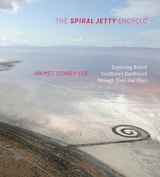
The Spiral Jetty Encyclo
Exploring Robert Smithson's Earthwork through Time and PlaceHikmet Sidney Loe
University of Utah Press, 2017
Copublished with the Tanner Trust Fund, J. Willard Marriott Library.
Robert Smithson’s earthwork, Spiral Jetty (1970), an icon of the Land Art movement of the 1960s and 1970s, is located on the northern shores of Utah’s Great Salt Lake. Smithson built a masterpiece from local materials, one that spirals counterclockwise into the lake and appears or is submerged with fluctuations in the lake’s locally red, saline water.
The Spiral Jetty Encyclo draws on Smithson’s writings for encyclopedic entries that bring to light the context of the earthwork and Smithson’s many points of reference in creating it. Visitors and armchair travelers, too, will discover how much significance Smithson placed on regional considerations, his immersion in natural history, his passion for travel, and his ability to use diverse mediums to create a cohesive and lasting work of art. Containing some 220 images, most of them in color, with some historical black and whites, The Spiral Jetty Encyclo lets readers explore the construction, connections, and significance of Smithson’s 1,500-foot-long curl into Great Salt Lake, created, in Smithson’s words, of “mud, salt crystals, rocks, water.”
Winner of 15 Bytes Book Award for Art Book.
Finalist for the Utah State Historical Society Best Book Award.
The Spiral of Memory
InterviewsJoy Harjo
University of Michigan Press, 1995
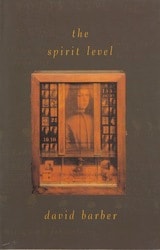
The Spirit Level
David Barber
Northwestern University Press, 1995
The Spirit Level is the first collection by an exciting new voice in American poetry. Representing the world as a place of feverish energies, David Barber creates a virtuoso tension between playful, sometimes flamboyant, diction, and the seriousness of his concerns. Balance and grace, but also wit and verbal energy, and a deft hand at shaping the poem, make Barber's first book a superb debut.

The Spy Story
John G. Cawelti and Bruce A. Rosenberg
University of Chicago Press, 1987
In addition to a general history of the genre, Cawelti and Rosenberg present in-depth analyses of the work of certain writers who have given the spy story its shape, among them John Buchan, Eric Ambler, Graham Greene, Ian Fleming, and John le Carré. The Spy Story also includes an extensive appendix, featuring a literary and historical bibliography of espionage and clandestinity, a list of the best spy novels and films, a catalog of major spy writers and their heroes, and a selection of novels on espionage themes written by major twentieth-century authors and public figures.
Written in a lively style that reflects the authors' enthusiasm for this intriguing form, The Spy Story will be read with pleasure by devotees of the genre as well as students of popular culture.
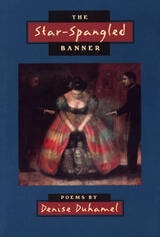
The Star-Spangled Banner
Denise Duhamel
Southern Illinois University Press, 1999
The Star-Spangled Banner, Denise Duhamel's sixth book of poems, is about falling in love, American-style, with someone who is not American.
In the title poem, a small American girl mishears the first line of "The Star-Spangled Banner" as "José, can you see?", which leads her to imagine a foreign lover of an American woman dressed in a star-spangled gown. The misunderstandings caused by language recur throughout the book: contemplating what "yes" means in different cultures; watching Nickelodeon's "Nick at Nite" with a husband who grew up in the Philippines and never saw The Patty Duke Show; misreading another poet's title "The Difference Between Pepsi and Coke" as "The Difference Between Pepsi and Pope" and concluding that "Pepsi is all for premarital sex. / The Pope won't stain your teeth." Misunderstandings also abound as characters mingle with others from different classes. In "Cockroaches," a father-in-law refers to budget-minded American college students backpacking in Europe as cockroaches, not realizing his daughter-in-law was once, not so long ago, such a student/roach herself.
With welcome levity and refreshing irreverence, The Star-Spangled Banner addresses issues of ethnicity, class, and gender in America.
The Stars That Fell
PoemsGary Short
University of Nevada Press, 2026
Through his poems, Gary Short illuminates the humanity of the people of Nevada and the American West, specifically the rural communities that often get left out of the narrative. Focusing on family and the relationships between characters, he extends feelings of hope, solace, forgiveness, and even wisdom throughout this collection.
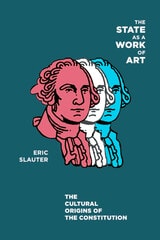
The State as a Work of Art
The Cultural Origins of the ConstitutionEric Slauter
University of Chicago Press, 2009
The founding of the United States after the American Revolution was so deliberate, so inspired, and so monumental in scope that the key actors considered this new government to be a work of art framed from natural rights. Recognizing the artificial nature of the state, these early politicians believed the culture of a people should inform the development of their governing rules and bodies. Eric Slauter explores these central ideas in this extensive and novel account of the origins and meanings of the Constitution of the United States. Slauter uncovers the hidden cultural histories upon which the document rests, highlights the voices of ordinary people, and considers how the artifice of the state was challenged in its effort to sustain inalienable natural rights alongside slavery and to achieve political secularization at a moment of growing religious expression.
A complement to classic studies of the Constitution’s economic, ideological, and political origins, The State as a Work of Art sheds new light on the origins of the Constitution and on ongoing debates over its interpretation.

The Steger Homestead Kitchen
Simple Recipes for an Abundant LifeWill Steger
University of Minnesota Press, 2021
Personal and simple, earthy and warm—recipes and stories from the Steger Wilderness Center in Minnesota’s north woods
The Steger Homestead Kitchen is an inspiring and down-to-earth collection of meals and memories gathered at the Homestead, the home of the Arctic explorer and environmental activist Will Steger, located in the north woods near Ely, Minnesota. Founded in 1988, the Steger Wilderness Center was established to model viable carbon-neutral solutions, teach ecological stewardship, and address climate change. In her role as the Homestead’s chef, Will’s niece Rita Mae creates delicious and hearty meals that become a cornerstone experience for visitors from all over the world, nourishing them as they learn and share their visions for a healthy and abundant future.
Now, with this new book, home chefs can make Rita Mae’s simple, hearty meals to share around their own homestead tables. Interwoven with dozens of mouth-watering recipes—for generous breakfasts (Almond Berry Griddlecakes), warming lunches (Northwoods Mushroom Wild Rice Soup), elegant dinners (Spatchcock Chicken with Blueberry Maple Glaze), desserts (Very Carrot Cake), and snacks (Steger Wilderness Bars)—are Will Steger’s exhilarating stories of epic adventures exploring the Earth’s most remote and endangered regions.
The Steger Homestead Kitchen opens up the Wilderness Center’s hospitality, its heart and hearth, providing the practical advice and inspiration to cook up a good life in harmony with nature.
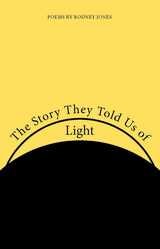
The Story They Told Us of Light
PoemsRodney Jones
University of Alabama Press, 1980
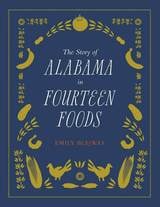
The Story of Alabama in Fourteen Foods
Emily Blejwas
University of Alabama Press, 2019
Alabama’s history and culture revealed through fourteen iconic foods, dishes, and beverages.
The Story of Alabama in Fourteen Foods explores well-known Alabama food traditions to reveal salient histories of the state in a new way. In this book that is part history, part travelogue, and part cookbook, Emily Blejwas pays homage to fourteen emblematic foods, dishes, and beverages, one per chapter, as a lens for exploring the diverse cultures and traditions of the state.
Throughout Alabama’s history, food traditions have been fundamental to its customs, cultures, regions, social and political movements, and events. Each featured food is deeply rooted in Alabama identity and has a story with both local and national resonance. Blejwas focuses on lesser-known food stories from around the state, illuminating the lives of a diverse populace: Poarch Creeks, Creoles of color, wild turkey hunters, civil rights activists, Alabama club women, frontier squatters, Mardi Gras revelers, sharecroppers, and Vietnamese American shrimpers, among others. A number of Alabama figures noted for their special contributions to the state’s foodways, such as George Washington Carver and Georgia Gilmore, are profiled as well. Alabama’s rich food history also unfolds through accounts of community events and a food-based economy. Highlights include Sumter County barbecue clubs, Mobile’s banana docks, Appalachian Decoration Days, cane syrup making, peanut boils, and eggnog parties.
Drawing on historical research and interviews with home cooks, chefs, and community members cooking at local gatherings and for holidays, Blejwas details the myths, legends, and truths underlying Alabama’s beloved foodways. With nearly fifty color illustrations and fifteen recipes, The Story of Alabama in Fourteen Foods will allow all Alabamians to more fully understand their shared cultural heritage.
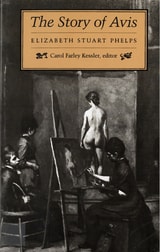
The Story of Avis
Kessler, Carol Farley
Rutgers University Press, 1985
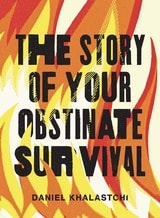
The Story of Your Obstinate Survival
Daniel Khalastchi
University of Wisconsin Press, 2024
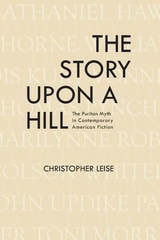
The Story upon a Hill
The Puritan Myth in Contemporary American FictionChristopher Leise
University of Alabama Press, 2017
The Story upon a Hill: The Puritan Myth in Contemporary American Fiction analyzes the work of several of the most important contemporary writers in the United States as reinterpreting commonplace narratives of the country’s origins with a keen eye on the effects of inclusion and exclusion that Puritan myths promote. In 1989, Ronald Reagan recalled the words of Massachusetts Bay Colony governor John Winthrop, who imagined the colony as a “city upon a hill” for future nations to emulate. In Reagan’s speech, Winthrop’s signature rhetoric became an emblem of American idealism, and for many Americans, the Puritans’ New England was the place where the United States forged its original identity.
But what if Winthrop never gave that speech? What if he did not even write it? Historians cannot definitively answer these questions. In fact, no group that we refer to as American Puritans thought of themselves as Puritans. Rather, they were a group of dissident Christians often better defined by their disagreements than their shared beliefs.
Literary scholars interested in Anglo-American literary production from the seventeenth century through the present, historians, and readers interested in how ideas about Christianity circulate in popular culture will find fascinating the ways in which William Gaddis, Kurt Vonnegut, Thomas Pynchon, and Marilynne Robinson repurpose so-called Puritan forms of expression to forge a new narrative of New England’s Congregationalist legacy in American letters. Works by Colson Whitehead, Paul Auster, Toni Morrison, and others are also considered. The Story upon a Hill raises a provocative question: if the Puritans never existed as we understand them, what might American history look like in that context?
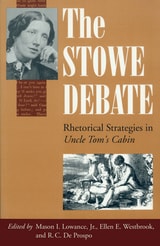
The Stowe Debate
Rhetorical Strategies in "Uncle Tom's Cabin"Mason I. Lowance
University of Massachusetts Press, 1994
The thirteen contributors to this volume enter these debates from a variety of critical perspectives. They address questions of language and ideology, the tradition of the sentimental novel, biblical influences, and the rhetoric of antislavery discourse. As much as they disagree on various points, they share a keen interest in the cultural work that texts can do and an appreciation of the enduring power of Uncle Tom's Cabin.
The Straight Line
Writing on Poetry and PoetsRon Padgett
University of Michigan Press, 2000
But along with the playful wit comes Padgett's serious fascination with how words work. Essays discuss such subjects as the otherness of languages; French poets and their relationship to Cubist painters; an afternoon with the poet Edwin Denby; a tribute to Ted Berrigan; twentieth-century modernism; and suggestions for using the computer to write poetry.
The book concludes with pieces that Padgett has written during his thirty years as a teacher of poetry. Essays explore the unexpected relationships between poetry and dance; the practical value of using "gimmicks" to inspire poetry writing; and some radical and entertaining ideas for innovative ways to read creatively.
Ron Padgett is Publications Director, Teachers and Writers Collaborative. His books include Albanian Diary, Creative Reading, and Old Faithful: 18 Writers Present Their Favorite Writing Assignments.
The Strange Case of Miss Annie Spragg
Louis BromfieldWith a new introduction by Stephen Heyman, author of The Planter of Modern Life: Louis Bromfield and the Seeds of a Food Revolution
The Ohio State University Press, 2026
A revived work of twentieth-century fiction that spans years and continents to satirize and explore religious fanaticism and expat life.
First published in 1928, Louis Bromfield’s The Strange Case of Miss Annie Spragg is a haunting and genre-defying tale—a thoughtful reflection on religion and human nature with the propulsion of a mystery. Set in Italy and the American Midwest, this surprisingly modern novel now has a new introduction by Bromfield biographer Stephen Heyman.
The novel opens on a ragtag community of American expats in rural Italy. When Annie Spragg, a local eccentric, dies with stigmata on her body, the diocese tasks the skeptical Mr. Winnery with investigating whether actual miracles occurred at her deathbed. From there, the novel brings us back to Annie’s origins as the child of a cult-leader and prophet on the American frontier. As the story unfolds, Bromfield traverses time and continents as he weaves together satire, mysticism, and psychological insight to explore themes of religious fanaticism, repression, and redemption.
Heyman’s new introduction situates Annie Spragg within Bromfield’s literary evolution—from chronicler of liberated women to environmental visionary—and reintroduces readers to a writer whose influence shaped both American letters and sustainable agriculture. This edition invites fans of twentieth-century fiction to rediscover a novel that remains provocative and poignant today.
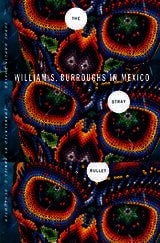
The Stray Bullet
William S. Burroughs in MexicoJorge García-Robles
University of Minnesota Press, 2013
William S. Burroughs arrived in Mexico City in 1949, having slipped out of New Orleans while awaiting trial on drug and weapons charges that would almost certainly have resulted in a lengthy prison sentence. Still uncertain about being a writer, he had left behind a series of failed business ventures—including a scheme to grow marijuana in Texas and sell it in New York—and an already long history of drug use and arrests. He would remain in Mexico for three years, a period that culminated in the defining incident of his life: Burroughs shot his common-law wife, Joan Vollmer, while playing William Tell with a loaded pistol. (He would be tried and convicted of murder in absentia after fleeing Mexico.)
First published in 1995 in Mexico, where it received the Malcolm Lowry literary essay award, The Stray Bullet is an imaginative and riveting account of Burroughs’s formative experiences in Mexico, his fascination with Mexico City’s demimonde, his acquaintances and friendships there, and his contradictory attitudes toward the country and its culture. Mexico, Jorge García-Robles makes clear, was the place in which Burroughs embarked on his “fatal vocation as a writer.”
Through meticulous research and interviews with those who knew Burroughs and his circle in Mexico City, García-Robles brilliantly portrays a time in Burroughs’s life that has been overshadowed by the tragedy of Joan Vollmer’s death. He re-creates the bohemian Roma neighborhood where Burroughs resided with Joan and their children, the streets of postwar Mexico City that Burroughs explored, and such infamous figures as Lola la Chata, queen of the city’s drug trade. This compelling book also offers a contribution by Burroughs himself—an evocative sketch of his shady Mexican attorney, Bernabé Jurado.
The Structure of Leaves of Grass
By Thomas Edward Crawley
University of Texas Press, 1970
Modern critics and contemporary readers familiar with the field of Whitman criticism may find surprising an analysis of the structure of Leaves of Grass that concerns itself with Whitman as the poet-prophet and the identification of Whitman (or of his persona in the poem) with Christ. Early twentieth-century criticism has tended to exalt the early Whitman at the expense of the later one and to regard as poetically inferior the image of the national and democratically prophetic Whitman as expressed in the later editions.
Thomas Edward Crawley, in full knowledge of the contemporary currents of Whitman criticism, chooses to revert to this older view, through which he sheds new light on Whitman’s artistic achievement.
The basic premise of this study is that Walt Whitman’s Leaves of Grass is a unified work, lyrical, yet epic in quality, design, and spirit. Crawley’s purpose is to demonstrate the basis of this unity: its origin and operation and the nature of its realization. He demonstrates that an aesthetically maturing Whitman, in this work, was finally able to harmoniously bring together his individual and social subject matter.
Crawley defines the unifying spirit of Leaves of Grass in terms of Whitman’s concept of the poet-prophet and the poet-reader relationship. This concept is conveyed primarily through the development of the Christ- symbol, the dominant image in the poem. Through a careful analysis of Whitman’s handling of the simultaneous development of the poet-prophet and the nation, his masterful fusion of the personal element and the national element, an understanding of the complex structure of Leaves of Grass emerges.
Crawley presents an analysis of Whitman’s final and carefully arrived at grouping of the lyrics in the 1881 edition according to a definite, distinguishable pattern—a pattern revealed in Whitman’s use of allusions, in his transitional poems and passages, and, most important, in his thematic handling of imagery. The cumulative effect of these devices is emphasized.
The organic development of Leaves of Grass, made possible by Whitman’s faith in and careful adherence to his concept of the organic theory of art, is substantiated. Crawley concludes his analysis with a detailed examination of the growth of Leaves of Grass as reflected in the various editions leading up to the 1881 volume, the last to be revised and published by Whitman.
The Stuff of Our Forebears
Willa Cather's Southern HeritageJoyce McDonald
University of Alabama Press, 1998
Connecting Cather's work to the southern literary tradition and the South of her youth
A diverse and experimental writer who lived most of her life in New York City, Willa Cather is best known for her depiction of pioneer life on the Nebraska plains. Despite Cather's association with Nebraska, however, the novelist's Virginia childhood and her southern family were deeply influential in shaping her literary imagination.
Joyce McDonald shows evidence, for example, of Cather's southern sensibility in the class consciousness and aesthetic values of her characters and in their sense of place and desire for historical continuity, a sensibility also evident in her narrative technique of weaving stories within stories and in her use of folklore. For McDonald, however, what most links Cather and her work to the South and to the southern literary tradition is her use of pastoral modes.
Beginning with an examination of Cather's Virginia childhood and the southern influences that continued to mold her during the Nebraska years, McDonald traces the effects of those influences in Cather's novels. The patterns that emerge reveal not only Cather's strong ideological connection to the pastoral but also the political position implicit in her choice of that particular mode. Further analysis of Cather's work reveals her preoccupation with hierarchical constructs and with the use and abuse of power and her interest in order, control, and possession. The Willa Cather who emerges from the pages of The Stuff of Our Forebears is not the Cather who claimed to eschew politics but a far more political novelist than has heretofore been perceived.

The Sturdy Oak
A Composite Novel of American PoliticsElizabeth Jordan
Ohio University Press, 1998
In the spring of 1916, as the workers for woman suffrage were laying plans for another attack on the bastions of male supremacy, the idea for The Sturdy Oak was born. Based on the rules of an old parlor game, wherein one person begins a narrative, another continues it, and another follows, this collaborative effort by the leading writers of the day, such as Fannie Hurst, Dorothy Canfield, and Kathleen Norris, is a satiric look at the gender roles of the time.
There is much in The Sturdy Oak that reflects the New York campaign for suffrage of 1916–1917. The setting is the fictional city of Whitewater in upstate New York. Idealistic reformers are pitted against a ruthless political machine, and the traditional picture of man as “the sturdy oak” supporting woman, “the clinging vine,” is ridiculed in the portrayal of an engaging couple, George and Genevieve Remington. Nonetheless, the purpose of the book is not primarily ridicule but reform, and the reader is taken through the steps by which a confirmed anti-suffragist is gradually transformed into a supporter of the suffrage cause.
Beyond its historical interest, The Sturdy Oak is imbued with a political and social currency that makes it applicable even today. And because of the skill of the writers of this composite novel, even eight decades after its initial publication The Sturdy Oak is still, as the New York Times said in 1917, “irresistibly readable.”
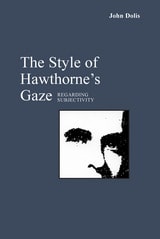
The Style of Hawthorne's Gaze
Regarding SubjectivityJohn Dolis
University of Alabama Press, 1993
Examining subjectivity and narrative perception in Hawthorne’s literary art.
The Style of Hawthorne’s Gaze is an unusual and insightful work that employs a combination of critical strategies drawn from art history, philosophy, psychoanalysis, and contemporary aesthetic and literary theory to explore Nathaniel Hawthorne’s narrative technique and his unique vision of the world. Dolis studies Hawthorne’s anti-technological and essentially Romantic view of the external world and examines the recurring phenomena of lighting, motion, aspectivity, fragmentation, and imagination as they relate to his descriptive techniques.
Dolis sets the world of Hawthorne’s work over and against the aesthetic and philosophical development of the world understood as a “view”, from its inception in the camera obscura and perspective in general, to its 19th-century articulation in photography. In light of this general technology of the image, and drawing upon a wide range of contemporary critical theories, Dolis begins his study of Hawthorne at the level of description, where the world of the work first arises in the reader’s consciousness. Dolis shows how the work of Heidegger, Merleau-Ponty, Freud, Lacan, and Derrida can provide fresh insights into the sophisticated style of Hawthorne’s perception of and system for representing reality.
The Submerged Plot and the Mother's Pleasure from Jane Austen to Arundhati Roy
Kelly A. Marsh
The Ohio State University Press, 2016
Combining feminist and rhetorical narratological approaches, Marsh’s study offers fresh readings of Persuasion, Jane Eyre, Bleak House, The Woman in White, The House of Mirth, The Last September, The Color Purple, A Thousand Acres, Bastard Out of Carolina, Talking to the Dead, and The God of Small Things. Through these readings, The Submerged Plot and the Mother’s Pleasure explores how the unnarratable can be communicated in fiction and offers a significant contribution to our understanding of narrative progression.
The Substance of Shadow
A Darkening Trope in Poetic HistoryJohn Hollander
University of Chicago Press, 2016
Shadow shows itself here in myriad literary identities, revealing its force as a way of seeing and a form of knowing, as material for fable and parable. Taking up a vast range of texts—from the Bible, Dante, Shakespeare, and Milton to Poe, Dickinson, Eliot, and Stevens—Hollander describes how metaphors of shadow influence our ideas of dreaming, desire, doubt, and death. These shadows of poetry and prose fiction point to unknown, often fearful domains of human experience, showing us concealed shapes of truth and possibility. Crucially, Hollander explores how shadows in poetic history become things with a strange substance and life of their own: they acquire the power to console, haunt, stalk, wander, threaten, command, and destroy. Shadow speaks, even sings, revealing to us the lost as much as the hidden self.
An extraordinary blend of literary analysis and speculative thought, Hollander’s account of the substance of shadow lays bare the substance of poetry itself.
The Sumac Reader
Joseph Bednarik
Michigan State University Press, 1997
Sumac was a Michigan-based literary journal founded in 1968 by poets Dan Gerber and Jim Harrison; novelist Thomas McGuane joined the editorial staff in 1969 as the fiction editor. When the inaugural issue appeared, more than 250 American literary magazines were listed in The Directory of Magazines and Small Presses; within three years, Sumac rose to the first tier of these publications and was nationally recognized for its eclecticism and editorial quality. The Library Journal called it "one of the best little magazines now being published."
Remaining true to Sumac's energetic catholicity, The Sumac Reader is an anthology that contains poetry, experimental fiction, and works in translation that originally appeared in the magazine. Contributors include four Pulitzer Prize-winning poets—Galway Kinnell, Charles Simic, Louis Simpson, and Gary Snyder—along with Paul Blackburn, Hayden Carruth, Richard Hugo, Denise Levertov, Ezra Pound, Adrienne Rich, and Diane Wakoski. There are early poems by Charles Simic, James Tate, and Michael Waters, as well as a complete section from Galaway Kinnell's classic, The Book of Nightmares. Fiction is represented in Sumac by a first-published Jim Heynen story "Coyote" and early prose by William Kittredge. Translations from Chinese, French, Spanish, and Russian bring to American readers the work of masters such as Tu Fu, Lorca, and Li Po. A variety of poetic forms are represented, including ghazals, narratives, suites, found poems, and the freest of free verse.
The Swallow Anthology of New American Poets
David Yezzi
Ohio University Press, 2009
Groundbreaking anthologies of this kind come along once in a generation and, in time, define that generation. The Swallow Anthology of New American Poets identifies a group of poets who have recently begun to make an important mark on contemporary poetry, and their accomplishment and influence will only grow with time. The poets gathered here do not constitute a school or movement; rather they are a group of unique artists working at the top of their craft. As editor David Yezzi writes in his introduction, “Here is a group of writers who have, perhaps for the first time since the modernist revolution of the early twentieth century, returned to a happy détente between warring camps. This, I think, is a new—at least in our age—kind of poet, who, dissatisfied with the climate of extremes, has found a balance between innovation and received form, perceiving the terror beneath the classical and the unities girding romanticism. This new unified sensibility is no watered-down admixture, no pragmatic compromise worked out in departments of creative writing, but, rather, the vital spirit behind some of the most accomplished poetry being written by America’s new poets.”
Poets include: Craig Arnold, David Barber, Rick Barot, Priscilla Becker, Geoffrey Brock, Daniel Brown, Peter Campion, Bill Coyle, Morri Creech, Erica Dawson, Ben Downing, Andrew Feld, John Foy, Jason Gray, George Green, Joseph Harrison, Ernest Hilbert, Adam Kirsch, Joanie Mackowski, Eric McHenry, Molly McQuade, Joshua Mehigan, Wilmer Mills, Joe Osterhaus, J. Allyn Rosser, A. E. Stallings, Pimone Triplett, Catherine Tufariello, Deborah Warren, Rachel Wetzsteon, Greg Williamson, Christian Wiman, Mark Wunderlich, David Yezzi, and C. Dale Young.
The Table
Seasons on a Colorado RanchLara Richardson
University Press of Colorado, 2024

The Tallgrass Prairie Reader
John T. Price
University of Iowa Press, 2014
The answer to that question is his Tallgrass Prairie Reader, a first-of-its-kind collection of literature from and about the tallgrass bioregion. Focusing on autobiographical nonfiction in a wide variety of forms, voices, and approaches—including adventure narrative, spiritual reflection, childhood memoir, Native American perspectives, literary natural history, humor, travel writing and reportage—he honors the ecological diversity of tallgrass itself and provides a range of models for nature writers and students.
The chronological arrangement allows readers to experience tallgrass through the eyes and imaginations of forty-two authors from the nineteenth to the twenty-first centuries. Writings by very early explorers are followed by works of nineteenth-century authors that reflect the fear, awe, reverence, and thrill of adventure rampant at the time. After 1900, following the destruction of the majority of tallgrass, much of the writing became nostalgic, elegiac, and mythic. A new environmental consciousness asserted itself midcentury, as personal responses to tallgrass were increasingly influenced by larger ecological perspectives. Preservation and restoration—informed by hard science—emerged as major themes. Early twenty-first-century writings demonstrate an awareness of tallgrass environmental history and the need for citizens, including writers, to remember and to help save our once magnificent prairies.

The Tangled Fire of William Faulkner
William Van O’Connor
University of Minnesota Press, 1953
The Tangled Fire of William Faulkner was first published in 1953. Minnesota Archive Editions uses digital technology to make long-unavailable books once again accessible, and are published unaltered from the original University of Minnesota Press editions.
Out of the tangled fire that is the genius of William Faulkner's fiction, this critical study draws as coherent and highly original view of the writer's achievement. By placing Faulkner in his Mississippi background and analyzing his novels and short stories in chronological sequence, O'Conner demonstrates a major thesis that sets this apart from other studies. It is his interpretation that Faulkner's fiction is not all of a piece, does not merely develop the conviction of the legend of the Old South, but is, rather, marked by diversity of theme.
The Tangled Roots of Feminism, Environmentalism, and Appalachian Literature
Elizabeth S. D. Engelhardt
Ohio University Press, 2003
Contemporaries were shocked when author Mary Noailles Murfree revealed she was a woman, but modern readers may be more surprised by her cogent discussion of community responses to unwanted development. Effie Waller Smith, an African American woman writing of her love for the Appalachian mountains, wove discussions of women's rights, racial tension, and cultural difference into her Appalachian poetry. Grace MacGowan Cooke participated in avant-garde writers' colonies with the era's literary lights and applied their progressive ideals to her fiction about the Appalachia of her youth. Emma Bell Miles, witness to poverty, industrialization, and violence against women, wrote poignant and insightful critiques of her Appalachian home.
In The Tangled Roots of Feminism, Environmentalism, and Appalachian Literature Elizabeth Engelhardt finds in all four women's writings the origins of what we recognize today as ecological feminism—a wide-reaching philosophy that values the connections between humans and nonhumans and works for social and environmental justice.
People and the land in Appalachia were also the subject of women authors with radically different approaches to mountains and their residents. Authors with progressive ideas about women's rights did not always respect the Appalachian places they were writing about or apply their ideas to all of the women in those places—but they did create hundreds of short stories, novels, letters, diaries, photographs, sketches, and poems about the mountains.
While The Tangled Roots of Feminism, Environmentalism, and Appalachian Literature ascribes much that is noble to the beginnings of the ecological feminism movement as it developed in Appalachia, it is also unyielding in its assessment of the literatures of the voyeur, tourist, and social crusader who supported status quo systems of oppression in Appalachia.

The Technology of Drawing
Image and Industry in the Early United StatesElizabeth Bacon Eager
University of Chicago Press, 2026
A richly illustrated study of how technical drawing shaped culture in the early United States.
With The Technology of Drawing, Elizabeth Bacon Eager explores the importance of manual skill and graphic literacy in the emergence of American industry, offering readers a new lens through which to view the visual culture of the early United States. Focused on questions of materiality and process, the book traces the development of drawing as a technology and argues for it as an embodied way of thinking and knowing, revealing the significance of such knowledge in the construction of both scientific and social authority. Through close analysis of materials, including construction drawings, mechanical treatises, cartographic surveys, and patent drawings, many of which have never been published before, Eager presents a history of American art focused on materiality and process through the view of the mechanic rather than the fine artist.
Reaching beyond the traditional boundaries of art historical study to engage objects rarely considered as art, The Technology of Drawing treats the technical image as a site of extraordinary creativity, in which eighteenth- and nineteenth-century Americans across the social spectrum negotiated critical concepts of identity, invention, and authorship with a remarkable degree of material intelligence and visual sophistication.
The Temptation of Innocence in the Dramas of Arthur Miller
Terry Otten
University of Missouri Press, 2002
The Terrible Unlikelihood of Our Being Here
Susanne Paola Antonetta
The Ohio State University Press, 2021
Antonetta reflects on a life spent wrestling with bipolar disorder, drug dependency, and the trauma of electroshock treatment—exploring these experiences alongside conversations with some of the world’s leading neuroscientists and physicists, and with psychics. The result is a meditation on the legacy of family, on thought and being, and what we humans can actually ever really know about our world.
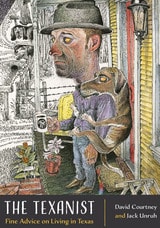
The Texanist
Fine Advice on Living in TexasBy David Courtney and Jack Unruh
University of Texas Press, 2017
The Texanist, Texas Monthly’s perennially popular back-page column, has become the magazine’s most-read feature. With an inimitable style and an unassailable wholesomeness, columnist David Courtney has counseled many a well-intentioned Texan, native or wannabe, on how to properly conduct him- or herself. Until the July 2016 issue, an original illustration by the late award-winning artist Jack Unruh, depicting the Texanist in a situation described in the column, accompanied the Texanist’s sage wisdom. Unruh’s peerless illustrations displayed a sly wit that paired perfectly with Courtney’s humorous ripostes.
The Texanist gathers several dozen of Unruh’s most unforgettable illustrations, along with the fascinating, perplexing, and even downright weird questions that inspired them. Curing the curious, exorcizing bedevilment, and orienting the disoriented, the Texanist advises on such things as: Is it wrong to wear your football team’s jersey to church? When out at a dancehall, do you need to stick with the one that brung ya? Is it real Tex-Mex if it’s served with a side of black beans? Can one have too many Texas-themed tattoos? The Texanist addresses all of these important subjects and more. Whether you heed the good guidance, or just enjoy the whimsical illustrations, The Texanist will both entertain and educate you.
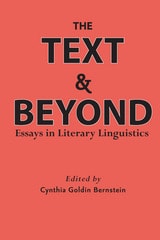
The Text and Beyond
Essays in Literary LinguisticsCynthia Bernstein
University of Alabama Press, 1997
A groundbreaking collection that bridges linguistics and literature, offering powerful tools to uncover how language shapes meaning, identity, and power in literary texts.
The Text and Beyond: Essays in Literary Linguistics, edited by Cynthia Bernstein, presents a groundbreaking collection of essays that demonstrate how linguistic tools can enrich literary analysis. The volume brings together scholars who explore the intersections of language, literature, and culture—examining how syntax, discourse, gender, power, and regional dialects shape meaning in texts. From Tennessee Williams to Harry Crews, from Dickens to immigrant literature, the essays offer models for integrating linguistic theory with literary interpretation. This book is essential for scholars of stylistics, discourse analysis, and anyone interested in the evolving relationship between language and literature.
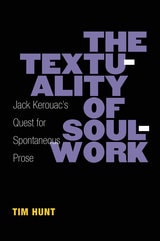
The Textuality of Soulwork
Jack Kerouac's Quest for Spontaneous ProseTim Hunt
University of Michigan Press, 2014
Tim Hunt’s The Textuality of Soulwork: Jack Kerouac’s Quest for Spontaneous Proseexamines Kerouac’s work from a new critical perspective with a focus on the author’s unique methods of creating and working with text. Additionally, The Textuality of Soulwork delineates Kerouac’s development of “Spontaneous Prose” to differentiate the preliminary experiment of On the Road from the more radical experiment of Visions of Cody, and to demonstrate Kerouac’s transition from working within the textual paradigm of modern print to the textual paradigm of secondary orality. From these perspectives, Tim Hunt crafts a new critical approach to Beat poetics and textual theory, marking an important contribution to the current revival of Kerouac and Beat studies underway at universities in the U.S. and abroad, as reflected by a growing number of conferences, courses, and a renewal in scholarship.