Results by title
5550 books match the query 'Biography & Autobiography' and 1006 start with t
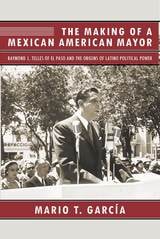
The Making of a Mexican American Mayor
Raymond L. Telles of El Paso and the Origins of Latino Political PowerMario T. García
University of Arizona Press, 2018
In the border metropolis of El Paso, more than half the population is Mexican American, yet this group had been denied effective political representation. Mexican Americans broke this barrier and achieved the “politics of status” through Telles’s stunning 1957 victory. This book captures the excitement of that long-awaited election.
The Making of a Mexican American Mayor also examines Telles’s story as a microcosm of the history of Mexican Americans before and after World War II—the Mexican American Generation. As mayor and ambassador, Telles symbolized this generation’s striving for political participation, and his legacy is evident in the growing number of Latinas/os holding office today.

The Man Behind the Mask
Journey of an Orthopaedic SurgeonThomas H. Mallory, MD
University of Missouri Press, 2007
The perils of aging are many, but the debilitating effects of serious illness loom large. In this stirring memoir, readers will discover a man who improved the lives of many arthritis sufferers before himself succumbing to a cruel debilitating disease. The Man behind the Mask tells the story of Thomas Mallory, who was inspired to become a doctor after undergoing surgery for a high school football injury. He went on to become a renowned surgeon and a pioneer in joint replacement. In 2002, his successful career came to an abrupt halt when he was diagnosed with Parkinson’s disease.
Mallory was one of the first surgeons in the United States to see the potential for joint replacement technology, and in this memoir he describes not only the nuances of introducing hip replacement surgery but also the systems that he established to make it a highly successful operation. He tells how he overcame initial resistance to the procedure and became a respected teacher of the technology, training many surgeons who went on to successful careers, lecturing about his procedure around the world, and also seeing VIP patients who journeyed to Ohio just to be operated on by him.
As a pioneer in this type of operation, Mallory first recognized the value of using prosthetic innovation and development. He became a proponent of modularity in joint replacement surgery, which allowed a surgeon to customize a prosthesis to a patient’s joint in the operating room. His innovations, along with those of Dr. William Head, resulted in the introduction in 1983 of the Mallory-Head Hip System—a technology still in use today and one that has offered relief to thousands of patients.
Tracing the joys and sorrows of his own career, Mallory dispels the myth that surgeons are emotionally invulnerable and cold. He offers his perspective on the pursuit of medicine as a profession, on the doctor-patient relationship, and on litigious challenges to physicians. He also commends the benefits of family and leisure and the blessing of life in general while offering insight into the management of an incurable disease.
In our skeptical era, Thomas Mallory is a shining example of a prominent scientist who has maintained his faith in God throughout the highs and lows of life. The Man behind the Mask is an inspiring account for fellow professionals and general readers, as well as for those who have benefited from the procedures he introduced.
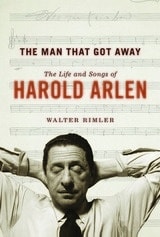
The Man That Got Away
The Life and Songs of Harold ArlenWalter Rimler
University of Illinois Press, 2018
A cantor's son, Arlen believed his music was from a place outside himself, a place that also sent tragedy. When his wife became mentally ill and was institutionalized he turned to alcohol. It nearly killed him. But the beautiful songs kept coming: "Blues in the Night," "My Shining Hour," "Come Rain or Come Shine," and "The Man That Got Away."
Walter Rimler drew on interviews with friends and associates of Arlen and on newly available archives to write this intimate portrait of a genius whose work is a pillar of the Great American Songbook.
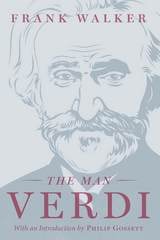
The Man Verdi
Frank Walker
University of Chicago Press, 1982
“Walker focuses on some of the more significant people in Verdi’s life and carefully scrutinizes his relationships with them. His wife, Giuseppina Strepponi; his student and amanuensis, Emanuele Muzio; the conductor who first fully understood Verdi’s mature art, Angelo Mariani; the great prima donna, Teresa Stolz; the incomparable librettist and friend of his old age, Arrigo Boito—each passes before our eyes in Walker’s meticulous reconstruction. As we learn more about them, we learn more about Verdi. We see him through the eyes of his closest friends, we watch his daily activities, his daily thoughts, his habits, his warmth, his domestic tyranny. The myth dissolves and a human being stands before us.”—Philip Gossett, from the introduction
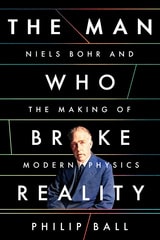
The Man Who Broke Reality
Niels Bohr and the Making of Modern PhysicsPhilip Ball
University of Chicago Press, 2026
From the brilliant Philip Ball, a thrilling biography of Nobel Prize–winning Danish physicist Niels Bohr, the most radical quantum mechanician of all.
In the first half of the twentieth century, the tremendous energy locked up in the nucleus of an atom was discovered and then liberated, bringing both the promise of utopia and the threat of apocalypse. The dawn of the nuclear age is often associated with Albert Einstein, whose iconic equation E = mc2 revealed the staggering energy available from radioactive transformation, or with J. Robert Oppenheimer, who led the project at Los Alamos to build the first nuclear bombs. But the person who arguably did more than any other to shape the Promethean era in which we now live was the Danish physicist Niels Bohr.
In The Man Who Broke Reality, renowned science communicator Philip Ball reveals that it was Bohr who first explained the physics of the nuclear atom, and it was his model of the atom’s dense nucleus that enabled scientists to understand how it could be split apart. Ball also shows how Bohr was the central figure in the development of quantum mechanics, the theory of matter and energy that destabilized centuries of thinking not just about the microscopic nature of the world but about physical reality itself.
Bohr’s story is the story of modern physics and its transformative impact on the world. But The Man Who Broke Reality is not merely an intellectual drama. It chronicles a heroic life lived in turbulent times, across two world wars, the Manhattan Project, and the arms race of the Cold War. And it establishes Bohr as one of the most profound, inventive, and iconoclastic thinkers of the twentieth century.
The Man Who Broke Reality
Niels Bohr and the Making of Modern PhysicsPhilip Ball
University of Chicago Press, 2026
From the brilliant Philip Ball, a thrilling biography of Nobel Prize–winning Danish physicist Niels Bohr, the most radical quantum mechanician of all.
In the first half of the twentieth century, the tremendous energy locked up in the nucleus of an atom was discovered and then liberated, bringing both the promise of utopia and the threat of apocalypse. The dawn of the nuclear age is often associated with Albert Einstein, whose iconic equation E = mc2 revealed the staggering energy available from radioactive transformation, or with J. Robert Oppenheimer, who led the project at Los Alamos to build the first nuclear bombs. But the person who arguably did more than any other to shape the Promethean era in which we now live was the Danish physicist Niels Bohr.
In The Man Who Broke Reality, renowned science communicator Philip Ball reveals that it was Bohr who first explained the physics of the nuclear atom, and it was his model of the atom’s dense nucleus that enabled scientists to understand how it could be split apart. Ball also shows how Bohr was the central figure in the development of quantum mechanics, the theory of matter and energy that destabilized centuries of thinking not just about the microscopic nature of the world but about physical reality itself.
Bohr’s story is the story of modern physics and its transformative impact on the world. But The Man Who Broke Reality is not merely an intellectual drama. It chronicles a heroic life lived in turbulent times, across two world wars, the Manhattan Project, and the arms race of the Cold War. And it establishes Bohr as one of the most profound, inventive, and iconoclastic thinkers of the twentieth century.
The Man Who Emptied Death Row
Governor George Ryan and the Politics of CrimeJames L. Merriner
Southern Illinois University Press, 2008
George H. Ryan, Illinois governor from 1999 to 2003, became nationally known for two significant and very different reasons. The first governor in the United States to clear out his state’s death row and put a moratorium on the death penalty, he was also convicted and sent to prison on corruption charges. The Man Who Emptied Death Row: Governor George Ryan and the Politics of Crime details the career of a man who both enhanced and tarnished the image of the highest office in Illinois and examines the political history and culture that shaped him.
Author James L. Merriner explores the two very different stories of George Ryan: the brave crusader against the death penalty and the petty crook. An extensive analysis of the official record, exclusive interviews, and previously undisclosed incidents in Ryan’s career expose why the governor pardoned or commuted the sentences of all 171 prisoners on Illinois’s death row before leaving office and how he later was convicted of eighteen counts of official corruption.
This biography traces Ryan’s family history and the Illinois political climate that influenced his development as a politician. Although Ryan championed “good-government” initiatives—organ donations, tougher drunken-driving and lobbyist disclosure laws—he never overcame a reputation as a wheeler-dealer, notes Merriner.
Merriner goes beyond Ryan’s life and career to explore the politics of crime, highlighting the successes and failures of the criminal justice system and suggesting how both white-collar fraud and violent crime shape politics. A fascinating story that reveals much about the way Illinois politics works, The Man Who Emptied Death Row will help determine how history will judge Illinois governor George Ryan.
The Man Who Flattened the Earth
Maupertuis and the Sciences in the EnlightenmentMary Terrall
University of Chicago Press, 2002
Beginning his scientific career as a mathematician in Paris, Maupertuis entered the public eye with a much-discussed expedition to Lapland, which confirmed Newton's calculation that the earth was flattened at the poles. He also made significant, and often intentionally controversial, contributions to physics, life science, navigation, astronomy, and metaphysics. Called to Berlin by Frederick the Great, Maupertuis moved to Prussia to preside over the Academy of Sciences there. Equally at home in salons, cafés, scientific academies, and royal courts, Maupertuis used his social connections and his printed works to enhance a carefully constructed reputation as both a man of letters and a man of science. His social and institutional affiliations, in turn, affected how Maupertuis formulated his ideas, how he presented them to his contemporaries, and the reactions they provoked.
Terrall not only illuminates the life and work of a colorful and important Enlightenment figure, but also uses his story to delve into many wider issues, including the development of scientific institutions, the impact of print culture on science, and the interactions of science and government. Smart and highly readable, Maupertuis will appeal to anyone interested in eighteenth-century science and culture.
The Man Who Is and Is Not There
The Poetry and Prose of Robert FrancisAndrew Stambuk
University of Massachusetts Press, 2011
Robert Francis (1901–1987), the author of eight volumes of poetry, an autobiography, a book of fiction, essays on poetry, and a reminiscence of Robert Frost, lived for most of his career on the outskirts of Amherst, Massachusetts, devoting himself to Yankee simplicity and self-renunciation derived from his reading of Thoreau. His preference for solitude and disinclination to write about or promote himself account for the elusiveness of his persona in his prose and poetry.
This book charts how Francis developed and elaborated this persona through distanced self-portraits in prose and through poems that both reveal and conceal the self of the poet. Folded into the study are discussions of Francis's pastoralism, his affinities with Emerson and Thoreau, his experimentation with new poetic forms, his protest against the Vietnam War and environmental despoliation, his homoeroticism, and a comparison of his poetry with that of Robert Frost. The book also explores Francis's characteristic attitude, figured as “hovering,” where his speaker is both subject and object, writing about himself while inhabiting the role of detached observer.
Complementing the emphasis on Francis's elusiveness, Andrew Stambuk offers readings of his poems attentive to aesthetic qualities that give them their particular reticence. Stambuk's sensitive evaluations underscore that Francis is a craftsman of intricate precisions whose work speaks to contemporary political and global concerns.
The Man Who Painted the Universe
The Story of a Planetarium in the Heart of the North WoodsRon Legro
Wisconsin Historical Society Press, 2015
The Man Who Painted the Universe: The Story of a Planetarium in the Heart of the North Woods introduces readers to the mild-mannered astronomy enthusiast whose creativity, ingenuity, fervor, and endurance realized a dream of galactic proportions. The story of this stargazer from Wisconsin’s North Woods so inspired two newspapermen, authors Ron Legro and Avi Lank, that they sought to document the story of the Kovac Planetarium for a new generation of stargazers and dreamers.
The Man Who Stayed Behind
Sidney Rittenberg and Amanda Bennett
Duke University Press, 2001
Both a memoir and a documentary history of the Chinese revolution from 1949 through the Cultural Revolution, The Man Who Stayed Behind provides a human perspective on China’s efforts to build a new society. Critical of both his own mistakes and those of the Communist leadership, Rittenberg nevertheless gives an even-handed account of a country that is now free of internal war for the first time in a hundred years.
The Man Who Stole Himself
The Slave Odyssey of Hans JonathanGisli Palsson
University of Chicago Press, 2016
The island nation of Iceland is known for many things—majestic landscapes, volcanic eruptions, distinctive seafood—but racial diversity is not one of them. So the little-known story of Hans Jonathan, a free Black man who lived and raised a family in early nineteenth-century Iceland, is improbable and compelling, the stuff of novels.
In The Man Who Stole Himself, Gisli Palsson lays out the story of Hans Jonathan (also known as Hans Jónatan) in stunning detail. Born into slavery in St. Croix in 1784, Hans was taken as a slave to Denmark, where he eventually enlisted in the navy and fought on behalf of the country in the 1801 Battle of Copenhagen. After the war, he declared himself a free man, believing that he was due freedom not only because of his patriotic service, but because while slavery remained legal in the colonies, it was outlawed in Denmark itself. He thus became the subject of one of the most notorious slavery cases in European history, which he lost. Then Hans ran away—never to be heard from in Denmark again, his fate unknown for more than two hundred years. It’s now known that Hans fled to Iceland, where he became a merchant and peasant farmer, married, and raised two children. Today, he has become something of an Icelandic icon, claimed as a proud and daring ancestor both there and among his descendants in America.
The Man Who Stole Himself brilliantly intertwines Hans Jonathan’s adventurous travels with a portrait of the Danish slave trade, legal arguments over slavery, and the state of nineteenth-century race relations in the Northern Atlantic world. Throughout the book, Palsson traces themes of imperial dreams, colonialism, human rights, and globalization, which all come together in the life of a single, remarkable man. Hans literally led a life like no other. His is the story of a man who had the temerity—the courage—to steal himself.
The Man Who Swam into History
The (Mostly) True Story of My Jewish FamilyBy Robert A. Rosenstone
University of Texas Press, 2005
The story begins with a grandfather who heroically escaped from Russia by swimming the Pruth River to Romania—or did he? Then there are stories of another grandfather who kept a lifelong mistress; grandmothers who were ignored except in the kitchen; migrations legal and illegal from Eastern Europe to Canada to California; racketeers on one side of the family and Communists on the other; and a West Coast adolescence in the McCarthy years. All of these (mostly true) stories form a Jewish family's history, a tale of dislocation and assimilation. But in the hands of award-winning historian Robert Rosenstone, they become much more. The fragments of memory so beautifully preserved in The Man Who Swam into History add unforgettable, human characters to the now familiar story of the Jewish diaspora in the twentieth century.
This combination memoir/short story collection recounts the Rosenstone family's passage from Romania to America. Robert Rosenstone tells the story not as a single, linear narrative, but through "tales, sequences, windows, moments, and fragments resurrected from the lives of three generations in my two parental families, set in five countries on two continents over the period of almost a century." This more literary and personal approach allows Rosenstone's relatives to emerge as distinct personalities, voices who quarrel and gossip, share their dreams and fears, and maintain the ties of a loving, if eccentric, family. Among the genre of "coming to America" tales, The Man Who Swam into History is a work of unique vision, one that both records and reconstructs the past even as it continuously—and humorously—questions the truth of its own assertions.
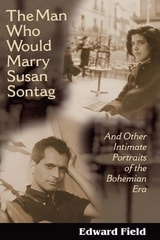
The Man Who Would Marry Susan Sontag
And Other Intimate Literary Portraits of the Bohemian EraEdward Field
University of Wisconsin Press, 2007
Long before Stonewall, young Air Force veteran Edward Field, fresh from combat in WWII, threw himself into New York’s literary bohemia, searching for fulfillment as a gay man and poet. In this vivid account of his avant-garde years in Greenwich Village and the bohemian outposts of Paris’s Left Bank and Tangier—where you could write poetry, be radical, and be openly gay—Field opens the closet door to reveal, as never been seen before, some of the most important writers of his time.
Here are young, beautiful Susan Sontag sitting at the feet of her idol Alfred Chester, who shrewdly plotted to marry her; May Swenson and her two loves; Paul and Jane Bowles in their ambiguous marriage; Frank O’Hara in and out of bed; Fritz Peters, the anointed son of Gurdjieff; and James Baldwin, Isabel Miller (Patience and Sarah), Tobias Schneebaum, Robert Friend, and many others. With its intimate portraits, Field’s memoir brings back a forgotten era—postwar bohemia—bawdy, comical, romantic, sad, and heroic.
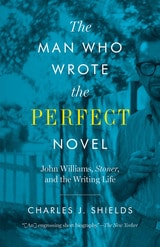
The Man Who Wrote the Perfect Novel
John Williams, Stoner, and the Writing LifeBy Charles J. Shields
University of Texas Press, 2018
When Stoner was published in 1965, the novel sold only a couple of thousand copies before disappearing with hardly a trace. Yet John Williams’s quietly powerful tale of a Midwestern college professor, William Stoner, whose life becomes a parable of solitude and anguish eventually found an admiring audience in America and especially in Europe. The New York Times called Stoner “a perfect novel,” and a host of writers and critics, including Colum McCann, Julian Barnes, Bret Easton Ellis, Ian McEwan, Emma Straub, Ruth Rendell, C. P. Snow, and Irving Howe, praised its artistry. The New Yorker deemed it “a masterly portrait of a truly virtuous and dedicated man.”
The Man Who Wrote the Perfect Novel traces the life of Stoner’s author, John Williams. Acclaimed biographer Charles J. Shields follows the whole arc of Williams’s life, which in many ways paralleled that of his titular character, from their shared working-class backgrounds to their undistinguished careers in the halls of academia. Shields vividly recounts Williams’s development as an author, whose other works include the novels Butcher’s Crossing and Augustus (for the latter, Williams shared the 1972 National Book Award). Shields also reveals the astonishing afterlife of Stoner, which garnered new fans with each American reissue, and then became a bestseller all over Europe after Dutch publisher Lebowski brought out a translation in 2013. Since then, Stoner has been published in twenty-one countries and has sold over a million copies.
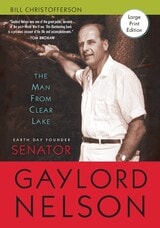
The Man from Clear Lake
Earth Day Founder Senator Gaylord NelsonBill Christofferson
University of Wisconsin Press, 2009
On Earth Day 1970 twenty million Americans displayed their commitment to a clean environment. It was called the largest demonstration in human history, and it permanently changed the nation’s political agenda. By Earth Day 2000 participation had exploded to 500 million people in 167 countries.
The seemingly simple idea—a day set aside to focus on protecting our natural environment—was the brainchild of U.S. Senator Gaylord Nelson of Wisconsin. It accomplished, far beyond his expectations, his lifelong goal of putting the environment onto the nation’s and the world’s political agendas.
A remarkable man, Nelson ranks as one of history’s leading environmentalists. He also played a major role as an early, outspoken opponent of the Vietnam War, and as a senate insider was a key player in civil rights, poverty, civil liberties and consumer protection issues.
The life of Nelson, a small town boy who learned his values and progressive political principles at an early age, is woven through the political history of the twentieth century. Nelson’s story intersects at times with Fighting Bob La Follette, Joe McCarthy, and Bill Proxmire in Wisconsin, and with George McGovern, Lyndon Johnson, Hubert Humphrey, Russell Long, Walter Mondale, John F. Kennedy, and others on the national scene.
Winner, Elizabeth A. Steinberg Prize, University of Wisconsin Press
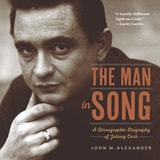
The Man in Song
A Discographic Biography of Johnny CashJohn M. Alexander
University of Arkansas Press, 2018
There have been many books written about Johnny Cash, but The Man in Song is the first to examine Cash’s incredible life through the lens of the songs he wrote and recorded. Music journalist and historian John Alexander has drawn on decades of studying Cash’s music and life, from his difficult depression-era Arkansas childhood through his death in 2003, to tell a life story through songs familiar and obscure. In discovering why Cash wrote a given song or chose to record it, Alexander introduces readers anew to a man whose primary consideration of any song was the difference music makes in people’s lives, and not whether the song would become a hit.
The hits came, of course. Johnny Cash sold more than fifty million albums in forty years, and he holds the distinction of being the only performer inducted into the Rock and Roll Hall of Fame, the Country Music Hall of Fame, the Songwriters Hall of Fame, and the Gospel Music Hall of Fame. The Man in Song connects treasured songs to an incredible life. It explores the intertwined experience and creativity of childhood trauma. It rifles through the discography of a life: Cash’s work with the Tennessee Two at Sam Phillips’s Sun Studios, the unique concept albums Cash recorded for Columbia Records, the spiritual songs, the albums recorded live at prisons, songs about the love of his life, June Carter Cash, songs about murder and death and addiction, songs about ramblers, and even silly songs.
Appropriate for both serious country and folk music enthusiasts and those just learning about this musical legend, The Man in Song will appeal to a fan base spanning generations. Here is a biography for those who first heard “I Walk the Line” in 1956, a younger generation who discovered Cash through songs like his cover of Trent Reznor’s “Hurt,” and everyone in between.
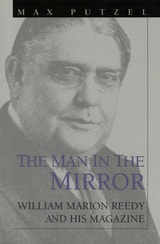
The Man in the Mirror
William Marion Reedy and His MagazineMax Putzel
University of Missouri Press, 1998
A flamboyant and controversial figure, William Marion Reedy was one of the most successful literary entrepreneurs of his day. Editor of the Mirror, a St. Louis weekly, from 1891 to 1920, Reedy played a large role in breaking down the genteel literary tradition, developing a native poetry, and helping to form some fifty significant poets. Emily Dickinson, Stephen Crane, Ezra Pound, Edwin Arlington Robinson, Amy Lowell, Sara Teasdale, Carl Sandburg, and Vachel Lindsay are just a few of the writers whose works Reedy featured in his magazine.
The Man in the Mirror offers a colorful description of Reedy's boyhood in St. Louis during the turbulent period following the Civil War. This well-documented biography follows Reedy throughout his years as a reporter in the early days of the St. Louis Post-Dispatch and Globe-Democrat and as editor of the St. Louis Star. Only seven years after Reedy founded the Mirror as a national journal of opinion--a potpourri of political comment, social gossip, and literary miscellany—the magazine's circulation far surpassed that of the Dial, Atlantic Monthly, or Nation.
Max Putzel truly conveys the spirit and personality of Reedy by carefully examining his life within the context of the literary world he influenced so significantly. Full chapters are devoted to his relationships with Theodore Dreiser, Ezra Pound, Vachel Lindsay, Amy Lowell, and others. Edgar Lee Masters, whose Spoon River Anthology first appeared in the Mirror, called Reedy both the "Literary Boss of the Middle West" and his best friend. In fact, Reedy had quite a range of friends, from librarians to politicians, St. Louis locals to Teddy Roosevelt. His personal effect on people, writers and readers alike, is what has made him such an important historical figure.
It is a tribute to Reedy's critical judgment that the reputations he helped to build would later overshadow his own. The Man in the Mirror, lauded as "the first substantial study of Reedy's work" by American Literature, reveals Reedy's notable contribution to the literary world.
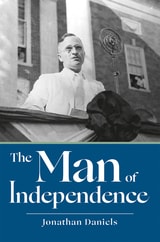
The Man of Independence
Jonathan Daniels
University of Missouri Press, 1998
Having worked closely with Harry S. Truman in the triumphant campaign of 1948, Jonathan Daniels believed that President Truman was an "everyday" American, an ordinary human who aspired to greatness and achieved it. Thus, it was Daniels's intention that The Man of Independence not be a conventional biography; rather, he wanted it to reveal in real terms "the Odyssey of the 'everyday' American through our times." As a result, this comprehensive work not only presents Truman's life, it also details the development of the America in which the president grew up.
Truman spent his youth and his political life believing that old- fashioned, determined conservatism was vital to the preservation of personal liberty. Daniels re-creates Truman's remarkable journey through life—employing newspapers, letters, memos, family papers, as well as interviews with Truman, his family, and his close acquaintances. In the process, Daniels provides powerful evocations of the time during which Truman lived.
Daniels tells this extraordinary story by following this simple farm boy from Missouri through his youth and his years as a farmer, a veteran, and a businessman, on to his early career in politics, and then his presidency. Along the way, Daniels deals with issues, events, and ideas that were part of Missouri and American politics in the 1920s, 1930s, and 1940s; ultimately, he gives us the Truman who was to become the legend.
This inside account provides thought-provoking and personal information about Truman. His relationship with Thomas Pendergast, the seeming conflict between Truman's midwestern conservatism and his belief in equality for American blacks, and his momentous decision to use the atomic bomb to end the war—these are just a few of the topics touched on. Ending in 1949 when Truman was for the second time sworn in as president, The Man of Independence provides a fascinating and valuable look at one of America's most important and beloved presidents, as well as a crucial look at the America from which he emerged.
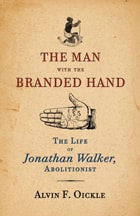
The Man with the Branded Hand
The Life of Jonathan Walker, AbolitionistAlvin F. Oickle
Westholme Publishing, 2011
Captured While Attempting to Smuggle Slaves to Freedom in 1844, the Only Man Branded in a Courtroom by a United States Marshal
Sailing around the Florida Keys in 1844, forty-five-year-old Jonathan Walker had a price on his head. On board the small boat he had built that winter in Alabama were seven fugitives from slavery. The Cape Cod sailor and abolitionist was wanted in Pensacola, Florida, for his crime: stealing slaves. The slaves’ owners had posted $100 each as reward money for their property and $1,000 for Walker’s apprehension. Only a day’s sail from their goal of freedom in British-controlled Bahamas, Walker and the slaves were stopped and seized by bounty hunters and taken to a Key West court. Ordered back to Pensacola for trial, Walker ended up spending a year in jail. He was fined and sentenced to stand in the pillory; in addition, he was to suffer a unique punishment in American history: while a packed courtroom watched, a United States marshal was ordered to use a hot branding iron to burn the letters SS, for “slave stealer,” into Walker’s right hand.
Walker survived his ordeal, spending much of his incarceration in isolation. Once released, he remained active in the antislavery movement even while he and his devoted wife Jane raised their nine children. His attempt to help form a new colony in Mexico for runaway American slaves also led to punishing experiences for Walker and one of his sons. Living later with his family in Plymouth, Massachusetts, in the years before the Civil War, Walker made room in his crowded house to shelter runaway slaves along the Underground Railroad. He participated in abolitionist lecture tours across the North where he would be urged to reveal his branded hand—made famous by John Greenleaf Whittier’s poem “The Branded Hand”—to astonished audiences. Too old to enlist in the Civil War, Walker instead headed to Virginia in the war’s final year to help educate African Americans fleeing Confederate forces. In The Man With the Branded Hand: The Life of Jonathan Walker, Abolitionist, distinguished journalist Alvin F. Oickle relates this entire remarkable story of a life devoted to the supposition that “all men are created equal.”
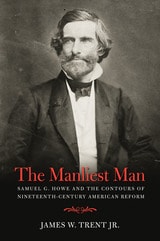
The Manliest Man
Samuel G. Howe and the Contours of Nineteenth-Century American ReformJames W. Trent
University of Massachusetts Press, 2012
A native of Boston and a physician by training, Samuel G. Howe (1801–1876) led a remarkable life. He was a veteran of the Greek War of Independence, a fervent abolitionist, and the founder of both the Perkins School for the Blind and the Massachusetts School for Idiotic and Feeble-Minded Children. Married to Julia Ward Howe, author of “Battle Hymn of the Republic,” he counted among his friends Senator Charles Sumner, public school advocate Horace Mann, and poet Henry Wadsworth Longfellow.
Always quick to refer to himself as a liberal, Howe embodied the American Renaissance's faith in the perfectibility of human beings, and he spoke out in favor of progressive services for disabled Americans. A Romantic figure even in his own day, he embraced a notion of manliness that included heroism under fire but also compassion for the underdog and the oppressed. Though hardly a man without flaws and failures, he nevertheless represented the optimism that characterized much of antebellum American reform.
The first full-length biography of Samuel G. Howe in more than fifty years, The Manliest Man explores his life through private letters and personal and public documents. It offers an original view of the reformer's personal life, his association with social causes of his time, and his efforts to shape those causes in ways that allowed for the greater inclusion of devalued people in the mainstream of American life.
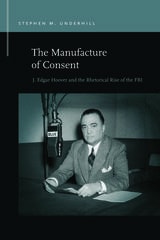
The Manufacture of Consent
J. Edgar Hoover and the Rhetorical Rise of the FBIStephen M. Underhill
Michigan State University Press, 2020
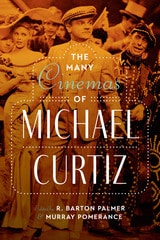
The Many Cinemas of Michael Curtiz
Edited by R. Barton Palmer and Murray Pomerance
University of Texas Press, 2018
Director Michael Curtiz was the mastermind behind some of the most iconic films of classical Hollywood—Casablanca, Yankee Doodle Dandy, The Sea Hawk, White Christmas, and Mildred Pierce, to name only a few. The most prolific and consistently successful Hollywood generalist with an all-embracing interest in different forms of narrative and spectacle, Curtiz made around a hundred films in an astonishing range of genres: action, biopics, melodramas/film noir, musicals, and westerns. But his important contributions to the history of American film have been overlooked because his broadly varied oeuvre does not present the unified vision of filmmaking that canonical criticism demands for the category of “auteur.”
Exploring his films and artistic practice from a variety of angles, including politics, gender, and genre, The Many Cinemas of Michael Curtiz sheds new light on this underappreciated cinematic genius. Leading film studies scholars offer fresh appraisals of many of Curtiz’s most popular films, while also paying attention to neglected releases of substantial historical interest, such as Noah’s Ark , Night and Day, Virginia City, Black Fury, Mystery of the Wax Museum, and Female. Because Curtiz worked for so long and in so many genres, this analysis of his work becomes more than an author study of a notable director. Instead, The Many Cinemas of Michael Curtiz effectively adds a major chapter to the history of Hollywood’s studio era, including its internationalism and the significant contributions of European émigrés.
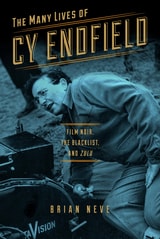
The Many Lives of Cy Endfield
Film Noir, the Blacklist, and <i>Zulu</i>Brian Neve
University of Wisconsin Press, 2015
The Many Lives of Cy Endfield is the first book on this fascinating figure. The fruit of years of archival research and personal interviews by Brian Neve, it documents Endfield’s many identities: among them second-generation immigrant, Jew, Communist, and exile. Neve paints detailed scenes not only of the political and personal dramas of the blacklist era, but also of the attempts by Hollywood directors in the postwar 1940s and early 1950s to address social and political controversies of the day. Out of these efforts came two crime melodramas (what would become known as film noir) on inequalities of class and race: The Underworld Story and The Sound of Fury (also known as Try and Get Me!). Neve reveals the complex production and reception histories of Endfield’s films, which the critic Jonathan Rosenbaum saw as reflective of “an uncommon intelligence so radically critical of the world we live in that it’s dangerous.”
The Many Lives of Cy Endfield is at once a revealing biography of an independent, protean figure, an insight into film industry struggles, and a sensitive and informed study of an underappreciated body of work.
Best Five Books of the Year list, Iranian 24 Monthly, London UK
“Make[s] a case for [Endfield’s] distinctive voice while tracing the way struggle, opposition, and thwarted ambition both defined his life and became the powerful themes of his best work.”—Cineaste
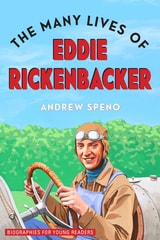
The Many Lives of Eddie Rickenbacker
Andrew Speno
Ohio University Press, 2020
The life story of a daredevil who became a war hero will fascinate adventurous young readers with its tales of survival.
At age thirteen, following the death of his father, young Eddie dropped out of school and joined the workforce. Through a combination of smarts, hard work, and perseverance, Rickenbacker would grow up to become an automobile mechanic, a race car driver, a fighter pilot, an entrepreneur, a war hero, a business executive, and a staunch advocate for hard work and personal responsibility.
Along the way he lived on the line between recklessness and courage. He survived dozens of accidents, coming close to death more than once. During the earliest years of American automobile racing, Rickenbacker was “the most daring and withal the most cautious driver” on the circuit. How could he have been both daring and cautious? This book invites young readers to decide for themselves as they follow Rickenbacker on his many hair-raising adventures.
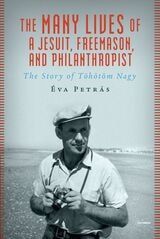
The Many Lives of a Jesuit, Freemason, and Philanthropist
The Story of Töhötöm NagyÉva Petrás
Central European University Press, 2024
The life of Töhötöm Nagy (1908–1979), Jesuit, Mason, and secret service agent, offers fascinating insights into interwar Hungary, the Catholic Church and Vatican diplomacy, Freemasonry, and the activities of communist state security service.
As a young Jesuit Nagy was one of the leaders of a successful Catholic youth movement in interwar Hungary. After World War II he played an important role acting as an intermediary between the Vatican, the Red Army, and the Hungarian Catholic Church. After being sent to South America, he was attracted by liberation theology, but left the Society of Jesus, joined the Freemasons, and did social and philanthropic work in the slums of Buenos Aires. However, in the late 1960s he agreed to work for the Hungarian state security service in return for his repatriation. This latter period is reconstructed from the files of the Historical Archives of State Security in Budapest. Éva Petrás writes with empathy but with a sense of distance of the courage and restless energy of her subject. Her discussion of the limits of free choice and Nagy’s intense struggle to live a meaningful life make this biography breathtaking.

The Many Meanings of Mina
Popular Music Stardom in Post-War ItalyRachel Haworth
Intellect Books, 2022
Mina—or Anna Maria Mazzini—is an Italian popular music icon whose sixty-year career has come to represent a range of diverse meanings. She is one of the best-loved popular music stars in Italy and abroad, with a large fan base across Europe, Asia, and South America. Her career began in the late 1950s and reached its peak in the 1960s and 1970s. Despite having retired from public appearances in the late 1970s, Mina remains iconic to this day. Her star status is exemplary of how stardom is constructed and what it reveals about the society from which it springs. This book explores Mina’s star image and iconic status, tracing the process by which she has come to embody a revelation of the values and ideals of contemporary Italian society.
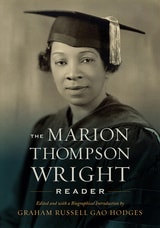
The Marion Thompson Wright Reader
Edited and with a Biographical Introduction by Graham Russell Gao HodgesGraham Russell Gao Hodges
Rutgers University Press, 2022
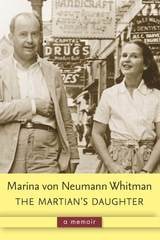
The Martian's Daughter
A MemoirMarina von Neumann Whitman
University of Michigan Press, 2013
One of the five Hungarian scientific geniuses dubbed "the Martians" by their colleagues, John von Neumann is often hailed as the greatest mathematician of the twentieth century and even as the greatest scientist after Einstein. He was a key figure in the Manhattan Project; the inventor of game theory; the pioneer developer of the modern stored-program electronic computer; and an adviser to the top echelons of the American military establishment. In The Martian's Daughter, Marina von Neumann Whitman reveals intimate details about the famed scientist and explores how the cosmopolitan environment in which she was immersed, the demanding expectations of her parents, and her own struggles to emerge from the shadow of a larger-than-life parent shaped her life and work.
Unfortunately, von Neumann did not live to see his daughter rise to become the first or highest-ranking woman in a variety of arenas. Whitman became a noted academic during the 1960s and '70s, casting her teaching and writing in the framework of globalization before the word had been invented; became the first woman ever to serve on the President's Council of Economic Advisers and participated actively in U.S. efforts to reshape the international monetary and financial system during the early 1970s; pioneered the role of women on the boards of leading multinational corporations; and became the highest-ranking female executive in the American auto industry in the 1980s. In her memoir, Whitman quotes from personal letters from her father and describes her interactions with such figures as Roger Smith of GM and President Nixon. She also details the difficulties she encountered as an early entrant into a world dominated by men and how she overcame the obstacles to, in her words, "have it all."
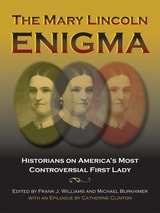
The Mary Lincoln Enigma
Historians on America's Most Controversial First LadyEdited by Frank J. Williams and Michael Burkhimer, with an Epilogue by Catherine Clinton
Southern Illinois University Press, 2012
Mary Lincoln is a lightning rod for controversy. Stories reveal widely different interpretations, and it is impossible to write a definitive version of her life that will suit everyone. The thirteen engaging essays in this collection introduce Mary Lincoln’s complex nature and show how she is viewed today.
The authors’ explanations of her personal and private image stem from a variety of backgrounds, and through these lenses—history, theater, graphic arts, and psychiatry—they present their latest research and assessments. Here they reveal the effects of familial culture and society on her life and give a broader assessment of Mary Lincoln as a woman, wife, and mother. Topics include Mary’s childhood in Kentucky, the early years of her marriage to Abraham, Mary’s love of travel and fashion, the presidential couple’s political partnership, and Mary’s relationship with her son Robert.
The fascinating epilogue meditates on Mary Lincoln’s universal appeal and her enigmatic personality, showcasing the dramatic differences in interpretations. With gripping prose and in-depth documentation, this anthology will capture the imagination of all readers.
University Press Books for Public and Secondary Schools 2013 edition
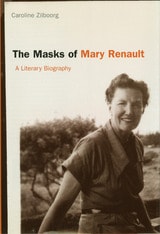
The Masks of Mary Renault
A Literary BiographyCaroline Zilboorg
University of Missouri Press, 2001
Born Eileen Mary Challans in London in 1905, Mary Renault wrote six successful contemporary novels before turning to the historical fiction about ancient Greece for which she is best known. While Renault's novels are still highly regarded, her life and work have never been completely examined. Caroline Zilboorg seeks to remedy this in The Masks of Mary Renault by exploring Renault's identity as a gifted writer and a sexual woman in a society in which neither of these identities was clear or easy.
Although Renault's life was anything but ordinary, this fact has often been obscured by her writing. The daughter of a doctor, she grew up comfortably and attended a boarding school in Bristol. She received a degree in English from St. Hugh's College in Oxford in 1928, but she chose not to pursue an academic career. Instead, she decided to attend the Radcliffe Infirmary in Oxford, where she trained to be a nurse. With the outbreak of the Second World War, she was assigned to the Winford Emergency Hospital in Bristol and briefly worked with Dunkirk evacuees. She went on to work in the Radcliffe Infirmary's brain surgery ward and was there until 1945.
It was during her nurse's training that Renault met Julie Mullard, who became her lifelong companion. This important lesbian relationship both resolved and posed many problems for Renault, not the least of which was how she was to write about issues at once intensely personal and socially challenging. In 1939, Renault published her first novel under a pseudonym in order to mask her identity. It was a time when she was struggling not only with her vocation (nursing and writing), but also with her sexual identity in the social and moral context of English life during the war.
In 1948, Renault left England with Mullard for South Africa and never returned. It was in South Africa that she made the shift from her early contemporary novels of manners to the mature historical novels of Hellenic life. The classical settings allowed Renault to mask material too explosive to deal with directly while simultaneously giving her an "academic" freedom to write about subjects vital to her—among them war, peace, career, women's roles, female and male homosexuality, and bisexuality.
Renault's reception complicates an understanding of her achievement, for she has a special status within the academic community, where she is both widely read and little written about. Her interest in sexuality and specifically in homosexuality and bisexuality, in fluid gender roles and identities, warrants a rereading and reevaluation of her work. Eloquently written and extensively researched, The Masks of Mary Renault will be of special value to anyone interested in women's studies or English literature.
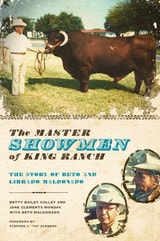
The Master Showmen of King Ranch
The Story of Beto and Librado MaldonadoBy Betty Bailey Colley and Jane Clements Monday, with Beto Maldonado
University of Texas Press, 2009
Winner, San Antonio Conservation Society Citation, 2011
Texas's King Ranch has become legendary for a long list of innovations, the most enduring of which is the development of the first official cattle breed in the Americas, the Santa Gertrudis. Among those who played a crucial role in the breed's success were Librado and Alberto "Beto" Maldonado, master showmen of the King Ranch. A true "bull whisperer," Librado Maldonado developed a method for gentling and training cattle that allowed him and his son Beto to show the Santa Gertrudis to their best advantage at venues ranging from the famous King Ranch auctions to a Chicago television studio to the Dallas–Fort Worth airport. They even boarded a plane with the cattle en route to the International Fair in Casablanca, Morocco, where they introduced the Santa Gertrudis to the African continent.
In The Master Showmen of King Ranch, Beto Maldonado recalls an eventful life of training and showing King Ranch Santa Gertrudis. He engagingly describes the process of teaching two-thousand-pound bulls to behave "like gentlemen" in the show ring, as well as the significant logistical challenges of transporting them to various high-profile venues around the world. His reminiscences, which span more than seventy years of King Ranch history, combine with quotes from other Maldonado family members, co-workers, and ranch owners to shed light on many aspects of ranch life, including day-to-day work routines, family relations, women's roles, annual celebrations, and the enduring ties between King Ranch owners and the vaquero families who worked on the ranch through several generations.
The Maverick Spirit
Building The New NevadaRichard O. Davies
University of Nevada Press, 1998
A collection of biographical essays on fourteen contemporary Nevadans. The subjects of the essays are Maude Frazier; Moe Dalitz; James B. McMillan; William F. Harrah; Hank Greenspun; Alan Bible; Robert Laxalt; Grant Sawyer; Molly Flagg Knudtsen; Paul Laxalt; Steve Wynn; William Raggio; Sue Wagner; and Jerry Tarkanian.
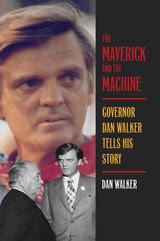
The Maverick and the Machine
Governor Dan Walker Tells His StoryDan Walker
Southern Illinois University Press, 2007
Best Memoir of 2008, San Diego Book Awards
Illinois State Historical Society Certificate of Excellence, 2008
The Meanings of J. Robert Oppenheimer
Lindsey Michael Banco
University of Iowa Press, 2016
The Meanings of J. Robert Oppenheimer examines how he has been represented over the past seven decades in biographies, histories, fiction, comics, photographs, film, television, documentaries, theater, and museums. Lindsey Michael Banco gathers an unprecedented group of cultural texts and seeks to understand the multiple meanings Oppenheimer has held in American popular culture since 1945. He traces the ways these representations of Oppenheimer have influenced public understanding of the atomic bomb, technology, physics, the figure of the scientist, the role of science in war, and even what it means to pursue knowledge of the world around us. Questioning and unpacking both how and why Oppenheimer is depicted as he is across time and genre, this book is broad in scope, profound in detail, and offers unique insights into the rise of nuclear culture and how we think about the relationship between history, imagination, science, and nuclear weapons today.
The Memoir and the Memoirist
Reading and Writing Personal NarrativeThomas Larson
Ohio University Press, 2007
The memoir is the most popular and expressive literary form of our time. Writers embrace the memoir and readers devour it, propelling many memoirs by relative unknowns to the top of the best-seller list. Writing programs challenge authors to disclose themselves in personal narrative. Memoir and personal narrative urge writers to face the intimacies of the self and ask what is true.
In The Memoir and the Memoirist, critic and memoirist Thomas Larson explores the craft and purpose of writing this new form. Larson guides the reader from the autobiography and the personal essay to the memoir—a genre focused on a particularly emotional relationship in the author’s past, an intimate story concerned more with who is remembering, and why, than with what is remembered.
The Memoir and the Memoirist touches on the nuances of memory, of finding and telling the truth, and of disclosing one’s deepest self. It explores the craft and purpose of personal narrative by looking in detail at more than a dozen examples by writers such as Mary Karr, Frank McCourt, Dave Eggers, Elizabeth Wurtzel, Mark Doty, Nuala O’Faolain, Rick Bragg, and Joseph Lelyveld to show what they reveal about themselves. Larson also opens up his own writing and that of his students to demonstrate the hidden mechanics of the writing process.
For both the interested reader of memoir and the writer wrestling with the craft, The Memoir and the Memoirist provides guidance and insight into the many facets of this provocative and popular art form.
The Memoirs of Harry S. Truman
A Reader's EditionEdited by Raymond H. Geselbracht
University of Missouri Press, 2027
The Memoirs of Princess Dashkova
Ekaterina Romanovna Dashkova
Duke University Press, 1995
Originally written in French, first published in English, and long out of print, Dashkova’s Memoirs tell the story of a woman who at age eighteen played an important role in the coup that brought Catherine the Great to the throne. The relationship between these two women, often tense, is a central theme throughout this story. Dashkova, occupying the highly unusual position of both stateswoman and mother, also reveals her own path between the demands and limitations of the "private" and "public" spheres of her society. She provides a view of the expectations of Russian aristocratic women, the possibilities available to them, and the ways in which gender roles were conceived in the eighteenth century.
With a new introduction by Jehanne M Gheith, The Memoirs of Princess Dashkova will renew interest in the life of a fascinating woman for students of Russian history, women’s studies, and eighteenth-century studies. It will be a significant text for those engaged in the cross-cultural study of the traditions of women’s autobiographical writing.
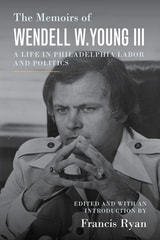
The Memoirs of Wendell W. Young III
A Life in Philadelphia Labor and PoliticsFrancis Ryan
Temple University Press, 2019
Philadelphia native Wendell W. Young III was one of the most important American labor leaders in the last half of the twentieth century. An Acme Markets clerk in the 1950s and ’60s, he was elected top officer of the Retail Clerks Union when he was twenty-four. His social justice unionism sought to advance wages while moving beyond collective bargaining to improve the conditions of the working-class majority, whether in a union or not. Young quickly gained a reputation for his independence, daring at times to publicly criticize the policies of the city’s powerful AFL-CIO leadership and tangle with the city’s political machine.
Editor Francis Ryan, whose introduction provides historical context, interviewed Young about his experiences working in the region’s retail and food industry, measuring the changes over time and the tangible impact that union membership had on workers. Young also describes the impact of Philadelphia’s deindustrialization in the 1970s and ’80s and recounts his activism for civil rights and the anti-war movements as well as on John F. Kennedy’s presidential campaign.
The Memoirs of Wendell W. YoungIII provides the most extensive labor history of late twentieth-century Philadelphia yet written.
The Memory Sessions
Suzanne Farrell Smith
Bucknell University Press, 2019
Published by Bucknell University Press. Distributed worldwide by Rutgers University Press.
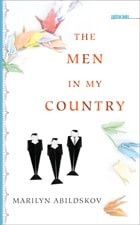
The Men in My Country
Marilyn Abildskov
University of Iowa Press, 2004
The Men in My Country is the story of an American woman living and loving in Japan. Satisfied at first to observe her exotic surroundings, the woman falls in love with the place, with the light, with the curve of a river, with the smell of bonfires during obon, with blue and white porcelain dishes, with pencil boxes, and with small origami birds. Later, struggling for a deeper connection—“I wanted the country under my skin”—Abildskov meets the three men who will be part of her transformation and the one man with whom she will fall deeply in love.
A travel memoir offering an artful depiction of a very real place, The Men in My Country also covers the terrain of a complex emotional journey, tracing a geography of the heart, showing how we move to be moved, how in losing ourselves in a foreign place we can become dangerously—and gloriously—undone.
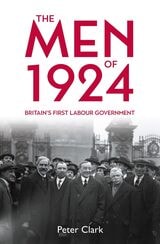
The Men of 1924
Britain’s First Labour GovernmentPeter Clark
Haus Publishing, 2023
In January of 1924, the cabinet of the first Labour government consisted of twenty white, middle-aged men, as it had for generations. But the election also represented a radical departure from government by the ruling class. Most members of the administration had left school by the age of fifteen. Five of them had started work by the time they were twelve years old. Three were working down the mines before they entered their teens. Two were illegitimate, one was abandoned at birth, and three were of Irish immigrant descent. For the first time in Britain’s history, the cabinet could truly be said to represent all of Britain’s social classes. This unheralded revolution in representation is the subject of Peter Clark’s fascinating new book, The Men of 1924. Who were these men? Clark’s vivid portrayal is full of evocative portraits of a new breed of politician, the forerunners of all those who, later in the last century and this one, overcame a system from which they had been excluded for too long.
The Men of Cajamarca
A Social and Biographical Study of the First Conquerors of PeruBy James Lockhart
University of Texas Press, 1972
In November 1532, a group of 168 Spaniards seized the Inca emperor Atahuallpa in the town of Cajamarca, in the northern Peruvian highlands. Their act, quickly taken as a symbol of the conquest of a vast empire, brought them unprecedented rewards in gold and silver; it made them celebrities, gave them first choice of positions of honor and power in the new Peru of the Spaniards, and opened up the possibility of a splendid life at home in Spain, if they so desired. Thus they became men of consequence, at the epicenter of a swift and irrevocable transformation of the Andean region. Yet before that memorable day in Cajamarca they had been quite unexceptional, a reasonable sampling of Spaniards on expeditions all over the Indies at the time of the great conquests.
The Men of Cajamarca is perhaps the fullest treatment yet published of any group of early Spaniards in America. Part I examines general types, characteristics, and processes visible in the group as representative Spanish immigrants, central to the establishment of a Spanish presence in the New World’s richest land. The intention is to contribute to a changing image of the Spanish conqueror, a man motivated more by pragmatic self-interest than by any love of adventure, capable and versatile as often as illiterate and rough. Aiming at permanence more than new landfalls, these men created the governmental units and settlement distribution of much of Spanish America and set lasting patterns for a new society.
Part II contains the men’s individual biographies, ranging from a few lines for the most obscure to many pages of analysis for the best-documented figures. The author traces the lives of the men to their beginnings in Spain and follows their careers after the episode in Cajamarca.
The Merchant John Askin
Furs and Empire at British MichilimackinacJustin M. Carroll
Michigan State University Press, 2017
The Merchant Prince of Black Chicago
Anthony Overton and the Building of a Financial EmpireRobert E. Weems Jr.
University of Illinois Press, 2020
Robert E. Weems Jr. restores Overton to his rightful place in American business history. Dispelling stubborn myths, he traces Overton's rise from mentorship by Booker T. Washington, through early failures, to a fateful move to Chicago in 1911. There, Overton started a popular magazine aimed at African American women that helped him dramatically grow his cosmetics firm. Overton went on to become the first African American to head a major business conglomerate, only to lose significant parts of his businesses—and his public persona as ”the merchant prince of his race”—in the Depression, before rebounding once again in the early 1940s.
Revealing and panoramic, The Merchant Prince of Black Chicago weaves the fascinating life story of an African American trailblazer through the eventful history of his times.
The Mercy of Eternity
A Memoir of Depression and GraceEric G. Wilson
Northwestern University Press, 2010
As a bright student-athlete on his way to West Point, Eric Wilson seemed to be well on the way to a fulfilling life. Yet he was haunted by overwhelming feelings of his deep insignificance. As he grew older, the traditional means of fulfillment—marriage and professional success—did nothing to assuage the descents into darkness and destructive behavior. Therapy and medication have offered some relief, but the birth of his daughter ultimately forces his hand. In some ways, the answer has been in front of him the whole time, for English professor Wilson finds in the literature of Coleridge, Blake, and others the lessons that depression might teach. When he comes upon “negative theology”—the school of thought that finds God in the “dark night of the soul”—Wilson discovers the framework for a radical call to forgive depression.
Only by forgiving this capricious, impersonal force is Wilson able to find the grace to move beyond the cycles of destructive self-absorption.Wilson admits that he continues to struggle, but in facing his depression instead of trying to escape it, he finds wisdom and grace.
Beautifully and accessibly written, The Mercy of Eternity is a brief yet profound meditation on the largest question of life.
The Message of the City
Dawn Powell’s New York Novels, 1925–1962Patricia E. Palermo
Ohio University Press, 2016
Dawn Powell was a gifted satirist who moved in the same circles as Dorothy Parker, Ernest Hemingway, renowned editor Maxwell Perkins, and other midcentury New York luminaries. Her many novels are typically divided into two groups: those dealing with her native Ohio and those set in New York. “From the moment she left behind her harsh upbringing in Mount Gilead, Ohio, and arrived in Manhattan, in 1918, she dove into city life with an outlander’s anthropological zeal,” reads a recent New Yorker piece about Powell, and it is those New York novels that built her reputation for scouring wit and social observation.
In this critical biography and study of the New York novels, Patricia Palermo reminds us how Powell earned a place in the national literary establishment and East Coast social scene. Though Powell’s prolific output has been out of print for most of the past few decades, a revival is under way: the Library of America, touting her as a “rediscovered American comic genius,” released her collected novels, and in 2015 she was posthumously inducted into the New York State Writer’s Hall of Fame.
Engaging and erudite, The Message of the City fills a major gap in in the story of a long-overlooked literary great. Palermo places Powell in cultural and historical context and, drawing on her diaries, reveals the real-life inspirations for some of her most delicious satire.
The Metal Life Car
The Inventor, the Impostor, and the Business of LifesavingGeorge E. Buker
University of Alabama Press, 2008
Engineering the battlefield—one armored advance at a time.
For centuries sailing vessels crept along the coastline, ready to flee ashore in case of danger or trouble; this worked well until weather or poor sailing drove these ships against an unforgiving coast. Saviors and salvors (often the same people) struggled to rescue both humans and cargo, often with results as tragic for them as for the sailors and passengers.
Joseph Francis (b. Boston, Massachusetts, 1801) was an inventor who also had the ability to organize a business to produce his inventions and the salesmanship to sell his products. His metal lifeboats, first used in survey expeditions in Asia Minor and Central America, came into demand among the world’s merchant marine, the U.S. Navy, and the U.S. Revenue Service. His corrugated “life car” was the keystone to development of the U.S. Life-Saving Service. Francis’s metal bateaux and lifeboats played an important role in the Third Seminole War in Florida. His metal pontoon army wagons served in the trans-Mississippi campaigns against the Indians.
In Europe, he was acclaimed as a genius and sold patent rights to shipyards in Liverpool and the Woolwich Arsenal in England, Le Havre seaport in France, in the free city of Hamburg, and in the Russian Empire. But while Francis was busy in Europe, Captain Douglass Ottinger, U.S. Revenue Marine Service, claimed to be the inventor of Francis’s life car and obtained support in the U.S. Congress and the Patent Office for his claim. Francis had to battle for decades to prove his rights, and Americans remained generally unfamiliar with his devices, thereby condemning Civil War armies to inferior copies while Europe was using, and acclaiming, his inventions.
The Mind is Not the Heart
Recollections of a Woman PhysicianEva J. Salber
Duke University Press, 1993
The Miniaturists
Barbara Browning
Duke University Press, 2022