Results by title
4917 books match the query 'Philosophy' and 1267 start with t
The Later Works of John Dewey, Volume 4, 1925 - 1953
1929: The Quest for CertaintyJohn Dewey. Edited by Jo Ann Boydston
Southern Illinois University Press, 2008
The Later Works of John Dewey, Volume 5, 1925 - 1953
1929-1930, Essays, The Sources of a Science of Education, Individualism, Old and New, and Construction and CriticismJohn Dewey. Edited by Jo Ann Boydston
Southern Illinois University Press, 2008
With the exception of The Quest for Certainty (Volume 4) this fifth volume brings together Dewey’s writings for the 1929–1930 period.
During this time Dewey published 4 books and 50 articles on philosophical, educational, political, and social issues. His philosophical essays include “What Humanism Means to Me” and “What I Believe,” both of which express Dewey’s faith in man’s potentialities and intelligence, and a lively Journal of Philosophy exchange with Ernest Nagel, William Ernest Hocking, C. I. Lewis, and F. J. E. Woodbridge. Educational writings include The Sources of a Science of Education. The contents of this volume reflect Dewey’s increasing involvement in social and political problems.
The Later Works of John Dewey, Volume 6, 1925 - 1953
1931-1932, Essays, Reviews, and MiscellanyJohn Dewey. Edited by Jo Ann Boydston
Southern Illinois University Press, 2008
Except for Dewey’s and James H. Tufts’ 1932 Ethics (Volume 7 of The Later Works), this volume brings together Dewey’s writings for 1931–1932.
The Great Depression presented John Dewey and the American people with a series of economic, political, and social crises in 1931 and 1932 that are reflected in most of the 86 items in this volume, even in philosophical essays such as “Human Nature.” As Sidney Ratner points out in his Introduction, Dewey’s interest in international peace is featured in the writings in this volume.
The Later Works of John Dewey, Volume 7, 1925 - 1953
1932, EthicsJohn Dewey. Edited by Jo Ann Boydston
Southern Illinois University Press, 2008
Introduction by Abraham Edel and Elizabeth Flower
This seventh volume provides an authoritative edition of Dewey and James H. Tufts’ 1932 Ethics.
Dewey and Tufts state that the book’s aim is: “To induce a habit of thoughtful consideration, of envisaging the full meaning and consequences of individual conduct and social policies,” insisting throughout that ethics must be constantly concerned with the changing problems of daily life.
The Later Works of John Dewey, Volume 8, 1925 - 1953
1933, Essays and How We Think, Revised EditionJohn Dewey. Edited by Jo Ann Boydston
Southern Illinois University Press, 2008
The Later Works of John Dewey, Volume 9, 1925 - 1953
1933-1934, Essays, Reviews, Miscellany, and A Common FaithJohn Dewey. Edited by Jo Ann Boydston
Southern Illinois University Press, 2008
This ninth volume in The Later Works of John Dewey, 1925—1953, brings together sixty items from 1933 and 1934, including Dewey’s Terry Lectures at Yale University, published as A Common Faith.
In his introduction, Milton R. Konvitz concludes that A Common Faith remains a provocative book, an intellectual ‘teaser,’ an essay at religious philosophy which no philosopher can wholly bypass.”
Dewey concentrated much of his writing in 1933 and 1934 on issues arising from the economic crises of the Great Depression. In the early 1930s Communist activity in the New York Teachers Union increased. The Report of the Special Grievance Committee of the Teachers Union is published in this volume, as is Dewey’s impromptu address, “On the Grievance Committee’s Report,” made when he presented that report. Rounding out the volume are eighteen articles from the People’s Lobby Bulletin.
The Latest Catastrophe
History, the Present, the ContemporaryHenry Rousso
University of Chicago Press, 2016
Henry Rousso addresses the rise of contemporary history and the relations of present-day societies to their past, especially their legacies of political violence. Focusing on France, Germany, the United Kingdom, and the United States, he shows that for contemporary historians, the recent past has become a problem to be solved. No longer unfolding as a series of traditions to be respected or a set of knowledge to be transmitted and built upon, history today is treated as a constant act of mourning or memory, an attempt to atone. Historians must also negotiate with strife within this field, as older scholars who may have lived through events clash with younger historians who also claim to understand the experiences. Ultimately, The Latest Catastrophe shows how historians, at times against their will, have themselves become actors in a history still being made.
The Law of God
The Philosophical History of an IdeaRémi Brague
University of Chicago Press, 2007
The Laws of Plato
Plato
University of Chicago Press, 1988
"Because it succeeds in being both literal and comprehensive, it is by far superior to any translation available. By reproducing dramatic detail often omitted, such as oaths, hesitations, repetitions, and forms of address, Pangle allows the reader to follow the dialogue's interplay between argument and dramatic context. . . . Pangle's translation captures the excitement and the drama of Plato's text."—Mary P. Nichols, Ancient Philosophy
"Pangle's achievement is remarkable. . . . The accompanying interpretive essay is an excellent distillation of a dialogue three times its size. The commentary is thoughtful, even profound; and it amply demonstrates the importance of reading Plato carefully and from a translation that is true to his language."—Patrick Coby, American Political Science Review
The Legacy of Edward W. Said
William V. Spanos
University of Illinois Press, 2008
With the untimely death of Edward W. Said in 2003, various academic and public intellectuals worldwide have begun to reassess the writings of this powerful oppositional intellectual. Figures on the neoconservative right have already begun to discredit Said’s work as that of a subversive intent on slandering America’s benign global image and undermining its global authority. On the left, a significant number of oppositional intellectuals are eager to counter this neoconservative vilification, proffering a Said who, in marked opposition to the “anti-humanism” of the great poststructuralist thinkers who were his contemporaries--Jacques Derrida, Jean-Francois Lyotard, Jacques Lacan, Louis Althusser, and Michel Foucault--reaffirms humanism and thus rejects poststructuralist theory.
In this provocative assessment of Edward Said’s lifework, William V. Spanos argues that Said’s lifelong anti-imperialist project is actually a fulfillment of the revolutionary possibilities of poststructuralist theory. Spanos examines Said, his legacy, and the various texts he wrote--including Orientalism,Culture and Imperialism, and Humanism and Democratic Criticism--that are now being considered for their lasting political impact.
The Legacy of Kenneth Burke
Herbert W. Simons
University of Wisconsin Press, 1989
Capturing the lively modernist milieu of Kenneth Burke’s early career in Greenwich Village, where Burke arrived in 1915 fresh from high school in Pittsburgh, this book discovers him as an intellectual apprentice conversing with “the moderns.” Burke found himself in the midst of an avant-garde peopled by Malcolm Cowley, Marianne Moore, Jean Toomer, Katherine Anne Porter, William Carlos Williams, Allen Tate, Hart Crane, Alfred Stieglitz, and a host of other fascinating figures.
Burke himself, who died in 1993 at the age of 96, has been hailed as America’s most brilliant and suggestive critic and the most significant theorist of rhetoric since Cicero. Many schools of thought have claimed him as their own, but Burke has defied classification and indeed has often been considered a solitary, eccentric genius immune to intellectual fashions. But Burke’s formative work of the 1920s, when he first defined himself and his work in the context of the modernist conversation, has gone relatively unexamined.
Here we see Burke living and working with the crowd of poets, painters, and dramatists affiliated with Others magazine, Stieglitz’s “291” gallery, and Eugene O’Neill’s Provincetown Players; the leftists associated with the magazines The Masses and Seven Arts; the Dadaists; and the modernist writers working on literary journals like The Dial, where Burke in his capacity as an associate editor saw T. S. Eliot’s “The Wasteland” into print for the first time and provided other editorial services for Thomas Mann, e.e. cummings, Ezra Pound, and many other writers of note. Burke also met the iconoclasts of the older generation represented by Theodore Dreiser and H. L. Mencken, the New Humanists, and the literary nationalists who founded Contact and The New Republic. Jack Selzer shows how Burke’s own early poems, fiction, and essays emerged from and contributed to the modernist conversation in Greenwich Village. He draws on a wonderfully rich array of letters between Burke and his modernist friends and on the memoirs of his associates to create a vibrant portrait of the young Burke’s transformation from aesthete to social critic.
The Legacy of Rousseau
Edited by Clifford Orwin and Nathan Tarcov
University of Chicago Press, 1996
The volume begins by taking up a central theme noted by the late Allan Bloom—Rousseau's critique of the bourgeois as the dominant modern human type and as a being fundamentally in contradiction, caught between the sentiments of nature and the demands of society. It then turns to Rousseau's crucial polarity of nature and society and to the later conceptions of history and culture it gave rise to. The third part surveys Rousseau's legacy in both domestic and international politics. Finally, the book examines Rousseau's contributions to the virtues that have become central to the current sensibility: community, sincerity, and compassion.
Contributors include Allan Bloom, François Furet, Pierre Hassner, Christopher Kelly, Roger Masters, and Arthur Melzer.
The Legacy of the Enlightenment
Ambivalences of ModernityAntoine Lilti
University of Chicago Press, 2025
The Enlightenment has come under substantial attack over the past several years, with some going so far as to recommend leaving behind its thinkers and their Eurocentric prejudices. In response, the most orthodox defenders of the Enlightenment have insisted that its values are not just foundational but indispensable and that abandoning them would mean opening the door to nihilism and relativism. For Antoine Lilti, one of the leading scholars of the French Enlightenment, both sides are wrong.
In this tactfully argued series of essays, Lilti emphasizes a non-dogmatic, non-ideological view of the Enlightenment—one that sees its legacy as a critical, attentive approach that can and should serve as its own best critic. Along the way, he engages with everyone from Rousseau and Kant to Foucault and Habermas, as well as prominent contemporary voices, such as Jonathan Israel. The result is a remarkable new reading of the Enlightenment that redraws the stakes of old debates and offers an alternative way to engage with both canonical thinkers and later scholarship that is both honest about the past and useful for the future.
The Legend of the Middle Ages
Philosophical Explorations of Medieval Christianity, Judaism, and IslamRémi Brague
University of Chicago Press, 2009
This volume presents a penetrating interview and sixteen essays that explore key intersections of medieval religion and philosophy. With characteristic erudition and insight, RémiBrague focuses less on individual Christian, Jewish, and Muslim thinkers than on their relationships with one another. Their disparate philosophical worlds, Brague shows, were grounded in different models of revelation that engendered divergent interpretations of the ancient Greek sources they held in common. So, despite striking similarities in their solutions for the philosophical problems they all faced, intellectuals in each theological tradition often viewed the others’ ideas with skepticism, if not disdain. Brague’s portrayal of this misunderstood age brings to life not only its philosophical and theological nuances, but also lessons for our own time.
The Legitimacy of the Middle Ages
On the Unwritten History of TheoryAndrew Cole and D. Vance Smith, eds.
Duke University Press, 2010
In The Legitimacy of the Middle Ages, modernists and medievalists, as well as scholars specializing in eighteenth-, nineteenth-, and twentieth-century comparative literature, offer a new history of theory and philosophy through essays on secularization and periodization, Marx’s (medieval) theory of commodity fetishism, Heidegger’s scholasticism, and Adorno’s nominalist aesthetics. One essay illustrates the workings of medieval mysticism in the writing of Freud’s most famous patient, Daniel Paul Schreber, author of Memoirs of My Nervous Illness (1903). Another looks at Michael Hardt and Antonio Negri’s Empire, a theoretical synthesis whose conscientious medievalism was the subject of much polemic in the post-9/11 era, a time in which premodernity itself was perceived as a threat to western values. The collection concludes with an afterword by Fredric Jameson, a theorist of postmodernism who has engaged with the medieval throughout his career.
Contributors: Charles D. Blanton, Andrew Cole, Kathleen Davis, Michael Hardt, Bruce Holsinger, Fredric Jameson, Ethan Knapp, Erin Labbie, Jed Rasula, D. Vance Smith, Michael Uebel
The Lesson of Carl Schmitt
Four Chapters on the Distinction between Political Theology and Political PhilosophyHeinrich Meier
University of Chicago Press, 1998
Relating this religious dimension to Schmitt's support for National Socialism and his continuing anti-Semitism, Meier compels the reader to come to terms with the irreconcilable differences between political theology and political philosophy. His book will give pause to those who have tended to gloss over the troubling aspects of some of Schmitt's ideas.
With editions in German, French, Italian, and now English, Meier's two books on Schmitt have dramatically reoriented the international debate about Carl Schmitt and his significance for twentieth-century political thought.
"Standing far above the rest . . . is Heinrich Meier's new study, Die Lehre Carl Schmitts, which covers all of Schmitt's writings. . . . Meier's work has forced everyone to take a second look at the assumptions underlying Schmitt's better-known writings and reconsider some that have been ignored."—Mark Lilla, reviewing the German edition in The New York Review of Books
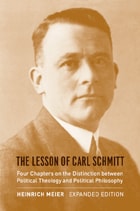
The Lesson of Carl Schmitt
Four Chapters on the Distinction between Political Theology and Political Philosophy, Expanded EditionHeinrich Meier
University of Chicago Press, 2011
The Leviathan in the State Theory of Thomas Hobbes
Meaning and Failure of a Political SymbolCarl Schmitt
University of Chicago Press, 2008
“Carl Schmitt is surely the most controversial German political and legal philosopher of this century. . . . We deal with Schmitt, against all odds, because history stubbornly persists in proving many of his tenets right.”—Perspectives on Political Science
“[A] significant contribution. . . . The relation between Hobbes and Schmitt is one of the most important questions surrounding Schmitt: it includes a distinct, though occasionally vacillating, personal identification as well as an association of ideas.”—Telos
The Liberalism of Care
Community, Philosophy, and EthicsShawn C. Fraistat
University of Chicago Press, 2021
To recover that language, Fraistat turns to three prominent philosophers—Plato, Jean-Jacques Rousseau, and William Godwin—who illuminate the varied ways caring language and caring values have structured core debates in the history of Western political thought about the proper role of government, as well as the rights and responsibilities of citizens. The Liberalism of Care presents a distinctive vision for our liberal politics where political communities and citizens can utilize the ethic and practices of care to face practical challenges.
The Life Worth Living
Disability, Pain, and MoralityJoel Michael Reynolds
University of Minnesota Press, 2022
A philosophical challenge to the ableist conflation of disability and pain
More than 2,000 years ago, Aristotle said: “let there be a law that no deformed child shall live.” This idea is alive and well today. During the past century, Supreme Court Justice Oliver Wendell Holmes Jr. argued that the United States can forcibly sterilize intellectually disabled women and philosopher Peter Singer argued for the right of parents to euthanize certain cognitively disabled infants. The Life Worth Living explores how and why such arguments persist by investigating the exclusion of and discrimination against disabled people across the history of Western moral philosophy.
Joel Michael Reynolds argues that this history demonstrates a fundamental mischaracterization of the meaning of disability, thanks to the conflation of lived experiences of disability with those of pain and suffering. Building on decades of activism and scholarship in the field, Reynolds shows how longstanding views of disability are misguided and unjust, and he lays out a vision of what an anti-ableist moral future requires.
The Life Worth Living is the first sustained examination of disability through the lens of the history of moral philosophy and phenomenology, and it demonstrates how lived experiences of disability demand a far richer account of human flourishing, embodiment, community, and politics in philosophical inquiry and beyond.
Accessibility features: Retail e-book files for this title are screen-reader friendly with images accompanied by short alt text and/or extended descriptions.
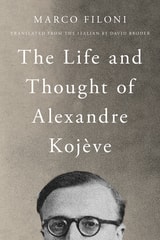
The Life and Thought of Alexandre Kojève
Marco Filoni and David Broder (Trans.)
Northwestern University Press, 2025
A fresh and vivid reappraisal of one of the most influential intellects of the modern era
Alexandre Kojève is one of the twentieth century’s most seductive and intriguing figures. A product of the Russian merchant bourgeoisie, he became, depending on one’s point of view, either an overzealous bureaucrat or a secret agent who infiltrated the upper echelons of French state bureaucracy, spending the last twenty years of his life working in international diplomacy and high finance. Marco Filoni describes each facet of Kojève’s different lives in crystalline detail: the cultural circles of his youth, his studies, his philosophical passions, his fundamental theoretical choices, and his intellectual network, as well as the students who would become part of the intellectual elite, including Lacan, Bataille, and Merleau-Ponty. Drawing on rich archival material, unpublished texts, correspondence, and written and oral testimonies, The Life and Thought of Alexandre Kojève is a major benchmark for scholars of Kojève and of twentieth-century intellectual and political history. Filoni paints a vibrant portrait of one of the most influential intellectuals of the modern era, deftly composing Kojève’s personal, political, and philosophical lives.
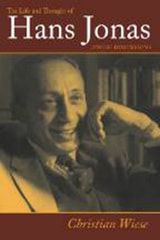
The Life and Thought of Hans Jonas
Jewish DimensionsChristian Wiese
University Press of New England, 2010
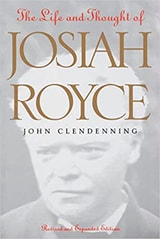
The Life and Thought of Josiah Royce
Revised and Expanded EditionJohn Clendenning
Vanderbilt University Press, 1999
Infuses the first, highly acclaimed edition with new material that deepens our understanding of this distinguished American philosopher
The Likeness of Things Unlike
A Poetics of IncommensurabilitySharon Cameron
University of Chicago Press, 2025
In Sharon Cameron’s essays, a magnetic constellation gathers works of Emerson, Whitman, Dickinson, Cather, and Stevens—each manifesting in its own terms “the likeness of things unlike”—to form a loose commonality in a strain of American writing in which incommensurable elements can’t be integrated and can’t be separated. The Likeness of Things Unlike is concerned with discordant elements of an aesthetic work and argues that these elements refigure the aesthetic wholes whose integrity they apparently violate. These intertwined, subversive elements are challenges to literary systems and are essentially philosophical in their rethinking of categories, and thus go beyond the aesthetic particulars that exemplify them.
Cameron is known for rigorously and brilliantly connecting artistic achievement to radical ways of thinking. Georg Lukcás describes the essayist as one who “adapts himself to the essay’s ‘smallness’ of form—the eternal smallness of the most profound work of the intellect in [the] face of life.” With The Likeness of Things Unlike Cameron powerfully demonstrates Lukács’s remarkable insight.
The Limits of History
Constantin Fasolt
University of Chicago Press, 2003
So argues Constantin Fasolt in The Limits of History, an ambitious and pathbreaking study that conquers history's power by carrying the fight into the center of its domain. Fasolt considers the work of Hermann Conring (1606-81) and Bartolus of Sassoferrato (1313/14-57), two antipodes in early modern battles over the principles of European thought and action that ended with the triumph of historical consciousness. Proceeding according to the rules of normal historical analysis—gathering evidence, putting it in context, and analyzing its meaning—Fasolt uncovers limits that no kind of history can cross. He concludes that history is a ritual designed to maintain the modern faith in the autonomy of states and individuals. God wants it, the old crusaders would have said. The truth, Fasolt insists, only begins where that illusion ends.
With its probing look at the ideological underpinnings of historical practice, The Limits of History demonstrates that history presupposes highly political assumptions about free will, responsibility, and the relationship between the past and the present. A work of both intellectual history and historiography, it will prove invaluable to students of historical method, philosophy, political theory, and early modern European culture.
The Limits of Matter
Chemistry, Mining, and EnlightenmentHjalmar Fors
University of Chicago Press, 2014
Fors reveals how, early in the eighteenth century, chemists began to view metals no longer as the ingredients for “chrysopoeia”—or gold making—but as elemental substances, or the basic building blocks of matter. At the center of this emerging idea, argues Fors, was the Bureau of Mines of the Swedish State, which saw the practical and profitable potential of these materials in the economies of mining and smelting.
By studying the chemists at the Swedish Bureau of Mines and their networks, and integrating their practices into the wider European context, Fors illustrates how they and their successors played a significant role in the development of our modern notion of matter and made a significant contribution to the modern European view of reality.

The Limits of Medicine
How Science Shapes Our Hope for the CureEdward S. Golub
University of Chicago Press, 1997
major advances in medicine are caused by changes in the way scientists describe disease.
Bleeding, sweating, and other treatments we consider barbaric were standard treatments for
centuries because they conformed to a conception of disease shared by patients and doctors.
Scientific breakthroughs in the understanding of disease in the nineteenth century transformed
treatment and the goals of medicine. Golub argues that the ongoing revolution in molecular
genetics has opened the door to the "biology of complexity," again transforming our view of
disease. This thought-provoking, timely book reveals a crucial but overlooked role of science
in medicine, and offers a new vision for the goals of both science and medicine as we enter the
twenty-first century.
The Limits of Money
Three Perceptions of Our Most Comprehensive Value SystemSimon Goudsmit
Eburon Academic Publishers, 2005
The Limits of Money is an intriguing and much-needed study of the role of money in daily life and human societies.

The Limits of Scientific Reasoning
David FaustForeword by Paul E. Meehl
University of Minnesota Press, 1984
The Limits of Scientific Reasoning was first published in 1984. Minnesota Archive Editions uses digital technology to make long-unavailable books once again accessible, and are published unaltered from the original University of Minnesota Press editions.
The study of human judgment and its limitations is essential to an understanding of the processes involved in the acquisition of scientific knowledge. With that end in mind, David Faust has made the first comprehensive attempt to apply recent research on human judgment to the practice of science. Drawing upon the findings of cognitive psychology, Faust maintains that human judgment is far more limited than we have tended to believe and that all individuals - scientists included—have a surprisingly restricted capacity to interpret complex information. Faust's thesis implies that scientists do not perform reasoning tasks, such as theory evaluation, as well as we assume they do, and that there are many judgments the scientist is expected to perform but cannot because of restrictions in cognitive capacity.
"This is a very well-written, timely, and important book. It documents and clarifies, in a very scholarly fashion, what sociologists and psychologists of science have been flirting with for several decades—namely, inherent limitations of scientific judgment," –Michael Mahoney, Pennsylvania State University
David Faust is director of psychology at Rhode Island Hospital and a faculty member of the Brown University Medical School. He is co-author of Teaching Moral Reasoning: Theory and Practice.
The Limits of Utilitarianism
Harlan B. Miller and William H. Williams, Editors
University of Minnesota Press, 1982
The Limits of Utilitarianism was first published in 1982. Minnesota Archive Editions uses digital technology to make long-unavailable books once again accessible, and are published unaltered from the original University of Minnesota Press editions.
Many philosophers have argued that utilitarianism is an unacceptable moral theory and that promoting the general welfare is at best only one of the legitimate goals of public policy. Utilitarian principles seem to place no limits on the extent to which society may legitimately interfere with a person's liberties - provided that such actions can be shown to promote the long-term welfare of its members. These issues have played a central role in discussions of utilitarianism since the time of Bentham and Mill. Despite criticisms, utilitarianism remains the most influential and widely accepted moral theory of recent times.
In this volume contemporary philosophers address four aspects of utilitarianism: the principle of utility; utilitarianism vis-à-vis contractarianism; welfare; and voluntary cooperation and helping others. The editors provide an introduction and a comprehensive bibliography that covers all books and articles published in utilitarianism since 1930.
The Linguistic Dimension of Kant's Thought
Historical and Critical EssaysEdited by Frank Schalow and Richard Velkley
Northwestern University Press, 2014
Among modern philosophers, Immanuel Kant (1724–1804) has few rivals for his influence over the development of contemporary philosophy as a whole. While the issue of language has become a key fulcrum of continental philosophy since the twentieth century, Kant has been overlooked as a thinker whose breadth of insight has helped to spearhead this advance.
The Linguistic Dimension of Kant’s Thought remedies this historical gap by gathering new essays by distinguished Kant scholars. The chapters examine the many ways that Kant’s philosophy addresses the nature of language. Although language as a formal structure of thought and expression has always been part of the philosophical tradition, the “linguistic dimension” of these essays speaks to language more broadly as a practice including communication, exchange, and dialogue.
The Linguistic Turn
Essays in Philosophical MethodEdited by Richard M. Rorty
University of Chicago Press, 1992
"All too rarely an anthology is put together that reflects imagination, command, and comprehensiveness. Rorty's collection is just such a book."—Review of Metaphysics
The Literary Kierkegaard
Eric Ziolkowski
Northwestern University Press, 2011
Yet Kierkegaard signals the essentially literary as opposed to strictly theological or philosophical nature of his writings. Ziolkowski first considers the notions of aesthetics and the aesthetic as Kierkegaard adapted them, and then his posture as a poet, as interrelated contexts of his selfconception as “a weed in literature.” After next taking account of the history of the critical recognition of Kierkegaard as a literary artist, he looks at an important characteristic of his literary craft that has received relatively little attention: the manner by which he and his pseudonyms read and quote other authors. Ziolkowski then explores the connections between the philosopher’s writings and those of other literary masters by whom he was directly influenced, such as Aristophanes, Cervantes, and Shakespeare; or of those who, while they did not directly influence him, gave paradigmatic expression to some of the same aspects of aesthetic, ethical, and religious existence that Kierkegaard and his pseudonyms portray. Ziolkowski’s seminal study will be of interest to Kierkegaard scholars, philosophers, and comparative literature scholars alike.
The Literary Work of Art
An Investigation of the Borderlines of Ontology, Logic, and Theory of LanguageRoman Ingarden
Northwestern University Press, 1973
The Literary Word of Art establishes the groundwork for a philosophy of literature, i.e., an ontology in terms of which the basic general structure of all lliterary works can be determined. This "essential anatomy" makes basic tools and concepts available for rigorous and subtle aesthetic analysis.
The Logic of Being
Realism, Truth, and TimePaul M. Livingston
Northwestern University Press, 2017
Livingston's formal and phenomenological analysis articulates and defends a realist position about being, time, and their relationship that understands that all of these are structured and constituted in a way that does not depend on the human mind, consciousness, or subjectivity. This approach provides a basis for new logically and phenomenologically based accounts of the structure of linguistic truth in relation to the appearance of objects and of the formal structure of time as given.
Livingston draws on philosophers from Plato and Aristotle to Davidson and Heidegger in this exploration. In it, readers and scholars will discover innovative connections between continental and analytic philosophy.
The Logic of Decision
Richard C. Jeffrey
University of Chicago Press, 1990
The Logic of Desire
Aquinas on EmotionNicholas E. Lombardo, O.P.
Catholic University of America Press, 2011
The Logic of Religion
Jude P. Dougherty
Catholic University of America Press, 2003
The Logic of Society
A Philosophical StudyLaird Addis
University of Minnesota Press, 1975

The Logic of the Lure
John Paul Ricco
University of Chicago Press, 2002
The Long Emancipation
Moving toward Black FreedomRinaldo Walcott
Duke University Press, 2021
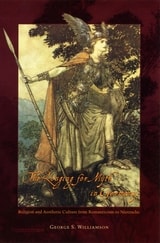
The Longing for Myth in Germany
Religion and Aesthetic Culture from Romanticism to NietzscheGeorge S. Williamson
University of Chicago Press, 2004
Through readings of key intellectuals ranging from Herder and Schelling to Wagner and Nietzsche, Williamson highlights three crucial factors in the emergence of the German engagement with myth: the tradition of Philhellenist neohumanism, a critique of contemporary aesthetic and public life as dominated by private interests, and a rejection of the Bible by many Protestant scholars as the product of a foreign, "Oriental" culture. According to Williamson, the discourse on myth in Germany remained bound up with problems of Protestant theology and confessional conflict through the nineteenth century and beyond.
A compelling adventure in intellectual history, this study uncovers the foundations of Germany's fascination with myth and its enduring cultural legacy.
The Loss and Recovery of Truth
Selected Writings of Gerhart NiemeyerGerhart Niemeyer
St. Augustine's Press, 2013
The Lost Art of Declaring War
Brien Hallett
University of Illinois Press, 1998
Historically, it has been assumed that war is violence and declarations of war are simply public announcements that serve to initiate combat. Brien Hallett denies both assumptions and claims that war is policy, not violence.
The Lost Art of Declaring War analyzes the crucial differences between combat and war and convincingly argues that the power to "declare" war is in actuality the power to compose a text, draft a document, write a denunciation. Once written, the declaration then serves three functions: to articulate the political purposes of the war, to guide and direct military operations, and to establish the boundary between justified combat and unjustified devastation.
Hallett sounds a clarion call urging the people and their representatives to take up the challenge and write fully reasoned declarations of war. Then, and only then, can a civilized nation like the United States lay claim to being fully democratic, not only in peacetime, but in wartime as well.
The Lost Promise of Patriotism
Debating American Identity, 1890-1920Jonathan M. Hansen
University of Chicago Press, 2003
Intellectuals such as William James, John Dewey, Jane Addams, Eugene V. Debs, and W. E. B. Du Bois repudiated liberalism's association with acquisitive individualism and laissez-faire economics, advocating a model of liberal citizenship whose virtues and commitments amount to what Hansen calls cosmopolitan patriotism. Rooted not in war but in dedication to social equity, cosmopolitan patriotism favored the fight against sexism, racism, and political corruption in the United States over battles against foreign foes. Its adherents held the domestic and foreign policy of the United States to its own democratic ideals and maintained that promoting democracy universally constituted the ultimate form of self-defense. Perhaps most important, the cosmopolitan patriots regarded critical engagement with one's country as the essence of patriotism, thereby justifying scrutiny of American militarism in wartime.
The Lost Second Book of Aristotle's "Poetics"
Walter Watson
University of Chicago Press, 2012
Of all the writings on theory and aesthetics—ancient, medieval, or modern—the most important is indisputably Aristotle’s Poetics, the first philosophical treatise to propound a theory of literature. In the Poetics, Aristotle writes that he will speak of comedy—but there is no further mention of comedy. Aristotle writes also that he will address catharsis and an analysis of what is funny. But he does not actually address any of those ideas. The surviving Poetics is incomplete.
Until today. Here, Walter Watson offers a new interpretation of the lost second book of Aristotle's Poetics. Based on Richard Janko’s philological reconstruction of the epitome, a summary first recovered in 1839 and hotly contested thereafter, Watson mounts a compelling philosophical argument that places the statements of this summary of the Aristotelian text in their true context. Watson renders lucid and complete explanations of Aristotle’s ideas about catharsis, comedy, and a summary account of the different types of poetry, ideas that influenced not only Cicero’s theory of the ridiculous, but also Freud’s theory of jokes, humor, and the comic.
Finally, more than two millennia after it was first written, and after five hundred years of scrutiny, Aristotle’s Poetics is more complete than ever before. Here, at last, Aristotle’s lost second book is found again.
The Lost World of Thomas Jefferson
Daniel J. Boorstin
University of Chicago Press, 1993
"The volume is too subtle, too rich in ideas for anyone to do justice to it in brief summary, too heavily documented and too carefully wrought for anyone to dismiss its thesis. . . . It is a major contribution not only to Jefferson studies but to American intellectual history. . . . All who work in the history of ideas will find themselves in Mr. Boorstin's debt."—Richard Hofstadter, South Atlantic Monthly
The Lublin Lectures and Works on Max Scheler
Karol Wojtyla
Catholic University of America Press, 2023
The Madness of Vision
On Baroque AestheticsChristine Buci-Glucksmann
Ohio University Press, 2013
Christine Buci-Glucksmann’s The Madness of Vision is one of the most influential studies in phenomenological aesthetics of the baroque. Integrating the work of Merleau-Ponty with Lacanian psychoanalysis, Renaissance studies in optics, and twentieth-century mathematics, the author asserts the materiality of the body and world in her aesthetic theory. All vision is embodied vision, with the body and the emotions continually at play on the visual field. Thus vision, once considered a clear, uniform, and totalizing way of understanding the material world, actually dazzles and distorts the perception of reality.
In each of the nine essays that form The Madness of Vision Buci-Glucksmann develops her theoretical argument via a study of a major painting, sculpture, or influential visual image—Arabic script, Bettini’s “The Eye of Cardinal Colonna,” Bernini’s Saint Teresa and his 1661 fireworks display to celebrate the birth of the French dauphin, Caravaggio’s Judith Beheading Holofernes, the Paris arcades, and Arnulf Rainer’s self-portrait, among others—and deftly crosses historical, national, and artistic boundaries to address Gracián’s El Criticón; Monteverdi’s opera Orfeo; the poetry of Hafiz, John Donne, and Baudelaire; as well as baroque architecture and Anselm Kiefer’s Holocaust paintings. In doing so, Buci-Glucksmann makes the case for the pervasive influence of the baroque throughout history and the continuing importance of the baroque in contemporary arts.
The Main Stalk
A Synthesis of Navajo PhilosophyJohn R. Farella
University of Arizona Press, 1984
"This is a stimulating book. Essentially, it criticizes previous discussions of Navajo religion and philosophy for greatly underestimating their complexity and sophistication. . . . What the author discovers in Navajo thought is that the key concepts are interrelated in a grand, moral, ethical, philosophic, and cosmic unity." —American Anthropologist
"Discredits dualists, both non-Indian and Indian, who see simplistic oppositions of Good and Evil in Navajo culture and philosophy. The concept of walking in beauty, as related to the proper growth of the corn plant, unifies the book, and Farella does some impressive cross-cultural linguistic analysis to derive practical and ceremonial applications of these central Navajo metaphors. . . . This is one of the better books on Indian religion." —Choice