Results by title
5550 books match the query 'Biography & Autobiography' and 1006 start with t
The Misunderstood Mission of Jean Nicolet
Uncovering the Story of the 1634 JourneyPatrick J. Jung
Wisconsin Historical Society Press, 2018
In more recent decades, historians have pieced together a story that is not only more likely but more complicated and interesting. Patrick Jung synthesizes the research about Nicolet and his superior Samuel de Champlain, whose diplomatic goals in the region are crucial to understanding this much misunderstood journey across the Great Lakes. Additionally, historical details about Franco-Indian relations and the search for the Northwest Passage provide a framework for understanding Nicolet’s famed mission.
The Mogul
Eddie Gottlieb, Philadelphia Sports Legend and Pro Basketball PioneerRich Westcott
Temple University Press, 2008
Drawing upon sixty-plus interviews and many archival sources, well-known Philadelphia sports historian Rich Westcott vividly portrays Gottlieb's role in a pivotal era in city sports, in the process offering histories of the SPHAs, Warriors, and Stars and the role of Jews and African Americans in the city's sporting history.
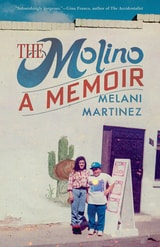
The Molino
A MemoirMelani Martinez
University of Arizona Press, 2024
Set in one of Tucson’s first tamal and tortilla factories, The Molino is a hybrid memoir that reckons with one family’s loss of home, food, and faith.
Weaving together history, culture, and Mexican food traditions, Melani Martinez shares the story of her family’s life and work in the heart of their downtown eatery, El Rapido. Opened by Martinez’s great-grandfather, Aurelio Perez, in 1933, El Rapido served tamales and burritos to residents and visitors to Tucson’s historic Barrio Presidio for nearly seventy years. For the family, the factory that bound them together was known for the giant corn grinder churning behind the scenes—the molino. With clear eyes and warm humor, Martinez documents the work required to prepare food for others, and explores the heartbreaking aftermath of gentrification that forces the multigenerational family business to close its doors.
The Molino is also Martinez’s personal story—that of a young Tucsonense coming of age in the 1980s and ’90s. As a young woman she rejects the work in her father’s popular kitchen, but when the business closes, her world shifts and the family disbands. When she finds her way back home, the tortillería’s iconic mural provides a gateway into history and ruin, ancestry and sacrifice, industrial myth and artistic incarnation—revealing a sacred presence still alive in Tucson.
A must-read for foodies, history lovers, and anyone searching for spiritual truth in the desert, this is a story of belonging and transformation in the borderlands.
The Moon in Your Sky
An Immigrant's Journey HomeKate Saller
University of Missouri Press, 2014
The Moon, Come to Earth
Dispatches from LisbonPhilip Graham
University of Chicago Press, 2009
A dispatch from a foreign land, when crafted by an attentive and skilled writer, can be magical, transmitting pleasure, drama, and seductive strangeness.
In The Moon, Come to Earth, Philip Graham offers an expanded edition of a popular series of dispatches originally published on McSweeney’s, an exuberant yet introspective account of a year’s sojourn in Lisbon with his wife and daughter. Casting his attentive gaze on scenes as broad as a citywide arts festival and as small as a single paving stone in a cobbled walk, Graham renders Lisbon from a perspective that varies between wide-eyed and knowing; though he’s unquestionably not a tourist, at the same time he knows he will never be a local. So his lyrical accounts reveal his struggles with (and love of) the Portuguese language, an awkward meeting with Nobel laureate José Saramago, being trapped in a budding soccer riot, and his daughter’s challenging transition to adolescence while attending a Portuguese school—but he also waxes loving about Portugal’s saudade-drenched music, its inventive cuisine, and its vibrant literary culture. And through his humorous, self-deprecating, and wistful explorations, we come to know Graham himself, and his wife and daughter, so that when an unexpected crisis hits his family, we can’t help but ache alongside them.
A thoughtful, finely wrought celebration of the moment-to-moment excitement of diving deep into another culture and confronting one’s secret selves, The Moon, Come to Earth is literary travel writing of a rare intimacy and immediacy.

The Mountain
Journeys in High PlacesRobin Patten
University of Utah Press, 2025
Since antiquity, mountains have captured the human imagination. The Mountain takes readers into higher realms, exploring the complex kinship between mountains and human thought, traditions, and ways of being. Told through the author’s own journeys, the narrative ranges across cultures and iconic naturalists to consider how varied ideas and experiences related to mountains—from sacred to scientific, romantic to retreat, to simply home—are all facets of the same intricate topography.
No matter where one starts on the spectrum of understanding, an intimate encounter with a mountain leads to a broader perspective. High places create a simultaneous humbleness at our human insignificance and a sense of belonging within the greater world. That quality of belonging, and the associated commitment of caring for the planet and all that it holds, has never been more important than it is today.
The Music of Bill Monroe
Neil V. Rosenberg and Charles K. Wolfe
University of Illinois Press, 2006
The second part of each chapter presents the discography. Information here includes the session’s place, date, time, and producer; master/matrix numbers, song/tune titles, composer credits, personnel, instruments, and vocals; and catalog/release numbers and reissue data.
The only complete bio-discography of this American musical icon, The Music of Bill Monroe is the starting point for any study of Monroe’s contributions as a composer, interpreter, and performer.
The Music of Django Reinhardt
Benjamin Givan
University of Michigan Press, 2009
"The Music of Django Reinhardt is an impressive contribution to the field of jazz studies. The book offers a penetrating view into the music of one of jazz's most intriguing early figures."
---Keith Waters, coauthor, Jazz: The First Hundred Years
"An important addition to the literature on jazz, Givan's book provides many insights into Reinhardt’s solo building and unorthodox guitar playing; it is richly illustrated with many excellent musical transcriptions."
---Thomas Owens, author of Bebop: The Music and Its Players
"Givan has painstakingly assembled an analytical interpretation of Reinhardt's music that is rigorous, compelling, and illuminating. This book makes a unique contribution to the field of jazz studies and guitar music in general."
---Brian Harker, author of Jazz: An American Journey
When most people think of the great jazz guitarist Django Reinhardt, they conjure up the unusual details of his colorful life: a childhood spent in gypsy encampments outside of Paris; the tragic caravan fire when he was eighteen that rendered his left hand nearly unusable; and his survival during World War II, when gypsies were massacred by the hundreds of thousands. The amazing story of Reinhardt’s life even became the basis for Woody Allen's Sweet and Lowdown.
Yet, it is the music of Django Reinhardt that made him one of the most original guitarists in history. In particular, his partnership with violinist Stéphane Grappelli, in the Quintette du Hot Club de France, brought him international renown and the attention of some of the most important American jazz musicians of the day, including Coleman Hawkins, Benny Carter, and Duke Ellington.
The Music of Django Reinhardt explores the story of the man and his music as never before. Benjamin Givan shows how one of jazz's greatest guitarists created his unparalleled sound. This book is an analytical study of his music, including his process, his improvisational style, and his instrumental technique.
The book features transcriptions from records of the 1920s through the 1950s and includes detailed discussion of selected performances from one of the most important guitarists in history.
Benjamin Givan is Assistant Professor of Music at Skidmore College. His writings on jazz have appeared in scholarly publications such as Current Musicology and the Musical Quarterly, as well as the popular jazz magazine Down Beat. He received his Ph.D. in music theory from Yale University.
The Music of James Tenney
Volume 1: Contexts and ParadigmsRobert Wannamaker
University of Illinois Press, 2021
Robert Wannamaker's monumental two-volume study explores the influential music and ideas of American composer, theorist, writer, performer, and educator James Tenney. Delving into the whole of Tenney's far-ranging oeuvre, Wannamaker provides in-depth, aurally grounded analyses of works linked to the artist's revolutionary theories of musical form, timbre, and harmonic perception.
Volume 1, Contexts and Paradigms, chronologically surveys Tenney's creative development and output. Wannamaker begins each section with biographical, aesthetic, and technical context that illuminates a distinct period in Tenney's career. From there, he analyzes a small number of pieces that illuminate the concerns, characteristics, and techniques that emerged in Tenney's music during that time. Wannamaker supplements the text with musical examples, graphs, and diagrams while also drawing on unpublished material and newly available primary sources to flesh out each work and the ideas that shaped it.
A landmark in experimental music scholarship, The Music of James Tenney is a first-of-its-kind consideration of the experimental music titan and his work.
The Music of James Tenney
Volume 2: A Handbook to the PiecesRobert Wannamaker
University of Illinois Press, 2021
Robert Wannamaker's monumental two-volume study explores the influential music and ideas of American composer, theorist, writer, performer, and educator James Tenney. Delving into the whole of Tenney's far-ranging oeuvre, Wannamaker offers close, aurally grounded analyses of works linked to the artist's revolutionary theories of musical form, timbre, and harmonic perception.
Written as a reference work, Volume 2, A Handbook to the Pieces, presents detailed entries on Tenney's significant post-1959 experimental works (excepting pieces covered in volume 1). Wannamaker includes technical information, an analysis of intentions and goals, graphs and musical examples, historical and biographical context, and thoughts from Tenney and others on specific works. Throughout, he discusses the striking compositional ideas found in Tenney's music and, where appropriate, traces an idea's appearance from one piece to the next to reveal the evolution of the composer's art and thought.
A landmark in experimental music scholarship, The Music of James Tenney is a first-of-its-kind consideration of the experimental music titan and his work.
The Music of the Stanley Brothers
Gary B. Reid
University of Illinois Press, 2015
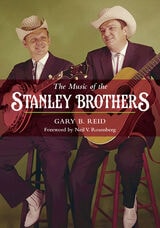
Monumental and indispensable, The Music of the Stanley Brothers provides fans and scholars alike with a guide for immersion in the long career and breathtaking repertoire of two legendary American musicians.
The Mystic in the Theatre
Eleonora DuseEva Le Gallienne
Southern Illinois University Press, 1973
The Myth of Ephraim Tutt
Arthur Train and His Great Literary HoaxMolly Guptill Manning
University of Alabama Press, 2012
The Mythical Bill
A Neurological MemoirJody McAuliffe
University of Iowa Press, 2013
The Mythologizing of Mark Twain
Sara Davis
University of Alabama Press, 1984
How Samuel Clemens became Mark Twain—and Mark Twain became a myth.
The Mythologizing of Mark Twain explores the enduring fascination with one of America's most celebrated literary figures and examines how Samuel Langhorne Clemens became the cultural icon known around the world as Mark Twain. Bringing together a distinguished group of scholars, this thought-provoking collection investigates Twain not simply as an author, but as a powerful symbol whose life, works, and public persona have become inseparable from larger ideas about American identity, humor, democracy, individualism, and national character.
Readers and critics have long recognized Twain's literary genius, yet explaining the origins and significance of that genius remains an ongoing challenge. The essays in this volume address that challenge by exploring the many ways Twain has been interpreted, celebrated, debated, and transformed into a mythic figure. They examine how his writings helped define an American literary tradition while simultaneously contributing to the creation of a broader cultural mythology that continues to shape public perceptions of the United States and its history.
Rather than seeking a single interpretation of Twain, the contributors employ a range of critical approaches to illuminate the complexity of both the man and the legend. Their analyses reveal how the boundaries between Samuel Clemens, Mark Twain, and the popular image of "America's author" have often blurred, generating new layers of meaning for successive generations of readers and scholars.
The Mythologizing of Mark Twain is an essential resource for students and scholars of American literature, cultural history, and literary criticism. By examining the evolution of Twain's reputation and influence, the collection offers a deeper understanding of how literary figures become cultural myths and why Mark Twain remains one of the most enduring voices in the American imagination.
The NFL Off-Camera
An A–Z Guide to the League's Most Memorable Players and PersonalitiesBob Angelo
Temple University Press, 2023
Angelo effuses about his meeting with the larger-than-life Jim Brown and appreciates the trash talking John Randle. He poignantly reflects on “Bullet” Bob Hayes, the world's fastest man who “could not outrun his demons,” and showcases the mercurial Duane Thomas and the free-wheeling Tony Siragusa. The NFL Off-Camera reveals why Angelo sparred with Hall-of-Fame player turned broadcaster Frank Gifford and demonstrates why Super Bowl champion head coach Sean Payton is his “least favorite person in pro football.”
From Jared Allen to Jim Zorn, The NFL Off-Camera explores nearly 100 of the game’s outsized personalities and debunks some of football's most enduring myths. Angelo’s original, unfiltered look at Pro Football is as hard-hitting and exciting as any one of his NFL Films.
The Names
N. Scott Momaday
University of Arizona Press, 1996
The Narrative of Lucy Ann Lobdell
A Woman's Case for EqualityLisa Macchia Ohliger
Westholme Publishing, 2024
Lucy Ann Lobdell’s (1829–1912) extraordinary life was shaped by personal strife and the hardships of survival in upstate New York. Struggling with an abusive, alcoholic husband, a young child, ailing parents, and financial strain, Lucy did what was necessary to support her family. In a rural world defined by hunting, farming, and lumbering, she dressed, labored, and lived in a traditional masculine manner. Her prowess as a rifle shot and fiddle player were known locally, but because of her unconventional, androgynous lifestyle, she became a target of public gossip and ridicule. Educated and eloquent, Lucy penned and published, Lucy Ann Lobdell, the Female Hunter of Delaware and Sullivan Counties, N.Y., in 1855. The narrative provides a unique look at the persecution of a woman whose only “offense” was disregard for contemporary societal norms.
After her husband was killed during the Civil War, she received a widow’s pension. Ostracized and eventually hospitalized in 1880—gender laws of the time imprisoned indigent men, but sent women to mental hospitals—she underwent torturous experimental treatment until she confessed to a self-serving doctor that she was “a man in all that the name implies.” Whether Lucy was a lesbian, cross dresser, or transgender, we don’t know from the historical record, but as Lisa Macchia Ohliger demonstrates in The Narrative of Lucy Ann Lobdell: A Woman’s Case for Equality, Lucy did embody the nascent women’s rights movement. At the same time, and not far from where Lucy lived and went to school, Amelia Bloomer was advocating the right for women to wear pants and was publishing the feminist newspaper, The Lily, while Susan B. Anthony was pushing for land rights and equal pay for women. All of these issues are found in Lucy’s autobiographical account, fully reproduced in this volume. Lucy’s life is an illustration of the historical significance and destructive power of gender in society, and her narrative bears painful witness to the clash between taboo and survival.
The Narrow Bridge
Beyond the HolocaustIsaac Neuman, with Michael Palencia-Roth
University of Illinois Press, 2000
As a boy studying Torah, Isaac Neuman learned to seek the spiritual lessons hidden in everyday life. Likewise, in this narrative of occupation and holocaust, he uncovers a core of human decency and spiritual strength that inhumanity, starvation, and even death failed to extinguish.
Unlike many Holocaust memoirs that focus on physical suffering and endurance, The Narrow Bridge follows a spiritual journey. Neuman describes the world of Polish Jewry before and during the Holocaust, recreating the strong religious and secular personalities of his childhood and early youth in Zdunska Wola, Poland: the outcast butcher, Haskel Traskalawski; the savvy criminal-turned-entrepreneur Nochem Ellia; the trusted Dr. Lemberg, liaison to the German occupation government; and Neuman's beloved teacher, Reb Mendel. Through their stories, Neuman reveals the workings of a community tested to the limits of faith and human dignity.
With his brother Yossel, Neuman was transported to the Poznan area, first to the Yunikowo work camp in May 1941, then on to St. Martin's Cemetery camp, where they removed gold jewelry and fillings from exhumed corpses. A string of concentration camps followed, each more oppressive than the last: Fürstenfelde, Auschwitz, Fünfteichen, Gross Rosen, Mauthausen, Wels, and Ebensee. In the midst of these horrors, the brothers kept their feet on the "narrow bridge" of life by holding to their faith, their memories, and each other. In the end, only Isaac survived.
The Narrow Bridge celebrates symbolic victories of faith over brute force. The execution of Zdunska Wola's Jewish spiritual and intellectual leaders is trumped by an act of breathtaking courage and conviction. A secret Passover Seder is cobbled together from hoarded bits of wax, piecemeal prayers, and matzoh baked in delousing ovens. A dying fellow inmate gives Neuman his warm coat as they both lie freezing on the ground.
Such rituals of faith and acts of kindness, combined with boyhood memories and a sense of spiritual responsibility, sustained Neuman through the Holocaust and helped him to reconstruct his life after the war. His story is a powerful testimony to an unquenchable faith and a spirit tried by fire.
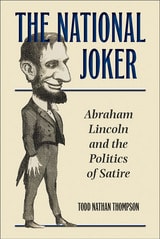
The National Joker
Abraham Lincoln and the Politics of SatireTodd Nathan Thompson
Southern Illinois University Press, 2015
In his speeches, writings, and public persona, Lincoln combined modesty and attack, engaging in strategic self-deprecation while denouncing his opponents, their policies, and their arguments, thus refiguring satiric discourse as political discourse and vice versa. At the same time, he astutely deflected his opponents’ criticisms of him by embracing and sometimes preemptively initiating those criticisms. Thompson traces Lincoln’s comic sources and explains how, in reapplying others’ jokes and stories to political circumstances, he transformed humor into satire. Time and time again, Thompson shows, Lincoln engaged in self-mockery, turning negative assumptions or depictions of him—as ugly, cowardly, jocular, inexperienced—into positive traits that identified him as an everyman while attacking his opponents’ claims to greatness, heroism, and experience as aristocratic or demagogic. Thompson also considers how Lincoln took advantage of political cartoons and other media to help proliferate the particular Lincoln image of the “self-made man”; underscores exceptions to Lincoln’s ability to mitigate negative, satiric depictions of him; and closely examines political cartoons from both the 1860 and 1864 elections. Throughout, Thompson’s deft analysis brings to life Lincoln’s popular humor.
The Nature Way
Writings from a Western Shoshone ElderCorbin Harney
University of Nevada Press, 2009
Corbin Harney’s long life encompassed remarkable changes in the lives of Native Americans and in the technological and political development of the world. Born into an impoverished Western Shoshone family on the Nevada-Idaho border and orphaned as a newborn, he was brought up by grandparents who taught him the traditional ways of their people and the ancient spiritual beliefs that sustained their culture. As an adult, Harney found his calling as a traditional healer and spiritual leader. Soon he became involved in the Shoshone struggle for civil rights, including their efforts to protect and heal their traditional lands in what became the Nevada Test Site. This involvement led Harney to his eventual role as a leader of the international antinuclear movement.The Nature Way is a rich compendium of Corbin Harney’s experience and wisdom. His account of his life incorporates the tragic history of Native Americans in the Great Basin after the arrival of Euro-Americans, his realization of his own identity as a Native American, and his long study of his people’s traditions and spiritual practices. His summary of the Shoshone and Paiute use of indigenous plants for food and healing highlights their understanding that the Earth and her denizens and products must be respected and protected in order to preserve the connection that all creatures have with sacred Mother Earth. Finally, his account of his role as an antinuclear activist expands on his awareness of the human responsibility to protect the Earth, especially from the extreme danger posed by nuclear technology and nuclear weapons of mass destruction. Corbin Harney’s voice is one of the clearest expressions yet of the values, concerns, and spirituality of contemporary Native America. He offers all of us an eloquent plea that we respect and cooperate with Nature to ensure the survival of the planet.
The Nearest Thing to Life
James Wood
Brandeis University Press, 2015
The Networked Recluse
The Connected World of Emily DickinsonMike Kelly, Carolyn Vega, Marta Werner, Susan Howe, Richard Wilbur
Amherst College Press, 2017
Yet that image scarcely captures the fullness and vitality of Dickinson’s life, most notably her many connections—to family, to friends, to correspondents, to the literary tastemakers of her day, even to the unnamed, and perhaps unknowable, “Master” to whom she addressed three of her most breathtaking works of prose. Through an exploration of a relatively small group of items from Dickinson’s vast literary remains, this volume—an accompaniment to an exhibition on Dickinson mounted at The Morgan Library & Museum in New York—demonstrates the complex ways in which these often humble objects came into conversation with other people, places, and events in the poet’s life. Seeing the network of connections and influences that shaped Dickinson’s life presents us with a different understanding of this most enigmatic yet elegiac poet in American letters, and allows us more fully to appreciate both her uniqueness and her humanity.
The materials collected here make clear that the story of Dickinson’s manuscripts, her life, and her work is still unfolding. While the image of Dickinson as the reclusive poet dressed only in white remains a popular myth, details of Dickinson’s life continue to emerge. Several items included both in the exhibit and in this volume were not known to exist until the present century. The scrap of biographical intelligence recorded by Sarah Tuthill in a Mount Holyoke catalogue, or the concern about Dickinson’s salvation expressed by Abby Wood in a private letter to Abiah Root, were acquired by Amherst College in the last fifteen years. What additional pieces of evidence remain to be uncovered and identified in the attics and basements of New England?
Published to accompany The Morgan Library & Museum’s pathbreaking exhibit I’m Nobody! Who are You? The Life and Poetry of Emily Dickinson—part of a series of exhibits at the Morgan celebrating and exploring the creative lives of significant women authors—The Networked Recluse offers the reader an account of the exhibit itself, together with a series of contributions by curators, scholars of Dickinson, and poets whose own work her words have influenced.
The New Deal's Black Congressman
A Life of Arthur Wergs MitchellDennis S. Nordin
University of Missouri Press, 1997
In this fascinating biography, Dennis S. Nordin chronicles the life of Arthur Wergs Mitchell, the first black Democrat to be elected to Congress. Although he is now one of history's forgotten figures, Mitchell was once almost as well known among black college students as Jesse Owens and Joe Louis. Nordin, however, shows that Mitchell's achievements and thus his fame were the direct result of his dishonorable deeds.
Mitchell's life began humbly in rural Alabama in 1883. After a memorable boyhood, he studied briefly at Tuskegee Institute, which had a major effect on Mitchell's outlook. He went on to study law in Washington, D.C., and thereafter became involved in politics when the Republicans sent him to Chicago in 1928 to campaign for Herbert Hoover. Impressed by Chicago's ward system and patronage politics, he returned to the city and made a bid for a congressional seat, changing political parties in an effort to oust black Republican Congressman Oscar DePriest. To accomplish this, Mitchell resorted to "Uncle Tomming," ingratiating himself with the white bosses of the Chicago Machine.
Within five years a Machine nomination was in hand, and Mitchell found himself owing his political success and thus his loyalty to the Chicago Machine. Because he was under strict orders from Chicago Mayor Ed Kelly not to cause problems or be confrontational, Mitchell rarely, if ever, supported the interests of his constituents.
It was only in the later years of his political career that Mitchell began to show opposition to his Machine backing. He had been an opponent of the NAACP in his first years in Congress, but later became a strong supporter of an NAACP antilynching bill. In 1937, Mitchell sued three railroad companies for not offering equal treatment and accommodations for all passengers. The case went to the Supreme Court, which gave Mitchell a favorable ruling. As a result of these "confrontational" acts, the Chicago Machine quickly decided not to endorse Mitchell in the elections of 1942.
In his research, Nordin relies on such primary sources as manuscripts, newspapers, and court records, as well as information from interviews with Mitchell's friends, neighbors, colleagues, political rivals, and widow. Woven tightly together, these sources form a narrative that reveals a most complex and intriguing individual, a man whose political and moral views and acts were strongly linked to the goals of the great Chicago political Machine.
The Night of the Hunter
A Biography of a FilmJeffrey Couchman
Northwestern University Press, 2009
Reaching simultaneously into the realms of film and literature, this detailed exploration of The Night of the Hunter examines the genesis and the eclectic form of each work and the process of transformation by which the novel became a motion picture. It provides the first major study of the long-lost first-draft screenplay by James Agee and confronts a fifty-year controversy about the authorship of the film. This is a story of artistic convergence on many levels--of novelist and director, director and actor, and cinematic form and tastes. The novel, a 1953 debut from Davis Grubb, was a popular and critical success, remaining on the New York Times best-seller list for four months. Hollywood responded to its atmospheric lyricism, and in the hands of first time director Charles Laughton, the book became a film that is equal parts thriller, allegory, and fever dream, filled with slow, inexorable suspense. On the set, Laughton functioned both as an auteur and a collaborator to create his vision of the book, mixing cinematic flourishes both realistic and abstract in sometimes tense situations. The talents that clashed or came together along the road from book to movie make the final film a product of rich stylistic contradiction and rewarding complexity. Through biography, production history, and critical analysis of the novel and film, author Jeffrey Couchman makes the case that this initially overlooked cinematic gem is a prismatic work that continually reveals new aspects of itself.
The Nightinghouls of Paris
Robert McAlmon. Edited and with an Introduction by Sanford J. Smoller
University of Illinois Press, 2006
The Nightinghouls of Paris is a thinly fictionalized memoir of the darker side of expatriate life in Paris. Beginning in 1928, the story follows the changes undergone by Canadian youths John Glassco and his friend Graeme Taylor during their (mis)adventures in Paris while trying to become writers. There they meet Robert McAlmon, who guides them through the city’s cafes, bistros, and nightclubs, where they find writers and artists including Kay Boyle (with whom Glassco has a fling), Bill Bird, Djuna Barnes, Claude McKay, Hilaire Hiler, Peggy Guggenheim, and Ernest Hemingway.
Fleeing France in late 1940, Robert McAlmon lost his notebook manuscripts and draftedThe Nightinghouls of Paris from memory. Till now, it has existed solely as a typescript held by Yale University. Unlike most memoirs of American expatriates in the ‘20s, The Nightinghouls of Paris centers not only on writers, but also encompasses the racial, national, and social mélange they encountered in everyday life.
The Ninth Decade
An Octogenarian’s ChronicleKlaus, Carl H.
University of Iowa Press, 2021
The multi-year scope of his chronicle reveals the numerous physical and mental problems that arise during octogenarian life and how eighty-year-olds have dealt with those challenges. The Ninth Decade is a unique, first-hand source of information for anyone in their sixties, seventies, or eighties, as well as for persons devoted to care of the aged. Though the challenges of octogenarian life often require specialized care, The Ninth Decade also shows the pleasures of it to be so special as to have inspired Lillian Hellman’s paradoxical description of “longer life” as “the happy problem of our time.”
The Nixon Memo
Political Respectability, Russia, and the PressMarvin Kalb
University of Chicago Press, 1994
The story begins on March 10, 1992. Nixon had written a private memo critical of president George Bush's policy toward Russia. The memo leaked and exploded on the front page of The New York Times. Why would Nixon attack Bush, a fellow party member fighting for re-election? Why on an issue of foreign affairs, which was Bush's strength? The questions are as intriguing as the answers, and distinguished journalist and scholar Marvin Kalb offers a suspenseful, eye-opening account of how our conventional wisdom on United States foreign policy is shaped by the insider's game of press/politics.
This story of Nixon's Machiavellian efforts to pressure the White House, by way of the press, into helping Boris Yeltsin and Russia sheds new light on the inner workings of the world inside the government of the United States. Marvin Kalb read the documents behind the Nixon memo and interviewed scores of journalists, scholars, and officials in and from Washington and Moscow. Drawing on his years of experience as a diplomatic correspondent, he identifies and illuminates the intersection of press and politics in the fashioning of public policy.
"An absorbing and often compelling argument that Richard Nixon directed his own political rehabilitation on the world stage, using presidents, lesser politicians, and the press as his supporting cast. This is a first-class job of unraveling a complex and usually unseen tapestry."—Ted Koppel
"With Marvin Kalb's captivating account, Richard Nixon continues to fascinate us even in death."—Al Hunt
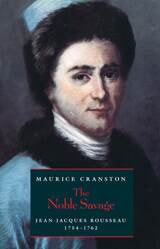
The Noble Savage
Jean-Jacques Rousseau, 1754-1762Maurice Cranston
University of Chicago Press, 1991
"Luckily for us, Maurice Cranston's The Noble Savage: Jean-Jacques Rousseau, 1754-1762 has managed to craft a highly detailed account of eight key years of Rousseau's life in such a way that we can both understand and even, on occasion, sympathize."—Olivier Bernier, Wall Street Journal
Maurice Cranston (1920-1993), a distinguished scholar and recipient of the James Tait Black Memorial Prize for his biography of John Locke, was professor of political science at the London School of Economics. His numerous books include The Romantic Movement and Philosophers and Pamphleteers, and translations of Rousseau's The Social Contract and Discourse on the Origins of Inequality.
The Norman Maclean Reader
Norman Maclean
University of Chicago Press, 2008
In his eighty-seven years, Norman Maclean played many parts: fisherman, logger, firefighter, scholar, teacher. But it was a role he took up late in life, that of writer, that won him enduring fame and critical acclaim—as well as the devotion of readers worldwide. Though the 1976 collection A River Runs Through It and Other Stories was the only book Maclean published in his lifetime, it was an unexpected success, and the moving family tragedy of the title novella—based largely on Maclean’s memories of his childhood home in Montana—has proved to be one of the most enduring American stories ever written.
The Norman Maclean Reader is a wonderful addition to Maclean’s celebrated oeuvre. Bringing together previously unpublished materials with incidental writings and selections from his more famous works, the Reader will serve as the perfect introduction for readers new to Maclean, while offering longtime fans new insight into his life and career.
In this evocative collection, Maclean as both a writer and a man becomes evident. Perceptive, intimate essays deal with his career as a teacher and a literary scholar, as well as the wealth of family stories for which Maclean is famous. Complete with a generous selection of letters, as well as excerpts from a 1986 interview, The Norman Maclean Reader provides a fully fleshed-out portrait of this much admired author, showing us a writer fully aware of the nuances of his craft, and a man as at home in the academic environment of the University of Chicago as in the quiet mountains of his beloved Montana.
Various and moving, the works collected in The Norman Maclean Reader serve as both a summation and a celebration, giving readers a chance once again to hear one of American literature’s most distinctive voices.
The Notebooks of Henry James
Henry James
University of Chicago Press, 1981
"The Notebooks take us into his study, and here we can observe him, at last, in the very act of creation at his writing table."—Leon Edel, Atlantic Monthly
"A document of prime importance."—Edmund Wilson, New Yorker
The Notorious "Bull" Nelson
Murdered Civil War GeneralDonald A. Clark
Southern Illinois University Press, 2011
A dynamic figure in the pages of history, Major General William “Bull” Nelson played a formative role in the Union’s success in Kentucky and the Western theater of the Civil War. Now, Donald A. Clark presents a long-overdue examination of this irascible officer, his numerous accomplishments, and his grim fate. More popularly known for his temper than his intrepid endeavors on behalf of the North, Nelson nevertheless dedicated much of his life to his nation and the preservation of the Union.
The child of a privileged family, Nelson was one of the first officers to graduate from the newly formed U.S. Naval Academy. His years in the Navy imbued in him the qualities of bravery, loyalty, and fortitude; however, his term of service also seemed to breed an intolerance of others for which he became infamous, and that ultimately led to his violent downfall. Clark sheds new light upon Nelson’s pre–Civil War years as a naval officer, when he became a hardened veteran of battle, fighting at the siege of Veracruz and the capture of Tabasco during the Mexican War in the 1840s. On the basis of Nelson’s military experience, in 1861 President Lincoln sent him to Kentucky—which was considering secession—and Nelson rallied loyalists and helped the Union prepare to maintain control of the state during the next several years of war.
Nelson went on to prove instrumental in blocking Confederate attempts to subdue Kentucky and the West, serving important roles in the battle of Shiloh, General Henry W. Halleck’s advance against Corinth, and Brigadier General Don Carlos Buell’s movement toward Chattanooga. But while some viewed his bold maneuvers as the saving of the state, many others, including such notables as Ulysses S. Grant and William Tecumseh Sherman, argued that Nelson’s actions merited no praise. Unfortunately for the general, the question of his value to the Union abruptly became moot, as his achievements were shortly overshadowed by ignominious rumors of scandal and abuse.
His involvement in the defense of Louisville gave Nelson a chance to redeem himself and restore his military reputation, but the general’s famous temper soon robbed him of any potential glory. During September of 1862, in a crime that was never prosecuted, fellow Union general Jefferson C. Davis shot and killed Nelson after an argument. Clark explores this remarkable exception in military law, arguing that while the fact of the murder was indisputable, many considered Davis a hero for having dispatched the so-called tyrant. Although Nelson eventually received many posthumous honors for his indispensable role in the war, justice was never sought for his murder.
A comprehensive study of this well-known, yet misunderstood American figure, The Notorious “Bull” Nelson: Murdered Civil War General is an illuminating addition to the history of the Civil War. Through Clark’s impeccable research and richly layered narrative, William “Bull” Nelson springs from the pages as large and volatile as he was in life.
The Notorious Astrological Physician of London
Works and Days of Simon FormanBarbara Howard Traister
University of Chicago Press, 2000
Although he received no formal medical education, Forman built a thriving practice. His success rankled the College of Physicians of London, who hounded Forman with fines and jail terms for nearly two decades. In addition to detailing case histories of his medical practice—the first such records known from London—as well as his run-ins with the College, Forman's manuscripts cover a wide variety of other matters, from astrology and alchemy to gardening and the theater. His autobiographical writings are among the earliest English examples of their genre and display an abiding passion for reworking his personal history in the best possible light, even though they show little evidence that Forman ever intended to publish them.
Fantastic as many of Forman's manuscripts are, it is their more mundane aspects that make them such a priceless record of what daily life was like for ordinary inhabitants of Shakespeare's London. Forman's descriptions of the stench of a privy, the paralyzed limbs of a child, a lost bitch dog with a velvet collar all offer tantalizing glimpses of a world that seems at once very far away and intimately familiar. Anyone who wants to reclaim that world will enjoy this book.
The Nude Beach Notebook
Barbara J. Scot
Oregon State University Press, 2014
Scot uses long, meditative walks on the “clothing optional” beach of the idyllic Sauvie Island near Portland, Oregon, to explore family responsibility, time’s passage, and faith. She weaves entries from her notebook—a record of the island’s wildlife, descriptions of the “Odd Ones” she encounters on the beach, and stories about the native people who once lived on the river—with the main narrative, tracing her search for her brother, her close friendship with a fellow writer, and daily life on the houseboat moorage where she lives.
The Nude Beach Notebook highlights the importance of place as a means for exploring and interpreting one’s own story. In the end, Scot’s walks on Sauvie Island lead to her own redemptive journey. She considers the uses of fiction and non-fiction in memory and in writing, the brevity and beauty of human existence, and the inscrutable, enduring mystery of death.
The One Thomas More
Travis Curtright
Catholic University of America Press, 2012
The Only One Living to Tell
The Autobiography of a Yavapai IndianMike Burns; Edited by Gregory McNamee
University of Arizona Press, 2012
Mike Burns—born Hoomothya—was around eight years old in 1872 when the US military murdered his family and as many as seventy-six other Yavapai men, women, and children in the Skeleton Cave Massacre in Arizona. One of only a few young survivors, he was adopted by an army captain and ended up serving as a scout in the US army and adventuring in the West. Before his death in 1934, Burns wrote about the massacre, his time fighting in the Indian Wars during the 1880s, and life among the Kwevkepaya and Tolkepaya Yavapai. His precarious position between the white and Native worlds gives his account a distinctive narrative voice.
Because Burns was unable to find a publisher during his lifetime, these firsthand accounts of history from a Native perspective remained unseen through much of the twentieth century, archived at the Sharlot Hall Museum in Prescott. Now Gregory McNamee has brought Burns's text to life, making this extraordinary tale an accessible and compelling read. Generations after his death, Mike Burns finally gets a chance to tell his story.
This autobiography offers a missing piece of Arizona history—as one of the only Native American accounts of the Skeleton Cave Massacre—and contributes to a growing body of history from a Native perspective. It will be an indispensable tool for scholars and general readers interested in the West—specifically Arizona history, the Apache wars, and Yavapai and Apache history and lifeways.
The Only Way Through Is Out
Suzette Mullen
University of Wisconsin Press, 2024
Digging into her past, Suzette uncovered a deeply buried truth: she’d been in love with her best friend—a woman—for nearly two decades—and still was. Leaning into these “unspeakable” feelings would put Suzette’s identity, relationships, and life of privilege at risk—but taking this leap might be her only chance to feel fully alive. As Suzette opened herself up to new possibilities, an unexpected visit to a new city helped her discover who she was meant to be.
Introspective, bittersweet, and empowering, The Only Way Through Is Out is both a coming-out and coming-of-age story, as well as a call to action for every human who is longing to live authentically but is afraid of the cost.
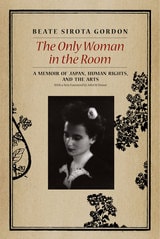
The Only Woman in the Room
A Memoir of Japan, Human Rights, and the ArtsBeate Sirota Gordon
University of Chicago Press, 2014
Sirota was born in Vienna, but in 1929 her family moved to Japan so that her father, a noted pianist, could teach, and she grew up speaking German, English, and Japanese. Russian, French, Italian, Latin, and Hebrew followed, and at fifteen Sirota was sent to complete her education at Mills College in California. The formal declaration of World War II cut Gordon off from her parents, and she supported herself by working for a CBS listening post in San Francisco that would eventually become part of the FCC. Translating was one of Sirota’s many talents, and when the war ended, she was sent to Japan as a language expert to help the American occupation forces. When General MacArthur suddenly created a team that included Sirota to draft the new Japanese Constitution, he gave them just eight days to accomplish the task. Colonel Roest said to Beate Sirota, “You’re a woman, why don’t you write the women’s rights section?”; and she seized the opportunity to write into law guarantees of equality unparalleled in the US Constitution to this day.
But this was only one episode in an extraordinary life, and when Gordon died in December 2012, words of grief and praise poured from artists, humanitarians, and thinkers the world over. Illustrated with forty-seven photographs, The Only Woman in the Room captures two cultures at a critical moment in history and recounts, after a fifty-year silence, a life lived with purpose and courage. This edition contains a new afterword by Nicole A. Gordon and an elegy by Geoffrey Paul Gordon.
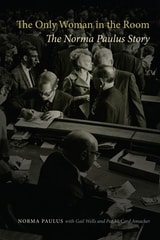
The Only Woman in the Room
The Norma Paulus StoryNorma Paulus
Oregon State University Press, 2017
Paulus came from a family of Roosevelt Democrats, but when a friend campaigned for a Republican seat in the state legislature, she switched parties. As she put it, “The Republicans were in politics for all the right reasons.” Amid the nationwide political upheavals of the late 1960s, Oregon’s Republicans, led by popular governor Tom McCall, seemed to be her kind of people—principled, pragmatic, and committed to education, the environment, and equality for all citizens under the law.
Paulus’s appointment by Governor McCall to the Marion-Polk Boundary Commission in 1969, a precursor to Oregon’s urban growth boundaries, helped launched her on a long and distinguished career of public service. She ran successfully for the Oregon House of Representatives in 1970, the first women to do so in the district. After three terms in the House, where she championed environmental causes, women’s rights and government transparency, she was elected Oregon’s Secretary of State in 1976—the first woman to hold that office and be elected to a statewide office in Oregon. She was the Republican candidate for governor in 1986, served a stint on the Northwest Power and Conservation Council, went on to become Oregon’s superintendent of public instruction, and headed the Oregon Historical Society.
During her years of public service, spanning the 1970s through the early 2000s, Norma Paulus occupied a distinctive niche in Oregon’s progressive political ecosystem. Her vivid personality and strong convictions endeared her to a broad swath of citizens. Beautiful and opinionated, charming and forceful, Paulus was widely covered in statewide and national newspapers and television during her eventful, sometimes controversial career. Now, The Only Woman in the Room sums up her life and work in a lively, anecdotal history that will appeal to historians, political scientists, newshounds, and ordinary citizens alike.

The Orange Wire Problem and Other Tales from the Doctor’s Office
David Watts
University of Iowa Press, 2009
With disarming candor and the audacity to admit that practicing medicine can be a crazy thing, Watts fills each page with riveting details, moving accounts, or belly-laughs. As the stories in this work unfold, we are witness to the moral dilemmas and personal rewards of ministering to the sick. Whether the subject is the potential benefits of therapeutic deception or telling a child about death, Watts’s ear for the right word, the right tone, and the right detail never fails him.
From The Orange Wire Problem and Other Tales from the Doctor’s Office:
We were lingering in the outer office. He mentioned again, no biopsy. I knew that. And I knew there would be no chemotherapy.
Maybe it's like that Orange Wire Problem, I said.
Yes exactly, he said, and four years from now when we're all sitting around the campfire we'll remember the Orange Wire Problem. . .
And I thought to myself, my brother did that. Spoke of the time ahead as he was dying of lung cancer. Six months from now he had said, we'll be glad we did all those drug therapies—as if to speak of the future laid claim to the future.
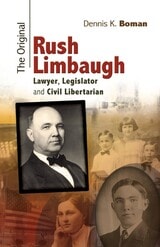
The Original Rush Limbaugh
Lawyer, Legislator, and Civil LibertarianDennis K. Boman
University of Missouri Press, 2012
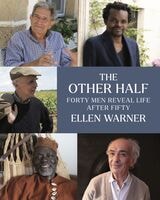
The Other Half
Forty Men Reveal Life After FiftyEllen Warner
Brandeis University Press, 2026
An insightful and intimate look at aging and masculinity that includes interviews and portraits of men from around the world.
What do men really think? From a taxi driver to a prince, a fishmonger to a professional boxer, The Other Half reveals the inner thoughts of men over fifty from different nationalities and different walks of life in their own words, illuminated by their portraits. Author and photojournalist Ellen Warner traveled the world to find out what men really think about love, work, and aging, speaking with well-known figures like film director James Ivory and journalist Bill Keller, as well as a philosopher, a chess grandmaster, a hair stylist, a financier, and more. Interviewing men from Colombia, Greece, Saudi Arabia, Sierra Leone, Sweden, and everywhere in between, Warner assembles a moving portrait of their reflections, insights, challenges, and hard-won triumphs.
A companion to The Second Half: Forty Women Reveal Life After Fifty, Warner’s latest book shares the diverse, vibrant experiences of men over fifty.
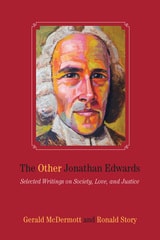
The Other Jonathan Edwards
Selected Writings on Society, Love, and JusticeGerald McDermott
University of Massachusetts Press, 2015
Widely regarded as perhaps America's greatest theologian, Jonathan Edwards still suffers the stereotype of hellfire preacher obsessed with God's wrath. In this anthology, Gerald McDermott and Ronald Story seek to correct that common view by showing that Edwards was also a compassionate, socially conscious minister of the first order.
Through a selection of sermons and primary writings, McDermott and Story reveal an Edwards who preached love toward all humanity regardless of belief or appearance; who demanded private and public charity to the poor; who criticized hard-hearted business dealings as impious and socially destructive; and who condemned envy and status-seeking as anti-Christian and anti-community. This “other” Jonathan Edwards preached about grace and the love of God but also about responsive constitutional government, the iniquities of hypocrisy and corruption, and the nature of wise leadership. He acknowledged the need for national defense but left room for popular revolt from tyranny. He anticipated a millennial age of peace and prosperity and believed that people should live in the world as they would live through grace in heaven.
Jonathan Edwards was, in sum, a worldly as well as spiritual reformer who resisted the materialistic, acquisitive, and individualistic currents of American culture. For these reasons, McDermott and Story think he may have lessons to teach us today.
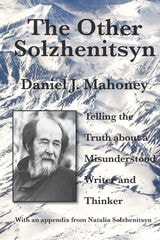
The Other Solzhenitsyn
Telling the Truth about a Misunderstood Writer and ThinkerDaniel J. Mahoney
St. Augustine's Press, 2014
This book above all explores philosophical, political, and moral themes in Solzhenitsyn’s two masterworks, The Gulag Archipelago and The Red Wheel, as well as in his great European novel In the First Circle. We see Solzhenitsyn as analyst of revolution, defender of the moral law, phenomenologist of ideological despotism, and advocate of “resisting evil with force.” Other chapters carefully explore Solzhenitsyn’s conception of patriotism, his dissection of ideological mendacity, and his controversial, but thoughtful and humane discussion of the “Jewish Question” in the Russian – and Soviet twentieth century. Some of Solzhenitsyn’s later writings, such as the “binary tales” that he wrote in the 1990s, are subject to critically appreciative analysis. And a long final chapter comments on Solzhenitsyn’s July 2007 Der Spiegel interview, his last word to Russia and the West. He is revealed to be a man of faith and freedom, a patriot but not a nationalist, and a principled advocate of self-government for Russia and the West.
A final Appendix reproduces the beautiful Introduction (“The Gift of Incarnation”) that the author’s widow, Natalia Solzhenitsyn, wrote to the 2009 Russian abridgment of The Gulag Archipelago, a work that is now taught in Russian high schools.
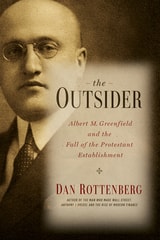
The Outsider
Albert M. Greenfield and the Fall of the Protestant EstablishmentDan Rottenberg
Temple University Press, 2018
In The Outsider, veteran journalist and best-selling author Dan Rottenberg deftly chronicles the astonishing rises, falls, and countless reinventions of this savvy businessman. Greenfield's power allowed him to cross social, religious, and ethnic boundaries with impunity. He alarmed Philadelphia's conservative business and social leaders-Christians and Jews alike-some of whom plotted his downfall.
In this engaging account of Greenfield's fascinating life, Rottenberg demonstrates the extent to which one uniquely brilliant and energetic man pushed the boundaries of society's limitations on individual potential. The Outsider provides a microcosmic look at three twentieth-century upheavals: the rise of Jews as a crucial American business force, the decline of America's Protestant establishment, and the transformation of American cities.
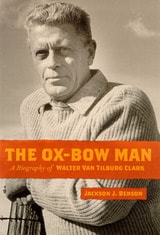
The Ox-Bow Man
A Biography Of Walter Van Tilburg ClarkJackson J. Benson
University of Nevada Press, 2006
Walter Van Tilburg Clark, author of the classic novel The Ox-Bow Incident, was one of the West’s most important literary figures, a writer who contributed mightily to the tradition of viewing the West realistically and not through the veil of myth and romance. As a comparatively young man, he published three novels and a collection of short stories, then remained almost silent for the rest of his life, the victim of a paralyzing case of writer’s block. Now Jackson J. Benson, one of the country’s foremost literary biographers, has produced the first full-length biography of this brilliant, enigmatic, and ultimately tragic figure. Based on widely scattered sources—personal papers and correspondence; interviews with family members, friends, and others; and Clark’s unpublished stories and poems—Benson’s biography focuses on Clark’s intellectual and literary life as a writer, teacher, and westerner. Benson masterfully balances his engaging account of the experiences, people, and settings of Clark’s life with a penetrating examination of his complex psyche and the crippling perfectionism that virtually ended Clark’s career, as well as offering up a thoughtful assessment of Clark’s place in Western writing. In these pages, Clark lives again, a warm, complex, and ultimately anguished human being. Benson’s remarkably astute and sensitive biography is destined to be the book that readers and researchers consult first for information about this major western writer.
The Painted Forest
Krista Eastman
West Virginia University Press, 2019
Council for Wisconsin Writers, Norbert Blei/August Derleth Nonfiction Book Award winner
In this often-surprising book of essays, Krista Eastman explores the myths we make about who we are and where we’re from. The Painted Forest uncovers strange and little-known “home places”—not only the picturesque hills and valleys of the author’s childhood in rural Wisconsin, but also tourist towns, the “under-imagined and overly caricatured” Midwest, and a far-flung station in Antarctica where the filmmaker Werner Herzog makes an unexpected appearance.
The Painted Forest upends easy narratives of place, embracing tentativeness and erasing boundaries. But it is Eastman’s willingness to play—to follow her curiosity down every odd path, to exude a skeptical wonder—that gives this book depth and distinction. An unlikely array of people, places, and texts meet for close conversation, and tension is diffused with art, imagination, and a strong sense of there being some other way forward. Eastman offers a smart and contemporary take on how we wander and how we belong.
The Pale Light of Sunset
Scattershots and Hallucinations in an Imagined LifeLee Maynard
West Virginia University Press, 2009

The Pancreas and Me
My Life as a Biomedical ScientistJohn A. Williams
Michigan Publishing Services, 2023
This is a personal story that weaves together the personal and professional aspects of a rewarding life in biomedical research. The book describes the education and career of John A. Williams, a leading biomedical scientist whose research focused on the exocrine pancreas and its function. It is arranged chronologically and covers Dr. Williams’ education, how he developed his interest in the pancreas, and how research on the pancreas developed over his 50 year career. It also provides insight into the state of American biomedical education, medical schools, and how research is funded and published.
As a professor, his research was on the exocrine pancreas, its secretion of digestive enzymes, and regulation by gastrointestinal hormones. He published over 400 papers and trained over 60 graduate students and postdoctoral fellows. Dr Williams served as President of two scientific societies, the American Pancreatic Association and the American Physiological Society, and as Editor of four journals. He also founded the Pancreapedia, an open access knowledgbase about the exocrine pancreas. In addition, he taught medical and graduate students with a focus on gastrointestinal function.
While a medical student, John married his life partner, Christa Smith, and they have been together 57 years raising two children and helping with four grandchildren and two great-grandchildren. John has a lifetime interest in outdoor activities, nature, and conservation. For the last decade he has been an advocate for reducing the use of fossil fuels. He is also active in the Ann Arbor Friends meeting.
The Pantarch
A Biography of Stephen Pearl AndrewsBy Madeleine B. Stern
University of Texas Press, 1968
An abolitionist and a champion of free love and women’s rights would seem decidedly out of place in nineteenth-century Texas, but such a man was Stephen Pearl Andrews (1812–1886), American reformer, civil rights proponent, pioneer in sociology, advocate of reformed spelling, lawyer, and eccentric philosopher. Since his life mirrored and often anticipated the various reform movements spawned not only in Texas but in the United States in the nineteenth century, this first biography of him sharply reflects and elucidates his times.
The extremely important role Andrews played in the abolition movement in this country has not heretofore been accorded him. After having witnessed slavery in Louisiana during the 1830s, Andrews came to Texas and began his career as an abolitionist with an audacious attempt to free the slaves there.
His singular career, however, comprised many more activities than abolitionism, and most have long been forgotten by historians. He introduced Pitman shorthand into the United States as a means of teaching the uneducated to read; his role in the community of Modern Times, Long Island, was as important as that of Josiah Warren, the “first American anarchist,” although Andrews’s participation in this communal venture, along with the significance of Modern Times itself, has been underestimated.
Other causes which Andrews supported included free love and the rights of women, dramatized by his journalistic debate with Horace Greeley and Henry James, Sr., and by his endorsement of Victoria Woodhull as the first woman candidate for the Presidency of the United States. These interests, together with his consequent involvement in the Beecher-Tilton Scandal, provide insight into some of the more colorful aspects of nineteenth-century American reform movements.
Andrews’s attacks upon whatever infringed on individual freedom brought him into diverse arenas—economic, sociological, and philosophical. The philosophical system he developed included among its tenets the sovereignty of the individual, a science of society, a universal language (his Alwato long preceded Esperanto), the unity of the sciences, and a “Pantarchal United States of the World.” His philosophy has never before been epitomized nor have its applications to later thought been considered.
“I have made it the business of my life to study social laws,” Andrews wrote. “I see now a new age beginning to appear.” This biography of the dynamic reformer examines those social laws and that still-unembodied new age. It reanimates a heretofore neglected American reformer and casts new light upon previously unexplored bypaths of nineteenth-century American social history. The biography is fully documented, based in part upon a corpus of unpublished material in the State Historical Society of Wisconsin.