Results by title
3745 books match the query 'Europe' and 973 start with t

The Moon, Come to Earth
Dispatches from LisbonPhilip Graham
University of Chicago Press, 2009
A dispatch from a foreign land, when crafted by an attentive and skilled writer, can be magical, transmitting pleasure, drama, and seductive strangeness.
In The Moon, Come to Earth, Philip Graham offers an expanded edition of a popular series of dispatches originally published on McSweeney’s, an exuberant yet introspective account of a year’s sojourn in Lisbon with his wife and daughter. Casting his attentive gaze on scenes as broad as a citywide arts festival and as small as a single paving stone in a cobbled walk, Graham renders Lisbon from a perspective that varies between wide-eyed and knowing; though he’s unquestionably not a tourist, at the same time he knows he will never be a local. So his lyrical accounts reveal his struggles with (and love of) the Portuguese language, an awkward meeting with Nobel laureate José Saramago, being trapped in a budding soccer riot, and his daughter’s challenging transition to adolescence while attending a Portuguese school—but he also waxes loving about Portugal’s saudade-drenched music, its inventive cuisine, and its vibrant literary culture. And through his humorous, self-deprecating, and wistful explorations, we come to know Graham himself, and his wife and daughter, so that when an unexpected crisis hits his family, we can’t help but ache alongside them.
A thoughtful, finely wrought celebration of the moment-to-moment excitement of diving deep into another culture and confronting one’s secret selves, The Moon, Come to Earth is literary travel writing of a rare intimacy and immediacy.
The Moral Neoliberal
Welfare and Citizenship in ItalyAndrea Muehlebach
University of Chicago Press, 2012
The Most Noble of People
Religious, Ethnic, and Gender Identity in Muslim SpainJessica A. Coope
University of Michigan Press, 2017
The opening chapters define Arab and Muslim identity as those categories were understood in Muslim Spain, highlighting the unique aspects of this society as well as its similarities with other parts of the medieval Islamic world. The book goes on to discuss what it meant to be a Jew or Christian in Spain under Islamic rule, and the degree to which non-Muslims were full participants in society. Following this is a consideration of gender identity as defined by Islamic law and by less normative sources like literature and mystical texts. It concludes by focusing on internal rebellions against the government of Muslim Spain, particularly the conflicts between Muslims who were ethnically Arab and those who were Berber or native Iberian, pointing to the limits of Muslim solidarity.
Drawn from an unusually broad array of sources—including legal texts, religious polemic, chronicles, mystical texts, prose literature, and poetry, in both Arabic and Latin—many of Coope’s illustrations of life in al-Andalus also reflect something of the larger medieval world. Further, some key questions about gender, ethnicity, and religious identity that concerned people in Muslim Spain—for example, women’s status under Islamic law, or what it means to be a Muslim in different contexts and societies around the world—remain relevant today.
The Most Powerful Idea in the World
A Story of Steam, Industry, and InventionWilliam Rosen
University of Chicago Press, 2012
This bracing history uses the earth-shaking development of the steam engine to show how the very idea of intellectual property was essential to the entire Industrial Revolution.
Hardly a week passes without some high-profile court case that features intellectual property at its center. But how did the belief that one could own an idea come about? And how did that belief change the way humankind lives and works?
William Rosen, author of Justinian's Flea, seeks to answer these questions and more with The Most Powerful Idea in the World. A lively and passionate study of the engineering and scientific breakthroughs that led to the steam engine, this book argues that the very notion of intellectual property drove not only the invention of the steam engine but also the entire Industrial Revolution: history’s first sustained era of economic improvement. To do so, Rosen conjures up an eccentric cast of characters, including the legal philosophers who enabled most the inventive society in millennia, and the scientists and inventors—Thomas Newcomen, Robert Boyle, and James Watt—who helped to create and perfect the steam engine over the centuries. With wit and wide-ranging curiosity, Rosen explores the power of creativity, capital, and collaboration in the brilliant engineering of the steam engine and how this power source, which fueled factories, ships, and railroads, changed human history.
Deeply informative and never dull, Rosen's account of one of the most important inventions made by humans is a rollicking ride through history, with careful scholarship and fast-paced prose in equal measure.
The Murder of the Jews in Latvia 1941-1945
Bernhard Press
Northwestern University Press, 2000
The Muslim Question in Europe
Political Controversies and Public PhilosophiesPeter O'Brien
Temple University Press, 2016
An estimated twenty million Muslims now reside in Europe, mostly as a result of large-scale postwar immigration. In The Muslim Question in Europe, Peter O’Brien challenges the popular notion that the hostilities concerning immigration—which continues to provoke debates about citizenship, headscarves, secularism, and terrorism—are a clash between “Islam and the West.” Rather, he explains, the vehement controversies surrounding European Muslims are better understood as persistent, unresolved intra-European tensions.
O’Brien contends that the best way to understand the politics of state accommodation of European Muslims is through the lens of three competing political ideologies: liberalism, nationalism, and postmodernism. These three broadly understood philosophical traditions represent the most influential normative forces in the politics of immigration in Europe today. He concludes that Muslim Europeans do not represent a monolithic anti-Western bloc within Europe. Although they vehemently disagree among themselves, it is along the same basic liberal, nationalist, and postmodern contours as non-Muslim Europeans.
The Mysteries of the Marco Polo Maps
Benjamin B. Olshin
University of Chicago Press, 2014
In The Mysteries of the Marco Polo Maps, historian of cartography Benjamin B. Olshin offers the first credible book-length analysis of these artifacts, charting their course from obscure origins in the private collection of Italian-American immigrant Marcian Rossi in the 1930s; to investigations of their authenticity by the Library of Congress, J. Edgar Hoover, and the FBI; to the work of the late cartographic scholar Leo Bagrow; to Olshin’s own efforts to track down and study the Rossi maps, all but one of which are in the possession of Rossi’s great-grandson Jeffrey Pendergraft. Are the maps forgeries, facsimiles, or modernized copies? Did Marco Polo’s daughters—whose names appear on several of the artifacts—preserve in them geographic information about Asia first recorded by their father? Or did they inherit maps created by him? Did Marco Polo entrust the maps to Admiral Ruggero Sanseverino, who has links to Rossi’s family line? Or, if the maps have no connection to Marco Polo, who made them, when, and why?
Regardless of the maps’ provenance, Olshin’s tale—stretching from the remote reaches of the northern Pacific to early Chinese legends—takes readers on a journey confounding yet fascinating, offering insights into Italian history, the age of exploration, and the wonders of cartography.
The Mystic Fable, Volume One
The Sixteenth and Seventeenth CenturiesMichel de Certeau
University of Chicago Press, 1992
The Mystic Fable, Volume Two
The Sixteenth And Seventeenth CenturiesMichel de Certeau
University of Chicago Press, 2015
Though the second volume remained in fragments at the time of his death, Michel de Certeau had the foresight to leave his literary executor detailed instructions for its completion, which formed the basis for the present work. Together, both volumes solidify Certeau’s place as a touchstone of twentieth-century literature and philosophy, and continue his exploration of the paradoxes of historiography; the construction of social reality through practice, testimony, and belief; the theorization of speech in angelology and glossolalia; and the interplay of prose and poetry in discourses of the ineffable. This book will be of vital interest to scholars in religious studies, theology, philosophy, history, and literature.
The Myth of Pope Joan
Alain Boureau
University of Chicago Press, 2001
Or so the legend goes—a legend that was fabricated sometime in the thirteenth century, according to Alain Boureau, and which has persisted in one form or another down to the present day. In this fascinating saga of belief and rhetoric, politics and religion, Boureau investigates the historical and ecclesiastical circumstances under which the myth of Pope Joan was constructed and the different uses to which it was put over the centuries. He shows, for instance, how Catholic clerics justified the exclusion of women from the papacy and the priesthood by employing the myth in misogynist moral tales, only to find the popess they had created turned against them in anti-Catholic propaganda during the Reformation.
The Naked Truth
Viennese Modernism and the BodyAlys X. George
University of Chicago Press, 2020
Viennese modernism is often described in terms of a fin-de-siècle fascination with the psyche. But this stereotype of the movement as essentially cerebral overlooks a rich cultural history of the body. The Naked Truth, an interdisciplinary tour de force, addresses this lacuna, fundamentally recasting the visual, literary, and performative cultures of Viennese modernism through an innovative focus on the corporeal.
Alys X. George explores the modernist focus on the flesh by turning our attention to the second Vienna medical school, which revolutionized the field of anatomy in the 1800s. As she traces the results of this materialist influence across a broad range of cultural forms—exhibitions, literature, portraiture, dance, film, and more—George brings into dialogue a diverse group of historical protagonists, from canonical figures such as Egon Schiele, Arthur Schnitzler, Joseph Roth, and Hugo von Hofmannsthal to long-overlooked ones, including author and doctor Marie Pappenheim, journalist Else Feldmann, and dancers Grete Wiesenthal, Gertrud Bodenwieser, and Hilde Holger. She deftly blends analyses of popular and “high” culture, laying to rest the notion that Viennese modernism was an exclusively male movement. The Naked Truth uncovers the complex interplay of the physical and the aesthetic that shaped modernism and offers a striking new interpretation of this fascinating moment in the history of the West.
The Nationalization of the Masses
Political Symbolism and Mass Movements in Germany from the Napoleonic Wars Through the Third ReichGeorge L. Mosse
University of Wisconsin Press, 2023
The Nature of the Book
Print and Knowledge in the MakingAdrian Johns
University of Chicago Press, 1998
"A compelling exposition of how authors, printers, booksellers and readers competed for power over the printed page. . . . The richness of Mr. Johns's book lies in the splendid detail he has collected to describe the world of books in the first two centuries after the printing press arrived in England."—Alberto Manguel, Washington Times
"[A] mammoth and stimulating account of the place of print in the history of knowledge. . . . Johns has written a tremendously learned primer."—D. Graham Burnett, New Republic
"A detailed, engrossing, and genuinely eye-opening account of the formative stages of the print culture. . . . This is scholarship at its best."—Merle Rubin, Christian Science Monitor
"The most lucid and persuasive account of the new kind of knowledge produced by print. . . . A work to rank alongside McLuhan."—John Sutherland, The Independent
"Entertainingly written. . . . The most comprehensive account available . . . well documented and engaging."—Ian Maclean, Times Literary Supplement

The Nazi Symbiosis
Human Genetics and Politics in the Third ReichSheila Faith Weiss
University of Chicago Press, 2010
The Faustian bargain—in which an individual or group collaborates with an evil entity in order to obtain knowledge, power, or material gain—is perhaps best exemplified by the alliance between world-renowned human geneticists and the Nazi state. Under the swastika, German scientists descended into the moral abyss, perpetrating heinous medical crimes at Auschwitz and at euthanasia hospitals. But why did biomedical researchers accept such a bargain?
The Nazi Symbiosis offers a nuanced account of the myriad ways human heredity and Nazi politics reinforced each other before and during the Third Reich. Exploring the ethical and professional consequences for the scientists involved as well as the political ramifications for Nazi racial policies, Sheila Faith Weiss places genetics and eugenics in their larger international context. In questioning whether the motives that propelled German geneticists were different from the compromises that researchers from other countries and eras face, Weiss extends her argument into our modern moment, as we confront the promises and perils of genomic medicine today.
The Neapolitan Recipe Collection
Cuoco NapoletanoTerence Scully
University of Michigan Press, 2015
The Neoliberal Age?
Britain Since the 1970sEdited by Aled Davies, Ben Jackson, and Florence Sutcliffe-Braithwaite
University College London, 2021
The rise of British neoliberalism—a renewed emphasis on privatization and market-oriented economics—over the last fifty years is often characterized as the product of right-wing political economists, think tanks, and politicians. The Neoliberal Age? argues that this pat narrative ignores broader forces in British left-wing culture that collaborated to transform twentieth-century social life. Through a variety of case studies, the authors demonstrate that our austere, individualistic age emerged from more complex sociopolitical negotiations than typically described.
The Netherlands in a Nutshell
Highlights from Dutch History and CultureEdited by Frits van Oostrom
Amsterdam University Press, 2009
The New Berlin
Memory, Politics, PlaceKaren E. Till
University of Minnesota Press, 2005
“The New Berlin is a notable contribution to human geography and to the interdisciplinary literature on social memory and place making. Till’s methods and scholarship have provided the conceptual groundwork for the exploration and development of place making, social memory, and spatial haunting through the particular practices and politics of the new Berlin. Her readable style is marked by a narrative economy in which every word and sentence serves the larger purposes of the book. I recommend this book to anyone—student, scholar, or practitioner—who is interested in the social dynamics of memory formation and place making.” —The Professional Geographer
“This book is a well-written ‘first-hand’ account, though it also thoroughly covers academic literature, contemporary news accounts, and archival records.” —German Studies Review
“Karen E. Till's The New Berlin describes the modern metropolis and the ghosts of the past that it has to deal with.” —German World
“Well illustrated and copiously footnoted, this is a cutting-edge study of the power of identity-construction/analysis. Highly recommended.” —CHOICE
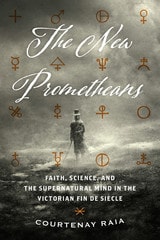
The New Prometheans
Faith, Science, and the Supernatural Mind in the Victorian Fin de SiècleCourtenay Raia
University of Chicago Press, 2019
The New Prometheans traces the evolution of psychical research through the intertwining biographies of four men: chemist Sir William Crookes, depth psychologist Frederic Myers, ether physicist Sir Oliver Lodge, and anthropologist Andrew Lang. All past presidents of the society, these men brought psychical research beyond academic circles and into the public square, making it part of a shared, far-reaching examination of science and society. By layering their papers, textbooks, and lectures with more intimate texts like diaries, letters, and literary compositions, Courtenay Raia returns us to a critical juncture in the history of secularization, the last great gesture of reconciliation between science and sacred truths.
The Newton Wars and the Beginning of the French Enlightenment
J. B. Shank
University of Chicago Press, 2008
A comprehensive study of public culture, The Newton Wars and the Beginning of the French Enlightenment digsbelow the surface of the commonplace narratives that link Newton with Enlightenment thought to examine the actual historical changes that brought them together in eighteenth-century time and space. Drawing on the full range of early modern scientific sources, from studied scientific treatises and academic papers to book reviews, commentaries, and private correspondence, J. B. Shank challenges the widely accepted claim that Isaac Newton’s solitary genius is the reason for his iconic status as the father of modern physics and the philosophemovement.

The Next Threat
Western Perceptions of IslamEdited by Jochen Hippler and Andrea Lueg
Pluto Press, 1995

The Night of the Physicists
Operation Epsilon: Heisenberg, Hahn, Weizsäcker and the German BombRichard von Schirach
Haus Publishing, 2015
The Nobility and Excellence of Women and the Defects and Vices of Men
Lucrezia Marinella
University of Chicago Press, 1999
Marinella's masterpiece, The Nobility and Excellence of Women, and the Defects and Vices of Men was first published in 1600, composed at a furious pace in answer to Giusepe Passi's diatribe about women's alleged defects. This polemic displays Marinella's vast knowledge of the Italian poetic tradition and demonstrates her ability to argue against authors of the misogynist tradition from Boccaccio to Torquato Tasso. Trying to effect real social change, Marinella argued that morally, intellectually, and in many other ways, women are superior to men.
The Nonconformists
Culture, Politics, and Nationalism in a Serbian Intellectual Circle, 1944-1991Nick Miller
Central European University Press, 2007
The Nordic Model
Scandinavia since 1945Mary Hilson
Reaktion Books, 2008
Respected Scandinavian historian Mary Hilson surveys the political bureaucracies of the five Nordic countries—Denmark, Finland, Iceland, Norway, and Sweden—and traces their historical influences and the ways they have changed, individually and as a group, over time. The book investigates issues such as economic development, foreign policy, politics, government, and the welfare state, and it also explores prevailing cultural perceptions of Scandinavia in the twentieth century. Hilson then turns to the future of the Nordic region as a unified whole within Europe as well as in the world, and considers the re-emergence of the Baltic Sea as a pivotal region on the global stage.
The Nordic Model offers an incisive assessment of Scandinavia yesterday and today, making this an essential text for students and scholars of political science, European history, and Scandinavian studies.
The Normans in South Wales, 1070–1171
By Lynn H. Nelson
University of Texas Press, 1966
A frontier has been called "an area inviting entrance." For the Norman invaders of England the Welsh peninsula was such an area. Fertile forested lowlands invited agricultural occupation; a fierce but primitive and disunited native population was scarcely a formidable deterrent.
In The Normans in South Wales, Lynn H. Nelson provides a comprehensive history of the century during which the Normans accomplished this occupation. Skillfully he combines facts and statistics gleaned from a variety of original sources—The Anglo-Saxon Chronicle, the Domesday Book, Church records, charters of the kings and of the marcher lords, and more imaginative literary sources such as the chanson de geste and the frontier epic—to give a vivid picture of a century of strife. He describes the fluctuating conflict between Norman invaders in the lowlands and Welsh tribesmen in the highlands; the hard struggle of medieval frontiersmen to take from the new land a profit commensurate with their labors; the development of a Cambro-Norman society distinct and quite different from the Anglo-Norman culture which engendered it; and the attempt of the frontiersman to prevent the Anglo-Norman authorities from taking control of the lands he had won.
The turbulent Welsh tribes provided an ever present harassment along the frontier, and Nelson begins his presentation with an account of the failure of the Saxons to control them. He examines the methods adopted by William the Conqueror to cope with the problem—the creation of the great marcher lordships and the subsequent problems in controlling these lordships—and the weakness of some Anglo-Norman kings and the strength of others.
By 1171 the conquest of the Welsh frontier was complete; but as Nelson points out, this conquest was strangely limited. The frontier, which extended throughout the lowlands of Wales, stopped at the 600-foot contour line in the mountains. In his final chapter Nelson speculates upon the curious fact that large areas of seemingly inviting moorlands lying above this line remained closed to the Cambro-Norman, and his speculations lead him to some interesting inferences about the nature of the frontier's influence upon the civilization which moves in to occupy it.
The Notorious Astrological Physician of London
Works and Days of Simon FormanBarbara Howard Traister
University of Chicago Press, 2000
Although he received no formal medical education, Forman built a thriving practice. His success rankled the College of Physicians of London, who hounded Forman with fines and jail terms for nearly two decades. In addition to detailing case histories of his medical practice—the first such records known from London—as well as his run-ins with the College, Forman's manuscripts cover a wide variety of other matters, from astrology and alchemy to gardening and the theater. His autobiographical writings are among the earliest English examples of their genre and display an abiding passion for reworking his personal history in the best possible light, even though they show little evidence that Forman ever intended to publish them.
Fantastic as many of Forman's manuscripts are, it is their more mundane aspects that make them such a priceless record of what daily life was like for ordinary inhabitants of Shakespeare's London. Forman's descriptions of the stench of a privy, the paralyzed limbs of a child, a lost bitch dog with a velvet collar all offer tantalizing glimpses of a world that seems at once very far away and intimately familiar. Anyone who wants to reclaim that world will enjoy this book.

The Obedience of a King of Portugal
Vasco Fernandes de LucenaTranslated by Francis M. Rogers
University of Minnesota Press, 1958
The Obedience of a King of Portugal was first published in 1958. Minnesota Archive Editions uses digital technology to make long-unavailable books once again accessible, and are published unaltered from the original University of Minnesota Press editions.
Especially designed as an example of fine book making, this volume presents a facsimile reproduction and a translation of a fifteen-century publication. The original upon which this publication is based is in the James Ford Bell Collection in the University of Minnesota library. The text is that of the obedience oration of Vasco Fernandes de Lucena, delivered for John II of Portugal to Pope Innocent VIII in 1485. Scholars consider the work a magnificent example of the Latin oratorical prose of the period.
The Object of Labor
Commodification in Socialist HungaryMartha Lampland
University of Chicago Press, 1995
Exploring the effects of social change thrust upon communities against their will, Lampland examines the history of agrarian labor in Hungary from World War I to the early 1980s. She shows that rural workers had long been subject to strict state policies similar to those imposed by collectivization. Since the values of privatization and individualism associated with capitalism characterized rural Hungarian life both prior to and throughout the socialist period, capitalist ideologies of work and morality survived unscathed in the private economic practices of rural society. Lampland also shows how labor practices under socialism prepared the workforce for capitalism. By drawing villagers into factories and collective farms, for example, the socialist state forced farmers to work within tightly controlled time limits and to calculate their efforts in monetary terms. Indeed, this control and commodification of rural labor under socialism was essential to the transformation to capitalism.
The Odyssey of Ibn Battuta
Uncommon Tales of a Medieval AdventurerDavid Waines
University of Chicago Press, 2010
Ibn Battuta was, without doubt, one of the world’s truly great travelers. Born in fourteenth-century Morocco, and a contemporary of Marco Polo, Ibn Battuta left an account in his own words of his remarkable journeys, punctuated by adventure and peril, throughout the Islamic world and beyond. Whether sojourning in Delhi and the Maldives, wandering through the mazy streets of Cairo and Damascus, or contesting with pirates and shipwreck, the indefatigable Ibn Battuta brought to vivid life a medieval world brimming with marvel and mystery. Carefully observing the great diversity of civilizations that he encountered, Ibn Battuta exhibited an omnivorous interest in such matters as food and drink; religious differences among Christians, Hindus, and Shia Muslims; and ideas about purity and impurity, disease, women, and sex.
David Waines offers here a graceful analysis of Ibn Battuta’s travelogue. This is a gripping treatment of the life and times of one of history’s most daring, and at the same time most human, adventurers.
The Old Country and the New
Essays on Swedes and AmericaH. Arnold Barton
Southern Illinois University Press, 2006
Documenting a rich Scandinavian American culture and ethnic perspective
This notable collection of seventeen essays and six editorials by renowned Swedish American historian H. Arnold Barton was compiled from writings published between 1974 and 2005. The result of three decades of extensive research in the United States and Sweden, The Old Country and the New: Essays on Swedes and America, covers Swedish emigration to North America as well as the history and culture of Swedes in their new country.
In this rich mosaic of American ethnicity and cultural history, Barton analyzes the multifaceted Swedish emigration/immigration story. Essays include a survey of the historiography of emigration from the Scandinavian countries and the Scandinavian immigration to North America, Swedish emigration before 1846, and the Eric-Janssonist religious sect and its colony at Bishop Hill, Illinois.
Because Swedish immigrants were highly literate people, they wrote numerous letters describing their experiences to relatives and friends at home. What these letters related—or omitted—is the subject of another essay. Barton discusses Swedish immigrants who returned permanently to their homeland, affecting both the old country and the new. He also traces relations between the United States and Sweden, post—World War II Swedish immigration, and genealogy as history.
Offering a broad Scandinavian American ethnic perspective, The Old Country and the New appeals to both scholars and lay readers. Sixteen illustrations and a complete bibliography of Barton’s publications on Swedish American history and culture enhance the volume.
The Old English Poem Seasons for Fasting
A Critical EditionMary P. Richards
West Virginia University Press, 2014
Seasons for Fasting, a late Old English poem probably composed in the early eleventh century, focuses on proper fasting observances in England. This poem, composed in eight-line stanzas, survives only in a sixteenth-century transcript made by the antiquary Laurence Nowell. With its topics, vocabulary, sources, and style derived from those of contemporary ecclesiastical prose, it belongs to a school of late tenth/early eleventh century poetry that only now is coming to be recognized and defined.
The Old English Poem Seasons for Fasting: A Critical Edition provides a new text and translation of the poem, accompanied by an extensive introduction, commentary, and glossary. The introduction includes analyses of the poem’s manuscript origins, sources, language, meter, style, and structure. The text is collated with all previous editions. The commentary elucidates points of grammar and style, and justifies all editorial decisions. The glossary covers every instance of each word in the poem.
Since its discovery among the papers of Laurence Nowell in 1934, the poem has had only four editions, two of the text with basic notes, and two in doctoral theses with more commentary and analysis. This new edition brings the latest resources on manuscript study, lexicon (through the Concordance and Dictionary of Old English A-G), poetics, and cultural milieu to bear on this fascinating poem. The apparatus, including the glossary, will allow fellow scholars to extend these findings through links to their own work.
The Old Regime and the Revolution, Volume I
The Complete TextAlexis de Tocqueville
University of Chicago Press, 1998

The Old Regime and the Revolution, Volume II
Notes on the French Revolution and NapoleonAlexis de Tocqueville
University of Chicago Press, 2001
With his monumental work The Old Regime and the Revolution, Alexis de Tocqueville (1805–59)—best known for his classic Democracy in America—envisioned a multivolume philosophical study of the origins of modern France that would examine the implications of French history on the nature and development of democratic society. Volume I, which covered the eighteenth-century background to the Revolution, was published to great acclaim in 1856. On the continuation of this project, he wrote: "When this Revolution has finished its work, [this volume] will show what that work really was, and what the new society which has come from that violent labor is, what the Revolution has taken away and what it has preserved from that old regime against which it was directed."
The Oldest Legend
Acts of the Canonization Process, and Miracles of Saint Margaret of HungaryBence Péterfi
Central European University Press, 2018
The Open Veins of the Postcolonial
Afrodescendants and RacismsEdited by Inocência Mata and Iolanda Évora
Tagus Press, 2022
The Operas of Giuseppe Verdi
Abramo Basevi
University of Chicago Press, 2014

The Ordering of Time
From the Ancient Computus to the Modern ComputerArno Borst
University of Chicago Press, 1993
Arno Borst examines the various ways that time has been calculated by numbers and measured by instruments over several centuries, from the computus—an ancient method of determining times and dates—to the present-day computer. In a wide-ranging discussion, he analyzes the classical Greek concepts of divine, natural, and human time; the universal time of ancient Rome; the Easter cycle of the Middle Ages; the development of the mechanical clock in the fourteenth and fifteenth centuries; early modern chronology; and twentieth-century data processing.
Borst argues that although many centuries and countless different instruments—sundials, horologia, abaci, astrolabes, calendars, and calculating machines—separate the medieval computus from the modern computer, each generation has had to answer the same question: how can we make the best use of our available time to improve our lives? The computer, he suggests, is merely a new instrument employed for an ancient purpose.
Lively and accessible, The Ordering of Time will be welcomed by students and researchers in social and cultural history, the history of science and mathematics, as well as anyone interested in the history of time and numbers.
The Origins Of Postcommunist Elites
From Prague Spring To The Breakup Of CzechoslovakiaGil Eyal
University of Minnesota Press, 2003
How is it that Czechoslovakia’s separation into two countries in 1993 was accomplished so peacefully—especially when compared with the experiences of its neighbors Russia and Yugoslavia? This book provides a sociological answer to this question—and an empirical explanation for the breakup of Czechoslovakia—by tracing the political processes begun in the Prague Spring of 1968.
Gil Eyal’s main argument is that Czechoslovakia’s breakup was caused by a struggle between two fractions of what sociologists call the “new class,” which consisted primarily of intellectuals and technocrats. Focusing on the process of polarization that created these two distinct political elites, Eyal shows how, in response to the events of the ill-fated Prague Spring, Czech and Slovak members of the “new class” embarked on divergent paths and developed radically different, even opposed, identities, worldviews, and interests. Unlike most accounts of postcommunist nationalist conflict, this book suggests that what bound together each of these fractions—and what differentiated each from the other—were not national identities and nationalist sentiments per se, but their distinctive visions of the social role of intellectuals.
The Origins of Christian Democracy
Politics and Confession in Modern GermanyMaria D. Mitchell
University of Michigan Press, 2012
This book is a pioneering contribution to the history of the founding of the West German political system after the Second World War. The political cooperation between Catholics and Protestants that resulted in the formation of the Christian Democratic Union (CDU) in occupied and early West Germany represented a significant change from a long history of hostility in confessional relations. Given that the CDU went on to dominate politics in West Germany well into the 1960s, Maria D. Mitchell argues that an understanding of what made this interconfessional party possible is crucial to an exploration of German history in the postwar period. She examines the political history of party formation as well as the religious beliefs and motivations that shaped the party's philosophy and positions. She provides an authoritative guide to the complex processes of maneuvering and negotiation that produced the CDU during 1945-46. The full range of political possibilities is discussed, including the suppressed alternatives to the Adenauer/Erhard axis that eventually defined the party's trajectory during the 1950s and the abortive Christian Socialism associated with Jacob Kaiser.
The Origins of Mexican Catholicism
Nahua Rituals and Christian Sacraments in Sixteenth-Century MexicoOsvaldo F. Pardo
University of Michigan Press, 2004
---Fernando Cervantes, Bristol University, UK
"Pardo does an excellent job of balancing and contrasting sixteenth-century Catholic theology with Nahua thought and belief."
---John F. Schwaller, University of Minnesota
At first glance, religious conversion may appear to be only a one-way street. When studying sixteenth-century Mexico, one might assume that colonial coercion was the driving force behind the religious conversion of the native population. But The Origins of Mexican Catholicism shows how Spanish missionaries instead drew on existing native ceremonies in order to make Christianity more accessible to the Nahua population whom they were trying to convert.
Osvaldo F. Pardo explains that religious figures not only shaped native thought, but that indigenous rituals had an impact on the religion itself. This work illustrates the complex negotiations that took place in the process of making the Christian sacraments available to the native peoples, and at the same time, forced the missionaries to reexamine the meaning of their sacraments through the eyes of an alien culture.
For Spanish missionaries, ritual not only became a focus of evangelical concern but also opened a window to the social world of the Nahuas. Missionaries were able to delve into the Nahua's notions of self, emotions, and social and cosmic order. By better understanding the sociological aspects of Nahua culture, Christians learned ways to adequately convey their religion through mutual understanding instead of merely colonial oppression.
Given its interdisciplinary approach, this book will be of interest to specialists in Latin American intellectual and literary history, the history of religion, and anthropology, and to anyone interested in cross-cultural processes.
The Origins of Modern Polish Democracy
M. B. B. Biskupski
Ohio University Press, 2010
The Origins of Modern Polish Democracy is a series of closely integrated essays that traces the idea of democracy in Polish thought and practice. It begins with the transformative events of the mid-nineteenth century, which witnessed revolutionary developments in the socioeconomic and demographic structure of Poland, and continues through changes that marked the postcommunist era of free Poland.
The idea of democracy survived in Poland through long periods of foreign occupation, the trials of two world wars, and years of Communist subjugation. Whether in Poland itself or among exiles, Polish speculation about the creation of a liberal-democratic Poland has been central to modern Polish political thought. This volume is unique in that is traces the evolution of the idea of democracy, both during the periods when Poland was an independent country—1918-1939—and during the periods of foreign occupation before 1918 through World War II and the Communist era. For those periods when Poland was not free, the volume discusses how the idea of democracy evolved among exile and underground Polish circles.
This important work is the only single-volume English-language history of modern Polish democratic thought and parliamentary systems and represents the latest scholarly research by leading specialists from Europe and North America.
The Origins of Scottish Nationhood
Neil Davidson
Pluto Press, 2000
The Origins of the British Labour Party
J.H. Stewart Reid
University of Minnesota Press, 1955
The Origins of the British Labour Party was first published in 1955. Minnesota Archive Editions uses digital technology to make long-unavailable books once again accessible, and are published unaltered from the original University of Minnesota Press editions.
What were the social and economic forces in England that gave rise to the British Labour Party? How did the party function in its formative years? How does the British labor movement compare with its American counterpart? If American labor enters politics as a separate party, is it likely to adopt a program resembling the socialism of the British Party?
Professor Reid's detailed account of the origins and development of the British Labour Party lays the groundwork for answers to questions like these, questions that are pertinent to the social and political issues of America as well as England. Since the appearance of a body of organized labor is a phenomenon occasioned by the process of industrialization, and since that process began in Great Britain almost a century earlier than on the American continent, the student of labor politics may well ponder whether something similar to the British experience lies ahead for America.
Professor Reid describes the conditions that brought about a specifically labor party, tells how it was established, and traces its first 20 years as a parliamentary party. He shows that the party began as an alliance of diverse forces having in common only the conviction that neither the Liberal nor the Conservative party would tackle such issues as housing, minimum wages, or unemployment insurance. He makes clear that, in working to achieve these short-term goals, the varied elements that made up the party finally worked out the peculiar compromise on policy and philosophy that is the basis of the British Labour Party today.
The Origins of the State in Italy, 1300-1600
Edited by Julius Kirshner
University of Chicago Press, 1996
The Origins of the State in Italy, 1300-1600 represents the best in American, British, and Italian scholarship and offers a valuable and critical overview of the key problems of the emergence of the state in Europe. Some of the topics covered include the political legitimacy of the aborning regional states, the changing legal culture, the conflict between church and state, the forces shaping public finances, and the creation of the Italian League.
The eight essays in this collection originally appeared in the Journal of Modern History. Contributors include Roberto Bizzocchi, Giorgio Chittolini, Trevor Dean, Riccardo Fubini, Elena Fasano Guarini, Aldo Mazzacane, Anthony Molho, and Pierangelo Schiera. This volume will appeal to historians, historical sociologists, and historians of political thought.
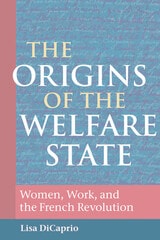
The Origins of the Welfare State
Women, Work, and the French RevolutionLisa DiCaprio
University of Illinois Press, 2005
Women workers and the revolutionary origins of the modern welfare state
In May 1790, the French National Assembly created spinning workshops (ateliers de filature) for thousands of unemployed women in Paris. These ateliers disclose new aspects of the process which transformed Old Regime charity into revolutionary welfare initiatives characterized by secularization, centralization, and entitlements based on citizenship. This study is the first to examine women and the welfare state in its formative period at a time when modern concepts of human rights were elaborated.
In The Origins of the Welfare State, Lisa DiCaprio reveals how the women working in the ateliers, municipal welfare officials, and the national government vied to define the meaning of revolutionary welfare throughout the Revolution. Presenting demands for improved wages and working conditions to a wide array of revolutionary officials, the women workers exercised their rights as "passive citizens" capaciously and shaped the meanings of work, welfare, and citizenship. Looking backward to the Old Regime and forward to the nineteenth century, this study explores the interventionist spirit that characterized liberalism in the eighteenth century and serves as a bridge to the history of entitlements in the nineteenth and twentieth centuries.
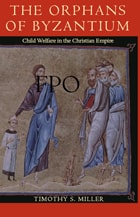
The Orphans of Byzantium
Child Welfare in the Christian EmpireTimothy S. Miller
Catholic University of America Press, 2003

The Other Americans in Paris
Businessmen, Countesses, Wayward Youth, 1880-1941Nancy L. Green
University of Chicago Press, 2014
Nancy L. Green thus introduces us for the first time to a long-forgotten part of the American overseas population—predecessors to today’s expats—while exploring the politics of citizenship and the business relationships, love lives, and wealth (and poverty for some) of Americans who staked their claim to the City of Light. The Other Americans in Paris shows that elite migration is a part of migration tout court and that debates over “Americanization” have deep roots in the twentieth century.
The Other Renaissance
Italian Humanism between Hegel and HeideggerRocco Rubini
University of Chicago Press, 2014
Bookended by Giambattista Vico and Antonio Gramsci, this strand of Renaissance-influenced philosophy rose in reaction to the major revolutions of the time in Italy, such as national unity, fascism, and democracy. Exploring the ways its thinkers critically assimilated the thought of their northern counterparts, Rubini uncovers new possibilities in our intellectual history: that antihumanism could have been forestalled, and that our postmodern condition could have been entirely different. In doing so, he offers an important new way of thinking about the origins of modernity, one that renews a trust in human dignity and the Western legacy as a whole.

The Outsiders
The Western Experience in India and ChinaRhoads Murphey
University of Michigan Press, 1977
This book examines how Western traders, missionaries, officials, and imperial powers encountered, interpreted, and attempted to influence India and China, highlighting the cultural misunderstandings and unequal power dynamics that shaped East-West relations.