Results by title
28167 books match the query 'History' and 6372 start with t
The Archaeology of Slavery
A Comparative Approach to Captivity and CoercionEdited by Lydia Wilson Marshall
Southern Illinois University Press, 2014
Plantation sites, especially those in the southeastern United States, have long dominated the archaeological study of slavery. These antebellum estates, however, are not representative of the range of geographic locations and time periods in which slavery has occurred. As archaeologists have begun to investigate slavery in more diverse settings, the need for a broader interpretive framework is now clear.
The Archaeology of Slavery: A Comparative Approach to Captivity and Coercion, edited by Lydia Wilson Marshall, develops an interregional and cross-temporal framework for the interpretation of slavery. Contributors consider how to define slavery, identify it in the archaeological record, and study it as a diachronic process from enslavement to emancipation and beyond.
Essays cover the potential material representations of slavery, slave owners’ strategies of coercion and enslaved people’s methods of resisting this coercion, and the legacies of slavery as confronted by formerly enslaved people and their descendants. Among the peoples, sites, and periods examined are a late nineteenth-century Chinese laborer population in Carlin, Nevada; a castle slave habitation at San Domingo and a more elite trading center at nearby Juffure in the Gambia; two eighteenth-century plantations in Dominica; Benin’s Hueda Kingdom in the seventeenth and eighteenth centuries; plantations in Zanzibar; and three fugitive slave sites on Mauritius—an underground lava tunnel, a mountain, and a karst cave.
This essay collection seeks to analyze slavery as a process organized by larger economic and social forces with effects that can be both durable and wide-ranging. It presents a comparative approach that significantly enriches our understanding of slavery.
The Archaeology of Summer Island
Changing Settlement Systems in Northern Lake MichiganDavid S. Brose
University of Michigan Press, 1970
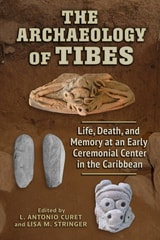
The Archaeology of Tibes
Life, Death, and Memory at an Early Ceremonial Center in the CaribbeanEdited by L. Antonio Curet and Lisa M. Stringer
University of Alabama Press, 2025
A collection of new essays that brings archaeological insights and discoveries at the Tibes Ceremonial Center up to date
The Archaeology of Tibes is a collection of essays offering a fresh analysis of this important ceremonial center. It brings new insights about social structure, illuminating the smaller-scale daily lives of ancient peoples rather than focusing on large-scale chiefdoms.
Tibes is the earliest known (ca. 400 to 1300 CE) ceremonial center in Puerto Rico. It has been the focus of one of the largest and longest-running archaeological programs in the Caribbean. Early researchers interpreted evidence in the area of a shift from dispersed villages to a ceremonial center as suggesting the development of social stratification and accumulation of power. Seen as the seat of an early chiefdom, Tibes served as a model applied broadly across the Greater Antilles.
New discoveries prompted archaeologists to question their original assumptions about ancient Puerto Rico, and later research failed to produce evidence of social stratification at Tibes. The Archaeology of Tibes therefore incorporates updated and wider perspectives on social formation. It considers agency, decisions, and events and the possibility of more than one form of social organization. It also presents a more accurate “humanized” past: the sociological meanings of that space and its significance for the people who created, used, and occupied it and who influenced rituals, social memory, and community.
Summarizing findings from excavations at Tibes after 2010, the collection also reviews the geoarchaeology of the site. Additional essays cover ceramic pastes, lithic production, faunal remains, coral, burials, and rock art. This work will engender discussion and future research by archaeologists across the Caribbean and beyond.

The Archaeology of V. Gordon Childe
Contemporary PerspectivesEdited by David R. Harris
University of Chicago Press, 1994
With contributions from such distinguished prehistorians as Kent V. Flannery, David Harris, Leo S. Klejn, John Mulvaney, Colin Renfrew, Michael Rowlands, and Bruce Trigger, The Archaeology of V. Gordon Childe is an attempt to evaluate Childe's achievement from different "partly national" perspectives and to assess how far, and why, his work remains significant today. The contributors examine such persistent themes in Childe's thought as the nature of culture and the role of diffusion in cultural evolution and debate the question of whether Childe anticipated "processual archaeology" in his famous models of the Neolithic and Urban Revolutions. Also included are evaluations of Childe's early career in Australia, his relations with Soviet archaeology, including a previously unknown letter from Childe to Soviet archaeologists, and his impact on American archaeology.
The Archaeology of the Sierra Blanca Region of Southeastern New Mexico
Jane Holden Kelley
University of Michigan Press, 1984

The Archeology of New Hampshire
Exploring 10,000 Years in the Granite StateDavid Starbuck
University of New Hampshire Press, 2006
Several states already boast volumes showcasing their archeological history, but not New Hampshire—until now. David R. Starbuck's volume fills that void. Going beyond standard state guides that focus primarily on prehistoric sites, Starbuck also devotes equal time to historic, industrial, and nautical sites. This approach reflects the thinking of most contemporary archeologists who conduct research at a diverse range of sites.
A veteran of thirty years of field research throughout the Granite State, Starbuck revisits some of his own sites, including excavations at the New England Glassworks in Temple, two prehistoric sites on the Merrimack River, the Joseph Hazeltine pottery workshop outside Concord, the Governor Wentworth Estate in Wolfeboro, and his own long-term survey and excavation project at Canterbury Shaker Village. At the same time, though, Starbuck includes the work of other contemporary New Hampshire archeologists, representative sites of “old-timers” whose digs preceded his arrival, and the investigations of avocational diggers.
Starbuck's introduction offers an anecdotal history of archeological research in New Hampshire through the people who shaped it. Part I discusses discoveries that predate white settlement: the Paleo-Indian Period; the Archaic Period; and the Woodland Period. Part II moves from the seventeenth century to the present. Chapters include historical archeology (forts, farms, potters, Shakers); industrial archeology (mills, factories, railroads, dams, and bridges); and nautical archeology (discoveries in the state's lakes and on the seacoast).
In addition to summarizing some of the more interesting finds, Starbuck includes stories about archeologists and the techniques they have used to glean information from the past. Overall, he provides a lively account of what it is like to practice archeology in a small but dynamic New England state.
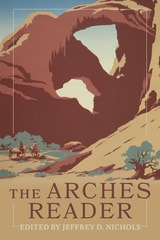
The Arches Reader
Edited by Jeffrey D. Nichols
University of Utah Press, 2024
Part of the National Park Readers series, The Arches Reader is an anthology of writing about Arches National Park and the surrounding area. The selections range from creative nonfiction to short fiction to poetry to amateur versions of scientific reports; they are wide-ranging and have never before been collected in one place; several selections are previously unpublished. Photographs collected here include both historic black-and-white images and beautiful, full-color images of some of Arches’ most striking features. The Arches Reader is an essential companion for anyone who wants to better understand its unique natural and human past.
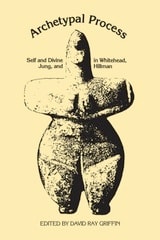
The Archetypal Process
Self and Divine and Whitehead, Jung, and HillmanDavid Ray Griffin
Northwestern University Press, 1989
Archetypal Process examines the importance of cosmological thinking and the need to ground archetypal psychology in a metaphysical, philosophical framework. It treats the necessity for symbol and myth, the nature of the spirit, and language as a metaphorical vehicle of thought, and finally, it adds a much-needed feminist perspective to the debate.
The Architects and the City
Holabird & Roche of Chicago, 1880-1918Robert Bruegmann
University of Chicago Press, 1997
Chicago has always held a special fascination for those interested in architectural and urban history. For many, the defining moment occurred at the turn of the century when Chicago was booming and the world came to the city by the lake. But the story most often told in architectural history—the tale of single creative geniuses like Frank Lloyd Wright and Louis Sullivan—does little to explain the birth of the everyday modern city, with its high-rise downtown, diverse neighborhoods, and sprawling suburbs. This book connects architectural history with urban history by looking at the work of a major architectural firm, Holabird & Roche. No firm in any large American city had a greater impact.
With projects that ranged from tombstones to skyscrapers, boiler rooms to entire industrial complexes, Holabird & Roche left an indelible stamp on the city of Chicago and, indeed, far beyond. In this volume, the first of two on Holabird & Roche and its successor, Holabird & Root, Robert Bruegmann traces the firm’s history from its founding in 1880 to the end of the First World War. Incorporating meticulous research based on the extensive architectural holdings of the Chicago Historical Society, Bruegmann documents the firm’s work from the boom years of the 1880s through the period of sustained growth and innovation after the turn of the century. In chapters devoted to topics as diverse as downtown commercial and retail development, business hotels, civic buildings, automobile showrooms, and suburban clubs and housing, Bruegmann creates a sustained historical narrative that considers the profound interdependence of architecture and modern urban life.
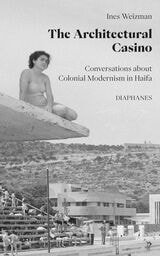
The Architectural Casino
Conversations about Modernism in HaifaInes Weizman
Diaphanes, 2026
After the First World War and under the British Mandate, Haifa grew from a small Ottoman port town into a regional metropolis and industrial center around a deep seaport. The city was part of an open space that extended from Cairo to Damascus through Beirut, in a region where Syria, Palestine, and Lebanon were part of the same fluid, interconnected space. During the Second World War, Haifa became a border town. Under French Vichy, the border between Lebanon and Syria ran sixty kilometers to the north and hardened only after the creation of Israel in 1948 and the wars with Lebanon. Haifa’s architectural modernism developed in relation to the city’s geopolitical environment. No building better manifests Haifa’s predicament than the modernist casino building, built in the city’s Bat Galim seafront district.
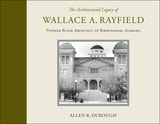
The Architectural Legacy of Wallace A. Rayfield
Pioneer Black Architect of Birmingham, AlabamaAllen R. Durough
University of Alabama Press, 2010
A priceless material legacy documenting Wallace Rayfield’s life and work on two continents.
In the early 1990s, while cleaning out the barn on his property in Bessemer, Alabama, Allen Durough discovered the remnants of the lifework of African American architect Wallace A. Rayfield, including several hundred of Rayfield’s drawings, floor plans, business advertisements, family portraits, and graphic art pieces. This book gathers that priceless material legacy into a cohesive whole, reproducing 159 illustrations that document Rayfield’s life and work on two continents.
Born in Macon, Georgia, in 1873, Rayfield apprenticed as a young man with the noted architectural firm A. B. Mullet and Company in Washington, DC, before attending Howard University, Pratt Polytechnic Institute, and ultimately graduating with a bachelor of architecture degree from Columbia University. He returned south to teach at the Tuskegee Institute and then to establish W. A. Rayfield & Co., Architects, in Birmingham, Alabama. From there he designed buildings for construction across the south (many by mail order) and even in Africa. Rayfield specialized in church architecture, and many of his designs were for black congregations within the state, most notably the Sixteenth Street Baptist Church in Birmingham. But he also designed schools, office buildings, and private homes. After falling into bankruptcy during the Great Depression, he died in obscurity.
Durough includes catalog-style descriptive entries and illustrations of Rayfield’s designs for six types of structures: residences, churches, schools, commercial buildings, fraternal buildings, and barns. These entries contain location, commissioning data, and brief structural notes, providing a useful resource for architectural historians and preservationists. A listing of the 359 known Rayfield structures detail their locations in 19 states, plan date, building type, and name. Also included is a biographical sketch of Rayfield, an overview of his publications, and a survey of his professional artwork and advertisements.

The Architecture of Frank Lloyd Wright, Fourth Edition
A Complete CatalogWilliam Allin Storrer
University of Chicago Press, 2017
William Allin Storrer is one of the experts leading this charge, and his definitive guide, The Architecture of Frank Lloyd Wright, has long been the resource of choice for anyone interested in Wright. Thanks to the work of Storrer and his colleagues at the Rediscovering Wright Project, thirty-seven new sites have recently been identified as the work of Wright. Together with more photos, updated and expanded entries, and a new essay on the evolution of Wright’s unparalleled architectural style, this new edition is the most comprehensive and authoritative catalog available.
Organized chronologically, the catalog includes full-color photos, location information, and historical and architectural background for all of Wright’s extant structures in the United States and abroad, as well as entries for works that have been demolished over the years. A geographic listing makes it easy for traveling Wright fans to find nearby structures and a new key indicates whether a site is open to the public.
Publishing for Wright’s sesquicentennial, this new edition will be a trusted companion for anyone embarking on their own journeys through the wonder and genius of Frank Lloyd Wright.
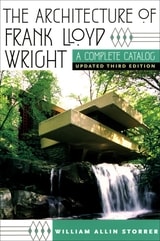
The Architecture of Frank Lloyd Wright
A Complete Catalog, Updated 3rd EditionWilliam Allin Storrer
University of Chicago Press, 2007
This updated third edition revisits each of Wright’s extant structures, tracing the architect’s development from his Prairie works, such as the Frederick Robie house in Chicago, to the last building constructed to his specifications, the magnificent Aime and Norman Lykes residence in Arizona. Renowned expert William Storrer deftly incorporates a series of key revisions and brings each structure’s history up to the present day, as some buildings have been refurbished, some moved, and others sadly abandoned or destroyed by natural disasters like Hurricane Katrina—including the James Charnley bungalow in Ocean Springs, Mississippi.
Organized chronologically, this updated third edition features full-color photographs of all extant work along with a description of each building and its history. Storrer also provides full addresses, GPS coordinates, and maps of locations throughout the United States, England, and Japan, indicating the shortest route to each building—perfect for Wright aficionados on the go.
From Fallingwater to the Guggenheim, Frank Lloyd Wright is the undisputed master of American architecture. Now fully revised, The Architecture of Frank Lloyd Wright: A Complete Catalog will be indispensable for anyone fascinated with the architect’s unique genius.
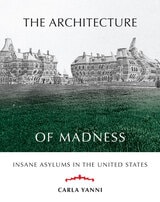
The Architecture of Madness
Insane Asylums in the United StatesCarla Yanni
University of Minnesota Press, 2007
Elaborately conceived, grandly constructed insane asylums—ranging in appearance from classical temples to Gothic castles—were once a common sight looming on the outskirts of American towns and cities. Many of these buildings were razed long ago, and those that remain stand as grim reminders of an often cruel system. For much of the nineteenth century, however, these asylums epitomized the widely held belief among doctors and social reformers that insanity was a curable disease and that environment—architecture in particular—was the most effective means of treatment.
In The Architecture of Madness, Carla Yanni tells a compelling story of therapeutic design, from America’s earliest purpose—built institutions for the insane to the asylum construction frenzy in the second half of the century. At the center of Yanni’s inquiry is Dr. Thomas Kirkbride, a Pennsylvania-born Quaker, who in the 1840s devised a novel way to house the mentally diseased that emphasized segregation by severity of illness, ease of treatment and surveillance, and ventilation. After the Civil War, American architects designed Kirkbride-plan hospitals across the country.
Before the end of the century, interest in the Kirkbride plan had begun to decline. Many of the asylums had deteriorated into human warehouses, strengthening arguments against the monolithic structures advocated by Kirkbride. At the same time, the medical profession began embracing a more neurological approach to mental disease that considered architecture as largely irrelevant to its treatment.
Generously illustrated, The Architecture of Madness is a fresh and original look at the American medical establishment’s century-long preoccupation with therapeutic architecture as a way to cure social ills.
Carla Yanni is associate professor of art history at Rutgers University and the author of Nature’s Museums: Victorian Science and the Architecture of Display.
The Architecture of Matter
Stephen Toulmin and June Goodfield
University of Chicago Press, 1982
The Architecture of the Italian Renaissance
Jacob Burckhardt
University of Chicago Press, 1984
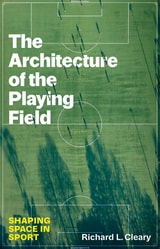
The Architecture of the Playing Field
Shaping Space in SportRichard L. Cleary
University of Texas Press, 2025
A novel exploration of playing fields as aesthetic and architectural spaces that frame athletes’ creativity and spectators’ evolving experiences of sport.
The playing field is a laboratory of invention, where athletes and coaches create new uses for the human body in response to the constraints and affordance of space. The Architecture of the Playing Field explores the aesthetic and physical experiences of the grounds on which we compete, from translucent squash courts to the NBA three-point line to the city streets adopted by skateboarders.
Richard Cleary digs into the perspectives of spectators, athletes, coaches, and umpires, which have changed along with the shifting configuration of the playing surface and the mediation of the action, from early sports coverage to today’s high-tech TV broadcasts. He shows how rules governing the size, shape, and divisions of the field reflect sports’ entwinement with societies at large, in particular the politics of race and gender. Mindful as well that some sports resist containment, he analyzes the disruptive use of space by snowboarders and parkour athletes. The Architecture of the Playing Field sensitizes us to the interplay of settings and bodies in motion fundamental to the power of sport.
The Archival Turn in Feminism
Outrage in OrderKate Eichhorn
Temple University Press, 2014
A volume in the American Literatures Initiative
The Archive and the Aural City
Sound, Knowledge, and the Politics of ListeningAlejandro L. Madrid
Duke University Press, 2025
The Archive of Loss
Lively Ruination in Mill Land MumbaiMaura Finkelstein
Duke University Press, 2019

The Argentina Reader
History, Culture, PoliticsGabriela Nouzeilles and Graciela Montaldo, eds.
Duke University Press, 2002
This diverse collection brings together songs, articles, comic strips, scholarly essays, poems, and short stories. Most pieces are by Argentines. More than forty of the texts have never before appeared in English. The Argentina Reader contains photographs from Argentina’s National Archives and images of artwork by some of the country’s most talented painters and sculptors. Many selections deal with the history of indigenous Argentines, workers, women, blacks, and other groups often ignored in descriptions of the country. At the same time, the book includes excerpts by or about such major political figures as José de San Martín and Juan Perón. Pieces from literary and social figures virtually unknown in the United States appear alongside those by more well-known writers such as Jorge Luis Borges, Ricardo Piglia, and Julio Cortázar.
The Argentina Reader covers the Spanish colonial regime; the years of nation building following Argentina’s independence from Spain in 1810; and the sweeping progress of economic growth and cultural change that made Argentina, by the turn of the twentieth century, the most modern country in Latin America. The bulk of the collection focuses on the twentieth century: on the popular movements that enabled Peronism and the revolutionary dreams of the 1960s and 1970s; on the dictatorship from 1976 to 1983 and the accompanying culture of terror and resistance; and, finally, on the contradictory and disconcerting tendencies unleashed by the principles of neoliberalism and the new global economy. The book also includes a list of suggestions for further reading.
The Argentina Reader is an invaluable resource for those interested in learning about Argentine history and culture, whether in the classroom or in preparation for travel in Argentina.
The Argentine Folklore Movement
Sugar Elites, Criollo Workers, and the Politics of Cultural Nationalism, 1900–1955Oscar Chamosa
University of Arizona Press, 2010
Oscar Chamosa combines intellectual history with ethnographic and sociocultural analysis to reconstruct the process by which mestizo culture—in Argentina called criollo culture—came to occupy the center of national folklore in a country that portrayed itself as the only white nation in South America. The author finds that the conservative plantation owners—the “sugar elites”—who exploited the criollo peasants sponsored the folklore movement that romanticized them as the archetypes of nationhood. Ironically, many of the composers and folk singers who participated in the landowner-sponsored movement adhered to revolutionary and reformist ideologies and denounced the exploitation to which those criollo peasants were subjected. Chamosa argues that, rather than debilitating the movement, these opposing and contradictory ideologies permitted its triumph and explain, in part, the enduring romanticizing of rural life and criollo culture, essential components of Argentine nationalism.
The book not only reveals the political motivations of culture in Argentina and Latin America but also has implications for understanding the articulation of local culture with national politics and entertainment markets that characterizes contemporary cultural processes worldwide today.
The Argentine Silent Majority
Middle Classes, Politics, Violence, and Memory in the SeventiesSebastián Carassai
Duke University Press, 2014

The Aristotelian Tradition of Natural Kinds and Its Demise
Stewart Umphrey
Catholic University of America Press, 2018
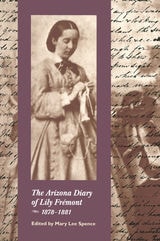
The Arizona Diary of Lily Frémont, 1878–1881
Elizabeth Benton Frémont
University of Arizona Press, 1997
Here, in rich detail, her day-by-day narrative and the editor's annotations bring to life Arizona's territorial capital of Prescott more than one hundred years ago. Lily gives us firsthand accounts of the operation of territorial government; of pressure from Anglo settlers to dispossess Pima Indians from their land; and of efforts by the governor and the army to deal with Indian scares. Here also, underlying her words, are insights into the dynamics of a close-knit Victorian family, shaping the life of an intelligent, educated single woman. As unofficial secretary for her father, Lily was well placed to observe and record an almost constant stream of visitors to the governor's home and office. Observe and record, she did. Her diary is filled with unvarnished images of personalities such as the Goldwaters, General O. B. Willcox, Moses Sherman, Judge Charles Silent, and a host of lesser citizens, politicians, and army officers.
Lily's anecdotes vividly re-create the periodic personality clashes that polarized society (and one full-fledged scandal), the ever-present danger of fire, religious practices (particularly a burial service conducted in Hebrew), and attitudes toward Native Americans and Chinese. On a more personal level, the reader will find intimate accounts of John Frémont's obsession with mining promotion, his complicated business dealings with Judge Silent, and his attempts to recoup his family's sagging fortune. Here especially, Lily outlines a telling profile of her father, a man roundly castigated then and now as a carpetbagger less interested in promoting Arizona's interests than his own.
For students of western history, Lily Frémont's diary provides a wealth of fresh information on frontier politics, mining, army life, social customs, and ethnicity. For all readers, her words from a century ago offer new perspectives on the winning of the West as well as fascinating glimpses of a world that once was and is no more.

The Ark and Beyond
The Evolution of Zoo and Aquarium ConservationEdited by Ben A. Minteer, Jane Maienschein, and James P. Collins
University of Chicago Press, 2018
While early menageries were anything but the centers of conservation that many zoos are today, a concern with wildlife preservation has been an integral component of the modern, professionally run zoo since the nineteenth century. From captive breeding initiatives to rewilding programs, zoos and aquariums have long been at the cutting edge of research and conservation science, sites of impressive new genetic and reproductive techniques. Today, their efforts reach even further beyond recreation, with educational programs, community-based conservation initiatives, and international, collaborative programs designed to combat species extinction and protect habitats at a range of scales. Addressing related topics as diverse as zoo animal welfare, species reintroductions, amphibian extinctions, and whether zoos can truly be “wild,” this book explores the whole range of research and conservation practices that spring from zoos and aquariums while emphasizing the historical, scientific, and ethical traditions that shape these efforts. Also featuring an inspiring foreword by the late George Rabb, president emeritus of the Chicago Zoological Society / Brookfield Zoo, The Ark and Beyond illuminates these institutions’ growing significance to the preservation of global biodiversity in this century.

The Ark in Park
THE STORY OF LINCOLN PARK ZOOMark Rosenthal, Carol Tauber, and Edward Uhlir
University of Illinois Press, 2003
Lincoln Park Zoo was established in 1868 when New York's Central Park Commissioners sent the Lincoln Park Commissioners the gift of two pairs of swans. The swans were such a popular attraction that the park commissioners began acquiring other animals and building quarters for them, adding a bear cage, a bison enclosure, a sea lion pool, an eagle exhibit, and an animal house, all before 1900.
Although the zoo was initially conceived as a primarily recreational attraction, its mission has evolved over time, with conservation, science, and education now forming central elements. Starting in 1884, when the zoo saw what was reportedly the first-ever birth of a North American bison in captivity, Lincoln Park Zoo has been part of the effort to study and protect endangered species from all over the world.
This comprehensive history of Lincoln Park Zoo also tells the wider story of the growth of the American zoo movement and the changes that have occurred in the past century, as zoos evolved from a leisure pursuit into a multimillion-dollar industry and an invaluable participant in global conservation efforts.
The Arkansas Delta
Land of ParadoxWilliard B. Gatewood Jr.
University of Arkansas Press, 1993
The Arkansas Post of Louisiana
Morris S. Arnold
University of Arkansas Press, 2017
Arkansas Post, the first European settlement in what would become Jefferson’s Louisiana, had an important mission as the only settlement between Natchez and the Illinois Country, a stretch of more than eight hundred miles along the Mississippi River. The Post was a stopping point for shelter and supplies for those travelling by boat or land, and it was of strategic importance as well, as it nurtured and sustained a crucial alliance with the Quapaw Indians, the only tribe that occupied the region.
The Arkansas Post of Louisiana covers the most essential aspects of the Post’s history, including the nature of the European population, their social life, the economy, the architecture, and the political and military events that reflected and shaped the Post’s mission.
Beautifully illustrated with maps, portraits, lithographs, photographs, documents, and superb examples of Quapaw hide paintings, The Arkansas Post of Louisiana is a perfect introduction to this fascinating place at the confluence of the Arkansas and Mississippi Rivers, a place that served as a multicultural gathering spot, and became a seminal part of the history of Arkansas and the nation.
The Armenian Massacres in Ottoman Turkey
A Disputed GenocideGuenter Lewy
University of Utah Press, 2007
In 1915, the Ottoman government, then run by the Young Turks, deported most of its Armenian citizens from their eastern Anatolian lands. According to reliable estimates, close to forty percent of the prewar population perished, many in brutal massacres. Armenians call it the first genocide of the twentieth century. Turks speak of an instance of intercommunal warfare and wartime relocation made necessary by the treasonous conduct of their Armenian minority.
The voluminous literature on this tragic episode of World War I is characterized by acrimony and distortion in which both sides have simplified a complex historical reality and have resorted to partisan special pleading.
The Armenian Massacres in Ottoman Turkey examines the rich historical evidence without political preconceptions. Relying on archival materials as well as eye-witness testimony, Guenter Lewy avoids the sterile “was-it-genocide-or-not” debate and presents a detailed account of what actually happened. The result is a book that will open a new chapter in this contentious controversy and may help achieve a long-overdue reconciliation of Armenians and Turks.
The Armenian Rebellion at Van
McCarthy, Justin
University of Utah Press, 2006
Before World War I, the ancient city of Van in southeastern Anatolia had a population of approximately 100,000 people, while the population of Van Province was about 500,000. Armenians formed a large minority, with Kurdish tribes and Turks in the majority.
The Armenian Rebellion at Van presents a long-overdue examination of Van from the 1870s to 1919. As the authors state, "The Armenian Revolt was an integral part of the great disaster that overcame the people of the Ottoman East. The slaughter of Muslims that accompanied the Armenian revolt in Van Province inexorably led first to Kurdish reprisals on the Armenians, then to a general and mutual massacre of the people of the East."
The actions at Van offer a window into the far-reaching events that soon followed in other parts of Anatolia.

The Army of Truth
Selected PoemsHenrik Wergeland
University of Wisconsin Press, 2003
One of Norway’s most celebrated literary figures of the nineteenth century, Henrik Wergeland worked tirelessly for the civil rights of Jews in Norway. He used the words and structure of his poetry to enliven the ideals of truth, freedom, and equality. This translated volume, containing several of Wergeland’s most prominent poems, beautifully encapsulates the compelling force of his message, allowing its enduring influence to benefit a wider contemporary audience.

The Arrival of the Fittest
Biology's Imaginary Futures, 1900–1935Jim Endersby
University of Chicago Press, 2025
In the early twentieth century communities made creative use of the new theories of heredity in circulation at the time, including the now largely forgotten mutation theory of Hugo de Vries. Science fiction writers, socialists, feminists, and utopians are among those who seized on the amazing possibilities of rapid and potentially controllable evolution. De Vries’s highly respected scientific theory only briefly captured the attention of the scientific community, but its many fans appropriated it for their own wildly imaginative ends. Writers from H.G. Wells and Edith Wharton to Charlotte Perkins Gilman, J.B.S. Haldane, and Aldous Huxley created a new kind of imaginary future, which Jim Endersby calls the biotopia. It took the ambiguous possibilities of biology—utopian and dystopian—and reimagined them in ways that still influence the public’s understanding of the life sciences. The Arrival of the Fittest recovers the fascinating, long-forgotten origins of ideas that have informed works of fiction from Brave New World to the X-Men movies, all while reflecting on the lessons—positive and negative—that this period might offer us.

The Art Museums of Louis I. Kahn
Patricia C. Loud
Duke University Press, 1989
After a brief look at the development of a tradition in museum architecture, this study examines Kahn’s three art museums: the Yale University Art Gallery, the Kimbell Art Museum, and the Yale Center for British Art. It traces the development of each museum through museum through its various stages: the background of the institutions and the commissions, the programs for the buildings, their designs and evolutions, their constructions, and the evaluations of the completed buildings. Material on Kahn’s plans for a museum for the De Menil collection, begun shortly before his death, is also included.
Accompanying the text are illustrations of the buildings, including Kahn’s personal sketches, architectural plans and sections, and presentation perspective drawings. Photographs of the finished buildings present the transformed vision of the architect in tangible form, showing that the museums, while related, are individualized accomplishments. This is the first comprehensive study of Kahn’s museums.
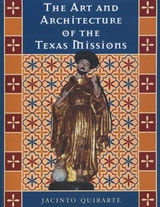
The Art and Architecture of the Texas Missions
By Jacinto Quirarte
University of Texas Press, 2002
Winner, Presidio La Bahia Award, Sons of the Republic of Texas
Built to bring Christianity and European civilization to the northern frontier of New Spain in the seventeenth and eighteenth centuries...secularized and left to decay in the nineteenth century...and restored in the twentieth century, the Spanish missions still standing in Texas are really only shadows of their original selves. The mission churches, once beautifully adorned with carvings and sculptures on their façades and furnished inside with elaborate altarpieces and paintings, today only hint at their colonial-era glory through the vestiges of art and architectural decoration that remain.
To paint a more complete portrait of the missions as they once were, Jacinto Quirarte here draws on decades of on-site and archival research to offer the most comprehensive reconstruction and description of the original art and architecture of the six remaining Texas missions—San Antonio de Valero (the Alamo), San José y San Miguel de Aguayo, Nuestra Señora de la Purísima Concepción, San Juan Capistrano, and San Francisco de la Espada in San Antonio and Nuestra Señora del Espíritu Santo in Goliad. Using church records and other historical accounts, as well as old photographs, drawings, and paintings, Quirarte describes the mission churches and related buildings, their decorated surfaces, and the (now missing) altarpieces, whose iconography he extensively analyzes. He sets his material within the context of the mission era in Texas and the Southwest, so that the book also serves as a general introduction to the Spanish missionary program and to Indian life in Texas.
The Art of Advertising, The
Julie Anne Lambert
Bodleian Library Publishing, 2020
The Art of Authorial Presence
Hawthorne's Provincial TalesG. R. Thompson
Duke University Press, 1993
By focusing on the provincial tales as they were originally conceived--as a narrative cycle--Thompson is able to recover intertextual references that reveal Hawthorne's preoccupation with framing strategies and variations on authorial presence. The author shows how Hawthorne deliberately constructs sentimental narratives, only to deconstruct them. Thompson's analysis provides a new aesthetic context for understanding the whole shape of Hawthorne's career as well as the narrative, ethical, and historical issues within individual works.
Revisionary in its view of one of America's greatest authors, The Art of Authorial Presence also offers invaluable insight into the problems of narratology and historiography, ethics and psychology, romanticism and idealism, and the cultural myths of America.
The Art of Being In-between
Native Intermediaries, Indian Identity, and Local Rule in Colonial OaxacaYanna Yannakakis
Duke University Press, 2008
Through interpretation of a wide array of historical sources—including descriptions of public rituals, accounts of indigenous rebellions, idolatry trials, legal petitions, court cases, land disputes, and indigenous pictorial histories—Yannakakis weaves together an elegant narrative that illuminates political and cultural struggles over the terms of local rule. As cultural brokers, native intermediaries at times reconciled conflicting interests, and at other times positioned themselves in opposing camps over the outcome of municipal elections, the provision of goods and labor, landholding, community ritual, the meaning of indigenous “custom” in relation to Spanish law, and representations of the past. In the process, they shaped an emergent “Indian” identity in tension with other forms of indigenous identity and a political order characterized by a persistent conflict between local autonomy and colonial control. This innovative study provides fresh insight into colonialism’s disparate cultures and the making of race, ethnicity, and the colonial state and legal system in Spanish America.
The Art of Biblical Interpretation
Visual Portrayals of Scriptural NarrativesHeidi J. Hornik
SBL Press, 2021
A richly illustrated collection of essays on visual biblical interpretation
For centuries Christians have engaged their sacred texts as much through the visual as through the written word. Yet until recent decades, the academic disciplines of biblical studies and art history largely worked independently. This volume bridges that gap with the interdisciplinary work of biblical scholars and art historians. Focusing on the visualization of biblical characters from both the Old and New Testaments, essays illustrate the potential of such collaboration for a deeper understanding of the Bible and its visual reception. Contributions from Ian Boxall, James Clifton, David B. Gowler, Jonathan Homrighausen, Heidi J. Hornik, Jeff Jay, Christine E. Joynes, Yohana A. Junker, Meredith Munson, and Ela Nuțu foreground diverse cultural contexts and chronological periods for scholars and students of the Bible and art.
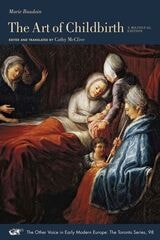
The Art of Childbirth
A Seventeenth-Century Midwife’s Epistolary Treatise to Doctor Vallant: A Bilingual EditionMarie Baudoin
Iter Press, 2022
In 1671, Marie Baudoin (1625–1700), head midwife and governor of the Hôtel-Dieu of Clermont-Ferrand, sent a treatise on the art of childbirth to her powerful Parisian patron, Dr. Vallant. The story of how Baudoin’s knowledge and expertise as a midwife came to be expressed, recorded, and archived raises the question: Was Baudoin exceptional because she was herself extraordinary, or because her voice has reached us through Vallant’s careful archival practices? Either way, Baudoin’s treatise invites us to reconsider the limits of what we thought we knew midwives “could be and do” in seventeenth-century France. Grounding Marie Baudoin’s text in a microanalysis of her life, work, and the Jansenist network between Paris and Clermont-Ferrand, this book connects historiographies of midwifery, Jansenism, hospital administration, public health, knowledge and record-keeping, and women’s work, underscoring both Baudoin’s capabilities and the archival accidents and intentions behind the preservation of her treatise in a letter.

The Art of Defiance
Graffiti, Politics and the Reimagined City in PhiladelphiaTyson Mitman
Intellect Books, 2018
In order to both demystify and complicate our understanding of the practice of graffiti writing, this book pushes past the narrative that links the origins of graffiti to criminal gangs and instead offers a detailed portrait of graffiti as a rich urban culture with its own rules and practices. To do so, it examines the cultural history of graffiti in Philadelphia from the early 1970s onward and explores what it is like to be a graffiti writer in the city today. Ultimately, Tyson Mitman aims to humanize graffiti writers and to show that what they do is not merely destructive or puerile, but, rather, adds something important to the urban experience that is a conscious and deliberate act on the part of its practitioners.

The Art of Describing
Dutch Art in the Seventeenth CenturySvetlana Alpers
University of Chicago Press, 1984
"There is no doubt that thanks to Alpers's highly original book the study of the Dutch masters of the seventeenth century will be thoroughly reformed and rejuvenated. . . . She herself has the verve, the knowledge, and the sensitivity to make us see familiar sights in a new light."—E. H. Gombrich, New York Review of Books

The Art of Eastern India, 300-800
Frederick M. Asher
University of Minnesota Press, 1980
The Art of Eastern India, 300–800 was first published in 1980. Minnesota Archive Editions uses digital technology to make long-unavailable books once again accessible, and are published unaltered from the original University of Minnesota Press editions.
Though scholars have extensive knowledge of the art that flourished during Pala rule in Eastern India (ca. 800-1200), little is known about Eastern Indian art during the preceding 500 years. This half-millennium includes the period of the Gupta dynasty and the two centuries that bridge Gupta and Pala rule, when no single dynasty long maintained control of Eastern India. In this study, Frederick M. Asher challenges arthistorical assumptions about Pala art — that it is a new school virtually without links to earlier art 00 by demonstrating that sculpture during the Gupta period and the subsequent three centuries evolved along lines that connect it with Pala art. In so doing, he draws attention to important sculptures, most of them never previously studied, that tell us not only about an unexplored period in Indian art but also about broader aspects of the cultural history and geography of Eastern India.
Asher's work is based on field research in Bihar, West Bengal, and Bangladesh. There he gave special attention to the sites of once-flourishing Buddhist monasteries and to Hindu images still worshipped in village India. The author's photographs of the bronze, terra cotta, and stone sculptures, and his detailed text, provide a virtual catalogue raisonne of the known works of the period.
Asher's analyses of the images and his attributions of dates to them are based upon close attention to artistic style and iconography, and the study of dynastic and social history, contemporary travelers' reports, and religious history. Drawing together these diverse strands of information, he describes the evolution of art forms over a long period in which there was little apparent historic unity. John M. Rosenfield, professor of art history at Harvard University and author of The Art of the Kushans, says, of The Art of Eastern India,"The scholarship is scrupulously detailed and careful . . . [The book] is in the finest tradition of classical scholarship, and will be consulted or several generations."
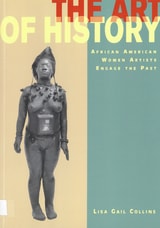
The Art of History
African American Women Artists Engage the PastLisa Gail Collins
Rutgers University Press, 2002
“This important study is the first to confront head-on the avoidance of the visual that has plagued black studies in the United States. The Art of History opens the often hermetic world of black visual culture to a much broader realm in which questions central to contemporary feminism, black studies, and cultural theory are brought to bear.”—Judith Wilson, University of California, Irvine
“The Art of History is an important book that expands the significance of visual culture to African American studies debates. It provides cogent and insightful explorations of the work of contemporary African American women artists. Scholars and general readers alike are sure to be compelled by this original and innovative study.”—Valerie Smith, author of Not Just Race, Not Just Gender: Black Feminist Readings
In this lively and engaging book, Lisa Gail Collins examines the work of contemporary African American women artists. Her study comes at a time when an unprecedented number of these artists—photographers, filmmakers, painters, installation and mixed-media artists—have garnered the attention and imagination of the art-viewing public.
To better understand the significance of this particular historical moment in American visual arts, Collins focuses on four “problems” that recur when these artists confront their histories: the documentation of truth; the status of the black female body; the relationship between art and cultural contact and change; and the relationship between art and black girlhood. By examining the social and cultural histories which African American women artists engage, Collins illuminates a dialogue between past and present imagemakers.
The Art of History is a major contribution to the study of American visual culture. It will be of use to both scholars and students in art history, African American studies, American studies, and women’s studies.

The Art of I. Denton
Ivan Denton
University of Arkansas Press, 1988
The remarkable detail and subtly stylized lines characterizing the artistry of celebrated woodcarver Ivan Denton are in abundant evidence in this beautifully illustrated volume of The Art of I. Denton. Behind each carving presented here, is its story from a piece of wood to a work of art, told in the words of Mr. Denton himself.
This is, in fact, a tour guided by Ivan Denton covering the best of his efforts, his love for the wood, and the process which turns a craftsman into an artist. As he says in describing his work: “Art exists only when you share it. When a tree falls in the woods, in school they said, ‘This tree doesn’t make a noise if someone doesn’t hear it.’ Because, you know, the sound waves don’t bump against the eardrum . . . The idea of not being able to get rid of a piece is basically the concept of an amateur. Not only does a professional need the money, and not only does he need his ego flattered, it’s just that the art doesn’t really exist until it’s shared. That’s an even deeper joy than the ego.”
Chosen from collections across the country, these pieces represent the masterworks from one of a disappearing breed of artisans. But The Art of I. Denton is more than a document of our cultural heritage, it is a tribute to the man and his art.
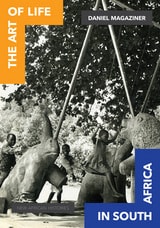
The Art of Life in South Africa
Daniel Magaziner
Ohio University Press, 2016
From 1952 to 1981, South Africa’s apartheid government ran an art school for the training of African art teachers at Indaleni, in what is today KwaZulu-Natal. The Art of Life in South Africa is the story of the students, teachers, art, and politics that circulated through a small school, housed in a remote former mission station. It is the story of a community that made its way through the travails of white supremacist South Africa and demonstrates how the art students and teachers made together became the art of their lives.
Daniel Magaziner radically reframes apartheid-era South African history. Against the dominant narrative of apartheid oppression and black resistance, as well as recent scholarship that explores violence, criminality, and the hopeless entanglements of the apartheid state, this book focuses instead on a small group’s efforts to fashion more fulfilling lives for its members and their community through the ironic medium of the apartheid-era school.
There is no book like this in South African historiography. Lushly illustrated and poetically written, it gives us fully formed lives that offer remarkable insights into the now clichéd experience of black life under segregation and apartheid.
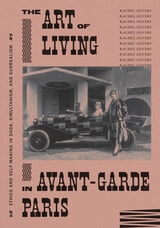
The Art of Living in Avant-Garde Paris
Ethics and Self-Making in Dada, Simultanism, and SurrealismRachel Silveri
University of Chicago Press, 2026
With The Art of Living in Avant-Garde Paris, Rachel Silveri takes a fresh look at the desire to unify art and life, an ambition long regarded as foundational to the European historical avant-gardes. She reveals how many early twentieth-century artists saw their own everyday lives—their bodies, identities, and relationships—as a type of creative material and a central component to their avant-garde practice. These artists abandoned traditional forms of artmaking and venues of art viewing, instead aspiring to integrate art with everyday life, creating an “art of living.”
Considering Tristan Tzara’s performances of Dadaist identity, Sonia Delaunay’s simultaneous fashions and self-branding, and the collective endeavor to open and operate the Surrealist Research Bureau, Silveri offers a new narrative about how the artists of interwar Paris developed experiential life practices that resisted dominant forms of “lifestyle” and normative discourses surrounding gender, ethnicity, and office work. This book argues that ethical questions of “How should I live?” and “How should I relate to others?” were as important to the avant-garde as politics, and that aspirations to change the world played out in daily practices of self-making.
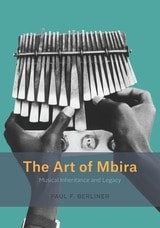
The Art of Mbira
Musical Inheritance and LegacyPaul F. Berliner
University of Chicago Press, 2020
In this book, Berliner provides insight into the communities of study, performance, and worship that surround mbira. He chronicles how master player Cosmas Magaya and his associates have developed their repertory and practices over more than four decades, shaped by musical interaction, social and political dynamics in Zimbabwe, and the global economy of the music industry. At once a detailed exposition of the music’s forms and practices, it is also an indispensable historical and cultural guide to mbira in a changing world.
Together with Berliner and Magaya's compendium of mbira compositions, Mbira’s Restless Dance, The Art of Mbira breaks new ground in the depth and specificity of its exploration of an African musical tradition, and in the entwining of the authors’ collaborative voices. It is a testament to the powerful relationship between music and social life—and the rewards of lifelong musical study, performance, and friendship.
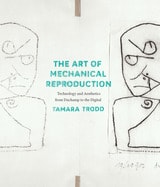
The Art of Mechanical Reproduction
Technology and Aesthetics from Duchamp to the DigitalTamara Trodd
University of Chicago Press, 2015
The Art of Mechanical Reproduction weaves a rich history of the experimental networks in which artists as diverse as Paul Klee, Hans Bellmer, Ellsworth Kelly, Robert Smithson, Gerhard Richter, Chris Marker, and Tacita Dean have worked, and it shows for the first time how extensively technological innovations of the moment have affected their work. Original and broad-ranging, The Art of Mechanical Reproduction challenges some of the most respected and entrenched criticism of the past several decades—and allows us to think about these artists anew.
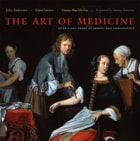
The Art of Medicine
Over 2,000 Years of Images and ImaginationJulie Anderson, Emm Barnes, and Emma Shackleton
University of Chicago Press, 2011
Since ancient times people have depended on medical practitioners to enhance life, to treat illness and injuries, and to help reduce pain and suffering. The scientifically based discipline that we know today stands beside diverse traditions, belief systems, and bodies of medical knowledge that have evolved in fascinating ways across cultures and continents. Throughout this history, successive generations have created artistic representations of these varied aspects of medicine, illustrating instruction manuals, documenting treatments, and creating works of art that enable individuals to express their feelings and ideas about medicine, health, and illness. From ancient wall paintings and tomb carvings to sculpture, installations, and digitally created artworks, the results are extraordinary and pay tribute to how medicine has affected our lives and the lives of our ancestors.
Drawing on the remarkable holdings of the Wellcome Collection in London, The Art of Medicine offers a unique gallery of rarely seen paintings, artifacts, drawings, prints, and extracts from manuscripts and manuals to provide a fascinating visual insight into our knowledge of the human body and mind, and how both have been treated with medicine. Julie Anderson, Emm Barnes, and Emma Shackleton take readers on a fascinating visual journey through the history of medical practice, exploring contemporary biomedical images, popular art, and caricature alongside venerable Chinese scrolls, prehistoric Mesoamerican drawings, paintings of the European Renaissance, medieval Persian manuscripts, and more. The result is a rare and remarkable visual account of what it was and is to be human in sickness and health.