Results by title
3258 books match the query 'Performing Arts' and 658 start with t
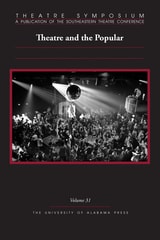
Theatre Symposium, Vol. 31
Theatre and the PopularEdited by Chase Bringardner
University of Alabama Press, 2024
A new issue of the longstanding theatre journal, documenting conversations that traverse disciplinary boundaries
The essays in the thirty-first volume of Theatre Symposium traverse disciplinary boundaries to explore what constitutes the “popular” in theater and performance in an increasingly frenetic and mediated landscape. Amid the current resurgence of populist discourse and the enduring impact of popular culture, this volume explores what is considered popular, how that determination gets made, and who makes it. The answers to these questions shape the structures and systems of performance in an interaction that is reciprocal, intricate, and multifaceted. Productions often succeed or fail based on their ability to align with what is popular—sometimes productively, sometimes clumsily, sometimes brazenly, and sometimes tragically.
In our current moment, what constitutes the popular profoundly affects the real world politically, economically, and socially. Controversies about the electoral college system hinge on the primacy of the “popular” vote. Streaming services daily update lists of their most popular content and base future decisions on opaque measures of popularity. Social media platforms broadcast popular content across the globe, triggering new products, social activism, and political revolutions.
The contributors to this volume engage with a range of contemporary and historical examples and argue with clarity and acuity the interplay of performance and the popular. Theatre and performance deeply engage with the popular at every level—from audience response to box office revenue. The variety of methodologies and sites of inquiry showcased in this volume demonstrates the breadth and depth of the popular and the importance of such work to understanding our present moment onstage and off.
CONTRIBUTORS
Mysia Anderson / Chase Bringardner / Elizabeth M. Cizmar / Chelsea Curto / Janet M. Davis / Tom Fish / Kyla Kazuschyk / Sarah McCarroll / Eleanor Owicki / Sunny Stalter-Pace / Chelsea Taylor / Chris Woodworth
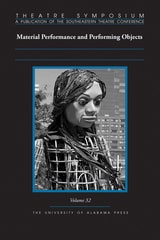
Theatre Symposium, Vol. 32
Material Performance and Performing ObjectsKeith Byron Kirk
University of Alabama Press, 2025
A new volume of the longstanding theatre journal, documenting conversations that traverse disciplinary boundaries
Theater Symposium, Volume 32 delves into the collaborative dynamics and ritualistic exchanges within performance during the collective resurgence into a hopeful post-COVID world. This volume’s contributors embark on a journey through the vibrant realm of material performance, with puppetry at the forefront, guiding readers into an expansive landscape of object performance styles and structures. As they navigate this terrain, they pose critical questions that unravel the complexities of object performance analysis and its impact on audiences. Bringing together perspectives from designers, creators, and performers, this volume explores how object performances serve as a medium to engage with the world, fostering synchrony and positive outcomes across a diverse array of artistic practices. Theater Symposium, Volume 32 invites readers to expand their understanding of collaborative practices and the object world, whether it be through the lens of labor or entertainment.
Contributors
Ashley Bellet / Francesca Marie Chilcote / Elisabeth Hostetter / Rebecca Johnson / Kyla Kazuschyk / Keith Byron Kirk / Jesse Njus / Claudia Orenstein / Paulette Richards / Dory Sibley / Echo Sunyata Sibley / Skye Strauss
Theatre Symposium, Vol. 3
Voice of the DramaturgPaul Castagno
University of Alabama Press, 1995
Exploring the many voices of the dramaturg—and the evolving artistry of shaping theatre from within.
As both a verb and a noun, the word voice has many meanings and functions on multiple levels, a phenomenon that is remarkably analogous to the practice of dramaturgy. Thus, the topic title Voice of the Dramaturg allows for the requisite flexibility and provides a unifying theme for the third volume of Theatre Symposium. This volume of the proceedings from the June 1994 joint meeting of the Southeastern Theatre Conference and the Literary Managers and Dramaturgs in Atlanta, Georgia, addresses the question, What is Dramaturgy? Part I includes the contributions of the six symposium participants and concludes with the roundtable discussion by panelists. Part II is composed of refereed papers. These papers range from the highly theoretical to the practical and pedagogical. They reflect the diversity of what dramaturgy means in contemporary theatre.
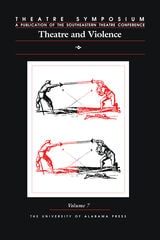
Theatre Symposium, Vol. 7
Theatre and ViolenceJohn W. Frick
University of Alabama Press, 1999
Theatre Symposium, Vol. 9
Theatre and Politics in the Twentieth CenturyJohn C. Countryman
University of Alabama Press, 2001
This collection of essays explores how drama can teach political principles and entertain at the same time.
Political commentary is possible through "variety" theatre, this volume contends. Compiled from the April 2000 Theatre Symposium held on the campus of the University of Tennessee-Knoxville, this collection of essays presents a compelling mix of theoretical and practical viewpoints from a broad diversity of scholars from around the country.
What remains to be learned about the political objectives of Brecht's Lehrstriucke? What political power is resident in the satirical humor of Dario Fo's drama? What can we learn from Mordecai Gorelik's political/artistic philosophy that might inform contemporary practice? What was the impact of political theatre on Broadway between the wars? Is Thornton Wilder's Our Town the play we've always imagined it to be, or does it challenge the politics of its time? What is the role of theatre activism in raising consciousness about gender politics? These are only some of the questions addressed by this lively, informative discussion.
Theatre Theory Reader
Prague School WritingsEdited by David Drozd
Karolinum Press, 2017
Theatre Things
Material Theories and HistoriesEdited by Andrew Friedman and Eero Laine
University of Michigan Press, 2026
Theatre Things: Material Theories and Histories considers key theatrical objects through a comparative approach, examining the uses and histories of different parts of the theatre throughout time and across culture and geography. The ten “theatre things” at the heart of the book are: entrances, tickets, programs, concessions, seats, lights, curtains, stages, trapdoors, and exits. For every object, three different scholars offer short chapters that examine it from different angles across eras, places, and performance traditions to result in a set of diverse and provocative accounts of the many ways objects have functioned throughout theatre history. Written in an accessible style, the book draws on real examples from theatre history around the world to reveal that even the smallest details—where you sit, how the lights shift, what the program says—carry meaning. Whether you’re a regular theatregoer or a curious fan, Theatre Things offers a fresh way to look at the spaces and objects that shape every night at the theatre—and makes them feel newly interesting long after the curtain call.
Theatre and Cartographies of Power
Repositioning the Latina/o AmericasEdited by Jimmy A. Noriega and Analola Santana
Southern Illinois University Press, 2018
Building on hemispheric and transnational models, this book demonstrates the capacity of theatre studies to challenge the up-down/North-South approach that dominates scholarship in the United States and presents a strong case for a repositioning of the Latina/o Americas in theatrical histories and practices.

Theatre and Consciousness
Explanatory Scope and Future PotentialDaniel Meyer-Dinkgräfe
Intellect Books, 1995
• What inspires the dramatist to write a play? This question addresses the nature of the creative process.
• How do different plays reflect human consciousness?
• What kinds of new ideas did major directors or theatre makers, such as Artaud, Grotowski, Barba, and Brook introduce?
• Should actors be personally involved with the emotions they have to portray?
• Are puppets or marionettes superior to actors?
• How to account for the designer’s combination of creativity and practical skill? What part does mental imagination play in the design process? How do designers get their own spatial awareness across to their spectators?
• How does theatre affect the spectator? Why do spectators react as they do? How do distance and suspension of disbelief ‘work’?
An improved and expanded understanding of theatre, resulting from answering the questions above in the context of consciousness studies, should inspire new developments in theatre practice.
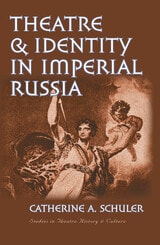
Theatre and Identity in Imperial Russia
Catherine A. Schuler
University of Iowa Press, 2009
Schuler draws upon contemporary journals written and published by the educated nobility and the intelligentsia—who represented the intellectual, aesthetic, and cultural groups of the day—as well as upon the laws of the Russian empire and upon theatrical memoirs. With fascinating detail, she spotlights the ideologically charged binaries ascribed to prominent actors—authentic/performed, primitive/civilized, Russian/Western—that mirrored the volatility of national identity from the Napoleonic Wars through the reign of Alexander II.
If the path traveled by Russian artists and audiences from the turn of the nineteenth century to the era of the Great Reforms reveals anything about Russian culture and society, it may be that there is nothing more difficult than being Russian in Russia. By exploring the ways in which theatrical administrators, playwrights, and actors responded to three tsars, two wars, and a major revolt, this carefully crafted book demonstrates the battle for the hearts and minds of the Russian people.
Theatre and Performance in Small Nations
Edited by Steve Blandford
Intellect Books, 2013
Theatre for Lifelong Learning
A Handbook for Instructors, Older Adults, Communities, and ArtistsLinda Lau and Rae Mansfield
Intellect Books, 2024
Theatre for Lifelong Learning is a step-by-step guide for anyone interested in teaching theatre courses and creating theatre with older adults. This book provides instructors with syllabi, discussion questions, classroom management strategies, resource lists, and activities to teach courses from beginning to end. Special topics include playwriting, play development, storytelling, theatre appreciation, theatre criticism, theatre history, and theatre theory.
Older adult theatre courses support emotional well-being and the development of artistic communities and anyone can contribute to lifelong learning as an instructor. If you are new to theatre and theatre education, Theatre for Lifelong Learning offers tips throughout to assist you in creating accessible environments and making courses your own. If you have a background in performing arts, this book enriches your experience with interdisciplinary approaches to share your expertise. If you are an educator, it provides useful strategies to adapt your current skill set for the theatre classroom.
Regardless of your experience, you can help older adults connect, engage, and create. You may find yourself learning, exploring, and experimenting alongside your students. Teaching older adults theatre will contribute to your own enjoyment. In theatre, everyone gets to have fun!
Theatre in Passing 2
Searching for New Amsterdam(E)lena K. Siemens
Intellect Books, 2015
Theatre in Passing
A Moscow Photo-Diary(E)lena K. Siemens
Intellect Books, 2011
Theatre in Passing explores spaces of performance in contemporary Moscow. Inspired by French philosopher Michel de Certeau’s model of a "second, poetic geography" in which the walker—the everyday practitioner—invents the space observed by the voyeur, this book takes the reader on a tour of spaces of performance in contemporary Moscow. Through text and photography, the city’s "theatrical geography" is uncovered, from the Bolshoi Theater in Theater Square to hidden gems like the recently restored Kuskovo estate. With additional sections on street theater and other public gatherings, Theatre in Passing is a must-read book for anyone curious about the theatrical architecture and geography of Russia’s capital.
Theatre in Prison
Theory and PracticeEdited by Michael Balfour
Intellect Books, 1995
Theatre in Prison is a collection of thirteen international essays exploring the rich diversity of innovative drama works in prisons. The book includes an introduction that will present a contextualisation of the prison theatre field. Thereafter, leading practitioners and academics will explore key aspects of practice &endash; problemitising, theorising and describing specific approaches to working with offenders. The book also includes extracts from prison plays, poetry and prisoners writings that offer illustrations and insights into the experience of prison life.
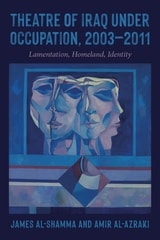
Theatre of Iraq Under Occupation, 2003-2011
Lamentation, Homeland, IdentityJames Al-Shamma
University of Iowa Press, 2025
However, in 2003, the United States invasion of Iraq propelled Iraqi theatre in an altogether different direction. Global media published photographs documenting the torture of Iraqi detainees by American soldiers and sectarian violence broke out, as Shiʿa and Sunni militias struggled for power. Theatre of Iraq Under Occupation examines the occupation’s impact on Iraqi theatre as eliciting lamentation over loss of homeland and identity, and as an assault on the Iraqi character itself. The first volume in English dedicated solely to theatre in Iraq, James Al-Shamma and Amir Al-Azraki’s insights don’t just offer a significant contribution to cultural studies, they bridge foreign policy and art in real time.
Theatre of the Real
Yeats, Beckett, and SondheimGina Masucci MacKenzie
The Ohio State University Press, 2008
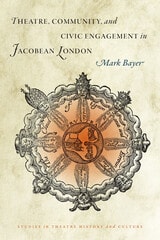
Theatre, Community, and Civic Engagement in Jacobean London
Mark Bayer
University of Iowa Press, 2011
Taking to heart Thomas Heywood’s claim that plays “persuade men to humanity and good life, instruct them in civility and good manners, showing them the fruits of honesty, and the end of villainy,” Mark Bayer’s captivating new study argues that the early modern London theatre was an important community institution whose influence extended far beyond its economic, religious, educational, and entertainment contributions. Bayer concentrates not on the theatres where Shakespeare’s plays were performed but on two important amphitheatres, the Fortune and the Red Bull, that offer a more nuanced picture of the Jacobean playgoing industry. By looking at these playhouses, the plays they staged, their audiences, and the communities they served, he explores the local dimensions of playgoing.
Theatre, Globalization and the Heteroglobal Method
Glenn Odom
Intellect Books, 2026
Theatre, Globalization and the Heteroglobal Method offers a groundbreaking framework for rethinking global theatre studies. Drawing on philosophy and scholarship from major theatre traditions—South Africa, the United States, the United Kingdom, China, Japan, and Nigeria—the volume reimagines how performance circulates and transforms in a global context.
Challenging the dominance of Eurocentric models in postcolonial studies, comparative literature, and world theatre, the book introduces the “heteroglobal” method: an adaptable, equitable approach that begins with local theoretical and philosophical frameworks before bringing them into dialogue. These imagined centers, each with its own rich discursive heritage, become sites of knowledge exchange where fresh understandings of art and globalization emerge.
Through a theoretically pluralistic matrix of comparison and interculturalism, Theatre, Globalization and the Heteroglobal Method documents contemporary scholarly and artistic practices across diverse cultural landscapes, offering a new model for teaching, research, and performance in an interconnected world.
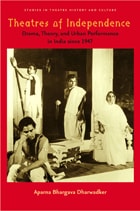
Theatres of Independence
Drama, Theory, and Urban Performance in India since 1947Aparna Bhargava Dharwadker
University of Iowa Press, 2005
The first part of Dharwadker’s study deals with the new dramatic canon that emerged after 1950 and the variety of ways in which plays are written, produced, translated, circulated, and received in a multilingual national culture. The second part traces the formation of significant postcolonial dramatic genres from their origins in myth, history, folk narrative, sociopolitical experience, and the intertextual connections between Indian, European, British, and American drama. The book’s ten appendixes collect extensive documentation of the work of leading playwrights and directors, as well as a record of the contemporary multilingual performance histories of major Indian, Western, and non-Western plays from all periods and genres. Treating drama and theatre as strategically interrelated activities, the study makes post-independence Indian theatre visible as a multifaceted critical subject to scholars of modern drama, comparative theatre, theatre history, and the new national and postcolonial literatures.
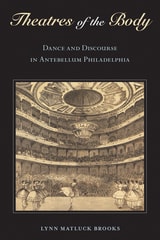
Theatres of the Body
Dance and Discourse in Antebellum PhiladelphiaLynn Matluck Brooks
Temple University Press, 2025
Reviewing print culture in the 1840s, Brooks shows how newspapers, magazines, and popular fiction provided documentation of dancing in Philadelphia as well as the responses of dance commentators, practitioners, and moralists. Theatres of the Body also considers the interplay of science with dance in the 1850s, which impacted both dance practices and reception.
Providing an expansive historiography of these significant contributions to dance in the United States, Brooks deepens our understanding of antebellum culture and history.
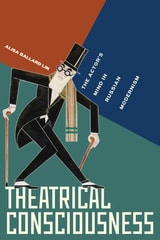
Theatrical Consciousness
The Actor’s Mind in Russian ModernismAlisa Ballard Lin
Northwestern University Press, 2025
Investigating late imperial Russian and early Soviet modernism’s reinvention of the actor
In this wide-ranging study, Alisa Ballard Lin argues that Russian theatrical theory and practice contributed to a broad pre- and postrevolutionary discourse about the mind, profoundly reshaping concepts of consciousness, perception, identity, and the constitution of the subject. Theatrical Consciousness: The Actor’s Mind in Russian Modernism examines efforts in Russian theater—from around the turn of the century through the mid-1930s—to stimulate, train, imagine, and ultimately understand the actor’s, as well as the spectator’s, mind. Discussing key figures of the period, including Nikolai Evreinov, Konstantin Stanislavsky, Vsevolod Meyerhold, and Alexander Tairov, Lin identifies an underappreciated dimension of humanism within Russian modernism: a humanism that resisted the pressures of an increasingly technologized, industrialized, and politicized modernity that challenged the place of the human within it.
Theatrical Gamut
Notes for a Post-Beckettian StageEnoch Brater, Editor
University of Michigan Press, 1995
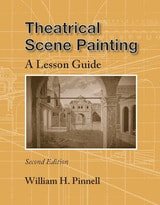
Theatrical Scene Painting
A Lesson GuideWilliam H. Pinnell
Southern Illinois University Press, 2008
Theatrical Scene Painting: A Lesson Guide, second edition, is a practical guide to scene painting for students and novices, as well as a reference for intermediate scene painters who wish to refresh or supplement their basic skills. Drawing on his extensive teaching and scene-painting experience, William H. Pinnell clarifies and expands on the lessons of the first edition, providing a detailed overview of the fundamentals of traditional scene painting.
The guide not only covers the basic tools of the trade and various methods of creating texture on scenery but also includes more advanced techniques for scene making, beginning with stonework, woodwork, and wallpaper before moving on to the more intricate techniques of moldings, paneling, drapery, foliage, shiny metal, perspective illusions, scale transfers, scenic drops, and scrims. Pinnell also includes refinements and embellishments that can lead to the development of personal style without sacrificing the goal of realism and more advanced work. Alternative methods to achieve different effects are also featured.
Theatrical Scene Painting: A Lesson Guide was the first book of its kind to provide clear step-by-step instructions in how to paint a wide variety of basic and advanced effects commonly needed for the theater. This new edition clarifies the origins of painting techniques and is supplemented with clearer step-by-step descriptions, new instructional photographs, and drawings that illustrate each major step. This edition also includes additional painting projects and their possible variations, a gallery of nineteen examples of professional scenic works, and an expanded glossary to eliminate confusion in terms.
Useful to both self-taught artists and students, each lesson in the guide can be a stand-alone topic or can form the foundation for a student to build skills for increasingly complex techniques.
The second edition of Theatrical Scene Painting provides many new essential scene painting projects in a clearer format, broadens the scope of the painting examples, and includes updated methods as well as new lessons. This clear and easily accessible guide gives students the ability to put together recognizable illusions.
Theatrical Scene Painting
A Lesson GuideWilliam H. Pinnell
Southern Illinois University Press, 1987
This handbook explains the techniques of traditional scene painting. A “how to” book for the novice, it shows the methods used in creating the illusion of three dimensions where only two exist. It provides a step-by-step explanation of each aspect of scene painting, using both color and black-and-white photographs for illustration.
Among the many illusions made possible through the magic of paint are stonework, wallpaper, woodwork, as well as mouldings, draperies, and foliage. To teach the beginner how to re-create reality through painted illusion, Pinnell emphasizes traditional scene painting, including basic tools, primary painting techniques, and methods for creating texture on scenery. He also illustrates refinements and embellishments that lead to more advanced work.
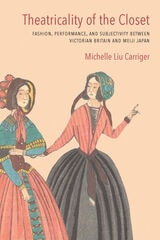
Theatricality of the Closet
Fashion, Performance, and Subjectivity between Victorian Britain and Meiji JapanMichelle Liu Carriger
Northwestern University Press, 2023
Clothing matters. This basic axiom is both common sense and, in another way, radical. It is from this starting point that Michelle Liu Carriger elucidates the interconnected ways in which gender, sexuality, class, and race are created by the everyday act of getting dressed. Theatricality of the Closet: Fashion, Performance, and Subjectivity between Victorian Britain and Meiji Japan examines fashion and clothing controversies of the nineteenth century, drawing on performance theory to reveal how the apparently superficial or frivolous deeply affects the creation of identity.
By interrogating a set of seemingly disparate examples from the same period but widely distant settings—Victorian Britain and Meiji-era Japan—Carriger disentangles how small, local, ordinary practices became enmeshed in a global fabric of cultural and material surfaces following the opening of trade between these nations in 1850. This richly illustrated book presents an array of media, from conservative newspapers and tabloids to ukiyo-e and early photography, that locate dress as a site where the individual and the social are interwoven, whether in the 1860s and 1870s or the twenty-first century.
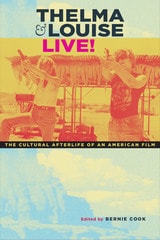
Thelma & Louise Live!
The Cultural Afterlife of an American FilmEdited by Bernie Cook
University of Texas Press, 2007
When they floored their Thunderbird off a cliff rather than surrender to the law, Thelma and Louise became icons of female rebellion, provoking strong reactions from viewers who felt either empowered or outraged by the duo's transgressions of women's traditional roles. The 1991 film quickly became—and continues to be—a potent cultural reference point, even inspiring a bumper sticker that declares, "Thelma & Louise Live!"
In this insightful study of Thelma & Louise, six noted film scholars investigate the initial reception and ongoing impact of this landmark film. The writers consider Thelma & Louise from a variety of perspectives, turning attention to the film's promotion and audience response over time; to theories of comedy and the role of laughter in the film; to the film's soundtrack and score; to the performances of stars Susan Sarandon and Geena Davis; to the emergence of Brad Pitt as a star and male sex object; and to the film's place in the history of road and crime film genres. Complementing the scholarly analysis is an in-depth interview of screenwriter Callie Khouri by editor Bernie Cook, as well as reviews of Thelma & Louise that appeared in U.S. News & World Report and Time.
Offering myriad new ways of understanding the complex interrelations of gender, identity, and violence, Thelma & Louise Live! attests to the ongoing life and still-evolving meanings of this now-classic film.
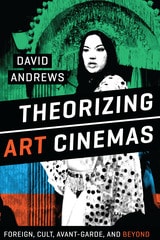
Theorizing Art Cinemas
Foreign, Cult, Avant-Garde, and BeyondBy David Andrews
University of Texas Press, 2013
The term “art cinema” has been applied to many cinematic projects, including the film d’art movement, the postwar avant-gardes, various Asian new waves, the New Hollywood, and American indie films, but until now no one has actually defined what “art cinema” is. Turning the traditional, highbrow notion of art cinema on its head, Theorizing Art Cinemas takes a flexible, inclusive approach that views art cinema as a predictable way of valuing movies as “art” movies—an activity that has occurred across film history and across film subcultures—rather than as a traditional genre in the sense of a distinct set of forms or a closed historical period or movement.
David Andrews opens with a history of the art cinema “super-genre” from the early days of silent movies to the postwar European invasion that brought Italian Neorealism, the French New Wave, and the New German Cinema to the forefront and led to the development of auteur theory. He then discusses the mechanics of art cinema, from art houses, film festivals, and the academic discipline of film studies, to the audiences and distribution systems for art cinema as a whole. This wide-ranging approach allows Andrews to develop a theory that encompasses both the high and low ends of art cinema in all of its different aspects, including world cinema, avant-garde films, experimental films, and cult cinema. All of these art cinemas, according to Andrews, share an emphasis on quality, authorship, and anticommercialism, whether the film in question is film festival favorite or a midnight movie.

Theory and Craft of the Scenographic Model, Revised Edition
Darwin Reid Payne
Southern Illinois University Press, 1985
Through diagrams, sketches, and models, along with explications of the essential tools and materials required, Payne defines and delineates the precise step-by-step procedures of scenographic modelmaking: the basic preparations of construction, the process of making the model, and the experimental aspects of modelmaking. This new edition with 50 additional illustrations and other new information offers teachers, students, and beginning professionals alike a complete and comprehensive approach to creating and constructing the scenographic model.
Theory and Practice in Eighteenth-Century Dance
The German-French ConnectionTilden Russell
University of Delaware Press, 2017
This book is about the intersection of two evolving dance-historical realms—theory and practice—during the first two decades of the eighteenth century. France was the source of works on notation, choreography, and repertoire that dominated European dance practice until the 1780s. While these French inventions were welcomed and used in Germany, German dance writers responded by producing an important body of work on dance theory. This book examines consequences in Germany of this asymmetrical confrontation of dance perspectives.
Between 1703 and 1717 in Germany, a coherent theory of dance was postulated that called itself dance theory, comprehended why it was a theory, and clearly, rationally distinguished itself from practice. This flowering of dance-theoretical writing was contemporaneous with the appearance of Beauchamps-Feuillet notation in the Chorégraphie of Raoul Auger Feuillet (Paris, 1700, 1701). Beauchamps-Feuillet notation was the ideal written representation of the dance style known as la belle danse and practiced in both the ballroom and the theater. Its publication enabled the spread of belle danse to the French provinces and internationally. This spread encouraged the publication of new practical works (manuals, choreographies, recueils) on how to make steps and how to dance current dances, as well as of new dance treatises, in different languages.
The Rechtschaffener Tantzmeister, by Gottfried Taubert (Leipzig, 1717), includes a translated edition of Feuillet’s Chorégraphie. Theory and Practice in Eighteenth-Century Dance addresses how Taubert and his contemporary German authors of dance treatises (Samuel Rudolph Behr, Johann Pasch, Louis Bonin) became familiar with Beauchamps-Feuillet notation and acknowledged the Chorégraphie in their own work, and how Taubert’s translation of the Chorégraphie spread its influence northward and eastward in Europe. This book also examines the personal and literary interrelationships between the German writers on dance between 1703 and 1717 and their invention of a theoria of dance as a counterbalance to dance praxis, comparing their dance-theoretical ideas with those of John Weaver in England, and assimilating them all in a cohesive and inclusive description of dance theory in Europe by 1721.
Published by University of Delaware Press. Distributed worldwide by Rutgers University Press.
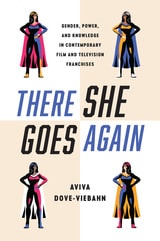
There She Goes Again
Gender, Power, and Knowledge in Contemporary Film and Television FranchisesAviva Dove-Viebahn
Rutgers University Press, 2024

They Married Adventure
The Wandering Lives of Martin and Osa JohnsonPascal James Imperato
Rutgers University Press, 1999
Martin and Osa Johnson thrilled American audiences of the 1920s and 30s with their remarkable movies of far-away places, exotic peoples, and the dramatic spectacle of African wildlife. Their own lives were as exciting as the movies they made--sailing through the South Sea Islands, dodging big game at African waterholes, flying small planes over the veldt, taking millionaires on safari.
Osa Johnson’s ghostwritten autobiography, I Married Adventure, became a national bestseller. The 1939 film version was billed as “the story of World Exploration’s First Lady, whose indomitable daring would be stayed by neither snarling lion nor crouching leopard, tropic tempest nor savage tribesman!” Heroes to millions, Osa and Martin seemed to embody glamor, daring, and the all-American ideal of self-reliance.
Probing beneath the glamor of the Johnsons’ public image, Pascal and Eleanor Imperato explore the more human side of the couple’s lives--and ways the Johnsons shaped, for better and for worse, America’s vision of Africa. Drawing on many years of research, access to a wealth of letters and archives, interviews with many who worked closely with the Johnsons, and their own deep knowledge of Africa, the authors present a fascinating and intimate portrait of this intrepid couple.
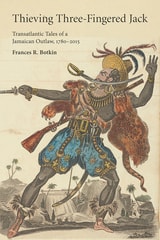
Thieving Three-Fingered Jack
Transatlantic Tales of a Jamaican Outlaw, 1780-2015Botkin, Frances R.
Rutgers University Press, 2018
The fugitive slave known as “Three-Fingered Jack” terrorized colonial Jamaica from 1780 until vanquished by Maroons, self-emancipated Afro-Jamaicans bound by treaty to police the island for runaways and rebels. A thief and a killer, Jack was also a freedom fighter who sabotaged the colonial machine until his grisly death at its behest. Narratives about his exploits shed light on the problems of black rebellion and solutions administered by the colonial state, creating an occasion to consider counter-narratives about its methods of divide and conquer. For more than two centuries, writers, performers, and storytellers in England, Jamaica, and the United States have “thieved" Three Fingered Jack's riveting tale, defining black agency through and against representations of his resistance.
Frances R. Botkin offers a literary and cultural history that explores the persistence of stories about this black rebel, his contributions to constructions of black masculinity in the Atlantic world, and his legacies in Jamaican and United States popular culture.
Thinking in the Dark
Cinema, Theory, PracticePomerance, Murray
Rutgers University Press, 2015
Thinking in the Dark introduces readers to twenty-one key theorists whose work has made a great impact on film scholarship today, including Rudolf Arnheim, Sergei Eisenstein, Michel Foucault, Siegfried Kracauer, and Judith Butler. Rather than just discussing each theorist’s ideas in the abstract, the book shows how those concepts might be applied when interpreting specific films by including an analysis of both a classic film and a contemporary one. It thus demonstrates how theory can help us better appreciate films from all eras and genres: from Hugo to Vertigo, from City Lights to Sunset Blvd., and from Young Mr. Lincoln to A.I. and Wall-E.
The volume’s contributors are all experts on their chosen theorist’s work and, furthermore, are skilled at explaining that thinker’s key ideas and terms to readers who are not yet familiar with them. Thinking in the Dark is not only a valuable resource for teachers and students of film, it’s also a fun read, one that teaches us all how to view familiar films through new eyes.
Theorists examined in this volume are: Rudolf Arnheim, Béla Balázs, Roland Barthes, André Bazin, Walter Benjamin, Judith Butler, Stanley Cavell, Michel Chion, Gilles Deleuze, Jean Douchet, Sergei Eisenstein, Jean Epstein, Michel Foucault, Siegfried Kracauer, Jacques Lacan, Vachel Lindsay, Christian Metz, Hugo Münsterberg, V. F. Perkins, Jacques Rancière, and Jean Rouch.
This Is Called Moving
A Critical Poetics of FilmAbigail Child, with a foreword by Tom Gunning
University of Alabama Press, 2005
A pioneering exploration of how poetry and experimental cinema intersect to reconstruct meaning across visual and linguistic forms.
As the writer, director, producer, and cinematographer of almost all her 30 films, videos, and shorts, Abigail Child has been recognized as a major and influential practitioner of experimental cinema since the early 1970s. Hallmarks of her style are the appropriation and reassembly of found footage and fragments from disparate visual sources, ranging from industrial films and documentaries to home movies, vacation photography, and snippets of old B movies.
The resulting collages and montages are cinematic narratives that have been consistently praised for their beauty and sense of wonder and delight in the purely visual. At the same time, Child's films are noted for their incisive political commentary on issues such as gender and sexuality, class, voyeurism, poverty, and the subversive nature of propaganda.
In the essays of This Is Called Moving, Child draws on her long career as a practicing poet as well as a filmmaker to explore how these two language systems inform and cross-fertilize her work. For Child, poetry and film are both potent means of representation, and by examining the parallels between them—words and frames, lines and shots, stanzas and scenes—she discovers how the two art forms re-construct and re-present social meaning, both private and collective.
This Is Jerusalem Calling
State Radio in Mandate PalestineBy Andrea L. Stanton
University of Texas Press, 2013
Modeled after the BBC, the Palestine Broadcasting Service was launched in 1936 to serve as the national radio station of Mandate Palestine, playing a pivotal role in shaping the culture of the emerging middle class in the region. Despite its significance, the PBS has become nearly forgotten by scholars of twentieth-century Middle Eastern studies. Drawn extensively from British and Israeli archival sources, “This Is Jerusalem Calling” traces the compelling history of the PBS’s twelve years of operation, illuminating crucial aspects of a period when Jewish and Arab national movements simultaneously took form.
Andrea L. Stanton describes the ways in which the mandate government used broadcasting to cater to varied audiences, including rural Arab listeners, in an attempt to promote a “modern” vision of Arab Palestine as an urbane, politically sophisticated region. In addition to programming designed for the education of the peasantry, religious broadcasting was created to appeal to all three main faith communities in Palestine, which ultimately may have had a disintegrating, separatist effect. Stanton’s research brings to light the manifestation of Britain’s attempts to prepare its mandate state for self-governance while supporting the aims of Zionists. While the PBS did not create the conflict between Arab Palestinians and Zionists, the service reflected, articulated, and magnified such tensions during an era when radio broadcasting was becoming a key communication tool for emerging national identities around the globe.
This Is My Body
Representational Practices in the Early Middle AgesMichal Kobialka
University of Michigan Press, 2003
Michal Kobialka is Professor in the Department of Theatre Arts and Dance at the University of Minnesota.
Thomas Holcroft’s Revolutionary Drama
Reception and AfterlivesAmy Garnai
Bucknell University Press, 2023
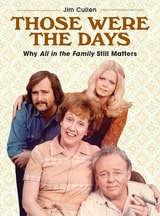
Those Were the Days
Why All in the Family Still MattersJim Cullen
Rutgers University Press, 2020
Between 1971 and 1979, All in the Family was more than just a wildly popular television sitcom that routinely drew 50 million viewers weekly. It was also a touchstone of American life, so much so that the living room chairs of the two main characters have spent the last 40 years on display at the Smithsonian. How did a show this controversial and boundary-breaking manage to become so widely beloved?
Those Were the Days is the first full-length study of this remarkable television program. Created by Norman Lear and produced by Bud Yorkin, All in the Family dared to address such taboo topics as rape, abortion, menopause, homosexuality, and racial prejudice in a way that no other sitcom had before. Through a close analysis of the sitcom’s four main characters—boorish bigot Archie Bunker, his devoted wife Edith, their feminist daughter Gloria, and her outspoken liberal husband Mike—Jim Cullen demonstrates how All in the Family was able to bridge the generation gap and appeal to a broad spectrum of American viewers in an age when a network broadcast model of television created a shared national culture.
Locating All in the Family within the larger history of American television, this book shows how it transformed the medium, not only spawning spinoffs like Maude and The Jeffersons, but also helping to inspire programs like Roseanne, Married... with Children, and The Simpsons. And it raises the question: could a show this edgy ever air on broadcast television today?
Three Comedies
Aristophanes
University of Michigan Press, 1969
Thrillers, Chillers, and Killers
Radio and Film NoirFrank Krutnik
Rutgers University Press, 2025
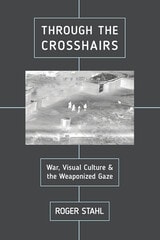
Through the Crosshairs
War, Visual Culture, and the Weaponized GazeStahl, Roger
Rutgers University Press, 2018
Through the Crosshairs traces the genealogy of this weapon’s-eye view across a wide range of genres, including news reports, military public relations images, action movies, video games, and social media posts. As he tracks how gun-camera footage has spilled from the battlefield onto the screens of everyday civilian life, Roger Stahl exposes how this raw video is carefully curated and edited to promote identification with military weaponry, rather than with the targeted victims. He reveals how the weaponized gaze is not only a powerful propagandistic frame, but also a prime site of struggle over the representation of state violence.
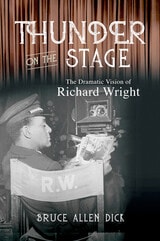
Thunder on the Stage
The Dramatic Vision of Richard WrightBruce Allen Dick
University of Illinois Press, 2024
Drawing on decades of research and interviews with Wright’s family and Wright scholars, Bruce Allen Dick uncovers the theatrical influence on Wright’s oeuvre--from his 1930s boxing journalism to his unpublished one-acts on returning Black GIs in WWII to his unproduced pageant honoring Vladimir Lenin. Wright maintained rewarding associations with playwrights, writers, and actors such as Langston Hughes, Theodore Ward, Paul Robeson, and Lillian Hellman, and took particular inspiration from French literary figures like Jean-Paul Sartre. Dick’s analysis also illuminates Wright’s direct involvement with theater and film, including the performative aspects of his travel writings; the Orson Welles-directed Native Son on Broadway; his acting debut in Native Son’s first film version; and his play “Daddy Goodness,” a satire of religious charlatans like Father Divine, in the 1930s.
Bold and original, Thunder on the Stage offers a groundbreaking reinterpretation of a major American writer.
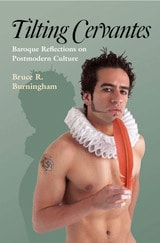
Tilting Cervantes
Baroque Reflections on Postmodern CultureBruce R. Burningham
Vanderbilt University Press, 2008
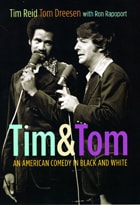
Tim and Tom
An American Comedy in Black and WhiteTim Reid and Tom Dreesen with Ron Rapoport
University of Chicago Press, 2008
Tim and Tom tells the story of that pioneering duo, the first interracial comedy team in the history of show business--and the last. Tim Reid and Tom Dreesen polished their act in the nightclubs of Chicago, then took it on the road, not only in the North, but in the still-simmering South as well, developing routines that even today remain surprisingly frank--and remarkably funny--about race. Most nights, the shock of seeing an integrated comedy team quickly dissipated in uproarious laughter, but on some occasions the audience’s confusion and discomfort led to racist heckling, threats, and even violence. Though Tim and Tom perpetually seemed on the verge of making it big throughout their five years together, they grudgingly came to realize that they were ahead of their time: America was not yet ready to laugh at its own failed promise.
Eventually, the grind of the road took its toll, as bitter arguments led to an acrimonious breakup. But the underlying bond of friendship Reid and Dreesen had forged with each groundbreaking joke has endured for decades, while their solo careers delivered the success that had eluded them as a team. By turns revealing, shocking, and riotously funny, Tim and Tom unearths a largely forgotten chapter in the history of comedy.
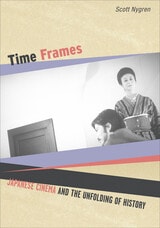
Time Frames
Japanese Cinema and the Unfolding of HistoryScott Nygren
University of Minnesota Press, 2007
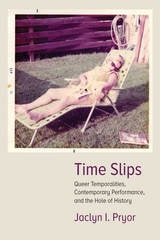
Time Slips
Queer Temporalities, Contemporary Performance, and the Hole of HistoryJaclyn I. Pryor
Northwestern University Press, 2017
Masterfully synthesizing a wealth of research and experiences, Time Slips will interest scholars and readers in the fields of theater and performance studies, queer studies, and American studies.
Time within Time
The Diaries, 1970–1986Andrey Tarkovsky
Seagull Books, 2019
Time within Time is both a diary and a notebook, maintained by Tarkovsky from 1970 until his death. Intense and intimate, it offers reflections on Dostoyevsky, Tolstoy, Hermann Hesse, Thomas Mann, and others. He writes movingly of his family, especially his father, Arseniy Tarkovsky, whose poems appear in his films. He records haunting dreams in detail and speaks of the state of society and the future of art, noting significant world events and purely personal dramas along with fascinating accounts of his own filmmaking. Rounding out this volume are Tarkovsky’s plans and notes for his stage version of Hamlet; a detailed proposal for a film adaptation of Dostoyevsky’s The Idiot; and a glimpse of the more public Tarkovsky answering questions put to him by interviewers.
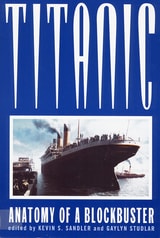
Titanic
Anatomy of a BlockbusterEdited by Kevin S Sandler and Gaylyn Studlar
Rutgers University Press, 1999
On April 14, 1912, the Titanic struck an iceberg off Newfoundland. Taking more than 1,500 souls with her, Titanic sunk on what was intended to be the glorious maiden voyage of the biggest, most expensive, and most technologically advanced ship ever built.
In 1997, James Cameron’s Titanic, the most expensive and technologically advanced movie ever made, hit theaters. In 13 weeks, it became the highest-grossing film in North America, and shortly thereafter, the first motion picture to earn a billion dollars worldwide.
The cultural studies and film scholars who have contributed 13 essays to this collection ask the key question—Why? What made Titanic such a popular movie? Why has this film become a cultural and film phenomenon? What makes it so fascinating to the film-going public?
The articles address everything from the nostalgia evoked by the film to the semiotic meaningfulness created around “The Heart of the Ocean” diamond that figures so prominently as a symbol in the film. Contributors address questions of the representations of class, sexuality, and gender; analyze the cross-cultural reception of the film in nationally specific contexts; examine the impact of strategies for marketing the film through music; and cover the implications of the budget toward the film’s success. Finally, the contributors address the film’s multi-faceted relationship to genre, history, stardom, and contemporary social and economic means.
To Act, To Do, To Perform
Drama and the Phenomenology of ActionAlice Rayner
University of Michigan Press, 1994