Results by title
3785 books match the query 'Poetry' and 833 start with t
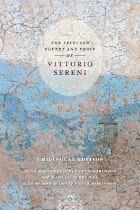
The Selected Poetry and Prose of Vittorio Sereni
A Bilingual EditionVittorio Sereni
University of Chicago Press, 2006
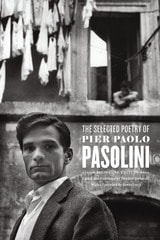
The Selected Poetry of Pier Paolo Pasolini
A Bilingual EditionPier Paolo Pasolini
University of Chicago Press, 2014
Most people outside Italy know Pier Paolo Pasolini for his films, many of which began as literary works—Arabian Nights, The Gospel According to Matthew, The Decameron, and The Canterbury Tales among them. What most people are not aware of is that he was primarily a poet, publishing nineteen books of poems during his lifetime, as well as a visual artist, novelist, playwright, and journalist. Half a dozen of these books have been excerpted and published in English over the years, but even if one were to read all of those, the wide range of poetic styles and subjects that occupied Pasolini during his lifetime would still elude the English-language reader.
For the first time, Anglophones will now be able to discover the many facets of this singular poet. Avoiding the tactics of the slim, idiosyncratic, and aesthetically or politically motivated volumes currently available in English, Stephen Sartarelli has chosen poems from every period of Pasolini’s poetic oeuvre. In doing so, he gives English-language readers a more complete picture of the poet, whose verse ranged from short lyrics to longer poems and extended sequences, and whose themes ran not only to the moral, spiritual, and social spheres but also to the aesthetic and sexual, for which he is most known in the United States today. This volume shows how central poetry was to Pasolini, no matter what else he was doing in his creative life, and how poetry informed all of his work from the visual arts to his political essays to his films. Pier Paolo Pasolini was “a poet of the cinema,” as James Ivory says in the book’s foreword, who “left a trove of words on paper that can live on as the fast-deteriorating images he created on celluloid cannot.”
This generous selection of poems will be welcomed by poetry lovers and film buffs alike and will be an event in American letters.
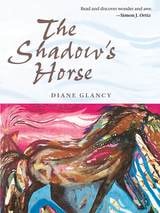
The Shadow’s Horse
Diane Glancy
University of Arizona Press, 2003
The Shadow's Horse is a new collection of poems in which Glancy walks the margin between her white and Indian heritage. In poems that conjure the persistence of fallen leaves or juxtapose images of Christ and the stockyards, she powerfully evokes place and spirit to address with intelligence and beauty issues of family, work, and faith.
In some of these poems Glancy recalls growing up with her Cherokee father, who worked in a stockyard, radically applying Christian theology to the slaughter of non-human creatures: The cattle go up the ramp
dragging their crosses.
Their voices are Gregorian chants
rising to the blue sky,
the cold clouds.
In others she examines the walk of history through the ordinary details of life-history seen from two points of view, early Euro-American and contemporary Native American. She sees her Native heritage as shortlived and fragile, yet as enduring as leaves, and she asks, "If you line up all the leaves that fall / how many times will they go around the earth?"
Writing in a cross-boundaried, fragmented voice—a voice based on the memory of the way language sounded when it was stretched across the cultures or walked in both worlds—Glancy has fashioned a book about speaking oneself into existence. The Shadow's Horse is the story of one culture made to sing the song of another until the Native voice is so erased it is nearly an illusion. Yet as readers of these poems will discover, the shadow of the past is as real as the horse it rides.
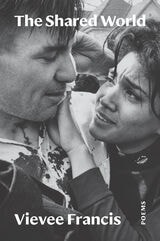
The Shared World
PoemsVievee Francis
Northwestern University Press, 2021
The latest collection from award-winning poet Vievee Francis, The Shared World imagines the ideas and ideals and spaces of the Black woman. The book delves into inherited memories and restrictions between families, lovers, and strangers and the perception and inconvenient truth of Black woman as mother—with or without child. Francis challenges the ways in which Black women are often dismissed while expected to be nurturing. This raw assemblage of poetic narratives stares down the oppressors from within and writes a new language in the art of taking back the body and the memory. These poetic narratives are brutal in their lyrical blows but tender with the bruised history left behind. “You can’t stop this / song,” she writes. “More hands than yours have closed / around my throat.”
Francis’s lyric gifts are on full display as she probes self-discovery, history, intimacy, and violence. Her voice encompasses humor and gravity, enigma and revelation. What emerges is a realm of intertwined experiences. “The secret to knowing the secret is to speak,” she concludes, “but we too often tell / the stories of no matter and avoid the one story that does matter. / In truth, we are bound by one story, so you’d think by now / we’d tell it, at least to each other.”
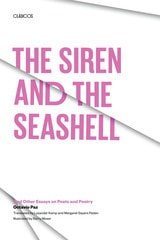
The Siren and the Seashell
And Other Essays on Poets and PoetryBy Octavio Paz
University of Texas Press, 1976
Octavio Paz has long been known for his brilliant essays as well as for his poetry. Through the essays, he has sought to confront the tensions inherent in the conflict between art and society and to achieve a unity of their polarities. The Siren and the Seashell is a collection of Paz’s essays, focusing on individual poets and on poetry in general. The first five poets he treats are Latin American: Sor Juana Inés de la Cruz, Rubén Darío, José Juan Tablada, Ramón López Velarde, and Alfonso Reyes. Then there are essays on Robert Frost, e. e. cummings, Saint-John Perse, Antonio Machado, and Jorge Guillén. Finally, there are Paz’s reflections on the poetry of solitude and communion and the literature of Latin America. Each essay is more than Paz’s impressions of one person or issue; each is the occasion for a wider discussion of cultural, historical, psychological, and philosophical themes. The essays were selected from Paz’s writing between 1942 and 1965 and provide an overview of the development of his thinking and an exploration of the ideas central in his works.
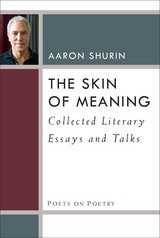
The Skin of Meaning
Collected Literary Essays and TalksAaron Shurin
University of Michigan Press, 2016
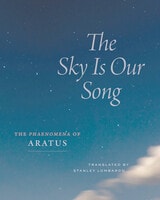
The Sky Is Our Song
The "Phaenomena" of AratusAratus
University of Chicago Press, 2025
A poetic guide to the heavens, the Phaenomena of Aratus—dating from around 270 BCE—was widely known across the ancient world, second only in fame to the works of Homer. Beginning with an invocation to Zeus, the poem describes the constellations of the northern and southern skies, the celestial sphere, and weather signs. Aratus’s vivid work offered a complete handbook of astronomy, constellations, and weather, and this treatise on the night sky was later translated or adapted by luminaries including Cicero, Virgil, and Ovid. The Phaenomena remained popular throughout the Renaissance and had more than sixty printed editions by the early seventeenth century, but its fame has faded in the modern world.
With this edition, renowned translator and amateur astronomer Stanley Lombardo renders Aratus’s poem in reader-friendly vernacular English verse. Complete with endnotes, an accessible introduction, and astronomically accurate illustrations, The Sky Is Our Song brings this master poet’s celebration of the sky to a twenty-first-century audience, inviting new readers to follow Aratus on a visual journey through star signs, moon phases, weather phenomena, and all wonders of the heavens.
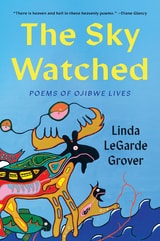
The Sky Watched
Poems of Ojibwe LivesLinda LeGarde Grover
University of Minnesota Press, 2022
A collective memoir in poetry of an Ojibwe family and tribal community, from creation myth to this day, updated with new poems
Reaching from the moment of creation to the cry of a newborn, The Sky Watched gives poetic voice to Ojibwe family life. In English and Ojibwe, those assembled here—voices of history, of memory and experience, of children and elders, Indian boarding school students, tribal storytellers, and the Manidoog, the unseen beings who surround our lives—come together to create a collective memoir in poetry as expansive and particular as the starry sky.
This world unfolds in the manner of traditional Ojibwe storytelling, shaped by the seasons and the stages of life, marking the significance of the number four in the Ojibwe worldview. Summoning spiritual and natural lore, award-winning poet and scholar Linda LeGarde Grover follows the story of a family, a tribe, and a people through historical ruptures and through intimate troubles and joys—from the sundering of Ojibwe people from their land and culture to singular horrors like the massacre at Wounded Knee to personal trauma suffered at Indian boarding schools. Threaded throughout are the tribal traditions and knowledge that sustain a family and a people through hardship and turmoil, passed from generation to generation, coming together in the manifold power and beauty of the poet’s voice.
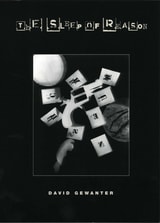
The Sleep of Reason
David Gewanter
University of Chicago Press, 2003
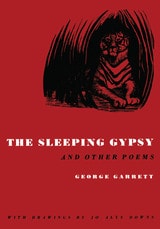
The Sleeping Gypsy, and Other Poems
By George Garrett
University of Texas Press, 1958
The Sleeping Gypsy is an important collection of poems by an American writer who was only twenty-nine when awarded the coveted Prix de Rome in 1958. When George Garrett’s first collected verse, The Reverend Ghost and Other Poems, appeared in Scribner’s Poets of Today: IV, critics hailed the emergence of an authentic new talent of great promise. Babette Deutsch, writing in the New York Herald Tribune, said, “His poems are short, highly charged, and also, as he intended, clear. They move rapidly, without waste, exhibiting a lively skill and vigor in action.… His sensitive perceptivity makes his thoughtful insights more memorable.” Louise Bogan, writing in the New Yorker, said, “It is good to come upon [in Garrett’s work] an ordered brilliance and effects, long neglected, that link us to the ancient tradition of English ‘song.’”
Readers will find in The Sleeping Gypsy all of the qualities that distinguished Garrett’s earlier collection of verse—the pointed, incisive writing, the abhorrence of “pretty” poetic words, the harsh impact of language that is, at the same time, strangely musical. Many will feel that, in this later work, these qualities have been enhanced and that Garrett’s advancing maturity indicates strongly that his early promise will be richly fulfilled.
The Sleeve Waves
Angela Sorby
University of Wisconsin Press, 2014
Outstanding Achievement in Poetry Award, Wisconsin Library Association
Honorable Mention, Edna Meudt Poetry Book Award, Council of Wisconsin Writers
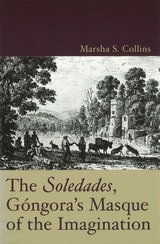
The Soledades, Góngora's Masque of the Imagination
Marsha S. Collins
University of Missouri Press, 2002
Prince of Darkness or Angel of Light? The pastoral masterpiece the Soledades garnered both titles for its author, Luis de Góngora, one of Spain's premier poets. In The Soledades, Góngora's Masque of the Imagination, Marsha S. Collins focuses on the brilliant seventeenth-century Spanish poet's contentious work of art. The Soledades have sparked controversy since they were first circulated at court in 1612-1614 and continue to do so even now, as Góngora has become for some critics the poster child of postmodernism. These perplexing 2,000-plus line pastoral poems garnered endless debates over the value and meaning of the author's enigmatic, challenging poetry and gave rise to his reputation, causing his very name to become an English term for obscurity.
Collins views these controversial poems in a different light, as a literary work that is a product of European court culture. She shows that the Soledades are in essence a court masque, an elaborate theatrical genre that combines a variety of cultural forms and that unfolds in the mind of the reader. Collins maintains that far from serving as an example of "art for art's sake," the Soledades represent Góngora's bid to transform poetic language into a new kind of visionary discourse that allows readers to access secret truths invisible to the average member of the reading public.
Each of Collins's four chapters analyzes a different facet of the Soledades, offering readers varied means of approaching Góngora's great work and helping the audience read the poems with greater understanding and appreciation.
The Soledades, Góngora's Masque of the Imagination demystifies the daunting, hermetic language of the Soledades to make this masterpiece of imperial Spain accessible to a new, and wider, circle of modern readers. Collins's book transports readers to the court of Habsburg Spain, offering a window to court culture—art, music, alchemy, emblems, garden architecture—and revealing the remarkable beauty of one of Spain's greatest literary masterpieces. Interdisciplinary and cross-cultural in approach, this book will appeal to all Hispanists, including those interested in the current "New Baroque" vogue in Hispanic scholarship, as well as specialists in Renaissance and Baroque English and European literature.
The Soluble Hour
Hillary Gravendyk
Omnidawn, 2017
The Song of Eros
Ancient Greek Love PoemsTranslated by Bradley P. Nystrom Illustrated by Claudette Sherbert Little
Southern Illinois University Press, 1991
This collection of new translations of eighty poems provides a pleasant, thought-provoking reminder of love’s vagaries as captured through the wit, charm, and insight of the master poets of antiquity.
All the emotions and experiences associated with love—rejection, infatuation, ecstasy, desperation, loneliness—are rendered accessible to contemporary readers through this lively, modern, yet faithful English translation of works that date from the seventh century B.C.to the sixth century A.D.Illustrations accompany the poetry of Plato, Sappho, Stratto, Meleagros, and others, capturing both the flavor of the age and the theme of the texts.

The Song of Songs
Love Lyrics from the BibleMarcia Falk
Brandeis University Press, 2004
The Sonnets of Rainer Maria Rilke
Rainer Maria Rilke
St. Augustine's Press, 2021
In an expanded collection of Rilke’s sonnets, Rick Anthony Furtak not only makes this lyrical masterpiece accessible to the English reader, but he proves himself a master of sorts as well. His introduction that elaborates on Rilke’s marriage of vision and voice, intention and enigma, haunted companionship and abandonment is a stand-alone marvel for the reader. Furtak’s praised translation of Sonnets to Orpheus (University of Chicago Press, 2008) is surpassed in this much broader collection of verse that also includes the original German text. It is Furtak’s great achievement that Rilke resonates with the contemporary reader, who uncertain and searching wants to believe that the vision of existence can mirror much more than his own consciousness. In his feat of rendering Rilke in English, contextualizing the philosophical meanings of verse, and presenting literary romanticism, Furtak provides a formidable contribution to the vindication of true poetic voice.
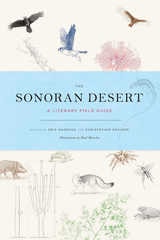
The Sonoran Desert
A Literary Field GuideEdited by Eric Magrane and Christopher Cokinos, Illustrations by Paul Mirocha
University of Arizona Press, 2016
Both literary anthology and hands-on field guide, The Sonoran Desert is a groundbreaking book that melds art and science. It captures the stunning biodiversity of the world’s most verdant desert through words and images. More than fifty poets and writers—including Christopher Cokinos, Alison Hawthorne Deming, Ken Lamberton, Eric Magrane, Jane Miller, Gary Paul Nabhan, Alberto Ríos, Ofelia Zepeda, and many others—have composed responses to key species of this striking desert. Each creative contribution is joined by an illustration by award-winning artist Paul Mirocha and scientific information about the creature or plant authored by the book’s editors.
From the saguaro to the mountain lion, from the black-tailed jackrabbit to the mesquite, the species represented here have evoked compelling and creative responses from each contributor. Just as writers such as Edward Abbey and Ellen Meloy have memorialized the desert, this collection is sure to become a new classic, offering up the next generation of voices of this special and beautiful place, the Sonoran Desert.
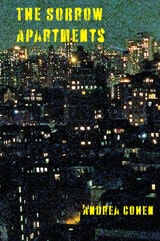
The Sorrow Apartments
Andrea Cohen
Four Way Books, 2024
What would I
think, coming
up after
my world
had evaporated?
I'd wish
I were water.
The Sorrow Apartments is home to spare and uncanny lyricism––as well as leaping narratives of mystery and loss and wonder. These poems race at once into the past and the possible. And yet, instead of holding things up to the light for a better view, Cohen lifts them to the dark and light, as in "Acapulco," where an unlikely companion points out, “as men tend to, / the stars comprising Orion’s belt — / as if it were the lustrous sparks and not / the leveling dark that connects us.” For a poet who has been called unfashionable from the get-go, unfashionable never looked so good.
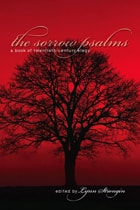
The Sorrow Psalms
A Book of Twentieth-Century ElegyLynn Strongin
University of Iowa Press, 2006
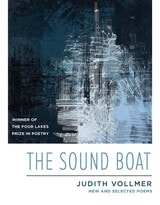
The Sound Boat
New and Selected PoemsJudith Vollmer
University of Wisconsin Press, 2022
Featuring twenty-one new and fifty-seven selected poems from her earlier volumes—The Apollonia Poems, The Water Books, Reactor, The Door Open to the Fire, and Level Green—The Sound Boat reveals Vollmer’s devotion to examining place and space to uncover poetry that touches emotions related to wandering physical and emotional realms: some familial and deeply personal, some unknowable.
down in the street, between the turtle fountain and the iron head
the party shouts and sings, sweats and snakes, swells into a throb
or momentum of sound.
—Excerpt from “The Sound Boat”
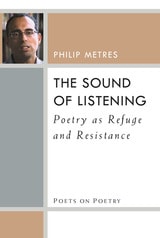
The Sound of Listening
Poetry as Refuge and ResistancePhilip Metres
University of Michigan Press, 2018
Philip Metres stakes a claim for the cultural work that poems can perform—from providing refuge to embodying resistance, from recovering silenced voices to building a more just world, in communities of solitude and solidarity. Gathering a decade of his writing on poetry, he widens our sense of poetry as a way of being in the world, proposing that poems can offer a permeability to marginalized voices and a shelter from the imperial noise and despair that can silence us. The Sound of Listening ranges between expansive surveys of the poetry of 9/11, Arab American poetry, documentary poetry, landscape poetry, installation poetry, and peace poetry; personal explorations of poets such as Adrienne Rich, Khalil Gibran, Lev Rubinstein, and Arseny Tarkovsky; and intimate dialogues with Randa Jarrar, Fady Joudah, and Micah Cavaleri, that illuminate Metres’s practice of listening in his 2015 work, Sand Opera.
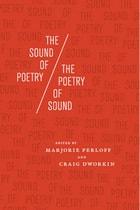
The Sound of Poetry / The Poetry of Sound
Edited by Marjorie Perloff and Craig Dworkin
University of Chicago Press, 2009
Sound—one of the central elements of poetry—finds itself all but ignored in the current discourse on lyric forms. The essays collected here by Marjorie Perloff and Craig Dworkinbreak that critical silence to readdress some of thefundamental connections between poetry and sound—connections that go far beyond traditional metrical studies.
Ranging from medieval Latin lyrics to a cyborg opera, sixteenth-century France to twentieth-century Brazil, romantic ballads to the contemporary avant-garde, the contributors to The Sound of Poetry/The Poetry of Sound explore such subjects as the translatability of lyric sound, the historical and cultural roles of rhyme,the role of sound repetition in novelistic prose, theconnections between “sound poetry” and music, between the visual and the auditory, the role of the body in performance, and the impact of recording technologies on the lyric voice. Along the way, the essaystake on the “ensemble discords” of Maurice Scève’s Délie, Ezra Pound’s use of “Chinese whispers,” the alchemical theology of Hugo Ball’s Dada performances, Jean Cocteau’s modernist radiophonics, and an intercultural account of the poetry reading as a kind of dubbing.
A genuinely comparatist study, The Sound of Poetry/The Poetry of Sound is designed to challenge current preconceptions about what Susan Howe has called “articulations of sound forms in time” as they have transformed the expanded poetic field of the twenty-first century.
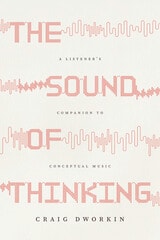
The Sound of Thinking
A Listener's Companion to Conceptual MusicCraig Dworkin
University of Chicago Press, 2026
An artist draws two octaves of pitches randomly from a hat, just enough to set each syllable of the dictionary definition of imprimer (to score, to print). Trawling the internet for cute videos of cats “playing” piano, an artist splices together a complete, note-perfect performance of Arnold Schoenberg’s Opus 11. Half a century after the release of Miles Davis’s album Kind of Blue, a jazz quintet spends months of focused practice to reproduce the original exactly. These performances share a common denominator: absolute fidelity to the outcome of a system. From Marcel Duchamp to Yoko Ono, Steve Reich to Sun Ra, The Sound of Thinking brings together a diverse array of musical or sonic works that are algorithmic, automatic, permutational, procedural, or otherwise structured in contrast to the creative expressivity typically associated with artistic production.
In twenty-six short essays, each keyed to a term that begins with a different letter of the alphabet, Dworkin discusses work composed or performed according to a predetermined rule, transforming artistic creation into a system running its course. The pieces detailed here, drawn from more than a century of musical experimentation, offer a fresh perspective on the history of innovative music by decoupling music from expression and by shunting creativity from the level of organizing sounds to the level of devising a system that can do the organizing. Not only does this book spotlight the critical role of music in twentieth-century conceptual art, but it also identifies previously overlooked links among diverse artists and movements.
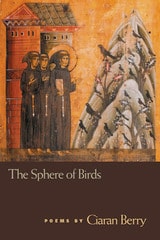
The Sphere of Birds
Ciaran Berry
Southern Illinois University Press, 2008
The Sphere of Birds, Ciaran Berry’s debut collection of poems, effortlessly moves back and forth between here and there, then and now, the personal and the historic, the modern and the mythic.
Berry imagines the transatlantic journeys of John James Audubonand reveals his own heartfelt experience moving from his first house. The poems take as their subject such varied experiences as an eye exam in Manhattan and chasing rabbits around a beach in Donegal. These poems have a strong sense of place, whether it’s the imagined space of Coney Island in 1903 or the playground of Berry’s childhood convent school.
The Sphere of Birds delights in forging unlikely links, earthed in the stuff of paintings and in the lives of poets, artists, and the occasional saint. Drawing on the poet’s life in Ireland and the United States, the poems explore the joy and grief found in those places.
Moving from rural Ireland to the heart of New York City, from local detail to historical specifics, and from the experienced occasion to the imagined or interpreted event, Berry’s poems effectively master shifts in both time and space. Berry delves into the lives of artists, obscure historical figures, and other poets for inspiration. He embraces elements of both Irish and American poetry, paying tribute as much to the spirit of Larry Levis as to that of W. B. Yeats.
Accessible, immediate, and visceral, The Sphere of Birds offers a musicality that is increasingly rare in contemporary poetry.
The Spiral of Memory
InterviewsJoy Harjo
University of Michigan Press, 1995
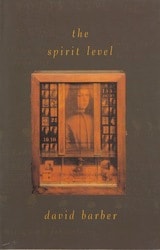
The Spirit Level
David Barber
Northwestern University Press, 1995
The Spirit Level is the first collection by an exciting new voice in American poetry. Representing the world as a place of feverish energies, David Barber creates a virtuoso tension between playful, sometimes flamboyant, diction, and the seriousness of his concerns. Balance and grace, but also wit and verbal energy, and a deft hand at shaping the poem, make Barber's first book a superb debut.
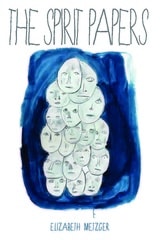
The Spirit Papers
Elizabeth Metzger
University of Massachusetts Press, 2017
All right, I'm a little afraid.
It's the zeroing in of All That Could
Possibly Go Wrong vs. Myself.
—"Small Talk with an Imagined Son"
The Spirit Papers explores the magical thinking that precedes impending and inevitable loss, the taboo fantasia that occurs in the crippling timelessness of anticipation. Grieving for the future with a spiritual clarity characterized by ritual and doubt, Metzger's lines are chameleons to every feeling. In the interminable window of expecting the unexpected, the poems ultimately materialize the very events they wish to ward off. The Spirit Papers chases mortality with equal parts disbelief and love.
The Split World of Gerard Manley Hopkins
Dennis Sobolev
Catholic University of America Press, 2011
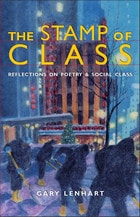
The Stamp of Class
Reflections on Poetry and Social ClassGary Lenhart
University of Michigan Press, 2005
-Lorenzo Thomas
The Stamp of Class explores the nature of reading poetry in the context of class and its themes and sheds new light on how this important yet little-heralded subject affects the poet's life and work.
While numerous works have taken up the question of race and gender as they relate to literary creation, this is the first book of its kind to probe the interplay between class and American poetry. Author Gary Lenhart considers poetry and class across a wide variety of time periods and poetic trends and reflects on a range of influential poets from the eighteenth to the twenty-first centuries.
The essays in The Stamp of Class deal with the question of class as reflected in the works of Tracie Morris, Tillie Olsen, Melvin Tolson, William Carlos Williams, Walt Whitman, and others. The work is rooted in the author's own experiences as a working-class poet and teacher and is the result of more than a decade of exploration.
Poet and scholar Gary Lenhart is Lecturer in English at Dartmouth College in Hanover, New Hampshire. His most recent books of poetry are Father and Son Night, Light Heart, and One at a Time. His essays and reviews have appeared in numerous magazines and journals, including the American Poetry Review, American Book Review, and Exquisite Corpse.
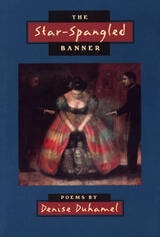
The Star-Spangled Banner
Denise Duhamel
Southern Illinois University Press, 1999
The Star-Spangled Banner, Denise Duhamel's sixth book of poems, is about falling in love, American-style, with someone who is not American.
In the title poem, a small American girl mishears the first line of "The Star-Spangled Banner" as "José, can you see?", which leads her to imagine a foreign lover of an American woman dressed in a star-spangled gown. The misunderstandings caused by language recur throughout the book: contemplating what "yes" means in different cultures; watching Nickelodeon's "Nick at Nite" with a husband who grew up in the Philippines and never saw The Patty Duke Show; misreading another poet's title "The Difference Between Pepsi and Coke" as "The Difference Between Pepsi and Pope" and concluding that "Pepsi is all for premarital sex. / The Pope won't stain your teeth." Misunderstandings also abound as characters mingle with others from different classes. In "Cockroaches," a father-in-law refers to budget-minded American college students backpacking in Europe as cockroaches, not realizing his daughter-in-law was once, not so long ago, such a student/roach herself.
With welcome levity and refreshing irreverence, The Star-Spangled Banner addresses issues of ethnicity, class, and gender in America.
The Stars That Fell
PoemsGary Short
University of Nevada Press, 2026
Through his poems, Gary Short illuminates the humanity of the people of Nevada and the American West, specifically the rural communities that often get left out of the narrative. Focusing on family and the relationships between characters, he extends feelings of hope, solace, forgiveness, and even wisdom throughout this collection.
The Stone Circle Poems
The Collected Poems of Terry WootenTerry Wooten
Parkhurst Brothers, Inc., 2015

The Storm & Other Poems
Eugenio Montale
Oberlin College Press, 1978
The Story They Told Us of Light
PoemsRodney Jones
University of Alabama Press, 1980
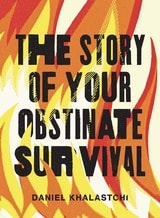
The Story of Your Obstinate Survival
Daniel Khalastchi
University of Wisconsin Press, 2024
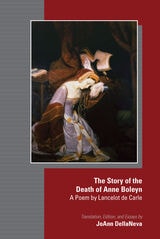
The Story of the Death of Anne Boleyn
A Poem by Lancelot de CarleEdited, Translated, and with Essays by JoAnn DellaNeva
Arizona Center for Medieval and Renaissance Studies, 2021
The Story of the Death of Anne Boleyn is a critical edition and translation of a long narrative poem written by the secretary to the French ambassador in London within two weeks of Anne Boleyn’s execution. It was intended as a diplomatic dispatch, relating the astonishing news of the queen’s demise (along with that of five alleged lovers). Uniquely among diplomatic correspondence, this dispatch was written in verse form. It thus straddles the domains of literature and history, of chronicle and fiction.
The base text for this edition is a previously unstudied manuscript housed at the British Library. Variants are given from all other known manuscripts found in Europe, including several key verses that were previously unpublished and that shed new light on the interpretation of the poem. The book features a sense-for-sense translation into modern English in free verse form, along with extensive explanatory notes. It also provides a study focusing on the historical background to the poem, an essay on the poet and the reception of his work, and a literary analysis of the poem.
The Straight Line
Writing on Poetry and PoetsRon Padgett
University of Michigan Press, 2000
But along with the playful wit comes Padgett's serious fascination with how words work. Essays discuss such subjects as the otherness of languages; French poets and their relationship to Cubist painters; an afternoon with the poet Edwin Denby; a tribute to Ted Berrigan; twentieth-century modernism; and suggestions for using the computer to write poetry.
The book concludes with pieces that Padgett has written during his thirty years as a teacher of poetry. Essays explore the unexpected relationships between poetry and dance; the practical value of using "gimmicks" to inspire poetry writing; and some radical and entertaining ideas for innovative ways to read creatively.
Ron Padgett is Publications Director, Teachers and Writers Collaborative. His books include Albanian Diary, Creative Reading, and Old Faithful: 18 Writers Present Their Favorite Writing Assignments.
The Stranger's Welcome
Oral Theory and the Aesthetics of the Homeric Hospitality SceneSteve Reece
University of Michigan Press, 1993

The Strings Are Lightning and Hold You In
Chee Brossy
Tupelo Press, 2022
The Subsequent Blues
Gary Copeland Lilley
Four Way Books, 2004
The Substance of Shadow
A Darkening Trope in Poetic HistoryJohn Hollander
University of Chicago Press, 2016
Shadow shows itself here in myriad literary identities, revealing its force as a way of seeing and a form of knowing, as material for fable and parable. Taking up a vast range of texts—from the Bible, Dante, Shakespeare, and Milton to Poe, Dickinson, Eliot, and Stevens—Hollander describes how metaphors of shadow influence our ideas of dreaming, desire, doubt, and death. These shadows of poetry and prose fiction point to unknown, often fearful domains of human experience, showing us concealed shapes of truth and possibility. Crucially, Hollander explores how shadows in poetic history become things with a strange substance and life of their own: they acquire the power to console, haunt, stalk, wander, threaten, command, and destroy. Shadow speaks, even sings, revealing to us the lost as much as the hidden self.
An extraordinary blend of literary analysis and speculative thought, Hollander’s account of the substance of shadow lays bare the substance of poetry itself.
The Sumac Reader
Joseph Bednarik
Michigan State University Press, 1997
Sumac was a Michigan-based literary journal founded in 1968 by poets Dan Gerber and Jim Harrison; novelist Thomas McGuane joined the editorial staff in 1969 as the fiction editor. When the inaugural issue appeared, more than 250 American literary magazines were listed in The Directory of Magazines and Small Presses; within three years, Sumac rose to the first tier of these publications and was nationally recognized for its eclecticism and editorial quality. The Library Journal called it "one of the best little magazines now being published."
Remaining true to Sumac's energetic catholicity, The Sumac Reader is an anthology that contains poetry, experimental fiction, and works in translation that originally appeared in the magazine. Contributors include four Pulitzer Prize-winning poets—Galway Kinnell, Charles Simic, Louis Simpson, and Gary Snyder—along with Paul Blackburn, Hayden Carruth, Richard Hugo, Denise Levertov, Ezra Pound, Adrienne Rich, and Diane Wakoski. There are early poems by Charles Simic, James Tate, and Michael Waters, as well as a complete section from Galaway Kinnell's classic, The Book of Nightmares. Fiction is represented in Sumac by a first-published Jim Heynen story "Coyote" and early prose by William Kittredge. Translations from Chinese, French, Spanish, and Russian bring to American readers the work of masters such as Tu Fu, Lorca, and Li Po. A variety of poetic forms are represented, including ghazals, narratives, suites, found poems, and the freest of free verse.
The Surface of the Lit World
PoemsShane Seely
Ohio University Press, 2015
In The Surface of the Lit World, Shane Seely draws on a wide range of sources—from personal memory to biblical narrative—to explore the stories that we tell ourselves about ourselves, the ways in which we make meaning of our lives. Seely delves into the ways in which family and environment shape us. Poems ranging from terse, meditative lyrics to more direct narratives examine the relationship between what lies visible on the lit surface and what lies just beneath.
In addition to first-person autobiographical narratives, there are ekphrastic poems; poems that explore narratives from mythology and religion; and poems based on news reports, radio stories, and audio recordings. Regardless of the approach, the central questions are the same: How do we sense the world we live in? What do the institutions to which we turn for meaning—family, religion, art, literature, science—offer us, and in what ways do they fail us? The answers may depend on where we dare to look.
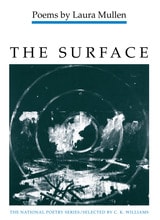
The Surface
POEMSLaura Mullen
University of Illinois Press, 1991
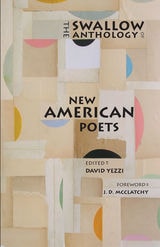
The Swallow Anthology of New American Poets
David Yezzi
Ohio University Press, 2009
Groundbreaking anthologies of this kind come along once in a generation and, in time, define that generation. The Swallow Anthology of New American Poets identifies a group of poets who have recently begun to make an important mark on contemporary poetry, and their accomplishment and influence will only grow with time. The poets gathered here do not constitute a school or movement; rather they are a group of unique artists working at the top of their craft. As editor David Yezzi writes in his introduction, “Here is a group of writers who have, perhaps for the first time since the modernist revolution of the early twentieth century, returned to a happy détente between warring camps. This, I think, is a new—at least in our age—kind of poet, who, dissatisfied with the climate of extremes, has found a balance between innovation and received form, perceiving the terror beneath the classical and the unities girding romanticism. This new unified sensibility is no watered-down admixture, no pragmatic compromise worked out in departments of creative writing, but, rather, the vital spirit behind some of the most accomplished poetry being written by America’s new poets.”
Poets include: Craig Arnold, David Barber, Rick Barot, Priscilla Becker, Geoffrey Brock, Daniel Brown, Peter Campion, Bill Coyle, Morri Creech, Erica Dawson, Ben Downing, Andrew Feld, John Foy, Jason Gray, George Green, Joseph Harrison, Ernest Hilbert, Adam Kirsch, Joanie Mackowski, Eric McHenry, Molly McQuade, Joshua Mehigan, Wilmer Mills, Joe Osterhaus, J. Allyn Rosser, A. E. Stallings, Pimone Triplett, Catherine Tufariello, Deborah Warren, Rachel Wetzsteon, Greg Williamson, Christian Wiman, Mark Wunderlich, David Yezzi, and C. Dale Young.

The Tales Of Prince Samuttakote
A Buddhist Epic from ThailandThomas John Hudak
Ohio University Press, 1993
Translated with enchanting poetic imagery, the poem relates the adventures of Prince Samuttakote and his princess as they tour the heavenly realms with a magic sword. The two are separated after the sword is stolen but are reunited after further adventures. Upon ascending the throne, they teach the moral code of precepts and how all life is affected by it. The poem is important for its depiction of the amusements and daily life of seventeenth-century Thailand and for its use of classic Thai poetic devices.
The Taste for Nothingness
A Study of Virtus and Related Themes in Lucan's Bellum CivileR. Sklenar
University of Michigan Press, 2003
The Taste for Nothingness traces Lucan's own analytical method by showing how virtus and related concepts operate--or rather, fail to operate--in Lucan's appropriations and distortions of the traditional epic-battle narrative; in the philosophical commitment of Cato the Younger; and in the personalities of the two antagonists, Pompey and Caesar. Much recent scholarship has reached a consensus that Lucan's literary method is mimetic, that his belief in a chaotic cosmos produces a poetics of chaos. While accepting many of the recent findings about Lucan's view of language and the universe, The Taste for Nothingness also allows an even bolder Lucan to emerge: a committed aesthete who regards art as the only realm in which order is possible.
Robert Sklenár is Visiting Assistant Professor of Classical Studies, Tulane University.
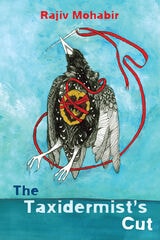
The Taxidermist's Cut
Rajiv Mohabir
Four Way Books, 2016

The Tenth Muse
Victorian Philology and the Genesis of the Poetic Language of Gerard Manley HopkinsBy Cary H. Plotkin
Southern Illinois University Press, 1989
With authority and sensitivity Plotkin traces the close relationship between Hopkins’s poetry and the theories of language suggested in his Journals and expounded by Victorian philologists such as Max Müller and George Marsh.
Plotkin seeks to determine what changed Hopkins’s perception of language between the writing of such early poems as "The Habit of Perfection" and "Nondum" (1866) and his creation of The Wreck of the Deutschland (1875–76). Did the language of the ode, and of Hopkins’s mature poetry generally, arise as spontaneously as it appears to have done, or does it have a traceable genesis in the ways in which language as a whole was conceived and studied in mid-century England? In answer, Plotkin fixes the development of Hopkins’s singular poetic language in the philological context of his time.
If one is to understand Hopkins’s writings and poetic language in the context in which they developed rather than in the terms of a present-day theory of history or textuality, then that movement in all of its complexity must be considered. Hopkins "translates" into the language of poetry patterns and categories common to Victorian language study.
The The Complete Works of Robert Browning, Volume IV
Browning, Robert
Ohio University Press, 1973