Results by title
4155 books match the query 'State & Local' and 925 start with t
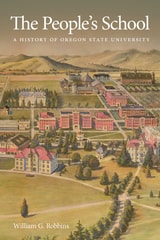
The People's School
A History of Oregon State UniversityWilliam Robbins
Oregon State University Press, 2017
This contextual approach is not to suggest that university presidents are unimportant. Benjamin Arnold (1872-1892), appointed president of Corvallis College by the Methodist Episcopal Church, South, served well beyond the date (1885) when the State of Oregon assumed control of the agricultural college. Robbins uses central administration records and grassroots sources—local and state newspapers, student publications (The Barometer, The Beaver), and multiple and wide-ranging materials published in the university’s digitized ScholarsArchive@OSU, a source for the scholarly work of faculty, students, and materials related to the institution’s mission and research activities. Other voices—extracurricular developments, local and state politics, campus reactions to national crises—provide intriguing and striking addendums to the university’s rich history.
The Peoples Of Las Vegas
One City, Many FacesJerry L Simich
University of Nevada Press, 2005
Beneath the glitzy surface of the resorts and the seemingly cookie-cutter suburban sprawl of Las Vegas lies a vibrant and diverse ethnic life. People of varied origins make up the population of nearly two million and yet, until now, little mention of the city has been made in studies and discussion of ethnicity or immigration. The Peoples of Las Vegas: One City, Many Faces fills this void by presenting the work of seventeen scholars of history, political science, sociology, anthropology, law, urban studies, cultural studies, literature, social work, and ethnic studies to provide profiles of thirteen of the city’s many ethnic groups. The book’s introduction and opening chapters explore the historical and demographic context of these groups, as well as analyze the economic and social conditions that make Las Vegas so attractive to recent immigrants. Each group is the subject of the subsequent chapters, outlining migration motivations and processes, economic pursuits, cultural institutions and means of transmitting culture, involvement in the broader community, ties to homelands, and recent demographic trends.
The People’s Party in Texas
A Study in Third Party PoliticsBy Roscoe Martin
University of Texas Press, 1970
Roscoe Martin's study of the People's Party in Texas was a pioneering analysis of the state populist movements and long considered one of the best. The People's Party was an influential force in United States politics in the last decade of the nineteenth century, especially in the western and southern states. Martin's study of third-party politics in Texas, as well as being an important work in Texas history, provides much insight into the national radical movement of the 1890s.
The People’s Plaza
Sixty-Two Days of Nonviolent ResistanceJustin Jones
Vanderbilt University Press, 2022
Central to the occupation was Justin Jones, a student of Fisk University and Vanderbilt Divinity School whose place at the forefront of the protests brought him and the occupation to the attention of the Tennessee state troopers, state and US senators, and Governor Bill Lee. The result was two months of solidarity in the face of rampant abuse, community in the face of state-sponsored terror, and standoff after standoff at the doorsteps of the people's house with those who claimed to represent them. In this, his first book, Jones describes those two revolutionary months of nonviolent resistance against a police state that sought to dehumanize its citizens.
The People's Plaza is a rumination on the abuse of power, and a vision of a more just, equitable, anti-racist Nashville—a vision that kept Jones and those with him posted on the plaza through intense heat, unprovoked arrests, vandalism, theft, and violent suppression. It is a first-person account of hope, a statement of intent, and a blueprint for nonviolent resistance in the American South and elsewhere.
The People’s Plaza
Sixty-Two Days of Nonviolent ResistanceJustin Jones
Vanderbilt University Press, 2022
Central to the occupation was Justin Jones, a student of Fisk University and Vanderbilt Divinity School whose place at the forefront of the protests brought him and the occupation to the attention of the Tennessee state troopers, state and US senators, and Governor Bill Lee. The result was two months of solidarity in the face of rampant abuse, community in the face of state-sponsored terror, and standoff after standoff at the doorsteps of the people's house with those who claimed to represent them. In this, his first book, Jones describes those two revolutionary months of nonviolent resistance against a police state that sought to dehumanize its citizens.
The People's Plaza is a rumination on the abuse of power, and a vision of a more just, equitable, anti-racist Nashville—a vision that kept Jones and those with him posted on the plaza through intense heat, unprovoked arrests, vandalism, theft, and violent suppression. It is a first-person account of hope, a statement of intent, and a blueprint for nonviolent resistance in the American South and elsewhere.
The Pequot War
Alfred A. Cave
University of Massachusetts Press, 1996

The Perfect Square
A History of Rittenhouse SquareNancy M. Heinzen
Temple University Press, 2009
One of the five squares William Penn established when he founded the city, the southwest-situated Rittenhouse Square has transformed from a marshy plot surrounded by brickyards and workers’ shanties into the epicenter of Philadelphia high society. A keystone of center city Philadelphia, it was once home to great dynasties, elegant mansions, and grand dames of the Victorian era. Today it is lined with million-dollar high-rise condominiums, where nouveau-riche entrepreneurs and descendants of ethnic immigrants live side-by-side.
Heinzen lovingly chronicles this urban space’s development and growth, illustrating that not only is Rittenhouse Square unique, but so is the combination of human events and relationships that have created and sustained it.
Painstakingly researched and generously illustrated with black-and-white photos from public archives, The Perfect Square will appeal to lay readers interested in history, to professional historians and urban planners, and to the thousands of new residents who have settled on or near Rittenhouse Square since the dawn of the 21st century.
The Petroglyphs and Pictographs of Missouri
Carol Diaz-Granados
University of Alabama Press, 1999
This comprehensive guide to the rock art of Missouri presents major design motifs and links those images to Native American beliefs.
Images on rocks depicting birds, serpents, deer, and other designs are haunting reminders of prehistoric peoples. This book documents Missouri's rich array of petroglyphs and pictographs, analyzing the many aspects of these rock carvings and paintings to show how such representations of ritual activities can enhance our understanding of Native American culture.
Missouri is a particularly important site for rock art because it straddles the Plains, the Ozarks, and the Southeast. Carol Diaz-Granados and James Duncan have established a model for analyzing this rock art as archaeological data and have mapped the patterning of fifty-eight major motifs across the state. Of particular importance is their analysis of motifs from Mississippi River Valley sites, including Cahokia.
The authors include interpretive discussions on iconography and ideology, drawing on years of research in the ethnographic records and literature of Native Americans linguistically related to earlier peoples. Their distribution maps show how motifs provide clues to patterns of movement among prehistoric peoples and to the range of belief systems. Rock art is an aspect of the archaeological record that has received little attention, and the art is particularly subject to the ravages of time. By documenting these fragile images, this book makes a major contribution to rock art research in North America.
The Philadelphia Irish
Nation, Culture, and the Rise of a Gaelic Public SphereMichael L. Mullan
Rutgers University Press, 2021
Using Jurgen Habermas’s concept of a public sphere, the author reveals how the Irish constructed a plebian “counter” public of Gaelic meaning through various mechanisms of communication, the ethnic press, the meeting rooms of Irish societies, the consumption of circulating pamphlets, oratory, songs, ballads, poems, and conversation.
Settled in working class neighborhoods of vast spatial separation in an industrial city, the Irish resisted a parochialism identified with neighborhood and instead extended themselves to construct a vibrant, culturally engaged network of Irish rebirth in Philadelphia, a public of Gaelic meaning.
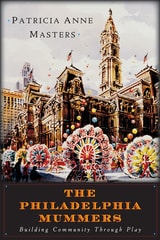
The Philadelphia Mummers
Building Community Through PlayPatricia Anne Masters
Temple University Press, 2007
Every New Year's Day since 1901, the Philadelphia Mummers have presented a spectacular show of shows that raucously snakes and shimmies its way through city streets. The Mummers Parade features music, dance, comedy, and mime, along with dazzling costumes and floats. Although the lavish event is now televised to a wide audience, it is still rooted in the same neighborhoods where it began.
This book explores the community created and annually reaffirmed by the Philadelphia Mummers. The author spent more than five years with the Mummers, observing their lives and rituals as she took part in their preparations and parades. Writing with the fascination of a sociologist and the excitement of a participant, Masters examines the Mummers from their beginnings. Through the prism of their century-long history, we can see how communities retain their identities and how they are affected by larger cultural trends.
The Philadelphia Reader
Robert Huber
Temple University Press, 2006
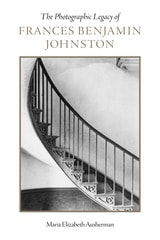
The Photographic Legacy of Frances Benjamin Johnston
Maria Elizabeth Ausherman
University of Alabama Press, 2022
An illustrated account of the life and work of the pioneering photographer
The Photographic Legacy of Frances Benjamin Johnston (1864–1952) draws on original papers and photographs from the Library of Congress to document the extraordinary life and nearly seventy-year career of this pioneering photographer. Maria Elizabeth Ausherman illuminates the early origins of Johnston’s style and vision, and her attempts to change society through her art. One of the first women to work in an emerging field dominated by men, Johnston achieved acclaim as an accomplished photographer and photojournalist.
As the official White House photographer for five administrations, she was instrumental in defining the medium and inspiring women to train in and appreciate photography. But it is her monumental nine-state survey of southern American architecture that stands as her most significant contribution to the history and development of photography both as art and as documentary. Through her photography, Johnston showed reverence for the beautiful historic buildings she appreciated and also helped shape architectural and photographic preservation in the United States.
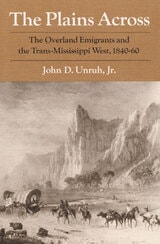
The Plains Across
The Overland Emigrants and the Trans-Mississippi West, 1840-60John D. Unruh, Jr.
University of Illinois Press, 1979
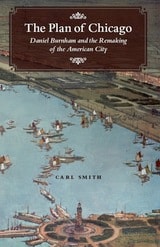
The Plan of Chicago
Daniel Burnham and the Remaking of the American CityCarl Smith
University of Chicago Press, 2006
Arguably the most influential document in the history of urban planning, Daniel Burnham’s 1909 Plan of Chicago, coauthored by Edward Bennett and produced in collaboration with the Commercial Club of Chicago, proposed many of the city’s most distinctive features, including its lakefront parks and roadways, the Magnificent Mile, and Navy Pier. Carl Smith’s fascinating history reveals the Plan’s central role in shaping the ways people envision the cityscape and urban life itself.
Smith’s concise and accessible narrative begins with a survey of Chicago’s stunning rise from a tiny frontier settlement to the nation’s second-largest city. He then offers an illuminating exploration of the Plan’s creation and reveals how it embodies the renowned architect’s belief that cities can and must be remade for the better. The Plan defined the City Beautiful movement and was the first comprehensive attempt to reimagine a major American city. Smith points out the ways the Plan continues to influence debates, even a century after its publication, about how to create a vibrant and habitable urban environment.
Richly illustrated and incisively written, his insightful book will be indispensable to our understanding of Chicago, Daniel Burnham, and the emergence of the modern city.
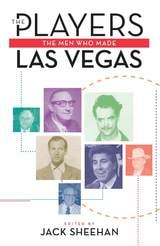
The Players
The Men Who Made Las VegasJack Sheehan
University of Nevada Press, 1997
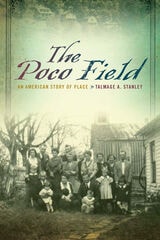
The Poco Field
An American Story of PlaceTalmage A. Stanley
University of Illinois Press, 2012
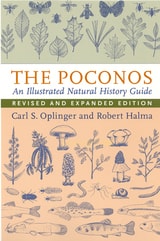
The Poconos
An Illustrated Natural History GuideCarl S. Oplinger and Robert Halma
Rutgers University Press, 2006
The Poconos, a rich plateau nestled in northeastern Pennsylvania between the Delaware River and the Moosic Mountains, encompass a variety of alluring features. The perfect reference for amateur naturalists, outdoor enthusiasts, tourists, and others who wish to explore the area, this classic guide clearly explains the unique geographic characteristics, animal habits and habitats, climate, geology, and vegetation of the area.
The authors trace the region from its beginnings millions of years ago as part of a shallow sea, through the reshaping forces of great glaciers, to today’s roadways and turnpikes. This revised and expanded edition also includes brief profiles of individuals who played significant roles in the preservation or understanding of the area’s ecology. Chapters provide a general survey of the area, including its history and places to be explored and observed, information on forest types, wildlife, and aquatic habitats, updated facts and figures on animal populations, as well as new details on invasive species.
Throughout the book, numerous boxes direct readers to observatory points for specific birds, ecosystems, vegetation types, and geological features, while maps, tables, original pen-and-ink illustrations, and a select list of field guides and other references enhance the book’s appeal. An indispensable companion for visitors as well as residents, The Poconos is a must-read for everyone who wants to discover or better understand the beauty and natural history of this unique region.
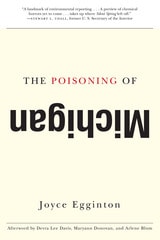
The Poisoning of Michigan
Joyce Egginton
Michigan State University Press, 1980
The highly toxic PBB poisoning of Michigan remains the most widespread chemical contamination known in U.S. history. The Poisoning of Michigan is an investigative journalist's account of the contamination of Michigan's dairy cattle with the highly toxic chemical PBB (polybrominated biphenyl) in 1973. A near relation of PCB, this now-banned substance, designed as a fire retardant, was mistaken for a nutritional supplement at a chemical plant. It ended up in cattle feed that was distributed to farms throughout the state. By the time the error was discovered, virtually all nine million residents of Michigan had been ingesting contaminated milk and meat for almost a year.
A new introduction by the author and an afterword by three distinguished environmental scientists explain how the legacy of Michigan's poisoning lives on—and how equally toxic substitutes for PBB still invade our homes and lives. This new edition of Egginton's environmental classic—first published in 1980 and long out of print—tells how the tragedy affected both the farm community and the wider populace, and how federal and state authorities failed to respond. "We were mired in a swamp of ignorance," one state official admitted.
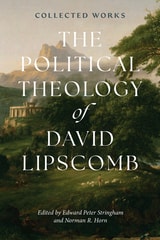
The Political Theology of David Lipscomb
Collected WorksDavid Lipscomb; Edited by Edward Peter Stringham and Norman R. Horn
Vanderbilt University Press, 2026
Few figures shaped the Stone-Campbell Restoration movement more than David Lipscomb, whose influence on its theology and practice rivaled that of any of his contemporaries. Yet the writings in this volume have long been unavailable to general readers, and most people are no longer familiar with his ideas, including his belief that Christians should not participate in secular politics.
In the early decades of the Stone-Campbell movement, adherents argued their positions in person and in print, and the direction of the movement was decided by these wide-ranging theological discussions. Dissent was built into the discourse and considered a part of the spiritual well-being of the movement. Followers were expected to read and have opinions on all these discussions. And now most of these books and articles have all but vanished from circulation—not just Lipscomb’s but many of the nineteenth-century Campbellite theologians’ writings.
This volume comprises three of Lipscomb’s most important works regarding Christians’ relationship to civil government, along with an introduction by Edward Peter Stringham and Norman R. Horn that explains how Lipscomb’s political writings receded from view within the movement he once shaped.
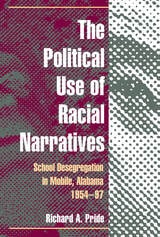
The Political Use of Racial Narratives
School Desegregation in Mobile, Alabama, 1954-97Richard A. Pride
University of Illinois Press, 2002
Exploring who benefits and who pays when different narratives are accepted as true, Pride offers a step-by-step account of how Mobile's culture changed each time a new and more forceful narrative was used to justify inequality. More than a retelling of Mobile's story of desegregation, The Political Use of Racial Narratives promotes the value of rhetorical and narrative analysis in the social sciences and history.
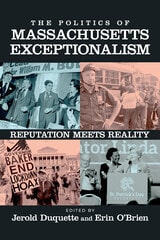
The Politics of Massachusetts Exceptionalism
Reputation Meets RealityEdited by Jerold Duquette and Erin O'Brien
University of Massachusetts Press, 2022
Are claims of Massachusetts’s special and instructive place in American history and politics justified? Alternately described as a “city upon a hill” and “an organized system of hatreds,” Massachusetts politics has indisputably exerted an outsized pull on the national stage. The Commonwealth’s leaders often argue for the state’s distinct position within the union, citing its proud abolitionist history and its status as a policy leader on health care, gay marriage, and transgender rights, not to mention its fertile soil for budding national politicians. Detractors point to the state’s busing crisis, sky high levels of economic inequality, and mixed support for undocumented immigrants.
The Politics of Massachusetts Exceptionalism tackles these tensions, offering a collection of essays from public policy experts that address the state’s noteworthy contributions to the nation’s political history. This is a much-needed volume for Massachusetts policymakers, journalists, and community leaders, as well as those learning about political power at the state level, inside and outside of the classroom. Contributors include the editors as well as Maurice T. Cunningham, Lawrence Friedman, Shannon Jenkins, Luis F. Jiménez, and Peter Ubertaccio.
The Politics of Place
A History of Zoning in ChicagoJoseph P. Schwieterman and Dana M. Caspall
Southern Illinois University Press, 2006
The Politics of Staying Put
Condo Conversion and Tenant Right-to-Buy in Washington, DCCarolyn Gallaher
Temple University Press, 2016
When cities gentrify, it can be hard for working-class and low-income residents to stay put. Rising rents and property taxes make buildings unaffordable, or landlords may sell buildings to investors interested in redeveloping them into luxury condos.
In her engaging study The Politics of Staying Put, Carolyn Gallaher focuses on a formal, city-sponsored initiative—The Tenant Opportunity to Purchase Act (TOPA)—that helps people keep their homes. This law, unique to the District of Columbia, allows tenants in apartment buildings contracted for sale the right to refuse the sale and purchase the building instead. In the hands of tenants, a process that would usually hurt them—conversion to a condominium or cooperative—can instead help them.
Taking a broad, city-wide assessment of TOPA, Gallaher follows seven buildings through the program’s process. She measures the law’s level of success and its constraints. Her findingshave relevance for debates in urban affairs about condo conversion, urban local autonomy, and displacement.
The Politics of Trust
Reubin Askew and Florida in the 1970sGordon E. Harvey
University of Alabama Press, 2015
Askew rose to power on a wave of “New South” leadership that hoped to advance the Democratic Party beyond the intransigent torpor of southern politics since the Civil War. He hoped to replace appeals to white supremacy with a vision of a more diverse and inclusive party. Following his election in Florida, other New South leaders such as Georgia’s Jimmy Carter, Arkansas’s Dale Bumpers, and South Carolina’s John C. West all came to power.
Audacious and gifted, Askew was one of six children raised by a single mother in Pensacola. As he worked his way up through the ranks of the state legislature, few in Florida except his constituents knew his name when he challenged Republic incumbent Claude R. Kirk Jr. on a populist platform promising higher corporate taxes. When he won, he inaugurated a series of reforms, including a new 5 percent corporate income tax; lower consumer, property, and school taxes; a review of penal statutes; environmental protections; higher welfare benefits; and workers’ compensation to previously uncovered migrant laborers.
Touting honesty, candor, and transparency, Askew dubbed his administration “government in the sunshine.” Harvey demonstrates that Askew’s success was not in spite of his penchant for bold, sometimes unpopular stances, but rather because his mix of unvarnished candor, sober ethics, and religious faith won the trust of the diverse peoples of his state.
The Politics of Water in Arizona
Dean E. Mann
University of Arizona Press, 1963
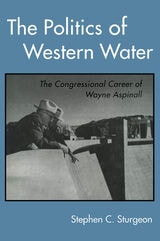
The Politics of Western Water
The Congressional Career of Wayne AspinallStephen C. Sturgeon
University of Arizona Press, 2002
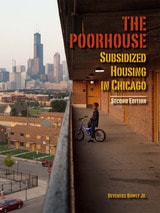
The Poorhouse
Subsidized Housing in ChicagoDevereux Bowly Jr.
Southern Illinois University Press, 2012
Chicago seems an ideal environment for public housing because of the city’s relatively young age among major cities and well-deserved reputation for technology, innovation, and architecture. Yet The Poorhouse: Subsidized Housing in Chicago shows that the city’s experience on the whole has been a negative one, raising serious questions about the nature of subsidized housing and whether we should have it and, if so, in what form.
Bowly, a native of the city, provides a detailed examination of subsidized housing in the nation’s third-largest city. Now in its second edition, The Poorhouse looks at the history of public housing and subsidized housing in Chicago from 1895 to the present day. Five new chapters that cover the decline and federal takeover of the Chicago Housing Authority, and its more recent “transformation,” which involved the demolition of the CHA family high-rise buildings and in some cases their replacement with low-risemixed income housing on the same sites. Fifty new photos supplement this edition.
Certificate of Excellence from the Illinois State Historical Society, 2013
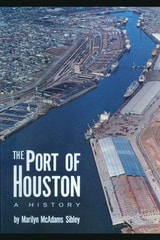
The Port of Houston
A HistoryBy Marilyn McAdams Sibley
University of Texas Press, 1968
Sam Houston's army reached Buffalo Bayou on April 18, 1836, and the ensuing Battle of San Jacinto called attention to the "meandering stream" as a link between the interior of sprawling Texas and the sea.
Early in Texas history, the waterway that would one day be known as the Houston Ship Channel evoked dreams in the minds of the enterprising. How these dreams became realities that surpassed all expectation is the subject of Marilyn McAdams Sibley's The Port of Houston: A History. It is the story of the growth of an unlikely inland port situated at a "tent city" that many Texans thought would die young. It proves, as an early visitor to Houston noted, that future greatness depends not so much on location of port or town as on an enterprising population.
Controversy between dreamers and promoters is a large part of the story. Was Houston or Harrisburg the head of navigation? Was the shallow stream valuable enough to the nation to warrant the costly deep-water dredging? Was Houston or Galveston to command the trade where land and water meet?
As the issues were settled, Houston had spread out to overtake Harrisburg; deep water was achieved in 1914 and was celebrated by ceremonies in which the President of the United States played a part; and Galveston grew into a self-contained island metropolis while Houston became, in the words of Sibley, "the perennial boom town of twentieth-century Texas."
As the Port of Houston continued to grow into a multi-billion-dollar institution serving and served by the cotton, wheat, oil, and space industries, its full economic impact on the city of Houston, the state, and the nation cannot be estimated in dollars and cents. But a glance at the trade statistics in the Appendix alone will give some idea of the world-wide value of this thriving port.
The many interesting illustrations accompanying Mrs. Sibley's story show in graphic terms the growth of a small town on a stream "of a very inconvenient size;—not quite narrow enough to jump over, a little too deep to wade through without taking off your shoes" into an international complex through which almost $4 billion in cargo passed in its fiftieth-anniversary year.
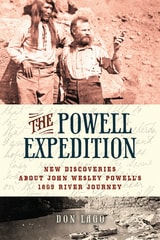
The Powell Expedition
New Discoveries about John Wesley Powell's 1869 River JourneyDon Lago
University of Nevada Press, 2017
Lago offers a feast of new and important material about the river trip, and it will significantly rewrite the story of Powell’s famous expedition. This book is not only a major work on the Powell expedition, but on the history of American exploration of the West.
The Power of the Steel-tipped Pen
Reconstructing Native Hawaiian Intellectual HistoryNoenoe K. Silva
Duke University Press, 2017
The Prairie Winnows Out Its Own
The West River Country of South Dakota in the Years of Depression and DustNelson, Paula M.
University of Iowa Press, 1996
Between 1900 and 1915, in the last great land rush, over one hundred thousand homesteaders flooded into the west river country of South Dakota, a land noted for its aridity and unpredictable weather, its treelessness, and its endless sky. The settlers of “the last, best west” weathered their first crisis in the severe drought of 1910-1911, which winnowed out many of the speculators and faint of heart; they abandoned their founding hopes of quick success and substituted a new ethos of “next year country”—while this year was hard, next year would be better, an ironic phrase at once optimistic and fatalistic.
“Next year,” however, was in many of those years not better. The collapse of the agricultural economy in the immediate aftermath of the boom years of World War I set in motion a pattern of regional decline amid national prosperity and cultural change: the rise of radio and mass culture increased rural folks' awareness of national trends and tastes, a development which paradoxically increased their own sense of remoteness and isolation. The failure of the farm economy to recover to any substantial degree in the twenties caused a less dramatic but cumulatively greater impact on the west river country's population and prospects—a second great crisis.
The Great Depression and the dustbowl years of the thirties were the greatest test of the west river people. The drought of 1910-1911, heretofore seen as the benchmark of bad times, faded even in the remembrances of the original pioneers in the face of the thirties' relentless drought, grasshoppers, blowing dust, and the accompanying starvation, struggle, and despair. The Depression in the west river country was a blast furnace from which a hardened yet still hopeful people emerged, scathed but undefeated. The Prairie Winnows Out Its Own is the voice of this experience.
The Preceramic Horizons of Northeastern Oklahoma
David Albert Baerreis
University of Michigan Press, 1951
The Precious Birthright
Black Leaders and the Fight to Vote in Antebellum Rhode IslandCJ Martin
University of Massachusetts Press, 2024
In 1842, Black Rhode Islanders secured a stunning victory, a success rarely seen in antebellum America: they won the right to vote. Amid heightened public discourse around shifting ideas of race, citizenship, and political rights, they methodically deconstructed the arguments against their enfranchisement, exposing the arbitrariness of the color line in delineating citizenship rights and choosing the perfect moments in which to act forcefully. At the head of this movement, a cohort of prominent business and community members formed an early example of a Black leadership class in the US.
CJ Martin draws upon a wealth of sources—including personal correspondences, government and organizational documents, tax records, and petitions—to argue that Black leaders employed a unique combination of agitation and accommodation to ensure the success of the movement. By investigating their tactics, Martin deepens the story of how race played a crucial role in American citizenship, and by focusing on Black leadership, he relates this history through the people who lived it—who thought, debated, petitioned, and enacted their own liberation. Telling the story of a fight that was as important to the pioneers of interracial democracy as it was for the civil rights activists of the twentieth century, The Precious Birthright provides new insight into the larger story of Black freedom.
The Prehistoric Animal Ecology and Ethnozoology of the Upper Great Lakes Region
Charles Edward Cleland
University of Michigan Press, 1966
The Prehistoric People of the Fort Ancient Culture of the Central Ohio Valley
Louise M. Robbins and Georg K. Neumann
University of Michigan Press, 1972
The Prehistory of the Burnt Bluff Area
Edited by James E. Fitting
University of Michigan Press, 1968
The Presidio and Militia on the Northern Frontier of New Spain
A Documentary History, Volume I, 1570-1700Thomas H. Naylor and Charles W. Polzer
University of Arizona Press, 1986
The Presidio and Militia on the Northern Frontier of New Spain
A Documentary History, Volume Two, Part One: The Californias and Sinaloa-Sonora, 1700-1765Edited by Charles W. Polzer and Thomas E. Sheridan
University of Arizona Press, 1997
The Presidio and Militia on the Northern Frontier of New Spain
A Documentary History, Volume Two, Part Two: The Central Corridor and the Texas Corridor, 1700-1765Edited by Diana Hadley, Thomas H. Naylor, and Mardith K. Schuetz-Miller
University of Arizona Press, 1997
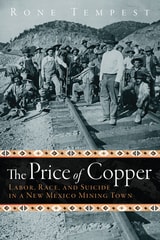
The Price of Copper
Labor, Race and Suicide in a New Mexico Mining TownRone Tempest
University Press of Colorado, 2027
The Price of Copper is a veteran journalist’s unflinching investigation of a family tragedy and long-standing mystery—the sensational 1938 suicide of powerful New Mexico copper mine boss Rone B. Tempest Sr. on the eve of his scheduled testimony before a federal labor board. From this dramatic opening, the book paints a vivid portrait of open-pit copper mining, labor conflicts, and corporate-sponsored racism in company mining towns across the Mountain West from the early years of the twentieth century to the first successes of the civil rights movement in the 1950s.
The author’s paternal grandfather, Rone Tempest Sr., was the general manager of the Chino Copper Mine in Santa Rita, New Mexico, which was owned by the Kennecott Copper Corporation and under investigation over labor practices. His boss was Salt Lake City copper baron and ruthless anti-union strikebreaker Daniel C. Jackling—the “Prophet of Porphyry,” who pioneered the industrial mining of low-grade copper ores by introducing the use of dynamite, steam shovels, rail, and giant mill works. After detailing the saga around Tempest Sr.’s death, the story follows the trajectory of the Chino mine over time, including the rise of predominantly Hispanic labor unions and the advancement of Hispanic workers to senior management roles—gains in civil rights that would have made the labor environment entirely unrecognizable to those fighting for reform in 1938.
A compelling and dramatic history of the great early twentieth-century advances in western copper mining that provided the essential metal needed to electrify the continent and the world, The Price of Copper is a unique personal story that connects to the broader history of copper mining in the West, as well as a valuable social history offering a new narrative about the dynamics of corporate management and giving additional insight into the formation of the “Copper Age” in the United States.
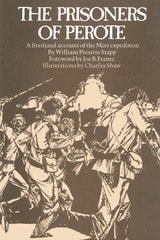
The Prisoners of Perote
By William Preston Stapp
University of Texas Press, 1977
In late 1842, Private William Preston Stapp and about three hundred other citizens of the Republic of Texas took it upon themselves to invade Mexico. They intended to retaliate for a recent Mexican attack on San Antonio and to humiliate President Sam Houston, who had been hesitant to seek revenge.
Stapp provides a closely observed, day-by-day narrative of the disastrous adventure later known as the Mier expedition. While his style might be described as "elegantly restrained" in comparison to the literary excesses of that early Victorian age, Stapp's flair for drama and description makes for colorful reading.
In response to the public outrage prompted by the San Antonio incident, Houston issued a presidential proclamation inviting volunteers for a retaliatory expedition across the Rio Grande. After the bloodless "capture" and pillage of two Mexican border towns, he called the volunteers back home. Most were relieved to comply, but some felt compelled to pursue the honor of the Republic further, and the Mier expedition was launched on December 20, 1842. On the day after Christmas, all save a forty-man camp guard were captured outside of Mier, a few miles across the Mexican border.
The prisoners faced a brutal forced march to Mexico City. Stapp was one of a large group that escaped along the way, became lost in the mountains, and suffered badly from hunger and thirst before recapture. He survived the notorious Black Bean Episode in which 17 of the 176 returned escapees were shot after drawing black beans in a lottery. The Texans were delivered to Perote Prison near Mexico City in September 1843, where a few of them tunneled to freedom and many more died in captivity. Mexico released the last of the prisoners in 1844, and Stapp was among them.
First published in 1845 and later issued in pamphlet form in 1933 by the La Grange Journal, The Prisoners of Perote is a fascinating view of a painful episode in Texas history.
The foreword by Joe B. Frantz provides a perspective on the Texas-Mexico relations during this period "when both countries were shaking down and had not yet found their way." He points out that The Prisoners of Perote provides some clues to the reasons behind the inherent tenseness that exists between Texas and Mexico today.

The Public's Health
A Narrative History Of Health And Disease In ArkansasSam Taggert
Arkansas Times Press, 2013
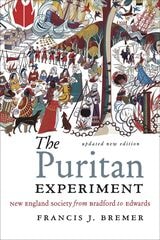
The Puritan Experiment
New England Society from Bradford to EdwardsFrancis J. Bremer
Brandeis University Press, 2026
A revised and updated edition of a classic text on the early puritans.
The Puritan Experiment is an accessible, authoritative account of early New England, one with an enduring appeal for students and general readers. This revised and updated edition explains puritanism while incorporating fresh insights from current scholarship.
Tracing the puritans’ journey from the Old World to America, Francis J. Bremer examines the causes and contexts of the puritan movement and analyzes the cultural, political, and economic revolutions wrought by the movement in both Old and New England. A pioneering text in its field, The Puritan Experiment is sweeping in scope. Bremer’s examination begins with the English Act of Supremacy of 1534 which placed King Henry VIII at the head of the Church of England, and it ends with the death of the puritan theologian Jonathan Edwards in 1758. From meeting house architecture to the Salem witch trials, from relations with Native Americans to the founding of the nation’s first colleges, Bremer details with style and grace how “a living system of faith” profoundly influenced the course of history in the New World.
This illustrated edition includes new information about lay empowerment, the role of women, Native society, and the enslavement of Native Americans and Africans.
The Quiet Season
Remembering Country WintersJerry Apps
Wisconsin Historical Society Press, 2025
“As I think back to the days of my childhood, the frost-covered windows in my bedroom, the frigid walks to the country school, the excitement of a blizzard, and a hundred other memories, I realize that these experiences left an indelible mark on me and made me who I am today.”—From the Introduction
Jerry Apps recalls winters growing up on a farm in central Wisconsin during the latter years of the Depression and through World War II. Before electricity came to this part of Waushara County, farmers milked cows by hand with the light of a kerosene lantern, woodstoves heated the drafty farm homes, and “making wood” was a major part of every winter’s work. The children in Jerry’s rural community walked to a country school that was heated with a woodstove and had no indoor plumbing. Wisconsin winters then were a time of reflection, of planning for next year, and of families drawing together. Jerry describes how winter influenced farm families and suggests that those of us who grow up with harsh northern winters are profoundly affected in ways we often are not aware.
The Quiet Season
Remembering Country WintersJerry Apps
Wisconsin Historical Society Press, 2025
“As I think back to the days of my childhood, the frost-covered windows in my bedroom, the frigid walks to the country school, the excitement of a blizzard, and a hundred other memories, I realize that these experiences left an indelible mark on me and made me who I am today.”—From the Introduction
Jerry Apps recalls winters growing up on a farm in central Wisconsin during the latter years of the Depression and through World War II. Before electricity came to this part of Waushara County, farmers milked cows by hand with the light of a kerosene lantern, woodstoves heated the drafty farm homes, and “making wood” was a major part of every winter’s work. The children in Jerry’s rural community walked to a country school that was heated with a woodstove and had no indoor plumbing. Wisconsin winters then were a time of reflection, of planning for next year, and of families drawing together. Jerry describes how winter influenced farm families and suggests that those of us who grow up with harsh northern winters are profoundly affected in ways we often are not aware.
The Quiet Voices
Southern Rabbis and Black Civil Rights, 1880s to 1990sMark K. Bauman
University of Alabama Press, 1997
These wide-ranging essays reveal the various roles played by southern rabbis in the struggle for black civil rights since Reconstruction
The study of black-Jewish relations has become a hotbed of controversy, especially with regard to the role played by Jewish leaders during the Civil Rights movement. Did these leaders play a pivotal role, or did many of them, especially in the South, succumb to societal pressure and strive to be accepted rather than risk being persecuted? If some of these leaders did choose a quieter path, were their reasons valid? And were their methods successful?
Individually, each essay offers a glimpse into both the private and public difficulties these rabbis faced in their struggle to achieve good. Collectively, the essays provide an unparalleled picture of Jewish leadership during the civil rights era.
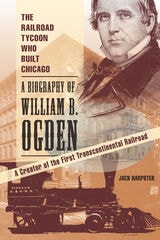
The Railroad Tycoon Who Built Chicago
A Biography of William B. OgdenJack Harpster
Southern Illinois University Press, 2009
William Butler Ogden was a pioneer railroad magnate, one of the earliest founders and developers of the city of Chicago, and an important influence on U.S. westward expansion. His career as a businessman stretched from the streets of Chicago to the wilds of the Wisconsin lumber forests, from the iron mines of Pennsylvania to the financial capitals in New York and beyond. Jack Harpster’s The Railroad Tycoon Who Built Chicago: A Biography of William B. Ogden is the first chronicle of one of the most notable figures in nineteenth-century America.
Harpster traces the life of Ogden from his early experiences as a boy and young businessman in upstate New York to his migration to Chicago, where he invested in land, canal construction, and steamboat companies. He became Chicago’s first mayor, built the city’s first railway system, and suffered through the Great Chicago Fire. His diverse business interests included real estate, land development, city planning, urban transportation, manufacturing, beer brewing, mining, and banking, to name a few. Harpster, however, does not simply focus on Ogden’s role as business mogul; he delves into the heart and soul of the man himself.
The Railroad Tycoon Who Built Chicago is a meticulously researched and nuanced biography set against the backdrop of the historical and societal themes of the nineteenth century. It is a sweeping story about one man’s impact on the birth of commerce in America. Ogden’s private life proves to be as varied and interesting as his public persona, and Harpster weaves the two into a colorful tapestry of a life well and usefully lived.
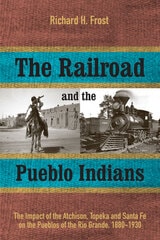
The Railroad and the Pueblo Indians
The Impact of the Atchison, Topeka and Santa Fe on the Pueblos of the Rio Grande, 1880-1930Richard H. Frost
University of Utah Press, 2015
The Pueblo communities responded variously, though mostly conservatively to sustain their traditional communities. This book spotlights two very different responses. Santo Domingo's reaction was hostile, but Laguna chose accommodation. These reactions reveal previously overlooked aspects of these pueblos’ histories that provide compelling reasons behind their varying responses. The book also analyzes the self-contradictory nature of Pueblo constitutional law from 1876 to 1913 and describes conflicted Bureau of Indian Affairs treatment of the Pueblos in the late nineteenth and early twentieth centuries. Each in turn had fateful consequences.
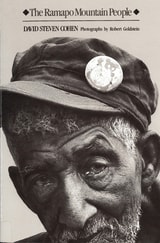
The Ramapo Mountain People
Cohen, David Steven
Rutgers University Press, 1986
In a study combining tee disciplines of anthropology, sociology, folklore, and history, David Cohen found that the old stories about these people were legends, not history.
He found no reliable evidence that their ancestors were Tuscarora Indians, Hessian deserters from the British army, escaped slaves, and British and West Indian prostitutes imported by a sea captain named Jackson for the pleasure of British soldiers occupying Manhattan during the War for Independence.
David Cohen lived among the Ramapo Mountain People for a year, conducting genealogical research into church records, deeds, wills, and inventories in county courthouses and libraries. He established that their ancestors included free black landowners in New York City and mulattoes with some Dutch ancestry who were among the first pioneers to settle in the Hackensack River Valley of New Jersey.
In describing his findings and his experiences, Professor Cohen shows how their racially mixed ancestry, their special family and kinship system, and their intergroup attitudes and folkways distinguish and socially isolate these people as a separate racial group today, despite modern communications and transportation and their proximity to New York City.
The Real Philadelphia Book
Jazz Bridge
Temple University Press, 2022
The Real Philadelphia Book, compiled by Jazz Bridge and editors David Dzubinski and Suzanne Cloud, is a collection of more than 200 original jazz and blues compositions. Arranged alphabetically by song title, the sheet music showcases work by generations of Philadelphia musicians. This volume, which is “what every aspiring jazz musician needs to know,” features tunes from Grammy Award-winners Jimmy Heath, Grover Washington, Jr., and Christian McBride, as well as legends such as Joey DeFrancesco, Ray Bryant, and Robin and Duane Eubanks. Also included are rare compositions by jazz greats Bobby Timmons, Hank Mobley, and Lee Morgan, in addition to music by local luminaries, Rhenda Fearrington, Monnette Sudler, and Kaylé Brecher.
The aim of The Real Philadelphia Book is to help the jazz community make deeper, stronger connections while also formally documenting much of the important music created in the Philadelphia metro area by both well- and lesser-known musicians.
Including an index of composers, The Real Philadelphia Bookwill enhance and add to the rich Philadelphia jazz and blues tradition and make the Philly jazz catalogue more easily available to musicians, jazz students and educators around the world.