Results by title
28164 books match the query 'History' and 6372 start with t
Tradition
Edward Shils
University of Chicago Press, 1981
"Shils is a man of fabled learning, whose mind purrs powerfully like the moth at dusk. I hesitate to use the word conservative of him because it misses the central concern of his work, which is not conservatism, but the conservation of those human resources and achievements which are richest, and matter most."—David A. Martin, Times Literary Supplement
"Tradition is the first comprehensive treatment of the subject that encompasses the totality of tradition in all its multifaceted variables and functions. . . . It is a landmark analytical and theoretical sociological study that not only fills a need but also provides a basic model and impetus for further research."—H. Leon Abrams Jr., Sociology
Tradition And Belief
Religious Writing in Late Anglo-Saxon EnglandClara A. Lees
University of Minnesota Press, 1999
Looks at early religious texts and their influence on medieval literature and culture.
Looks at early religious texts and their influence on medieval literature and culture.
In this major study of Anglo-Saxon religious texts-sermons, homilies, and saints’ lives written in Old English-Clare A. Lees reveals how the invention of preaching transformed the early medieval church, and thus the culture of medieval England. By placing Anglo-Saxon prose within a social matrix, her work offers a new way of seeing medieval literature through the lens of culture.To show how the preaching mission of the later Anglo-Saxon church was constructed and received, Lees explores the emergence of preaching from the traditional structures of the early medieval church-its institutional knowledge, genres, and beliefs. Understood as a powerful rhetorical, social, and epistemological process, preaching is shown to have helped define the sociocultural concerns specific to late Anglo-Saxon England.The first detailed study of traditionality in medieval culture, Tradition and Belief is also a case study of one cultural phenomenon from the past. As such-and by concentrating on the theoretically problematic areas of history, religious belief, and aesthetics-the book contributes to debates about the evolving meaning of culture.ISBN 0-8166-3002-X Cloth £34.50 $49.95xxISBN 0-8166-3003-8 Paper £14.00 $19.95x232 Pages 5 7/8 x 9 NovemberMedieval Cultures Series, volume 19Translation inquiries: University of Minnesota Press
Tradition and Authenticity in the Search for Ecumenic Wisdom
Thomas Langan
University of Missouri Press, 1992
Our emerging world system is bringing the great traditions and cultures it has spawned into ever more intimate and dangerous contact. Langan argues that we must struggle toward a unity of discourse respectful of genuine experiences of varying civilizations if we are to live peacefully on one planet.
Tradition and Innovation
English and German Studies on the SeptuagintMartin Rösel
SBL Press, 2018
Explore the opportunities and challenges of Septuagint studies
Recent research into the Septuagint has revealed numerous examples of modifications of the meaning of the Hebrew text in the course of its translation into Greek. This collection of essays by one of the leading scholars on the Septuagint shows how complex the translation of individual books was, provides reasons for differences between the Hebrew and Greek Bibles, and paves the way for a theology of the Septuagint. Articles introduce the field of Septuagint studies, the problem of the Letter of Aristeas, and the Hellenistic environment and the hermeneutics of Hellenistic Judaism.
Features:
- A methodological discussion of whether and how a theology of the Septuagint can be written
- Essays introducing the field of Septuagint studies and its Hellenistic environment and the hermeneutics of Hellenistic Judaism
- Fifteen English and German essays covering twenty-five years of Septuagint research
Tradition and the Rule of Faith in the Early Church
Ronnie J. Rombs
Catholic University of America Press, 2011

Tradition in Act
Development and Its Counterfeits After NewmanReinhard Hütter
Catholic University of America Press, 2027
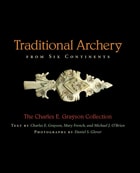
Traditional Archery from Six Continents
The Charles E. Grayson CollectionText by Charles E. Grayson, Mary French, Michael J. O'Brien, & Photos by Daniel
University of Missouri Press, 2007
As a major hunting tool and weapon, the bow changed human history around the world, and its diverse forms reflect the cultures that adopted it. Those variations can be seen in the Charles E. Grayson Archery Collection housed at the University of Missouri–Columbia Museum of Anthropology, one of the largest and most comprehensive assemblages of archery-related materials in the world. This handsome book offers a unique look at archery as it has been practiced through the ages.
Drawing on a collection of more than five thousand bows, arrows, and associated paraphernalia, Traditional Archery from Six Continents presents color photographs and descriptions of some three hundred items—including quivers, thumb rings, and more—that represent traditional archery practices and customs from around the world. From the Chinese “monkey bow” to the English longbow, the artifacts are organized by region, taking in equipment from Asia, the Middle East, Africa, the Americas, and Europe used over the past five hundred years.
The book’s introduction provides an overview of traditional archery and its nomenclature, and chapter essays situate the items in their historical, cultural, and technological contexts. Plate descriptions note materials, construction methods, dimensions, and temporal and cultural affiliations. The sharp, detailed photographs will enable users to identify the geographic or cultural origins of other pieces by visual comparison. Additional illustrations show how archery equipment has been used in various settings such as hunting, warfare, and sport.
These superb representations from a masterful collection constitute a complete introduction to worldwide archery and mark the first wide-ranging survey of European and non-European archery equipment. Traditional Archery from Six Continents will be the standard reference work in the study of archery, indispensable for students of material culture or general readers interested in the history of this timeless art.
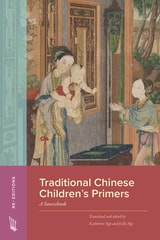
Traditional Chinese Children’s Primers
A SourcebookEdited by Katherine Ngo and Kelly Ngo
Lever Press, 2025
Traditional Chinese Children’s Primers: A Sourcebook is the first anthology of traditional Chinese children’s textbooks in a European language. This selection of eleven primers, spanning over two thousand years of Chinese education history, remains well-known in East Asia and the global diaspora of Confucian-heritage cultures. These texts represent an important genre of children’s literature and education materials that were employed to teach basic vocabulary, develop cultural literacy, and start students on their journey toward greater fortunes in the imperial examinations.
The sourcebook covers texts from the second-century BCE to the late twentieth-century, and a range of subject areas, including etiquette instruction, literacy training, character education, and Confucian and Daoist thought. The Classic of Family Reverence (Xiaojing), for example, opens a window onto early Confucian thought in ancient China, while the Extended Wise Sayings (Zengguang xian wen) represents the eclectic worldviews and beliefs of the seventeenth century, and Lord Wenchang’s Essay on Quiet Merits (Wenchang dijun yinzhi wen) introduces readers to the tradition of popular morality books.
This first-of-a-kind sourcebook in English addresses a long-standing gap in the translation of primers and provides impetus for research in the development of character and virtues, comparative literature, and cross-cultural education studies.
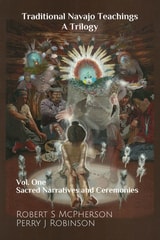
Traditional Navajo Teachings
Sacred Narratives and CeremoniesRobert S. McPherson
University Press of Colorado, 2020
—Cindy Yurth, The Navajo Times
"In Sacred Narratives and Ceremonies, the authors lay the foundation of traditional Navajo beliefs and practices. They provide an inside perspective rarely discussed by non-medicine people and share the beauty and power of a system that unites humans to the holy beings—through teachings, rituals, materials, and daily behavior. This book is pure gold. It is full of traditional wisdom available to those wanting to understand Navajo culture as seen through the eyes of its elders. I highly recommend this book as a treasure trove for the Diné people."
—Clayton Long, participant/creator of the Navajo Rosetta Stone; Bilingual Education Director (retired), San Juan School District, Utah; and curriculum developer for the Navajo Nation
Traditional Navajo Teachings
The Earth Surface PeopleRobert S. McPherson
University Press of Colorado, 2020
—Clayton Long, a participant/creator of the Navajo Rosetta Stone; Bilingual Education Director (retired), San Juan School District, Utah; and curriculum developer for the Navajo Nation.
Traditional Navajo Teachings
The Natural WorldRobert S. McPherson
University Press of Colorado, 2020
"Navajo teachings provide a classic study of a land-based religion that involves every aspect of the physical world in a spiritual universe. Nothing is too big or small—everything holds a power, provides a teaching, and responds through an inner form. Beyond the material life of daily existence, there lies a world of interconnected relations made apparent in Volume II, The Natural World. This book graphically describes elements of life rooted in the Navajo philosophy of hózhǫ́. A unified harmony results. I highly recommend this book as a study in understanding the power of relationships that populate the Diné worldview."
—Clayton Long, a participant/creator of the Navajo Rosetta Stone; Bilingual Education Director (retired), San Juan School District, Utah; and curriculum developer for the Navajo Nation.
"For days after reading The Natural World, I found myself looking at my surroundings in a different way. The vibrant spirit of the earth and every plant or animal I encountered seemed to glow through a translucent shell. I have always been a nature-lover and gotten a sense of peace from being outdoors, but since reading these beautiful Navajo teachings I am filled with a profound sense of joy and gratitude every time I walk outside."
—Cindy Yurth, The Navajo Times
Traditions and Reminiscences of Concord, Massachusetts, 1779-1878
Edward Jarvis
University of Massachusetts Press, 1993
A statistician and pioneer in the treatment of the mentally ill, Edward Jarvis (1803–1884) decided late in life to record his recollections of Concord, Massachusetts, the town in which he was raised. Using Lemuel Shattuck's History of Concord as the springboard for his thoughts, Jarvis produced a remarkable document. Traditions and Reminiscences is encyclopedic in scope but intimate in style; it provides an astonishingly detailed account of life in early nineteenth-century Concord. Jarvis escorts us through the family home, making certain we understand the function and value of each item in the domestic scene. Then he is off to the neighbors' houses, to the schoolhouse, the church, the social clubs, the library, the post office, the town hall, and even the tavern, where he unabashedly counts patrons' drinks. Along the way we learn about neighborly cooperation—quiltings, husking bees, and barn raisings—about social manners and respectability, and about local vices. The result is a vast storehouse of information and a vivid portrait of life in an early nineteenth-century preindustrial community. The memoir also provides a first-hand witness to the crusade for moral reform that transformed mid-nineteenth-century New England.
Traffic in Asian Women
Laura Hyan Yi Kang
Duke University Press, 2020
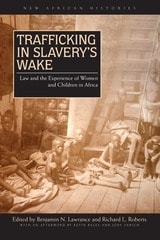
Trafficking in Slavery’s Wake
Law and the Experience of Women and Children in AfricaBenjamin N. Lawrance
Ohio University Press, 2012
Women and children have been bartered, pawned, bought, and sold within and beyond Africa for longer than records have existed. This important collection examines the ways trafficking in women and children has changed from the aftermath of the “end of slavery” in Africa from the late nineteenth century to the present.
The formal abolition of the slave trade and slavery did not end the demand for servile women and children. Contemporary forms of human trafficking are deeply interwoven with their historical precursors, and scholars and activists need to be informed about the long history of trafficking in order to better assess and confront its contemporary forms. This book brings together the perspectives of leading scholars, activists, and other experts, creating a conversation that is essential for understanding the complexity of human trafficking in Africa.
Human trafficking is rapidly emerging as a core human rights issue for the twenty-first century. Trafficking in Slavery’s Wake is excellent reading for the researching, combating, and prosecuting of trafficking in women and children.
Contributors: Margaret Akullo, Jean Allain, Kevin Bales, Liza Stuart Buchbinder, Bernard K. Freamon, Susan Kreston, Benjamin N. Lawrance, Elisabeth McMahon, Carina Ray, Richard L. Roberts, Marie Rodet, Jody Sarich, and Jelmer Vos.
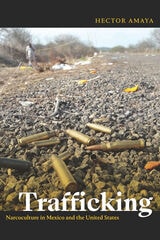
Trafficking
Narcoculture in Mexico and the United StatesHector Amaya
Duke University Press, 2020
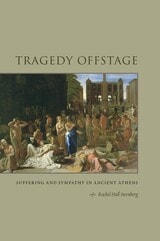
Tragedy Offstage
Suffering and Sympathy in Ancient AthensBy Rachel Hall Sternberg
University of Texas Press, 2006
Humane ideals were central to the image Athenians had of themselves and their city during the classical period. Tragic plays, which formed a part of civic education, often promoted pity and compassion. But it is less clear to what extent Athenians embraced such ideals in daily life. How were they expected to respond, emotionally and pragmatically, to the suffering of other people? Under what circumstances? At what risk to themselves?
In this book, Rachel Hall Sternberg draws on evidence from Greek oratory and historiography of the fifth and fourth centuries BCE to study the moral universe of the ancient Athenians: how citizens may have treated one another in times of adversity, when and how they were expected to help. She develops case studies in five spheres of everyday life: home nursing, the ransom of captives, intervention in street crimes, the long-distance transport of sick and wounded soldiers, and slave torture. Her close reading of selected narratives suggests that Athenians embraced high standards for helping behavior—at least toward relatives, friends, and some fellow citizens. Meanwhile, a subtle discourse of moral obligation strengthened the bonds that held Athenian society together, encouraging individuals to bring their personal behavior into line with the ideals of the city-state.
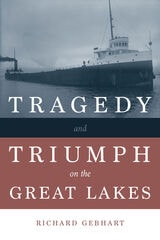
Tragedy and Triumph on the Great Lakes
Richard Gebhart
Michigan State University Press, 2024
Tragic History Of The Sea
C.R. Boxer
University of Minnesota Press, 2001
Compelling stories of shipwreck, adventure, and death on the high seas, now back in print.
The sixteenth and seventeenth centuries were a time of great colonial expansion, marked by a mercantile frenzy of ships carrying merchants, aristocrats, missionaries, sailors, Inquisitors, botanists, and statesmen pursuing the spoils of empire. Among the narratives that chronicled these voyages, those of the Portuguese are unequaled. C. R. Boxer’s fascinating translations of famous Portuguese shipwreck stories detail the disasters and terrors plaguing the perilous sea trading route between Portugal and India.
In the tradition of Homer, Virgil, Shakespeare, Defoe, and Poe, these dramatic stories of shipwreck—and those who lived to tell about it—represent existence and survival pushed to the limits. They describe disastrous turns of fate and miraculous rescues, heroism and cowardice, and offer the exhilaration and sheer emotive appeal of a tale of adventure well told. Often circulated in pamphlet form, these stories recounting the dangers and terrors of storm-tossed ocean voyages and the fate of castaways in distant lands were a popular genre, rife with compelling and often gory details. This first ever paperback edition includes a new translation of the tragic tale of Captain Manuel de Sousa Sepúlveda, shipwrecked with his family on the sands of Africa in 1552, the previous English versions of which have long been unavailable. Vividly descriptive and engrossing, these tales of selfishness, cruelty, despair, pirates, mayhem, and harrowing storms will captivate readers.
Tragic Muse
Rachel of the Comédie-FrançaiseRachel M. Brownstein
Duke University Press, 1995
Born to itinerant Jewish peddlers in 1821, Rachel arrived on the Paris stage at the age of fifteen. She became both a symbol of her culture’s highest art and a clue to its values and obsessions. Fascinated with all things Napoleonic, she was the mother of Napoleon’s grandson and the lover of many men connected to the emperor. Her story—the rise from humble beginnings to queen of the French state theater—echoes and parodies Napoleon’s own. She decisively controlled her career, her time, and finances despite the actions and claims of managers, suitors, and lovers. A woman of exceptional charisma, Rachel embodied contradiction and paradox. She captured the attention of her time and was memorialized in the works of Matthew Arnold, Charlotte Brontë, George Eliot, and Henry James.
Richly illustrated with portraits, photographs, and caricatures, Tragic Muse combines brilliant literary analysis and exceptional historical research. With great skill and acuity, Rachel M. Brownstein presents Rachel—her brief intense life and the image that was both self-fashioned and, outliving her, fashioned by others. First published by Knopf (1993), this book will attract a broad audience interested in matters as wide ranging as the construction of character, the cult of celebrity, women’s lives, and Jewish history. It will also be of enduring interest to readers concerned with nineteenth-century French culture, history, literature, theater, and Romanticism. Tragic Muse won the 1993 George Freedley Award presented by the Theater Library Association.
Tragic Rites
Narrative and Ritual in Sophoclean DramaAdriana E. Brook
University of Wisconsin Press, 2018
Employing both modern ritual theory and Aristotle's Poetics, Brook exposes the deep structural analogies between ritual and narrative, the parallels between mistakes in ritual and deviations from the expected in the plot, and the relationship between ritual content and dramatic closure.

Tragic Spirits
Shamanism, Memory, and Gender in Contemporary MongoliaManduhai Buyandelger
University of Chicago Press, 2013
Trail Of Gold & Silver
D Smith
University Press of Colorado, 2009
Trail of Footprints
A History of Indigenous Maps from Viceregal MexicoBy Alex Hidalgo
University of Texas Press, 2019
Trail of Footprints offers an intimate glimpse into the commission, circulation, and use of indigenous maps from colonial Mexico. A collection of sixty largely unpublished maps from the late sixteenth to the eighteenth centuries and made in the southern region of Oaxaca anchors an analysis of the way ethnically diverse societies produced knowledge in colonial settings. Mapmaking, proposes Hidalgo, formed part of an epistemological shift tied to the negotiation of land and natural resources between the region’s Spanish, Indian, and mixed-race communities. The craft of making maps drew from social memory, indigenous and European conceptions of space and ritual, and Spanish legal practices designed to adjust spatial boundaries in the New World. Indigenous mapmaking brought together a distinct coalition of social actors—Indian leaders, native towns, notaries, surveyors, judges, artisans, merchants, muleteers, collectors, and painters—who participated in the critical observation of the region’s geographic features. Demand for maps reconfigured technologies associated with the making of colorants, adhesives, and paper that drew from Indian botany and experimentation, trans-Atlantic commerce, and Iberian notarial culture. The maps in this study reflect a regional perspective associated with Oaxaca’s decentralized organization, its strategic position amidst a network of important trade routes that linked central Mexico to Central America, and the ruggedness and diversity of its physical landscape.
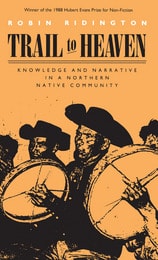
Trail to Heaven
Knowledge and Narrative in a Northern Native CommunityRobin Ridington
University of Iowa Press, 1992
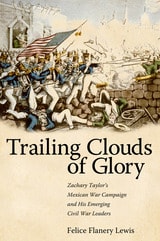
Trailing Clouds of Glory
Zachary Taylor's Mexican War Campaign and His Emerging Civil War LeadersFelice Flanery Lewis
University of Alabama Press, 2010
Trailing Clouds of Glory is the first examination of the roles played in the Mexican War by the large number of men who served with Taylor and who would be prominent in the next war, both as volunteer and regular army officers, and it provides fresh information, even on such subjects as Robert E. Lee and Ulysses S. Grant. Particularly interesting for the student of the Civil War are largely unknown aspects of the Mexican War service of Daniel Harvey Hill, Braxton Bragg, and Thomas W. Sherman.
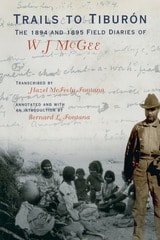
Trails to Tiburón
The 1894 and 1895 Field Diaries of W J McGeeW. J. McGee; Transcribed by Hazel McFeely Fontana; Annotated and with an Introduction by Bernard L. Fontana
University of Arizona Press, 2000
A self-taught scientist in the newly forming field of anthropology, McGee led two expeditions through southern Arizona and northern Sonora for the Bureau of American Ethnology. There he conducted ethnographic research among the Papagos (Tohono O'odham) and the Seris, and his subsequent publication The Seri Indians helped secure his place in the anthropological community.
McGee's complete journals of the expeditions, kept in small field notebooks and preserved in the Library of Congress, are published here for the first time. These journals contain detailed descriptions of the country and people McGee encountered and convey the adventure of traveling through wild and unfamiliar places—including a voyage to Isla Tiburón, or Shark Island, in the Gulf of California—and being plagued by foul weather, a shortage of supplies, and fear of attack from hostile Indians.
Trails to Tiburón features 57 historical photographs taken on the expedition, capturing the places McGee saw and the people he encountered. Fontana's notes to the diary provide useful botanical, geological, and ethnographic information, while his introduction places McGee and his field work in the context of late-nineteenth-century anthropology and science.
Trails to Tiburón reveals McGee's versatility as a field worker and shows his methods, often questioned today, to be the reasonable response of a man caught up in the intellectual fervor of his time. For anyone wanting to share in the spirit of adventure, these journals are a landmark in the annals of exploration.

Training for Catastrophe
Fictions of National Security after 9/11Lindsay Thomas
University of Minnesota Press, 2021
A timely, politically savvy examination of how impossible disasters shape the very real possibilities of our world
Why would the normally buttoned-down national security state imagine lurid future scenarios like a zombie apocalypse? In Training for Catastrophe, author Lindsay Thomas shows how our security regime reimagines plausibility to focus on unlikely and even unreal events rather than probable ones. With an in-depth focus on preparedness (a pivotal, emergent national security paradigm since 9/11) she explores how fiction shapes national security.
Thomas finds fiction at work in unexpected settings, from policy documents and workplace training manuals to comics and video games. Through these texts—as well as plenty of science fiction—she examines the philosophy of preparedness, interrogating the roots of why it asks us to treat explicitly fictional events as real. Thomas connects this philosophical underpinning to how preparedness plays out in contemporary politics, emphasizing how it uses aesthetic elements like realism, genre, character, and plot to train people both to regard some disasters as normal and to ignore others.
Training for Catastrophe makes an important case for how these documents elicit consent and compliance. Thomas draws from a huge archive of texts—including a Centers for Disease Control comic about a zombie apocalypse, the work of Audre Lorde, and the political thrillers of former national security advisor Richard Clarke—to ask difficult questions about the uses and values of fiction. A major statement on how national security intrudes into questions of art and life, Training for Catastrophe is a timely intervention into how we confront disasters.
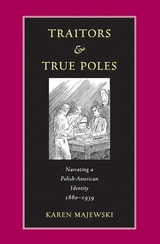
Traitors and True Poles
Narrating a Polish-American Identity, 1880–1939Karen Majewski
Ohio University Press, 2003
During Poland’s century-long partition and in the interwar period of Poland’s reemergence as a state, Polish writers on both sides of the ocean shared a preoccupation with national identity. Polish-American immigrant writers revealed their persistent, passionate engagement with these issues, as they used their work to define and consolidate an essentially transnational ethnic identity that was both tied to Poland and independent of it.
By introducing these varied and forgotten works into the scholarly discussion, Traitors and True Poles recasts the literary landscape to include the immigrant community’s own competing visions of itself. The conversation between Polonia’s creative voices illustrates how immigrants manipulated often difficult economic, social, and political realities to provide a place for and a sense of themselves. What emerges is a fuller picture of American literature, one vital to the creation of an ethnic consciousness.
This is the first extended look at Polish-language fiction written by turn-of-the-century immigrants, a forgotten body of American ethnic literature. Addressing a blind spot in our understanding of immigrant and ethnic identity and culture, Traitors and True Poles challenges perceptions of a silent and passive Polish immigration by giving back its literary voice.
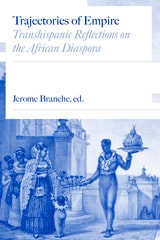
Trajectories of Empire
Transhispanic Reflections on the African DiasporaJerome C. Branche
Vanderbilt University Press, 2022
The book’s chapters explore what Blackness means in the so-called racial democracies of Brazil and Cuba today. Among the historical narratives and themes it covers are the role of medical science in the objectification and nullification of Black female personhood during slavery in nineteenth-century Brazil; the protocols of portraiture in the colonial period that, in including enslaved individuals, pictorially highlight and freeze their supposed inferiority vis-à-vis their owners; and those aspects of discourse that promote colonial capture and oppression in terms of evangelization and the saving of souls, or simply create the discursive template as early as the fifteenth century, for their continued alienation and marginalization across generations.
Trajectories of Empire’s contributions come from the fields of literary criticism, visual culture, history, anthropology, popular culture (rap), and cultural studies. As the product of an interdisciplinary collective, this book will be of interest to scholars in Iberian or Hispanic studies, Africana studies, postcolonial studies, and transatlantic studies, as well as the general public.
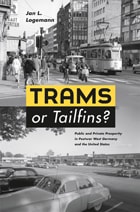
Trams or Tailfins?
Public and Private Prosperity in Postwar West Germany and the United StatesJan L. Logemann
University of Chicago Press, 2012
Trans*historicities
Leah DeVun and Zeb Tortorici, special issue editors
Duke University Press, 2018
Contributors. Kadji Amin, M. W. Bychowski, Fernanda Carvajal, Howard Chiang, Leah DeVun, Julian Gill-Peterson, Jack Halberstam, Asato Ikeda, Jacob Lau, Kathleen P. Long, Maya Mikdashi, Robert Mills, Carlos Motta, Marcia Ochoa, Kai Pyle, C. Riley Snorton, Zeb Tortorici, Jennifer Louise Wilson
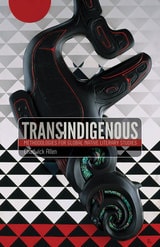
Trans-Indigenous
Methodologies for Global Native Literary StudiesChadwick Allen
University of Minnesota Press, 2012
What might be gained from reading Native literatures from global rather than exclusively local perspectives of Indigenous struggle? In Trans-Indigenous, Chadwick Allen proposes methodologies for a global Native literary studies based on focused comparisons of diverse texts, contexts, and traditions in order to foreground the richness of Indigenous self-representation and the complexity of Indigenous agency.
Through demonstrations of distinct forms of juxtaposition—across historical periods and geographical borders, across tribes and nations, across the Indigenous–settler binary, across genre and media—Allen reclaims aspects of the Indigenous archive from North America, Hawaii, Aotearoa New Zealand, and Australia that have been largely left out of the scholarly conversation. He engages systems of Indigenous aesthetics—such as the pictographic discourse of Plains Indian winter counts, the semiotics of Navajo weaving, and Maori carving traditions, as well as Indigenous technologies like large-scale North American earthworks and Polynesian ocean-voyaging waka—for the interpretation of contemporary Indigenous texts. The result is a provocative reorienting of the call for Native intellectual, artistic, and literary sovereignty that fully prioritizes the global Indigenous.
Transatlantic Central Europe
Contesting Geography and Redifining Culture beyond the NationJessie Labov
Central European University Press, 2019
Transatlantic Connections
Whitman U.S., Whitman U.K.Thomas, M. Wynn
University of Iowa Press, 2005
The book’s contrasting sections reflect the two locations studied: the first shows Whitman in his time and place, while the second repositions him within the cultures of England and Wales from the late 19th to the late 20th century. In the opening chapter he is placed against the vivid, outrageous background of the New York of his time; the second finds evidence in his poetry of a critique of the new urban politics of the emerging city boss; the third radically redefines Whitman's relationship to his famous contemporary Longfellow. Other chapters deal with the Civil War poet, exploring the ways in which his poetic responses were in part shaped by his relationship to his soldier brother George, and his use of the meteorological discoveries of his day to fashion metaphors for imaging the different phases of the conflict.
The second section ponders the paradox that this Whitman, who was so much the product of his specific time and limited “local” culture, should come to be accepted as an international visionary. The United Kingdom is taken as offering striking instances of this phenomenon, and his transatlantic admirers are shown to have been engaged in an unconscious process of “translating” Whitman into the terms of their own culturally specific social, political, and sexual preoccupations. Some of the connections explored are those between Whitman and Edward Carpenter, the so-called English Whitman; between Whitman and perhaps his greatest English critic, D. H. Lawrence; and between Whitman and the Welsh poets Ernest Rhys, Amanwy (David Rees Griffiths), Niclas y Glais (T. E. Nicholas), Waldo Williams, Glyn Jones, Dylan Thomas, and R. S. Thomas.
This bold and original study, offering new points of entry into understanding Whitman as the product of his time and place as well as understanding the reception of Whitman in the U.K. as a process of cultural translation, should fascinate scholars of Whitman and students of comparative literature.
Transatlantic Fascism
Ideology, Violence, and the Sacred in Argentina and Italy, 1919-1945Federico Finchelstein
Duke University Press, 2010
As Finchelstein explains, nacionalismo, the right-wing ideology that developed in Argentina, was not the wholesale imitation of Italian fascism that Mussolini wished it to be. Argentine nacionalistas conflated Catholicism and fascism, making the bold claim that their movement had a central place in God’s designs for their country. Finchelstein explores the fraught efforts of nationalistas to develop a “sacred” ideological doctrine and political program, and he scrutinizes their debates about Nazism, the Spanish Civil War, imperialism, anti-Semitism, and anticommunism. Transatlantic Fascism shows how right-wing groups constructed a distinctive Argentine fascism by appropriating some elements of the Italian model and rejecting others. It reveals the specifically local ways that a global ideology such as fascism crossed national borders.
Transatlantic Scots
Edited by Celeste Ray, foreword by James Hunter
University of Alabama Press, 2005
Transatlantic Scots is a multidisciplinary collection that studies the regional organization and varied expressions of the Scottish Heritage movement in the Canadian Maritimes, the Great Lakes, New England, and the American South. From diverse perspectives, authorities in their fields consider the modeling of a Scottish identity that distances heritage celebrants from prevalent visions of whiteness. Considering both hyphenated Scots who celebrate centuries-old transmission of Scottish traditions and those for whom claiming or re-claiming a Scottish identity is recent and voluntary, this book also examines how diaspora themes and Highland imagery repeatedly surface in regional public celebrations and how traditions are continually reinvented through the accumulation of myths. The underlying theoretical message is that ethnicity and heritage survive because of the flexibility of history and tradition.
This work is a lasting contribution to the study of ethnicity and identity, the renegotiation of history and cultural memory into heritage, and the public performance and creation of tradition.
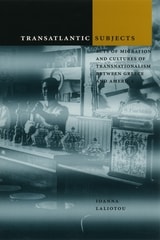
Transatlantic Subjects
Acts of Migration and Cultures of Transnationalism between Greece and AmericaIoanna Laliotou
University of Chicago Press, 2004
According to Ioanna Laliotou, cultural institutions and practices played an important role in the formation of migrant subjectivities. Reconstructing the cultural history of migration, her book points out the relationship between subjectivity formation and cultural practices and performances, such as publishing, reading, acting, storytelling, consuming, imitating, parading, and traveling. Transatlantic Subjects then locates the development of these practices within key sites and institutions of cultural formation, such as migrant and fraternal associations, educational institutions, state agencies and nongovernmental organizations, mental institutions, coffee shops, the church, steamship companies, banks, migration services, and chambers of commerce.
Ultimately, Laliotou explores the complex and situational entanglements of migrancy, cultural nationalism, and the politics of self. Reading against the grain of hegemonic narratives of cultural and migration histories, she reveals how migrancy produced distinctive forms of sociality during the first half of the twentieth century.
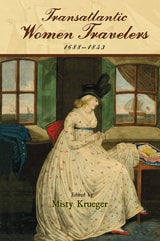
Transatlantic Women Travelers, 1688-1843
Misty Krueger
Bucknell University Press, 2021

Transatlantic Women
Nineteenth-Century American Women Writers and Great BritainBeth L. Lueck
University of New Hampshire Press, 2012
Transcendence and History
The Search for Ultimacy from Ancient Societies to PostmodernityGlenn Hughes
University of Missouri Press, 2020
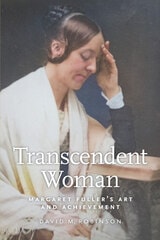
Transcendent Woman
Margaret Fuller’s Art and AchievementDavid M. Robinson
University of Massachusetts Press, 2025
Journalist, editor, critic, translator, and women’s rights advocate, Margaret Fuller was America’s first major female intellectual. Throughout much of the late-19th and 20th centuries, however, critics and scholars largely saw her as a minor figure in the transcendentalist movement with which she is associated, and her work was considered secondary to that of male figures like Emerson and Hawthorne. While her biography—including her marriage to an Italian noble and her dramatic death in a shipwreck—was often the focus, her skill as a writer was generally overlooked, and her intellectual development largely ignored.
In the early 1980s, David M. Robinson was one of the first scholars to publish an article that focused on Fuller’s mind and art. Now Transcendent Woman completes and extends this early work. Outlining the development of her philosophy, which Robinson defines as a “purpose-oriented form of thinking, tailored to the commitment and assets of each individual,” he traces Fuller’s intellectual journey, first in relation to her family and the people around her in New England and later in her travels in the midwestern United States and, more importantly, through Europe and her residency in Italy. He focuses first and foremost on what Fuller was reading (Goethe was key), what she was thinking as revealed in her letters and journals, and what she was writing, including seminal works such as Summer on the Lakes and Woman in the Nineteenth Century as well as lesser-known essays, translations, and short stories. Drawing extensively on primary sources, Robinson charts Fuller’s development and achievement as an original thinker and fearless advocate of democracy.
Transcendental Heresies
Harvard and the Modern American Practice of UnbeliefDavid Faflik
University of Massachusetts Press, 2020
At a moment when the requirements of belief and unbelief were being negotiated in unexpected ways, transcendentalism allowed for a more creative approach to spiritual questions. Interrogating the movement's alleged atheistic underpinnings, David Faflik contends that transcendentalism reconstituted the religious sensibilities of 1830s and 1840s New England, producing a dynamic and complex array of beliefs and behaviors that cannot be categorized as either religious or nonreligious. Rather than “the latest form of infidelity,” as one contemporary described it, adherents viewed their unconventional and distinct spiritual practices as a modern religion.
Transcendental Heresies draws on an expansive antebellum archive of period commentary and writings by transcendentalism's practitioners, including Ralph Waldo Emerson, Henry David Thoreau, Theodore Parker, Margaret Fuller, and the women of transcendentalism's second and third waves. From Boston to Concord to the heady environs of Harvard, the species of unbelief they practiced multiplied the religious possibilities of the era, expressing misgivings about traditional notions of divinity, flouting religion's customary forms, and ultimately encouraging spiritual questioning.
Transcendental Meditation in America
How a New Age Movement Remade a Small Town in IowaJoseph Weber
University of Iowa Press, 2014
The Indian spiritual entrepreneur Maharishi Mahesh Yogi took the West by storm in the 1960s and ’70s, charming Baby Boomers fed up with war and social upheaval with his message of meditation and peace. Heeding his call, two thousand followers moved to tiny Fairfield, Iowa, to set up their own university on the campus of a failed denominational college. Soon, they started a school for prekindergarten through high school, allowing followers to immerse themselves in Transcendental Meditation from toddlerhood through PhDs.
Although Fairfield’s longtime residents were relieved to see that their new neighbors were clean-cut and respectably dressed—not the wild-haired, drug-using hippies they had feared—the newcomers nevertheless quickly began to remake the town. Stores selling exotic goods popped up, TM followers built odd-looking homes that modeled the guru’s rules for peace-inspiring architecture, and the new university knocked down a historic chapel, even as it erected massive golden-domed buildings for meditators. Some newcomers got elected—and others were defeated—when they ran for local and statewide offices. At times, thousands from across the globe visited the small town.
Yet Transcendental Meditation did not always achieve its aims of personal and social tranquility. Suicides and a murder unsettled the meditating community over the years, and some followers were fleeced by con men from their own ranks. Some battled a local farmer over land use and one another over doctrine. Notably, the world has not gotten more peaceful.
Today the guru is dead. His followers are graying, and few of their children are moving into leadership roles. The movement seems rudderless, its financial muscle withering, despite the efforts of high-profile supporters such as filmmaker David Lynch and media magnate Oprah Winfrey. Can TM reinvent itself? And what will be the future of Fairfield itself? By looking closely at the transformation of this small Iowa town, author Joseph Weber assesses the movement’s surprisingly potent effect on Western culture, sketches out its peculiar past, and explores its possible future.
Transcendental Resistance
The New Americanists and Emerson's ChallengeJohannes Voelz
Dartmouth College Press, 2010

Transcendental Wordplay
America’s Romantic Punsters and the Search for the Language of NatureMichael West
Ohio University Press, 2000
Throughout the first half of the nineteenth century, America was captivated by a muddled notion of “etymology.” New England Transcendentalism was only one outcropping of a nationwide movement in which schoolmasters across small-town America taught students the roots of words in ways that dramatized religious issues and sparked wordplay.
Shaped by this ferment, our major romantic authors shared the sensibility that Friedrich Schlegel linked to punning and christened “romantic irony.” Notable punsters or etymologists all, they gleefully set up as sages, creating jocular masterpieces from their zest for oracular wordplay. Their search for a primal language lurking beneath all natural languages provided them with something like a secret language that encodes their meanings. To fathom their essentially comic masterpieces we must decipher it.
Interpreting Thoreau as an ironic moralist, satirist, and social critic rather than a nature-loving mystic, Transcendental Wordplay suggests that the major American Romantics shared a surprising conservatism. In this award-winning study, Professor West rescues the pun from critical contempt and allows readers to enjoy it as a serious form of American humor.
Transcendentalist Hermeneutics
Institutional Authority and the Higher Criticism of the BibleRichard A. Grusin
Duke University Press, 1991
In the ongoing revision of American literary history, this traditional reading of the supposed anti-institutionalism of the Transcendentalists has been duly detailed and continually supported. Richard A. Grusin challenges both traditional and revisionist interpretations with detailed contextual studies of the hermeneutics of Ralph Waldo Emerson, Henry David Thoreau, and Theodore Parker. Informed by the past two decades of critical theory, Grusin examines the influence of the higher criticism of the Bible—which focuses on authorship, date, place of origin, circumstances of composition, and the historical credibility of biblical writings—on these writers. The author argues that the Transcendentalist appeal to the authority of the “self” is not an appeal to a source of authority independent of institutions, but to an authority fundamentally innate.
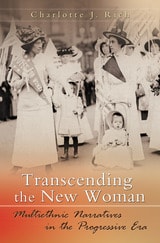
Transcending the New Woman
Multiethnic Narratives in the Progressive EraCharlotte J. Rich
University of Missouri Press, 2009
Transcommunality
From The Politics Of ConversionJohn Brown Childs
Temple University Press, 2003
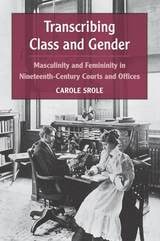
Transcribing Class and Gender
Masculinity and Femininity in Nineteenth-Century Courts and OfficesCarole Srole
University of Michigan Press, 2012
"Drawing upon census data, trade periodicals devoted to stenography and court reporting, the writings of educational reformers, and fiction, Srole allows us to better understand the roles that gender and work played in the formation of middle-class identity. Clearly written and thoroughly researched, her book reminds us of the contradictions that both men and women faced as they navigated changes in the labor market and sought to realize a modern professional identity."
---Thomas Augst, New York University
Transcribing Class and Gender explores the changing meanings of clerical work in nineteenth-century America, focusing on the discourse surrounding that work. At a time when shorthand transcription was the primary method of documenting business and legal communications and transactions, most stenographers were men, but changing technology saw the emergence of women in the once male-dominated field. Carole Srole argues that this shift placed stenographers in a unique position to construct a new image of the professional man and woman and, in doing so, to redefine middle- and working-class identities.
Many male court reporters emphasized their professionalism, portraying themselves as educated language experts as a way to elevate themselves above the growing numbers of female and working-class stenographers and typewriter operators. Meanwhile, women in the courts and offices were confronting the derogatory image of the so-called Typewriter Girl who cared more about her looks, clothing, and marriage prospects than her job. Like males in the field, women responded by fashioning a gendered professional image---one that served to combat this new version of degraded female labor while also maintaining traditional ideals of femininity.The study is unique in the way it reads and analyzes popular fiction, stenography trade magazines, the archives of professional associations, and writings by educational reformers to provide new perspectives on this history. The author challenges the common assumption that men and women clerks had separate work cultures and demonstrates how each had to balance elements of manhood and womanhood in the drive toward professionalism and the construction of a new middle-class image. Transcribing Class and Gender joins the recent scholarship that employs cultural studies approaches to class and gender without abandoning the social history valuation of workers' experiences.
Carole Srole is Professor of History at California State University, Los Angeles.
Photo: A female stenographer working for an actuary in 1897. Courtesy Metlife Archives.
Transfiguring America
Myth, Ideology, and Mourning in Margaret Fuller's WritingJeffrey Steele
University of Missouri Press, 2001
Transfiguring America is the product of more than ten years of research and numerous published articles on Margaret Fuller, arguably America's first feminist theorist and one of the most important woman writers in the nineteenth century. Focusing on Fuller's development of a powerful language that paired cultural critique with mythmaking, Steele shows why her writing had such a vital impact on the woman's rights movement and modern conceptions of gender.
This groundbreaking study pays special attention to the ways in which Fuller's feminist consciousness and social theory emerged out of her mourning for herself and others, her dialogue with Emersonian Transcendentalism, and her eclectic reading in occult and mythical sources. Transfiguring America is the first book to provide detailed analyses of all of Fuller's major texts, including her mystical Dial essays, correspondence with Emerson, Summer on the Lakes, 1844 poetry, Woman in the Nineteenth Century, and New York Tribune essays written both in New York and Europe.
Starting from her own profound sense of loss as a marginalized woman, Fuller eventually recognized the ways in which the foundational myths of American society, buttressed by conservative religious ideologies, replicated dysfunctional images of manhood and womanhood. With Woman in the Nineteenth Century, after exploring the roots of oppression in her essays and poetry, Fuller advanced the cause of woman's rights by conceptualizing a more fluid and equitable model of gender founded upon the mythical reconfiguration of human potential. But as her horizons expanded, Fuller demanded not only political equality for women, but also emotional, intellectual, and spiritual freedom for all victims of social oppression.
By the end of her career, Steele shows, Fuller had blended personal experience and cultural critique into the imaginative reconstruction of American society. Beginning with a fervent belief in personal reform, she ended her career with the apocalyptic conviction that the dominant myths both of selfhood and national identity must be transfigured. Out of the ashes of personal turmoil and political revolution, she looked for the phoenix of a revitalized society founded upon the ideal of political justice.