Results by title
5550 books match the query 'Biography & Autobiography' and 1006 start with t

The Papers of James Madison, Volume 5
1 August-31 December 1782James Madison
University of Chicago Press, 1967
The Papers of James Madison, Volume 6
1 January 1783-30 April 1783James Madison
University of Chicago Press, 1969
The Papers of James Madison, Volume 7
3 May 1783-29 February 1784James Madison
University of Chicago Press, 1971
Early in December, after an absence of over three years, Madison returned to Montpelier, his father's estate. There during the winter of 1783-1784, he studied law, renewed old friendships, and canvassed the residents of Orange County for support of his candidacy for election to the House of Delegates of the Virginia General Assembly.
maintenance
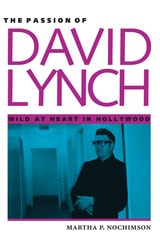
The Passion of David Lynch
Wild at Heart in HollywoodBy Martha P. Nochimson
University of Texas Press, 1997
Filmmaker David Lynch asserts that when he is directing, ninety percent of the time he doesn't know what he is doing. To understand Lynch's films, Martha Nochimson believes, requires a similar method of being open to the subconscious, of resisting the logical reductiveness of language. In this innovative book, she draws on these strategies to offer close readings of Lynch's films, informed by unprecedented, in-depth interviews with Lynch himself.
Nochimson begins with a look at Lynch's visual influences—Jackson Pollock, Francis Bacon, and Edward Hopper—and his links to Alfred Hitchcock and Orson Welles, then moves into the heart of her study, in-depth analyses of Lynch's films and television productions. These include Twin Peaks: Fire Walk with Me, Wild at Heart, Twin Peaks, Blue Velvet, Dune, The Elephant Man, Eraserhead, The Grandmother, The Alphabet, and Lynch's most recent, Lost Highway.
Nochimson's interpretations explode previous misconceptions of Lynch as a deviant filmmaker and misogynist. Instead, she shows how he subverts traditional Hollywood gender roles to offer an optimistic view that love and human connection are really possible.

The Passions of Peter Sellars
Staging the MusicSusan McClary
University of Michigan Press, 2019
Many directors leave the musical aspects of opera entirely to the singers and conductor. Sellars, however, immerses himself in the score, and has created a distinctive visual vocabulary to embody musical gesture on stage, drawing on the energies of the music as he shapes characters, ensemble interaction, and large-scale dramatic trajectories. As a leading scholar of gender and music, and the history of opera, Susan McClary is ideally positioned to illuminate Sellars’s goal to address both the social tensions embodied in these operas as well as the spiritual dimensions of operatic performance. McClary considers Sellars’s productions of Mozart’s Le nozze di Figaro, Don Giovanni, and Così fan tutte; Handel’s Theodora; Messiaen’s Saint François d’Assise; John C. Adams’s Nixon in China, The Death of Klinghoffer, El Niño, and Doctor Atomic; Kaija Saariaho’s L’amour de loin, La Passion de Simone, and Only the Sound Remains; Purcell’s The Indian Queen; and Bach’s passions of Saint Matthew and Saint John. Approaching Sellars’s theatrical strategies from a musicological perspective, McClary blends insights from theater, film, and literary scholarship to explore the work of one of the most brilliant living interpreters of opera.
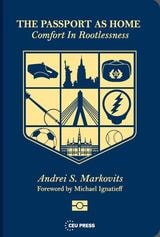
The Passport as Home
Comfort in RootlessnessAndrei S. Markovits
Central European University Press, 2021
A Scholar's Quest for Home and Identity
Experience the remarkable story of a Romanian-born, Hungarian-speaking Jewish professor. From Vienna to Columbia and Harvard, he navigates a life marked by rootlessness, seeking comfort and purpose. His journey unfolds against the backdrop of five decades, two continents, and significant political and cultural changes.
As we follow his pursuit of a home, we gain insight into the critical developments of post-1945 Europe and America. Markovits's emigration experiences, first from Romania to Vienna and later from Vienna to New York, shed light on the challenges he faced.
His journey offers a panoramic view of the forces shaping the latter half of the 20th century. Despite America's flaws, he finds it a beacon of academic excellence, intellectual openness, cultural diversity, and religious tolerance—qualities that Europe lacked.
Explore the complexities of identity, culture, and the universal search for belonging in this captivating narrative.
The Path of Mercy
The Life of Catherine McAuleyMary C. Sullivan
Catholic University of America Press, 2012
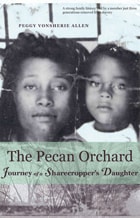
The Pecan Orchard
Journey of a Sharecropper's DaughterPeggy Vonsherie Allen
University of Alabama Press, 2011
This is a true story of the struggle, survival, and ultimate success of a large black family in south Alabama who, in the middle decades of the 20th century, lifted themselves out of poverty to achieve the American dream of property ownership. Descended from slaves and sharecroppers in the Black Belt region, this family of hard-working parents and their thirteen children is mentored by its matriarch, Moa, the author’s beloved great grandmother, who passes on to the family, along with other cultural wealth, her recipe for moonshine.
Without rancor or blame, and even with occasional humor, The Pecan Orchard offers a window into the inequities between blacks and whites in a small southern town still emerging from Jim Crow attitudes.
Told in clean, straightforward prose, the story radiates the suffocating midday heat of summertime cotton fields and the biting winter wind sifting through porous shanty walls. It conveys the implicit shame in “Colored Only” restrooms, drinking fountains, and eating areas; the beaming satisfaction of a job well done recognized by others; the “yessum” manners required of southern society; and the joyful moments, shared memories, and loving bonds that sustain—and even raise—a proud family.
The Pen Makes a Good Sword
John Forsyth of the Mobile RegisterLonnie A. Burnett
University of Alabama Press, 2006
One editor. One era. A pen that cut through history.
This book is a biography of Alabama native John Forsyth Jr. and documents his career as a southern newspaper editor during the antebellum, Civil War, and Reconstruction periods. From 1837 to 1877 Forsyth wrote about many of the most important events of the 19th century. He used his various positions as an editor, Civil War field correspondent, and Reconstruction critic at the MobileRegister to advocate on behalf of both the South and the Democratic Party.
In addition, Forsyth played an active role in the events taking place around him through his political career, as United States Minister to Mexico, state legislator, Confederate Peace Commissioner to the Lincoln administration, staff officer to Braxton Bragg, and twice mayor of the city of Mobile.
The Pensive Citadel
Victor Brombert
University of Chicago Press, 2023
In The Pensive Citadel, Victor Brombert looks back on a lifetime of learning within a university world greatly altered since he entered Yale on the GI Bill in the 1940s. Yet for all that has changed, much of Brombert’s long experience as a reader and teacher is richly familiar: the rewards of rereading, the joy of learning from students, and most of all the insight to be found in engaging works of literature. The essays gathered here range from meditations on laughter and jealousy to new appreciations of Brombert’s lifelong companions Shakespeare, Montaigne, Voltaire, and Stendhal.
A veteran of D-day and the Battle of the Bulge who witnessed history’s worst nightmares firsthand, Brombert nevertheless approaches literature with a lightness of spirit, making the case for intellectual mobility and openness to change. The Pensive Citadel is a celebration of a life lived in literary study, and of what can be learned from attending to the works that form one’s cultural heritage.
The People's Choice
Congressman Jim Jontz of IndianaRay Boomhower
Indiana Historical Society Press, 2012
The Perfect Lion
The Life and Death of Confederate Artillerist John PelhamJerry H. Maxwell
University of Alabama Press, 2011
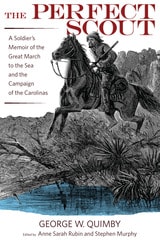
The Perfect Scout
A Soldier’s Memoir of the Great March to the Sea and the Campaign of the CarolinasGeorge W. Quimby, edited by Anne Sarah Rubin and Stephen Murphy
University of Alabama Press, 2018
After his father-in-law passed away, Stephen Murphy found, among the voluminous papers left behind, an ancestral memoir. Murphy quickly became fascinated with the recollections of George W. Quimby (1842–1926), a Union soldier and scout for General William Tecumseh Sherman.
Before Quimby became a part of Sherman’s March, he was held captive by Nathan Bedford Forrest’s troops in western Tennessee. He joined Sherman’s Army in Vicksburg, destroying railroads and bridges across Mississippi and Alabama on the way to Georgia. As the notorious march began, Quimby became a scout and no longer experienced war as his fellow soldiers did. Scouts moved ahead of the troops to anticipate opportunities and dangers. The rank and file were instructed to be seen and feared, while scouts were required to be invisible and stealthy. This memoir offers the rare perspective of a Union soldier who ventured into Confederate territory and sent intelligence to Sherman.
Written around 1901 in the wake of the Spanish American War, Quimby’s memoir shows no desire to settle old scores. He’s a natural storyteller, keeping his audience’s attention with tales of drunken frolics and narrow escapes, providing a memoir that reads more like an adventure novel. He gives a new twist to the familiar stories of Sherman’s March, reminding readers that while the Union soldiers faced few full-scale battles, the campaign was still quite dangerous.
More than a chronicle of day-to-day battles and marches, The Perfect Scout is more episodic and includes such additional elements as the story of how he met his wife and close encounters with the enemy. Offering a full picture of the war, Quimby writes not only about his adventures as one of Sherman’s scouts, but also about the suffering of the civilians caught in the war. He provides personal insight into some of the war’s historic events and paints a vivid picture of the devastation wreaked upon the South that includes destroyed crops and homes and a shattered economy. He also tells of the many acts of kindness he received from Southerners, including women and African Americans, who helped him and his fellow scouts by providing food, shelter, or information.
The Perils and Prospects of Southern Black Leadership
Gordon Blaine Hancock, 1884–1970Raymond Gavins
Duke University Press, 1993
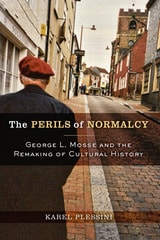
The Perils of Normalcy
George L. Mosse and the Remaking of Cultural HistoryKarel Plessini
University of Wisconsin Press, 2014
In this intellectual biography of George Mosse, Karel Plessini draws on all of Mosse's published and unpublished work to illuminate the origins and development of his groundbreaking methods of historical analysis and the close link between his life and work. He redefined the understanding of modern mass society and politics, masterfully revealing the powerful influence of conformity and political liturgies on twentieth-century history. Mosse warned against the dangers inherent in acquiescence, showing how identity creation and ideological fervor can climax in intolerance and mass murder—a message of continuing relevance.
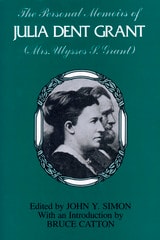
The Personal Memoirs of Julia Dent Grant
(Mrs. Ulysses S. Grant)Edited by John Y. Simon
Southern Illinois University Press, 1975
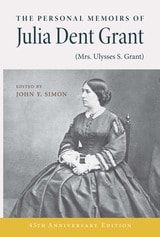
Written in the early twentieth century for her children and grandchildren and first published in 1975, these eloquent memoirs detail the life of General Ulysses S. Grant’s wife. First Lady Julia Dent Grant wrote her reminiscences with the vivacity and charm she exhibited throughout her life, telling her story in the easy flow of an afternoon conversation with a close friend. She writes fondly of White Haven, a plantation in St. Louis County, Missouri, where she had an idyllic girlhood and later met Ulysses.
In addition to relating the joys she experienced, Grant tells about the difficult and sorrowful times. Her anecdotes give fascinating glimpses into the years of the American Civil War. One recounts the night President Abraham Lincoln was assassinated. Grant insisted she and her husband turn down an invitation to the theater. Her decision saved her husband’s life: like Lincoln, he too had been marked for assassination.
Throughout these memoirs, which she ends with her husband’s death, Grant seeks to introduce her descendants to both her and the man she loved. She also strives to correct misconceptions that were circulated about him. She wanted posterity to share her pride in this man, whom she saw as one of America’s greatest heroes. Her book is a testament to their devoted marriage.
This forty-fifth-anniversary edition includes a new foreword by John F. Marszalek and Frank J. Williams, a new preface by Pamela K. Sanfilippo, the original foreword by Bruce Catton, the original introduction by editor John Y. Simon, recommendations for further reading, and more than twenty photographs of the Grants, their children, and their friends.
The Personal Memoirs of Julia Dent Grant
(Mrs. Ulysses S. Grant)Edited by John Y. Simon
Southern Illinois University Press, 1975
Written in the early twentieth century for her children and grandchildren and first published in 1975, these eloquent memoirs detail the life of General Ulysses S. Grant’s wife. First Lady Julia Dent Grant wrote her reminiscences with the vivacity and charm she exhibited throughout her life, telling her story in the easy flow of an afternoon conversation with a close friend. She writes fondly of White Haven, a plantation in St. Louis County, Missouri, where she had an idyllic girlhood and later met Ulysses.
In addition to relating the joys she experienced, Grant tells about the difficult and sorrowful times. Her anecdotes give fascinating glimpses into the years of the American Civil War. One recounts the night President Abraham Lincoln was assassinated. Grant insisted she and her husband turn down an invitation to the theater. Her decision saved her husband’s life: like Lincoln, he too had been marked for assassination.
Throughout these memoirs, which she ends with her husband’s death, Grant seeks to introduce her descendants to both her and the man she loved. She also strives to correct misconceptions that were circulated about him. She wanted posterity to share her pride in this man, whom she saw as one of America’s greatest heroes. Her book is a testament to their devoted marriage.
This forty-fifth-anniversary edition includes a new foreword by John F. Marszalek and Frank J. Williams, a new preface by Pamela K. Sanfilippo, the original foreword by Bruce Catton, the original introduction by editor John Y. Simon, recommendations for further reading, and more than twenty photographs of the Grants, their children, and their friends.
The Philadelphia Reader
Robert Huber
Temple University Press, 2006
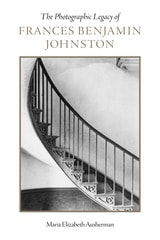
The Photographic Legacy of Frances Benjamin Johnston
Maria Elizabeth Ausherman
University of Alabama Press, 2022
An illustrated account of the life and work of the pioneering photographer
The Photographic Legacy of Frances Benjamin Johnston (1864–1952) draws on original papers and photographs from the Library of Congress to document the extraordinary life and nearly seventy-year career of this pioneering photographer. Maria Elizabeth Ausherman illuminates the early origins of Johnston’s style and vision, and her attempts to change society through her art. One of the first women to work in an emerging field dominated by men, Johnston achieved acclaim as an accomplished photographer and photojournalist.
As the official White House photographer for five administrations, she was instrumental in defining the medium and inspiring women to train in and appreciate photography. But it is her monumental nine-state survey of southern American architecture that stands as her most significant contribution to the history and development of photography both as art and as documentary. Through her photography, Johnston showed reverence for the beautiful historic buildings she appreciated and also helped shape architectural and photographic preservation in the United States.
The Picshuas of H. G. Wells
A Burlesque DiaryGene K. Rinkel and Margaret E. Rinkel
University of Illinois Press, 2000
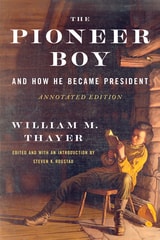
The Pioneer Boy, and How He Became President
Annotated EditionWilliam M. Thayer, edited and with an introduction by Steven K. Rogstad
University of Illinois Press, 2026
This new edition of Pioneer Boy reprints the text with extensive annotations by Steven K. Rogstad. In his reappraisal of the work, Rogstad taps the factual history woven into the plot and dialogue to illuminate how the young Lincoln presented by Thayer compares with historical documents and credible reminisces of the future president. Rogstad’s chapter-by-chapter analysis reveals the work as an astute biography while reevaluating Thayer as a source worthy of consideration within Lincoln scholarship. An introduction offers an in-depth consideration of Lincoln’s own presentations of his youth, Thayer’s career, and the book’s long life.
A new look at an overlooked text, The Pioneer Boy, and How He Became President analyzes what we can learn from William M. Thayer’s popular book.
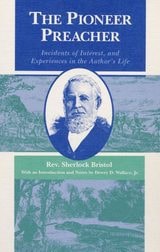
The Pioneer Preacher
Incidents of Interest, and Experiences in the Author's LifeRev. Sherlock Bristol. Introduction and notes by Dewey D. Wallace Jr. Illustrated by Isabelle Blood.
University of Illinois Press, 1989
Originally published in 1887, The Pioneer Preacher is a lively account of a Congregationalist minister's attempts to lead a sin-free existence on the American frontier. Sherlock Bristol (1815-1906) was a California gold miner, wagon train captain, Wisconsin farmer, Idaho rancher, Indian fighter, abolitionist, and Oberlin-trained clergyman. While serving a series of churches in the East, he periodically cured himself of "nervous disorders" by journeying out West. He only broke the Sabbath once---during an Indian attack!
Reflecting in his memoirs the exploits of Daniel Boone and Davy Crockett, Bristol delights in recounting his adventures, ecclesiastical or otherwise. He vividly recalls his redemption in the wilderness where he enjoyed having "little opportunity for reading books or mental exercise, and an abundance of calls for muscular employment." Greatly influenced by the evangelist Charles G. Finney at Oberlin, Bristol tried to teach miners and frontiersmen the principles of revivalism, postmillennialism, and perfectionism. In The Pioneer Preacher he shares his own disputatious views on abolition, American Indians, temperance, and other issues of his day.
The Plain Language of Love and Loss
A Quaker MemoirBeth Taylor
University of Missouri Press, 2009
The Play of Allusion in the Historia Augusta
David Rohrbacher
University of Wisconsin Press, 2015
The Play of Allusion in the Historia Augusta
David Rohrbacher
University of Wisconsin Press, 2020
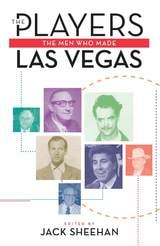
The Players
The Men Who Made Las VegasJack Sheehan
University of Nevada Press, 1997
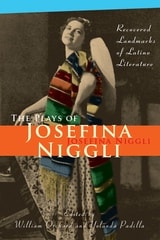
The Plays of Josefina Niggli
Recovered Landmarks of Latino LiteratureJosefina Niggli; Edited by William Orchard and Yolanda Padilla
University of Wisconsin Press, 2007
Although Niggli is perhaps best known for her fiction and folk plays, this anthology recovers her historical dramas, most of which have been long out of print or were never published. These plays are deeply concerned with the aftermath of the 1910 Mexican Revolution, imagining its implications for Mexico, Mexican Americans, and U.S.-Mexico relations. Included are Mexican Silhouettes (1928), Singing Valley (1936), The Cry of Dolores (1936), The Fair God (1936), Soldadera (1938), This is Villa! (1939), and The Ring of General Macias (1943). These works reflect on the making of history and often portray the Revolution through the lens of women’s experiences.
Also included in this volume are an extensive critical introduction to Niggli, a chronology of her life and writings, plus letters and reviews by, to, and about Josefina Niggli. that provide illuminating context for the plays.
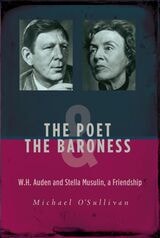
The Poet & the Baroness
W.H. Auden and Stella Musulin, a FriendshipMichael O'Sullivan
Central European University Press, 2023
For long periods in history, the Austrian capital found itself on the geographical edge of western civilisation. Yet from the 18th century on, Vienna has been a vibrant centre of European culture. This city is the scene of the formidable meeting of the two outstanding intellectuals that are at the core of this book.
The warm relationship between W.H. Auden, the celebrated British-American poet (1907–1973), and his fellow expatriate, the Welsh-Austrian journalist, translator and writer Stella Musulin (1915–1996) lasted while Auden resided in the nearby small town of Kirchstetten starting in 1958. It was here that the poet was laid to rest in the autumn of 1973. This book is based on the unpublished letters of Auden to Musulin and her private journals.
The study of this inspiring material yields new insights into Auden’s last, prolific, creative period and underscores the ‘Austrian Auden.’ In addition, Michael O’Sullivan pays tribute to the closest ‘Austrian’ friend of the poet. Baroness Stella von Musulin was an intellectual whose two books for Faber & Faber are acknowledged as classics: Vienna in the Age of Metternich and Austria: People & Landscape (with a foreword by Auden). The author situates the close relationship of two individuals in the context of Austria’s complex political, social, and cultural history in the Cold War years.
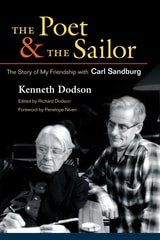
The Poet and the Sailor
The Story of My Friendship with Carl SandburgKenneth Dodson. Edited by Richard Dodson. Foreword by Penelope Niven
University of Illinois Press, 2006
Carl Sandburg first encountered Kenneth Dodson through a letter written at sea during World War II. Though Dodson wrote the letter to his wife, Letha, Sandburg read it in tears and told her, "I've got to meet this man." Composed primarily of their correspondence that continued until Sandburg's death in 1967, The Poet and the Sailor is a chronicle of the deep friendship that followed. Ranging over anything they found important, from writing to health and humor, the letters are arranged by Richard Dodson and are accompanied by a foreword from Sandburg's noted biographer, Penelope Niven.
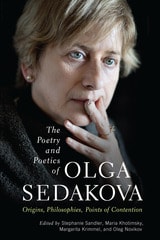
The Poetry and Poetics of Olga Sedakova
Origins, Philosophies, Points of ContentionEdited by Stephanie Sandler, Maria Khotimsky, Margarita Krimmel, and Oleg Novikov
University of Wisconsin Press, 2019
Essayists from Russia, Ukraine, Germany, Italy, and the United States show how Sedakova has contributed to ongoing aesthetic and cultural debates. Like Sedakova's own work, the volume affirms the capacity of words to convey meaning and to change our understanding of life itself. The volume also includes dozens of elegant new translations of Sedakova's poems.
The Politics of Fear
Joseph R. McCarthy and the SenateRobert Griffith
University of Massachusetts Press, 1970
Winner of the Organization of American Historians’ Frederick Jackson Turner Award
Originally published in 1970, and now a classic in its field, The Politics of Fear traces the rise and fall of one of America’s most notorious political demagogues. Robert Griffith concludes that McCarthy’s enormous power owed less to the force of the senator’s unique personality than to the issues and symbols with which he identified and that McCarthy was the product, not the progenitor, of the postwar politics of anticommunism. For this edition, Griffith has provided a new introduction covering the recent literature on McCarthyism and the changing views on the topic.
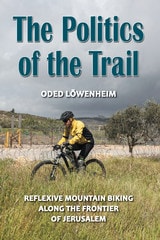
The Politics of the Trail
Reflexive Mountain Biking along the Frontier of JerusalemOded Löwenheim
University of Michigan Press, 2014
In The Politics of the Trail, Löwenheim confronts this tension by focusing on his encounters with three places along the trail: the separation fence between Israel and the Palestinians; the ruins of the Palestinian village Qalunya, demolished in 1948; and the trail connecting the largest 9/11 memorial site outside of the U.S. with a top-secret nuclear-proof bunker for the Israeli cabinet. He shares the stories of the people he meets along the way and considers how his own subjectivity is shaped by the landscape and culture of conflict. Moreover, he deconstructs, challenges, and resists the concepts and institutions that constitute such a culture and invites conversation about the idea of conflict as a culture.
The Pontecorvo Affair
A Cold War Defection and Nuclear PhysicsSimone Turchetti
University of Chicago Press, 2012
The Portraitist
Frans Hals and His WorldSteven Nadler
University of Chicago Press, 2022
Frans Hals was one of the greatest portrait painters in history, and his style transformed ideas and expectations about what portraiture can do and what a painting should look like.
Hals was a member of the great trifecta of Dutch Baroque painters alongside Rembrandt and Vermeer, and he was the portraitist of choice for entrepreneurs, merchants, professionals, theologians, intellectuals, militiamen, and even his fellow artists in the Dutch Golden Age. His works, with their visible brush strokes and bold execution, lacked the fine detail and smooth finish common among his peers, and some dismissed his works as sloppy and unfinished. But for others, they were fresh and exciting, filled with a sense of the sitter’s animated presence captured with energy and immediacy.
Steven Nadler gives us the first full-length biography of Hals in many years and offers a view into seventeenth-century Haarlem and this culturally rich era of the Dutch Republic. He tells the story not only of Hals’s life, but also of the artistic, social, political, and religious worlds in which he lived and worked.
The Powell Expedition
New Discoveries about John Wesley Powell's 1869 River JourneyDon Lago
University of Nevada Press, 2017
Lago offers a feast of new and important material about the river trip, and it will significantly rewrite the story of Powell’s famous expedition. This book is not only a major work on the Powell expedition, but on the history of American exploration of the West.

The Power of Two
A Twin Triumph Over Cystic FibrosisIsabel Byrnes and Anabel Stenzel
University of Missouri Press, 2007
For most people, a diagnosis of cystic fibrosis means the certainty of a life ended too soon. But for twin girls with the disease, what began as a family’s stubborn determination grew into a miracle.
The tragedy of CF has been touchingly recounted in such books as Frank Deford’s Alex: The Life of a Child, but The Power of Two is the first book to portray the symbiotic relationship between twins who share this life-threatening disease through adulthood. Isabel Stenzel Byrnes and Anabel Stenzel tell of their lifelong struggle to pursue normal lives with cystic fibrosis while grappling with the realization that they will die young. Their story reflects the physical and emotional challenges of a particularly aggressive form of CF and tells how the twins’ bicultural heritage—Japanese and German—influenced the way they coped with these challenges.
Born in 1972, seventeen years before scientists discovered the genetic mutation that causes CF, Isabel and Anabel endured the daily regimen of chest percussion, frequent doctor visits, and lengthy hospitalizations. But they tell how, in the face of innumerable setbacks, their deep-seated dependence on each other allowed them to survive long enough to reap the benefits of the miraculous lung transplants that marked a crossroads in their lives: “We have an old life—one of growing up with chronic illness—and a new life—one of opportunities and gifts we have never imagined before.” In this memoir, they pay tribute to the people who shaped their experience.
The Power of Two is an honest and gripping portrayal of day-to-day health care, the impact of chronic illness on marriage and family, and the importance of a support network to continuing survival. It conveys an important message to both popular and professional readers as it addresses key psychosocial issues in chronic illness throughout the sufferer’s lifespan and illuminates the human side of advances in biotechnology.
Even as gene therapy and stem cell research increase the chances for eradicating CF, this stirring account portrays its effects on one family that refused to give up. These two remarkable sisters have much to teach about the power of perseverance—and about the ultimate power of hope.

The Power of Two
A Twin Triumph over Cystic Fibrosis, Updated and Expanded EditionIsabel Stenzel Byrnes and Anabel Stenzel
University of Missouri Press, 2014
For most people, a diagnosis of cystic fibrosis means the certainty of a life ended too soon. But for Isabel Stenzel Byrnes and Anabel Stenzel, twin girls with the disease, what began as a family’s stubborn determination grew into a miracle.
The Power of the Between
An Anthropological OdysseyPaul Stoller
University of Chicago Press, 2008
Beginning with his early days with the Peace Corps in Africa and culminating with a recent bout with cancer, The Power of the Between is an evocative account of the circuitous path Stoller’s life has taken, offering a fascinating depiction of how a career is shaped over decades of reading and research. Stoller imparts his accumulated wisdom not through grandiose pronouncements but by drawing on his gift for storytelling. Tales of his apprenticeship to a sorcerer in Niger, his studies with Claude Lévi-Strauss in Paris, and his friendships with West African street vendors in New York City accompany philosophical reflections on love, memory, power, courage, health, and illness.
Graced with Stoller’s trademark humor and narrative elegance, The Power of the Between is both the story of a distinguished career and a profound meditation on coming to terms with the impermanence of all things.

The Pox Lover
An Activist's Decade in New York and ParisAnne-christine d'Adesky
University of Wisconsin Press, 2017
D'Adesky takes us through a fast-changing East Village: squatter protests and civil disobedience lead to all-night drag and art-dance parties, the fun-loving Lesbian Avengers organize dyke marches, and the protest group ACT UP stages public funerals. Traveling as a journalist to Paris, an insomniac d'Adesky trolls the Seine, encountering waves of exiles fleeing violence in the Balkans, Haiti, and Rwanda. As the last of the French Nazis stand trial and the new National Front rises in the polls, d'Adesky digs into her aristocratic family's roots in Vichy France and colonial Haiti. This is a testament with a message for every generation: grab at life and love, connect with others, fight for justice, keep despair at bay, and remember.
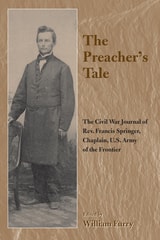
The Preacher's Tale
The Civil War Journal of Rev. Francis Springer, Chaplain, U.S. Army of the FrontierWilliam Furry
University of Arkansas Press, 2001
In the fall of 1861, fifty-one-year-old Rev. Francis Springer enlisted in the Union army. The following spring, Springer, a friend and one-time neighbor to Abraham Lincoln, rode away with the 10th Illinois Cavalry. A witness to the Battle of Prairie Grove (December 1862), Springer was later named post chaplain at Fort Smith, where, in additon to preaching and ministering to the troops, he was placed in charge of refugees—widows, orphans, and contrabands—the displaced victims of virulent guerrilla warfare in Northwest Arkansas. Springer also wrote articles and columns in the Fort Smith New Era under the pseudonym, “Thrifton.” Springer’s honest appraisals of life in the Army of the Frontier make for fascinating reading, and his unique perspective as moralist, educator, and journalist provide new insight into the Civil War and how it was fought in the West. The book includes several never-before published photographs and appendixes which feature accounts of six military executions that Springer participated in as a Union Army chaplain, the hitherto unpublished last letters home of two rebel soldiers condemned and executed at Fort Smith, as well as a eulogy for Abraham Lincoln.
The Preacher’s Tale includes several never before published photographs, and appendixes that contain accounts of six military executions that Springer participated in as a Union Army chaplain, the last letters home of two rebel soldiers condemned and executed at Fort Smith, as well as a eulogy written for Abraham Lincoln.
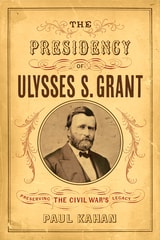
The Presidency of Ulysses S. Grant
Preserving the Civil War's LegacyPaul Kahan
Westholme Publishing, 2025
On December 5, 1876, President Ulysses S. Grant transmitted his eighth and final message to Congress. In reviewing his tenure as president, Grant proclaimed, “Mistakes have been made,” though he assured Congress, his administration’s “failures have been errors of judgment, not of intent.” Until recently, scholars have portrayed Grant as among the country’s worst chief executives. Though the scholarly consensus about Grant’s presidency is changing, the general public knows little, if anything, about his two terms, other than their outsized reputation for corruption. While scandals are undoubtedly part of the story, there is more to Grant’s presidency: Grant faced the Panic of 1873, the severest economic depression in U.S. history, defeated the powerful Senator Charles Sumner on the annexation of Cuba, and deftly avoided war with Spain while laying the groundwork for the “special relationship” between Great Britain and the United States. Grant’s efforts to ensure justice for African Americans and American Indians, however, were undercut by his own decisions and by the contradictory demands of the various constituencies that made up the Republican Party.
In The Presidency of Ulysses S. Grant: Preserving the Civil War’s Legacy, historian Paul Kahan focuses on the unique political, economic, and cultural forces unleashed by the Civil War and how Grant addressed these issues during his tumultuous two terms as chief executive. A timely reassessment, The Presidency of Ulysses S. Grant sheds new light on the business of politics in the decade after the Civil War and portrays an energetic and even progressive executive whose legacy has been overshadowed by both his wartime service and his administration’s many scandals.
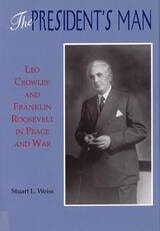
The President's Man
Leo Crowley and Franklin Roosevelt in Peace and WarStuart L. Weiss
Southern Illinois University Press, 1996
Leo Crowley has been known only as the administrator condemned by President Truman for cutting off Soviet lend-lease after V-E Day. Stuart L. Weiss revises this view while exploring Crowley’s long, significant state and federal career, emphasizing his service as Franklin D. Roosevelt’s man for all seasons.
Weiss deals effectively with Crowley’s flaws and virtues as well as those of the administrations he served. Crowley was confirmed as chair of the FDIC in 1934 despite a charge, unknown to President Roosevelt, that Crowley had committed fraud as a banker in Wisconsin. Crowley then served with distinction for more than eleven years as the administration twice buried a 1935 Treasury Department report that, had it been handed to Wisconsin authorities, could have sent him to prison: Roosevelt valued Crowley’s political and administrative talents too highly to allow that to happen.
In 1939, Roosevelt, anxious to have business support for stopping the Axis powers, encouraged Crowley to take the chair of a holding company about to be prosecuted by the SEC. After Pearl Harbor, like priorities prompted the president first to name Crowley alien property custodian, then chair of the Board of Economic Warfare to supplant Roosevelt’s politically troublesome vice president, and, finally, foreign economic administrator, the person responsible for civilian lend-lease activity
In this vibrant biography, Weiss furnishes the reader with detailed portraits of a man faithful to his president even when he disagreed with him and of a president willing to do what he felt was necessary for the good of the country.
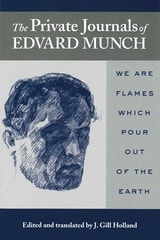
The Private Journals of Edvard Munch
We Are Flames Which Pour Out of the EarthEdvard Munch, edited and translated by J. Gill Holland
University of Wisconsin Press, 2005
This English translation of Edvard Munch's private diaries, the most extensive edition to appear in any language, captures the eloquent lyricism of the original Norwegian text. The journal entries in this volume span the period from the 1880s, when Munch was in his twenties, until the 1930s, reflecting the changes in his life and his work. The book is illustrated with fifteen of Munch's drawings, many of them rarely seen before. While these diaries have been excerpted before, no translation has captured the real passion and poetry of Munch's voice. This is a translation that lets Munch speak for himself and evokes the primal passion of his diaries. J. Gill Holland's exceptional work adds a whole new level to our understanding of the artist and the depth of his scream.
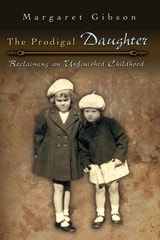
The Prodigal Daughter
Reclaiming an Unfinished ChildhoodMargaret Gibson
University of Missouri Press, 2008
The 1950s and 1960s were years of shifting values and social changes that did not sit well with many citizens of Richmond, Virginia, and in particular with one conservative family, a staunchly southern mother and father and their two daughters. A powerful evocation of time and place, this memoir—a gifted poet's first book of prose—is the story of an inquisitive and sensitive young woman's coming of age and a deeply moving recounting of her reconciliation later in life with the family she left behind.
Returning us to a Cold War world marked by divisions of race, gender, wealth, and class, The Prodigal Daughter is an exploration of difference, the powerful wedge that separates individuals within a social milieu and within a family. Echoing the biblical Prodigal Son, Margaret Gibson's memoir is less concerned with the years of excess away from home than with the seeds of division sown in this family's early years. Hers is the story of a mother proud to be a Lady, a Southerner, and a Christian; of two daughters trapped by their mother's power; and of their father's breakdown under social and family expectations.
Slow to rebel, young Margaret finally flees the world of manners and custom—which she deems poor substitutes for right thought and right action in the face of the Civil Rights movement and the Vietnam War—and abandons her fundamentalist upbringing. In a defiant gesture that proves prophetic, she once signed a postcard home "The Prodigal." After years of being the distant, absent daughter, she finds herself returning home to meet the needs of her stroke-crippled younger sister and her incapacitated parents.
In this tale of homecoming and forgiveness, death and dying, Gibson recounts how she overcame her long indifference to a sister she had thought different from herself, recognizing the strengths of the bonds that both hold us and set us free. Interweaving astute social observations on social pressures, race relations, sibling rivalry, adolescent angst, and more, The Prodigal Daughter is a startlingly honest portrayal of one family in one southern city and the story of all too many families across America.
The Professional Convict's Tale
The Survival of John O'Neill In and Out of PrisonElmer H. Johnson
Southern Illinois University Press, 2007
Challenging the ideology of treatment in the prison world
The Professional Convict’s Tale: The Survival of John O’Neill In and Out of Prison offers a unique, inside view of life behind bars in the 1960s. Elmer H. Johnson, a criminologist who has specialized in prison life for half a century, gave Menard Penitentiary parolee John O’Neill a tape recorder and a set of questions designed to draw out his opinions and observations about the prison world.
This study frames O’Neill’s responses with Johnson’s analysis. O’Neill’s narrative guides readers through the world beyond the prison gate as he shares his strategies for survival and proposes alternatives to rebellion or submission. He discusses the fractionalization between the keepers and the kept and the effects that subterranean communication, threats of inmate predators, and prison riots can have on the psyche of both inmates and staff.
O’Neill’s frustrations and the inadequate responses from the community to which he was paroled illustrate the social costs and impact of parole for the community and for the parolee. Although O’Neill recorded his comments more than forty years ago, they are still relevant today when thousands of convicts are being released from prison each year.
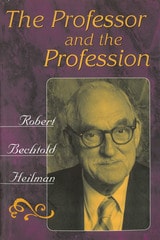
The Professor and the Profession
Robert Bechtold Heilman
University of Missouri Press, 1999
Robert Bechtold Heilman is one of the last survivors of a remarkable generation of American critics that included such literary giants as Cleanth Brooks, Allen Tate, and Edmund Wilson, men to whom literary criticism was not a profession or an academic necessity but a calling. In a distinguished career that has spanned nearly six decades, Heilman has influenced generations of scholars and critics through his exquisitely written commentaries on subjects ranging from William Shakespeare to Thomas Hardy.
In The Professor and the Profession, Heilman looks back over his life and times from his perspective as both an academic and an American. Differing in theme and subject matter, the essays included in this collection are ultimately unified by the author himself. Whether the topic is football, Robert Penn Warren, or education, Heilman's generous and intelligent voice emerges on every page. Yet this collection is more than one academic's personal reminiscences; it is a reflection upon American literary history itself.
In the first section of essays, "The Self Displayed," Heilman reveals how he developed from a small-town boy into a distinguished critic and teacher, touching upon his participation in baseball and love of football along the way. "Writers Portrayed" and "Literary Types and Problems Inspected," the following sections, offer his opinions on the past and on the current state of American literary criticism, including personal portraits of such renowned friends as Eric Voegelin, Robert Penn Warren, Theodore Roethke, and Malcolm Cowley. The final section, "Education Examined," is an enlightening inquiry into the development of American universities in the twentieth century.
A fascinating chronicle of a significant academic life, The Professor and the Profession will appeal to a broad array of scholars, from young academics wanting to know where they came from to those of Heilman's generation who can appreciate this personal reminiscence into the world of letters.
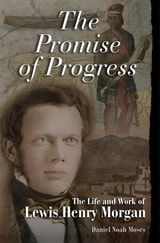
The Promise of Progress
The Life and Work of Lewis Henry MorganDaniel Noah Moses
University of Missouri Press, 2009
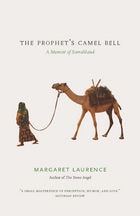
The Prophet's Camel Bell
A Memoir of SomalilandMargaret Laurence
University of Chicago Press, 1963
In 1950, as a young bride, Margaret Laurence set out with her engineer husband to what was then Somaliland: a British protectorate in North Africa few Canadians had ever heard of. Her account of this voyage into the desert is full of wit and astonishment. Laurence honestly portrays the difficulty of colonial relationships and the frustration of trying to get along with Somalis who had no reason to trust outsiders. There are moments of surprise and discovery when Laurence exclaims at the beauty of a flock of birds only to discover that they are locusts, or offers medical help to impoverished neighbors only to be confronted with how little she can help them. During her stay, Laurence moves past misunderstanding the Somalis and comes to admire memorable individuals: a storyteller, a poet, a camel-herder. The Prophet’s Camel Bell is both a fascinating account of Somali culture and British colonial characters, and a lyrical description of life in the desert.
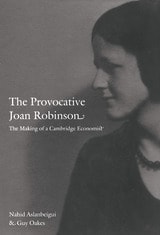
The Provocative Joan Robinson
The Making of a Cambridge EconomistNahid Aslanbeigui and Guy Oakes
Duke University Press, 2009
Aslanbeigui and Oakes demonstrate that Robinson’s professional identity was thoroughly embedded in a local scientific culture in which the Cambridge economists A. C. Pigou, John Maynard Keynes, Dennis Robertson, Piero Sraffa, Richard Kahn (Robinson’s closest friend on the Cambridge faculty), and her husband Austin Robinson were important figures. Although the economists Joan Robinson most admired—Pigou, Keynes, and their mentor Alfred Marshall—had discovered ideas of singular greatness, she was convinced that each had failed to grasp the essential theoretical significance of his own work. She made it her mission to recast their work both to illuminate their major contributions and to redefine a Cambridge tradition of economic thought. Based on the extensive correspondence of Robinson and her colleagues, The Provocative Joan Robinson is the story of a remarkable woman, the intellectual and social world of a legendary group of economists, and the interplay between ideas, ambitions, and disciplinary communities.
The Pushkin Handbook
Edited by David M. Bethea
University of Wisconsin Press, 2004