Results by title
8113 books match the query 'Literary Criticism' and 1818 start with t
The Grain of the Voice
Interviews 1962-1980Roland Barthes
Northwestern University Press, 2009
This book brings together the great majority of Barthes’s interviews that originally appeared in French in Le Figaro Littéraire, Cahiers du Cinéma, France-Observateur, L'Express, and elsewhere. Barthes replied to questions—on the cinema, on his own works, on fashion, writing, and criticism—in his unique voice; here we have Barthes in conversation, speaking directly, with all his individuality. These interviews provide an insight into the rich, probing intelligence of one of the great and influential minds of our time.
The Graphomaniac
A Literary-Historical Discussion of Dmitry KhvostovIlya Vinitsky and James H. McGavran III
Northwestern University Press, 2025
The only Russian Count of Sardinia, Dmitry Ivanovich Khvostov (1757–1835) didn’t achieve fame in his lifetime—he achieved infamy. Pathologically prolific and delusionally dedicated to a craft for which he had no talent, the count was renowned for his compulsive output, driven by a passion for poetry that was as strong as his abilities were weak. Only the country that gave the world Pushkin, however, could produce Khvostov, in whom we find a distorted yet illuminating reflection of his poetic epoch, with all its numerous cultural manifestations and hidden impulses, its desires and prejudices.
As he leads us on a playful journey across Russia’s Golden Age and beyond, from neoclassical salon to faculty lounge, Ilya Vinitsky reflects on the challenges and necessities of literary critique and on the unexpected rewards of bad art as a subject of study, not just ridicule. Mischievous but erudite, sensitive but never self-serious, The Graphomaniac is an intellectual biography of the anti-hero, a cultural figure whose paradoxes yield new insights into his era.
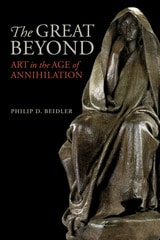
The Great Beyond
Art in the Age of AnnihilationPhilip D. Beidler
University of Alabama Press, 2022
Essays mapping how modern art confronts mortality in an age of war and annihilation.
While much about modernism remains up for debate, there can be no dispute about the connection between modernist art and death. The long modern moment was and is an age of war, genocide, and annihilation. Two world wars killed perhaps as many as 100 million people, through combat, famine, holocaust, and ghastly attacks on civilians. The ongoing COVID-19 pandemic is the fifth global pandemic since 1918, with more than a half-million American deaths and counting.
It can hardly come as a surprise, then, that many of the touchstones of modernism reflect on death and devastation. In Philip D. Beidler’s exploration of the modernist canon, he illuminates how these singular voices looked extinction in the eye and tried to reckon with our finitude—and their own. The Great Beyond: Art in the Age of Annihilation catalogs through lively prose an eclectic selection of artists, writers, and thinkers. In 16 essays, Beidler takes nuanced and surprising approaches to well-studied figures—the haunting sculpture by Saint-Gaudens commissioned by Henry Adams for his late wife; Luchino Visconti’s adaptation of Mann’s Death in Venice; and the author’s own long fascination with Beckett’s Waiting for Godot.
The threads and recurring motifs that emerge through Beidler’s analysis bridge the different media, genres, and timeframes of the works under consideration. Protomodernists Crane and Twain connect with near-contemporary voices like Sebald and Morrison. Robert MacFarlane’s 21st-century nonfiction about what lies underneath the earth echoes the Furerbunker and the poetry of Gertrud Kolmar. Learned but lively, somber but not grim, The Great Beyond is not a comfortable read, but it is in a way comforting. In tracing how his subjects confronted nothingness, be it personal or global, Beidler draws a brilliant map of how we see the end of the road.
The Great Derangement
Climate Change and the UnthinkableAmitav Ghosh
University of Chicago Press, 2016
The extreme nature of today’s climate events, Ghosh asserts, make them peculiarly resistant to contemporary modes of thinking and imagining. This is particularly true of serious literary fiction: hundred-year storms and freakish tornadoes simply feel too improbable for the novel; they are automatically consigned to other genres. In the writing of history, too, the climate crisis has sometimes led to gross simplifications; Ghosh shows that the history of the carbon economy is a tangled global story with many contradictory and counterintuitive elements.
Ghosh ends by suggesting that politics, much like literature, has become a matter of personal moral reckoning rather than an arena of collective action. But to limit fiction and politics to individual moral adventure comes at a great cost. The climate crisis asks us to imagine other forms of human existence—a task to which fiction, Ghosh argues, is the best suited of all cultural forms. His book serves as a great writer’s summons to confront the most urgent task of our time.
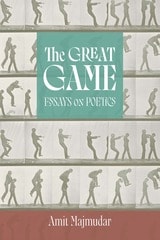
The Great Game
Essays on PoeticsAmit Majmudar
Acre Books, 2024
In The Great Game, poet, critic, translator, and literary omnivore Amit Majmudar ranges widely, writing with characteristic verve on canonical authors such as Milton, Byron, and Emily Dickinson, contemporaries like Kay Ryan, and other traditions of world literature. He examines verse drama and philosophy and even touches on writers of popular prose like Robert Ludlum and Ray Bradbury. A radiologist as well as a writer, Majmudar brings together the diagnostician’s precision with the poet’s imagination and an encyclopedic base of knowledge. He practices literary criticism as a global art, one with the intensity of verse, the depth of philosophy, and the scope of history—and does so with the infectious curiosity of a passionate reader.
Some of the most powerful essays here are synoptic meditations on science and poetry in which Majmudar shows that anyone trying to make fresh sense of the world, be it Milton or Kepler or Dickinson or Darwin, is practicing something like poetic meaning-making. The collection’s diverse inquiries are held together by Majmudar’s sustained, thoughtful, delightfully inventive attention to poetic form as an idea, to specific forms like the ghazal and the epic, and by his nimble, empathetic readings of individual writers. The Great Game is an intellectually thrilling tour of poetry across centuries, geographic divides, and even the disciplinary boundaries that separate science from philosophy from poetry.
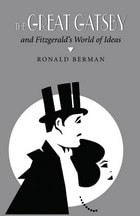
The Great Gatsby and Fitzgerald's World of Ideas
Ronald Berman
University of Alabama Press, 2000
Great Gatsby was created--and challenges accepted interpretations of
Fitzgerald's greatest novel.
"The Great Gatsby" and Fitzgerald's World of Ideas
focuses on F. Scott Fitzgerald and the prevailing ideas and values
that permeated American society in the late teens and early twenties, providing
a vivid portrait of the intellectual and cultural milieu in which The
Great Gatsby was produced.
This new and original reading of Gatsby discloses
Fitzgerald's remarkable awareness of the issues of his time and his debt
to such philosophers and critics as William James, Josiah Royce, George
Santayana, John Dewey, Walter Lippman, H. L. Mencken, and Edmund Wilson.
Ronald Berman's fresh approach considers the meaning of various ideas important
to the novel: for example, those moral qualities governing both social
and individual life. Berman's reading of the text reveals extraordinary
emphases on matters that could productively be described as philosophical
-- the nature of friendship, love, and the good life. But the text of the
novel has many echoes, and the same concern with moral issues -- especially
those issues affecting democratic life - can be found in a number of other
texts of the first quarter of the century. Vigorously debated throughout
Fitzgerald's own lifetime, these texts shed a completely new light on the
idealism of The Great Gatsby and on the penetrating view it has
of life in a new form of American democracy.
A noted Fitzgerald scholar, Berman makes it clear that
accepted interpretations of The Great Gatsby and of Fitzgerald's
work in general must be changed. Berman demonstrates that Fitzgerald wrote
within a vast dialectic, relating the ideas of the twenties to those of
the "old America" described in so many of his works. Gatsby, Nick Carraway,
and the other characters of Fitzgerald's greatest novel all have to consider
not only their relationship to the present but also their distance from
what was once a highly meaningful past.
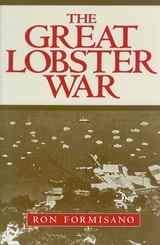
The Great Lobster War
Ron Formisano
University of Massachusetts Press, 1997
This groundbreaking historical account documents the little-known but significant conflict that erupted among Maine lobstermen in the 1950s—a pivotal clash that pitted independent small-scale fishermen against powerful dealers and federal government regulators. Written by distinguished historian Ronald P. Formisano, this work reconstructs a dramatic struggle over prices and economic power within Maine's vital lobster fishery.
Capturing the reality of the Lobster War strike and its subsequent legal proceedings, Formisano's narrative explores how independent owner-operators of the Maine lobster fishery, facing economic pressures from middlemen dealers and federal intervention, banded together in a coordinated effort to secure fair prices and maintain control over their livelihoods.
Through meticulous historical research, Formisano illuminates the economic realities of commercial fishing, the dynamics between laborers and processors, and the role of government regulation in shaping resource management policies.The Great Lobster War serves as both a detailed historical study and an accessible story of working-class agency and collective action in the postwar era.
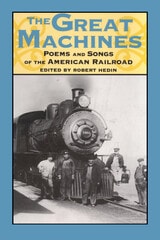
The Great Machines
Poems and Songs from the Age of the American RailroadRobert Hedin
University of Iowa Press, 1996
Here, for the first time, is a feast for anyone who has ever been beguiled by the trains that formerly thrummed through the landscapes of our lives. This entertaining and evocative anthology presents the amazing variety of poems and songs written about the American railroad in the last century and a half. Comprised of selections from both oral and written traditions, the volume celebrates the historical and cultural significance of this marvel of engineering skills. Hedin's anthology allows all readers, from the most avid railroad buff to anyone who has fond memories of train travel, to enjoy the romance of trains.

The Great Midland
Alexander Saxton
University of Illinois Press, 1997
The book vividly depicts the multiracial and multiethnic alliances that developed as Chicago railroad workers struggled to organize. It presents some of its narrative through the complex consciousness of Stephanie Koviak, a young, first-generation Polish-American.
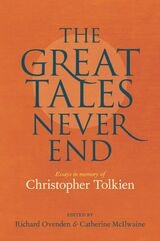
The Great Tales Never End
Essays in Memory of Christopher TolkienEdited by Richard Ovenden and Catherine McIlwaine
Bodleian Library Publishing, 2022
Over more than four decades, J. R. R. Tolkien’s son and literary executor Christopher Tolkien completed some twenty-four volumes of his father’s work, much more than his father had succeeded in publishing during his own lifetime. Thanks to Christopher’s extraordinary publishing efforts and scholarship, readers today can survey and understand the vast landscape of Tolkien’s legendarium.
The Great Tales Never End sheds new light on J. R. R. Tolkien’s work and the debt owed to Christopher by the many Tolkien scholars who were privileged to work with him. Essays by world-renowned scholars and Tolkien family reminiscences offer unique insights into the publication process. What was Tolkien’s intended ending for The Lord of the Rings, and did it leave echoes in the stripped-down version that was actually published? What was the audience’s response to the first-ever adaptation of The Lord of the Rings—a radio dramatization that has now been deleted forever from the BBC’s archives?
The book is illustrated with color reproductions of J. R. R. Tolkien’s manuscripts, maps, drawings, and letters, as well as photographs of Christopher Tolkien and extracts from his works. Many of these documents have never been seen before, making this volume essential reading for Tolkien scholars, readers, and fans.
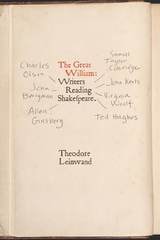
The Great William
Writers Reading ShakespeareTheodore Leinwand
University of Chicago Press, 2016
Theodore Leinwand builds impressively detailed accounts of these writers’ experiences through their marginalia, lectures, letters, journals, and reading notes. We learn why Woolf associated reading Shakespeare with her brother Thoby, and what Ginsberg meant when referring to the mouth feel of Shakespeare’s verse. From Hughes’s attempts to find a “skeleton key” to all of Shakespeare’s plays to Berryman’s tormented efforts to edit King Lear, Leinwand reveals the palpable energy and conviction with which these seven writers engaged with Shakespeare, their moments of utter self-confidence and profound vexation. In uncovering these intense public and private reactions, The Great William connects major writers’ hitherto unremarked scenes of reading Shakespeare with our own.
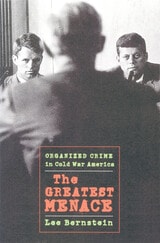
The Greatest Menace
Organized Crime in Cold War AmericaLee Bernstein
University of Massachusetts Press, 2002
The term Cold War has long been associated with the “red menace” of communism at home and abroad. Yet as Lee Bernstein shows in this illuminating study, during the 1950s the threat posed by organized crime preoccupied Americans at least as much as the fear of communist subversion. At the beginning of the decade, the televised hearings of Senator Estes Kefauver's crime committee, focusing on colorful mob figures such as Lucky Luciano and Frank Costello, attracted far more attention than the spy trial of Julius and Ethel Rosenberg. In the years that followed, public concern about gangsters and racketeering continued unabated, even after the anticommunist fever of McCarthyism had begun to subside.
Drawing on a broad range of evidence, from government records to films, television shows, and pulp novels, Bernstein explains how the campaign against organized crime, like the crusade against communism, reflected deep social and political anxieties. Just as the inquisitions of Senator McCarthy fed on popular fears of international conspiracy and alien infiltration, the anticrime investigations of the 1950s raised the specter of a foreign-based criminal cartel—the Sicilian Mafia— preying on a vulnerable American public. In both cases, the association of the foreign-born with criminal or un-American activity led to the creation of state and local citizens committees and to calls for new restrictions on immigration. Labor unions also came under attack, particularly after the McClellan Committee and its chief counsel, Robert F. Kennedy, claimed to have found a link between the International Brotherhood of Teamsters, led by Jimmy Hoffa, and the Mafia.
As Bernstein points out, despite significant changes in the way organized crime actually operated, and despite repeated protests from Italian Americans, the popular image of the sinister gangster persisted, because it served a more profound need. In an era marked by widespread uncertainty and rapid social change, the fight against a common enemy, real or imagined, helped forge a Cold War consensus across shifting lines of race, class, and ethnicity by redefining what it meant to be an American.
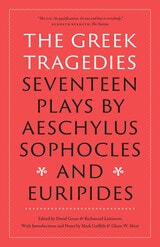
The Greek Tragedies
Seventeen Plays by Aeschylus, Sophocles, and EuripidesAeschylus, Sophocles, and Euripides
University of Chicago Press, 2025
The most authoritative, accessible, and poetic translations of the Greek Tragedies ever produced, now in one volume!
Drawn from the authoritative third editions of David Grene and Richmond Lattimore’s collections of the complete Greek tragedies, expertly updated by Mark Griffith and Glenn W. Most, this collection brings together seventeen of the greatest surviving plays of ancient Greece. Combining accuracy, poetic immediacy, and clarity of presentation, the masterpieces of Aeschylus, Sophocles, and Euripides have been rendered so compellingly in English that they remain the definitive translations. Each text has been carefully updated to bring it even closer to the ancient Greek original while retaining the vibrancy for which Chicago’s versions are famous.
Alongside the plays, this edition includes an introduction to the life and work of each tragedian; an introduction to each play offering essential information about its first production, plot, and reception through the centuries; and notes addressing textual uncertainties. Featuring lively translations by eminent classicists and authors including Anne Carson, Robert Fitzgerald, David Grene, Richmond Lattimore, Oliver Taplin, Emily Townsend Vermeule, and Elizabeth Wyckoff, this is an indispensable anthology for any reader of the foundational works of Western drama, art, and life.
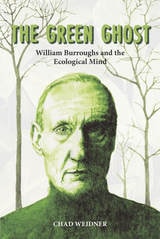
The Green Ghost
William Burroughs and the Ecological MindChad Weidner
Southern Illinois University Press, 2016
Using an ecocritical lens, Weidner explores the toxicity in Naked Lunch while at the same time teasing out latent ecological questions embedded in Burroughs’ later works. The author’s analysis of unknown and miniature “cut-ups,” texts that have been disassembled and rearranged to create new passages, provides a novel understanding of these cryptic forms. Weidner also examines in detail books by Burroughs that have been virtually ignored by critics, exposing the deep ecology of the Beat writer’s vision.
In calling attention to Burroughs’s narrative strategies that link him to an environmental political position, The Green Ghost demonstrates that the work of the Beat writer is a ripe source for ecocritical dialogue.
The Greening Of Literary Scholarship
Literature, Theory, and he EnvironmentSteven Rosendale
University of Iowa Press, 2002
Each essay in this impressive collection challenges the notion that the study of environmental literature is separate from traditional concerns of criticism, and each applies ecocritical scholarship to literature not commonly explored in this context. New historicism, postcolonialism, deconstructionism, and feminist and Marxist theories are all utilized to evaluate and gain new insights into environmental literature; at the same time, Percy Bysshe Shelley, Upton Sinclair, Leslie Marmon Silko, and Susan Howe are studied from an ecocritical perspective.
The Grimace of Macho Ratón
Artisans, Identity, and Nation in Late-Twentieth-Century Western NicaraguaLes W. Field
Duke University Press, 1999
Elite appropriations of El Güegüence construe it as an allegory of mestizo national identity in which mestizaje is defined as the production of a national majority of ethnically bounded non-Indians in active collaboration with the state. By contrast, Field interprets the play as a parable of cultural history and not a declaration of cultural identity, a scatological reflection on power and the state, and an evocation of collective loss and humor broadly associated with the national experience of disempowered social groups. By engaging with those most intimately involved in the performance of the play—and by including essays by some of these artisans—Field shows how El Güegüence tells a story about the passing of time, the absurdity of authority, and the contradictions of coping with inheritances of the past. Refusing essentialist notions of what it means to be Indian or artisan, Field explains the reemergence of politicized indigenous identity in western Nicaragua and relates this to the longer history of artisan political organization. Parting ways with many scholars who associate the notion of mestizaje with identity loss and hegemony, Field emphasizes its creative,
productive, and insightful meanings. With an emphasis on the particular struggles of women artisans, he explores the reasons why forms of collective identity have posed various kinds of predicaments for this marginalized class of western Nicaraguans.
This book will appeal to readers beyond the field of Latin American anthropology, including students and scholars of literature, intellectual history, women’s studies, and the politics of ethnicity.
The Grinnell Beowulf
Timothy D. Arner
Arizona Center for Medieval and Renaissance Studies, 2000
The Groove of the Poem
Reading Philippe BeckJacques Rancière
University of Minnesota Press, 2016
“Music is the brute that shows.
It is the avowal of materials,
And stutters between its clanging of things.”
How should one think this musical groove of the poem whose back and forth motion shuffles the material of ordinary language and revives the frozen speech of old chants? This question by renowned French thinker Jacques Rancière is the entry point for his earnest and careful reading of one of France’s most singular and important contemporary poets. For Rancière, Philippe Beck sets himself the task of a poetry after poetry whereby Beck re-writes and transforms the poems of the past, reanimating faded genres, poetizing the prose of popular tales and even commentaries regarding poems. To read and follow this groove traced as such cannot simply be done by way of taking the poems as objects of study. It supposes a dialogue regarding what these poems attempt to do as well as an idea of a poetry which serves as their foundation. This book on Philippe Beck is thus also a book made with him.
The Habit of Lying
Sacrificial Studies in Literature, Philosophy, and Fashion TheoryJohn Vignaux Smyth
Duke University Press, 2002
With recourse to Rene Girard, Paul de Man, Theodor Adorno, Leo Strauss, and other theoreticians not usually considered together, Smyth arrives at some surprising conclusions about the connections between lying, mimesis, sacrifice, sadomasochism, and the sacred, among other central subjects. Arguing that the relation between lying and truthtelling has been characterized in the West by sharply sacrificial features, he begins with a critique of the philosophies of lying espoused by Kant and Sissela Bok, then concludes that the problem of truth and lies leads to the further problem of the relation between law and arbitrariness as well as to the relation between rationality and unanimity. Constructively criticizing the work of such philosophers as Bertrand Russell, Ludwig Wittgenstein, Richard Rorty, and Nelson Goodman, Smyth shows how these problems occur comparably in fiction theory and how Paul de Man’s definition of fiction as arbitrariness finds confirmation in analytic philosophy. Through the novels of Defoe, Stendhal, and Beckett—with topics ranging from Defoe’s treatment of lies, fiction, and obscenity to Beckett’s treatment of the anus and the sacred—Smyth demonstrates how these texts generalize the issues of mendacity, concealment, and sacrificial arbitrariness in Girard’s sense to almost every aspect of experience, fiction theory, and cultural life. The final section of the book, taking its cue from Shakespeare, elaborates a sacrificial view of the history of fashion and dress concealment.
The Half-Life of Deindustrialization
Working-Class Writing about Economic RestructuringSherry Lee Linkon
University of Michigan Press, 2018
Through analysis of poetry, fiction, creative nonfiction, film, and drama, The Half-Life of Deindustrialization shows why people and communities cannot simply “get over” the losses of economic restructuring. The past provides inspiration and strength for working-class people, even as the contrast between past and present highlights what has been lost in the service economy. The memory of productive labor and stable, proud working-class communities shapes how people respond to contemporary economic, social, and political issues. These stories can help us understand the resentment, frustration, pride, and persistence of the American working class.
The Hall of Mirrors
Drafts & Fragments and the End of Ezra Pound's CantosPeter Stoicheff
University of Michigan Press, 1995
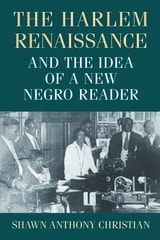
The Harlem Renaissance and the Idea of a New Negro Reader
Shawn Anthony Christian
University of Massachusetts Press, 2016
Many scholars have written about the white readers and patrons of the Harlem Renaissance, but during the period many black writers, publishers, and editors worked to foster a cadre of African American readers, or in the poet Sterling Brown's words, a “reading folk.” Black newspapers featured columns that reviewed the latest African American fiction. Magazines held writing contests to urge black readers to participate in the literary culture. Through newspapers, journals, and anthologies, writers such as James Weldon Johnson, Jessie Fauset, and Gwendolyn Bennett spoke directly to their fellow African Americans to cultivate interest in literature and the intellectual tools for reading it.
In The Harlem Renaissance and the Idea of a New Negro Reader, Shawn Anthony Christian argues that print-based addresses to African Americans are a defining but understudied component of the Harlem Renaissance. Especially between 1919 and 1930, these writers promoted diverse racial representation as a characteristic of “good literature” both to exhibit black literacy and to foster black readership. Drawing on research from print culture studies, histories of racial uplift, and studies of modernism, Christian demonstrates the importance of this focus on the African American reader in influential periodicals such as The Crisis and celebrated anthologies such as The New Negro. Christian illustrates that the drive to develop and support black readers was central in the poetry, fiction, and drama of the era.
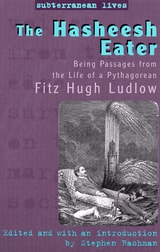
The Hasheesh Eater
Being Passages from the Life of a PythagoreanRachman, Stephen
Rutgers University Press, 2006
In this first scholarly edition, editor Stephen Rachman positions Ludlow's enduring work as not just a chronicle of drug use but also as a window into the budding American bohemian literary scene. A lucid introduction explores the breadth of Ludlow's classical learning as well as his involvement with the nineteenth-century subculture that included fellow revelers such as Walt Whitman and the pianist Louis Gottshalk. With helpful annotations guiding readers through the text's richly allusive qualities and abundance of references, this edition is ideal for classroom use as well as for general readers.
The Hawk Is Hungry and Other Stories
D'Arcy McNickle; Edited by Birgit Hans
University of Arizona Press, 1992
CONTENTS
The Reservation
Hard Riding
En roulant ma boule, roulant...
Meat for God
Snowfall
Train Time
Montana
The Hawk Is Hungry
Debt of Gratitude
Newcomers
Man's Work
Going to School
The City
Manhattan Wedlock
Let the War Be Fought
In the Alien Corn
Six Beautiful in Paris
The Silver Locket
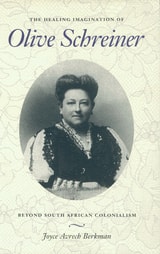
The Healing Imagination of Olive Schreiner
Beyond South African ColonialismJoyce Avrech Berkman
University of Massachusetts Press, 0
The Heart as a Drum
Continuance and Resistance in American Indian PoetryRobin Riley Fast
University of Michigan Press, 2000
The Heart of Achilles
Characterization and Personal Ethics in the IliadGraham Zanker
University of Michigan Press, 1996
"[Zanker] investigates altruistic behavior in the epic with professional sophistication but in a way that makes his investigation available to a wide audience from undergraduates to advanced scholars. . . . [A] very useful interpretative study." --Choice
Graham Zanker is Senior Lecturer in Classics, University of Canterbury, New Zealand.
The Heretical Archive
Digital Memory at the End of FilmDomietta Torlasco
University of Minnesota Press, 2013
The Heretical Archive examines the relationship between memory and creation in contemporary artworks that use digital technology while appropriating film materials. Domietta Torlasco argues that these digital films and multimedia installations radically transform our memory of cinema and our understanding of the archive. Indeed, such works define a notion of archiving not as the passive preservation of audiovisual signs but as an intervention and the creative rearticulation of cinema’s perceptual and political textures.
Connecting psychoanalysis, phenomenology, and feminist theory in innovative ways, Torlasco analyzes cutting-edge digital works that engage with the past of European cinema and visual culture, including video installations by Monica Bonvicini (Destroy She Said) and Pierre Huyghe (The Ellipsis), Agnès Varda’s film The Gleaners and I, Marco Poloni’s multimedia installation The Desert Room, and Chris Marker’s CD-ROM Immemory.
Torlasco’s central claim is that if the archives of psychoanalysis and cinema have long privileged the lineage that runs from Oedipus to Freud, the archives of the digital age—what she calls the “heretical archive”—can help us imagine an unruly, porous, multifaceted legacy, one in which marginal figures return to speak of lost life as much as of life that demands to be lived.
The Hero and the City
An Interpretation of Sophocles' Oedipus at ColonusJoseph P. Wilson
University of Michigan Press, 2003
Joseph P. Wilson is Professor of Foreign Languages at the University of Scranton.
The Hero and the Victim
Narratives of Criminality in Iraq War FictionGregory Brazeal
Lever Press, 2024
The emphasis on soldier criminality in Iraq War fiction can be partly explained by the rise of moral cosmopolitanism and its blurring of the traditional conceptual lines between war and crime. The anti-war literature of the twentieth century often presented fallen soldiers on both sides equally as victims and viewed the distinction between heroes and villains as part of the illusion that battlefield experience strips away. Written in the long shadow of Nuremberg, Iraq War fiction grapples with the possibility that the soldiers on one’s own side may not be the heroes in the story, or even the victims, but participants in a wrong, and perhaps even complicit in crimes. The Hero and the Victim contributes to the ongoing, public reexamination of American traditions by confronting a topic that has, up to now, been largely untouched: the moral celebration of military service.
The Hero and the Victim explores the theme of soldier criminality through close readings of several works by American authors, including Kevin Powers’s The Yellow Birds, Phil Klay’s Redeployment, Helen Benedict’s Sand Queen, Chris Kyle’s American Sniper, and Roy Scranton’s War Porn. This volume will be an essential text for students of American literature, historians of war culture, and any scholar interested in representations of the Iraq War.
The Hero's Place
Medieval Literary Traditions of Space and BelongingMolly Robinson Kelly
Catholic University of America Press, 2009
The Hidden Force
L. Couperus
University of Massachusetts Press, 1985
The Hidden Isaac Bashevis Singer
Edited by Seth L. Wolitz
University of Texas Press, 2002
Nobel Prize-winning author Isaac Bashevis Singer stands virtually alone among prominent writers for being more widely known through translations of his work than through the original texts. Yet readers and critics of the Yiddish originals have long pointed out that the English versions are generally shortened, often shorn of much description and religious matter, and their perspectives and denouements are significantly altered. In short, they turn the Yiddish author into a Jewish-American English writer, detached from of his Eastern European Jewish literary and cultural roots.
By contrast, this collection of essays by leading Yiddish scholars seeks to recover the authentic voice and vision of the writer known to his Yiddish readers as Yitskhok Bashevis. The essays are grouped around four themes:
- The Yiddish language and the Yiddish cultural experience in Bashevis's writings
- Thematic approaches to the study of Bashevis's literature
- Bashevis's interface with other times and cultures
- Interpretations of Bashevis's autobiographical writings
A special feature of this volume is the inclusion of Joseph Sherman's new, faithful translation of a chapter from Bashevis's Yiddish "underworld" novel Yarme and Keyle.
The Hindered Hand
Sutton E. Griggs
West Virginia University Press, 2017
Written in response to Thomas Dixon’s recently published race-baiting novel The Leopard’s Spots, Griggs’s book depicts the remnants of the old Southern planter class, the racial crisis threatening the South and the North, the social ferment of the time, the changing roles of women, and the thwarted aspirations of a trio of African American veterans following the war against Spain. This scholarly edition of the novel, providing newly discovered biographical information and copious historical context, makes a significant contribution to African American literary scholarship.
The Hindered Hand
John Cullen Gruesser
University of Delaware Press, 0
Between 1899 and 1908, five long works of fiction by the Nashville-based Black Baptist minister Sutton E. Griggs appeared in print in which he examined the interrelationships among race, politics, economics, gender, culture, religion, violence, and empire, making him the most prolific African American novelist at the turn of the twentieth century, a time at which the civil rights and the very existence of African Americans, especially those in the South, were increasingly in jeopardy.
Brought out by Griggs’s own Orion Publishing Company in three distinct printings in 1905 and 1906, The Hindered Hand; or, the Reign of the Repressionist addresses the author’s key themes of amalgamation, emigration, armed resistance, and US overseas expansion; includes a melodramatic love story; and features two of the most sensational scenes in early African American fiction—a harrowingly graphic lynching of an innocent black couple based on actual events and the elaboration of a plot to wipe out white Southerners by introducing yellow fever germs into the water supply.
Written in response to Thomas Dixon’s recently published race-baiting novel The Leopard’s Spots, Griggs’s book depicts the remnants of the old Southern planter class, the racial crisis threatening the South and the North, the social ferment of the time, the changing roles of women, and the thwarted aspirations of a trio of African American veterans following the war against Spain. This scholarly edition of the novel, providing newly discovered biographical information and copious historical context, makes a significant contribution to African American literary scholarship.
The Historical Renaissance
New Essays on Tudor and Stuart Literature and CultureEdited by Heather Dubrow and Richard Strier
University of Chicago Press, 1988
The volume includes studies of mid-Tudor culture as well as of Elizabethan and Stuart periods.
The Historicity of Experience
Modernity, the Avant-Garde, and the EventKrysztof Ziarek
Northwestern University Press, 2001
The four poets Ziarek considers—Gertrude Stein, Velimir Khlebnikov, Miron Biaoszewski, and Susan Howe—demonstrate the broad reach of and variety of forms taken by the avant-garde revision of experience and aesthetics. Moreover, this quartet illustrates how the main operative concepts and strategies of the avant-garde underpinned the practices of canonical writers. A profound philosophical meditation on language, modernity, and the everyday, The Historicity of Experience offers a fundamental reconceptualization of the avant-garde in relation to experience.
The History and Power of Writing
Henri-Jean Martin
University of Chicago Press, 1994
Traversing four millennia, Martin offers a chronicle of writing as a cultural system, a means of communication, and a history of technologies. He shows how the written word originated, how it spread, and how it figured in the evolution of civilization. Using as his center the role of printing in making the written way of thinking dominant, Martin examines the interactions of individuals and cultures to produce new forms of "writing" in the many senses of authorship, language rendition, and script.
Martin looks at how much the development of writing owed to practical necessity, and how much to religious and social systems of symbols. He describes the precursors to writing and reveals their place in early civilization as mnemonic devices in service of the spoken word. The tenacity of the oral tradition plays a surprisingly important part in this story, Martin notes, and even as late as the eighteenth century educated individuals were trained in classical rhetoric and preferred to rely on the arts of memory. Finally, Martin discusses the changes to writing wrought by the electronic revolution, offering invaluable insights into the influence these new technologies have had on children born into the computer age.
The Hoarders
Material Deviance in Modern American CultureScott Herring
University of Chicago Press, 2014
In The Hoarders, Scott Herring provides an in-depth examination of how modern hoarders came into being, from their onset in the late 1930s to the present day. He finds that both the idea of organization and the role of the clutterologist are deeply ingrained in our culture, and that there is a fine line between clutter and deviance in America. Herring introduces us to Jill, whose countertops are piled high with decaying food and whose cabinets are overrun with purchases, while the fly strips hanging from her ceiling are arguably more fly than strip. When Jill spots a decomposing pumpkin about to be jettisoned, she stops, seeing in the rotting, squalid vegetable a special treasure. “I’ve never seen one quite like this before,” she says, and looks to see if any seeds remain. It is from moments like these that Herring builds his questions: What counts as an acceptable material life—and who decides? Is hoarding some sort of inherent deviation of the mind, or a recent historical phenomenon grounded in changing material cultures? Herring opts for the latter, explaining that hoarders attract attention not because they are mentally ill but because they challenge normal modes of material relations. Piled high with detailed and, at times, disturbing descriptions of uncleanliness, The Hoarders delivers a sweeping and fascinating history of hoarding that will cause us all to reconsider how we view these accumulators of clutter.
The Holocaust and the Book
Destruction and PreservationJonathan Rose
University of Massachusetts Press, 2001
Between 1933 and 1945, Nazi Germany systematically destroyed an estimated 100 million books throughout occupied Europe, an act that was inextricably bound up with the murder of 6 million Jews. By burning and looting libraries and censoring “un-German” publications, the Nazis aimed to eradicate all traces of Jewish culture along with the Jewish people themselves.
The Holocaust and the Book examines this bleak chapter in the history of printing, reading, censorship, and libraries. Topics include the development of Nazi censorship policies, the celebrated library of the Vilna ghetto, the confiscation of books from the Sephardic communities in Rome and Salonika, the experience of reading in the ghettos and concentration camps, the rescue of Polish incunabula, the uses of fine printing by the Dutch underground, and the suppression of Jewish books and authors in the Soviet Union. Several authors discuss the continuing relevance of Nazi book burnings to the present day, with essays on German responses to Friedrich Nietzsche and the destruction of Bosnian libraries in the 1990s.
The collection also includes eyewitness accounts by Holocaust survivors and a translation of Herman Kruk's report on the Vilna ghetto library. An annotated bibliography offers readers a concise guide to research in this growing field.
The Holocaust of Texts
Genocide, Literature, and PersonificationAmy Hungerford
University of Chicago Press, 2002
Hungerford examines the implications of conflating texts with people in a broad range of texts: Art Spiegelman's Maus; Ray Bradbury's Fahrenheit 451; the poetry of Sylvia Plath; Binjamin Wilkomirski's fake Holocaust memoir Fragments; and the fiction of Saul Bellow, Philip Roth, and Don DeLillo. She considers the ethical consequences of this trend in the work of recent and contemporary theorists and literary critics as well, including Cathy Caruth, Jacqueline Rose, Jacques Derrida, and Paul de Man. What she uncovers are fundamentally flawed ideas about representation that underwrite and thus undermine powerful and commonly accepted claims about literature and identity. According to Hungerford, the personification of texts is ethically corrosive and theoretically unsound. When we exalt the literary as personal and construe genocide as less a destruction of human life than of culture, we esteem memory over learning, short-circuit debates about cultural change, lend credence to the illusion or metaphysics of presence, and limit our conception of literature and its purpose.
Ultimately, The Holocaust of Texts asks us to think more deeply about the relationship between reading, experience, and memorialization. Why, for instance, is it more important to remember acts of genocide than simply to learn about them? If literary works are truly the bearers of ontology, then what must be our conduct toward them? Considering difficult questions such as these with fresh logic, Hungerford offers us an invigorating work, one that will not only interest scholars of American and postwar literature, but students of the Holocaust and critical theory as well.
The Holocaust
Theoretical ReadingsLevi, Neil
Rutgers University Press, 2003
This agenda-setting reader brings together both classic and new writings to demonstrate how concerns arising from the Nazi genocide shaped contemporary literary and cultural theory. Wide in its thematic scope, it covers such vital questions as:
- Authenticity and experience
- Memory and trauma
- Historiography and the philosophy of history
- Fascism and Nazi anti-Semitism
- Representation and identity formation
- Race, gender, and genocide
- Implications of the Holocaust for theories of the unconscious, ethics, politics, and aesthetics
The readings, which are fully contextualized by a general introduction, section introductions, and bibliographical notes, represent the work of many influential writers and theorists, including Theodor Adorno, Giorgio Agamben, Hannah Arendt, Jean Baudrillard, Zygmunt Bauman, Walter Benjamin, Cathy Caruth, Jacques Derrida, Shoshana Felman, Saul Friedlander, Paul Gilroy, Lawrence Langer, Emmanuel Levinas, Primo Levi, Jean-François Lyotard, Hayden White, and James E. Young. This multidisciplinary anthology will be welcomed by students and scholars of the Holocaust.
The Horror Theory Reader
Jeffrey Andrew Weinstock
University of Minnesota Press, 2026
A comprehensive guide to the timeless, paradoxical appeal of horror
Why do we enjoy horror? The emotional responses the genre provokes—fear, dread, and disgust—are ones we typically seek to avoid, so what is the appeal of narratives and artistic representations that seek to scare, startle, shock, and repulse? In The Horror Theory Reader, Jeffrey Andrew Weinstock assembles theorizations of the genre’s appeal from antiquity to the present day to explore the “paradox of horror” that has for millennia preoccupied theorists and consumers alike.
Beginning with an introduction situating the history of horror in the context of moral panics, this carefully curated volume then is organized into three sections that introduce early attempts to explain horror’s fascination; present perspectives from horror writers, filmmakers, and scholars; and offer nuanced considerations of horror’s intersections with disability, queerness, race, and gender. Featuring classic commentaries on the genre by H. P. Lovecraft, Alfred Hitchcock, and Stephen King alongside incisive essays by philosophers, literary and film scholars, cultural critics, and others, The Horror Theory Reader is indispensable for scholars and will be of interest to anyone curious about our paradoxical enjoyment of appalling and fearsome things.
Contributions by: Joseph Addison; Aristotle; Anna Letitia Barbauld; Dani Bethea; Edmund Burke; Noël Carroll, CUNY Graduate Center; Brigid Cherry; Mathias Clasen, Aarhus U; Douglas E. Cowan, Renison U College; Meghan Downes, Monash U; Berys Gaut, U of St. Andrews; Julian Hanich, U of Groningen; Sheri-Marie Harrison, U of Missouri; Matt Hills, U of Huddersfield; Alfred Hitchcock; David Hume; Mark Jancovich, U of East Anglia; Stephen King; Petra Kuppers, U of Michigan; H. P. Lovecraft; G. Neil Martin, Regent’s U London; John Morreall, College of William and Mary; Monika Negra; Nina Nesseth; Anne Radcliffe; Fredrich Schiller; Walter Scott; Tim Snelson, U of East Anglia; Christopher St. John Sprigg; Susan Stryker, U of Arizona; S. Trimble, U of Toronto; Kendall Walton, U of Michigan; Linda Williams, UC Berkeley; Robin Wood.
Retail e-book files for this title are screen-reader friendly with images accompanied by short alt text and/or extended descriptions.
The House is Made of Poetry
The Art of Ruth StoneEdited by Wendy Barker and Sandra M. Gilbert
Southern Illinois University Press, 1996
Ruth Stone has always eschewed self-promotion and, in the words of Leslie Fiedler, "has never been a member of any school or clique or gaggle of mutual admirers." But her poems speak so vibrantly for her that she cannot be ignored.
In her preface to this volume, Sandra M. Gilbert declares that Stone’s "intense attention to the ordinary transforms it into (or reveals it as) the extraordinary. Her passionate verses evoke impassioned responses." At the same time, Gilbert continues, the essays collected here "consistently testify to Stone’s radical unworldliness, in particular her insouciant contempt for the ‘floor walkers and straw bosses’ who sometimes seem to control the poetry ‘factory’ both inside and outside the university."
Wendy Barker and Sandra Gilbert have organized the book into three sections: "Knowing Ruth Stone," "A Life of Art," and "Reading Ruth Stone." In "Knowing Ruth Stone," writers of different generations who have known the poet over the years provide memoirs. Noting Stone’s singularity, Fiedler points out that "she resists all labels" and is "one of the few contemporaries whom it is possible to think of simply as a ‘poet.’" Sharon Olds defines her vitality ("A Ruth Stone poem feels alive in the hands"), and Jan Freeman praises her aesthetic intensity ("Everything in the life of Ruth Stone is integrated with poetry").
"A Life of Art" sketches the outlines of Stone’s career and traces her evolution as a poet. Barker and Norman Friedman, for example, trace her development from the "high spirits and elegant craft" of her first volume—Inan Iridescent Time— through the "deepening shadows," "poignant wit," and "bittersweet meditations" of her later work. In interviews separated by decades (one in the 1970s and one in the 1990s), Sandra Gilbert and Robert Bradley discuss with Stone her own sense of her aesthetic origins and literary growth.
"Reading Ruth Stone" is an examination of Stone’s key themes and modes. Diane Wakoski and Diana O’Hehir focus on the tragicomic vision that colors much of her work; Kevin Clark and Elyse Blankley explore the political aspects of her poetry; Roger Gilbert analyzes her "often uncannily astute insights into the ‘otherness’ of other lives"; Janet Lowery and Kandace Brill Lombart draw on the biographical background of Stone’s "grief work"; and Sandra Gilbert studies her caritas, her empathic love that redeems pain.
The Huguenot Experience of Persecution and Exile
Three Women’s StoriesCharlotte Arbaleste Duplessis-Mornay, Anne de Chaufepié, and Anne Marguerite Petit Du Noyer
Iter Press, 2019
Edited by Colette H. Winn. Translated by Lauren King and Colette H. Winn
The Other Voice in Early Modern Europe: The Toronto Series, Vol. 68
The Human in This Place
American Literatures of LynchingJennifer D. Ryan-Bryant
University of Massachusetts Press, 2027
Tracing how resistance to lynching violence generated some of the most innovative writing in American literature
On March 9, 1892, three Black men were murdered in Memphis. The violence moved Ida B. Wells to begin writing against lynching; in doing so, she helped ignite a literary tradition that would transform American literature. The dual presence of lynching violence and activist resistance gave rise to a dynamic body of African American writing that grapples with the contradictions inherent to a democracy whose citizens enslaved others.
In The Human in This Place, Jennifer Ryan-Bryant ties central moments in the history of American lynching to the emergence of new literary genres. Focusing on Jim Crow segregation, anti-lynching activism, the murder of Emmett Till, Civil Rights and Black Power organizing, and modern police brutality, Ryan-Bryant identifies the unique formal elements and themes that characterize literary responses to sustained social violence and political resistance. The new genres she identifies—including the socialist novel, the Emmett Till poem, and the anti-epic catalogue—reveal art's resistance and response to unchecked mob violence.
The Human in This Place recognizes that lynchings occupy a uniquely disturbing space in American life: simultaneously legal and extralegal, public and private, individual and communal. The literatures of lynching investigate the ethical slippage endemic to American national identity and articulate the joyous expression that resistance makes possible.
The Humanities and the Dream of America
Geoffrey Galt Harpham
University of Chicago Press, 2011
In this bracing and original book, Geoffrey Galt Harpham argues that today’s humanities are an invention of the American academy in the years following World War II, when they were first conceived as an expression of American culture and an instrument of American national interests. The humanities portray a “dream of America” in two senses: they represent an aspiration of Americans since the first days of the Republic for a state so secure and prosperous that people could enjoy and appreciate culture for its own sake; and they embody in academic terms an idealized conception of the American national character. Although they are struggling to retain their status in America, the concept of the humanities has spread to other parts of the world and remains one of America's most distinctive and valuable contributions to higher education.
The Humanities and the Dream of America explores a number of linked problems that have emerged in recent years: the role, at once inspiring and disturbing, played by philology in the formation of the humanities; the reasons for the humanities’ perpetual state of “crisis”; the shaping role of philanthropy in the humanities; and the new possibilities for literary study offered by the subject of pleasure. Framed by essays that draw on Harpham’s pedagogical experiences abroad and as a lecturer at the U.S. Air Force Academy, as well as his vantage as director of the National Humanities Center, this book provides an essential perspective on the history, ideology, and future of this important topic.
The Humanities in the Age of Information and Post-Truth
Edited by Ignacio López-Calvo and Christina Lux
Northwestern University Press, 2019
While the reader may suspect that these types of lucubration are a desperate reaction to decreased public funding for the humanities worldwide, a decreased enrollment of students, or anxiety over the future of our profession, there is in this volume a coherent argument for the continued need, perhaps more now than ever, to invest in humanities education if we are to have informed and socially conscious citizens rather than just willing consumers and obedient workers. Furthermore, the essays prove that the humanities and the arts are, after all, not a luxury but an integral part of a complete scholarly education.
The Humble Story of Don Quixote
Reflections on the Birth of the Modern NovelCesáreo Bandera
Catholic University of America Press, 2006
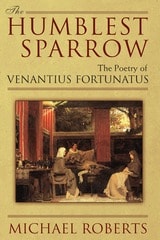
The Humblest Sparrow
The Poetry of Venantius FortunatusMichael Roberts
University of Michigan Press, 2010
In The Humblest Sparrow, Michael Roberts illuminates the poetry of the sixth-century bishop and poet Venantius Fortunatus. Often regarded as an important transitional figure, Fortunatus wrote poetry that is seen to bridge the late classical and earlier medieval periods. Written in Latin, his poems combined the influences of classical Latin poets with a medieval tone, giving him a special place in literary history. Yet while interest has been growing in the early Merovingian period, and while the writing of Fortunatus' patron Gregory of Tours has been well studied, Fortunatus himself has often been neglected. This neglect is remedied by this in-depth study, which will appeal to scholars of late antique, early Christian, and medieval Latin poetry. Roberts divides Fortunatus' poetry into three main groups: poetry of praise, hagiographical poetry, and personal poetry. In addition to providing a general survey, Roberts discusses in detail many individual poems and proposes a number of theses on the nature, function, relation to social and linguistic context, and survival of Fortunatus' poetry, as well as the image of the poet created by his work.