Results by title
4917 books match the query 'Philosophy' and 1267 start with t
The Moment of Complexity
Emerging Network CultureMark C. Taylor
University of Chicago Press, 2001
The science of complexity accounts for that inscrutable mix of chaos and order that governs our natural world. Complexity explains how networks emerge and function, how species organize into ecosystems, how stars form into galaxies, and how just a few sequences of DNA can account for so many different life forms. Recently, the idea of complexity has taken the worlds of business and politics by storm. The concept is used to account for phenomena as varied as the behavior of the stock market, the response of voting populations, and the effects of risk management. Even Disney has used complexity theory to manage crowd control at its theme parks.
Given the startling development of new information technologies, we now live in a moment of unprecedented complexity, an era in which change occurs faster than our ability to comprehend it. With The Moment of Complexity, Mark C. Taylor offers a timely map for this unfamiliar terrain opening in our midst, unfolding an original philosophy through a remarkable synthesis of science and culture. According to Taylor, complexity is not just a breakthrough scientific concept, but the defining quality of the post-Cold War era. The flux of digital currents swirling around us, he argues, has created a new network culture with its own distinctive logic and dynamic.
Drawing on resources from information theory and evolutionary biology, Taylor explains the operation of complex adaptive systems in social and cultural processes and captures a whole new zeitgeist in the making. To appreciate the significance of our emerging network culture, he claims, we need not only to understand contemporary scientific and technological transformations, but also to explore the subtle influences of art, architecture, philosophy, religion, and higher education. The Moment of Complexity, then, is a remarkable work of cultural analysis on a scale rarely seen today. To follow its trajectory is to learn how we arrived at this critical moment in our culture, and to know where we might head in the twenty-first century.
The Monarchia Controversy
An Historical Study with Accompanying Translations of Dante Alighieri's Monarchia, Guido Vernani's Refutation of the "Monarchia" Composed by Dante, and Pope John XXII's Bull Si fratrumAnthony K. Cassell
Catholic University of America Press, 2004
The Monster in the Machine
Magic, Medicine, and the Marvelous in the Time of the Scientific RevolutionZakiya Hanafi
Duke University Press, 2000
Noting that the word “monster” is derived from the Latin for “omen” or “warning,” Hanafi explores the monster’s early identity as a portent or messenger from God. Although monsters have always been considered “whatever we are not,” they gradually were tranformed into mechanical devices when new discoveries in science and medicine revealed the mechanical nature of the human body. In analyzing the historical literature of monstrosity, magic, and museum collections, Hanafi uses contemporary theory and the philosophy of technology to illuminate the timeless significance of the monster theme. She elaborates the association between women and the monstrous in medical literature and sheds new light on the work of Vico—particularly his notion of the conatus—by relating it to Vico’s own health. By explicating obscure and fascinating texts from such disciplines as medicine and poetics, she invites the reader to the piazzas and pulpits of seventeenth-century Naples, where poets, courtiers, and Jesuit preachers used grotesque figures of speech to captivate audiences with their monstrous wit.
Drawing from a variety of texts from medicine, moral philosophy, and poetics, Hanafi’s guided tour through this baroque museum of ideas will interest readers in comparative literature, Italian literature, history of ideas, history of science, art history, poetics, women’s studies, and philosophy.
The Moon in the Water
Reflections on an Aging ParentKathy J. Phillips
Vanderbilt University Press, 2008
In a series of moving vignettes, the author begins by describing a particular representation of Water-Moon Kuan Yin, a Buddhist teacher and goddess associated with compassion, who often sits on a precarious overhang or floats on a flimsy petal. Then Kuan Yin steps out of the frame to join the author in the mundane challenges of caring for her father-transferring his health insurance, struggling with a wheelchair van, managing adult diapers, or playing in the fictions of dementia. From perplexed to poignant to funny, the vignettes record the working-class English of a fading but still wise dad, and they find other human versions of Kuan Yin in a doctor who will still make house calls or kind strangers in the street.
The book includes ten illustrations: both classical representations of Kuan Yin and also the author's own drawings, which adapt Kuan Yin in an act of practical spirituality, reading art through life and life through art. Each vignette invites the harried caregiver to take a deep breath and meditate on the trials and joys of caring for an aging parent.
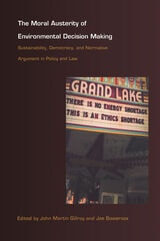
The Moral Austerity of Environmental Decision Making
Sustainability, Democracy, and Normative Argument in Policy and LawJohn Martin Gillroy and Joe Bowersox, eds.
Duke University Press, 2002
The contributors search for these assumptions and principles in short arguments and debates over the role of science, social justice, instrumental value, and intrinsic value in contemporary environmental policy. In their discussion of moral alternatives to enrich environmental decision making and in their search for a less austere and more robust role for normative discourse in practical policy making, they analyze a series of original case studies that deal with environmental sustainability and natural resources policy including pollution, land use, environmental law, globalism, and public lands. The unique structure of the book—which features the core contributors responding in a discourse format to the central chapters’ essays and debates—helps to highlight the role personal and public values play in democratic decision making generally and in the field of environmental politics specifically.
Contributors. Joe Bowersox, David Brower, Susan Buck, Celia Campbell-Mohn, John Martin Gillroy, Joel Kassiola, Jan Laitos, William Lowry, Bryan Norton, Robert Paehlke, Barry G. Rabe, Mark Sagoff, Anna K. Schwab, Bob Pepperman Taylor, Jonathan Wiener
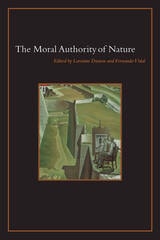
The Moral Authority of Nature
Edited by Lorraine Daston and Fernando Vidal
University of Chicago Press, 2003
The Moral Authority of Nature offers a wide-ranging account of how people have used nature to think about what counts as good, beautiful, just, or valuable. The eighteen essays cover a diverse array of topics, including the connection of cosmic and human orders in ancient Greece, medieval notions of sexual disorder, early modern contexts for categorizing individuals and judging acts as "against nature," race and the origin of humans, ecological economics, and radical feminism. The essays also range widely in time and place, from archaic Greece to early twentieth-century China, medieval Europe to contemporary America.
Scholars from a wide variety of fields will welcome The Moral Authority of Nature, which provides the first sustained historical survey of its topic.
Contributors:
Danielle Allen, Joan Cadden, Lorraine Daston, Fa-ti Fan, Eckhardt Fuchs, Valentin Groebner, Abigail J. Lustig, Gregg Mitman, Michelle Murphy, Katharine Park, Matt Price, Robert N. Proctor, Helmut Puff, Robert J. Richards, Londa Schiebinger, Laura Slatkin, Julia Adeney Thomas, Fernando Vidal
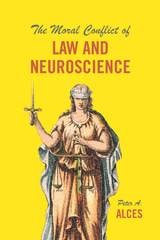
The Moral Conflict of Law and Neuroscience
Peter A. Alces
University of Chicago Press, 2018
Peter A. Alces considers where and how the law currently fails to appreciate the neuroscientific revelation that humans may in key ways lack normative free will—and therefore moral responsibility. The most accessible setting in which to consider the potential impact of neuroscience is criminal law, as certain aspects of criminal law already reveal the naiveté of most normative reasoning, such as the inconsistent treatment of people with equally disadvantageous cognitive deficits, whether congenital or acquired. But tort and contract law also assume a flawed conception of human agency and responsibility. Alces reveals the internal contradictions of extant legal doctrine and concludes by considering what would be involved in constructing novel legal regimes based on emerging neuroscientific insights.
The Moral Meaning of Nature
Nietzsche’s Darwinian Religion and Its CriticsPeter J. Woodford
University of Chicago Press, 2018
We start with Friedrich Nietzsche, whose writings staged one of the first confrontations with the Christian tradition using the resources of Darwinian thought. The lebensphilosophie, or “life-philosophy,” that arose from his engagement with evolutionary ideas drew responses from other influential thinkers, including Franz Overbeck, Georg Simmel, and Heinrich Rickert. These critics all offered cogent challenges to Nietzsche’s appropriation of the newly transforming biological sciences, his negotiation between science and religion, and his interpretation of the implications of Darwinian thought. They also each proposed alternative ways of making sense of Nietzsche’s unique question concerning the meaning of biological evolution “for life.” At the heart of the discussion were debates about the relation of facts and values, the place of divine purpose in the understanding of nonhuman and human agency, the concept of life, and the question of whether the sciences could offer resources to satisfy the human urge to discover sources of value in biological processes. The Moral Meaning of Nature focuses on the historical background of these questions, exposing the complex ways in which they recur in contemporary philosophical debate.
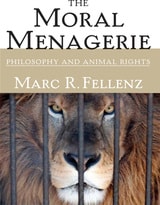
The Moral Menagerie
PHILOSOPHY AND ANIMAL RIGHTSMarc R. Fellenz
University of Illinois Press, 2006
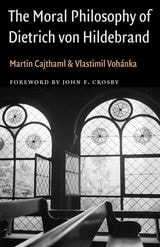
The Moral Philosophy of Dietrich von Hildebrand
Martin Cajthaml
Catholic University of America Press, 2020
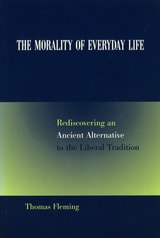
The Morality of Everyday Life
Rediscovering an Ancient Alternative to the Liberal TraditionThomas Fleming
University of Missouri Press, 2007
In TheMorality of Everyday Life, Thomas Fleming offers an alternative to the enlightened liberalism espoused by thinkers as different as Kant, Mill, Rand, and Rawls. Philosophers in the liberal tradition, although they disagree on many important questions, agree that moral and political problems should be looked at from an objective point of view and a decision made from a rational perspective that is universally applied to all comparable cases.
Fleming instead places importance on the particular, the local, and moral complexity. He advocates a return to premodern traditions, such as those exemplified in the texts of Aristotle, the Talmud, and the folk wisdom in ancient Greek literature, for a solution to ethical predicaments. In his view, liberalism and postmodernism ignore the fact that human beings by their very nature refuse to live in a world of universal abstractions.
While such modern philosophers as Kant and Kohlberg have regarded a mother’s self-sacrificing love for her children as beneath their level of morality, folk wisdom tells us it is nearly the highest morality, taking precedence over the duties of citizenship or the claims of humanity. Fleming believes that a modern type of “casuistry” should be applied to these moral conflicts in which the line between right and wrong is rarely clear.
This volume will appeal to students of ethics and classics, as well as the general educated reader, who will appreciate Fleming’s jargon-free prose. Teachers will find this text useful because each chapter is a self-contained essay that could be used as the basis for classroom discussion.
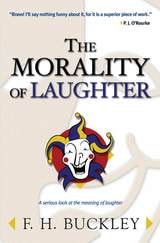
The Morality of Laughter
F. H. Buckley
University of Michigan Press, 2005
superior piece of work.”
—P. J. O’Rourke
“F. H. Buckley’s The Morality of Laughter is at once
a humorous look at serious matters and a serious
book about humor.”
—Crisis Magazine
“Buckley has written a . ne and funny book that will
be read with pleasure and instruction.”
—First Things
“. . . written elegantly and often wittily. . . .”
—National Post
“. . . a fascinating philosophical exposition of
laughter. . . .”
—National Review
“. . . at once a wise and highly amusing book.”
—Wall Street Journal Online
“. . . a useful reminder that a cheery society is a
healthy one.”
—Weekly Standard

The Mountain
Journeys in High PlacesRobin Patten
University of Utah Press, 2025
Since antiquity, mountains have captured the human imagination. The Mountain takes readers into higher realms, exploring the complex kinship between mountains and human thought, traditions, and ways of being. Told through the author’s own journeys, the narrative ranges across cultures and iconic naturalists to consider how varied ideas and experiences related to mountains—from sacred to scientific, romantic to retreat, to simply home—are all facets of the same intricate topography.
No matter where one starts on the spectrum of understanding, an intimate encounter with a mountain leads to a broader perspective. High places create a simultaneous humbleness at our human insignificance and a sense of belonging within the greater world. That quality of belonging, and the associated commitment of caring for the planet and all that it holds, has never been more important than it is today.

The Multisensory Film Experience
A Cognitive Model of Experiental Film AestheticsLuis Rocha Antunes
Intellect Books, 2016
The Museum in the Cultural Sciences
Collecting, Displaying, and Interpreting Material Culture in the Twentieth CenturyEdited by Peter N. Miller
Bard Graduate Center, 2021
The Museum in the Cultural Sciences offers the first full English translations of these articles, which remain influential in conversations about the implications of art, historical, and ethnographic museums. They show how sophisticated the discussion of museums and museum display was in the early twentieth century and how much could be gained from revisiting these reflections today. Accompanied by short commentaries from museum professionals, these articles offer an intervention into and intensification of the current debate about the function and purpose of museums.
The Music between Us
Is Music a Universal Language?Kathleen Marie Higgins
University of Chicago Press, 2012
The Musician as Philosopher
New York’s Vernacular Avant-Garde, 1958–1978Michael Gallope
University of Chicago Press, 2024
The Musician as Philosopher explores the philosophical thought of avant-garde musicians in postwar New York: David Tudor, Ornette Coleman, the Velvet Underground, Alice Coltrane, Patti Smith, and Richard Hell. It contends that these musicians—all of whom are understudied and none of whom are traditionally taken to be composers—not only challenged the rules by which music is written and practiced but also confounded and reconfigured gendered and racialized expectations for what critics took to be legitimate forms of musical sound. From a broad historical perspective, their arresting music electrified a widely recognized social tendency of the 1960s: a simultaneous affirmation and crisis of the modern self.
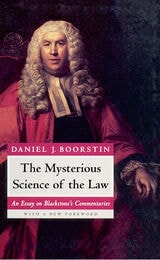
The Mysterious Science of the Law
An Essay on Blackstone's CommentariesDaniel J. Boorstin
University of Chicago Press, 1996

The Mystery We Live
Reflections on Culture, Ethical Life, and the Transcendent with Gabriel MarcelBrendan Sweetman
St. Augustine's Press, 2026
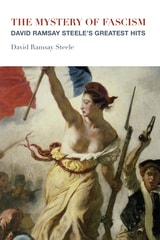
The Mystery of Fascism
David Ramsay Steele's Greatest HitsDavid Ramsay Steele
St. Augustine's Press, 2019
David Ramsay Steele, PhD, is a libertarian writer with a powerful underground reputation for producing caustic, entertaining, knowledgeable, and surprising arguments, often violently at odds with conventional thinking. For the first time, some of Dr. Steele’s “greatest hits” have been brought together in an anthology of provocative essays on a wide range of topics. The essays are divided into two parts, “More Popular than Scholarly” and “More Scholarly than Popular.”
“Scott Adams and the Pinocchio Fallacy,” Steele’s 2018 refutation of the popular claim that we might be living in a “simulated reality,” has been hailed as a totally irresistible debunking of that fallacy as promoted by The Matrix movie and by Scott Adams (among many pundits).
“What Follows from the Non-Existence of Mental Illness?” (2017) preserves the crucial insights of “psychiatric abolitionist” Thomas Szasz, while exposing Szasz’s major misconceptions.
In “The Bigotry of the New Atheism” (2014), Steele, himself an atheist, brings out the intolerant quality of the “New Atheists.” Steele powerfully argues that while “enthusiastic belief systems” may give rise to enormous atrocities, the historical evidence goes against the theory (promoted by Harris, Dawkins, and Hitchens) that these appalling outcomes are more likely when those belief systems include belief in God.
“Taking the JFK Assassination Conspiracy Seriously” (2003) has been reprinted many times, continues to be viewed online many thousands of times, and like many of Steele’s writings, keeps making converts. It is acknowledged to be the most persuasive brief popular statement of the Lone Nut theory.
“The Mystery of Fascism” (2001), which gives this collection its title, is still continually viewed and cited, for its demonstration that fascism arose directly out of far-left revolutionary Marxism and revolutionary syndicalism. Conventional ideologues of both right and left have been provoked by this highly readable piece to start thinking outside the box.
The earliest piece in this collection, “Alice in Wonderland” (1987) is a devastating critique of the Ayn Rand belief system and the Ayn Rand cult.
“Gambling Is Productive and Rational” (1997), mercilessly strips away the loose thinking which favors intolerance and prohibition of gambling. Steele argues that gambling adds to human well-being and ought to be completely legalized everywhere.
Other topics include the recovered memory witch hunt of the 1990s, the benefits of replacing democratic voting with selection of political positions by lottery, the unexpected results of research into the causes of human happiness, the reasons why Dexter (a TV show sympathetic to a psychotic serial killer) was politically “safe,” why economic growth can go on for ever, why the most popular moral argument against eating meat just doesn’t work, how Hillary Clinton could have won the presidency in 2016, why Friedrich Hayek is wrong about social evolution, the inevitable disappearance of market socialism, Robert Nozick’s muddled thinking about economics, and the proper way to view anti-consensus theories such as the Atkins Diet.
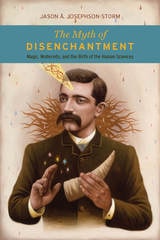
The Myth of Disenchantment
Magic, Modernity, and the Birth of the Human SciencesJason Ananda Josephson Storm
University of Chicago Press, 2017
Josephson-Storm traces the history of the myth of disenchantment in the births of philosophy, anthropology, sociology, folklore, psychoanalysis, and religious studies. Ironically, the myth of mythless modernity formed at the very time that Britain, France, and Germany were in the midst of occult and spiritualist revivals. Indeed, Josephson-Storm argues, these disciplines’ founding figures were not only aware of, but profoundly enmeshed in, the occult milieu; and it was specifically in response to this burgeoning culture of spirits and magic that they produced notions of a disenchanted world.
By providing a novel history of the human sciences and their connection to esotericism, The Myth of Disenchantment dispatches with most widely held accounts of modernity and its break from the premodern past.
The Myth of Liberalism
John P. Safranek
Catholic University of America Press, 2015
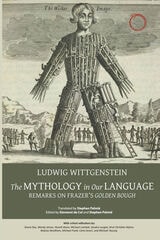
The Mythology in Our Language
Remarks on Frazer's Golden BoughLudwig Wittgenstein
HAU, 2018
In 1931 Ludwig Wittgenstein wrote his famous Remarks on Frazer’s “Golden Bough,” published posthumously in 1967. At that time, anthropology and philosophy were in close contact—continental thinkers drew heavily on anthropology’s theoretical terms, like mana, taboo, and potlatch, in order to help them explore the limits of human belief and imagination. Now the book receives its first translation by an anthropologist, in the hope that it can kick-start a new era of interdisciplinary fertilization.
Wittgenstein’s remarks on ritual, magic, religion, belief, ceremony, and Frazer’s own logical presuppositions are as lucid and thought-provoking now as they were in Wittgenstein’s day. Anthropologists find themselves asking many of the same questions as Wittgenstein—and in a reflection of that, this volume is fleshed out with a series of engagements with Wittgenstein’s ideas by some of the world’s leading anthropologists, including Veena Das, David Graeber, Wendy James, Heonik Kwon, Michael Lambek, Michael Puett, and Carlo Severi.
The Names of Minimalism
Authorship, Art Music, and Historiography in DisputePatrick Nickleson
University of Michigan Press, 2023
Expanding the place of Jacques Rancière’s philosophy within musicology, Nickleson draws attention to disciplinary practices of guarding compositional authority against artists who set out to undermine it. The book reimagines the canonic artists and works of minimalism as “(early) minimalism,” to show that art music histories refuse to take seriously challenges to conventional authorship as a means of defending the very category “art music.” Ultimately, Nickleson asks where we end up if we imagine the early minimalist project—artists forming bands to perform their own music, rejecting the score in favor of recording, making extensive use of magnetic type as compositional and archival medium, hosting performances in lofts and art galleries rather than concert halls—not as a utopian moment within a 1960s counterculture doomed to fail, but as the beginning of a process with a long and influential afterlife.
The Natural Contract
Michel Serres
University of Michigan Press, 1995
World history is often referred to as the story of human conflict. Those struggles that are seen as our history must now include the uncontrolled violence that humanity perpetrates upon the earth, and the uncontrollable menace to human life posed by the earth in reaction to this violence. Just as a social contract once brought order to human relations, Serres believes that we must now sign a "natural contract" with the earth to bring balance and reciprocity to our relations with the planet that gives us life. Our survival depends on the extent to which humans join together and act globally, on an earth now conceived as an entity.
Tracing the ancient beginnings of modernity, Serres examines the origins and possibilities of a natural contract through an extended meditation on the contractual foundations of law and science. By invoking a nonhuman, physical world, Serres asserts, science frees us from the oppressive confines of a purely social existence, but threatens to become a totalitarian order in its own right. The new legislator of the natural contract must bring science and law into balance.
Serres ends his meditation by retelling the story of the natural contract as a series of parables. He sees humanity as a spacecraft that with the help of science and technology has cast off from familiar moorings. In place of the ties that modernity and analytic reason have severed, we find a network of relations both stranger and stronger than any we once knew, binding us to one another and to the world. The philosopher's harrowing and joyous task, Serres tells us, is that of comprehending and experiencing the bonds of violence and love that unite us in our spacewalk to the spaceship Mother Earth.
"Wise, rich and poetic . . . not simply a philosophical study of the Environment, or an ecological questioning of Philosophy . . . Nature is acknowledged as an inside force which breaks [the philosopher's] discourse, and opens it up to a vigilant poetic meditation."--Substance: A Review of Theory and Literary Criticism

The Natural History of H. G. Wells
John Robert Reed
Ohio University Press, 1982
This new study offers a general reassessment of H. G. Wells as a writer and thinker. It concentrates upon the close relationship between Wells’ developing philosophy and his literary techniques. The early chapters examine Wells’ treatment of such subjects as confinement and escape, sex, the nature of human identity, the relationship of individual to race, human progress, and the importance of education. At the same time, the describe the emotional topography that Wells created as a mean of vivifying his ideas, a topography constructed from image complexes largely based upon the analogy between individual and racial evolution.
The major contribution of the book comes in its later chapters, which deal with Wells’ metaphysical assumptions and his approach to his craft. His views on free will and strength of will were intimately related to his methods of literary composition. The important later chapters detail this relationship, while describing some of Wells’ characteristic literary devices, such as the intentional violations of certain novelistic conventions or the sly borrowing from and alluding to contemporary works of literature in what amounted to a covert polemic.
On the whole, this study argues for a coherent and consistent, though developing, philosophy operating throughout Wells’ career and manifested in experimental literary works which, while not always successful, were consistently inventive and intelligently crafted in the service of Wells’ principle aim, the education of the human species to a command of its own destiny.
The Natural Law
A Beginner's Thomistic GuideSteven J. Jensen
Catholic University of America Press, 2025

The Natural World as a Philosophical Problem
Jan Patocka, edited by Ivan Chvatík and Lubica Ucnik, translated by Erika Abrams, foreword by Ludwig Landgrebe
Northwestern University Press, 2016
The Nature of Legal Interpretation
What Jurists Can Learn about Legal Interpretation from Linguistics and PhilosophyEdited by Brian G. Slocum
University of Chicago Press, 2017
To fully engage and probe these questions of interpretation, this volume draws upon a variety of experts from several fields, who collectively examine the interpretation of legal texts. In The Nature of Legal Interpretation, the contributors argue that the meaning of language is crucial to the interpretation of legal texts, such as statutes, constitutions, and contracts. Accordingly, expert analysis of language from linguists, philosophers, and legal scholars should influence how courts interpret legal texts. Offering insightful new interdisciplinary perspectives on originalism and legal interpretation, these essays put forth a significant and provocative discussion of how best to characterize the nature of language in legal texts.
The Nature of Love
Dietrich von Hildebrand
St. Augustine's Press, 2009

The Nature of Love, Volume 3
The Modern WorldIrving Singer
University of Chicago Press, 1987
"Irving Singer . . . has developed a method of historical analysis flexible enough to deal with all kinds of love, from Greek homosexual love in Plato, to the philia and agape of the New Testament, to the courtly love of medieval romance, to the Romantics, for whom love was magic. . . . [This] final volume brings us to the present. In 'The Modern World,' Singer offers readings of Freud, Proust, and Sartre, among others. He shows how their work was formed in reaction to the 19th-century ideal of 'merging' of the identities of lover and beloved. More often than not, the great modern writers portray love as impossible, as a field of failure and regret. . . . This masterpiece of critical thinking is a timely, eloquent, and scrupulous account of what, after all, still makes the world go round."—Thomas D'Evelyn, Christian Science Monitor
"This is the third of a three-volume history of the philosophy of love. It begins with Kierkegaard, Tolstoy, and Nietzsche in the nineteenth century and treats Freud, Proust, Bergson, D. H. Lawrence, G. B. Shaw, Santayana, Sartre, and others in the twentieth. Although the author's approach is primarily historical, he intersperses critical remarks throughout. Most of the major themes which are discussed by philosophers of love make their way into this history, including friendship, sexual love, and the distinction between love that is based on the value of the beloved and love that bestows value on the beloved. Singer devotes a number of pages to his own views on falling in love, being in love, and staying in love. . . . Singer's exposition is lucid and organized; his criticisms are insightful."—Ethics
"In this third volume of historical overview of the development of the Western conception of love, Singer uses writers, philosophers, and psychologists to provide the reader with an overview of love in the late 19th and 20th century. . . . Analyzing authors such as Tolstoy, Proust, D. H. Lawrence, and Shaw and philosophers such as Nietzsche, Kierkegaard, Sartre, and Santayana, as well as Freud, Singer . . . links each contributor's thoughts to the influence of previous writers and also provides some psycho-historical insight into their personal lives that might have been either a source or direct result of their views. In this final volume, Singer proceeds to look at not just the 'great men' influence but also provides a chapter overviewing scientific contributions to our understanding of love. . . . Singer's work is a significant contribution to understanding the social construction of important, abstract social and personal values. By tracing love through different historical periods through a variety of voices, Singer has created a rich history of the struggle between the ideal and the real, between the dreams of what love should provide and the reality of what relationships have been in each historical period. By personalizing the voice through psychohistorical analysis, Singer also provides insight into the shaping of ideas through the intimate struggles of the shapers."—Mark V. Chaffee, Contemporary Psychology
The Nature of Natural Philosophy in the Late Middle Ages (Studies in Philosophy and the History of Philosophy, Volume 52)
Edward Grant
Catholic University of America Press, 2010
The Nature of Political Philosophy
And Other Studies and CommentariesJames V. Schall
Catholic University of America Press, 2022
The Nature of Scientific Explanation
Jude P. Dougherty
Catholic University of America Press, 2013
The Nature of Selection
Evolutionary Theory in Philosophical FocusElliott Sober
University of Chicago Press, 1993
"Sober's is the answering philosophical voice, the voice of a first-rate philosopher and a knowledgeable student of contemporary evolutionary theory. His book merits broad attention among both communities. It should also inspire others to continue the conversation."-Philip Kitcher, Nature
"Elliott Sober has made extraordinarily important contributions to our understanding of biological problems in evolutionary biology and causality. The Nature of Selection is a major contribution to understanding epistemological problems in evolutionary theory. I predict that it will have a long lasting place in the literature."-Richard C. Lewontin
The Natures of Maps
Cartographic Constructions of the Natural WorldDenis Wood and John Fels
University of Chicago Press, 2008
To answer that question, the authors turn to a category of maps with a particularly strong reputation for objectivity: maps of nature. From depictions of species habitats and bird migrations to portrayals of the wilds of the Grand Canyon and the reaches of the Milky Way, such maps are usually presumed—even by users who should know better—to be strictly scientific. Yet by drawing our attention to every aspect of these maps’ self-presentation, from place names to titles and legends, the authors reveal the way that each piece of information collaborates in a disguised effort to mount an argument about reality. Without our realizing it, those arguments can then come to define our very relationship to the natural world—determining whether we see ourselves as humble hikers or rampaging despoilers, participants or observers, consumers or stewards.
Richly illustrated, and crafted in vivid and witty prose, The Natures of Maps will enlighten and entertain map aficionados, scholars, and armchair navigators alike. You’ll never be able to look at Google Maps quite the same way again.

The Necessity of Pragmatism
John Dewey's Conception of PhilosophyR. W. Sleeper
University of Illinois Press, 1986
Identifying Dewey's differences with his pragmatist forerunners, Charles Sanders Peirce and William James, Sleeper elucidates Dewey's reshaping of pragmatism and the radical significance of his philosophy of culture. In this first paperback edition, a new introduction by Tom Burke establishes the ongoing importance of Sleeper's analysis of the integrity of Dewey's work and its implications for mathematics, aesthetics, and the cognitive sciences.
The Neighbor
Three Inquiries in Political TheologySlavoj Žižek, Eric L. Santner, and Kenneth Reinhard
University of Chicago Press, 2005
In The Neighbor, three of the most significant intellectuals working in psychoanalysis and critical theory collaborate to show how this problem of neighbor-love opens questions that are fundamental to ethical inquiry and that suggest a new theological configuration of political theory. Their three extended essays explore today's central historical problem: the persistence of the theological in the political. In "Towards a Political Theology of the Neighbor," Kenneth Reinhard supplements Carl Schmitt's political theology of the enemy and friend with a political theology of the neighbor based in psychoanalysis. In "Miracles Happen," Eric L. Santner extends the book's exploration of neighbor-love through a bracing reassessment of Benjamin and Rosenzweig. And in an impassioned plea for ethical violence, Slavoj Žižek's "Neighbors and Other Monsters" reconsiders the idea of excess to rehabilitate a positive sense of the inhuman and challenge the influence of Levinas on contemporary ethical thought.
A rich and suggestive account of the interplay between love and hate, self and other, personal and political, The Neighbor will prove to be a touchstone across the humanities and a crucial text for understanding the persistence of political theology in secular modernity.
The Neighbor
Three Inquiries in Political Theology, with a new PrefaceSlavoj Žižek, Eric L. Santner, and Kenneth Reinhard
University of Chicago Press, 2013
In The Neighbor, three of the most significant intellectuals working in psychoanalysis and critical theory collaborate to show how this problem of neighbor-love opens questions that are fundamental to ethical inquiry and that suggest a new theological configuration of political theory. Their three extended essays explore today's central historical problem: the persistence of the theological in the political. In “Toward a Political Theology of the Neighbor,” Kenneth Reinhard supplements Carl Schmitt’s political theology of the enemy and friend with a political theology of the neighbor based in psychoanalysis. In “Miracles Happen,” Eric L. Santner extends the book's exploration of neighbor-love through a bracing reassessment of Benjamin and Rosenzweig. And in an impassioned plea for ethical violence, Slavoj Žižek’s “Neighbors and Other Monsters” reconsiders the idea of excess to rehabilitate a positive sense of the inhuman and challenge the influence of Levinas on contemporary ethical thought.
A rich and suggestive account of the interplay between love and hate, self and other, personal and political, The Neighbor has proven to be a touchstone across the humanities and a crucial text for understanding the persistence of political theology in secular modernity. This new edition contains a new preface by the authors.
The Neopopular Bubble
Speculating on "the People" in Late Modern DemocracyPéter Csigó
Central European University Press, 2017
The New Century
Bergsonism, Phenomenology, and Responses to Modern ScienceEdited by Keith Ansell-Pearson and Alan D. Schrift
University of Chicago Press, 2010
From Kant to Kierkegaard, from Hegel to Heidegger, continental philosophers have indelibly shaped the trajectory of Western thought since the eighteenth century. Although much has been written about these monumental thinkers, students and scholars lack a definitive guide to the entire scope of the continental tradition. The most comprehensive reference work to date, this eight-volume History of Continental Philosophy will both encapsulate the subject and reorient our understanding of it. Beginning with an overview of Kant’s philosophy and its initial reception, the History traces the evolution of continental philosophy through major figures as well as movements such as existentialism, phenomenology, hermeneutics, and poststructuralism. The final volume outlines the current state of the field, bringing the work of both historical and modern thinkers to bear on such contemporary topics as feminism, globalization, and the environment. Throughout, the volumes examine important philosophical figures and developments in their historical, political, and cultural contexts.
The first reference of its kind, A History of Continental Philosophy has been written and edited by internationally recognized experts with a commitment to explaining complex thinkers, texts, and movements in rigorous yet jargon-free essays suitable for both undergraduates and seasoned specialists. These volumes also elucidate ongoing debates about the nature of continental and analytic philosophy, surveying the distinctive, sometimes overlapping characteristics and approaches of each tradition. Featuring helpful overviews of major topics and plotting road maps to their underlying contexts, A History of Continental Philosophy is destined to be the resource of first and last resort for students and scholars alike.
The New Ecological Order
Luc Ferry
University of Chicago Press, 1995
Traditional ecological movements, or "democratic ecology," seek to protect the environment of human societies; they are pragmatic and reformist. But another movement has become the refuge both of nostalgic counterrevolutionaries and of leftist illusions. This is "deep ecology." Its followers go beyond practical critiques of human greed and waste: they call into question the very possibility of human coexistence with nature. The human species is no longer at the center of the world, but subject to a new god called Nature. For these purists, man can only soil the harmony of the universe. In order to secure natural equilibrium, the only solution is to grant rights to animals, to trees, and to rocks.
Ferry launches his critique by examining early European legal cases concerning the status and rights of animals, including a few notorious cases where animals were brought to trial, found guilty, and publicly hanged. He then demonstrates that German Romanticism embraced certain key ideas of the deep ecology movement concerning the protection of animals and the environment. Later adopted by the Nazis, many of these ideas point to a profoundly antihumanistic component of deep ecology that is compatible with totalitarianism.
Ferry shows how deep ecology casts aside all the gains of human autonomy since the Enlightenment. He deciphers the philosophical and political assumptions of a movement that threatens to infantalize human society by preying on the fear of the authority of a new theological-political order. Far from denying our "duty in relation to nature," The New Ecological Order offers a bracing caution—against the dangers of environmental claims and, more important, against the threat to democracy contained in the deep ecology doctrine when pushed to its extreme.
"A book of intellectual power, full of insights, invention, and not without temerity, from one of the best political philosophers today."—Le Figaro
"Few books have analyzed in depth this phenomenon of the ecological movement as the most recent book by Luc Ferry has done. . . . It is a book that absolutely must be read."—Le Point
The New Gods
E. M. Cioran
University of Chicago Press, 1974
The New Pluralism
William Connolly and the Contemporary Global ConditionDavid Campbell and Morton Schoolman, eds.
Duke University Press, 2008
The contributors show how Connolly has continually revised his ideas about pluralism to take into account radical changes in global politics, incorporate new theories of cognition, and reflect on the centrality of religion in political conflict. They engage his arguments for an agonistic democracy in which all fundamentalisms become the objects of politicization, so that differences are not just tolerated but are productive of debate and the creative source of a politics of becoming. They also explore the implications of his work, often challenging his views to widen the reach of even his most recently developed theories. Connolly’s new pluralism will provoke all citizens who refuse to subordinate their thinking to the regimes in which they reside, to religious authorities tied to the state, or to corporate interests tied to either. The New Pluralism concludes with an interview with Connolly in which he reflects on the evolution of his ideas and expands on his current work.
Contributors: Roland Bleiker, Wendy Brown, David Campbell, William Connolly, James Der Derian, Thomas L. Dumm, Kathy E. Ferguson, Bonnie Honig, George Kateb, Morton Schoolman
Michael J. Shapiro, Stephen K. White
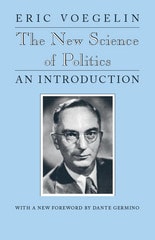
The New Science of Politics
An IntroductionEric Voegelin
University of Chicago Press, 1987
What Eric Voegelin attempts in The New Science of Politics is nothing less ambitious than a complete theory of humanity, society, and history. To build his theory, Voegelin draws on a breathtaking range of subjects from throughout history, including the Mongol Orders of Submission, the Behistun Inscription, and a controversy over an alter to the goddess Victoria in the Roman Forum. Addressing the access to truth afforded by myth, revelation, and philosophy, Voegelin then carefully contrasts each with gnosticism. The resulting book is a heady exploration of the development of European politics through the Western tradition and the ongoing importance of the inner quest for transcendent reality. =
The New Science of Politics
An IntroductionEric Voegelin
University of Chicago Press, 1987
"Thirty-five years ago few could have predicted that The New Science of Politics would be a best-seller by political theory standards. Compressed within the Draconian economy of the six Walgreen lectures is a complete theory of man, society, and history, presented at the most profound and intellectual level. . . . Voegelin's [work] stands out in bold relief from much of what has passed under the name of political science in recent decades. . . . The New Science is aptly titled, for Voegelin makes clear at the outset that a 'return to the specific content' of premodern political theory is out of the question. . . . The subtitle of the book, An Introduction, clearly indicates that The New Science of Politics is an invitation to join the search for the recovery of our full humanity."—From the new Foreword by Dante Germino
"This book must be considered one of the most enlightening essays on the character of European politics that has appeared in half a century. . . . This is a book powerful and vivid enough to make agreement or disagreement with even its main thesis relatively unimportant."—Times Literary Supplement
"Voegelin . . . is one of the most distinguished interpreters to Americans of the non-liberal streams of European thought. . . . He brings a remarkable breadth of knowledge, and a historical imagination that ranges frequently into brilliant insights and generalizations."—Francis G. Wilson, American Political Science Review
"This book is beautifully constructed . . . his erudition constantly brings a startling illumination."—Martin Wright, International Affairs
"A ledestar to thinking men who seek a restoration of political science on the classic and Christian basis . . . a significant accomplishment in the retheorization of our age."—Anthony Harrigan, Christian Century
The New Spinoza
Warren Montag
University of Minnesota Press, 1998
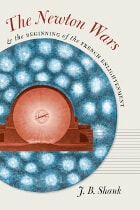
The Newton Wars and the Beginning of the French Enlightenment
J. B. Shank
University of Chicago Press, 2008
A comprehensive study of public culture, The Newton Wars and the Beginning of the French Enlightenment digsbelow the surface of the commonplace narratives that link Newton with Enlightenment thought to examine the actual historical changes that brought them together in eighteenth-century time and space. Drawing on the full range of early modern scientific sources, from studied scientific treatises and academic papers to book reviews, commentaries, and private correspondence, J. B. Shank challenges the widely accepted claim that Isaac Newton’s solitary genius is the reason for his iconic status as the father of modern physics and the philosophemovement.
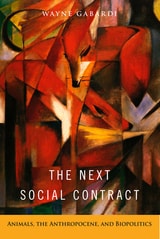
The Next Social Contract
Animals, the Anthropocene, and BiopoliticsWayne Gabardi
Temple University Press, 2017
In his provocative book The Next Social Contract, Wayne Gabardi rigorously considers the fate of animals in the twenty-first century. He claims that if we are to address the challenges raised by the Anthropocene—the period where nonhuman beings tend to be mere extras, often subsumed under the umbrella notion of “nature”—we need to radically rethink our basic ethical outlook and develop a new, “more-than-human” social contract.
Gabardi’s wide-ranging and multidisciplinary analysis focuses on four principal battlegrounds of animal biopolitics in the twenty first century: the extinction of wild animals, the crisis of oceanic animals, industrialized farm animals and the future of industrial agribusiness, and the situation of contact-zone animals moving into human-occupied habitats.
In his recasting of the social contract, Gabardi envisions a culture shift in human-animal relations toward posthumanism that features the ethical and political prioritization of animal life so it is on par with that of human well-being.
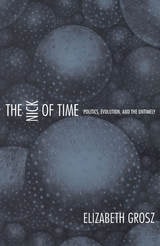
The Nick of Time
Politics, Evolution, and the UntimelyElizabeth Grosz
Duke University Press, 2004
Grosz develops her argument by juxtaposing the work of three major figures in Western thought: Charles Darwin, Friedrich Nietzsche, and Henri Bergson. She reveals that in theorizing time as an active, positive phenomenon with its own characteristics and specific effects, each of these thinkers had a profound effect on contemporary understandings of the body in relation to time. She shows how their allied concepts of life, evolution, and becoming are manifest in the work of Gilles Deleuze and Luce Irigaray. Throughout The Nick of Time, Grosz emphasizes the political and cultural imperative to fundamentally rethink time: the more clearly we understand our temporal location as beings straddling the past and the future without the security of a stable and abiding present, the more transformation becomes conceivable.