Results by title
4030 books match the query 'Language Arts & Disciplines' and 760 start with t

Theoretical Issues in Sign Language Research, Volume 2
PsychologyEdited by Patricia Siple and Susan D. Fischer
University of Chicago Press, 1991
This collection, edited by Patricia Siple and Susan D. Fischer, brings together theoretically important contributions from both basic research and applied settings. The studies include native sign language acquisition; acquisition and processing of sign language through a single mode under widely varying conditions; acquisition and processing of bimodal (speech and sign) input; and the use of sign language with atypical, autistic, and mentally retarded groups.
All the chapters in this collection of state-of-the-art research address one or more issues related to universality of language processes, language plasticity, and the relative contributions of biology and input to language acquisition and use.
Theoretical Perspectives on Word Order in South Asian Languages
Edited by Miriam Butt, Tracy Holloway King, and Gillian Ramchand
CSLI, 1994
Theories of Translation
An Anthology of Essays from Dryden to DerridaEdited by John Biguenet and Rainer Schulte
University of Chicago Press, 1992
Most of the twenty-one pieces appear in translation, some here in English for the first time and many difficult to find elsewhere. Selections include writings by Scheiermacher, Nietzsche, Ortega, Benjamin, Pound, Jakobson, Paz, Riffaterre, Derrida, and others.
A fine companion to The Craft of Translation, this volume will be a valuable resource for all those who translate, those who teach translation theory and practice, and those interested in questions of language philosophy and literary theory.
Theorizing Histories of Rhetoric
Edited by Michelle Ballif
Southern Illinois University Press, 2013
During the decades of the 1980s and 1990s, historians of rhetoric, composition, and communication vociferously theorized historiographical motivations and methodologies for writing histories in their fields. After this fertile period of rich, contested, and impassioned theorization, scholars busily undertook the composition of numerous historical works, complicating master narratives and recovering silenced voices and rhetorical practices. Yet, though historians in these fields have gone about the business of writing histories, the discussion of theorization has been quiet. In this welcome volume, fifteen scholars consider, once again, the theory of historiography, asking difficult questions about the purposes and methodologies of writing histories of rhetoric, broadly defined, and questioning what it means, what it should mean, what it could mean to write histories of rhetoric, composition, and communication.
The topics addressed include the privileging of the literary and the textual over material artifacts as prime sources of evidence in the study of classical rhetoric, the use of rhetorical hermeneutics as a methodology for interpreting past practices, the investigation of feminist methodologies that do not fit into the dominant modes of feminist historiographical work and the examination of archives with a queer eye to better construct nondiscriminatory narratives. Contributors also explore the value of approaching historiography through the lenses of jazz improvisation and complexity theory, and the historiographical method of writing the future in ways that refigure our relationships to time and to ourselves.
Consistently thoughtful and carefully argued, these essays successfully revive the discussion of historiography in rhetoric, inspiring fresh avenues of exploration in the field.
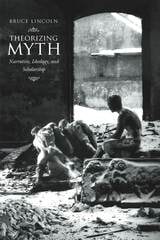
Theorizing Myth
Narrative, Ideology, and ScholarshipBruce Lincoln
University of Chicago Press, 2000
He begins by showing that mythos yielded to logos not as part of a (mythic) "Greek miracle," but as part of struggles over political, linguistic, and epistemological authority occasioned by expanded use of writing and the practice of Athenian democracy. Lincoln then turns his attention to the period when myth was recuperated as a privileged type of narrative, a process he locates in the political and cultural ferment of the eighteenth and nineteenth centuries. Here, he connects renewed enthusiasm for myth to the nexus of Romanticism, nationalism, and Aryan triumphalism, particularly the quest for a language and set of stories on which nation-states could be founded.
In the final section of this wide-ranging book, Lincoln advocates a fresh approach to the study of myth, providing varied case studies to support his view of myth—and scholarship on myth—as ideology in narrative form.
Theory Development in the Information Sciences
Edited by Diane H. Sonnenwald
University of Texas Press, 2016
Emerging as a discipline in the first half of the twentieth century, the information sciences study how people, groups, organizations, and governments create, share, disseminate, manage, search, access, evaluate, and protect information, as well as how different technologies and policies can facilitate and constrain these activities. Given the broad span of the information sciences, it is perhaps not surprising that there is no consensus regarding its underlying theory—the purposes of it, the types of it, or how one goes about developing new theories to talk about new research questions.
Diane H. Sonnenwald and the contributors to this volume seek to shed light on these issues by sharing reflections on the theory-development process. These reflections are not meant to revolve around data collection and analysis; rather, they focus on the struggles, challenges, successes, and excitement of developing theories. The particular theories that the contributors explore in their essays range widely, from theories of literacy and reading to theories of design and digital search. Several chapters engage with theories of the behavior of individuals and groups; some deal with processes of evaluation; others reflect on questions of design; and the rest treat cultural and scientific heritage. The ultimate goal, Sonnenwald writes in her introduction, is to “encourage, inspire, and assist individuals striving to develop and/or teach theory development.”
Theory and Evidence in Semantics
Edited by Erhard W. Hinrichs and John Nerbonne
CSLI, 2009
In Theory and Evidence in Semantics, editors Erhard W. Hinrichs and John Nerbonne present a series of state-of-the-art papers that investigate the interface of natural language semantics with other modules of grammar—such as morphology, syntax, and pragmatics—and pursue applications of semantic theory in computational linguistics. Written by some of the leading scholars in the field, and strongly influenced by the seminal work of David R. Dowty in model-theoretical semantics, the papers provide novel accounts of highly complex sets of semantic phenomena, including anaphora, coordination, ellipsis, interrogatives, and negative and collective predicates, as well as tense and aspect.
There Is No Making It Out
Stories-So-Far and the Possibilities of New StoriesRomeo García
Utah State University Press, 2025
They Will Know Us by Our Horses
Shenk Robert
St. Augustine's Press, 2021
Shenk notes that Aristotle equips his doctrine of rhetoric with a forward-looking dimension, often overlooked or ignored by scholars. There is stasis, but also forestasis, which amounts to a way not only of “getting to the point” of an event, but of a manner of forming decisions. The ancient rhetoricians, says Shenk, all discussed deliberative rhetoric as well as forensic rhetoric, and even though they differed in their respective descriptions they all generally agreed on its three main elements: possibility (often including difficulty or ease of execution), expedience (also called utility or benefit, even profit), and honor (or morality in general depending on the conversation). One places these elements into play when considering the viability of a proposal: “Is it possible? Is it beneficial? Is it honorable?” This pertains to deliberative rhetoric, or arguments that touch upon the future. It is not just grasping things that have been, but also understanding the core of that which is to come through formulating our decisions to act.
Laying the foundations for this broader view of stasis that, while depending on the ancient rhetoricians, includes a forward-posed heuristic that can, Shenk argues, reinvigorate the concept of rhetorical stasis and expand its theoretical reach. His intention is to show how rhetorical invention (discovery of the argument) is meant to look both directions. Rhetoric that properly presents what has passed can also be employed to identify the best next move. Or, as Shakespeare reminds us in Prince Hal’s decision to participate in the robbery at Gadshill, “Yea, but ‘tis like that they will know us by our horses, by our habits, and by every other appointment to be ourselves.”
In addition to examples drawn from his naval background, Shenk references Homer, Shakespeare and Milton in demonstrating forestasis to be a widely useful parallel to traditional stasis. Shenk argues that both deserve to be widely taught as prime, complementary modern techniques of invention. Doing so would make stasis more relevant and lead students, especially, to discover the crux of any matter that requires deliberative action. This is an essential and yet largely missing element of contemporary education. This ancient method, Shenk asserts, is a habit that although rhetorical leads to actual discoveries that in turn yield real outcomes, both abstract and practical.
Things We Carry
Strategies for Recognizing and Negotiating Emotional Labor in Writing Program AdministrationCourtney Adams Wooten
Utah State University Press, 2020
The book is broken into three sections: one emphasizing the WPA’s own work identity, one on fostering community in writing programs, and one on balancing the professional and personal. Chapters written by a diverse range of authors in different institutional and WPA contexts examine the roles of WPAs in traumatic events, such as mass shootings and natural disasters, as well as the emotional labor WPAs perform on a daily basis, such as working with students who have been sexually assaulted or endured racist, sexist, homophobic, and otherwise disenfranchising interactions on campus. The central thread in this collection focuses on “preserving” by acknowledging that emotions are neither good nor bad and that they must be continually reflected upon as WPAs consider what to do with emotional labor and how to respond. Ultimately, this book argues for more visibility of the emotional labor WPAs perform and for WPAs to care for themselves even as they care for others.
The Things We Carry extends conversations about WPA emotional labor and offers concrete and useful strategies for administrators working in both a large range of traumatic events as well as daily situations that require tactical work to preserve their sense of self and balance. It will be invaluable to writing program administrators specifically and of interest to other types of administrators as well as scholars in rhetoric and composition who are interested in emotion more broadly.
Things, Thoughts, Words, and Actions
The Problem of Language in Late Eighteenth-Century British Rhetorical TheoryH. Lewis Ulman
Southern Illinois University Press, 1994
H. Lewis Ulman here examines the roles of language theory in eighteenth-century British rhetorics, linking those roles to philosophical issues informing twentieth-century rhetorical theory. In doing so, Ulman develops a general model of the "problem of language" for rhetorical theory, a model that transcends the impasse between realism and skepticism that marks both eighteenth- and twentieth-century rhetorical theory.
The nature of language was never more central to rhetorical theory than in the second half of the eighteenth century. Yet, until now, the articulation of theories of language and the arts of rhetoric in eighteenth-century Britain has received little attention. Ulman examines the role of grammar and theories of language in the formation of eighteenth-century rhetorical theory, investigating the significance of language theory for such key concerns of eighteenth-century rhetoric as verbal criticism, style, and elocution. His study highlights what he understands as the central motive of late eighteenth-century British rhetoricians—to construct for their particular cultural context philosophically rigorous accounts of verbal communication based on carefully articulated theories of thought and language.
Toward this end, Ulman examines three eighteenth-century British rhetorical treatises: George Campbell’s Philosophy of Rhetoric, Hugh Blair’s Lectures on Rhetoric and Belles Lettres, and Thomas Sheridan’s Course of Lectures on Elocution. He then identifies the continuities and discontinuities between the problem of language for eighteenth- and twentieth-century rhetorical theory and proposes a pluralistic stance toward the problem of language in rhetoric as an alternative to the theoretical standoff that currently characterizes the debate between realist and antirealist rhetorics.
Think Generic!
The Meaning and Use of Generic SentencesAriel Cohen
CSLI, 1999

Thinker, Faker, Spinner, Spy
Corporate PR and the Assault on DemocracyEdited by David Miller and William Dinan
Pluto Press, 2007
Written by leading activists and writers, this book reveals the secrets of the PR trade including deception, the use of fake 'institutes', spying and dirty tricks. The impact can be devastating -- when the public is denied access to the truth, the results are rising inequality and environmental catastrophe.
Exposing the misdeeds of famous companies including Coca Cola, British Aerospace, Exxon and Monsanto, and revealing information about the covert funding of various apparently independent thinks tanks and institutes, the authors offer a guide to campaigns that can help us roll back corporate power and resist deceptive PR.
Thinking Critically, Second Edition
World Issues for Reading, Writing, and ResearchMyra Shulman
University of Michigan Press, 2014
Just like its predecessor, Thinking Critically helps students improve reading, writing, and research skills while exploring and analyzing major global issues. Although many of the same topics are explored in this second edition—world hunger, global health, gender equality, regional conflict, cultural heritage, and immigration policies—all 31 authentic readings in the second edition are new. New topics included in this edition are cybersecurity, climate change, education reform, leadership, and human rights.
Each chapter contains two or three readings (from print and online news sources, journals, and blogs) designed to raise rather than provide answers; a vocabulary review and discussion questions for each reading; a reaction writing task; a question on the topic to research; a writing assignment for a specific academic or business genre (with models in an appendix); speaking activities (oral presentation, debate, or role-play); and a Thinking about It task. The Thinking about It task calls on students’ ability to evaluate a complex issue with objectivity and to propose a realistic approach, making this textbook good preparation for academic courses that require critical-thinking skills to express opinions both orally and in writing.
Several new academic/business written genres (abstract, fact sheet, briefing paper, report on a survey) have also been added.
Thinking Globally, Composing Locally
Rethinking Online Writing in the Age of the Global InternetRich Rice
Utah State University Press, 2018
Thinking Globally, Composing Locally explores how writing and its pedagogy should adapt to the ever-expanding environment of international online communication. Communication to a global audience presents a number of new challenges; writers seeking to connect with individuals from many different cultures must rethink their concept of audience. They must also prepare to address friction that may arise from cross-cultural rhetorical situations, variation in available technology and in access between interlocutors, and disparate legal environments.
The volume offers a pedagogical framework that addresses three interconnected and overarching objectives: using online media to contact audiences from other cultures to share ideas; presenting ideas in a manner that invites audiences from other cultures to recognize, understand, and convey or act upon them; and composing ideas to connect with global audiences to engage in ongoing and meaningful exchanges via online media. Chapters explore a diverse range of pedagogical techniques, including digital notebooks designed to create a space for active dialogic and multicultural inquiry, experience mapping to identify communication disruption points in international customer service, and online forums used in global distance education.
Thinking Globally, Composing Locally will prove an invaluable resource for instructors seeking to address the many exigencies of online writing situations in global environments.
Contributors: Suzanne Blum Malley, Katherine Bridgman, Maury Elizabeth Brown, Kaitlin Clinnin, Cynthia Davidson, Susan Delagrange, Scott Lloyd Dewitt, Amber Engelson, Kay Halasek, Lavinia Hirsu, Daniel Hocutt, Vassiliki Kourbani, Tika Lamsal, Liz Lane, Ben Lauren, J. C. Lee, Ben McCorkle, Jen Michaels, Minh-Tam Nguyen, Beau S. Pihlaja, Mª Pilar Milagros, Cynthia L. Selfe, Heather Turner, Don Unger, Josephine Walwema
Thinking with Bruno Latour in Rhetoric and Composition
Edited by Paul Lynch and Nathaniel Rivers
Southern Illinois University Press, 2015
Best known for his books We Have Never Been Modern, Laboratory Life, and Science in Action, Bruno Latour has inspired scholarship across many disciplines. In the past few years, the fields of rhetoric and composition have witnessed an explosion of interest in Latour’s work. Editors Paul Lynch and Nathaniel Rivers have assembled leading and emerging scholars in order to focus the debate on what Latour means for the study of persuasion and written communication.
Essays in this volume discern, rearticulate, and occasionally critique rhetoric and composition’s growing interest in Latour. These contributions include work on topics such as agency, argument, rhetorical history, pedagogy, and technology, among others. Contributors explain key terms, identify implications of Latour’s work for rhetoric and composition, and explore how his theories might inform writing pedagogies and be used to build research methodologies.
Thinking with Bruno Latour in Rhetoric and Composition shows how Latour’s groundbreaking theories on technology, agency, and networks might be taken up, enriched, and extended to challenge scholars in rhetorical studies (both English and communications), composition, and writing studies to rethink some of the field’s most basic assumptions. It is set to become the standard introduction that will appeal not only to those scholars already interested in Latour but also those approaching Latour for the first time.
Thomas De Quincey
British Rhetoric's Romantic TurnLois Peters Agnew
Southern Illinois University Press, 2012
This wide-ranging volume gives proper attention to the views on rhetoric and style set forth by British literary figure Thomas De Quincey (1785–1859), whose contributions to the history of rhetoric are often overlooked. Lois Peters Agnew presents an overview of this theorist’s life and provides cultural context for his time and place, with particular emphasis on the significance of his rhetoric as both an alternative strain of rhetorical history and a previously unrealized example of rhetoric’s transformation in nineteenth-century Britain.
Agnew presents an extensive discussion of De Quincey’s ideas on rhetoric, his theory and practice of conversation, his theory of style and its role in achieving rhetoric’s dialogic potential, and his strategic use of humor and irony in such works as Confessions of an English Opium Eater. Synthesizing previous treatments of De Quincey’s rhetoric and connecting his unusual perspectives on language to the biographical details of his life, Agnew helps readers understand his intellectual development while bringing to light the cultural contexts that prompted radical changes in the ways nineteenth-century British intellectuals conceived of the role of language and the imagination in public and private discourse.
Agnew presents an alternative vision of rhetoric that departs from many common assumptions about rhetoric’s civic purpose and offers insights into the topic of rhetoric and technological change. The result is an accessible and thorough explanation of De Quincey’s complex ideas on rhetoric and the first work to fully show the reach of his ideas across multiple texts written during his lifetime.
Three Arabic Treatises on Aristotle’s Rhetoric
The Commentaries of al-Farabi, Avicenna, and AverroesTranslated, with introduction and notes, by Lahcen Elyazghi Ezzaher
Southern Illinois University Press, 2015
Winner, 2018 MLA Aldo and Jeanne Scaglione Prize for a Translation of a Scholarly Study of Literature
It is increasingly well documented that western rhetoric’s journey from pagan Athens to the medieval academies of Christian Europe was significantly influenced by the intellectual thought of the Muslim Near East. Lahcen Elyazghi Ezzaher contributes to the contemporary chronicling of this influence in Three Arabic Treatises on Aristotle’s Rhetoric: The Commentaries of al-Farabi, Avicenna, and Averroes, offering English translations of three landmark medieval Arabic commentaries on Aristotle's famous rhetorical treatise together in one volume for the first time. Elegant and practical, Elyazghi Ezzaher’s translations give English-speaking scholars and students of rhetoric access to key medieval Arabic rhetorical texts while elucidating the unique and important contribution of those texts to the revival of European interest in the rhetoric and logic of Aristotle, which in turn influenced the rise of universities and the shaping of Western intellectual life.
With a focus on Book I of Aristotle’s Rhetoric, the commentaries ofal-Farabi, Avicenna, and Averroes translated by Elyazghi Ezzaher are paramount examples of an extensive Arabic-Muslim tradition of textual commentary while also serving as rich corollaries to the medieval Greek and Latin rhetorical commentaries produced in Europe. Elyazghi Ezzaher’s translations are each accompanied by insightful scholarly introductions and notes that contextualize—both historically and culturally—these immensely significant works while highlighting a comparative, multidisciplinary approach to rhetorical scholarship that offers new perspectives on one of the field’s foundational texts.
A remarkable addition to rhetorical studies, Three Arabic Treatises on Aristotle’s Rhetoric: The Commentaries of al-Farabi, Avicenna, and Averroes not only provides vibrant English translations of essential medieval Arabic rhetorical texts but also challenges scholars and students of rhetoric to consider their own historical, cultural, and linguistic relationships to the texts and objects they study.
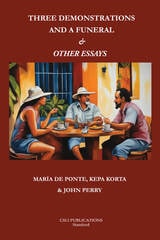
Three Demonstrations and a Funeral and Other Essays
Maria de Ponte, Kepa Korta, and John Perry
CSLI, 2024
The result of the collaboration between three distinguished philosophers, this book comprises the best sample of one of the most original theories in contemporary philosophy of language and communication—Critical Pragmatics. They present the development of the theory from its initial sprout, with “Three Demonstrations and a Funeral” (2006) as its first visible result, to a critical clarification of its tenets in “Critical Pragmatics: Nine Misconceptions” (2023). After Korta and Perry’s Critical Pragmatics (2011), this is the most important book on Critical Pragmatics, as it was conceived, developed and applied by its creators. Having de Ponte, Korta and Perry’s most important papers together on one place will be of great value to both philosophers and linguists.
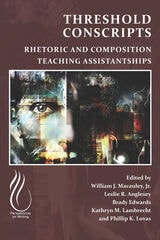
Threshold Conscripts
Rhetoric and Composition Teaching AssistantshipsWilliam J. Macauley
University Press of Colorado, 2023

Threshold
How Smart Homes Change Us Inside and OutHeather Suzanne Woods
University of Alabama Press, 2024
An urgent and cautionary examination of the totalizing effect of smart home technology on the lives of those who live in them—and those who don’t
Smart homes are here—domestic spaces bristling with networked technologies that appear to enhance work, entertainment, logistics, health, and security. But these technologies may also extract a cost in attention, money, and privacy. In Threshold, communication and technology expert Heather Suzanne Woods applies rhetorical theory to answer the urgent question of how swiftly proliferating smart homes alter those who inhabit them.
Building on extensive research into smart homes in the United States, Woods recounts how smart homes arose and predicts the trajectory of their future form. She pulls back the curtain on the technology, probes who is in control, and questions whether a home can be too smart. She reveals how smart homes incentivize ubiquitous computing as a daily practice, priming smart home occupants for permanent transactional existence largely controlled by corporate interests.
Woods suggests a dynamic cultural framework for understanding smart homes that takes into account sociotechnical variables such as gender, class, income, race, criminal justice, and more through which smart homes shape human life. Woods’s framework reveals how smart homes both reflect social norms about technology as well as whet consumer appetites for an ever more totalizing relationship with technology. She argues that this progression leads to “living in digitality,” a cultural state of constant use and reliance on technology.
Written for homeowners, policymakers, technology enthusiasts, and scholars, Threshold interweaves meticulously researched critical analysis with matter-of-fact graphics that map relationships between digital tools and social life. Readers will appreciate this bracing assessment of smart technologies that empowers smart home users to make informed decisions about their dwellings.
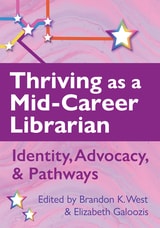
Thriving as a Mid-Career Librarian
Identity, Advocacy, and PathwaysBrandon West
Assoc of College & Research Libraries, 2023
In four sections, Thriving as a Mid-Career Librarian collects the experiences of mid-career librarians as they grapple with these questions and the roles that marginalized perspectives, intersectionality, and privilege have played in their careers:
- Section 1: Staying Engaged in Your Career
- Section 2: The Role of Identity in Shaping Mid-career Librarianship
- Section 3: Being Your Own Advocate
- Section 4: To Lead or Not to Lead?
It can feel like everything gets harder, more political, and further under-resourced with each passing year. Thriving as a Mid-Career Librarian offers strategies of community, support, and advocacy that can help make it possible for us to thrive and help others to thrive. At mid-career, we may not have the same bright-eyed enthusiasm we possessed as new information professionals, but we have other things: the contributions we make to our communities and the wealth of experience we have built up since those days.

Through the Archival Looking Glass
A Reader on Diversity and InclusionMary Caldera
American Library Association, 2017
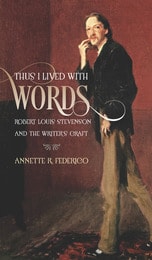
Thus I Lived with Words
Robert Louis Stevenson and the Writer's CraftAnnette R. Federico
University of Iowa Press, 2017
Stevenson belonged to a newly commercial literary world, an era of mass readership, marketing, and celebrity. He had plenty of practical advice for writers who wanted to enter the profession: study the best authors, aim for simplicity, strike a keynote, work on your style. He also held that a writer should adhere to the truth and utter only what seems sincere to his or her heart and experience of the world. Writers have messages to deliver, whether the work is a tale of Highland adventure, a collection of children’s verse, or an essay on umbrellas. Stevenson believed that an author could do no better than to find the appetite for joy, the secret place of delight that is the hidden nucleus of most people’s lives. His remarks on how to write, on style and method, and on pleasure and moral purpose contain everything in literature and life that he cared most about—adventuring, persisting, finding out who you are, and learning to embrace “the romance of destiny.”
Time Over Matter
Diachronic Perspectives on MorphosyntaxEdited by Miriam Butt and Tracy Holloway King
CSLI, 2001
To Become an American
Immigrants and Americanization Campaigns of the Early Twentieth CenturyLeslie A. Hahner
Michigan State University Press, 2017
To the Lexicon and Beyond
Sociolinguistics in European Deaf CommunitiesMieke Van Herreweghe
Gallaudet University Press, 2004
Volume 10 of the series explores sociolinguistics in various European Deaf communities. Editors Van Herreweghe and Vermeerbergen present a wide array of research inspired by the Sociolinguistics Symposium 14 held at Ghent University, Belgium, in April 2002. Noted contributors from Finland, Belgium, Ireland, the Netherlands, Germany, Sweden, Spain and the United Kingdom offer insights gleaned from the languages of their countries.
Part One of this five-part volume investigates multilingualism and language contact among Finland-Swedish Deaf People. Part Two looks at regional variation and the evolution of signs in Flemish Sign Language, as well as gender-influenced variation in Irish Sign Language. Language policy and planning receives consideration in the third part, with a study of sign language lexical variation in the Netherlands and an analysis of the risks of codification in Flemish Sign Language. Part Four examines the implementation of bilingual programs for deaf students throughout Europe, and updates research on language use visually oriented in Swedish Deaf education classrooms.
The final part of To the Lexicon and Beyond: Sociolinguistics in European Deaf Communities presents data on language attitudes, including a census of sign language users in Spain that reveal a changing language community. The last chapter of this fascinating assembly assays British Deaf communities and language identity in relation to issues of transnationality in the 21st century.

Tocharian and Indo-European Studies 21
Edited by Birgit Anette Olsen, Hannes Fellner, Michaël Peyrot, and Georges-Jean Pinault
Museum Tusculanum, 2022
This book offers the most diverse and comprehensive treatment of the relationships between ancient Tocharian A and B and other Indo-European languages. Studying now-extinct languages from the first millennium, early twentieth-century archaeologists discovered previously unknown Tocharian A and Tocharian B writings on Buddhist manuscripts near northwest China. Volumes in the Tocharian and Indo-European Studies series present the authoritative study of these two closely related languages, focusing both on philological and linguistic approaches toward their relationship with other Indo-European languages.
Tokens of Exchange
The Problem of Translation in Global CirculationsLydia H. Liu, ed.
Duke University Press, 1999
By studying the production and circulation of meaning as value in areas including history, religion, language, law, visual art, music, and pedagogy, essays consider exchanges between Jesuit and Protestant missionaries and the Chinese between the seventeenth and nineteenth centuries and focus on the interchanges occasioned by the spread of capitalism and imperialism. Concentrating on ideological reciprocity and nonreciprocity in science, medicine, and cultural pathologies, contributors also posit that such exchanges often lead to racialized and essentialized ideas about culture, sexuality, and nation. The collection turns to the role of language itself as a site of the universalization of knowledge in its contemplation of such processes as the invention of Basic English and the global teaching of the English language. By focusing on the moments wherein meaning-value is exchanged in the translation from one language to another, the essays highlight the circulation of the global in the local as they address the role played by historical translation in the universalizing processes of modernity and globalization.
The collection will engage students and scholars of global cultural processes, Chinese studies, world history, literary studies, history of science, and anthropology, as well as cultural and postcolonial studies.
Contributors. Jianhua Chen, Nancy Chen, Alexis Dudden Eastwood, Roger Hart, Larissa Heinrich, James Hevia, Andrew F. Jones, Wan Shun Eva Lam, Lydia H. Liu, Deborah T. L. Sang, Haun Saussy, Q. S. Tong, Qiong Zhang
Tokens of Meaning
Papers in Honor of Lauri KarttunenEdited by Cleo Condoravdi and Tracy Holloway King
CSLI, 2019
Told in Letters
Epistolary Fiction Before RichardsonRobert Adams Day
University of Michigan Press, 1966
Tondi Songway Kiini
Reference Grammar and TSK-English-French DictionaryJeffrey Heath
CSLI, 2005
Too Much Free Speech?
Randall P. Bezanson
University of Illinois Press, 2012
Total Communication
Structure and StrategyLionel Evans
Gallaudet University Press, 1982
Total Speech
An Integrational Linguistic Approach to LanguageMichael Toolan
Duke University Press, 1996
In every foundational area of linguistics—from literal meaning and metaphor to the nature of repetition to the status of linguistic rules—Toolan advances fascinating and provocative criticisms of received linguistic assumptions. Drawing inspiration from the writings of language theorist Roy Harris, Toolan brings the integrationalist perspective to bear on legal cases, the reception of Salman Rushdie, poetry, and the language of children. Toolan demonstrates that the embeddedness of language and the situation-sensitive mutability of meaning reveal language as a tool for re-fashioning and renewal.
Total Speech breaks free of standard linguistics’ fascinated attraction with “cognitive blueprints” and quasi-algorithmic processing to characterize language anew. Toolan’s reflections on the essence of language, including his important discussion of intention, have strong implications for students and scholars of discourse analysis, literature, the law, anthropology, philosophy of language, communication theory, and cognitive science, as well as linguistics.
Toward Inclusive Academic Librarian Hiring Practices
Kathryn Houk
Assoc of College & Research Libraries, 2024
Toward Inclusive Academic Librarian Hiring Practices, rather than focusing just on how to diversify applicant pools, breaks down the many considerations involved in hiring and the intentional, thoughtful preparation and self-examination that leads to successful recruitment and retention in three parts.
- Training for Search Committees and Stakeholders
- Removing Barriers for Candidates
- Transforming the Process for All
Throughout are practical solutions for emphasizing inclusivity and accessibility throughout the hiring process, including instructions and examples for developing the position description and job postings, tips for creating diversity statements, interview instructions and preparation lists, interview itineraries, sample candidate emails and feedback forms, evaluation rubrics, ideas for onboarding and mentorship, and more.
While you are evaluating potential hires, they are evaluating you. Toward Inclusive Academic Librarian Hiring Practices can help you center equity in your hiring, attract job seekers, and support both candidates and search committees through these time-intensive, laborious, and crucial processes.
Toward More Sustainable Metaphors of Writing Program Administration
edited by Lydia Wilkes, Lilian W. Mina, and Patti Poblete afterword by Douglas Hesse
Utah State University Press, 2022
This volume presents twelve chapters that reclaim and revise established metaphors; offer new metaphors based on sustainable, relational, or emotional labor practices and phenomena; and reveal the improvisational, artisanal nature of WPA work. Chapters resonate across three sections. The first section focuses on organic relationships captured in phrases like “putting out fires” and "seeing forests for the trees” alongside unexpected comparisons to ground and light. The second describes institutional landscapes featuring generative juxtapositions such as the WPA as a labor activist or a mapper of emotional geography. And the third discusses performance crafts like improv comedy and artisanal making.
Toward More Sustainable Metaphors of Writing Program Administration offers new and revised ways of thinking and acting for WPAs, who are constantly negotiating the paradoxical demands of their work and continually striving to act ethically in conflicted, and even fraught, situations. It will inspire practicing, aspiring, and former WPAs working in a time of transformation by highlighting more sustainable ways of enacting WPA identity.
Contributors: Jacob Babb, John Belk, Katherine Daily O'Meara, Ryan J. Dippre, Douglas Hesse, Andrew Hollinger, Rona Kaufman, Cynthia D. Mwenja, Manny Piña, Scott Rogers, Robyn Tasaka, Alexis Teagarden, Christy I. Wenger, Lydia Wilkes
Toward Translingual Realities in Composition
(Re)Working Local Language Representations and PracticesNancy Bou Ayash
Utah State University Press, 2019
Translingualism work has concentrated on critiquing monolingual and multilingual notions of language, but it is only beginning to examine translingual enactments in writing programs and classrooms. Focusing on language representations and practices at both the macro and micro levels, author Nancy Bou Ayash places the study and teaching of university-level writing in the context of the globalization and pluralization of English(es) and other languages. Individual chapters feature various studies that Bou Ayash brings together to address how students act as agents in marshaling their language practices and resources and shows a deliberate translingual intervention that complicates and enriches students’ assumptions about language and writing. Her findings about writing programs, instructors, and students are detailed, multidimensional, and complex.
A substantial contribution to growing translingual scholarship in the field of composition studies, Toward Translingual Realities in Composition offers insights into how writing teacher-scholars and writing program administrators can more productively intervene in local postmonolingual tensions and contradictions at the level of language representations and practices through actively and persistently reworking the design and enactment of their curricula, pedagogies, assessments, teacher training programs, and campus-wide partnerships.
Toward a Deaf Translation Norm
Christopher A. Stone
Gallaudet University Press, 2009
As access to deaf people grows around the world, a new profession has begun to emerge as well, that of Deaf translators and interpreters (T/Is). In his new study Toward a Deaf Translation Norm, Christopher Stone explores this innovation, including its antecedents and how it is manifested in public places. Most importantly, Stone investigates whether or not a translation norm has evolved for Deaf T/Is as increasing numbers of them work in the mainstream translating for websites, public services, government literature, and television media.
For his study, the sixth volume in the Studies in Interpretation series, Stone concentrated his research in the United Kingdom. Specifically, he examined the rendering of English broadcast television news into British Sign Language (BSL) by both Deaf and hearing T/Is. Segments of the data feature simultaneous Deaf and hearing in-vision T/I broadcasts. Recording these broadcasts produced a controlled product that enabled direct comparison of the Deaf and hearing T/Is. Close analysis of these examples revealed to Stone that Deaf T/s not only employ a Deaf translation norm, they take labors to shape their BSL text into a stand-alone product rather than a translation. Ultimately, Toward a Deaf Translation Norm opens up engrossing new vistas on current deliberation about neutrality in translation and interpretation.
Toward a Grammar of Passages
Richard M. Coe
Southern Illinois University Press, 1988
Richard M. Coe has developed such a “grammar,” one which uses a simple graphic instrument to analyze the meaningful relationships between sentences in a passage and to clarify the function of structure in discourse. Working in the tradition of Christensen’s generative rhetoric, Coe presents a two-dimensional graphic matrix that effectively analyzes the logical relations between statements by mapping coordinate, subordinate, and superordinate relationships.
Coe demonstrates the power of his discourse matrix by applying it to a variety of significant problems, such as how to demonstrate discourse differences between cultures (especially between Chinese and English), how to explain precisely what is “bad” about the structure of passages that do not work, and how best to teach structure. This new view of the structure of passages helps to articulate crucial questions about the relations between form and function, language, thought and culture, cognitive and social processes.
Toward a Phenomenological Rhetoric
Writing, Profession, and AltruismBarbara Couture
Southern Illinois University Press, 1998
Current rhetorical and critical theory for the most part separates writing from consciousness and presumes relative truth to be the only possible expressive goal for rhetoric. These presumptions are reflected in our tradition of persuasive rhetoric, which values writing that successfully argues one person’s belief at the expense of another’s. Barbara Couture presents a case for a phenomenological rhetoric, one that values and respects consciousness and selfhood and that restores to rhetoric the possibility of seeking an all-embracing truth through pacific and cooperative interaction.
Couture discusses the premises on which current interpretive theory has supported relative truth as the philosophical grounding for rhetoric, premises, she argues, that have led to constraints on our notion of truth that divorce it from human experience. She then shows how phenomenological philosophy might guide the theory and practice of rhetoric, reanimating its role in the human enterprise of seeking a shared truth. She proposes profession and altruism as two guiding metaphors for the phenomenological activity of "truth-seeking through interaction."
Among the contemporary rhetoricians and philosophers who influence Couture are Pierre Teilhard de Chardin, Martin Buber, Charles Altieri, Charles Taylor, Alasdair Maclntyre, and Jürgen Habermas.
Toward a Rhetoric of Insult
Thomas Conley
University of Chicago Press, 2010
From high school cafeterias to the floor of Congress, insult is a truly universal and ubiquitous cultural practice with a long and earthy history. And yet, this most human of human behaviors has rarely been the subject of organized and comprehensive attention—until Toward a Rhetoric of Insult. Viewed through the lens of the study of rhetoric, insult, Thomas M. Conley argues, is revealed as at once antisocial and crucial for human relations, both divisive and unifying.
Explaining how this works and what exactly makes up a rhetoric of insult prompts Conley to range across the vast and splendidly colorful history of offense. Taking in Monty Python, Shakespeare, Eminem, Cicero, Henry Ford, and the Latin poet Martial, Conley breaks down various types of insults, examines the importance of audience, and explores the benign side of abuse. In doing so, Conley initiates readers into the world of insult appreciation, enabling us to regard insults not solely as means of expressing enmity or disdain, but as fascinating aspects of human interaction.
Toward a Theory of Cultural Linguistics
By Gary B. Palmer
University of Texas Press, 1996
Imagery, broadly defined as all that people may construe in cognitive models pertaining to vision, hearing, touch, taste, smell, and feeling states, precedes and shapes human language. In this pathfinding book, Gary B. Palmer restores imagery to a central place in studies of language and culture by bringing together the insights of cognitive linguistics and anthropology to form a new theory of cultural linguistics.
Palmer begins by showing how cognitive grammar complements the traditional anthropological approaches of Boasian linguistics, ethnosemantics, and the ethnography of speaking. He then applies his cultural theory to a wealth of case studies, including Bedouin lamentations, spatial organization in Coeur d'Alene place names and anatomical terms, Kuna narrative sequence, honorifics in Japanese sales language, the domain of ancestral spirits in Proto-Bantu noun-classifiers, Chinese counterfactuals, the non-arbitrariness of Spanish verb forms, and perspective schemas in English discourse.
This pioneering approach suggests innovative solutions to old problems in anthropology and new directions for research. It will be important reading for everyone interested in anthropology, linguistics, cognitive science, and philosophy.

Toward a Transnational University
WAC/WID Across Borders of Language, Nation, and DisciplineJonathan Hall
University Press of Colorado, 2023

Toward an Anti-Capitalist Composition
James Rushing Daniel
Utah State University Press, 2022
Drawing on an array of philosophers, political theorists, and activists, Daniel outlines an anti-capitalist approach informed by the common, a concept theorized by Pierre Dardot and Christian Laval as a solidaristic response to capitalism rooted in inventive political action. Rather than relying upon claims of membership or ownership, the common supports radical, collective acts of remaking that comprehensively reject capitalist logics. Applying this approach to collaborative writing, student debt, working culture, and digital writing, Daniel demonstrates how the writing classroom may be oriented toward capitalist harms and prepare students to critique and resist them. He likewise employs the common to theorize how anti-capitalist interventions beyond the classroom could challenge institutional privatization and oppose the adjunctification of the professoriate.
Arguing that composition scholars have long neglected marketization and corporate power, Toward an Anti-Capitalist Composition extends a case for adopting a resolute anti-capitalist stance in the field and for remaking the university as a site of common work.

Toxic Dynamics
Disrupting, Dismantling, and Transforming Academic Library CultureRussell Michalak
Assoc of College & Research Libraries, 2024
Toxic Dynamics: Disrupting, Dismantling, and Transforming Academic Library Culture provides practical solutions for confronting these complex issues and innovative ways to promote a healthy and sustainable work culture. It addresses critical and timely challenges such as faculty versus staff or us versus them mentality, unionization, gendered labor, organizational change, self-care, tenure, and promotion. Authors from all sizes and types of academic libraries provide evidence-based solutions to mitigate the negative effects of toxicity, change management strategies, and ways to confront and challenge values that harm library workers and their well-being.
By understanding the root causes of toxic cultures, recognizing their impact, and implementing solutions, leaders can create a more supportive and positive work environment and improve morale, retention, and productivity. Toxic Dynamics is an important resource for anyone interested in improving workplace culture and addressing issues related to toxicity and inequity, and for library leaders at all levels.
Toxic Feedback
Helping Writers Survive and ThriveJoni Cole
University Press of New England, 2006
Toxic Imaginary
Visual Rhetoric for a Poisoned PlanetJennifer Peeples
Michigan State University Press, 2027
Toxins can be found in every body and every place around the globe, yet they are not always visible. Toxic Imaginary explores the multiple ways Western cultures “see” toxins. With incisive vision, Jennifer Peeples examines how individuals and societies use collective stories, images, symbols, and rituals to navigate the uncertainty of living in a toxic environment. Each chapter provides an example of everyday images that make up the Western toxic imaginary and introduces new rhetorical and environmental concepts for readers to critically engage with visual media. Peeples pays particular attention to the injustices and inequities of toxins, revealing how powerful entities use toxic images to obscure the reality that all people live in polluted spaces that are damaging to their health. As the number and potency of contaminants continues to rise, this exploration into how scientists, journalists, activists, designers, and artists make toxins visible is imperative for understanding how people engage with contaminants in their environments.
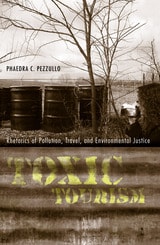
Toxic Tourism
Rhetorics of Pollution, Travel, and Environmental JusticePhaedra C. Pezzullo
University of Alabama Press, 2009
The first book length study of the environmental justice movement, tourism, and the links between race, class, and waste

Tracing the Impact of First-Year Writing
Identity, Process, and Transfer at a Public UniversityLaura Wilder
Utah State University Press, 2024
In contrast to previous longitudinal studies of college writers undertaken at institutions with high prestige and resources, Tracing the Impact of First-Year Writing explores the role of writing at a regional public university and documents how students’ experiences with writing can be highly divergent across the curriculum and unequal across campuses. Additionally, this book includes the voices of students who do not identify as capable writers and have strongly negative emotional reactions to writing and writing instruction and adds empirical support to innovative calls in the field to transform the first-year writing course into one that inspires students to reflectively consider writing itself.