Results by title
3785 books match the query 'Poetry' and 833 start with t
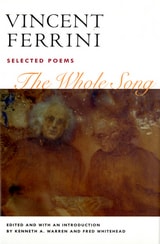
The Whole Song
SELECTED POEMSVincent Ferrini
University of Illinois Press, 2004
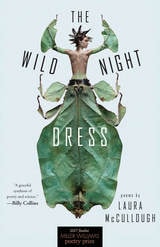
The Wild Night Dress
PoemsLaura McCullough
University of Arkansas Press, 2017
Finalist, 2017 Miller Williams Poetry Prize, edited by Billy Collins
“A graceful synthesis of poetry and science.”
—Billy Collins
Laura McCullough finds passage through the darkest times as she loses, in short order, her mother and her marriage. Through her near unbearable grief, she creates poems that slip between science and nature as she grasps at coordinates in a world spun out of its orbit. From the God Particle to toroidal vortexes, from the slippery linguistics of translation to the translation of the body, McCullough brings readers to the mystery of surrender, and the paradox that what we bear can make us more beautiful, that there is a gift in grief.
The Wilderness and Other Poems
Louis Coxe
University of Minnesota Press, 1958
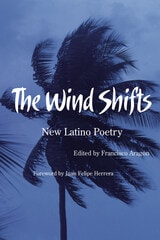
The Wind Shifts
New Latino PoetryEdited by Francisco Aragón; Foreword by Juan Felipe Herrera
University of Arizona Press, 2007
Certainly there is poetry here that is political, but this is not a polemical book; it is a poetry book. While conscious of their roots, the artists are equally conscious of living in the contemporary world—fully engaged with the possibilities of subject and language. The variety is tantalizing. There are sonnets and a sestina; poems about traveling and living overseas; poems rooted in the natural world and poems embedded in suburbia; poems nourished by life on the U.S.–Mexico border and poems electrified by living in Chicago or Los Angeles or San Francisco or New York City.
Some of the poetry is traditional; some is avant-garde; some is informed by traditional poetry in Spanish; some follows English forms that are hundreds of years old. There are love poems, spells that defy logic, flashes of hope, and moments of loss. In short, this is the rich and varied poetry of young, talented North American Latinos and Latinas.
The Wit of Seventeenth-Century Poetry
Edited by Claude J. Summers & Ted-Larry Pebworth
University of Missouri Press, 1994
As the twelve original essays collected in this volume demonstrate, to study the wit of seventeenth-century poetry is necessarily to address concerns at the very heart of the period's shifting literary culture. It is a topic that raises persistent questions of thematics and authorial intent, even as it interrogates a wide spectrum of cultural practices. These essays by some of the most renowned scholars in seventeenth-century studies illuminate important authors and engage issues of politics and religion, of secular and sacred love, of literary theory and poetic technique, of gender relations and historical consciousness, of literary history and social change, as well as larger concerns of literary production and smaller ones of local effects. Collectively, they illustrate the vitality of the topic, both in its own right and as a means of understanding the complexity and range of seventeenth-century English poetry.

The Women Carry River Water
PoemsNguyen Quang Thieu
University of Massachusetts Press, 1997
This landmark collection represents the first English translation of poetry by Nguyen Quang Thieu, a significant Vietnamese writer of the post-1975 generation. Translated collaboratively by acclaimed poet Martha Collins and the author himself, this bilingual volume presents verses rooted deeply in Vietnamese cultural traditions that honor the dignity of daily labor, the resilience of ordinary people, and the spiritual dimensions of human experience in contemporary Vietnam.
Thieu's work draws upon a rich Vietnamese poetic tradition while addressing themes of displacement, reconstruction, memory, and the search for meaning in the aftermath of conflict. The poems capture the essence of Vietnamese life—its rhythms, relationships, and philosophical underpinnings—through images drawn from nature, labor, family, and community. The bilingual format stands as a bridge between Vietnamese and American literary traditions, and honors the linguistic and cultural dimensions of Thieu groundbreaking collection.
The Word We Used For It
Max Garland
University of Wisconsin Press, 2017
In these poems Max Garland confesses, even revels in, the fabricated nature of memory. He links personal and localized patterns (fingerprints, plowed fields) to the motions animating the insides of atoms and the unfurling of remote galaxies. Back on earth, the poems honor the decidedly homespun quality of grit—how creatures both animal and human bear up in the face of mounting odds against them. Garland suggests that imagination itself requires grit, to be called upon when the more spectacular angels are otherwise occupied.
The Works
Poems Selected from Five DecadesGeorge Starbuck
University of Alabama Press, 2003
Eighty-one poems spanning the career of the late George Starbuck, widely praised luminary of modern American verse.
Starbuck was known in his lifetime and is remembered today as a practitioner of verse remarkable for its pathos, intelligence, and wit. A master of American vernacular, sensitive to the rhythms of everyday speech, Starbuck was also a brilliant lyricist, at once erudite and irreverent. He addressed some of the most profound issues of his day with a playful ingenuity and a virtuosity of talent that Glyn Maxwell, poetry editor of the New Republic, writing in The Oxford Companion to Twentieth Century Poetry, calls a “veritable arsenal of strategies against the darkness.”
Starbuck came to wide critical notice in 1960 with the publication of his first book, Bone Thoughts, which won the Yale Series of Younger Poets prize. He published work regularly in the New Yorker and other major literary journals in the United States. His work was consistently recognized with awards, among them the Prix de Rome, an Ingram-Merrill Fellowship, a Rockefeller Foundation Fellowship, the Beth Hokin Prize, a Notable Book of the Year designation from the New York Times, the Lenore Marshall poetry prize, and an Aiken-Taylor Lifetime Achievement Award.
Grouped together by decades, the poems reveal Starbuck's developing genius. His technical agility and his singular voice are evident. As Anthony Hecht declares in his foreword, "I come to this posthumous collection with serene and justified confidence in finding enormous pleasure, astonishment, admiration, and genuine satisfaction. [This book] is a generous sampling of a profound poetic legacy, one for which readers ought to be deeply grateful."
The World Is Made Up Every Day
Collected PoemsAlok Dhanwa
Seagull Books, 2025
A voice of the marginalized and a staunch critic of the establishment, Alok Dhanwa brilliantly captures the ethos of a turbulent era in India through his poetry. Born in 1948, in Munger, Bihar, he witnessed the rise and fall of political movements and wrote against the backdrop of the Maoist and Naxalite struggles. This collection, the first book-length translation of his work into English, brings a glimpse of a volatile nation coming to grips with its own existence to new readers.
His poetry highlights the ongoing fight for justice and identity in an ever-changing state that remains starkly relevant to the contemporary Indian polity. Dhanwa’s writing is a beacon for the working class, a testament to resistance, and a reminder that the struggle for a better world is both eternal and essential. In his universe, love, rebellion, armed resistance, and the everyday coexist. With World Is Made Up Every Day, he paints a vivid portrait of rural India’s landscapes and humanity’s capacity to defy power in all its forms. This book is not just a collection of poems; it is a call to keep the spirit of resistance alive and to live meaningfully in a world that constantly evolves but often remains unchanged.
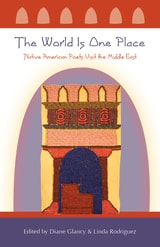
The World Is One Place
Native American Poets Visit the Middle EastDiane Glancy
BkMk Press, 2017
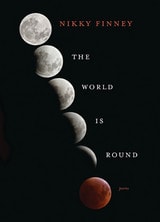
The World Is Round
PoemsNikky Finney
Northwestern University Press, 2013
The World Is Round, Nikky Finney’s third volume of poetry, collects the wisps of memory we carry with us throughout our earthly lives and weaves them into deft and nuanced poems that emphasize understanding the cycles of life. The settings offer a view into the kaleidoscope of human experience: the sweetness and shock of family life, the omnipresent wash of memory, and the ebullience of warm Southern air. The World Is Round carries with it an implicit challenge—to the author as a poet, and to the reader as a fellow human—to see the characters and details and events of our lives with clarity, fearlessness, and love. The result is poems that range the gamut of human reach and resilience, fury and frailty. The poet’s vision of community requires understanding and tolerance from every breathing soul. Finney illuminates the cruelties of the sometimes gawking, narrow-minded world and makes a plea for compassion inspired by our common humanity.
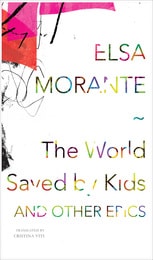
The World Saved by Kids
And Other EpicsElsa Morante
Seagull Books, 2016
First published in Italian in 1968, The World Saved by Kids was written in the aftermath of deep personal change and in the context of what Elsa Morante called the “great youth movement exploding against the funereal machinations of the organized contemporary world.” Morante believed that it was only the youth who could truly hear her revolutionary call. With the fiftieth anniversary of the tumultuous events of 1968 approaching, there couldn’t be a more timely moment for this first English translation of Morante’s work to appear.
Greeted by Antonio Porta as one of the most important books of its decade, The World Saved by Kids showcases Morante’s true mastery of tone, rhythm, and imagery as she works elegy, parody, storytelling, song, and more into an act of linguistic magic through which Gramsci and Rimbaud, Christ and Antigone, Mozart and Simone Weil, and a host of other figures join the sassy, vulnerable neighborhood kids in a renewal of the word’s timeless, revolutionary power to explore and celebrate life’s insoluble paradox.
Morante gained international recognition and critical acclaim for her novels History, Arturo’s Island, and Aracoeli, and The World Saved By Kids may be her best book and the one that most closely represents her spirit.
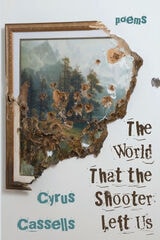
The World That the Shooter Left Us
Cyrus Cassells
Four Way Books, 2022
In the aftermath of the Stand Your Ground killing of his close friend’s father, poet Cassells explores, in his most fearless book to date, the brutality, bigotry, and betrayal at the heart of current America. Taking his cue from the Civil Rights and Vietnam War era poets and songwriters who inspired him in his youth, Cassells presents The World That the Shooter Left Us, a frank, bulletin-fierce indictment of unraveling democracy in an embattled America, in a world still haunted by slavery, by Guernica, Hiroshima, and the Holocaust, by climate catastrophe, by countless battles, borders, and broken promises—adding new grit, fire, and luster to his forty-year career as a dedicated and vital American poet.
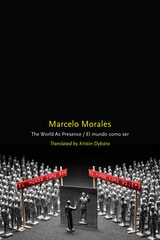
The World as Presence/El mundo como ser
Marcelo Morales, Introduced and Translated by Kristin Dykstra
University of Alabama Press, 2016
Marcelo Morales was born in Cuba in 1977. He is an established, prize-winning writer, yet he is younger in comparison to most of the Cuban poets known internationally, many of whom were born prior to the 1959 revolution. While older generations of Cuban poets have wrestled in their work with social and political critique, those critiques have often been articulated through formal experimentation and abstraction, unsurprising given the censorship and the real threats of punishment that dissident writers have faced. Morales, however, directly interrogates both the Cuban past and present. References to many significant moments, people, and issues in Cuban history and culture can be found throughout his work.
Along with references to the activist group “The White Ladies,” the 1976 bombing of Cuban Airlines Flight 455, and the military aid that Cubans provided to Angola during its fight for independence, Morales’s poetry follows a timeline ranging from Martí to Guevara to the day of the 2014 announcement by Obama and Castro that diplomatic relations between the two nations would finally be restored. As Cuba experiences a series of historically remarkable transitions, Morales emerges from this context to offer an incisive poetic account of this critical moment in Cuban, as well as world, history.
The World as Presence/El mundo como ser is both the debut of this work in any language and the first English translation of a complete Morales collection. Given the bilingual format, this book will be of interest both to English and Spanish readers.
The World at Large
New and Selected Poems, 1971-1996James McMichael
University of Chicago Press, 1996
The World's Room
Joshua Weiner
University of Chicago Press, 2001
The Worlds of Petrarch
Giuseppe Mazzotta
Duke University Press, 1993
Written in a clear and passionate style, The Worlds of Petrarch takes us into the politics of culture, the poetic imagination, into history and ethics, art and music, rhetoric and theology. With this encyclopedic strategy, Mazzotta is able to demonstrate that the self for Petrarch is not a unified whole but a unity of parts, and, at the same time, that culture emerges not from a consensus but from a conflict of ideas produced by opposition and dark passion. These conflicts, intrinsic to Petrarch's style of thought, lead Mazzotta to a powerful rethinking of the concepts of "fragments" and "unity" and, finally, to a new understanding of the relationship between them.
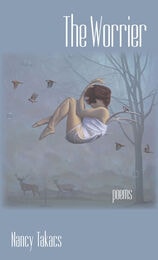
The Worrier
poemsNancy Takacs
University of Massachusetts Press, 2017
What do you know?
How I hide my flaws.
What do you know?
How butterflies
sweeten themselves
opening and closing their wings together
in a little hill
on the beach.
—"The Worrier bed"
The Worrier poems, like a string of worry beads, are dialogues between two interior voices exploring topics as varied as fur coats, marriage, scars, vanishing bees, a silent film star, toads, and volunteers. Strongly imagistic, and often placed in wild landscapes of Utah and Wisconsin, these poems strangely soothe with their surprising offbeat answers to Takacs's worries about intimacy, loss, and turmoil in midlife and beyond; about disappearing wilderness, and compassion, in the world at large. Despite worrying, the poems seem fearless in what they tackle, and in their language and form, creating lightness, promise.
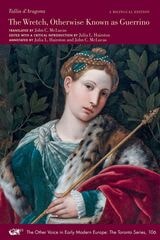
The Wretch, Otherwise Known as Guerrino
A Bilingual EditionTullia d'Aragona
Iter Press, 2024
This is an unabridged bilingual, fully annotated edition of Tullia d’Aragona’s epic poem The Wretch. This mid-century epic reflects the many historical and religious changes taking place in the first half of the sixteenth century in Europe and the burgeoning literary debates following the publication of another Italian epic poem, Ariosto’s Orlando Furioso. The Wretch recounts the adventures of Guerrino, a nobleman captured by pirates as an infant and sold into slavery. His famous quest in search of his parents and his identity involves abductions, same-sex seductions, and skirmishes with fantastical beasts as he travels through Europe, Turkey, Africa, India, Arabia, and the Purgatory of St. Patrick. The poem occupies an important position in the development of the prestigious epic genre, the highest step on the ladder to literary recognition and fame, and Tullia’s work paved the way for the epics of other women writers in subsequent decades.
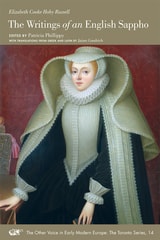
The Writings of an English Sappho
Elizabeth Cooke Hoby Russell
Iter Press, 2011
—Jane Donawerth
Professor of English and affiliate faculty in women’s studies
University of Maryland
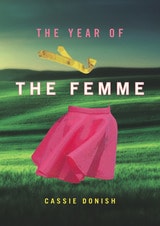
The Year of the Femme
Cassie Donish
University of Iowa Press, 2019
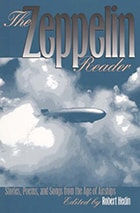
The Zeppelin Reader
Stories, Poems, and Songs from the Age Of AirshipsRobert Hedin
University of Iowa Press, 1998
Size is usually the first thing that comes to mind when we ponder the great airships. In war and peace, to most people they seem bigger than life itself, bright, wondrous, sometimes dangerous apparitions that engender a religious awe. They remain the largest crafts that have ever been launched into the sky. Tracing the history of the airship from its beginning in the nineteenth century to its fiery conclusion in 1937, Robert Hedin has gathered the finest stories, descriptions, poems, music, and illustrations about what the era was like in fact and in spirit.
Included are vivid accounts by such legendary figures as Count Ferdinand von Zeppelin, Hugo Eckener, and Alberto Santos-Dumont as well as memoirs, logs, journals, and diaries by Zeppelin commanders, crew, explorers, journalists, and survivors of ill-fated flights. The great airships inspired poets and writers old and new; here are works by such diverse writers as Robinson Jeffers, Kay Boyle, Bernard Shaw, D. H. Lawrence, Rita Dove, Richard Brautigan, and many others. There is a rich sampling of airship musical scores and lyrics; the music constitutes a kind of recovered history and helps recapture the emotional range of the era. Rounding out the gathering, The Zeppelin Reader is illustrated with stunning photographs, advertisements, drawings, and cartoons from the glorious age of airships.

The lake has no saint
Stacey Waite
Tupelo Press, 2010
Embedded in a powerfully modulated sequence addressing a “you” who shifts in location and identity, many of these poems feel like forms of request, imploring. The speaker’s androgynous self-awareness — and wary attention to the gendered assumptions elicited by bodies — disclose in each poem a recognizable but disorienting (and pressurized) situation.
the lake has no saint will unsettle a reader’s sense of the certainty and stability of gender, as grammar and phrasing are also disrupted and blurred, often requiring us to read closely to hear where one sentence ends as another begins. Yet despite its formal and thematic iconoclasm, this is a book that clearly elucidates a story both heart-rending and ultimately — in its vatic honesty — triumphant.
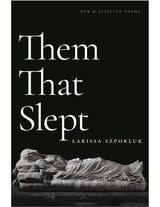
Them That Slept
New & Selected PoemsLarissa Szporluk
Tupelo Press, 2026
A selection of poems that form a narrative about psychological and spiritual somnambulance in our current age and the ever-urgent need to wake up.
In Them That Slept, Larissa Szporluk gathers three decades of work into a single incandescent arc—poems that braid feminist theology, eros, and myth into a lyric of fierce awakening. Borrowing its title from First Corinthians—“the firstfruits of them that slept”—this collection asks what it means to rise, not into certainty, but into desire, voice, and embodiment. Here, virgins become saints and saints become women of appetite. Daughters speak back to fathers. The sea mothers and devours. Joan of Arc lingers in her cell. Venus tweets. The body is never merely symbolic—it is radiant, wounded, knowing. Szporluk’s women are not passive figures in inherited narratives; they are theologians of touch, architects of longing, midwives of their own transformations.
Across selections from six previous books and a powerful suite of new poems, Szporluk reimagines sacred language as intimate speech. Biblical cadences shimmer against domestic interiors, fields, bedrooms, and storm skies. Eros is not an ornament but a form of knowledge; faith is not obedience but risk. These are poems that refuse to sleep through history. They burn toward revelation— sensual, subversive, and alive.
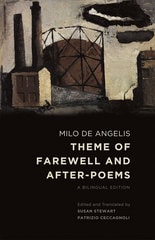
Theme of Farewell and After-Poems
A Bilingual EditionMilo de Angelis
University of Chicago Press, 2013
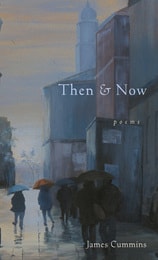
Then and Now
PoemsJames Cummins
Ohio University Press, 2004
James Cummins’s first book of poems, The Whole Truth, became known throughout much of the poetry world as the “Perry Mason sestinas.” His second book, Portrait in a Spoon, was chosen by Richard Howard for the James Dickey Prize Contemporary Poetry Series.
His latest and most accomplished work is collected in Then and Now, which reflects the same inventiveness and wit evident in his earlier books, with a deepening of tone and spirit. The result is a collection of poems filled with feeling and with Cummins’s signature anguished humor.
If the language of poetry is a way into a hall of mirrors of the self, it can be a way out, too. The voice that emerges in Then and Now is sane, imaginative, bemused, and sly, not only taking responsibility for the character of the writer put fully on display, but ironically and affectionately exploring how this process occurs.
Doing Lunch
You have lunch with a friend.
You put on a false face for him,
because he is your friend.
You want to spare him your
maunderings,
your lies and malfeasance.
But this is just what your friend desires,
because he is your friend.
He wants your face to fall open
in front of him and twitch
like a rabbit hit on the fly.
He says he wants the latest word
from the border region between
narcissism and an inner life.
And laughs.
Shamelessly, you tell him everything,
because he is your friend.
Then, Something
Patricia Fargnoli
Tupelo Press, 2009
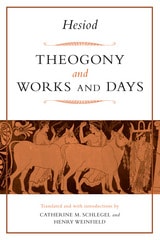
Theogony and Works and Days
Hesiod
University of Michigan Press, 2006
"This Schlegel-Weinfield translation of Hesiod is superbly crafted: compelling, unforgettable poetry to be read aloud with delight and gratitude."
—Allen Mandelbaum, Endowed Kenan Professor of Humanities, Wake Forest University
"This exciting and unique collaboration between a classical philologist and a poet will not just provide insight into archaic Greek society, but also offer something new: the opportunity to experience the richness of Hesiod's style, language, and modes of thought with remarkable fidelity to the ancient Greek. Weinfield and Schlegel make Hesiod sing."
—Carole Newlands, Classics Department, University of Wisconsin
"Schlegel and Weinfield have produced one of the most remarkable of a current resurgence of translations from the classics, allowing the modern world to hear a poet who may have known Homer. Hesiod’s song makes us understand why the Greeks thought a poet could draw dolphins through the seas or raise the walls of Thebes. Weinfield translates by ear and transfers what he hears to the page, resonant fourteeners, a worthy echo of the past."
Catherine Schlegel is Associate Professor of Classics, University of Notre Dame. Henry Weinfield is Professor and Chair of Liberal Studies, University of Notre Dame, and translator of The Collected Poems of Stephane Mallarme.
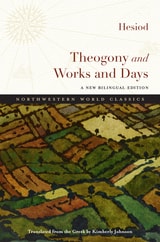
Theogony and Works and Days
A New Bilingual EditionHesiod, Translated from the Greek by Kimberly Johnson
Northwestern University Press, 2017
Therapon
Bruce Bond and Dan Beacy-Quick
Tupelo Press, 2023
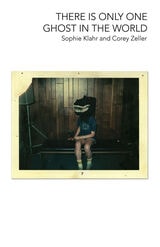
There Is Only One Ghost in the World
Sophie Klahr and Corey Zeller
University of Alabama Press, 2023
One ghost, infinite echoes—where memory, myth, and identity collide.
There Is Only One Ghost in the World follows the fragmented meditations of a multilayered voice, an intimate witness to our times that delicately and bluntly reveals the best and the worst in all of us. It is a kaleidoscopic investigation into the loneliness of modern American life as well as family relationships, exploring the truths and lies that families tell one another, and why, with empathy, sorrow, and humility. We travel from the oil-slicked beaches of California and the alleys of New Orleans to the steps of the Capitol. Here: the raw nerves of gender and identity. Here: the lessons of heartbreak. Here: true myths, fake news, and old rumors. Here: the legacies of art and incisors of seasons. Incompletable Venn diagrams, sibling porn stars, addiction and climate change, shootings and stolen x-rays, the lyrics of disco and the taxonomy of slot machines, steel monoliths and 99-cent stores, last meals and unearthed mummies. There Is Only One Ghost in the World is a book about what happened just before you woke up, and what happened just after. And what happened next.
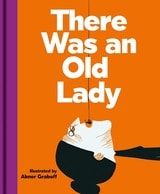
There was an Old Lady
Abner Graboff
Bodleian Library Publishing, 2018
For more than a century, this deceptively simple rhyme has delighted children and parents alike. Its galloping rhythm is perfect for reading out loud, becoming a memory game as the list of animals grows—from fly and spider to bird, cat, dog, and goat. Abner Graboff’s bright and startling illustrations combine beautifully with the original verse to bring this subversive, irreverent tale to life.
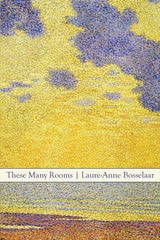
These Many Rooms
Laure-Anne Bosselaar
Four Way Books, 2019
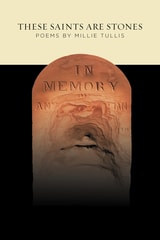
These Saints are Stones
Tullis, Millie
Signature Books, 2026
In Millie Tullis’s new poetry collection, These Saints are Stones, a faithless daughter is haunted by her third-great-grandmother, Martha, a woman who married her stepfather at sixteen and became a sister-wife to her own mother. Tullis cannot stop uncovering details about Martha, who left no written history behind, and her silence permeates this collection, which is rife with gaps and fragments, scraps of memory that blend with dreams. Sparse and spare, these poems echo the red desert landscape where the speaker’s ancestors lived and died, where she hunts for graves among the rocks and confronts a past she can never fully know. After all, like a sampling of lace, the cloth of women’s history is more hole than thread.
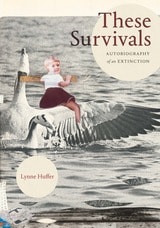
These Survivals
Autobiography of an ExtinctionLynne Huffer
Duke University Press, 2025
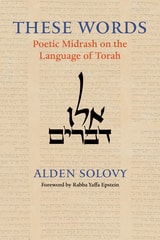
These Words
Poetic Midrash on the Language of TorahAlden Solovy
Central Conference of American Rabbis, 2023
In These Words, liturgist Alden Solovy distills the Torah into its very essence: the individual words it contains. Echoing the midrash that the Torah has seventy faces, Solovy selects seventy of its Hebrew words that are pregnant with meaning. For each word, he delves into the etymology, translation, and usage, providing deeper insights into familiar texts. Then Solovy presents a beautiful poem—what he calls “poetic midrash”—inspired by and interpreting each word. From b’reishit (“in beginning”) to shamayim (“heavens”) to zachor (“remember”), These Words will change the way you look at the language of the Torah.
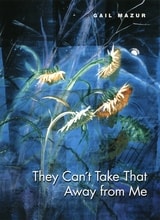
They Can't Take That Away from Me
Gail Mazur
University of Chicago Press, 2001
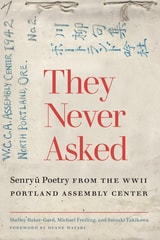
They Never Asked
Senryu Poetry from the WWII Portland Assembly CenterShelley Baker-Gard
Oregon State University Press, 2023
The Japanese American communities in Oregon and southern Washington were relatively small and many of the detainees knew each other; they drew on existing family and community networks to help each other through the long summer, living in inhumane conditions under the constant threat of violence. Several members of Bara Ginsha, a Portland poetry group, decided to continue their work while incarcerated, primarily by writing senryū, a type of Japanese poetry related to haiku.
They Never Asked is a collection of work produced by Bara Ginsha members in the WCCA camp, based on a journal kept by Masaki Kinoshita. The senryū collected here were written by a group of twenty-two poets, who produced hundreds of poems. Individually, the poems reflect the thoughts and feelings the authors experienced while being detained in the Center; collectively, they reflect the resilience and resistance of a community denied freedom. Editors Shelley Baker-Gard, Michael Freiling, and Satsuki Takikawa present translations of the poems alongside the originals, supplemented by historical and literary context and a foreword by Duane Watari, Masaki Kinoshita’s grandson.
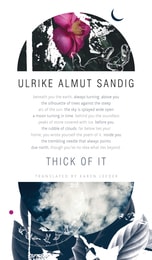
Thick of It
Ulrike Almut Sandig
Seagull Books, 2018
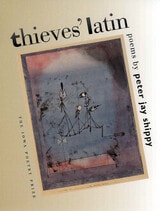
Thieves' Latin
Peter Jay Shippy
University of Iowa Press, 2003
“Ah, writ happens.” Like the con men who rely on thieves' Latin to ply their trade, the poems in Peter Jay Shippy's award-winning collection don't play well with other poems. They are difficult. They rave. They are unsettling and blunt. They crash cars and ride tsunamis and hitch rides on tugs. They also provide a contemporary, ironic, and tender view of America, all the while layering wordplay, cleverness, and sentiment.
Things That Burn
Jacqueline Berger
University of Utah Press, 2005
Things That Happen
and Other PoemsBhaskar Chakrabarti
Seagull Books, 2016
In this first-ever comprehensive translation of Chakrabarti’s work, award-winning translator Arunava Sinha masterfully articulates that clarity of vision, retaining the unique cadence and idioms of the Bengali language. Presenting verses and prose poems from all of Chakrabarti’s life—from his first volume, When Will Winter Come, published in 1971, to his last, The Language of Giraffes, published just before his death in 2005, and collecting several unpublished works as well—Things That Happen and Other Poems introduces the world to a brilliant and universal poetic voice of urban life.
Things in Poems
From the Shield of Achilles to HyperobjectsEdited by Josef Hrdlicka and Mariana Machová
Karolinum Press, 2022
In this volume, fifteen scholars and poets, from Austria, Britain, Czechia, France, Germany, Ireland, Lithuania, and Russia, explore the topic of things and objects in poetry written in a number of different languages and in different eras. The book begins with ancient poetry, then moves on to demonstrate the significance of objects in the Chinese poetic tradition. From there, the focus shifts to things and objects in the poetry of the twentieth and the twenty-first century, examining the work of Czech, Polish, and Russian poets alongside other key figures such as Rilke, Francis Ponge, William Carlos Williams, and Paul Muldoon. Along the way, the reader gets an introduction to key terms and phrases that have been associated with things in the course of poetic history, such as ekphrasis, objective lyricism. and hyperobjects.
Third Voice
PoemsRuth Ellen Kocher
Tupelo Press, 2016
Third Wave
The New Russian PoetryKent Johnson and Stephen M. Ashby, Editors. Introduction by Alexei Parshchikov and Andrew Wachtel. Afterword by Mikhail Epstein
University of Michigan Press, 1992
Thirty Years of Phoenix Poets, 1983 to 2012
An E-SamplerSelected by University of Chicago Press Staff
University of Chicago Press, 2013
This Alaska
Carlie Hoffman
Four Way Books, 2021
To live in an Alaska of the mind is to map the imagined cartography of winter on all that is physical. To dwell perpetually in a symbolic cold, and to emerge, with grace, unscathed. This book questions what it means to live and love in such a buried season. This Alaska interrogates all that emotional and physical intimacy cannot salvage or keep warm. Death and dreams are at the very center of this book. But life — and all it entails and circles and loses and loves — is at its heart.
This Country of Mothers
Julianna Baggott
Southern Illinois University Press, 2001
A mosaic of memories, the poems of This Country of Mothers recollect Julianna Baggott’s experiences as both mother and daughter. With wit, compassion, aggression, and anxiety, Baggott examines her maternal history. She recalls moments of creation and destruction in her life, times of elation and of desperation that mold her as both a woman and a poet. This affecting study of motherhood is framed in issues of Catholicism and of poetry itself, challenging and espousing the roles of both. Throughout her poems, Baggott’s personal experiences embrace universal themes to birth poems in a language and style that is both powerfully feminine and accessibly human.
This Grateful Heart
Psalms and Prayers for a New DayAlden Solovy
Central Conference of American Rabbis, 2017
This Grateful Heart offers an anthology of modern day psalms and prayers to lift us up, inspire our days, and mark our milestones. Written by Jewish poet and liturgist Alden Solovy, the collection provides nearly 100 readings, spanning topics from the simple delights of daily living to the complexities of grief; from the celebration of major turning points like bar and bat mitzvah to the more solemn commemoration of lost lives and ended relationships; and from the awe-filled moments of the High Holy Days to the observance of secular holidays. For clergy, this collection offers supplementary material for use in services and life cycle rituals; for the individual, this collection can serve as a way to give voice to the joys and sorrows of everyday life.
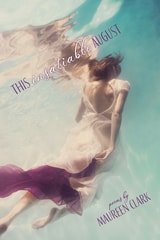
This Insatiable August
Clark, Maureen
Signature Books, 2024