Results by title
5448 books match the query 'History and criticism' and 1116 start with t
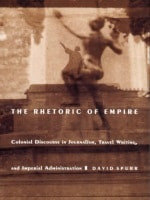
The Rhetoric of Empire
Colonial Discourse in Journalism, Travel Writing, and Imperial AdministrationDavid Spurr
Duke University Press, 1993
Despite historical differences among British, French, and American versions of colonialism, their rhetoric had much in common. The Rhetoric of Empire identifies these shared features—images, figures of speech, and characteristic lines of argument—and explores them in a wide variety of sources. A former correspondent for the United Press International, the author is equally at home with journalism or critical theory, travel writing or official documents, and his discussion is remarkably comprehensive. Ranging from T. E. Lawrence and Isak Dineson to Hemingway and Naipaul, from Time and the New Yorker to the National Geographic and Le Monde, from journalists such as Didion and Sontag to colonial administrators such as Frederick Lugard and Albert Sarraut, this analysis suggests the degree to which certain rhetorical tactics penetrate the popular as well as official colonial and postcolonial discourse.
Finally, Spurr considers the question: Can the language itself—and with it, Western forms of interpretation--be freed of the exercise of colonial power? This ambitious book is an answer of sorts. By exposing the rhetoric of empire, Spurr begins to loosen its hold over discourse about—and between—different cultures.
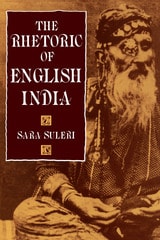
The Rhetoric of English India
Sara Suleri Goodyear
University of Chicago Press, 1992
"A dense, witty, and richly allusive book . . . an extremely valuable contribution to postcolonial cultural studies as well as to the whole area of literary criticism."—Jean Sudrann, Choice
The Rhetoric of Fictionality
Narrative Theory and the Idea of FictionRichard Walsh
The Ohio State University Press, 2007

The Rhetoric of Interpretation and the Interpretation of Rhetoric
Paul Hernadi, ed.
Duke University Press, 1989

The Rhetoric of Modernist Fiction
From a New Point of ViewMorton Levitt
University Press of New England, 2005
The Rhetoric of Pregnancy
Marika Seigel
University of Chicago Press, 2013
Using a sophisticated rhetorical analysis, Marika Seigel works to deconstruct pregnancy manuals while also identifying ways to improve communication about pregnancy and healthcare. She traces the manuals’ evolution from early twentieth-century tomes that instructed readers to unquestioningly turn their pregnancy management over to doctors, to those of the women’s health movement that encouraged readers to engage more critically with their care, to modern online sources that sometimes serve commercial interests as much as the mother’s.
The first book-length study of its kind, The Rhetoric of Pregnancy is a must-read for both users and designers of our prenatal systems—doctors and doulas, scholars and activists, and anyone interested in encouraging active, effective engagement.
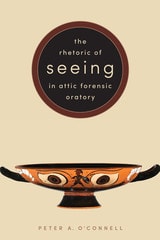
The Rhetoric of Seeing in Attic Forensic Oratory
By Peter A. O'Connell
University of Texas Press, 2017

The Rhetoric of the "Other" Literature
W. Ross Winterowd
Southern Illinois University Press, 1990
Using traditional and contemporary rhetorical theory, Winterowd argues that the fiction-nonfiction division of literature is unjustified and destructive.
He would bridge the gap between literary scholars and rhetoricians by including both fiction (imaginative literature) and nonfiction (literature of fact) in the canon. The actual difference in literary texts, he notes, lies not in their factuality but in their potential for eliciting an aesthetic response.
With speech act and rhetorical theory as a basis, Winterowd argues that presentational literature gains its power on the basis of its ethical and pathetic appeal, not because of its assertions or arguments.
The Rhetoric of the New Political Documentary
Edited by Thomas W. Benson and Brian J. Snee
Southern Illinois University Press, 2008
The Rhetoric of the New Political Documentary explores the most visible and volatile element in the 2004 presidential campaign—the partisan documentary film. This collection of original critical essays by leading scholars and critics—including Shawn J. and Trevor Parry-Giles, Jennifer L. Borda, and Martin J. Medhurst—analyzes a selection of political documentaries that appeared during the 2004 election season. The editors examine the new political documentary with the tools of rhetorical criticism, combining close textual analysis with a consideration of the historical context and the production and reception of the films.
The essays address the distinctive rhetoric of the new political documentary, with the films typically having been shot with relatively low budgets, in video, and using interviews and stock footage rather than observation of uncontrolled behavior. The quality was often good enough and interest was sufficiently intense that the films were shown in theaters and on television, which provided legitimacy and visibility before they were released soon afterwards on DVD and VHS and marketed on the Internet.
The volume reviews such films as Michael Moore’s Fahrenheit 9/11; two refutations of Moore’s film, Fahrenhype 9/11 and Celsius 41.11;Unprecedented: The 2000 Presidential Election; and George W. Bush: Faith in the White House—films that experimented with a variety of angles and rhetorics, from a mix of comic disparagement and earnest confrontation to various emulations of traditional news and documentary voices.
The Rhetoric of the New Political Documentary represents the continued transformation of American political discourse in a partisan and contentious time and showcases the independent voices and the political power brokers that struggled to find new ways to debate the status quo and employ surrogate “independents” to create a counterrhetoric.
The Rhetorics of Life-Writing in Early Modern Europe
Forms of Biography from Cassandra Fedele to Louis XIVThomas Mayer and D. R. Woolf, Editors
University of Michigan Press, 1995
The volume is especially timely in light of the growing interest in "microhistory," and in the histories that are emerging from nonliterary documents. Chapters consider numerous genres, including hagiography, epistolary and verse biography, and less familiar forms such as parodic prosopography, life-writing in funeral sermons, and comic martyrology.
Contributors to the volume come from history, art history, and literature, and they include F.W. Conrad, Sheila ffolliott, Robert Kolb, James Mehl, Diana Robin, T.C. Price Zimmerman, and Elizabeth Goldsmith and Abby Zanger, among others.
Thomas F. Mayer is Associate Professor of History, Augustana College. D. R. Woolf is Professor of History, Dalhousie University.
The Right to Difference
Interculturality and Human Rights in Contemporary German LiteratureNicole Coleman
University of Michigan Press, 2021
The Right to Difference examines novels that depict human rights violations in order to explore causes of intergroup violence within diverse societies, using Germany as a test case. In these texts, the book shows that an exaggeration of difference between minority and majority groups leads to violence. Germany has become increasingly diverse over the past decades due to skilled labor migration and refugee movements. In light of this diversity, this book’s approach transcends a divide between migrant and post-migrant German literature on the one hand and a national literature on the other hand. Addressing competing definitions of national identity as well as the contest between cultural homogeneity and diversity, the author redefines the term “intercultural literature.” It becomes not a synonym for authors who do not belong to a national literature, such as migrant writers, but a way of reading literature with an intercultural lens.
This book builds a theory of intercultural literature that focuses on the multifaceted nature of identity, in which ethnicity represents only one of many characteristics defining individuals. To develop intercultural competence, one needs to adopt a complex image of individuals that allows for commonalities and differences by complicating the notion of sharp contrasts between groups. Revealing the affective allegiances formed around other characteristics (gender, profession, personal motivations, relationships, and more) allows for similarities that grouping into large, homogeneous, and seemingly exclusive entities conceals. Eight novels analyzed in this book remember and reveal human rights violations, such as genocide, internment and torture, violent expulsion, the reasons for fleeing a country, dangerous flight routes and the difficulty of settling in a new country. Some of these novels allow for affective identification with diverse characters and cast the protagonists as individuals with plural perspectives and identities rather than monolithic members of one large national or ethnic group, whereas others emphasize the commonalities of all people.
Ultimately, the author makes the case for German Studies to contribute to an antiracist approach to diversity by redefining what it means to be German and establishing difference as a fundamental human right.
The Right to Play Oneself
Looking Back on Documentary FilmThomas Waugh
University of Minnesota Press, 2010
Waugh analyzes an eclectic international selection of films and issues from the 1920s to the present day. The essays provide a transcultural focus, moving from documentaries of the industrialized societies of North America and Europe to those of 1980s India and addressing such canonical directors as Dziga Vertov, Emile de Antonio, Barbara Hammer, Rosa von Praunheim, and Anand Patwardhan. Woven through the volume is the relationship of the documentary with the history of the Left, including discussions of LGBT documentary pioneers and the firebrand collectives that changed the history of documentary, such as Challenge for Change and ACT UP’s Women’s Collective.
Together with the introduction by the author, Waugh’s essays advance a defiantly and persuasively personal point of view on the history and significance of documentary film.
The Rights of Nature and the Testimony of Things
Literature and Environmental Ethics from Latin AmericaMark Anderson
Vanderbilt University Press, 2024
Drawing Native Amazonian thought into productive tension with a variety of posthumanist theoretical frameworks—ranging from Derrida’s conceptualization of passive decision and hospitality to biosemiotics, Karen Barad’s theorization of intra-activity, and Isabelle Stengers’ proposal for cosmopolitical diplomacy—Anderson analyzes literary works by Julio Cortázar, Clarice Lispector, José Eustasio Rivera, and Davi Kopenawa that reframe environmental ethics in terms of collective, multispecies work and reciprocal care and politics as a cosmopolitics of friendship rooted in diplomacy across difference. Finally, Anderson examines the points of connection and divergences between Latin American relational ontologies and Euro American posthumanist theories within Indigenous Latin American remodernization projects that reappropriate and repurpose ancestral practices as well as develop new technologies with the goal of forging alternative modernities compatible with a livable future for all species.
The Rise and Fall of Early American Magazine Culture
Jared Gardner
University of Illinois Press, 2014
The Rise and Fall of Modern Japanese Literature
John Whittier Treat
University of Chicago Press, 2018
Beginning with journalistic accounts of female criminals in the aftermath of the Meiji civil war, Treat moves on to explore how woman novelist Higuchi Ichiyō’s stories engaged with modern liberal economics, sex work, and marriage; credits Natsume Sōseki’s satire I Am a Cat with the triumph of print over orality in the early twentieth century; and links narcissism in the visual arts with that of the Japanese I-novel on the eve of the country’s turn to militarism in the 1930s. From imperialism to Americanization and the new media of television and manga, from boogie-woogie music to Yoshimoto Banana and Murakami Haruki, Treat traces the stories Japanese audiences expected literature to tell and those they did not. The book concludes with a classic of Japanese science fiction a description of present-day crises writers face in a Japan hobbled by a changing economy and unprecedented natural and manmade catastrophes. The Rise and Fall of Japanese Literature reinterprets the “end of literature”—a phrase heard often in Japan—as a clarion call to understand how literary culture worldwide now teeters on a historic precipice, one at which Japan’s writers may have arrived just a moment before the rest of us.
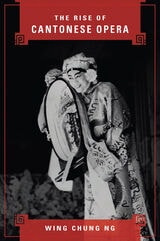
The Rise of Cantonese Opera
Wing Chung Ng
University of Illinois Press, 2015
In the early 1900s, however, Cantonese opera began to capture mass audiences in the commercial theaters of Hong Kong and Guangzhou--a transformation that changed it forever. Wing Chung Ng charts Cantonese opera's confrontations with state power, nationalist discourses, and its challenge to the ascendancy of Peking opera as the country's preeminent "national theatre." Mining vivid oral histories and heretofore untapped archival sources, Ng relates how Cantonese opera evolved from a fundamentally rural tradition into urbanized entertainment distinguished by a reliance on capitalization and celebrity performers. He also expands his analysis to the transnational level, showing how waves of Chinese emigration to Southeast Asia and North America further re-shaped Cantonese opera into a vibrant part of the ethnic Chinese social life and cultural landscape in the many corners of a sprawling diaspora.
The Rise of the African Novel
Politics of Language, Identity, and OwnershipMukoma Wa Ngugi
University of Michigan Press, 2018
Calling it a major crisis in African literary criticism, Mukoma Wa Ngugi considers key questions around the misreading of African literature: Why did Chinua Achebe’s generation privilege African literature in English despite the early South African example? What are the costs of locating the start of Africa’s literary tradition in the wrong literary and historical period? What does it mean for the current generation of writers and scholars of African literature not to have an imaginative consciousness of their literary past?
This book will become a foundational text in African literary studies, as it raises questions about the very nature of African literature and criticism. It will be essential reading for scholars of African literary studies as well as general readers seeking a greater understanding of African literary history and the ways in which critical consensus can be manufactured and rewarded at the expense of a larger and historical literary tradition.
The Road Story and the Rebel
Moving Through Film, Fiction, and TelevisionKatie Mills
Southern Illinois University Press, 2006
In The Road Story and the Rebel: Moving Through Film, Fiction, and Television, Beat studies scholar Katie Mills examines how road stories, which have offered declarations of independence to generations of rebellious Americans, have been transformed by media, technology, and social movements. The genre, which includes literature, films, television shows, and several types of digital media, has evolved, says Mills, as each new generation questions its own identity and embraces the thrill of “automobility” (autonomy and mobility) thus providing audiences a means to consider radically altered notions of independence, even as the genre cycles between innovation and commodification.
This cultural history reveals the unique qualities of road stories and follows the evolution from the Beats’ postwar literary adventures to today’s postmodern reality television shows. Tracing the road story as it moves to both LeRoi Jones’s critique of the Beats’ romanticization of blacks as well as to the mainstream in the 1960s with CBS’s Route 66, Mills also documents the rebel subcultures of novelist Ken Kesey and the Merry Pranksters, who used film and LSD as inspiration on a cross-country bus trip, and she examines the sexualization of male mobility and biker mythology in the films Scorpio Rising,The Wild Angels, and Easy Rider. Mills addresses how the filmmakers of the 1970s—Coppola, Scorsese, and Bogdanovich—flourished in New Hollywood with road films that reflected mainstream audiences and how feminists Joan Didion and Betty Friedan subsequently critiqued them. A new generation of women and minority storytellers gain clout and bring genre remapping to the national consciousness, Mills explains, as the road story evolves from such novels as Song of Solomon to films like Thelma and Louise and television’s Road Rules 2.
The Road Story and the Rebel, which includes twenty illustrations, effectively explores the cultural significance of sixty years of rebellion in film, literature, television, and digital media. Spanning media platforms and marginalized communities, the text offers new interpretations of canonical works and reintroduces forgotten works, revealing the genre to be more political and philosophical than previously understood.
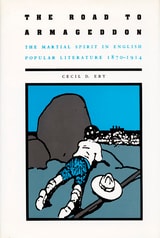
The Road to Armageddon
The Martial Spirit in English Popular Literature, 1870–1914Cecil D. Eby
Duke University Press, 1988
In The Road to Armageddon Cecil Eby shows how the widely admired writers of English popular fiction and poetry contributed, at least in England, to a romantic militarism coupled with xenophobia that helped create the climate that made World War I seem almost inevitable.
Between the close of the Franco-Prussian War of 1871 and the opening guns of 1914, the works of such widely read and admired writers as H. G. Wells, Rudyard Kipling, J. M. Barrie, and Rupert Brooke, as well as a host of now almost forgotten contemporaries, bombarded their avid readers with strident warnings of imminent invasions and prophecies of the collapse of civilization under barbarian onslaught and internal moral collapse.
Eby seems these narratives as growing from and in turn fueling a collective neurosis in which dread of coming war coexisted with an almost loving infatuation with it. The author presents a vivid panorama of a militant mileau in which warfare on a scale hitherto unimaginable was largely coaxed into being by works of literary imagination. The role of covert propaganda, concealed in seemingly harmless literary texts, is memorably illustrated.
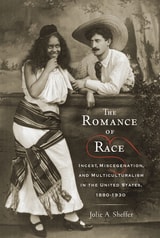
The Romance of Race
Incest, Miscegenation, and Multiculturalism in the United States, 1880-1930Sheffer, Jolie A.
Rutgers University Press, 2013
In the United States miscegenation is not merely a subject of literature and popular culture. It is in many ways the foundation of contemporary imaginary community. The Romance of Race examines the role of minority women writers and reformers in the creation of our modern American multiculturalism.
The national identity of the United States was transformed between 1880 and 1930 due to mass immigration, imperial expansion, the rise of Jim Crow, and the beginning of the suffrage movement. A generation of women writers and reformers—particularly women of color—contributed to these debates by imagining new national narratives that put minorities at the center of American identity. Jane Addams, Pauline Hopkins, Onoto Watanna (Winnifred Eaton), María Cristina Mena, and Mourning Dove (Christine Quintasket) embraced the images of the United States—and increasingly the world—as an interracial nuclear family. They also reframed public debates through narratives depicting interracial encounters as longstanding, unacknowledged liaisons between white men and racialized women that produced an incestuous, mixed-race nation.
By mobilizing the sexual taboos of incest and miscegenation, these women writers created political allegories of kinship and community. Through their criticisms of the nation’s history of exploitation and colonization, they also imagined a more inclusive future. As Jolie A. Sheffer identifies the contemporary template for American multiculturalism in the works of turn-of-the century minority writers, she uncovers a much more radical history than has previously been considered.
The Romantic Conception of Life
Science and Philosophy in the Age of GoetheRobert J. Richards
University of Chicago Press, 2002
Integrating Romantic literature, science, and philosophy with an intimate knowledge of the individuals involved—from Goethe and the brothers Schlegel to Humboldt and Friedrich and Caroline Schelling—Richards demonstrates how their tempestuous lives shaped their ideas as profoundly as their intellectual and cultural heritage. He focuses especially on how Romantic concepts of the self, as well as aesthetic and moral considerations—all tempered by personal relationships—altered scientific representations of nature. Although historians have long considered Romanticism at best a minor tributary to scientific thought, Richards moves it to the center of the main currents of nineteenth-century biology, culminating in the conception of nature that underlies Darwin's evolutionary theory.
Uniting the personal and poetic aspects of philosophy and science in a way that the German Romantics themselves would have honored, The Romantic Conception of Life alters how we look at Romanticism and nineteenth-century biology.
The Romantic Ideology
A Critical InvestigationJerome McGann
University of Chicago Press, 1983
In the course of his study, McGann analyzes both the predominant theories of Romanticism (those deriving from Coleridge, Hegel, and Heine) and the products of its major English practitioners. Words worth, Coleridge, Shelley, and Byron are considered in greatest depth, but the entire movement is subjected to a searching critique. Arguing that poetry is produced and reproduced within concrete historical contexts and that criticism must take these contexts into account, McGann shows how the ideologies embodied in Romantic poetry and theory have shaped and distorted contemporary critical activities.
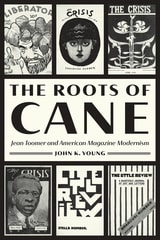
The Roots of Cane
Jean Toomer and American Magazine ModernismJohn K. Young
University of Iowa Press, 2024
Young interweaves a periodical-studies approach to modernism with book history and critical race theory, resituating Toomer’s uneasy place within Black modernism by asking how original readers would have encountered his work. The different contexts in which those audiences were engaging with Toomer’s portraits of racialized identity in the Jim Crow United States, yield often surprising results.

The Roots of Things
EssaysMaxine Kumin
Northwestern University Press, 2010
Throughout her career, Pulitzer Prize–winning poet Maxine Kumin has been at the vanguard of discussions about feminism and sexism, the state of poetry, and our place in the natural world. The Roots of Things gathers into one volume her best essays on the issues that have been closest to her throughout her storied career.
Divided into sections on "Taking Root," "Poets and Poetry," and "Country Living," these pieces reveal Kumin honing her views within a variety of forms, including speeches, critical essays, and introductions of other writers’ work. Whether she is recollecting scenes from her childhood, ruminating on the ups and downs of what she calls "pobiz" (for "poetry business"), describing the battles she’s fought on behalf of women, or illuminating the lives of animals, Kumin offers insight that can only be born of long and closely observed experience.
The Rose and Geryon
Gabriella I. Baika
Catholic University of America Press, 2014
The Ruins of Allegory
Paradise Lost and the Metamorphosis of Epic ConventionCatherine Gimelli Martin
Duke University Press, 1998
Martin shows how Paradise Lost, written at the threshold of the enormous imaginative shift that accompanied the Protestant, scientific, and political revolutions of the seventeenth century, conforms to a prophetic baroque model of allegory similar to that outlined by Walter Benjamin. As she demonstrates, Milton’s experimentation with baroque forms radically reformulates classical epic, medieval romance, and Spenserian allegory to allow for both a naturalistic, empirically responsible understanding of the universe and for an infinite and incomprehensible God. In this way, the resulting poetic world of Paradise Lost is like Milton’s God, an allegorical “ruin” in which the divine is preserved but at the price of a loss of certainty. Also, as Martin suggests, the poem affirmatively anticipates modernity by placing the chief hope of human progress in the fully self-authored subject.
Maintaining a dialogue with a critical tradition that extends from Johnson and Coleridge to the best contemporary Milton scholarship, Martin sets Paradise Lost in both the early modern and the postmodern worlds. Ruins of Allegory will greatly interest all Milton scholars, as well as students of literary criticism and early modern studies.
The Ruling Passion
British Colonial Allegory and the Paradox of Homosexual DesireChristopher Lane
Duke University Press, 1995
Through attentive readings of sexual and political allegory in the work of Kipling, Forster, James, Beerbohm, Firbank, and others—and deft use of psychoanalytic theory—The Ruling Passion interprets turbulent scenes of masculine identification and pleasure, power and mastery, intimacy and antagonism. By foregrounding the shattering effects of male homosexuality and interracial desire, and by insisting on the centrality of unconscious fantasy and the death drive, The Ruling Passion examines the startling recurrence of colonial failure in narratives of symbolic doubt and ontological crisis. Lane argues compellingly that Britain can progress culturally and politically only when it has relinquished its residual fantasies of global mastery.
The Running Kind
Listening to Merle HaggardDavid Cantwell
University of Texas Press, 2022
2022 Belmont Award for the Best Book on Country Music, International Country Music Conference/Belmont University
New and expanded biography of one of country music’s most celebrated singer-songwriters.
Merle Haggard enjoyed numerous artistic and professional triumphs, including more than a hundred country hits (thirty-eight at number one), dozens of studio and live album releases, upwards of ten thousand concerts, induction into the Country Music Hall of Fame, and songs covered by artists as diverse as Lynryd Skynyrd, Elvis Costello, Tammy Wynette, Bobby "Blue" Bland, Willie Nelson, the Grateful Dead, and Bob Dylan.
In The Running Kind, a new edition that expands on his earlier analysis and covers Haggard's death and afterlife as an icon of both old-school and modern country music, David Cantwell takes us on a revelatory journey through Haggard’s music and the life and times out of which it came. Covering the breadth of his career, Cantwell focuses especially on the 1960s and 1970s, when Haggard created some of his best-known and most influential music: songs that helped invent the America we live in today. Listening closely to a masterpiece-crowded catalogue (including “Okie from Muskogee,” “Sing Me Back Home,” “Mama Tried,” and “Working Man Blues,” among many more), Cantwell explores the fascinating contradictions—most of all, the desire for freedom in the face of limits set by the world or self-imposed—that define not only Haggard’s music and public persona but the very heart of American culture.
The Ruse of Repair
US Neoliberal Empire and the Turn from CritiquePatricia Stuelke
Duke University Press, 2021
The Russian Memoir
History and LiteratureBeth Holmgren
Northwestern University Press, 2007
The Sacred Encounter
Jewish Perspectives on SexualityRabbi Lisa Grushcow, Dphil
Central Conference of American Rabbis, 2014
This wide-ranging anthology takes a close look at the breadth of human sexuality from a Jewish perspective. The essays begin with a look at biblical and rabbinic views on sexuality and then proceed to explorations of sexuality at different moments in the life cycle, sexuality and the marital model, diverse expressions of sexuality, examples of sexuality education, the nexus of sexuality and theology, and the challenges of contemporary sexual ethics. The Sacred Encounter is a thought-provoking and important Jewish resource. Perfect for personal study or for high school or adult classes.
The Sagebrush Trail
Western Movies and Twentieth-Century AmericaRichard Aquila
University of Arizona Press, 2015
The book is divided into three parts. Part 1 traces the birth and growth of Westerns from 1900 through the end of World War II. Part 2 focuses on a transitional period in Western movie history during the two decades following World War II. Finally, part 3 shows how Western movies reflected the rapid political, social, and cultural changes that transformed America in the 1960s and the last decades of the twentieth century.
The Sagebrush Trail explains how Westerns evolved throughout the twentieth century in response to changing times, and it provides new evidence and fresh interpretations about both Westerns and American history. These films offer perspectives on the past that historians might otherwise miss. They reveal how Americans reacted to political and social movements, war, and cultural change. The result is the definitive story of Western movies, which contributes to our understanding of not just movie history but also the mythic West and American history. Because of its subject matter and unique approach that blends movies and history, The Sagebrush Trail should appeal to anyone interested in Western movies, pop culture, the American West, and recent American history and culture.
The mythic West beckons but eludes. Yet glimpses of its utopian potential can always be found, even if just for a few hours in the realm of Western movies. There on the silver screen, the mythic West continues to ride tall in the saddle along a “sagebrush trail” that reveals valuable clues about American life and thought.

The Sanitary Arts
Aesthetic Culture and the Victorian Cleanliness CampaignsEileen Cleere
The Ohio State University Press, 2014
The Sanitary Arts covers the mid-forties controversy over cleaning the dirt from the pictures in the National Gallery, the debate over decorative “dust traps” in the overstuffed Victorian home, and the late-century proliferation of hygienic breeding principles as a program of aesthetic perfectibility, to demonstrate the unintentionally collaborative work of seemingly unrelated events and discourses. Bringing figures like Edwin Chadwick and John Ruskin into close conversation about the sanitary status of beauty in a variety of forms and environments, Cleere forcefully demonstrates that aesthetic development and scientific discovery can no longer be understood as separate or discrete forces of cultural change.
The Saving Lie
Harold Bloom and DeconstructionAgata Bielik-Robson
Northwestern University Press, 2011
Bloom is indeed a party of one, a truly strong poet of his own mode of religious-literary criticism, who, in a typically Emersonian manner, makes his own circumstances and sheds influences by incorporating them into his idiosyncratic theory.In this unprecedented full-length study on Harold Bloom, Agata Bielik-Robson explores the many facets of Bloom’s critical writings and career. In his work, she argues, Bloom draws on a variety of disparate traditions—Judaism, gnosis, Romanticism, American pragmatism, and Freudianism, but also, especially recently, Victorian aestheticism—that comprise a dialectical, difficult whole in a constant quarrel with itself. Yet, this is precisely the image of "life-in-antithesis," which constitutes Bloom’s highest speculative achievement, she observes. The Saving Lie brings all these "Blooms" together and, despite their own tendencies toward dissociation, lets them speak unisono: in one almost harmonious voice that will clearly utter the principles of a new speculative position—Bloom’s antithetical vitalism. This study of Bloom and his contributions will not soon be surpassed.

The Scandal of the Fabliaux
R. Howard Bloch
University of Chicago Press, 1986
By showing how the medieval poet's obsession with the outrageous, the low, and the lewd was intimately bound to poetry, Bloch forces a revision of traditional approaches to Old French literature. His final chapter, on castration anxiety, fetishism, and the comic, links the fabliaux with the development of modern notions of the self and makes a case for the medieval roots of our own sense of humor.
The Scarlet Mob of Scribblers
Rereading Hester PrynneJamie Barlowe
Southern Illinois University Press, 2000
Jamie Barlowe finds it bitterly ironic that in literary criticism of The Scarlet Letter, a major American novel about a woman, the voices of female critics have been virtually excluded.
Barlowe examines the causes and consequences of the continuing disregard for women's scholarship. To that end, she chronicles The Scarlet Letter's critical reception, analyzes the history of Hester Prynne as a cultural icon in literature and film, rereads the canonized criticism of the novel, and offers a new reading of Hawthorne's work by rescuing marginalized interpretations from the alternative canon of women critics.
Despite the fervent protestations of scholars that women and minorities are no longer excluded from the arena of academic debate, Barlowe's investigation reveals that mainstream scholarship on The Scarlet Letter—studied as models by generations of students and teachers—remains male-dominated in its comprising population and in its attitudes and practices, which function as the source of its truth-claims. Rather than celebrating the minimal handouts of the academy to women and minorities—and of the culture that nurtures and supports the academy's continuing discrimination—Barlowe constructs a case study that reveals the "rather pitiful state of affairs at the close of the twentieth century."
By interrogating canonized assumptions, Barlowe charts new directions for Hawthorne studies and American literary studies. Through this exposé of ingrained institutional bias, perpetuated myths, and privileged critics, Barlowe provides a refigured perception of the field and state of contemporary literary scholarship.
The Scattered Court
Hindustani Music in Colonial BengalRichard David Williams
University of Chicago Press, 2023
How far did colonialism transform north Indian music? In the period between the Mughal empire and the British Raj, how did the political landscape bleed into aesthetics, music, dance, and poetry? Examining musical culture through a diverse and multilingual archive, primarily using sources in Urdu, Bengali, and Hindi that have not been translated or critically examined before, The Scattered Court challenges our assumptions about the period. Richard David Williams presents a long history of interactions between northern India and Bengal, with a core focus on the two courts of Wajid Ali Shah (1822–1887), the last ruler of the kingdom of Awadh. He charts the movement of musicians and dancers between the two courts in Lucknow and Matiyaburj, as well as the transregional circulation of intellectual traditions and musical genres, and demonstrates the importance of the exile period for the rise of Calcutta as a celebrated center of Hindustani classical music. Since Lucknow is associated with late Mughal or Nawabi society and Calcutta with colonial modernity, examining the relationship between the two cities sheds light on forms of continuity and transition over the nineteenth century, as artists and their patrons navigated political ruptures and social transformations. The Scattered Court challenges the existing historiography of Hindustani music and Indian culture under colonialism by arguing that our focus on Anglophone sources and modernizing impulses has directed us away from the aesthetic subtleties, historical continuities, and emotional dimensions of nineteenth-century music.
The Schlemiel as Metaphor, Revised and Enlarged Edition
Studies in Yiddish and American Jewish FictionSanford Pinsker
Southern Illinois University Press, 1991
The certainty that deep down we are all schlemiels is perhaps what makes America love an inept ball team or a Woody Allen who unburdens his neurotic heart in public.
In this unique, revised history of the schlemiel, Sanford Pinsker uses psychological, linguistic, and anecdotal approaches, as well as his considerable skills as a spritely storyteller, to trace the schlemiel from his beginnings in the Old Testament through his appearance in the nineteenth-century literature of Mendele Mocher Seforim and Sholom Aleichem to his final development as the beautiful loser in the works of Isaac Bashevis Singer, Bernard Malamud, Saul Bellow, Philip Roth, and Woody Allen. Horatio Alger might have once been a good emblem of the American sensibility, but today Woody Allen’s anxious, bespectacled punin (face) seems closer, and truer, to our national experience. His urban, end-of-the-century anxieties mirror—albeit in exaggeration—our own.
This expanded study of the schlemiel is especially relevant now, when scholarship of Yiddish and American Jewish literature is on the increase. By sketching the family tree of that durable anti-hero the schlemiel, Pinsker proves that Jewish humor is built upon the very foundations of the Jewish experience. Pinsker shows the evolution of the schlemiel from the comic butt of Yiddish jokes to a literary figure that speaks to the heart of our modern problems, and he demonstrates the way that Yiddish humor provides a sorely needed correction, a way of pulling down the vanities we all live by.
The Scholar's Art
Literary Studies in a Managed WorldJerome McGann
University of Chicago Press, 2006
Of particular interest to McGann is the demise of public discourse about poetry. That poetry has become recondite is, to his mind, at once a problem for how scholars do their work and a general cultural emergency. The Scholar’s Art asks what could be gained by reimagining the way scholars have codified the literary and cultural history of the past two hundred years and goes on to provide a series of case studies that illustrate how scholarly method can help bring about such reimaginings. McGann closes with a discussion of technology’s ability to harness the reimagination of cultural memory and concludes with exemplary acts of critical reflection.
Astute observation from one of America’s most bracing and original commentators on the place of literature in twenty-first century culture, The Scholar’s Art proposes new ways—cultural, philological, and technological—to reimagine our literary past and future.
The Science of Character
Human Objecthood and the Ends of Victorian RealismS. Pearl Brilmyer
University of Chicago Press, 2022
In 1843, the Victorian philosopher John Stuart Mill called for the establishment of a new science, “the science of the formation of character.” Although Mill’s proposal failed as scientific practice, S. Pearl Brilmyer maintains that it found its true home in realist fiction of the period, which employed the literary figure of character to investigate the nature of embodied experience. Bringing to life Mill’s unrealized dream of a science of character, novelists such as George Eliot, Thomas Hardy, and Olive Schreiner turned to narrative to explore how traits and behaviors in organisms emerge and develop, and how aesthetic features—shapes, colors, and gestures—come to take on cultural meaning through certain categories, such as race and sex. Engaged with materialist science and philosophy, these authors transformed character from the liberal notion of the inner truth of an individual into a materially determined figuration produced through shifts in the boundaries between the body’s inside and outside. In their hands, Brilmyer argues, literature became a science, not in the sense that its claims were falsifiable or even systematically articulated, but in its commitment to uncovering, through a fictional staging of realistic events, the laws governing physical and affective life. The Science of Character redraws late Victorian literary history to show how women and feminist novelists pushed realism to its aesthetic and philosophical limits in the crucial span between 1870 and 1920.
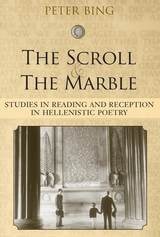
The Scroll and the Marble
Studies in Reading and Reception in Hellenistic PoetryPeter Bing
University of Michigan Press, 2010
---Benjamin Acosta-Hughes, Ohio State University
While people of previous ages relied on public performance as their chief means of experiencing poetry, the Hellenistic age developed what one may term a culture of reading. This was the first era in which poets consciously shaped their works with an eye toward publication and reception not just on the civic stage but in several media---in performance, on inscribed monuments, in scrolls. The essays in Peter Bing's collection explore how poetry accommodated various audiences and how these audiences in turn experienced the text in diverse ways. Over the years, Bing's essays have focused on certain Hellenistic authors and genres---particularly on Callimachus and Posidippus and on epigram. His themes, too, have been broadly consistent. Thus, although the essays in The Scroll and the Marble span some twenty years, they offer a coherent vision of Hellenistic poetics as a whole.
Peter Bing is Professor of Classics at Emory University and editor, most recently, of the Companion to Hellenistic Epigram: Down to Philip (coedited with Jon Steffen Bruss).
Jacket illustration: Film still from Mr. Smith Goes to Washington, directed by Frank Capra, Columbia Pictures 1939. Courtesy of Sony Pictures.
The Search for Medieval Music in Africa and Germany, 1891-1961
Scholars, Singers, MissionariesAnna Maria Busse Berger
University of Chicago Press, 2020
The book unfolds in three parts. Busse Berger starts with the origins of comparative musicology circa 1900, when early proponents used ideas from comparative linguistics to test whether parallels could be drawn between nonwestern and medieval European music. She then turns to youth movements of the era—the Wandervogel, Jugendmusikbewegung, and Singbewegung—whose focus on joint music making influenced many musicologists. Finally, she considers case studies of Protestant and Catholic mission societies in what is now Tanzania, where missionaries—many of them musicologists and former youth-group members—extended the discipline via ethnographic research and a focus on local music and communities. In highlighting these long-overlooked transnational connections and the role of global music in early musicology, Busse Berger shapes a fresh conception of music scholarship during a pivotal part of the twentieth century.
The Search for Origins in the Twentieth-Century Long Poem
Sumerian, Homeric, Anglo-SaxonJOE W. MOFFETT
West Virginia University Press, 2007
In this new, scholarly text—an ambitious study of contemporary poetics—Joe W. Moffett deciphers the twentieth-century long poem, searching for a better understanding of why long-poem writers are preoccupied with a search for origins.
Moffett focuses on issues like postcolonialism, nation, modernism, and postmodernism. He conceptualizes his theories by using what he calls “originiary moments”: historical periods or specific events from which a poet contends our culture descends. These moments enlighten and inspire the modern poet to use origin or “source” as a way to examine present culture and social conditions. The poems also encourage modern readers to question, revise, and repudiate. Moffett organizes his argument by arranging specific examples into three categories of originary moments: Sumerian, Homeric, and Anglo-Saxon.
According to Moffett, the long poem is appealing because it “lacks strict conventions that govern other genres.” Using a wide variety of poems to support his arguments, Moffett asks many stimulating questions and also provides provocative answers.
Questions of when and where It All Began have been off the critical agenda for some time now, embargoed by poststructuralism. Undeterred, Joe Moffett boldly revisits the search for cultural origins, which preoccupied major poets throughout the twentieth century. Capacious in his scope, eclectic in his choices, Moffett rounds up unusual subjects, including long poems by Armand Schwerner, Derek Walcott, Geoffrey Hill, and Judy Grahn, with excursions into Charles Olson, Seamus Heaney, and others. Nowhere will you find clearer, more intelligent, or better-informed readings of these poems than Moffett’s.
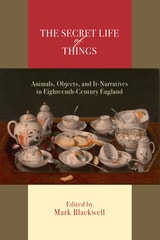
The Secret Life of Things
Animals, Objects, and It-Narratives in Eighteenth-Century EnglandMark Blackwell
Bucknell University Press, 2023
Published by Bucknell University Press.
Distributed worldwide by Rutgers University Press.
The Secret Marriage of Sherlock Holmes and Other Eccentric Readings
Michael Atkinson
University of Michigan Press, 1998
"Atkinson demonstrates a love and knowledge of the Holmes stories. . . I would recommend The Secret Marriage of Sherlock Holmes enthusiastically to any lover of the Canon who is prepared to have their perceptions widened."
The Secret War
Treason, Espionage, and Modern FictionEva Horn
Northwestern University Press, 2013
The Secret War marks a new direction in the cultural history and theory of intelligence gathering and state secrecy in the twentieth and early twenty-first centuries. While historical truth remains hidden from the public, Eva Horn finds in political fiction, which serves as both an indicator and a tool, a means to analyze political secrets. Starting with a general theory of treason and military intelligence as a specific type of political knowledge, the book charts the history of intelligence gathering from 1900 to 9/11. The Secret War analyzes literary and cinematic depictions of espionage from Rudyard Kipling and T. E. Lawrence to John Le Carré and Steven Spielberg. Horn considers these fictional accounts against the historical development of Western secret services from their inception in World War I to their struggle against current terrorist networks. The Secret War shows the crucial part fictions play in shaping conflicts, constructing “the enemy,” and deciding political strategies.
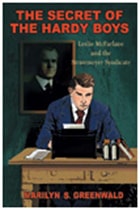
The Secret of the Hardy Boys
Leslie McFarlane and the Stratemeyer SyndicateMarilyn S. Greenwald
Ohio University Press, 2004
For generations of readers, the Hardy Boys were the creations of the legendary Franklin W. Dixon—except Dixon never existed. Behind the iconic series stood the Stratemeyer Syndicate, a powerhouse of children’s publishing, and one gifted but largely unrecognized writer: Leslie McFarlane.
In The Secret of the Hardy Boys, acclaimed biographer Marilyn S. Greenwald uncovers the remarkable story of the man who first brought Frank and Joe Hardy to life. A young Canadian journalist with ambitions beyond formula fiction, McFarlane infused the Syndicate’s rigid plots with wit, atmosphere, and narrative vitality—helping to shape one of the most enduring franchises in children’s literature.
Bound by contract and reluctant to claim authorship, McFarlane kept his role a secret for decades, receiving little financial reward for books that sold in the millions. Yet his story is far from one of regret. Drawing on extensive research, Greenwald paints a vivid portrait of a versatile writer who navigated the shifting landscape of twentieth-century media, from pulp magazines to radio and film.
Rich in literary history and human insight, The Secret of the Hardy Boys is both a revealing behind-the-scenes account of a cultural phenomenon and an inspiring testament to creativity, resilience, and the quiet architects of beloved stories.
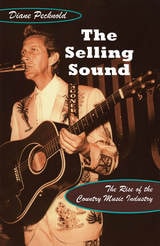
The Selling Sound
The Rise of the Country Music IndustryDiane Pecknold
Duke University Press, 2007
Pecknold draws on sources as diverse as radio advertising journals, fan magazines, Hollywood films, and interviews with industry insiders. Her sweeping social history encompasses the genre’s early days as an adjunct of radio advertising in the 1920s, the friction between Billboard and more genre-oriented trade papers over generating the rankings that shaped radio play lists, the establishment of the Country Music Association, and the influence of rock ‘n’ roll on the trend toward single-genre radio stations. Tracing the rise of a large and influential network of country fan clubs, Pecknold highlights the significant promotional responsibilities assumed by club organizers until the early 1970s, when many of their tasks were taken over by professional publicists.
The Senses of Democracy
Perception, Politics, and Culture in Latin AmericaBy Francine R. Masiello
University of Texas Press, 2018
In The Senses of Democracy, Francine R. Masiello traces a history of perceptions expressed in literature, the visual arts, politics, and history from the start of the nineteenth century to the present day. A wide transnational landscape frames the book along with an original and provocative thesis: when the discourse on democracy is altered—when nations fall into crisis or the increased weight of modernity tests minds and nerves—the representation of our sensing bodies plays a crucial role in explaining order and rebellion, cultural innovation, and social change.
Taking a wide arc of materials—periodicals, memoirs, political proclamations, and travel logs, along with art installations and fiction—and focusing on the technologies that supplement and enhance human perception, Masiello looks at the evolution of what she calls “sense work” in cultural texts, mainly from Latin America, that wend from the heights of romantic thought to the startling innovations of modernism in the early twentieth century and then to times of posthuman experience when cyber bodies hurtle through globalized space and human senses are reproduced by machines. Tracing the shifting debates on perceptions, The Senses of Democracy offers a new paradigm with which to speak of Latin American cultural history and launches a field for the comparative study of bodies, experience, pleasure, and pain over the continental divide. In the end, sense work helps us to understand how culture finds its location.

The Senses of Nonsense
Alison Rieke
University of Iowa Press, 1992