Results by title
4917 books match the query 'Philosophy' and 1267 start with t
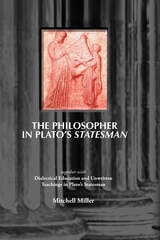
The Philosopher in Plato's Statesman
Mitchell Miller
Parmenides Publishing, 2004
"This study demonstrates how the Statesman is the culminating expression of Plato''s lifelong effort, both in Athens and in the Academy, to bring metaphysical insight to the unending political crisis of his times."The Philosopher in Plato's Statesman a trail-blazing work. While not every reader will agree with the lessons Miller himself draws from this approach, none should fail to be impressed by its interpretive power. All this is exciting stuff. The interpretive pathway on which Miller has embarked has the potential for changing the face of scholarship on the late Platonic dialogues. Parmenides [Publishing] is to be commended for making these two important contributions available under a single cover." --Kenneth Sayre, Professor of Philosophy, University of Notre Dame
"Miller casts considerable light on virtually every aspect of the dialogue. . . . All in all, this book is an outstanding contribution to our understanding of the Statesman." --Stanley Rosen, Borden Parker Bowne Professor of Philosophy, Boston University
MITCHELL MILLER is Professor of Philosophy at Vassar College. He is the author of Plato's Parmenides.

The Philosophic Thought of Ayn Rand
Edited by Douglas J. Den Uyl and Douglas B. Rasmussen
University of Illinois Press, 1984
a systematic account of Rand's work as a philosopher.... The Philosophic
Thought of Ayn Rand gathers contributions from professional philosophers
(some of them quite renowned) to tackle the various components --- metaphysical/epistemological,
ethical, and social/political --- of Rand's comprehensive system. All the
contributors demonstrate the particular genius of current academic philosophy:
the painstaking and meticulous analysis of assumptions with an eye toward
the coherence and consistency of the conclusions derived therefrom.... Thorough
and judicious, this book will provide the reader with the intellectual leverage
necessary to understand an often confusing, always controversial, occasionally
original, and perhaps curiously contemporary writer and thinker."
-- Lloyd Lewis, Modern Fiction Studies
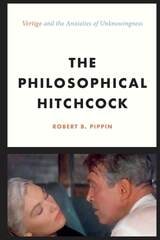
The Philosophical Hitchcock
“Vertigo” and the Anxieties of UnknowingnessRobert B. Pippin
University of Chicago Press, 2017
A bold, brilliant exploration of one of the most admired works of cinema, The Philosophical Hitchcock will lead philosophers and cinephiles alike to a new appreciation of Vertigo and its meanings.
The Philosophical Life
Arthur P. Urbano
Catholic University of America Press, 2013

The Philosophical Papers of Alan Donagan, Volume 1
Historical Understanding and the History of PhilosophyAlan Donagan
University of Chicago Press, 1994
Volume 1 includes essays on Spinoza, Descartes, Bradley, Collingwood, Russell, Moore, and Popper, as well as two previously unpublished papers on the history of philosophy as a discipline, and on Ryle and Wittgenstein's nature of philosophy. Linked by Donagan's commitment to the central importance of history for philosophy and his interest in problems of historical understanding, these essays represent the remarkable scope of Donagan's thought.
The Philosophical Papers of Alan Donagan, Volume 2
Action, Reason, and ValueAlan Donagan
University of Chicago Press, 1994
Volume 2 addresses issues in the philosophy of action and moral theory. With papers on Kant, von Wright, Sellars, and Chisholm, this volume also covers a range of questions in applied ethics—from the morality of Truman's decision to drop atomic bombs on Hiroshima and Nagasaki to ethical questions in medicine and law.
The Philosophical Roots of Anthropology
William Adams
CSLI, 1998
Like most anthropologists, Adams had previously accepted the premise that anthropology's intellectual roots go back no further than the moral philosophy of the Enlightenment, or perhaps at the earliest to the humanism of the Renaissance. In this volume, Adams recognizes that many good ideas were anticipated in antiquity and that these ideas have had a lasting influence on anthropological models in particular. He has chosen five philosophical currents whose influence has been, and is, very widespread, particularly in North American anthropology: progressivism, primitivism, natural law, German idealism, and "Indianology". He argues that the influences of these currents in North American anthropology occur in a unique combination that is not found in the anthropologies of other countries. Without neglecting the anthropologies of other countries, this work serves as the basis for the explanation of the true historical and philosophical underpinnings of anthropology and its goals.
The Philosophical Status of Diagrams
Mark Greaves
CSLI, 2001
This book explores the reasons why structured graphics have been largely ignored in contemporary formal theories of axiomatic systems. In particular, it elucidates the systematic forces in the intellectual history of mathematics which have driven the adoption of sentential representational styles over diagrammatic ones. In this book, the effects of historical forces on the evolution of diagrammatically-based systems of inference in logic and geometry are traced from antiquity to the early twentieth-century work of David Hilbert. From this exploration emerges an understanding that the present negative attitudes towards the use of diagrams in logic and geometry owe more to implicit appeals to their history and philosophical background than to any technical incompatibility with modern theories of logical systems.
The Philosophical Structure of Historical Explanation
Paul A. Roth
Northwestern University Press, 2019
In The Philosophical Structure of Historical Explanation, Paul A. Roth resolves disputes persisting since the nineteenth century about the scientific status of history. He does this by showing why historical explanations must take the form of a narrative, making their logic explicit, and revealing how the rational evaluation of narrative explanation becomes possible. Roth situates narrative explanations within a naturalistic framework and develops a nonrealist (irrealist) metaphysics and epistemology of history—arguing that there exists no one fixed past, but many pasts. The book includes a novel reading of Thomas S. Kuhn’s The Structure of Scientific Revolutions, showing how it offers a narrative explanation of theory change in science. This book will be of interest to researchers in historiography, philosophy of history, philosophy of science, philosophy of social science, and epistemology.
The Philosophical Vision of John Duns Scotus
An IntroductionMary Beth Ingham
Catholic University of America Press, 2004
The Philosophy Scare
The Politics of Reason in the Early Cold WarJohn McCumber
University of Chicago Press, 2016
McCumber begins with the story of Max Otto, whose appointment to the UCLA Philosophy Department in 1947 was met with widespread protest charging him as an atheist. Drawing on Otto’s case, McCumber details the hugely successful conservative efforts that, by 1960, had all but banished the existentialist and pragmatist paradigms—not to mention Marxism—from philosophy departments all across the country, replacing them with an approach that valorized scientific objectivity and free markets and which downplayed the anti-theistic implications of modern thought. As he shows, while there have since been many instances of definitive and even explosive rejection of this conservative trend, its effects can still be seen at American universities today.
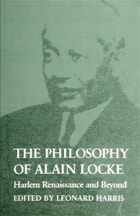
The Philosophy of Alain Locke
Harlem Renaissance and Beyondedited by Leonard Harris
Temple University Press, 1991
This collection of essays by American philosopher Alain Locke (1885-1954) makes readily available for the first time his important writings on cultural pluralism, value relativism, and critical relativism. As a black philosopher early in this century, Locke was a pioneer: having earned both undergraduate and doctoral degrees at Harvard, he was a Rhodes scholar at Oxford, studied at the University of Berlin, and chaired the Philosophy Department at Howard University for almost four decades. He was perhaps best known as a leading figure in the Harlem Renaissance.
Locke’s works in philosophy—many previously unpublished—conceptually frame the Harlem Renaissance and New Negro movement and provide an Afro-American critique of pragmatism and value absolutism, and also offer a view of identity, communicative competency, and contextualism. In addition, his major works on the nature of race, race relations, and the role of race-conscious literature are presented to demonstrate the application of his philosophy. Locke’s commentaries on the major philosophers of his day, including James, Royce, Santayana, Perry, and Ehrenfels help tell the story of his relationship to his former teachers and his theoretical affinities.
In his substantial Introduction and interpretive concluding chapter, Leonard Harris describes Locke’s life, evaluates his role as an American philosopher and theoretician of the Harlem Renaissance, situates him in the pragmatist tradition, and outlines his affinities with modern deconstructionist ideas. A chronology of the philosopher’s life and bibliography of his works are also provided. Although much has been written about Alain Locke, this is the first book to focus on his philosophical contributions.

The Philosophy of Antonio Negri, Volume One
Resistance in PracticeEdited by Timothy S. Murphy
Pluto Press, 2005
The Philosophy of Antonio Negri, Volume Two
Revolution in TheoryEdited by Timothy S. Murphy and Abdul-Karim Mustapha
Pluto Press, 2007
The Philosophy of Art
F.W.J. Schelling
University of Minnesota Press, 1989
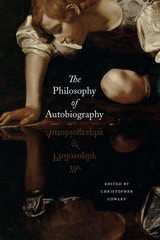
The Philosophy of Autobiography
Edited by Christopher Cowley
University of Chicago Press, 2015
Cowley and his contributors show that while philosophers have seemed uninterested in autobiography, they have actually long been preoccupied with many of its conceptual elements, issues such as the nature of the self, the problems of interpretation and understanding, the paradoxes of self-deception, and the meaning and narrative structure of human life. But rarely have philosophers brought these together into an overarching question about what it means to tell one’s life story or understand another’s. Tackling these questions, the contributors explore the relationship between autobiography and literature; between story-telling, knowledge, and agency; and between the past and the present, along the way engaging such issues as autobiographical ethics and the duty of writing. The result bridges long-standing debates and illuminates fascinating new philosophical and literary issues.

The Philosophy of Baruch Spinoza
Richard Kennington
Catholic University of America Press, 2018
The Philosophy of Claude Lefort
Interpreting the PoliticalBernard Flynn
Northwestern University Press, 2005
Much of what passes for political philosophy in our day is merely politicized philosophical concepts, a distinction author Bernard Flynn underscores as he describes the development of Lefort's truly political philosophy—its ideas formed in response to his own political experience and to the work of certain major figures within the tradition of political thought. Beginning with Lefort's most important single work, his book on Machiavelli, Flynn presents the philosopher's conceptions of politics, modernity, and interpretation in the context within which they took shape. He then draws on a wide variety of Lefort's works to explicate his notions of premodern and modern democracy in which totalitarianism, in Lefort's singular and highly influential theory, is identified as a permanent problem of modernity.
A valuable exposition of one of the most important Continental philosophers of the post-World War II period, Flynn's book is itself a noteworthy work of interpretive philosophy, pursuing the ideas and issues addressed by Lefort to a point of unparalleled clarity and depth.
The Philosophy of Edmund Burke
A Selection from His Speeches and WritingsEdmund Burke
University of Michigan Press, 1960
The Philosophy of Epicurus
Letters, Doctrines, and Parallel Passages from LucretiusEpicurus, translated with commentary and introduction by George K. Strodach
Northwestern University Press, 1963

The Philosophy of Franz Rosenzweig
Edited by Paul Mendes-Flohr
University Press of New England, 2002
The Philosophy of Grammar
Otto Jespersen
University of Chicago Press, 1992
University in 1909-10, called “An Introduction to English Grammar.”
It is the connected presentation of Jespersen's views of the general
principles of grammar based on years of studying various languages
through both direct observation of living speech and written and
printed documents.
“[The Philosophy of Grammar and Analytic Syntax] set
forth the most extensive and original theory of universal grammar
prior to the work of Chomsky and other generative grammarians of the
last thirty years.”—Arne Juul and Hans F. Nielsen, in Otto
Jespersen: Facets of His Life and Work
“Besides being one of the most perceptive observers and original
thinkers that the field of linguistics has ever known, Jespersen was
also one of its most entertaining writers, and reading The
Philosophy of Grammar is fun. Read it, enjoy it.”—James D.
McCawley, from the Introduction
Otto Jespersen (1860-1943), an authority on the growth and structure
of language, was the Chair of the English Department at the University
of Copenhagen. Among his many works are A Modern English
Grammar and Analytic Syntax, the latter published by the
University of Chicago Press.
The Philosophy of Hegel as a Doctrine of the Concreteness of God and Humanity
Volume One: The Doctrine of GodI. A. Il’in, Translated by Philip T. Grier
Northwestern University Press, 2010
This landmark two-volume translation from Russian of The Philosophy of Hegel as a Doctrine of the Concreteness of God and Humanity marks the first appearance in English of any of the works of Russian philosopher Ivan Aleksandrovich Il’in (Ilyin). Originally published in 1918, on the eve of the Russian civil war, Il'in's commentary on Hegel marked both an apogee of Russian Silver Age philosophy and a significant manifestation of the resurgence of interest in Hegel that began in the early twentieth century.
A. F. Losev accurately observed in the same year it appeared: “Neither the study of Hegel nor the study of contemporary Russian philosophical thought is any longer thinkable without this book of I. A. Il’in’s.” Some Hegel scholars may know this work through the abridged translation into German that Il’in produced himself in 1946. However, that edition omitted most of the original volume two. Noted Hegel scholar Philip T. Grier’s edition—with an introduction setting Il’in’s work in its proper historical, cultural, and philosophical contexts and annotation throughout—represents the first opportunity for non-Russian-speaking readers to acquaint themselves with the full scope of Il’in’s still provocative interpretation of Hegel.
Volume 1 is "The Doctrine of God." Volume 2 is "The Doctrine of Humanity."
The Philosophy of Hegel as a Doctrine of the Concreteness of God and Humanity
Volume Two: The Doctrine of HumanityI. A. Il’in, Translated by Philip T. Grier
Northwestern University Press, 2011
The publication of volume 2 of Philip T. Grier’s translation of The Philosophy of Hegel as a Doctrine of the Concreteness of God and Humanity completes the first appearance in English of any of the works of Russian philosopher I. A. Il’in (Ilyin).
Most of the contents of volume 2 will be unknown even to those who have read the 1946 German version prepared by Il’in, because in that version he omitted eight of the original ten chapters. These omitted chapters provide an extended reflection on the central categories of Hegel’s moral, legal, and political philosophies, as well as of the philosophy of history. The topics examined are, in order: freedom, humanity, will, right, morality, ethical life, personhood and its virtue, and the state. Contained within these chapters are some notably insightful expositions of core doctrines in Hegel’s philosophy.
Il’in’s colleague A. F. Losev accurately observed in the same year the text first appeared: “Neither the study of Hegel nor the study of contemporary Russian philosophical thought is any longer thinkable without this book of I. A. Il’in’s.”
The Philosophy of Immanuel Kant
Richard Kennington
Catholic University of America Press, 2018
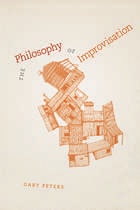
The Philosophy of Improvisation
Gary Peters
University of Chicago Press, 2009
Improvisation is usually either lionized as an ecstatic experience of being in the moment or disparaged as the thoughtless recycling of clichés. Eschewing both of these orthodoxies, The Philosophy of Improvisation ranges across the arts—from music to theater, dance to comedy—and considers the improvised dimension of philosophy itself in order to elaborate an innovative concept of improvisation.
Gary Peters turns to many of the major thinkers within continental philosophy—including Heidegger, Nietzsche, Adorno, Kant, Benjamin, and Deleuze—offering readings of their reflections on improvisation and exploring improvisational elements within their thinking. Peters’s wry, humorous style offers an antidote to the frequently overheated celebration of freedom and community that characterizes most writing on the subject. Expanding the field of what counts as improvisation, The Philosophy of Improvisation will be welcomed by anyone striving to comprehend the creative process.
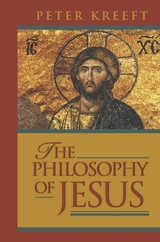
The Philosophy of Jesus
Peter Kreeft
St. Augustine's Press, 2007
Amazingly, no one ever seems to have looked at Jesus as a philosopher, or his teaching as philosophy. Yet no one in history has ever had a more radically new philosophy, or made more of a difference to philosophy, than Jesus. He divided all human history into two, into "B.C." and "A.D."; and the history of philosophy is crucial to human history, since philosophy is crucial to man; so how could He not also divide philosophy?
This book (1) looks at Jesus as a complete human being (as well as divine), therefore also as a philosopher; (2) looks at philosophy as Jesus' pre-modern contemporaries did, as a wisdom, a world-view, and a way of life rather than as a super-science (Descartes, Hegel) or as a servant-science (Hobbes, Hume); and (3) looks at philosophy in light of Jesus rather than at Jesus in light of philosophy. It explores the consequences of Etienne Gilson's point that when St. John brought Christianity and Greek philosophy into contact and identified the Messiah the Jews had most deeply sought with the logos that the Greeks had most deeply sought, nothing happened to Christ but something happened to the logos.
This book explores the most radical revolution in the history of philosophy, the differences Jesus made to metaphysics (the philosophy of being), to epistemology (the philosophy of knowing), to anthropology (the philosophy of man), and to philosophical ethics and politics.
And, besides, it has the greatest ending of any philosophy book in a century.
The Philosophy of John Dewey
Volume 1. The Structure of Experience. Volume 2: The Lived ExperienceJohn Dewey
University of Chicago Press, 1981
John J. McDermott's anthology, The Philosophy of John Dewey, provides the best general selection available of the writings of America's most distinguished philosopher and social critic. This comprehensive collection, ideal for use in the classroom and indispensable for anyone interested in the wide scope of Dewey's thought and works, affords great insight into his role in the history of ideas and the basic integrity of his philosophy.
This edition combines in one book the two volumes previously published separately. Volume 1, "The Structure of Experience," contains essays on metaphysics, the logic of inquiry, the problem of knowledge, and value theory. In volume 2, "The Lived Experience," Dewey's writings on pedagogy, ethics, the aesthetics of the "live creature," politics, and the philosophy of culture are presented. McDermott has prefaced each essay with a helpful explanatory note and has written an excellent general introduction to the anthology.
The Philosophy of John Henry Newman and Pragmatism
A ComparisonMarial Corona
Catholic University of America Press, 2023
The Philosophy of Law in Historical Perspective
Carl Joachim Friedrich
University of Chicago Press, 1963
The Philosophy of Living
François Jullien
Seagull Books, 2015
Living holds us between two places. It expresses what is most elementary—to be alive—and the absoluteness of our aspiration—finally living! But could we desire anything other than to live? In The Philosophy of Living, François Jullien meditates on Far Eastern thought and philosophy to analyze concepts that can be folded into a complete philosophy of living, including the idea of the moment, the ambiguity of the in-between, and what he calls the “transparency of morning.” Jullien here develops a strategy of living that goes beyond morality and dwells in the space between health and spirituality.
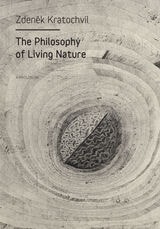
The Philosophy of Living Nature
Zdenek Kratochvíl
Karolinum Press, 2016
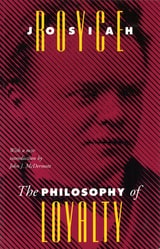
The Philosophy of Loyalty
Josiah Royce
Vanderbilt University Press, 1995
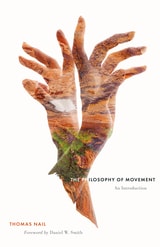
The Philosophy of Movement
An IntroductionThomas Nail
University of Minnesota Press, 2024
An influential thinker distills years of work on the philosophy of movement into one accessible account
Why are city dwellers worldwide walking on average ten percent faster than they were a decade ago? Why are newcomer immigrant groups so often maligned when migration has always constituted civilization? To analyze and understand the depth of the reasons, Thomas Nail suggests that it serves us well to turn to a philosophy of movement. Synthesizing and extending many years of his influential work, The Philosophy of Movement is a comprehensive argument for how motion is the primary force in human and natural history.
Nail critiques the bias toward stasis at the core of Western thought, asking: what would a philosophy that began with the primacy of movement look like? Interrogating the consequences of movement throughout history and in daily life in the twenty-first century, he draws connections and traces patterns between scales of reality, periods of history, and fields of knowledge. In our age of rapid movements shaped by accelerating climate change and ensuing mass global migration, as well as ubiquitous digital media, Nail provides a contemporary philosophy that helps us understand how we got here and how to grapple with these interlocking challenges.
With a foreword by philosopher Daniel W. Smith, The Philosophy of Movement: An Introduction is a must-read for scholars and students not only of philosophy but also history, anthropology, science and technology studies, mobility studies, and other fields across the humanities and social sciences.

The Philosophy of Nature
Ivor Leclerc
Catholic University of America Press, 2018

The Philosophy of Nietzsche
Reiner Schürmann Lecture NotesReiner Schürmann
Diaphanes, 2018
This volume of Reiner Schürmann’s lectures unpacks Nietzsche’s ambivalence towards Kant, in particular positioning Nietzsche’s claim to have brought an end to German idealism against the backdrop of the Kantian transcendental-critical tradition. Rather than simply compare the two philosophers, Schürmann’s lectures help us to understand the consequences Nietzsche derived from Kantian concepts, as well as the wider horizon within which Nietzsche’s ideas arose and can best be shown to apply. According to Schürmann’s trenchant reading: if Nietzsche was indeed “fatal” to Western philosophy, as he claimed, he was so in large part because of the Kantian transcendental thinking from which he inherited the very elements and tools of his criticism.
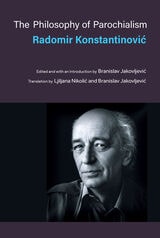
The Philosophy of Parochialism
Radomir Konstantinovic, Edited and with an Introduction by Branislav Jakovljevic, Translation by Ljiljana Nikolic and Branislav Jakovljevic
University of Michigan Press, 2021
The Philosophy of Parochialism is Radomir Konstantinović’s (1928–2011) most celebrated and reviled book. First published in Belgrade as Filosofija palanke in 1969, it attracted keen attention and controversy through its unsparing critique of Serbian and any other nationalism in Yugoslavia and beyond. The book was prophetic, seeming to anticipate not only the bloody disintegration of Yugoslavia in the 1990s, but also the totalitarian turn in politics across the globe in the first decades of the new century. With this translation, English-speaking audiences can at last discover one of the most original writers of eastern European late modernism, and gain an important and original perspective into contemporary politics and culture in the West and beyond. This is a book that seems to age in reverse, as its meanings become deeper and more universal with the passage of time.
Konstantinović’sbookresists easy classification, mixing classical, Montaigne-like essay, prose poetry, novel, and literary history. The word “philosophy” in the book’s title refers to the solitary activity of reflection and critical thinking, and is also paradoxical: according to the author, a defining characteristic of parochialism is precisely its intolerance toward this kind of self-reflexivity. In Konstantinović’s analysis, parochialism is not a simply a characteristic of a geographical region or a cultural, political, and historical formation—these are all just manifestations of the parochial spirit as the spirit of insularity. His book illuminates the current moment, in which insularity undergirds not only ethnic and national divisions, but also dictates the very structure of everyday life, and where individuals can easily find themselves locked in an echo chamber of social media. The Philosophy of Parochialism can help us understand better not only the dead ends of ethnic nationalism and other atavistic ideologies, but also of those cultural forces such as digital technologies that have been built on the promise of overcoming those ideologies.
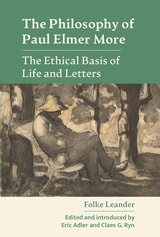
The Philosophy of Paul Elmer More
The Ethical Basis of Life and LettersFolke Leander
University of Missouri Press, 2026
Folke Leander (1910-1981) was a prolific and internationally known Swedish philosopher. He is best known in the United States as an explicator of the New Humanism, an informal movement of literary and cultural criticism founded by Paul Elmer More (1864-1937) and Irving Babbitt (1865-1933).
Leander’s manuscript for The Philosophy of Paul Elmer More was completed in the early 1970s, but because of the academic environment at the time and the book’s special philosophical focus, Leander was unable to find a publisher. Since then, the work existed only as a typescript, a copy of which he left with Claes G. Ryn, his former student and collaborator, in the hope that one day in more favorable intellectual circumstances it might be published.
Leander is rare among the scholars of the New Humanism for his first-rate philosophical training, depth of insight, and clarity of expression. In The Philosophy of Paul Elmer More he grapples carefully and precisely with the most fundamental tenets of the New Humanism. Although very supportive of the movement, Leander provides essential critiques of its contentions—and even improves upon some of them in crucial respects. In a series of concise, limpid chapters, he explains and assesses such fundamental—but often hazily understood—Humanist concepts as the “inner check,” “naturalism,” and “the higher will.” The result is a book essential for anyone who wants to understand the New Humanism.
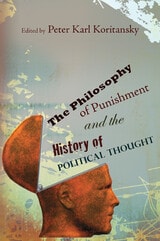
The Philosophy of Punishment and the History of Political Thought
Edited by Peter Karl Koritansky
University of Missouri Press, 2011
For the last half century, the philosophical debates over punishment have been deadlocked at two schools of thought: Utilitarianism and Retributivism. In his introduction, Koritansky provides an overview of the stymied debate by analyzing H. L. A. Hart’s argument for a philosophy unifying the theories of Utilitarianism and Retributivism. While Koritansky allows that both theories have contributed substantially to the contemporary understanding of punishment, he points out that Hart’s lack of success in combining these theories proves that both are less than ideal. From this starting point, Koritansky urges transcendence from these two theories in order to respond to new developments and circumstances surrounding the enactment of punishment today.
Conveniently divided into three sections, the book explores pagan and Christian premodern thought; early modern thought, culminating in chapters on Kant and classic Utilitarianism; and postmodern thought as exemplified in the theories of Nietzsche and Foucault. In all, the essays probe the work of Plato, Saint Augustine, Saint Thomas Aquinas, Thomas Hobbes, Immanuel Kant, Cesere Beccaria, Jeremy Bentham, John Stuart Mill, Friedrich Nietzsche, and Michel Foucault.
These essays devoted to the philosophy of punishment from the perspective of political thought delve deep into key contributions from thinkers of all eras to help further debates on punishment, provide the history of political thought in order to trace changes and effects on future theories, as well as expose the roots of the two prevailing schools of thought. This collection will engage all social scientists interested in the issue of punishment and energize the ongoing debate surrounding this complex issue.
The Philosophy of Rhetoric
George Campbell. Edited by Lloyd F. Bitzer
Southern Illinois University Press, 1988
Bitzer shows that, by attempting to elaborate a general theory of rhetoric through empirical procedures, Campbell’s project reveals the limitations of his method. He cannot ground all statements empirically and it is at this point that his theological position comes into play. Inspection of his religious views shows that God’s design of human nature, and God’s revelations to humankind, make moral and spiritual truths known and quite secure to human beings, although not empirically.
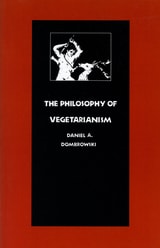
The Philosophy of Vegetarianism
Daniel A. Dombrowski
University of Massachusetts Press, 1984
Daniel A. Dombrowski uses the tools and insights of these contemporary debates in order to better understand the strengths and weaknesses of ancient philosophical vegetarianism. He also uses the wisdom of the Greek vegetarians as an Archimedean point from which to critique both the opponents and the defenders of contemporary philosophical vegetarianism. The book includes an annotated bibliography of the current debates in this burgeoning field of scholarship.
The Philosophy, Theology, and Rhetoric of Marius Victorinus
Stephen A. Cooper
SBL Press, 2022
Pagan rhetor, (Neo-)Platonist philosopher, Christian theologian
This collection of essays is devoted to the rhetoric, Neoplatonic philosophy, and Christian theology of Marius Victorinus, a mid-fourth-century professor of rhetoric and philosopher who converted to Christianity late in life. Scholars from eight different countries, some of whom have not previously published in English, reflect on debates about his writings and theological development. These topics include Victorinus's deployment of philosophical sources for trinitarian theology, possible connections in his work to Origen, Augustine, Plotinus, Porphyry, and Gnosticism, as well as his contributions to Latin rhetoric and dialectic. Contributors include Jan Dominik Bogataj, Michael Chase, Nello Cipriani, Stephen A. Cooper, Volker Henning Drecoll, Lenka Karfíková, Josef Lössl, Václav Němec, Thomas Riesenweber, Guadalupe Lopetegui Semperena, Miran Špelič, Chiara O. Tommasi, John D. Turner, and Florian Zacher. The chapters in this volume are of great interest to students of late antique philosophy, Christian theology, and Latin rhetoric.
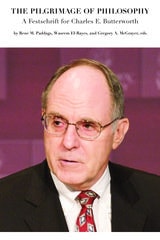
The Pilgrimage of Philosophy
A Festschrift for Charles E. Butterworthel-rayes
St. Augustine's Press, 2019
This book intends to introduce readers to the work of Charles E. Butterworth, and thereby to introduce students to Medieval islamic political philosophy, of which Butterworth is one of the world’s most prominent scholars. In a wider sense, the Festschrift introduces its readers to the current debates on Medieval islamic political philosophy, related as they are to the questions of the relationship between islam and Christianity, the Medieval to the Modern world, and reason and revelation. Butterworth’s scholarship spans six decades, primarily translating, editing, and interpreting the works of the Muslim political philosopher Alfarabi (d. 950) and Averroes (Ibn Rushd, d. 1198). He began his studies of Muslim political philosophy at a time when the Middle East and islam did not have the political salience they have acquired in more recent years. instead, Butterworth’s reason for engaging with islam was rooted in the question of the relationship between reason and revelation.
While one possible answer was pursued in the Christian, latin West, the islamic borderlands of Greek, Roman, and Muslim civilization offered another. By exploring Averroes, who provides the possibility of an Aristotelian-Islamic political philosophy, and Alfarabi, who pursues a Platonic-islamic political philosophy, Butterworth showed how islamic civilization provided a viable alternative to the theologico-political question reason v revelation, as well as serving as an inspiration to the latin West.
The Place of the Symbolic
Essays on Art and PoliticsReiner Schürmann
Diaphanes, 2021
The Place of the Symbolic gathers Reiner Schürmann’s essays on the nexus of art and politics. In keeping with his translation of the destruction of metaphysics into an an-archic philosophy of practice, Schürmann develops a radical theory of the place of symbols, irreducible either to idealist theories of symbols or structuralist accounts of the symbolic. Symbols, Schürmann argues, may provide a bridge between ontological difference and politics. They resist being grasped metaphysically, in terms of representation. Instead, their understanding requires a specific way of existence: attending to the coming-to-presence of phenomena. As such, the understanding of symbols discloses a form of praxis that abandons ultimate grounds and opens onto the manifold.
Alongside Schürmann’s theory of symbols, the collection includes essays on the relation between metaphysics, tragedy, and technology; on the “there is” in poetry; as well as on judgment. Throughout these characteristically lucid interventions, Schürmann’s most urgent concern remains a consideration of singular and finite practices that enact a release from universal principles. Art and politics appear here as the unworking of ultimate grounds; that is, as practices attuned to a truly groundless form of life.
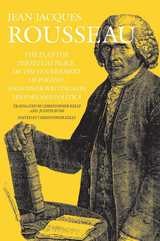
The Plan for Perpetual Peace, On the Government of Poland, and Other Writings on History and Politics
Jean-Jacques Rousseau
Dartmouth College Press, 2011
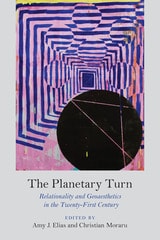
The Planetary Turn
Relationality and Geoaesthetics in the Twenty-First CenturyEdited by Amy J. Elias and Christian Moraru
Northwestern University Press, 2015
A groundbreaking essay collection that pursues the rise of geoculture as an essential framework for arts criticism, The Planetary Turn shows how the planet—as a territory, a sociopolitical arena, a natural space of interaction for all earthly life, and an artistic theme—is increasingly the conceptual and political dimension in which twenty-first-century writers and artists picture themselves and their work. In an introduction that comprehensively defines the planetary model of art, culture, and cultural-aesthetic interpretation, the editors explain how the living planet is emerging as distinct from older concepts of globalization, cosmopolitanism, and environmentalism and is becoming a new ground for exciting work in contemporary literature, visual and media arts, and social humanities. Written by internationally recognized scholars, the twelve essays that follow illustrate the unfolding of a new vision of potential planetary community that retools earlier models based on the nation-state or political “blocs” and reimagines cultural, political, aesthetic, and ethical relationships for the post–Cold War era.
The Platonic Tradition
Peter Kreeft
St. Augustine's Press, 2016
In the first of his eight lectures, Peter Kreeft defines Platonism and its “Big Idea,” the idea of a transcendent reality that the history of philosophy has labeled “Platonic Ideas” or Platonic Forms. In the second lecture, he briefly explores Plato’s two basic predecessors or sources, myth and Socrates; and then looks at 12 applications of the Forms in Plato’s own dialogues. The third lecture covers the three most important modifications or additions to Plato himself in the Platonic tradition: Aristotle, Plotinus, and Augustine, each of whom gave the Forms a new metaphysical address. The fourth lecture explores six Christian Platonists, three in the New Testament and three philosophers, Justin Martyr, Bonaventure, and Aquinas.
The Player's Passion
Studies in the Science of ActingJoseph R. Roach
University of Michigan Press, 1993
The Pluralistic Philosophy of Stephen Crane
Patrick K. Dooley
University of Illinois Press, 1993
formally trained in the discipline of philosophical inquiry. Dooley shows how
Crane's philosophical pluralism, which represents his response to the acute moral
uncertainties resulting from the decline of late nineteenth-century religious
authority, allies him with the contextualism of such contemporary philosophers
as William James, C. S. Peirce, and Josiah Royce."
-- James B. Colvert, author of Stephen Crane
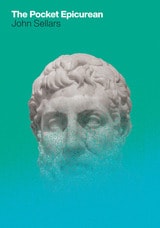
The Pocket Epicurean
John Sellars
University of Chicago Press, 2021
As long as there has been human life, we’ve searched for what it means to be happy. More than two thousand years ago, the Greek philosopher Epicurus came to his own conclusion: all we really want in life is pleasure. Though today we tend to associate the word “Epicurean” with indulgence in the form of food and wine, the philosophy of Epicurus was about a life well lived even in the hardest of times. As John Sellars shows in this concise, approachable guide, the ideal life envisioned by Epicurus and his followers was a life much more concerned with mental pleasures and the avoidance of pain. Their goal, in short, was a life of tranquility or contentment.
In The Pocket Epicurean Sellars walks us through the history of Epicureanism, starting with the private garden on the edge of ancient Athens where Epicurus and his students lived in the fourth century BC, and where women were as welcome as men. Sellars then moves on to ancient Rome, where Epicurean influence flourished thanks to the poet Lucretius and his cohort. Throughout the book, Sellars draws on the ideas of Epicurus to offer a constructive way of thinking about the pleasures of friendship and our place in the world.