Results by title
22279 books match the query 'Social Science' and 4007 start with t
The Chicana Motherwork Anthology
Edited by Cecilia Caballero, Yvette Martínez-Vu, Judith Pérez-Torres, Michelle Téllez, Christine Vega; Foreword by Ana Castillo
University of Arizona Press, 2019
The volume is organized in four parts: (1) separation, migration, state violence, and detention; (2) Chicana/Latina/WOC mother-activists; (3) intergenerational mothering; and (4) loss, reproductive justice, and holistic pregnancy. Contributors offer a just framework for Chicana and Women of Color mother-scholars, activists, and allies to thrive within and outside of the academy. They describe a new interpretation of motherwork that addresses the layers of care work needed for collective resistance to structural oppression and inequality.
This anthology is a call to action for justice. Contributions are both theoretical and epistemological, and they offer an understanding of motherwork through Chicana and Women of Color experiences.
The Chicano Worker
By Vernon M. Briggs, Jr., Walter Fogel, and Fred H. Schmidt
University of Texas Press, 1977
The Chicano Worker is an incisive analysis of the labor-market experiences of Mexican American workers in the late twentieth century. The authors—each established in the fields of labor economics and research on Chicano workers—describe the major employment patterns of the Chicano labor force and discuss the historical and institutional factors determining these patterns. This work speaks to the continuing widespread public interest in Mexican immigration, migrant farm labor, unionization of farm workers, Chicano education and training needs, and the legacy of discriminatory treatment against Chicanos. The authors treat the convergence of these issues and their public policy implications.
Drawing from census data as well as other sources, The Chicano Worker reports on Chicano unemployment, labor-force participation, occupational and industrial distributions of employment, and various indices of earnings. It also deals with such issues as history, family size, health, and culture. The Chicano Worker is likely to open new areas of interest, discussion, and criticism concerning Chicanos in the United States.
The Chicanos
As We See OurselvesEdited by Arnulfo D. Trejo
University of Arizona Press, 1979
“We have come a long way,” says Arnulfo D. Trejo, editor of this volume, “from the time when the Mexicano silently accepted the stereotype drawn of him by the outsider.” He identifies himself as a Chicano, and his “promised land” is Aztlán, home of the ancient Aztecs, which now provides spiritual unity and a vision of the future for Chicanos.
In these twelve original compositions, says Trejo, “our purpose is not to talk to ourselves, but to open a dialogue among all concerned people.” The personal reactions to Chicano women’s struggles, political experiences, bicultural education and history provide a wealth of information for laymen as well as scholars. In addition, the book provides the most complete recorded definition of the Chicano Movement, what it has accomplished, and its goals for the future.
Contributors:
Fausto Avendaño
Roberto R. Bacalski-Martínez
David Ballesteros
José Antonio Burciaga
Rudolph O. de la Garza
Ester Gallegos y Chávez
Sylvia Alicia Gonzales
Manuel H. Guerra
Guillermo Lux
Martha A. Ramos
Reyes Ramos
Carlos G. Vélez-Ibáñez
Maurilio E. Vigil
The Chicken Came First
A primer for renewing and sustaining our communitiesWilliam Henry Asti, AIA
Parkhurst Brothers, Inc., 2011
“Sustainability is not a buzz-word anymore; it’s a matter of survival. Meaningful achievement in sustainability will require significant paradigm shifts in attitudes about how we live, how we consume resources, how we govern ourselves and how we transport people and goods. Asti’s excellent exploration of the issues is a must-read.”
-- Subrata Basu, AIA, AICP Miami-Dade County Department of Planning and Zoning
“Industries, health care, education and others are trying to tread more lightly on our environment. To achieve sustainability goals our times demand, we must work together to maximize the benefit to our communities. Asti has always seen the larger picture and encouraged orchestration of diverse initiatives. The Chicken Came First is full of knowledge, sensitivity, and insights certain to advance the achievement of sustainable communities.”
--Richard Renfro, AIA
Renfro Design Group, AIA, New York City
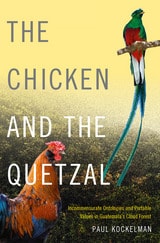
The Chicken and the Quetzal
Incommensurate Ontologies and Portable Values in Guatemala's Cloud ForestPaul Kockelman
Duke University Press, 2016
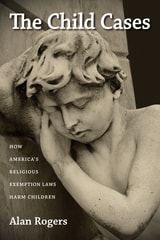
The Child Cases
How America's Religious Exemption Laws Harm ChildrenAlan Rogers
University of Massachusetts Press, 2014
When a four-year-old California girl died on March 9, 1984, the state charged her mother with involuntary manslaughter because she failed to provide her daughter with medical care, choosing instead to rely on spiritual healing. During the next few years, a half dozen other children of Christian Science parents died under similar circumstances. The children's deaths and the parents' trials drew national attention, highlighting a deeply rooted, legal/political struggle to define religious freedom.
Through close analysis of these seven cases, legal historian Alan Rogers explores the conflict between religious principles and secular laws that seek to protect children from abuse and neglect. Christian Scientists argued—often with the support of mainline religious groups—that the First Amendment's “free exercise” clause protected religious belief and behavior. Insisting that their spiritual care was at least as effective as medical treatment, they thus maintained that parents of seriously ill children had a constitutional right to reject medical care.
Congress and state legislatures confirmed this interpretation by inserting religious exemption provisos into child abuse laws. Yet when parental prayer failed and a child died, prosecutors were able to win manslaughter convictions by arguing—as the U.S. Supreme Court had held for more than a century—that religious belief could not trump a neutral, generally applicable law. Children's advocates then carried this message to state legislatures, eventually winning repeal of religious exemption provisions in a handful of states.

The Child Now
Julian Gill-Peterson, Rebekah Sheldon, and Kathryn Bond Stockton, special issue editors
Duke University Press, 2016
Futurity, innocence, and childish subversion—as concepts, as frameworks—have yet to catch up to where the child has moved in the present century. The contributors to this issue explore topics that are both vital and challenging for current queer studies, including paradoxical exportations of the U.S. "innocent" child abroad, the queer child under same-sex marriage law, child revolutionaries' actions in Egypt, and the colonial afterlife of the boarding school for indigenous children. Following the twists and turns of children now, contributors confront how race, gender, and sexuality are made to live and grow in children’s bodies.
Contributors
Paul Amar, Julian Gill-Peterson, Clifford J. Rosky, Rebekah Sheldon, Kathryn Bond Stockton, Mary Zaborskis
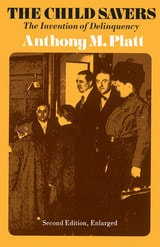
The Child Savers
The Invention of DelinquencyAnthony M. Platt
University of Chicago Press, 1977
In this second, enlarged edition of The Child Savers, the author has added a new introduction and postscript in which he critically reflects upon his original analysis, suggests new ways of thinking about the child-saving movement, and summarizes recent developments in the juvenile justice system.
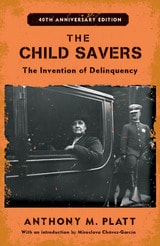
The Child Savers
The Invention of DelinquencyPlatt, Anthony M
Rutgers University Press, 2009
Focusing on social reformers of the late nineteenth and early twentieth centuries, Platt's principal argument is that the "child savers" movement was not an effort to liberate and dignify youth but, instead, a punitive and intrusive attempt to control the lives of working-class urban adolescents. This expanded edition provides a renewed and distinguished contribution by placing it in historical context through insightful commentaries from cross-disciplinary academics, along with an essay by Miroslava Chávez-García examining how Platt's influential study has impacted many of the central arguments social scientists and historians face today.
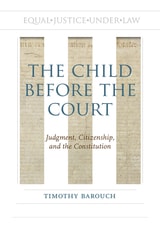
The Child before the Court
Judgment, Citizenship, and the ConstitutionTimothy Barouch
University of Alabama Press, 2021
A study that challenges our notions about citizenship and judgment by considering the place of children in historical and contemporary legal discourse.
Many of the most controversial political issues of our time focus on the actions and well-being of children such as Greta Thunberg’s climate movement; youth activists standing up for racial justice, safe schools, and an equitable economy; and the furor over separating migrant children from their families. When do we treat children as competent citizens, when do we treat them as dependents in need of protection, and why?
The Child before the Court: Judgment, Citizenship, and the Constitution provides answers to these foundational questions. It analyzes landmark US Supreme Court cases involving children’s free speech and due process rights and argues that our ideas about civic and legal judgment are deeply contested concepts instead of simple character traits. These cases serve as analytic touchstones for these problems, and the Court’s opinions seemingly articulate clear rules through a pragmatic balancing of interests.
Timothy Barouch shows how these cases continually reshape constitutional thought, breaking from a vocabulary of wardship and recasting the child as a liberal individual. He analyzes these legal opinions as judicial novelizations and focuses on their rhetorical markers: the range of tropes, idioms, figures, and arguments that emerge across nearly two centuries of jurisprudence in this important but oft-neglected area. The careful and subtle readings of these cases demonstrate how judicial representations of the child provide key resources for thinking about the child as citizen and, more broadly, citizenship itself. It serves as a bold call to think through the relationship between the liberal individual and the problem of civic judgment as it manifests in public culture in a wide array of contexts at a time when liberal democracy is under siege.
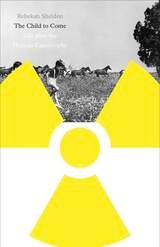
The Child to Come
Life after the Human CatastropheRebekah Sheldon
University of Minnesota Press, 2016
Generation Anthropocene. Storms of My Grandchildren. Our Children’s Trust. Why do these and other attempts to imagine the planet’s uncertain future return us—again and again—to the image of the child? In The Child to Come, Rebekah Sheldon demonstrates the pervasive conjunction of the imperiled child and the threatened Earth and blisteringly critiques the logic of catastrophe that serves as its motive and its method.
Sheldon explores representations of this perilous future and the new figurations of the child that have arisen in response to it. Analyzing catastrophe discourse from the 1960s to the present—books by Joanna Russ, Margaret Atwood, and Cormac McCarthy; films and television series including Southland Tales, Battlestar Galactica, and Children of Men; and popular environmentalism—Sheldon finds the child standing in the place of the human species, coordinating its safe passage into the future through the promise of one more generation. Yet, she contends, the child figure emerges bound to the very forces of nonhuman vitality he was forged to contain.
Bringing together queer theory, ecocriticism, and science studies, The Child to Come draws on and extends arguments in childhood studies about the interweaving of the child with the life sciences. Sheldon reveals that neither life nor the child are what they used to be. Under pressure from ecological change, artificial reproductive technology, genetic engineering, and the neoliberalization of the economy, the queerly human child signals something new: the biopolitics of reproduction. By promising the pliability of the body’s vitality, the pregnant woman and the sacred child have become the paradigmatic figures for twenty-first century biopolitics.
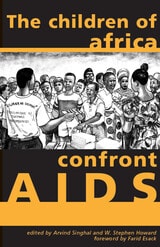
The Children Of Africa Confront AIDS
From Vulnerability To PossibilityArvind Singhal
Ohio University Press, 2003
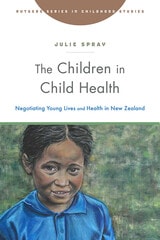
The Children in Child Health
Negotiating Young Lives and Health in New ZealandJulie Spray
Rutgers University Press, 2020
In the unique context of indigenous Māori and migrant Pacific children in postcolonial New Zealand, Julie Spray explores the intertwining issues of epidemic disease, malnutrition, stress, violence, self-harm, and death to address the problem of how scholars and policy-makers alike can recognize and respond to children as social actors in their health. The Children in Child Health innovatively combines perspectives from childhood studies, medical anthropology, and public health and policy together with evocative ethnography to show how a deep understanding of children’s worlds can change our approach to their care.

The Children of 1965
On Writing, and Not Writing, as an Asian AmericanMin Hyoung Song
Duke University Press, 2013
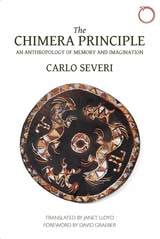
The Chimera Principle
An Anthropology of Memory and ImaginationCarlo Severi
HAU, 2015
Available in English for the first time, anthropologist Carlo Severi’s The Chimera Principle breaks new theoretical ground for the study of ritual, iconographic technologies, and oral traditions among non-literate peoples. Setting himself against a tradition that has long seen the memory of people “without writing”—which relies on such ephemeral records as ornaments, body painting, and masks—as fundamentally disordered or doomed to failure, he argues strenuously that ritual actions in these societies pragmatically produce religious meaning and that they demonstrate what he calls a “chimeric” imagination.
Deploying philosophical and ethnographic theory, Severi unfolds new approaches to research in the anthropology of ritual and memory, ultimately building a new theory of imagination and an original anthropology of thought. This English-language edition, beautifully translated by Janet Lloyd and complete with a foreword by David Graeber, will spark widespread debate and be heralded as an instant classic for anthropologists, historians, and philosophers.
The China Journal, volume 87 number 1 (January 2022)
The University of Chicago Press
University of Chicago Press Journals, 2022
The China Journal, volume 88 number 1 (July 2022)
The University of Chicago Press
University of Chicago Press Journals, 2022
The China Journal, volume 89 number 1 (January 2023)
The University of Chicago Press
University of Chicago Press Journals, 2023
The China Journal, volume 90 number 1 (July 2023)
The University of Chicago Press
University of Chicago Press Journals, 2023
The China Journal, volume 91 number 1 (January 2024)
The University of Chicago Press
University of Chicago Press Journals, 2024
The China Journal, volume 92 number 1 (July 2024)
The University of Chicago Press
University of Chicago Press Journals, 2024
The China Journal, volume 93 number 1 (January 2025)
The University of Chicago Press
University of Chicago Press Journals, 2025
The China Journal, volume 94 number 1 (July 2025)
The University of Chicago Press
University of Chicago Press Journals, 2025
The China Journal, volume 95 number 1 (January 2026)
The University of Chicago Press
University of Chicago Press Journals, 2026
The China Journal, volume 96 number 1 (July 2026)
The University of Chicago Press
University of Chicago Press Journals, 2026
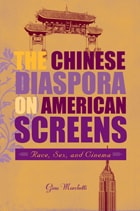
The Chinese Diaspora on American Screens
Race, Sex, and CinemaGina Marchetti
Temple University Press, 2012
The Chinese Diaspora on American Screens looks at the way in which issues of race and sexuality have become central concerns in cinema generated by and about Chinese communities in America after the mid-1990s. This companion volume to Marchetti's From Tian'anmen to Times Square looks specifically at the Chinese diaspora in relation to ethnic, racial, gender, and sexual identity as depicted in the cinema.
Examining films from the United States and Canada, as well as transnational co-productions, The Chinese Diaspora on American Screens includes analyses of films such as The Wedding Banquet and Double Happiness in addition to interviews with celebrated filmmakers such as Wayne Wang.
Marchetti also reflects on how Chinese identity is presented in a multitude of media forms, including commercial cinema, documentaries, experimental films, and hybrid digital media to offer a textured look at representations of the Chinese diasporic experience after Tian'anmen.
The Chinese Garden as Lyric Enclave
A Generic Study of <em>The Story of the Stone</em>Chi Xiao
University of Michigan Press, 2012

The Chinese Postmodern
Trauma and Irony in Chinese Avant-Garde FictionXiaobin Yang
University of Michigan Press, 2002
The book seeks to redefine Chinese modernity and postmodernity through the analyses of both orthodox and avant-garde works. In doing so, the author draws on a number of theories, psychoanalysis and deconstruction in particular, revealing the hidden connection between the deconstructive mode of writing and the experience of history after trauma and showing how avant-garde literature brings about a varied literary paradigm that defies the dominant, subject-centered one in twentieth-century China.
The distinctiveness of The Chinese Postmodern is also found in its portrayal of the changes of literary paradigms in modern Chinese literature. By way of characterizing avant-garde fiction, it provides an overview of twentieth-century Chinese literature and offers a theorization of the intellectual history of modern China. Other issues concerning literary theory are explored, including the relationships between postmodernity and totalitarian discourse, between historical trauma and literary writing, and between psychic trauma and rhetorical irony. This book will appeal to readers in the fields of Chinese literature and culture, modern Chinese history, literary theory, and comparative literature.
Xiaobin Yang is Croft Assistant Professor, University of Mississippi.
The Chinese Question
Ethnicity, Nation, and Region in and Beyond the PhilippinesCaroline S. Hau
National University of Singapore Press, 2014
With the revaluing of Chineseness has come a repositioning of “Chinese” racial and cultural identity. Philippine mestizos (people of mixed ancestry) form an important sub-group of the Filipino elite, but their Chineseness was occluded as they disappeared into the emergent Filipino nation. In the twentieth century, mestizos defined themselves and based claims to privilege on “white” ancestry, but mestizos are now actively reclaiming their “Chinese” heritage. At the same time, so-called “pure Chinese” are parlaying their connections into cultural, social, symbolic, or economic capital, and leaders of mainland Chinese state companies have entered into politico-business alliances with the Filipino national elite. As the meanings of “Chinese” and “Filipino” evolve, intractable contradictions are appearing in the concepts of citizenship and national belonging.
Through an examination of cinematic and literary works, The Chinese Question shows how race, class, ideology, nationality, territory, sovereignty, and mobility are shaping the discourses of national integration, regional identification, and global cosmopolitanism.
The Chinese of Early Tucson
Historic Archaeology from the Tucson Urban Renewal ProjectFlorence C. Lister and Robert H. Lister
University of Arizona Press, 1989

The Choosing
A Rabbi's Journey from Silent Nights to High Holy DaysMyers, Andrea
Rutgers University Press, 2011
A young Lutheran girl grows up on Long Island, New York. She aspires to be a doctor, and is on the fast track to marriage and the conventional happily-ever-after. But, as the Yiddish saying goes, "Man plans, and God laughs." Meet Andrea Myers, whose coming-of-age at Brandeis, conversion to Judaism, and awakening sexual identity make for a rich and well-timed life in the rabbinate.
In The Choosing, Myers fuses heartwarming anecdotes with rabbinic insights and generous dollops of humor to describe what it means to survive and flourish on your own terms. Portioned around the cycle of the Jewish year, with stories connected to each of the holidays, Myers draws on her unique path to the rabbinate--leaving behind her Christian upbringing, coming out as a lesbian, discovering Judaism in college, moving to Israel, converting, and returning to New York to become a rabbi, partner, and parent.
Myers relates tales of new beginnings, of reinventing oneself, and finding oneself. Whether it's a Sicilian grandmother attempting to bake hamantaschen on Purim for her Jewish granddaughter, or an American in Jerusalem saving a chicken from slaughter during a Rosh Hashanah ritual, Myers keeps readers entertained as she reflects that spirituality, goodness, and morality can and do take many forms. Readers will enthusiastically embrace stories of doors closing and windows opening, of family and community, of integration and transformation. These captivating narratives will resonate and, in the author's words, "reach across coasts, continents, and generations."
The Chora of Croton 1
The Neolithic Settlement at Capo AlfiereBy Jon Morter
University of Texas Press, 2010
From 1974 to the present, the Institute of Classical Archaeology (ICA) at the University of Texas at Austin has carried out archaeological excavations and surveys in ancient territories (chorae) in southern Italy. This wide-ranging investigation, which covers a large number of sites and a time period ranging from prehistory to the Middle Ages, has unearthed a wealth of new information about ancient rural economies and cultures in the region. These discoveries will be published in two multivolume series (Metaponto and Croton). This volume on the Neolithic settlement at Capo Alfiere is the first in the Croton series.
The Chora of Croton 1 reports the excavation results of a remarkable Neolithic site at Capo Alfiere on the Ionian coast. Capo Alfiere is one of a very few early inhabitation sites in this area to have been excavated extensively, with a full team of scientific specialists providing interdisciplinary studies on early farming and animal husbandry. It provides comprehensive documentation of the economy, material culture, and way of life in the central Mediterranean in the sixth and fifth millennia BC. Most notable are the remains of a wattle-and-daub hut enclosed within a massive stone wall. Unique for this area, this well-preserved structure may have been used for special purposes such as ritual, as well as for habitation. The presence of Stentinello wares shows that the range of this pottery type extended further east than previously thought and casts new light on the development of ceramics in the area.
The Chora of Metaponto 2
Archaeozoology at Pantanello and Five Other SitesStudies by Sándor Bökönyi and Erika Gál
University of Texas Press, 2010
From 1974 to the present, the Institute of Classical Archaeology at the University of Texas at Austin has carried out archaeological excavations in the ancient territory (chora) of Metaponto, now located in the modern province of Basilicata on the southern coast of Italy. This wide-ranging investigation, which covers a number of sites and a time period ranging from prehistory to the Roman Empire, has unearthed a wealth of new information about the ancient rural economy in southern Italy. These discoveries will be published in a multi-volume series titled The Chora of Metaponto. This volume on archaeozoology—the study of animal remains from archaeological sites—is the second in the series, following The Chora of Metaponto: The Necropoleis (1998).
Archaeozoology at Pantanello and Five Other Sites describes the animal remains found throughout Metaponto and discusses what they reveal about ancient practices of hunting and herding, domestication and importation of new breeds, people's attitudes toward animals, and what animal remains indicate about past environments. A chapter devoted to bird bones, which are a relatively rare find because of their fragility, provides high quality information on the environment and methods of fowling, as well as on the beliefs and symbolism associated with birds. The final chapter covers tools—some simple, others sophisticated and richly decorated—made from animal bones.
The Chora of Metaponto 4
The Late Roman Farmhouse at San BiagioBy Erminia Lapadula
University of Texas Press, 2012
This volume in the Institute of Classical Archaeology's series on rural settlements in the countryside (chora) of Metaponto presents the excavation of the Late Roman farmhouse at San Biagio. Located near the site of an earlier Greek sanctuary, this modest but well-appointed structure was an unexpected find from a period generally marked by large landholdings and monumental villas. Description of earlier periods of occupation (Neolithic and Greek) is followed by a detailed discussion of the farmhouse itself and its historical and socioeconomic context. The catalogs and analyses of finds include impressive deposits of coins from the late third and early fourth centuries AD. Use of virtual reality CAD software has yielded a deeper understanding of the architectural structure and its reconstruction. A remarkable feature is the small bath complex, with its examples of window glass. This study reveals the existence of a small but viable rural social and economic entity and alternative to the traditional image of crisis and decline during the Late Imperial period.
The Chora of Metaponto 5
A Greek Farmhouse at Ponte FabrizioBy Elisa Lanza Catti, Keith Swift and Joseph Coleman Carter
University of Texas Press, 2014
This volume in the Institute of Classical Archaeology’s series on rural settlements in the countryside (chora) of Metaponto is a study of the fourth-century BC farmhouse known as Fattoria Fabrizio, located in the heart of the surveyed chora in the Venella valley (at Ponte Fabrizio). This simple structure richly illustrates the life of fourth-century BC Metapontine farmers of modest means.
Thorough interpretations of the farmhouse structure in its wider historical and socioeconomic contexts are accompanied by comprehensive analyses of the archaeological finds. Among them is detailed evidence for the family cult, a rare archaeological contribution to the study of Greek religion in Magna Grecia. The entire range of local Greek ceramics has been studied, along with a limited number of imports. Together they reveal networks within the chora and trade beyond it, involving indigenous peoples of southern Italy, mainland Greeks, and the wider Mediterranean world. Along with the studies of traditional archaeological finds, archaeobotanical analyses have illuminated the rural economy of the farmhouse and the environment of the adjacent chora. Abundant Archaic pottery also documents an important occupation, during the first great flowering of the chora in the sixth century BC. This study provides an ideal complement to the four volumes of The Chora of Metaponto 3: Archaeological Field Survey—Bradano to Basento and an eloquent example of hundreds of farmhouses of this date identified throughout the chora by their surface remains alone.
The Chora of Metaponto 6
A Greek Settlement at Sant'Angelo VecchioBy Francesca Silvestrelli and Ingrid E. M. Edlund-Berry<br>Joseph Coleman Carter, Series Editor
University of Texas Press, 2016
The sixth volume in the Institute of Classical Archaeology’s series on the rural countryside (chora) of Metaponto is a study of the Greek settlement at Sant’Angelo Vecchio. Located on a slope overlooking the Basento River, the site illustrates the extraordinary variety of settlements and uses of the territory from prehistory through the current day. Excavators brought to light a Late Archaic farmhouse, evidence of a sanctuary near a spring, and a cluster of eight burials of the mid-fifth century BC, but the most impressive remains belong to a production area with kilns. Active in the Hellenistic, Late Republican, and Early Imperial periods, these kilns illuminate important and lesser-known features of production in the chora of a Greek city and also chronicle the occupation of the territory in these periods.
The thorough, diachronic presentation of the evidence from Sant’Angelo Vecchio is complemented by specialist studies on the environment, landscape, and artifacts, which date from prehistory to the post-medieval period. Significantly, the evidence spans the range of Greek site types (farmhouse, necropolis, sanctuary, and production center) as well as the Greek dates (from the Archaic to Early Imperial periods) highlighted during ICA’s survey of the Metapontine chora. In this regard, Chora 6 enhances the four volumes of The Chora of Metaponto 3: Archaeological Field Survey—Bradano to Basento and provides further insight into how sites in the chora interacted throughout its history.
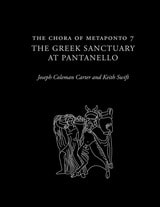
The Chora of Metaponto 7
The Greek Sanctuary at PantanelloBy Joseph Coleman Carter and Keith Swift
University of Texas Press, 2018
The seventh volume in the Institute of Classical Archaeology’s series on the rural countryside (chora) of Metaponto is a study of the Greek sanctuary at Pantanello. The site is the first Greek rural sanctuary in southern Italy that has been fully excavated and exhaustively documented. Its evidence—a massive array of distinctive structural remains and 30,000-plus artifacts and ecofacts—offers unparalleled insights into the development of extra-urban cults in Magna Graecia from the seventh to the fourth centuries BC and the initiation rites that took place within the cults.
Of particular interest are the analyses of the well-preserved botanical and faunal material, which present the fullest record yet of Greek rural sacrificial offerings, crops, and the natural environment of southern Italy and the Greek world. Excavations from 1974 to 2008 revealed three major phases of the sanctuary, ranging from the Archaic to Early Hellenistic periods. The structures include a natural spring as the earliest locus of the cult, an artificial stream (collecting basin) for the spring’s outflow, Archaic and fourth-century BC structures for ritual dining and other cult activities, tantalizing evidence of a Late Archaic Doric temple atop the hill, and a farmhouse and tile factory that postdate the sanctuary’s destruction. The extensive catalogs of material and special studies provide an invaluable opportunity to study the development of Greek material culture between the seventh and third centuries BC, with particular emphasis on votive pottery and figurative terracotta plaques.
The Choral Turn
Performing the Chorus in the Ruins of DemocracyAmy Holzapfel
University of Michigan Press, 2027
The Choral Turn: Performing the Chorus in the Ruins of Democracy examines the recent resurgence of the chorus—a hallmark of ancient Greek tragedy—across contemporary Western theatre, performance, and activism, arguing that this “choral turn” is inseparable from anxieties about the decline of liberal democracy. Drawing on classical studies, theatre and performance studies, and political philosophy, Holzapfel coins the term “choraperformativity” to describe performances that mobilize the formal and collective conventions of the chorus to contest or reshape dominant political narratives. The Choral Turn uses case studies—plays about war and catastrophe featuring Greek-like choruses, refugee performers theatrically reenacting their own displacement, environmental protesters staging collective mourning for a dying planet—to show how groups use choral performance to demand recognition and assert the need for change. Rather than treating the chorus as inherently progressive, the study asks hard questions about who gets included in these choral communities and who gets left out, offering a nuanced, timely look at collective action on stage and in the streets.
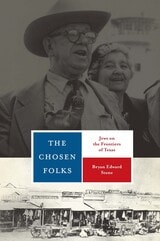
The Chosen Folks
Jews on the Frontiers of TexasBy Bryan Edward Stone
University of Texas Press, 2010
Texas has one of the largest Jewish populations in the South and West, comprising an often-overlooked vestige of the Diaspora. The Chosen Folks brings this rich aspect of the past to light, going beyond single biographies and photographic histories to explore the full evolution of the Jewish experience in Texas.
Drawing on previously unpublished archival materials and synthesizing earlier research, Bryan Edward Stone begins with the crypto-Jews who fled the Spanish Inquisition in the late sixteenth century and then discusses the unique Texas-Jewish communities that flourished far from the acknowledged centers of Jewish history and culture. The effects of this peripheral identity are explored in depth, from the days when geographic distance created physical divides to the redefinitions of "frontier" that marked the twentieth century. The rise of the Ku Klux Klan, the creation of Israel in the wake of the Holocaust, and the civil rights movement are covered as well, raising provocative questions about the attributes that enabled Texas Jews to forge a distinctive identity on the national and world stage. Brimming with memorable narratives, The Chosen Folks brings to life a cast of vibrant pioneers.
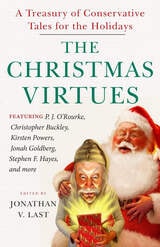
The Christmas Virtues
A Treasury of Conservative Tales for the HolidaysJonathan V. Last
Templeton Press, 2015
The Christmas season is a minefield of terrors: The family get-togethers with weird uncles, the sloppy office parties, the annoying 10-page Look-at-Us holiday letters—and we haven’t even mentioned the Black Friday mobs and that wretched Alvin and the Chipmunks song that plays every 90 minutes on Pandora, whether you like it or not. Rum-pah-pah-pum.
And don’t forget the PC police lurking around every corner looking to beat the last bits of joy and comradery out of our society. Merry Christmas? Really?
But it doesn’t have to be this way. 'Tis the season to recapture the wonder of Christmas, in our hearts and in our homes and even out in the public square. The Christmas Virtues is a humorous companion for, and guide to, navigating the trials and tribulations of the holiday season. It’s a reminder of how we can embrace the joy, hope, and love of Christmas—of the real Christmas.
And a call for us to stand up for Christmas because America needs it now, more than ever.
So sit back and enjoy the following tales by your favorite authors:
- Rob Long’s "The Christmas Spirit: In Defense of Ebenezer Scrooge.”
- P. J. O’Rourke’s “The Commercialization of Christmas: God Moves (The Merchandise) in a Mysterious Way.”
- Andrew Ferguson’s “Jingle Bell Rock: Taking the Christ Out of Christmas Songs”
- Matt Labash’s “Home for the Holidays: The Trials and Tribulations of Family.”
- Stephen F. Hayes’ "here Comes Santa Claus: The Wonder of Christmas Morning."
- Toby Young’s “The ghosts of Christmas: Holidays Past and Present”
- Jonah Goldberg’s “The War on Christmas: It’s Real, and It’s Spectacular.”
- Christopher Buckley’s “Saint Joseph: The Forgotten ‘Father Christmas.’”
- Kirsten Powers’ “The first Noel: Christmas with Jesus.”
- James Lileks' "Boxing Day and the Christmas Hangover."
- And More
The Chronological Position of the Hopewellian Culture in the Eastern United States
James B. Griffin
University of Michigan Press, 1958
The Chronopolitics of Life
Rethinking Temporalities in Health and Biomedicine Beyond the Life CourseEdited by Nolwenn Bühler, Nils Graber, Victoria Boydell, and Cinzia Greco
University College London, 2025
This interdisciplinary collection examines the role of time in inequalities within biomedicine, technology, and healthcare. How is time wielded as a tool of power through its valuation, standardization, and allocation? How has time become an unequally distributed resource in health and biomedicine, and how has it contributed to medical discrimination for patients at different stages of life? To answer these questions, The Chronopolitics of Life draws on real-world examples from across the globe, spanning from reproductive health to chronic disease, and sensitive to both local variations in medicine and the wider forces shaping temporalities in health.
The Churching of America, 1776-2005
Winners and Losers in Our Religious EconomyFinke, Roger
Rutgers University Press, 2005
But, as Finke and Stark show, not all denominations benefited. They explain how and why the early nineteenth-century churches began their descent, while two newcomer sects, the Baptists and the Methodists, gained ground. They also analyze why the Methodists then began a long, downward slide, why the Baptists continued to succeed, how the Catholic Church met the competition of ardent Protestant missionaries, and why the Catholic commitment has declined since Vatican II. The authors also explain why ecumenical movements always fail
In short, Americans are not abandoning religion; they have been moving away from established denominations. A "church-sect process" is always under way, Finke and Stark argue, as successful churches lose their organizational vigor and are replaced by less worldly groups.
Some observers assert that the rise in churching rates indicates increased participation, not increased belief. Finke and Stark challenge this as well. They find that those groups that have gained the greatest numbers have demanded that their followers accept traditional doctrines and otherworldliness. They argue that religious organizations can thrive only when they comfort souls and demand sacrifice. When theology becomes too logical, or too secular, it loses people.
The Cincinnati Human Relations Commission
A History, 1943–2013Phillip J. Obermiller
Ohio University Press, 2018
In the summer of 1943, as World War II raged overseas, the United States also faced internal strife. Earlier that year, Detroit had erupted in a series of race riots that killed dozens and destroyed entire neighborhoods. Across the country, mayors and city councils sought to defuse racial tensions and promote nonviolent solutions to social and economic injustices. In Cincinnati, the result of those efforts was the Mayor’s Friendly Relations Committee, later renamed the Cincinnati Human Relations Commission (CHRC).
The Cincinnati Human Relations Commission: A History, 1943–2013, is a decade-by-decade chronicle of the agency: its accomplishments, challenges, and failures. The purpose of municipal human relations agencies like the CHRC was to give minority groups access to local government through internal advocacy, education, mediation, and persuasion—in clear contrast to the tactics of lawsuits, sit-ins, boycotts, and marches adopted by many external, nongovernmental organizations.
In compiling this history, Phillip J. Obermiller and Thomas E. Wagner have drawn on an extensive base of archival records, reports, speeches, and media sources. In addition, archival and contemporary interviews provide first-person insight into the events and personalities that shaped the agency and the history of civil rights in this midwestern city.
The Cinema and Its Shadow
Race and Technology in Early CinemaAlice Maurice
University of Minnesota Press, 2013
The Cinema and Its Shadow argues that race has defined the cinematic apparatus since the earliest motion pictures, especially at times of technological transition. In particular, this work explores how racial difference became central to the resolving of cinematic problems: the stationary camera, narrative form, realism, the synchronization of image and sound, and, perhaps most fundamentally, the immaterial image—the cinema’s “shadow,” which figures both the material reality of the screen image and its racist past.
Discussing early “race subjects,” Alice Maurice demonstrates that these films influenced cinematic narrative in lasting ways by helping to determine the relation between stillness and motion, spectacle and narrative drive. The book examines how motion picture technology related to race, embodiment, and authenticity at specific junctures in cinema’s development, including the advent of narratives, feature films, and sound. In close readings of such films as The Cheat, Shadows, and Hallelujah!, Maurice reveals how the rhetoric of race repeatedly embodies film technology, endowing it with a powerful mix of authenticity and magic. In this way, the racialized subject became the perfect medium for showing off, shoring up, and reintroducing the cinematic apparatus at various points in the history of American film.
Moving beyond analyzing race in purely thematic or ideological terms, Maurice traces how it shaped the formal and technological means of the cinema.
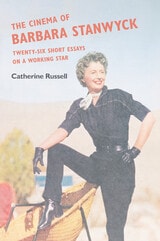
The Cinema of Barbara Stanwyck
Twenty-Six Short Essays on a Working StarCatherine Russell
University of Illinois Press, 2023
Original and rich, The Cinema of Barbara Stanwyck is an essential and entertaining reexamination of an enduring Hollywood star.
The Cinema of Economic Miracles
Visuality and Modernization in the Italian Art FilmAngelo Restivo
Duke University Press, 2002
Restivo studies numerous films of the period, focusing mainly on the works of Pier Paolo Pasolini and Michelangelo Antonioni. He finds that these auteurs’ films reworked the neorealist aesthetic developed in the 1940s and 1950s, explored issues brought to the fore by the subsequent consumer boom, and presaged developments central to both critical theory and the visual arts in the 1980s and 1990s. Drawing on the theories of Lacan, Zizek, Benjamin, Foucault, Jameson, and Deleuze, he shines new light on such films as Pasolini’s Accattone and Teorema, and Antonioni’s Red Desert and Blow-Up. Restivo’s model for understanding the relationship of the 1960s Italian art film to its cultural contexts also has implications that extend to the developing national cinemas of countries such as Brazil and Taiwan.
The Cinema of Economic Miracles will interest scholars and students in all areas of film studies, especially those studying theories of the image, national cinema theory, and Italian cinema, and to those engaged in poststructuralist theory, philosophy, and comparative literature.
The Cinema of Isolation
A History of Physical Disability in the MoviesNorden, Martin F
Rutgers University Press, 1994
Norden offers a dazzling array of physically disabled characters who embody or break out of the stereotypes that have both influenced and been symptomatic of societys fluctuating relationship with its physically disabled minority. He shows us "sweet innocents" like Tiny Tim, "obsessive avengers" like Quasimodo, variations on the disabled veteran, and many others. He observes the arrival of a new set of stereotypes tied to the growth of science and technology in the 1970s and 1980s, and underscores movies like My Left Foot and The Waterdance that display a newfound sensitivity. Nordens in-depth knowledge of disability history makes for a particularly intelligent and sensitive approach to this long-overlooked issue in media studies.
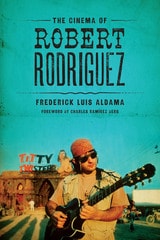
The Cinema of Robert Rodriguez
By Frederick Luis Aldama
University of Texas Press, 2014
Robert Rodriguez stands alone as the most successful U.S. Latino filmmaker today, whose work has single-handedly brought U.S. Latino filmmaking into the mainstream of twenty-first-century global cinema. Rodriguez is a prolific (eighteen films in twenty-one years) and all-encompassing filmmaker who has scripted, directed, shot, edited, and scored nearly all his films since his first breakout success, El Mariachi, in 1992. With new films constantly coming out and the launch of his El Rey Network television channel, he receives unceasing coverage in the entertainment media, but systematic scholarly study of Rodriguez’s films is only just beginning.
The Cinema of Robert Rodriguez offers the first extended investigation of this important filmmaker’s art. Accessibly written for fans as well as scholars, it addresses all of Rodriguez’s feature films through Spy Kids 4 and Machete Kills, and his filmmaking process from initial inspiration, to script, to film (with its myriad visual and auditory elements and choices), to final product, to (usually) critical and commercial success. In addition to his close analysis of Rodriguez’s work, Frederick Luis Aldama presents an original interview with the filmmaker, in which they discuss his career and his relationship to the film industry. This entertaining and much-needed scholarly overview of Rodriguez’s work shines new light on several key topics, including the filmmaker’s creative, low-cost, efficient approach to filmmaking; the acceptance of Latino films and filmmakers in mainstream cinema; and the consumption and reception of film in the twenty-first century.
The Cinema, or The Imaginary Man
Edgar Morin
University of Minnesota Press, 2005