Results by title
3576 books match the query 'American' and 770 start with t
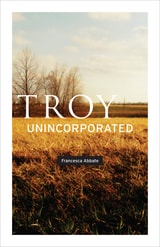
Troy, Unincorporated
Francesca Abbate
University of Chicago Press, 2012
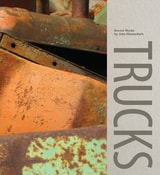
Trucks
Recent Works by John HimmelfarbJohn Himmelfarb
The Artist Book Foundation, 2014
With sculpture, paintings, prints, and drawings, award-winning artist John Himmelfarb explores the iconic American truck. An in-depth consideration of the vehicles that are intrinsically and culturally significant to the American landscape, Trucks: Recent Works by John Himmelfarb showcases the artist's diverse and lighthearted approach, adeptly shifting between mediums, style, and message during his decade-long contemplation of trucks and their specific functions. Under his skillful hands, the utilitarian vehicles of commerce and construction become unique and provocative art forms.
In 2005 and 2006, the truck as narrative becomes center stage for Himmelfarb's work. With his seamless, animated traverse of multiple mediums, viewers cannot help but smile as they appreciate the common truck through unique perspectives. In 2007, another tectonic change occurs in Himmelfarb's pursuit of his theme: as a result of a three-month residency at the John Michael Kohler Arts Center's Arts/Industry program, he begins his first meaningful foray into three-dimensional works.
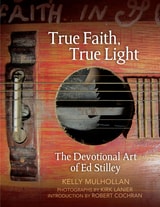
True Faith, True Light
The Devotional Art of Ed StilleyKelly Mulhollan
University of Arkansas Press, 2015
But one day Ed’s life was permanently altered. While plowing his field, he became convinced he was having a heart attack. Ed stopped his work and lay down on the ground. Staring at the sky, he saw himself as a large tortoise struggling to swim across a river. On his back were five small tortoises—his children—clinging to him for survival. And then, as he lay there in the freshly plowed dirt, Ed received a vision from God, telling him that he would be restored to health if he would agree to do one thing: make musical instruments and give them to children.
And so he did. Beginning with a few simple hand tools, Ed worked tirelessly for twenty-five years to create over two hundred instruments, each a crazy quilt of heavy, rough-sawn wood scraps joined with found objects. A rusty door hinge, a steak bone, a stack of dimes, springs, saw blades, pot lids, metal pipes, glass bottles, aerosol cans—Ed used anything he could to build a working guitar, fiddle, or dulcimer. On each instrument Ed inscribed “True Faith, True Light, Have Faith in God.”
True Faith, True Light: The Devotional Art of Ed Stilley documents Ed Stilley’s life and work, giving us a glimpse into a singular life of austere devotion.
True Grit
American Prints from 1900 to 1950Stephanie Schrader
J. Paul Getty Trust, The, 2019
In the first half of the twentieth century, a group of American artists influenced by the painter and teacher Robert Henri aimed to reject the pretenses of academic fine art and polite society. Embracing the democratic inclusiveness of the Progressive movement, these artists turned to making prints, which were relatively inexpensive to produce and easy to distribute. For their subject matter, the artists mined the bustling activity and stark realities of the urban centers in which they lived and worked. Their prints feature sublime towering skyscrapers and stifling city streets, jazzy dance halls and bleak tenement interiors—intimate and anonymous everyday scenes that addressed modern life in America.
True Grit examines a rich selection of prints by well-known figures like George Bellows, Edward Hopper, Joseph Pennell, and John Sloan as well as lesser-known artists such as Ida Abelman, Peggy Bacon, Miguel Covarrubias, and Mabel Dwight. Written by three scholars of printmaking and American art, the essays present nuanced discussions of gender, class, literature, and politics, contextualizing the prints in the rapidly changing milieu of the first decades of twentieth-century America.
This volume is published to accompany an exhibition on view at the J. Paul Getty Museum at the Getty Center October 15, 2019, to January 19, 2020.
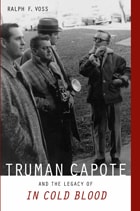
Truman Capote and the Legacy of "In Cold Blood"
Ralph F. Voss
University of Alabama Press, 2011
Voss examines Capote and In Cold Blood from many perspectives, not only as the crowning achievement of Capote’s career, but also as a story in itself, focusing on Capote’s artfully composed text, his extravagant claims for it as reportage, and its larger status in American popular culture.
Voss argues that Capote’s publication of In Cold Blood in 1966 forever transcended his reputation as a first-rate stylist but second-rate writer of “Southern gothic” fiction; that In Cold Blood actually is a gothic novel, a sophisticated culmination of Capote’s artistic development and interest in lurid regionalism, but one that nonetheless eclipsed him both personally and artistically. He also explores Capote’s famous claim that he created a genre called the “non-fiction novel,” and its status as a foundational work of “true crime” writing as practiced by authors ranging from Tom Wolfe and Norman Mailer to James Ellroy, Joe McGinniss, and John Berendt.
Voss also examines Capote’s artful manipulation of the story’s facts and circumstances: his masking of crucial homoerotic elements to enhance its marketability; his need for the killers to remain alive long enough to get the story, and then his need for them to die so that he could complete it; and Capote’s style, his shaping of the narrative, and his selection of details–why it served him to include this and not that, and the effects of such choices—all despite confident declarations that “every word is true.”
Though it’s been nearly 50 years since the Clutter murders and far more gruesome crimes have been documented, In Cold Blood continues to resonate deeply in popular culture. Beyond questions of artistic selection and claims of truth, beyond questions about capital punishment and Capote’s own post-publication dissolution, In Cold Blood’s ongoing relevance stems, argues Voss, from its unmatched role as a touchstone for enduring issues of truth, exploitation, victimization, and the power of narrative.
Trying Conclusions
New and Selected Poems, 1961-1991Howard Nemerov
University of Chicago Press, 1991
Trying to Say It
Outlooks and Insights on How Poems HappenPhilip Booth
University of Michigan Press, 1996
Gathering together selections from his notebooks, dreamlogs, memoirs, and essays of such poets as Frost, Robert Lowell and George Oppen, Trying to Say It particularly focuses on the ways that the tension between in-formed structures and lineation create poems which--in all senses--move.
Employing the Thoreauvian sense of place for which his poetry is known, Booth probes the nature of poetry itself, as well as the poetry of nature--yielding insights that are rooted in the acute observation that catalyzes imagination. Infused with a restless spirit in search of a moving language commensurate with the complexity of being fully alive, the essays collected in Trying to Say It reveal the pulses of a teacher's mind and a poet's heart.
Philip Booth is the author of nine books of poetry, and has been honored by Guggenheim, Rockefeller, and National Endowment for the Arts fellowships, the National Institute of Arts and Letters, and the Academy of American Poets.
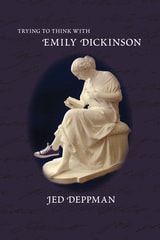
Trying to Think with Emily Dickinson
Jed Deppman
University of Massachusetts Press, 2008
This book presents Emily Dickinson as one of America's great thinkers and argues that she has even more to say to the twenty-first century than she did to the nineteenth. Jed Deppman weaves together many strands in Dickinson's intellectual culture—philosophy, lexicography, religion, experimental science, the female Bildungsroman—and shows how she developed a lyricized, conversational hermeneutics uniquely suited to rethinking the authoritative discourses of her time.
Through Deppman's original analysis, readers come to see how Dickinson's mind and poetry were informed by two strong but opposing philosophical vocabularies: on the one hand, the Lockean materialism and Scottish Common Sense that dominated her schoolbooks in logic and mental philosophy—Reid, Hedge, Watts, Stewart, Brown, and Upham—and on the other, the neo-Kantian modes of apprehending the supersensible that circulated throughout German idealism and Transcendentalism.
Blending close readings with philosophical and historical approaches, Deppman affirms Dickinson's place in the history of ideas and brings her to the center of postmodern conversations initiated by Jean-François Lyotard, Jean-Luc Nancy, Jacques Derrida, Richard Rorty, and Gianni Vattimo. Trying her out in various postmodern roles—the Nietzschean accomplished nihilist, the Nancian finite thinker, the Vattimian weak thinker, and the Rortian liberal ironist—Deppman adds to the traditional expressive functions of her poetry a valuable, timely, and interpretable layer of philosophical inquiry. Dickinson, it turns out, is an ideal companion for anybody trying to think in the contemporary conditions that Vattimo characterizes as the “weakened experience of truth.”
Trying x Trying
Dora Malech
Carnegie Mellon University Press, 2025
In Trying × Trying, Dora Malech dissects the language of our times; she turns over the familiar phrases of politics, parenthood, and pandemic to reveal what lies beneath. Through playing with the double meaning of “trying” as both perseverance and reproductive struggle, these poems navigate public and private spheres and interrogate the words we use to make sense of uncertainty and belief.
With sharp lyricism and restless energy, Malech transforms language into prayer and protest. Sound bends, meanings shift, and repetition becomes a revelation as she traces the tensions between individual and collective experience. Trying × Trying is an enlightening meditation on persistence, reminding us that even in fractured times, poetry finds a way forward.
Turncoat
Molly Bendall
Omnidawn, 2025
Through the poems in Turncoat, Molly Bendall’s sixth collection, the speaker and other figures dwell under the ever-present eye of surveillance by unspecified authorities. Mistrust and dread become part of the fabric of their lives, as they never know who may be a turncoat—a person who disguises her allegiances and traffics in betrayal. These poems employ an invented paranoid syntax meant to evade oppressive surveillance. A series of intimate and darkly humorous incidents press the speaker to continually adapt to unseen—or even nonexistent—dangers. Haunted by a sense of disorientation and uncertainty about whether old friendships may have been compromised, or if spaces could disappear overnight, Bendall’s poems coax the reader to step across boundaries and snares, alternating between episodes of interrogation and flight.
Turtle Pictures
Ray Gonzalez
University of Arizona Press, 2000
Gonzalez has forged a new Chicano manifesto, a cultural memoir that traces both his personal journey and the communal journey that Mexican Americans have traveled throughout this century, across this land. He interweaves lyrical poetry, prose poems, short fiction, and nonfiction commentary into a lush cacophony that traces the evolution of today's politically charged Chicano voices from the deafening silence of their ancestors. Adopting the turtle as a metaphor for the Native American origins of border culture, Gonzalez frames this multitextured individual vision until it becomes a universal portrait of American life: a slow, ancient creature morphing into one of voracious rapidity. In wild and challenging surrealistic images, he hammers out a political statement from language that takes on a special urgency. Walking a fine line between lyricism and polemic, and succeeding where others have stumbled, he calls on Mexican Americans to return to their roots in order to avoid being swept up in American material culture.
Turtle Pictures is a complex body of work by a poet totally in tune with the spirit and nuances of language, imbued with a deep sense of craft and literary tradition. It invites readers to revel in its richness and vitality, to be caught up in its chantlike spirit, to luxuriate in its hauntingly beautiful passages. It is a work to devour, to savor, to return to, for it speaks with all the rhythms of the soul.
Twain at Sea
The Maritime Writings of Samuel Langhorne ClemensMark Twain
University Press of New England, 2018
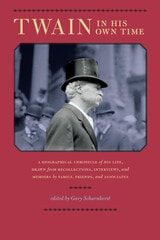
Twain in His Own Time
A Biographical Chronicle of His Life, Drawn from Recollections, Interviews, and Memoirs by Family, Friends, and AssociatesGary Scharnhorst
University of Iowa Press, 2010
Never one to suffer fools gladly, especially if they wore crinolines, Mark Twain lost as many friends as he made, and he targeted them all indiscriminately. The first major American writer born west of the Mississippi River, he enjoys a reputation unrivaled in American literary history, and from the beginning of his career he tried to control that reputation by fiercely protecting his public persona. Not a debunking account of Twain’s life but refreshingly immune from his relentless image making, Gary Scharnhorst’s Twain in His Own Time offers an anecdotal version of Twain’s life over which the master spin-doctor had virtually no control.
The ninety-four recollections gathered in Twain in His Own Time form an unsanitized, collaborative biography designed to provide a multitude of perspectives on the iconic author. Opening with an interview with his mother that has never been reprinted, it includes memoirs by his daughters and by men who knew him when he was roughing it in Nevada and California, an interview with the pilot who taught him to navigate the Mississippi River, reminiscences from his illustrators E. M. Kemble and Dan Beard and two of his so-called adolescent angelfish, contributions from politicians and from such literary figures as Dan De Quille and George Bernard Shaw, and one of the most damning assessments of his character—by the author Frank Harris—ever published.
Each entry is introduced by a brief explanation of its historical and cultural context; explanatory notes provide further information about people and places; and Scharnhorst’s introduction and chronology of Twain’s eventful life are comprehensive and detailed. Dozens of lively primary sources published incrementally over more than eighty years, most recorded after his death, illustrate the complexities of this flamboyant, outspoken personality in a way that no single biographer could.
Twain, Alcott, and the Birth of the Adolescent Reform Novel
Roberta S. Trites
University of Iowa Press, 2007

Twentieth-Century American Literary Naturalism
An InterpretationDonald Pizer
Southern Illinois University Press, 1982
Scorned by critics since birth, decreed dead by many, naturalism, according to Donald Pizer, is “one of the most persistent and vital strains in American fiction, perhaps the only modern literary form in America that has been both popular and significant.”
To define naturalism and explain its tenacious hold throughout the twentieth century on the American creative imagination, Pizer explores six novels: James T. Farrell’s Studs Lonigan, John Dos Passos’s U.S.A., John Steinbeck’s The Grapes of Wrath, Norman Mailer’s The Naked and the Dead, William Styron’s Lie Down in Darkness, and Saul Bellow’s The Adventures of Augie March.
Pizer’s approach to these novels is empirical; he does not wrench each novel awkwardly until it fits his framework of generalizations and principles; rather, he approaches the novels as fiction and arrives at his definition through his close reading of the works.
Establishing the background of naturalism, Pizer explains that it comes under attack because it is “sordid and sensational in subject matter,” it challenges “man’s faith in his innate moral sense and thus his responsibility for his actions,” and it is so full of “social documentation” that it is often dismissed as little more than a photographic record of a life or an era; thus the “aesthetic validity of the naturalistic novel has often been questioned.”
Pizer posits the 1890s, the 1930s,and the late 1940s as the decades when naturalism flourished in America. He concentrates on literary criticism, not on the philosophy ofnaturalism, to show that literary criticism can make a contribution to a particularly muddled area of literary history—a naturalism that is alive and changing, thus resisting the neat definitions reserved for the dead.
Twenty First Century Blues
Richard Cecil
Southern Illinois University Press, 2004
Death, fame, art, and religion become comic subjects in Twenty First Century Blues, the fourth collection from Richard Cecil.Whether elegizing his predecessors, predicting his own end, channeling Dickinson’s “corpse-eye-view of stony death,” or imagining Yeats living in Indiana and dealing with English department politics, Cecil tempers his morbidity with a straightforward, tender brand of humor and a refreshing honesty about the shelf life of contemporary poetry. Deadpan and dark, yet pulsing with the spirit of life, these poems speak of historic France, Italy, and Switzerland, where religious persecutions, ancient catastrophes, and other, less personal, failures overshadow the disappointments and shortcomings of the poet’s modern life in the Midwest. Grimly cheered by these revelations, Cecil shows that poets, like cicadas screaming in the summer air, “won’t shut up until we’re skeletons.”
Twenty-one Texas Short Stories
Edited by William Peery
University of Texas Press, 1954
This is a splendid collection of stories about Texas by Texans—stories that appeared in leading magazines in the first half of the twentieth century.
Authors in this volume:
- Dillon Anderson
- Barry Benefield
- Charles Carver
- Margaret Cousins
- Chester T. Crowell
- Eugene Cunningham
- J. Frank Dobie
- Fred Gipson
- William Goyen
- O. Henry
- Sylvan Karchmer
- Harry Kidd, Jr.
- Mary King O’Donnell
- George Pattullo
- George Sessions Perry
- Katherine Anne Porter
- Winifred Sanford
- John W. Thomason, Jr.
- Thomas Thompson
- John Watson
- John W. Wilson
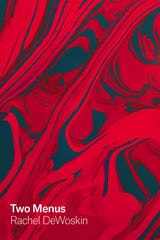
Two Menus
Rachel DeWoskin
University of Chicago Press, 2020
The poems in Two Menus offer insights into the layers of what it means to be human, to reconcile living as multiple selves. DeWoskin dives into the uncertain spaces, showing us how a life lived between walls is murky, strange, and immensely human. These poems ask us how to communicate across the boundaries that threaten to divide us, to measure and close the distance between who we are, were, and want to be.
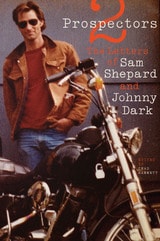
Two Prospectors
The Letters of Sam Shepard and Johnny DarkBy Sam Shepard and Johnny Dark
University of Texas Press, 2013
Sam Shepard was arguably America’s finest working dramatist, as well as an accomplished screenwriter, actor, and director. Winner of a Pulitzer Prize, he wrote more than forty-five plays, including True West, Fool for Love, and Buried Child. Shepard also appeared in more than fifty films, beginning with Terrence Malick’s Days of Heaven, and was nominated for an Academy Award for his performance in The Right Stuff. Despite the publicity his work and life attracted, however, Shepard remained a strongly private man who said many times that he would never write a memoir. But he did write intensively about his inner life and creative work to his former father-in-law and housemate, Johnny Dark, who was Shepard’s closest friend, surrogate brother (they were nearly the same age), and even artistic muse.
Two Prospectors gathers nearly forty years of correspondence and transcribed conversations between Shepard and Dark. In these gripping, sometimes gut-wrenching letters, the men open themselves to each other with amazing honesty. Shepard’s letters give us the deepest look we will ever get into his personal philosophy and creative process, while in Dark’s letters we discover insights into Shepard’s character that only an intimate friend could provide. The writers also reflect on the books and authors that stimulate their thinking, their relationships with women (including Shepard’s anguished decision to leave his wife and son—Dark’s stepdaughter and grandson—for actress Jessica Lange), personal struggles, and accumulating years. Illustrated with Dark’s candid, revealing photographs of Shepard and their mutual family across many years, as well as facsimiles of numerous letters, Two Prospectors is a compelling portrait of a complex friendship that anchored both lives for decades, a friendship also poignantly captured in Treva Wurmfeld’s film, Shepard & Dark.
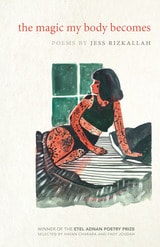
the magic my body becomes
Poems byJess Rizkallah
University of Arkansas Press, 2017
Winner, 2017 Etel Adnan Poetry Prize
In the magic my body becomes, Jess Rizkallah seeks a vernacular for the inescapable middle ground of being Arab American—a space that she finds, at times, to be too Arab for America and too American for her Lebanese elders.
These poems freely assert gender, sexuality, and religious beliefs while at the same time respecting a generational divide: the younger’s privilege gained by the sacrifice of the older, the impossibility of separating what is wholly hers from what is hers secondhand.
In exploring family history, civil war, trauma, and Lebanon itself, Rizkallah draws from the spirits of canonical Arab and Middle Eastern poets. As a result of her conjuring, the reader feels these spirits begin to exorcise the grief of those who are still alive. Throughout, there is the body, a reclamation and pushback against cultures that simultaneously sexualize and shame women. And there is a softness as inherent as rage, a resisting of stereotypes that too often speak louder than the complexities of a resilient cultural identity.
The magic my body becomes is an exciting new book from an exciting young poet, a love letter to a people as well as a fist in the air.