Results by title
28164 books match the query 'History' and 6372 start with t
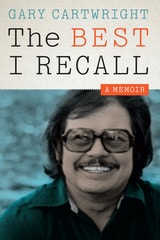
The Best I Recall
A MemoirBy Gary Cartwright
University of Texas Press, 2015
Gary Cartwright is one of Texas’s legendary writers. In a career spanning nearly six decades, he has been a newspaper reporter, Senior Editor of Texas Monthly, and author of several acclaimed books, including Blood Will Tell, Confessions of a Washed-up Sportswriter, and Dirty Dealing. Cartwright was a finalist for a National Magazine Award for reporting excellence, and he has won several awards from the Texas Institute of Letters, including its most prestigious—the Lon Tinkle Award for lifetime achievement. His personal life has been as colorful and occasionally outrageous as any story he reported, and in this vivid, often hilarious, and sometimes deeply moving memoir, Cartwright tells the story of his writing career, tangled like a runaway vine with great friendships, love affairs, four marriages, four or five great dogs . . . looking always to explain, at least to himself, how the pattern probably makes a kind of perverted sense.
Cartwright’s career began at the Fort Worth Star-Telegram and Fort Worth Press, among kindred spirits and fellow pranksters Edwin “Bud” Shrake and Dan Jenkins. He describes how the three rookie writers followed their mentor Blackie Sherrod to the Dallas Times Herald and the Dallas Morning News, becoming the “best staff of sportswriters anywhere, ever” and creating a new kind of sportswriting that “swept the country and became standard.” Cartwright recalls his twenty-five years at Texas Monthly, where he covered everything from true crime to notable Texans to Texas’s cultural oddities. Along the way, he tells lively stories about “rebelling against sobriety” in many forms, with friends and co-conspirators that included Willie Nelson, Ann Richards, Dennis Hopper, Willie Morris, Don Meredith, Jack Ruby, and countless others. A remarkable portrait of the writing life and Austin’s counterculture, The Best I Recall may skirt the line between fact and fiction, but it always tells the truth.
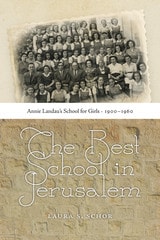
The Best School in Jerusalem
Annie Landau’s School for Girls, 1900–1960Laura S. Schor
Brandeis University Press, 2013
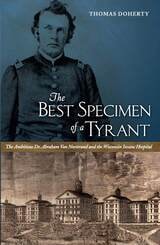
The Best Specimen of a Tyrant
The Ambitious Dr. Abraham Van Norstrand and the Wisconsin Insane HospitalThomas Doherty
University of Iowa Press, 2012

The Best Station of Them All
The Savannah Squadron, 1861-1865Maurice Melton
University of Alabama Press, 2012
The Confederate Navy’s Savannah Squadron, its relationship with the people of Savannah, Georgia, and its role in the city’s economy
In this well-written and extensively researched narrative, Maurice Melton charts the history of the unit, the sailors (both white and black), the officers, their families, and their activities aboard ship and in port.
The Savannah Squadron worked, patrolled, and fought in the rivers and sounds along the Georgia coast. Though they saw little activity at sea, the unit did engage in naval assault, boarding, capture, and ironclad combat. The sailors finished the war as an infantry unit in Robert E. Lee’s Army of Northern Virginia, fighting at Sayler’s Creek on the road to Appomattox.
Melton concentrates on navy life and the squadron’s place in wartime Savannah. The book reveals who the Confederate sailors were and what their material, social, and working lives were like.
The Best Station of Them All is an essential piece of historical literature for anyone interested in the Civil War, its navies, or Savannah.

The Best Weapon for Peace
Maria Montessori, Education, and Children's RightsErica Moretti
University of Wisconsin Press, 2022
Using newly discovered primary sources, Moretti examines Montessori’s lifelong pacifist work, including her ultimately unsuccessful push for the creation of the White Cross, a humanitarian organization for war-affected children. Moretti shows that Montessori’s educational theories and practices would come to define chilren’s rights once adopted by influential international organizations, including the United Nations. She uncovers the significance of Montessori’s evolving philosophy of peace and early childhood education within broader conversations about internationalism and humanitarianism.
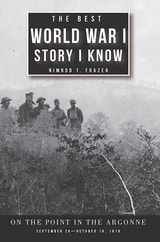
The Best World War I Story I Know
On the Point in the Argonne, September 26–October 16, 1918Nimrod T. Frazer
University of Alabama Press, 2018
The Best World War I Story I Know: On the Point in the Argonne is the breath-taking story of three US Army divisions tasked with capturing the Côte de Châtillon during the Meuse-Argonne offensive in autumn 1918. Readers will first follow in the footsteps of Missouri-Kansas Guard troops who were repulsed in the opening days of the battle; their courage in the face of heavy fire was not enough to overcome poor leadership.
They were replaced by the 1st Division, the “best of the Regular Army.” This fine unit became physically and mentally exhausted after suffering horrendous casualties. Unable to fight on, “The Big Red One” was exchanged at the base of Côte de Châtillon, with the 42nd, the Rainbow Division. It too struggled to gain ground on the heavily-contested hill until General Douglas MacArthur’s determined 84th Brigade of “Alabama cotton pickers and Iowa corn growers” forced their way past the Germans. The Côte was finally in American hands and the war all but over.
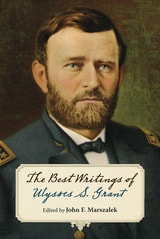
The Best Writings of Ulysses S. Grant
Edited by John F. Marszalek
Southern Illinois University Press, 2015
Famous for his military acumen and for his part in saving the Union during the American Civil War, Ulysses S. Grant also remains known for his two-volume memoirs, considered among the greatest military memoirs ever written. Grant’s other writings, however, have not received the same acclaim, even though they show the same literary skill. Originally published in the thirty-two volumes of The Papers of Ulysses S. Grant, the letters and speeches are the major source of information about Grant’s life and era and have played a key role in elevating his reputation to that of the leading general of the Civil War and the first of the modern presidents. In this collection, editor John F. Marszalek presents excerpts from Grant’s most insightful and skillfully composed writings and provides perspective through introductory comments tying each piece to the next. The result is a fascinating overview of Grant’s life and career.
In sixteen chronological chapters, selections from Grant’s letters and other writings reveal his personal thoughts on the major events of his momentous life, including the start of the Civil War, the capture of Vicksburg, Lincoln’s reelection, Lee’s surrender, his terms as president, the Panic of 1873, and his bouts of mouth and throat cancer. Throughout, Grant’s prose reveals clearly the power of his words and his ability to present them well. Although some historians have maligned his presidency as one of the most corrupt periods in American history, these writings reinforce Grant’s greatness as a general, demonstrate the importance of his presidency, and show him to be one of the driving forces of the nineteenth century.
With this compendium, Marszalek not only celebrates the literary talent of one of America’s greatest military figures but also vindicates an individual who, for so long, has been unfairly denigrated. A concise reference for students of American history and Civil War enthusiasts as well as a valuable introduction for those who are new to Grant’s writings, this volume provides intriguing insight into one of the nineteenth century’s most important Americans.
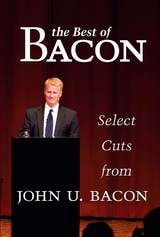
The Best of Bacon
Select CutsJohn U. Bacon
University of Michigan Press, 2018
From the Preface:
“I wrote these stories between 1992 and 2018. They cover a dozen different sports for a dozen different media outlets, from the Ann Arbor News to National Public Radio, and they stretch from a couple pages to a dozen. But they have one thing in common: they all meant a lot to me when I wrote them, and they still do today.”
The Best of Bacon presents both new and familiar stories by best-selling author John U. Bacon, all centered on sports in his home state of Michigan. Best known for his acclaimed books on college football, Bacon’s writing has been praised for going beyond traditional Xs and Os sports reporting. True to that reputation, this collection showcases personal, behind-the-scenes stories of players, coaches, and even fans. Many of these stories are connected to specific moments in time—a great season, the passing of a legendary broadcaster, or a star player’s daily grind before a big game—and will immediately transport readers to some of the highs (and lows) of their own sports memories. More often, Bacon’s writing explores timeless themes—why we love sports, how we pass that passion down to the next generation, and how it will be threatened or preserved in the future.
Michigan is one of the nation’s best sports states, home to countless amateur squads, two Big Ten schools, and professional teams in all four major sports whose histories reach back to the start of their leagues—something only New York, Massachusetts, and Illinois can also claim. This book covers the spectrum, from insider profiles of big names like Magic Johnson, Bo Schembechler, and Joe Louis, to cautionary tales of the debilitating greed threatening our favorite pastimes, to uplifting stories of the unsung heroes whose passion drives them to coach Little League baseball teams or run summer camps for peanuts. These stories speak to the value of sports, but also to our values. Whether a Spartan or a Wolverine, a long-suffering Lions’ backer or a diehard Wing-Nut, a lifetime sports fan or just someone who loves a good story, there is something here for everyone.
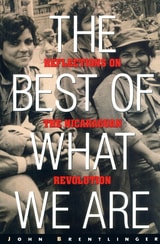
The Best of What We Are
Reflections on the Nicaraguan RevolutionJohn Brentlinger
University of Massachusetts Press, 1995
The Sandinista revolution in Nicaragua inspired many North Americans, including the author of this moving and informative book. John Brentlinger made six trips to Nicaragua, both before and after the defeat of the Sandinista Party. Combining the insights of a philosopher with the experiences of a participant-observer, he interprets the Sandinista period as a people’s struggle for self-realization in work, culture, politics, and community.
The book alternates between journal and essay chapters, weaving descriptions of personal experiences together with interviews and analysis. Whether telling the story of the last day of a young teacher’s life, describing new forms of poetry and art, examining representations of Nicaragua in the U.S. media, or discussing the government’s success and failures, Brentlinger vividly captures the spirit and enduring significance of the Sandinista revolution.
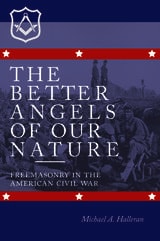
The Better Angels of Our Nature
Freemasonry in the American Civil WarMichael A. Halleran
University of Alabama Press, 2010
The first in-depth study of the Freemasons during the Civil War
One of the enduring yet little examined themes in Civil War lore is the widespread belief that on the field of battle and afterward, members of Masonic lodges would give aid and comfort to wounded or captured enemy Masons, often at great personal sacrifice and danger. This work is a deeply researched examination of the recorded, practical effects of Freemasonry among Civil War participants on both sides.
From first-person accounts culled from regimental histories, diaries, and letters, Michael A. Halleran has constructed an overview of 19th-century American freemasonry in general and Masonry in the armies of both North and South in particular, and provided telling examples of how Masonic brotherhood worked in practice. Halleran details the response of the fraternity to the crisis of secession and war, and examines acts of assistance to enemies on the battlefield and in POW camps.
The author examines carefully the major Masonic stories from the Civil War, in particular the myth that Confederate Lewis A. Armistead made the Masonic sign of distress as he lay dying at the high-water mark of Pickett’s charge at Gettysburg.

The Bewitchment of Silver
The Social Economy of Mining in Nineteenth-Century PeruJose R. Deustua
Ohio University Press, 1999
José Deustua argues that developing countries must be understood in terms of achieving domestic development as well as in their role in generating foreign exchange and in linking themselves to the world economy. Focusing on various sectors of Peru’s mining production, the mines, owners and mine workers, the transportation networks and the use of muleteers, this study is also concerned with market-building and domestic development in nineteenth-century Latin America.

The Bible in the American Experience
Claudia Setzer
SBL Press, 2020
An interdisciplinary investigation of the Bible's place in American experience
Much has changed since the Society of Biblical Literature's Bible in American Culture series was published in the 1980s, but the influence of the Bible has not waned. In the United States, the stories, themes, and characters of the Bible continue to shape art, literature, music, politics, education, and social movements to varying degrees. In this volume, contributors highlight new approaches that move beyond simple citation of texts and explore how biblical themes infuse US culture and how this process in turn transforms biblical traditions.
Features
- An examination of changes in the production, transmission, and consumption of the Bible
- An exploration of how Bible producers disseminate US experiences to a global audience
- An assessment of the factors that produce widespread myths about and nostalgia for a more biblically grounded nation
The Bible in the Public Square
Its Enduring Influence in American LifeMark A. Chancey
SBL Press, 2014
Explore perceptions and interpretations of scripture in American politics, identity, popular culture, and public education
Essays from the perspectives of American history, the history of ideas, film studies, visual studies, cultural studies, education, and church-state studies provide essential research for those interested in the intersection of the Bible and American culture. The contributors are Yaakov Ariel, Jacques Berlinerblau, Mark A. Chancey, Rubén Dupertuis, John Fea, Shalom Goldman, Charles C. Haynes, Carol Meyers, Eric M. Meyers, David Morgan, Adele Reinhartz, and David W. Stowe.
Features:
- Ten essays and an introduction present research from professors of biblical studies, Judaism, English, and history
- Articles relevant to scholars, students, and the general public
- Analysis of the tensions in American society regarding the Bible and its role in public life.
The Bible in the Sixteenth Century
David C. Steinmetz
Duke University Press, 1990
Contributors. Irena Backus, Guy Bedouelle, Kalman P. Bland, Kenneth G. Hagen, Scott H. Hagen, Scott H. Hendrix, R. Gerald Hobbs, Jean-Claude Margolin, H. C. Erik Midelfort, Richard A. Muller, John B. Payne, David C. Steinmetz
The Biden School and the Engaged University of Delaware, 1961-2021
Daniel Rich
University of Delaware Press, 2023
The Big Empty
The Great Plains in the Twentieth CenturyR. Douglas Hurt
University of Arizona Press, 2011
Using the voices of women homesteaders, agrarian socialists, Jewish farmers, Mexican meatpackers, New Dealers, and Native Americans, this book creates a sweeping survey of contested race relations, radical politics, and agricultural prosperity and decline during the twentieth century. This narrative shows that even though Great Plains history is fraught with personal and group tensions, violence, and distress, the twentieth century also brought about compelling social, economic, and political change.
The only book of its kind, this account will be of interest to historians studying the region and to anyone inspired by the story of the men and women who found an opportunity for a better life in the Great Plains.
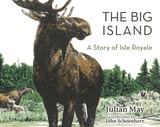
The Big Island
A Story of Isle RoyaleJulian May
University of Minnesota Press, 2021
First published in 1968, this engrossing and beautiful picture book about wildlife on Isle Royale is available again
Isle Royale, “the big island” of this book, is a wilderness national park in Lake Superior and home to a unique and fascinating ecosystem of animals, most notably the iconic wolf and majestic moose. Here is author Julian May’s story about the island’s beginning, the kinds of animals that came to populate it, and their effects on the pristine landscape. Among them were the moose, who swam to the island from the distant shore to fend off starvation. The moose found conditions on Isle Royale so favorable that they reproduced quickly—but then faced another food shortage. The wolves arrived by floating to the island on an ice floe in winter and soon became important to the island’s ecology as successful predators of the moose.
Complementing this fascinating text, John Schoenherr’s magnificent illustrations convey the strength of these animals and the beauty of the island that is their home.
First published in 1968, and reprinted here with a new note by renowned wolf expert L. David Mech, The Big Island is an enchanting introduction to the wilderness and wildlife of Isle Royale.
The Big Leagues Go to Washington
Congress and Sports Antitrust, 1951-1989David George Surdam
University of Illinois Press, 2015
In The Big Leagues Go to Washington, David Surdam chronicles the key issues that arose during the hearings and the ways opposing sides used economic data and theory to define what was right, what was feasible, and what was advantageous to one party or another. As Surdam shows, the hearings affected matters as fundamental to the modern game as broadcasting rights, player drafts and unions, league mergers, and the dominance of the New York Yankees. He also charts how lawmakers from the West and South pressed for the relocation of ailing franchises to their states and the ways savvy owners dodged congressional interference when they could and adapted to it when necessary.

The Big Story
The Oral History of Philadelphia TV NewsDavid Grzybowski
Temple University Press, 2025
“We were the only station that stayed on the air continuously. We even pre-empted the CBS evening news.”—Larry Kane, anchor at WCAU, about covering the MOVE bombing
“The highs of working during the pandemic were keeping people informed of this deadly virus and what they had to do to take care of themselves and each other.”—Ukee Washington, KYW anchor, on the pandemic
The Big Story is David Grzybowski’s engrossing oral history of Philadelphia TV news from the perspective of reporters, photographers, producers, and news directors. Covering all the big stories from the late 1970s through the present, this fast-paced running commentary reflects on the uncertainty of the Three Mile Island disaster, the thrill of the Live Aid concert, the “Storm of the Century” (that wasn’t), and the championship victories of the Phillies and the Eagles, among other notable events, local, national, and global.
The Big Story features more than 200 interviews, including anecdotes from seasoned Philadelphia anchors Jim Gardner, Larry Kane, Lisa Thomas-Laury, Mike Jerrick, Vai Sikahema, Tamala Edwards, Pat Ciarrocchi, and Cecily Tynan, among others, about their experience on and off the job. Decision makers reflect on how to cover hot news stories such as Pennsylvania State Treasure R. Budd Dwyer’s on-air suicide. (“It was a big bloody horrifying mess,” according to Chris Wagner, WPVI anchor.)
Grzybowski highlights the Mummers, the launch of Good Day Philadelphia, off-the-air scandals, and how the Action News style secured a loyal following with Philadelphians while the Eyewitness News format competed hard to gain ratings. But the Big Story is how The Big Story provides compelling stories about Philadelphia’s news breakers and newsmakers.

The Big Thicket Guidebook
Exploring the Backroads and History of Southeast TexasLorraine G. Bonney
University of North Texas Press, 2011
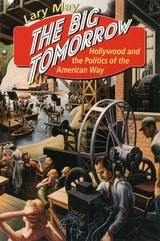
The Big Tomorrow
Hollywood and the Politics of the American WayLary May
University of Chicago Press, 2000
"The most exhilarating work of revisionist film history since Pauline Kael's Citizen Kane. . . . May's take on what movies once were (energizing, as opposed to enervating), and hence can become again, is enough to get you believing in them again as one of the regenerative forces America so sorely needs."—Jay Carr, Boston Globe
"A startling, revisionist history of Hollywood's impact on politics and American culture. . . . A convincing and important addition to American cultural criticism."—Publishers Weekly
"A controversial overview of 30 years of American film history; must reading for any serious student of the subject."—Choice
"A provocative social history of Hollywood's influence in American life from the 1930s to the 1950s. May argues persuasively that movies in the period offered a good deal of tough criticism of economic and social conditions in U.S. society. . . . May challenges us to engage in some serious rethinking about Hollywood's impact on American society in the middle of the twentieth century."—Robert Brent Toplin, American Historical Review
The Bingo Queens of Oneida
How Two Moms Started Tribal Gaming in WisconsinMike Hoeft
Wisconsin Historical Society Press, 2014
While militant Indian activists often dominated national headlines in the 1970s, these church-going Oneida women were the unsung catalysts behind bingo’s rising prominence as a sovereignty issue in the Oneida Nation. The bingo moms were just trying to take care of the kids in the community.
The Bingo Queens of Oneida: How Two Moms Started Tribal Gaming tells the story through the eyes of Sandra Ninham and Alma Webster, the Oneida women who had the idea for a bingo operation run by the tribe to benefit the entire tribe. Bingo became the tribe’s first moneymaker on a reservation where about half the population was living in poverty.
Author Mike Hoeft traces the historical struggles of the Oneida—one of six nations of the Iroquois, or Haudenosaunee, confederacy—from their alliance with America during the Revolutionary War to their journey to Wisconsin. He also details the lives of inspirational tribal members who worked alongside Ninham and Webster, and also those who were positively affected by their efforts.
The women-run bingo hall helped revitalize an indigenous culture on the brink of being lost. The Bingo Queens of Oneida is the story of not only how one game helped revive the Oneida economy but also how one game strengthened the Oneida community.
The Bioarchaeology of Virginia Burial Mounds
Debra L. Gold
University of Alabama Press, 2004
Uncovering the stories of Virginia's ancient peoples through the science of bioarchaeology.
By the 14th century more than a dozen accretional burial mounds—reaching heights of 12 to 15 feet—marked the floodplains of interior Virginia. Today, none of these mounds built by the nearly forgotten Monacan Indians remain on the landscape, having been removed over the centuries by a variety of natural and cultural causes. This study uses what remains of the mounds—excavated from the 1890s to the 1980s— to gain a new understanding of the Monacans and to gauge their importance in the realm of the late prehistoric period in the Eastern Woodlands.
Based on osteological examinations of dozens of complete skeletons and thousands of isolated bones and bone fragments, this work constructs information on Monacan demography, diet, health, and mortuary ritual in the 10th through the 15th centuries. The results show an overall pattern of stability and local autonomy among the Late Woodland village societies of interior Virginia in which a mixture of maize farming and the collection of wild food resources were successful for more than 600 years.
This book—uniting biological and cultural aspects of the data for a holistic understanding of everyday life in the period—will be of interest to ethnohistorians, osteologists, bioarchaeologists, and anyone studying Late Woodland, Mississippian, and contact periods, as well as middle range societies, in the Eastern Woodlands.
The Biographical Dictionary of Iowa
David Hudson
University of Iowa Press, 2009
Written by an impressive team of more than 150 scholars and writers, the readable narratives include each subject’s name, birth and death dates, place of birth, education, and career and contributions. Many of the names will be instantly recognizable to most Iowans; others are largely forgotten but deserve to be remembered. Beyond the distinctive lives and times captured in the individual biographies, readers of the dictionary will gain an appreciation for how the character of the state has been shaped by the character of the individuals who have inhabited it.
From Dudley Warren Adams, fruit grower and Grange leader, to the Younker brothers, founders of one of Iowa’s most successful department stores, The Biographical Dictionary of Iowa is peopled with the rewarding lives of more than four hundred notable citizens of the Hawkeye State. The histories contained in this essential reference work should be eagerly read by anyone who cares about Iowa and its citizens.
Entries include Cap Anson, Bix Beiderbecke, Black Hawk, Amelia Jenks Bloomer, William Carpenter, Philip Greeley Clapp, Gardner Cowles Sr., Samuel Ryan Curtis, Jay Norwood Darling, Grenville Dodge, Julien Dubuque, August S. Duesenberg, Paul Engle, Phyllis L. Propp Fowle, George Gallup, Hamlin Garland, Susan Glaspell, Josiah Grinnell, Charles Hearst, Josephine Herbst, Herbert Hoover, Inkpaduta, Louis Jolliet, MacKinlay Kantor, Keokuk, Aldo Leopold, John L. Lewis, Marquette, Elmer Maytag, Christian Metz, Bertha Shambaugh, Ruth Suckow, Billy Sunday, Henry Wallace, and Grant Wood.
Excerpt from the entry on:
Gallup, George Horace (November 19, 1901–July 26, 1984)—founder of the American Institute of Public Opinion, better known as the Gallup Poll, whose name was synonymous with public opinion polling around the world—was born in Jefferson, Iowa. . . . . A New Yorker article would later speculate that it was Gallup’s background in “utterly normal Iowa” that enabled him to find “nothing odd in the idea that one man might represent, statistically, ten thousand or more of his own kind.” . . . In 1935 Gallup partnered with Harry Anderson to found the American Institute of Public Opinion, based in Princeton, New Jersey, an opinion polling firm that included a syndicated newspaper column called “America Speaks.” The reputation of the organization was made when Gallup publicly challenged the polling techniques of The Literary Digest, the best-known political straw poll of the day. Calculating that the Digest would wrongly predict that Kansas Republican Alf Landon would win the presidential election, Gallup offered newspapers a money-back guarantee if his prediction that Franklin Delano Roosevelt would win wasn’t more accurate. Gallup believed that public opinion polls served an important function in a democracy: “If govern¬ment is supposed to be based on the will of the people, somebody ought to go and find what that will is,” Gallup explained.
The Biological and Social Analyses of a Mississippian Cemetery from Southeast Missouri
The Turner Site, 23BU21AThomas K. Black, III
University of Michigan Press, 1979
The Biopolitics of Feeling
Race, Sex, and Science in the Nineteenth CenturyKyla Schuller
Duke University Press, 2018

The Bird Cage Theater
The Curtain Rises on Tombstone, Arizona's National TreasureMichael Paul Mihaljevich
University of North Texas Press, 2024
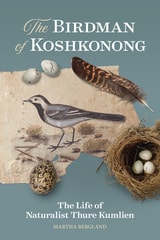
The Birdman of Koshkonong
The Life of Naturalist Thure KumlienMartha Bergland
Wisconsin Historical Society Press, 2021
For all of his achievements, Kumlien never gained the widespread notoriety of Wisconsin naturalists John Muir, Increase Lapham, or Aldo Leopold. Kumlien did his work behind the scenes, content to spend his days in the marshes and swamps rather than in the public eye. He once wrote that he was not “cut out for pretensions and show in the world.” Yet, his detailed observations of Wisconsin’s natural world—including the impact of early agriculture on the environment—were hugely important to the fields of ornithology and botany. As this carefully researched and lovingly rendered biography proves, Thure Kumlien deserves to be remembered as one of Wisconsin’s most influential naturalists.
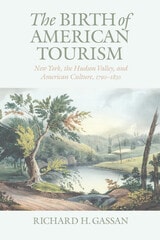
The Birth of American Tourism
New York, the Hudson Valley, and American Culture, 1790-1835Richard H. Gassan
University of Massachusetts Press, 2008
According to Gassan, the origins of American tourism in the Hudson Valley can be traced to a confluence of historical accidents, including the proximity of the region to the most rapidly growing financial and population center in the country, with its expanding middle class, and the remarkable beauty of the valley itself. But other developments also played a role, from the proliferation of hotels to accommodate tourists, to the construction of an efficient transportation network to get them to their destinations, to the creation of a set of cultural attractions that invested their experience with meaning. In the works of Washington Irving and James Fenimore Cooper and the paintings of Thomas Cole and others of the Hudson River School, travelers in the region encountered the nation's first literary and artistic movements. Tourism thus did more than provide an escape from the routines of everyday urban life; it also helped Americans of the early republic shape a sense of national identity.

The Birth of Capitalism
A 21st Century PerspectiveHenry Heller
Pluto Press, 2011
In the light of the deepening crisis of capitalism and continued non-Western capitalist accumulation, Henry Heller re-examines the debates surrounding the transition from feudalism to capitalism in Europe and elsewhere.
Focusing on arguments about the origin, nature and sustainability of capitalism, Heller offers a new reading of the historical evidence and a critical interrogation of the transition debate. He advances the idea that capitalism must be understood as a political as well as an economic entity. This book breathes new life into the scholarship, taking issue with the excessively economistic approach of Robert Brenner, which has gained increasing support over the last ten years. It concludes that the future of capitalism is more threatened than ever before.
The new insights in this book make it essential reading for engaged students and scholars of political economy and history.

The Birth of Computer Vision
James E. Dobson
University of Minnesota Press, 2023
A revealing genealogy of image-recognition techniques and technologies
Today’s most advanced neural networks and sophisticated image-analysis methods come from 1950s and ’60s Cold War culture—and many biases and ways of understanding the world from that era persist along with them. Aerial surveillance and reconnaissance shaped all of the technologies that we now refer to as computer vision, including facial recognition. The Birth of Computer Vision uncovers these histories and finds connections between the algorithms, people, and politics at the core of automating perception today.
James E. Dobson reveals how new forms of computerized surveillance systems, high-tech policing, and automated decision-making systems have become entangled, functioning together as a new technological apparatus of social control. Tracing the development of a series of important computer-vision algorithms, he uncovers the ideas, worrisome military origins, and lingering goals reproduced within the code and the products based on it, examining how they became linked to one another and repurposed for domestic and commercial uses. Dobson includes analysis of the Shakey Project, which produced the first semi-autonomous robot, and the impact of student protest in the early 1970s at Stanford University, as well as recovering the computer vision–related aspects of Frank Rosenblatt’s Perceptron as the crucial link between machine learning and computer vision.
Motivated by the ongoing use of these major algorithms and methods, The Birth of Computer Vision chronicles the foundations of computer vision and artificial intelligence, its major transformations, and the questionable legacy of its origins.
Cover alt text: Two overlapping circles in cream and violet, with black background. Top is a printed circuit with camera eye; below a person at a 1977 computer.
The Birth of Doubt
Confronting Uncertainty in Early Rabbinic LiteratureMoshe Halbertal
SBL Press, 2020
A systematic attempt to understand the rabbinic world through its approach to confronting uncertainty
In the history of halakhah, the treatment of uncertainty became one of the most complex fields of intense study. In his latest book, Moshe Halbertal focuses on examining the point of origin of the study of uncertainty in early rabbinic literature, including the Mishnah, Tosefta, and halakhic midrashim. Halbertal explores instructions concerning how to behave in situations of uncertainty ranging from matters of ritual purity, to lineage and marriage, to monetary law, and to the laws of forbidden foods. This examination of the rules of uncertainty introduced in early rabbinic literature reveals that these rules were not aimed at avoiding but rather at dwelling in the midst of uncertainty, thus rejecting the sectarian isolationism that sought to minimize a community’s experience of and friction with uncertainty.
Features:
- A thorough investigation of the principles concerning how to behave in cases of uncertainty
- An examination of two distinct modes for coping with uncertainty
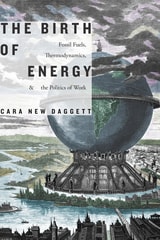
The Birth of Energy
Fossil Fuels, Thermodynamics, and the Politics of WorkCara New Daggett
Duke University Press, 2019

The Birth of Head Start
Preschool Education Policies in the Kennedy and Johnson AdministrationsMaris A. Vinovskis
University of Chicago Press, 2005
Policymakers proposing to reform Head Start often invoke its origins to justify their position, but until now no comprehensive political history of the program has existed. Maris A. Vinovskis here provides an in-depth look at the nation's largest and best known—yet politically challenged—early education program. The Birth of Head Start sets the record straight on the program's intended aims, documenting key decisions made during its formative years. While previous accounts of Head Start have neglected the contributions of important participants such as federal education officials and members of Congress, Vinovskis's history is the first to consider the relationship between politics and policymaking and how this interaction has shaped the program. This thorough and incisive book will be essential for policymakers and legislators interested in prekindergarten education and will inform future discussions on early intervention services for disadvantaged children.
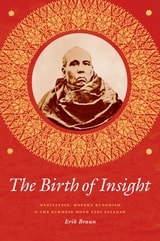
The Birth of Insight
Meditation, Modern Buddhism, and the Burmese Monk Ledi SayadawErik Braun
University of Chicago Press, 2013
Braun focuses on the Burmese monk Ledi Sayadaw, a pivotal architect of modern insight meditation, and explores Ledi’s popularization of the study of crucial Buddhist philosophical texts in the early twentieth century. By promoting the study of such abstruse texts, Braun shows, Ledi was able to standardize and simplify meditation methods and make them widely accessible—in part to protect Buddhism in Burma after the British takeover in 1885. Braun also addresses the question of what really constitutes the “modern” in colonial and postcolonial forms of Buddhism, arguing that the emergence of this type of meditation was caused by precolonial factors in Burmese culture as well as the disruptive forces of the colonial era. Offering a readable narrative of the life and legacy of one of modern Buddhism’s most important figures, The Birth of Insight provides an original account of the development of mass meditation.
The Birth of Purgatory
Jacques Le Goff
University of Chicago Press, 1984

The Birth of Solidarity
The History of the French Welfare StateFrançois Ewald
Duke University Press, 2020

The Birth of Territory
Stuart Elden
University of Chicago Press, 2013
The Birth of Theory
Andrew Cole
University of Chicago Press, 2014
By uncovering these theoretical filiations across time, The Birth of Theory will not only change the way we read Hegel, but also the way we think about the histories of theory. With chapters that powerfully reanimate the overly familiar topics of ideology, commodity fetishism, and political economy, along with a groundbreaking reinterpretation of Hegel’s famous master/slave dialectic, The Birth of Theory places the disciplines of philosophy, literature, and history in conversation with one another in an unprecedented way. Daring to reconcile the sworn enemies of Hegelianism and Deleuzianism, this timely book will revitalize dialectics for the twenty-first century.
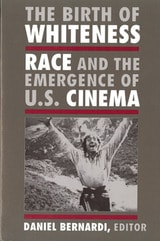
The Birth of Whiteness
Race and the Emergence of United States CinemaEdited by Daniel Leonard Bernardi
Rutgers University Press, 1996
As indelible components of the history of the United States, race and racism have permeated nearly all aspects of life: cultural, economic, political, and social. In this first anthology on race in early cinema, fourteen scholars examine the origins, dynamics, and ramifications of racism and Eurocentrism and the resistance to both during the early years of American motion pictures. Any discussion of racial themes and practices in any arena inevitably begins with the definition of race. Is race an innate and biologically determined "essence" or is it a culturally constructed category? Is the question irrelevant? Perhaps race exists as an ever-changing historical and social formation that, regardless of any standard definition, involves exploitation, degradation, and struggle. In his introduction, Daniel Bernardi writes that "early cinema has been a clear partner in the hegemonic struggle over the meaning of race" and that it was steadfastly aligned with a Eurocentric world view at the expense of those who didn't count as white.
The contributors to this work tackle these problems and address such subjects as biological determinism, miscegenation, Manifest Destiny, assimilation, and nativism and their impact on early cinema. Analyses of The Birth of a Nation, Romona, Nanook of the North and Madame Butterfly and the directorial styles of D. W. Griffith, Oscar Micheaux, and Edwin Porter are included in the volume.
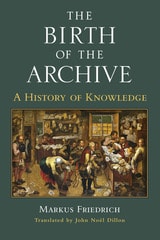
The Birth of the Archive
A History of KnowledgeMarkus Friedrich, translated by John Noël Dillon
University of Michigan Press, 2018
Friedrich provides an essential background to the history of archives over the centuries and enriches the story of their evolution with chapters on key sociocultural aspects of European archival culture. He discusses their meaning and symbolism in European thought, early modern conceptions of the archive’s function, and questions of access and usability. Exploring the close, often vexed relationship between archives and political power, Friedrich illustrates the vulnerability of archives to political upheaval and war. He concludes with an introspective look at how historians used their knowledge of and work with archives to create distinct representations of themselves and their craft.
The Birth of the Archive engages with scholarship in political history, the history of mentalities, conceptions of space, historiography, and the history of everyday life in early modern Europe. It has much to offer for specialists and scholars, while the jargon-free prose of this translation is also accessible to the general reader.
The Birth of the Penitentiary in Latin America
Essays on Criminology, Prison Reform, and Social Control, 1830-1940Edited by Ricardo D. Salvatore and Carlos Aguirre
University of Texas Press, 1996
Opening a new area in Latin American studies, The Birth of the Penitentiary in Latin America showcases the most recent historical outlooks on prison reform and criminology in the Latin American context. The essays in this collection shed new light on the discourse and practice of prison reform, the interpretive shifts induced by the spread of criminological science, and the links between them and competing discourses about class, race, nation, and gender. The book shows how the seemingly clear redemptive purpose of the penitentiary project was eventually contradicted by conflicting views about imprisonment, the pervasiveness of traditional forms of repression and control, and resistance from the lower classes.
The essays are unified by their attempt to view the penitentiary (as well as the variety of representations conveyed by the different reform movements favoring its adoption) as an interpretive moment, revealing of the ideology, class fractures, and contradictory nature of modernity in Latin America. As such, the book should be of interest not only to scholars concerned with criminal justice history, but also to a wide range of readers interested in modernization, social identities, and the discursive articulation of social conflict. The collection also offers an up-to-date sampling of new historical approaches to the study of criminal justice history, illuminates crucial aspects of the Latin American modernization process, and contrasts the Latin American cases with the better known European and North American experiences with prison reform.
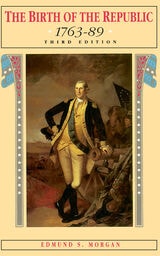
The Birth of the Republic, 1763-89
Edmund S. Morgan
University of Chicago Press, 1992
In one remarkable quarter-century, thirteen quarrelsome colonies were transformed into a nation. Edmund S. Morgan's classic account of the Revolutionary period shows how the challenge of British taxation started the Americans on a search for constitutional principles to protect their freedom and eventually led to the Revolution.
Morgan demonstrates that these principles were not abstract doctrines of political theory but grew instead out of the immediate needs and experiences of the colonists. They were held with passionate conviction, and incorporated, finally, into the constitutions of the new American states and of the United States.
Though the basic theme of the book and his assessment of what the Revolution achieved remain the same, Morgan has updated the revised edition of The Birth of the Republic (1977) to include some textual and stylistic changes as well as a substantial revision of the Bibliographic Note.
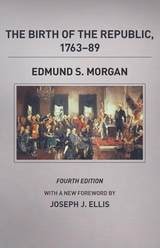
The Birth of the Republic, 1763-89, Fourth Edition
Edmund S. Morgan
University of Chicago Press, 2012
A Pulitzer Prize winner's classic, compact, authoritative account of the origins of America
In The Birth of the Republic, 1763–89, Edmund S. Morgan shows how the challenge of British taxation started Americans on a search for constitutional principles to protect their freedom, and eventually led to the Revolution. By demonstrating that the founding fathers’ political philosophy was not grounded in theory, but rather grew out of their own immediate needs, Morgan paints a vivid portrait of how the founders’ own experiences shaped their passionate convictions, and these in turn were incorporated into the Constitution and other governmental documents. The Birth of the Republic is the classic account of the beginnings of the American government, and in this fourth edition the original text is supplemented with a new foreword by Joseph J. Ellis and a historiographic essay by Rosemarie Zagarri.This book is the perfect introduction for students or general readers wanting to learn more about the events that led to the American republic.
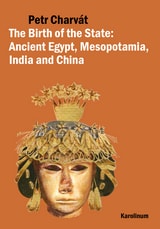
The Birth of the State
Ancient Egypt, Mesopotamia, India and ChinaPetr Charvát
Karolinum Press, 2013

The Bishop's Burden
Reforming the Catholic Church in Early Modern ItalyCeleste McNamara
Catholic University of America Press, 2020
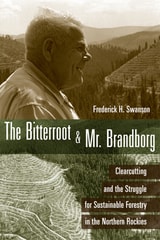
The Bitterroot and Mr. Brandborg
Clearcutting and the Struggle for Sustainable Forestry in the Northern RockiesFrederick H. Swanson
University of Utah Press, 2011
Winner of the Wallace Stegner Prize in American Environmental or Western History
Fredrick Swanson tells the story of Guy M. Brandborg and his impact on the practices of the U.S. Forest Service. As supervisor of Montana’s Bitterroot National Forest from 1935 to 1955, Brandborg engaged in a management style that promoted not only the well-being of the forest community but also the social and economic welfare of the local people. By relying on selective cutting, his goal was to protect the watersheds and wildlife habitats that are devastated by clear-cutting, and to prevent the job losses that follow such practices. Following his retirement, he became concerned that his agency was deviating from the practice of sustained-yield management of the forest’s timber lands, and led a highly visible public outcry that became known as the Bitterroot controversy. Brandborg’s behind-the-scenes lobbying contributed materially to the passage of the National Forest Management Act of 1976, the single most important law affecting public forestry since the creation of the Forest Service.
Winner of the Western Writers of America Spur Award for Best Western Nonfiction-Contemporary.
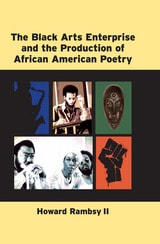
The Black Arts Enterprise and the Production of African American Poetry
Howard Rambsy II
University of Michigan Press, 2013
The outpouring of creative expression known as the Black Arts Movement of the 1960s and 1970s spawned a burgeoning number of black-owned cultural outlets, including publishing houses, performance spaces, and galleries. Central to the movement were its poets, who in concert with editors, visual artists, critics, and fellow writers published a wide range of black verse and advanced new theories and critical approaches for understanding African American literary art.
The Black Arts Enterprise and the Production of African American Poetry offers a close examination of the literary culture in which BAM's poets (including Amiri Baraka, Nikki Giovanni, Sonia Sanchez, Larry Neal, Haki Madhubuti, Carolyn Rodgers, and others) operated and of the small presses and literary anthologies that first published the movement's authors. The book also describes the role of the Black Arts Movement in reintroducing readers to poets such as Langston Hughes, Robert Hayden, Margaret Walker, and Phillis Wheatley.
Focusing on the material production of Black Arts poetry, the book combines genetic criticism with cultural history to shed new light on the period, its publishing culture, and the writing and editing practices of its participants. Howard Rambsy II demonstrates how significant circulation and format of black poetic texts—not simply their content—were to the formation of an artistic movement. The book goes on to examine other significant influences on the formation of Black Arts discourse, including such factors as an emerging nationalist ideology and figures such as John Coltrane and Malcolm X.
The Black Boom
Riley, Jason L.
Templeton Press, 2021
Economic inequality continues to be one of America’s most hotly debated topics. Still, there has been relatively little discussion of the fact that black-white gaps in joblessness, income, poverty and other measures were shrinking before the pandemic. Why was it happening, and why did this phenomenon go unacknowledged by so much media?
In The Black Boom, Jason L. Riley—acclaimed Wall Street Journal columnist and senior fellow at the Manhattan Institute—digs into the data and concludes that the economic lives of black people improved significantly under policies put into place during the Trump administration. To acknowledge as much is not to endorse the 45th president but to champion policies that achieve a clear moral objective shared by most Americans.
Riley argues that before the Covid-19 pandemic of 2020, the economic fortunes of blacks improved under Trump to an extent unseen under Obama and unseen going back several generations. Black unemployment and poverty reached historic lows, and black wages increased faster than white wages.
Less inequality is something that everyone wants, but disapproval of Trump’s personality and methods too often skewed the media’s appraisal of effective policies advocated by his administration. If we're going to make real progress in improving the lives of low-income minorities, says Riley, we must look beyond our partisan differences at what works and keep doing it. Unfortunately, many press outlets were unable or unwilling to do that.
Riley notes that political reporters were not unaware of this data. Instead, they chose to ignore or downplay it because it was inconvenient. In their view, Trump, because he was a Republican and because he was Trump, had it in for blacks, and thus his policy preferences would be harmful to minorities. To highlight that significant racial disparities were narrowing on his watch—that the administration’s tax and regulatory reforms were mainly boosting the working and middle classes rather than ‘the rich’—would have undermined a narrative that the media preferred to advance, regardless of its veracity.”
As with previous books in our New Threats to Freedom series, The Black Boom includes two essays from prominent experts who take issue with the author’s perspective. Juan Williams, a veteran journalist, and Wilfred Reilly, a political scientist, contribute thoughtful responses to Riley and show that it is possible to share a deep concern for disadvantaged groups while disagreeing on how best to help them.
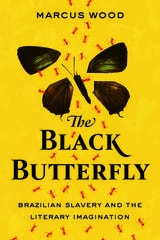
The Black Butterfly
Brazilian Slavery and the Literary ImaginationMarcus Wood
West Virginia University Press, 2019
The Black Butterfly focuses on the slavery writings of three of Brazil’s literary giants—Machado de Assis, Castro Alves, and Euclides da Cunha. These authors wrote in the late nineteenth and early twentieth centuries, as Brazil moved into and then through the 1888 abolition of slavery. Assis was Brazil’s most experimental novelist; Alves was a Romantic poet with passionate liberationist politics, popularly known as “the poet of the slaves”; and da Cunha is known for the masterpiece Os Sertões (The Backlands), a work of genius that remains strangely neglected in the scholarship of transatlantic slavery.
Wood finds that all three writers responded to the memory of slavery in ways that departed from their counterparts in Europe and North America, where emancipation has typically been depicted as a moment of closure. He ends by setting up a wider literary context for his core authors by introducing a comparative study of their great literary abolitionist predecessors Luís Gonzaga Pinto da Gama and Joaquim Nabuco. The Black Butterfly is a revolutionary text that insists Brazilian culture has always refused a clean break between slavery and its aftermath. Brazilian slavery thus emerges as a living legacy subject to continual renegotiation and reinvention.