Results by title
4917 books match the query 'Philosophy' and 1267 start with t
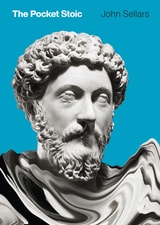
The Pocket Stoic
John Sellars
University of Chicago Press, 2020
As John Sellars shows in The Pocket Stoic, the popular image of the isolated and unfeeling Stoic hardly does justice to the rich vein of thought that we find in the work of Seneca, Epictetus, and Marcus Aurelius, the three great Roman Stoics. Their works are recognized classics, and for good reason—they speak to some of the perennial issues that face anyone trying to navigate their way through life. These writings, fundamentally, are about how to live—how to understand your place in the world, how to cope when things don’t go well, how to manage your emotions, how to behave toward others, and finally, how to live a good life. To be a Stoic is to recognize that much of the suffering in your life is due to the way you think about things, and that you have the ability to train your mind to look at the world in a new way—to recognize what you can and cannot control and to turn adversity into opportunity.
Concise and accessible, The Pocket Stoic provides a welcome introduction to the lives and thought of the key Stoics. It is also a perfect guide to help you start incorporating the practice of Stoicism into your everyday approach to life.
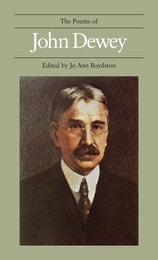
The Poems of John Dewey
Edited by Jo Ann Boydston
Southern Illinois University Press, 1977
A literary discovery of considerable magnitude, these 98 previously unpublished poems by John Dewey, written principally in the 1910–18 period, illuminate an emotive aspect in his intellectual life often not manifest in the prose works.
Rumors of the existence of the poems have circulated among students of Dewey’s life and writings since 1957,when Mrs. Roberta Dewey gained possession of them from the Columbia University Columbiana collection. But except for the few persons who saw copies made by the French scholar Deladelle five years after Dewey’s death, the poems have remained inaccessible until now.
None of the poems has hitherto been published. Mrs. Roberta Dewey and Dewey’s children from his first marriage seem not to have known of Dewey’s experiments in verse during his lifetime. And, as evidence presented here now shows, only two or three acquaintances knew of actual poems written by Dewey, one of them the Polish-American novelist Anzia Yezierska, who had a brief emotional involvement with Dewey in the 1917–18 period. The factual, rather than inferential, evidence of Dewey’s relationship with Anzia Yezierska appears in the poems, which, taken as a whole, provide revealing insights into Dewey’s feelings and illuminate not only aspects of his emotions but of his thought as well.
The fact that Dewey did not publish the poetry himself, together with the circumstances of its discovery and unusual history, has led to the exceptionally careful editorial treatment of the poems given here. Scholars will find all the evidence for the authorship of the manuscripts clearly presented and all the changes and alterations carefully recorded. This edition has received the Modern Language Association of America Center for Editions of American Authors Seal as an “approved text.”

The Poetics of Derek Walcott
Intertextual Perspectives, Volume 96Gregson Davis
Duke University Press, 0
Other contributions by literary scholars in North America and the Caribbean focus on fundamental dimensions of Walcott’s craft and on such thematic preoccupations as the intersection of pictorial and verbal modes of representation, the deployment of nuanced intertextual strategies (especially in relation to the Greco-Roman canon), the invention of a viable artistic identity in a postcolonial intercultural milieu, and the psychosocial modeling of the process of literary apprenticeship.
Contributors. Edward Baugh, Peter Burian, Gregson Davis, Carol Dougherty, Joseph Farrell, Judith Harris, Timothy Hofmeister, Derek Walcott
The Poetics of Political Thinking
Davide Panagia
Duke University Press, 2006
Panagia not only illuminates the structure of much contemporary political theory but also shows why understanding the poetics of political thinking is vital to contemporary society. Drawing on Gilles Deleuze’s critique of negation and his privileging of paradox as the source of political thought, Panagia suggests that a non-teleological concept of difference might generate insight into pressing questions about foreignness and citizenship. Turning to the liberal/poststructural debate that dominates contemporary political theory, he compares John Rawls’s concept of justice to Rancière’s ideas about political disagreement in order to demonstrate how, despite their differences, both thinkers comprehend aesthetic and moral reasoning as part and parcel of political writing. Considering the writings of William Hazlitt and Jürgen Habermas, he describes how the essay has become the exemplary genre of what is considered rational political argument. The Poetics of Political Thinking is a compelling reappraisal of the role of representation within political thought.
The Poetics of Transition
Emerson, Pragmatism, and American Literary ModernismJonathan Levin
Duke University Press, 1999
Levin draws on the pragmatist and neopragmatist writings of William James, John Dewey, George Santayana, Richard Rorty, and Cornel West to illuminate the work of modernist literature. In turn, he illuminates the poetic imperatives of pragmatism by tracing the ways in which Henry James, Gertrude Stein, and Wallace Stevens capture the moment of transition—a paradoxical moment that, once it is represented in language or art, requires its own perpetual overcoming. Throughout, he explores how modernist writers, who are masters at recording such “illegible” moments of transition in their poetry and prose, significantly contribute to an expanded understanding of pragmatism and its underlying aesthetics. By linking Emerson with the progressive philosophy of turn-of-the-century pragmatism and the experimentation of American literary modernism, Levin offers new insight into Emerson’s lasting influence on later American philosophers, novelists, and poets.
The Poetics of Transition will interest scholars and students in the fields of literary criticism, neopragmatism, literary modernism, and American literature.
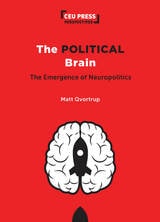
The Political Brain
The Emergence of NeuropoliticsMatt Qvortrup
Central European University Press, 2024
We have politics on our mind—or, rather, we have politics in different parts of our brains. In this path-breaking study, Matt Qvortrup takes the reader on a whistle stop tour through the fascinating, and sometimes frightening, world of neuropolitics; the discipline that combines neuroscience and politics, and is even being used to win elections.
Putting the 'science' back into political science, The Political Brain shows how fMRI-scans can identify differences between Liberals and Conservatives, can predict our behaviour with sometimes greater accuracy than surveys, and can explain the biology of uprisings, revolutions, and wars.
Not merely a study of empirical evidence, the book shows how the philosophical theories of, among others, Plato, Aristotle, and Spinoza can be supported by brain scans. Along the way, it also provides an overview of the state-of-the-art knowledge of the organ that shapes our politics. The book shows that if we rely on evolutionary primitive parts of the midbrain—those engaged when we succumb to polarised politics—we stand in danger of squandering the gains we made through the last eight million years.
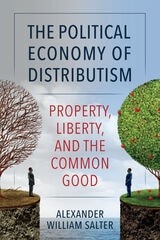
The Political Economy of Distributism
Property, Liberty, and the Common GoodAlexander William Salter
Catholic University of America Press, 2023
The Political Philosophy of Hobbes
Its Basis and Its GenesisLeo Strauss
University of Chicago Press, 1996
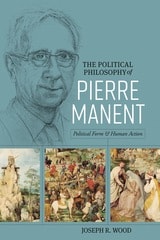
The Political Philosophy of Pierre Manent
Political Form and Human ActionJoseph Wood
Catholic University of America Press, 2024
The Political Sublime
Michael J. Shapiro
Duke University Press, 2018
The Politics
Aristotle
University of Chicago Press, 1984
This new translation of one of the fundamental texts of Western political thought combines strict fidelity to Aristotle's Greek with a contemporary English prose style. Lord's intention throughout is to retain Aristotle's distinctive style.
The accompanying notes provide literary and historical references, call attention to textual problems, and supply other essential information and interpretation. A glossary supplies working definitions of key terms in Aristotle's philosophical-political vocabulary as well as a guide to linguistic relationships that are not always reflected in equivalent English terms. Lord's extensive Introduction presents a detailed account of Aristotle's life in relation to the political situation and events of his time and then discusses the problematic character and history of Aristotle's writings in general and of the Politics in particular. Lord also outlines Aristotle's conception of political science, tracing its relation to theoretical science on the one hand and to ethics on the other. In conclusion, he briefly traces the subsequent history and influence of the Politics up to modern times.
"Lord's translation is clearly the best available."—Claremont Review
The Politics of Annihilation
A Genealogy of GenocideBenjamin Meiches
University of Minnesota Press, 2019
How did a powerful concept in international justice evolve into an inequitable response to mass suffering?
For a term coined just seventy-five years ago, genocide has become a remarkably potent idea. But has it transformed from a truly novel vision for international justice into a conservative, even inaccessible term? The Politics of Annihilation traces how the concept of genocide came to acquire such significance on the global political stage. In doing so, it reveals how the concept has been politically contested and refashioned over time. It explores how these shifts implicitly impact what forms of mass violence are considered genocide and what forms are not.
Benjamin Meiches argues that the limited conception of genocide, often rigidly understood as mass killing rooted in ethno-religious identity, has created legal and political institutions that do not adequately respond to the diversity of mass violence. In his insistence on the concept’s complexity, he does not undermine the need for clear condemnations of such violence. But neither does he allow genocide to become a static or timeless notion. Meiches argues that the discourse on genocide has implicitly excluded many forms of violence from popular attention including cases ranging from contemporary Botswana and the Democratic Republic of Congo, to the legacies of colonial politics in Haiti, Canada, and elsewhere, to the effects of climate change on small island nations.
By mapping the multiplicity of forces that entangle the concept in larger assemblages of power, The Politics of Annihilation gives us a new understanding of how the language of genocide impacts contemporary political life, especially as a means of protesting the social conditions that produce mass violence.
The Politics of Black Joy
Zora Neale Hurston and Neo-AbolitionismLindsey Stewart
Northwestern University Press, 2021
Stewart develops Hurston’s contributions to political theory and philosophy of race by introducing the politics of joy as a refusal of neo-abolitionism, a political tradition that reduces southern Black life to tragedy or social death. To develop the politics of joy, Stewart draws upon Zora Neale Hurston’s essays, Beyoncé’s Lemonade, and figures across several disciplines including Frederick Douglass, W. E. B. Du Bois, Toni Morrison, Angela Davis, Saidiya Hartman, Imani Perry, Eddie Glaude, and Audra Simpson. The politics of joy offers insights that are crucial for forming needed new paths in our current moment. For those interested in examining popular conceptions of Black political agency at the intersection of geography, gender, class, and Black spirituality, The Politics of Black Joy is essential reading.
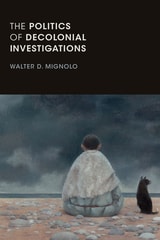
The Politics of Decolonial Investigations
Walter D. Mignolo
Duke University Press, 2021

The Politics of Deconstruction
Jacques Derrida and the Other of PhilosophyEdited by Martin McQuillan
Pluto Press, 2007
The Politics of Responsibility
Chad Lavin
University of Illinois Press, 2007
Politics cannot function without responsibility, but there have been serious disagreements about how responsibility is to be understood and huge controversies about how it is to be distributed, rewarded, legislated, and enforced. The liberal notions of personal responsibility that have dominated political thinking in the West for more than a century are rooted in the familiar territory of individual will and causal blame, but these theories have been assailed as no longer adequate to explain or address the political demands of a global social structure. Informed by Marx, Foucault, and Butler, Chad Lavin argues for a "postliberal" theory of responsibility, formulating responsibility as a process that is anchored in a persistent ability to respond, not reproach. Lavin works this formulation through discussions of contemporary political issues such as globalization, police brutality, and abortion.
Rather than assigning individual blame, postliberal responsibility challenges the supposed autonomy of individual subjects by taking structural arguments into account. Lavin concludes that a liberal concept of responsibility gives rise to a moralistic and oppressive approach to social problems, while a postliberal approach highlights a shared responsibility for developing collective solutions to systemic problems. Postliberal responsibility not only suggests more generous and democratic responses to social ills, it also allows us to theorize a greater range of issues that demand political response.
The Politics of Subjectivity in American Foreign Policy Discourses
Ty Solomon
University of Michigan Press, 2015
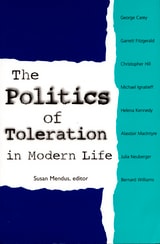
The Politics of Toleration in Modern Life
Susan Mendus, ed.
Duke University Press, 1999
How can toleration be fostered in a contentious and tightly populated world? What situations and fears have historically fed attitudes of intolerance? When and how should states intervene? The authors of these essays seek answers to such questions and examine topics such as why certain national groups are especially vulnerable to intolerance and narcissistic fantasies and how the colonial view of intolerant exploitation as an acceptable norm of behavior has been replaced by a drive toward international solidarity. The essays address religious tolerance, the role of toleration in legal contexts, the philosophical justification of tolerance, and the concept of solidarity. Ethnic identity, nationalism, the “goods of conflict,” and the treatment of refugees seeking asylum are discussed as well. While one contributor argues that a moment of genuine tolerance is achieved only when there is a cost involved in the act of tolerating another person’s way of living, another stresses that rational, communal dialogue can only take place if the state is excluded from the discussion, if conflict is recognized as valuable, and if local communities come to consensus about what behavior and discourse is intolerable.
Offering an accessible and engaging commentary on the concept of tolerance, The Politics of Toleration in Modern Life will interest a wide range of readers of philosophy, political science, religion, sociology, and history.
Contributors. George Carey, Christopher Hill, Michael Ignatieff, Helena Kennedy, Alasdair MacIntyre, Susan Mendus, Julia Neuberger, Bernard Williams

The Politics of Truth and Other Untimely Essays
The Crisis of Civic ConsciousnessEllis Sandoz
University of Missouri Press, 1999
A fascinating collection of studies, The Politics of Truth and Other Untimely Essays explores the historical and theoretical underpinnings of personal liberty and free government and provides a trenchant analysis of the crisis of civic consciousness endangering both of them today. The book addresses a range of issues in contemporary political philosophy and constitutional theory. These are seen to be all the more urgent in importance because of the surging aspirations for liberty in the wake of the collapse of the Soviet empire and the post-Cold War anomaly of crisis, malaise, and disarray in free government itself in America and in other bastions of modern democracy.
While each essay can stand alone, there is an underlying thematic unity to the collection. The fundamental problem considered throughout is whether and to what extent the fall of communism may mark an epoch in world history. These questions are applied to the East Central European nations struggling to achieve free government and personal liberty. The elements required to identify the preconditions of liberty are addressed and specific attention is given to the terms of institutionalization in the American founding.
Several essays focus on American political thought, with emphasis on the Declaration of Independence and the Constitution. Two elements, in particular, are treated: the jurisprudential and common law background to the American political tradition and the centrality of religion within the unfolding of the American political experiment. Sandoz explores the uncommon alliance of philosophers, statesmen, and evangelists during the nation's founding. This alliance, nurturing communities of persons bound together by their faith and a mutual regard for one another, played a vital role in the establishment of the system of freedom under law.
Sandoz sees the tension between religion and natural law as a constant in the human struggle for freedom. That the preservation of liberty under law is no easy task is acknowledged and addressed as it can be seen in the American founding, in the post-communist struggle of East Central Europe, and in the deepening contemporary crisis of American society. Anyone interested in the "politics" of "truth" will appreciate this volume.

The Porch
Meditations on the Edge of NatureCharlie Hailey
University of Chicago Press, 2021
Hailey writes from a modest porch on the Homosassa River in Florida. He sleeps there, studies the tides, listens for osprey and manatee, welcomes shipwrecked visitors, watches shadows on its screens, reckons with climate change, and reflects on his own acclimation to his environment. The profound connections he unearths anchor an armchair exploration of past porches and those of the future, moving from ancient Greece to contemporary Sweden, from the White House roof to the Anthropocene home. In his ruminations, he links up with other porch dwellers including environmentalist Rachel Carson, poet Wendell Berry, writers Eudora Welty and Zora Neale Hurston, philosopher John Dewey, architect Louis Kahn, and photographer Paul Strand.
As close as architecture can bring us to nature, the porch is where we can learn to contemplate anew our evolving place in a changing world—a space we need now more than ever. Timeless and timely, Hailey’s book is a dreamy yet deeply passionate meditation on the joy and gravity of sitting on the porch.
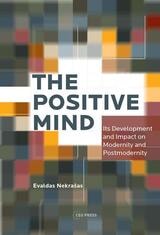
The Positive Mind
Its Development and Impact on Modernity and PostmodernityEvaldas Nekrašas
Central European University Press, 2016
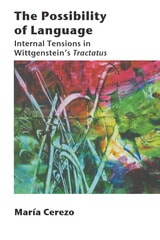
The Possibility of Language
Internal Tensions in Wittgenstein's TractatusMaria Cerezo
CSLI, 2003
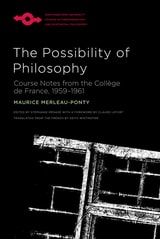
The Possibility of Philosophy
Course Notes from the Collège de France, 1959–1961Maurice Merleau-Ponty, Edited by Stéphanie Ménasé with a foreword by Claude Lefort, Translated from the French by Keith Whitmoyer
Northwestern University Press, 2022
The Possibility of Practical Reason
J. David Velleman
Michigan Publishing Services, 2015
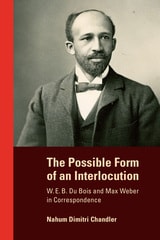
The Possible Form of an Interlocution
W. E. B. Du Bois and Max Weber in CorrespondenceNahum Dimitri Chandler
Duke University Press, 2025
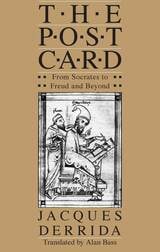
The Post Card
From Socrates to Freud and BeyondJacques Derrida
University of Chicago Press, 1987
You were reading a somewhat retro loveletter, the last in history. But you have not yet received it. Yes, its lack or excess of address prepares it to fall into all hands: a post card, an open letter in which the secret appears, but indecipherably.
What does a post card want to say to you? On what conditions is it possible? Its destination traverses you, you no longer know who you are. At the very instant when from its address it interpellates, you, uniquely you, instead of reaching you it divides you or sets you aside, occasionally overlooks you. And you love and you do not love, it makes of you what you wish, it takes you, it leaves you, it gives you.
On the other side of the card, look, a proposition is made to you, S and p, Socrates and plato. For once the former seems to write, and with his other hand he is even scratching. But what is Plato doing with his outstretched finger in his back? While you occupy yourself with turning it around in every direction, it is the picture that turns you around like a letter, in advance it deciphers you, it preoccupies space, it procures your words and gestures, all the bodies that you believe you invent in order to determine its outline. You find yourself, you, yourself, on its path.
The thick support of the card, a book heavy and light, is also the specter of this scene, the analysis between Socrates and Plato, on the program of several others. Like the soothsayer, a "fortune-telling book" watches over and speculates on that-which-must-happen, on what it indeed might mean to happen, to arrive, to have to happen or arrive, to let or to make happen or arrive, to destine, to address, to send, to legate, to inherit, etc., if it all still signifies, between here and there, the near and the far, da und fort, the one or the other.
You situate the subject of the book: between the posts and the analytic movement, the pleasure principle and the history of telecommunications, the post card and the purloined letter, in a word the transference from Socrates to Freud, and beyond. This satire of epistolary literature had to be farci, stuffed with addresses, postal codes, crypted missives, anonymous letters, all of it confided to so many modes, genres, and tones. In it I also abuse dates, signatures, titles or references, language itself.
J. D.
"With The Post Card, as with Glas, Derrida appears more as writer than as philosopher. Or we could say that here, in what is in part a mock epistolary novel (the long section is called "Envois," roughly, "dispatches" ), he stages his writing more overtly than in the scholarly works. . . . The Post Card also contains a series of self-reflective essays, largely focused on Freud, in which Derrida is beautifully lucid and direct."—Alexander Gelley, Library Journal
The Postgenomic Condition
Ethics, Justice, and Knowledge after the GenomeJenny Reardon
University of Chicago Press, 2017
Drawing on more than a decade of research—in molecular biology labs, commercial startups, governmental agencies, and civic spaces—Reardon demonstrates how the extensive efforts to transform genomics from high tech informatics practiced by a few to meaningful knowledge beneficial to all exposed the limits of long-cherished liberal modes of knowing and governing life. Those in the American South challenged the value of being included in genomics when no hospital served their community. Ethicists and lawyers charged with overseeing Scottish DNA and data questioned how to develop a system of ownership for these resources when their capacity to create things of value—new personalized treatments—remained largely unrealized. Molecular biologists who pioneered genomics asked whether their practices of thinking could survive the deluge of data produced by the growing power of sequencing machines. While the media is filled with grand visions of precision medicine, The Postgenomic Condition shares these actual challenges of the scientists, entrepreneurs, policy makers, bioethicists, lawyers, and patient advocates who sought to leverage liberal democratic practices to render genomic data a new source of meaning and value for interpreting and caring for life. It brings into rich empirical focus the resulting hard on-the-ground questions about how to know and live on a depleted but data-rich, interconnected yet fractured planet, where technoscience garners significant resources, but deeper questions of knowledge and justice urgently demand attention.
The Postmodern Condition
A Report on KnowledgeJean-Francois Lyotard
University of Minnesota Press, 1984
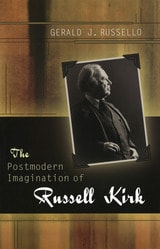
The Postmodern Imagination of Russell Kirk
Gerald J. Russello
University of Missouri Press, 2007
Author of The Conservative Mind, Russell Kirk (1918–1994) was a principal architect of the American intellectual conservative movement. This book takes a closer look at his works on such subjects as law, history, economics, and statesmanship to introduce a new generation of readers to the depth and range of his thought.
Kirk probed the very meaning of conservatism for modern intellectuals, and in The Postmodern Imagination of Russell Kirk, Gerald Russello examines such key concepts of his thought as imagination, historical consciousness, the interplay between the individual and tradition, and the role of narrative in constructing individual and societal identity. By stressing the importance of Kirk’s perception of imagination, he offers a new approach to understanding him, showing not only that Kirk laid the groundwork for the “new conservatism” of the 1950s and ’60s, but also that his work evolved into a sophisticated critique of modernity paralleled in the work of some postmodern critics of liberalism.
In order to reconstruct Kirk’s attack on modernity, Russello examines his textbook on economics, his fiction, his work on Robert Taft and Orestes Brownson, his writings on the role of the statesman, and his neglected essays such as “The Age of Discussion” and “The Age of Sentiments.” Russello shows that Kirk welcomed the rise of some form of postmodernism, seeing in it a new opportunity for conservatism to engage the wider culture. Through this analysis, he situates Kirk within wider currents of contemporary thought, connecting him not only with such major thinkers as Lyotard, Boorstin, and Koestler but also with such lesser-known figures as Bernard Iddings Bell, Charles Baudouin, and Christopher Dawson.
By examining Kirk’s development of the imagination as a tool of conservative discourse, Russello offers an alternative genealogy for conservative thought that melds its antimodernism with postmodern themes. He has forged a lively and provocative work that provides unusual perspectives on Kirk within the wider context of debate over the future of conservatism in a time of shifting alliances—a book that will be a valuable resource for anyone seeking to understand Kirk or conservative thought.
The Postmodernism Debate in Latin America
John Beverley, José Oviedo, and Michael Aronna, eds.
Duke University Press, 1995
This collection explores the Latin American engagement with postmodernism, less to present a regional variant of the concept than to situate it in a transnational framework. Recognizing that postmodernism in Latin America can only inaccurately be thought of as having traveled from an advanced capitalist "center" to arrive at a still dependent neocolonial "periphery," the contributors share the assumption that postmodernism is itself about the dynamics of interaction between local and metropolitan cultures in a global system in which the center-periphery model has begun to break down. These essays examine the ways in which postmodernism not only designates the effects of this transnationalism in Latin America, but also registers the cultural and political impact on an increasingly simultaneous global culture of a Latin America struggling with its own set of postcolonial contingencies, particularly the crisis of its political left, the dominance of neoliberal economic models, and the new challenges and possibilities opened by democratization.
With new essays on the dynamics of Brazilian culture, the relationship between postmodernism and Latin American feminism, postmodernism and imperialism, and the implications of postmodernist theory for social policy, as well as the text of the Declaration from the Lacandon Jungle of the Zapatitista National Liberation Army, this expanded edition of boundary 2 will interest not only Latin Americanists, but scholars in all disciplines concerned with theories of the postmodern.
Contributors. Xavier Albó, José Joaquín Brunner, Fernando Calderón, Enrique Dussel, Néstor García Canclini, Martín Hopenhayn, Neil Larsen, the Latin American Subaltern Studies Group, Norbert Lechner, María Milagros López, Raquel Olea, Aníbal Quijano, Nelly Richard, Carlos Rincón, Silviano Santiago, Beatriz Sarlo, Roberto Schwarz, and Hernán Vidal
The Power at the End of the Economy
Brian Massumi
Duke University Press, 2015
The Powers of Dignity
The Black Political Philosophy of Frederick DouglassNick Bromell
Duke University Press, 2021
The Powers of Pure Reason
Kant and the Idea of Cosmic PhilosophyAlfredo Ferrarin
University of Chicago Press, 2015
Ferrarin blows the dust off of two egregiously overlooked sections of the First Critique—the Transcendental Dialectic and the Doctrine of Method. There he discovers what he argues is the Critique’s greatest achievement: a conception of the unity of reason and an exploration of the powers it has to reach beyond itself and legislate over the world. With this in mind, Ferrarin dismantles the common vision of Kant as a philosopher writing separately on epistemology, ethics, and aesthetics and natural teleology, showing that the three Critiques are united by this underlying theme: the autonomy and teleology of reason, its power and ends. The result is a refreshing new view of Kant, and of reason itself.
The Powers of Sensibility
Aesthetic Politics through Adorno, Foucault, and RancièreMichael Feola
Northwestern University Press, 2018
Feola provides insightful engagements with the works of Adorno, Foucault, and Rancière as well as a survey of contemporary debates on aesthetics and politics. He uses this aesthetic framework to develop a more robust account of political agency, demonstrating that politics is not reducible to the exchange of views or the building of institutions, but rather incorporates public modes of feeling, seeing, and hearing (or not-seeing and not-hearing). These sensory modes must themselves be transformed in the work of emancipatory politics.
The book explores the core question: what does the aesthetic offer that is missing from the official languages of politics, citizenship, and power? Of interest to readers in the fields of critical theory, political theory, continental philosophy, and aesthetics, The Powers of Sensibility roots itself within the classical tradition of critical theory and yet uses these resources to speak to a variety of contemporary political movements.
The Powers of the False
Reading, Writing, Thinking beyond Truth and FictionDoro Wiese
Northwestern University Press, 2014
The Practical Past
Hayden White
Northwestern University Press, 2014
Hayden White borrows the title for The Practical Past from philosopher Michael Oakeshott, who used the term to describe the accessible material and literary-artistic artifacts that individuals and institutions draw on for guidance in quotidian affairs. The Practical Past, then, forms both a summa of White’s work to be drawn upon and a new direction in his thinking about the writing of history.
White’s monumental Metahistory: The Historical Imagination in Nineteenth-Century Europe (1973) challenged many of the commonplaces of professional historical writing and wider assumptions about the ontology of history itself. It formed the basis of his argument that we can never recover “what actually happened”in the past and cannot really access even material culture in context. Forty years on, White sees “professional history" as falling prey to narrow specialization, and he calls upon historians to take seriously the practical past of explicitly “artistic” works, such as novels and dramas, and literary theorists likewise to engage historians.
The Practice of Rhetoric
Poetics, Performance, PhilosophyEdited by Debra Hawhee and Vessela Valiavitcharska
University of Alabama Press, 2022
Essays that show what a broad conception of rhetoric means and does in relation to practice
Rhetoric is the art of emphasis, in the ancient sense of bringing to light or obscuring in shadow, and it is both a practice and a theory about that practice. In recent decades, scholars of rhetoric have turned to approaches that braid together poetics, performance, and philosophy into a “practical art.” The Practice of Rhetoric: Poetics, Performance, Philosophy presents just such an account of rhetoric that presumes and incorporates theoretical approaches, offering a collection of principles assembled in the heat and trials of public practice. The essays gathered in this volume are inspired by the capacious conception of rhetoric put forth by historian of rhetoric Jeffrey Walker, who is perhaps best known for stressing rhetoric’s educational mission and its investments in both theory and practice.
The book extends that vision through the prisms of poetics, performance, and philosophy of argument. Poetics shows rhetoric’s meaning making in all its verbal possibilities and material manifestations, in contexts ranging from mouse-infested medieval fields to the threat of toxin-ridden streams in the twentieth century. Performance puts what is created into the heat of public life, tapping out the rhythms of Byzantine prose or using collage to visually depict the beliefs and convictions of Martin Luther King Jr. Philosophy of argument enacts the mutually constitutive relationship between rhetoric and dialectic, offering new insights on and contexts for old tools like stasis and disputation, while keeping the focus on usefulness and teachability.
Ranging across centuries and contexts, the essays collected here demonstrate the continued need to attend carefully to the cooperation of descriptive language and normative reality, conceptual vocabulary and material practice, public speech and moral self-shaping. This volume will rekindle long-standing conversations about the public, world-making practice of rhetoric, thereby enlivening anew its civic mission.
The Practices of the Self
Charles Larmore
University of Chicago Press, 2010
What is the nature of the fundamental relation we have to ourselves that makes each of us a self? To answer this question, Charles Larmore develops a systematic theory of the self, challenging the widespread view that the self’s defining relation to itself is to have an immediate knowledge of its own thoughts. On the contrary, Larmore maintains, our essential relation to ourselves is practical, as is clear when we consider the nature of belief and desire. For to believe or desire something consists in committing ourselves to thinking and acting in accord with the presumed truth of our belief or the presumed value of what we desire.
Larmore develops this conception with frequent reference to such classic authors as Montaigne, Stendhal, and Proust and by comparing it to other views of the self in contemporary philosophy. He also discusses the important ethical consequences of his theory of the self, arguing that it allows us to better grasp what it means to be ourselves and why self-understanding often involves self-creation.
Winner of the Académie Française’s Grand Prix de Philosophie, The Practices of the Self is that rare kind of lucid yet rigorous work that transcends disciplinary boundaries.
The Pragmatic Mind
Explorations in the Psychology of BeliefMark Bauerlein
Duke University Press, 1997
Bauerlein extracts from Emerson, James, and Peirce an intellectual focus that can be used to advance the broad social and academic reforms that the new pragmatists hail. He claims that, in an effort to repudiate the phony universalism of much contemporary theory, the new generation of theorists has ignored the fact that its visions of pragmatic action are grounded in this "old" school, not just in a way of doing things but also in a way of thinking about things. In other words, despite its inclination to regard psychological questions as irrelevant, Bauerlein shows that the pragmatic method demands a pragmatic mind—that is, a concept of cognition, judgment, habit, and belief. He shows that, in fact, such a concept of mind does exist, in the work of the "old" pragmatists.
The Praise of 'Sons of Bitches'
On the Worship of God by Fallen MenJames V. Schall
St. Augustine's Press, 2014
The Prayers of Kierkegaard
Edited by Perry D. LeFevre
University of Chicago Press, 1956
The second part of the volume is a reinterpretation of the life and thought of Kierkegaard. Long regarded as primarily a poet or a philosopher, Kierkegaard is revealed as a fundamentally religious thinker whose central problem was that of becoming a Christian, of realizing personal existence. Perry D. LeFevre's penetrating analysis takes the reader to the religious center of Kierkegaard's world.
The Pre-Platonic Philosophers
Friedrich Nietzsche
University of Illinois Press, 2006
The Predicaments of Publicness
An Inquiry into the Conceptual Ambiguity of Public AdministrationUdo Pesch
Eburon Academic Publishers, 2006
The Premodern Condition
Medievalism and the Making of TheoryBruce Holsinger
University of Chicago Press, 2005
Holsinger shows that the preoccupation with medieval cultures and practices among Bataille, Derrida, Lacan, Barthes, Bourdieu, and their cohorts was so wide ranging that it merits recognition as one of the most significant epiphenomena of postwar French thought. Not simply an object of nostalgic longing or an occasional source of literary exempla, the medieval epoch was continually mined by these thinkers for specific philosophical vocabularies, social formations, and systems of thought.
To supplement its master thesis, The Premodern Condition also contains original essays by Bataille and Bourdieu—translated here for the first time into English—that testify in various ways to the strange persistence of medievalisms in French postwar avant-garde writings. What results is an important and original work that will be a touchstone for specialists in medieval studies and critical theory alike.
The Presence of Myth
Leszek Kolakowski
University of Chicago Press, 1989
With The Presence of Myth, Kolakowski demonstrates that no matter how hard man strives for purely rational thought, there has always been-and always will be-a reservoir of mythical images that lend "being" and "consciousness" a specifically human meaning.
"Kolakowski undertakes a philosophy of culture which extends to all realms of human intercourse—intellectual, artistic, scientific, and emotional. . . . [His] book has real significance for today, and may well become a classic in the philosophy of culture."—Anglican Theological Review
The Price of Living
The Stories We Tell About the PoorS. Shankar
Duke University Press, 2027
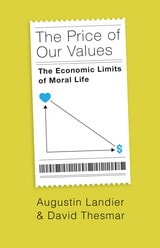
The Price of Our Values
The Economic Limits of Moral LifeAugustin Landier and David Thesmar
University of Chicago Press, 2025
The economic case for self-interest at the outer limits of being morally good.
Modern life is an exercise in discomfort. In the face of endless injustice, how much selfishness is permissible? How do we square suffering elsewhere with our hope to thrive at home? How does one strive for the greater good while guarding one's personal interests? The Price of Our Values argues that the answers to these questions are economic: by weighing our sense of the personal costs associated with the outer limits of our moral beliefs.
These tradeoffs—the want to be good, the personal costs of being good, and the points at which people abandon goodness due to its costs—are somewhat unsettling. But as economists Augustin Landier and David Thesmar show, they are highly predictable, even justified. Our values guide us, but we are also forced to consider economic costs to settle decisions.
The Price of Our Values is an economic reckoning with the universal unease of contemporary moral life. Wielding insights from the philosophical founders of the field, Landier and Thesmar provide frameworks for thinking about the place of values—justice, freedom, beauty— in the decisions of modern life. They do so in terms that seek to be consistent with both our good intentions and their limits.
The Primacy of Perception
And Other Essays on Phenomenological Psychology, the Philosophy of Art, History and PoliticsMaurice Merleau-Ponty
Northwestern University Press, 1964
The Primacy of Persons in Politics
John von Heyking
Catholic University of America Press, 2013
The Prince
Second EditionNiccolò Machiavelli
University of Chicago Press, 1998
The Prince remains as lively and shocking today as when it was written almost five hundred years ago. Initially denounced as a collection of sinister maxims and a recommendation of tyranny, it has more recently been defended as the first scientific treatment of politics as it is practiced rather than as it ought to be practiced. Harvey C. Mansfield's brilliant translation of this classic work, along with the new materials added for this edition, make it the definitive version of The Prince, indispensable to scholars, students, and those interested in the dark art of politics.
This revised edition of Mansfield's acclaimed translation features an updated bibliography, a substantial glossary, an analytic introduction, a chronology of Machiavelli's life, and a map of Italy in Machiavelli's time.
"Of the other available [translations], that of Harvey C. Mansfield makes the necessary compromises between exactness and readability, as well as providing an excellent introduction and notes."—Clifford Orwin, The Wall Street Journal
"Mansfield's work . . . is worth acquiring as the best combination of accuracy and readability."—Choice
"There is good reason to assert that Machiavelli has met his match in Mansfield. . . . [He] is ready to read Machiavelli as he demands to be read—plainly and boldly, but also cautiously."—John Gueguen, The Sixteenth Century Journal