Results by title
4127 books match the query 'Science' and 980 start with t

The Scientific Marx
Daniel Little
University of Minnesota Press, 1986
The Scientific Marx was first published in 1986. Minnesota Archive Editions uses digital technology to make long-unavailable books once again accessible, and are published unaltered from the original University of Minnesota Press editions.
Marx advanced Capital to the public as a scientific explanation of the capitalist economy, intending it to be evaluated by ordinary standards of scientific adequacy. Today, however, most commentators emphasize Marx's humanism or his theory of historical materialism over his scientific claims. The Scientific Marx thus represents a break with many current views of Marx's analysis of capitalism in that it takes seriously his claim that Capital is a rigorous scientific investigation of the capitalist mode of production. Daniel Little discusses the main features of Marx's account, applying the tools of contemporary philosophy of science.
He analyzes Marx's views on theory and explanation in the social sciences, the logic of Marx's empirical practices, the relation between Capital and historical materialism, the centrality of micro-foundations in Marx's analysis, and the minimal role that dialectics plays in his scientific method. Throughout, Little relies on "evidence taken from Marx's actual practice as a social scientist rather than from his explicit methodological writings." The book contributes to current controversies in the literature of "analytic Marxism" joined by such authors as Jon Elster, G.A. Cohen, and John Roemer.
The Scientific Revolution
Steven Shapin
University of Chicago Press, 1996
"Shapin's account is informed, nuanced, and articulated with clarity. . . . This is not to attack or devalue science but to reveal its richness as the human endeavor that it most surely is. . . .Shapin's book is an impressive achievement."—David C. Lindberg, Science
"Shapin has used the crucial 17th century as a platform for presenting the power of science-studies approaches. At the same time, he has presented the period in fresh perspective."—Chronicle of Higher Education
"Timely and highly readable . . . A book which every scientist curious about our predecessors should read."—Trevor Pinch, New Scientist
"It's hard to believe that there could be a more accessible, informed or concise account of how it [the scientific revolution], and we have come to this. The Scientific Revolution should be a set text in all the disciplines. And in all the indisciplines, too."—Adam Phillips, London Review of Books
"Shapin's treatise on the currents that engendered modern science is a combination of history and philosophy of science for the interested and educated layperson."—Publishers Weekly
"Superlative, accessible, and engaging. . . . Absolute must-reading."—Robert S. Frey, Bridges
"This vibrant historical exploration of the origins of modern science argues that in the 1600s science emerged from a variety of beliefs, practices, and influences. . . . This history reminds us that diversity is part of any intellectual endeavor."—Choice
"Most readers will conclude that there was indeed something dramatic enough to be called the Scientific Revolution going on, and that this is an excellent book about it."—Anthony Gottlieb, The New York Times Book Review
The Scientific Revolution
Steven Shapin
University of Chicago Press, 2018
“An excellent book.”—Anthony Gottlieb, New York Times Book Review
“Timely and highly readable. . . . A book which every scientist curious about our predecessors should read.”—Trevor Pinch, New Scientist
“Shapin's account is informed, nuanced, and articulated with clarity. . . . This is not to attack or devalue science but to reveal its richness as the human endeavor that it most surely is. . . . Shapin's book is an impressive achievement.”—David C. Lindberg, Science
“It's hard to believe that there could be a more accessible, informed or concise account. . . . The Scientific Revolution should be a set text in all the disciplines. And in all the indisciplines, too.”—Adam Phillips, London Review of Books
The Scientific Revolution
A Historiographical InquiryH. Floris Cohen
University of Chicago Press, 1994
Cohen's discussions range from scholarly interpretations of Galileo, Kepler, and Newton, to the question of why the Scientific Revolution took place in seventeenth-century Western Europe, rather than in ancient Greece, China, or the Islamic world. Cohen contends that the emergence of early modern science was essential to the rise of the modern world, in the way it fostered advances in technology.
A valuable entrée to the literature on the Scientific Revolution, this book assesses both a controversial body of scholarship, and contributes to understanding how modern science came into the world.
The Scramble for the Amazon and the "Lost Paradise" of Euclides da Cunha
Susanna B. Hecht
University of Chicago Press, 2013
The Seabed
A Human and Literary HistoryJimmy Packham and Laurence Publicover
University of Chicago Press, 2026
Uncovers human histories, cultures, and politics on the ocean floor.
While often characterized as an alien realm, the seabed has long been fundamental to human life. As new technologies offer ever greater access to this environment, the bottom of the ocean is key to debates about our future—and yet we are poorly equipped to understand our relation to it.
The Seabed plumbs the ocean’s depths to reveal a rich and complex history of human activity at the seafloor, a history that extends from the classical world to the present. Jimmy Packham and Laurence Publicover highlight the literary significance of the seabed, examining works by writers including Aphra Behn, Anton Chekhov, Euripides, Herman Melville, M. NourbeSe Philip, William Shakespeare, Derek Walcott, and H. G. Wells, as well as lesser-known authors who have imagined this dark and mysterious realm. Putting these in dialogue with the science writing of Rachel Carson, Sylvia Earle, and others, and with visual art, politics, and historical case studies, they show how imaginative speculations concerning the ocean floor have influenced, and continue to inform, human activity on the seabed itself. Through chapters that explore sea burial and seafloor memorials, scientific exploration, deep-sea infrastructure, salvage from the seabed, and deep-sea extraction, the book reveals that the ocean floor’s cultural visibility has fluctuated over time. But longstanding visions of the seabed continue to shape our relationship with this place, a site for undersea cables and—in the near future—deep-sea mining.
The bottom of the ocean is closer than we think. Understanding our history there is crucial to assessing the present and imagining our future.
The Second Creation
Makers of the Revolution in Twentieth-Century PhysicsCrease, Robert P
Rutgers University Press, 1996
The Second Creation tells the story of some of the most talented and idiosyncratic people in the world--many times in their own words. Crease and Mann conducted hundreds of interviews to capture the thinking and the personalities as well as the science. The authors make this complex subject matter clear and absorbing.
The Second Jurassic Dinosaur Rush
Museums and Paleontology in America at the Turn of the Twentieth CenturyPaul D. Brinkman
University of Chicago Press, 2010
The so-called “Bone Wars” of the 1880s, which pitted Edward Drinker Cope against Othniel Charles Marsh in a frenzy of fossil collection and discovery, may have marked the introduction of dinosaurs to the American public, but the second Jurassic dinosaur rush, which took place around the turn of the twentieth century, brought the prehistoric beasts back to life. These later expeditions—which involved new competitors hailing from leading natural history museums in New York, Chicago, and Pittsburgh—yielded specimens that would be reconstructed into the colossal skeletons that thrill visitors today in museum halls across the country.
Reconsidering the fossil speculation, the museum displays, and the media frenzy that ushered dinosaurs into the American public consciousness, Paul Brinkman takes us back to the birth of dinomania, the modern obsession with all things Jurassic. Featuring engaging and colorful personalities and motivations both altruistic and ignoble, The Second Jurassic Dinosaur Rush shows that these later expeditions were just as foundational—if not more so—to the establishment of paleontology and the budding collections of museums than the more famous Cope and Marsh treks. With adventure, intrigue, and rivalry, this is science at its most swashbuckling.

The Secrets of Alchemy
Lawrence M. Principe
University of Chicago Press, 2012

The Semantic Conception of Theories and Scientific Realism
Frederick Suppe
University of Illinois Press, 1989
the semantic conception of theories by one of its chief developers. Suppe has
always seen the semantic conception as providing a way of moving beyond empiricist
philosophies of science. This book provides the definitive account of his views
not only on the issue of realism, but also on a variety of other issues central
to the philosophy of science."
-- Ronald N. Giere, author of Explaining Science: A Cognitive Approach

The Sensory Order
An Inquiry into the Foundations of Theoretical PsychologyF. A. Hayek
University of Chicago Press, 1952
"A most encouraging example of a sustained attempt to bring together information, inference, and hypothesis in the several fields of biology, psychology, and philosophy."—Quarterly Review of Biology
F. A. Hayek (1899-1992), recipient of the Medal of Freedom in 1991 and co-winner of the Nobel Memorial Prize in Economics in 1974, taught at the University of London, the University of Chicago, and the University of Freiburg.
The Serengeti Lion
A Study of Predator-Prey RelationsGeorge B. Schaller
University of Chicago Press, 1976
Based on three years of study in the Serengeti National Park, George B. Schaller’s The Serengeti Lion describes the vast impact of the lion and other predators on the vast herds of wildebeest, zebra, and gazelle for which the area is famous. The most comprehensive book available on the lion, this classic work includes the author’s findings on all aspects of lion behavior, including its social system, population dynamics, hunting behavior, and predation patterns.
“If you have only enough time to read one book about field biology, this is the one I recommend.”—Edward O. Wilson, Science
“This book conveys not only the fascination of its particular study of lion behavior but the drama and wonder and beauty of the intimate interdependence of all living things.”—Saturday Review
“This is an important book, not just for its valuable information on lions, but for its broad, open, and intelligent approach to problems that cut across the fields of behavior, populations, ecology, wildlife management, evolution, anthropology, and comparative biology.”—Richard G. Van Gelder, Bioscience

The Seven Day Circle
The History and Meaning of the WeekEviatar Zerubavel
University of Chicago Press, 1989

The Shaky Game
Arthur Fine
University of Chicago Press, 1996
"What really led Einstein . . . to renounce the new quantum order? For those interested in this question, this book is compulsory reading."—Harvey R. Brown, American Journal of Physics
"Fine has successfully combined a historical account of Einstein's philosophical views on quantum mechanics and a discussion of some of the philosophical problems associated with the interpretation of quantum theory with a discussion of some of the contemporary questions concerning realism and antirealism. . . . Clear, thoughtful, [and] well-written."—Allan Franklin, Annals of Science
"Attempts, from Einstein's published works and unpublished correspondence, to piece together a coherent picture of 'Einstein realism.' Especially illuminating are the letters between Einstein and fellow realist Schrödinger, as the latter was composing his famous 'Schrödinger-Cat' paper."—Nick Herbert, New Scientist
"Beautifully clear. . . . Fine's analysis is penetrating, his own results original and important. . . . The book is a splendid combination of new ways to think about quantum mechanics, about realism, and about Einstein's views of both."—Nancy Cartwright, Isis

The Shape of Life
Genes, Development, and the Evolution of Animal FormRudolf A. Raff
University of Chicago Press, 1996
Raff uses the evolution of animal body plans to exemplify the interplay between developmental mechanisms and evolutionary patterns. Animal body plans emerged half a billion years ago. Evolution within these body plans during this span of time has resulted in the tremendous diversity of living animal forms.
Raff argues for an integrated approach to the study of the intertwined roles of development and evolution involving phylogenetic, comparative, and functional biology. This new synthesis will interest not only scientists working in these areas, but also paleontologists, zoologists, morphologists, molecular biologists, and geneticists.
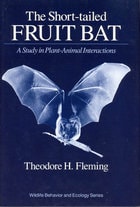
The Short-Tailed Fruit Bat
A Study in Plant-Animal InteractionsTheodore H. Fleming
University of Chicago Press, 1988
In The Short-tailed Fruit Bat, Theodore Fleming examines Carollia's role in the ecology of tropical forests. Based on more than ten years' research, this study provides the most detailed ecological and evolutionary account to date of the life history of a Neotropical mammal and includes striking photographs of the bats in flight.
The Silent Deep
The Discovery, Ecology, and Conservation of the Deep SeaTony Koslow
University of Chicago Press, 2007
The Silent Deep tells the story of the exploration and discovery of the deep sea, the ecology of its diverse environments, and the impact of humans, highlighting the importance of global stewardship in keeping this delicate ecosystem alive and well. Written by world renowned deep-sea ecologist Tony Koslow, this book is a comprehensive and authoritative overview of the state of the deep sea today, accessible to anyone interested in ocean science, the story of scientific discovery, and conservation of the earth’s most threatened ecosystems.
“Koslow deals a decisive blow to the notion that the deep sea can ever be immune from unregulated human activities. . . . The historical review of deep-sea biology is the most comprehensive I have ever read.”—Adrian Glover, Times Literary Supplement
“Deeply informed by history and rendered in straightforward, careful prose.”—Anthony Doerr, Boston Globe
“This beautifully produced book tells an urgent story with clarity and grace.”—Choice
“Stands apart from other books about life in the abyss due to Tony Koslow’s thoughtful accounts. . . . [He] succeeds in painting a picture of the deep sea as an environment with inherent and threatened value.”—Science
“Textbook depth on all aspects of deep-sea science and conservation. . . . [An] exhaustively researched and referenced volume with a historical review stretching back to Socrates.”—Mark Schrope, Nature
“An important textbook and viewpoint that is highly recommended for anyone with a professional or personal interest in deep-sea ecosystems.”—Quarterly Review of Biology
The Simian Tongue
The Long Debate about Animal LanguageGregory Radick
University of Chicago Press, 2007
The Simple Beauty of the Unexpected
A Natural Philosopher’s Quest for Trout and the Meaning of EverythingMarcelo Gleiser
Dartmouth College Press, 2016
The Simple Beauty of the Unexpected
A Natural Philosopher’s Quest for Trout and the Meaning of EverythingMarcelo Gleiser
Brandeis University Press, 2022
Marcelo Gleiser has had a passion for science and fishing since he was a boy growing up on the beaches of Rio de Janeiro. As a world-famous theoretical physicist with hundreds of scientific articles and several books of popular science to his credit, he felt it was time to once again connect with nature in less theoretical ways. After seeing a fly-fishing class on the Dartmouth College green, he decided to learn to fly-fish, a hobby, he says, that teaches humility. In The Simple Beauty of the Unexpected, Gleiser travels the world to scientific conferences, fishing wherever he goes. At each stop, he ponders the myriad ways physics informs the act of fishing; how, in its turn, fishing serves as a lens into nature’s inner workings; and how science engages with questions of meaning and spirituality, inspiring a sense of mystery and awe of the not yet known. Personal and engaging, The Simple Beauty of the Unexpected is a scientist’s tribute to nature, an affirmation of humanity’s deep connection with and debt to Earth, and an exploration of the meaning of existence, from atom to trout to cosmos.
This softcover edition features a new essay by Gleiser on how we need a profound change of worldview if we are to have a vibrant future for our species in this fragile environment. He describes how this book was an incubator for his current thinking.
The Sinai
A Physical GeographyBy Ned Greenwood
University of Texas Press, 1997
One of the world's oldest crossroads, the Sinai joins the great continental land masses of Africa and Eurasia. Its physical geography of rugged mountain peaks, desert plains, and sea coasts was formed by the collision of the two continental plates, while the human tides that have swept across the region over millennia have left an intricate web of cultures and ethnicities.
In this book, Ned Greenwood offers a complete, up-to-date physical geography of Sinai. After an introductory chapter that situates Sinai within world history and geography, he focuses in detail on the following areas: plate tectonics and geology, geomorphology and drainage, weather and climate, soils, and biogeography.
In the concluding chapter, Greenwood considers the human geography of Sinai, including the pressures currently posed by population growth, political extremism, and environmental constrictions on development. He offers a fully rounded picture of the physical environment of Sinai that will be vital reading for everyone concerned about the future of this strategic yet fragile land.

The Skull Collectors
Race, Science, and America's Unburied DeadAnn Fabian
University of Chicago Press, 2010
When Philadelphia naturalist Samuel George Morton died in 1851, no one cut off his head, boiled away its flesh, and added his grinning skull to a collection of crania. It would have been strange, but perhaps fitting, had Morton’s skull wound up in a collector’s cabinet, for Morton himself had collected hundreds of skulls over the course of a long career. Friends, diplomats, doctors, soldiers, and fellow naturalists sent him skulls they gathered from battlefields and burial grounds across America and around the world.
With The Skull Collectors, eminent historian Ann Fabian resurrects that popular and scientific movement, telling the strange—and at times gruesome—story of Morton, his contemporaries, and their search for a scientific foundation for racial difference. From cranial measurements and museum shelves to heads on stakes, bloody battlefields, and the “rascally pleasure” of grave robbing, Fabian paints a lively picture of scientific inquiry in service of an agenda of racial superiority, and of a society coming to grips with both the deadly implications of manifest destiny and the mass slaughter of the Civil War. Even as she vividly recreates the past, Fabian also deftly traces the continuing implications of this history, from lingering traces of scientific racism to debates over the return of the remains of Native Americans that are held by museums to this day.
Full of anecdotes, oddities, and insights, The Skull Collectors takes readers on a darkly fascinating trip down a little-visited but surprisingly important byway of American history.
The Skull, Volume 1
DevelopmentEdited by James Hanken and Brian K. Hall
University of Chicago Press, 1993

The Skull, Volume 2
Patterns of Structural and Systematic DiversityEdited by James Hanken and Brian K. Hall
University of Chicago Press, 1993

The Skull, Volume 3
Functional and Evolutionary MechanismsEdited by James Hanken and Brian K. Hall
University of Chicago Press, 1993
The Sky at Night
Easy Enjoyment from Your BackyardTim B. Hunter
University of Arizona Press, 2023
An avid stargazer and astronomy columnist, Hunter covers all the basics—from the Moon, planets, and stars to the history and origins of constellations and selected famous astronomers and events. Emphasis is on naked-eye viewing with an occasional reference to using a pair of binoculars or a small telescope, encouraging beginners to explore the skies while giving them a solid understanding of what they see. Building on his writings for the long-running Sky Spy column, Hunter defines and outlines astronomical terms and how they relate to locating objects in the sky. He weaves in his personal experiences of what he learned about astronomy as a columnist for more than a decade, detailing his mistakes and triumphs to help other would-be astronomers excel in this heavenly hobby.
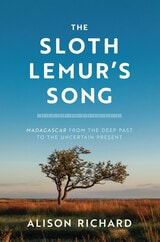
The Sloth Lemur's Song
Madagascar from the Deep Past to the Uncertain PresentAlison Richard
University of Chicago Press, 2022
Madagascar is a place of change. A biodiversity hotspot and the fourth largest island on the planet, it has been home to a spectacular parade of animals, from giant flightless birds and giant tortoises on the ground to agile lemurs leaping through the treetops. Some species live on; many have vanished in the distant or recent past. Over vast stretches of time, Madagascar’s forests have expanded and contracted in response to shifting climates, and the hand of people is clear in changes during the last thousand years or so. Today, Madagascar is a microcosm of global trends. What happens there in the decades ahead can, perhaps, suggest ways to help turn the tide on the environmental crisis now sweeping the world.
The Sloth Lemur’s Song is a far-reaching account of Madagascar’s past and present, led by an expert guide who has immersed herself in research and conservation activities with village communities on the island for nearly fifty years. Alison Richard accompanies the reader on a journey through space and time—from Madagascar’s ancient origins as a landlocked region of Gondwana and its emergence as an island to the modern-day developments that make the survival of its array of plants and animals increasingly uncertain. Weaving together scientific evidence with Richard’s own experiences and exploring the power of stories to shape our understanding of events, this book captures the magic as well as the tensions that swirl around this island nation.

The Slumbering Masses
Sleep, Medicine, and Modern American LifeMatthew J. Wolf-Meyer
University of Minnesota Press, 2016
Americans spend billions of dollars every year on drugs, therapy, and other remedies trying to get a good night’s sleep. Anxieties about not getting enough sleep and the impact of sleeplessness on productivity, health, and happiness pervade medical opinion, the workplace, and popular culture. In The Slumbering Masses, Matthew J. Wolf-Meyer addresses the phenomenon of sleep and sleeplessness in the United States, tracing the influence of medicine and industrial capitalism on the sleeping habits of Americans from the nineteenth century to the present.
Before the introduction of factory shift work, Americans enjoyed a range of sleeping practices, most commonly two nightly periods of rest supplemented by daytime naps. The new sleeping regimen—eight uninterrupted hours of sleep at night—led to the pathologization of other ways of sleeping. Arguing that the current model of sleep is rooted not in biology but in industrial capitalism’s relentless need for productivity, The Slumbering Masses examines so-called Z-drugs that promote sleep, the use of both legal and illicit stimulants to combat sleepiness, and the contemporary politics of time. Wolf-Meyer concludes by exploring the extremes of sleep, from cases of perpetual sleeplessness and the use of the sleepwalking defense in criminal courts to military experiments with ultra-short periods of sleep.
Drawing on untapped archival sources and long-term ethnographic research with people who both experience and treat sleep abnormalities, Wolf-Meyer analyzes and sharply critiques how sleep and its supposed disorders are understood and treated. By recognizing the variety and limits of sleep, he contends, we can establish more flexible expectations about sleep and, ultimately, subvert the damage of sleep pathology and industrial control on our lives.
The Small Matter of Suing Chevron
Suzana Sawyer
Duke University Press, 2022
The Social Life of Biometrics
George C Grinnell
Rutgers University Press, 2020
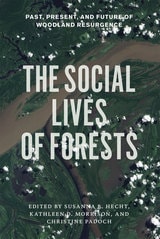
The Social Lives of Forests
Past, Present, and Future of Woodland ResurgenceEdited by Susanna B. Hecht, Kathleen D. Morrison, and Christine Padoch
University of Chicago Press, 2014
Focusing on the history and current use of woodlands from India to the Amazon, The Social Lives of Forests attempts to build a coherent view of forests sited at the nexus of nature, culture, and development. With chapters covering the effects of human activities on succession patterns in now-protected Costa Rican forests; the intersection of gender and knowledge in African shea nut tree markets; and even the unexpectedly rich urban woodlands of Chicago, this book explores forests as places of significant human action, with complex institutions, ecologies, and economies that have transformed these landscapes in the past and continue to shape them today. From rain forests to timber farms, the face of forests—how we define, understand, and maintain them—is changing.
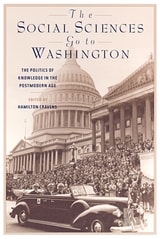
The Social Sciences Go to Washington
The Politics of Knowledge in the Postmodern AgeEdited by Hamilton Cravens
Rutgers University Press, 2003
What happens when the allegedly value-free social sciences enter the national political arena? In The Social Sciences Go to Washington, scholars examine the effects of the massive influx of sociologists, demographers, economists, educators, and others to the federal advisory process in the postwar period. Essays look at how these social scientists sought to change existing policies in welfare, public health, urban policy, national defense, environmental policy, and science and technology policy, and the ways they tried to influence future policies.
Policymakers have been troubled that followers of postmodernism have questioned the legitimacy of scientific and political authority to speak for the desires of social groups. As the social sciences increasingly become expressions of individual preferences, the contributors ask, how can they continue to be used to set public policy for us all?
This collection is a useful resource for anyone studying the relationship between science and the government in the postwar years.

The Sociology of Science
Theoretical and Empirical InvestigationsRobert K. Merton
University of Chicago Press, 1979
"The novelty of the approach, the erudition and elegance, and the unusual breadth of vision make this volume one of the most important contributions to sociology in general and to the sociology of science in particular. . . . Merton's Sociology of Science is a magisterial summary of the field."—Yehuda Elkana, American Journal of Sociology
"Merton's work provides a rich feast for any scientist concerned for a genuine understanding of his own professional self. And Merton's industry, integrity, and humility are permanent witnesses to that ethos which he has done so much to define and support."—J. R. Ravetz, American Scientist
"The essays not only exhibit a diverse and penetrating analysis and a deal of historical and contemporary examples, with concrete numerical data, but also make genuinely good reading because of the wit, the liveliness and the rich learning with which Merton writes."—Philip Morrison, Scientific American
"Merton's impact on sociology as a whole has been large, and his impact on the sociology of science has been so momentous that the title of the book is apt, because Merton's writings represent modern sociology of science more than any other single writer."—Richard McClintock, Contemporary Sociology
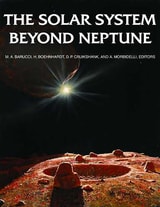
The Solar System Beyond Neptune
Edited by M. A. Barucci, H. Boehnhardt, D. P. Cruikshank, and A. Morbidelli
University of Arizona Press, 2008

The Sonoran Desert Tortoise
Natural History, Biology, and ConservationThomas R. Van Devender
University of Arizona Press, 2002
This book presents the first comprehensive summary of the natural history, biology, and conservation of the Sonoran and Sinaloan desert tortoises, reviewing the current state of knowledge of these creatures with appropriate comparisons to Mohave tortoises. It condenses a vast amount of information on population ecology, activity, and behavior based on decades of studying tortoise populations in Arizona and Sonora, Mexico, and also includes important material on the care and protection of tortoises. Thirty-two contributors address such topics as tortoise fossil records, DNA analysis, and the mystery of secretive hatchlings and juveniles. Tortoise health is discussed in chapters on the care of captives, and original data are presented on the diets of wild and captive tortoises, the nutrient content of plant foods, and blood parameters of healthy tortoises. Coverage of conservation issues includes husbandry methods for captive tortoises, an overview of protective measures, and an evaluation of threats to tortoises from introduced grass and wildfires. A final chapter on cultural knowledge presents stories and songs from indigenous peoples and explores their understanding of tortoises.
As the only comprehensive book on the desert tortoise, this volume gathers a vast amount of information for scientists, veterinarians, and resource managers while also remaining useful to general readers who keep desert tortoises as backyard pets. It will stand as an enduring reference on this endearing creature for years to come.
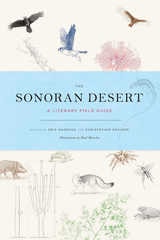
The Sonoran Desert
A Literary Field GuideEdited by Eric Magrane and Christopher Cokinos, Illustrations by Paul Mirocha
University of Arizona Press, 2016
Both literary anthology and hands-on field guide, The Sonoran Desert is a groundbreaking book that melds art and science. It captures the stunning biodiversity of the world’s most verdant desert through words and images. More than fifty poets and writers—including Christopher Cokinos, Alison Hawthorne Deming, Ken Lamberton, Eric Magrane, Jane Miller, Gary Paul Nabhan, Alberto Ríos, Ofelia Zepeda, and many others—have composed responses to key species of this striking desert. Each creative contribution is joined by an illustration by award-winning artist Paul Mirocha and scientific information about the creature or plant authored by the book’s editors.
From the saguaro to the mountain lion, from the black-tailed jackrabbit to the mesquite, the species represented here have evoked compelling and creative responses from each contributor. Just as writers such as Edward Abbey and Ellen Meloy have memorialized the desert, this collection is sure to become a new classic, offering up the next generation of voices of this special and beautiful place, the Sonoran Desert.
The Sound of Feathers
Attentive Living in a World Beyond OurselvesKathryn Gillespie
Duke University Press, 2026
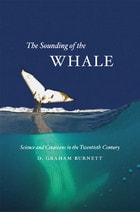
The Sounding of the Whale
Science and Cetaceans in the Twentieth CenturyD. Graham Burnett
University of Chicago Press, 2011
From the Bible’s “Canst thou raise leviathan with a hook?” to Captain Ahab’s “From Hell’s heart I stab at thee!,” from the trials of Job to the legends of Sinbad, whales have breached in the human imagination as looming figures of terror, power, confusion, and mystery.
In the twentieth century, however, our understanding of and relationship to these superlatives of creation underwent some astonishing changes, and with The Sounding of the Whale, D. Graham Burnett tells the fascinating story of the transformation of cetaceans from grotesque monsters, useful only as wallowing kegs of fat and fertilizer, to playful friends of humanity, bellwethers of environmental devastation, and, finally, totems of the counterculture in the Age of Aquarius. When Burnett opens his story, ignorance reigns: even Nature was misclassifying whales at the turn of the century, and the only biological study of the species was happening in gruesome Arctic slaughterhouses. But in the aftermath of World War I, an international effort to bring rational regulations to the whaling industry led to an explosion of global research—and regulations that, while well-meaning, were quashed, or widely flouted, by whaling nations, the first shot in a battle that continues to this day. The book closes with a look at the remarkable shift in public attitudes toward whales that began in the 1960s, as environmental concerns and new discoveries about whale behavior combined to make whales an object of sentimental concern and public adulation.
A sweeping history, grounded in nearly a decade of research, The Sounding of the Whale tells a remarkable story of how science, politics, and simple human wonder intertwined to transform the way we see these behemoths from below.

The Southwest
A Fire SurveyStephen J. Pyne
University of Arizona Press, 2016
Through a mixture of journalism, history, and literary imagination, fire expert Stephen J. Pyne provides a lively survey of what makes this region distinctive, moving us beyond the usual conversations of science and policy. Pyne explores the Southwest’s sacred mountains, including the Jemez, Mogollon, Huachucas, and Kaibab; its sky islands, among them the Chiricahuas, Mount Graham, and Tanque Verde; and its famous rims and borders. Together, the essays provide a cross-section of how landscape fire looks in the early years of the 21st century, what is being done to manage it, and how fire connects with other themes of southwestern life and culture.
The Southwest is part of the multivolume series describing the nation’s fire scene region by region. The volumes in To the Last Smoke also cover California, the Northern Rockies, the Great Plains, Florida, and several other critical fire regions. The series serves as an important punctuation point to Pyne’s 50-year career with wildland fire—both as a firefighter and a fire scholar. These unique surveys of regional pyrogeography are Pyne’s way of “keeping with it to the end,” encompassing the directive from his rookie season to stay with every fire “to the last smoke.”
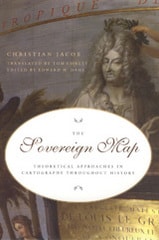
The Sovereign Map
Theoretical Approaches in Cartography throughout HistoryChristian Jacob
University of Chicago Press, 2006
Beginning with a historical overview of maps and their creation—from those traced in the dirt by primitive hands to the monumental Dutch atlases and ornate maps on Italian palace walls—Jacob goes on to consider the visual components of cartography: the decorative periphery, geometric grid, topographical lines, dots, details of iconographic figures, and many other aspects. Considering text on maps—titles, toponyms, legends, and keys—Jacob proposes that writing can both clarify and interfere with a map's visual presentation. Finally Jacob examines the role of the viewer in decoding a map's meaning and the role of society in defining the power of maps as authoritative depictions of space.
Innovative in its philosophical motivation and its interdisciplinary approach to looking at and writing about maps, The Sovereign Map is eagerly awaited by scholars from many different fields.

The Soviet Nuclear Archipelago
A Historical Geography of Atomic-Powered CommunismPer Högselius
Central European University Press, 2024
The war in Ukraine, with the exposure of nuclear power stations and the danger of atomic warfare, has made the legacy of the Soviet nuclear sector of critical importance.
The two authors map the Soviet nuclear industry in a shifting historical context, making sense of a complex socio-technical and environmental history. Taking an innovative approach, this book explores the history of atomic power in the former Soviet Union using the spatial dimensions of the nuclear industry as a point of departure. The key concept is that of the archipelago – a network of nuclear facilities spread throughout the Soviet territory, but mutually reliant on each other and densely connected.
The story traces the emergence of nuclear science and technology for military and civilian purposes through to the post-Soviet Russian nuclear corporations as providers of resources and technology. The book explains how nuclear developments in the Soviet Union interacted with processes of environmental and landscape change. The spatial lens offers an analytically fruitful and pedagogically stimulating way to comprehend the nuclear histories of the Soviet Union and its successor states.
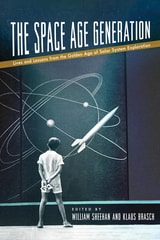
The Space Age Generation
Lives and Lessons from the Golden Age of Solar System ExplorationWilliam Sheehan and Klaus Brasch
University of Arizona Press, 2024
At the heart of this momentous time were the men and women working behind the scenes. Scientists, historians, and astronomers share their memories and contributions from this unparalleled era in essays told in their own words. They are the remarkable generation who witnessed and contributed to some of space science’s most stunning achievements. Here they have recorded their memories—their childhood inspirations, their challenges, failures, and triumphs—for future generations.
A unique and authoritative record of a momentous period in human history, The Space Age Generation highlights the golden age of space exploration and the people who made it happen.
Contributors
Leo Aerts
Alexander Basilevsky
Klaus Brasch
Clark R. Chapman
Dale P. Cruikshank
William K. Hartmann
William Leatherbarrow
Baerbel Koesters Lucchitta
Yvonne Pendleton
Peter H. Schultz
William Sheehan
Paolo Tanga
Charles A. Wood

The Space Station
A Personal JourneyHans Mark
Duke University Press, 1987
In The Space Station the story of this debate is told by Hans mark, who had major roles in the development of the space shuttle from its beginnings in the sixties and who bore a primary responsibility for overseeing the space station project during the decisive years from 1981 to 1984. Mark's appointment to the post of deputy administrator of NASA capped a career devoted to the development and management of space technology—he served as director of NASA's Ames Research Center, then as under secretary and later secretary of the U.S. Air Force. Serving under both President Carter and President Reagan, mark is uniquely able to chronicle the intricate process by which the space shuttle became a reality and the space station an acknowledged goal of the American space effort.
A scientist by training, Mark's account of his career in the space program is the story of a personal dream as well as the story of a vast public enterprise whose human side is only now being fully appreciated.

The Spanish Disquiet
The Biblical Natural Philosophy of Benito Arias MontanoMaría M. Portuondo
University of Chicago Press, 2019
Foremost among them was Benito Arias Montano—Spain’s most prominent biblical scholar and exegete of the sixteenth century. He was also a widely read member of the European intellectual community, and his motivation to reform natural philosophy shows that the Spanish Disquiet was a local manifestation of greater concerns about Aristotelian natural philosophy that were overtaking Europe on the eve of the Scientific Revolution. His approach to the study of nature framed the natural world as unfolding from a series of events described in the Book of Genesis, ultimately resulting in a new metaphysics, cosmology, physics, and even a natural history of the world. By bringing Arias Montano’s intellectual and personal biography into conversation with broader themes that inform histories of science of the era, The Spanish Disquiet ensures an appreciation of the variety and richness of Arias Montano’s thought and his influence on early modern science.
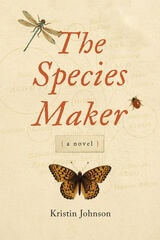
The Species Maker
A NovelKristin Johnson
University of Alabama Press, 2021
A historical novel about the role of science in modern life, set against the backdrop of the 1925 Scopes Trial.
When William Jennings Bryan began a campaign to get evolution out of American schools in the 1920s, entomologist Martin Sullivan sought refuge from the tumult in his research. Although the theory of evolution provides the foundation for his scientific work, he prefers the careful methods of observation and classification to the passion of public debate. But when Martin takes a job teaching college biology in Seattle, he finds it increasingly difficult to retreat to the haven of science. His students are taking sides in the debate over whether religion and evolution can be reconciled. Socialists are using evolution to justify revolution. Politicians are citing Darwin in defense of anti-immigration laws. And Martin’s own colleagues are insisting that only eugenic reforms will save the world. As anti-evolution legislation spreads across the country and passions flare on all sides, the effort to apply science to marriage laws and mate choice even begins to touch the lives of those he loves. By the time the state of Tennessee puts John T. Scopes on trial for teaching evolution in the summer of 1925, Martin can no longer ignore the debates that surround him and must take a stand in the fight over the role of science in American society.
Although set a hundred years ago, The Species Maker wrestles with many issues that continue to confront scientists and science watchers in the present day. Kristin Johnson draws on her experiences in the classroom and extensive knowledge of the history of science to depict what it might have been like for a careful scientist to watch the heated debates over teaching evolution in the United States in the 1920s.
Visit www.thespeciesmaker.com for supplemental material including historical essays, links to online primary sources, a glossary, and guiding questions useful for the classroom or book clubs.
The Star of Bethlehem
The Legacy of the MagiMolnar, Michael R.
Rutgers University Press, 2013
Could the $50 purchase of an ancient coin by a Rutgers astronomer have unlocked the mystery of the Christmas Star? For years, scientists have looked, with little success, to astronomical records for an explanation of the magical star that guided the Magi to Christ’s manger. Intrigued by the image he found on the latest addition to his coin collection, Michael Molnar thought there might be more to learn by looking, instead, at the teachings of ancient astrologers.
Molnar argues in his book that the Star of Bethlehem was not a star at all, but rather a regal portent centering around the planet Jupiter that was eclipsed by the moon. He bases this theory on the actual beliefs of astrologers, such as the Magi, who lived around the time of Christ. Molnar found some intriguing clues to the mystery while researching the meaning of astrological symbols he found an ancient coin, which bore the image of Aries looking back at a star. He found that Aries was a symbol of Judea at the time, and that ancient astrologers believed that a new king would be born when the moon passed in front of Jupiter. Molnar wondered, could the coin have been issued as a response to the Great Messianic Portent, the Star of Bethlehem?
To match the story of the appearance of the Christmas star, Molnar also knew the event had to happen when Jupiter was “in the east.” Using these criteria and a computer program, he was able to chart an eclipse of Jupiter in Aries on April 17, 6 B.C., a day when Jupiter was precisely “in the east,” which confirmed his theory. Moreover, he found that a Roman astrologer described the conditions of that day as fitting the birth of a “divine and immortal” person.
According to Harvard University Professor Owen Gingerich, “this is the most original and important contribution of the entire 20th century” about the Magi’s star. Using clues from astronomy, astrology, and history, Molnar has created a provocative, fascinating theory on the Christmas Star. He weaves together an intriguing scientific detective story which resolves one of the world’s greatest mysteries: The Star of Bethlehem at the birth of Christ.
The Star of Bethlehem
The Legacy of the MagiMolnar, Michael R.
Rutgers University Press, 1999
Could the $50 purchase of an ancient coin by a Rutgers astronomer have unlocked the mystery of the Christmas Star? For years, scientists have looked, with little success, to astronomical records for an explanation of the magical star that guided the Magi to Christ’s manger. Intrigued by the image he found on the latest addition to his coin collection, Michael Molnar thought there might be more to learn by looking, instead, at the teachings of ancient astrologers.
Molnar argues in his book that the Star of Bethlehem was not a star at all, but rather a regal portent centering around the planet Jupiter that was eclipsed by the moon. He bases this theory on the actual beliefs of astrologers, such as the Magi, who lived around the time of Christ. Molnar found some intriguing clues to the mystery while researching the meaning of astrological symbols he found an ancient coin, which bore the image of Aries looking back at a star. He found that Aries was a symbol of Judea at the time, and that ancient astrologers believed that a new king would be born when the moon passed in front of Jupiter. Molnar wondered, could the coin have been issued as a response to the Great Messianic Portent, the Star of Bethlehem?
To match the story of the appearance of the Christmas star, Molnar also knew the event had to happen when Jupiter was “in the east.” Using these criteria and a computer program, he was able to chart an eclipse of Jupiter in Aries on April 17, 6 B.C., a day when Jupiter was precisely “in the east,” which confirmed his theory. Moreover, he found that a Roman astrologer described the conditions of that day as fitting the birth of a “divine and immortal” person.
According to Harvard University Professor Owen Gingerich, “this is the most original and important contribution of the entire 20th century” about the Magi’s star. Using clues from astronomy, astrology, and history, Molnar has created a provocative, fascinating theory on the Christmas Star. He weaves together an intriguing scientific detective story which resolves one of the world’s greatest mysteries: The Star of Bethlehem at the birth of Christ.
The Star-Crossed Stone
The Secret Life, Myths, and History of a Fascinating FossilKen McNamara
University of Chicago Press, 2010
Throughout the four hundred thousand years that humanity has been collecting fossils, sea urchin fossils, or echinoids, have continually been among the most prized, from the Paleolithic era, when they decorated flint axes, to today, when paleobiologists study them for clues to the earth’s history.
In The Star-Crossed Stone, Kenneth J. McNamara, an expert on fossil echinoids, takes readers on an incredible fossil hunt, with stops in history, paleontology, folklore, mythology, art, religion, and much more. Beginning with prehistoric times, when urchin fossils were used as jewelry, McNamara reveals how the fossil crept into the religious and cultural lives of societies around the world—the roots of the familiar five-pointed star, for example, can be traced to the pattern found on urchins. But McNamara’s vision is even broader than that: using our knowledge of early habits of fossil collecting, he explores the evolution of the human mind itself, drawing striking conclusions about humanity’s earliest appreciation of beauty and the first stirrings of artistic expression. Along the way, the fossil becomes a nexus through which we meet brilliant eccentrics and visionary archaeologists and develop new insights into topics as seemingly disparate as hieroglyphics, Beowulf, and even church organs.
An idiosyncratic celebration of science, nature, and human ingenuity, The Star-Crossed Stone is as charming and unforgettable as the fossil at its heart.
The Stars Are Not Enough
Scientists--Their Passions and ProfessionsJoseph C. Hermanowicz
University of Chicago Press, 1998
These deeply personal narratives reveal dreams of fame and glory, in which scientists confess their ambitions of becoming the next Newton or Einstein. However, these scientists also discuss the meaning of success and failure. We hear their stories of aspiration and anxiety, disappointment and tragedy, hope and achievement; we are privy to their doubts and to what they consider to be their limitations and weaknesses. As the scientists age in their professions, the specter of failure often visits them, and they have to accept something less than scientific immortality or even the Nobel Prize.
Ultimately these stories give us more than an inside look at the details of careers in science, they also examine ambition by uncovering the forces that drive people in their professions and by describing how these forces persist or fade over time. Ambition for greatness often ignites a career and often sustains it. Yet, as Hermanowicz's study reveals, greatness eludes nearly all people in their heroic quests for extraordinary achievement. The Stars Are Not Enough offers a fascinating account that will appeal to anyone interested in how people's dreams blossom and evolve.
The Stars of Mauna Kea
Building Giant Telescopes on Hawai‘i’s Most Revered MountainPascal Marichalar
University of Chicago Press, 2026
The inside account of how astronomers were able to build the world’s largest observatories on Hawai‘i’s most revered mountain.
In July 2019, a demonstration erupted on Hawai‘i Island to prevent the construction of the Thirty Meter Telescope, which, if built, would be one of the largest and most advanced ground-based telescopes in the world. For months, thousands of people camped on the access road leading to the proposed location: Mauna Kea, a dormant volcano, the highest point in Hawai‘i, and a sacred site for Native Hawaiians. The standoff in 2019 was not the first. For decades, activists had resisted attempts to build the TMT and its predecessors. Even so, many astronomers were startled by opposition to the TMT and the discoveries it promised. Astronomers were focused on the stars; Native Hawaiians and environmentalists were concerned about not only the sky, but also the land.
The Stars of Mauna Kea traces the history of astronomy on Hawai‘i Island, shedding new light on why scientists were granted access to the volcano in the first place. Beginning in 1959, when Hawai‘i became the fiftieth US state, it chronicles the ways astronomers benefited from Hawai‘i’s colonial past to gain free and exclusive land use rights on what had long been the archipelago’s most revered mountain. Drawing on unprecedented archival research and extensive interviews, Pascal Marichalar carefully charts the course of astronomical development on Mauna Kea. He describes the devastating tsunami that led a local businessman to contact scientists just as a renowned astronomer was scouting for places to observe the stars; the controversial authority the University of Hawai‘i assumed over the volcano after 1964; the environmental opposition to the first large international project, the Canada-France-Hawai‘i Telescope; and the resistance to telescope development that became a major focus of the Hawaiian sovereignty movement. Marichalar introduces readers to scientists working on Mauna Kea, as well as the people living in the mountain’s shadow, including key opposition figures involved in recent events.
Like the dark matter that holds together rotating galaxies, the colonial forces that have shaped Hawai‘i exert a gravitational pull on the science undertaken on the volcano’s summit. The Stars of Mauna Kea brings readers inside an ongoing debate over the morality of scientific research conducted on contested ground.