Results by title
4127 books match the query 'Science' and 980 start with t
Thinking with Sound
A New Program in the Sciences and Humanities around 1900Viktoria Tkaczyk
University of Chicago Press, 2023
When the outside world is silent, all sorts of sounds often come to mind: inner voices, snippets of past conversations, imaginary debates, beloved and unloved melodies. What should we make of such sonic companions? Thinking with Sound investigates a period when these and other newly perceived aural phenomena prompted a far-reaching debate. Through case studies from Paris, Vienna, and Berlin, Viktoria Tkaczyk shows that the identification of the auditory cortex in late nineteenth-century neuroanatomy affected numerous academic disciplines across the sciences and humanities. “Thinking with sound” allowed scholars and scientists to bridge the gaps between theoretical and practical knowledge, and between academia and the social, aesthetic, and industrial domains. As new recording technologies prompted new scientific questions, new auditory knowledge found application in industry and the broad aesthetic realm. Through these conjunctions, Thinking with Sound offers a deeper understanding of today’s second “acoustic turn” in science and scholarship.
Thinking with Stone
Deep Time in the San Rafael SwellBrian Rajski
University of Utah Press, 2026
An intellectual journey through 250 million years of stone
In the San Rafael Swell, geologic forces have tilted and exposed the strata so that over 250 million years of geologic history can be observed simply by traveling across the rocky landscape, with its dramatic variety of colors and forms. Largely neglected by visitors to the state’s national parks and monuments and overlooked by many nature writers of the Colorado Plateau, the exceptional “Swell” offers a unique opportunity to think about people’s connections to the layers of earth beneath our feet.
Thinking with Stone takes readers on an intellectual journey across the Swell, moving from the youngest rocks at its edges to the oldest near its center and guiding readers through the features and histories of each geological layer. Drawing on personal experience and scientific research, Brian Rajski explores how creatively engaging with geology by using rocks as the foundation for thinking can generate new ideas about art, ethics, and the environment. Ultimately, the book reimagines the relationships between history and deep time, humanity and geology, and the individual and the stories told by stone.
This Ecstatic Nation
The American Landscape and the Aesthetics of PatriotismTerre Ryan
University of Massachusetts Press, 2011
Terre Ryan examines this phenomenon by exploring the overlapping trails of national mythology, landscape aesthetics, patriotic discourse, and public policy. Tracing her journeys around bombing grounds in Nevada, logging sites in Oregon, and energy fields in Wyoming, she argues that business and government agencies often frame commercial projects and national myths according to nineteenth-century beliefs about landscape and bounty. Advertisements and political promotional materials following this aesthetic framework perpetuate frontier-era ideas about the environment as commodity, scenery, and cultural trashlands. Transmitted through all types of media, nineteenth-century perspectives on landscape continue to inform mainstream perceptions of the environment, environmental policies, and representations of American patriotism.
Combining personal narrative with factual reportage, political and cultural critique, and historical analysis, Ryan reframes the images we see every day and places them into a larger national narrative.
This Is Life
A Journey from Inside Your Body to Beyond EarthChristophe Galfard
University of Chicago Press, 2026
Christophe Galfard, acclaimed author of the international bestseller The Universe in Your Hand, takes readers on an extraordinary journey across time and space—from the origins of Earth’s life to the search for extraterrestrials.
What is life? In this majestic book, Christophe Galfard, celebrated author and former graduate student of Stephen Hawking, takes us on a wonder-filled voyage to answer this question. He guides us from our planet’s birth and the mysterious bacteria that lived billions of years ago, through the extreme evolutionary turns that saw dog-sized sea scorpions and trees covered in scales, to the visionary discoveries of the past two centuries that have allowed us to understand human bodies and imagine alien ones.
With Galfard as our guide, readers go back in time to Earth’s origins, swim inside our bloodstream, and sail in space beyond the safety of our terrestrial haven. We experience the birth of Earth, the demise of the dinosaurs, and the possible creation of life in outer space. This Is Life offers a glimpse of other worlds detected only in recent years, beyond the Solar System, where life could be thriving. The end of the book’s journey signals new beginnings, and we are left with the overwhelming sense that, as members of a long line of living creatures, we belong to a reality far greater and more complex than we ever imagined.
Through brilliant storytelling and delightful humor, Galfard connects the latest scientific discoveries and makes the secrets of the living world accessible to all. This Is Life will transform the way you see the world and your place in it.
This Is Life
A Journey from Inside Your Body to Beyond EarthChristophe Galfard
University of Chicago Press, 2026
Christophe Galfard, acclaimed author of the international bestseller The Universe in Your Hand, takes readers on an extraordinary journey across time and space—from the origins of Earth’s life to the search for extraterrestrials.
What is life? In this majestic book, Christophe Galfard, celebrated author and former graduate student of Stephen Hawking, takes us on a wonder-filled voyage to answer this question. He guides us from our planet’s birth and the mysterious bacteria that lived billions of years ago, through the extreme evolutionary turns that saw dog-sized sea scorpions and trees covered in scales, to the visionary discoveries of the past two centuries that have allowed us to understand human bodies and imagine alien ones.
With Galfard as our guide, readers go back in time to Earth’s origins, swim inside our bloodstream, and sail in space beyond the safety of our terrestrial haven. We experience the birth of Earth, the demise of the dinosaurs, and the possible creation of life in outer space. This Is Life offers a glimpse of other worlds detected only in recent years, beyond the Solar System, where life could be thriving. The end of the book’s journey signals new beginnings, and we are left with the overwhelming sense that, as members of a long line of living creatures, we belong to a reality far greater and more complex than we ever imagined.
Through brilliant storytelling and delightful humor, Galfard connects the latest scientific discoveries and makes the secrets of the living world accessible to all. This Is Life will transform the way you see the world and your place in it.
This Land Is Your Land
The Story of Field Biology in AmericaMichael J. Lannoo
University of Chicago Press, 2018
Lannoo illuminates characters such as John Wesley Powell, William Temple Hornaday, and Olaus and Adolph Murie—homegrown midwestern field biologists who either headed east to populate major research centers or went west to conduct their fieldwork along the frontier. From the pioneering work of Victor Shelford, Henry Chandler Cowles, and Aldo Leopold to contemporary insights from biologists such as Jim Furnish and historians such as William Cronon, Lannoo’s unearthing of American—and particularly midwestern—field biologists reveals how these scientists influenced American ecology, conservation biology, and restoration ecology, and in turn drove global conservation efforts through environmental legislation and land set-asides. This Land Is Your Land reveals the little-known legacy of midwestern field biologists, whose ethos and discoveries have enabled us to preserve and understand not just their land, but all lands.
This Radical Land
A Natural History of American DissentDaegan Miller
University of Chicago Press, 2018
But if you know where to look, you can uncover a different history, one of vibrant resistance, one that’s been mostly forgotten. This Radical Land recovers that story. Daegan Miller is our guide on a beautifully written, revelatory trip across the continent during which we encounter radical thinkers, settlers, and artists who grounded their ideas of freedom, justice, and progress in the very landscapes around them, even as the runaway engine of capitalism sought to steamroll everything in its path. Here we meet Thoreau, the expert surveyor, drawing anticapitalist property maps. We visit a black antislavery community in the Adirondack wilderness of upstate New York. We discover how seemingly commercial photographs of the transcontinental railroad secretly sent subversive messages, and how a band of utopian anarchists among California’s sequoias imagined a greener, freer future. At every turn, everyday radicals looked to landscape for the language of their dissent—drawing crucial early links between the environment and social justice, links we’re still struggling to strengthen today.
Working in a tradition that stretches from Thoreau to Rebecca Solnit, Miller offers nothing less than a new way of seeing the American past—and of understanding what it can offer us for the present . . . and the future.
Thomas Kuhn
A Philosophical History for Our TimesSteve Fuller
University of Chicago Press, 2000
Steve Fuller argues that Kuhn actually held a profoundly conservative view of science and how one ought to study its history. Early on, Kuhn came under the influence of Harvard President James Bryant Conant (to whom Structure is dedicated), who had developed an educational program intended to help deflect Cold War unease over science's uncertain future by focusing on its illustrious past. Fuller argues that this rhetoric made its way into Structure, which Fuller sees as preserving and reinforcing the old view that science really is just a steady accumulation of truths about the world (once "paradigm shifts" are resolved).
Fuller suggests that Kuhn, deliberately or not, shared the tendency in Western culture to conceal possible negative effects of new knowledge from the general public. Because it insists on a difference between a history of science for scientists and one suited to historians, Fuller charges that Structure created the awkward divide that has led directly to the "Science Wars" and has stifled much innovative research. In conclusion, Fuller offers a way forward that rejects Kuhn's fixation on paradigms in favor of a conception of science as a social movement designed to empower society's traditionally disenfranchised elements.
Certain to be controversial, Thomas Kuhn must be read by anyone who has adopted, challenged, or otherwise engaged with The Structure of Scientific Revolutions.
"Structure will never look quite the same again after Fuller. In that sense, he has achieved one of the main aims of his ambitious and impressively executed project."—Jon Turney, Times Higher Education Supplement
"Philosophies like Kuhn's narrow the possible futures of inquiry by politically methodizing and taming them. More republican philosophies will leave the future open. Mr. Fuller has amply succeeded in his program of distinguishing the one from the other."—William R. Everdell, Washington Times
Thorstein Veblen and the Enrichment of Evolutionary Naturalism
Rick Tilman
University of Missouri Press, 2007
One of America’s most influential social critics, Thorstein Veblen authored works deeply rooted in evolutionary biology and American philosophical naturalism—both of which help explain his institutional economics and radical sociology. Now, one of today’s preeminent Veblen scholars ranges widely over the man’s writings to show how evolutionary naturalism underlies his social theory and criticism, shapes his satire, and binds his work together.
Rick Tilman’s study focuses on the intersections of social theory and social psychology, political economy and political theory, and modern philosophy and intellectual history in Veblen’s thinking. It links evolutionary naturalism for the first time to Veblen’s aesthetics, secular humanism, sociology of control, sociobiology, and sociology of knowledge, and it makes groundbreaking observations regarding the relationship of Veblen’s own life to his thinking; his place as a cultural lag theorist; and his analysis of sports, gambling, and religion.
Drawing on textual exegesis of Veblen’s work, unpublished correspondence, and selected archives, Tilman argues that only evolutionary naturalism could provide the philosophical foundations of Veblen’s thought. He also emphasizes Veblen’s role in the enhancement and embellishment of the social sciences and cultural studies, as well as his insights into the processes of change in the sociopolitical order.
Veblen’s evolutionary naturalism, with its unflattering evaluation of America’s self-selected special place in the international arena, casts doubt on today’s foreign interventions, and it also provides a much-needed antidote to the resurgence of creationist thought in American culture. Tilman shows that Veblen’s ideas are still valuable to contemporary social scientists—indeed, that his method of analysis and values are sorely needed to help us avoid wasteful consumption, predation, and the persistence of religious superstition. This work offers readers a new appreciation of Veblen and the many issues he addressed, and of Tilman’s own masterful facility in bringing them to light.

Thought and Choice in Chess
Adriaan D. de Groot
Amsterdam University Press, 2008
Threads from the Web of Life & The Shark and the Jellyfish
Stories in Natural HistoryStephen Daubert
Vanderbilt University Press, 2019
One niche moves across a world of flowers that reaches its earliest peak bloom in the low valleys and then peaks later among the slopes of the foothills—a rolling habitat. Another hop-scotches across the ocean floor, compelling its occupants to migrate from the fallen body of one dead whale to the next. Yet another appears in the aftermath of typhoons, requiring its inhabitants to search the tropical coastline for the latest storm landfall.
These tales are filled with no less intrigue than other literary works, but they transpire out of the sight of most readers. Once known only to ecologists, in Threads from the Web of Life and The Shark and the Jellyfish, available for the first time in a single deluxe paperback, these stories become accessible to everyone with an interest in natural history.
Threads from the Web of Life
Stories in Natural HistoryStephen Daubert
Vanderbilt University Press, 2006
In sixteen stories Steve Daubert pulls the reader into the mystery and immediacy of ecological processes spanning a range from microscopic to tectonic, from microscopic to cosmic forces. Each tale brings the reader into the moment to witness an episode of survival in the wild first-hand. The material is presented on a level of intimacy and detail not usually encountered in other styles of natural history writing.
These creative non-fiction stories provide not just a bird's eye view (though that's true for the owls, warblers, condors, and hummingbirds in the book), but a wasp's eye view, a mouse's, a sea turtle's, a squid's. Sometimes the focus is as small as the detritus on the forest floor, or a single beat of the wing of a gull. Other stories range across evolutionary time. From whales and dinosaurs to creatures invisible to the naked eye, author and illustrator bring to life the dynamic interplay of living, evolving creatures and the natural forces that have shaped their worlds.
The book includes chapter notes that document the scientific basis for each story and describe the controversies still surrounding some of them -- a splendid resource for families to read and share.
Three Language List of Botanical Name Components
A. Radcliffe-Smith
Royal Botanic Gardens, Kew, 2000
Three Steps to the Universe
From the Sun to Black Holes to the Mystery of Dark MatterDavid Garfinkle and Richard Garfinkle
University of Chicago Press, 2008
The authors begin by inviting readers to step away from the Earth and reconsider our Sun. What we can directly observe of this star is limited to its surface, but with the advent of telescopes and spectroscopy, scientists know more than ever about its physical characteristics, origins, and projected lifetime. From the Sun, the authors journey further out into space to explore black holes. The Garfinkle brothers explain that our understanding of these astronomical oddities began in theory, and growing mathematical and physical evidence has unexpectedly supported it. From black holes, the authors lead us further into the unknown, to the dark matter and energy that pervade our universe, where science teeters on the edge of theory and discovery. Returning from the depths of space, the final section of the book brings the reader back down to Earth for a final look at the practice of science, ending with a practical guide to discerning real science from pseudoscience among the cacophony of print and online scientific sources.
Three Steps to the Universe will reward anyone interested in learning more about the universe around us and shows how scientists uncover its mysteries.
Thrifty Science
Making the Most of Materials in the History of ExperimentSimon Werrett
University of Chicago Press, 2018
Thrifty Science explores this distinctive culture of experiment and demonstrates how the values of the household helped to shape an array of experimental inquiries, ranging from esoteric investigations of glowworms and sour beer to famous experiments such as Benjamin Franklin’s use of a kite to show lightning was electrical and Isaac Newton’s investigations of color using prisms. Tracing the diverse ways that men and women put their material possessions into the service of experiment, Werrett offers a history of practices of recycling and repurposing that are often assumed to be more recent in origin. This thriving domestic culture of inquiry was eclipsed by new forms of experimental culture in the nineteenth century, however, culminating in the resource-hungry science of the twentieth. Could thrifty science be making a comeback today, as scientists grapple with the need to make their research more environmentally sustainable?
Tibetan Buddhism and Modern Physics
Toward a Union of Love and KnowledgeVic Mansfield
Templeton Press, 2008
Tibetan Buddhism and Modern Physics: Toward a Union of Love and Knowledge addresses the complex issues of dialogue and collaboration between Buddhism and science, revealing connections and differences between the two. While assuming no technical background in Buddhism or physics, this book strongly responds to the Dalai Lama’s “heartfelt plea” for genuine collaboration between science and Buddhism. The Dalai Lama has written a foreword to the book and the Office of His Holiness will translate it into both Chinese and Tibetan.
Tidal Wetlands Primer
An Introduction to Their Ecology, Natural History, Status, and ConservationRalph W. Tiner
University of Massachusetts Press, 2013
Illustrated with maps, photographs, and diagrams, this volume provides a clear account of the factors that make these habitats unique and vulnerable. It discusses their formation, the conditions affecting their plant and animal life, and the diversity of types across North America, as well as their history, use by wildlife and humans, current status, conservation, restoration, and likely future. The emphasis is on vegetated wetlands—marshes and swamps—with additional discussion of eelgrass meadows, rocky shores, beaches, and tidal flats.
Ralph Tiner's previous field guides to coastal wetland plants in the Northeast and Southeast have been widely praised. Tidal Wetlands Primer joins Tiner's earlier publications as an authoritative and user-friendly guide that should appeal to anyone with a serious interest in coastal habitats.
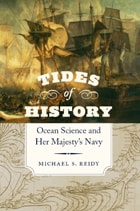
Tides of History
Ocean Science and Her Majesty's NavyMichael S. Reidy
University of Chicago Press, 2008
Analyzing the economic, political, social, and scientific changes on which the British sailed to power, Tides of History shows how the British Admiralty collaborated closely not only with scholars, such as William Whewell, but also with the maritime community —sailors, local tide table makers, dockyard officials, and harbormasters—in order to systematize knowledge of the world’s oceans, coasts, ports, and estuaries. As Michael S. Reidy points out, Britain’s security and prosperity as a maritime nation depended on its ability to maneuver through the oceans and dominate coasts and channels. The practice of science and the rise of the scientist became inextricably linked to the process of European expansion.
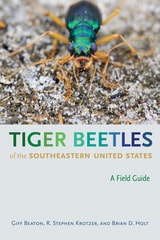
Tiger Beetles of the Southeastern United States
A Field GuideGiff Beaton, R. Stephen Krotzer, and Brian D. Holt
University of Alabama Press, 2021
Combines current data and taxonomic classifications for tiger beetles in the Southeast with stunning close-up photographs, flight season charts, and distribution maps
Tiger beetles are brightly colored and metallic beetles, often with ivory or cream-colored markings. They are most abundant and diverse in habitats near bodies of water with sandy or clay soils and can be found along rivers, on sea and lake shores, on sand dunes, around dry lakebeds, on clay banks, or on woodland paths. Conservatively estimated, the group comprises more than 2,600 species worldwide.
Tiger Beetles of the Southeastern United States identifies and describes 52 taxa (42 species and 10 additional subspecies) of tiger beetles that occur in Alabama, Florida, Georgia, Mississippi, North Carolina, South Carolina, and Tennessee. Stunning close-up photographs accompany current taxonomic and biological information in a volume designed for a growing audience of enthusiastic amateurs and professionals alike.
The authors provide an in-depth description of the anatomy, life cycle, and behavior of tiger beetles; an overview of the various southeastern habitats in which they occur; instructions for finding, identifying, and photographing them in the wild; and the conservation status of various species. The individual species accounts include stunning, detailed images, flight season charts, county-level regional distribution maps, and discussion of identifying features, habitat, similar species, and subspecies when applicable. The appendix includes two species previously found in Florida but no longer known to exist there.
The result is the most complete field guide to date on tiger beetles in the region. With more than 230 images of beetles and their habitats, as well as life history and distribution data, this book is essential for tiger beetle enthusiasts, naturalists of all kinds, photographers, biologists, and teachers throughout the region.
Till the Light Leaps
Essays on Playing AttentionD. Graham Burnett
University of Chicago Press, 2027
A ranging, erudite, and intimate examination of the nature of knowledge, by a thinker and creator who defies categorization.
Attention is in short supply and high demand. But when we bring our minds and time and senses to something—an idea, an object, another person—we tap into a human capacity for observation, patience, candor, and presence. Look long enough, and we can reliably catch a bright flash, a shift in the light, even a dawning.
In Till the Light Leaps, historian of science D. Graham Burnett explores the questions that have been major drivers of his intellectual life: How do we know what we know? And how are we changed by that effort? Written during a period of radical, collective, and creative experimentation with attention, the twenty-six essays collected here span topics like technology, science, art, and religion. Together, they comprise a sustained reflection on the relationship between empirical matters and the shiver-work of the human spirit. A brief history of spectroscopy offers an occasion to consider the solemn power of fire, as well as the righteous lessons of a childhood science experiment gone wrong. Skywriting invokes military might, but also the expressionistic bravura of a solo aeronaut, Art Smith. The Greek ritual of throwing plant matter in celebration is a thread connecting animal sacrifice, confetti production, and capitalist excess. In the final, previously unpublished essay, Galway Kinnell’s 1980 poem “Saint Francis and the Sow” becomes a heroic call to love and an allegory of attention in its richest sense.
Till the Light Leaps, a reference to the writings of Simone Weil, advises us to look at something “until the light leaps,” whether it yields a wink or an illumination. Burnett models the work—and the pleasure—of staying present with the world, and his essays test what science can offer, even as they feel for what it cannot.
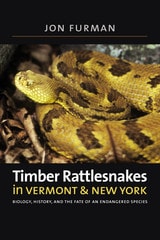
Timber Rattlesnakes in Vermont & New York
Biology, History, and the Fate of an Endangered SpeciesJon Furman
University Press of New England, 2007

Time & Eternity
The Question of Time in Church, Science and TheologyAntje Jackelen
Templeton Press, 2005
What is time? Is there a link between objective knowledge about time and subjective experience of time? And what is eternity? Does religion have the answer? Does science?
•Theological approaches to time and eternity, as well as a look at Trinitarian theology and its relation to time
•The discussion of scientific theories of time, including Newtonian, relativistic, quantum, and chaos theories
•The formulation of a "theology of time," a theological-mathematical model incorporating relational thinking oriented toward the future, the doctrine of trinity, and the notion of eschatology

Time Maps
Collective Memory and the Social Shape of the PastEviatar Zerubavel
University of Chicago Press, 2003
Who were the first people to inhabit North America? Does the West Bank belong to the Arabs or the Jews? Why are racists so obsessed with origins? Is a seventh cousin still a cousin? Why do some societies name their children after dead ancestors?
As Eviatar Zerubavel demonstrates in Time Maps, we cannot answer burning questions such as these without a deeper understanding of how we envision the past. In a pioneering attempt to map the structure of our collective memory, Zerubavel considers the cognitive patterns we use to organize the past in our minds and the mental strategies that help us string together unrelated events into coherent and meaningful narratives, as well as the social grammar of battles over conflicting interpretations of history. Drawing on fascinating examples that range from Hiroshima to the Holocaust, from Columbus to Lucy, and from ancient Egypt to the former Yugoslavia, Zerubavel shows how we construct historical origins; how we tie discontinuous events together into stories; how we link families and entire nations through genealogies; and how we separate distinct historical periods from one another through watersheds, such as the invention of fire or the fall of the Berlin Wall.
Most people think the Roman Empire ended in 476, even though it lasted another 977 years in Byzantium. Challenging such conventional wisdom, Time Maps will be must reading for anyone interested in how the history of our world takes shape.
Time Travel and Warp Drives
A Scientific Guide to Shortcuts through Time and SpaceAllen Everett and Thomas Roman
University of Chicago Press, 2011
To see video demonstrations of key concepts from the book, please visit this website: http://www.press.uchicago.edu/sites/timewarp/
Sci-fi makes it look so easy. Receive a distress call from Alpha Centauri? No problem: punch the warp drive and you're there in minutes. Facing a catastrophe that can't be averted? Just pop back in the timestream and stop it before it starts. But for those of us not lucky enough to live in a science-fictional universe, are these ideas merely flights of fancy—or could it really be possible to travel through time or take shortcuts between stars?
Cutting-edge physics may not be able to answer those questions yet, but it does offer up some tantalizing possibilities. In Time Travel and Warp Drives, Allen Everett and Thomas A. Roman take readers on a clear, concise tour of our current understanding of the nature of time and space—and whether or not we might be able to bend them to our will. Using no math beyond high school algebra, the authors lay out an approachable explanation of Einstein's special relativity, then move through the fundamental differences between traveling forward and backward in time and the surprising theoretical connection between going back in time and traveling faster than the speed of light. They survey a variety of possible time machines and warp drives, including wormholes and warp bubbles, and, in a dizzyingly creative chapter, imagine the paradoxes that could plague a world where time travel was possible—killing your own grandfather is only one of them!
Written with a light touch and an irrepressible love of the fun of sci-fi scenarios—but firmly rooted in the most up-to-date science, Time Travel and Warp Drives will be a delightful discovery for any science buff or armchair chrononaut.
Time Travelers
Victorian Encounters with Time and HistoryEdited by Adelene Buckland and Sadiah Qureshi
University of Chicago Press, 2020
Out of their discoveries, new histories emerged, giving rise to fresh debates, while seemingly well-known histories were thrown into confusion by novel tools and methods of scrutiny. If in the eighteenth century the study of the past had been the province of a handful of elites, new technologies and economic development in the nineteenth century meant that the past, in all its brilliant detail, was for the first time the property of the many, not the few. Time Travelers is a book about the myriad ways in which Victorians approached the past, offering a vivid picture of the Victorian world and its historical obsessions.
Time Warps, String Edits, and Macromolecules
The Theory and Practice of Sequence ComparisionDavid Sankoff and Joseph Kruskal
CSLI, 1983
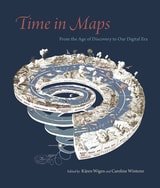
Time in Maps
From the Age of Discovery to Our Digital EraEdited by Kären Wigen and Caroline Winterer
University of Chicago Press, 2020
Focusing on maps created in Spanish America, Europe, the United States, and Asia, these essays take us from the Aztecs documenting the founding of Tenochtitlan, to early modern Japanese reconstructing nostalgic landscapes before Western encroachments, to nineteenth-century Americans grappling with the new concept of deep time. The book also features a defense of traditional paper maps by digital mapmaker William Rankin. With more than one hundred color maps and illustrations, Time in Maps will draw the attention of anyone interested in cartographic history.
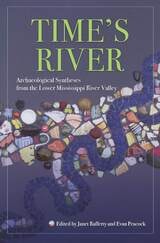
Time's River
Archaeological Syntheses from the Lower Mississippi ValleyEdited by Janet Rafferty and Evan Peacock
University of Alabama Press, 2008
An archaeologically rich region, in advance of impending disturbance
This volume stands as a key general resource for archaeologists working in the region extending from Louisiana through Mississippi north to Missouri and Kentucky, and it represents an opportunity to influence for decades a large part of the archaeological work to take place in the Southeast.
The book responds to a need for a comprehensive archaeological overview of the Lower Mississippi Valley that forms a portion of an interstate corridor spanning nine states that will run from southern Michigan to the Texas-Mexico border. The culturally sensitive Mississippi Delta is one of the richest archaeological areas in North America, and it is crucial that research designs be comprehensive, coordinated, and meet current preservation and future research needs. The authors are well-respected researchers from both within and outside the region with expertise in the full range of topics that comprise American archaeology. They examine matters of method and theory, the application of materials science, geophysics, and other high-tech tools in archaeology that provide for optimum data-recovery.

Tissue of the World
The Nature of Ancient SympathyBrooke Holmes
University of Chicago Press, 0
A multidisciplinary account showing how ancient notions of sympathy changed ways of thinking about interconnectedness.
When we hear the word sympathy today, we tend to imagine the emotional bond between people. But for centuries, sympathy just as commonly brought to mind interdependencies between plants, rocks, and celestial bodies. It explained why magnets attract iron, how the stars influence human destiny, and why one trembles when one is afraid. It implicated human beings in a complex network of loves (sympathies) and hates (antipathies). The ancient notion of sympathy led to ways of thinking about community even beyond the boundaries of the human that continue to influence how we think about life, society, and Nature today.
This book offers the first comprehensive account of ancient sympathy, spanning the fifth century BCE to the third century CE. Tracing connections across works of philosophy, natural history, cosmology, medicine, and literature, Brooke Holmes argues that how people thought about sympathetic communities played a crucial role in shaping the idea of Nature as a webbed, well-ordered whole in the Hellenistic and Roman Imperial Mediterranean. From the scale of the organism to that of the cosmos, this book interrogates the ancient history of a protoecological, antimechanistic conception of Nature, proposing the richly textured thought-world of sympathy as a resource for rethinking and reimagining human and nonhuman communities, the stories we tell about the classical world, and the political and theoretical stakes of vital materialisms.
To Care for Creation
The Emergence of the Religious Environmental MovementStephen Ellingson
University of Chicago Press, 2016
To Care for Creation chronicles this movement and explains how it has emerged despite institutional and cultural barriers, as well as the hurdles posed by logic and practices that set religious environmental organizations apart from the secular movement. Ellingson takes a deep dive into the ways entrepreneurial activists tap into and improvise on a variety of theological, ethical, and symbolic traditions in order to issue a compelling call to arms that mobilizes religious audiences. Drawing on interviews with the leaders of more than sixty of these organizations, Ellingson deftly illustrates how activists borrow and rework resources from various traditions to create new meanings for religion, nature, and the religious person’s duty to the natural world.

To End the Arms Race
Seeking a Safer FutureDavid Rittenhouse Inglis
University of Michigan Press, 1986
To Foster the Spirit of Professionalism
Southern Scientists and State Academies of ScienceNancy Smith Midgette
University of Alabama Press, 1991
"A welcome contribution to the history of science in the South during the period since the Civil War. . . . By considering the academies in the larger context of scientific professionalism, South and North, Midgette has produced a surprisingly wide-ranging and informative study. This is overall a judicious and carefully researched work. The writing is straightforward and admirably clear, while the topic is effectively organized and presented. The book is a commendably original addition to local and regional history as well as history of American Science."
—Journal of American History
"Midgette’s study is thorough and well organized and should be consulted by anyone interested in American science and American higher education."
—Florida Historical Quarterly
"A very useful survey."
—Choice
To Know a Starry Night
Paul Bogard
University of Nevada Press, 2021

To Life
Jews Exploring NatureJoel Greenberg
Rutgers University Press, 2026
To Life explores the Jewish relationship with nature by illuminating significant Jewish thinkers who increased in important ways our understanding of various aspects of natural history. In eight compelling chapter-long biographies, naturalist Joel Greenberg demonstrates the diversity of both Jewish identity and the natural sciences.
Greenberg’s rich biographical sketches spotlight great Jewish scientists who not only made major contributions to the study of the natural world but also led rich and colorful lives: botanist and spy Aaron Aaronsohn, zoologist Libbie Henrietta Hyman, infamous ornithologist Nathan Leopold, mammalogist Philip Hershkovitz, arachnologist Herbert Levi, herpetologist Hymen Marx, public health entomologist Andrew Spielman, and ecologist Joan Ehrenfeld. These individuals manifested different aspects of Jewish identity—some observant, some secular—but all were affected in one way or another by their being Jewish.
By exploring the relationship between Jews and nature through the lives of these figures, Greenberg shares new and underrecognized aspects of Jewish and environmental history and opens new portals into the fields they studied.
To Quench Our Thirst
The Present and Future Status of Freshwater Resources of the United StatesDavid A. Francko and Robert G. Wetzel
University of Michigan Press, 1983
To Save the Phenomena
An Essay on the Idea of Physical Theory from Plato to GalileoPierre Duhem
University of Chicago Press, 1969
Duhem's 1908 essay questions the relation between physical theory and metaphysics and, more specifically, between astronomy and physics–an issue still of importance today. He critiques the answers given by Greek thought, Arabic science, medieval Christian scholasticism, and, finally, the astronomers of the Renaissance.
To the Last Smoke
An AnthologyStephen J. Pyne
University of Arizona Press, 2020
From boreal Alaska to subtropical Florida, from the chaparral of California to the pitch pine of New Jersey, America boasts nearly a billion burnable acres. In nine previous volumes, Stephen J. Pyne has explored the fascinating variety of flame region by region. In To the Last Smoke: An Anthology, he selects a sampling of the best from each.
To the Last Smoke offers a unique and sweeping view of the nation’s fire scene by distilling observations on Florida, California, the Northern Rockies, the Great Plains, the Southwest, the Interior West, the Northeast, Alaska, the oak woodlands, and the Pacific Northwest into a single, readable volume. The anthology functions as a color-commentary companion to the play-by-play narrative offered in Pyne’s Between Two Fires: A Fire History of Contemporary America. The series is Pyne’s way of “keeping with it to the end,” encompassing the directive from his rookie season to stay with every fire “to the last smoke.”
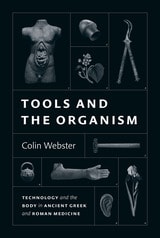
Tools and the Organism
Technology and the Body in Ancient Greek and Roman MedicineColin Webster
University of Chicago Press, 2023
Medicine is itself a type of technology, involving therapeutic tools and substances, and so one can write the history of medicine as the application of different technologies to the human body. In Tools and the Organism, Colin Webster argues that, throughout antiquity, these tools were crucial to broader theoretical shifts. Notions changed about what type of object a body is, what substances constitute its essential nature, and how its parts interact. By following these changes and taking the question of technology into the heart of Greek and Roman medicine, Webster reveals how the body was first conceptualized as an “organism”—a functional object whose inner parts were tools, or organa, that each completed certain vital tasks. He also shows how different medical tools created different bodies.
Webster’s approach provides both an overarching survey of the ways that technologies impacted notions of corporeality and corporeal behaviors and, at the same time, stays attentive to the specific material details of ancient tools and how they informed assumptions about somatic structures, substances, and inner processes. For example, by turning to developments in water-delivery technologies and pneumatic tools, we see how these changing material realities altered theories of the vascular system and respiration across Classical antiquity. Tools and the Organism makes the compelling case for why telling the history of ancient Greco-Roman medical theories, from the Hippocratics to Galen, should pay close attention to the question of technology.
Topics in the Foundations of General Relativity and Newtonian Gravitation Theory
David B. Malament
University of Chicago Press, 2012
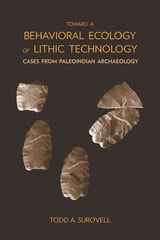
Toward a Behavioral Ecology of Lithic Technology
Cases from Paleoindian ArchaeologyTodd A. Surovell
University of Arizona Press, 2009
Because the fundamental processes of making, using, and discarding stone tools are, at root, exercises in problem solving, Todd Surovell asks what conditions favor certain technological solutions. Whether asking if a biface should be made thick or thin or if a flake should be saved or discarded, Surovell seeks answers that extend beyond a case-by-case analysis. One avenue for addressing these questions theoretically is formal mathematical modeling.
Here Surovell constructs a series of models designed to link environmental variability to human decision making as it pertains to lithic technology. To test the models, Surovell uses data from the analysis of more than 40,000 artifacts from five Rocky Mountain and Northern Plains Folsom and Goshen complex archaeological sites dating to the Younger Dryas stadial (ca. 12,600-11,500 years BP). The primary result is the production of powerful new analytical tools useful to the interpretation of archaeological assemblages.
Surovell's goal is to promote modeling and explore the general issues governing technological decisions. In this light, his models can be applied to any context in which stone tools are made and used.
Toward a Natural Forest
The Forest Service in Transition (A Memoir)Jim Furnish
Oregon State University Press, 2015
The Forest Service stumbled in responding to a wave of lawsuits from environmental groups in the late 20th Century—a phenomenon best symbolized by the spotted owl controversy that shut down logging on public forests in the Pacific Northwest in the 1990s. The agency was brought to its knees, pitted between a powerful timber industry that had been having its way with the national forests for decades, and organized environmentalists who believed public lands had been abused and deserved better stewardship.
Toward a Natural Forest offers an insider’s view of this tumultuous time in the history of the Forest Service, presenting twin tales of transformation, both within the agency and within the author’s evolving environmental consciousness. While stewarding our national forests with the best of intentions, had the Forest Service diminished their natural essence and ecological values? How could one man confront the crisis while remaining loyal to his employer?
In this revealing memoir, Furnish addresses the fundamental human drive to gain sustenance from and protect the Earth, believing that we need not destroy it in the process. Drawing on the author’s personal experience and his broad professional knowledge, Toward a Natural Forest illuminates the potential of the Forest Service to provide strong leadership in global conservation efforts. Those interested in our public lands—environmentalists, natural resource professionals, academics, and historians—will find Jim Furnish’s story deeply informed, thought-provoking, and ultimately inspiring.

Toxic Exposures
Mustard Gas and the Health Consequences of World War II in the United StatesSmith, Susan L.
Rutgers University Press, 2019
Toxic Timescapes
Examining Toxicity across Time and SpaceSimone M. Müller
Ohio University Press, 2022
An interdisciplinary environmental humanities volume that explores human-environment relationships on our permanently polluted planet.
While toxicity and pollution are ever present in modern daily life, politicians, juridical systems, media outlets, scholars, and the public alike show great difficulty in detecting, defining, monitoring, or generally coming to terms with them. This volume’s contributors argue that the source of this difficulty lies in the struggle to make sense of the intersecting temporal and spatial scales working on the human and more-than-human body, while continuing to acknowledge race, class, and gender in terms of global environmental justice and social inequality.
The term toxic timescapes refers to this intricate intersectionality of time, space, and bodies in relation to toxic exposure. As a tool of analysis, it unpacks linear understandings of time and explores how harmful substances permeate temporal and physical space as both event and process. It equips scholars with new ways of creating data and conceptualizing the past, present, and future presence and possible effects of harmful substances and provides a theoretical framework for new environmental narratives. To think in terms of toxic timescapes is to radically shift our understanding of toxicants in the complex web of life.
Toxicity, pollution, and modes of exposure are never static; therefore, dose, timing, velocity, mixture, frequency, and chronology matter as much as the geographic location and societal position of those exposed. Together, these factors create a specific toxic timescape that lies at the heart of each contributor’s narrative. Contributors from the disciplines of history, human geography, science and technology studies, philosophy, and political ecology come together to demonstrate the complex reality of a toxic existence. Their case studies span the globe as they observe the intersection of multiple times and spaces at such diverse locations as former battlefields in Vietnam, aging nuclear-weapon storage facilities in Greenland, waste deposits in southern Italy, chemical facilities along the Gulf of Mexico, and coral-breeding laboratories across the world.

Toxic and Intoxicating Oil
Discovery, Resistance, and Justice in Aotearoa New ZealandPatricia Widener
Rutgers University Press, 2021
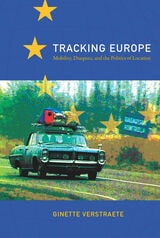
Tracking Europe
Mobility, Diaspora, and the Politics of LocationGinette Verstraete
Duke University Press, 2009
In demystifying the old and new Europe across a multiplicity of texts, images, media, and cultural practices in various times and locations, Verstraete lays bare a territorial persistence in the European imaginary, one which has been differently tied up with the politics of inclusion and exclusion. Tracking Europe moves from policy papers, cultural tourism, and migration to philosophies of cosmopolitanism, nineteenth-century travel guides, electronic surveillance at the border, virtual pilgrimages to Spain, and artistic interventions in the Balkan region. It is a sustained attempt to situate current developments in Europe within a complex matrix of tourism, migration, and border control, as well as history, poststructuralist theory, and critical media and art projects.
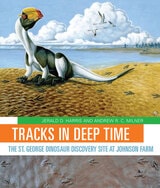
Tracks in Deep Time
The St. George Dinosaur Discovery Site at Johnson FarmJerald D. Harris and Andrew R. Milner
University of Utah Press, 2015
Tracks in Deep Time presents, for the first time, an engaging, thoroughly readable account of the history, geology, and paleontology of this important site. Two hundred million years ago, Lake Dixie covered the site. Within its waters and along its shores, a diverse ecosystem of dinosaurs, early crocodylians, fishes, plants, and other organisms thrived, leaving behind thousands of footprints and other fossils preserved in layers of rock. Unusual fossils found here include the world’s largest collection of tracks left by swimming dinosaurs and one of only six traces known to have been made by a sitting, meat-eating dinosaur. With approachable text and lavish, full-color photographs and illustrations, Jerald Harris and Andrew Milner describe how geologists and paleontologists have painstakingly reconstructed a vivid “snapshot” of life from the Early Jurassic epoch.
Transformations
Thinking after HeideggerGail Stenstad
University of Wisconsin Press, 2006
How are we to think and act constructively in the face of today’s environmental and political catastrophes? Gail Stenstad finds inspiring answers in the thought of German philosopher Martin Heidegger. Rather than simply describing or explaining Heidegger’s transformative way of thinking, Stenstad’s writing enacts it, bringing new insight into contemporary environmental, political, and personal issues. Readers come to understand some of Heidegger’s most challenging concepts through experiencing them. This is a truly creative scholarly work that invites all readers to carry Heidegger’s transformative thinking into their own areas of deep concern.
Transforming Science and Engineering
Advancing Academic WomenAbigail J. Stewart, Janet E. Malley, and Danielle LaVaque-Manty, Editors
University of Michigan Press, 2010
"If you have thrown up your hands in despair after trying to retain women science and engineering in the academy, read this book. It offers detailed descriptions of a wide array of tried-and-true programs that have been tested out by the NSF ADVANCE program."
---Joan C. Williams, 1066 Foundation Chair & Distinguished Professor of Law Director, Center for WorkLife Law University of California
"Solid and practical, this volume details the first years of NSF funded institutional change to remake gender dynamics inside U.S. science. What works? What doesn't? And why?"
---Londa Schiebinger, John L. Hinds Professor of History of Science and Barbara D. Finberg Director, Michelle R. Clayman Institute for Gender Research at Stanford University, and author of Has Feminism Changed Science?
"This book's time has come. Transforming Science and Engineering is important, and lots of people can learn from what has happened in the ADVANCE universities."
---Lotte Bailyn, Professor of Management, Behavioral and Policy Sciences Department, Sloan School of Management, MIT; author of Breaking the Mold: Redesigning Work for Productive and Satisfying Lives; and coauthor of Beyond Work-Family Balance: Advancing Gender Equity and Workplace Performance
"This collection profiles 16 NSF ADVANCE grant successes, sandwiched between an interview with Dr. Alice Hogan and Dr. Lee Harle's summary of cost-effective practices from ADVANCE programs, giving so many 'biggest bang for the buck' examples in so few pages that it will easily justify both the cost of the book and the reading time. These accounts do not continue the too-common vague referrals to 'unhealthy environment' or 'chilly climate,' but rather expound the situations before and after the interventions, something necessary in order to transplant the programs, or even to use the programs for idea generation. Transforming Science and Engineering is a model of excellence, and will be extremely useful for those women, men, faculty, or administrators wanting to help their universities move into the 21st century and attract to their campuses qualified women and men who want opportunities to attain their full potentials."
---Donna J. Nelson, Associate Professor of Chemistry, University of Oklahoma
In 2001, the National Science Foundation's ADVANCE Institutional Transformation program began awarding five-year grants to colleges and universities to address a common problem: how to improve the work environment for women faculty in science and engineering. Drawing on the expertise of scientists, engineers, social scientists, specialists in organizational behavior, and university administrators, this collection is the first to describe the variety of innovative efforts academic institutions around the country have undertaken.
Focusing on a wide range of topics, from how to foster women's academic success in small teaching institutions, to how to use interactive theater to promote faculty reflection about departmental culture, to how a particular department created and maintained a healthy climate for women's scientific success, the contributors discuss both the theoretical and empirical aspects of the initiatives, with emphasis on the practical issues involved in creating these approaches. The resulting evidence shows that these initiatives have the desired effects. The cases represented in this collection depict the many issues women faculty in science and engineering face, and the solutions that are presented can be widely accepted at academic institutions around the United States. The essays in Transforming Science and Engineering illustrate that creating work environments that sustain and advance women scientists and engineers benefits women, men, and underrepresented minorities.
Abigail J. Stewart is Sandra Schwartz Tangri Distinguished University Professor of Psychology and Women's Studies at the University of Michigan.
Janet E. Malley is a psychologist and Associate Director of the Institute for Research on Women and Gender at the University of Michigan.
Danielle LaVaque-Manty, former Research Associate at the Institute for Research on Women and Gender at the University of Michigan, teaches composition at U-M's Sweetland Writing Center.
Cover photo: Joanne Leonard
Transhumanism
Evolutionary Futurism and the Human Technologies of UtopiaAndrew Pilsch
University of Minnesota Press, 2017
Transhumanism posits that humanity is on the verge of rapid evolutionary change as a result of emerging technologies and increased global consciousness. However, this insight is dismissed as a naive and controversial reframing of posthumanist thought, having also been vilified as “the most dangerous idea in the world” by Francis Fukuyama. In this book, Andrew Pilsch counters these critiques, arguing instead that transhumanism’s utopian rhetoric actively imagines radical new futures for the species and its habitat.
Pilsch situates contemporary transhumanism within the longer history of a rhetorical mode he calls “evolutionary futurism” that unifies diverse texts, philosophies, and theories of science and technology that anticipate a radical explosion in humanity’s cognitive, physical, and cultural potentialities. By conceptualizing transhumanism as a rhetoric, as opposed to an obscure group of fringe figures, he explores the intersection of three major paradigms shaping contemporary Western intellectual life: cybernetics, evolutionary biology, and spiritualism. In analyzing this collision, his work traces the belief in a digital, evolutionary, and collective future through a broad range of texts written by theologians and mystics, biologists and computer scientists, political philosophers and economic thinkers, conceptual artists and Golden Age science fiction writers. Unearthing the long history of evolutionary futurism, Pilsch concludes, allows us to more clearly see the novel contributions that transhumanism offers for escaping our current geopolitical bind by inspiring radical utopian thought.

Transnational Ecocinema
Film Culture in an Era of Ecological TransformationEdited by Tommy Gustafsson and Pietari Kääpä
Intellect Books, 2013