Results by title
18284 books match the query 'United States' and 3764 start with t
The Crescent Obscured
The United States and the Muslim World, 1776-1815Robert Allison
University of Chicago Press, 2000
"A powerful ending that explains how the experience with the Barbary states compelled many Americans to look inward . . . with increasing doubts about the institution of slavery." —David W. Lesch, Middle East Journal
"Allison's incisive and informative account of the fledgling republic's encounter with the Muslim world is a revelation with a special pertinence to today's international scene." —Richard W. Bulliet, Journal of Interdisciplinary History
"This book should be widely read. . . . Allison's study provides a context for understanding more recent developments, such as America's tendency to demonize figures like Iran's Khumaini, Libya's Qaddafi, and Iraq's Saddam." —Richard M. Eaton, Eighteenth Century Studies
The Crimes of Womanhood
Defining Femininity in a Court of LawA. Cheree Carlson
University of Illinois Press, 2014
Carlson analyzes the situations of several women of varying historical stature, from the insanity trials of Mary Todd Lincoln and Lizzie Borden's trial for the brutal slaying of her father and stepmother, to lesser-known trials involving insanity, infidelity, murder, abortion, and interracial marriage. The insanity trial of Elizabeth Parsons Ware Packard, the wife of a minister, resulted from her attempts to change her own religion, while a jury acquitted Mary Harris for killing her married lover, suggesting that loss of virginity to an adulterous man was justifiable grounds for homicide. The popular conception of abortion as a "woman's crime" came to the fore in the case of Ann Loman (also known as Madame Restell), who performed abortions in New York both before and after it became a crime. Finally, Alice Rhinelander was sued for fraud by her new husband Leonard for "passing" as white, but the jury was more moved by the notion of Alice being betrayed as a woman by her litigious husband than by the supposed defrauding of Leonard as a white male. Alice won the case, but the image of womanhood as in need of sympathy and protection won out as well.
At the heart of these cases, Carlson reveals clearly just how narrow was the line that women had to walk, since the same womanly virtues that were expected of them--passivity, frailty, and purity--could be turned against them at any time. These trials of popular status are especially significant because they reflect the attitudes of the broad audience, indicate which forms of knowledge are easily manipulated, and allow us to analyze how the verdict is argued outside the courtroom in the public and press. With gripping retellings and incisive analysis of these scandalous criminal and civil cases, this book will appeal to historians, rhetoricians, feminist researchers, and anyone who enjoys courtroom drama.
The Crimson Cowboys
The Remarkable Odyssey of the 1931 Claflin-Emerson ExpeditionJerry D. Spangler and James M. Aton
University of Utah Press, 2018
In 1931 a group from Harvard University’s Peabody Museum accomplished something that had never been attempted in the history of American archaeology: a six-week, four-hundred-mile horseback survey of Fremont prehistoric sites through some of the West’s most rugged terrain. The expedition was successful, but a report on the findings was never completed. What should have been one of the great archaeological stories in American history was relegated to boxes and files in the basement of the Peabody Museum at Harvard.
Now, based on over a thousand pages of documents (field journals, correspondence, and receipts) and over four hundred photographs, this book recounts the remarkable day-to-day adventures of this crew of one professor, five students, and three Utah guides who braved heat, fatigue, and the dangerous canyon wilderness to reveal vestiges of the Fremont culture in the Tavaputs Plateau and Uinta Basin areas. To better tell this story, authors Spangler and Aton undertook extensive fieldwork to confirm the sites; their recent photographs and those of the original expedition are shared on these pages. This engaging narrative situates the 1931 survey and its discoveries within the history of American archaeology.
Click here for a podcast with the APEX hour and Jim Aton about The Crimson Cowboys.

The Crisis of Meaning
In Culture and EducationDavid Trend
University of Minnesota Press, 1995
The Crisis of Meaning was first published in 1995. Minnesota Archive Editions uses digital technology to make long-unavailable books once again accessible, and are published unaltered from the original University of Minnesota Press editions.
Pick up any newspaper and it is clear that the United States is facing a democratic crisis. Recent culture wars and debates about political correctness and culture have illustrated how conventional definitions of citizenship and national identity have been thrown into question.
Investigating what he views as an inseparable link between culture and politics, David Trend analyzes how notions of patriotism, citizenship, community, and family are communicated within specific public and private institutions. He extends the meaning and purpose of pedagogy as a cultural practice outside the classroom, focusing on political activism in education, the mass media, and the art world.
The Crisis of Meaning supplies a crucial theoretical understanding of the ways in which the pedagogical and political intersect at a variety of cultural sites, as it points us toward a "democratic" process of national identity formation. It is indispensable reading for anyone interested in the connections between education and politics.
David Trend is executive director of the Center for Social Research and Education in San Francisco and also executive editor of the Socialist Review. He is the author of Cultural Pedagogy: Art/Education/Politics (1992).

The Cross Timbers
Memories of a North Texas BoyhoodBy Edward Everett Dale
University of Texas Press, 1966
The activities of a young boy on a small farm in the Texas Cross Timbers during the 1880s seem especially distant today. No one can remember the adventure of a sixteen-and-a-half-mile journey, which consumed the greater part of a day; or hurried predawn dressing in a frosty cold loft while the fragrance of a hearty breakfast wafted upward through the floor cracks; or a two-room schoolhouse, where the last half of Friday afternoon was given over to “speaking pieces” or to spelling and ciphering matches.
Through the recollections of Edward Everett Dale we are able to view a pattern of life in rural America now gone forever. For The Cross Timbers is a story which, with but a few minor variations, could have been told about a vast number of small boys on farms cleared from the virgin forests in the timbered regions of many states.
After presenting a brief introduction to the members of the Dale family and the plant, animal, and bird life of the Lower Cross Timbers countryside, the author describes his boyhood of a past century. He tells of his home, its furnishings, and the food served there, as well as the neighbors and relatives who come to visit. We learn of the superstitions, the humorous homespun expressions, the mores of early rural Texans. We hunt and fish with young Master Dale in the thick woods and along the clear creeks. Pioneer life demanded much hard work, but not to the exclusion of a diverting social life—both of which included the youngsters, as the author so graphically relates. Dale tells us also of the religious and secular education of the era, showing the significance of the home in supplementing these two influences.
Anyone reading this volume must be impressed by the great differences in the lifeways of rural children today and of those of the end of the nineteenth century.

The Cross of War
Christian Nationalism and U.S. Expansion in the Spanish-American WarMatthew McCullough
University of Wisconsin Press, 2014
The Crucible of Desegregation
The Uncertain Search for Educational EqualityR. Shep Melnick
University of Chicago Press, 2023
In 1954, the Supreme Court delivered the landmark decision of Brown v. Board of Education—establishing the right to attend a desegregated school as a national constitutional right—but the decision contained fundamental ambiguities. The Supreme Court has never offered a clear definition of what desegregation means or laid out a framework for evaluating competing interpretations. In The Crucible of Desegregation, R. Shep Melnick examines the evolution of federal school desegregation policy from 1954 through the termination of desegregation orders in the first decades of the twenty-first century, combining legal analysis with a focus on institutional relations, particularly the interactions between federal judges and administrators. Melnick argues that years of ambiguous, inconsistent, and meandering Court decisions left lower court judges adrift, forced to apply contradictory Supreme Court precedents in a wide variety of highly charged political and educational contexts. As a result, desegregation policy has been a patchwork, with lower court judges playing a crucial role and with little opportunity to analyze what worked and what didn’t. The Crucible of Desegregation reveals persistent patterns and disagreements that continue to roil education policy.
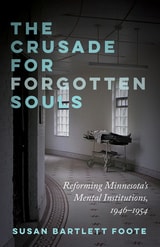
The Crusade for Forgotten Souls
Reforming Minnesota's Mental Institutions, 1946–1954Susan Bartlett Foote
University of Minnesota Press, 2018
Winner of the 2019 Minnesota Book Award for Minnesota Nonfiction
The stirring story of the reform movement that laid the groundwork for a modern mental health system in Minnesota
In 1940 Engla Schey, the daughter of Norwegian immigrants, took a job as a low-paid attendant at Anoka State Hospital, one of Minnesota’s seven asylums. She would work among people who were locked away under the shameful label “insane,” called inmates—and numbered more than 12,000 throughout the state. She acquired the knowledge and passion that would lead to “The Crusade for Forgotten Souls,” a campaign to reform the deplorable condition of mental institutions in Minnesota. This book chronicles that remarkable undertaking inspired and carried forward by ordinary people under the political leadership of Luther Youngdahl, a Swedish Republican who was the state’s governor from 1946 to 1951.
Susan Bartlett Foote tells the story of those who made the crusade a success: Engla Schey, the catalyst; Reverend Arthur Foote, a modest visionary who guided Unitarians to constructive advocacy; Genevieve Steefel, an inveterate patient activist; and Geri Hoffner, an intrepid reporter whose twelve-part series for the Minneapolis Tribune galvanized the public. These reformers overcame barriers of class, ethnicity, and gender to stand behind the governor, who, at a turbulent moment in Minnesota politics, challenged his own party’s resistance to reform. The Crusade for Forgotten Souls recounts how these efforts broke the stigma of shame and silence surrounding mental illness, publicized the painful truth about the state’s asylums, built support among citizens, and resulted in the first legislative steps toward a modern mental health system that catapulted Minnesota to national leadership and empowered families of the mentally ill and disabled. Though their vision met resistance, the accomplishments of these early advocates for compassionate care of the mentally ill hold many lessons that resonate to this day, as this book makes compellingly clear.
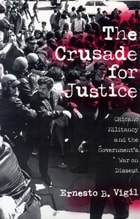
The Crusade for Justice
Chicano Militancy and the Government's War on DissentErnesto B. Vigil
University of Wisconsin Press, 1999
This definitive account of the Chicano movement in 1960s Denver reveals the intolerance and brutality that inspired and accompanied the urban Chicano organization known as the Crusade for Justice. Ernesto Vigil, an expert in the discourse of radical movements of this time, joined the Crusade as a young draft resistor where he met Rodolfo “Corky” Gonzales, the founder of the CFJ. Vigil follows the movement chronologically from Gonzales’s early attempts to fight discrimination as a participant in local democratic politics to his radical stance as an organizer outside mainstream politics.
Drawing extensively upon FBI documentation that became available under the Freedom of Information Act, Vigil exposes massive surveillance of the Crusade for Justice by federal agents and local police and the damaging effects of such methods on ethnic liberation movements. Vigil complements these documents and the story of Gonzales’s development as a radical with the story of his personal involvement in the movement. The Crusade for Justice describes one of the most important Chicano organizations against prejudice.
The Cuban Counterrevolution
Jesús Arboleya
Ohio University Press, 2000
For forty years the Cuban Revolution has been at the forefront of American public opinion, yet few are knowledgeable about the history of its enemies and the responsibility of the U.S. government in organizing and sustaining the Cuban counterrevolution. Available in English for the first time, this outstanding study by Cuban historian and former diplomat Jesús Arboleya traces the evolution of the counterrevolutionary movement from its beginnings before 1959, to its transformation into the Cuban-American groups that today dominate U.S. policy toward Cuba. Arboleya also analyzes the role played by Cuban immigrants to the U.S. and the perspectives for improvement in relations between the two nations as a result of the generational and social changes that have been occurring in the Cuban-American community.
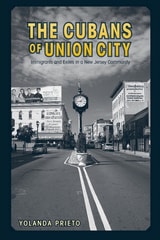
The Cubans of Union City
Immigrants and Exiles in a New Jersey CommunityYolanda Prieto
Temple University Press, 2009
As a result of the conflicts between Cuba and the United States, especially after 1959, Cubans immigrated in great numbers. Most stayed in Miami, but many headed north to Union City, making it second only to Miami in its concentration of Cubans. In The Cubans of Union City, Yolanda Prieto discusses why Cubans were drawn to this particular city and how the local economy and organizations developed. Central aspects of this story are the roles of women, religion, political culture, and the fact of exile itself.
As a member of this community and a participant in many of its activities, Prieto speaks with special authority about its demographic uniqueness. Far from being a snapshot of the community, The Cubans of Union City conveys an ongoing research agenda extending over more than twenty years, from 1959 to the 1980s. As a long-term observer who was also a resident, Prieto offers a unique and insightful view of the dynamics of this community’s evolution.
The Culinarians
Lives and Careers from the First Age of American Fine DiningDavid S. Shields
University of Chicago Press, 2017
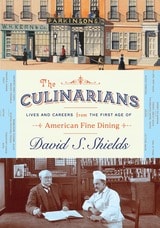
This fascinating culinarian is John Dabney (1821–1900), who was born a slave, but later built an enterprising catering business. Dabney is just one of 175 influential cooks and restaurateurs profiled by David S. Shields in The Culinarians, a beautifully produced encyclopedic history of the rise of professional cooking in America from the early republic to Prohibition.
Shields’s concise biographies include the legendary Julien, founder in 1793 of America’s first restaurant, Boston’s Restorator; and Louis Diat and Oscar of the Waldorf, the men most responsible for keeping the ideal of fine dining alive between the World Wars. Though many of the gastronomic pioneers gathered here are less well known, their diverse influence on American dining should not be overlooked—plus, their stories are truly entertaining. We meet an African American oyster dealer who became the Congressional caterer, and, thus, a powerful broker of political patronage; a French chef who was a culinary savant of vegetables and drove the rise of California cuisine in the 1870s; and a rotund Philadelphia confectioner who prevailed in a culinary contest with a rival in New York by staging what many believed to be the greatest American meal of the nineteenth century. He later grew wealthy selling ice cream to the masses. Shields also introduces us to a French chef who brought haute cuisine to wealthy prospectors and a black restaurateur who hosted a reconciliation dinner for black and white citizens at the close of the Civil War in Charleston.
Altogether, Culinarians is a delightful compendium of charcuterie-makers, pastry-pipers, caterers, railroad chefs, and cooking school matrons—not to mention drunks, temperance converts, and gangsters—who all had a hand in creating the first age of American fine dining and its legacy of conviviality and innovation that continues today.
The Cult Film Experience
Beyond All ReasonEdited by J. P. Telotte
University of Texas Press, 1991
"Play it again, Sam" is the motto of cult film enthusiasts, who will watch their favorite movie over and over, "beyond all reason." What is the appeal of cult movies? Why do fans turn up in droves at midnight movies or sit through the same three-hanky classics from Hollywood's golden era? These are some of the questions J. P. Telotte and twelve other noted film scholars consider in this groundbreaking study of the cult film.
The book identifies two basic types of cult films—older Hollywood movies, such as Casablanca, that have developed a cult following and "midnight movies," most notably The Rocky Horror Picture Show. Telotte, Bruce Kawin, and Timothy Corrigan offer thought-provoking discussions about why these two types of movies become cult films, the sort of audience they attract, and the needs they fulfill for that audience. Subsequent essays employ a variety of cultural, feminist, ideological, and poststructural strategies for exploring these films.
In a section on the classical cult film, the movie Casablanca receives extensive treatment. An essay by T. J. Ross considers Beat the Devil as a send-up of cult films, while another essay by Wade Jennings analyzes the cult star phenomenon as personified in Judy Garland.
"Midnight movie madness" is explored in essays on The Rocky Horror Picture Show, movie satires of the 1950s, science fiction double features, and horror thrillers.
Illustrated with scenes from favorite movies and written for both fans and scholars, The Cult Film Experience will appeal to a wider audience than the "usual suspects."
The Cult Of The Court
John Brigham
Temple University Press, 1991
In recent years widespread attention has been focused on decisions handed down by the Supreme Court that grapple with passionate issues: integration, school prayer, abortion, affirmative action. The appointment of new justices is a highly charged political event although the Court is supposed to be "above" politics. Amidst the bicentennial celebration of the Constitution and almost daily reports of major confrontations awaiting the highest court’s judicial review, John Brigham presents a fresh and innovative examination of the U.S. Supreme Court as the final arbiter of constitutional interpretation.
Drawing on philosophy and anthropology, The Cult of the Court offers a social scientific investigation of an institution whose authority has come to be taken for granted. The author emphasizes that the Court is an institution and that its authority is founded less in the claim of legal expertise than in hierarchical finality—the assertion of political will, not of legal judgment. He shows how the Court has supplanted the Constitution as the authority in our political world and that what makes legal "sense" is affected by these factors of institutionalization, bureaucratization, and court-dominated constitutionalism.
The Cult of Creativity
A Surprisingly Recent HistorySamuel W. Franklin
University of Chicago Press, 2023
Creativity is one of American society’s signature values, but the idea that there is such a thing as “creativity”—and that it can be cultivated—is surprisingly recent, entering our everyday speech in the 1950s. As Samuel W. Franklin reveals, postwar Americans created creativity, through campaigns to define and harness the power of the individual to meet the demands of American capitalism and life under the Cold War. Creativity was championed by a cluster of professionals—psychologists, engineers, and advertising people—as a cure for the conformity and alienation they feared was stifling American ingenuity. It was touted as a force of individualism and the human spirit, a new middle-class aspiration that suited the needs of corporate America and the spirit of anticommunism.
Amid increasingly rigid systems, creativity took on an air of romance; it was a more democratic quality than genius, but more rarified than mere intelligence. The term eluded clear definition, allowing all sorts of people and institutions to claim it as a solution to their problems, from corporate dullness to urban decline. Today, when creativity is constantly sought after, quantified, and maximized, Franklin’s eye-opening history of the concept helps us to see what it really is, and whom it really serves.

The Cult of Pharmacology
How America Became the World's Most Troubled Drug CultureRichard DeGrandpre
Duke University Press, 2006
Exploring how this rather benign relationship with psychoactive drugs was transformed into one of confusion and chaos, The Cult of Pharmacology tells the dramatic story of how, as one legal drug after another fell from grace, new pharmaceutical substances took their place. Whether Valium or OxyContin at the pharmacy, cocaine or meth purchased on the street, or alcohol and tobacco from the corner store, drugs and drug use proliferated in twentieth-century America despite an escalating war on “drugs.”
Richard DeGrandpre, a past fellow of the National Institute on Drug Abuse and author of the best-selling book Ritalin Nation, delivers a remarkably original interpretation of drugs by examining the seductive but ill-fated belief that they are chemically predestined to be either good or evil. He argues that the determination to treat the medically sanctioned use of drugs such as Miltown or Seconal separately from the illicit use of substances like heroin or ecstasy has blinded America to how drugs are transformed by the manner in which a culture deals with them.
Bringing forth a wealth of scientific research showing the powerful influence of social and psychological factors on how the brain is affected by drugs, DeGrandpre demonstrates that psychoactive substances are not angels or demons irrespective of why, how, or by whom they are used. The Cult of Pharmacology is a bold and necessary new account of America’s complex relationship with drugs.
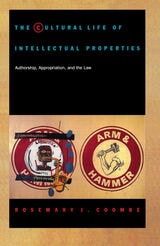
The Cultural Life of Intellectual Properties
Authorship, Appropriation, and the LawRosemary J. Coombe
Duke University Press, 1998
Although such artifacts are ubiquitous in contemporary culture, little attention has been paid to the impact of intellectual property law in everyday life or to how ownership of specific intellectual properties is determined and exercised. Drawing on a wide range of cases, disputes, and local struggles, Coombe examines these issues and dismantles the legal assumption that the meaning and value of a text or image is produced exclusively by an individual author or that authorship has a single point of origin. In the process, she examines controversies that include the service of turbanned Sikhs in the Royal Canadian Mounted Police and the use of the term Olympic in reference to the proposed gay Olympic Games. Other chapters discuss the appropriation of such celebrity images as the Marx brothers, Judy Garland, Dolly Parton, James Dean, and Luke Skywalker; the conflict over team names such as the Washington Redskins; and the opposition of indigenous peoples to stereotypical Native American insignia proffered by the entertainment industry. Ultimately, she makes a case for redefining the political in commodified cultural environments.
Significant for its insights into the political significance of current intellectual property law, this book also provides new perspectives on debates in cultural anthropology, cultural studies, and political theory. It will therefore interest both a wide scholarly and a general audience.
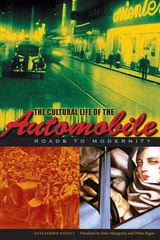
The Cultural Life of the Automobile
Roads to ModernityBy Guillermo Giucci
University of Texas Press, 2012
From its invention in Europe at the end of the nineteenth century, the automobile crisscrossed the world, completely took over the cities, and became a feature of daily life. Considered basic to the American lifestyle, the car reflected individualism, pragmatism, comfort, and above all modernity. In Latin America, it served as a symbol of distinction, similar to jewelry or fine clothing. In The Cultural Life of the Automobile, Guillermo Giucci focuses on the automobile as an instrument of social change through its “kinetic modernity” and as an embodiment of the tremendous social impact of technology on cultural life.
Material culture—how certain objects generate a wide array of cultural responses—has been the focus of much scholarly discussion in recent years. The automobile wrought major changes and inspired images in language, literature, and popular culture. Focusing primarily on Latin America but also covering the United States, Europe, Asia, and Africa, Giucci examines how the automobile was variously adapted by different cultures and how its use shaped and changed social and economic relationships within them. At the same time, he shows how the “automobilization” of society became an essential support for the development of modern individualism, and the automobile its clearest material manifestation.
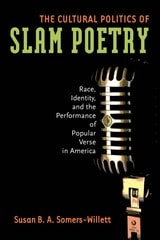
The Cultural Politics of Slam Poetry
Race, Identity, and the Performance of Popular Verse in AmericaSusan B. A. Somers-Willett
University of Michigan Press, 2010
"For a lucid and thorough 'real-world' analysis of the movement from the ground-up--including its history, aesthetics, and culture, there is surely no better place to start than Somers-Willett's trailblazing book."
--- Jerome Sala, Pleiades
"Finally, a clear, accurate, and thoroughly researched examination of slam poetry, a movement begun in 1984 by a mixed bag of nobody poets in Chicago. At conception, slam poetry espoused universal humanistic ideals and a broad spectrum of participants, and especially welcome is the book's analysis of how commercial marketing forces succeeded in narrowing public perception of slam to the factionalized politics of race and identity. The author's knowledge of American slam at the national level is solid and more authentic than many of the slammers who claim to be."
---Marc Kelly Smith, founder/creator of the International Poetry Slam movement
The cultural phenomenon known as slam poetry was born some twenty years ago in white working-class Chicago barrooms. Since then, the raucous competitions have spread internationally, launching a number of annual tournaments, inspiring a generation of young poets, and spawning a commercial empire in which poetry and hip-hop merge.
The Cultural Politics of Slam Poetry is the first critical book to take an in-depth look at slam, shedding light on the relationships that slam poets build with their audiences through race and identity performance and revealing how poets come to celebrate (and at times exploit) the politics of difference in American culture.
With a special focus on African American poets, Susan B. A. Somers-Willett explores the pros and cons of identity representation in the commercial arena of spoken word poetry and, in doing so, situates slam within a history of verse performance, from blackface minstrelsy to Def Poetry. What's revealed is a race-based dynamic of authenticity lying at the heart of American culture. Rather than being mere reflections of culture, Somers-Willett argues, slams are culture---sites where identities and political values get publicly refigured and exchanged between poets and audiences.
Susan B. A. Somers-Willett is a decade-long veteran of slam and teaches creative writing and poetics as an Assistant Professor of English at Montclair State University. She is the author of two books of poetry, Quiver and Roam. Visit the author's website at: http://www.susansw.com/.
Photo by Jennifer Lacy.
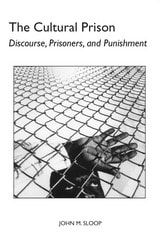
The Cultural Prison
Discourse, Prisoners, and PunishmentJohn M. Sloop
University of Alabama Press, 2005
The Cultural Prison brings a new dimension to the study of prisoners and punishment by focusing on how the punishment of American offenders is represented and shaped in the mass media through public arguments. The study is based on an analysis of 642 articles collected by the author from American popular journals and magazines, as well as newspaper accounts, films, and public speeches, spanning the years 1950 to 1992. By piecing together and studying these popular narratives, he divides the history of prisoners and punishment into four eras, each marked by a shift in value system. He argues that the discourse, or rhetoric, surrounding prisoners and punishment on the public level works as a historical force that shapes contemporary culture.
The author is concerned that the public seems to have an inability or unwillingness to question or resist cultural definitions of normalcy and legal behavior. He explains that ideally moral behavior should be a matter of public debate rather than of unquestioned perpetuation, and he urges increased understanding of institutional and cultural discipline and our questioning the ways in which the constitution of punishment and prisoners influences us culturally.
The"cultural prison" refers to the way in which this study acts as an investigation of "the discipline of discipline"; it is an examination of the way in which discipline is shaped and formed in public discourse. The volume concludes with a fascinating account of the move to electronic means of surveillance; coupled with the representations of the prisoner along the lines of race and gender, it explains what these new techniques mean to contemporary culture.
The Cultural Study of Law
Reconstructing Legal ScholarshipPaul W. Kahn
University of Chicago Press, 1999
"Professor Kahn's perspective is neat and alluring: We need a form of legal scholarship released from the project of reform so that we can better understand who and what we are. The new discipline should study 'not legal rules, but the imagination as it constructs a world of legal meaning.' . . . [C]oncise, good reading, and recommended." —New York Law Journal
The Cultural Territories of Race
Black and White BoundariesEdited by Michèle Lamont
University of Chicago Press, 1999
These essays examine the cultural territories of race through topics such as blacks' strategies for dealing with racism, public categories for definition of race, and definitions of rules for cultural memberships. Empirically grounded, these studies analyze divisions among blacks according to their relationships with whites or with alternative black culture; differences among whites regarding their attitudes toward blacks; and differences both among blacks and between blacks and whites, in their cultural understandings of various aspects of social life ranging from material success to marital life and to ideas about feminism. The essays teach us about the largely underexamined cultural universes of black executives, upwardly mobile college students, fast-food industry workers, so-called deadbeat dads, and proponents of Afrocentric curricula.
The Cultural Territories of Race makes an important contribution to current policy debates by amplifying muted voices that have too often been ignored by other social scientists.
Contributors are: Elijah Anderson, Amy Binder, Bethany Bryson, Michael C. Dawson, Catherine Ellis, Herbert J. Gans, Jennifer L. Hochschild, Michèle Lamont, Jane J. Mansbridge, Katherine S. Newman, Maureen R. Waller, Pamela Barnhouse Walters, Mary C. Waters, Julia Wrigley, Alford A. Young Jr.
The Cultural Turn in U. S. History
Past, Present, and FutureEdited by James W. Cook, Lawrence B. Glickman, and Michael O'Malley
University of Chicago Press, 2008
The Culture and Acculturation of the Delaware Indians
William W. Newcomb, Jr.
University of Michigan Press, 1956
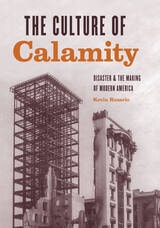
The Culture of Calamity
Disaster and the Making of Modern AmericaKevin Rozario
University of Chicago Press, 2007
Turn on the news and it looks as if we live in a time and place unusually consumed by the specter of disaster. The events of 9/11 and the promise of future attacks, Hurricane Katrina and the destruction of New Orleans, and the inevitable consequences of environmental devastation all contribute to an atmosphere of imminent doom. But reading an account of the San Francisco earthquake of 1906, with its vivid evocation of buildings “crumbling as one might crush a biscuit,” we see that calamities—whether natural or man-made—have long had an impact on the American consciousness.
Uncovering the history of Americans’ responses to disaster from their colonial past up to the present, Kevin Rozario reveals the vital role that calamity—and our abiding fascination with it—has played in the development of this nation. Beginning with the Puritan view of disaster as God’s instrument of correction, Rozario explores how catastrophic events frequently inspired positive reactions. He argues that they have shaped American life by providing an opportunity to take stock of our values and social institutions. Destruction leads naturally to rebuilding, and here we learn that disasters have been a boon to capitalism, and, paradoxically, indispensable to the construction of dominant American ideas of progress.
As Rozario turns to the present, he finds that the impulse to respond creatively to disasters is mitigated by a mania for security. Terror alerts and duct tape represent the cynical politician’s attitude about 9/11, but Rozario focuses on how the attacks registered in the popular imagination—how responses to genuine calamity were mediated by the hyperreal thrills of movies; how apocalyptic literature, like the best-selling Left Behind series, recycles Puritan religious outlooks while adopting Hollywood’s style; and how the convergence of these two ways of imagining disaster points to a new postmodern culture of calamity. The Culture of Calamity will stand as the definitive diagnosis of the peculiarly American addiction to the spectacle of destruction.

The Culture of Control
Crime and Social Order in Contemporary SocietyDavid Garland
University of Chicago Press, 2001
Garland explains how the new policies of crime and punishment, welfare and security—and the changing class, race, and gender relations that underpin them—are linked to the fundamental problems of governing contemporary societies, as states, corporations, and private citizens grapple with a volatile economy and a culture that combines expanded personal freedom with relaxed social controls. It is the risky, unfixed character of modern life that underlies our accelerating concern with control and crime control in particular. It is not just crime that has changed; society has changed as well, and this transformation has reshaped criminological thought, public policy, and the cultural meaning of crime and criminals. David Garland's The Culture of Control offers a brilliant guide to this process and its still-reverberating consequences.
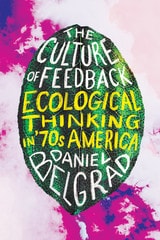
The Culture of Feedback
Ecological Thinking in Seventies AmericaDaniel Belgrad
University of Chicago Press, 2019
The Culture of Feedback digs deep into a dazzling variety of left-of-center experiences and attitudes from this misunderstood period, bringing us a new look at the wild side of the 1970s. Belgrad shows us how ideas from systems theory were taken up by the counterculture and the environmental movement, eventually influencing a wide range of beliefs and behaviors, particularly related to the question of what is and is not intelligence. He tells the story of a generation of Americans who were struck by a newfound interest in—and respect for—plants, animals, indigenous populations, and the very sounds around them, threading his tapestry with cogent insights on environmentalism, feminism, systems theory, and psychedelics. The Culture of Feedback repaints the familiar image of the ’70s as a time of Me Generation malaise to reveal an era of revolutionary and hopeful social currents, driven by desires to radically improve—and feed back into—the systems that had come before.

The Culture of Inequality
Michael Lewis
University of Massachusetts Press, 1993
Why do America’s wars against poverty turn out to be wards against the poor? Why does a nation so committed to fighting crime show such a bad record of combatting it and so morbid a fascination with it? Why is American racism so deeply rooted?
These and other questions are answered in this milestone study. Its central thesis is that the national faith in individual initiative and free opportunity has become a breeding ground for guilt about our own limited successes and prejudice against all who exhibit signs of failure.
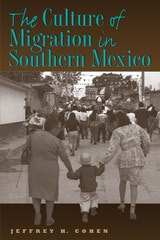
The Culture of Migration in Southern Mexico
By Jeffrey H. Cohen
University of Texas Press, 2004
Migration is a way of life for many individuals and even families in the Mexican state of Oaxaca. Some who leave their rural communities go only as far as the state capital, while others migrate to other parts of Mexico and to the United States. Most send money back to their communities, and many return to their homes after a few years. Migration offers Oaxacans economic opportunities that are not always available locally—but it also creates burdens for those who stay behind.
This book explores the complex constellation of factors that cause rural Oaxacans to migrate, the historical and contemporary patterns of their migration, the effects of migration on families and communities, and the economic, cultural, and social reasons why many Oaxacans choose not to migrate. Jeffrey Cohen draws on fieldwork and survey data from twelve communities in the central valleys of Oaxaca to give an encompassing view of the factors that drive migration and determine its outcomes. He demonstrates conclusively that, while migration is an effective way to make a living, no single model can explain the patterns of migration in southern Mexico.
The Culture of Spontaneity
Improvisation and the Arts in Postwar AmericaDaniel Belgrad
University of Chicago Press, 1998
"A compelling narrative, putting living flesh on shorthand intuitions that connect North Beach to Black Mountain College, Fenollosa to Pollock, Jackson Lears's No Place of Grace to Todd Gitlin's The Sixties."—Joel Smith, Boston Review
"An invaluable introduction to postwar modernism across the arts."—Thomas Augst, Boston Book Review
"Belgrad's extensive probing of the artists and movements with their profound sociological roots is timely as well as comprehensive....A major contribution for serious scholars."—Choice
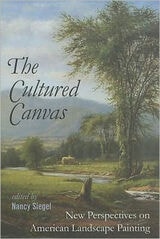
The Cultured Canvas
New Perspectives on American Landscape PaintingNancy Siegel
University of New Hampshire Press, 2012
Written from aesthetic, sociopolitical, cultural, and literary perspectives, The Cultured Canvas explores myriad ways in which American visual culture can be evaluated through newly conceived thematic and ideological approaches. This book moves beyond our accepted notion of the oil painting on canvas to consider the term as both a literal and figurative surface upon which artists construct or construe the landscape as an intellectual, cultural, or physical entity. It provides an innovative reevaluation of traditional thought concerning the Hudson River School, Luminism, and artists of the Civil War era.
As interdisciplinary emphases are employed with increasing frequency in arts and humanities courses, the breadth and depth of topics covered in this collection will provide a much-needed text for scholars in American art history, nineteenth-century American studies, and landscape studies, in addition to serving as a complement to courses in American literature and culture.
Hardcover is un-jacketed.
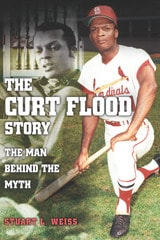
The Curt Flood Story
The Man behind the MythStuart L. Weiss
University of Missouri Press, 2018
Curt Flood, former star center fielder for the St. Louis Cardinals, is a hero to many for selflessly sacrificing his career to challenge the legality of baseball’s reserve system. Although he lost his case before the Supreme Court, he has become for many a martyr in the eventually successful battle for free agency. Sportswriters and fans alike have helped to paint a picture of Flood as a larger-than-life figure, a portrait that, unhappily, cannot stand closer inspection. This book reveals the real Curt Flood—more man than myth.
Flood stirred up a hornet’s nest by refusing to be traded from the Cardinals to the Philadelphia Phillies after the 1969 season, arguing that Major League Baseball’s reserve system reduced him to the status of bondage. Flood decided to resist a system in which his contract could be traded without his consent and in which he was not at liberty to negotiate his services in an open market. Stuart Weiss examines the man behind the decision, exploring the span of Flood’s life and shedding light on his relationships with those who helped shape his determination to sue baseball and providing a new perspective on the lawsuit that found its way to the U.S. Supreme Court.
Although a superb player, Flood was known to be temperamental and sensitive; in suing Major League Baseball he transformed his grievances against the Cardinals front office into an attack on how the business of big-league ball was conducted. Weiss shows that Flood was far from the stereotypical “dumb jock” but was rather a proud, multifaceted black man in a business run by white moguls. By illuminating Flood’s private side, rarely seen by the public, he reveals how Flood misled a gullible press on a regular basis and how his 1971 memoir, The Way It Is, didn’t tell it the way it really was.
Drawing on previously untapped sources, Weiss examines more fully and deeply than other writers the complexities of Flood’s decision to pursue his lawsuit—and demonstrates that the picture of Flood as a martyr for free agency is a myth. He suggests why, of all the players traded or sold through the years, it was Flood who brought this challenge. Weiss also explains how Flood’s battle against the reserve system cannot be understood in isolation from the personal experiences that precipitated it, such as his youth in a dysfunctional home, his troubled first marriage, his financial problems, and his unwavering commitment to the Cardinals.
The Curt Flood Story is a realistic account of an eloquent man who presented a warm, even vulnerable, face to the public as well as to friends, while hiding his inner furies. It shows that Flood was neither a hero nor a martyr but a victim of unique circumstances and his own life.
The Cybernetic Border
Drones, Technology, and IntrusionIván Chaar López
Duke University Press, 2024
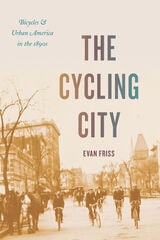
The Cycling City
Bicycles and Urban America in the 1890sEvan Friss
University of Chicago Press, 2015
The Cycling City is a sharp history of the bicycle’s rise and fall in the late nineteenth century. In the 1890s, American cities were home to more cyclists, more cycling infrastructure, more bicycle friendly legislation, and a richer cycling culture than anywhere else in the world. Evan Friss unearths the hidden history of the cycling city, demonstrating that diverse groups of cyclists managed to remap cities with new roads, paths, and laws, challenge social conventions, and even dream up a new urban ideal inspired by the bicycle. When cities were chaotic and filthy, bicycle advocates imagined an improved landscape in which pollution was negligible, transportation was silent and rapid, leisure spaces were democratic, and the divisions between city and country were blurred. Friss argues that when the utopian vision of a cycling city faded by the turn of the century, its death paved the way for today’s car-centric cities—and ended the prospect of a true American cycling city ever being built.

The Cycling City
Bicycles and Urban America in the 1890sEvan Friss
University of Chicago Press, 2015
Cycling has experienced a renaissance in the United States, as cities around the country promote the bicycle as an alternative means of transportation. In the process, debates about the nature of bicycles—where they belong, how they should be ridden, how cities should or should not accommodate them—have played out in the media, on city streets, and in city halls. Very few people recognize, however, that these questions are more than a century old.
The Cycling City is a sharp history of the bicycle’s rise and fall in the late nineteenth century. In the 1890s, American cities were home to more cyclists, more cycling infrastructure, more bicycle friendly legislation, and a richer cycling culture than anywhere else in the world. Evan Friss unearths the hidden history of the cycling city, demonstrating that diverse groups of cyclists managed to remap cities with new roads, paths, and laws, challenge social conventions, and even dream up a new urban ideal inspired by the bicycle. When cities were chaotic and filthy, bicycle advocates imagined an improved landscape in which pollution was negligible, transportation was silent and rapid, leisure spaces were democratic, and the divisions between city and country were blurred. Friss argues that when the utopian vision of a cycling city faded by the turn of the century, its death paved the way for today’s car-centric cities—and ended the prospect of a true American cycling city ever being built.
The Cynical Society
The Culture of Politics and the Politics of Culture in American LifeJeffrey C. Goldfarb
University of Chicago Press, 1991
The Cypress and Other Writings of a German Pioneer in Texas
By Hermann Seele
University of Texas Press, 1979
When Hermann Seele anived in New Braunfels in 1845, the raw colony was plagued by poverty, disease, lack of food, and hostile Indians. This personal record of the Germans in Texas shows their evolution from struggling colonists to prosperous citizens.
From his viewpoint of a hardworking yet imaginative pioneer, Seele presents first a history of German immigration and settlement in Texas during the nineteenth century. Next, his autobiographical writings range from a "sentimental recollection" of his first Christmas Eve in Texas to his first day of teaching in New Braunfels, from accounts of the popular singing society to murder and justice along the Comal River. In addition, Seele's romantic novel, The Cypress, is a delightful though improbable tale of a traveling botanist, a chieftain's daughter, and a savage Indian cult.
Hermann Seele—farmer, lawyer, teacher, lay preacher, mayor, state representative, Civil War major, and editor—epitomizes the best of the German immigrants who established their communities as models of respectability and prosperity.
The Daily Thomas Paine
A Year of Common-Sense Quotes for a Nonsensical AgeThomas Paine
University of Chicago Press, 2020
The Daily Thomas Paine offers a year’s worth of pithy and provocative quotes from this quintessentially American figure. Editor Edward G. Gray argues that we are living in a moment that Thomas Paine might recognize—or perhaps more precisely, a moment desperate for someone whose rhetoric can ignite a large-scale social and political transformation. Paine was a master of political rhetoric, from the sarcastic insult to the diplomatic aperçu, and this book offers a sleek and approachable sampler of some of the sharpest bits from his oeuvre. As Paine himself says in the entry for January 20: “The present state of America is truly alarming to every man who is capable of reflexion.” The Daily Thomas Paine should prove equally incendiary and inspirational for contemporary readers with an eye for politics, even those who prefer the tweet to the pamphlet.
The Daley Show
Inside the Transformative Reign of Chicago's Richard M. DaleyForrest Claypool; Foreword by David Axelrod
University of Illinois Press, 2024
American cities once had mayors who actually governed.
For twenty-two years, Richard M. Daley ran Chicago with the type of authority that is unthinkable today. He reshaped downtown, triggered a jobs boom, delivered the iconic Millennium Park, turned around troubled public schools, and slashed violent crime to 40-year lows. He outfoxed Republican legislators to retain control of O’Hare Airport and expand it into the nation’s premier international aviation hub. Leveraging carefully built national political ties, he sidelined a powerful nemesis to tear down Chicago’s infamous public housing projects.
Rebuilding parts of his father’s legendary political machine through brazen (and illegal) patronage deals, he centralized power to a remarkable degree, cut deals behind closed doors, racked up piles of debt, and made long-term bets whose consequences are still unfolding.
This is not simply a biography. It is a challenge to contemporary urban orthodoxy:
Do cities thrive because of strong, decisive leaders—or despite them?
Through vivid storytelling, this book exposes how Daley consolidated power, aligned business and labor, navigated crises, survived damaging scandals, and imposed discipline on a sprawling city. It dares readers to reconsider what kind of leadership modern American cities truly need.
The Dallas Myth
The Making and Unmaking of an American CityHarvey J. Graff
University of Minnesota Press, 2010
In The Dallas Myth, Harvey J. Graff presents a novel interpretation of a city that has proudly declared its freedom from the past. He scrutinizes the city's origin myth and its governance ideology, known as the "Dallas Way," looking at how these elements have shaped Dallas and served to limit democratic participation and exacerbate inequality. Advancing beyond a traditional historical perspective, Graff proposes an original, integrative understanding of the city's urban fabric and offers an explicit critique of the reactionary political foundations of modern Dallas: its tolerance for right-wing political violence, the endemic racism and xenophobia, and a planning model that privileges growth and monumental architecture at the expense of the environment and social justice.
Revealing the power of myths that have defined the city for so long, Graff presents a new interpretation of Dallas that both deepens our understanding of America's urban landscape and enables its residents to envision a more equitable, humane, and democratic future for all.

The Dallas Story
The North American Aviation Plant and Industrial Mobilization during World War IITerrance Furgerson
University of North Texas Press, 2023
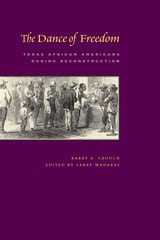
The Dance of Freedom
Texas African Americans during ReconstructionBy Barry Crouch
University of Texas Press, 2007
This anthology brings together the late Barry A. Crouch's most important articles on the African American experience in Texas during Reconstruction. Grouped topically, the essays explore what freedom meant to the newly emancipated, how white Texans reacted to the freed slaves, and how Freedmen's Bureau agents and African American politicians worked to improve the lot of ordinary African American Texans. The volume also contains Crouch's seminal review of Reconstruction historiography, "Unmanacling Texas Reconstruction: A Twenty-Year Perspective." The introductory pieces by Arnoldo De Leon and Larry Madaras recapitulate Barry Crouch's scholarly career and pay tribute to his stature in the field of Reconstruction history.
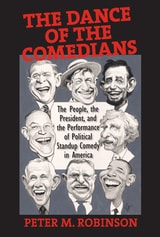
The Dance of the Comedians
The People, the President, and the Performance of Political Standup Comedy in AmericaPeter M. Robinson
University of Massachusetts Press, 2010
Why did Barack Obama court Jon Stewart and trade jokes with Stephen Colbert during the campaign of 2008? Why did Sarah Palin forgo the opportunity to earn votes on the Sunday morning political talk shows but embrace the chance to get laughs on Saturday Night Live? The Dance of the Comedians examines the history behind these questions—the merry, mocking, and highly contested anarchies of standup political comedy that have locked humorists, presidents, and their fellow Americans in an improvisational three-way “dance” since the early years of the American republic.
Peter M. Robinson shows how the performance of political humor developed as a celebration of democracy and an expression of political power, protest, and commercial profit. He places special significance on the middle half of the twentieth century, when presidents and comedians alike—from Calvin Coolidge to Ronald Reagan, from Will Rogers to Saturday Night Live's “Not Ready for Prime Time Players”—developed modern understandings of the power of laughter to affect popular opinion and political agendas, only to find the American audience increasingly willing and able to get in on the act. These years put the long-standing traditions of presidential deference profoundly in play as all three parties to American political humor—the people, the presidents, and the comedy professionals—negotiated their way between reverence for the office of the presidency and ridicule of its occupants.
Although the focus is on humor, The Dance of the Comedians illuminates the process by which Americans have come to recognize that the performance of political comedy has serious and profound consequences for those on all sides of the punch line.
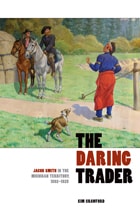
The Daring Trader
Jacob Smith in the Michigan Territory, 1802-1825Kim Crawford
Michigan State University Press, 2012
A fur trader in the Michigan Territory and confidant of both the U.S. government and local Indian tribes, Jacob Smith could have stepped out of a James Fenimore Cooper novel. Controversial, mysterious, and bold during his lifetime, in death Smith has not, until now, received the attention he deserves as a pivotal figure in Michigan’s American period and the War of 1812. This is the exciting and unlikely story of a man at the frontier’s edge, whose missions during both war and peace laid the groundwork for Michigan to accommodate settlers and farmers moving west. The book investigates Smith’s many pursuits, including his role as an advisor to the Indians, from whom the federal government would gradually gain millions of acres of land, due in large part to Smith’s work as an agent of influence. Crawford paints a colorful portrait of a complicated man during a dynamic period of change in Michigan’s history.
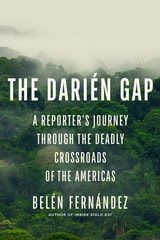
The Darién Gap
A Reporter's Journey through the Deadly Crossroads of the AmericasBelén Fernández
Rutgers University Press, 2025
The narrow Darién Gap, the only land bridge connecting South and Central America, encompasses a spectacularly hostile jungle, covered in steep mountains, dense rainforests, and flood-prone marshes. Known in Spanish as el infierno verde, or “the green hell,” it is one of the most inhospitable places in the world. Its terrain is too treacherous for roads, yet hundreds of thousands of refuge seekers contend with its horrors every year in the hopes of reaching the United States, still some three thousand miles away. And of the countless who set out for the border, an untold number never arrive.
In this book, journalist Belén Fernández travels through the Darién Gap to report on the dehumanizing and deadly stretch of land that has become a mass graveyard for migrants. Fernández’s journey brings her into contact with refuge seekers, people smugglers, law enforcement officials, and many more whose stories bring life to a place overwhelmingly associated with death. Combining history, on-the-ground reporting, travelogue, memoir, and searing politico-economic analysis, she shines light on a largely made-in-the-USA crisis that has come to define our modern era.
Engrossing and heartrending, The Darién Gap is a poignant and compassionate indictment of structural inequality and institutionalized inhumanity in a world where the have-nots must risk death for a chance at a better life—or any life at all.
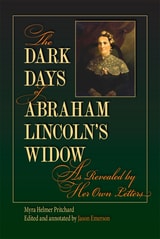
The Dark Days of Abraham Lincoln's Widow, as Revealed by Her Own Letters
Myra Helmer Pritchard, edited and annotated by Jason Emerson
Southern Illinois University Press, 2011
Written in 1927 but barred from timely publication by the Lincoln family, The Dark Days of Abraham Lincoln's Widow, as Revealed by Her Own Letters is based on nearly two dozen intimate letters written between Mary Lincoln and her close friend Myra Bradwell mainly during the former's 1875 incarceration in an insane asylum. By the 1920s most accounts of Mrs. Lincoln focused on her negative qualities and dismissed her as "crazy." Bradwell's granddaughter Myra Helmer Pritchard wrote this distinctly sympathetic manuscript at the behest of her mother, who wished to vindicate Mary Lincoln in the public eye by printing the private correspondence. Pritchard fervently defends Mrs. Lincoln's conduct and sanity, arguing that she was not insane but rather the victim of an overzealous son who had his mother committed.
The manuscript and letters were thought to have been destroyed, but fortunately the Lincolns' family lawyer stored copies in a trunk, where historian Jason Emerson discovered them in 2005. While leaving the manuscript intact, Emerson has enhanced it with an introduction and detailed annotations. He fills in factual gaps; provides background on names, places, and dates; and analyzes Pritchard's interpretations, making clear where she was right and where her passion to protect Mrs. Lincoln led to less than meticulous research and incorrect conclusions. This volume features an easy-to-follow format that showcases Pritchard's text on the left-hand pages and Emerson's insightful annotations on the right-hand pages.
Following one of the most revered and reviled, famous and infamous of the First Ladies, this book provides a unique perspective of Mrs. Lincoln's post-White House years, with an emphasis on her commitment to a sanitarium. Emerson's contributions make this volume a valuable addition to the study of the Lincoln family. This fascinating work gives today's Lincoln enthusiasts the chance to read this intriguing interpretation of the former First Lady that predates nearly every other book written about her.

The Dark Eclipse
Reflections on Suicide and AbsenceA.W. Barnes
Bucknell University Press, 2019
Published by Bucknell University Press. Distributed worldwide by Rutgers University Press.
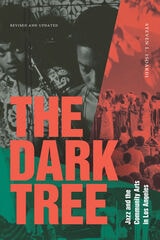
The Dark Tree
Jazz and the Community Arts in Los AngelesSteven L. Isoardi
Duke University Press, 2023
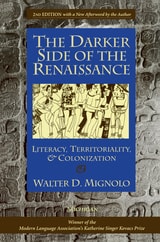
The Darker Side of the Renaissance
Literacy, Territoriality, & Colonization, 2nd EditionWalter D. Mignolo
University of Michigan Press, 2003
Walter D. Mignolo is Professor in the Department of Romance Studies and the Program in Literature, Duke University.
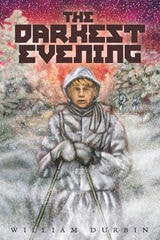
The Darkest Evening
William Durbin
University of Minnesota Press, 2011
Instead of finding the utopia they were promised, Jake and his family encounter only disappointment and hardship. When Stalin’s secret police begin targeting Americans for arrest, his worst fears are confirmed, and Jake leads his family on a daring midwinter escape attempt on cross-country skis, fleeing toward the Finnish border.