Results by title
3576 books match the query 'American' and 770 start with t

The Alewives' Tale
The Life History and Ecology of River Herring in the NortheastBarbara Brennessel
University of Massachusetts Press, 2014
The Alewives' Tale describes the plight of alewives and blueback herring, two fish species that have similar life histories and are difficult to distinguish by sight. Collectively referred to as river herring, they have been economically important since colonial times as food, fertilizer, and bait. In recent years they have attracted much attention from environmentalists, especially as attempts are being made, on and beyond Cape Cod, to restore the rivers, streams, ponds, lakes, and estuaries that are crucial for their reproduction and survival.
Brennessel provides an overview of the biology of the fish—from fertilized eggs to large schools of adults that migrate in the Atlantic Ocean—while describing the habitats at different stages of their life history. She explores the causes of the dramatic decline of river herring since the mid-twentieth century and the various efforts to restore these iconic fish to the historic populations that treated many onlookers to spectacular inland migrations each spring.
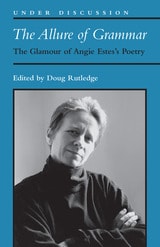
The Allure of Grammar
The Glamour of Angie Estes's PoetryDoug Rutledge, Editor
University of Michigan Press, 2019
In addition to presenting an overview of critical reactions to Estes’s oeuvre, reviews by Langdon Hammer, Julianne Buchsbaum, and Christopher Spaide also provide a helpful context for approaching a poet who claims to distrust narrative. Original essays consider the craft of Estes’s poetry and offer literary analysis. Ahren Warner uses line breaks to explore a postmodern analysis of Estes’s work. Mark Irwin looks at her poetic structure. Lee Upton employs a feminist perspective to explore Estes’s use of italics, and B. K. Fischer looks at the way she uses dance as a poetic image. Doug Rutledge considers her relationship to Dante and to the literary tradition through her use of ekphrasis. An interview with Estes herself, in which she speaks of a poem as an “arranged place . . . where experience happens,” adds her perspective to the mix, at turns resonating with and challenging her critics.
The Allure of Grammar will be useful for teachers and students of creative writing interested in the craft of non-narrative poetry. Readers of contemporary poetry who already admire Estes will find this collection insightful, while those not yet familiar with her work will come away from these essays eager to seek out her books.
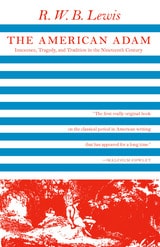
The American Adam
Innocence, Tragedy, and Tradition in the Nineteenth CenturyR. W. B. Lewis
University of Chicago Press, 1959
The American Adam
Innocence, Tragedy, and Tradition in the Nineteenth CenturyR. W. B. Lewis
University of Chicago Press, 1959
Intellectual history is viewed in this book as a series of "great conversations"—dramatic dialogues in which a culture's spokesmen wrestle with the leading questions of their times. In nineteenth-century America the great argument centered about De Crèvecoeur's "new man," the American, an innocent Adam in a bright new world dissociating himself from the historic past. Mr. Lewis reveals this vital preoccupation as a pervasive, transforming ingredient of the American mind, illuminating history and theology as well as art, shaping the consciousness of lesser thinkers as fully as it shaped the giants of the age. He traces the Adamic theme in the writings of Emerson, Thoreau, Hawthorne, Melville, Henry James, and others, and in an Epilogue he exposes their continuing spirit in the works of F. Scott Fitzgerald, William Faulkner, Ralph Ellison, J. D. Salinger, and Saul Bellow.
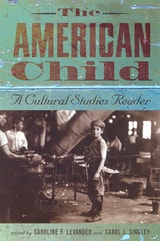
The American Child
A Cultural Studies ReaderLevander, Caroline F
Rutgers University Press, 2003
Although the volume is grounded heavily in the literary, it draws on other disciplines, revealing that representations of children and childhood are not isolated artifacts but cultural productions that in turn affect the social climates around them. Essayists look at games, pets, adolescent sexuality, death, family relations, and key texts such as The Adventures of Huckleberry Finn and the movie Pocahontas; they reveal the ways in which the figure of the child operates as a rich vehicle for writers to consider evolving ideas of nation and the diverse role of citizens within it.
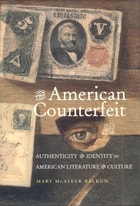
The American Counterfeit
Authenticity and Identity in American Literature and CultureMary McAleer Balkun
University of Alabama Press, 2006
Focusing on texts written between 1880 and 1930, Mary McAleer Balkun explores the concept of the “counterfeit,” both in terms of material goods and invented identities, and the ways that the acquisition of objects came to define individuals in American culture and literature. Counterfeiting is, in one sense, about the creation of something that appears authentic—an invented self, a museum display, a forged work of art. But the counterfeit can also be a means by which the authentic is measured, thereby creating our conception of the true or real.
When counterfeiting is applied to individual identities, it fosters fluidity in social boundaries and the games of social climbing and passing that have come to be representative of American culture: the Horatio Alger story, the con man or huckster, the social climber, the ethnically ambiguous.
Balkun provides new readings of traditional texts such as The Great Gatsby, Adventures of Huckleberry Finn, and The House of Mirth, as well as readings of less-studied texts, such as Walt Whitman’s Specimen Days and Nella Larsen’s Passing. In each of these texts, Balkun locates the presence of manufactured identities and counterfeit figures, demonstrating that where authenticity and consumerism intersect, the self becomes but another commodity to be promoted, sold, and eventually consumed.
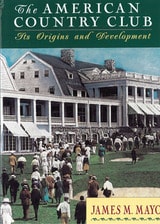
The American Country Club
Its Origins and DevelopmentMayo, James M.
Rutgers University Press, 1998
The American country club movement parallels the rise of suburbanization in the United States. Its roots can be found in the exclusive city clubs and summer resorts of the nineteenth century; its growth reflects a desire for permanent and organized places where the wealthy could spend their leisure time. By the late nineteenth century, mass transportation enabled the wealthy to escape the confines of the city, and suburbanization began. Their pursuit of leisure—in the form of city clubs, spas, summer resorts, and elite sports—became the foundation for the country club. Country clubs provided places where the elite could combine their interests in sports, the outdoors, and leisure while separating themselves from those they considered non-elite. The American Country Club chronicles the social and economic evolution of this elite leisure landscape.
The founding clubs were makeshift landscapes that took advantage of existing conditions, but in the early twentieth century, standard club practices emerged. Clubhouse design, golf course layouts, financial arrangements, and the rise of club management furthered the country club movement. Residential developers also learned to use the country club as a way to organize their elite subdivisions and to sell homes. But the Depression and World War II stifled the growth of country clubs. Eventually the country club movement regained its momentum, and corporations began to develop country clubs to meet the growing demand for club life and to treat the country club as a revenue source.
Some critics feel that the country club addresses a basic liberty of social choice whereas others view it as an unnecessary source of social discrimination. Beyond these positions, James Mayo argues that our nation’s political economy is reflected in the country club, which simultaneously thrives as a business and provides social status for its members.
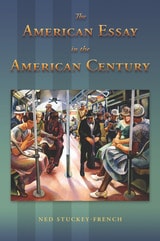
The American Essay in the American Century
Ned Stuckey-French
University of Missouri Press, 2011
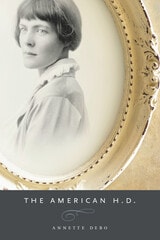
The American H.D.
Annette Debo
University of Iowa Press, 2012
In The American H.D., Annette Debo considers the significance of nation in the artistic vision and life of the modernist writer Hilda Doolittle. Her versatile career stretching from 1906 to 1961, H.D. was a major American writer who spent her adult life abroad; a poet and translator who also wrote experimental novels, short stories, essays, reviews, and a children’s book; a white writer with ties to the Harlem Renaissance; an intellectual who collaborated on avant-garde films and film criticism; and an upper-middle-class woman who refused to follow gender conventions. Her wide-ranging career thus embodies an expansive narrative about the relationship of modernism to the United States and the nuances of the American nation from the Gilded Age to the Cold War.
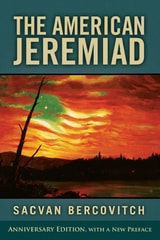
The American Jeremiad
Sacvan Bercovitch
University of Wisconsin Press, 1978
When Sacvan Bercovitch’s The American Jeremiad first appeared in 1978, it was hailed as a landmark study of dissent and cultural formation in America, from the Puritans’ writings through the major literary works of the antebellum era. For this long-awaited anniversary edition, Bercovitch has written a deeply thoughtful and challenging new preface that reflects on his classic study of the role of the political sermon, or jeremiad, in America from a contemporary perspective, while assessing developments in the field of American studies and the culture at large.
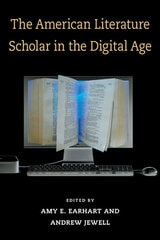
The American Literature Scholar in the Digital Age
Edited by Amy E. Earhart and Andrew Jewell
University of Michigan Press, 2010
"By casting the collection explicitly as an outreach to the larger community of Americanists---not primarily those who self-identify as 'digital scholars'---Earhart and Jewell have made an important choice, and one that will likely make this a landmark publication."
---Andrew Stauffer, University of Virginia
The American Literature Scholar in the Digital Age, which features a wide range of practitioner-scholars, is the first of its kind: a gathering of people who are expert in American literary studies and in digital technologies, scholars uniquely able to draw from experience with building digital resources and to provide theoretical commentary on how the transformation to new technologies alters the way we think about and articulate scholarship in American literature. The volume collects articles from those who are involved in tool development, usability testing, editing and textual scholarship, digital librarianship, and issues of race and ethnicity in digital humanities, while also situating digital humanities work within the larger literary discipline. In addition, the volume examines the traditional structures of the fields, including tenure and promotion criteria, modes of scholarly production, the skill sets required for scholarship, and the training of new scholars.
The American Literature Scholar in the Digital Age will attract practitioners of digital humanities in multiple fields, Americanists who utilize digital materials, and those who are intellectually curious about the new movement and materials.
Amy E. Earhart is Assistant Professor in the Department of English at Texas A&M University.
Andrew Jewell is Associate Professor of Digital Projects, University Libraries, at the University of Nebraska–Lincoln.
Cover art: Book background ©iStockphoto.com/natashika
digitalculturebooks is an imprint of the University of Michigan Press and the Scholarly Publishing Office of the University of Michigan Library dedicated to publishing innovative and accessible work exploring new media and their impact on society, culture, and scholarly communication. Visit the website at www.digitalculture.org.
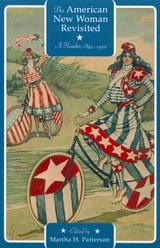
The American New Woman Revisited
A Reader, 1894-1930Patterson, Martha H
Rutgers University Press, 2008
In North America between 1894 and 1930, the rise of the “New Woman” sparked controversy on both sides of the Atlantic and around the world. As she demanded a public voice as well as private fulfillment through work, education, and politics, American journalists debated and defined her. Who was she and where did she come from? Was she to be celebrated as the agent of progress or reviled as a traitor to the traditional family? Over time, the dominant version of the American New Woman became typified as white, educated, and middle class: the suffragist, progressive reformer, and bloomer-wearing bicyclist. By the 1920s, the jazz-dancing flapper epitomized her. Yet she also had many other faces.
Bringing together a diverse range of essays from the periodical press of the late nineteenth and early twentieth centuries, Martha H. Patterson shows how the New Woman differed according to region, class, politics, race, ethnicity, and historical circumstance. In addition to the New Woman’s prevailing incarnations, she appears here as a gun-wielding heroine, imperialist symbol, assimilationist icon, entrepreneur, socialist, anarchist, thief, vamp, and eugenicist. Together, these readings redefine our understanding of the New Woman and her cultural impact.
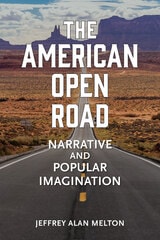
The American Open Road
Narrative and Popular ImaginationJeffrey Alan Melton
University of Alabama Press, 2025
WINNER OF THE ELIZABETH AGEE PRIZE IN AMERICAN LITERATURE
The rearview mirror perspective of a road trip across the American “open road.”
The American Open Road: Narrative and Popular Imagination offers a rich exploration of how the mythos of the open road has shaped, and been shaped by, American culture. Beginning with the post–World War II boom that solidified car culture as central to American life, Melton reflects on how roads, automobiles, and landscapes have been represented in literature, film, and other cultural texts, highlighting the interplay between mobility and narrative.
Drawing on a wide range of cultural texts, from traditional classic road novels and cinematic presentations, to advertisements, poetry, and prose, Melton examines how the open road functions as a symbol of autonomy, reinvention, and resistance. He highlights how road narratives have also exposed deeper tensions in American life—especially around race, gender, and power—and how historically marginalized voices have used the road to reclaim space and tell new stories.
From the romanticism of Route 66 to the political edge of modern road films, The American Open Road offers a thoughtful, engaging analysis of the narratives that continue to define American identity and longing. For readers interested in cultural history, travel literature, or the enduring pull of the highway, this book offers a compelling view from the passenger seat of America’s most iconic journeys.
The American Poet at the Movies
A Critical HistoryLaurence Goldstein
University of Michigan Press, 1995
As an increasingly popular genre of modern poetry, and one that permits a unique view of this century's dominant art form, the movie poem has needed an explanatory book like this one. As cinema and television continue to wield extraordinary influence over the lives of all Americans, the efforts of poets to understand the visual culture will come to be appreciated as central to the task of modern and postmodern literature. This critical history is an important and timely contribution to the study of American literature and American institutions.
"One of the impressive things about the book is that while pursuing the seemingly narrow category of poems-about-movies, Goldstein is able to raise and illuminate virtually all the key issues surrounding the poetry of the period." - Roger Gilbert, Cornell University
". . . a discerning book, combining criticism and social history. It satisfies scholarly standards while appealing to general readers." - Philip French, coeditor of the Faber Book of Movie Verse
"In this work, [Goldstein] provides a new way of looking at American poets, both familiar and neglected. The approach is chronological and thematic, and films are seen from black, gay, Jewish, and feminist as well as middle-class white perspectives." Library Journal
Laurence Goldstein is editor of the Michigan Quarterly Review and Professor of English, University of Michigan.
The American Robot
A Cultural HistoryDustin A. Abnet
University of Chicago Press, 2020
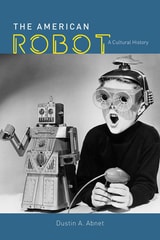
In tracing the history of the idea of robots in US culture, Abnet draws on intellectual history, religion, literature, film, and television. He explores how robots and their many kin have not only conceptually connected but literally embodied some of the most critical questions in modern culture. He also investigates how the discourse around robots has reinforced social and economic inequalities, as well as fantasies of mass domination—chilling thoughts that the recent increase in job automation has done little to quell. The American Robot argues that the deep history of robots has abetted both the literal replacement of humans by machines and the figurative transformation of humans into machines, connecting advances in technology and capitalism to individual and societal change. Look beneath the fears that fracture our society, Abnet tells us, and you’re likely to find a robot lurking there.
The American Woman's Home
Beecher, Catharine E
Rutgers University Press, 2002
The American Womans Home, originally published in 1869, was one of the late nineteenth centurys most important handbooks of domestic advice. The result of a collaboration by two of the eras most important writers, this book represents their attempt to direct womens acquisition and use of a dizzying variety of new household consumer goods available in the postCivil War economic boom. It updates Catharine Beechers influential Treatise on Domestic Economy (1841) and incorporates domestic writings by Harriet Beecher Stowe first published in The Atlantic in the 1860s.
Today, the book can be likened to an anthology of household hints, with articles on cooking, decorating, housekeeping, child-rearing, hygiene, gardening, etiquette, and home amusements. The American Womans Home, almost a bible on domestic topics for Victorian women, illuminates womens roles a century and a half ago and can be used for comparison with modern theories on the role of women in the home and in society. Illustrated with the original engravings, this completely new edition offers a lively introduction by Nicole Tonkovich and notes linking the text to important historical, social, and cultural events of the late nineteenth century

The American and Japanese Auto Industries in Transition
Report of the Joint U.S.–Japan Automotive StudyRobert E. Cole and Taizo Yakushiji, Editors
University of Michigan Press, 1984
The Americanist
Daniel Aaron
University of Michigan Press, 2009
“I have read all of Daniel Aaron’s books, and admired them, but in The Americanist I believe he has composed an intellectual and social memoir for which he will be remembered. His self-portrait is marked by personal tact and admirable restraint: he is and is not its subject. The Americanist is a vision of otherness: literary and academic friends and acquaintances, here and abroad. Eloquently phrased and free of nostalgia, it catches a lost world that yet engendered much of our own.”
—Harold Bloom
“The Americanist is the absorbing intellectual autobiography of Daniel Aaron, who is the leading proponent and practitioner of American Studies. Written with grace and wit, it skillfully blends Daniel Aaron’s personal story with the history of the field he has done so much to create. This is a first-rate book by a first-rate scholar.”
—David Herbert Donald, Professor Emeritus, Harvard University
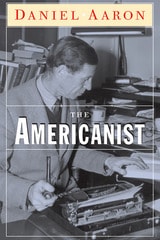
The Americanist is author and critic Daniel Aaron’s anthem to nearly a century of public and private life in America and abroad. Aaron, who is widely regarded as one of the founders of American Studies, graduated from the University of Michigan, received his Ph.D. from Harvard, and taught for over three decades each at Smith College and Harvard.
Aaron writes with unsentimental nostalgia about his childhood in Los Angeles and Chicago and his later academic career, which took him around the globe, often in the role of America’s accidental yet impartial critic. When Walt Whitman, whom Aaron frequently cites as a touchstone, wrote, “I am large, I contain multitudes,” he could have been describing Daniel Aaron—the consummate erudite and Renaissance individual whose allegiance to the truth always outweighs mere partisan loyalty.
Not only should Aaron’s book stand as a resplendent and summative work from one of the finest thinkers of the last hundred years, it also succeeds on its own as a first-rate piece of literature, on a par with the writings of any of its subjects. The Americanist is a veritable Who’s Who of twentieth-century writers Aaron interviewed, interacted with, or otherwise encountered throughout his life: Ralph Ellison, Robert Frost, Lillian Hellman, Richard Hofstadter, Alfred Kazin, Sinclair Lewis, Malcolm Muggeridge, John Crowe Ransom, Upton Sinclair, Edmund Wilson, Leonard Woolf, and W. B. Yeats, to name only a few.
Aaron’s frank and personal observations of these literary lights make for lively reading. As well, scattered throughout The Americanist are illuminating portraits of American presidents living and passed—miniature masterworks of astute political observation that offer dazzlingly fresh approaches to well-trod subjects.
The Americas, Otherwise, Volume 61
Lois Parkinson Zamora and Silvia Spitta, eds.
Duke University Press, 0
These essays foreground the work of important hemispheric writers, artists, and public intellectuals such as Roberto Bolaño, Alejo Carpentier, Aimé Césaire, Gabriel García Márquez, Édouard Glissant, José Martí, Ricardo Piglia, and Leopoldo Zea. Topics include migration to the Americas from Asia, Europe, and Africa; hemispheric exceptionalisms since the establishment of the first colonies; the interdisciplinary foundations of border studies; theories of the neobaroque and their application to Latin American cultural formations; Latino critical theory; and the emergence of a southern theory inclusive of the intellectual work of often-marginalized cultures.
The Anatomy of National Fantasy
Hawthorne, Utopia, and Everyday LifeLauren Berlant
University of Chicago Press, 2026
A classic work that launched the career of one of the most influential scholars of their generation.
Lauren Berlant influenced generations of scholars in gender studies, affect theory, literary criticism, anthropology, sociology, and beyond. Her first book, The Anatomy of National Fantasy, was published in 1991, and it marked the start of an extraordinary career of groundbreaking essays, editorial collaborations, and monographs. This new edition reintroduces Berlant’s earliest work with a new foreword by Caleb Smith, who connects Berlant’s initial investigations as a scholar of nineteenth-century American literature to her more widely known interventions in how we understand the entanglements of national ideology, citizenship, affect, and everyday life.
The Anchorage
PoemsMark Wunderlich
University of Massachusetts Press, 1999

The Andrew Wyeth Chronicles
Janée Baugher
Tupelo Press, 2026
The Andrew Wyeth Chronicles presents an imaginative narrative of the painter’s creative life, rife with both losses and pleasures. Janée J. Baugher employs the footnote form to write a book-length narrative of ekphrastic poetry in which the character of Andrew Wyeth chronicles his internal musings. The sixty-three Wyeth paintings that influenced these poems (dated 1938 through 2008) are the ones in which Baugher delighted in how the quotidian is made tender, like a white sheet drying outside on the line or sunflowers’ shadows against a house.
Studying the work of this particular artist was a decades-long meditative practice of deep looking, a method by which the author detaches from her ego. Wyeth’s paintings, drawings, and watercolors became portals through which she could imagine worlds beyond her immediate awareness and in which she could explore linguistic possibilities.
The Angel of Obsession
Julie Suk
University of Arkansas Press, 1992
Winner of the 1991 Arkansas Poetry Award, 1992 Roanoke-Chowan Poetry Award, and 1993 Bess Hokin Prize
Others may lament the uncertainties and disappointments of life, but Julie Suk, winner of the second annual Arkansas Poetry Award, embraces its tumult. Turning from the unsullied angels and the paradises captured by generations of artists, these poems focus instead on those who have abandoned heaven for the world of such mundane matters as family, loneliness, love, and loss. Rousing us to the passion and wonder that define our essential humanity, The Angel of Obsession celebrates the full, ragged canvas of living.
Suk’s poetry has previously appeared in The Georgia Review, The Midwest Quarterly, Southern Humanities Review, Poetry, and other important literary magazines. The Angel of Obsession was selected for publication from a field of more than five hundred entries by the poet John Stone.
The Animal After Whom Other Animals Are Named
PoemsNicole Sealey
Northwestern University Press, 2016
The Poetry and Poetics Colloquium, in conjunction with Northwestern University Press, is delighted to announce that Nicole Sealey is the winner of the fourth annual Drinking Gourd Chapbook Poetry Prize. The Animal After Whom Other Animals Are Named will be published by Northwestern University Press with a planned launch party at the Poetry Foundation in Chicago in January 2016.
At turns humorous and heartbreaking, The Animal After Whom Other Animals Are Named explores in both formal and free verse what it means to die, which is to say, also, what it means to live. In this collection, Sealey displays an exquisite sense of the lyric, as well as an acute political awareness. Never heavy-handed or dogmatic, the poems included in this slim volume excavate the shadows of both personal and collective memory and are, at all points, relentless. To quote the poet herself, here is a debut as luminous and unforgiving "as the unsparing light at tunnel’s end."

The Animal Is Chemical
Hadara Bar-Nadav
Four Way Books, 2024
Lyrically enacting the cognitive dissonance and embodied contradictions of our contemporary age, Hadara Bar-Nadav’s The Animal Is Chemical collects innovative poems that straddle the frontiers of language and scientific knowledge. She brilliantly draws on her own experience as a medical editor and her family’s history of Holocaust survival to write into the hybrid legacy of Western medicine: part clinical empiricism, part human fallibility and moral bankruptcy. Displaying a robust formal range, these poems move from feverish elegies to drug-pamphlet erasures, tangible articulations of Bar-Nadav’s epigenetic, cultural, and memorial inheritance as a writer navigating chronic illness and pain. In these pages, Nazi medical experiments, pharmaceutical literature, and manifestations of intergenerational trauma collide in the lyrical archive of Bar-Nadav’s latest collection, winner of the 2022 Four Way Books Levis Prize in Poetry. Just as she illuminates the paradox of time — that we may think of the past as something gone and yet always present in context and legacy — Bar-Nadav proves the enduring ambivalence of pharmakon, that antidote which poisons us, the medicine that kills. This febrile, fierce book casts spells and confronts illusions, ignites grief and awe, and challenges our assumptions about what it means to heal our bodies, our families, and our shared histories. Perhaps this work fulfills the specious salvation it describes in its opening pages, performing an exorcism of truth-telling that harnesses the heat of a “myth in which a god sets us / on fire and then sets us free.”
The Apollonia Poems
Judith Vollmer
University of Wisconsin Press, 2017
The Apple That Astonished Paris
PoemsBilly Collins
University of Arkansas Press, 2006
Bruce Weber in the New York Times called Billy Collins “the most popular poet in America.” He is the author of many books of poetry, including, most recently, The Rain in Portugal: Poems.
In 1988 the University of Arkansas Press published Billy Collins’s The Apple That Astonished Paris, his “first real book of poems,” as he describes it in a new, delightful preface written expressly for this new printing to help celebrate both the Press’s twenty-fifth anniversary and this book, one of the Press’s all-time best sellers. In his usual witty and dry style, Collins writes, “I gathered together what I considered my best poems and threw them in the mail.” After “what seemed like a very long time” Press director Miller Williams, a poet as well, returned the poems to him in the “familiar self-addressed, stamped envelope.” He told Collins that there was good work here but that there was work to be done before he’d have a real collection he and the Press could be proud of: “Williams’s words were more encouragement than I had ever gotten before and more than enough to inspire me to begin taking my writing more seriously than I had before.”
This collection includes some of Collins’s most anthologized poems, including “Introduction to Poetry,” “Another Reason Why I Don’t Keep a Gun in the House,” and “Advice to Writers.” Its success over the years is testament to Collins’s talent as one of our best poets, and as he writes in the preface, “this new edition . . . is a credit to the sustained vibrancy of the University of Arkansas Press and, I suspect, to the abiding spirit of its former director, my first editorial father.”
The Arbiters of Reality
Hawthorne, Melville, and the Rise of Mass Information CulturePeter West
The Ohio State University Press, 2008
Locating Hawthorne and Melville in vivid and overlooked contexts—the Salem Murder scandal of 1830, which transformed Hawthorne's quiet city into a media-manufactured spectacle, and Melville's New York City of 1846–47, where the American Telegraph was powerfully articulating a nation at war—West portrays the romance as a reactive, deeply rhetorical literary form and a rich historical artifact.
In the early twenty-first century, it has become a postmodern cliché to place the word “reality” in scare quotes. The Arbiters of Reality suggests that attending to the construction of the real in public life is more than simply a language of critique: it must also be understood as a specific kind of romantic self-invention.
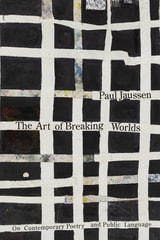
The Art of Breaking Worlds
On Contemporary Poetry and Public LanguagePaul Jaussen
Northwestern University Press, 2027
Showing how poetics provides a path for building new imagined possibilities
Drawing together a robust corpus of contemporary USAmerican poetry, The Art of Breaking Worlds explores social and political breaks: disasters, failures, and disruptions that simultaneously constitute and fracture the world. These breaks range from unsuccessful political movements and acts of resistance to mass incarceration and biopolitical violence, from anti-Black racism to the infrastructural catastrophes of climate collapse. Paul Jaussen shows how poetry responds to such disasters by incorporating public-facing genres and discourses into its literary practice, thereby rewriting into aesthetic form the public languages used to perpetuate or contain that rupture. This poetic integration of public language thus generates a third space, located between the rhetorical and the aesthetic, a literary practice of both world-breaking and world-making that transforms existing genres while also creating newly imagined modes of collectivity. Grounded in contemporary theory and close readings of works by poets such as Claudia Rankine, Juliana Spahr, and Ilya Kaminsky, this book proposes that these dynamics require a distinctive critical poetics, one simultaneously attuned to discourses of struggle and discourses of art, modeling a fresh approach to the relationship between politics and literature.
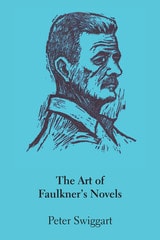
The Art of Faulkner's Novels
By Peter Swiggart
University of Texas Press, 1962
To say that the entirety of human experience can be a novelist’s theme is to voice an absurdity. But, as Peter Swiggart convincingly argues, Faulkner’s work can be viewed as an extraordinary attempt to transform the panorama of man’s social experience into thematic material. Faulkner’s two-dimensional characters, his rhetorical circumlocutions, and his technical experiments are efforts to achieve a dramatic focus upon material too unwieldy, at least in principle, for any kind of fictional condensation.
Faulkner makes use of devices of stylization that apply to virtually every aspect of his successful novels. For example, the complex facts of Southern history and culture are reduced to the scale of a simplified and yet grandiose social mythology: the degeneration of the white aristocracy, the rise of Snopesism, and the white Southerner’s gradual recognition of his latent sense of racial guilt. Within Faulkner’s fictional universe, human psychology takes the form of absolute distinctions between puritan and nonpuritan characters, between individuals corrupted by moral rationality and those who are simultaneously free of moral corruption and social involvement. In this way Faulkner is able to create the impression of a comprehensive treatment of important social concerns and universal moral issues.
Like Henry James, he makes as much as he can of clearly defined dramatic events, until they seem to echo the potential complexity and depth of situations outside the realm of fiction. When this technique is successful the reader is left with the impression that he knows a Faulkner character far better than he could know an actual person. At the same time, the character retains the atmosphere of complexity and mystery imposed upon it by Faulkner’s handling of style and structure.
This method of characterization reflects Faulkner’s simplifications of experience and yet suggests the inadequacy of any rigid interpretation of actual behavior. The reader is supplied with special eyeglasses through which the tragedy of the South, as well as humanity’s general inhumanity to itself, can be viewed in a perspective of simultaneous mystery and symbolic clarity.
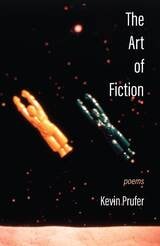
The Art of Fiction
Kevin Prufer
Four Way Books, 2021
In this his eighth collection of poetry (and fifth with Four Way Books), Prufer’s career-spanning talent for estranging the familiar—and also for recording the unthinkable with eerie directness—recurs, enhanced and transformed by the collection’s meta-level attention to the role of fiction in our civic lives. Prufer describes, often through personae, a near future, tracing there the political gambit of Fake News and the role of the imagination in our self-understanding (whether it’s cogent or delusional). Via both satire and direct address (to the point of reader-squeamishness), Prufer aims to understand the ugly-casual atmosphere of our often racialized, pervasive distrust. The Art of Fiction fundamentally understands that fictions are deployed to divide us, and they work: they get under our skin. Prufer powerfully explores the roles of imagination and art in how we explain ourselves to ourselves.
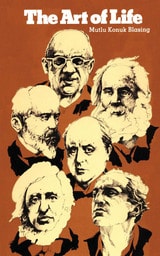
The Art of Life
Studies in American Autobiographical LiteratureBy Mutlu Konuk Blasing
University of Texas Press, 1977
Autobiographical literature especially reveals the processes by which writers convert their own historical experience into fictional form and suggests how literary forms function in life. This volume defines an original theory of autobiographical writing and provides intriguing analyses of major American works of literature.
The Art of Life examines the transformation of history into literature in Walden, "Song of Myself," Henry James's Prefaces, The Education of Henry Adams, Paterson, and the poetry of Frank O'Hara. These works are approached as events in themselves and are analyzed as conversions of form and history, fiction and fact, and even aesthetics and politics. Thus the work of literature is set in the total experience of living, and the writer is seen not only as an artist but also as a person in a historical, political, and cultural environment. As well as a creator of literature, the writer is viewed as a social, psychological, and biological being.
Chapters on the narcissistic economy of Walden, the mythicizing of history and personality in "Song of Myself," the self-conscious relation that makes the Prefaces of Henry James the autobiography of an artist. the comic perspective of The Education of Henry Adams, and the radical innovation of Paterson and O'Hara's poetry provide new readings of major American works. Each chapter contains some distinct critical insight which not only contributes to, but can be relished apart from, the book's overarching theoretical argument.
The Art of Life is a sophisticated theoretical discussion of autobiography with rich psychological, philosophical, and cultural ramifications.
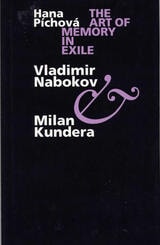
The Art of Memory in Exile
Vladimir Nabokov & Milan KunderaHana Pichova
Southern Illinois University Press, 2001
Pí chová closely analyzes two novels by each author: the first written in exile (Nabokov's Mary and Kundera's The Book of Laughter and Forgetting) and a later, pivotal novel in each writer's career (Nabokov's The Gift and Kundera's The Unbearable Lightness of Being). In all four texts, these authors explore how the kaleidoscope of personal and cultural memory confronts a fragmented and untenable present, contrasting the lives of fictional é migré s who fail to bridge the gap between past and present with those é migré s whose rich artistic vision allows them to transcend the trials of homelessness.
By juxtaposing these novels and their authors, Pí chová provides a unique perspective on each writer's vast appeal and success. She finds that in the work of Nabokov and Kundera, the most successful exiles express a vision that transcends both national and temporal boundaries.
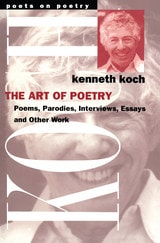
The Art of Poetry
Kenneth Koch
University of Michigan Press, 1996
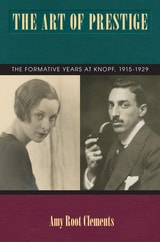
The Art of Prestige
The Formative Years at Knopf, 1915-1929Amy Clements
University of Massachusetts Press, 2014
Capturing the little-known early history of Knopf, The Art of Prestige explores the origins of the company's rise to success during the Jazz Age, when Alfred and Blanche established themselves as literary impresarios on both sides of the Atlantic. Drawing on key archival documents from all phases of the publishing process, Amy Root Clements reconstructs the turning points and rhetorical exchanges that made Knopf's initial books noteworthy, from the acquisitions process to design, consumer marketing, and bookselling.
Lasting cornerstones of the young firm include alliances with pivotal figures in the world of graphic arts and book production and with European publishers who brought numerous Nobel Prize winners to the Borzoi list during the company's first fifteen years. Other featured luminaries include the American authors Willa Cather, Dashiell Hammett, and Langston Hughes. The Art of Prestige also examines Alfred Knopf's ancestry, up-bringing, and formal education at Columbia, as well as his apprenticeships with Frank Nelson Doubleday and Mitchell Kennerley—factors that would influence his business decisions for years to come.
The result is a portrait of innovative branding that seamlessly merged book production with book promotion in a literary landscape that was ripe for transformation.
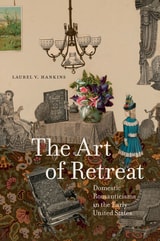
The Art of Retreat
Domestic Romanticisms in the Early United StatesLaurel V. Hankins
Bucknell University Press, 2025
The political and cultural fantasy of home as a retreat from the pressures of the world first emerged in the U.S. alongside two major nineteenth-century literary movements: Romanticism and domestic fiction. Upending accepted gendered narratives from this period, The Art of Retreat posits that these movements originated from a domestic culture already in transition, in which home was frequently a more complicated site of self-interested pleasure, coerced labor, creole social reproduction, homosocial intimacy, bachelor whimsy, petty tyranny, racial abuse, and transgender capacity. The early national periodicals, sketches, and novels examined here lend themselves to this interpretation. Hankins argues that the literary tradition emerging from these decades—one that aligned creative genius with domestic retreat—reminds us that a politics that appeals to private feeling must reckon with new interpretations of labor, kinship, and reform in exchange for the promise of consensual citizenship.
Published by Bucknell University Press. Distributed worldwide by Rutgers University Press.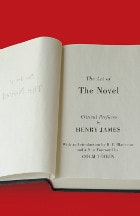
The Art of the Novel
Critical PrefacesHenry James
University of Chicago Press, 2011
This collection of prefaces, originally written for the 1909 multi-volume New York Edition of Henry James’s fiction, first appeared in book form in 1934 with an introduction by poet and critic R. P. Blackmur. In his prefaces, James tackles the great problems of fiction writing—character, plot, point of view, inspiration—and explains how he came to write novels such as The Portrait of a Lady and The American. As Blackmur puts it, “criticism has never been more ambitious, nor more useful.”
The latest edition of this influential work includes a foreword by bestselling author Colm Tóibín, whose critically acclaimed novel The Master is told from the point of view of Henry James. As a guide not only to James’s inspiration and execution, but also to his frustrations and triumphs, this volume will be valuable both to students of James’s fiction and to aspiring writers.
The Artist William Keith
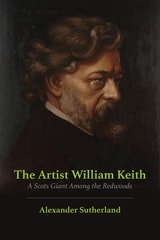
A Scots Giant Among the RedwoodsAlexander Sutherland
Aberdeen University Press, 2026
The Artist William Keith: A Scots Giant Among the Redwoods reveals the rise of William Keith (1838? – 1911), a fatherless child from rural Aberdeenshire, Scotland who rose to an eminent position in the artistic and civic circles of Gold Rush-era San Francisco. Alexander Sutherland’s engaging study traces Keith’s life and artistic achievements, his lively personality and his drive to make a name for himself.
Brought to America in 1851 by his widowed mother, Keith’s initial career in wood engraving was superseded by an interest in painting. He later trained in Europe, being influenced by German Realism and the Barbizon painters in Paris, and studied portraiture in Munich. His major artistic shift came in 1872, when he befriended the conservationist, environmentalist and fellow Scot, John Muir (1838 – 1914). Their thirty-eight-year friendship in the mountains of Yosemite and other wilderness regions inspired Keith’s work as a landscape painter.
Keith’s later years were characterised by cosmopolitan and Suffragist connections in the bohemian art world of California. Although the San Francisco Earthquake of 1906 destroyed much of his life’s work, Keith responded by recommitting to his art, underscoring his remarkable achievements.
The Artistic Censoring of Sexuality
Fantasy and Judgment in the Twentieth Century NovelSusan Mooney
The Ohio State University Press, 2008
Through the twentieth century, from colonial Ireland to the United States, and from Franco's Spain to late Soviet Russia, to include sexuality in a novel signaled social progressiveness and artistic innovation, but also transgression. Certain novelists—such as James Joyce, Vladimir Nabokov, Luis Martín-Santos, and Viktor Erofeev—radicalized the content of the novel by incorporating sexual thoughts, situations, and fantasies and thus portraying repressed areas of social, cultural, political, and mental life.
In The Artistic Censoring of Sexuality: Fantasy and Judgment in the Twentieth-Century Novel, Susan Mooney extensively examines four modernist and postmodernist novels that prompted in their day harsh external censorship because of their sexual content—Ulysses, Lolita, Time of Silence, and Russian Beauty. She shows how motifs of censorship, with all its restrictions, pressures, rules, judgments, and forms of negation, became artistically embedded in the novels' plots, characters, settings, tropes, and themes. These novels contest censorship's status quo and critically explore its processes and power. This study reveals the impact of censorship on literary creation, particularly in relation to the twentieth century's growing interest in sexuality and its discourses.
The Assault on Progress
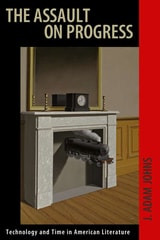
Technology and Time in American LiteratureJ. Adam Johns
University of Alabama Press, 2008
A belief in progress is a fundamental ethos in American history and culture. The Assault on Progress probes American literary works that challenge the prevailing notion of technology as a manifestation of progress. J. Adam Johns argues that the idea of technology-as-destiny has long been explored—and undercut—in American literary works and that literature remains a crucial site for ongoing debates in this area.
Johns studies the phenomenon by which each generation comes to regard itself as the hinge upon which history turns. He explores several works by historians of technology, focusing in detail on the works of literary critic Lewis Mumford, whose examinations of Herman Melville’s novels provide an early example of critical interest in the abandonment of progress as a value.
He goes on to study the works of William Faulkner and Ralph Ellison, focusing on the convergence of technology and race—machines and slavery, and highlights the ways that these writers have portrayed humans as reduced to machines, evidence that technological “progress” is not always progressive, or liberating to humanity.
The conclusion argues for a shift in our understanding of the relationship between technology and time. According to Johns, writers like Melville, Faulkner, and Ellison help us to think of technology separate from notions of progress, and therefore help us to escape from a perilous ideological bind that forever situates humankind at the end of history.
The Astonishment Tapes
Talks on Poetry and Autobiography with Robin Blaser and FriendsRobin Blaser
University of Alabama Press, 2015
Robin Blaser moved from his native Idaho to attend the University of California, Berkeley, in 1944. While there, he developed as a poet, explored his homosexuality, engaged in a lively arts community, and met fellow travelers and poets Robert Duncan and Jack Spicer. The three men became the founding members of the Berkeley core of what is now known as the San Francisco Renaissance in New American Poetry.
In the company of a small group of friends and writers in 1974, Blaser was asked to narrate his personal story and to comment on the Berkeley poetry scene. In twenty autobiographical audiotapes, Blaser talks about his childhood in Idaho, his time in Berkeley, and his participation in the making of a new kind of poetry. The Astonishment Tapes is the expertly edited transcript of these recordings by Miriam Nichols, Blaser’s editor and biographer.
In The Astonishment Tapes Blaser comments extensively on the poetic principles that he, Duncan, and Spicer worked through, as well as the differences and dissonances between the three of them. Nichols has edited the transcripts only minimally, allowing readers to make their own interpretations of Blaser’s intentions.
Sometimes gossipy, sometimes profound, Blaser offers his version on the inside story of one of the most significant moments in mid-twentieth century American poetry. The Astonishment Tapes is of considerable value and interest, not only to readers of Blaser, Duncan, and Spicer, but also to scholars of the early postmodern and twentieth-century American poetry.
The Athens of America
Boston, 1825-1845Thomas H. O'Connor
University of Massachusetts Press, 2006
Many people are generally familiar with the fact that Boston was once known as “the Athens of America.” Very few, however, are clear about exactly why, except for their recollections of the famous writers and poets who gave the city a reputation for literature and learning.
In this book, historian Thomas H. O'Connor sets the matter straight by showing that Boston's eminence during the first half of the nineteenth century was the result of a much broader community effort. After the nation emerged from its successful struggle for independence, most Bostonians visualized their city not only as the Cradle of Liberty, but also as the new world's Cradle of Civilization.
According to O'Connor, a leadership elite, composed of men of prominent family background, Unitarian beliefs, liberal education, and managerial experience in a variety of enterprises, used their personal talents and substantial financial resources to promote the cultural, intellectual, and humanitarian interests of Boston to the point where it would be the envy of the nation. Not only did writers, scholars, and philosophers see themselves as part of this process, but so did physicians and lawyers, ministers and teachers, merchants and businessmen, mechanics and artisans, all involved in creating a well-ordered city whose citizens would be committed to the ideals of social progress and personal perfectibility.
To accomplish their noble vision, leading members of the Boston community joined in programs designed to cleanse the old town of what they felt were generations of accumulated social stains and human failures, and then to create new programs and more efficient institutions that would raise the cultural and intellectual standards of all its citizens. Like ancient Athens, Boston would be a city of great statesmen, wealthy patrons, inspiring artists, and profound thinkers, headed by members of the “happy and respectable classes” who would assume responsibility for the safety, welfare, and education of the “less prosperous portions of the community.”
Designed for the general reader and the historical enthusiast, The Athens of America is an interpretive synthesis that explores the numerous secondary sources that have concentrated on individual subjects and personalities, and draws their various conclusions into a single comprehensive narrative.
The Beats in Mexico
David Stephen Calonne
Rutgers University Press, 2022
The first book-length study of why the Beats were so fascinated by Mexico and how they represented its culture in their work, this volume examines such canonical figures as Kerouac, Burroughs, Ginsberg, Lamantia, McClure, and Ferlinghetti. It also devotes individual chapters to women such as Margaret Randall, Bonnie Bremser, and Joanne Kyger, who each made Mexico a central setting of their work and interrogated the misogyny they encountered in both American and Mexican culture.
The Beats in Mexico not only considers individual Beat writers, but also places them within a larger history of countercultural figures, from D.H. Lawrence to Antonin Artaud to Jim Morrison, who mythologized Mexico as the land of the Aztecs and Maya, where shamanism and psychotropic drugs could take you on a trip far beyond the limits of the American imagination.
The Beauty of a Social Problem
Photography, Autonomy, EconomyWalter Benn Michaels
University of Chicago Press, 2015
Although he discusses well-known figures like Walker Evans and Jeff Wall, Michaels’s focus is on a group of younger artists, including Viktoria Binschtok, Phil Chang, Liz Deschenes, and Arthur Ou. All born after 1965, they have always lived in a world where, on the one hand, artistic ambition has been synonymous with the critique of autonomous form and intentional meaning, while, on the other, the struggle between capital and labor has essentially been won by capital. Contending that the aesthetic and political conditions are connected, Michaels argues that these artists’ new commitment to form and meaning is a way for them to depict the conditions that have taken US economic inequality from its lowest level, in 1968, to its highest level today. As Michaels demonstrates, these works of art, unimaginable without the postmodern critique of autonomy and intentionality, end up departing and dissenting from that critique in continually interesting and innovative ways.

The Big Jones Cookbook
Recipes for Savoring the Heritage of Regional Southern CookingPaul Fehribach
University of Chicago Press, 2015
You expect to hear about restaurant kitchens in Charleston, New Orleans, or Memphis perfecting plates of the finest southern cuisine—from hearty red beans and rice to stewed okra to crispy fried chicken. But who would guess that one of the most innovative chefs cooking heirloom regional southern food is based not in the heart of biscuit country, but in the grain-fed Midwest—in Chicago, no less? Since 2008, chef Paul Fehribach has been introducing Chicagoans to the delectable pleasures of Lowcountry cuisine, while his restaurant Big Jones has become a home away from home for the city’s southern diaspora. From its inception, Big Jones has focused on cooking with local and sustainably grown heirloom crops and heritage livestock, reinvigorating southern cooking through meticulous technique and the unique perspective of its Midwest location. And with The Big Jones Cookbook, Fehribach brings the rich stories and traditions of regional southern food to kitchens everywhere.
Fehribach interweaves personal experience, historical knowledge, and culinary creativity, all while offering tried-and-true takes on everything from Reezy-Peezy to Gumbo Ya-Ya, Chicken and Dumplings, and Crispy Catfish. Fehribach’s dishes reflect his careful attention to historical and culinary detail, and many recipes are accompanied by insights about their origins. In addition to the regional chapters, the cookbook features sections on breads, from sweet potato biscuits to spoonbread; pantry put-ups like bread and butter pickles and chow-chow; cocktails, such as the sazerac; desserts, including Sea Island benne cake; as well as an extensive section on snout-to-tail cooking, including homemade Andouille and pickled pigs’ feet.
Proof that you need not possess a thick southern drawl to appreciate the comfort of creamy grits and the skill of perfectly fried green tomatoes, The Big Jones Cookbook will be something to savor regardless of where you set your table.
The Big Question
David Lehman
University of Michigan Press, 1995
The Big Question leads off with a major essay explaining and exploring the concept of postmodernism. The next sections include pieces about poetry and fiction, lives and letters, and criticism and controversy.
Other "big questions" addressed include political correctness, the genre of literary biography, academic life and deconstruction. There is a humorous piece on poetry "slams" and the whole "downtown" poetry scene, a feisty op-ed column (on the deconstruction of the Gettysburg Address), a pair of wickedly satirical poems, as well as a group of exceptional book reviews.
The subjects covered range from Philip Larkin to Philip Roth- from the greatest poetry hoax of the twentieth century (which took place in Australia during World War II) to Charles Dickens's unfinished last novel- and from nineteenthth-century American poetry to the political career of Martin Heidegger.
David Lehman is a poet and author of Signs of the Times: Deconstruction and the Fall of Paul de Man. He is series editor of the celebrated Best American Poetry anthology.
The Biopolitics of Disability
Neoliberalism, Ablenationalism, and Peripheral EmbodimentDavid T. Mitchell with Sharon L. Snyder
University of Michigan Press, 2015
The Biopolitics of Feeling
Race, Sex, and Science in the Nineteenth CenturyKyla Schuller
Duke University Press, 2018
The Bitch is Back
Wicked Women in LiteratureSarah Appleton Aguiar
Southern Illinois University Press, 2001
Although the “bitch” has always commanded a prominent spot in popular culture—television, movies, art—she virtually disappeared from the work of the second wave of feminist writers in the late 1960s and early 1970s. Now, announces Sarah Appleton Aguiar, the bitch is back, returned once more to cultural center stage in the world of serious literature.
Feminist writers such as Mary Gordon and Alice Walker, to name only two, felt obligated to subvert literary misrepresentations of females as dimensionless, to refute preconceptions of objectified characters, and, of paramount importance, to create memorable women full of complexity and character. They wanted to create a subjective reality for their protagonists. And they succeeded admirably.
But along the road to subjectivity, that vital woman, empowered with anger, with ruthless survival instincts—the bitch—was banished from the pages of feminist fiction. The village gossips, calculating gold-diggers, merciless backstabbers, sinful sirens, evil stepmothers, deadly daughters, twisted sisters, hags, bags, and crones—all had vanished from the fiction written by women. Ubiquitous in other forms of media, the bitch was noticeably absent from the feminist literary canon.
Aguiar, however, points to indications in contemporary culture that the season of the bitch is fast approaching. Contemporary feminist writers and theorists are making substantial reevaluations of the archetypal bitch. Focusing on the traits and the types of guises usually associated with this vital character, Aguiar discusses such characters as Zenia in Margaret Atwood’s The Robber Bride, Ruth Patchett in Fay Weldon’s The Life and Loves of a She-Devil, Sula in Toni Morrison’s Sula, and Ginny in Jane Smiley’s A Thousand Acres.
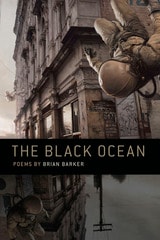
The Black Ocean
Brian Barker
Southern Illinois University Press, 2011
In The Black Ocean, poet Brian Barker attempts to make sense of some of the darkest chapters in history while peering forward to what lies ahead as the world totters in the wake of human complacence. Unveiled here are ruminations on human torture, the Chernobyl disaster, the aftermath of Hurricane Katrina, and genocide against Native Americans. The ghosts of Lincoln, Poe, and Billie Holiday manifest from pages laden with grim prophecies and catastrophes both real and imagined. These hauntingly intense documentary poems reflect on the past in an attempt to approach it with more clarity and understanding, while offering blistering insight into the state of the world today. Barker touches upon the power of manipulation and class oppression; the depths of fear and the struggle for social justice; and reveals how failure to act—on the parts of both politicians and everyday citizens—can have the most devastating effects of all.
Throughout the volume looms the specter of the black ocean itself, a powerful metaphor for all our collective longings and despair, as we turn to face a menacing and uncertain future.
Lullaby for the Last Night on Earth
When at last we whisper, so long, so lonesome,
and watch our house on the horizon
go down like a gasping zeppelin of bricks,
we’ll turn, holding hands,
and walk the train tracks to the sea . . .
So sing me that song where a mountain falls
in love with an octopus, and one thousand fireflies
ricochet around their heads,
and I’ll dream we’re dancing in the kitchen one last time,
swaying, the window a waystation
of flaming leaves, the dogs shimmying
about our legs,
dragging their golden capes of rain . . .
O my critter, my thistle, gal-o-my-dreams,
lift your voice like an oar into the darkness,
for all the sad birds are falling down—
Nothing in this night is ours.