Results by title
402 books match the query 'American poetry' and 80 start with t

The Power of Genre
Adena Rosmarin
University of Minnesota Press, 1986
The Power of Genre was first published in 1986. Minnesota Archive Editions uses digital technology to make long-unavailable books once again accessible, and are published unaltered from the original University of Minnesota Press editions.
The Power of Genre is a radical and systematic rethinking of the relationship between literary genre and critical explanation. Adene Rosmarin shows how traditional theories of genre—whether called "historical," "intrinsic," or "theoretical"—are necessarily undone by their attempts to define genre representationally. Rather, Rosmarin argues, the opening premise of critical argument is always critical purpose or, as E. H. Gombrich has said, function, and the genre or "form" follows the reform. The goal is a relational model that works.
Rosemarin analyzes existing theories of genre — those of Hirsch, Crane, Frye, Todorov, Jauss, and Rader are given particular attention—before proposing her own. These analyses uncover the illogic that plagues even sophisticated attempts to treat genre as a preexistent entity. Rosmarin shows how defining genre pragmatically – as explicitly chosen or devised to serve explicitly critical purposes – solves this problem: a pragmatic theory of genre builds analysis of its metaphors and motives into its program, thereby eliminating theory's traditional need to deny the invented and rhetorical nature of its schemes. A pragmatic theory, however, must be tested not only by its internal cohesion but also by its power to enable practice, and Rosmarin chooses the dramatic monologue, an infamously problematic genre, and its recent relative, the mask lyric, as testing grounds. Both genres—variously exemplified by poems of Browning, Thennyson, Eliot, and Pound—are ex post facto critical constructs that, when defined as such, make closely reasoned sense not only of particular poems but also of their perplexed interpretive histories. Moreover, both genres dwell on the historicity, textuality, and redemptive imperfection of the speaking self. This generic obsession ties the poems to their reception and, finally, to the openended, processes of hermeneutic question-and-answer stressed in Rosmarin's framing theory.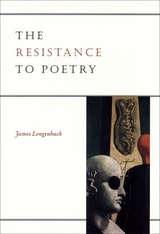
The Resistance to Poetry
James Longenbach
University of Chicago Press, 2005
But the resistance to poetry is quite specifically the wonder of poetry. Considering a wide array of poets, from Virgil and Milton to Dickinson and Glück, Longenbach suggests that poems convey knowledge only inasmuch as they refuse to be vehicles for the efficient transmission of knowledge. In fact, this self-resistance is the source of the reader's pleasure: we read poetry not to escape difficulty but to embrace it.
An astute writer and critic of poems, Longenbach makes his case through a sustained engagement with the language of poetry. Each chapter brings a fresh perspective to a crucial aspect of poetry (line, syntax, figurative language, voice, disjunction) and shows that the power of poetry depends less on meaning than on the way in which it means—on the temporal process we negotiate in the act of reading or writing a poem. Readers and writers who embrace that process, Longenbach asserts, inevitably recoil from the exaggeration of the cultural power of poetry in full awareness that to inflate a poem's claim on our attention is to weaken it.
A graceful and skilled study, The Resistance to Poetry honors poetry by allowing it to be what it is. This book arrives at a critical moment—at a time when many people are trying to mold and market poetry into something it is not.

The Roots of Things
EssaysMaxine Kumin
Northwestern University Press, 2010
Throughout her career, Pulitzer Prize–winning poet Maxine Kumin has been at the vanguard of discussions about feminism and sexism, the state of poetry, and our place in the natural world. The Roots of Things gathers into one volume her best essays on the issues that have been closest to her throughout her storied career.
Divided into sections on "Taking Root," "Poets and Poetry," and "Country Living," these pieces reveal Kumin honing her views within a variety of forms, including speeches, critical essays, and introductions of other writers’ work. Whether she is recollecting scenes from her childhood, ruminating on the ups and downs of what she calls "pobiz" (for "poetry business"), describing the battles she’s fought on behalf of women, or illuminating the lives of animals, Kumin offers insight that can only be born of long and closely observed experience.
The Scarlet Ibis
PoemsSusan Hahn
Northwestern University Press, 2007
It’s all about disappearance.
About a bird in a cage
with a mirror, a simple twist
on the handle at the side
that makes it come and go
at the magician’s insistence.
It’s all about innocence.
It’s all about acceptance.
It’s all about compliance.
It’s all about deference.
It’s all about silence.
It’s all about disappearance.
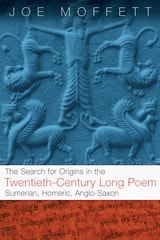
The Search for Origins in the Twentieth-Century Long Poem
Sumerian, Homeric, Anglo-SaxonJOE W. MOFFETT
West Virginia University Press, 2007
In this new, scholarly text—an ambitious study of contemporary poetics—Joe W. Moffett deciphers the twentieth-century long poem, searching for a better understanding of why long-poem writers are preoccupied with a search for origins.
Moffett focuses on issues like postcolonialism, nation, modernism, and postmodernism. He conceptualizes his theories by using what he calls “originiary moments”: historical periods or specific events from which a poet contends our culture descends. These moments enlighten and inspire the modern poet to use origin or “source” as a way to examine present culture and social conditions. The poems also encourage modern readers to question, revise, and repudiate. Moffett organizes his argument by arranging specific examples into three categories of originary moments: Sumerian, Homeric, and Anglo-Saxon.
According to Moffett, the long poem is appealing because it “lacks strict conventions that govern other genres.” Using a wide variety of poems to support his arguments, Moffett asks many stimulating questions and also provides provocative answers.
Questions of when and where It All Began have been off the critical agenda for some time now, embargoed by poststructuralism. Undeterred, Joe Moffett boldly revisits the search for cultural origins, which preoccupied major poets throughout the twentieth century. Capacious in his scope, eclectic in his choices, Moffett rounds up unusual subjects, including long poems by Armand Schwerner, Derek Walcott, Geoffrey Hill, and Judy Grahn, with excursions into Charles Olson, Seamus Heaney, and others. Nowhere will you find clearer, more intelligent, or better-informed readings of these poems than Moffett’s.
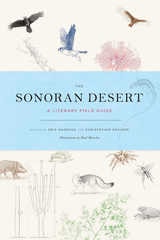
The Sonoran Desert
A Literary Field GuideEdited by Eric Magrane and Christopher Cokinos, Illustrations by Paul Mirocha
University of Arizona Press, 2016
Both literary anthology and hands-on field guide, The Sonoran Desert is a groundbreaking book that melds art and science. It captures the stunning biodiversity of the world’s most verdant desert through words and images. More than fifty poets and writers—including Christopher Cokinos, Alison Hawthorne Deming, Ken Lamberton, Eric Magrane, Jane Miller, Gary Paul Nabhan, Alberto Ríos, Ofelia Zepeda, and many others—have composed responses to key species of this striking desert. Each creative contribution is joined by an illustration by award-winning artist Paul Mirocha and scientific information about the creature or plant authored by the book’s editors.
From the saguaro to the mountain lion, from the black-tailed jackrabbit to the mesquite, the species represented here have evoked compelling and creative responses from each contributor. Just as writers such as Edward Abbey and Ellen Meloy have memorialized the desert, this collection is sure to become a new classic, offering up the next generation of voices of this special and beautiful place, the Sonoran Desert.
The Stamp of Class
Reflections on Poetry and Social ClassGary Lenhart
University of Michigan Press, 2005
-Lorenzo Thomas
The Stamp of Class explores the nature of reading poetry in the context of class and its themes and sheds new light on how this important yet little-heralded subject affects the poet's life and work.
While numerous works have taken up the question of race and gender as they relate to literary creation, this is the first book of its kind to probe the interplay between class and American poetry. Author Gary Lenhart considers poetry and class across a wide variety of time periods and poetic trends and reflects on a range of influential poets from the eighteenth to the twenty-first centuries.
The essays in The Stamp of Class deal with the question of class as reflected in the works of Tracie Morris, Tillie Olsen, Melvin Tolson, William Carlos Williams, Walt Whitman, and others. The work is rooted in the author's own experiences as a working-class poet and teacher and is the result of more than a decade of exploration.
Poet and scholar Gary Lenhart is Lecturer in English at Dartmouth College in Hanover, New Hampshire. His most recent books of poetry are Father and Son Night, Light Heart, and One at a Time. His essays and reviews have appeared in numerous magazines and journals, including the American Poetry Review, American Book Review, and Exquisite Corpse.
The Substance of Shadow
A Darkening Trope in Poetic HistoryJohn Hollander
University of Chicago Press, 2016
Shadow shows itself here in myriad literary identities, revealing its force as a way of seeing and a form of knowing, as material for fable and parable. Taking up a vast range of texts—from the Bible, Dante, Shakespeare, and Milton to Poe, Dickinson, Eliot, and Stevens—Hollander describes how metaphors of shadow influence our ideas of dreaming, desire, doubt, and death. These shadows of poetry and prose fiction point to unknown, often fearful domains of human experience, showing us concealed shapes of truth and possibility. Crucially, Hollander explores how shadows in poetic history become things with a strange substance and life of their own: they acquire the power to console, haunt, stalk, wander, threaten, command, and destroy. Shadow speaks, even sings, revealing to us the lost as much as the hidden self.
An extraordinary blend of literary analysis and speculative thought, Hollander’s account of the substance of shadow lays bare the substance of poetry itself.
The Sumac Reader
Joseph Bednarik
Michigan State University Press, 1997
Sumac was a Michigan-based literary journal founded in 1968 by poets Dan Gerber and Jim Harrison; novelist Thomas McGuane joined the editorial staff in 1969 as the fiction editor. When the inaugural issue appeared, more than 250 American literary magazines were listed in The Directory of Magazines and Small Presses; within three years, Sumac rose to the first tier of these publications and was nationally recognized for its eclecticism and editorial quality. The Library Journal called it "one of the best little magazines now being published."
Remaining true to Sumac's energetic catholicity, The Sumac Reader is an anthology that contains poetry, experimental fiction, and works in translation that originally appeared in the magazine. Contributors include four Pulitzer Prize-winning poets—Galway Kinnell, Charles Simic, Louis Simpson, and Gary Snyder—along with Paul Blackburn, Hayden Carruth, Richard Hugo, Denise Levertov, Ezra Pound, Adrienne Rich, and Diane Wakoski. There are early poems by Charles Simic, James Tate, and Michael Waters, as well as a complete section from Galaway Kinnell's classic, The Book of Nightmares. Fiction is represented in Sumac by a first-published Jim Heynen story "Coyote" and early prose by William Kittredge. Translations from Chinese, French, Spanish, and Russian bring to American readers the work of masters such as Tu Fu, Lorca, and Li Po. A variety of poetic forms are represented, including ghazals, narratives, suites, found poems, and the freest of free verse.
The Swallow Anthology of New American Poets
David Yezzi
Ohio University Press, 2009
Groundbreaking anthologies of this kind come along once in a generation and, in time, define that generation. The Swallow Anthology of New American Poets identifies a group of poets who have recently begun to make an important mark on contemporary poetry, and their accomplishment and influence will only grow with time. The poets gathered here do not constitute a school or movement; rather they are a group of unique artists working at the top of their craft. As editor David Yezzi writes in his introduction, “Here is a group of writers who have, perhaps for the first time since the modernist revolution of the early twentieth century, returned to a happy détente between warring camps. This, I think, is a new—at least in our age—kind of poet, who, dissatisfied with the climate of extremes, has found a balance between innovation and received form, perceiving the terror beneath the classical and the unities girding romanticism. This new unified sensibility is no watered-down admixture, no pragmatic compromise worked out in departments of creative writing, but, rather, the vital spirit behind some of the most accomplished poetry being written by America’s new poets.”
Poets include: Craig Arnold, David Barber, Rick Barot, Priscilla Becker, Geoffrey Brock, Daniel Brown, Peter Campion, Bill Coyle, Morri Creech, Erica Dawson, Ben Downing, Andrew Feld, John Foy, Jason Gray, George Green, Joseph Harrison, Ernest Hilbert, Adam Kirsch, Joanie Mackowski, Eric McHenry, Molly McQuade, Joshua Mehigan, Wilmer Mills, Joe Osterhaus, J. Allyn Rosser, A. E. Stallings, Pimone Triplett, Catherine Tufariello, Deborah Warren, Rachel Wetzsteon, Greg Williamson, Christian Wiman, Mark Wunderlich, David Yezzi, and C. Dale Young.
The Traffic In Poems
Nineteenth-Century Poetry and Transatlantic ExchangeMcGill, Meredith L
Rutgers University Press, 2008
Drawing on examples such as Felicia Hemans's elaboration of the foundational American myth of Plymouth Rock, Emma Lazarus's ambivalent welcome of Europe's cast-off populations, black abolitionist Mary Webb's European performances of Hiawatha, and American reprints of Robert Browning and George Meredith, the eleven essays in this book focus on poetic depictions of exile, slavery, immigration, and citizenship and explore the often asymmetrical traffic between British and American poetic cultures.
The Transmutation of Love and Avant-Garde Poetics
Jeanne Heuving
University of Alabama Press, 2016
Reimagining love as a force of poetic innovation in modern and avant-garde literature.
The Transmutation of Love and Avant-Garde Poetics is a probing examination of how the writing of sexual love undergoes a radical revision by avant-garde poets in the twentieth and twenty-first centuries. Today, the exploration of love by poets—long a fixture of Western poetic tradition—is thought to be in decline, with love itself understood to be a mere ideological overlay for the more “real” entities of physical sex and desire.
In The Transmutation of Love and Avant-Garde Poetics, Jeanne Heuving claims that a key achievement of poetry by Ezra Pound, H.D., Robert Duncan, Kathleen Fraser, Nathaniel Mackey, and others lies significantly in their engagement with the synergistic relations between being in love and writing love. These poets, she argues, have traded the clichéd lover of yore for impersonal or posthuman poetic speakers that sustain the gloire and mystery of love poetry of prior centuries. As Robert Duncan writes, “There is a love in which we are outcast and vagabond from what we are that we call ‘falling in love.’”
Heuving claims that this writing of love is defining for avant-garde poetics, identifying how such important discoveries as Pound’s and H.D.’s Imagism, Pound’s Cantos, and Duncan’s “open field poetics” are derived through their changed writing of love. She draws attention to how the prevailing concept of language as material is inadequate to the ways these poets also engage language as a medium—as a conduit—enabling them to address love afresh in a time defined through preoccupations with sexuality. They engage love as immanent and change it through a writing that acts on itself.
The Transmutation of Love and Avant-Garde Poetics ascribes the waning of love poetry to its problematic form: a genre in which empowered poetic speakers constitute their speech through the objectification of comparatively disempowered subjects, or beloveds. Refusing this pervasive practice, the poets she highlights reject the delimiting, one-sided tradition of masculine lovers and passive feminine beloveds; instead, they create a more nuanced, dynamic poetics of ecstatic exploration, what Heuving calls “projective love” and “libidinized field poetics,” a formally innovative poetry, in which one perception leads directly to the next and all aspects of a poem are generative of meaning.
The Tribe of John
Ashbery and Contemporary PoetrySusan M. Schultz
University of Alabama Press, 1995
This concentration on Ashbery's influence on contemporary American poetry provides new methods for interpreting and understanding his poetic achievement.
The Waiting Room Reader
Stories to Keep You CompanyJoan Cusack Handler
CavanKerry Press, 2010
The Waiting Room Reader
Words to Keep You CompanyRachel Hadas
CavanKerry Press, 2013
The Weather for Poetry
Essays, Reviews, and Notes on Poetry, 1977-81Donald Hall
University of Michigan Press, 1982
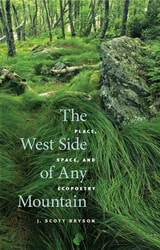
The West Side of Any Mountain
Place, Space, and EcopoetryJ. Scott Bryson
University of Iowa Press, 2005
Informed in general by current thinking in environmental theory and specifically by the work of cultural geographer Yi-Fu Tuan, The West Side of Any Mountain participates in and furthers this scholarly attention by offering an overarching theoretical framework with which to approach the field.
One area that contemporary theorists have found problematic is the dualistic civilization/wilderness binary that focuses on the divisions between culture and nature, thereby increasing the modern sense of alienation. Tuan’s place-space framework offers a succinct vocabulary for describing the attitudes of ecological poets and other nature writers in a way that avoids setting up an adversarial relationship between place and space. Scott Bryson describes the Tuanian framework and employs it to offer fresh readings of the work of four major ecopoets: Wendell Berry, Joy Harjo, Mary Oliver, and W. S. Merwin.
The West Side of Any Mountain will be of great interest to scholars and teachers working in the field of contemporary nature poetry. It is recommended for nature-writing courses as well as classes dealing with 20th-century poetry, contemporary literary criticism, and environmental theory.
The Wind Shifts
New Latino PoetryEdited by Francisco Aragón; Foreword by Juan Felipe Herrera
University of Arizona Press, 2007
Certainly there is poetry here that is political, but this is not a polemical book; it is a poetry book. While conscious of their roots, the artists are equally conscious of living in the contemporary world—fully engaged with the possibilities of subject and language. The variety is tantalizing. There are sonnets and a sestina; poems about traveling and living overseas; poems rooted in the natural world and poems embedded in suburbia; poems nourished by life on the U.S.–Mexico border and poems electrified by living in Chicago or Los Angeles or San Francisco or New York City.
Some of the poetry is traditional; some is avant-garde; some is informed by traditional poetry in Spanish; some follows English forms that are hundreds of years old. There are love poems, spells that defy logic, flashes of hope, and moments of loss. In short, this is the rich and varied poetry of young, talented North American Latinos and Latinas.
The World Is One Place
Native American Poets Visit the Middle EastDiane Glancy
BkMk Press, 2017
Thinking Poetry
Readings in Contemporary Women’s Exploratory PoeticsLynn Keller
University of Iowa Press, 2010
As the twentieth century drew to a close, experimentalism in American poetry was most commonly identified with Language writing. At the same time, however, a number of poets, many of them women, were developing their own alternative forms of experimentalism, creating “uncommon languages” often indebted to Language writing but distinct from it.
With impressive intellectual engagement and nuanced presentation, Thinking Poetry provides a meticulous and provocative analysis of the ways in which Alice Fulton, Myung Mi Kim, Joan Retallack, Cole Swensen, Rosmarie Waldrop, Susan Wheeler, and C. D. Wright explored varied compositional strategies and created their own innovative works. In doing so, Lynn Keller resourcefully models a range of reading strategies that will assist others in analyzing the complex epistemology and craft of recent “exploratory” writing.
The seven women whose work is discussed here demonstrate widely differing ways of using poetry to, as Swensen puts it, “stretch the boundaries of the sayable.” Thinking Poetry examines approaches to women’s poetic exploration, ranging from radically open, thoroughly disjunctive writing to feminist experimentation within relatively conventional free verse forms; from texts testing the resources of visual elements and page space to those in which multilingualism or digital technology provide arenas for innovation; from revitalized forms of ekphrasis to fresh approaches to pop culture.
Keller illuminates as well a transitional era in U.S. poetry that presaged current developments that are often seen as combining the poetics of personal lyric and Language writing. Thinking Poetry challenges reductive notions of such a synthesis as it makes clear that the groundwork for current poetic trends was laid by poets who, in a far more polarized climate, pursued their own, often distinctly feminist, visions of necessary innovation.
Those Absences Now Closest
Dzvinia Orlowsky
Carnegie Mellon University Press, 2024
In her newest collection, Ukrainian American poet Dzvinia Orlowsky is a witness, never a bystander, ready to stare down the demons, to “cut yourself with a dull razor.” She sets up house among the nightmares of intergenerational trauma and, as far as anyone can, humanizes them. Through her work, Orlowsky prompts us to enter our own histories instead of just watching.
Time for Childhoods
Young Poets and Questions of AgencyRachel Conrad
University of Massachusetts Press, 2020
Time for Childhoods presents a selection of striking twentieth-and twenty-first-century American poetry written by young people, and highlights how young poets imagined and shaped time for their own poetic purposes. Through close engagement with archival materials, as well as select interviews and correspondence with adult mentors, Conrad discerns how young writers figured social realities and political and racial injustices, and discusses what important advocates such as Gwendolyn Brooks and June Jordan can teach us about supporting the agency of young poets. This essential study demonstrates that young poets have much to contribute to ongoing conversations about time and power.

To Fight Aloud Is Very Brave
American Poetry and the Civil WarFaith Barrett
University of Massachusetts Press, 2012
Focusing on literary and popular poets, as well as work by women, African Americans, and soldiers, this book considers how writers used poetry to articulate their relationships to family, community, and nation during the Civil War. Faith Barrett suggests that the nationalist “we” and the personal “I” are not opposed in this era; rather they are related positions on a continuous spectrum of potential stances. For example, while Julia Ward Howe became famous for her “Battle Hymn of the Republic,” in an earlier poem titled “The Lyric I” she struggles to negotiate her relationship to domestic, aesthetic, and political stances.
Barrett makes the case that Americans on both sides of the struggle believed that poetry had an important role to play in defining national identity. She considers how poets created a platform from which they could speak both to their own families and local communities and to the nations of the Confederacy, the Union, and the United States. She argues that the Civil War changed the way American poets addressed their audiences and that Civil War poetry changed the way Americans understood their relationship to the nation.
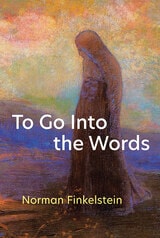
To Go Into the Words
Norman Finkelstein
University of Michigan Press, 2023
To Go Into the Words is the latest book of critical prose from renowned poet and scholar of Jewish literature Norman Finkelstein. Through a rigorous examination of poets such as William Bronk, Helen Adam, and Nathaniel Mackey, the book engages the contemporary poetic fascination with transcendence through the radical delight with language. By opening up a given poem, Finkelstein seeks the “gnosis” or insight of what it contains so that other readers can understand and appreciate the works even more.
Pulling from Finkelstein’s experience of writing thirteen books of poetry and six books of literary criticism, To Go Into the Words consistently rewards the reader with insights as transformative as they are well-considered and deftly mapped out. This volume opens the world of poetry to poets, scholars, and readers by showcasing “the gnosis that is to be found in modern poetry.”
Today in the Taxi
Sean Singer
Tupelo Press, 2022
—Laurie Sheck

Toward the End of the Century
Essays into PoetryWayne Dodd
University of Iowa Press, 1992
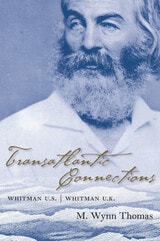
Transatlantic Connections
Whitman U.S., Whitman U.K.Thomas, M. Wynn
University of Iowa Press, 2005
The book’s contrasting sections reflect the two locations studied: the first shows Whitman in his time and place, while the second repositions him within the cultures of England and Wales from the late 19th to the late 20th century. In the opening chapter he is placed against the vivid, outrageous background of the New York of his time; the second finds evidence in his poetry of a critique of the new urban politics of the emerging city boss; the third radically redefines Whitman's relationship to his famous contemporary Longfellow. Other chapters deal with the Civil War poet, exploring the ways in which his poetic responses were in part shaped by his relationship to his soldier brother George, and his use of the meteorological discoveries of his day to fashion metaphors for imaging the different phases of the conflict.
The second section ponders the paradox that this Whitman, who was so much the product of his specific time and limited “local” culture, should come to be accepted as an international visionary. The United Kingdom is taken as offering striking instances of this phenomenon, and his transatlantic admirers are shown to have been engaged in an unconscious process of “translating” Whitman into the terms of their own culturally specific social, political, and sexual preoccupations. Some of the connections explored are those between Whitman and Edward Carpenter, the so-called English Whitman; between Whitman and perhaps his greatest English critic, D. H. Lawrence; and between Whitman and the Welsh poets Ernest Rhys, Amanwy (David Rees Griffiths), Niclas y Glais (T. E. Nicholas), Waldo Williams, Glyn Jones, Dylan Thomas, and R. S. Thomas.
This bold and original study, offering new points of entry into understanding Whitman as the product of his time and place as well as understanding the reception of Whitman in the U.K. as a process of cultural translation, should fascinate scholars of Whitman and students of comparative literature.
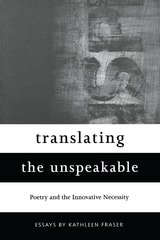
Translating the Unspeakable
Poetry and the Innovative NecessityKathleen Fraser
University of Alabama Press, 1999
A prominent avant-garde poet charts both her personal artistic development and the difficulties faced by women writers pursuing innovative paths.
An accomplished and influential poet, Kathleen Fraser has been instrumental in drawing attention to other women poets working outside the mainstream. Translating the Unspeakable gathers eighteen of her essays written over nearly twenty years, combining autobiography and criticism to examine what it means for any artist to innovate instead of following an already traveled path.
In autobiographical passages Fraser tells how her generation was influenced by revolutions in art and philosophy during the early 1960s and how she spent years pursuing idiosyncratic means of rediscovering the poem's terms. By the 1970s her evolving poetics were challenged by questions of gender, until immersion in feminist/modernist scholarship led her to initiate greater dialogue among experimentalist poets.
Other essays examine modernist women writers, their contemporary successors, and the visual poetics they have practiced. By exploring the work of such poets as H. D., Mina Loy, Lorine Niedecker, and Barbara Guest, Fraser conveys their struggle to establish a presence within accepted poetic conventions and describes the role experimentation plays in helping women overcome self-imposed silence.
All of Fraser's writings explore how the search to find one's own way of speaking into a very private yet historic space—of translating the unspeakable—drives poetic experimentation for women and men alike. This provocative book provides a glimpse into the thought processes of
the poetic mind, enhancing our understanding of innovative writing.
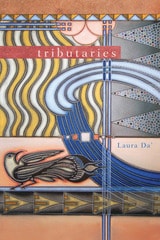
Tributaries
Laura Da'
University of Arizona Press, 2015
Precise images open to piercing meditations of Shawnee history. In the present, a woman watches the approximation of a scalping at a theatrical presentation. Da’ writes, “Soak a toupee with cherry Kool-Aid and mineral oil. / Crack the egg onto the actor’s head. / Red matter will slide down the crown / and egg shell will mimic shards of skull.” This vivid image is paired with a description of the traditional removal path of her own Shawnee ancestors through small towns in Ohio.
These poems range from the Midwestern landscapes of Ohio and Oklahoma to the Pacific Northwest, and the importance of place is apparent. Tributaries simultaneously offers us an extended narrative rumination on the impact of Indian policy and speaks to the contemporary experiences of parenthood and the role of education in passing knowledge from one generation to the next. This collection is composed of four sections that come together to create an important new telling of Shawnee past and present.
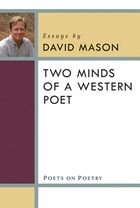
Two Minds of a Western Poet
David Mason
University of Michigan Press, 2011
Praise for David Mason
“. . . richly evocative and rare . . .”
—Publishers Weekly
“David Mason has succeeded in restoring to poetry some of the territory lost over recent centuries to prose fiction.”
—Paul Lake, First Things
In this new collection of essays, award-winning poet David Mason further broadens his exploration of Western and frontier themes. Beginning with the subject of poetry in and about the American West, he then widens his canvas to examine poets as diverse as James Wright, Anthony Hecht, and B. H. Fairchild, as well as taking up the idea of “the West” in global terms.
The title essay builds on a product of Mason’s upbringing in the American West—his “two minds” about the life of poetry, one aware that he needs and loves the art, and one equally aware that he understands a world outside cultural definitions. These two minds coexist throughout each lively, evocative essay, while Mason delves into family history and his efforts to connect himself to place, narrative poets of the American West, and farther-flung topics such as literary movements, post-colonial studies, and favorite Greek writers. In each of these meditations, Mason pursues a personal voice, connecting what he reads to a life outside books and making poetry accessible to the common reader.