Results by title
935 books match the query 'Ancient' and 221 start with t
The Connected Iron Age
Interregional Networks in the Eastern Mediterranean, 900-600 BCEEdited by Jonathan M. Hall and James F. Osborne
University of Chicago Press, 2022
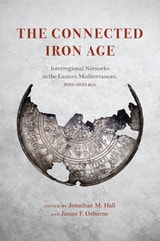
The early first millennium BCE marks one of the most culturally diverse periods in the history of the eastern Mediterranean. Surveying the region from Greece to Iraq, one finds a host of cultures and political formations, all distinct, yet all visibly connected in meaningful ways. These include the early polities of Geometric period Greece, the Phrygian kingdom of central Anatolia, the Syro-Anatolian city-states, the seafaring Phoenicians and the biblical Israelites of the southern Levant, Egypt’s Twenty-first through Twenty-fifth Dynasties, the Urartian kingdom of the eastern Anatolian highlands, and the expansionary Neo-Assyrian Empire of northern Mesopotamia. This volume adopts an interdisciplinary approach to understanding the social and political significance of how interregional networks operated within and between Mediterranean cultures during that era.
The Conquest of Ruins
The Third Reich and the Fall of RomeJulia Hell
University of Chicago Press, 2019
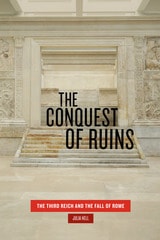
Hell examines centuries of European empire-building—from Charles V in the sixteenth century and Napoleon’s campaigns of the late seventeenth and early eighteenth centuries to the atrocities of Mussolini and the Third Reich in the 1930s and ’40s—and sees a similar fascination with recreating the Roman past in the contemporary image. In every case—particularly that of the Nazi regime—the ruins of Rome seem to represent a mystery to be solved: how could an empire so powerful be brought so low? Hell argues that this fascination with the ruins of greatness expresses a need on the part of would-be conquerors to find something to ward off a similar demise for their particular empire.
The Context of Ancient Drama
Eric Csapo and William J. Slater
University of Michigan Press, 1995
The Crisis of Masculinity in the Age of Augustus
Melanie Racette-Campbell
University of Wisconsin Press, 2023
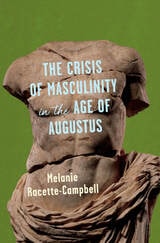
Careful reading of contemporary texts reveals a decades-long process as tumultuous and unsteady as the political events they echoed, one in which multiple and competing strategies for reconceiving the nature of masculinity were tested, employed, discarded, and adopted in a complex public-private discourse. The eventual reconstitution of a definition of Roman manhood was not easily agreed upon. Masculinity in both the Republic and the Empire are well-studied subjects, but by shining a light on the precise moment of transition Racette-Campbell unveils the complexity, contours, and nuances of the Augustan crisis of masculinity.
The Crowd in Rome in the Late Republic
Fergus Millar
University of Michigan Press, 2002
In this important study, Fergus Millar explores the development of the Roman Republic, which, as it drew to a close in the middle decades of the first century B.C.E., had come to cover most of Italy. There were nearly a million adult male voters in the time of Cicero, but there were no constituencies, and no absentee ballots. To exercise their rights, voters had to come in person to Rome and to meet in the Forum. Millar takes the period from the dictatorship of Sulla to Caesar's crossing of the Rubicon and shows how the politics of the crowd was central to the great changes that took place year after year, and altered the Republic forever.
The originality of Millar's highly accessible work lies first in its serious treatment of the importance of open-air oratory in Roman public life, and second, in its use of the narratives of events that evidence provides. Third, it refuses to interpret these narratives in the light of modern theories about the importance of the client-patron system, or the domination of the Senate. This work questions how we should understand the Roman Republic: as a network of aristocratic families dominating the people, or an erratic and volatile democracy in which power was exercised by the tiny proportion of citizens who actually came to listen to speeches and to vote.
This work speaks to those interested in ancient history and its consequences in the modern world.
Fergus Millar is Camden Professor of Ancient History, Brasenose College, Oxford University.
The Crown Games of Ancient Greece
Archaeology, Athletes, and HeroesDavid Lunt
University of Arkansas Press, 2022
The Crown Games were the apex of competition in ancient Greece. Along with prestigious athletic contests in honor of Zeus at Olympia, they comprised the Pythian Games for Apollo at Delphi, the Isthmian Games for Poseidon, and the Nemean Games, sacred to Zeus. For over nine hundred years, the Greeks celebrated these athletic and religious festivals, a rare point of cultural unity amid the fierce regional independence of the numerous Greek city-states and kingdoms.
The Crown Games of Ancient Greece examines these festivals in the context of the ancient Greek world, a vast and sprawling cultural region that stretched from modern Spain to the Black Sea and North Africa. Illuminating the unique history and features of the celebrations, David Lunt delves into the development of the contest sites as sanctuaries and the Panhellenic competitions that gave them their distinctive character. While literary sources have long been the mainstay for understanding the evolution of the Crown Games and ancient Greek athletics, archaeological excavations have significantly augmented contemporary understandings of the events. Drawing on this research, Lunt brings deeper context to these gatherings, which were not only athletics competitions but also occasions for musical contests, dramatic performances, religious ceremonies, and diplomatic summits—as well as raucous partying. Taken as a circuit, the Crown Games offer a more nuanced view of ancient Greek culture than do the well-known Olympian Games on their own. With this comprehensive examination of the Crown Games, Lunt provides a new perspective on how the ancient Greeks competed and collaborated both as individuals and as city-states.
The Cultural Turn in Late Ancient Studies
Gender, Asceticism, and HistoriographyDale B. Martin and Patricia Cox Miller, eds.
Duke University Press, 2005
The contributors investigate three key concerns of late ancient studies: gender, asceticism, and historiography. They consider Macrina’s scar, Mary’s voice, and the harlot’s body as well as Augustine, Jovinian, Gregory of Nazianzus, Julian, and Ephrem the Syrian. Whether examining how animal bodies figured as a means for understanding human passion and sexuality in the monastic communities of Egypt and Palestine or meditating on the almost modern epistemological crisis faced by Theodoret in attempting to overcome the barriers between the self and the wider world, these essays highlight emerging theoretical and critical developments in the field.
Contributors. Daniel Boyarin, David Brakke, Virginia Burrus, Averil Cameron, Susanna Elm, James E. Goehring, Susan Ashbrook Harvey, David G. Hunter, Blake Leyerle, Dale B. Martin, Patricia Cox Miller, Philip Rousseau, Teresa M. Shaw, Maureen A. Tilley, Dennis E. Trout, Mark Vessey
The Culture of Ancient Egypt
John A. Wilson
University of Chicago Press, 1956
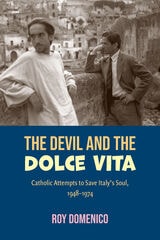
The Devil and the Dolce Vita
Catholic Attempts to Save Italy's Soul, 1948-1974Roy Domenico
Catholic University of America Press, 2021
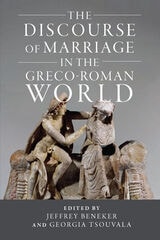
The Discourse of Marriage in the Greco-Roman World
Edited by Jeffrey Beneker and Georgia Tsouvala
University of Wisconsin Press, 2022
Through aesthetically informed and sensitive modes of analysis, these contributors examine a wealth of representations—including violence in weddings and spousal devotion after death. The Discourse of Marriage in the Greco-Roman World demonstrates the varying conceptions of an institution that was central to ancient social and political life—and remains prominent in the modern world. This volume will contribute to scholars' understanding of the era and fascinate anyone interested in historic depictions of marriage and the role and status of women in the late Hellenistic and early Imperial periods.
The Discovery of the Fact
Clifford Ando and William P. Sullivan, Editors
University of Michigan Press, 2020
The Divine Spark of Syracuse
Ingrid D. Rowland
Brandeis University Press, 2018
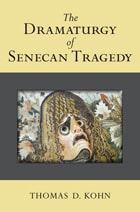
The Dramaturgy of Senecan Tragedy
Thomas D. Kohn
University of Michigan Press, 2013
The first-century Roman tragedies of Seneca, like all ancient drama, do not contain the sort of external stage directions that we are accustomed to today; nevertheless, a careful reading of the plays reveals such stage business as entrances, exits, setting, sound effects, emotions of the characters, etc. The Dramaturgy of Senecan Tragedy teases out these dramaturgical elements in Seneca's work and uses them both to aid in the interpretation of the plays and to show the playwright's artistry.
Thomas D. Kohn provides a detailed overview of the corpus, laying the groundwork for appreciating Seneca's techniques in the individual dramas. Each of the chapters explores an individual tragedy in detail, discussing the dramatis personae and examining how the roles would be distributed among a limited number of actors, as well as the identity of the Chorus. The Dramaturgy of Senecan Tragedymakes a compelling argument for Seneca as an artist and a dramaturg in the true sense of the word: "a maker of drama." Regardless of whether Seneca composed his plays for full-blown theatrical staging, a fictive theater of the mind, or something in between, Kohn demonstrates that he displays a consistency and a careful attentiveness to details of performance. While other scholars have applied this type of performance criticism to individual tragedies or scenes, this is the first comprehensive study of all the plays in twenty-five years, and the first ever to consider not just stagecraft, but also metatheatrical issues such as the significant distribution of roles among a limited number of actors, in addition to the emotional states of the characters. Scholars of classics and theater, along with those looking to stage the plays, will find much of interest in this study.
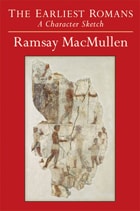
The Earliest Romans
A Character SketchRamsay MacMullen
University of Michigan Press, 2013
"A vibrant account that puts flesh on the bare bones of early Roman history."
---Celia Schultz, University of Michigan
The ancient Romans' story down to 264 B.C. can be made credible by stripping away their later myths and inventions to show how their national character shaped their destiny.
After many generations of scholarly study, consensus is clear: the account in writers like Livy is not to be trusted because their aims were different from ours in history-writing. They wanted their work to be both improving and diverting. It should grow out of the real past, yes, but if that reality couldn't be recovered, or was uncertain, their art did not forbid invention. It more than tolerated dramatic incidents, passions, heroes, heroines, and villains. If, however, all this resulting ancient fiction and adornment are pruned away, a national character can be seen in the remaining bits and pieces of credible information, to explain the familiar story at least in its outlines.
To doubt the written sources has long been acceptable, but this or that detail or narrative section must always be left for salvage by special pleading. To press home the logic of doubt is new. To reach beyond the written sources for a better support in excavated evidence is no novelty; but it is a novelty, to find in archeology the principal substance of the narrative---which is the choice in this book. To use this in turn for the discovery of an ethnic personality, a Roman national character, is key and also novel.
What is repeatedly illustrated and emphasized here is the distance traveled by the art or craft of understanding the past---"history" in that sense---over the course of the last couple of centuries. The art cannot be learned, because it cannot be found, through studying Livy and Company. Readers who care about either of the two disciplines contrasted, Classics and History, may find this argument of interest.
"Like Thucydides of the hyperactive Athenians and de Tocqueville of the nation-building Americans, MacMullen here draws a character sketch of the early Romans---the men who built Rome, conquered Italy, and created an empire. Based on profound familiarity with history, evidence, and their better-known descendants, attention to what they did and failed to do, remarkable insight, empathy, constructive imagination, and not without humor, he reconstructs the homo Romanus and thus helps us imagine what he was like, and understand why he achieved what he did. This little book is informative, full of important ideas, and delightful to read."
---Kurt Raaflaub, Brown University
Jacket image: Marcus Fabius and Quintus Tannius. Fresco. Musei Capitolini, Rome, Italy. Courtesy of Scala / Art Resource, NY..
The Early History of the Ancient Near East, 9000-2000 B.C.
Hans J. Nissen
University of Chicago Press, 1988
With a unique combination of material culture analysis written data, Nissan traces the emergence of the earliest isolated settlements, the growth of a network of towns, the emergence of city states, and finally the appearance of territorial states. From his synthesis of the prehistoric and literate periods comes a unified picture of the development of Mesopotamian economy, society, and culture. Lavishly illustrated, The Early History of the Ancient Near East, 9000-2000 B.C. is an authoritative work by one of the most insightful observers of the evolution and character of Mesopotamian civilization.
The Early Mubarak Years 1982–1988
The Non-Fiction Writing of Naguib Mahfouz, Volume IIINaguib Mahfouz
Gingko, 2020
The Earth Is Our Book
Geographical Knowledge in the Latin West ca. 400-1000Natalia Lozovsky
University of Michigan Press, 2000
Tackling an impressive array of primary and secondary sources--including a variety of late antique and early medieval texts--Lozovsky examines early medieval geography as it existed in other fields of learning: theology, history, and natural science. She expounds on the use of published resources by examining the nature of geographical knowledge in the Middle Ages. She draws on unpublished sources--such as school commentaries--for the rich information they provide about geographical education during that period. For many scholars of medieval studies, early medieval geographical texts have more philological than geographical value. Lozovsky's work provides an insightful, alternative interpretation.
Those interested in history, medieval studies, ethnography, science, education, religion, Latin studies, and, of course, geography, will find this book a most fascinating read.
Natalia Lozovsky is an instructor in the Department of History, University of Colorado, Boulder.
The Economy of Prostitution in the Roman World
A Study of Social History and the BrothelThomas A. J. McGinn
University of Michigan Press, 2004
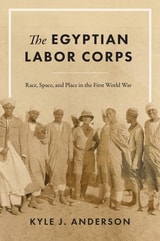
The Egyptian Labor Corps
Race, Space, and Place in the First World WarKyle J. Anderson
University of Texas Press, 2021
During World War I, the British Empire enlisted half a million young men, predominantly from the countryside of Egypt, in the Egyptian Labor Corps (ELC) and put them to work handling military logistics in Europe and the Middle East. British authorities reneged on their promise not to draw Egyptians into the war, and, as Kyle Anderson shows, the ELC was seen by many in Egypt as a form of slavery. The Egyptian Labor Corps tells the forgotten story of these young men, culminating in the essential part they came to play in the 1919 Egyptian Revolution.
Combining sources from archives in four countries, Anderson explores Britain’s role in Egypt during this period and how the ELC came to be, as well as the experiences and hardships these men endured. As he examines the ways they coped—through music, theater, drugs, religion, strikes, and mutiny—he illustrates how Egyptian nationalists, seeing their countrymen in a state akin to slavery, began to grasp that they had been racialized as “people of color.” Documenting the history of the ELC and its work during the First World War, The Egyptian Labor Corps also provides a fascinating reinterpretation of the 1919 revolution through the lens of critical race theory.
The Egyptians
Edited by Sergio Donadoni
University of Chicago Press, 1997
Read consecutively, the portraits merge to create a larger picture of Egyptian culture, state, and society. The framework of the Egyptian state, in particular, is touched upon in each essay, describing the meticulous administration and well-organized hierarchical system that fostered centuries of stability and prosperity.
The Emergence of the Classical Style in Greek Sculpture
Richard Neer
University of Chicago Press, 2010
The End of Sacrifice
Religious Transformations in Late AntiquityGuy G. Stroumsa
University of Chicago Press, 2009
The religious transformations that marked late antiquity represent an enigma that has challenged some of the West’s greatest thinkers. But, according to Guy Stroumsa, the oppositions between paganism and Christianity that characterize prevailing theories have endured for too long. Instead of describing this epochal change as an evolution within the Greco-Roman world from polytheism to monotheism, he argues that the cause for this shift can be found not so much around the Mediterranean as in the Near East.
The End of Sacrifice points to the role of Judaism, particularly its inventions of new religious life following the destruction of the Second Temple in 70 CE. The end of animal sacrifice gave rise to new forms of worship, with a concern for personal salvation, scriptural study, rituals like praying and fasting, and the rise of religious communities and monasticism. It is what Christianity learned from Judaism about texts, death, and, above all, sacrifice that allowed it to supersede Greco-Roman religions and, Stroumsa argues, transform religion itself.
A concise and original approach to a much-studied moment in religious history, The End of Sacrifice will be heralded by all scholars of late antiquity.
The Essential Isocrates
Jon D. Mikalson
University of Texas Press, 2022
The Essential Isocrates is a comprehensive introduction to Isocrates, one of ancient Greece’s foremost orators. Jon D. Mikalson presents Isocrates largely in his own words, with original English translations of selections of his writings on his life and times and on morality, religion, philosophy, rhetoric, education, political theory, and Greek and Athenian history. In Mikalson’s treatment, Isocrates receives his due not only as a major thinker but as one whose work has resonated across time, influencing even modern education practices and theory.
Isocrates wrote extensively about Athens in the fourth century BCE and before, and his speeches, letters, and essays provide a trove of insights concerning the intellectual, political, and social currents of his time. Mikalson details what we know about Isocrates’s long, eventful, and complicated life, and much can be gleaned on the personal level from his own writings, as Isocrates was one of the most introspective authors of the Classical Period. By collecting the most representative and important passages of Isocrates’s writings, arranging them topically, and placing them in historical context, The Essential Isocrates invites general and expert readers alike to engage with one of antiquity’s most compelling men of ideas.
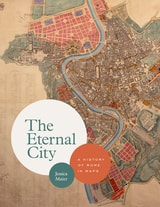
The Eternal City
A History of Rome in MapsJessica Maier
University of Chicago Press, 2020
In this unique and visually engaging book, Jessica Maier considers Rome through the eyes of mapmakers and artists who have managed to capture something of its essence over the centuries. Viewing the city as not one but ten “Romes,” she explores how the varying maps and art reflect each era’s key themes. Ranging from modest to magnificent, the images comprise singular aesthetic monuments like paintings and grand prints as well as more popular and practical items like mass-produced tourist plans, archaeological surveys, and digitizations. The most iconic and important images of the city appear alongside relatively obscure, unassuming items that have just as much to teach us about Rome’s past. Through 140 full-color images and thoughtful overviews of each era, Maier provides an accessible, comprehensive look at Rome’s many overlapping layers of history in this landmark volume.
The first English-language book to tell Rome’s rich story through its maps, The Eternal City beautifully captures the past, present, and future of one of the most famous and enduring places on the planet.
The Fabric of Classical Islamic Culture
A Cognitivist ApproachHouari Touati
University of Chicago Press, 2027
A sweeping account of the evolution of early Islamic culture.
This book argues that early Islamic literature was influenced less by the Qur’an and more by the bureaucratic culture of the Diwan, the secular political system in place long before a written religious culture emerged. As Houari Touati explains, this secular Arab culture quickly outstripped written religious erudition: first, because of the diverse communities who participated in the scholarly networks of the empire; and second, because of the universalizing influence of the period’s Greco-Arabic translation movement. This process of cross-cultural fertilization, Touati recounts, flourished within Islam until the canonization of the Hadith (the official sayings, actions, and sanctions of Muhammad) began to disrupt this dynamic of interchange after the tenth century, without, however, managing to put a definitive end to it. The Fabric of Classical Islamic Culture is a wide-ranging, comparative account of the parallel development of secular and sacred culture that produced the modern Arabic world.
The Folds of Parnassos
Land and Ethnicity in Ancient PhokisBy Jeremy McInerney
University of Texas Press, 2000
Independent city-states (poleis) such as Athens have been viewed traditionally as the most advanced stage of state formation in ancient Greece. By contrast, this pioneering book argues that for some Greeks the ethnos, a regionally based ethnic group, and the koinon, or regional confederation, were equally valid units of social and political life and that these ethnic identities were astonishingly durable.
Jeremy McInerney sets his study in Phokis, a region in central Greece dominated by Mount Parnassos that shared a border with the panhellenic sanctuary at Delphi. He explores how ecological conditions, land use, and external factors such as invasion contributed to the formation of a Phokian territory. Then, drawing on numerous interdisciplinary sources, he traces the history of the region from the Archaic age down to the Roman period. McInerney shows how shared myths, hero cults, and military alliances created an ethnic identity that held the region together over centuries, despite repeated invasions. He concludes that the Phokian koinon survived because it was founded ultimately on the tenacity of the smaller communities of Greece.
The Forgotten Kingdom
The Archaeology and History of Northern IsraelIsrael Finkelstein
SBL Press, 2013
A new understanding of the history of the northern kingdom from 1350 B.C.E. to 720 B.C.E.
Beginning with the Canaanite city-states, through the Saulide dynasty, to the fall of Israel, Finkelstein presents the first comprehensive history of Israel integrating the analysis of more than thirty years of archaeological work with interpretation of ancient Near Eastern and biblical texts. Though Judah dominates the pages of the Hebrew Bible and contemporary studies, Israel dominates here as Finkelstein reveals the glory of the Omride dynasty, outlines how the two kingdoms of Israel and Judah developed parallel to one another, and highlights Israel’s transformation from kingdom to foundational idea.
Features:
- Archaeological analysis of the region of the northern kingdom
- Primary and secondary textual analysis from the ancient Near East and the biblical narrative
- Maps, tables, and images
- Discussion of Israel’s legacy
The Fractured Voice
Silence and Power in Imperial Roman LiteratureAmy A. Koenig
University of Wisconsin Press, 2023
In this volume, Amy Koenig deftly confronts the trope of muteness in Imperial Roman literature, arguing that this understanding of silence is incomplete. By unpacking the motif of voicelessness across a wide range of written sources, she shows that the Roman perception of silence was more complicated than a simple binary and that elite male authors used muted or voiceless characters to interrogate the concept of voicelessness in ways that would be taboo in other contexts. Paradoxically, Koenig illustrates that silence could in fact be freeing—that the loss of voice permits an untethering from other social norms and expectations, thus allowing a freedom of expression denied to many of the voiced.
The Ghosts of the Past
Latin Literature, the Dead, and Rome’s Transition to A PrincipateBasil Dufallo
The Ohio State University Press, 2007
Calling into question boundaries of genre and literary form, Dufallo’s study will revise current understandings of Latin literature as a cultural and performance practice. Works as diverse as Cicero’s speeches, Propertian elegy, Horace’s epodes and satires, and Vergil’s Aeneid appear in a new light as performed texts interacting with other kinds of cultural performance from which they might otherwise seem isolated.
The Gift of Correspondence in Classical Rome
Friendship in Cicero's Ad Familiares and Seneca's Moral EpistlesAmanda Wilcox
University of Wisconsin Press, 2012
Amanda Wilcox offers an innovative approach to two major collections of Roman letters—Cicero’s Ad Familiares and Seneca’s Moral Epistles—informed by modern cross-cultural theories of gift-giving.
By viewing letters and the practice of correspondence as a species of gift exchange, Wilcox provides a nuanced analysis of neglected and misunderstood aspects of Roman epistolary rhetoric and the social dynamics of friendship in Cicero’s correspondence. Turning to Seneca, she shows that he both inherited and reacted against Cicero’s euphemistic rhetoric and social practices, and she analyzes how Seneca transformed the rhetoric of his own letters from an instrument of social negotiation into an idiom for ethical philosophy and self-reflection. Though Cicero and Seneca are often viewed as a study in contrasts, Wilcox extensively compares their letters, underscoring Cicero’s significant influence on Seneca as a prose stylist, philosopher, and public figure.
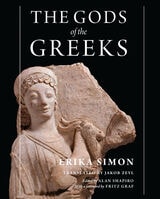
The Gods of the Greeks
Erika Simon, Translated by Jakob Zeyl, Edited by Alan Shapiro
University of Wisconsin Press, 2021
This careful and fluid translation finally makes Simon’s landmark edition accessible to English-language readers. With an abundance of beautiful illustrations, the book examines portrayals of the thirteen major gods in art over the course of two millennia. Scholars who study the lives and practices of those living in ancient Greece will value this newest contribution.
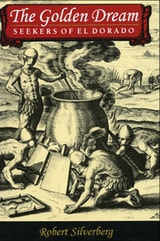
The Golden Dream
Seekers Of El DoradoRobert Silverberg
Ohio University Press, 1996
One of the most persistent legends in the annals of New World exploration is that of the Land of Gold. This mythical site was located over vast areas of South America (and later, North America); the search for it drove some men mad with greed and, as often as not, to their untimely deaths.
In this history of quest and adventure, Robert Silverberg traces the fate of Old World explorers lured westward by the myth of El Dorado. From the German conquistadores licensed by the Spanish king to operate out of Venezuela, to the journeys of Gonzalo Pizarro in the Amazon basin, and to the nearly miraculous voyage of Francisco Orellana to the mouth of the Amazon River, encountering the warlike women who gave the river its name, violence and bloodshed accompanied the determined adventurers. Sir Walter Raleigh and a host of other explorers spent small fortunes and many lives trying to locate Manoa, a city that was rumored to be El Dorado—City of Gold. Celebrated science fiction author Robert Silverberg recreates these legendary quests in The Golden Dream: Seekers of El Dorado.
The Great Name
Ancient Egyptian Royal TitularyRonald J. Leprohon
SBL Press, 2013
The Greco-Egyptian Magical Formularies
Libraries, Books, and Individual RecipesEdited by Christopher A. Faraone and Sofía Torallas Tovar
University of Michigan Press, 2022
In Greco-Roman Egypt, recipes for magical undertaking, called magical formularies, commonly existed for love potions, curses, attempts to best business rivals—many of the same challenges that modern people might face. In The Greco-Egyptian Magical Formularies: Libraries, Books, and Individual Recipes, volume editors Christopher Faraone and Sofia Torallas Tovar present a series of essays by scholars involved in a multiyear project to reedit and translate the various magical handbooks that were inscribed in the Roman period in the Greek or Egyptian languages. For the first time, the material remains of these papyrus rolls and codices are closely examined, revealing important information about the production of books in Egypt, the scribal culture in which they were produced, and the traffic in single recipes copied from them. Especially important for historians of the book and the Christian Bible are new insights in the historical shift from roll to codex, complicated methods of inscribing the bilingual papyri (in which the Greek script is written left to right and the demotic script right to left), and the new realization that several of the longest extant handbooks are clearly compilations of two or more shorter handbooks, which may have come from different places. The essays also reexamine and rethink the idea that these handbooks came from the personal libraries of practicing magicians or temple scriptoria, in one case going so far as to suggest that two of the handbooks had literary pretensions of a sort and were designed to be read for pleasure rather than for quotidian use in making magical recipes.
The Greeks
Edited by Jean-Pierre Vernant
University of Chicago Press, 1995
The Greeks offers the most complete portraits available of typical Greek personages from Athens to Sparta, Arcadia, Thessaly and Epirus to the city-states of Asia Minor, to the colonies of the Black Sea, southern Italy, and Sicily. Looking at the citizen, the religious believer, the soldier, the servant, the peasant, and others, they show what—in the Greek relationships with the divine, with nature, with others, and with the self—made him "different" in his ways of acting, thinking, and feeling.
The contributors to this volume are Jean-Pierre Vernant, Claude Mosse, Yvon Garlan, Giuseppe Cambiano, Luciano Canfora, James Redfield, Charles Segal, Oswyn Murray, Mario Vegetti, and Philippe Borgeaud.
The Heart of Achilles
Characterization and Personal Ethics in the IliadGraham Zanker
University of Michigan Press, 1996
"[Zanker] investigates altruistic behavior in the epic with professional sophistication but in a way that makes his investigation available to a wide audience from undergraduates to advanced scholars. . . . [A] very useful interpretative study." --Choice
Graham Zanker is Senior Lecturer in Classics, University of Canterbury, New Zealand.
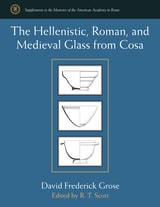
The Hellenistic, Roman, and Medieval Glass from Cosa
David Frederick Grose (R. T. Scott, editor)
University of Michigan Press, 2017
The research and analysis presented here are the work of the late David Frederick Grose, who began this project when no other city site excavations in Italy focused on ancient glass. He confirmed that the Roman glass industry began to emerge in the Julio-Claudian era, beginning in the principate of Augustus. His study traces the evolution of manufacturing techniques from core-formed vessels to free blown glass, and it documents changes in taste and style that were characteristic of the western glass industry throughout its long history.
At the time of Grose’s unexpected passing, his study was complete but not yet published. Nevertheless, the reputation of his work in this area has done much to establish the value and importance of excavating and researching Cosa’s glass. This volume, arranged and edited by R. T. Scott, makes Grose’s essential scholarship on the subject available for the first time.
The Hero and the City
An Interpretation of Sophocles' Oedipus at ColonusJoseph P. Wilson
University of Michigan Press, 2003
Joseph P. Wilson is Professor of Foreign Languages at the University of Scranton.
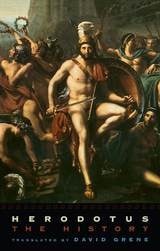
The History
Herodotus
University of Chicago Press, 1988
Here is the historian, investigating and judging what he has seen, heard, and read, and seeking out the true causes and consequences of the great deeds of the past. In his History, the war between the Greeks and Persians, the origins of their enmity, and all the more general features of the civilizations of the world of his day are seen as a unity and expressed as the vision of one man who as a child lived through the last of the great acts in this universal drama.
In Grene's remarkable translation and commentary, we see the historian as a storyteller, combining through his own narration the skeletal "historical" facts and the imaginative reality toward which his story reaches. Herodotus emerges in all his charm and complexity as a writer and the first historian in the Western tradition, perhaps unique in the way he has seen the interrelation of fact and fantasy.
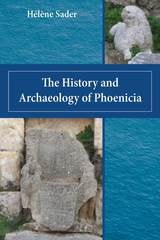
The History and Archaeology of Phoenicia
Hélène Sader
SBL Press, 2019
An insightful historical account of Phoenicia that illustrates its cities, culture, and daily life
Hélène Sader presents the history and archaeology of Phoenicia based on the available contemporary written sources and the results of archaeological excavations in Phoenicia proper. Sader explores the origin of the term Phoenicia; the political and geographical history of the city-states Arwad, Byblos, Sidon, and Tyre; and topography, climate, and natural resources of the Phoenician homeland. Her limited focus on Phoenicia proper, in contrast to previous studies that included information from Phoenician colonies, presents the bare realities of the opportunities and difficulties shaping Phoenician life. Sader’s evaluation and synthesis of the evidence offers a corrective to the common assumption of a unified Phoenician kingdom.
Features
- Historical as well as modern maps with the locations of all relevant archaeological sites
- Faunal and floral analyses that shed light on the Phoenician diet
- Petrographic analysis of pottery that sheds light on trading patterns and developments
The Hittites and Their World
Billie Jean Collins
SBL Press, 2007
The Huarochiri Manuscript
A Testament of Ancient and Colonial Andean ReligionTranslation from the Quechua by Frank Salomon and George L. Urioste
University of Texas Press, 1991
One of the great repositories of a people's world view and religious beliefs, the Huarochirí Manuscript may bear comparison with such civilization-defining works as Gilgamesh, the Popul Vuh, and the Sagas. This translation by Frank Salomon and George L. Urioste marks the first time the Huarochirí Manuscript has been translated into English, making it available to English-speaking students of Andean culture and world mythology and religions.
The Huarochirí Manuscript holds a summation of native Andean religious tradition and an image of the superhuman and human world as imagined around A.D. 1600. The tellers were provincial Indians dwelling on the west Andean slopes near Lima, Peru, aware of the Incas but rooted in peasant, rather than imperial, culture. The manuscript is thought to have been compiled at the behest of Father Francisco de Avila, the notorious "extirpator of idolatries." Yet it expresses Andean religious ideas largely from within Andean categories of thought, making it an unparalleled source for the prehispanic and early colonial myths, ritual practices, and historic self-image of the native Andeans.
Prepared especially for the general reader, this edition of the Huarochirí Manuscript contains an introduction, index, and notes designed to help the novice understand the culture and history of the Huarochirí-area society. For the benefit of specialist readers, the Quechua text is also supplied.
The Humblest Sparrow
The Poetry of Venantius FortunatusMichael Roberts
University of Michigan Press, 2010
In The Humblest Sparrow, Michael Roberts illuminates the poetry of the sixth-century bishop and poet Venantius Fortunatus. Often regarded as an important transitional figure, Fortunatus wrote poetry that is seen to bridge the late classical and earlier medieval periods. Written in Latin, his poems combined the influences of classical Latin poets with a medieval tone, giving him a special place in literary history. Yet while interest has been growing in the early Merovingian period, and while the writing of Fortunatus' patron Gregory of Tours has been well studied, Fortunatus himself has often been neglected. This neglect is remedied by this in-depth study, which will appeal to scholars of late antique, early Christian, and medieval Latin poetry. Roberts divides Fortunatus' poetry into three main groups: poetry of praise, hagiographical poetry, and personal poetry. In addition to providing a general survey, Roberts discusses in detail many individual poems and proposes a number of theses on the nature, function, relation to social and linguistic context, and survival of Fortunatus' poetry, as well as the image of the poet created by his work.

The Idols of ISIS
From Assyria to the InternetAaron Tugendhaft
University of Chicago Press, 2020
Beginning with the Islamic State’s claim that the smashed objects were idols of the “age of ignorance,” Aaron Tugendhaft questions whether there can be any political life without idolatry. He then explores the various roles Mesopotamian sculpture has played in European imperial competition, the development of artistic modernism, and the formation of Iraqi national identity, showing how this history reverberates in the choice of the Mosul Museum as performance stage. Finally, he compares the Islamic State’s production of images to the ways in which images circulated in ancient Assyria and asks how digitization has transformed politics in the age of social media. An elegant and accessibly written introduction to the complexities of such events, The Idols of ISIS is ideal for students and readers seeking a richer cultural perspective than the media usually provides.
The Iliad
Homer
University of Michigan Press, 2007
nuances of English."
---Stephen G. Daitz, Professor Emeritus of Classics, City University of New York
Rodney Merrill's translation of Homer's Iliad offers a form of English poetry particularly relevant to the epic, producing a strong musical setting that brings many elements of the narrative truly to life. Most notable are the many battle scenes, in which Homer's strong dactylic hexameters make credible the "war-lust" in the deeds of the combatants.
The Iliad of Homer
Homer
University of Chicago Press, 2011
The epic story of the Trojan War in the most faithful and compelling translation available
"Sing, goddess, the anger of Peleus’ son Achilleus / and its devastation." For sixty years, that's how Homer has begun the Iliad in English, in Richmond Lattimore's faithful translation—the gold standard for generations of students and general readers.
This long-awaited new edition of Lattimore's Iliad is designed to bring the book into the twenty-first century—while leaving the poem as firmly rooted in ancient Greece as ever. Lattimore's elegant, fluent verses—with their memorably phrased heroic epithets and remarkable fidelity to the Greek—remain unchanged, but classicist Richard Martin has added a wealth of supplementary materials designed to aid new generations of readers. A new introduction sets the poem in the wider context of Greek life, warfare, society, and poetry, while line-by-line notes at the back of the volume offer explanations of unfamiliar terms, information about the Greek gods and heroes, and literary appreciation. A glossary and maps round out the book.
The result is a volume that actively invites readers into Homer's poem, helping them to understand fully the worlds in which he and his heroes lived—and thus enabling them to marvel, as so many have for centuries, at Hektor and Ajax, Paris and Helen, and the devastating rage of Achilleus.
The Incas
Nigel Davies
University Press of Colorado, 1995
In this classic work, Nigel Davies offers a clear view into Inca political history, economy, governance, religion, art, architecture, and daily life. The Incas has become a classic in its many years in print; readers and scholars interested in ancient American cultures will relish this paperback edition.
The Intellectual Adventure of Ancient Man
An Essay of Speculative Thought in the Ancient Near EastHenri Frankfort, H. A. Frankfort, John A. Wilson, Thorkild Jacobsen, and William A. Irwin
University of Chicago Press, 1946
The authors describe and analyze the spiritual life of three ancient civilizations: the Egyptians, whose thinking was profoundly influenced by the daily rebirth of the sun and the annual rebirth of the Nile; the Mesopotamians, who believed the stars, moon, and stones were all citizens of a cosmic state; and the Hebrews, who transcended prevailing mythopoeic thought with their cosmogony of the will of God. In the concluding chapter the Frankforts show that the Greeks, with their intellectual courage, were the first culture to discover a realm of speculative thought in which myth was overcome.
The Invention and Gendering of Epicurus
Pamela Gordon
University of Michigan Press, 2012
The school of Greek philosopher Epicurus, which became known as the Garden, famously put great stock in happiness and pleasure. As a philosophical community, and a way of seeing the world, Epicureanism had a centuries-long life in Athens and Rome, as well as across the Mediterranean.
The Invention and Gendering of Epicurusstudies how the Garden's outlook on pleasure captured Greek and Roman imaginations---particularly among non-Epicureans---for generations after its legendary founding. Unsympathetic sources from disparate eras generally focus not on historic personages but on the symbolic Epicurean. And yet the traditions of this imagined Garden, with its disreputable women and unmanly men, give us intermittent glimpses of historical Epicureans and their conceptions of the Epicurean life.
Pamela Gordon suggests how a close hearing and contextualization of anti-Epicurean discourse leads us to a better understanding of the cultural history of Epicureanism. Her primary focus is on sources hostile to the Garden, but her Epicurean-friendly perspective is apparent throughout. Her engagement with ancient anti-Epicurean texts makes more palpable their impact on modern responses to the Garden.
Intended both for students and for scholars of Epicureanism and its response, the volume is organized primarily according to the themes common among Epicurus' detractors. It considers the place of women in Epicurean circles, as well as the role of Epicurean philosophy in Homer and other writers.
The Invention of Coinage and the Monetization of Ancient Greece
David M. Schaps
University of Michigan Press, 2015