Results by title
975 books match the query 'Case studies' and 152 start with t
The Fairer Death
Executing Women in OhioVictor L. Streib
Ohio University Press, 2006
Women on death row are such a rarity that, once condemned, they may be ignored and forgotten. Ohio, a typical, middle-of-the-road death penalty state, provides a telling example of this phenomenon. The Fairer Death: Executing Women in Ohio explores Ohio’s experience with the death penalty for women and reflects on what this experience reveals about the death penalty for women throughout the nation.
Victor Streib’s analysis of two centuries of Ohio death penalty legislation and adjudication reveals no obvious exclusion of women or even any recognition of an issue of sex bias. In this respect, Ohio’s justice system exemplifies the subtle and insidious nature of this cultural disparity.
Professor Streib provides detailed descriptions of the cases of the four women actually executed by Ohio since its founding and of the cases of the eleven women sentenced to death in Ohio in the current death penalty era (1973–2005). Some of these cases had a profound impact on death penalty law, but most were routine and drew little attention. A generation later, reversals and commutations have left only one woman on Ohio’s death row.
Although Streib focuses specifically on Ohio, the underlying premise is that Ohio is, in many ways, a typical death penalty state. The Fairer Death provides insight into our national experience, provoking questions about the rationale for the death penalty and the many disparities in its administration.
The Fame of Gawa
A Symbolic Study of Value Transformation in a Massim SocietyNancy D. Munn
Duke University Press, 1992
The Fertility Revolution
A Supply-Demand AnalysisRichard A. Easterlin and Eileen M. Crimmins
University of Chicago Press, 1985
Richard A. Easterlin and Eileen M. Crimmins present and test a fertility theory that has gained increasing attention over the last decade, a "supply-demand theory" that integrates economic and sociological approaches to fertility determination. The results of the tests, which draw on data from four developing countries—Colombia, India, Sri Lanka, and Taiwan—are highly consistent, though a number of the conclusions are likely to arouse controversy. For example, couples' motivation for fertility control appears to be the prime mover in the fertility revolution, rather than access to family planning services or unfavorable attitudes toward such services.
The interdisciplinary approach and nontechnical exposition of this study will attract a wide readership among economists, sociologists, demographers, anthropologists, statisticians, biologists, and others.

The First-Year Experience Cookbook
Raymond Pun
Assoc of College & Research Libraries, 2017

The Florida Project
J. J. Murphy
University of Texas Press, 2021
In Sean Baker’s award-winning 2017 film The Florida Project, a young girl, her single mother, and her friends live in rundown motels near Disney World, the children’s summer fun contrasting with the grim conditions around them. In this book, J. J. Murphy delves deep into the movie’s development and filming while also examining it within the wider context of Baker’s career.
Using production documents, different versions of the screenplay, and interviews with principal members of the production team, Murphy traces the evolution of The Florida Project from initial idea through its various stages of production. He highlights Baker’s unconventional strategies in making a film about a marginalized subculture, including alternative scripting, guerrilla-like filmmaking, improvisation, and the unorthodox casting of local and first-time actors. Murphy also explores how Baker’s impromptu style sometimes rankled crew members and caused a major crisis on set, revealing the difficulties indie filmmakers can face when working with professional crews on larger films. A lively analysis of this critically acclaimed movie, its director, and its production, The Florida Project also betters our understanding of contemporary independent cinema as a whole.
The Fragmented Politics of Urban Preservation
Beijing, Chicago, and ParisYue Zhang
University of Minnesota Press, 2013
While urban preservation is almost as old as cities themselves, it has become increasingly controversial in modern cities. In this book, Yue Zhang presents a cross-national comparative analysis of the politics of urban preservation. Based on comprehensive archival research and more than two hundred in-depth interviews in Beijing, Chicago, and Paris, Zhang finds that urban preservation provides a tool for diverse political and social actors to frame their propositions and advance their favored courses of action.
In cities from West to East, divergent political and economic interests have caused urban preservation to become contested. Exploring three of the world’s great cities, Zhang deftly navigates readers through each case study, illustrating the complexities of the politics of urban preservation in each city. In Beijing, urban preservation was integral to promoting economic growth and enhancing the city’s image during the lead-up to the 2008 Olympics; in Chicago, it is used to increase property values and revitalize neighborhoods; and in Paris, it offers a channel for national and municipal governments to compete for control over urban space.
Although urban preservation serves various purposes in these cities, Zhang explains how different types of political fragmentation have affected the implementation of preservation initiatives in predictable ways, thus generating distinct patterns of urban preservation. A comparative urban politics study of unusual breadth, The Fragmented Politics of Urban Preservation gives us insight into the complex policy process of urban preservation through which political institutions are intertwined with interests and inclinations, fundamentally shaping the direction of urban development, the physical forms of cities, and the lives of citizens.

The Frugal Librarian
Carol American Library Association
American Library Association, 2011

The Future of Meta-Analysis
Kenneth W. Wachter
Russell Sage Foundation, 1990
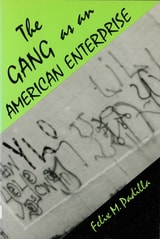
The Gang as an American Enterprise
Felix M Padilla
Rutgers University Press, 1992
Padilla shows us his decision to join the Diamonds. From early childhood, boys develop positive images of the gang. They realize that the dominant culture promises mobility, but that their paths to that mobility are blocked. By joining a gang they can creatively oppose the dominant culture. Padilla does not paint a romanticized picture of the Diamonds. Some members come to understand that when they sell drugs, they benefit the gang's leaders and suppliers more than themselves. Further, they recognize that the gang is also subject to problems of domination and inequality. Padilla shows that though the Diamonds are sometimes violent, they are not psychopaths. While we need not approve of what they do, he urges us to understand it as a rational response to the doors these young men see closed around them.
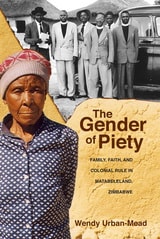
The Gender of Piety
Family, Faith, and Colonial Rule in Matabeleland, ZimbabweWendy Urban-Mead
Ohio University Press, 2015
The Gender of Piety is an intimate history of the Brethren in Christ Church in Zimbabwe, or BICC, as related through six individual life histories that extend from the early colonial years through the first decade after independence. Taken together, these six lives show how men and women of the BICC experienced and sequenced their piety in different ways. Women usually remained tied to the church throughout their lives, while men often had a more strained relationship with it. Church doctrine was not always flexible enough to accommodate expected masculine gender roles, particularly male membership in political and economic institutions or participation in important male communal practices.
The study is based on more than fifteen years of extensive oral history research supported by archival work in Zimbabwe, the United Kingdom, and the United States. The oral accounts make it clear, official versions to the contrary, that the church was led by spiritually powerful women and that maleness and mission-church notions of piety were often incompatible.
The life-history approach illustrates how the tension of gender roles both within and without the church manifested itself in sometimes unexpected ways: for example, how a single family could produce both a legendary woman pastor credited with mediating multiple miracles and a man—her son—who joined the armed wing of the Zimbabwe African People’s Union nationalist political party and fought in Zimbabwe’s liberation war in the 1970s. Investigating the lives of men and women in equal measure, The Gender of Piety uses a gendered interpretive lens to analyze the complex relationship between the church and broader social change in this region of southern Africa.
The Gold Leaf Lady and Other Parapsychological Investigations
Stephen E. Braude
University of Chicago Press, 2007
The Good, the Great, and the Unfriendly
A Librarian's Guide to Working with Friends GroupsSally Gardner Reed
American Library Association, 2017
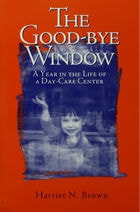
The Good-bye Window
A Year in the Life of a Day-Care CenterHarriet Brown
University of Wisconsin Press, 1998
Have you ever wondered what really goes on at your child’s day-care center after you say good-bye? Harriet Brown did. To satisfy her curiosity, she spent an entire year observing Red Caboose, a center in Madison, Wisconsin. This engaging and thought-provoking book is the story of that year.
In her beautifully written personal account, journalist and mother Brown takes us behind the scenes at a day-care center that works. At Red Caboose, one of the oldest independent centers in the country, we meet teachers who have worked with young children for more than twenty years. We watch the child-care union and parents struggle to negotiate a contract without ripping apart the fabric of trust and love that holds the Red Caboose community together.
We look at the center’s finances, to see what keeps Red Caboose going at a time when other good centers are disappearing. Best of all, we get to know the children, families, and teachers of Red Caboose—their struggles, their sorrows, their triumphs.
Started twenty-five years ago by a group of idealistic parents, the center has not only survived but thrived through some pretty tough times. In the world of day care, Red Caboose is a special place, a model for what child care in this country could and should be: not just babysitting, not just a service to working parents, but a benefit for children, families, teachers, and the community at large.
Brown sets her rich and engaging stories in the greater political and social context of our time. Why is so much child care bad? Why should working Americans worry about the link between welfare reform and child care? What can we learn from the history of child care?
This book is a must-read for parents, educators, and anyone who enjoys first-rate writing and dead-on insight into the lives of our youngest children and those who care for them.
“[Brown’s] writing is beautiful and her scholarship sound. Students considering day-care careers, day-care professionals, and concerned parents will gain insight by reading this provocative book, as will anyone who cares about the future of young children in this country.”—Choice
“I admire enormously the ambition of this book—its eagle-eyed witness and engrossing detail, plus the social importance of the project. I wish there were in the world more books like it.”—Lorrie Moore, author of Who Will Run the Frog Hospital?
“The Good-bye Window is a fascinating peek into the secret world of children. With the poignancy of Anne LaMott, and the reportorial grace of Tracy Kidder, Harriet Brown has written a terrific and worthwhile book.”—Meg Wolitzer, author of This Is Your Life
“Harriet Brown’s well-told story of the Red Caboose child-care center should be read by teachers and parents, but also by every legislator and politician in the land. Only a writer as good as Ms. Brown could display the dramatic complexities of a school community in which the youngest members enter crawling and emerge a few years later as articulate, empathetic, and well-socialized individuals, ready for the ‘real world.’”—Vivian Gussin Paley, author of The Boy Who Would Be a Helicopter
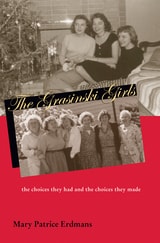
The Grasinski Girls
The Choices They Had and the Choices They MadeMary Patrice Erdmans
Ohio University Press, 2004
The Grasinski Girls were working-class Americans of Polish descent, born in the 1920s and 1930s, who created lives typical of women in their day. They went to high school, married, and had children. For the most part, they stayed home to raise their children. And they were happy doing that. They took care of their appearance and their husbands, who took care of them. Like most women of their generation, they did not join the women’s movement, and today they either reject or shy away from feminism.
Basing her account on interviews with her mother and aunts, Mary Erdmans explores the private lives of these white, Christian women in the post-World War II generation. She compares them, at times, to her own postfeminist generation. Situating these women within the religious routines that shaped their lives, Professor Erdmans explores how gender, class, ethnicity, and religion shaped the choices the Grasinski sisters were given as well as the choices they made. These women are both acted upon and actors; they are privileged and disadvantaged; they resist and surrender; they petition the Lord and accept His will.
The Grasinski Girls examines the complexity of ordinary lives, exposing privileges taken for granted as well as nuances of oppression often overlooked. Erdmans brings rigorous scholarship and familial insight to bear on the realities of twentieth-century working-class white women in America.
The Grit and the Grind
Building High-Performing Education Systems in an Era of PolarizationJoshua L. Glazer, Cori Egan, William R. Berry, and Amar Fattal
University of Chicago Press, 2026
Offers a much-needed perspective on the connections between community, policymaking, and the improvement of underperforming schools.
School reform remains a fraught issue in the United States as educators, policymakers, and communities strive to improve outcomes for all students. In The Grit and the Grind, Joshua L. Glazer, Cori Egan, William R. Berry, and Amar Fattal examine two ambitious efforts to improve the lowest-performing schools in Memphis, Tennessee. The book offers a rare inside look at the political, organizational, and educational challenges of improving schools at scale.
The two initiatives, the Achievement School District (ASD) and the Shelby County Innovation Zone (iZone), shared a common goal but pursued it through fundamentally different approaches. The ASD was a state-run turnaround district that removed schools from local control and placed them under the management of charter organizations. By contrast, the iZone operated through existing district institutions, relying on local educators and leaders to drive improvement. Despite common goals and substantial resources, the reforms developed in strikingly different ways. Drawing on years of research in Memphis, the authors move beyond familiar debates about charter schools and district reform to explore a deeper question: What does it take to improve schools in complex, pluralistic, and contested democratic societies? Their analysis reveals that educational improvement is simultaneously professional, organizational, and political. Efforts to enhance educational opportunities depend not only on curriculum, leadership, and expertise, but also on the legitimacy, trust, and community support that allow educational systems to learn from experience and sustain improvement.
At once a study of reform, organizations, and politics, The Grit and the Grind challenges simple explanations of success and failure, showing that meaningful improvement is forged through the slow, uncertain work of building systems capable of earning community trust while continuously strengthening teaching and learning.
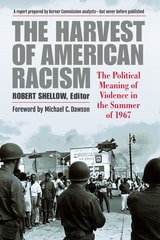
The Harvest of American Racism
The Political Meaning of Violence in the Summer of 1967Robert Shellow
University of Michigan Press, 2018
In the summer of 1967, in response to violent demonstrations that rocked 164 U.S. cities, the National Advisory Commission on Civil Disorders, a.k.a. the Kerner Commission, was formed. The Commission sought reasons for the disturbances, including the role that law enforcement played. Chief among its research projects was a study of 23 American cities, headed by social psychologist Robert Shellow. An early draft of the scientists’ analysis, titled “The Harvest of American Racism: The Political Meaning of Violence in the Summer of 1967,” provoked the Commission’s staff in November 1967 by uncovering political causes for the unrest; the team of researchers was fired, and the controversial report remained buried at the LBJ Presidential Library until now.
The first publication of the Harvest report half a century later reveals that many of the issues it describes are still with us, including how cities might more effectively and humanely react to groups and communities in protest. In addition to the complete text of the suppressed Harvest report, the book includes an introduction by Robert Shellow that provides useful historical context; personal recollections from four of the report’s surviving social scientists, Robert Shellow, David Boesel, Gary T. Marx, and David O. Sears; and an appendix outlining the differences between the unpublished Harvest analysis and the well-known Kerner Commission Report that followed it.
“The [Harvest of American Racism] report was rejected by Johnson administration functionaries as being far too radical—politically ‘unviable’… Social science can play an extremely positive role in fighting racial and other injustice and inequality, but only if it is matched with a powerful political will to implement the findings. That will has never come from within an American presidential administration—that will has only been forged in black and other radical communities’ movements for justice. The political power for change, as incremental as it has been, has come from within those communities. Washington responds, it does not lead."
—from the Foreword by Michael C. Dawson
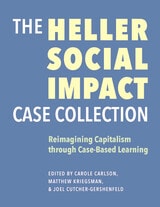
The Heller Social Impact Case Collection
Reimagining Capitalism through Case-Based LearningEdited by Carole Carlson, Matthew Kriegsman, and Joel Cutcher-Gershenfeld
Brandeis University Press, 2023
At a time of deep and pervasive global challenges, future CEOs and administrators need to apply management principles to social impact cases. Today, top business schools across the country are meeting the moment, teaching courses about socially responsible investing and debating ways companies can stem the effects of climate change.
The case studies collected here are an invaluable resource for today’s students and tomorrow’s leaders. Chapters address an array of business sectors, including consumer goods, finance, health care, higher education, manufacturing, nongovernmental organizations, social services, and transportation. A teacher’s guide is available online to educators.
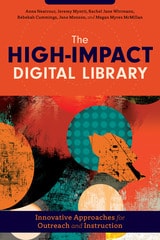
The High-Impact Digital Library
Innovative Approaches for Outreach and InstructionAnna Neatrour, Jeremy Myntti, Rachel Jane Wittmann, Rebekah Cummings, Jane Monson, and Megan Myres McMillan, in collaboration with Core Publishing
American Library Association, 2025
- discusses the results of a unique survey that provides new and structured information on digital library outreach and instruction;
- presents outreach case studies illustrating uses of social media promotion, integration of digital collections into teaching and instruction activities, partnerships with external campus units or community organizations, and other activities;
- explores many types of instruction, from drop-in class sessions and training to course-integrated instruction and ways that digital library practitioners can contribute to the Open Educational Resources (OER) and open pedagogy movements;
- details the digital humanities and digital scholarship programs developed at the University of Utah by many of the authors through cross-departmental collaboration;
- describes the ways in which the pandemic spurred many institutions to use rapid response collecting to practice community engagement; and
- speculates on future directions for outreach and instruction for digital libraries.
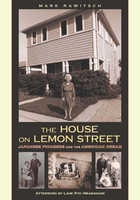
The House on Lemon Street
Japanese Pioneers and the American DreamMark Rawitsch
University Press of Colorado, 2013
Bringing this little-known story to light, The House on Lemon Street details the Haradas' decision to fight for the American dream. Chronicling their experiences from their immigration to the United States through their legal battle over their home, their incarceration during World War II, and their lives after the war, this book tells the story of the family's participation in the struggle for human and civil rights, social justice, property and legal rights, and fair treatment of immigrants in the United States.
The Harada family's quest for acceptance illuminates the deep underpinnings of anti-Asian animus, which set the stage for Executive Order 9066, and recognizes fundamental elements of our nation's anti-immigrant history that continue to shape the American story. It will be worthwhile for anyone interested in the Japanese American experience in the twentieth century, immigration history, public history, and law.
This publication was made possible with the support of Naomi, Kathleen, Ken, and Paul Harada, who donated funds in memory of their father, Harold Shigetaka Harada, honoring his quest for justice and civil rights. Additional support for this publication was also provided, in part, by UCLA's Aratani Endowed Chair as well as Wallace T. Kido, Joel B. Klein, Elizabeth A. Uno, and Rosalind K. Uno.
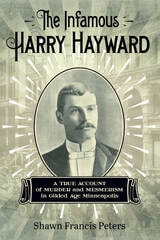
The Infamous Harry Hayward
A True Account of Murder and Mesmerism in Gilded Age MinneapolisShawn Francis Peters
University of Minnesota Press, 2018
A fascinating tale of seduction, murder, fraud, coercion—and the trial of the “Minneapolis Monster”
On a winter night in 1894, a young woman’s body was found in the middle of a road near Lake Calhoun on the outskirts of Minneapolis. She had been shot through the head. The murder of Kittie Ging, a twenty-nine-year-old dressmaker, was the final act in a melodrama of seduction and betrayal, petty crimes and monstrous deeds that would obsess reporters and their readers across the nation when the man who likely arranged her killing came to trial the following spring. Shawn Francis Peters unravels that sordid, spellbinding story in his account of the trial of Harry Hayward, a serial seducer and schemer whom some deemed a “Svengali,” others a “Machiavelli,” and others a “lunatic” and “man without a soul.”
Dubbed “one of the greatest criminals the world has ever seen” by the famed detective William Pinkerton, Harry Hayward was an inveterate and cunning plotter of crimes large and small, dabbling in arson, insurance fraud, counterfeiting, and illegal gambling. His life story, told in full for the first time here, takes us into shadowy corners of the nineteenth century, including mesmerism, psychopathy, spiritualism, yellow journalism, and capital punishment. From the horrible fate of an independent young businesswoman who challenged Victorian mores to the shocking confession of Hayward on the eve of his execution (which, if true, would have made him a serial killer), The Infamous Harry Hayward unfolds a transfixing tale of one of the most notorious criminals in America during the Gilded Age.
The Internet of Elsewhere
The Emergent Effects of a Wired WorldFarivar, Cyrus
Rutgers University Press, 2011
Through the lens of culture, The Internet of Elsewhere looks at the role of the Internet as a catalyst in transforming communications, politics, and economics. Cyrus Farivar explores the Internet's history and effects in four distinct and, to some, surprising societies—Iran, Estonia, South Korea, and Senegal. He profiles Web pioneers in these countries and, at the same time, surveys the environments in which they each work. After all, contends Farivar, despite California's great success in creating the Internet and spawning companies like Apple and Google, in some areas the United States is still years behind other nations.
Surprised? You won't be for long as Farivar proves there are reasons that:
- Skype was invented in Estonia—the same country that developed a digital ID system and e-voting;
- Iran was the first country in the world to arrest a blogger, in 2003;
- South Korea is the most wired country on the planet, with faster and less expensive broadband than anywhere in the United States;
- Senegal may be one of sub-Saharan Africa's best chances for greater Internet access.
The Internet of Elsewhere brings forth a new complex and modern understanding of how the Internet spreads globally, with both good and bad effects.
The Jack-Roller
A Delinquent Boy's Own StoryClifford R. Shaw
University of Chicago Press, 1966
Vivid, authentic, this is the autobiography of a delinquent—his experiences, influences, attitudes, and values. The Jack-Roller helped to establish the life-history or "own story" as an important instrument of sociological research. The book remains as relevant today to the study and treatment of juvenile delinquency and maladjustment as it was when originally published in 1930.
The Lab Book
Situated Practices in Media StudiesDarren Wershler
University of Minnesota Press, 2021
An important new approach to the study of laboratories, presenting a practical method for understanding labs in all walks of life
From the “Big Science” of Bell Laboratories to the esoteric world of séance chambers to university media labs to neighborhood makerspaces, places we call “labs” are everywhere—but how exactly do we account for the wide variety of ways that they produce knowledge? More than imitations of science and engineering labs, many contemporary labs are hybrid forms that require a new methodological and theoretical toolkit to describe. The Lab Book investigates these vital, creative spaces, presenting readers with the concept of the “hybrid lab” and offering an extended—and rare—critical investigation of how labs have proliferated throughout culture.
Organized by interpretive categories such as space, infrastructure, and imaginaries, The Lab Book uses both historical and contemporary examples to show how laboratories have become fundamentally connected to changes in the contemporary university. Its wide reach includes institutions like the MIT Media Lab, the Tuskegee Institute’s Jesup Wagon, ACTLab, and the Media Archaeological Fundus. The authors cover topics such as the evolution and delineation of lab-based communities, how labs’ tools and technologies contribute to defining their space, and a glossary of key hybrid lab techniques.
Providing rich historical breadth and depth, The Lab Book brings into focus a critical, but often misunderstood, aspect of the contemporary arts and humanities.
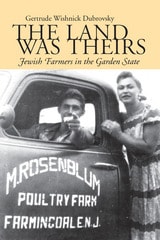
The Land Was Theirs
Jewish Farmers in the Garden StateGertrude W. Dubrovsky
University of Alabama Press, 1992
A historical account of Jewish agricultural colonies in New Jersey that examines how immigrants built farming communities in early America.
The Land Was Theirs is about Farmingdale, New Jersey, a community of Jewish farming communities in the United States established with the help of the Jewish Agricultural Society. The 50 year history of Farmingdale provides a perspective on the pressures, problems, and satisfactions of rural Jewish life as experienced in one community.
Beginning in 1919, the community grew around the small town of Farmingdale, when two Jewish families pooled their resources to establish a farm. The community evolved gradually as unrelated individuals with no previous farm experience settled and then created the institutions and organizations they needed to sustain their Jewish life. By 1945 Farmingdale was one of the leading egg-producing communities in the United States, and contributed in large measure to New Jersey’s reputation as the “egg basket of America.”
The Land Was Theirs draws from life-history interviews with 120 farmers, from the author’s personal experiences, and from a variety of private and community papers and documents. They are the pieces from which a full picture of a single Jewish farm community emerges.
The Lexington Six
Lesbian and Gay Resistance in 1970s AmericaJosephine Donovan
University of Massachusetts Press, 2020
Finalist for the 2021 Lambda Literary Awards
On September 23, 1970, a group of antiwar activists staged a robbery at a bank in Massachusetts, during which a police officer was killed. While the three men who participated in the robbery were soon apprehended, two women escaped and became fugitives on the FBI's Ten Most Wanted list, eventually landing in a lesbian collective in Lexington, Kentucky, during the summer of 1974. In pursuit, the FBI launched a massive dragnet. Five lesbian women and one gay man ended up in jail for refusing to cooperate with federal officials, whom they saw as invading their lives and community. Dubbed the Lexington Six, the group's resistance attracted national attention, inspiring a nationwide movement in other minority communities. Like the iconic Stonewall demonstrations, this gripping story of spirited defiance has special resonance in today's America.
Drawing on transcripts of the judicial hearings, contemporaneous newspaper accounts, hundreds of pages of FBI files released to the author under the Freedom of Information Act, and interviews with many of the participants, Josephine Donovan reconstructs this fascinating, untold story. The Lexington Six is a vital addition to LGBTQ, feminist, and radical American history.
The Library Innovation Toolkit
Ideas, Strategies, and ProgramsAnthony Molaro
American Library Association, 2015
The Library Outreach Casebook
Ryan L. Sittler
Assoc of College & Research Libraries, 2018
The Library Workplace Idea Book
Proactive Steps for Positive ChangeAmanda H. McLellan
American Library Association, 2020
The Limits of Auteurism
Case Studies in the Critically Constructed New HollywoodGodfrey, Nicholas
Rutgers University Press, 2018
The book explores the role that contemporary critics played in determining how the movies of this period were understood and how, in turn, strategies of distribution influenced critical responses and dictated the conditions of entry into the rapidly codifying New Hollywood canon. Focusing on a small number of industrially significant films, this new history advances our understanding of this important moment of transition from Classical to contemporary modes of production.
The Living Library
An Intellectual EcosystemDavid Cronrath
Assoc of College & Research Libraries, 2014
The Living Library
An Intellectual EcosystemPatricia Steele
Assoc of College & Research Libraries, 2014
The Madness of Mary Lincoln
Jason Emerson
Southern Illinois University Press, 2007
WINNER, Russell P. Strange Memorial Book of the Year Award from the Illinois State Historical Society, 2007!
University Press Books for Public and Secondary Schools 2013 edition
In 2005, historian Jason Emerson discovered a steamer trunk formerly owned by Robert Todd Lincoln's lawyer and stowed in an attic for forty years. The trunk contained a rare find: twenty-five letters pertaining to Mary Todd Lincoln's life and insanity case, letters assumed long destroyed by the Lincoln family. Mary wrote twenty of the letters herself, more than half from the insane asylum to which her son Robert had her committed, and many in the months and years after.
The Madness of Mary Lincoln is the first examination of Mary Lincoln’s mental illness based on the lost letters, and the first new interpretation of the insanity case in twenty years. This compelling story of the purported insanity of one of America’s most tragic first ladies provides new and previously unpublished materials, including the psychiatric diagnosis of Mary’s mental illness and her lost will.
Emerson charts Mary Lincoln’s mental illness throughout her life and describes how a predisposition to psychiatric illness and a life of mental and emotional trauma led to her commitment to the asylum. The first to state unequivocally that Mary Lincoln suffered from bipolar disorder, Emerson offers a psychiatric perspective on the insanity case based on consultations with psychiatrist experts.
This book reveals Abraham Lincoln’s understanding of his wife’s mental illness and the degree to which he helped keep her stable. It also traces Mary’s life after her husband’s assassination, including her severe depression and physical ailments, the harsh public criticism she endured, the Old Clothes Scandal, and the death of her son Tad.
The Madness of Mary Lincoln is the story not only of Mary, but also of Robert. It details how he dealt with his mother’s increasing irrationality and why it embarrassed his Victorian sensibilities; it explains the reasons he had his mother committed, his response to her suicide attempt, and her plot to murder him. It also shows why and how he ultimately agreed to her release from the asylum eight months early, and what their relationship was like until Mary’s death.
This historical page-turner provides readers for the first time with the lost letters that historians had been in search of for eighty years.
The Many Geographies of Urban Renewal
New Perspectives on the Housing Act of 1949Edited by Douglas R. Appler
Temple University Press, 2023
Taken as a whole, the essays showcase the unexpected diversity of how different communities used the federal urban renewal program. The Many Geographies of Urban Renewal allows us to better understand what was arguably the most significant urban policy of the 20th century, and how that policy shaped the American landscape.
Contributors include Francesca Russello Ammon, Brent Cebul, Robert B. Fairbanks, Leif Fredrickson, Colin Gordon, David Hochfelder, Robert K. Nelson, Benjamin D. Lisle, Stacy Kinlock Sewell and the editor.

The Memory Sessions
Suzanne Farrell Smith
Bucknell University Press, 2019
Published by Bucknell University Press. Distributed worldwide by Rutgers University Press.
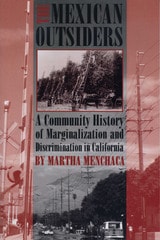
The Mexican Outsiders
A Community History of Marginalization and Discrimination in CaliforniaBy Martha Menchaca
University of Texas Press, 1995
People of Mexican descent and Anglo Americans have lived together in the U.S. Southwest for over a hundred years, yet relations between them remain strained, as shown by recent controversies over social services for undocumented aliens in California. In this study, covering the Spanish colonial period to the present day, Martha Menchaca delves deeply into interethnic relations in Santa Paula, California, to document how the residential, social, and school segregation of Mexican-origin people became institutionalized in a representative California town.
Menchaca lived in Santa Paula during the 1980s, and interviews with residents add a vivid human dimension to her book. She argues that social segregation in Santa Paula has evolved into a system of social apartness—that is, a cultural system controlled by Anglo Americans that designates the proper times and places where Mexican-origin people can socially interact with Anglos.
This first historical ethnographic case study of a Mexican-origin community will be important reading across a spectrum of disciplines, including anthropology, sociology, race and ethnicity, Latino studies, and American culture.
The Military Intervenes
Case Studies in Political DevelopmentHenry Bienen
Russell Sage Foundation, 1968
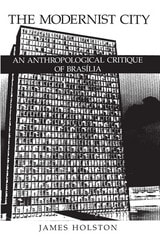
The Modernist City
An Anthropological Critique of BrasiliaJames Holston
University of Chicago Press, 1989
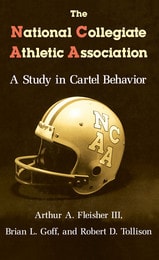
The National Collegiate Athletic Association
A Study in Cartel BehaviorArthur A. Fleisher III, Brian L. Goff, and Robert D. Tollison
University of Chicago Press, 1992
Probing the history and business practices of the most powerful sports organization of colleges and universities in the United States, the authors present a persuasive case that the NCAA is in fact a cartel, its members engaged in classically defined restrictive practices for the sole purpose of jointly maximizing their profits.
This fresh perspective on the NCAA's institutional structure helps to explain why illicit payments to athletes persist, why non-NCAA organizations have not flourished, and why members have readily agreed on certain suspect rules.
Offering a valuable case study for sports analysts and students of economics and cartel behavior, this book is a revealing glimpse inside the embattled NCAA program.
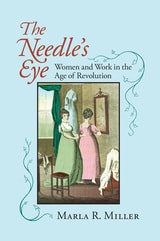
The Needle's Eye
Women and Work in the Age of RevolutionMarla R. Miller
University of Massachusetts Press, 2006
In this book, Marla R. Miller illuminates the significance of women's work in the clothing trades of the early Republic. Drawing on diaries, letters, reminiscences, ledgers, and material culture, she explores the contours of working women's lives in rural New England, offering a nuanced view of their varied ranks and roles—skilled and unskilled, black and white, artisanal and laboring—as producers and consumers, clients and craftswomen, employers and employees. By plumbing hierarchies of power and skill, Miller explains how needlework shaped and reflected the circumstances of real women's lives, at once drawing them together and setting them apart.
The heart of the book brings into focus the entwined experiences of six women who lived in and around Hadley, Massachusetts, a thriving agricultural village nestled in a bend in the Connecticut River about halfway between the Connecticut and Vermont borders. Miller's examination of their distinct yet overlapping worlds reveals the myriad ways that the circumstances of everyday lives positioned women in relationship to one another, enlarging and limiting opportunities and shaping the trajectories of days, years, and lifetimes in ways both large and small. The Needle's Eye reveals not only how these women thought about their work, but how they thought about their world.
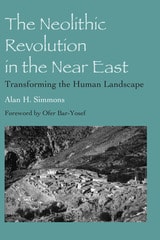
The Neolithic Revolution in the Near East
Transforming the Human LandscapeAlan H. Simmons; foreword by Ofer Bar-Yosef
University of Arizona Press, 2007
Based on more than thirty years of fieldwork, this timely volume examines the Neolithic Revolution in the Levantine Near East and the Mediterranean island of Cyprus. Alan H. Simmons explores recent research regarding the emergence of Neolithic populations, using both environmental and theoretical contexts, and incorporates specific case studies based on his own excavations. In clear and graceful prose, Simmons traces chronological and regional differences within this land of immense environmental contrasts—woodland, steppe, and desert. He argues that the Neolithic Revolution can be seen in a variety of economic, demographic, and social guises and that it lacked a single common stimulus.
Each chapter includes sections on history, terminology, geographic range, specific domesticated species, the composition of early villages and households, and the development of social, symbolic, and religious behavior. Most chapters include at least one case study and conclude with a concise summary. In addition, Simmons presents a unique chapter on the island of Cyprus, where intriguing new research challenges assumptions about the impact and extent of the Neolithic.
The Neolithic Revolution in the Near East conveys the diversity of our Neolithic ancestors, providing a better understanding of the period and the new social order that arose because of it. This insightful volume will be especially useful to Near Eastern scholars and to students of archaeology and the origins of agriculture.
The New Metaphysicals
Spirituality and the American Religious ImaginationCourtney Bender
University of Chicago Press, 2010
The New Politics of Indian Gaming
The Rise of Reservation Interest GroupsKenneth N. Hansen
University of Nevada Press, 2015
The Night is Young
Sexuality in Mexico in the Time of AIDSHéctor Carrillo
University of Chicago Press, 2002
Carrillo finds that young Mexicans today grapple in a variety of ways with two competing tendencies. On the one hand, many seek to challenge traditional ideas and values they find limiting. But they also want to maintain a sense of Mexico's cultural distinctiveness, especially in relation to the United States. For example, while Mexicans are well aware of the dangers of unprotected sex, they may also prize the surrender to sexual passion, even in casual sexual encounters—an attitude which stems from the strong values placed on collective life, spontaneity, and an openness toward intimacy. Because these expectations contrast sharply with messages about individuality, planning, and overt negotiation commonly promoted in global public health efforts, Carrillo argues that they demand a new approach to AIDS prevention education in Mexico.
A Mexican native, Carrillo has written an exceptionally insightful and accessible study of the relations among sexuality, social change, and AIDS prevention in Mexico. Anyone concerned with the changing place of sexuality in a modern and increasingly globalized world will profit greatly from The Night Is Young.
The Organization of Journalism
Market Models and Practice in a Fraying ProfessionPatrick Ferrucci
University of Illinois Press, 2024
Using rich interviews and participant observation, Patrick Ferrucci examines institutions with funding mechanisms that range from traditional mogul ownership and online-only nonprofits to staff-owned cooperatives and hedge fund control. The variations in market models have frayed the tenets of professionalization, with unique work cultures emerging from each organization’s focus on its mission and the implantation of its own processes and ethical guidelines. As a result, the field of American journalism no longer shares uniform newsgathering practices and a common identity, a break with the past that affects what information we consume today and what the press will become tomorrow.
An inside look at a fracturing profession, The Organization of Journalism illuminates the institution’s expanding impact on newsgathering and the people who practice it.
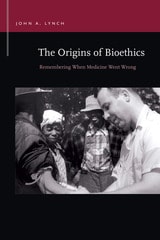
The Origins of Bioethics
Remembering When Medicine Went WrongJohn A. Lynch
Michigan State University Press, 2019
The Other Side of the Fence
American Migrants in MexicoBy Sheila Croucher
University of Texas Press, 2009
A growing number of Americans, many of them retirees, are migrating to Mexico's beach resorts, border towns, and picturesque heartland. While considerable attention has been paid to Mexicans who immigrate to the U.S., the reverse scenario receives little scrutiny. Shifting the traditional lens of North American migration, The Other Side of the Fence takes a fascinating look at a demographic trend that presents significant implications for the United States and Mexico.
The first in-depth account of this trend, Sheila Croucher's study describes the cultural, economic, and political lives of these migrants of privilege. Focusing primarily on two towns, San Miguel de Allende in the mountains and Ajijic along the shores of Lake Chapala, Croucher depicts the surprising similarities between immigrant populations on both sides of the border. Few Americans living in Mexico are fluent in the language of their new land, and most continue to practice the culture and celebrate the national holidays of their homeland, maintaining close political, economic, and social ties to the United States while making political demands on Mexico, where they reside.
Accessible, timely, and brimming with eye-opening, often ironic, findings, The Other Side of the Fence brings an important perspective to borderlands debates.
The Personal Librarian
Richard Moniz
American Library Association, 2022
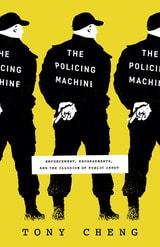
The Policing Machine
Enforcement, Endorsements, and the Illusion of Public InputTony Cheng
University of Chicago Press, 2024
The past few years have seen Americans express passionate demands for police transformation. But even as discussion of no-knock warrants, chokeholds, and body cameras has exploded, any changes to police procedures have only led to the same outcomes. Despite calls for increased accountability, police departments have successfully stonewalled change.
In The Policing Machine, Tony Cheng reveals the stages of that resistance, offering a close look at the deep engagement strategies that NYPD precincts have developed with only subsets of the community in order to counter any truly meaningful, democratic oversight. Cheng spent nearly two years in an unprecedented effort to understand the who and how of police-community relationship building in New York City, documenting the many ways the police strategically distributed power and privilege within the community to increase their own public legitimacy without sacrificing their organizational independence. By setting up community councils that are conveniently run by police allies, handing out favors to local churches that will promote the police to their parishioners, and offering additional support to institutions friendly to the police, the NYPD, like police departments all over the country, cultivates political capital through a strategic politics that involves distributing public resources, offering regulatory leniency, and deploying coercive force. The fundamental challenge with police-community relationships, Cheng shows, is not to build them. It is that they already exist and are motivated by a machinery designed to stymie reform.
The Politics of Potential
Global Health and Gendered Futures in South AfricaMichelle Pentecost
Rutgers University Press, 2024
The Politics of Street Crime
Criminal Process and Cultural ObsessionStuart A. Scheingold
Temple University Press, 1992
Americans find street crime terrifying and repellent. Yet we vicariously seek it out in virtually all of our media: books, newspapers, television, films, and the theatre. Stuart Scheingold confronts this cultural contradiction and asks why street crime is generally regarded in the trivializing and punitive images of cops and robbers that attribute crime to the willful acts of flawed individuals rather than to the structural shortcomings of a flawed society. In his case study of the police and criminal courts in the community he calls "Cedar City," a medium-sized city in the Western United States, Scheingold examines the effects of this cultural contradiction and these punitive predispositions on politics and policy making.