Results by title
3576 books match the query 'American' and 350 start with a
A Black Bridge
PoemsRalph Tejeda Wilson
University of Nevada Press, 2001
A Body of Individuals
The Paradox of Community in Contemporary FictionSue-Im Lee
The Ohio State University Press, 2009

A Boundless Field
American Poetry at LargeStephen Yenser
University of Michigan Press, 2002
A Boundless Field takes its title from Walt Whitman's sanguine view of the future of American poetry as he expressed it in "Democratic Vistas," a view that seems all the more pertinent today. During the later twentieth century, poetry in the United States branched out in many directions, ranging from a formalism influenced by New Criticism and a subsequent Neo-Formalism through the New York School and Language Poetry to a postmodern maximalism too diverse to categorize. The essays and reviews collected in this volume take up the work of poets writing in these different areas and writing into the twenty-first century.
Yenser's constant criteria for worthiness of attention include an alertness to the long tradition of English and American poetry, a consistent awareness of the integrity of the poetic line, a simultaneous commitment to verbal play and verbal work, and an implicit acknowledgment of two of Wallace Stevens's declarations: first that all admirable poetry is experimental poetry, and second that at first blush all good poems put up a certain resistance to the reader. Hence the usefulness of "criticism."
Stephen Yenser is Professor of English, University of California, Los Angeles. His poetry has appeared in many publications and to wide acclaim, including the Walt Whitman Award of the American Academy of Poets for his book The Fire in All Things. He is also author of The Consuming Myth: The Work of James Merrill and Circle to Circle: The Poetry of Robert Lowell.
A Change in the Weather
Modernist Imagination, African American ImaginaryGeoffrey Jacques
University of Massachusetts Press, 2009
A Colored Man Round the World
David F. Dorr
University of Michigan Press, 1999
Malini Johar Schueller has edited and annotated the 1858 text and added a critical introduction that provides a useful context for understanding and appreciating this important but heretofore neglected document. Her edition of A Colored Man Round the World provides a fascinating account of Dorr's negotiation of the conflicting roles of slave versus man, taking into account all of the racial complexities that existed at the time. As a traveler abroad, Dorr claimed an American selfhood that allowed him mobility in Europe, and he benefited from the privileges accorded American "Orientalists" venturing in the near East. However, any empowerment that Dorr experienced while a tourist vanished upon his return to America.
The book will be welcomed for the rare perspective it provides of the mid-nineteenth century, through the eyes of an African-American slave and for the light it casts on world and U.S. history as well as on questions of racial and national identity.
Malini Johar Schueller is Professor of English, University of Florida.
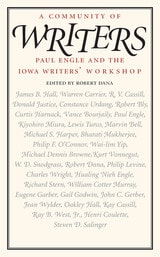
A Community of Writers
Paul Engle and the Iowa Writers' WorkshopDana, Robert
University of Iowa Press, 1999
With these words, written long before his Iowa Writers' Workshop became world famous, much imitated, and academically rich, Paul Engle captured the spirit behind his beloved workshop. Now, in this collection of essays by and about those writers who shared the energetic early years, Robert Dana presents a dynamic, informative tribute to Engle and his world.
The book's three sections mingle myth and history with style and grace and no small amount of humor. The beginning essays are given over to memories of Paul Engle in his heyday. The second group focuses particularly on those teachers—Robert Lowell, John Berryman, Kurt Vonnegut, for example—who made the workshop hum on a day-to-day basis. Finally, the third section is devoted to storytelling: tall tales, vignettes, surprises, sober and not-so-sober moments. Engle's own essay, "The Writer and the Place," describes his "simple, and yet how reckless" conviction that "the creative imagination in all of the arts is as important, as congenial, and as necessary, as the historical study of all the arts."
Today, of course, there are hundreds of writers' workshops, many of them founded and directed by graduates of the original Iowa workshop. But when Paul Engle arrived in Iowa there were exactly two. His indomitable nature and great persuasive powers, combined with his distinguished reputation as a poet, loomed large behind the enhancement of the Iowa Writers' Workshop. This volume of fine and witty essays reveals the enthusiasm and drive and sheer pleasure that went into Iowa's renowned workshop.
A Companion to the Works of Elizabeth Strout
Katherine Montwieler
Ohio University Press, 2022
A Company of Poets
Louis Simpson
University of Michigan Press, 1981
A Conjoined Book
Aftermath and Become Tree, Become BirdKarla Kelsey
Omnidawn, 2014
A Cook's Tour of Iowa
Susan Puckett
University of Iowa Press, 1990
A Criminal Power
James Baldwin and the LawD. Quentin Miller
The Ohio State University Press, 2012
A Critical History of the New American Studies, 1970–1990
Günter H. Lenz
Dartmouth College Press, 2016
A Crown of Hornets
Marcia Pelletiere
Four Way Books, 2019
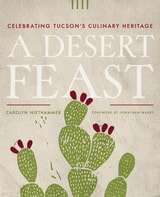
A Desert Feast
Celebrating Tucson's Culinary HeritageCarolyn Niethammer, Foreword by Johnathan Mabry
University of Arizona Press, 2020
Southwest Book of the Year Award Winner
Pubwest Book Design Award Winner
Drawing on thousands of years of foodways, Tucson cuisine blends the influences of Indigenous, Mexican, mission-era Mediterranean, and ranch-style cowboy food traditions. This book offers a food pilgrimage, where stories and recipes demonstrate why the desert city of Tucson became American’s first UNESCO City of Gastronomy.
Both family supper tables and the city’s trendiest restaurants feature native desert plants and innovative dishes incorporating ancient agricultural staples. Award-winning writer Carolyn Niethammer deliciously shows how the Sonoran Desert’s first farmers grew tasty crops that continue to influence Tucson menus and how the arrival of Roman Catholic missionaries, Spanish soldiers, and Chinese farmers influenced what Tucsonans ate.
White Sonora wheat, tepary beans, and criollo cattle steaks make Tucson’s cuisine unique. In A Desert Feast, you’ll see pictures of kids learning to grow food at school, and you’ll meet the farmers, small-scale food entrepreneurs, and chefs who are dedicated to growing and using heritage foods. It’s fair to say, “Tucson tastes like nowhere else.”
A Domestic Cook Book
Containing a Careful Selection of Useful Receipts for the KitchenMalinda Russell
University of Michigan Press, 2025
A Domestic Cook Book contains 260 recipes and household tips that draw from Malinda Russell’s twenty years of experience cooking in Southern kitchens, her boarding house, and her pastry shop, and showcase her skills as a pastry chef. This new edition includes a foreword by scholar Rafia Zafar as well as an introduction by the late food historian Janice Bluestein Longone that contextualize Russell’s cookbook. Using the only known copy of the original book housed in the Janice Bluestein Longone Culinary Archive at the University of Michigan Library's Special Collections Research Center, this new edition preserves an important part of Michigan and American history and makes it widely available to readers for the first time.
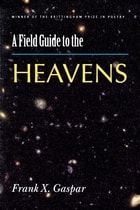
A Field Guide to the Heavens
Frank X. Gaspar
University of Wisconsin Press, 1999
Frank X. Gaspar’s collection of poems is haunted by the presence of mystics and visionaries: Mohammed, Buddha, St. Paul, Augustine, George Herbert, Emily Dickinson, Blake, Milton, Rilke. A Field Guide to the Heavens is punctuated with designs of science, the wondering and rapt observations of the sky made at the eyepiece of a backyard telescope. We come to know Gaspar’s city streets, the neighbors and strangers that walk them, the wreckage of past lives, the ocean, the gardens, the orchards and alleys and parking lots, all spread out under the vast sky.
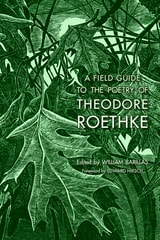
A Field Guide to the Poetry of Theodore Roethke
William Barillas
Ohio University Press, 2021
This volume is the first to reconsider Roethke’s work in terms of the expanded critical approaches to literature that have emerged since his death in 1963. Editor William Barillas and over forty contributors, including highly respected literary scholars, critics, and writers such as Peter Balakian, Camille Paglia, Jay Parini, and David Wojahn, collectively make a case for Roethke’s poetry as a complete, unified, and evolving body of work. The accessible essays employ a number of approaches, including formalism, ecocriticism, reader-response, and feminist critique to explicate the poetics, themes, and the biographical, historical, cultural, and literary contexts of Roethke’s work.
Contributors
Borja Aguiló Obrador
Peter Balakian
William Barillas
Don Bogen
Neal Bowers
Nicholas Bradley
Luke Brekke
Russell Brickey
Katharine Bubel
Norman Chaney
Jeffrey Clapp
Lyn Coffin
Kristin M. Distel
Carrie Duke
Laura Duncan
Laura Gill
Patrick Gill
Christopher Giroux
William Heyen
Trenton Hickman
Michael Hinds
Edward Hirsch
Brooke Horvath
Marcel Inhoff
Walter Kalaidjian
Frank J. Kearful
Andrew David King
Marc Malandra
John J. McKenna
Aaron M. Moe
Sarah Kathryn Moore
Edward Morin
Marcia Noe
Camille Paglia
Jay Parini
Rod Phillips
Ronald Primeau
Adam Putz
Bernard Quetchenbach
David Radavich
John Rohrkemper
Brandon Rushton
Joseph T. Thomas Jr.
Jeff Vande Zande
David Wojahn
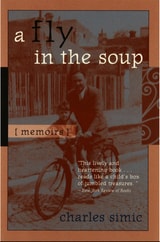
A Fly in the Soup
MemoirsCharles Simic
University of Michigan Press, 2003

A Frank Waters Reader
A Southwestern Life In WritingFrank Waters
Ohio University Press, 2000
Over the course of his life, Frank Waters amassed a body of work that has few equals in the literature of the American West. Because his was a writing that touched every facet of the Western experience, his voice still echoes throughout that region’s literary world.
Swallow Press is especially proud to present this generous sampling of Frank Waters’s writings. A Frank Waters Reader encompasses the full range of his work and draws from both his nonfiction and his many novels. It stands as a testament to his singular achievement and proof of the talent that established him as the foremost writer in the Southwest.
This collection spanning forty years of writing provides an excellent introduction for the uninitiated as well as a retrospective for those already familiar with this giant talent. His gift for achieving a delicate balance among the many contrary forces at work in the land and the people who inhabit it is as true and enduring as the region that inspired him.
A Frank Waters Reader
A Southwestern Life in WritingFrank Waters
Ohio University Press, 2000
Over the course of his life, Frank Waters amassed a body of work that has few equals in the literature of the American West. Because his was a writing that touched every facet of the Western experience, his voice still echoes throughout that region’s literary world.
Swallow Press is especially proud to present this generous sampling of Frank Waters’s writings. A Frank Waters Reader encompasses the full range of his work and draws from both his nonfiction and his many novels. It stands as a testament to his singular achievement and proof of the talent that established him as the foremost writer in the Southwest.
This collection spanning forty years of writing provides an excellent introduction for the uninitiated as well as a retrospective for those already familiar with this giant talent. His gift for achieving a delicate balance among the many contrary forces at work in the land and the people who inhabit it is as true and enduring as the region that inspired him.
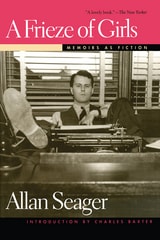
A Frieze of Girls
Memoirs as FictionAllan Seager
University of Michigan Press, 2004
A Frieze of Girls speaks with a fresh voice from an American era long past. This is more than Allan Seager's story of what happened; it is also about how "the feel of truth is very like the feel of fiction, especially when either is at all strange."
Seager gives us his coming-of-age story, from a high-school summer as a sometime cowboy in the Big Horn mountains to a first job at seventeen managing an antiquated factory in Memphis to a hard-drinking scholarship year in Oxford, cut short by tuberculosis. At once funny with an undercurrent of pain, the stories in A Frieze of Girls remind us of the realities we create to face the world and the past, and in turn of the realities of the world we must inevitably also confront. "Time makes fiction out of our memories," writes Seager. "We all have to have a self we can live with and the operation of memory is artistic---selecting, suppressing, bending, touching up, turning our actions inside out so that we can have not necessarily a likable, merely a plausible identity." A Frieze of Girls is Allan Seager at the top of his form, and a reminder that great writing always transcends mere fashion.
Allan Seager was Professor of English at the University of Michigan and author of many highly praised short stories and novels, including Amos Berry. He died in Tecumseh, Michigan, in 1968. Novelist Charles Baxter is the author of Saul and Patsy.
A Gathering of Ways
John Matthias
Ohio University Press, 1991
A Good Deal
Selected Stories from "The Massachusetts Review"Mary Heath
University of Massachusetts Press, 1988
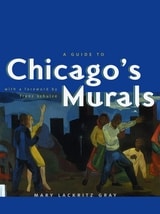
A Guide to Chicago's Murals
Mary Lackritz Gray
University of Chicago Press, 2001
With full-color illustrations of nearly two hundred Chicago murals and accompanying entries that describe their history—who commissioned them and why, how artists collaborated with architects, the subjects of the murals and their contexts—A Guide to Chicago's Murals serves both a general and a specific audience. Divided into easy-to-read geographical sections with useful maps for walking tours, it is the perfect companion for tourists or Chicagoans interested in coming to know better this aspect of the city's history. Gray also provides crucial information on lesser-known artists and on murals that have been destroyed over the years, filling a gap in the visual record of the city's development.
Gray also includes biographies of more than 150 artists and a glossary of key terms, making A Guide to Chicago's Murals essential reading for mural viewing. From post offices to libraries, fieldhouses to banks, and private clubs to street corners, Mary Gray chronicles the amazing works of artists who have sought to make public declarations in this most social of art forms.
"A major lacuna in the history of art in Chicago has been filled, with the thoroughness of the research proportionate to the richness of the material revealed."—From the Foreword by Franz Schulze
"Gray's book . . . can function as a guidebook, as the murals are conveniently arranged according to the quadrants of the city. But the book is also beautiful to look at and indespensable as art history and Chicago history as well. . . . This book is a wonderful guide to Chicago's rich and unique mural tradition."—Elizabeth Alexander, Chicago Tribune Books
"If you love art and history, this is a book you'll truly enjoy."—Al Paulson, Utne Reader
A History of American Literary Journalism
The Emergence of a Modern Narrative FormJohn C. Hartsock
University of Massachusetts Press, 2000
During the 1960s, such works as Truman Capote's In Cold Blood and Joan Didion's Slouching Towards Bethlehem were cited as examples of the “new journalism.” True stories that read like novels, they combined the journalist's task of factual reporting with the art of fictional narration.
Yet as John C. Hartsock shows in this revealing study, the roots of this distinctive form of writing—whether called new journalism, literary journalism, or creative nonfiction—can be traced at least as far back as the late nineteenth century. In the decades following the American Civil War, Stephen Crane, Lafcadio Hearn, and other journalists challenged the notion, then just emerging, that the reporter's job was to offer a concise statement of the “objective truth.” Drawing on the techniques of the realistic novel, these writers developed a new narrative style of reporting aimed at lessening the distance between observer and observed, subject and object.
By the 1890s, Hartsock argues, literary journalism had achieved critical recognition as a new form of writing, different not only from “objective” reporting but also from the sensationalistic “yellow press” and at times the socially engaged “muckrakers.” In the twentieth century, the form has continued to evolve and maintain its vitality, despite being marginalized by the academic establishment.
A former journalist who covered Capitol Hill for UPI and reported on the collapse of the Soviet Union for the San Francisco Examiner, Hartsock brings a fresh and informed perspective to the issues he examines. The result is a concise introduction to the genesis and development of a significant literary genre.
A History of Reading in the West
Guglielmo Cavallo
University of Massachusetts Press, 1999
A History of the "Atlantic Monthly," 1857-1909
Yankee Humanism at High Tide and EbbEllery Sedgwick
University of Massachusetts Press, 1994
From its founding in 1857 until its sale by Houghton Mifflin in 1908, the Atlantic Monthly was the most respected literary periodical in the United States. This study focuses on the magazine's first seven editors: James Russell Lowell, James T. Fields, William Dean Howells, Thomas Bailey Aldrich, Horace Scudder, Walter Hines Page, and Bliss Perry. Ellery Sedgwick examines their personalities, editorial policies, and literary tastes, and shows how each balanced his role as advocate of “high” culture with the demands of the literary marketplace and American democracy.
Although the Atlantic was rooted in the Yankee humanism of Boston, Cambridge, and Concord, its scope was national. Sedgwick points out that while the magazine spoke for high culture, its tradition was one of intellectual tolerance and of moderate liberalism on social and political issues. It supported abolition, women's rights, and religious tolerance, and published incisive criticism of unregulated industrial capitalism. The Atlantic also played an important role in the rise of American literary realism, and published early work not only by such authors as James, Jewett, and Howells, but also by Chesnutt, Du Bois, Cahan, and Zitkala-Sa.
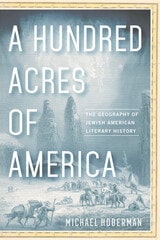
A Hundred Acres of America
The Geography of Jewish American Literary HistoryHoberman, Michael
Rutgers University Press, 2019
Jewish writers have long had a sense of place in the United States, and interpretations of American geography have appeared in Jewish American literature from the colonial era forward. But troublingly, scholarship on Jewish American literary history often limits itself to an immigrant model, situating the Jewish American literary canon firmly and inescapably among the immigrant authors and early environments of the early twentieth century. In A Hundred Acres of America, Michael Hoberman combines literary history and geography to restore Jewish American writers to their roles as critical members of the American literary landscape from the 1850s to the present, and to argue that Jewish history, American literary history, and the inhabitation of American geography are, and always have been, contiguous entities.
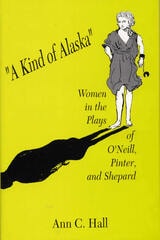
A Kind of Alaska
Women in the Plays of O'Neill, Pinter, and ShepardAnn C. Hall
Southern Illinois University Press, 1993
In an effort to define what constitutes a feminist reading of literary works, Ann C. Hall offers an analytic technique that is both a feminist and a psychoanalytic approach, applying this technique to her study of women characters in the modern dramatic texts of Eugene O’Neill, Harold Pinter, and Sam Shepard.
This is the first study to treat these three writers in tandem, and while Hall uses the work of Jacques Lacan, Luce Irigaray, and other psychoanalytic feminist critics in her close readings of specific dramatic texts, she also brings in commentaries by critics, directors, performers, and historians. Her technique thereby provides us with a new and significant method for addressing female characters as written by male playwrights, a task that she argues is not only a valid and necessary part of feminist dramatic criticism but a part of theatrical production as well.
From Pinter’s play A Kind of Alaska, Hall extracts a metaphor for the patriarchal oppression of women, contextualizing such oppression through an examination of O’Neill’s madonnas, Pinter’s whores, and Shepard’s female saviors as they are represented in O’Neill’s Iceman Cometh, Long Day’s Journey into Night, and A Moon for theMisbegotten; Pinter’s Homecoming, No Man’s Land, Betrayal, and A Kind of Alaska; and Shepard’s Buried Child, True West, and A LieoftheMind.
Since the works of O’Neill, Pinter, and Shepard continue to be performed to popular acclaim, Hall hopes that a better understanding of the female characters in these plays will influence the performances themselves.
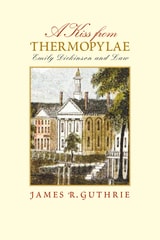
A Kiss from Thermopylae
Emily Dickinson and LawJames R. Guthrie
University of Massachusetts Press, 2015
Yet Dickinson was also capable of criticizing, even satirizing, law and lawyers. Her poetic personae inhabit various legal roles including those of jurymen, judges, and attorneys, and some poems simulate courtroom contests pitting the rights of individuals against the power of the state. She was keenly interested in legal matters pertaining to women, such as breach of promise, dower, and trusts. With her tone ranging from subservient to domineering, from reverential to ridiculing, Dickinson's writings reflect an abiding concern with philosophic and political principles underpinning the law, as well as an identification with the plight of individuals who dared confront authority.
A Kiss from Thermopylae reveals a new dimension of Dickinson's writing and thinking, one indicating that she was thoroughly familiar with the legal community's idiomatic language, actively engaged with contemporary political and ethical questions, and skilled at deploying a poetic register ranging from high romanticism to low humor.
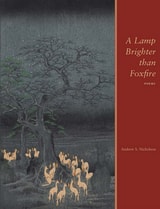
A Lamp Brighter than Foxfire
Andrew S. Nicholson
University Press of Colorado, 2015
"In Andrew S. Nicholson’s A Lamp Brighter than Foxfire, what is most alive is color, that which gives itself freely, generously: ‘Follow the hopeful as they green the day’ (‘My Garage Fills with an Ever-Increasing Number of Dandelions’). Threaded throughout with Genesis, wherein Jacob wrestles an angel, this gorgeous debut collection builds a ladder firmly rooted here: in sun and earth; in varying and multiple shades of orange; in trials of father and son; in books and paintings; in abandoned casinos; in countries far from home; and/or in the sound of a door closing. Nicholson’s poems come from a man standing by himself, in what George Oppen called the ‘shipwreck of the singular,’ which includes everybody. I’m moved by the luminous generosity, the moral clarity of this work. A Lamp Brighter than Foxfire is news that will stay news.”
—Claudia Keelan, author of The Devotion Field, Missing Her, and O, Heart
"'Who doesn’t nurse a secret love?' asks Andrew S. Nicholson in visionary poems that reveal secret worlds cradled inside this one. Whether considering the casinos of Las Vegas, a fresco in Pompeii, or scenes from the Hebrew Bible, the poet endures one of desire’s more fraught paradoxes: its unchanging ability to bring change, to turn the known into the unknown. These poems bravely attend to such transformations the way Jacob—the book’s patron saint—wrestles with the angel, 'lifting all the flesh / that he can lose.' I admire this poet who knows that blessing doesn’t arrive without loss, who remembers 'I was loved once. / Beneath that love, a kindness took root.' The same sweet feeling lingers long after this book is closed. Dear reader: savor it."
—Brian Teare
"Andrew S. Nicholson’s A Lamp Brighter than Foxfire is a gorgeous book. His graceful, playful poems enchant us ('I try to make out the stranger’s face, but he’s shrinking: / a melting gray blur, an ever-smaller thorn.') and transform us ('Sink into the bathwater, any way is a way / to journey toward that joining'). Nicholson has become one of the great poets of a new and radical kind of pastoral."
—Joseph Lease
Opening the space between the ordinary and the visionary, the poems in A Lamp Brighter than Foxfire uncover an intimate relationship with the world, from Las Vegas to Italy to the American Midwest. From a lime glowing in an orchard to a miraculous childhood attempt at levitation, Andrew S. Nicholson’s poems ground themselves in the commonplace and leap for the luminous. Central to this collection are poems that retell stories of Jacob from the Old Testament, relocated behind casinos, glimpsed in miniature on kitchen floors, and heard speaking in a moment of decay. Through these retellings, Nicholson examines the creation of self, family relationships, and a generative sense of the divine.
A Literary History of Iowa
Clarence A. Andrews
University of Iowa Press, 1972
A Little Middle of the Night
Molly Brodak
University of Iowa Press, 2010
The language of Molly Brodak’s first full-length collection, A Little Middle of the Night, is ever shifting, brightly sonic, and disarming while exploring the margin between nature and art, darkness and beauty, dreams and awakenings. As echoed in one epigraph from Emerson, these poems capture “the Exact and the Vast” of consciousness in intense lyric verse with an angular and almost scientific sensitivity. Here is a speaker intent on discovery: “Oh whole world, we choose / another.”
This award-winning collection simmers with wit as Brodak confronts tragedy, childhood losses, transcendent love, and the question of art itself. Tinged with a suffering—“I was the littlest wastebasket. / I was my own church. Except— / scared, scared”—that rises above personal sorrow, her fierce and painterly poems redefine nature and art and what exists between: “Lately, there is spangled shade in my space / and a cold apple orchard to tend in place of consciousness.” As Reginald Shepherd said about the poems in Brodak’s first collection, the chapbook Instructions for a Painting, her world is “‘small enough / to sing in all directions,’ and large enough to take us there.”
A Long Essay on the Long Poem
Modern and Contemporary Poetics and PracticesRachel Blau DuPlessis
University of Alabama Press, 2023
A masterful meditation on our most mercurial and abiding of poetic forms—the long poem
For decades, Rachel Blau DuPlessis has shown readers how genres, forms, and the literal acts of writing and reception can be understood as sites of struggle. In her own words, “writing is . . . a praxis . . . in which the author disappears into a process, into a community, into discontinuities, and into a desire for discovery.” It is cause for celebration, then, that we have another work of warm, incisive, exploratory writing from DuPlessis in A Long Essay on the Long Poem.
Long poems, DuPlessis notes, are elusive, particularly in the slippery forms that have emerged in the postmodern mode. She cites both Nathaniel Mackey and Anne Waldman in thinking of the poem as a “box,” both in the sense of a vessel that contains and as a machine that processes, an instrument on which language is played. This study’s central attention is on the long poem as a sociocultural Book, distinctively envisioned by a range of authors.
To reckon with these shifting and evolving forms, DuPlessis works in a polyvalent mode, a hybrid of critical analysis and speculative essay. She divides the long poem and the long poets into three genres: epics, quests, and a composite she terms “assemblages.” The poets she surveys include T. S. Eliot, Ezra Pound, H.D., Louis Zukofsky, Gwendolyn Brooks, Charles Olson, Alice Notley, Nathaniel Mackey, Ron Silliman, Robert Duncan, Kamau Brathwaite, and, finally, Mallarmé and Dante. Instead of a traditional lineage, she deliberately seeks intersecting patterns of connection between poems and projects, a nexus rather than a family tree. In doing so she navigates both some challenges of long poems and her own attempt to “essay” them. The result is a fascinating and generous work that defies categorization as anything other than essential.

A Lydia Maria Child Reader
Carolyn L. Karcher, ed.
Duke University Press, 1997
This rich collection is the first to represent the full range of Child’s contributions as a literary innovator, social reformer, and progressive thinker over a career spanning six decades. It features stories, editorials, articles, and letters to politicians culled from rare newspapers and periodicals and never before published in book form; extracts from her trailblazing childrearing manual, history of women, and primer for the emancipated slaves; and a generous sampling of her best-known writings on slavery, the Indian question, poverty, and women’s rights. Witty, incisive, and often daringly unconventional, Child’s writings open a panoramic window on nineteenth-century American culture while addressing issues still relevant to our own time. In this anthology, the editor of Harriet Jacobs’s Incidents in the Life of a Slave Girl reemerges in her own right as one of the nation’s greatest prophets.
A Magnificent Loneliness
Allison Benis White
Four Way Books, 2025
“I remember // once, turning to leave, a black purse over her shoulder. . .” Oneiric and surreal as always, Allison Benis White attempts to mediate, if not make sense of, inconceivable bereavement in her fifth collection of poetry. “A black purse, / over her living shoulder, Love said nothing to me.”
Ethereal, airy, and spare at once, A Magnificent Loneliness is a dialogue with ghosts. White, whose previous work won the Rilke Prize and the Four Way Books Levis Prize judged by Claudia Rankine, assembles these pages as an ekphrastic and epistolary record of her solitary journey through loss. These poems relate to artwork, the history of artistic practice, and inherited lore to broker an oblique and piecewise conversation concerning pain too vast to articulate all at once. “I don’t know how to love the world but to love / her leaving.” These lyrical iterations represent White’s attempts to comprehend the individual suffering of being alive, and to metabolize the grief of women’s epidemic disappearance, literal and spiritual, through sickness and despair. Through those efforts, she illuminates a magnificent loneliness—the privilege of being alive to our anguish, of missing someone dearly because someone dear existed—and a reason for not yet departing that struggle. “How to leave / the world but to turn to leave her— / but to turn my head back / to see her.”
A Man's Game
Masculinity and the Anti-Aesthetics of American Literary NaturalismJohn Dudley
University of Alabama Press, 2004
Demonstrates how concepts of masculinity shaped the aesthetic foundations of literary naturalism
A Man’s Game explores the development of American literary naturalism as it relates to definitions of manhood in many of the movement’s key texts and the aesthetic goals of writers such as Stephen Crane, Jack London, Frank Norris, Edith Wharton, Charles Chestnutt, and James Weldon Johnson. John Dudley argues that in the climate of the late 19th century, when these authors were penning their major works, literary endeavors were widely viewed as frivolous, the work of ladies for ladies, who comprised the vast majority of the dependable reading public. Male writers such as Crane and Norris defined themselves and their work in contrast to this perception of literature. Women like Wharton, on the other hand, wrote out of a skeptical or hostile reaction to the expectations of them as woman writers.
Dudley explores a number of social, historical, and cultural developments that catalyzed the masculine impulse underlying literary naturalism: the rise of spectator sports and masculine athleticism; the professional role of the journalist, adopted by many male writers, allowing them to camouflage their primary role as artist; and post-Darwinian interest in the sexual component of natural selection. A Man’s Game also explores the surprising adoption of a masculine literary naturalism by African American writers at the beginning of the 20th century, a strategy, despite naturalism's emphasis on heredity and genetic determinism, that helped define the black struggle for racial equality
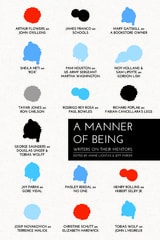
A Manner of Being
Writers on Their MentorsAnnie Liontas
University of Massachusetts Press, 2015
What do the punk singer Henry Rollins, the Guatemalan writer Rodrigo Rey Rosa, the American authors Tobias Wolff, Tayari Jones, and George Saunders, the Canadian writer Sheila Heti, and the Russian poet Polina Barskova have in common? At some point they all studied the art of writing deeply with someone.
The nearly seventy short essays in A Manner of Being, by some of the best contemporary writers from around the world, pay homage to mentors—the writers, teachers, nannies, and sages—who enlighten, push, encourage, and sometimes hurt, fail, and limit their protégés. There are mentors encountered in the schoolhouse and on farms, in NYC and in MFA programs; mentors who show up exactly when needed, offering comfort, a steadying hand, a commiseration, a dose of tough love. This collection is rich with anecdotes from the heartfelt to the salacious, gems of writing advice, and guidance for how to live the writing life in a world that all too often doesn't care whether you write or not.
Each contribution is intimate and distinct—yet a common theme is that mentors model a manner of being.
Selections include:
Arthur Flowers on John O'Killens
James Franco on Harmony Korine
Mary Gaitskill on an Ann Arbor bookstore owner
Noy Holland and Sam Lipsyte on Gordon Lish
Tayari Jones on Ron Carlson
Henry Rollins on Hubert Selby Jr.
Rodrigo Rey Rosa on Paul Bowles
George Saunders on Douglas Unger and Tobias Wolff
Christine Schutt on Elizabeth Hardwick
Tobias Wolff on John L'Heureux
. . . and many more
A Map of Mexico City Blues
Jack Kerouac as PoetJames T. Jones
Southern Illinois University Press, 1992
In this pioneering critical study of Jack Kerouac’s book-length poem, Mexico City Blues—apoetic parallel to the writer’s fictional saga, the Duluoz Legend—James T. Jones uses a rich and flexible neoformalist approach to argue his case for the importance of Kerouac’s rarely studied poem.
After a brief summary of Kerouac’s poetic career, Jones embarks on a thorough reading of Mexico City Blues from several different perspectives: he first focuses on Kerouac’s use of autobiography in the poem and then discusses how Kerouac’s various trips to Mexico, his conversion to Buddhism, his theory of spontaneous poetics, and his attraction to blues and jazz influenced the theme, structure, and sound of Mexico City Blues.
A Map of the Night
David Wagoner
University of Illinois Press, 2008
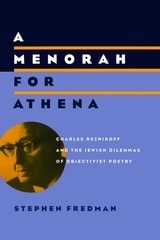
A Menorah for Athena
Charles Reznikoff and the Jewish Dilemmas of Objectivist PoetryStephen Fredman
University of Chicago Press, 2001
Stephen Fredman illuminates the relationship of Jewish intellectuals to modernity through a close look at Reznikoff's life and writing. He shows that when we regard the Objectivists as modern Jewish poets, we can see more clearly their distinctiveness as modernists and the reasons for their profound impact upon later poets, such as Allen Ginsberg and Charles Bernstein. Fredman also argues that to understand Reznikoff's work more completely, we must see it in the context of early, nonsectarian attempts to make the study of Jewish culture a force in the construction of a more pluralistic society. According to Fredman, then, the indelible images in Reznikoff's poetry open a window onto the vexed but ultimately successful entry of Jewish immigrants and their children into the mainstream of American intellectual life.
A More Conservative Place
Intellectual Culture in the Bush EraPaul A. Bové
Dartmouth College Press, 2013
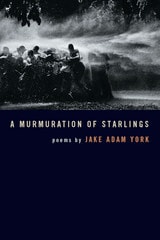
A Murmuration of Starlings
Jake Adam York
Southern Illinois University Press, 2008
A Murmuration of Starlings elegizes the martyrs of the civil rights movement, whose names are inscribed on the stone table of the Civil Rights Memorial in Montgomery, Alabama. Individually, Jake Adam York’s poems are elegies for individuals; collectively, they consider the violence of a racist culture and the determination to resist that racism.
York follows Sun Ra, a Birmingham jazz musician whose response to racial violence was to secede from planet Earth, considers the testimony in the trial of J. W. Milam and Roy Bryant for the murder of Emmet Till in 1955, and recreates events of Selma, Alabama, in 1965. Throughout the collection, an invasion of starlings imagesthe racial hatred and bloodshed. While the 1950s spawned violence, the movement in the early 1960s transformed the language of brutality and turned the violence against the violent, says York. So, the starlings, first produced by violence, become instruments of resistance.
York’s collection responds to and participates inrecent movements to find and punish the perpetrators of the crimes that defined the civil rights movement. A Murmuration of Starlings participates in the search for justice, satisfaction, and closure.
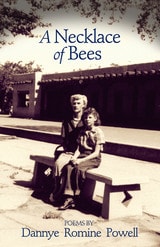
A Necklace of Bees
PoemsDannye Romine Powell
University of Arkansas Press, 2008
A New Geography of Poets
Edward Field
University of Arkansas Press, 1993
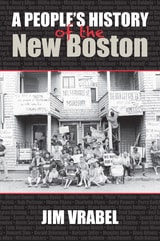
A People's History of the New Boston
Jim Vrabel
University of Massachusetts Press, 2014
Credit for the city's turnaround since that time is often given to a select group of people, all of them men, all of them white, and most of them well off. In fact, a large group of community activists, many of them women, people of color, and not very well off, were also responsible for creating the Boston so many enjoy today. This book provides a grassroots perspective on the tumultuous 1960s and 1970s, when residents of the city's neighborhoods engaged in an era of activism and protest unprecedented in Boston since the American Revolution.
Using interviews with many of those activists, contemporary news accounts, and historical sources, Jim Vrabel describes the demonstrations, sit-ins, picket lines, boycotts, and contentious negotiations through which residents exerted their influence on the city that was being rebuilt around them. He includes case histories of the fights against urban renewal, highway construction, and airport expansion; for civil rights, school desegregation, and welfare reform; and over Vietnam and busing. He also profiles a diverse group of activists from all over the city, including Ruth Batson, Anna DeFronzo, Moe Gillen, Mel King, Henry Lee, and Paula Oyola. Vrabel tallies the wins and losses of these neighborhood Davids as they took on the Goliaths of the time, including Boston's mayors. He shows how much of the legacy of that activism remains in Boston today.
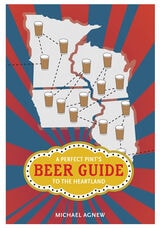
A Perfect Pint's Beer Guide to the Heartland
Michael Agnew
University of Illinois Press, 2014
- Agnew's exclusive choices on which beers to try at each location
- Entries on every brewery's history and philosophy
- Information on tours, tasting rooms and attached pubs, and dining options and other amenities
- A survey of each brewery's brands, including its flagship beer plus seasonal brews and special releases
- Brewery equipment and capacity
- Nearby attractions
In addition, Agnew sets the stage with a history of Midwestern beer spanning the origins of the immigrant brewers who arrived in the 1800s to the homebrewers-made-good who have built a new kind of brewing culture founded on creativity, dedication to quality, and attention to customer feedback.
Informed and unique, A Perfect Pint's Beer Guide to the Heartland is the essential companion for beer aficionados and curious others determined to drink the best the Midwest has to offer.
Includes more than 150 full color images, including the region's most distinctive beer labels, trademarks, and company logos.
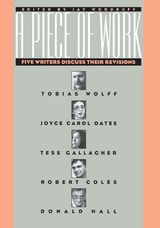
A Piece Of Work
Five Writers Discuss Their RevisionsJay Woodruff
University of Iowa Press, 1993
Books on writing generally offer prescriptions and proscriptions about this "craft so hard to learn" instead of evidence. But in A Piece of Work Woodruff's incisive questions guide five writers—Tobias Wolff, Tess Gallagher, Robert Coles, Joyce Carol Oates, and Donald Hall—through specific examples that enable the reader to see how good writing becomes better. From the first draft through various revisions and finally to the printed version of a single piece of each author's work, Woodruff traces the full course of the revision process.
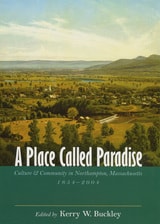
A Place Called Paradise
Culture and Community in Northampton, Massachusetts, 1654-2004Kerry W. Buckley
University of Massachusetts Press, 2004
Northampton evoked equally powerful visions in others. To minister Jonathan Edwards it was a stage for the enactment of God's drama of saving grace and redemption, while to Swedish soprano Jenny Lind it was simply a "paradise." During the 1920s Northampton became Main Street USA—a reassuring backdrop for the presidency of the city's former mayor, Calvin Coolidge. But for Smith College professor Newton Arvin, it was the dark side of small-town America that surfaced during the early decades of the Cold War. From witchcraft trials to Shays' Rebellion, from Sojourner Truth and the utopian abolitionists to Sylvester Graham and diet reform, many of the main currents of American life have flowed through this New England river town.
To commemorate the 350th anniversary of the founding of Northampton, A Place Called Paradise brings together a broad range of writing on the city's rich heritage. Edited with an introduction by Kerry W. Buckley, the volume includes essays by John Demos, Christopher Clark, Nell Irvin Painter, David W. Blight, and other distinguished scholars who have found this region fertile ground for research. Together their writings not only chronicle the history of a place but illustrate, in microcosm, the dynamics at work in the larger sweep of America's past.
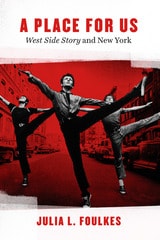
A Place for Us
“West Side Story” and New YorkJulia L. Foulkes
University of Chicago Press, 2016
That vision of postwar New York is at the heart of Julia L. Foulkes’s A Place for Us. A lifelong fan of the show, Foulkes became interested in its history when she made an unexpected discovery: scenes for the iconic film version were shot on the demolition site destined to become part of the Lincoln Center redevelopment area—a crowning jewel of postwar urban renewal. Foulkes interweaves the story of the creation of the musical and film with the remaking of the Upper West Side and the larger tale of New York’s postwar aspirations. Making unprecedented use of director and choreographer Jerome Robbins’s revelatory papers, she shows the crucial role played by the political commitments of Robbins and his fellow gay, Jewish collaborators, Leonard Bernstein and Arthur Laurents. Their determination to evoke life in New York as it was actually lived helped give West Side Story its unshakable sense of place even as it put forward a vision of a new, vigorous, determinedly multicultural American city.
Beautifully written and full of surprises for even the most dedicated West Side Story fan, A Place for Us is a revelatory new exploration of an American classic.