Results by title
3369 books match the query 'Cultural & Social' and 577 start with t
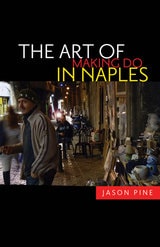
The Art of Making Do in Naples
Jason Pine
University of Minnesota Press, 2012
“In Naples, there are more singers than there are unemployed people.” These words echo through the neomelodica music scene, a vast undocumented economy animated by wedding singers, pirate TV, and tens of thousands of fans throughout southern Italy and beyond. In a city with chronic unemployment, this setting has attracted hundreds of aspiring singers trying to make a living—or even a fortune. In the process, they brush up against affiliates of the region’s violent organized crime networks, the camorra. In The Art of Making Do in Naples, Jason Pine explores the murky neomelodica music scene and finds himself on uncertain ground.
The “art of making do” refers to the informal and sometimes illicit entrepreneurial tactics of some Neapolitans who are pursuing a better life for themselves and their families. In the neomelodica music scene, the art of making do involves operating do-it-yourself recording studios and performing at the private parties of crime bosses. It can also require associating with crime boss-impresarios who guarantee their success by underwriting it with extortion, drug trafficking, and territorial influence. Pine, likewise “making do,” gradually realized that the completion of his ethnographic work also depended on the aid of forbidding figures.
The Art of Making Do in Naples offers a riveting ethnography of the lives of men who seek personal sovereignty in a shadow economy dominated, in incalculable ways, by the camorra. Pine navigates situations suffused with secrecy, moral ambiguity, and fears of ruin that undermine the anthropologist’s sense of autonomy. Making his way through Naples’s spectacular historic center and outer slums, on the trail of charmingly evasive neomelodici singers and unsettlingly elusive camorristi, Pine himself becomes a music video director and falls into the orbit of a shadowy music promoter who may or may not be a camorra affiliate.
Pine’s trenchant observations and his own improvised attempts at “making do” provide a fascinating look into the lives of people in the gray zones where organized crime blends into ordinary life.
The Aztec Kings
The Construction of Rulership in Mexican HistorySusan D. Gillespie
University of Arizona Press, 1989
The Aztec Kings is the first major study to take into account the Aztec cyclical conception of time—which required that history constantly be reinterpreted to achieve continuity between past and present—and to treat indigenous historical traditions as symbolic statements in narrative form. Susan Gillespie focuses on the dynastic history of the Mexica of Tenochtitlan, whose stories reveal how the Aztecs used "history" to construct, elaborate, and reify ideas about the nature of rulership and the cyclical nature of the cosmos, and how they projected the Spanish conquest deep into the Aztec past in order to make history accommodate that event.
By demonstrating that most of Aztec history is nonliteral, she sheds new light on Aztec culture and on the function of history in society. By relating the cyclical structure of Aztec dynastic history to similar traditions of African and Polynesian peoples, she introduces a broader perspective on the function of history in society and on how and why history must change.
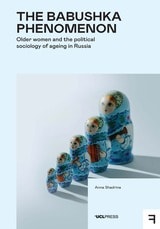
The Babushka Phenomenon
Older Women and the Political Sociology of Ageing in RussiaAnna Shadrina
University College London, 2025
The word “babushka” literally means “grandmother,” but it has come to represent much more since the Soviet era, not least the family caregiver. In her new study, Anna Shadrina explores the marginalization of older women in post-Soviet Russia, shedding light on the complex image of the babushka as both the cornerstone of the family unit and a passive recipient of social benefits. The author argues that this image has been shaped in no small part by welfare cutbacks that shifted the responsibility of family care from the state to individual women, as well as the increasing frustration of working-age people with the post-socialist economic system. Ultimately, she shows that despite being ostracized from society for defying age- and gender-specific social expectations, older women occupy a crucial position as active contributors to the economy.
The Banality of Good
The UN's Global Fight against Human TraffickingLieba Faier
Duke University Press, 2024
The Battle over Peleliu
Islander, Japanese, and American Memories of WarStephen C. Murray
University of Alabama Press, 2016
The expansionist Japanese empire annexed the inhabited archipelago of Palau in 1914. The airbase built on Peleliu Island became a target for attack by the United States in World War II. The Battle over Peleliu: Islander, Japanese, and American Memories of War offers an ethnographic study of how Palau and Peleliu were transformed by warring great powers and further explores how their conflict is remembered differently by the three peoples who shared that experience.
Author Stephen C. Murray uses oral histories from Peleliu’s elders to reconstruct the island’s prewar way of life, offering a fascinating explanation of the role of land and place in island culture. To Palauans, history is conceived geographically, not chronologically. Land and landmarks are both the substance of history and the mnemonic triggers that recall the past. Murray then offers a detailed account of the 1944 US invasion against entrenched Japanese forces on Peleliu, a seventy-four-day campaign that razed villages, farms, ancestral cemeteries, beaches, and forests, and with them, many of the key nodes of memory and identity.
Murray also explores how Islanders’ memories of the battle as shattering their way of life differ radically from the ways Japanese and Americans remember the engagement in their histories, memoirs, fiction, monuments, and tours of Peleliu. Determination to retrieve the remains of 11,000 Japanese soldiers from the caves of Peleliu has driven high-profile civic groups from across the Japanese political spectrum to the island. Contemporary Japan continues to debate pacifist, right-wing apologist, and other interpretations of its aggression in Asia and the Pacific. These disputes are exported to Peleliu, and subtly frame how Japanese commemoration portrays the battle in stone and ritual. Americans, victors in the battle, return to the archipelago in far fewer numbers. For them, the conflict remains controversial but is most often submerged into the narrative of “the good war.”
The Battle over Peleliu is a study of public memory, and the ways three peoples swept up in conflict struggle to create a common understanding of the tragedy they share.
The Befana Is Returning
The Story of a Tuscan FestivalSteve Siporin
University of Wisconsin Press, 2022
The Pigitliano Befanata is distinct in its emphasis on song and strong in its richly symbolic use of food, which is not only consumed at each home but is also carried away as a gift. The characters who make up the squad are unique to the Italian practice. They always include the Befana and her husband, the Befano, but other members of the befanotti vary from place to place over time. Siporin combines fieldwork and archival evidence to introduce the Befanata and its historical and social contexts: what it is, what it means, and how it feels. The Befana Is Returning is a deeply researched, deftly insightful presentation of this living tradition that adds a large missing piece to the array of contemporary ethnographic scholarship on mumming.
The Best Place
Addiction, Intervention, and Living and Dying Young in VancouverDanya Fast
Rutgers University Press, 2024
Winner of the CASCA Labrecque-Lee Book Prize
In both local and international imaginations, Vancouver, Canada, is often celebrated as one of the world’s most beautiful, cosmopolitan, and livable cities. Simultaneously, the city continues to be ground zero for successive waves of public health emergency and intervention, including a recent and unprecedented drug overdose crisis driven by the proliferation of illicitly manufactured fentanyl and related analogs in the local drug supply. In The Best Place: Addiction, Intervention, and Living and Dying Young in Vancouver, Danya Fast explores these politics of place from the perspectives of young people who use drugs. Those who are the subject of this book were in many ways relegated to the social, spatial, and economic margins of the city. Yet, they were also often at the very center of city life and state projects, including the project of protecting life in the context of the current overdose crisis.
The Biopolitics of Breast Cancer
Changing Cultures of Disease and ActivismMaren Klawiter
University of Minnesota Press, 2008
For nearly forty years, feminists and patient activists have argued that medicine is a deeply individualizing and depoliticizing institution. According to this view, medical practices are incidental to people’s transformation from patients to patient activists. The Biopolitics of Breast Cancer turns this understanding upside down.
Maren Klawiter analyzes the evolution of the breast cancer movement to show the broad social impact of how diseases come to be medically managed and publicly administered. Examining surgical procedures, adjuvant therapies, early detection campaigns, and the rise in discourses of risk, Klawiter demonstrates that these practices created a change in the social relations-if not the mortality rate-of breast cancer that initially inhibited, but later enabled, collective action. Her research focuses on the emergence and development of new forms of activism that range from grassroots patient empowerment to environmental activism and corporate-funded breast cancer awareness.
The Biopolitics of Breast Cancer opens a window onto a larger set of changes currently transforming medically advanced societies and ultimately challenges our understanding of the origins, politics, and future of the breast cancer movement.
Maren Klawiter holds a PhD in sociology from the University of California, Berkeley. She is currently pursuing a law degree at Yale University.
The Black-Man of Zinacantan
A Central American LegendBy Sarah C. Blaffer
University of Texas Press, 1972
The subject of this work is anomalies—those things that are between one state and another, neither dead nor alive, neither animal nor human. In this instance, they are the "spooks" (espantos) that inhabit the Maya area: the charcoal-cruncher, a disembodied head that goes off into the night to eat charcoal; the characotels, men who have turned into animals in order to steal chickens; and others. The victims chosen by spooks are likewise between two states: they are caught while asleep or drunk; or they may be humans who ignore social conventions and behave in "un-human" manner.
The Black-man of Zinacantan focuses on a small, super-sexed demon who possesses a six-foot-long, death-dealing penis and a penchant for mischief-making. This demon is known in Highland Chiapas as h'ik'al, the Black-man. Although h'ik'al's prototype may have been the bat deity, an ancient Maya god of sacrifice, the demon has been adapted to contemporary life. Sarah Blaffer analyzes the position of anomalies in societies and shows h'ik'al as a norm-offending, yet norm-reinforcing, specter, who by his character and actions demonstrates the proper sex roles for Zinacantec men and women.
The data for the study was recorded in Zinacantan, a Tzotzil-speaking Maya community, and in other Maya towns in southern Mexico and Guatemala; the study includes an analysis of tales recorded and translated by Robert M. Laughlin. The drawings that decorate the text were adapted by Virginia Savage and Joseph Barbieri. Besides being a comprehensive treatment of Maya demonology, the book demonstrates the newer approaches in comparative mythology of Claude Lévi-Strauss and others.
The Blood Libel Legend
A Casebook in Anti-Semitic FolkloreAlan Dundes
University of Wisconsin Press, 1991
Alan Dundes, in this casebook of an anti-Semitic legend, demonstrates the power of folklore to influence thought and history. According to the blood libel legend, Jews murdered Christian infants to obtain blood to make matzah. Dundes has gathered here the work of leading scholars who examine the varied sources and elaborations of the legend. Collectively, their essays constitute a forceful statement against this false accusation.
The legend is traced from the murder of William of Norwich in 1144, one of the first reported cases of ritualized murder attributed to Jews, through nineteenth-century Egyptian reports, Spanish examples, Catholic periodicals, modern English instances, and twentieth-century American cases. The essays deal not only with historical cases and surveys of blood libel in different locales, but also with literary renditions of the legend, including the ballad “Sir Hugh, or, the Jew’s Daughter” and Chaucer’s “The Prioress’s Tale.”
These case studies provide a comprehensive view of the complex nature of the blood libel legend. The concluding section of the volume includes an analysis of the legend that focuses on Christian misunderstanding of the Jewish feast of Purim and the child abuse component of the legend and that attempts to bring psychoanalytic theory to bear on the content of the blood libel legend. The final essay by Alan Dundes takes a distinctly folkloristic approach, examining the legend as part of the belief system that Christians developed about Jews.
This study of the blood libel legend will interest folklorists, scholars of Catholicism and Judaism, and many general readers, for it is both the literature and the history of anti-Semitism.
The Blood of Guatemala
A History of Race and NationGreg Grandin
Duke University Press, 2000
Focusing on Mayan elites in the community of Quetzaltenango, Grandin shows how their efforts to maintain authority over the indigenous population and secure political power in relation to non-Indians played a crucial role in the formation of the Guatemalan nation. To explore the close connection between nationalism, state power, ethnic identity, and political violence, Grandin draws on sources as diverse as photographs, public rituals, oral testimony, literature, and a collection of previously untapped documents written during the nineteenth century. He explains how the cultural anxiety brought about by Guatemala’s transition to coffee capitalism during this period led Mayan patriarchs to develop understandings of race and nation that were contrary to Ladino notions of assimilation and progress. This alternative national vision, however, could not take hold in a country plagued by class and ethnic divisions. In the years prior to the 1954 coup, class conflict became impossible to contain as the elites violently opposed land claims made by indigenous peasants.
This “history of power” reconsiders the way scholars understand the history of Guatemala and will be relevant to those studying nation building and indigenous communities across Latin America.
The Bodo of Assam
Revisiting a Classical Study from 1951Halfdan Siiger
National University of Singapore Press, 2015
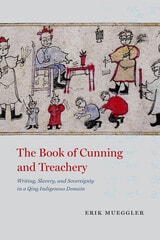
The Book of Cunning and Treachery
Writing, Slavery, and Sovereignty in a Qing Indigenous DomainErik Mueggler
University of Chicago Press, 2027
An ethnographic history of one of the dozens of indigenous domains that occupied China’s border regions during the Qing dynasty and before.
Erik Mueggler’s The Book of Cunning and Treachery is an ethnographic history of a chiefly household that ruled one of the many indigenous domains scattered through upland southwest China during the late Ming and Qing dynasties. The imperial colonization of this region proceeded by way of defeating indigenous polities and absorbing them into a system of indirect governance. In this system, indigenous chieftains inherited power over multiethnic domains, subject to ratification by the imperial court. Mueggler tracks the history of two crucial yet unexamined archives pertaining to this household—a trove of Chinese-language legal, military, and administrative documents, and hundreds of ritual manuals, histories, and morality books written in the indigenous Né script—to show how the chiefly house reproduced itself through these languages, each with its own forms of ritual, recitation, and inscription.
As Mueggler demonstrates, through different forms of access to writing in Chinese and Né, male and female chieftains, domestic slaves, enslaved bondsmen, bonded tenants, chiefly concubines, and more existed in a complex ecology of relations. House and domain were governed through a dynamic process in which residents continuously worked out the status hierarchies that animated their relations with one another as well as the relations between the chiefly house and the local administrative system. This groundbreaking book provides a compelling account of the intertwined problems of writing, slavery, and sovereignty, as well as a vivid portrait of the unique form that indigenous jurisdiction took in this era.
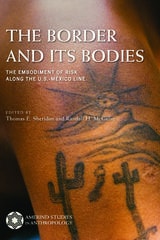
The Border and Its Bodies
The Embodiment of Risk Along the U.S.-México LineEdited by Thomas E. Sheridan and Randall H. McGuire
University of Arizona Press, 2019
The increasingly militarized U.S.-México border is an intensely physical place, affecting the bodies of all who encounter it. The essays in this volume explore how crossing becomes embodied in individuals, how that embodiment transcends the crossing of the line, and how it varies depending on subject positions and identity categories, especially race, class, and citizenship.
Timely and wide-ranging, this book brings into focus the traumatic and real impact the border can have on those who attempt to cross it, and it offers new perspectives on the effects for rural communities and ranchers. An intimate and profoundly human look at migration, The Border and Its Bodies reminds us of the elemental fact that the border touches us all.
Contributors
Bruce E. Anderson
Jared Beatrice
Rebecca Crocker
Jason De León
Linda Green
Randall H. McGuire
Shaylih Muehlmann
Robin Reineke
Olivia T. Ruiz Marrujo
David Seibert
Thomas E. Sheridan
Angela Soler
Ruth M. Van Dyke
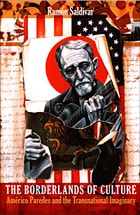
The Borderlands of Culture
Americo Paredes and the Transnational ImaginaryRamón Saldívar
Duke University Press, 2006
Saldívar demonstrates how Paredes’s poetry, prose, and journalism prefigured his later work as a folklorist and ethnographer. In song, story, and poetry, Paredes first developed the themes and issues that would be central to his celebrated later work on the “border studies” or “anthropology of the borderlands.” Saldívar describes how Paredes’s experiences as an American soldier, journalist, and humanitarian aid worker in Asia shaped his understanding of the relations between Anglos and Mexicans in the borderlands of south Texas and of national and ethnic identities more broadly. Saldívar was a friend of Paredes, and part of The Borderlands of Culture is told in Paredes’s own words. By explaining how Paredes’s work engaged with issues central to contemporary scholarship, Saldívar extends Paredes’s intellectual project and shows how it contributes to the remapping of the field of American studies from a transnational perspective.
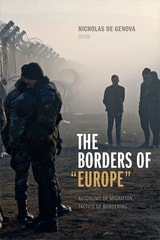
The Borders of "Europe"
Autonomy of Migration, Tactics of BorderingNicholas De Genova, editor
Duke University Press, 2017
Contributors. Ruben Andersson, Nicholas De Genova, Dace Dzenovska, Evelina Gambino, Glenda Garelli, Charles Heller, Clara Lecadet, Souad Osseiran, Lorenzo Pezzani, Fiorenza Picozza, Stephan Scheel, Maurice Stierl, Laia Soto Bermant, Martina Tazzioli
The Borders of Responsibility
Migration Control in the Mediterranean SeaKiri Olivia Santer
Duke University Press, 2026

The Botanical Odyssey of Richard S. Felger
Edited by Benjamin T. Wilder, Bill Broyles, and Thomas Bowen
University of Arizona Press, 2026
This work is a vibrant tribute to Richard Stephen Felger, who was one of the most influential scientists of the American Southwest and northwestern Mexico. Known as a desert botanist, Felger’s work transcended regional boundaries, blending rigorous fieldwork with global ecological vision. This work offers an intimate and multifaceted portrait of a man whose tireless advocacy for biodiversity and biocultural conservation shaped generations of desert scientists..
Edited by Benjamin T. Wilder, Bill Broyles, and Thomas Bowen, this book is both a celebration and a resource. The work is separated into four parts. With humor, insight, and deep empathy, Felger’s own voice leads the journey in part 1, recounting his most memorable field experiences with masterful prose and sly wit. Part 2 brings together heartfelt reflections from colleagues who worked alongside Felger in the field, revealing the eccentric brilliance and relentless curiosity that defined his career. Part 3 explores his family history and the unconventional path that shaped his life’s work, while part 4 presents a comprehensive bibliography of his most important publications. The book contains four maps that help take you around the world on Felger’s journeys, and fifty images selected from the thousands of slides from his archive that further transport and anchor you in the adventure.
Felger’s own voice, paired with reflections from twenty colleagues, creates a rich, multifaceted narrative, offering readers a rare glimpse into the life of a scientific icon whose legacy continues to inspire desert researchers and conservationists across the globe.
Contributors
James Aronson
Thomas Bowen
Bill Broyles
Alberto Búrquez
Susan Davis Carnahan
Mark Alan Dimmitt
Exequiel Ezcurra
Gil Gillenwater
Russ Kleinman
Angelina Martínez-Yrízar
Gregory McNamee
Cathy Moser Marlett
Gary Paul Nabhan
Wallace J. Nichols
William R. Norris
Humberto Romero Morales
Sue Rutman
Silke Schneider
Jeffrey Seminoff
Jane Spinti
Benjamin T. Wilder
The Brazil Reader
History, Culture, PoliticsRobert M. Levine and John J. Crocitti, eds.
Duke University Press, 1999
Complementing traditional views with fresh ones, The Brazil Reader’s historical selections range from early colonization to the present day, with sections on imperial and republican Brazil, the days of slavery, the Vargas years, and the more recent return to democracy. They include letters, photographs, interviews, legal documents, visual art, music, poetry, fiction, reminiscences, and scholarly analyses. They also include observations by ordinary residents, both urban and rural, as well as foreign visitors and experts on Brazil. Probing beneath the surface of Brazilian reality—past and present—The Reader looks at social behavior, women’s lives, architecture, literature, sexuality, popular culture, and strategies for coping with the travails of life in a country where the affluent live in walled compounds to separate themselves from the millions of Brazilians hard-pressed to find food and shelter. Contributing to a full geographic account—from the Amazon to the Northeast and the Central-South—of this country’s singular multiplicity, many pieces have been written expressly for this volume or were translated for it, having never previously been published in English.
This second book in The Latin America Readers series will interest students, specialists, travelers for both business and leisure, and those desiring an in-depth introduction to Brazilian life and culture.

The Brooklyn Bridge
A Cultural HistoryHaw, Richard
Rutgers University Press, 2008
Hailed by some as the Eighth Wonder of the World when it opened in 1883, the Brooklyn Bridge is one of the world’s most recognizable and beloved icons. For over one hundred years it has excited and fascinated with stories of ingenuity and heroism, and it has been endorsed as a flawless symbol of municipal improvement and a prime emblem of American technological progress.
Despite its impressive physical presence, however, Brooklyn’s grand old bridge is much more than a testament of engineering and architectural achievement. As Richard Haw shows in this first of its kind cultural history, the Brooklyn Bridge owes as much to the imagination of the public as it does to the historical events and technical prowess that were integral to its construction.
Bringing together more than sixty images of the bridge that, over the years, have graced postcards, magazine covers, and book jackets and appeared in advertisements, cartoons, films, and photographs, Haw traces the diverse and sometimes jarring ways in which this majestic structure has been received, adopted, and interpreted as an American idea. Haw’s account is not a history of how the bridge was made, but rather of what people have made of the Brooklyn Bridge—in film, music, literature, art, and politics—from its opening ceremonies to the blackout of 2003.
Classic accounts from such writers and artists as H. G. Wells, Charles Reznikoff, Hart Crane, Lewis Mumford, Joseph Pennell, Walker Evans, and Georgia O’Keeffe, among many others, present the bridge as a deserted, purely aestheticized romantic ideal, while others, including Henry James, Joseph Stella, Yun Gee, Ernest Poole, Alfred Kazin, Paul Auster, and Don DeLillo, offer a counter-narrative as they question not only the role of the bridge in American society, but its function as a profoundly public, communal place. Also included are never-before-published photographs by William Gedney and a discussion of Alexis Rockman’s provocative new mural Manifest Destiny.
Drawing on hundreds of cultural artifacts, from the poignant, to the intellectual, to the downright quirky, The Brooklyn Bridge sheds new light on topics such as ethnic and foreign responses to America, nationalism, memory, parade culture, commemoration, popular culture, and post-9/11 America icons. In the end, we realize that this impressive span is as culturally remarkable today as it was technologically and physically astounding in the nineteenth century.
The Brotherhood of Freemason Sisters
Gender, Secrecy, and Fraternity in Italian Masonic LodgesLilith Mahmud
University of Chicago Press, 2014
Offering a tantalizing look behind lodge doors, The Brotherhood of Freemason Sisters unveils a complex culture of discretion in which Freemasons simultaneously reveal some truths and hide others. Women—one of Freemasonry’s best-kept secrets—are often upper class and highly educated but paradoxically antifeminist, and their self-cultivation through the Masonic path is an effort to embrace the deeply gendered ideals of fraternity. Mahmud unravels this contradiction at the heart of Freemasonry: how it was at once responsible for many of the egalitarian concepts of the Enlightenment and yet has always been, and in Italy still remains, extremely exclusive. The result is not only a thrilling look at an unfamiliar—and surprisingly influential—world, but a reevaluation altogether of the modern values and ideals that we now take for granted.
The Bundle
Unwrapping Nahua Religious TraditionsMolly H. Bassett
University of Texas Press, 2026
An examination of the importance of Nahua sacred bundles, emphasizing their impact on power dynamics, language, and culture in the Nahua religious tradition.
The Bundle is a deep scholarly meditation on tlaquimilolli, key religious objects of Mexico’s Indigenous Nahua, formerly “Aztec,” people. These sacred bundles, depicted across Nahua iconography, contained objects associated with the gods and their deeds and were believed to be their embodiments. Drawing on Indigenous sources, Molly Bassett tells the story of the tlaquimilolli’s origins and significance, critically examines previous interpretations, and argues that the form of the tlaquimilolli—not just their contents—is a key to understanding Nahua cosmology.
Bassett turns to Indigenous scholarship to interrogate and “unwrap” accepted narratives, taking the sacred bundle itself as a model for theorizing the world. She attends to tlaquimilolli in the context of glyphs and poetry, ritual and ordinary activity, and ceremonial structures. In revealing ways, the material properties of tlaquimilolli were reflected in the architecture of major temples and key cities, like Tenochtitlan. Bundling was also closely entwined with relationships between caretakers and their dependents. These prosaic attachments cast both sacred objects and Nahua sociability in a new light, challenging existing interpretations of Nahua religious traditions.
The Burden of the Ancients
Maya Ceremonies of World Renewal from the Pre-columbian Period to the PresentBy Allen J. Christenson
University of Texas Press, 2016
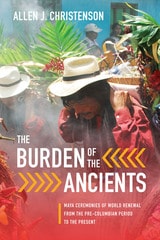
In Maya theology, everything from humans and crops to gods and the world itself passes through endless cycles of birth, maturation, dissolution, death, and rebirth. Traditional Maya believe that human beings perpetuate this cycle through ritual offerings and ceremonies that have the power to rebirth the world at critical points during the calendar year. The most elaborate ceremonies take place during Semana Santa (Holy Week), the days preceding Easter on the Christian calendar, during which traditionalist Maya replicate many of the most important world-renewing rituals that their ancient ancestors practiced at the end of the calendar year in anticipation of the New Year’s rites.
Marshaling a wealth of evidence from Pre-Columbian texts, early colonial Spanish writings, and decades of fieldwork with present-day Maya, The Burden of the Ancients presents a masterfully detailed account of world-renewing ceremonies that spans the Pre-Columbian era through the crisis of the Conquest period and the subsequent colonial occupation all the way to the present. Allen J. Christenson focuses on Santiago Atitlán, a Tz’utujil Maya community in highland Guatemala, and offers the first systematic analysis of how the Maya preserved important elements of their ancient world renewal ceremonies by adopting similar elements of Roman Catholic observances and infusing them with traditional Maya meanings. His extensive description of Holy Week in Santiago Atitlán demonstrates that the community’s contemporary ritual practices and mythic stories bear a remarkable resemblance to similar cultural entities from its Pre-Columbian past.
The Calusa
Linguistic and Cultural Origins and RelationshipsJulian Granberry
University of Alabama Press, 2012
Presents a full phonological and morphological analysis of the total corpus of surviving Calusa language data left by a literate Spanish captive held by the Calusa from his early youth to adulthood
The linguistic origins of Native American cultures and the connections between these cultures as traced through language in prehistory remain vexing questions for scholars across multiple disciplines and interests. Native American linguist Julian Granberry defines the Calusa language, formerly spoken in southwestern coastal Florida, and traces its connections to the Tunica language of northeast Louisiana.
Archaeologists, ethnologists, and linguists have long assumed that the Calusa language of southwest Florida was unrelated to any other Native American language. Linguistic data can offer a unique window into a culture’s organization over space and time; however, scholars believed the existing lexical data was insufficient and have not previously attempted to analyze or define Calusa from a linguistic perspective.
In The Calusa: Linguistic and Cultural Origins and Relationships, Granberry presents a full phonological and morphological analysis of the total corpus of surviving Calusa language data left by a literate Spanish captive held by the Calusa from his early youth to adulthood. In addition to further defining the Calusa language, this book presents the hypothesis of language-based cultural connections between the Calusa people and other southeastern Native American cultures, specifically the Tunica. Evidence of such intercultural connections at the linguistic level has important implications for the ongoing study of life among prehistoric people in North America. Consequently, this thoroughly original and meticulously researched volume breaks new ground and will add new perspectives to the broader scholarly knowledge of ancient North American cultures and to debates about their relationships with one another.

The Camera as Historian
Amateur Photographers and Historical Imagination, 1885-1918Elizabeth Edwards
Duke University Press, 2012
The Cancer Within
Reproduction, Cultural Transformation, and Health Care in RomaniaCristina A. Pop
Rutgers University Press, 2022
The Carbon Calculation
Global Climate Policy, Forests, and Transnational Governance in Brazil and MozambiqueRaquel Rodrigues Machaqueiro
University of Arizona Press, 2023
Focusing on REDD+ (Reducing Emissions from Deforestation and Forest Degradation), the book demonstrates how industrialized countries are able to maintain their socioeconomic models largely unaltered while claiming to address global warming using forests in the Global South to offset their pollution. By examining the creation and implementation of REDD+ historically and ethnographically, the book traces the social life of this mechanism as it travels across a complex network spanning several interacting levels: international, national, and local. Through cases in the Brazilian state of Acre and the Zambézia province in Mozambique, the author demonstrates how global climate policy has created new opportunities and rationales for unprecedented levels of intervention in the Global South—all under the guise of saving the planet.
The Carbon Calculation critically highlights the ways in which politics has reinforced a scientific focus on one possible solution to the problem of climate change—namely those that largely absolve the industrialized world from undertaking politically painful transformations in its own economic model.
The Carib, Kalinago, and Garifuna Peoples
Indigeneity, Hybridization, and Mobility in the AmericasEdited by Paula Prescod
University of Illinois Press, 2026
An overdue and wide-ranging reconsideration, The Carib, Kalinago, and Garifuna Peoples presents an invaluable collection of multidisciplinary studies that reposition the three groups’ history and experiences.
Contributors: Fernando Y. Alvarado Benítez, Sarah England, Nicholas Faraclas, Adrian Fraser, Sarah-Lee R. Gonsalves, Silke Jansen, Andrea E. Leland, Melinda Maxwell-Gibb, Ernesto Mercado-Montero, Lauren Madrid Poluha, Paula Prescod, Santiago J. Ruiz, and Cesar Andoni Vargas Sabio
The Cassowary's Revenge
The Life and Death of Masculinity in a New Guinea SocietyDonald Tuzin
University of Chicago Press, 1997
The Cassowary's Revenge is an intimate account of how Ilahita’s men and women think, emote, dream, and explain themselves. Tuzin also explores how the death of masculinity in a remote society raises disturbing implications for gender relations in our own society. In this light Tuzin's book is about men and women in search of how to value one another, and in today's world there is no theme more universal or timely.

The Cauldron of Ethnicity in the Modern World
Manning Nash
University of Chicago Press, 1989
Ethnicity, Nash suggests, is formed by historical processes based on preexisting elements of society and culture. Notions of ethnicity have at their core the recursive metaphor of "blood, bed, and cult"—body substance, kinship, and religious belief. When individuals who perceive themselves bound by these ties are threatened in some way, ethnicity becomes a unifying call to action. Nash identifies a number of concepts—political self-rule, economic opportunity, cultural identity, religious freedom—that have been rallying cries for ethnic struggles in the twentieth century. He offers a novel analysis of the ways that ethnic groups identify themselves and maintain "boundaries," and he assesses the circumstances under which ethnicity may be relevant or nearly irrelevant to political, economic, and cultural dynamics.
Nash presents three case studies that highlight the multifaceted nature of ethnicity and that each demonstrate a particular mode of comparative method. He compares a situation of conquest (Ladino and Maya in Mexico and Guatemala), a new, excolonial nation with nearly equally sized groups (Chinese and Malays in Malaysia), and a small immigrant group in a large nation (Jews in the United States), pointing out the many possible combinations of political, economic, or cultural struggles in ethnic conflicts. Even in nations where such conflict is minimal, Nash warns, ethnicity remains a reservoir of turbulence in a world where power, wealth, and dignity are unevenly and illegitimately distributed.
The Center Cannot Hold
Decolonial Possibility in the Collapse of a Tanzanian NGOJenna N. Hanchey
Duke University Press, 2023

The Central Asian Arabs of Afghanistan
Pastoral Nomadism in TransitionBy Thomas J. Barfield
University of Texas Press, 1981
The Changs Next Door to the Díazes
Remapping Race in Suburban CaliforniaWendy Cheng
University of Minnesota Press, 2013
U.S. suburbs are typically imagined to be predominantly white communities, but this is increasingly untrue in many parts of the country. Examining a multiracial suburb that is decidedly nonwhite, Wendy Cheng unpacks questions of how identity—especially racial identity—is shaped by place. She offers an in-depth portrait, enriched by nearly seventy interviews, of the San Gabriel Valley, not far from downtown Los Angeles, where approximately 60 percent of residents are Asian American and more than 30 percent are Latino. At first glance, the cities of the San Gabriel Valley look like stereotypical suburbs, but almost no one who lives there is white.
The Changs Next Door to the Díazes reveals how a distinct culture is being fashioned in, and simultaneously reshaping, an environment of strip malls, multifamily housing, and faux Mediterranean tract homes. Informed by her interviews as well as extensive analysis of three episodic case studies, Cheng argues that people’s daily experiences—in neighborhoods, schools, civic organizations, and public space—deeply influence their racial consciousness. In the San Gabriel Valley, racial ideologies are being reformulated by these encounters. Cheng views everyday landscapes as crucial terrains through which racial hierarchies are learned, instantiated, and transformed. She terms the process “regional racial formation,” through which locally accepted racial orders and hierarchies complicate and often challenge prevailing notions of race.
There is a place-specific state of mind here, Cheng finds. Understanding the processes of racial formation in the San Gabriel Valley in the contemporary moment is important in itself but also has larger value as a model for considering the spatial dimensions of racial formation and the significant demographic shifts taking place across the national landscape.
The Charismatic Gymnasium
Breath, Media, and Religious Revivalism in Contemporary BrazilMaria José de Abreu
Duke University Press, 2020
The Chasers
Renato Rosaldo
Duke University Press, 2019
The Chicken and the Quetzal
Incommensurate Ontologies and Portable Values in Guatemala's Cloud ForestPaul Kockelman
Duke University Press, 2016

The Children in Child Health
Negotiating Young Lives and Health in New ZealandJulie Spray
Rutgers University Press, 2020
In the unique context of indigenous Māori and migrant Pacific children in postcolonial New Zealand, Julie Spray explores the intertwining issues of epidemic disease, malnutrition, stress, violence, self-harm, and death to address the problem of how scholars and policy-makers alike can recognize and respond to children as social actors in their health. The Children in Child Health innovatively combines perspectives from childhood studies, medical anthropology, and public health and policy together with evocative ethnography to show how a deep understanding of children’s worlds can change our approach to their care.
The Chinese of Early Tucson
Historic Archaeology from the Tucson Urban Renewal ProjectFlorence C. Lister and Robert H. Lister
University of Arizona Press, 1989
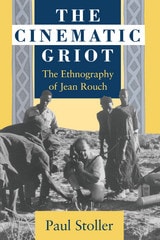
The Cinematic Griot
The Ethnography of Jean RouchPaul Stoller
University of Chicago Press, 1992
A brief account of Rouch's background, revealing the ethnographic foundations and intellectual assumptions underlying his fieldwork among the Songhay of Niger in the 1940s and 1950s, sets the stage for his emergence as a cinematic griot, a peripatetic bard who "recites" the story of a people through provocative imagery. Against this backdrop, Stoller considers Rouch's writings on Songhay history, myth, magic and possession, migration, and social change. By analyzing in depth some of Rouch's most important films and assessing Rouch's ethnography in terms of his own expertise in Songhay culture, Stoller demonstrates the inner connection between these two modes of representation.
Stoller, who has done more fieldwork among the Songhay than anyone other than Rouch himself, here gives the first full account of Rouch the griot, whose own story scintillates with important implications for anthropology, ethnography, African studies, and film.
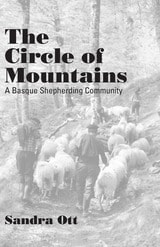
The Circle of Mountains
A Basque Shepherding CommunitySandra Ott
University of Nevada Press, 1993
Ott provides an excellent ethnography of a French Basque agrarian and sheepherding community. The commune of Sainte-Engrâce extends along a mountain valley in the southeastern corner of Soule, one of the three Basque provences in France. In The Circle of Mountains, Sandra Ott examines the importance of cooperation and reciprocity as the essential basis for the main institutions within this community. These French Basques visualize their community as a circle, and their vision of living in "the circle of mountians," rather than in a valley, reflects their perspective on the society in which they live. The first half of the book incorporates material on history, ecology and economy, and delves deeply into the domestic organization, kinship, and neighborliness of this Basque community. In the second half of the book, the author introduces the males' customary roles as shepherds and cheesemakers. Following a detailed commentary on these vocations, Ott suggests that these seemingly prosaic activities represent the male attempt at symbolic fulfillment of the female procreative and nurturing roles. In a new afterword, Ott discusses developments that have impacted life in the pastoral community of Sainte-Engrâce since the original publication of the book—including the acquisition of telephones and the construction of roads to nearly every home.The Circle of Mountains will be of interest not only to social anthropologists but also to those concerned with the Basque language and culture and to scholars and students of ethnology, international studies, and political science.
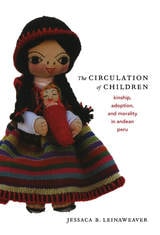
The Circulation of Children
Kinship, Adoption, and Morality in Andean PeruJessaca B. Leinaweaver
Duke University Press, 2008
Leinaweaver provides insight into the emotional and material factors that bring together and separate indigenous Andean families in the highland city of Ayacucho. She describes how child circulation is intimately linked to survival in the city, which has had to withstand colonialism, economic isolation, and the devastating civil war unleashed by the Shining Path. Leinaweaver examines the practice from the perspective of parents who send their children to live in other households, the adults who receive them, and the children themselves. She relates child circulation to international laws and norms regarding children’s rights, adoptions, and orphans, and to Peru’s history of racial conflict and violence. Given that history, Leinaweaver maintains that it is not surprising that child circulation, a practice associated with Peru’s impoverished indigenous community, is alternately ignored, tolerated, or condemned by the state.
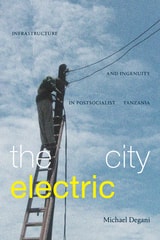
The City Electric
Infrastructure and Ingenuity in Postsocialist TanzaniaMichael Degani
Duke University Press, 2022
The City at Its Limits
Taboo, Transgression, and Urban Renewal in LimaDaniella Gandolfo
University of Chicago Press, 2009
The Climate Trial
Law and Justice on a Melting PlanetNoah Walker-Crawford
Duke University Press, 2026
The Colors of Violence
Cultural Identities, Religion, and ConflictSudhir Kakar
University of Chicago Press, 1996
With honesty, insight, and unsparing self-reflection, Kakar confronts the profoundly enigmatic relations that link individual egos to cultural moralities and religious violence. His innovative psychological approach offers a framework for understanding the kind of ethnic-religious conflict that has so vexed social scientists in India and throughout the world.
Through riveting case studies, Kakar explores cultural stereotypes, religious antagonisms, ethnocentric histories, and episodic violence to trace the development of both Hindu and Muslim psyches. He argues that in early childhood the social identity of every Indian is grounded in traditional religious identifications and communalism. Together these bring about deep-set psychological anxieties and animosities toward the other. For Hindus and Muslims alike, violence becomes morally acceptable when communally and religiously sanctioned. As the changing pressures of modernization and secularism in a multicultural society grate at this entrenched communalism, and as each group vies for power, ethnic-religious conflicts ignite. The Colors of Violence speaks with eloquence and urgency to anyone concerned with the postmodern clash of religious and cultural identities.

The Comfort Women
Sexual Violence and Postcolonial Memory in Korea and JapanC. Sarah Soh
University of Chicago Press, 2008
A powerful debunking of simplistic views of a wartime tragedy
In an era marked by atrocities perpetrated on a grand scale, the tragedy of the so-called comfort women—mostly Korean women forced into prostitution by the Japanese army—endures as one of the darkest events of World War II. These women have usually been labeled victims of a war crime, a simplistic view that makes it easy to pin blame on the policies of imperial Japan and therefore easier to consign the episode to a war-torn past. In this revelatory study, C. Sarah Soh provocatively disputes this master narrative.
Soh reveals that the forces of Japanese colonialism and Korean patriarchy together shaped the fate of Korean comfort women—a double bind made strikingly apparent in the cases of women cast into sexual slavery after fleeing abuse at home. Other victims were press-ganged into prostitution, sometimes with the help of Korean procurers. Drawing on historical research and interviews with survivors, Soh tells the stories of these women from girlhood through their subjugation and beyond to their efforts to overcome the traumas of their past. Finally, Soh examines the array of factors— from South Korean nationalist politics to the aims of the international women’s human rights movement—that have contributed to the incomplete view of the tragedy that still dominates today.
The Comforts of Home
Prostitution in Colonial NairobiLuise White
University of Chicago Press, 1990
"White's book . . . takes a unique approach to a largely unexplored aspect of African History. It enhances our understanding of African social history, political economy, and gender studies. It is a book that deserves to be widely read."—Elizabeth Schmidt, American Historical Review
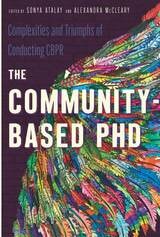
The Community-Based PhD
Complexities and Triumphs of Conducting CBPREdited by Sonya Atalay and Alexandra McCleary
University of Arizona Press, 2022
The Community-Based PhD brings together the experiences of PhD students from a range of disciplines discussing CBPR in the arts, humanities, social sciences, public health, and STEM fields. They write honestly about what worked, what didn’t, and what they learned. Essays address the impacts of extended research time frames, why specialized skill sets may be needed to develop community-driven research priorities, the value of effective relationship building with community partners, and how to understand and navigate inter- and intra-community politics.
This volume provides frameworks for approaching dilemmas that graduate student CBPR researchers face. They discuss their mistakes, document their successes, and also share painful failures and missteps, viewing them as valuable opportunities for learning and pushing the field forward. Several chapters are co-authored by community partners and provide insights from diverse community perspectives. The Community-Based PhD is essential reading for graduate students, scholars, and the faculty who mentor them in a way that truly crosses disciplinary boundaries.
Contributors: Anna S. Antoniou, Amy Argenal, Sonya Atalay, Stacey Michelle Chimimba Ault, Victoria Bochniak, Megan Butler, Elias Capello, Ashley Collier-Oxandale, Samantha Cornelius, Annie Danis, Earl Davis, John Doyle, Margaret J. Eggers, Cyndy Margarita García-Weyandt, R. Neil Greene, D. Kalani Heinz, Nicole Kaechele, Myra J. Lefthand, Emily Jean Leischner, Christopher B. Lowman, Geraldine Low-Sabado, Alexandra G. Martin, Christine Martin, Alexandra McCleary, Chelsea Meloche, Bonnie Newsom, Katherine L. Nichols, Claire Novotny, Nunanta (Iris Siwallace), Reidunn H. Nygård, Francesco Ripanti, Elena Sesma, Eric Simons, Cassie Lynn Smith, Tanupreet Suri, Emery Three Irons, Arianna Trott, Cecilia I. Vasquez, Kelly D. Wiltshire, Julie Woods, Sara L. Young
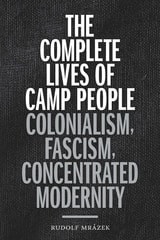
The Complete Lives of Camp People
Colonialism, Fascism, Concentrated ModernityRudolf Mrázek
Duke University Press, 2020
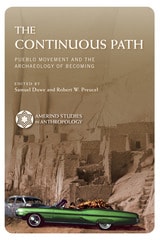
The Continuous Path
Pueblo Movement and the Archaeology of BecomingEdited by Samuel Duwe and Robert W. Preucel
University of Arizona Press, 2019
The Continuous Path challenges archaeologists to take Pueblo notions of movement seriously by privileging Pueblo concepts of being and becoming in the interpretation of anthropological data. In this volume, archaeologists, anthropologists, and Native community members weave multiple perspectives together to write histories of particular Pueblo peoples. Within these histories are stories of the movements of people, materials, and ideas, as well as the interconnectedness of all as the Pueblo people find, leave, and return to their middle places. What results is an emphasis on historical continuities and the understanding that the same concepts of movement that guided the actions of Pueblo people in the past continue to do so into the present and the future.
Movement is a never-ending and directed journey toward an ideal existence and a continuous path of becoming. This path began as the Pueblo people emerged from the underworld and sought their middle places, and it continues today at multiple levels, integrating the people, the village, and the individual.