Results by title
603 books match the query 'Description and travel' and 152 start with t
The Hanford Reach
A Land of ContrastsText by Susan Zwinger; Photographs by Skip Smith
University of Arizona Press, 2004
The Icon Curtain
The Cold War's Quiet BorderYuliya Komska
University of Chicago Press, 2015
Yuliya Komska transports readers to the western edge of the Bohemian Forest, one of Europe’s oldest borderlands, where in the 1950s civilians set out to shape the so-called prayer wall. A chain of new and repurposed pilgrimage sites, lookout towers, and monuments, the prayer wall placed two long-standing German obsessions, forest and border, at the heart of the century’s most protracted conflict. Komska illustrates how civilians used the prayer wall to engage with and contribute to the new political and religious landscape. In the process, she relates West Germany’s quiet sylvan periphery to the tragic pitch prevalent along the Iron Curtain’s better-known segments.
Steeped in archival research and rooted in nuanced interpretations of wide-ranging cultural artifacts, from vandalized religious images and tourist snapshots to poems and travelogues, The Icon Curtain pushes disciplinary boundaries and opens new perspectives on the study of borders and the Cold War alike.
The Indian Militia and Description of the Indies
Captain Bernardo de Vargas Machuca, Edited with an introduction by Kris Lane
Duke University Press, 2008
Containing advice on curing rattlesnake bites with amethysts and making saltpeter for gunpowder from concentrated human urine, The Indian Militia is a manual in four parts, the first of which outlines the ideal qualities of the militia commander. Addressing the organization and outfitting of conquest expeditions, Book Two includes extended discussions of arms and medicine. Book Three covers the proper behavior of soldiers, providing advice on marching through peaceful and bellicose territories, crossing rivers, bivouacking in foul weather, and carrying out night raids and ambushes. Book Four deals with peacemaking, town-founding, and the proper treatment of conquered peoples. Appended to these four sections is a brief geographical description of all of Spanish America, with special emphasis on the indigenous peoples of New Granada (roughly modern-day Colombia), followed by a short guide to the southern coasts and heavens. This first English-language edition of The Indian Militia includes an extensive introduction, a posthumous report on Vargas Machuca’s military service, and a selection from his unpublished attack on the writings of Fray Bartolomé de Las Casas.
The Jersey Shore Uncovered
A Revealing Season on the BeachGenovese, Peter
Rutgers University Press, 2003
This is not your typical Jersey Shore book.
Yes, you'll find the obvious-beaches and boardwalks, lifeguards and lighthouses, fishing and food. But Peter Genovese will also take you off the beaten track for an insider's look at this famous (and infamous) 127-mile stretch from Sandy Hook to Cape May.
Birders, tiki hut builders, beach cleaners, wheel-of-chance operators, she-crab soup makers-they're all here. You'll check out an Airstream-only trailer park and visit a Point Pleasant Beach house where the music of Frank Sinatra plays nearly 24/7. Genovese will introduce you to the owner of the Stone Pony and to participants at the grueling Atlantic City Around-the-Island Swim as they describe their battles with tides, exhaustion, and face-stinging jellyfish. All of that, plus you'll find out why Ocean Grove residents write their names on their flowerpots.
Beach reading just doesn't get any better than this.
Spend a summer with Peter Genovese as he chronicles a typical wild and wacky, kitschy and classy season along the New Jersey coastline.
Lifeguards, surfers, beachgoers, birders, ice cream vendors, seashell sellers, banner pilots-they're all here. You'll be on the scene when Atlantic City's mayor officially begins summer by "unlocking the ocean," get a whiff of the state barbeque championship, watch the nation's longest-running all-women lifeguard competition, and even spend a weekend, Survivor-style, on a Barnegat Bay island.
The Ocean City Baby Parade, Clownfest, the state's hottest bikini contest, and the World Series of Surf Fishing are all covered. You'll also meet the folks at the Diamondback Terrapin Conservation Project, the Cape May Migratory Bird Refuge, and the Marine Mammal Stranding Center.
Genovese introduces you to Little Miss Chaos and the King of Corn, the Jersey Shore Hot Dog Queen, and Lucky Leo. You'll go on patrol with the New Jersey State Marine Police, meet the man behind Big Mike's E-Z Bail Bonds, and find salvation at the Boardwalk Chapel.
The Jersey Shore Uncovered flawlessly depicts the timeless allure of New Jersey beach culture. Along with his stories, Genovese brings readers hundreds of color and black-and-white photos that brilliantly capture exactly what makes this 127-mile stretch of shoreline unique. Whether you've never been to a New Jersey beach or you're a Jersey native who spends your summers "down the Shore," you're certain to learn a thing or two from this book. So get settled in your beach chair, put on some suntan lotion, and enjoy.
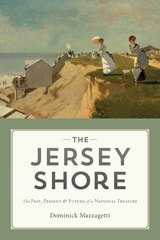
The Jersey Shore
The Past, Present & Future of a National TreasureMazzagetti, Dominick
Rutgers University Press, 2018
Divided into chronological and thematic sections, this book will attract general readers interested in the history of the Shore: how it appeared to early European explorers; how the earliest settlers came to the beaches for the whaling trade; the first attractions for tourists in the nineteenth century; and how the coming of railroads, and ultimately automobiles, transformed the Shore into a major vacation destination over a century later. Mazzagetti also explores how the impact of changing national mores on development, race relations, and the environment, impacted the Shore in recent decades and will into the future. Ultimately, this book is an enthusiastic and comprehensive portrait by a native son, whose passion for the region is shared by millions of beachgoers throughout the Northeast.
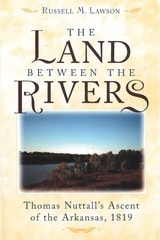
The Land between the Rivers
Thomas Nuttall's Ascent of the Arkansas, 1819Russell M. Lawson
University of Michigan Press, 2004
During the early nineteenth century, Nuttall explored the waters, valleys, plains, and mountains of the Great Lakes, Ohio River, Mississippi River, as well as the Missouri, Arkansas, Red, and Canadian river valleys of the former Louisiana Territory.
In this fascinating account of Nuttall's travels through the wilderness of the middle west, author Russell Lawson-using Nuttall's own journal-captures the sense of excitement of the early wanderer. As much a delight for the mind as the senses, The Land between the Rivers details the unremitting weather and rugged geography of uncharted lands within the Louisiana Territory. A sense of discovery pervades the narrative as Nuttall's odyssey builds to its climax in the prairie wilderness of what is now Oklahoma. Sickened by "ague"-in his case, malaria-Nuttall at times was barely able to go on; yet he continued to search for and catalog plants and animals.
The Land between the Rivers expands our knowledge of the work of one of the country's earliest botanists. We also learn a great deal about the early explorers, the inhabitants of the unsettled land, and about the land and culture of the times.
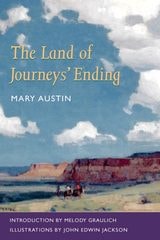
The Land of Journeys' Ending
Mary Austin
University of Illinois Press, 2003
When The Land of Journeys' Ending was first published in 1924, The Literary Reviewwarned, "This book is treacherous, waiting to overwhelm you with its abundant poetry." In it, successful New York author Mary Austin describes the epic journey she undertook in 1923, when left her East Coast home at the age of fifty-five to travel through the southwestern United States, the area where she lived as a child and where she would later retire.
The journey the book describes is a double one. Austin describes her transition from the cosmopolitan North East to the arid and largely unfamiliar land between the Colorado River and the Rio Grande. In telling her own story, Austin also tells the story of those who journeyed there before her-–Native American tribes, Spanish conquistadores, miners, adventurers, and California-bound migrants. The result is both an homage to the magnificence of the desert, mountains, rivers, canyons, plants, and animals of the Southwest and a history of the waves of people who inhabited the region.
Part memoir, part travel narrative, part historical investigation, and part ecological study, The Land of Journeys' Ending is a moving account of a woman coming full circle, finding solace in the broad landscape of her youth.
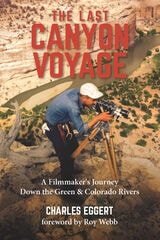
The Last Canyon Voyage
A Filmmaker's Journey Down the Green and Colorado RiversCharles Eggert Foreword by Roy Webb
University of Utah Press, 2020
This book finally brings Eggert’s writings out of the archives and into the public eye. With his keen photographer’s vision and colloquial voice, Eggert describes canyons and towns now deep under water as he tells the story of friendships forged upon the rapids and currents of the rivers. Roy Webb’s foreword provides historical context; river historian Alfred E. Holland Jr. introduces Eggert, the man who transformed into an environmentalist after visiting the West; and Sarah Holcombe’s afterword looks at what transpired in the lives of all eight crew members after the journey. Color and black-and-white illustrations further enliven the text. An engaging read, this is an important piece of river history that also shines light on Eggert’s tremendous influence as a conservation cinematographer.
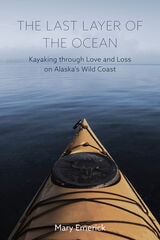
The Last Layer of the Ocean
Kayaking through Love and Loss on Alaska's Wild CoastMary Emerick
Oregon State University Press, 2021
The year Emerick turned 38, the suicide of a stranger compelled her to uproot her life and strike out for Alaska, taking a chance on love and home. She learned how to travel in a small yellow kayak along the rugged coast, contending with gales, high seas, and bears. She pondered the different meanings of home from the perspectives of people who were born along Alaska’s coast, the first peoples who had been there for generations, newcomers who chose this place for themselves, and the many who would eventually, inevitably leave. When she married a man from another island, convinced that love would stick, she soon learned that marriage is just as difficult to navigate as the ocean.
Divided into sections detailing the main kayaking strokes, with each stroke serving as metaphor for the lives we all pass through and the tools needed to stay afloat, this eloquent memoir speaks to the human need for connection—connection to place and to our fellow travelers casting their bubbles of light in the depths.

The Maze
A Desert JourneyLucy Rees
University of Arizona Press, 1996
The Men in My Country
Marilyn Abildskov
University of Iowa Press, 2004
The Men in My Country is the story of an American woman living and loving in Japan. Satisfied at first to observe her exotic surroundings, the woman falls in love with the place, with the light, with the curve of a river, with the smell of bonfires during obon, with blue and white porcelain dishes, with pencil boxes, and with small origami birds. Later, struggling for a deeper connection—“I wanted the country under my skin”—Abildskov meets the three men who will be part of her transformation and the one man with whom she will fall deeply in love.
A travel memoir offering an artful depiction of a very real place, The Men in My Country also covers the terrain of a complex emotional journey, tracing a geography of the heart, showing how we move to be moved, how in losing ourselves in a foreign place we can become dangerously—and gloriously—undone.
The Mexico City Reader
Edited by Ruben Gallo
University of Wisconsin Press, 2004
Mexico City is one of Latin America’s cultural capitals, and one of the most vibrant urban spaces in the world. The Mexico City Reader is an anthology of "Cronicas"—short, hybrid texts that are part literary essay, part urban reportage—about life in the capital. This is not the "City of Palaces" of yesteryear, but the vibrant, chaotic, anarchic urban space of the1980s and 1990s—the city of garbage mafias, necrophiliac artists, and kitschy millionaires.
Like the visitor wandering through the city streets, the reader will be constantly surprised by the visions encountered in this mosaic of writings—a textual space brimming with life and crowded with flâneurs, flirtatious students, Indian dancers,
food vendors, fortune tellers, political activists, and peasant protesters.
The essays included in this anthology were written by a panoply of writers, from well-known authors like Carlos Monsiváis and Jorge Ibagüengoitia to younger figures like Fabrizio Mejía Madrid and Juieta García González, all of whom are experienced practitioners of the city. The texts collected in this anthology are among the most striking examples of this concomitant "theory and practice" of Mexico City, that most delirious of megalopolises.
“[An] exciting literary journey . . .”—Carolyn Malloy, Multicultural Review
The Moon, Come to Earth
Dispatches from LisbonPhilip Graham
University of Chicago Press, 2009
A dispatch from a foreign land, when crafted by an attentive and skilled writer, can be magical, transmitting pleasure, drama, and seductive strangeness.
In The Moon, Come to Earth, Philip Graham offers an expanded edition of a popular series of dispatches originally published on McSweeney’s, an exuberant yet introspective account of a year’s sojourn in Lisbon with his wife and daughter. Casting his attentive gaze on scenes as broad as a citywide arts festival and as small as a single paving stone in a cobbled walk, Graham renders Lisbon from a perspective that varies between wide-eyed and knowing; though he’s unquestionably not a tourist, at the same time he knows he will never be a local. So his lyrical accounts reveal his struggles with (and love of) the Portuguese language, an awkward meeting with Nobel laureate José Saramago, being trapped in a budding soccer riot, and his daughter’s challenging transition to adolescence while attending a Portuguese school—but he also waxes loving about Portugal’s saudade-drenched music, its inventive cuisine, and its vibrant literary culture. And through his humorous, self-deprecating, and wistful explorations, we come to know Graham himself, and his wife and daughter, so that when an unexpected crisis hits his family, we can’t help but ache alongside them.
A thoughtful, finely wrought celebration of the moment-to-moment excitement of diving deep into another culture and confronting one’s secret selves, The Moon, Come to Earth is literary travel writing of a rare intimacy and immediacy.
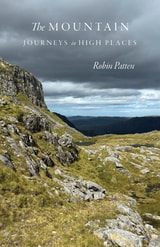
The Mountain
Journeys in High PlacesRobin Patten
University of Utah Press, 2025
Since antiquity, mountains have captured the human imagination. The Mountain takes readers into higher realms, exploring the complex kinship between mountains and human thought, traditions, and ways of being. Told through the author’s own journeys, the narrative ranges across cultures and iconic naturalists to consider how varied ideas and experiences related to mountains—from sacred to scientific, romantic to retreat, to simply home—are all facets of the same intricate topography.
No matter where one starts on the spectrum of understanding, an intimate encounter with a mountain leads to a broader perspective. High places create a simultaneous humbleness at our human insignificance and a sense of belonging within the greater world. That quality of belonging, and the associated commitment of caring for the planet and all that it holds, has never been more important than it is today.
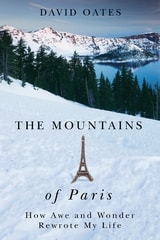
The Mountains of Paris
How Awe and Wonder Rewrote My LifeDavid Oates
Oregon State University Press, 2019
The present tense of the book takes place during the seasons he spends in Paris, sharing an artist’s residency. It is a rare opportunity to consider what it means to be human, through time-stopping moments with music, art, and deep history. The past tense of the book offers memories that intrude into the bustle of Paris life: a Billy Graham crusade at age thirteen, a mountain pass, a love, a loss.
In long years of mountaineering Oates fought the self-loathing which had infused him as the gay kid in the Baptist pew. In The Mountains of Paris, he ascends to a place of wonder through intense, personal narrative encounter with the strangeness of being alive. In his searching, luminous, and inimitable prose, Oates invites readers to share the sense of awe awakened by a Vermeer painting, or the night sky, or the echoing strains of music fading down a Paris street, lifting the curtain on a cosmos filled with a terrifying yet beautiful rightness.
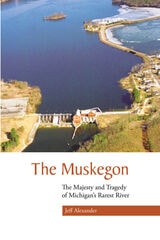
The Muskegon
The Majesty and Tragedy of Michigan's Rarest RiverJeff Alexander
Michigan State University Press, 2006
Muskegon is a derivation of a Native American word meaning "river with marshes." Jeff Alexander examines the creation, uses of, devastation, and restoration of Michigan's historic and beautiful Muskegon River.
Four of the five Great Lakes touch Michigan's shores; the state's shoreline spans more than 4,500 miles, not to mention more than 11,000 inland lakes and a multitude of rivers. The Muskegon River, the state's second longest river, runs 227 miles and has the most diverse features of any of Michigan’s many rivers. The Muskegon rises from the center of the state, widens, and moves westward, passing through the Pere Marquette and AuSable State Forests. The river ultimately flows toward Lake Michigan, where it opens into Muskegon Lake, a 12 square-mile, broad harbor located between the Muskegon River and Lake Michigan.
Formed several thousand years ago, when the glaciers that created the Great Lakes receded, and later inhabited by Ottawa and Potawatomi Indians, the Muskegon River was used by French fur trappers in the 1600s. Rich in white pine, the area was developed during the turn-of-the-century lumber boom, and at one time Muskegon Lake boasted more than 47 sawmills. The Muskegon was ravaged following settlement by Europeans, when rivers and streams were used to transport logs to the newly developing cities. Dams on rivers and larger streams provided power for sawmills and grain milling, and later provided energy for generating electricity as technology advanced.
There is now an ambitious effort to restore and protect this mighty river's natural features in the face of encroaching urbanization and land development that threatens to turn this majestic waterway into a mirror image of the Grand River, Michigan's longest river and one of its most polluted.
The Naturalist in Nicaragua
Thomas Belt
University of Chicago Press, 1985
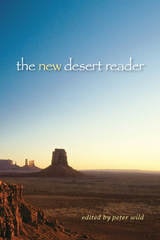
The New Desert Reader
Wild, Peter
University of Utah Press, 2006
A slow change in outlook dominates the book, as attitudes shift from viewing the desert as a place to be despised or exploited to an appreciation of it as a special place, an arena of highly complex natural communities, and a wild refuge for the human body and soul. Comprehensive and brightly informative, The New Desert Reader will be invaluable to anyone interested in the history, literature, and beauty of North America’s treasured desert places.
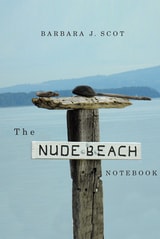
The Nude Beach Notebook
Barbara J. Scot
Oregon State University Press, 2014
Scot uses long, meditative walks on the “clothing optional” beach of the idyllic Sauvie Island near Portland, Oregon, to explore family responsibility, time’s passage, and faith. She weaves entries from her notebook—a record of the island’s wildlife, descriptions of the “Odd Ones” she encounters on the beach, and stories about the native people who once lived on the river—with the main narrative, tracing her search for her brother, her close friendship with a fellow writer, and daily life on the houseboat moorage where she lives.
The Nude Beach Notebook highlights the importance of place as a means for exploring and interpreting one’s own story. In the end, Scot’s walks on Sauvie Island lead to her own redemptive journey. She considers the uses of fiction and non-fiction in memory and in writing, the brevity and beauty of human existence, and the inscrutable, enduring mystery of death.
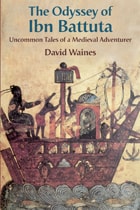
The Odyssey of Ibn Battuta
Uncommon Tales of a Medieval AdventurerDavid Waines
University of Chicago Press, 2010
Ibn Battuta was, without doubt, one of the world’s truly great travelers. Born in fourteenth-century Morocco, and a contemporary of Marco Polo, Ibn Battuta left an account in his own words of his remarkable journeys, punctuated by adventure and peril, throughout the Islamic world and beyond. Whether sojourning in Delhi and the Maldives, wandering through the mazy streets of Cairo and Damascus, or contesting with pirates and shipwreck, the indefatigable Ibn Battuta brought to vivid life a medieval world brimming with marvel and mystery. Carefully observing the great diversity of civilizations that he encountered, Ibn Battuta exhibited an omnivorous interest in such matters as food and drink; religious differences among Christians, Hindus, and Shia Muslims; and ideas about purity and impurity, disease, women, and sex.
David Waines offers here a graceful analysis of Ibn Battuta’s travelogue. This is a gripping treatment of the life and times of one of history’s most daring, and at the same time most human, adventurers.
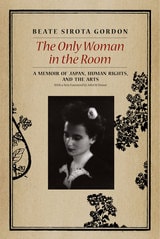
The Only Woman in the Room
A Memoir of Japan, Human Rights, and the ArtsBeate Sirota Gordon
University of Chicago Press, 2014
Sirota was born in Vienna, but in 1929 her family moved to Japan so that her father, a noted pianist, could teach, and she grew up speaking German, English, and Japanese. Russian, French, Italian, Latin, and Hebrew followed, and at fifteen Sirota was sent to complete her education at Mills College in California. The formal declaration of World War II cut Gordon off from her parents, and she supported herself by working for a CBS listening post in San Francisco that would eventually become part of the FCC. Translating was one of Sirota’s many talents, and when the war ended, she was sent to Japan as a language expert to help the American occupation forces. When General MacArthur suddenly created a team that included Sirota to draft the new Japanese Constitution, he gave them just eight days to accomplish the task. Colonel Roest said to Beate Sirota, “You’re a woman, why don’t you write the women’s rights section?”; and she seized the opportunity to write into law guarantees of equality unparalleled in the US Constitution to this day.
But this was only one episode in an extraordinary life, and when Gordon died in December 2012, words of grief and praise poured from artists, humanitarians, and thinkers the world over. Illustrated with forty-seven photographs, The Only Woman in the Room captures two cultures at a critical moment in history and recounts, after a fifty-year silence, a life lived with purpose and courage. This edition contains a new afterword by Nicole A. Gordon and an elegy by Geoffrey Paul Gordon.
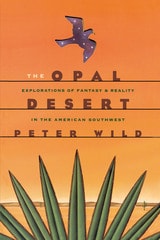
The Opal Desert
Explorations of Fantasy and Reality in the American SouthwestBy Peter Wild
University of Texas Press, 1999
The opalescent deserts of the American Southwest have become romantic icons in the public imagination through the words of writers, the images of artists and photographers, and the visual storytelling of filmmakers. In this spirited, personal, beautifully written book, Peter Wild explores the lives and works of sixteen writers whose words have shaped our visions of the opal desert.
Wild begins with Cabeza de Vaca, whose Relación of his desert wanderings sent treasure-hungry Spaniards searching for cities of gold. He goes on to discuss the works of both widely read and lesser-known nineteenth- and twentieth-century authors, including such luminaries as Mary Austin, Joseph Wood Krutch, Edward Abbey, Ann Zwinger, and Charles Bowden. He links all the writers as explorers of one kind or another, searching for tangible or intangible treasures, some finding and some losing their dreams in the opal desert.
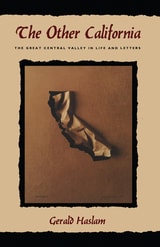
The Other California
The Great Central Valley In Life And LettersGerald W. Haslam
University of Nevada Press, 1993
Oildale native, Gerald Haslam, doesn’t like it when folks dismiss the Central Valley as boring and flat. In this collection of essays, he argues that it is California’s heartland and economic hub. In addition, the valley has produced a crop of gifted writers. These nineteen essays range from reminiscences of childhood and adolescence to a portrait of Mexican-Americans and their position in the Valley’s society to a moving essay about having the author’s aging father come to live with the family. Even if you have never lived in the Valley, reading this book will give you an entirely new perspective the next time you drive into it.
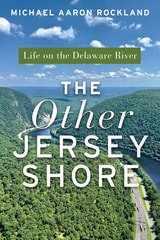
The Other Jersey Shore
Life on the Delaware RiverMichael Aaron Rockland
Rutgers University Press, 2024
The Other Jersey Shore takes readers on a personal tour of the New Jersey portion of the Delaware River and its surroundings. You will learn about the role that the river played in human history, including Washington’s four crossings of the Delaware during the Revolutionary War. And you will also learn about the ecological history of the river itself, once one of the most polluted waterways in the country and now one of the cleanest, providing drinking water for 17 million people. Michael Aaron Rockland, a long-time New Jersey resident, shows readers his very favorite spots along the Delaware, including the pristine waterfalls and wilderness in the Delaware Water Gap recreation area. Along the way, he shares engrossing stories and surprising facts about the river that literally defines western New Jersey.
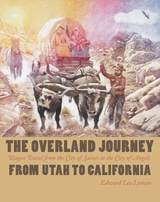
The Overland Journey From Utah To California
Wagon Travel From The City Of Saints To The City Of AngelsEdward Leo Lyman
University of Nevada Press, 2008
The wagon trail between Salt Lake City and Los Angeles is one of the most important and least-known elements of nineteenth-century Western migration. Known as the Southern Route, it included the western half of the Old Spanish Trail and was favored because it could be used for travel and freighting year-round. It was, however, likely the most difficult route that pioneers traveled with any consistency, following not rivers but leading from one--sometimes dubious--desert watering place to the next and offering few havens for the sick, weary, or unfortunate. Historian Edward Leo Lyman has provided the first history of the complete Southern Route and of the people who developed and used it. Based on extensive research in primary sources--including many early travelers’ accounts--and on Lyman’s own investigation of the route and its branches, the book discusses the exploration and development of the Old Spanish Trail, its horse thieves and traders, including Jed Smith and Kit Carson, along with government explorere John C. Frémont. Developing the old pack mule trail as a wagon road between Salt Lake City and Los Angeles, miners heading for the California gold fields first used the route extensively. Mormon missionaries and the colonizers of San Bernardino and other communities also traveled that way, as did a wide array of mail carriers, soldiers and world travelers. Later, a steady stream of Anglo-American emigrants seeking new homes or fortunes in California shared the road with a surprising number of freight wagon operators. The trail passed through the territories of numerous Native American peoples, and contacts with them--both friendly and hostile--played a significant role in the experiences of travelers and in the fates of Native American cultures in this region. Lyman’s discussions of Mormon-Indian relations and of the infamous Mountain Meadows Massacre offer fresh and important analyses of these vital aspects of the westward movement.
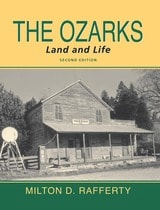
The Ozarks
Land and LifeMilton D. Rafferty
University of Arkansas Press, 2001
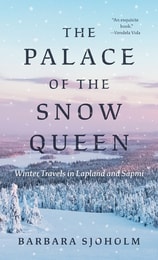
The Palace of the Snow Queen
Winter Travels in Lapland and SápmiBarbara Sjoholm
University of Minnesota Press, 2023
An exploration of the winter wonders and entangled histories of Scandinavia’s northernmost landscapes—now back in print with a new afterword by the author
After many years of travel in the Nordic countries—usually preferring to visit during the warmer months—Barbara Sjoholm found herself drawn to Lapland and Sápmi one winter just as mørketid, the dark time, set in. What ensued was a wide-ranging journey that eventually spanned three winters, captivatingly recounted in The Palace of the Snow Queen.
From observing the annual construction of the Icehotel in Jukkasjärvi, Sweden, to crossing the storied Finnmark Plateau in Norway, to attending a Sámi film festival in Finland, Sjoholm dives deep into the rich traditions and vibrant creative communities of the North. She writes of past travelers to Lapland and contemporary tourists in Sápmi, as well as of her encounters with Indigenous reindeer herders, activists, and change-makers. Her new afterword bears witness to the perseverance of the Sámi in the face of tourism, development, and climate change.
Written with keen insight and humor, The Palace of the Snow Queen is a vivid account of Sjoholm’s adventures and a timely investigation of how ice and snow shape our imaginations and create a vision that continues to draw visitors to the North.
The Panama Hat Trail
Tom Miller
University of Arizona Press, 1986
The Passport That Does Not Pass Ports
African Literature of Travel in the Twenty-First CenturyIsabel Balseiro
Michigan State University Press, 2020
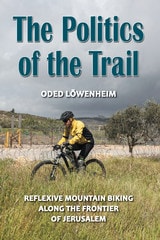
The Politics of the Trail
Reflexive Mountain Biking along the Frontier of JerusalemOded Löwenheim
University of Michigan Press, 2014
In The Politics of the Trail, Löwenheim confronts this tension by focusing on his encounters with three places along the trail: the separation fence between Israel and the Palestinians; the ruins of the Palestinian village Qalunya, demolished in 1948; and the trail connecting the largest 9/11 memorial site outside of the U.S. with a top-secret nuclear-proof bunker for the Israeli cabinet. He shares the stories of the people he meets along the way and considers how his own subjectivity is shaped by the landscape and culture of conflict. Moreover, he deconstructs, challenges, and resists the concepts and institutions that constitute such a culture and invites conversation about the idea of conflict as a culture.
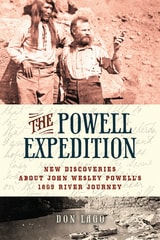
The Powell Expedition
New Discoveries about John Wesley Powell's 1869 River JourneyDon Lago
University of Nevada Press, 2017
Lago offers a feast of new and important material about the river trip, and it will significantly rewrite the story of Powell’s famous expedition. This book is not only a major work on the Powell expedition, but on the history of American exploration of the West.
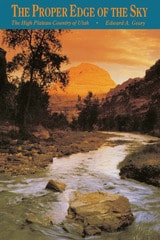
The Proper Edge of the Sky
High Plateau Country of UtahEdward A Geary
University of Utah Press, 1992
Edward Geary’s collection of writings on the High Plateau country of central and southern Utah, a combination guidebook, travel narrative, personal essays, and natural, social, and literary history, encompasses each of those forms with a sweep as broad as the landscape it describes.
It traces the progress of travelers to the region, including the historic Dominguez-Escalante party in 1776, and trappers and explorers such as Jedediah Smith, John C. Freemont, and Kit Carson. Scandinavian and English descendants of the early Mormon pioneers, sent to settle Manti and surrounding areas by Brigham Young in 1849, populate many of the pages and dominate the agrarian villages described by the author. The book also describes the multiethnic society of French Basque, Greeks, Slavs, Italians, Chinese, Welsh, and Finnish laborers and coal miners that developed in the region.
Geary writes of all these people with affection and a deep sense of place, of belonging to a distinctive landscape and its history. It is a book that will bring a rush of understanding to those who have lived in the High Plateaus and greater depth of appreciation to visitors.
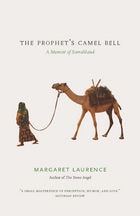
The Prophet's Camel Bell
A Memoir of SomalilandMargaret Laurence
University of Chicago Press, 1963
In 1950, as a young bride, Margaret Laurence set out with her engineer husband to what was then Somaliland: a British protectorate in North Africa few Canadians had ever heard of. Her account of this voyage into the desert is full of wit and astonishment. Laurence honestly portrays the difficulty of colonial relationships and the frustration of trying to get along with Somalis who had no reason to trust outsiders. There are moments of surprise and discovery when Laurence exclaims at the beauty of a flock of birds only to discover that they are locusts, or offers medical help to impoverished neighbors only to be confronted with how little she can help them. During her stay, Laurence moves past misunderstanding the Somalis and comes to admire memorable individuals: a storyteller, a poet, a camel-herder. The Prophet’s Camel Bell is both a fascinating account of Somali culture and British colonial characters, and a lyrical description of life in the desert.
The Real Life of the Parthenon
Patricia Vigderman
The Ohio State University Press, 2018
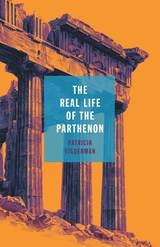
Ownership battles over the marbles removed from the Parthenon by Lord Elgin have been rumbling into invective, pleading, and counterclaims for two centuries. The emotional temperature around them is high, and steering across the vast past to safe anchor in a brilliant heritage is tricky. The stories around antiquities become distorted by the pull of ownership, and it is these stories that urge Patricia Vigderman into her own exploration of their inspiring legacy in her compelling extended essay, The Real Life of the Parthenon.
Vigderman’s own journey began at the Parthenon, but curiosity edged her further onto the sea between antiquity and the present. She set out to seek the broken temples and amphorae, the mysterious smiles of archaic sculpture, and the finely hammered gold of a funeral wreath among the jumbled streets of modern Athens, the fertile fields of Sicily, the mozzarella buffalo of Paestum. Guided along the way toward the enduring landscapes and fractured history by archeologists, classicists, historians, and artists—and by the desire they inspire—she was caught by ongoing, contemporary local life among the ruins. Gathering present meaning and resonance for the once and future remains of vanished glory, The Real Life of the Parthenon illuminates an important but shadowy element of our common cultural life: the living dynamic between loss and delight.
The Remembered and Forgotten Jewish World
Jewish Heritage in Europe and the United StatesDaniel J. Walkowitz
Rutgers University Press, 2018
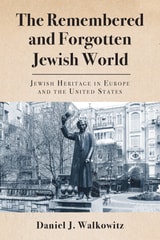
The Remembered and Forgotten Jewish World investigates the politics of heritage tourism and collective memory. In an account that is part travelogue, part social history, and part family saga, acclaimed historian Daniel J. Walkowitz visits key Jewish museums and heritage sites from Berlin to Belgrade, from Krakow to Kiev, and from Warsaw to New York, to discover which stories of the Jewish experience are told and which are silenced. As he travels to thirteen different locations, participates in tours, displays, and public programs, and gleans insight from local historians, he juxtaposes the historical record with the stories presented in heritage tourism. What he finds raises provocative questions about the heritage tourism industry and its role in determining how we perceive Jewish history and identity. This book offers a unique perspective on the importance of collective memory and the dangers of collective forgetting.
The River Wild
A Celebrated Journey Down the Whitewater Rapids of the Grand CanyonCecil Kuhne
University of Utah Press, 2026
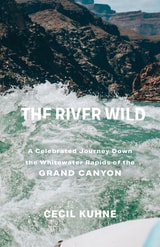
Embark on an unforgettable adventure down the mighty Colorado River in The River Wild: A Celebrated Journey down the Whitewater Rapids of the Grand Canyon. Former professional river guide Cecil Kuhne takes readers through 225 miles of towering canyon walls, surging currents, and legendary rapids that have challenged explorers for over 150 years. From the historic first descent of John Wesley Powell’s expedition to the modern thrill-seekers navigating Lava Falls, Crystal, and Hance, this book captures the heart-pounding excitement of whitewater rafting.
With vivid descriptions of the canyon’s breathtaking geology, lush flora, and abundant wildlife, Kuhne blends history, adventure, and natural beauty into an immersive journey. Whether you’re a seasoned river runner or an armchair explorer, The River Wild offers a front-row seat to one of the world’s most exhilarating river expeditions.
The Road to Mexico
Lawrence J. Taylor and Maeve Hickey
University of Arizona Press, 1997
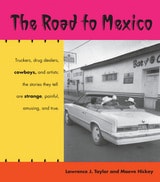
Equipped with camera, pen, and a lively curiosity, photographer Maeve Hickey and writer Lawrence J. Taylor set out to capture whatever might come their way on the road to Mexico. They roamed and rambled, they stayed well off the beaten track, and they talked to nearly everyone they met, from wisecracking waitresses to landed gentry to street urchins dressed in rags. Their book brings to life the calf ropers and casinos, the saints and sinners, the mariachis and miracles in a no-man's-land that sometimes seems to belong neither to the United States nor to Mexico.
Following the footsteps of earlier travelers-traders, warriors, missionaries, and explorers-these modern pilgrims take a hands-on approach to their journey. Throughout, both writer and photographer convey the sizzle and spice of a land where Indian, Mexican, and Anglo worlds have collided, coexisted, and melted into each other for centuries. Their eye for the hidden telling detail carries the reader straight into the action, and their zest for excitement spurs any traveler to drop everything, grab a bag, and hit the road to Mexico.
The Road to Wildcat
A Tale of Mountain AlabamaEleanor Risley
University of Alabama Press, 2004
A remarkable chronicle of southern mountain life in the early 20th century
The Road to Wildcat recounts the travels in North Alabama in the mid-1920s of Eleanor Risley (suffering from diabetes), her asthmatic husband, Pierre, their dog, John, and a Chinese wheelbarrow named Sisyphus that held their travel goods. Advised to make the walking tour for improvement of their health, the group left Fairhope in south Alabama and walked hundreds of miles in the southern Appalachians for months, sleeping out under the stars at night, or in a canvas tent or an abandoned building, cooking their fresh-caught foods over campfires, and accepting the generosity and advice of the mountain people they met, some of them moonshiners and outlaws.
During their sojourn across the rural wilderness, they enjoyed fiddlin’ dances in rickety halls, joined Sacred Harp singers, learned about the grapevine telegraph, saw the dreadful effects of inbreeding, and attended “Snake Night” at Posey Holler (a religious revival that included snake handling). Published in segments in the Atlantic Monthly in 1928 and 1929 and then reorganized into book form, the travelogue is a colorful record of the culture, customs, and dialect of the southern mountaineers of that era.
The Rocky Mountain National Park Reader
James H. Pickering
University of Utah Press, 2015
Representative both in subject and approach, the selections reach back to Arapaho and pioneer times before the park was established and move forward to span its entire first century. The voices that speak to us are distinctive: among them are Irish sportsman Windham Thomas Wyndham-Quin, the Fourth Earl of Dunraven; British travel writer Isabella Bird; mountaineer Frederick Chapin; naturalist Enos Mills; iconic ranger Jack Moomaw and his fictional counterpart, Dorr Yeager’s Bob Flame; and contemporary nature writers Anne Zwinger and SueEllen Campbell—to mention but a few. Some tell us about the past, recalling moments of personal triumph and tragedy. Other voices are quieter; some are more polemic. All capture and share a part of the national treasure that is Rocky Mountain National Park.
The first of its kind, this original collection is a rich literary and historical compendium of the best that has been written about Rocky Mountain National Park. As such it provides an indispensable introduction to the nation’s twelfth national park.
Part of the National Park Reader series, edited by Lance Newman and David Stanley
The Same River Twice
A Boatman's Journey HomeMichael Burke
University of Arizona Press, 2006
As Burke contemplates what he and Sid may have had in common, he meditates on the changing meaning of rivers, and the impossibility of fully recovering the past. In clear and graceful prose, Burke blends Sid’s colorful history with his own uncommon journey. He also reflects upon the quick currents of time and the fierce passion he shares with Sid for the life of river running in Alaska and the west. Unlike most river-running books that often describe waterways in the lower forty-eight states, The Same River Twice introduces readers to rough, austere, and unfamiliar rivers in the northern wilderness. Burke has an intimate understanding of these remote, free-flowing rivers. He effectively captures the thrill of moving water, the spirit of rivers and river canyons, and the life of river guides. This insightful memoir brings readers into a confluence of rivers, where past and present merge, revealing the power of wilderness and the truth about changing course.
The San Luis Valley
Sand Dunes and Sandhill CranesText by Susan J. Tweit; Photographs by Glenn Oakley
University of Arizona Press, 2005
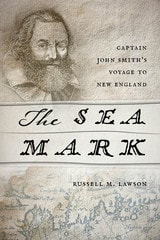
The Sea Mark
Captain John Smith’s Voyage to New EnglandRussell M. Lawson
University Press of New England, 2015
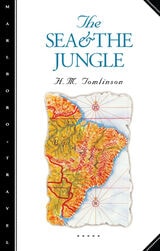
The Sea and the Jungle
H.M. Tomlinson
Northwestern University Press, 1996
The Secret Life Of John C. Van Dyke
Selected LettersDavid W. Teague
University of Nevada Press, 1997
The author of The Desert, the book that made the American landscape accessible to the mainstream mind, was much less like his fellow environmental prophets John Muir and Henry David Thoreau than he would have had us believe. Van Dyke claimed to have wandered "alone on horseback for thousands of miles through the American Southwest and northern Mexico," as readers of The Desert—now in the millions since the book was published in 1901—were told. He did not. In The Secret Life of John C. Van Dyke, Teague and Wild unmask the desert saint with Van Dyke’s own recently discovered letters. These letters depict a privileged, patrician, and pampered member of the upper-class. His incriminating correspondence reveals that he saw most of the desert from plush railroad cars and grand hotel rooms. In the introduction, the editors clear up many misconceptions scholars currently hold about Van Dyke’s ecological principles, about his outdoorsmanship, and about his trip through the desert itself. As the centennial of the publication of The Desert approaches, this lively collection of letters helps set the record straight. The John C. Van Dyke unveiled in The Secret Life is a more varied character than we had supposed—still worthy of much admiration for his remarkable accomplishments, but still mysterious, and not the man we thought him to be.
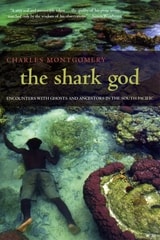
The Shark God
Encounters with Ghosts and Ancestors in the South PacificCharles Montgomery
University of Chicago Press, 2007
In the South Pacific, he discovers a world of sorcery and shark worship, where Christian and pagan rituals coexist and an ordinary day is marked by confrontations with America-worshiping cult leaders and militants alike. A defiantly original blend of history and memoir, anthropology and travel writing, The Shark God is ultimately a tale of personal and political transformation.
“The Shark God, a travel story as dark and twisted as one might ever wish to hear . . . reaches a superb climax with some apocalyptically page-turning scenes.”—Guardian
“A fascinating account of the drama of Melanesian life.”—Times Literary Supplement
“With exquisite writing, Montgomery lovingly captures the beauty and the horrors, the mysteries and the shams of the people and places he visits.”—Publishers Weekly
“A very real and memorable talent. . . . The endurance [Montgomery] displayed on his travels was admirable, the adventures he survived were tremendous, and the quality of his prose seems matched only by the wisdom of his observations.”—Simon Winchester, Globe and Mail (Toronto)
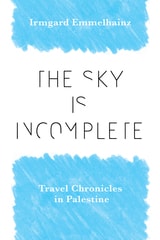
The Sky Is Incomplete
Travel Chronicles in PalestineIrmgard Emmelhainz
Vanderbilt University Press, 2023
In order to render the issue of representation, of speaking on behalf of the Palestinian ordeal in all its complexity, The Sky Is Incomplete is composed as a collage, gathering diary entries, letters, experimental passages, script, poetry, art criticism, political analysis, and other genres to convey an opaque view of the Palestine Question. Beyond representation in the sense of giving testimony or speaking on behalf of the Palestinians, however, the author’s parting point is relational: The Sky Is Incomplete is about encounters—with friends, mentors, interlocutors, lovers, children, activists, and soldiers (Israeli and Palestinian).
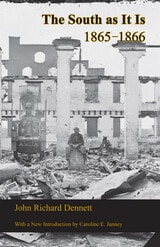
The South As It Is
1865–1866John Richard Dennett, with a new introduction by Caroline E. Janney
University of Alabama Press, 2010
This classic report originally appeared as a series of articles in the Nation between July 8, 1865, and April 11, 1866. Dennett traveled in seven states—Virginia, North Carolina, South Carolina, Georgia, Alabama, Louisiana, and Mississippi—at the very beginning of Reconstruction. His remarkably prophetic account of the recently defeated South is a major source for the history of this transition.
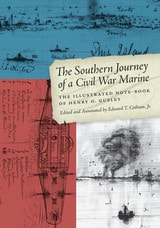
The Southern Journey of a Civil War Marine
The Illustrated Note-Book of Henry O. GusleyEdited and annotated by Edward T. Cotham, Jr.
University of Texas Press, 2006
On September 28, 1863, the Galveston Tri-Weekly News caught its readers' attention with an item headlined "A Yankee Note-Book." It was the first installment of a diary confiscated from U.S. Marine Henry O. Gusley, who had been captured at the Battle of Sabine Pass. Gusley's diary proved so popular with readers that they clamored for more, causing the newspaper to run each excerpt twice until the whole diary was published. For many in Gusley's Confederate readership, his diary provided a rare glimpse into the opinions and feelings of an ordinary Yankee—an enemy whom, they quickly discovered, it would be easy to regard as a friend.
This book contains the complete text of Henry Gusley's Civil War diary, expertly annotated and introduced by Edward Cotham. One of the few journals that have survived from U.S. Marines who served along the Gulf Coast, it records some of the most important naval campaigns of the Civil War, including the spectacular Union success at New Orleans and the embarrassing defeats at Galveston and Sabine Pass. It also offers an unmatched portrait of daily life aboard ship. Accompanying the diary entries are previously unpublished drawings by Daniel Nestell, a doctor who served in the same flotilla and eventually on the same ship as Gusley, which depict many of the locales and events that Gusley describes.
Together, Gusley's diary and Nestell's drawings are like picture postcards from the Civil War—vivid, literary, often moving dispatches from one of "Uncle Sam's nephews in the Gulf."
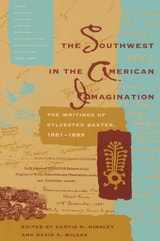
The Southwest in the American Imagination
The Writings of Sylvester Baxter, 1881-1889Curtis M. Hinsley
University of Arizona Press, 1996
Drawing on materials housed in half a dozen institutions and now brought together for the first time, this projected seven-volume work presents a cultural history of the Hemenway Expedition and early anthropology in the American Southwest, told in the voices of its participants and interpreted by contemporary scholars. Taken as a whole, the series comprises a thorough study and presentation of the cultural, historical, literary, and archaeological significance of the expedition, with each volume posing distinct themes and problems through a set of original writings such as letters, reports, and diaries. Accompanying essays guide readers to a coherent understanding of the history of the expedition and discuss the cultural and scientific significance of these data in modern debates.
This first volume, The Southwest in the American Imagination, presents the writings of Sylvester Baxter, a journalist who became Cushing's friend and publicist in the early 1880s and who traveled to the Southwest and wrote accounts of the expedition. Included are Baxter's early writings about Cushing and the Southwest, from 1881 to 1883, which reported enthusiastically on the anthropologist's work and lifestyle at Zuñi before the expedition. Also included are published accounts of the Hemenway Expedition and its scientific promise, from 1888 to 1889, drawing on Baxter's central role in expedition affairs as secretary-treasurer of the advisory board. Series co-editor Curtis Hinsley provides an introductory essay that reviews Baxter's relationship with Cushing and his career as a journalist and civic activist in Boston, and a closing essay that inquires further into the lasting implications of the "invention of the Southwest," arguing that this aesthetic was central to the emergence and development of southwestern archaeology.
Seen a century later, the Hemenway Expedition provides unusual insights into such themes as the formation of a Southwestern identity, the roots of museum anthropology, gender relations and social reform in the late nineteenth century, and the grounding of American nationhood in prehistoric cultures. It also conveys an intellectual struggle, ongoing today, to understand cultures that are different from the dominant culture and to come to grips with questions concerning America's meaning and destiny.
The Spirit of Mediterranean Places
Michael Butor
Northwestern University Press, 1997