Results by title
808 books match the query 'Drama' and 218 start with t

The Complete Works of Robert Browning, Volume V
With Variant Readings and AnnotationsRoma A. King Jr.
Ohio University Press, 1981

The Composition of Herman Melville
Rick Mitchell
Intellect Books, 2002
This play, which contains biographical information relating to Herman Melville, is fundamentally an exploration of the ways in which these two things take place.
The play admits the truth of Walter Benjamin's view of history as, "time filled by the presence of the now." Parallels between past and present (e.g., racism, domestic abuse, and the plight of the visionary American artist) are clearly implied, but the play also utilizes new technologies, in particular video, in order to represent the kind of dialectical history and representation promoted by Benjamin.
During Melville's lifetime, and in his own creative imagination, the archaic was undergoing its transformation into modernity. Thus Melville is an especially apt subject for an exploration of modernity and representation that utilizes both the modern &endash; i.e., video, montage &endash; and elements of the archaic &endash; i.e., the performing body, allusions to whaling, 'discovery' in the South Seas.
The Composition of Herman Melville utilizes performance strategies in an effort to embody the complex textuality of a writer who haunts the landscape of America, from the mid-nineteenth century to the present. This book is believed to represent the only work of historical fiction &endash; albeit in dramatic form &endash; that focuses primarily on Herman Melville, considered by many to be America's greatest writer.

The Cookie Jar and Other Plays
John Clark DonahueLinda Walsh Jenkins, Editor
University of Minnesota Press, 1975
The Cookie Jar and Other Plays was first published in 1975. Minnesota Archive Editions uses digital technology to make long-unavailable books once again accessible, and are published unaltered from the original University of Minnesota Press editions.
The scripts of three plays by John Clark Donahue, artistic director of the Children's Theatre Company of the Minneapolis Society of Fine Arts, are published in this volume along with background material and illustrations which, together, provide a look behind the scenes at the company, its personnel, methods, and productions. The company, which has achieved notable success, is regarded as a leading exponent of children's theater in this country.
The plays included in this volume are The Cookie Jar, How Could You Tell?,and Old King of Malfi.All by been presented by the Children's Theatre Company.
Linda Walsh Jenkins provides an introduction and commentary on the plays. There are also a profile of John Donahue and material based on interviews with him and with other theater personnel — directors, composers, designers, and others. This and other information, including a sketch of the history and background of the Children's Theatre Company, will be illuminating and helpful to other theater groups and individuals interested in the development of children's theater. There are sixteen pages of photographs, including four pages in color, showing scenes from Children's Theatre Company productions of the plays. Examples from the musical scores composed for the productions are also reproduced.Under Mr. Donahue's direction the company has evolved an ensemble approach to production, in which script, music, and acting develop simultaneously throughout the rehearsal period. The dominant theme in his work with the company has been an educational one, based on his belief that the theater should be an educational environment which helps young persons to develop their creative abilities.
The Courtesan's Memory, Voice, and Late Ming Drama
Peng Xu
University of Michigan Press, 2025
This study profoundly remaps the textbook narratives of gender bias, challenges modern prejudices prevalent in the literary history of Chinese drama, and reveals how theatrical conditions and writing styles shifted to accommodate courtesan performances. Utilizing a wide range of sources such as scripts, city guides, biographies, diaries, letters, wood-block illustrations, and paintings, this study distinguishes itself from earlier studies of Chinese courtesans by not thematizing courtesans for their allegorical values, but rather pinpointing their agency in shaping the features of Chinese theater and recognizing courtesans as a source of creativity and development in the medium. Xu’s focus on courtesan performance culture allows for fresh readings of canonical Chinese plays, opening up new ways of understanding the history of Chinese drama written by women, thus deviating from standard historiography based solely on the writings of men.
The Crooked Mirror
Plays from a Modernist Russian CabaretEdited and translated from the Russian by Laurence Senelick
Northwestern University Press, 2023
“Don’t blame the mirror if your mug is crooked!”
Parody dominated early twentieth-century Russian cabaret, but the Crooked Mirror extended its lampooning to theatrical practice itself. Eclectic in its targets, the Saint Petersburg theater mocked not only naturalism but also symbolism, futurism, and “Meyerholditis.” Its shows parodied both the stale conventions of melodrama and opera and the stylized trends in staging, wielding satire to provoke artistic and social reform. Though the theater was liquidated in 1931, many of its innovations would become standard techniques in cabaret repertoires and improv revues.
As a cultural phenomenon of the Silver Age, the Crooked Mirror deserves critical attention, yet it has received only fleeting mention in histories of Russian theater and biographies of its major figures. This anthology fills a critical gap in our understanding of that heady era by bringing together key plays—most appearing in English here for the first time—together with short biographies of their authors and robust commentary and annotations. Laurence Senelick guides readers through the artistic and ideological evolution of the Crooked Mirror and provides performers with the material to bring its innovations back to the stage.

The Crowd You're In With
A PlayRebecca Gilman
Northwestern University Press, 2009
The Crowd You're in With is the fifth play by award-winning American playwright Rebecca Gilman. In it, a Fourth of July backyard barbecue is the setting for a comic, thought-provoking, ultimately disquieting exploration of the question of whether to have children. Melinda and Jasper, the hosts, are deeply divided by the issue; Tom and Karen, their landlords, decided long ago to remain childless; Windsong and her husband, Dan, are expecting a baby.
As the play progresses, the motivations of these characters reveal themselves as ever more complex. Even as the characters often speak in very practical terms about their decisions, Gilman never loses sight of the mystery underlying a life-shaping decision guided by both rational thought and biological imperative, which ultimately speaks to the even larger question of free will and determinism faced by every person.
The Chicago-based Gilman has won numerous awards including the Evening Standard Award for Most Promising Playwright and the Scott McPherson Award. Her play The Glory of Living was a finalist for the Pulitzer Prize.
The Danton Case and Thermidor
Two PlaysStanislawa Przybyszewska
Northwestern University Press, 1989
The Death and Life of Drama
Reflections on Writing and Human NatureBy Lance Lee
University of Texas Press, 2005
What makes a film "work," so that audiences come away from the viewing experience refreshed and even transformed in the way they understand themselves and the world around them? In The Death and Life of Drama, veteran screenwriter and screenwriting teacher Lance Lee tackles this question in a series of personal essays that thoroughly analyze drama's role in our society, as well as the elements that structure all drama, from the plays of ancient Athens to today's most popular movies.
Using examples from well-known classical era and recent films, Lee investigates how writers handle dramatic elements such as time, emotion, morality, and character growth to demonstrate why some films work while others do not. He seeks to define precisely what "action" is and how the writer and the viewer understand dramatic reality. He looks at various kinds of time in drama, explores dramatic context from Athens to the present, and examines the concept of comedy. Lee also proposes a novel "five act" structure for drama that takes account of the characters' past and future outside the "beginning, middle, and end" of the story. Deftly balancing philosophical issues and practical concerns, The Death and Life of Drama offers a rich understanding of the principles of successful dramatic writing for screenwriters and indeed everyone who enjoys movies and wants to know why some films have such enduring appeal for so many people.
The Deathly Pleasures of Form
Opera, Mimesis, AgencySarah Collins
University of Chicago Press, 0
Opera offers a rich space in which to think about problems of mimesis—how artworks imitate ideal forms, how humans imitate the things around us, and how words attempt to represent reality.
In this book, musicologist and cultural historian Sarah Collins shows how the strange, exhilarating, and uniquely self-conscious art form of opera opens itself to such contemporary, theoretical questions. The Deathly Pleasures of Form is especially concerned with the links between linguistic and bodily signification in opera through the genre’s use of figures of partial agency—disembodied voices, enchanted objects, puppets, mechanical devices. The book is structured around four emblematic figures (Faust, Don Juan, Papageno, and Hoffmann) who are paired with four objects of variable animacy (puppet, stone, silhouette, and mirror, respectively). Across these chapters, Collins develops an expanded notion of mimesis that illuminates opera’s material and mechanical investments, its filmic and other adaptations, its explicit negotiation between vocal utterance and bodily gesture, and the epistemological significance of opera’s excesses. Ultimately, Collins claims that opera performs a type of compromised agency that can offer new critical insight into the self-limiting nature of both freedom and representation.
The Director's Prism
E. T. A. Hoffmann and the Russian Theatrical Avant-GardeDassia N. Posner
Northwestern University Press, 2016
Shortlist, 2019 Prague Quadrennial Best Scenography and Design Publication Award
The Director's Prism investigates how and why three of Russia's most innovative directors— Vsevolod Meyerhold, Alexander Tairov, and Sergei Eisenstein—used the fantastical tales of German Romantic writer E. T. A. Hoffmann to reinvent the rules of theatrical practice. Because the rise of the director and the Russian cult of Hoffmann closely coincided, Posner argues, many characteristics we associate with avant-garde theater—subjective perspective, breaking through the fourth wall, activating the spectator as a co-creator—become uniquely legible in the context of this engagement. Posner examines the artistic poetics of Meyerhold's grotesque, Tairov's mime-drama, and Eisenstein's theatrical attraction through production analyses, based on extensive archival research, that challenge the notion of theater as a mirror to life, instead viewing the director as a prism through whom life is refracted. A resource for scholars and practitioners alike, this groundbreaking study provides a fresh, provocative perspective on experimental theater, intercultural borrowings, and the nature of the creative process.
The Drama Therapy Decision Tree
Connecting Drama Therapy Interventions to TreatmentEdited by Paige Dickinson and Sally Bailey
Intellect Books, 2020
The Drama Therapy Decision Tree provides an integrated model for therapeutic decision-making by deconstructing the processes of choosing drama therapy interventions. The authors strive to provide a common language for communicating what drama therapists do in terms of diagnoses and interventions, especially for students and early career professionals in the field.
The book provides a systematic method for drama therapists and drama therapy students to use to determine the most appropriate therapy technique for clients. Paige Dickinson and Sally Bailey have identified and analyzed their own experiences with the task, and here they explain how to put learned theory into practice. In doing so, they provide early career drama therapy professionals a reliable and effective tool for making clinical decisions and offer practitioners a point of reference in addressing the socio-emotional needs of their clients.
The authors explain the basic tools drama therapists use in therapy situations, identify the core healing concepts of the practice, discuss the basic treatment planning process, and explain how these components are used together to identify an appropriate type of intervention for the client. They also offer examples of how this system can be applied to a variety of common diagnoses, and the appendices provide resources to connect drama therapy interventions to global treatment outcomes.
The Drama of Humanity and Other Miscellaneous Papers, 1939-1985 (CW33)
Eric Voegelin, Edited & Intro by William Petropulos & Gilbert Weiss
University of Missouri Press, 2004
The Drama of the American Short Story, 1800-1865
Michael J. Collins
University of Michigan Press, 2016
The book shows how perspectives from theater studies, anthropology, and performance studies can enrich readings of the short-story form. Moving beyond arbitrary distinctions between performance and text, it suggests that this literature had a social life and was engaged with questions of circumatlantic and transnational culture. It suggests that the short story itself was never conceived as a nationalist literary form, but worked by mobilizing cosmopolitan connections and meanings. In so doing, the book resurrects a neglected history of American Federalism and its connections to British literary forms.
The Dramatic Writer's Companion, Second Edition
Tools to Develop Characters, Cause Scenes, and Build StoriesWill Dunne
University of Chicago Press, 2017
Having spent decades working with dramatists to refine and expand their existing plays and screenplays, Dunne effortlessly blends condensed dramatic theory with specific action steps—over sixty workshop-tested exercises that can be adapted to virtually any individual writing process and dramatic script. Dunne’s in-depth method is both instinctual and intellectual, allowing writers to discover new actions for their characters and new directions for their stories. The exercises can be used by those just starting the writing process and by those who have scripts already in development. With each exercise rooted in real-life issues from Dunne’s workshops, readers of this companion will find the combined experiences of more than fifteen hundred workshops in a single guide.
This second edition is fully aligned with a brand-new companion book, Character, Scene, and Story, which offers forty-two additional activities to help writers more fully develop their scripts. The two books include cross-references between related exercises, though each volume can also stand alone.
No ordinary guide to plotting, this handbook centers on the principle that character is key. “The character is not something added to the scene or to the story,” writes Dunne. “Rather, the character is the scene. The character is the story.” With this new edition, Dunne’s remarkable creative method will continue to be the go-to source for anyone hoping to take their story to the stage.
The Dramatic Writer's Companion
Tools to Develop Characters, Cause Scenes, and Build StoriesWill Dunne
University of Chicago Press, 2009
Moss Hart once said that you never really learn how to write a play; you only learn how to write this play. Crafted with that adage in mind, The Dramatic Writer’s Companion is designed to help writers explore their own ideas in order to develop the script in front of them. No ordinary guide to plotting, this handbook starts with the principle that character is key. “The character is not something added to the scene or to the story,” writes author Will Dunne. “Rather, the character is the scene. The character is the story.”
Having spent decades working with dramatists to refine and expand their existing plays and screenplays, Dunne effortlessly blends condensed dramatic theory with specific action steps—over sixty workshop-tested exercises that can be adapted to virtually any individual writing process and dramatic script. Dunne’s in-depth method is both instinctual and intellectual, allowing writers to discover new actions for their characters and new directions for their stories.
Dunne’s own experience is a crucial element of this guide. His plays have been selected by the Eugene O’Neill Theatre Center for three U.S. National Playwrights Conferences and have earned numerous honors, including a Charles MacArthur Fellowship, four Bay Area Theatre Critics Circle Awards, and two Drama-Logue Playwriting Awards. Thousands of individuals have already benefited from his workshops, and The Dramatic Writer’s Companion promises to bring his remarkable creative method to an even wider audience.
The Duchess of Suffolk
Thomas Drue. Edited and with an Introduction by Richard Dutton and Steven K. Galbraith
The Ohio State University Press, 2015
With this volume, Dutton and Galbraith provide a critical apparatus that situates The Duchess of Suffolk in historical context and suggests an explanation for its continued resonance. They account for the play’s censorship in 1624 by detailing how it evoked contemporary parallels to the controversial foreign policy of King James I. More specifically, the editors offer an introduction that includes a historical overview of the author, staging, printing, and reception. Facing facsimiles of the original are pages with the updated text, complete with annotations to clarify language and staging details. This edition of The Duchess of Suffolk will have something to offer to early modern drama scholars as well as scholars of book history.
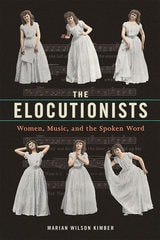
The Elocutionists
Women, Music, and the Spoken WordMarian Wilson Kimber
University of Illinois Press, 2017
Marian Wilson Kimber restores elocution with music to its rightful place in performance history. Gazing through the lenses of gender and genre, Wilson Kimber argues that these female artists transgressed the previous boundaries between private and public domains. Their performances advocated for female agency while also contributing to a new social construction of gender. Elocutionists, proud purveyors of wholesome entertainment, pointedly contrasted their "acceptable" feminine attributes against those of morally suspect actresses. As Wilson Kimber shows, their influence far outlived their heyday. Women, the primary composers of melodramatic compositions, did nothing less than create a tradition that helped shape the history of American music.
The Ethos of Drama
Rhetorical Theory and Dramatic WorthRobert L. King
Catholic University of America Press, 2010
The Faithful Virgins
E. Polwhele
Iter Press, 2023
E. Polwhele (c. 1651-c. 1691) was one of the first women to write for the stage in Restoration London. This book presents the first printed edition of Polwhele’s first play, The Faithful Virgins, which until now has existed only in an unsigned manuscript in the Bodleian Library at Oxford University. A tragicomedy apparently performed in London by the Duke's Company ca. 1669–1671, The Faithful Virgins is altogether different in tone from Polwhele's later, better-known prose comedy, The Frolicks; or, The Lawyer Cheated (1671). The introduction to this modern-spelling edition of The Faithful Virgins discusses the play in terms of radical changes in English stage practices following the restoration of the monarchy after England’s civil war and situates Polwhele’s play within the social and political life of seventeenth-century London.
The Fake Husband, A Comedy
Flaminio Scala
Iter Press, 2020
The Other Voice in Early Modern Europe - The Toronto Series, volume 75
The Fornes Frame
Contemporary Latina Playwrights and the Legacy of Maria Irene FornesAnne García-Romero
University of Arizona Press, 2016
In The Fornes Frame: Contemporary Latina Playwrights and the Legacy of Maria Irene Fornes, Anne García-Romero considers the work of five award-winning Latina playwrights in the early twenty-first century, offering her unique perspective as a theatre studies scholar who is also a professional playwright.
The playwrights in this book include Pulitzer Prize–winner Quiara Alegría Hudes; Obie Award–winner Caridad Svich; Karen Zacarías, resident playwright at Arena Stage in Washington, DC; Elaine Romero, member of the Goodman Theatre Playwrights Unit in Chicago, Illinois; and Cusi Cram, company member of the LAByrinth Theater Company in New York City.
Using four key concepts—cultural multiplicity, supernatural intervention, Latina identity, and theatrical experimentation—García-Romero shows how these playwrights expand past a consideration of a single culture toward broader, simultaneous connections to diverse cultures. The playwrights also experiment with the theatrical form as they redefine what a Latina play can be. Following Fornes’s legacy, these playwrights continue to contest and complicate Latina theatre.
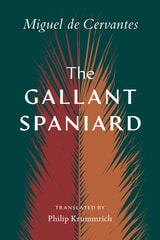
The Gallant Spaniard
Miguel de Cervantes; Translated by Philip Krummrich
Vanderbilt University Press, 2023
This edition, translated by Philip Krummrich, consists of a critical introduction and a full verse translation of the play with notes.
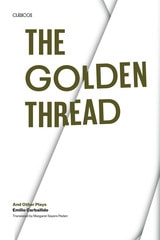
The Golden Thread and other Plays
By Emilio Carballido
University of Texas Press, 1970
Emilio Carballido was one of the most innovative and accomplished of Mexico's playwrights and one of the outstanding creators in the new Latin American theater. By his mid-forties he had already produced an impressive body of works in two very different veins. On the one hand, he mastered the techniques of the "well-made play." On the other, he developed a richly rewarding vein of fantasy, sometimes poetic, sometimes comic, sometimes macabre—and sometimes all three.
The plays in this volume are in the latter vein, ranging from surrealist farce in "The Intermediate Zone" to the grotesqueries of "The Time and the Place," from tragicomedy in "Theseus" to the dreamlike permutations of "The Golden Thread." But even at his most fantastic, Carballido never loses his remarkable gift for characterization: his peevish Minotaur, his raffish Nahual (were-jaguar) are wholly believable monsters.
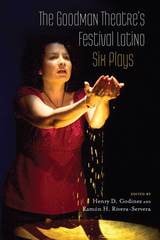
The Goodman Theatre's Festival Latino
Six PlaysHenry D Godinez and Ramón H Rivera-Servera
Northwestern University Press, 2013
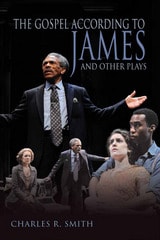
The Gospel According to James and Other Plays
Charles R. Smith
Ohio University Press, 2012
This collection of five award-winning plays by Charles Smith includes Jelly Belly, Free Man of Color, Pudd’nhead Wilson, Knock Me a Kiss, and The Gospel According to James. Powerful, provocative, and entertaining, these plays have been produced by professional theater companies across the country and abroad. Four of the plays are based on historical people and events from W.E.B. Du Bois and Countee Cullen to the Harlem Renaissance. Accurate in the way they capture the political and cultural milieu of their historical settings, and courageous in the way they grapple with difficult questions such as race, education, religion, and social class, these plays jump off the page just as powerfully as they come to life on stage. This first-ever collection from one of the nation’s leading African American playwrights is a journey down the complex road of race and history.
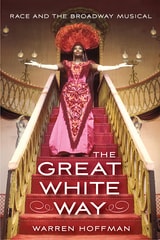
The Great White Way
Race and the Broadway MusicalHoffman, Warren
Rutgers University Press, 2014
Broadway musicals are one of America’s most beloved art forms and play to millions of people each year. But what do these shows, which are often thought to be just frothy entertainment, really have to say about our country and who we are as a nation?
The Great White Way is the first book to reveal the racial politics, content, and subtexts that have haunted musicals for almost one hundred years from Show Boat (1927) to The Scottsboro Boys (2011). Musicals mirror their time periods and reflect the political and social issues of their day. Warren Hoffman investigates the thematic content of the Broadway musical and considers how musicals work on a structural level, allowing them to simultaneously present and hide their racial agendas in plain view of their audiences. While the musical is informed by the cultural contributions of African Americans and Jewish immigrants, Hoffman argues that ultimately the history of the American musical is the history of white identity in the United States.
Presented chronologically, The Great White Way shows how perceptions of race altered over time and how musicals dealt with those changes. Hoffman focuses first on shows leading up to and comprising the Golden Age of Broadway (1927–1960s), then turns his attention to the revivals and nostalgic vehicles that defined the final quarter of the twentieth century. He offers entirely new and surprising takes on shows from the American musical canon—Show Boat (1927), Oklahoma! (1943), Annie Get YourGun (1946), The Music Man (1957), West Side Story (1957), A Chorus Line (1975), and 42nd Street (1980), among others.
New archival research on the creators who produced and wrote these shows, including Leonard Bernstein, Jerome Robbins, Stephen Sondheim, and Edward Kleban, will have theater fans and scholars rethinking forever how they view this popular American entertainment.
The Greek Tragedies
Seventeen Plays by Aeschylus, Sophocles, and EuripidesAeschylus, Sophocles, and Euripides
University of Chicago Press, 2025
The most authoritative, accessible, and poetic translations of the Greek Tragedies ever produced, now in one volume!
Drawn from the authoritative third editions of David Grene and Richmond Lattimore’s collections of the complete Greek tragedies, expertly updated by Mark Griffith and Glenn W. Most, this collection brings together seventeen of the greatest surviving plays of ancient Greece. Combining accuracy, poetic immediacy, and clarity of presentation, the masterpieces of Aeschylus, Sophocles, and Euripides have been rendered so compellingly in English that they remain the definitive translations. Each text has been carefully updated to bring it even closer to the ancient Greek original while retaining the vibrancy for which Chicago’s versions are famous.
Alongside the plays, this edition includes an introduction to the life and work of each tragedian; an introduction to each play offering essential information about its first production, plot, and reception through the centuries; and notes addressing textual uncertainties. Featuring lively translations by eminent classicists and authors including Anne Carson, Robert Fitzgerald, David Grene, Richmond Lattimore, Oliver Taplin, Emily Townsend Vermeule, and Elizabeth Wyckoff, this is an indispensable anthology for any reader of the foundational works of Western drama, art, and life.
The Half of It
Domenick Scudera
Carnegie Mellon University Press, 2026
A play that explores the influence of pioneer drag artist Bert Savoy.
The Half of It is inspired by the life and work of Bert Savoy, a Vaudeville drag artist who was active in the 1910s and early 1920s. Savoy was at the height of his career when he was tragically killed by lightning in 1923. The play highlights the groundbreaking and inspirational work of this important, yet largely forgotten, pioneer. Characters include some of Savoy’s famous friends, such as Klondike Kate and Mae West (who many believe borrowed her sassy stage persona from Savoy’s drag act). The play explores themes of gender identity, gender expression, celebrity in the modern era, the LGBTQ community of the early twentieth century, and the origins of contemporary drag performance.
The Hour of All Things and Other Plays
Caridad Svich
Intellect Books, 2018
The House of Atreus
John Lewin
University of Minnesota Press, 1966
The Inheritor
A PlayKate Bredeson and Thalia Wolff
Northwestern University Press, 2025
The first English-language translation of the 1968 activist play about inequality and access to education
In The Inheritor, surrealist imagery and experimental forms convey the radically different experience of two students, the Inheritor and the Non-Inheritor, as they prepare for a high-stakes exam. Revealing a world of privilege where “there is no such thing as luck,” the play features a beheaded knight, a talking record player, and a boisterous chorus of professors depicted as a flock of squawking birds.
Based on sociologists Pierre Bourdieu and Jean-Claude Passeron’s The Inheritors: French Students and Their Relations to Culture, the play was collectively created by Théâtre de l’Aquarium, a company then composed entirely of students. It proved a powerful success when it premiered in May 1968 amid student and worker protests in Paris, and it continues to speak forcefully to education inequity on campuses across anglophone countries today.
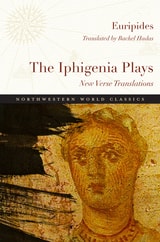
The Iphigenia Plays
New Verse TranslationsEuripides, Translated by Rachel Hadas
Northwestern University Press, 2018
At the heart of Iphigenia’s enduring story are an ambitious, opportunistic, and indecisive leader and the daughter whose life he is willing to sacrifice. In The Iphigenia Plays, poet Rachel Hadas offers a new generation of readers a graceful, clear, and powerful translation of Euripides’s two spellbinding (and very different) plays drawn from this legend: Iphigenia in Aulis and Iphigenia among the Taurians.
Even for readers unfamiliar with Greek mythology or drama, these plays are suspenseful, poignant, and haunting. Euripides’s ability to evoke emotion and raise difficult questions has long engaged viewers and readers alike. Taken together, the two plays illuminate timeless human conflicts, showcasing individuals and families ensnared by the fury of war, of politics, of religion, and of ambition. Euripidean characters are always second-guessing themselves; now new readers can also ponder their dilemmas.
Poet and translator Rachel Hadas highlights the lyricism, emotion, and sheer humanity of Euripides’s plays. Mordant humor is here; so are heartbreak and tenderness. Hadas offers an Iphigenia story that resonates with our own troubled times and demonstrates anew the genius of one of the world’s supreme dramatists.
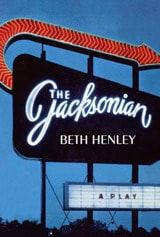
The Jacksonian
A PlayBeth Henley
Northwestern University Press, 2014
In The Jacksonian, Beth Henley returns to the Southern Gothic storytelling that made her reputation with both critics and audiences. Set in a seedy motel in Jackson, Mississippi, in 1964, the play centers around Rosy, a troubled teenager, and Bill, her dentist father who has been living at the motel for several months as his wife, Susan, considers the disgrace of divorce. Fred, the motel bartender, and Eva, a waitress, are locked in a gruesome pact: he’ll marry her if she agrees to help him evade punishment for a hideous crime. But Bill, turning to nitrous oxide to ease the pain of his life collapsing around him, is a convenient target for Eva’s desperate desire for companionship. At the height of the violence associated with the civil rights movement, these characters gradually reveal the shameful secrets and psychological turmoil just beneath the surface of their insistent Southern gentility.
The Japan of Pure Invention
Gilbert and Sullivan’s The MikadoJosephine Lee
University of Minnesota Press, 2010
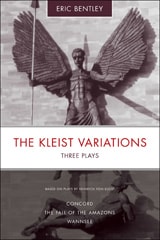
The Kleist Variations
Three PlaysEric Bentley
Northwestern University Press, 2005
Winner of 2006 Village Voice OBIE Awards Lifetime Achievement Award
In this collection, Eric Bentley presents Concord, a comedy adapted from Kleist's The Broken Jug;The Fall of the Amazons, a tragedy written in response to Kleist's Penthesilea; and Wannsee, a tragic-comedy which is Bentley's rendering of Kleist's Cathy of Heilbronn.
Bentley sets Concord in a courthouse during the early days of the Republic. Convened to discover who broke an irreplaceable jug symbolic of the chivalric age of Sir Walter Raleigh, Judge Adam's madcap court flounders in hilarious chaos induced by huge lies to cover comic lust.
Fall of the Amazons is the story of Achilles and the Amazon queen, Penthesilea. Through this pagan play, Bentley explores improbably love, which he exemplifies in the biblical story of Abraham and Isaac: "In seeming to be cruel to both father and son, God has enabled them to find, in total vulnerability, total love," a theme that also pervades Wannsee.
Bentley's Wannsee is a play of pageantry: emperors, counts, dueling knights, a young beauty of seemingly low birth, cherubs, and witches masked in loveliness. A fabulous love story ostensibly designed to dissuade Kleist from self-destruction, Wannsee demonstrates with a flourish that, though devils roam the earth, there are also angels.
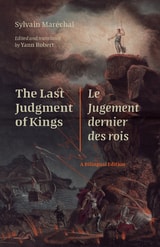
The Last Judgment of Kings / Le Jugement dernier des rois
A Bilingual EditionYann Robert
Bucknell University Press, 2025
Joué pour la première fois le lendemain de l’exécution de Marie-Antoinette, Le Jugement dernier des rois met en scène le procès burlesque des autres rois et reines d’Europe : exhibés et enchaînés tels des animaux, contraints de se battre pour un tonneau de biscuits, et finalement anéantis par l’éruption spectaculaire d’un volcan. Tel est le contexte scandaleux—tragédie et farce à la fois—de la pièce la plus célèbre de la Révolution française, bien connue de tous les spécialistes de cette période. Jusqu’à maintenant, pourtant, il n’existait ni édition critique ni traduction anglaise de cet ouvrage historique. Notre édition bilingue fait revivre la pièce de Maréchal et la replace au centre des plus grands débats chez les historiens de la Révolution, traitant de justice, religion, commémoration, comédie, et propagande. Provocateur, facile à lire, et concis—parfaitement adapté aux étudiants d’un cours de français ou d’histoire—Le Jugement dernier des rois propose ainsi une introduction idéale à la période révolutionnaire et à ses principales controverses.
Published by Bucknell University Press. Distributed worldwide by Rutgers University Press.
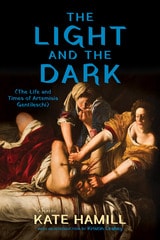
The Light and the Dark
(The Life and Times of Artemisia Gentileschi)Kate Hamill, Kristin Leahey
Northwestern University Press, 2026
A play from the inimitable Kate Hamill, based on the true story of the groundbreaking Italian painter Artemisia Gentileschi
During the seventeenth century, Italian artists strove to reshape the very image of humanity. Artemisia Gentileschi—the daughter of a painter—dreams of making her mark at a time when a woman is not thought capable of being an artist, let alone one of the greats. Just as her career begins to gain unexpected momentum, a series of devastating betrayals crack the foundation of her work—and her life. In electrifying verse and gorgeous artwork, The Light and The Dark depicts the deeply moving true story of a young woman who changed the very image of women in society . . . weaving a magnetic and empowering tapestry of ambition, rage, and resilience across the ages.
The Making of Theatrical Reputations
Studies from the Modern London TheatreYael Zarhy-Levo
University of Iowa Press, 2008
Today's successful plays and playwrights achieve their prominence not simply because of their intrinsic merit but because of the work of mediators, who influence the whole trajectory of a playwright's or a theatre company's career. Critics and academic writers are primarily considered the makers of reputations, but funding organizations and various media agents as well as artistic directors, producers, and directors also pursue separate agendas in shaping the reputations of theatrical works. In The Making of Theatrical Reputations Yael Zarhy-Levo demonstrates the processes through which these mediatory practices by key authority figures situate theatrical companies and playwrights within cultural and historical memory.
To reveal how these authorizing powers-that-be promote theatrical events, companies, and playwrights, Zarhy-Levo presents four detailed case studies that reflect various angles of the modern London theatre. In the case of the English Stage Company's production of John Osborne's Look Back in Anger, she centers on a specific event. She then focuses on the trajectory of a single company, the Theatre Workshop, particularly through its first decade at the Theatre Royal, Stratford East, London. Next, she explores the career of the dramatist John Arden, especially its first ten years, in part drawing upon an interview with Arden and his wife, actress and playwright Margaretta D'Arcy, before turning to her fourth study: the playwright Harold Pinter's shifting reputation throughout the different phases of his career.
Zarhy-Levo's accounts of these theatrical events, companies, and playwrights through the prism of mediation bring fresh insights to these landmark productions and their creators.
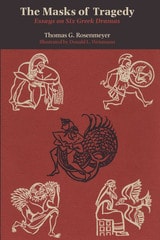
The Masks of Tragedy
Essays on Six Greek DramasBy Thomas G. Rosenmeyer
University of Texas Press, 1963
"What matters about a play is not the extent to which it is like any other play, but the way in which it is different," writes Thomas G. Rosenmeyer. "This is, I suggest, how the ancient audiences received the performances.... My purpose, then, in writing these essays is twofold: ... to devote enough space to the discussion of each play to allow its special tone and texture to emerge without hindrance and at leisure ... and to include in one collection analyses of plays so different from one another that the accent will come to rest on the variety of the tragic experience rather than on any one narrowly defined norm."
Greek tragedy is a vehicle for many different ideas and many different intentions. From the wealth of material that has come down to us the author has chosen six plays for analysis. He reminds us that the plays were written to be seen and heard, and only secondarily to be studied. The listeners expected each play to have a specific objective, and to exhibit its own mood. These the author attempts to recover for us, by listening to what each play, in its own right, has to say. His principal concern is with the tragic diction and the tragic ideas, designed to release certain massive responses in the large theater-going group of ancient Athens. In exploring the characters and the situations of the plays he has chosen, the author transports his reader to the world of fifth-century B.C. Greece, and establishes the relevance of that world to our own experience.
The essays are not introductory in nature. No space is given, for instance, to basic information about the playwrights, the history of Greek drama, or the special features of the Attic stage. Yet the book addresses itself to classicists and nonclassicists alike. The outgrowth of a series of lectures to nonspecialists, its particular appeal is to students of literature and the history of Western thought. Parallels are drawn between the writings of the philosophers and the tragedies, and attention is paid to certain popular Greek beliefs that colored the tragic formulations. Ultimately, however, the approach is not historical but critical; it is the author's intention to demonstrate the beauty and the craftsmanship of the plays under discussion.
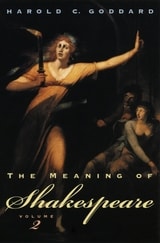
The Meaning of Shakespeare, Volume 2
Troilus and Cressida, All's Well That Ends Well, Measure for Measure, Othello, Macbeth, King Lear, Timon of Athens, Antony and Cleopatra, Coriolanus, Pericles, Cymbeline, The Winter's Tale, The TempestHarold C. Goddard
University of Chicago Press, 1960
Centuries after they were originally performed, the plays of Shakespeare continue to inspire, entertain, and awe audiences and readers today. At the same time, however, there's no question that even the most sophisticated reader can sometimes benefit from the insight and guidance of an expert when entering Shakespeare's long-gone world and complicated figurative language.
William Goddard is here to help. He taught Shakespeare for decades as much-loved professor at Swarthmore College, and here he distills that experience into an accessible, engaging companion to the plays. Across two volumes, Goddard covers all of Shakespeare's plays and brings fresh insight to familiar characters, scenes, and verses. Goddard writes, "The greatest poetry has always depicted the world as a little citadel of nobility threatened by an immense barbarism, a flickering candle surrounded by infinite night" Shakespeare's candle still burns, and with Goddard's help we can all see it brighter than ever.
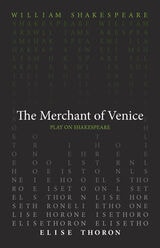
The Merchant of Venice
William Shakespeare
Arizona Center for Medieval and Renaissance Studies, 2021
Elise Thoron’s translation of Shakespeare’s searing The Merchant of Venice cuts straight to the heart of today’s fraught issues of social justice and systemic racism. Thoron’s clear, compelling contemporary verse translation retains the power of the original iambic pentameter while allowing readers and audiences to fully comprehend and directly experience the brutal dilemmas of Shakespeare’s Venice, where prejudice and privilege reign unchallenged. As the author of three acclaimed music-theater works on the Jewish experience and informed by her work directing cross-cultural projects in locations as different as Russia, Japan, Cuba, and New York City, Thoron brings to her Merchant an immediacy that speaks directly to the present reckoning with race in America.
This translation was written as part of the Oregon Shakespeare Festival’s Play On! project, which commissioned new translations of thirty-nine Shakespeare plays. These translations present the work of "The Bard" in language accessible to modern audiences while never losing the beauty of Shakespeare’s verse. These volumes make these works available for the first time in print—a new First Folio for a new era.
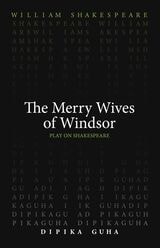
The Merry Wives of Windsor
William Shakespeare
Arizona Center for Medieval and Renaissance Studies, 2023
In her translation of The Merry Wives of Windsor, Dipika Guha updates the language of Shakespeare’s comedy through the lens of our current moment. Guha maintains the humor at the heart of the play while making it accessible for both performers and audiences.
This translation was written as part of the Oregon Shakespeare Festival’s Play On! project, which commissioned new translations of thirty-nine Shakespeare plays. These translations present the work of "The Bard" in language accessible to modern audiences while never losing the beauty of Shakespeare’s verse. These volumes make these works available for the first time in print—a new First Folio for a new era.

The National Stage
Theatre and Cultural Legitimation in England, France, and AmericaLoren Kruger
University of Chicago Press, 1992
The National Stage answers this question by tracing the relation between theatre institution and public sphere in the discourses of national identity in Britain, France, and the United States. Exploring the boundaries between history and theory, text and performance, this book speaks to theatre and social historians as well as those interested in the theoretical range of cultural studies.
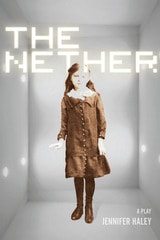
The Nether
A PlayJennifer Haley
Northwestern University Press, 2015
When the lines between reality and fantasy blur, what counts as ethical? Who decides?
The Nether, a daring examination of moral responsibility in virtual worlds, opens with a familiar interrogation scene given a technological twist. As Detective Morris, an online investigator, questions Mr. Sims about his activities in a role-playing realm so realistic it could be life, she finds herself on slippery ethical ground. Sims argues for the freedom to explore even the most deviant corners of our imagination. Morris holds that we cannot flesh out our malign fantasies without consequence. Their clash of wills leads to a consequence neither could have imagined. Suspenseful, ingeniously constructed, and fiercely intelligent, Haley’s play forces us to confront deeply disturbing questions about the boundaries of reality.
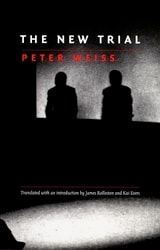
The New Trial
Peter Weiss
Duke University Press, 2001
A transformative “updating” of Kafka’s novel The Trial, The New Trial presents a surreal, hallucinatory look at the life of “Josef K.,” chief attorney in an enormous multinational firm that exploits both his idealism and his self-doubt in order to present to the world a public face that will mask its own dark and fascistic intentions. Fusing Marxist and capitalist perspectives in a manner that anticipates aspects of the current global market expansion, Weiss evokes a world in which nothing is private and everything is for sale.
This edition of The New Trial is designed to facilitate theatrical teaching and stage production of the play. An extensive introduction by James Rolleston and Kai Evers situates the work in the full context of Weiss’s life, including his Swedish exile during the regime of the Third Reich. In addition, the play’s text is followed by interviews with Weiss and his original codirector (and wife) Gunilla Palmstierna-Weiss, as well as an account of the challenges of the first English staging by director Jody McAuliffe.
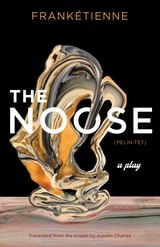
The Noose
A PlayFrankétienne; Translated from the Kreyòl by Asselin Charles
Vanderbilt University Press, 2026
With recent productions in Canada and the United States, the publication of this play in English will provide a new generation of audiences access to this important text, accompanied by an introduction by translator Asselin Charles and an afterword by Jean Jonassaint, both preeminent scholars of Frankétienne’s literary output.
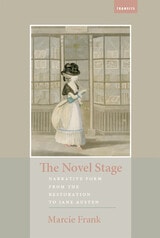
The Novel Stage
Narrative Form from the Restoration to Jane AustenMarcie Frank
Bucknell University Press, 2020
2020 Choice Outstanding Academic Title
Marcie Frank’s study traces the migration of tragicomedy, the comedy of manners, and melodrama from the stage to the novel, offering a dramatic new approach to the history of the English novel that examines how the collaboration of genres contributed to the novel’s narrative form and to the modern organization of literature. Drawing on media theory and focusing on the less-examined narrative contributions of such authors as Aphra Behn, Frances Burney, and Elizabeth Inchbald, alongside those of Samuel Richardson, Henry Fielding, and Jane Austen, The Novel Stage tells the story of the novel as it was shaped by the stage.
Published by Bucknell University Press. Distributed worldwide by Rutgers University Press.
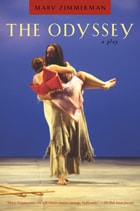
The Odyssey
A PlayMary Zimmerman
Northwestern University Press, 2006
With her trademark irreverent and witty twist on classic works, Zimmerman brings to life the story of Odysseus's ten-year journey
This dramatic adaptation of Homer's myth begins with a modern young woman who is struggling to understand Robert Fitzgerald's translation of The Odyssey. A classical muse appears, and the young woman becomes the goddess Athena--a tireless advocate for Odysseus in his struggle to get home. Zimmerman's adaptation depicts his encounters with characters such as Circe, the Cyclops, Poseidon, Calypso, the Sirens, and others in new and exciting ways.
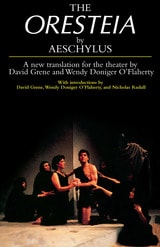
The Oresteia
Aeschylus
University of Chicago Press, 1989
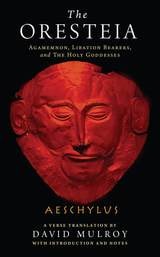
The Oresteia
Agamemnon, Libation Bearers, and The Holy GoddessesAeschylus, A verse translation by David Mulroy, with introduction and notes
University of Wisconsin Press, 2018
This drama of the House of Atreus catches everyone in a bloody net. Queen Clytaemestra of Argos murders her husband Agamemnon. Their son Orestes avenges his father by killing his mother. The Furies, hideous deities who punish the murder of blood kin, pursue Orestes. Into this horrific cycle steps Athena, goddess of wisdom, who establishes the rule of law to replace fatal vengeance. Orestes is tried in court before a jury of Athenians and found not guilty. Athena transforms the Furies into benevolent goddesses and extols the virtue of mercy.
An important historical document as well as gripping entertainment, the Oresteia conveys beliefs and values of the ancient Athenians as they established the world's first great democracy. Aeschylus (525/4–456/5 B.C.E.) was the first of the three great tragic dramatists of ancient Greece, forerunner of Sophocles and Euripides. In this trilogy he created a new dramatic form with characters and plot, infused with spellbinding emotion. David Mulroy's fluid, accessible English translation with its rhyming choral songs does full justice to the meaning and theatricality of the ancient Greek. In an introduction and appendixes, he provides cultural background for modern readers, actors, and students.