Results by title
1038 books match the query 'Economic conditions' and 212 start with t
The Decline of Latin American Economies
Growth, Institutions, and CrisesEditied by Sebastian Edwards, Gerardo Esquivel, and Graciela Márquez
University of Chicago Press, 2007
Latin America’s economic performance is mediocre at best, despite abundant natural resources and flourishing neighbors to the north. The perplexing question of how some of the wealthiest nations in the world in the nineteenth century are now the most crisis-prone has long puzzled economists and historians. The Decline of Latin American Economies examines the reality behind the struggling economies of Argentina, Chile, and Mexico.
A distinguished panel of experts argues here that slow growth, rampant protectionism, and rising inflation plagued Latin America for years, where corrupt institutions and political unrest undermined the financial outlook of already besieged economies. Tracing Latin America’s growth and decline through two centuries, this volume illustrates how a once-prosperous continent now lags behind. Of interest to scholars and policymakers alike, it offers new insight into the relationship between political systems and economic development.

The Declining Significance of Race
Blacks and Changing American InstitutionsWilliam Julius Wilson
University of Chicago Press, 1980
"Wilson has written a profound and provocative book that is destined to become a classic in the field. He has articulated the issues with which future researchers will have to deal. Truly, he has made a contribution to social science."—Wilson Record, American Journal of Sociology
"The intellectual strength of this book lies in his capacity to integrate disparate findings from historical studies, social theory and research on contemporary trends into a complex and original synthesis that challenges widespread assumptions about the cause of black disadvantage and the way to remove it."—Paul Starr, New York Times Book Review
This is a short but important book. . . . Wilson presents a cogent and convincing interpretation of how the changing political and economic structure of the United States profoundly affected the position of black Americans."—Pierre van den Berghe, Sociology and Social Research
"This publication is easily one of the most erudite and sober diagnoses of the American black situation. Students of race relations and anybody in a policy-making position cannot afford to bypass this study."—Ernest Manheim, Sociology
The Declining Significance of Race
Blacks and Changing American Institutions, Third EditionWilliam Julius Wilson
University of Chicago Press, 2012
When first published in 1980, The Declining Significance of Race immediately sparked controversy with its contentious thesis that race was becoming less of a deciding factor in the life chances of black Americans than class. This new edition of the seminal book includes a new afterword in which William Julius Wilson not only reflects on the debate surrounding the book, but also presents a provocative discussion of race, class, and social policy.
“The intellectual strength of this book lies in his capacity to integrate disparate findings from historical studies, social theory and research on contemporary trends into a complex and original synthesis that challenges widespread assumptions about the cause of black disadvantage and the way to remove it.”—Paul Starr, New York Times Book Review
“This publication is easily one of the most erudite and sober diagnoses of the American black situation. Students of race relations and anybody in a policy-making position cannot afford to bypass this study.”—Ernest Manheim, Sociology
The Defining Moment
The Great Depression and the American Economy in the Twentieth CenturyEdited by Michael D. Bordo, Claudia Goldin, and Eugene N. White
University of Chicago Press, 1997
The essays consider whether New Deal-style legislation continues to operate today as originally envisioned, whether it altered government and the economy as substantially as did policies inaugurated during World War II, the 1950s, and the 1960s, and whether the legislation had important precedents before the Depression, specifically during World War I. Some chapters find that, surprisingly, in certain areas such as labor organization, the 1930s responses to the Depression contributed less to lasting change in the economy than a traditional view of the time would suggest. On the whole, however, these essays offer testimony to the Depression's legacy as a "defining moment." The large role of today's government and its methods of intervention—from the pursuit of a more active monetary policy to the maintenance and extension of a wide range of insurance for labor and business—derive from the crisis years of the 1930s.
The Depression Dilemmas of Rural Iowa, 1929-1933
Lisa L. Ossian
University of Missouri Press, 2012
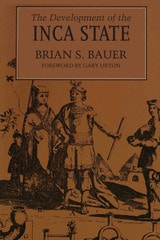
The Development of the Inca State
By Brian S. Bauer
University of Texas Press, 1992
The Inca empire was the largest state in the Americas at the time of the Spanish invasion in 1532. From its political center in the Cuzco Valley, it controlled much of the area included in the modern nations of Ecuador, Peru, Chile, and Bolivia. But how the Inca state became a major pan-Andean power is less certain. In this innovative work, Brian S. Bauer challenges traditional views of Inca state development and offers a new interpretation supported by archaeological, historical, and ethnographic evidence.
Spanish chroniclers of the sixteenth and seventeenth centuries attributed the rapid rise of Inca power to a decisive military victory over the Chanca, their traditional rivals, by Pachacuti Inca Yupanqui. By contrast, Bauer questions the usefulness of literal interpretations of the Spanish chronicles and provides instead a regional perspective on the question of state development. He suggests that incipient state growth in the Cuzco region was marked by the gradual consolidation and centralization of political authority in Cuzco, rather than resulting from a single military victory. Synthesizing regional surveys with excavation, historic, and ethnographic data, and investigating broad categories of social and economic organization, he shifts the focus away from legendary accounts and analyzes more general processes of political, economic, and social change.
The Economic Development of Manchuria
The Rise of a Frontier EconomyKang Chao
University of Michigan Press, 1983
The Economic Effects of Aging in the United States and Japan
Edited by Michael D. Hurd and Naohiro Yashiro
University of Chicago Press, 1997
The most obvious effects will be on social programs such as public pension systems and the provision for medical needs of the elderly. But, the contributors demonstrate, aging will also affect markets for labor, capital, housing, and health care services. It will affect firms through their participation in the demand side of the labor market and through their provisions for pensions. And aging will influence saving rates, the rate of return on assets, the balance of payments, and, most likely, economic growth.
This volume will interest scholars and policy makers concerned with the economics of aging.
The Economics of Aging
Edited by David A. Wise
University of Chicago Press, 1988
The Economics of Aging presents results from an ongoing National Bureau of Economic Research project. Contributors consider the housing mobility and living arrangements of the elderly, their labor force participation and retirement, the economics of their health care, and their financial status. The goal of the research is to further our understanding both of the factors that determine the well-being of the elderly and of the consequences that follow from an increasingly older population with longer individual life spans. Each paper is accompanied by critical commentary.
The Economics of Discrimination
Gary S. Becker
University of Chicago Press, 1971
Mr. Becker's work confronts the economic effects of discrimination in the market place because of race, religion, sex, color, social class, personality, or other non-pecuniary considerations. He demonstrates that discrimination in the market place by any group reduces their own real incomes as well as those of the minority.
The original edition of The Economics of Discrimination was warmly received by economists, sociologists, and psychologists alike for focusing the discerning eye of economic analysis upon a vital social problem—discrimination in the market place.
"This is an unusual book; not only is it filled with ingenious theorizing but the implications of the theory are boldly confronted with facts. . . . The intimate relation of the theory and observation has resulted in a book of great vitality on a subject whose interest and importance are obvious."—M.W. Reder, American Economic Review
"The author's solution to the problem of measuring the motive behind actual discrimination is something of a tour de force. . . . Sociologists in the field of race relations will wish to read this book."—Karl Schuessler, American Sociological Review
The Economy and Material Culture of Russia, 1600-1725
Richard Hellie
University of Chicago Press, 1999
Impressive in scope and data analysis, Economy and Material Culture of Russia, 1600-1725 will be an invaluable resource and reference work for all readers interested in economic history and the history of material culture. Since there is no comparable one-volume work for any other society at any other time in history, Hellie's is a truly unique and profound achievement.
The Economy of British West Florida, 1763-1783
Robin F. A. Fabel
University of Alabama Press, 1988
The untold economic story of Britain’s Gulf Coast frontier.
This is the first book-length investigation of the economy of British West Florida and the extent to which it was economically viable given that it had been an economic failure for Spain. In it, author Robin Fabel explores both the territory's economy and history but also analyzes previously neglected but key aspects of British West Florida, including the maritime life of the province, the institution of slavery, and the potentially great immigration scheme sponsored by the Company of Military Adventures.
The British divided Florida into two colonies: East Florida and West Florida. West Florida comprised the area between the Apalachicola, Chattahoochee, and Mississippi rivers, and from the Gulf of Mexico north to thirty-two degrees twenty-eight minutes north latitude, roughly the latitude of modern-day Jackson, MS and Montgomery, AL. In the geographic center of the colony were Mobile, Alabama and Pensacola, Floriday. British West Florida included parts of the states of Alabama, Florida, Louisiana, and Mississippi and existed from 1763 until 1783 at the end of the American Revolutionary War.
Fabel contrasts the founding of Georgia, where slaves were initially excluded, with West Florida, where the slave trade became important economically. The British believed that only enslaved Blacks could labor successfully in the hot climate. Fabel gives an account of how owners employed enslaved people, how rare it was for slaves to be emancipated, and the passage of slave laws for West Florida. Fabel also explores British West Florida’s trade with Native Americans and the Caribbean islands, as well as the colony's relationships with neighboring Spanish and French communities.
Fabel's work offers an engaging and accessible account of the history of an expansive region of colonial North America during a fluid period of colonial history before American independence.
The Economy of Modern Israel
Malaise and PromiseAssaf Razin and Efraim Sadka
University of Chicago Press, 1993
The authors present the first detailed economic analysis of the Palestinian uprising, showing how the unrest has led to a fall in Arab employment in Israel and serious economic loss to the occupied territories with some loss to Israel. They also examine how the uprising has affected Israel's financial standing internationally and the inflow of foreign aid.
Razin and Sadka see promise for Israel's economy in the waves of immigration from the former Soviet Union, despite the current difficulties in absorbing the immigrants; in the coexistence of a flourishing and highly competitive private sector with a relatively large public sector, which is undergoing privatization; and in a tax structure that encourages long-term saving and business growth. By examining the interplay between the exchange rate, interest rates, and monetary and anti-inflation policies, the authors investigate the possibilities for renewed growth and conclude that the future of Israel's economy crucially depends on serious efforts to secure peace in the Middle East.
The Effects of U.S. Trade Protection and Promotion Policies
Edited by Robert C. Feenstra
University of Chicago Press, 1997
The volume concludes that some policies can act to both protect imports and promote exports, that the threat of protectionist policies can often have effects that are as pronounced as their implementation, and that regulatory policy has as great an impact on trade and investment patterns as does trade policy itself. It will be of crucial interest to international trade economists, policy specialists, and political scientists.
The Ends of Freedom
Reclaiming America's Lost Promise of Economic RightsMark Paul
University of Chicago Press, 2023
Since the Founding, Americans have debated the true meaning of freedom. For some, freedom meant the provision of life’s necessities, those basic conditions for the “pursuit of happiness.” For others, freedom meant the civil and political rights enumerated in the Bill of Rights and unfettered access to the marketplace—nothing more. As Mark Paul explains, the latter interpretation—thanks in large part to a particularly influential cadre of economists—has all but won out among policymakers, with dire repercussions for American society: rampant inequality, endemic poverty, and an economy built to benefit the few at the expense of the many.
In this book, Paul shows how economic rights—rights to necessities like housing, employment, and health care—have been a part of the American conversation since the Revolutionary War and were a cornerstone of both the New Deal and the Civil Rights Movement. Their recuperation, he argues, would at long last make good on the promise of America’s founding documents. By drawing on FDR’s proposed Economic Bill of Rights, Paul outlines a comprehensive policy program to achieve a more capacious and enduring version of American freedom. Among the rights he enumerates are the right to a good job, the right to an education, the right to banking and financial services, and the right to a healthy environment.
Replete with discussions of some of today’s most influential policy ideas—from Medicare for All to a federal job guarantee to the Green New Deal—The Ends of Freedom is a timely and urgent call to reclaim the idea of freedom from its captors on the political right—to ground America’s next era in the country’s progressive history and carve a path toward a more economically dynamic and equitable nation.
The Evolution of Retirement
An American Economic History, 1880-1990Dora L. Costa
University of Chicago Press, 1998
The Experience Society
Consumer Capitalism RebootedSteven Miles
Pluto Press, 2020
The technologically-driven world we live in is no closer to securing the utopian ideal of a leisure society. Instead, the pursuit of leisure is often an attempt to escape our everyday existence. Exploring examples including sport, architecture, travel and social media, Steven Miles investigates how consumer culture has colonised 'experiences', revealing the ideological and psycho-social tensions at the heart of the 'experience society'.
The first critical analysis of the experience economy by a UK sociologist sheds light on capitalism's ever more sophisticated infiltration of the everyday.
The Experience Society
Consumer Capitalism RebootedSteven Miles
Pluto Press, 2020
The technologically-driven world we live in is no closer to securing the utopian ideal of a leisure society. Instead, the pursuit of leisure is often an attempt to escape our everyday existence. Exploring examples including sport, architecture, travel and social media, Steven Miles investigates how consumer culture has colonized 'experiences', revealing the ideological and psycho-social tensions at the heart of the 'experience society'.
The first critical analysis of the experience economy by a UK sociologist sheds light on capitalism's ever more sophisticated infiltration of the everyday.
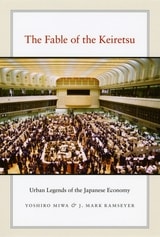
The Fable of the Keiretsu
Urban Legends of the Japanese EconomyYoshiro Miwa and J. Mark Ramseyer
University of Chicago Press, 2006
In their insightful analysis, the authors show that the very idea of the keiretsu was created and propagated by Marxist scholars in post-war Japan. Western scholars merely repatriated the legend to show the culturally contingent nature of modern economic analysis. Laying waste to the notion of keiretsu, the authors debunk several related “facts” as well: that Japanese firms maintain special arrangements with a “main bank,” that firms are systematically poorly managed, and that the Japanese government guided post-war growth. In demolishing these long-held assumptions, they offer one of the few reliable chronicles of the realities of Japanese business.
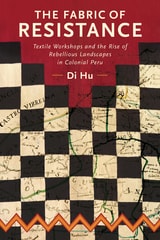
The Fabric of Resistance
Textile Workshops and the Rise of Rebellious Landscapes in Colonial PeruDi Hu
University of Alabama Press, 2022
Textiles as sites of power, production, and rebellion in the early modern Andes.
The Fabric of Resistance: Textile Workshops and the Rise of Rebellious Landscapes in Colonial Peru documents the impact of Spanish colonial institutions of labor on identity and social cohesion in Peru. Through archaeological and historical lines of evidence, Di Hu examines the long-term social conditions that enabled the large-scale rebellions in the late Spanish colonial period in Peru. Hu argues that ordinary people from different backgrounds pushed back against the top-down identity categories imposed by the Spanish colonial government and in the process created a cosmopolitan social landscape that later facilitated broader rebellion.
Hu’s case study is Pomacocha, the site of an important Spanish colonial hacienda (agricultural estate) and obraje (textile workshop). At its height, the latter had more than one hundred working families and sold textiles all over the Andes. Through analysis of this site, Hu explores three main long-term causes of rebellions against Spanish oppression. First, the Spanish colonial economy provided motivation and the social spaces for intercaste (indigenous, African, and mestizo) mixing at textile workshops. Second, new hybrid cultural practices and political solidarity arose there that facilitated the creation of new rebellious identities. Third, the maturation in the eighteenth century of popular folklore that reflected the harsh nature of Spanish labor institutions helped workers from diverse backgrounds gain a systemic understanding of exploitation.
This study provides a fresh archaeological and historical perspectives on the largest and most cosmopolitan indigenous-led rebellions of the Americas. Hu interweaves analyses of society at multiple scales including fine-grained perspectives of social networks, demography, and intimate details of material life in the textile workshop. She examines a wide range of data sources including artifacts, food remains, architectural plans, account books, censuses, court documents, contracts, maps, and land title disputes.
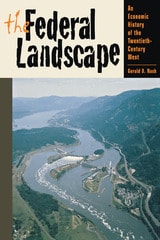
The Federal Landscape
An Economic History of the Twentieth-Century WestGerald D. Nash
University of Arizona Press, 1999
Historian Gerald D. Nash has written the first account of the epic growth of the economy of the American West during the twentieth century, showing how national interests shaped the West over the course of the past hundred years. In a book written for a broad readership, he tells the story of how America’s hinterland became the most dynamic and rapidly growing part of the country.
The Federal Landscape relates how in the nineteenth century the West was largely developed by individual enterprise but how in the twentieth Washington, D.C., became the central player in shaping the region. Nash traces the development of this process during the Progressive Era, World War I, the New Deal, World War II, the affluent postwar years, and the cold-war economy of the 1950s. He analyzes the growth of western cities and the emergence of environmental issues in the 1960s, the growth of a vibrant Mexican-U.S. border economy, and the impact of large-scale immigration from Latin America and Asia at century’s end.
Although specialists have studied many particular facets of western growth, Nash has written the only book to provide a much-needed overview of the subject. By addressing subjects as diverse as public policy, economic development, environmental and urban issues, and questions of race, class, and gender, he puts the entire federal landscape in perspective and shows how the West was really won.

The Financial Crisis and the Global South
A Development PerspectiveYilmaz Akyuz
Pluto Press, 2013
This book is a major contribution exploring the policy options available for developing and emerging economies in response to the global economic crises.
Written by a highly respected development economist, the book gives a clear-eyed account of the issues particular to these countries and critically evaluates different policy approaches, including reforms in financial, monetary and trade policies. Informed by deep scholarship as well as practical experience, Yilmaz Akyüz draws on empirical data, historical context and theoretical expertise, with special attention paid to issues such as the role of the International Monetary Fund and China.
The Financial Crisis and the Global South is a landmark book that will be of interest to practitioners, scholars, theorists and students of economics and development studies.
The Galilean Economy in the Time of Jesus
David A. Fiensy
SBL Press, 2013
The Gendered Worlds of Latin American Women Workers
From Household and Factory to the Union Hall and Ballot BoxJohn D. French and Daniel James, eds.
Duke University Press, 1997
Widely seen as a hostile sexualized space, the modern factory was considered a threat, not only to the virtue of working women, but also to the survival of the family, and thus, the future of the nation. Yet working-class women continued to labor outside the home and remained highly visible in the expanding world of modern industry. In nine essays dealing with Argentina, Brazil, Chile, Colombia, and Guatemala, the contributors make extensive use of oral histories to describe the contradictory experiences of women whose work defied gender prescriptions but was deemed necessary by working-class families in a world of need and scarcity. The volume includes discussion of previously neglected topics such as single motherhood, women’s struggle against domestic violence, and the role of women as both desiring and desired subjects.
Contributors. Ann Farnsworth-Alvear, Mary Lynn Pedersen Cluff, John D. French, Daniel James, Thomas Miller Klubock, Deborah Levenson-Estrada, Mirta Zaida Lobato, Heidi Tinsman, Theresa R. Veccia, Barbara Weinstein
The Glasgow Sugar Aristocracy
Scotland and Caribbean Slavery, 1775–1838Stephen Mullen
University of London Press, 2020
This important book assesses the size and nature of Caribbean slavery’s economic impact on British society. The Glasgow Sugar Aristocracy, a grouping of West India merchants and planters, became active before the emancipation of chattel slavery in the British West Indies in 1834. Many acquired nationally significant fortunes, and their investments percolated into the Scottish economy and wider society. At its core, the book traces the development of merchant capital and poses several interrelated questions during an era of rapid transformation, namely, what impact the private investments of West India merchants and colonial adventurers had on metropolitan society and the economy, as well as the wider effects of such commerce on industrial and agricultural development.
The book also examines the fortunes of temporary Scottish economic migrants who traveled to some of the wealthiest of the Caribbean islands, presenting the first large-scale survey of repatriated slavery fortunes via case studies of Scots in Jamaica, Grenada, and Trinidad before emancipation in 1834. It, therefore, takes a new approach to illuminate the world of individuals who acquired West Indian fortunes and ultimately explores, in an Atlantic frame, the interconnections between the colonies and metropole in the late eighteenth and early nineteenth centuries.
The Glass City
Toledo and The Industry That Built ItBarbara L. Floyd
University of Michigan Press, 2014
The Global Political Economy of Israel
Jonathan Nitzan and Shimshon Bichler
Pluto Press, 2002
Over the past century, Israel has been transformed from an agricultural colony, to a welfare-warfare state, to a globally integrated "market economy" characterised by great income disparities. What lies behind this transformation? In order to understand capitalist development, argue Bichler and Nitzan, we need to break the artificial separation between "economics" and "politics", and think of accumulation itself as "capitalisation of power". Applying this concept to Israel, they reveal the big picture that never makes it to the news. Diverse processes – such as regional conflicts and energy crises, ruling class formation and dominant ideology, militarism and dependency, inflation and recession, the politics of high-technology and the transnationalisation of ownership – are all woven into a single story. The result is a fascinating account of one of the world’s most volatile regions.
The Great Depression in Eastern Europe
Klaus Richter
Central European University Press, 2025
The Great Depression in Latin America
Paulo Drinot and Alan Knight, eds.
Duke University Press, 2014
Contributors. Marcelo Bucheli, Carlos Contreras, Paulo Drinot, Jeffrey L. Gould, Roy Hora, Alan Knight, Gillian McGillivray, Luis Felipe Sáenz, Angela Vergara, Joel Wolfe, Doug Yarrington
The Great Depression
An International Disaster of Perverse Economic PoliciesThomas E. Hall and J. David Ferguson
University of Michigan Press, 1998
The Great Enrichment
A New History of American Growth and Inequality, 1865–1945Vincent Geloso
University of Chicago Press, 2027
A revelatory economic history of America's Gilded Age—and how it wasn't just the Robber Barons who benefited.
The Gilded Age, spanning the late nineteenth and early twentieth centuries, was when Americans got rich. Or, rather, some Americans got rich. Because as much as the era is synonymous with staggering economic growth, it also doubles as America’s cautionary tale for the perils of leaving rich people and institutions unregulated. It was the time of extractive industrialists, worker exploitation, stifled economic mobility, and racial exclusion—lessons that the United States learned the hard way.
Vincent Geloso contests this traditional narrative by revisiting the math in this new empirical account of the Gilded Age. The Great Enrichment is an economic history of America’s rise to affluence, a period that doubled as a remarkable rise of the country’s economic floor. The conventional contrast of Robber Barons against huddled masses is, in Geloso’s analysis, unsubstantiated by economic data. The Gilded Age was the first egalitarian enrichment that humanity witnessed—a time when both rich and poor benefited in ways that were seismic, albeit unequal. Yet the net result was a great leap forward, not the lamentable birth of modern inequality.
Geloso marshals an expanded set of economic measures to account for factors not typically included in the Gilded Age economic story. The Great Enrichment sets a new standard for empirical history in one of America’s most consequential—and perhaps misunderstood—periods.
The Great Recession
David B. Grusky
Russell Sage Foundation, 2012
The Great Upheaval
Women and Nation in Postwar NigeriaJudith A. Byfield
Ohio University Press, 2021
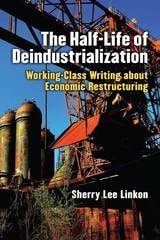
The Half-Life of Deindustrialization
Working-Class Writing about Economic RestructuringSherry Lee Linkon
University of Michigan Press, 2018
Through analysis of poetry, fiction, creative nonfiction, film, and drama, The Half-Life of Deindustrialization shows why people and communities cannot simply “get over” the losses of economic restructuring. The past provides inspiration and strength for working-class people, even as the contrast between past and present highlights what has been lost in the service economy. The memory of productive labor and stable, proud working-class communities shapes how people respond to contemporary economic, social, and political issues. These stories can help us understand the resentment, frustration, pride, and persistence of the American working class.
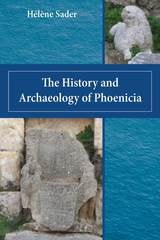
The History and Archaeology of Phoenicia
Hélène Sader
SBL Press, 2019
An insightful historical account of Phoenicia that illustrates its cities, culture, and daily life
Hélène Sader presents the history and archaeology of Phoenicia based on the available contemporary written sources and the results of archaeological excavations in Phoenicia proper. Sader explores the origin of the term Phoenicia; the political and geographical history of the city-states Arwad, Byblos, Sidon, and Tyre; and topography, climate, and natural resources of the Phoenician homeland. Her limited focus on Phoenicia proper, in contrast to previous studies that included information from Phoenician colonies, presents the bare realities of the opportunities and difficulties shaping Phoenician life. Sader’s evaluation and synthesis of the evidence offers a corrective to the common assumption of a unified Phoenician kingdom.
Features
- Historical as well as modern maps with the locations of all relevant archaeological sites
- Faunal and floral analyses that shed light on the Phoenician diet
- Petrographic analysis of pottery that sheds light on trading patterns and developments
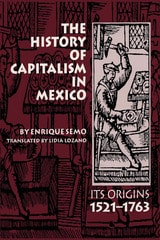
The History of Capitalism in Mexico
Its Origins, 1521–1763By Enrique Semo
University of Texas Press, 1992
What lies at the center of the Mexican colonial experience? Should Mexican colonial society be construed as a theoretical monolith, capitalist from its inception, or was it essentially feudal, as traditional historiography viewed it? In this pathfinding study, Enrique Semo offers a fresh vision: that the conflicting social formations of capitalism, feudalism, and tributary despotism provided the basic dynamic of Mexico's social and economic development.
Responding to questions raised by contemporary Mexican society, Semo sees the origin of both backwardness and development not in climate, race, or a heterogeneous set of unrelated traits, but rather in the historical interaction of each social formation. In his analysis, Mexico's history is conceived as a succession of socioeconomic formations, each growing within the "womb" of its predecessor. Semo sees the task of economic history to analyze each of these formations and to construct models that will help us understand the laws of its evolution. His premise is that economic history contributes to our understanding of the present not by formulating universal laws, but by studying the laws of development and progression of concrete economic systems.
The History of Capitalism in Mexico opens with the Conquest and concludes with the onset of the profound socioeconomic transformation of the last fifty years of the colony, a period clearly representing the precapitalist phase of Mexican development. In the course of his discussion, Semo addresses the role of dependency—an important theoretical innovation—and introduces the concept of tributary despotism, relating it to the problems of Indian society and economy. He also provides a novel examination of the changing role of the church throughout Mexican colonial history. The result is a comprehensive picture, which offers a provocative alternative to the increasingly detailed and monographic approach that currently dominates the writing of history.
Originally published as Historia del capitalismo en México in 1973, this classic work is now available for the first time in English. It will be of interest to specialists in Mexican colonial history, as well as to general readers.

The Homeowner Ideology
Economic (F)Utility of Real Property Rights in Four African CitiesSingumbe Muyeba
University of Michigan Press, 2025
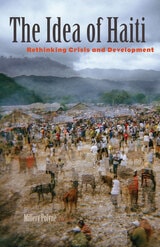
The Idea of Haiti
Rethinking Crisis and DevelopmentMillery Polyné
University of Minnesota Press, 2013
After Haiti was struck by a devastating earthquake on January 12, 2010, aid workers and offers of support poured in from around the world. Tellingly, though, news reports on the catastrophe and relief efforts frequently included a pejorative description of the country that outsiders were determined to rebuild: the troubled island nation, a nation plagued by political violence. There was much talk of inventing a “new” Haiti, which would presumably mimic Western modes of development and thus mitigate political instability and crisis.
As contributors to this wide-ranging book reveal, Haiti has long been marginalized as an embodiment of alterity, as the other, and the idea of a new Haiti is actually nothing new. An investigation of the notion of newness through the lenses of history and literature, urban planning, religion, and governance, The Idea of Haiti illuminates the politics and the narratives of Haiti’s past and present. The essays, which grow from original research and in-depth interviews, examine how race, class, and national development inform the policies that envision re-creating the country.
Together the contributors address important questions: How will the present narratives of deviance affect international relief and rebuilding efforts? What do Haitians themselves think about Haiti, old and new? What are the potential complications and weakness of aid strategies during these trying times? And what do we mean by crisis in Haiti?
Contributors: Yveline Alexis, Rutgers U; Wein Weibert Arthus, State U of Haiti; Greg Beckett, Bowdoin College; Alex Dupuy, Wesleyan U; Harley F. Etienne, U of Michigan; Robert Fatton Jr., U of Virginia; Sibylle Fischer, New York U; Elizabeth McAlister, Wesleyan U; Nick Nesbitt, Princeton U; Karen Richman, U of Notre Dame; Mark Schuller, York College (CUNY); Patrick Sylvain, Brown U; Évelyne Trouillot, State U of Haiti; Tatiana Wah, Columbia U.
The Impact of Trade and Domestic Policy Reforms in India
A CGE Modeling ApproachRajesh Chadha, Alan V. Deardorff, Sanjib Pohit, and Robert M. Stern
University of Michigan Press, 1998
The Informal and Underground Economy of the South Texas Border
By Chad Richardson and Michael J. Pisani
University of Texas Press, 2012
Much has been debated about the presence of undocumented workers along the South Texas border, but these debates often overlook the more complete dimension: the region’s longstanding, undocumented economies as a whole. Borderlands commerce that evades government scrutiny can be categorized into informal economies (the unreported exchange of legal goods and services) or underground economies (criminal economic activities that, obviously, occur without government oversight). Examining long-term study, observation, and participation in the border region, with the assistance of hundreds of locally embedded informants, The Informal and Underground Economy of the South Texas Border presents unique insights into the causes and ramifications of these economic channels.
The third volume in UT–Pan American’s Borderlife Project, this eye-opening investigation draws on vivid ethnographic interviews, bolstered by decades of supplemental data, to reveal a culture where divided loyalties, paired with a lack of access to protection under the law and other forms of state-sponsored recourse, have given rise to social spectra that often defy stereotypes. A cornerstone of the authors’ findings is that these economic activities increase when citizens perceive the state’s intervention as illegitimate, whether in the form of fees, taxes, or regulation. From living conditions in the impoverished colonias to President Felipe Calderón’s futile attempts to eradicate police corruption in Mexico, this book is a riveting portrait of benefit versus risk in the wake of a “no-man’s-land” legacy.
The Insider
How the Kiplinger Newsletter Bridged Washington and Wall StreetRob Wells
University of Massachusetts Press, 2022
When Willard M. Kiplinger launched the groundbreaking Kiplinger Washington Letter in 1923, he left the sidelines of traditional journalism to strike out on his own. With a specialized knowledge of finance and close connections to top Washington officials, Kiplinger was uniquely positioned to tell deeper truths about the intersections between government and business. With careful reporting and insider access, he delivered perceptive analysis and forecasts of business, economic, and political news to busy business executives, and the newsletter’s readership grew exponentially over the coming decades.
More than just a pioneering business journalist, Kiplinger emerged as a quiet but powerful link between the worlds of Presidents Hoover and Roosevelt, and used his Letter to play a little-known but influential role in the New Deal. Part journalism history, part biography, and part democratic chronicle, The Insider offers a well-written and deeply researched portrayal of how Kiplinger not only developed a widely read newsletter that launched a business publishing empire but also how he forged a new role for the journalist as political actor.
The Japanese Occupation of Malaya and Singapore, 1941-45
A Social and Economic HistoryPaul H. Kratoska
National University of Singapore Press, 2018
Originally published in 1998, The Japanese Occupation of Malaya and Singapore is fully updated with material from newly discovered and recently translated documents and as well as new archival evidence. Kratoska’s work offers a clear depiction of wartime life under foreign occupation, and explains how the legacies of war and occupation shaped the post-war recovery in Malaya and Singapore.
The Korean-American Dream
Portraits of a Successful Immigrant CommunityJames Flanigan
University of Nevada Press, 2018
In The Korean-American Dream, respected and distinguished business journalist James Flanigan uncovers the struggles and contributions of the people who have made Los Angeles the largest Korean city outside of Seoul.
This intimate account illustrates how Korean immigrants have preserved their culture and history as well as adapted to the American culture of E Pluribus Unum, the radical promise of “out of many, one.” Flanigan shows how Los Angeles emerged as a capital of the Asia Pacific region.
At less than 2 million, Korean Americans are a relatively small group compared to new Americans from China, the Philippines, and India. But with energy and drive, they are building landmarks in New York as well as L.A., lobbying for causes in Washington, founding businesses, heading universities and hospitals, and holding public office in all parts of the U.S.
Flanigan’s compelling narrative told largely through personal interviews provides a front-row seat to the economic, business, and cultural developments of the Korean American Community. At a time of spirited debate about immigration, their energy and ambition serve as a ringing reminder of the promise of the American mosaic.

The Last Earth
A Palestinian StoryRamzy Baroud
Pluto Press, 2018
Ordinary Palestinians have rarely narrated their own history. In this groundbreaking book, acclaimed author Ramzy Baroud draws on dozens of interviews to produce vivid, intimate and beautifully written accounts of Palestinian lives - in villages, refugee camps, prisons and cities, in the lands of their ancestors and in exile. Baroud's empathetic and lyrical approach reveals new human dimensions of the Palestinian saga, telling it as it has never before been told.
Against dominant narratives, the last earth reclaims Palestine's past - and present - for all its people.
The Last Saltmakers of Nexquipayac, Mexico
An Archaeological EthnographyJeffrey R. Parsons
University of Michigan Press, 2001
The Life and Times of Grandfather Alonso
Culture and History in the Upper AmazonMuratorio, Blanca
Rutgers University Press, 1991
In Blanca Muratorio's book, we are introduced to Rucuyaya Alonso, an elderly Quichua Indian of the Upper Ecuadorean Amazon. Alonso is a hunter, but like most Quichuas, he has done other work as well, bearing loads, panning gold, tapping rubber trees, and working for Shell Oil. He tells of his work, his hunting, his marriage, his fights, his fears, and his dreams. His story covers about a century because he incorporates the oral tradition of his father and grandfather along with his own memories. Through his life story, we learn about the social and economic life of that region.
Chapters of Alonso's life history and oral tradition alternate with chapters detailing the history of the world around him--the domination of missionaries, the white settlers' expropriation of land, the debt system workers were subjected to, the rubber boom, the world-wide crisis of the 1930s, and the booms and busts of the international oil market. Muratorio explains the larger social, economic, and ideological bases of white domination over native peoples in Amazonia. She shows how through everyday actions and thoughts, the Quichua Indians resisted attacks against their social identity, their ethnic dignity, and their symbolic systems. They were far from submissive, as they have often been portrayed.

The Limits of Okinawa
Japanese Capitalism, Living Labor, and Theorizations of CommunityWendy Matsumura
Duke University Press, 2015

The Livelihood of Kin
Making Ends Meet "The Kentucky Way"By Rhoda H. Halperin
University of Texas Press, 1990
Rural Appalachians in Kentucky call it "The Kentucky Way"—making a living by doing many kinds of paid and unpaid work and sharing their resources within extended family networks. In fact, these strategies are practiced by rural people in many parts of the world, but they have not been studied extensively in the United States. In The Livelihood of Kin, Rhoda Halperin undertakes a detailed exploration of this complex, family-oriented economy, showing how it promotes economic well-being and a sense of identity for the people who follow it.
Using actual life and work histories, Halperin shows how people make a living "in between" the cash economy of the city and the agricultural subsistence economy of the country. In regionally based, three-generation kin networks, family members work individually and jointly at many tasks: small-scale agricultural production, food processing and storage, odd jobs, selling used and new goods in marketplaces, and wage labor, much of which is temporary. People can make ends meet even in the face of job layoffs and declining crop subsidies. With these strategies people win a considerable degree of autonomy and control over their lives.
Halperin also examines how such multiple livelihood strategies define individual identity by emphasizing a person’s role in the family network over an occupation. She reveals, through psychiatric case histories, what damage can result when individuals leave the family network for wage employment in the cities, as increasing urbanization has forced many people to do.
While certainly of interest to scholars of Appalachian studies, this lively and readable study will also be important for economic anthropologists and urban and rural sociologists.
The Long Journey of Gracia Mendes
Marianna D. Birnbaum
Central European University Press, 2003

The Loop
The “L” Tracks That Shaped and Saved ChicagoPatrick T. Reardon
Southern Illinois University Press, 2021
Every day Chicagoans rely on the loop of elevated train tracks to get to their jobs, classrooms, or homes in the city’s downtown. But how much do they know about the single most important structure in the history of the Windy City? In engagingly brisk prose, Patrick T. Reardon unfolds the fascinating story about how Chicago’s elevated Loop was built, gave its name to the downtown, helped unify the city, saved the city’s economy, and was itself saved from destruction in the 1970s.
This unique volume combines urban history, biography, engineering, architecture, transportation, culture, and politics to explore the elevated Loop’s impact on the city’s development and economy and on the way Chicagoans see themselves. The Loop rooted Chicago’s downtown in a way unknown in other cities, and it protected that area—and the city itself—from the full effects of suburbanization during the second half of the twentieth century. Masses of data underlie new insights into what has made Chicago’s downtown, and the city as a whole, tick.
The Loop features a cast of colorful Chicagoans, such as legendary lawyer Clarence Darrow, poet Edgar Lee Masters, mayor Richard J. Daley, and the notorious Gray Wolves of the Chicago City Council. Charles T. Yerkes, an often-demonized figure, is shown as a visionary urban planner, and engineer John Alexander Low Waddell, a world-renowned bridge creator, is introduced to Chicagoans as the designer of their urban railway.
This fascinating exploration of how one human-built structure reshaped the social and economic landscape of Chicago is the definitive book on Chicago’s elevated Loop.