Results by title
733 books match the query 'Environmental Conservation & Protection' and 151 start with t

The Expendable Future
US Politics and the Protection of Biological DiversityRichard Tobin
Duke University Press, 1990
Drawing on congressional hearing and debates, previously unpublished public opinion surveys, interviews with state officials and employees of the Department of the Interior, and internal documents from this and other government agencies, Tobin provides an in-depth analysis of the policies on endangered species and the policy relationships among the different units of government involved in implementation. He examines the resources that are available for the protection of endangered species and the way in which those resources are matched to the priorities. Tobin also discusses the processes by which species are classified as endangered, how these species’ critical habitats are determined and protected, and the successes, and mostly failures, of current recovery programs.
The Extractive Zone
Social Ecologies and Decolonial PerspectivesMacarena Gómez-Barris
Duke University Press, 2017
The Fate of the Forest
Developers, Destroyers, and Defenders of the Amazon, Updated EditionSusanna B. Hecht and Alexander Cockburn
University of Chicago Press, 2010
The Amazon rain forest covers more than five million square kilometers, amid the territories of nine different nations. It represents over half of the planet’s remaining rain forest. Is it truly in peril? What steps are necessary to save it? To understand the future of Amazonia, one must know how its history was forged: in the eras of large pre-Columbian populations, in the gold rush of conquistadors, in centuries of slavery, in the schemes of Brazil’s military dictators in the 1960s and 1970s, and in new globalized economies where Brazilian soy and beef now dominate, while the market in carbon credits raises the value of standing forest.
Susanna Hecht and Alexander Cockburn show in compelling detail the panorama of destruction as it unfolded, and also reveal the extraordinary turnaround that is now taking place, thanks to both the social movements, and the emergence of new environmental markets. Exploring the role of human hands in destroying—and saving—this vast forested region, The Fate of the Forest pivots on the murder of Chico Mendes, the legendary labor and environmental organizer assassinated after successful confrontations with big ranchers. A multifaceted portrait of Eden under siege, complete with a new preface and afterword by the authors, this book demonstrates that those who would hold a mirror up to nature must first learn the lessons offered by some of their own people.
The Fight to Save the Redwoods
A History of the Environmental Reform, 1917–1978Susan R. Schrepfer
University of Wisconsin Press, 1983
"This is not a simple or ordinary history of a conservation crusade. Schrepfer very ably traces the changes in scientific wisdom from nineteenth-century romanticism and teleological evolutionism to more current ecological dynamism—and the influence of those intellectual developments on political history. . . . The subject is important—much broader than the title suggests—and so is the book."—American Historical Review
The Foundations of Glen Canyon Dam
Infrastructures of Dispossession on the Colorado PlateauErika Marie Bsumek
University of Texas Press, 2023
2024 Best Indigenous Studies Award, The Mormon History Association
2024 Southwest Book of the Year, Pima County Public Library
A history of how the construction of the Glen Canyon Dam was built and sustained by social inequalities
The second highest concrete-arch dam in the United States, Glen Canyon Dam was built to control the flow of the Colorado River throughout the Western United States. Completed in 1966, the dam continues to serve as a water storage facility for residents, industries, and agricultural use across the American West. The dam also generates hydroelectric power for residents in Colorado, Wyoming, New Mexico, Utah, Nevada, Arizona, and Nebraska. More than a massive piece of physical infrastructure and an engineering feat, the dam exposes the cultural structures and complex regional power relations that relied on Indigenous knowledge and labor while simultaneously dispossessing the Indigenous communities of their land and resources across the Colorado Plateau.
Erika Marie Bsumek reorients the story of the dam to reveal a pattern of Indigenous erasure by weaving together the stories of religious settlers and Indigenous peoples, engineers and biologists, and politicians and spiritual leaders. Infrastructures of dispossession teach us that we cannot tell the stories of religious colonization, scientific exploration, regional engineering, environmental transformation, or political deal-making as disconnected from Indigenous history. This book is a provocative and essential piece of modern history, particularly as water in the West becomes increasingly scarce and fights over access to it continue to unfold.
The Future of Conservation in America
A Chart for Rough WaterGary E. Machlis and Jonathan B. Jarvis
University of Chicago Press, 2018
Written by the first scientist appointed as science advisor to the director of the National Park Service and the eighteenth director of the National Park Service, this is a candid, passionate, and ultimately hopeful book. The authors describe a unified vision of conservation that binds nature protection, historical preservation, sustainability, public health, civil rights and social justice, and science into common cause—and offer real-world strategies for progress. To be read, pondered, debated, and often revisited, The Future of Conservation in America is destined to be a touchstone for the conservation movement in the decades ahead.
The Game of Conservation
International Treaties to Protect the World’s Migratory AnimalsMark Cioc
Ohio University Press, 2009
The Game of Conservation is a brilliantly crafted and highly readable examination of nature protection around the world.
Twentieth-century nature conservation treaties often originated as attempts to regulate the pace of killing rather than as attempts to protect animal habitat. Some were prompted by major breakthroughs in firearm techniques, such as the invention of the elephant gun and grenade harpoons, but agricultural development was at least as important as hunting regulations in determining the fate of migratory species. The treaties had many defects, yet they also served the goal of conservation to good effect, often saving key species from complete extermination and sometimes keeping the population numbers at viable levels. It is because of these treaties that Africa is dotted with large national parks, that North America has an extensive network of bird refuges, and that there are any whales left in the oceans. All of these treaties are still in effect today, and all continue to influence nature-protection efforts around the globe.
Drawing on a wide variety of primary and secondary sources, Mark Cioc shows that a handful of treaties—all designed to protect the world’s most commercially important migratory species—have largely shaped the contours of global nature conservation over the past century. The scope of the book ranges from the African savannahs and the skies of North America to the frigid waters of the Antarctic.

The Ghost of Meter
Culture and Prosody in American Free VerseAnnie Finch
University of Michigan Press, 1993
Population and environment are topics of intense current discussion and international action. Population growth rates have given rise to the metaphor of an exploding bomb, and accounts of oil spills, droughts, and rainforest destruction appear daily in the news. Despite the crowded agenda, observes Gayl Ness, the relationships between population and the environment still defy clear and comprehensive understanding. While they are closely intertwined in real life, they are separate in much of our thought and action. The contributors to this volume explore the basis of this separation and offer ways to integrate these closely interconnected areas, providing a forum for dialogue between those who support the interests of each. Topics covered include population-environment dynamics in historical perspective; constraints on sustainable growth in agricultural production; population as concept and parameter in the modeling of deforestation; powers and limits of the state and technology; resource control, fertility, and migration; and an ecosystem approach to the study of coastal areas.
The Gospel of Sustainability
Media, Market and LOHASMonica M. Emerich
University of Illinois Press, 2014
The Government of Beans
Regulating Life in the Age of MonocropsKregg Hetherington
Duke University Press, 2020
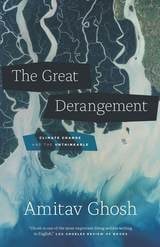
The Great Derangement
Climate Change and the UnthinkableAmitav Ghosh
University of Chicago Press, 2016
The extreme nature of today’s climate events, Ghosh asserts, make them peculiarly resistant to contemporary modes of thinking and imagining. This is particularly true of serious literary fiction: hundred-year storms and freakish tornadoes simply feel too improbable for the novel; they are automatically consigned to other genres. In the writing of history, too, the climate crisis has sometimes led to gross simplifications; Ghosh shows that the history of the carbon economy is a tangled global story with many contradictory and counterintuitive elements.
Ghosh ends by suggesting that politics, much like literature, has become a matter of personal moral reckoning rather than an arena of collective action. But to limit fiction and politics to individual moral adventure comes at a great cost. The climate crisis asks us to imagine other forms of human existence—a task to which fiction, Ghosh argues, is the best suited of all cultural forms. His book serves as a great writer’s summons to confront the most urgent task of our time.
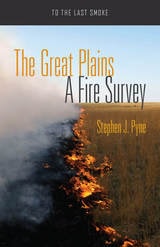
The Great Plains
A Fire SurveyStephen J. Pyne
University of Arizona Press, 2017
Early descriptions of the Great Plains often focus on a vast, grassy expanse that was either burnt or burning. The scene continued to burn until the land was plowed under or grazed away and broken by innumerable roads and towns. Yet, where the original landscape has persisted, so has fire, and where people have sought to restore something of that original setting, they have had to reinstate fire. This has required the persistence or creation of a fire culture, which in turn inspired schools of science and art that make the Great Plains today a regional hearth for American fire.
Volume 5 of To the Last Smoke introduces a region that once lay at the geographic heart of American fire, and today promises to reclaim something of that heritage. After all these years, the Great Plains continue to bear witness to how fires can shape contemporary life, and vice versa. In this collection of essays, Stephen J. Pyne explores how this once most regularly and widely burned province of North America, composed of various subregions and peoples, has been shaped by the flames contained within it and what fire, both tame and feral, might mean for the future of its landscapes.
Included in this volume:
- How wildland and rural fire have changed from the 19th century to the 21st century
- How fire is managed in the nation’s historic tallgrass prairies, from Texas to South Dakota, from Illinois to Nebraska
- How fire connects with other themes of Great Plains life and culture
- How and why Texas has returned to the national narrative of landscape fire
The Great Salt Lake Food Chains
Fragility and ResiliencyBonnie K. Baxter
University of Utah Press, 2024
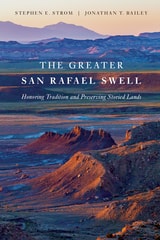
The Greater San Rafael Swell
Honoring Tradition and Preserving Storied LandsStephen E. Strom and Jonathan T. Bailey
University of Arizona Press, 2022
Natural and human history come together in The Greater San Rafael Swell, which spans much of Emery County in Utah. Authors Stephen Strom and Jonathan Bailey paint a multi-faceted picture of a singular place through photographs, along with descriptions of geology, paleontology, archaeology, history, and dozens of interviews with individuals who devoted more than two decades to developing a shared vision of the future of both the Swell and the County. At its core, the book relates the important story of how a coalition of ranchers, miners, off-road enthusiasts, conservationists, recreationists, and Native American tribal nations worked together for nearly 25 years to forge and pass the Emery County Public Lands Management Act in 2019.
This book chronicles hopeful stories for our times: how citizens of Emery and three other counties in the rural West worked to resolve perhaps the most volatile issue in the region – the future of public lands. Both their successes and the processes by which they found common ground serve as beacons in today’s uncertain landscape – beacons that can illuminate paths toward rebuilding our shared democracy from the ground up.
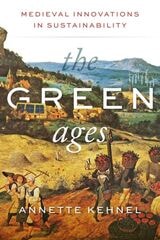
The Green Ages
Medieval Innovations in SustainabilityAnnette Kehnel
Brandeis University Press, 2024
In The Green Ages, historian Annette Kehnel explores sustainability initiatives from the Middle Ages, highlighting communities that operated a barter trade system on the Monte Subiaco in Italy, sustainable fishing at Lake Constance, common lands in the United Kingdom, transient grazing among Alpine shepherds in the south of France, and bridges built by crowdfunding in Avignon. Kehnel takes these medieval examples and applies their practical lessons to the modern world to prove that we can live sustainably—we’ve done it before!
From the garden economy in the mythical-sounding City of Ladies to early microcredit banks, Kehnel uncovers a world at odds with our understanding of the typical medieval existence. Premodern history is full of inspiring examples and concepts ripe for rediscovery, and we urgently need them as today’s challenges—finite resources, the twilight of consumerism, and growing inequality—threaten what we have come to think of as a modern way of living sustainably. This is a stimulating and revelatory look at a past that has the power to change our future.

The Green Archipelago
Forestry in Preindustrial JapanConrad Totman
Ohio University Press, 1998
This inaugural volume in the Ohio University Press Series in Ecology and History is the paperback edition of Conrad Totman’s widely acclaimed study of Japan’s environmental policies over the centuries.
Professor Totman raises the critical question of how Japan’s steeply mountainous woodland has remained biologically healthy despite centuries of intensive exploitation by a dense human population that has always been dependent on wood and other forest products. Mindful that in global terms this has been a rare outcome, and one that bears directly on Japan’s recent experience as an affluent, industrial society, Totman examines the causes, forms, and effects of forest use and management in Japan during the millennium to 1870. He focuses mainly on the centuries after 1600 when the Japanese found themselves driven by their own excesses into programs of woodland protection and regenerative forestry.
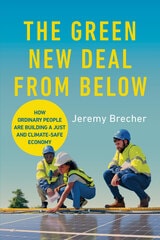
The Green New Deal from Below
How Ordinary People Are Building a Just and Climate-Safe EconomyJeremy Brecher
University of Illinois Press, 2024
A visionary program for national renewal, the Green New Deal aims to protect the earth’s climate while creating good jobs, reducing injustice, and eliminating poverty. Its core principle is to use the necessity for climate protection as a basis for realizing full employment and social justice.
Jeremy Brecher goes beyond the national headlines and introduces readers to the community, municipal, county, state, tribal, and industry efforts advancing the Green New Deal across the United States. Brecher illustrates how such programs from below do the valuable work of building constituencies and providing proofs of concept for new ideas and initiatives. Block by block, these activities have come together to form a Green New Deal built on a strong foundation of small-scale movements and grassroots energy.
A call for hope and a better tomorrow, The Green New Deal from Below offers a blueprint for reconstructing society on new principles to avoid catastrophic climate change.
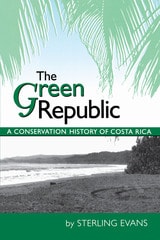
The Green Republic
A Conservation History of Costa RicaBy Sterling Evans
University of Texas Press, 1999
With over 25 percent of its land set aside in national parks and other protected areas, Costa Rica is renowned worldwide as "the green republic." In this very readable history of conservation in Costa Rica, Sterling Evans explores the establishment of the country's national park system as a response to the rapid destruction of its tropical ecosystems due to the expansion of export-related agriculture.
Drawing on interviews with key players in the conservation movement, as well as archival research, Evans traces the emergence of a conservation ethic among Costa Ricans and the tangible forms it has taken. In Part I, he describes the development of the national park system and "the grand contradiction" that conservation occurred simultaneously with massive deforestation in unprotected areas. In Part II, he examines other aspects of Costa Rica's conservation experience, including the important roles played by environmental education and nongovernmental organizations, campesino and indigenous movements, ecotourism, and the work of the National Biodiversity Institute.
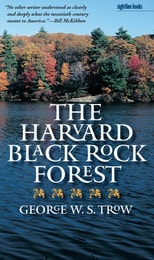
The Harvard Black Rock Forest
George W.S. Trow
University of Iowa Press, 2004
Originally published in the June 11, 1984, New Yorker, this lengthy essay is a sharp-edged inquiry into the generational institutions of our national life. With the same iconoclastic spirit and multilayered prose that he interwove in his classic Within the Context of No Context, George Trow tells the story of upstate New York’s Black Rock Forest—a thirty-eight-hundred-acre site overlooking the Hudson River—through the lives of the men who were connected to it and through the larger histories of Harvard University, U.S. conservation policies, and physics and biology.
The men: banker James Stillman; his son, Ernest Stillman, a medical doctor who inherited the land that would become the Black Rock Forest in 1928 and who wanted to make it healthy and useful; the legendary Gifford Pinchot, appointed chief forester of the U.S. in 1898; and Richard Thornton Fisher, for many years the head of the Harvard Forest and the man who suggested to Ernest Stillman that he turn his inherited land into another demonstration forest. Harvard University: a more financially focused, less collegial environment than the one that had accepted the gift of the forest in 1949, now looking to shed responsibility for the forest without shedding the money its sale would bring. The challenge: How to manage, how to value, a wilderness area of great biological diversity.
In his brilliantly elastic fashion, Trow maneuvers images, symbols, ambiguities, ethics, journalistic wordplay, advertising tricks, and corporate doublespeak to create an intensely perceptive analysis of the cultural, political, and scientific communities. His richly developed story of the Harvard Black Rock Forest is ultimately a symbolic tale that bears upon some of the most significant institutions, professions, and legacies in contemporary American life.
A publisher’s note reveals the fate of the forest.
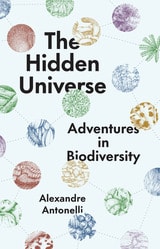
The Hidden Universe
Adventures in BiodiversityAlexandre Antonelli
University of Chicago Press, 2022
We are now living in an environmental emergency. As climate change, habitat loss, and other threats have placed almost one-fifth of all species on Earth at risk of extinction in the coming decades, a deeper understanding of biodiversity has never been more important. Biodiversity encompasses the rich variety of all life on Earth—the building blocks of life that provide invaluable sources of food, medicine, clothing, building materials, and more.
Marking the arrival of a bold new voice in popular science, The Hidden Universe shows readers what’s at stake in the fight to protect and restore biodiversity, but also what can and should be done now to protect our planet and ourselves for the future. As director of science at one of the world’s largest research organizations in plant and fungal sciences, Brazilian-born scientist Alexandre Antonelli is ideally suited to reveal the wonders of biodiversity at a genetic, species, and ecosystem level—what biodiversity is, how it works, and why it is the most important tool in our battle against climate change. Antonelli offers recommendations for large-scale political changes, as well as smaller, practical steps that readers can implement in their own lives and homes. With Antonelli as our guide, The Hidden Universe helps us imagine a future where biodiversity is not just preserved but cherished.
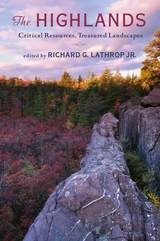
The Highlands
Critical Resources, Treasured LandscapesLathrop, Richard G
Rutgers University Press, 2011
Think of the Highlands as the “backyard” and “backstop” of the Philadelphia–New York–Hartford metroplex. A backyard that spans over three million acres across Pennsylvania, New York, and Connecticut, the Highlands serves as recreational open space for the metroplex’s burgeoning human population. As backstop, Highlands’ watersheds provide a ready source of high-quality drinking water for over fifteen million people.
The Highlands is the first book to examine the natural and cultural landscape of this four-state region, showing how it’s distinctive and why its conservation is vital. Each chapter is written by a different leading researcher and specialist in that field, and introduces readers to another aspect of the Highlands: its geological foundations, its aquifers and watersheds, its forest ecology, its past iron industry.
In the 1800s, the Highlands were mined, cutover, and then largely abandoned. Given time, the forests regenerated, the land healed, and the waters cleared. Increasingly, however, the Highlands are under assault again—polluted runoff contaminating lakes and streams, invasive species choking out the local flora and fauna, exurban sprawl blighting the rural landscape, and climate change threatening the integrity of its ecosystems.
The Highlands makes a compelling case for land use planning and resource management strategies that could help ensure a sustainable future for the region, strategies that could in turn be applied to other landscapes threatened by urbanization across the country. The Highlands are a valuable resource. And now, so is The Highlands.
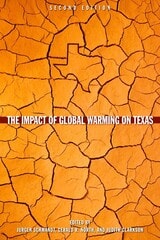
The Impact of Global Warming on Texas
Second editionEdited by Jurgen Schmandt, Gerald R. North, and Judith Clarkson
University of Texas Press, 2011
When The Impact of Global Warming on Texas was first published in 1995, it discussed climate change as a likely future phenomenon, predicted by scientific studies. This entirely rewritten second edition presents evidence that early climate change impacts can now be observed and identifies the threats climate change will pose to Texas through the year 2050. It also offers the hopeful message that corrective action, if taken now, can avert unmanageable consequences.
The book begins with a discussion of climate science and modeling and the information that can be derived from these sources for Texas. The authors follow this with an analysis of actual climate trends in the various Texas climate regions, including a predicted rise in temperatures of 5.4 degrees F (plus or minus 1.8 F) by the end of the century. This could lead to less rainfall and higher evaporation, especially in regions that are already dry. Other important effects include possible changes in El Niño (climate variability) patterns and hurricane behaviors. Taking into account projected population growth, subsequent chapters explore likely trends with respect to water availability, coastal impacts, and biodiversity.
The authors then look at the issues from a policy perspective, focusing on Texas's importance to the national economy as an energy producer, particularly of oil and gas. They recommend that Texas develop its own climate change policy to serve the goals of reducing greenhouse gas emissions, increasing energy independence, ensuring regional security, and improving management of water, air, land, and wildlife.
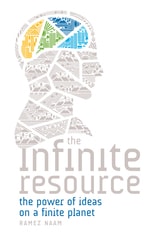
The Infinite Resource
The Power of Ideas on a Finite PlanetRamez Naam
University Press of New England, 2013
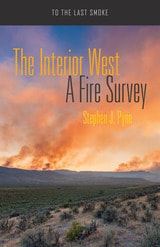
The Interior West
A Fire SurveyStephen J. Pyne
University of Arizona Press, 2018
In this collection of essays, fire historian Stephen J. Pyne explains the relevance of the Interior West to the national fire scene. This region offered the first scientific inquiry into landscape fire in the United States, including a map of Utah burns published in 1878 as part of John Wesley Powell’s Arid Lands report. Then its significance faded, and for most of the 20th century, the Interior West was the hole in the national donut of fire management. Recently the region has returned to prominence due to fires along its front ranges; invasive species, both exotics like cheatgrass and unleashed natives like mountain pine beetle; and fatality fires, notably at South Canyon in 1994.
The Interior West has long been passed over in national fire narratives. Here it reclaims its rightful place.
Included in this volume:
- A summary of 19th- and 20th-century fire history in the Interior West
- How this important region inspired U.S. studies of landscape fire
- Why the region disappeared from national fire management discussions
- How the expansion of invasive species and loss of native species has affected the region’s fire ecology
- The national significance of fire in the Interior West
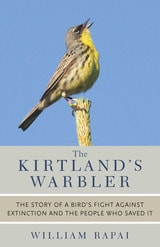
The Kirtland's Warbler
The Story of a Bird's Fight Against Extinction and the People Who Saved ItWilliam Rapai
University of Michigan Press, 2013
At a time when the world is seeing its species rapidly go extinct, the Kirtland's warbler is not just a survivor, it's a rock star. The Kirtland's warbler is the rarest warbler species in North America and will always be rare because of its persnickety nesting preferences. But when the total population fell below 400 birds in the 1970s and 1980s---driven largely by a loss of habitat and the introduction of a parasite---a small group of dedicated biologists, researchers, and volunteers vowed to save the Kirtland's warbler despite long odds. This is the story of the warbler's survival and gradual recovery, the people and policies that kept it from extinction, and the ongoing challenges that may again jeopardize the bird's future.
In The Kirtland's Warbler, William Rapai explores the bird's fascinating natural history as well as the complex and evolving relationships between the warbler, its environment, its human protectors, and state and federal policies that today threaten to eradicate decades of work done on the species' behalf. Beginning with an account of the warbler's discovery in the mid-nineteenth century and ornithologists' desperate hunt for information on the elusive new species, the book goes on to examine the dramatic events that quickly led to the warbler's precarious status and its eventual emergence as a lightning rod for controversy.
The Kirtland's warbler is often described as a "bird of fire" for its preference for nesting in areas cleared by wildfire. But it also warrants the name for the passion it ignites in humans. Both tragic and uplifting, the story of this intriguing bird is a stirring example of how strong leadership, vision, commitment, sustained effort, and cooperation can come together to protect our natural world.
The Land Is Our Community
Aldo Leopold’s Environmental Ethic for the New MillenniumRoberta L. Millstein
University of Chicago Press, 2024
Informed by his experiences as a hunter, forester, wildlife manager, ecologist, conservationist, and professor, Aldo Leopold developed a view he called the land ethic. In a classic essay, published posthumously in A Sand County Almanac, Leopold advocated for an expansion of our ethical obligations beyond the purely human to include what he variously termed the “land community” or the “biotic community”—communities of interdependent humans, nonhuman animals, plants, soils, and waters, understood collectively. This philosophy has been extremely influential in environmental ethics as well as conservation biology and related fields.
Using an approach grounded in environmental ethics and the history and philosophy of science, Roberta L. Millstein reexamines Leopold’s land ethic in light of contemporary ecology. Despite the enormous influence of the land ethic, it has sometimes been dismissed as either empirically out of date or ethically flawed. Millstein argues that these dismissals are based on problematic readings of Leopold’s ideas. In this book, she provides new interpretations of the central concepts underlying the land ethic: interdependence, land community, and land health. She also offers a fresh take on of his argument for extending our ethics to include land communities as well as Leopold-inspired guidelines for how the land ethic can steer conservation and restoration policy.
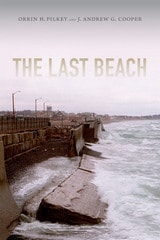
The Last Beach
Orrin H. Pilkey and J. Andrew G. Cooper
Duke University Press, 2014
After explaining beaches as dynamic ecosystems, Pilkey and Cooper assess the harm done by dense oceanfront development accompanied by the construction of massive seawalls to protect new buildings from a shoreline that encroaches as sea levels rise. They discuss the toll taken by sand mining, trash that washes up on beaches, and pollution, which has contaminated not only the water but also, surprisingly, the sand. Acknowledging the challenge of reconciling our actions with our love of beaches, the geologists offer suggestions for reversing course, insisting that given the space, beaches can take care of themselves and provide us with multiple benefits.

The Last Mixtape
Physical Media and Nostalgic CyclesSeth Long
University of Chicago Press, 2025
Obsolescence makes the heart grow fonder, at least in the case of the mixtape. Not all technologies are so lucky. Some (say, wax cylinders) fade almost completely from cultural memory. A lucky few pass into metaphor: we still “hang up” our smartphones, “cut” film, and “patch” computer code. As digital streaming completes the obsolescence of physical media, what will become of the humble cassette?
In The Last Mixtape, Seth Long offers a microhistory of music curation, anchored by the cassette, from which he explores the meanings of obsolescence, ownership, nostalgia, and the speed of cultural change. A moving meditation on our relationship with music, memory, and curation in the digital century, Long ultimately calls for a return to the media ecology represented by the mixtape: a world in which media is cheap and abundant but tactile and meaningfully engaged.
The Light-Green Society
Ecology and Technological Modernity in France, 1960-2000Michael Bess
University of Chicago Press, 2003
The Light-Green Society limns sharply these trends over the last fifty years. The rise of environmentalism in the 1960s stemmed from a fervent desire to "save" wild nature-nature conceived as a qualitatively distinct domain, wholly separate from human designs and endeavors. And yet, Bess shows, after forty years of environmentalist agitation, much of it remarkably successful in achieving its aims, the old conception of nature as a "separate sphere" has become largely untenable. In the light-green society, where ecology and technological modernity continually flow together, a new hybrid vision of intermingled nature-culture has increasingly taken its place.
The Lost Forest
Phyllis Root
University of Minnesota Press, 2019
The story of a forest “lost” by a surveying error—and all the flora and fauna to be found there
A forest, of course, doesn’t need a map to know where to grow. But people need a map to find it. And in 1882 when surveyors set out to map a part of Minnesota, they got confused, or tired and cold (it was November), and somehow mapped a great swath of ancient trees as a lake. For more than seventy-five years, the mistake stayed on the map, and the forest remained safe from logging—no lumber baron expects to find timber in a lake, after all.
The Lost Forest tells the story of this lucky error and of the 144 acres of old-growth red and white pine it preserved. With gentle humor, Phyllis Root introduces readers to the men at their daunting task, trekking across Minnesota, measuring and marking the vast land into townships and sections and quarters. She takes us deep into a stand of virgin pine, one of the last and largest in the state, where U.S. history and natural history meet. With the help of Betsy Bowen’s finely observed and beautiful illustrations, she shows us all the life that can be found in the Lost Forest.
Accompanying the story is a wealth of information about the Cadastral Survey and about the plants and animals that inhabit forests—making the book a valuable guide for readers who might want to look even deeper into the history of Minnesota, the flora and fauna of old-growth forests, and the apportioning of land in America.
The Lure of the North Woods
Cultivating Tourism in the Upper MidwestAaron Shapiro
University of Minnesota Press, 2013
In the late nineteenth century, the North Woods offered people little in the way of a pleasant escape. Rather, it was a hub of production supplying industrial America with vast quantities of lumber and mineral ore. This book tells the story of how northern Minnesota, northern Wisconsin, and Michigan’s Upper Peninsula became a tourist paradise, turning a scarred countryside into the playground we know today.
Stripped of much of its timber and ore by the early 1900s, the North Woods experienced deindustrialization earlier than the Rust Belt cities that consumed its resources. In The Lure of the North Woods, Aaron Shapiro describes how residents and visitors reshaped the region from a landscape of exploitation to a vacationland. The rejuvenating North Woods profited in new ways by drawing on emerging connections between the urban and the rural, including improved transportation, promotion, recreational land use, and conservation initiatives. Shapiro demonstrates how this transformation helps explain the interwar origins of modern American environmentalism, when both the consumption of nature for pleasure and the work of the Civilian Conservation Corps in the North Woods and elsewhere led many Americans to cultivate a fresh perspective on the outdoors. At a time when travel and recreation are considered major economic forces, The Lure of the North Woods reveals how leisure—and tourism in particular—has shaped modern America.
The Malthusian Moment
Global Population Growth and the Birth of American EnvironmentalismRobertson, Thomas
Rutgers University Press, 2012
Weaving together the international and the domestic in creative new ways, The Malthusian Moment charts the explosion of Malthusian thinking in the United States from World War I to Earth Day 1970, then traces the just-as-surprising decline in concern beginning in the mid-1970s. In addition to offering an unconventional look at World War II and the Cold War through a balanced study of the environmental movement’s most contentious theory, the book sheds new light on some of the big stories of postwar American life: the rise of consumption, the growth of the federal government, urban and suburban problems, the civil rights and women’s movements, the role of scientists in a democracy, new attitudes about sex and sexuality, and the emergence of the “New Right.”
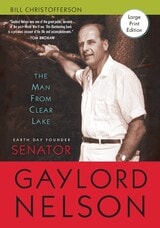
The Man from Clear Lake
Earth Day Founder Senator Gaylord NelsonBill Christofferson
University of Wisconsin Press, 2009
On Earth Day 1970 twenty million Americans displayed their commitment to a clean environment. It was called the largest demonstration in human history, and it permanently changed the nation’s political agenda. By Earth Day 2000 participation had exploded to 500 million people in 167 countries.
The seemingly simple idea—a day set aside to focus on protecting our natural environment—was the brainchild of U.S. Senator Gaylord Nelson of Wisconsin. It accomplished, far beyond his expectations, his lifelong goal of putting the environment onto the nation’s and the world’s political agendas.
A remarkable man, Nelson ranks as one of history’s leading environmentalists. He also played a major role as an early, outspoken opponent of the Vietnam War, and as a senate insider was a key player in civil rights, poverty, civil liberties and consumer protection issues.
The life of Nelson, a small town boy who learned his values and progressive political principles at an early age, is woven through the political history of the twentieth century. Nelson’s story intersects at times with Fighting Bob La Follette, Joe McCarthy, and Bill Proxmire in Wisconsin, and with George McGovern, Lyndon Johnson, Hubert Humphrey, Russell Long, Walter Mondale, John F. Kennedy, and others on the national scene.
Winner, Elizabeth A. Steinberg Prize, University of Wisconsin Press
The Media Commons
Globalization and Environmental DiscoursesPatrick D Murphy
University of Illinois Press, 2017
The media draws the cultural boundaries of our environmental imagination--and influences just who benefits. Murphy's analysis emphasizes social context, institutional alignments, and commercial media's ways of rendering discussion. He identifies and examines key terms, phrases, and metaphors as well as the ways consumers are presented with ideas like agency and the place of nature. What emerges is the link between pervasive messaging and an "environment" conjured by our media-saturated social imagination. As the author shows, today's complex, integrated media networks shape, frame, and deliver many of our underlying ideas about the environment. Increasingly--and ominously--individuals and communities experience these ideas not only in the developed world but in the increasingly consumption-oriented Global South.
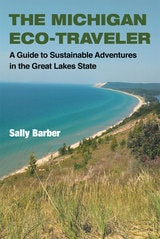
The Michigan Eco-Traveler
A Guide to Sustainable Adventures in the Great Lakes StateSally Barber
University of Michigan Press, 2014
Whether you’re a weekend traveler, extreme adventurer, or family on vacation, The Michigan Eco-Travelerlights the way to a greener getaway. Naturalists, conservationists, and hospitality experts will find the book equally helpful in responding to the ever rising demand for sustainable recreation.
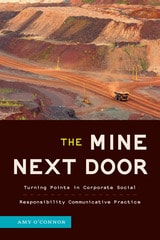
The Mine Next Door
Turning Points in Corporate Social Responsibility Communicative PracticeAmy O'Connor
University of Michigan Press, 2026
The Mine Next Door peels back the veneer of corporate public relations to expose the jagged edges that define the boundaries of corporate social responsibility (CSR) in Minnesota’s Iron Range. With five years of ethnographic and archival research, Amy O’Connor was able to interview over seventy people, including miners, retired miners, community members, elected officials, and representatives from Cleveland-Cliffs Inc. In addition to illuminating the everyday lives of Minnesota’s taconite miners and community members, she compares the corporate narratives of CSR with these lived experiences to reveal how CSR boundaries are co-constructed, contested, and consequential.
In this rare ethnographic account of iron ore mining in the United States, O’Connor shows how turning points—whether macrolevel (e.g., capitalism, governmental policy, and regulation) or microlevel (e.g., miner experiences, local culture, company proclivities)—create CSR communicative practice boundaries that are influenced by culture, history, and geography. The permanence and precariousness of the mining industry offers a unique opportunity to show how corporations, workers, and communities both collaborate and clash. The Mine Next Door argues that to understand CSR communicative practices, we must move beyond the staid, homogeneous CSR reports and glossy public relations documents to reveal the messy and contradictory moments of decision wherein corporations and communities determine where a company has power and responsibility.
The Mojave Desert
Ecosystem Processes and SustainabilityRobert Webb
University of Nevada Press, 2009
In The Mojave Desert, thirty-eight scientists who are all specialists in desert ecology address the threats to the Mojave, as well as the potential for natural recovery and active restoration. The contributing authors discuss the desert from several perspectives: regional threats such as expanding human populations, climate change, atmospheric nitrogen deposition, and invasive plants; the impact of roads in a desert ecosystem; soils and plant communities; shrinking aquifers; and the monitoring and sustainability of this fragile ecosystem. Finally, they discuss the importance of long-term data and the ways scientists and resource managers can interact to enhance understanding of the processes of change in the Mojave Desert and to advance the preservation and restoration of its precious resources.The Mojave Desert offers the fruits of extensive research in a number of disciplines and a sound assessment of the current state and possible future of one of the world's major deserts. As human intrusion and climate change increasingly threaten the Mojave's ecosystem, studies like this are essential in helping scientists, land managers, and the general public understand what is at risk and what can be done to preserve this austere and hauntingly beautiful region.
The Mosquito Crusades
A History of the American Anti-Mosquito Movement from the Reed Commission to the First Earth DayPatterson, Gordon
Rutgers University Press, 2009
Providing readers with a fascinating exploration of the relationship between science, technology, and public policy, Gordon Patterson's narrative begins in New Jersey with John B. Smith's effort to develop a comprehensive plan and solution for mosquito control, one that would serve as a national model. From the Reed Commission's 1900 yellow fever experiment to the first Earth Day seventy years later, Patterson provides an eye-opening account of the crusade to curtail the deadly mosquito population.
The Natural Heritage of Illinois
Essays on Its Lands, Waters, Flora, and FaunaJohn E. Schwegman
Southern Illinois University Press, 2016
Author John E. Schwegman looks at the state’s early natural history, including its prehistoric vegetation and wildlife. He describes surviving remnants of formerly widespread species, such as biting horseflies so abundant they could kill a horse and flights of passenger pigeons dense enough to block the sun. The book addresses issues of species decline, the ways animals adapt to climate change and dwindling habitats, and the problem of invasive exotic species. Ecosystem preservation is discussed, and readers will witness prescribed burning techniques and volunteers aiding in natural land management.
Animal and plant conservation in Illinois is illustrated by essays that examine the efforts to save our dwindling Prairie Chicken population and to reintroduce river otters, the return of nesting bald eagles and cormorants to the state, the discovery of armadillos in southern Illinois, the pros and cons of feeding birds, and the biological significance of frog calls. Essays on Illinois’ native plants cover a wide range of topics, from defensive strategies to poisonous and edible species, prairie’s dependence on fire, how to recognize our wild roses, orchids, prairie grasses, and more. Full of fascinating information and expert knowledge, this book will prove invaluable to scholars, students, teachers, and casual nature lovers.
The Nature Way
Writings from a Western Shoshone ElderCorbin Harney
University of Nevada Press, 2009
Corbin Harney’s long life encompassed remarkable changes in the lives of Native Americans and in the technological and political development of the world. Born into an impoverished Western Shoshone family on the Nevada-Idaho border and orphaned as a newborn, he was brought up by grandparents who taught him the traditional ways of their people and the ancient spiritual beliefs that sustained their culture. As an adult, Harney found his calling as a traditional healer and spiritual leader. Soon he became involved in the Shoshone struggle for civil rights, including their efforts to protect and heal their traditional lands in what became the Nevada Test Site. This involvement led Harney to his eventual role as a leader of the international antinuclear movement.The Nature Way is a rich compendium of Corbin Harney’s experience and wisdom. His account of his life incorporates the tragic history of Native Americans in the Great Basin after the arrival of Euro-Americans, his realization of his own identity as a Native American, and his long study of his people’s traditions and spiritual practices. His summary of the Shoshone and Paiute use of indigenous plants for food and healing highlights their understanding that the Earth and her denizens and products must be respected and protected in order to preserve the connection that all creatures have with sacred Mother Earth. Finally, his account of his role as an antinuclear activist expands on his awareness of the human responsibility to protect the Earth, especially from the extreme danger posed by nuclear technology and nuclear weapons of mass destruction. Corbin Harney’s voice is one of the clearest expressions yet of the values, concerns, and spirituality of contemporary Native America. He offers all of us an eloquent plea that we respect and cooperate with Nature to ensure the survival of the planet.
The Nature of Cities
Ecocriticism and Urban EnvironmentsMichael Bennett
University of Arizona Press, 1999
The editors—both raised in small towns but now living in major urban areas—are especially concerned with the sociopolitical construction of all environments, both natural and manmade. Following an opening interview with Andrew Ross exploring the general parameters of urban ecocriticism, they present essays that explore urban nature writing, city parks, urban "wilderness," ecofeminism and the city, and urban space. The volume includes contributions on topics as wide-ranging as the urban poetry of English writers from Donne to Gay, the manufactured wildness of a gambling casino, and the marketing of cosmetics to urban women by idealizing Third World "naturalness." These essays seek to reconceive nature and its cultural representations in ways that contribute to understanding the contemporary cityscape. They explore the theoretical issues that arise when one attempts to adopt and adapt an environmental perspective for analyzing urban life.
The Nature of Cities offers the ecological component often missing from cultural analyses of the city and the urban perspective often lacking in environmental approaches to contemporary culture. By bridging the historical gap between environmentalism, cultural studies, and urban experience, the book makes a statement of lasting importance to the development of the ecocritical movement.
The Nature of Politics
State Building and the Conservation Estate in Postcolonial BotswanaAnnette A. LaRocco
Ohio University Press, 2024
The New Decentralists
The Back-to-the-Land Movement and the Politics of Localism in Appalachia, 1968-2000Jinny A Turman
West Virginia University Press, 2026
How some “back-to-the-landers” fled alienating urban, bureaucratic places for rural Appalachia in pursuit of self-reliance, liberation, and community, only to later find themselves vulnerable to a rising tide of national conservatism that minted new political elites on the state and local level at odds with their progressive social ideas and environmental values.
The North Carolina Shore and Its Barrier Islands
Restless Ribbons of SandOrrin H. Pilkey, William J. Neal, Stanley R. Riggs, Craig A. Webb, David M. Bush, Deborah F. Pilkey, Jane Bullock, and Brian A. Cowan
Duke University Press, 1998
Evidence that the North Carolina shore is changing is never hard to find, but recently the devastation wrought by Hurricane Fran and the perilous situation of the historic lighthouse at Cape Hatteras have reminded all concerned of the fragility of this coast. Arguing for a policy of intelligent development, one in which residential and commercial structures meet rather than confront the changing nature of the shore, the authors have included practical information on hazards of many kinds—storms, tides, floods, erosion, island migration, and earthquakes. Diagrams and photographs clearly illustrate coastal processes and aid in understanding the impact of hurricanes and northeasters, wave and current dynamics, as well as pollution and other environmental destruction due to overdevelopment. A chapter on estuaries provides related information on the shores of back barrier areas that are growing in popularity for recreational residences. Risk maps focus on the natural hazards of each island and together with construction guidelines provide a basis for informed island management. Lastly, the dynamics of coastal politics and management are reviewed through an analysis of the controversies over the decision to move the Cape Hatteras lighthouse and a proposed effort to stabilize Oregon Inlet.
From the natural and historic perspective of the opening chapters to the regional discussions of individual barrier islands, this book is both a primer on coastal processes for the first time visitor as well as a guide to hazard identification for property owners.
The Northeast
A Fire SurveyStephen J. Pyne
University of Arizona Press, 2019
The Northeast has its roster of great fires, beginning with dark days in the late 18th century, followed by a chronicle of conflagrations continuing as late as 1903 and 1908, with a shocking after-tremor in 1947. It hosted the nation’s first forestry schools. It organized the first interstate (and international) fire compact. And it was the Northeast that pioneered the transition to the true Big Burn—industrial combustion—as America went from burning living landscapes to burning lithic ones.
In this new book in the To the Last Smoke series, renowned fire expert Stephen J. Pyne narrates this history and explains how fire is returning to a place not usually thought of in America’s fire scene. He examines what changes in climate and land use mean for wildfire, what fire ecology means for cultural landscapes, and what experiments are underway to reintroduce fire to habitats that need it. The region’s great fires have gone; its influence on the national scene has not.
The Northeast: A Fire Survey samples the historic and contemporary significance of the region and explains how it fits into a national cartography and narrative of fire.
Included in this volume:
How the region shaped America’s understanding and policy toward fire
How fire fits into the region today and what that means for the country overall
What changes in climate, land use, and institutions may mean for northeastern fire, both wild and tame
The Northern Rockies
A Fire SurveyStephen J. Pyne
University of Arizona Press, 2016
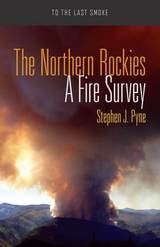
The Northern Rockies remain one of three major hearths for America’s fire culture. They hold a major fire laboratory, an equipment development center, an aerial fire depot, and a social engagement with fire—even a literature. Missoula is to fire in the big backcountry what Tallahassee is to prescribed burning and what Southern California is to urban-wildland hybrids. On its margins, Boise hosts the National Interagency Fire Center. In this structured collection of essays on the region, Stephen J. Pyne explores what makes the Northern Rockies distinctive and what sets it apart from other regions of the country. Surprisingly, perhaps, the story is equally one of big bureaucracies and of generations that encounter the region’s majestic landscapes through flame.
The Northern Rockies is part of a multivolume series describing the nation’s fire scene region by region. The volumes in To the Last Smoke also cover Florida, the Northern Rockies, the Great Plains, the Southwest, and several other critical fire regions. The series serves as an important punctuation point to Pyne’s 50-year career with wildland fire—both as a firefighter and a fire scholar. These unique surveys of regional pyrogeography are Pyne’s way of “keeping with it to the end,” encompassing the directive from his rookie season to stay with every fire “to the last smoke.”
The Northwest Salmon Crisis
A Documentary HistoryJoseph Cone
Oregon State University Press, 1996
The Nutmeg's Curse
Parables for a Planet in CrisisAmitav Ghosh
University of Chicago Press, 2021
A powerful work of history, essay, testimony, and polemic, Amitav Ghosh’s new book traces our contemporary planetary crisis back to the discovery of the New World and the sea route to the Indian Ocean. The Nutmeg’s Curse argues that the dynamics of climate change today are rooted in a centuries-old geopolitical order constructed by Western colonialism. At the center of Ghosh’s narrative is the now-ubiquitous spice nutmeg. The history of the nutmeg is one of conquest and exploitation—of both human life and the natural environment. In Ghosh’s hands, the story of the nutmeg becomes a parable for our environmental crisis, revealing the ways human history has always been entangled with earthly materials such as spices, tea, sugarcane, opium, and fossil fuels. Our crisis, he shows, is ultimately the result of a mechanistic view of the earth, where nature exists only as a resource for humans to use for our own ends, rather than a force of its own, full of agency and meaning.
Writing against the backdrop of the global pandemic and the Black Lives Matter protests, Ghosh frames these historical stories in a way that connects our shared colonial histories with the deep inequality we see around us today. By interweaving discussions on everything from the global history of the oil trade to the migrant crisis and the animist spirituality of Indigenous communities around the world, The Nutmeg’s Curse offers a sharp critique of Western society and speaks to the profoundly remarkable ways in which human history is shaped by non-human forces.
The Origins of Modern Environmental Thought
J. Edward de Steiguer
University of Arizona Press, 2006
Among others, de Steiguer examines works by Barry Commoner, Paul Ehrlich, Kenneth Boulding, Garrett Hardin, Herman Daly, and Arne Naess. He describes the growth of the environmental movement from 1962 to 1973 and explains a number of factors that led to a decline in environmental interest during the mid-1970s. He then reveals changes in environmental awareness in the 1980s and concludes with commentary on the movement through 2004. Updated and revised from The Age of Environmentalism, this expanded edition includes three new chapters on Stewart Udall, Roderick Nash, and E. F. Schumacher, as well as a new concluding chapter, bibliography, and updated material throughout. This primer on the history and development of environmental consciousness and the many modern scholars who have shaped the movement will be useful to students in all branches of environmental studies and philosophy, as well as biology, economics, and physics.
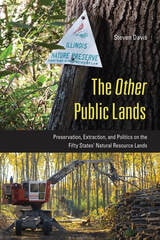
The Other Public Lands
Preservation, Extraction, and Politics on the Fifty States' Natural Resource LandsSteven Davis
Temple University Press, 2025
The Other Public Lands looks at both differences and common patterns in state land management, including the structure of natural resource agencies. Davis examines the privatization and commercialization of state parks, and the tensions between recreation, revenue and the preservation of biodiversity and natural landscapes. He also raises issues about equity, access, appropriate development, and ecological health. Chapters review state forests, state wildlife management areas, and school trust lands. In addition, the roles of interest groups, the courts, and agency culture and behavior are compared and analyzed both between states and the federal government and between states with differing approaches to specific issues.
As there has been a demand to transfer at least some federal lands to the states, The Other Public Lands concludes with an appraisal of whether states could handle this transfer and goes on to suggest ways to ensure adequate access in an era of increased demand.