Results by title
28164 books match the query 'History' and 6372 start with t

Taking the Risk Out of Democracy
Corporate Propaganda versus Freedom and LibertyAlex Carey
University of Illinois Press, 1995
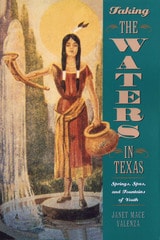
Taking the Waters in Texas
Springs, Spas, and Fountains of YouthBy Janet Mace Valenza
University of Texas Press, 2000
"It is well known that Southern Texas possesses a greater variety of Mineral Waters than any other country on the globe" enthused a promotion for one of Texas' many watering spas of the nineteenth century. Though most are closed and nearly forgotten today, Texas spas and resorts once drew thousands of visitors from across the country, seeking healing of body and spirit in the rejuvenating mineral waters.
This book offers the first comprehensive history of Texas' healing springs. Janet Valenza tracks the rise, popularity, and decline of the "water cure" from the 1830s to the present day. She follows the development of major spas and resorts, such as Mineral Wells and Indian Hot Springs near El Paso, as well as of smaller, family-run springs. She also describes how mineral waters influenced patterns of settlement, transportation routes, commerce, and people's attitudes toward the land. Period photos and quotes from those seeking cures offer vivid glimpses into the daily life at the springs, which Valenza lists and describes county-by-county in the appendix.
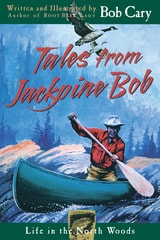
Tales From Jackpine Bob
Bob Cary
University of Minnesota Press, 2003
Bob Cary’s entertaining stories of life in the outdoors will touch your heart and make you laugh. Despite Bob’s many years as an expert woodsman, when he relates an adventure or a misadventure, the joke is always on him. Whether you read Tales from Jackpine Bob by firelight or lamplight, you’ll enjoy Bob’s warm humor and buoyant spirit.

Tales Never Told Around Campfire
True Tales Of Frontier AmericaMark Dugan
Ohio University Press, 1992
Tales and Songs of Southern Illinois
Collected by Charles Neely
Southern Illinois University Press, 1998
First published in 1938, this lively collection of over 150 tales and songs runs the gamut from joy to woe, from horror to humor. In forming the collection, Charles Neely required only that the tales and songs—whether home grown or transplanted from the great body of world lore— had taken root somehow in the area of southern Illinois known as Egypt.
Notable tales include "Bones in the Well," "A Visit from Jesse James," "The Flight of the Naked Teamsters," "The Dug Hill Boger," and "How Death Came to Ireland"; among the songs and ballads are "Barbara Allen," "Hog and Hominy," "The Drunkard’s Lone Child," "The Belleville Convent Fire," "Shawneetown Flood," and "The Death of Charlie Burger."
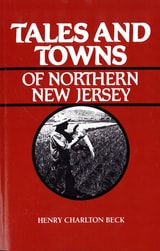
Tales and Towns of Northern New Jersey
Beck, Henry
Rutgers University Press, 1967
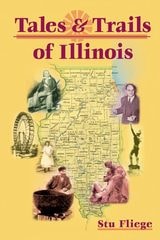
Tales and Trails of Illinois
Stu Fliege
University of Illinois Press, 2002
Stu Fliege highlights historical events, such as the Herrin Massacre and Chicago’s Iroquois Theatre fire, and covers the diverse terrain of Illinois’s natural and constructed wonders, from Lusk Creek Canyon to Robert Allerton Park. Readers will meet a colorful cast of characters including pioneers, squatters, miners, gangsters, and utopian leaders. They’ll travel back in time to when salt production was the state’s main industry and learn of the Illinois ingenuity that spawned inventions including barbed wire, the steel plow, and the Ferris wheel. From Oquawka’s elephant memorial to Murphysboro’s mysterious mud monster, the book also offers quirky facts and spooky stories that aren’t found in the average history book.
Liberally illustrated and clearly written, Tales and Trails of Illinois is a helpful learning tool for Illinoisans of all ages, perfect for families, history buffs, libraries, and the classroom.
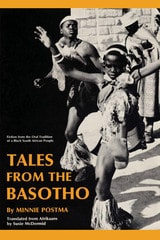
Tales from the Basotho
By Minnie Postma
University of Texas Press, 1974
"They say that the eldest of the chief's daughters..." So begins a tale from the Basotho, unfolded by the meager light of a dung fire that burns smokily behind the reed screen sheltering the entrance of the hut. The old ones of the tribe wait until dark before telling their stories, for everyone knows horns will grow from the head of one who tells a story during daylight hours. Tales from the Basotho abounds with elements familiar to folk narrative. The heroes and heroines are the chiefs and their wives, their sons and their daughters. Fantastic creatures frequent the narratives. exhibiting their awful powers.
Rustic peace and beauty pervade the stories, as Minnie Postma amply demonstrates in her versions of the tales. Something fearful may be occurring—the dreaded Koeoko pulling the only son of the chief under water—but, at the same time, girls with babies tied to their backs are searching for edible bulbs in the veld, and an old woman dreams in the gentle sunlight in front of the huts.
These tales from the Basotho are for entertainment only. There is a tabu against telling tales while the sun shines, because daylight hours must be saved for work. The telling itself is the· reason the story exists, for the audience is already aware of the outcome of each tale. As Wm. Hugh Jansen emphasizes in his foreword, "text" and "context" are often easily interpreted and made accessible in a translation, but Tales from the Basotho is ultimately successful for its rendering of "texture." And texture is doubly hard to convey when the telling itself is of primary importance. Minnie Postma and Susie McDermid have transferred the art of the Basotho raconteur onto the printed page. All the simple, understandable formulas, exclamations, and repetitions used so skillfully by the native storyteller are present. Rhythm is an important element in the tales, and a word, a phrase, even a whole paragraph will be repeated until the rhythm satisfies the storyteller, in tum increasing the appreciation of the listeners.
Tales from the Big Thicket
Francis Edward Abernethy
University of North Texas Press, 2002
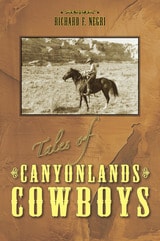
Tales of Canyonlands Cowboys
Richard Negri
Utah State University Press, 1997
Before Canyonlands was a national park, before tourists discovered the wildness and wonder of the Maze and the Land of Standing Rocks, before the San Rafael Desert became a hive of the mineral exploration, the lands west of the Colorado and Green Rivers to the San Rafael Swell and from the Book Cliffs and San Rafael River south to the dirty Devil River and the Henry Mountains were pastures for the stock of hardscrabble cowboys and sheep ranchers.
Often based in the nearby villages of Green River or Hanksville, sometimes residing on remote ranches, such as the famous Robbers Roost Ranch or the Chaffin Ranch at the mouth of the San Rafael, the cowboys and ranchers spent much of their time camped out on the range with their stock. They herded under the Ledge, along the river south across Elaterite Basin, Ernie Country, and Waterhole Flat, and above on the flats, mesas, and head canyons running from the west.
They named many of the places, opened many of the trails, and were there to meet and guide the first petroleum explorers, archaeologists, and tourists. And they bristled at government management of the public lands, which they had grown accustomed to considering their own.
Richard Negri interviewed members of the last generation of those cowboys for stories of their early days in canyon country. Their tales provide an oral history of the first non-Indians to roam and reside in the Maze District of Canyonlands National Park and much of the surrounding wild and remote country.
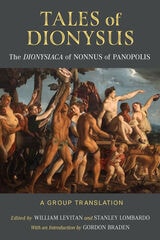
Tales of Dionysus
The Dionysiaca of Nonnus of PanopolisEdited by William Levitan and Stanley Lombardo
University of Michigan Press, 2022
Tales of Dionysus is the first English verse translation of one of the most extraordinary poems of the Greek literary tradition, the Dionysiaca of Nonnus of Panopolis. By any standard, the Dionysiaca is a formidable work. It is by far the longest poem surviving from the classical world, a massive mythological epic stretching to over 20,000 lines, written in the tradition of Homer, using Homer’s verse, Homer’s language, his narrative turns and motifs, and invoking his ancient Muses. But it is also the last ancient epic to follow a Homeric model, composed so late in fact that it stands as close in time to the Renaissance as it does to archaic Greece. Like its titular hero, Dionysus, with his fluidity of forms, names, and divine incarnations, the poem itself is continually shifting shape. Out of its formal epic frame spills a tumult of ancient literary types: tragedy, elegy, didactic, panegyric, pastoral idyll, and the novel are all parts of this gigantic enterprise, each genre coming to the fore one after the other.
Tales of Dionysus brings together forty-two translators from a wide range of backgrounds, with different experiences and different potential relationships to the text of Nonnus’ poem. All work in their own styles and with their own individual approaches to the poem, to translation, and to poetic form. This variety turns Tales of Dionysus into a showcase of the multiple possibilities open to classical translation in the contemporary world.
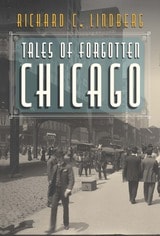
Tales of Forgotten Chicago
Richard C. Lindberg
Southern Illinois University Press, 2020
Tales of Forgotten Chicago contains twenty-one fascinating, little-known stories about a great city and its people. Richard C. Lindberg has dug deeply to reveal lost historical events and hidden gems from Chicago’s past.
Spanning the Civil War through the 1960s, the volume showcases forgotten crimes, punishments, and consequences: poisoned soup that nearly killed three hundred leading citizens, politicians, and business and religious leaders; a woman in showbiz and her street-thug husband whose checkered lives inspired a 1955 James Cagney movie; and the first police woman in Chicago, hired as a result of the senseless killing of a young factory girl in a racially tinged case of the 1880s.
Also included are tales of industry and invention, such as America’s first automobile race, the haunting of a wealthy Gilded Age manufacturer’s mansion, and the identity of the telephone’s rightful inventor. Chapters on the history of early city landmarks spotlight the fight to save Lakefront Park and how “Lucky” Charlie Weeghman’s north side baseball park became Wrigley Field. Other chapters explore civic, cultural, and political happenings: the great Railroad Fairs of 1948 and 1949; Richard J. Daley’s revival of the St. Patrick’s Day parade; political disrupter Lar “America First” Daly; and the founding of the Special Olympics in Chicago by Anne Burke and others. Finally, some are just wonderful tales, such asa touching story about the sinking of Chicago's beloved Christmas tree ship.
Engrossing and imaginative, this collection opens new windows into the past of the Windy City.
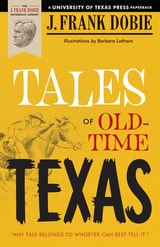
Tales of Old-Time Texas
By J. Frank Dobie
University of Texas Press, 1955
It is for good reason that J. Frank Dobie is known as the Southwest's master storyteller. With his eye for color and detail, his ear for the rhythm of language and song, and his heart open to the simple truth of folk wisdom and ways, he movingly and unpretentiously spins the tales of our collective heritages. This he does in Tales of Old-Time Texas, a heartwarming array of twenty-eight stories filled with vivid characters, exciting historical episodes, and traditional themes. As Dobie himself says: "Any tale belongs to whoever can best tell it." Here, then, is a collection of the best Texas tales—by the Texan who can best tell them.
Dobie's recollections include such classics in Lone Star State lore as the tale of Jim Bowie's knife, the legend of the Texas bluebonnet, the story of the Wild Woman of the Navidad, and the account of the headless horseman of the mustangs. Other stories in this outstanding collection regale us with odd and interesting characters and events: the stranger of Sabine Pass, the Apache secret of the Guadalupes, the planter who gambled away his bride, and the Robinhooding of Sam Bass. These stories, and many more, make Tales of Old-Time Texas a beloved classic certain to endure for generations.
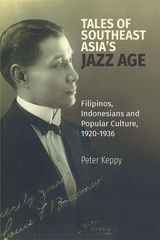
Tales of Southeast Asia’s Jazz Age
Filipinos, Indonesians and Popular Culture, 1920-1936Peter Keppy
National University of Singapore Press, 2019
This artistic era was marked by experimentation and adaption, and this was reflected in both Borromeo’s and Riboet’s styles. They were pioneering cultural brokers who dealt in hybrids. They were adept at combining high art and banal entertainment, tradition and modernity, and the foreign and the local.
Leaning on cultural studies and the work on cosmopolitanism and modernity by Henry Jenkins and Joel Kahn, Peter Keppy examines pop culture at this time as a contradictory social phenomenon. He challenges notions of Southeast Asia’s popular culture as lowbrow entertainment created by elites and commerce to manipulate the masses, arguing instead that audiences seized on this popular culture to channel emancipatory activities, to articulate social critique, and to propagate an inclusive nationalism without being radically anticolonial.
Tales of Times Now Past
Sixty-Two Stories from a Medieval Japanese CollectionMarian Ury
University of Michigan Press, 1993
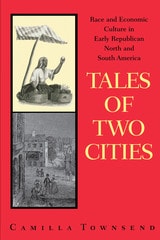
Tales of Two Cities
Race and Economic Culture in Early Republican North and South AmericaBy Camilla Townsend
University of Texas Press, 2000
With a common heritage as former colonies of Europe, why did the United States so outstrip Latin America in terms of economic development in the nineteenth century? In this innovative study, Camilla Townsend challenges the traditional view that North Americans succeeded because of better attitudes toward work—the Protestant work ethic—and argues instead that they prospered because of differences in attitudes towards workers that evolved in the colonial era.
Townsend builds her study around workers' lives in two very similar port cities in the 1820s and 1830s. Through the eyes of the young Frederick Douglass in Baltimore, Maryland, and an Indian woman named Ana Yagual in Guayaquil, Ecuador, she shows how differing attitudes towards race and class in North and South America affected local ways of doing business. This empirical research significantly clarifies the relationship between economic culture and racial identity and its long-term effects.
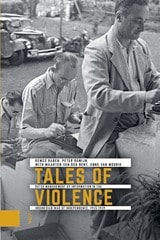
Tales of Violence
Dutch Management of Information in the Indonesian War of Independence, 1945-1949Remco Raben
Amsterdam University Press, 2027
How were the violence of war and the numerous excesses between 1945-1949 discussed, concealed, passed on, manipulated, and used politically? What did Dutch, colonial, and Indonesian politicians and administrators know about the nature of the actions of their own and enemy troops?
Why did investigations into specific scandals grind to a halt or were their outcomes hidden from the public? What did those in charge do with their knowledge and how did communications influence public support for warfare? The authors argue that the way the war in Indonesia has long been viewed has its origins partly in the language and manipulation of information during the conflict.
Tales of Wayward Girls and Immoral Women
Case Records and the Professionalization of Social WorkKaren W. Tice
University of Illinois Press, 1998
"An original and important study, this is the first major work I know of to carry out a contextual analysis of case records and to discuss the role case records have played in the development of social work." -- Leslie Leighninger, author of Social Work, Social Welfare, and American Society
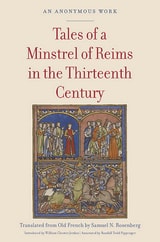
Tales of a Minstrel of Reims in the Thirteenth Century
Samuel N. Rosenberg
Catholic University of America Press, 2021
Tales of an Old Horsetrader
The First Hundred YearsLeroy Judson Daniels
University of Iowa Press, 1987
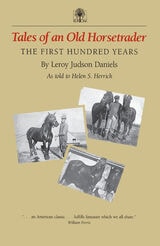
Leroy Daniels was born in 1882 near Adair, Iowa. When he was ten, his father gave him a pony and a checkbook and sent him out to buy cattle. By the time he was sixteen, he was alone on a ranch in Montana with a herd of seventy wild horses to break. At twenty-one, he was trading horses in the Chicago stockyards, where he told Henry Ford that a horse was better than a car any day. At one hundred, he retired to tell his memoirs.
The years in between are well worth reading about. Lee Daniels followed a plow all day long, worked coal to make ends meet, raised and traded and sold all manner of four-legged stock. But horses were always part of his life. Daniels traded them in Chicago for decades, sold them to Italy, England, France, and Belgium during World War I, inspected them for the army once the U.S. joined the Allies, bought them for eighty dollars in the morning and sold them for thousands by noon. He handled show horses, work horses, and trick horses, traveled the country over to fill his show barn with the best of them, befriended, understood, and loved them.
These pages tell the tale of a unique and vigorous American whose every word reveals his love of this land and its animals. If you weren't lucky enough to live like Lee Daniels, reading about his life is the next best thing.
Tales, Tunes, and Tassa Drums
Retention and Invention into Indo-Caribbean MusicPeter Manuel
University of Illinois Press, 2015
Music scholar Peter Manuel traces the roots of neotraditional music genres like tassa drumming to North India and reveals the ways these genres represent survivals, departures, or innovative elaborations of transplanted music forms. Drawing on ethnographic work and a rich archive of field recordings, he contemplates the music carried to Trinidad by Bhojpuri-speaking and other immigrants, including forms that died out in India but continued to thrive in the Caribbean. His reassessment of ideas of creolization, retention, and cultural survival defies suggestions that the diaspora experience inevitably leads to the loss of the original culture, while also providing avenues to broader applications for work being done in other ethnic contexts.

Talk about Sex
How Sex Ed Battles Helped Ignite the RightJanice M. Irvine
Temple University Press, 2023
“Must reading for scholars, sexuality researchers, activists, and public policy and public health planners engaged in efforts to promote education on sex, sexually transmitted diseases, and HIV infection prevention for adolescents in schools.”—JAMA
Talk about Sex is a rich social history about the political transformations, cultural dynamics, and emotional rhetorical strategies that helped the right wing manufacture controversies on the local and national levels in the United States. Although the emergence of a politicized Christian Right is commonly dated at the mid-seventies, with the founding of groups like the Moral Majority, Talk about Sex tells the story of a powerful right-wing Christian presence in politics a full decade earlier. These activists used inflammatory sexual rhetoric—oftentimes deceptive and provocative—to capture the terms of public debate, galvanize voters, and reshape the culture according to their own vision.
This 20th Anniversary Edition includes a new preface and epilogue by the author that examines current controversies over public education on sexuality, gender, and race.
Demonstrating how the right wing draws on the cultural power of sexual shame and fear to build a political movement, Talk about Sex explores the complex entanglements of sexual knowledge, politics, and discourses.
Talk and Textual Production in Medieval England
Marisa Libbon
The Ohio State University Press, 2021
Talk of Darkness
By Fatna El Bouih
University of Texas Press, 2008
Fatna El Bouih was first arrested in Casablanca as an 18-year-old student leader with connections to the Marxist movement. Over the next decade she was rearrested, forcibly disappeared, tortured, and transferred between multiple prisons. While imprisoned, she helped organize a hunger strike, completed her undergraduate degree in sociology, and began work on a Master's degree.
Beginning with the harrowing account of her kidnapping during the heightened political tension of the 1970s, Talk of Darkness tells the true story of one woman's struggle to secure political prisoners' rights and defend herself against an unjust imprisonment.
Poetically rendered from Arabic into English by Mustapha Kamal and Susan Slyomovics, Fatna El Bouih's memoir exposes the techniques of state-instigated "disappearance" in Morocco and condemns the lack of laws to protect prisoners' basic human rights.
Talking Back to the West
How Turkey Uses Counter-Hegemony to Reshape the Global Communication OrderBilge Yesil
University of Illinois Press, 2024
Insightfully exploring the crossroads of communications and authoritarianism, Talking Back to the West illuminates how the Erdogan government and its media allies use history, religion, and identity to pursue complementary agendas and tighten the AKP’s grip on power.
Talking Classics
The Shock of the OldMary Beard
University of Chicago Press, 2026
Why the ongoing fascination with the ancient world? This witty, approachable book asks why—for better or (sometimes) worse—antiquity continues to exert such a powerful hold on the contemporary imagination. Recalling a formative childhood encounter with a four-thousand-year-old piece of bread in a museum, Beard introduces the idea of thauma, or wonder, that kick-started a lifetime engaging with classics. It was not the canonical “greats” of ancient literature and art that initially drew her in, she confesses, but rather the more intimate, messy, and humdrum evidence of daily life in the remote past.
Confronting the uses and abuses of symbols of the ancient world, Beard reminds us that the traditions and “masterpieces” of Greece and Rome have certainly been politicized, but they belong to neither the left nor the right. Happily, no one owns the past. She warns us not to let a sense of reverence or overfamiliarity dampen the “shock of the old,” arguing that one of the most important things that classics teach us is how to grapple with complicated and controversial things. “The Greeks and Romans are long dead, they cannot answer back, and you can say what you like about them,” she reminds readers. “The simple fact that classics belong to none of us can offer a safe space to argue about the most difficult debates we face now.”
Beard welcomes everyone into classics. “It is not compulsory to be excited by the ancient world,” she writes. “But it can be a shame not to be.” This charming, sharp, and readable book from one of the world’s most entertaining classicists offers something for both new and established fans of classics, bringing new wonder and curiosity to even the most ancient of ideas.
Talking Classics
The Shock of the OldMary Beard
University of Chicago Press, 2026
Why the ongoing fascination with the ancient world? This witty, approachable book asks why—for better or (sometimes) worse—antiquity continues to exert such a powerful hold on the contemporary imagination. Recalling a formative childhood encounter with a four-thousand-year-old piece of bread in a museum, Beard introduces the idea of thauma, or wonder, that kick-started a lifetime engaging with classics. It was not the canonical “greats” of ancient literature and art that initially drew her in, she confesses, but rather the more intimate, messy, and humdrum evidence of daily life in the remote past.
Confronting the uses and abuses of symbols of the ancient world, Beard reminds us that the traditions and “masterpieces” of Greece and Rome have certainly been politicized, but they belong to neither the left nor the right. Happily, no one owns the past. She warns us not to let a sense of reverence or overfamiliarity dampen the “shock of the old,” arguing that one of the most important things that classics teach us is how to grapple with complicated and controversial things. “The Greeks and Romans are long dead, they cannot answer back, and you can say what you like about them,” she reminds readers. “The simple fact that classics belong to none of us can offer a safe space to argue about the most difficult debates we face now.”
Beard welcomes everyone into classics. “It is not compulsory to be excited by the ancient world,” she writes. “But it can be a shame not to be.” This charming, sharp, and readable book from one of the world’s most entertaining classicists offers something for both new and established fans of classics, bringing new wonder and curiosity to even the most ancient of ideas.

Talking History
Seminar Culture at the Institute of Historical Research, 1921–2021Edited by David Manning
University of London Press, 2024
Talking History provides a defence of the seminar as a central element in historians' teaching, research and sense of community. Covering a range of the IHR’s long-running seminar series, which are differentiated by historical period, region and/or theme, the book presents the seminars as a local, national and international hub for scholarship that emerges from and is sustained by the ongoing learning practices of historians as scholars and people. Talking History bears witness to a seminar culture of evolving, multifarious synergies between teaching, researching and learning, historiography and participation — intertextual, interpersonal, intergenerational and intercultural. Viewed as such, the seminars constitute a living tradition, stimulating and incorporating dynamic change over time to contribute not just to the development of historiography but intellectual life more generally, often in conversation with major political events and cultural phenomena.
This original and significant book therefore reflects upon, and gives further expression to, the ongoing evolution of historical research and its role in wider society today.
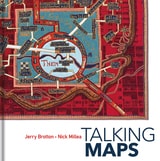
Talking Maps
Jerry Brotton and Nick Millea
Bodleian Library Publishing, 2019
Drawing on the Bodleian Library’s outstanding map collection and covering almost a thousand years, Talking Maps takes a new approach to map-making by showing how maps and stories have always been intimately entwined. Including such rare treasures as a unique map of the Mediterranean from the eleventh-century Arabic Book of Curiosities, a twelfth-century map of the world by al-Sharīf al-Idrīsī, and C. S. Lewis’s map of Narnia, this fascinating book analyzes maps as objects that enable us to cross sea and land; as windows into alternative and imaginary worlds; as guides to reaching the afterlife; as tools to manage cities, nations, and empires; as images of environmental change; and as digitized visions of the global future.
By telling the stories behind the artifacts and those generated by them, Talking Maps reveals how each map is not just a tool for navigation but also a worldly proposal that helps us to understand who we are by describing where we are.
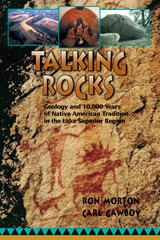
Talking Rocks
Geology and 10,000 Years of Native American Tradition in the Lake Superior RegionRon Morton
University of Minnesota Press, 2003
Join the conversation as an earth scientist and a Native American elder—wise men from two cultures—explore the natural history of the Lake Superior region, examining both the science and the spirit of the land.
As the geologist carefully presents a modern scientific perspective, the storyteller eloquently recounts a traditional Native American understanding, passed on through tales, myths, and symbols that illustrate how intimately his people have known and honored the earth and its history for over a hundred centuries.
Talking Rocks is not only a story of geological history told from two perspectives, it is also a chronicle of two people from very different cultural and scientific heritages learning to understand and appreciate each other’s distinct yet complementary ways of viewing the land we share.
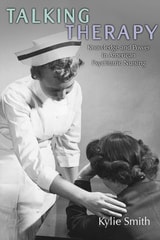
Talking Therapy
Knowledge and Power in American Psychiatric NursingKylie Smith
Rutgers University Press, 2020
Winner of the 2020 Lavinia L. Dock Award from the American Association for the History of Nursing
Talking Therapy traces the rise of modern psychiatric nursing in the United States from the 1930s to the 1970s. Through an analysis of the relationship between nurses and other mental health professions, with an emphasis on nursing scholarship, this book demonstrates the inherently social construction of ‘mental health’, and highlights the role of nurses in challenging, and complying with, modern approaches to psychiatry. After WWII, heightened cultural and political emphasis on mental health for social stability enabled the development of psychiatric nursing as a distinct knowledge project through which nurses aimed to transform institutional approaches to patient care, and to contribute to health and social science beyond the bedside. Nurses now take for granted the ideas that underpin their relationships with patients, but this book demonstrates that these were ideas not easily won, and that nurses in the past fought hard to make mental health nursing what it is today.
Talking Union
Judith Stepan-Norris and Maurice Zeitlin
University of Illinois Press, 1996
and cultural oral history of the struggle to unionize the River Rouge
Plant near Detroit during the 1930s and 40s, this book affords us a rare
insight into the difficulties of organizing a union in the face of the
then anti-union Ford Motor Company. Against a backdrop of the depression
and entrenched racism, history was made by courageous individuals whose
rich, eloquent stories illuminate the character and views of others like
them across the nation, from all backgrounds: left, right, and center;
black and white; native and foreign born, Jew and gentile.
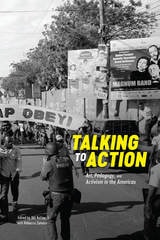
Talking to Action
Art, Pedagogy, and Activism in the AmericasBill Kelley, Jr. with Rebecca Zamora
School of the Art Institute of Chicago, 2017

Talking to Action
Spanish Language EditionBill Kelley, Jr. with Rebecca Zamora
School of the Art Institute of Chicago, 2017
This is the Spanish language edition.
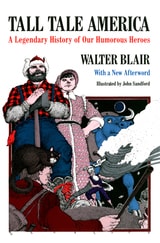
Tall Tale America
A Legendary History of our Humorous HeroesWalter Blair
University of Chicago Press, 1987

Tall Walls and High Fences
Bob Alexander
University of North Texas Press, 2020
Talladega College
The First CenturyMaxine D. Jones
University of Alabama Press, 1990
In 1954 when the U.S. Supreme Court declared separate education inherently unequal, Talladega College was a notable black liberal arts school thriving in rural east Alabama. This is a study of that college, its growth, development, and significance, from its inception by freed slaves in the 1860s through the student protest movement more than a century later. Initially Talladega offered primary, secondary, nursing, and theological as well as college-level work. Under strong leadership of visionaries such as James T. Cater, the school’s first black dean, Talladega became a first-rate liberal arts institution. During its first decades the school struggled against poverty, white hostility, Ku Klux Klan threats, and internal dissension to produce a number of teachers and ministers for Alabama schools and churches.
This book examines such college issues as finance, enrollment, students, educational policy, and the often stormy relationship with black and white neighbors. It provides a sense of both the obstacles to and the positive consequences of building and nurturing a black college.

Tamarack River Ghost
A NovelJerry Apps
University of Wisconsin Press, 2012
Josh’s big story is that a corporation that plans to establish an enormous hog farm has bought a lot of land along the Tamarack River in bucolic Ames County. Some of the local residents and officials are excited about the jobs and tax revenues that the big farm will bring, while others worry about truck traffic, porcine aromas, and manure runoff polluting the river. And how would the arrival of a large agribusiness affect life and traditions in this tightly knit rural community of family farmers? Josh strives to provide impartial agricultural reporting, even as his newspaper is replaced by a new Internet-only version owned by a former New York investment banker. And it seems that there may be another force in play: the vengeful ghost of a drowned logger who locals say haunts the valley of the Tamarack River.
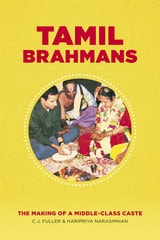
Tamil Brahmans
The Making of a Middle-Class CasteC. J. Fuller and Haripriya Narasimhan
University of Chicago Press, 2014
Fuller and Narasimhan offer one of the most comprehensive looks at Tamil Brahmans around the world to date. They examine Brahman migration from rural to urban areas, more recent transnational migration, and how the Brahman way of life has translated to both Indian cities and American suburbs. They look at modern education and the new employment opportunities afforded by engineering and IT. They examine how Sanskritic Hinduism and traditional music and dance have shaped Tamil Brahmans’ particular middle-class sensibilities and how middle-class status is related to the changing position of women. Above all, they explore the complex relationship between class and caste systems and the ways in which hierarchy has persisted in modernized India.
Taming Alabama
Lawyers and Reformers, 1804-1929Paul M. Pruitt, Jr. introduction by G. Ward Hubbs
University of Alabama Press, 2010
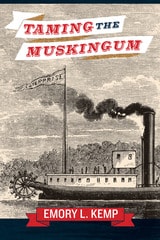
Taming the Muskingum
EMORY L. KEMP
West Virginia University Press, 2014
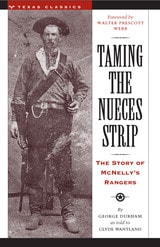
Taming the Nueces Strip
The Story of McNelly's RangersBy George Durham as told to Clyde Wantland
University of Texas Press, 1962
Only an extraordinary Texas Ranger could have cleaned up bandit-plagued Southwest Texas, between the Nueces River and the Rio Grande, in the years following the Civil War. Thousands of raiders on horseback, some of them Anglo-Americans, regularly crossed the river from Mexico to pillage, murder, and rape. Their main objective? To steal cattle, which they herded back across the Rio Grande to sell. Honest citizens found it almost impossible to live in the Nueces Strip.
In desperation, the governor of Texas called on an extraordinary man, Captain Leander M. McNelly, to take command of a Ranger company and stop these border bandits. One of McNelly's recruits for this task was George Durham, a Georgia farmboy in his teens when he joined the "Little McNellys," as the Captain's band called themselves. More than half a century later, it was George Durham, the last surviving "McNelly Ranger," who recounted the exciting tale of taming the Nueces Strip to San Antonio writer Clyde Wantland.
In Durham's account, those long-ago days are brought vividly back to life. Once again the daring McNelly leads his courageous band across Southwest Texas to victories against incredible odds. With a boldness that overcame their dismayingly small number, the McNellys succeeded in bringing law and order to the untamed Nueces Strip—succeeded so well that they antagonized certain "upright" citizens who had been pocketing surreptitious dollars from the bandits' operations.
Taming the Revolution
Andrea Acle-Kreysing
Campus Verlag, 2022
Jaime Balmes and Juan Donoso Cortés–the two most important conservative thinkers in nineteenth-century Spain–actively sought to preserve the centrality of church and monarchy in the wake of the rise of liberalism, while at the same time discrediting the stereotypical view of Spain as a backward and isolated country. Although they pursued a similar goal, their positions differed: while Balmes’ works anticipated a socially oriented Catholicism, Donoso presented Christianity as the supreme social good, incompatible with modern liberalism. In Taming the Revolution, Andrea Acle-Kreysing highlights the unresolved tensions in their works, escaping the dualistic interpretations of this period that defines tradition from modernity. This work endeavors to show how Spanish political thought was a compelling variation–rather than an aberration–of contemporary European debates.
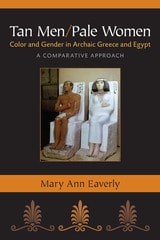
Tan Men/Pale Women
Color and Gender in Archaic Greece and Egypt, a Comparative ApproachMary Ann Eaverly
University of Michigan Press, 2013
One of the most obvious stylistic features of Athenian black-figure vase painting is the use of color to differentiate women from men. By comparing ancient art in Egypt and Greece, Tan Men/Pale Women uncovers the complex history behind the use of color to distinguish between genders, without focusing on race. Author Mary Ann Eaverly considers the significance of this overlooked aspect of ancient art as an indicator of underlying societal ideals about the role and status of women. Such a commonplace method of gender differentiation proved to be a complex and multivalent method for expressing ideas about the relationship between men and women, a method flexible enough to encompass differing worldviews of Pharaonic Egypt and Archaic Greece. Does the standard indoor/outdoor explanation—women are light because they stay indoors—hold true everywhere, or even, in fact, in Greece? How “natural” is color-based gender differentiation, and, more critically, what relationship does color-based gender differentiation have to views about women and the construction of gender identity in the ancient societies that use it?
The depiction of dark men and light women can, as in Egypt, symbolize reconcilable opposites and, as in Greece, seemingly irreconcilable opposites where women are regarded as a distinct species from men. Eaverly challenges traditional ideas about color and gender in ancient Greek painting, reveals an important strategy used by Egyptian artists to support pharaonic ideology and the role of women as complementary opposites to men, and demonstrates that rather than representing an actual difference, skin color marks a society’s ideological view of the varied roles of male and female.
Tanana Chiefs
Native Rights and Western LawEdited by William Schneider
University of Alaska Press, 2018
This is the story of a historic meeting between Native Athabascan leaders and government officials, held in Fairbanks, Alaska in 1915. It was one of the first times that Native voices were part of the official record. They sought education and medical assistance, and they wanted to know what they could expect from the federal government. They hoped for a balance between preserving their way of life with seeking new opportunities under the law.
The Tanana Chiefs chronicles the efforts by Alaska Natives to gain recognition for rights under Western law and the struggles to negotiate government-to-government relationships with the federal government. It contains the first full transcript of the historic meeting as well as essays that connect that first gathering with the continued efforts of the Tanana Chiefs Conference, which continues to meet and fight for Native rights.

Tanegashima
The Arrival of Europe in JapanOlof Lidin
National University of Singapore Press, 2002
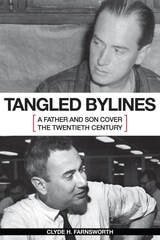
Tangled Bylines
A Father and Son Cover the Twentieth CenturyClyde H. Farnsworth
University of Missouri Press, 2017
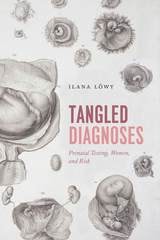
Tangled Diagnoses
Prenatal Testing, Women, and RiskIlana Löwy
University of Chicago Press, 2018
Tangled Diagnoses examines the multiple consequences of the widespread diffusion of this medical innovation. Prenatal testing, Ilana Löwy argues, has become mainly a risk-management technology—the goal of which is to prevent inborn impairments, ideally through the development of efficient therapies but in practice mainly through the prevention of the birth of children with such impairments. Using scholarship, interviews, and direct observation in France and Brazil of two groups of professionals who play an especially important role in the production of knowledge about fetal development—fetopathologists and clinical geneticists—to expose the real-life dilemmas prenatal testing creates, this book will be of interest to anyone concerned with the sociopolitical conditions of biomedical innovation, the politics of women’s bodies, disability, and the ethics of modern medicine.
Tangled Roots
The Emergence of Israeli CultureIsrael Bartal
SBL Press, 2020
A new interpretation of the roots of Israeli culture
In Tangled Roots: The Emergence of Israeli Culture, Israel Bartal traces the history of modern Hebrew culture prior to the emergence of political Zionism. Bartal examines how traditional and modernist ideals and Western and non-European Jewish cultures merged in an unprecedented encounter between an ancient land (Israel) and a multigenerational people (the Jews). Premodern Jewish traditionalists, Palestinian locals, foreign imperial forces, and Jewish intellectuals, writers, journalists, and party functionaries each affected the Israeli culture that emerged. As this new Hebrew culture was taking shape, the memory of the recent European past played a highly influential role in shaping the image of the New Hebrew, that mythological hero who was meant to supplant the East European exilic Jew.
Features
- A critical revision of most contemporary politicized histories of Jewish nationalism
- An examination of the history of modern Hebrew culture prior to political Zionism
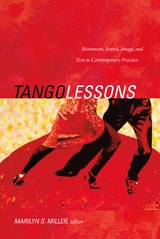
Tango Lessons
Movement, Sound, Image, and Text in Contemporary PracticeMarilyn G. Miller, ed.
Duke University Press, 2014
Contributors. Esteban Buch, Oscar Conde, Antonio Gómez, Morgan James Luker, Carolyn Merritt, Marilyn G. Miller, Fernando Rosenberg, Alejandro Susti